
The War in Space (惑星大戦争, Jun Fukuda, 1977)

War in Space posterThe tokusatsu movie had been Toho’s signature line since the mid-‘50s, but 25 years later it was more or less played out. The late ‘70s saw the studio diversifying into other types of populist cinema while trying to find new directions in a rapidly changing industry. 1977’s The War in Space (惑星大戦争, Wakusei Daisenso), technically a “sequel” to Ishiro Honda’s Gorath from 1962, very much exemplifies the decline while trying to meld a fairly standard Star Trek-esque tale of interplanetary conflict with Star Wars-inspired fantasy.

In the distant future of 1988, the United Nations Space Force in Japan has been having trouble contacting the space station because of continued electromagnetic interference. Miyoshi (Kensaku Morita), a former team member making an unexpected return from America, tells them that they’d been having the same problem over there and not only that, there had been a worrying increase in UFO sightings across the nation. Making brief contact with the space station confirms their fears when the pilot suddenly starts screaming about a giant Roman spaceship approaching at speed before contact is lost once again. It seems that the Earth is now under attack from an extraterrestrial invasion, and the electromagnetic interference appears to be coming from Venus.

Miyoshi reconnects with his mentor, Takigawa (Ryo Ikebe), and tries to persuade him to resume an old research project to develop a high powered spaceship known as Gohten, but he remains reluctant. Part of the reason for his lack of enthusiasm is that Miyoshi had been his best student and Takigawa still bears him some resentment for his abrupt decision to leave for America rather than staying to contribute to Japan’s future while his feelings are further complicated by the fact that Miyoshi had been in a serious romantic relationship with his daughter, Jun (Yuko Asano), whose heart was broken when he left. A Space Force employee, Jun is now engaged to fellow officer Muroi (Masaya Oki) who is glad to see his old friend Miyoshi return, but also a little anxious.

With the Earth facing imminent destruction, however, there’s little time to worry about past heartache. Takigawa finds himself forced into restarting the Gohten project when he realises that the “Venusians” can pose as regular humans by possessing their bodies. As usual, everything rests on the team pulling together to finish the mammoth project in a record three days before the aliens obliterate their base just like they’re doing to most of the Earth’s major cities. Eventually, the team realise that the aliens aren’t from Venus at all, but from another major solar system and led by a man calling himself “Commander Hell” (Goro Mutsumi) who, for some reason, is dressed like a Roman emperor. Like the Romans, their aim is colonisation. They’ve worn out their home planet and are looking to move, but want somewhere kind of the same so they’ve set their heart on one three away from the sun, like the Earth. 

Aside from the classical trappings, War in Space was apparently rushed out to cash in on the success of Star Wars and even includes a scene which seems to anticipate Leia’s capture by Jabba the Hut in Return of the Jedi when Jun is kidnapped and forced into hotpants while chained to a Chewie-esque furry minotaur carrying a giant axe, which might be mixing their classical metaphors somewhat as Jun and Miyoshi, arriving to rescue her, attempt to escape from Commander Hell’s ship. Takigawa and co. make their way to Venus to try and take out Commander Hell’s base, but are faced with a terrible choice. The reason Takigawa didn’t want to finish the Gohten project is that the ship is armed with a terrifyingly powerful, universe destroying bomb which he worries it was irresponsible of him to invent. Hypocritically, he now knows he’ll have to use it but is hoping that in doing so it will be destroyed along with everything else except perhaps the Earth.

Unlike in Star Wars, it’s the good guys who blow up a planet to save their own though at least no one seemed to be living there, only Commander Hell’s evil minions. Bowing out with a slightly more bombastic evocation of the original tokusatsu messages about the dangers of irresponsible science, War in Space is a fairly generic exercise in genre but has its moments in its bodysnatching spy aliens, groovy ‘70s production design, and charmingly earnest sincerity.


Original trailer (no subtitles)

Suzaki Paradise: Red Light (洲崎パラダイス 赤信号, Yuzo Kawashima, 1956)

Suzaki paradise posterBy 1956, things were beginning to look up. Post-war privation was receding into the distance with the consumerist future already on the horizon, but as much as there were possibilities for some others found themselves floundering, unable to find direction in a world of constant change. Yuzo Kawashima’s Suzaki Paradise: Red Light (洲崎パラダイス 赤信号, Susaki Paradise: Akashingo)* was released in the same year that the anti-prostitution law came into force forever changing the face of the red light district and like its heroes finds itself hovering on a precipice caught between an old world the new.

Lovers Tsutae (Michiyo Aratama) and Yoshiji (Tatsuya Mihashi) have found themselves at a crossroads, or more accurately on a bridge, unsure whether to go forward, or back, or some other place entirely. Tsutae is disappointed in Yoshiji, expecting him as the man to have some kind of plan, while he is a little resentful of her fortitude and tendency to take the lead. Yoshiji grows maudlin and moody, berating himself for his failure of manhood, a failing for which Tsutae has little sympathy. Fed up with him, she runs off and catches a bus. He chases her, and they both get off at Susaki, home to a famous red light district. Yoshiji isn’t happy with this development, worried that Tsutae will cross the bridge and fall back into her “old self”, perhaps hinting at the kind of life she lived before. Luckily for them, Tsutae spots a help wanted sign at a tiny bar firmly on this side of the river. The landlady, Otoku (Yukiko Todoroki), is a kind woman raising her two sons alone, but is wary of handing the job to a woman the like of Tsutae. As she tells her, no one stays here long, most just see it as a stepping stone, a place where they can acclimatise themselves to the idea of crossing the bridge into the ironically named “Susaki Paradise”.   

Once you cross the bridge, most seem to say, you never really cross back. Later we learn that Tsutae is from the other side of the water and seemingly forever trying to escape her past though mostly through trying to attach herself to a man she thinks can carry her out it. Yoshiji seems to be aware that Tsutae is a former sex worker and is desperate to prevent her returning to her previous occupation, worried that he’ll lose her if she does or perhaps just unfairly judgemental. Likewise, we learn that he lost his job through some kind of impropriety, perhaps committed trying to keep Tsutae with him. Each of them is in one way or another trapped by patriarchal social codes, Tsutae believing that the only way she can save herself is by finding the right man to save her, and Yoshiji increasingly resentful for not living up to the male ideal. He can’t keep his woman, can’t provide for or protect her, most pressingly he cannot find a job but is also proud, shamed by the idea of accepting low paid manual work. He feels belittled and humiliated and is embittered by it.

Tsutae meanwhile takes to Otoku’s bar like a duck to water, quickly bringing in a host of male custom while bonding with the cheerful owner of a radio shop in nearby electronics centre Kanda, Ochiai (Seizaburo Kawazu). Otoku manages to find a job for Yoshiji delivering soba noodles in a local restaurant which he decides to take despite his intense resentment and wounded male pride. Ironically enough, the name of the soba restaurant is “Damasare-ya” which sounds like “tricked”, explaining why he might be reluctant to take the job, but the biggest problem is that he can’t trust Tsutae and is always paranoid about her meeting men in the bar or deciding to cross the bridge in his absence. Eventually, Ochiai offers to make Tsutae his mistress and provide a flat for her in Kanda, leaving her with a choice – “love”, if that’s what it is, with the feckless and jealous Yoshiji, or perfectly pleasant yet transactional comfort with Ochiai. Yoshiji, meanwhile, attracts the attentions of an earnest waitress in the soba noodle restaurant (Izumi Ashikawa) who seems to support his attachment to Tsutae but is also rooting for him to get over himself and live an honest life of hard work by knuckling down at his new job.

Yet that post-war restlessness won’t seem to let either of them go. Once you fall, you fall and it may not be possible to climb back up, or at least not without the right person to help keep you from slipping back down. Otoku has managed to keep a steady hand on the tiller, apparently waiting, we’re told, for the return of her husband who ran off with a woman from the red light district four years previously. The red light district, like toxic masculinity, cuts both ways and you’ll pay a heavy price for crossing the bridge. “People had better live honestly” a middle-aged man avows after having apparently seen the error of his ways, but it’s easier said than done.

When their worlds come crashing down, Tsutae and Yoshiji find themselves right back where they started, hovering on the bridge. “We have to live until we die” Tsutae once said, dismissing any fears we might have had that the pair might jump, but their course is both set and not. Now chastened, Tsutae’s decision to take a step back is both a reflection on the failure of her Susaki experiment, and also perhaps a mild concession to patriarchal social norms as she actively assumes the submissive role, affirming that she will follow Yoshiji’s lead while he reassumes his masculinity by finally taking charge. No longer quite so liminal they move on, another pair of floating clouds, perhaps more at home with who they are and can never be, but with no clear destination in sight.


*The reading of this place name is “Susaki” but the film has become more commonly known under the title “Suzaki Paradise”

Currently streaming on Mubi as part of an ongoing Yuzo Kawashima retrospective.

Title sequence (no subtitles)

Suspicion (疑惑, Yoshitaro Nomura, 1982)

Suspicion posterBy the early ‘80s, Japan had successfully shaken off post-war desperation for burgeoning consumerism, but even as the nation rocketed into a more comfortable future, social equality proved slow to arrive. Once again adapting a novel by Seicho Matsumoto, Yoshitaro Nomura’s Suspicion (疑惑, Giwaku) makes allies of two very different women who are each in one way or another rejected by the conservative, infinitely rigid society in which they live.

Former bar hostess Kumako (Kaori Momoi) falls under suspicion when she alone survives the car accident that takes her husband’s life. A brassy, aloof woman, Kumako does not behave in the way the police might expect a recently bereaved spouse to behave which instantly turns them against her. This becomes a real problem once they discover that her husband, Shirakawa (Noboru Nakaya), was an extraordinarily wealthy man on whom she had recently taken out a number of life insurance polices. Shirakawa’s public profile ensures that the potentially salacious case is taken up by the newspapers who waste no time proclaiming Kumako a gold digging murderess while openly baying for her blood. Intimidated by the public outcry, the police are determined to charge Kumako with her husband’s murder despite the only existing evidence being extremely circumstantial.

After a prominent lawyer declines to take her case, her legal council stands down citing his poor health leaving Kumako entirely undefended. The court eventually appoints her a new lawyer, a woman – Ritsuko Sahara (Shima Iwashita), more practiced in civil than criminal law and just as much of an outcast as Kumako though in very different ways. Ritsuko has divorced her husband and he has custody of their young daughter whom Ritsuko makes a point of seeing once a month. Though the arrangement seems to suit her well enough, her status as a career woman who has “rejected” the roles of wife and mother also makes her one viewed with “suspicion” by those around her.

The central issue is indeed Kumako’s character. A former bar hostess with a traumatic childhood, Kamako has four previous convictions including assault and blackmail as well as an abrasive personality and a tendency to rub people up the wrong way. She doesn’t do herself any favours, but no kind of justice would be served if she were sentenced to death not for her husband’s murder but for the crime of being an “unpleasant” woman in a society which expects women to be docile and polite.

The papers, however, are very invested in the story of the coldblooded, gold digging murderess. Akitani (Akira Emoto), a local reporter, cosies up to the police for insider information, and does his best to root out Kumako’s sordid past including a sometime boyfriend who might have been her “pimp”. Ritsuko makes “trial by media” a key part of her defence strategy, arguing that her client’s case has been unfairly prejudiced by the image the press has sought to construct of her, but is unaware of the extent to which the police investigation has been distorted by the desire to appease the media or the various ways in which a venal press has gently perverted the course of justice in search of a better story.

Cool and efficient, Ritsuko isn’t really sure whether Kumako did it or not but is determined to ensure she is tried by the codes of law and not of conventional morality. A disgraced Akitani later barks at her that he sees no need to defend “a woman like that” in the papers, but Ritsuko’s having none of it – the purpose of the law is precisely to ensure guilt or innocence is assessed rationally on the basis of the evidence presented, as free of personal prejudice as it’s possible to be. An idealistic claim, given Japan’s famously implacable legal system, but one that sits well with a functioning democracy.

Ritsuko’s defence of Kumako is not particularly a feminist exercise, though a grudging kind of mutual respect eventually arises between the two women who have each in one sense or another rejected socially defined gender roles. While Ritsuko proclaims herself happy enough to be a mother once a month on Sundays, her husband’s new wife is a more territorial sort, eventually asking her to stop seeing her own daughter because she would rather raise her believing that she is hers alone. Kumako, however, is entirely unrepentant, even emboldened, vowing that she will continue using men until the day she dies. The two women remain mirror images of each other, both rejected, viewed with “suspicion” for the choices they have made, and forever at odds with a society which has already found them each “guilty” in the court of public opinion.


Original trailer (no subtitles)

Japan Academy Prize Announces Nominees for 43rd Edition

Fly Me to the Saitama still 4The Japan Academy Prize, Japan’s equivalent of the Oscars awarded by the Nippon Academy-sho Association of industry professionals, has announced the candidate list for its 43rd edition which honours films released between Dec. 16, 2018 and Dec. 15, 2019. This year, perhaps surprisingly, crowd pleasing surrealist comedy Fly Me to the Saitama has topped the charts with nominations in 12 categories including film, director, screenplay, leading actor, leading actress, and supporting actor, while Shinsuke Sato’s wuxia-inspired blockbuster Kingdom and Michihito Fujii’s political thriller The Journalist also pick up multiple nominations. The winners will be announced at the star-studded awards ceremony at Grand Prince Hotel New Takanawa on March 6.

Picture of the Year

This slideshow requires JavaScript.

Animation of the Year

This slideshow requires JavaScript.

  • Her Blue Sky
  • Weathering with You
  • Detective Conan: The Fist of Blue Sapphire
  • Lupin III: The First
  • One Piece: Stampede

Director of the Year

This slideshow requires JavaScript.

Screenplay of the Year

This slideshow requires JavaScript.

  • Shozo Katashima (Talking the Pictures)
  • Roba Shimori, Akihiko Takaishi, Michihito Fujii (The Journalist)
  • Yuichi Tokunaga (Fly Me to the Saitama)
  • Hideyuki Hirayama (Closed Ward)
  • Koki Mitani (Hit Me Anyone One More Time)

Outstanding Performance by an Actor in a Leading Role

This slideshow requires JavaScript.

  • Tsurube Shofukutei (Closed Ward)
  • Masaki Suda (The Great War of Archimedes)
  • Kiichi Nakai (Hit Me Anyone One More Time)
  • Tori Matsuzaka (The Journalist)
  • GACKT (Fly Me to the Saitama)

Outstanding Performance by an Actress in a Leading Role

This slideshow requires JavaScript.

  • Shim Eun-kyung (The Journalist)
  • Fumi Nikaido (Fly Me to the Saitama)
  • Mayu Matsuoka (Listen to the Universe)
  • Rie Miyazawa (No Longer Human)
  • Sayuri Yoshinaga (The Bucket List)

Outstanding Performance by an Actor in a Supporting Role

This slideshow requires JavaScript.

  • Go Ayano (Closed Ward)
  • Yusuke Iseya (Fly Me to the Saitama)
  • Tasuku Emoto (The Great War of Archimedes)
  • Takashi Okamura (The 47 Ronin in Debt)
  • Kuranosuke Sasaki (Kubo Ibuki)
  • Ryo Yoshizawa (Kingdom)

Outstanding Performance by an Actress in a Supporting Role

This slideshow requires JavaScript.

  • Yuki Amami (The Bucket List)
  • Nana Komatsu (Closed Ward)
  • Mitsuki Takahata (A Banana? At This Time of Night?)
  • Masami Nagasawa (Kingdom)
  • Fumi Nikaido (No Longer Human)

Outstanding Achievement in Music

This slideshow requires JavaScript.

Outstanding Achievement in Cinematography

This slideshow requires JavaScript.

  • Taro Kawazu (Kingdom)
  • Kozo Shibasaki (Closed Ward)
  • Shohei Tanigawa (Fly Me to the Saitama)
  • Piotr Niemyjski (Listen to the Universe)
  • Junichi Fujisawa (Talking the Pictures)

Outstanding Achievement in Lighting Direction

This slideshow requires JavaScript.

  • Nariyuki Ueda (Closed Ward)
  • Shunri Rinoie (Fly Me to the Saitama)
  • Kenjiro So (Listen to the Universe)
  • Tatsuya Osada (Talking the Pictures)

Outstanding Achievement in Art Direction


This slideshow requires JavaScript.

  • Yoji Abeki (Fly Me to the Saitama)
  • Norihiro Isoda (Talking the Pictures)
  • Iwao Saito (Kingdom)
  • Anri Johjo (The Great War of Archimedes)
  • Katsumi Nakazawa (Closed Ward)

Outstanding Achievement in Sound Recording

This slideshow requires JavaScript.

  • Hirokazu Kato (Fly Me to the Saitama)
  • Yoshifumi Kureishi (Listen to the Universe)
  • Hiromichi Kori (Talking the Pictures)
  • Masato Komatsu (Closed Ward)
  • Kazushiko Yokono (Kingdom)

Outstanding Achievement in Film Editing

This slideshow requires JavaScript.

Outstanding Foreign Language Film

This slideshow requires JavaScript.

  • Yesterday
  • Green Book
  • Joker
  • The Mule
  • Once Upon a Time in Hollywood

Newcomer of the Year 

(awarded to all nominees equally)

This slideshow requires JavaScript.

  • Yukino Kishii (Just Only Love)
  • Yuina Kuroshima (Talking the Pictures)
  • Riho Yoshioka (Blind Witness, Parallel World Love Story)
  • Oji Suzuka (Listen to the Universe)
  • Win Morisaki (Listen to the Universe)
  • Ryusei Yokohama (Aiuta: My Promise To Nakuhito; Go Away, Ultramarine; Cheer Boys!)

Special Award from the Association

(Lifetime achievement awards, technical fields)

  • Tetsuo Kaneko (Opticals)
  • Yoichi Kotabe (Animator)
  • Kunio Niwa (Location Manager)
  • Yoshio Yamada (Production Designer)

Award for Distinguished Service from the Chairman

(Lifetime achievement awards, creatives)

  • Koji Takada (Screenwriter)
  • Akira Takarada (Actor)
  • Yoko Tsukasa (Actress)
  • Sadao Nakajima (Director)
  • Ayako Wakao (Actress)

Special Award from the Chairman

(Lifetime achievement award presented to members of the film industry who passed away during 2019)

  • Etsuko Ichihara (Actress)
  • Yasuo Furuhata (Director)
  • Tadao Takashima (Actor)
  • Makoto Wada (Director, Screenwriter, Illustrator)

In Memoriam 

(Special section honouring previous recipients of the Special Awards who passed away in 2019)

  • Junya Sato (Director/Screenwriter)
  • Machiko Kyo (Actress)
  • Takashi Kawamata (Cinematographer)
  • Yoshinobu Nishioka (Art Director)
  • Kaoru Yachigusa (Actress)
  • Takashi Matsuda (Costume Designer)
  • Sunao Sakagami (Producer)
  • Masashi Tara (Sound Designer)
  • Nobuo Yajima (Special Effects)

Source: Japan Academy Prize official website, Eiga Natalie


Street of Violence: The Pen Never Lies (ペン偽らず 暴力の街, Satsuo Yamamoto, 1950)

vlcsnap-2020-01-16-00h05m26s354The immediate post-war era was one marked by fear and anxiety. The world had turned upside down, food was scarce, and desperation had provoked a widespread moral decline which rendered compassion a luxury many thought they could ill afford. Yet, in hitting rock bottom there was also the opportunity to rebuild the world better than it had been before. Street of Violence: The Pen Never Lies (ペン偽らず 暴力の街, Pen Itsuwarazu Boryoku no Machi), is one of many pro-democracy films arriving in the wake of Japan’s new constitution and makes an unlikely hero of the local newspaperman as the sole means of speaking truth to power in the fierce belief that the people have a right to know.

Tojo, a small town Northwest of Tokyo, was once the centre of the silk trade but as the industry declined, it gradually became home to gangs and a hub for wartime black market shenanigans. The sad truth is that the growing nouveau riche middle-classes profiting from post-war shadiness have more or less got the town sewn up. The corrupt police force is in cahoots with the gangsters who call themselves a “police support organisation” and make a point of wining and dining the local police chief, while also making sure the local paper is firmly in their pocket. The trouble starts when rookie reporter Kita (Yasumi Hara) is invited to a policeman’s ball and figures out the whole thing is sponsored by the silk traders’ union, which he thinks is not quite right. He takes what he’s learned back to his editor and is warned off the story but publishes something anyway, quickly becoming a target for prominent “politician” Onishi (Masao Mishima).

Street of Violence opens with onscreen text taken from the press code which emphasises that mass media has a duty to preserve the truth. Kita’s paper had been in league with the police and the gangsters enabling the atmosphere of casual violence which is gradually consuming the town. Kita, a new recruit, is not yet inured to the way things are and immediately thinks his duty is to blow a whistle, most obviously on the corrupt police force and judiciary. He is only allowed to do so because the previous editor stepped down and a similarly idealistic older gentleman (Takashi Shimura) from out of town has taken over. He decides to fight back, standing up to the crypto-fascist goons by continuing to publish the truth about the links between the police, black market silk traders, gangsters, and the rest of the local press who eventually gain the courage to join him.

Onishi continues to masquerade as a “legitimate businessman” and “respectable politician” claiming that he’s “striving for democracy” to help the “downtrodden”, but is also responsible for directly targeting Kita’s mother and sister in an attempt to intimidate him. The editor assigns another reporter, Kawasaki (Ryo Ikebe), to keep Kita safe and starts trying to find locals who will consent to be interviewed about gang intimidation while Kita’s friends from the Youth Association generate a kind of resistance movement holding protests and handing out flyers condemning the atmosphere of violence which has ordinary citizens turning off their lights and avoiding going out after dark to protect themselves from thuggery.

The silent cause of all this strife is of course post-war privation which has made the blackmarket the only means of survival for those otherwise starving but has also given free rein to selfish immorality. The Onishis of the world, the spineless police chief, and the cynical local press, have all abnegated their human responsibilities in wilfully taking advantage of a bad situation to further their own cause. When the press chooses not to turn a blind eye to entrenched corruption, it raises a flag that ordinary people can follow. Too intimidated to speak out, the townspeople had been living in fear but post-war youth has the courage to say no and demand a better future. A mass rally crying out “democracy” and insisting on an end to the cronyism and the corrupt systems of pre-war feudalism produces a people power revolution that can’t be ignored, forcing Onishi into submission, and a clean out of corrupt law enforcement. But, the earnest voice over reminds us, the victory is only partial – violence still exists and will rise again when it thinks no one’s looking. The press, most of all, cannot afford to look away if “democracy” is to be maintained.


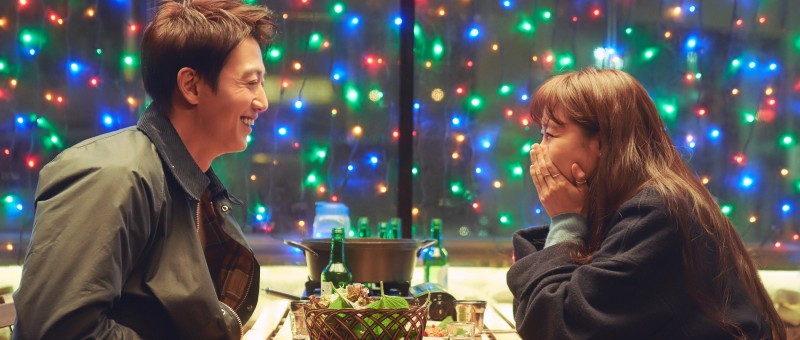
Tune in for Love (유열의 음악앨범, Jung Ji-woo, 2019)

Tune in for love poster 2The course of true love never did run smooth. Another in the recent series of nostalgic ‘90s romances, Tune in for Love (유열의 음악앨범, Yooyeolui Eumakaelbum) takes a pair of nervous youngsters and charts the course of their love story over a decade which, though not quite turbulent, saw its share of difficulties and a host of technological changes. “Miracles are nothing special” the heroine tells us, but when it comes to love miracles are all there is and in the end you’ll just have to learn to trust them.

On Oct. 1, 1994 Hyeon-u (Jung Hae-in) walks into Mi-su’s (Kim Go-eun) bakery looking for something with tofu in it. While inside, he hears the first broadcast of Yoo Yeol’s Music Album, a new morning program which seems to signal the beginning of a new era. Though Mi-su is quick to realise that the only reason someone would be desperately looking for plain tofu early in the morning is because they’ve just been released from prison, she decides to offer him a part-time job in the bakery where he becomes a member of the family alongside her “aunt” Eun-ja (Kim Guk-Hee) who’s taken care of her since her mother died. His past, however, refuses to let him go however much he tries to move away from it. Tracked down by his delinquent friends, Hyeon-u is unable to return to the bakery and will spend the next decade trying to do just that.

Fate parts the youngsters repeatedly, but always brings them back together again seemingly by chance. Military service, changes of address, miscommunication and changing technology all conspire to keep them apart but like any good rom-com the problems aren’t so much circumstantial as personal. A deeply wounded young man, Hyeon-u is taken with the familial atmosphere at the bakery because he feels a sense of acceptance he hasn’t anywhere else, but deep down he still doubts he deserves the “normal life” he so deeply craves. His friends doubt it too, always turning up unexpectedly to remind him of their shared trauma and the debt of guilt he can’t repay. His insecurity prevents him from sharing the source of his pain with Mi-su, keeping her somehow outside the bubble of his shame as the only one capable of knowing the “real” him. She meanwhile is frustrated in realising that he’s holding something back, hurt he doesn’t trust her enough to let him in, and worrying he’ll never truly be ready for full commitment. 

Nevertheless, though often apart they remain painfully in sync, until that is fate brings them back together. As young man with a checkered past and no safety net, Hyeon-u has to fight twice as hard to get ahead, eventually graduating high school and getting into college while supporting himself with part-time jobs. Mi-su, meanwhile, is burdened by the knowledge that she’s lost her mother’s bakery and is desperate to get it back. Dreaming of being a writer, she turns down an internship at the all important radio show to go for a steady job she’s told is at a publisher’s but is actually somewhere more like a print shop where she’s stuck doing incredibly boring admin work. Hyeon-u is unable to get back in touch with her after miraculously reappearing because he’s ashamed to admit that he ended up getting in trouble again thanks to his awful friends even though it really wasn’t his fault. She meanwhile confesses that a part of her was relieved not to hear from him because she too is unhappy in herself, feeling lost and confused, disappointed not to be living the kind of life she could be proud of. 

Times change, but their one constant is the radio show broadcasting every morning and providing additional though indirect methods of communication when they are otherwise unable to make contact. Pay phones give way to email and then to mobiles all the way into the early days of the smartphone era, but face to face conversation remains the most difficult. Mi-su gives up on Hyeon-u while he, ironically, probably does sort something out by having a good old fashioned punch up with his generally unhelpful friend. She wonders if she’s better off to make the “smart” choice rather than waiting on love. Hyeon-u is hurt that in the end she didn’t trust him, but is eventually made realise that the problem was that he didn’t trust himself. Then again, you can’t fight the power of true connection or the pain of its absence, all you need to do is a little fine tuning to make sure the signal comes through loud and clear.


Currently available to stream online via Netflix in the UK (and possibly other territories)

Netflix trailer (English subtitles)

The Straits of Love and Hate (愛怨峡, Kenji Mizoguchi, 1937)

straits of love and hate poster“Tokyo is a dangerous city that traps innocent people like you” the heroine of Kenji Mizoguchi’s 1937 melodrama The Straits of Love and Hate (愛怨峡, Aien kyo) is told, but it’s not so much the darkness of the city streets as the world’s cruelty which threatens to consume her soul. Loosely inspired by Tolstoy’s Resurrection, then particularly popular in Japan and a frequent source for adaptation in the silent era, Straits of Love and Hate is a familiar tale of an innocent maid seduced and betrayed by the weak willed son of her social superiors, but rather than see her beaten by a broken heart Mizoguchi allows to her to find new strength in the determination to move forward in a direction of her choosing.

Kitchen maid Ofumi (Fumiko Yamaji) is in love with Kenkichi (Masao Shimizu ), the son of local hotel owners. Now that he’s finished his studies, his parents were expecting him to take over the inn so they’re not exactly pleased when he tells them he plans to go to Tokyo to become a teacher, nor would they be very happy about the idea of him marrying a lowly maid. After arguing with his father, Kenkichi more or less gives up on the idea of leaving, deciding to postpone until his parents come round or perhaps going on his own and sending for Ofumi when he’s financially stable. Twin pressures, however, force him to accept that it’s now or never. Ofumi is a few months pregnant and will soon be showing so his hand is in a sense forced. Meanwhile, Ofumi is keen to leave as soon as possible because her uncle, Murakami (Seiichi Kato), has turned up extremely drunk and is talking to her employers about taking her away to join his troupe of travelling players which she is desperate to avoid because she remembers her mother telling her he was no good and would sell her to a brothel as soon as look at her.

Kenkichi relents and the pair elope to Tokyo, but once there his general fecklessness resurfaces. The couple have begun to outstay their welcome at the apartment of a friend whose wife is becoming thoroughly fed up with Kenkichi who lounges about all day not looking for work, while an increasingly pregnant Ofumi is out job-hunting alone in the unforgiving city. A naive bumpkin, she’s nearly scammed by a street pimp who claims to be saving her from someone in fact just like him, but is rescued by Yoshi (Seizaburo Kawazu) – a wandering accordion player regarded by all as a petty thug. Kindhearted by nature, Yoshi takes pity on her and sets Ofumi up with a job in a cafe but is soon arrested for stabbing the pimp who was bothering her. Meanwhile, the irritated wife of Kenkichi’s friend has wired his dad who promptly arrives to retrieve his son. Spineless, Kenkichi walks out on his pregnant girlfriend leaving her only with a note that says “sorry, good luck with the rest of your life”, and an insultingly small amount of compensation money.

It’s easy enough to think that Kenkichi wasn’t really invested in his romance, got cold feet, or simply rejected adult responsibility, but the truth is more that he’s just as trapped by patriarchal social codes as Ofumi is and no more free even with his comparatively comfortable class background. He lacks the will to defy his father, and is simply too lazy to consider living an ordinary life in the city with a regular job where no one calls him “young master”. Ofumi, by contrast, fights for love. She breaks the class barrier, naively believes that Kenkichi’s parents will accept her because they cannot reject their grandchild, and forgives Kenkichi’s fecklessness because she truly believes in him. One word from his father, and he crumbles. Left alone Ofumi is forced to send her son out to foster parents and has no other choice than to become a bar hostess.

Unlike Kenkichi, Yoshi is patient and kind. He truly means to protect Ofumi and her son, but also has a self-destructive violent streak as manifested in his over the top attack on the pimp and later altercation with a remorseful Kenkichi. Ironically enough, Uncle Murakami whom she so feared becomes an unlikely source of salvation, inviting Ofumi and Yoshi to join the company as a standup double act. Witnessing Ofumi reenact her romantic tragedy on stage as part of a routine forces Kenkichi to confront his moral cowardice. While the intervening years have seen Ofumi become cynical and bitter, still angry and resentful, Kenkichi has become weary and resigned. His parents have moved to the country, and he now runs the hotel, but he’s still not free. Hoping to convince Ofumi to come back, he invites his dad to meet their son but it becomes clear to her that Kenkichi will never change. He lacks the strength to reject his father’s authority, and as he’s abandoned her before he will likely do so again.

Kenkichi, perhaps meaning well, offers to take the child, pointing out that growing up among travelling players is an inauspicious start in life whereas he can bring the boy up with all the advantages of middle-class comfort. Ofumi is guilty in her immediate refusal, acknowledging that she may be denying her son a “better life” than she can give him, perhaps selfish in her reluctance to be parted from her child, but equally certain that she doesn’t want her son to grow up like Kenkichi, a spineless product of a patriarchal social order unable to stand up to his father or seize his own agency. She tells Kenkichi that she’s fallen in love with Yoshi because theirs is a partnership of equals, they understand and support each other, moving forward as one. He won’t abandon her by choice, but he isn’t perfect either and his foolish self-destructive impulses and selfless nobility threaten his new hope for the future as he embarks on a high risk strategy to prompt Ofumi to accept the “better life” that Kenkichi can offer her. Nevertheless, the point is that the choice is finally hers – no man is going to make it for her, not even her son. What she chooses is a kind of independence, stepping boldly forward into a future that’s entirely of her own making.


Code Blue: The Movie (劇場版コード・ブルー –ドクターヘリ緊急救命–, Masaki Nishiura, 2018)

Code Blue posterThe common complaint plaguing popular Japanese cinema is that it’s increasingly dependent on existing source material, not in only the prevalence of manga adaptations, but the continuing influence of TV drama. Ever since the massive success of the Bayside Shakedown franchise, big screen outings for popular series have been a mainstay of the Japanese film industry, the problem of course being, from a certain point of view, that their nature as an extension of an already existing narrative universe makes them not only impossible for export but also a potential audience turn off to those not already invested.

Code Blue is itself comparatively unusual in being one of the few Japanese TV dramas to head into multiple series. That being so, a movie was something of an inevitability, but like many medical shows which generally adopt a case of the week formula, Code Blue thrives on finely crafted characterisation. Rather than jump this obvious hurdle, director Masaki Nishiura opts for the time-honoured solution of a brief flashback highlighting the key events of the previous three seasons and otherwise tries to avoid too many references to past events. It remains true however that viewers already acquainted with the Doctor Heli team will be best placed to navigate the complex interpersonal relationships informing the rest of the action.

Those would be, chiefly, the unexpected return of aloof doctor Aizawa (Tomohisa Yamashita) who is about to take up a research position in Toronto, while Dr. Hiyama (Erika Toda) is also preparing to follow her dream by moving on to head up the perinatal department at a nearby hospital. As is stressed in the opening sequence for those who might not be aware, the Doctor Heli program does not airlift passengers by helicopter but drops doctors into emergency situations where they are most urgently needed. Aizawa’s arrival coincides with the forced return of a flight originally heading to Vietnam which experienced heavy turbulence with multiple casualties needing evacuation from the plane or treatment on the ground. One such patient turns out to be an especially difficult case seeing as she has not only sustained serious injuries, but is also suffering from stage 4 stomach cancer and was trying to take a last vacation in her final days.

The Doctor Heli team are deeply touched by Tomizawa’s (Kasumi Yamaya) plight, knowing that though her injuries would otherwise not be regarded as serious, she may well end up spending her remaining time in their ICU rather than doing the things she wanted while she could. A talk with her parents reveals a painful breakup and canceled wedding, neatly echoing a conflicted nurse desperately trying to get out of the, in her view unnecessary, wedding ceremony her fiancé has organised. Tomizawa’s former boyfriend (Mackenyu) eventually returns and apologises, hoping to make up for lost time, but she isn’t sure she should let him, not only because he let her down by running away, but because she fears that if she does she might prevent him moving on with his life after the inevitable occurs.

Despite being skilled at fixing the human body, the doctors confess they are often at a loss when it comes to the human heart. They struggle to communicate their true feelings to each other, keeping their minds on the job with well practiced practicality, but are all too aware of the precariousness of being alive. What they all advise is that it’s best to let the people you love know your true feelings because you never really know if there will be another opportunity. Dependable leader Shiraishi (Yui Aragaki) can’t quite find the words to express her feelings for her soon to be departed best friend Hiyama, while she struggles with her essential “awkwardness” yet has a knack for the good kind of “direct”, always knowing the right words to help people feel better.

Aizawa, who had no family of his own, is stoical and patient with those of others, comforting a young man who’s gotten into a car accident with the abusive father he’d tried to reconnect with, letting him know that there was nothing wrong in his rage or resentment but also nothing wrong in his desire to tell him that he has become a fine man on his own and that his father’s violence has not destroyed him. Likewise, a young nurse, Futaba (Fumika Baba), gets an unexpected shock when her older sister brings their alcoholic mother (Rino Katase), from whom she’d become wilfully estranged, into the hospital after she fell and got a kitchen knife stuck in her head. Aizawa tells her that she did what she needed to do and shouldn’t feel guilty about “abandoning” her mother, but also gives her the space to reconnect with her as she begins to understand a little of her mother’s suffering.

You can’t deny that Code Blue: The Movie (劇場版コード・ブルー –ドクターヘリ緊急救命–, Gekijoban Code Blue Doctor Heli Kinkyu Kyumei) is basically a two hour TV special, shot exactly like the TV series with seemingly no increase in budget or production values, but it topped the Japanese box office and obviously provided fans with exactly what they were looking for. A little less melodramatic than might be feared, the series’ big screen finale (?) is unabashedly emotional but celebrates as much the close bonds between the Doctor Heli team as those with their patients as they face the unthinkable time and again but get through it together.


Teaser trailer (no subtitles)

Boxer (ボクサー, Shuji Terayama, 1977)

Boxer posterArtistic polymath Shuji Terayama was fond of claiming that more could be learned about life from boxing rings and race courses than from conventional study. Immersing himself in the countercultural epicentre of mid-century Shinjuku, he became known for iconoclastic street theatre before shifting to film, instantly recognisable for his striking use of colour filter and theatrical, avant-garde aesthetic. 1977’s Boxer (ボクサー) is, however, his most conventional experiment, a generic tale of a struggling boxer yearning to be a champion and battling himself, along with his society, in the claustrophobic arena of the ring, but for all the expected triumph it’s futility which marks his life and the ropes which restrain rather than liberate.

Former boxing champion Hayato (Bunta Sugawara) now lives a lonely existence alone with his beloved dog in a rundown boarding house. His brother is about to be married and wanted him to be in the engagement photos, but he told the young couple to go ahead without him. He may come to regret that because his brother quickly becomes the victim of an accident that may not have been quite that at the construction site where he and his fiancée worked. It seems that another employee, Tenma (Kentaro Shimizu) – an aspiring boxer with a limp, had taken a liking to the same girl and, either distracted by the news she intended to marry someone else, or not thinking clearly, he allowed his digger to hit Hayato’s brother and kill him. Of course, Hayato is not happy about that and determines to track Tenma down, looking for him at a neighbourhood bar where a small boy guides him to the gym, which he is eventually expelled from by the other boxers. Nevertheless, Tenma, having heard about Hayato’s past and been dismissed by his trainers because of his disability, is determined to overcome the debt that exists between them and become Hayato’s mentee hoping to go on to boxing glory.

Like many a Shinjuku tale, this is one of scrappy chancers longing to escape the vice-like grip of an underworld that refuses to release them. In the land of broken dreams, the hopeless man is king, and Hayato is nothing if not hopeless. Years ago, we’re told, he was a champion, yet he suddenly quit boxing mid-way through a bout that he was clearly winning. He had a wife and daughter, but now lives alone (except for the dog), making a living by pasting up flyers. In response to Tenma’s request, Hayato recounts to him the histories of boxing champions in Japan all of whom met a sticky end: dying of typhus in Manchuria, drowning after demobilisation, dying under a bridge, hit by a train, suicide after revenge on a yakuza who’d killed his brother, killed when a runaway truck hit his home, car accidents etc. The boxing match which opens the film is preceded by a minute of silence for a champion who died just a few days previously. So what, Hayato seems to say, we fight but we all die in the ring anyway. What’s the point?

Still, for all the meaningless of his success, he too finds a kind of purpose in Tenma’s quest even if he knows it’s futile and that it is perhaps perverse to commit to saving the man who killed his brother either by accident, as he claims, or out of romantic jealousy. Tenma tells him that he wants to be a champion to appear on TV and be famous. He has, it seems, something to prove. Hayato tells him that boxing’s not for everyone, cruelly echoing the words of the president of the boxing society in his letter explaining to Tenma that there is no place for him in the boxing world because of his disability. His reasoning is however different. He asks him if he is able to hate, to which which he replies that yes, he hates his mother, father, brother, and in fact “the whole damn world” which makes him a perfect mirror for his defeated mentor.

Terayama opens the film with a melancholy black and white sequence in which a boxer walks down a long corridor towards a door filled with light while other contenders pass him from the opposite direction, some badly beaten and others unable to walk. This is the price, he seems to say, a literal manifestation of life’s battery. Even the denizens of the strangely colourful, warm and cheerful little neighbourhood bar with its Taisho intellectual, former actress turned streetwalker, smoking child, and bookmakers who don’t pay their bills, are fighting a heavy battle, crushed under the weight of their broken dreams. Hayato tries to offer encouragement from the sidelines, “Get up if you refuse to be a loser”, he yells to a barely conscious Tenma struggling raise himself from the mat, but even if he does what will he gain? Suitcase in hand the women leave looking for better lives, while Tenma struggles to escape from the ring, chasing hollow victories of illusionary manhood but finding salvation only in the struggle.


Opening sequence (no subtitles)

Adoring (宠爱, Larry Yang, 2019)

Adoring poster 1Pets can often be a point of contention in your average romance. As often as they bring people together, they can also drive them apart which is perhaps why the tug of war over an unexpectedly orphaned dog has become such a trope in bitter divorce narratives. Cheerful New Year movie Adoring (宠爱, chǒngài), however, is 100% pet positive, showing us that shared love for an adorable little critter only brings people closer even if it takes a little while to get there.

Each of our animal loving heroes is connected through a network of friendship or simply by using the same, very cheerful, vet’s. Teenager Nan (Zhang Zifeng) uses her pet golden retriever Zha as an aid while looking after her best friend, Leyun (Leo Wu Lei), who has recently lost his sight through illness. Illustrator An Ying (Kan Qingzi) has a crush on a handsome reporter who lives in her building but is both extremely shy and incredibly germaphobic which poses a small problem for her when he suggests co-parenting a little kitten they rescue from under a car. An Ying’s boss Zhao Le (William Chan Wai-ting) has just married beautiful air hostess Fang Xin (Zhong Chuxi), but her beloved dog Seven is both extremely jealous and aggressively territorial making the start of their married life somewhat stressful. Fang Xin’s friend Fay (Yang Zishan) has been dating smartly turned out fund manager Li Xiang (Wallace Chung Hon-leung), but is concerned that they always meet in hotels. Fearing he has another woman at home, she barges into his swanky townhouse but is surprised to discover that his big secret is a pampered pretty pink pig called Bell that occupies his basement in the height of luxury. Meanwhile, divorced dad Gao Ming (Yu Hewei) has become overly attached to the family cat and fears his daughter Mengmeng (Li Landi) will take it back to the US with her, and rookie delivery driver Ah De (Guo Qilin) bonds with a stray dog who helps him navigate a complex housing estate.

Much as everyone loves their pets, the animals are in some way also conduits for love between people. Leyun has been struggling to accept the loss of his sight and the feeling that the world he’s always known is slipping away from him, which is why he takes it so badly hearing that Nan’s parents are thinking of moving to be closer to her new high school. Nan wants to help him, and chooses to do so by training Zha to be a guide dog, but Leyun only sees the ways in which his friend is trying to fob him off with a dog rather than embrace the warmth that was meant by her gesture. Likewise, Gao Ming, has become so attached to the cat, Hulu, because he sees it as the last remnant of his family, his wife having left him and taken their teenage daughter to the US. Mengmeng Skypes him to talk to the cat, and he worries about losing touch with her if she no longer needs to, but misses the fact that perhaps she merely lets him use the cat as an excuse because she knows he’s an awkward man who doesn’t know how to talk to her. Zhan Le, meanwhile, is understandably irritated by Seven’s jealously, but does his best to make friends with him because he loves his wife and she loves her dog. An Ying too begins to become less afraid of human contact thanks to unexpectedly bonding with the kitten, allowing her to grow closer to her crush.

Bell, however, continues to be a problem for Fay who can’t get her head around why her handsome, stylish boyfriend keeps a “dirty” farmyard animal in the basement, let alone why he lavishes so much luxury on her. Jealous of the pig, she misses all the ways that Bell is actually rooting her human’s love story and just trying to make friends with her while protecting the household like any good pet should, leading her to make a potentially disastrous decision only to realise her mistake just in the nick of time. Darkness also invades the tale of delivery driver Ah De who finds out his new friend is under threat from vicious gangs who apparently round up stray dogs and sell them to restaurants (!). Somewhat uncomfortably, the “gangsters” following Ah De have Korean names, but ultimately turn out to be the good guys and part of the rescue team when all the pet lovers come together to save the independent pup and convince him that it’s OK to love again. As Ah De said, people think they take care of their pets, but sometimes it’s them taking care of you.


Currently on limited release in UK/US/Canadian/Australian/New Zealand cinemas courtesy of CMC Pictures.

International trailer (English subtitles)