Till We Meet Again (あした来る人, Yuzo Kawashima, 1955)

(C) Nikkatsu 1955

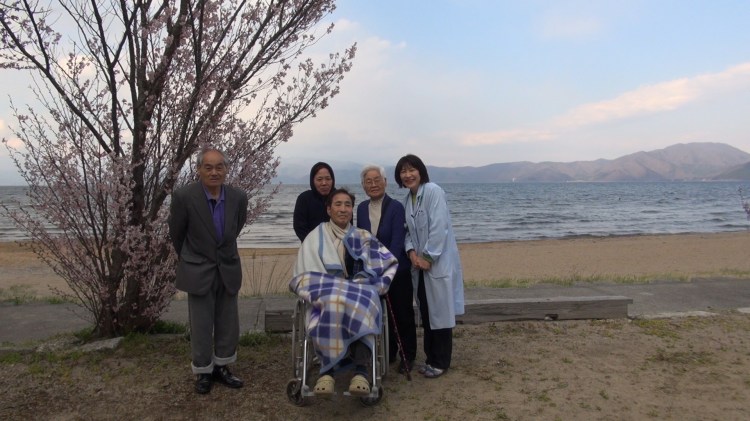
“Men only want to treat women as pets” according to a disaffected housewife in Yuzo Kawashima’s Till We Meet Again (あした来る人, Ashita Kuru Hito). Given the well-meaning paternalism of her melancholy father, she may indeed be right. Her struggle, along with that of her husband, and of the lonely manageress of a dress shop, is in part to break free of paternalism, rejecting the “traditional” and breaking with the natural order of things to claim her own happiness. That, however, requires not only courage and conviction, but time and a willingness to endure hurtful failures. 

The hero, patriarch Kaji (So Yamamura), is a successful businessman. He’s married off his daughter, Yachiyo (Yumeji Tsukioka), to a promising young man, Kappei (Tatsuya Mihashi), but the marriage is unhappy. Kappei, a mountaineering enthusiast, rarely goes home – either out drinking with buddies in a bar with an Alpine theme, or away rock climbing in the mountains. Feeling neglected, Yachiyo resents her husband’s lack of interest and finds it increasingly difficult to get on with him, but her father proves unsympathetic, simply telling her she must put up with it and work harder at her marriage. A chance encounter on a train, however, kickstarts a change in Yachiyo’s outlook, while Kappei also finds himself drawn to a melancholy young woman who actively takes an interest in his mountain climbing career. 

Unfortunately, the young woman, Kyoko (Michiyo Aratama), is also in a strange “relationship” with Kaji who met her while she was a bar hostess in Ginza. Bonding with her for one reason or another, he funded her dress shop which has allowed her to escape the red light district, despite his oft repeated claim not to make frivolous investments. There is however, on his side at least, no “romantic” interest, his intentions are purely paternal. As Yachiyo said to her mother about Kappei, he is in a sense treating her as a kind of “pet”, to be loved and fussed over as an exercise in itself. He claims what he wants from her is his “lost youth”, presumably sacrificed for his business success, but she begins to believe herself painfully in love with him because, paradoxically, of his beneficence. Meanwhile, she meets Kappei by chance, never knowing his connection to Kaji, but bonding with him after taking in the little dog he brought home but was forced to give up by Yachiyo who claims to hate them (or, more accurately, living things). 

That ought to be as good a clue as any that Yachiyo and Kappei simply aren’t suited. Their marriage is already a failure which is making them both miserable, but they’re obliged to put on a show of being a happy couple for appearance’s sake. Yachiyo turns to her mother, Shigeno (Fukuko Sayo), for guidance, suddenly noticing that she looks much older than she’d remembered. Shigeno tells her that you age faster when you’ve nothing to do, busying herself by fussing over the cat (another living thing Yachiyo can’t abide). Yachiyo asks if she was ever happy with Kaji, but gets only the reply that she was “happy” to the extent that she knew she’d never have to worry about being hungry. Looking at her mother’s life, Yachiyo knows that she doesn’t want to end up in the same position, bored and aimless with no “dreams” to speak of. She doesn’t see why she has to stay in a loveless marriage and is convinced that only with another man could she ever truly be “herself”. 

The idea of divorce is still taboo, which is perhaps why her father insists she reconsider, aside of course from his business entanglements with Kappei. Talking it over the couple come to a mutual conclusion, that they only make each other unhappy and separating is the best decision for them both. Pretty much everyone, however, tries to talk them out of it – Kaji still wedded to the idea of marriage as an unbreakable sacrament, while new friend Sone (Rentaro Mikuni) is convinced he’s contributed to their marital discord.

Sone, a bumbling professor obsessed with his research into a rare type of fish and its possible ability to adapt to its environment, becomes friends with Yachiyo after a mix up with dinner bills on a train. She offers to introduce him to her father to see if he can help find financing, and thereafter generates a friendship which, in her mind at least, turns romantic. Sone, however, is a widower now only interested in his fish. Yachiyo falls for him because he’s a much softer, kinder presence than her husband and despite his dedication to his work, is keenly aware of the feelings of others even if he’s awkward in a charming sort of way when it comes to dealing with them. There is something, however, a little perverse in her immediate attraction to another emotionally distant man. She couldn’t stand Kappei’s obsession with the mountains, but could potentially become interested in Sone’s fish. Then again, that’s just as likely to be because Sone made a point of including her in his passion, where Kappei keeps his to himself, eventually sharing it with the more receptive Kyoko. 

Kaji, returning to the paternal, advises Kyoko that “romance is mutual deception”, or at least a kind of transaction and if she really wants to do this, she’d best be sure she’d be OK with regretting it at some point in the future. Previously, he’d told her that “marriage is pointless”, and she’d decided never to do it partly because she thought she was in love with him and he was married already. Her realisation that she’s just a kind of pet to him, a plaything he uses to feel useful while reclaiming his youth, pushes her towards an acceptance of her growing love for Kappei, an irony Kaji struggles with but eventually comes to understand. He really does want the best for her and will support her love story even though it’s also extremely inconvenient in providing an unwelcome link between the different branches of his life. Once Kyoko discovers the truth, however, her determination to fight for love begins to weaken as she reflects on an image of herself as a wicked and selfish woman betraying a man who’d been good to her, when in reality quite the reverse is true. 

Yachiyo, meanwhile, begins to understand that Sone does not necessarily return her feelings, perhaps still attached to the memory of his late wife, too preoccupied with his research, feeling awkward about her position as a married woman, or just not interested. So alarmed is he that he temporarily rushes off from his research to have a word with Kappei and is once again upset by his calm explanations that this is a decision they’ve come to mutually. It’s not because of his love for Kyoko, that only provided an excuse, but because they simply weren’t suited and made each other unhappy. Sone declares himself “sick of seeing beautiful things getting hurt”, but prepares to absent himself from the entire situation by returning to his research. Faced with the potential failure of their new romances, neither Yachiyo or Kappei reconsider their decision to divorce. Kappei retreats to his beloved mountains, while Yachiyo refuses an offer from her father to return home with him, electing to remain in Tokyo and live her own life.  

Now an old man, Kaji struggles to understand the young but somehow admires them for being what he couldn’t be. He describes them as having something pure that he did not have in his youth, but wonders if that purity hasn’t in a sense allowed them to be “damaged” in a way he never has been. Still, he thinks that’s probably a good a thing, because it allows them to become more themselves. Things might not work out right now, and it might hurt, but there’s always tomorrow. He admires the young people because they’re in the process of becoming whole and will be able to continue on their own journeys as complete people while he can only proceed down this corridor, unable to access the post-war future by actively rejecting the rigidity of the traditionalist past.


Currently available to stream on Mubi in the US.

Original trailer (no subtitles)

Asian Pop-Up Cinema Returns for Season 10!

Chicago’s Asian Pop-Up Cinema returns March 10 to April 9 with another handpicked selection of the best in recent East Asian cinema! This landmark 10th Season kicks off with Aaron Kwok homelessness drama i’m livin’ it which is nominated in 10 categories at this year’s Hong Kong Film Awards, and closes with Yukiko Mishima’s much anticipated romantic drama Shape of Red.

March 10, 7pm: i’m livin’ it

Introduction and Q&A with Director Wong Hing Fan and Actress Kathy Wu

Receiving 10 nominations at this year’s Hong Kong Film Awards including all the major categories, i’m livin’ it stars Aaron Kwok as a once successful banker who has unexpectedly become homeless and spends his nights in a 24hr fast food restaurant among others facing similar difficulties.

March 11, 7pm: A Witness Out of the Blue

Introduction and Q&A with Director Fung Chih-Chiang

A detective finds himself investigating a murder in which the only witness is a parrot! Louis Koo is up for best actor at the Hong Kong film awards for his role as the prime suspect while Philip Keung also gets a nod for best supporting as a senior detective.

March 12, 7pm: First Night Nerves

Stanley Kwan’s starry drama pits two warring divas against each other in a battle for the spotlight as they rehearse for a new play penned by a transwoman who struggles to find acceptance in the surprisingly conservative theatre industry. Review.

March 14, 2pm: Men on the Dragon

A collection of dejected middle-aged men can no longer avoid facing their respective crises when forced to participate in the company dragon boat team in Sunny Chan’s heartfelt comedy drama. Review.

March 16, 6.30pm: A Touch of Spring

Introduction and Q&A with Director He Xiao-Dan

Following the breakup of her marriage, a young woman decides to return to her hometown in China after living in Montreal for 10 years. Reconnecting with her family and an old flame helps to show her new direction in her life.

March 18, 7pm: Red Flowers and Green Leaves

A young man who assumed he’d never marry because of a longterm illness suddenly finds himself with a beautiful wife through an arrangement made by his family.

March 19, 7pm: 3 Adventures of Brooke

A young Chinese woman has three very different adventures while traveling in Northern Malaysia, trying on different identities as she encounters different people.

March 21, 7pm: Vanishing Days

Zhu Xin’s debut feature follows a little girl, Li Sen-Lin, who loses her pet turtle while her dad is away on business. Overhearing other relatives talk about an alternate “Sen-Lin”, she begins to wonder if her aunt is really her mother.

March 25, 7pm: We Are Champions

Introduction and Q&A with Producer Rachel Chen and Actor Berant Zhu who will also pick up the Bright Star Award before the screening.

Taiwanese sporting drama in which teenage brothers attempt to change their fates through success on the basketball court.

March 26, 7pm: Detention

Lonely high schooler Fang falls for guidance councillor Zhang who alone seems to understand her. She joins his secret study group to read banned books, but Zhang soon “disappears” while only Fang and another student seem to remember him in this gothic horror set during Taiwan’s repressive martial law period.

April 1, 7pm: Vertigo

Introduction and Q&A with Director Jeon Gye-Soo

A woman in her 30s begins to feel a sense of existential vertigo, trapped in a dead end relationship with a feckless boyfriend while worrying that her career is going nowhere either. Then, she meets a tightrope walking window cleaner.

April 2, 7pm: Paper Flower

Introduction and Q&A with Director Koh Hoon and Actor Ahn Sung-ki who will also receive the Career Achievement Award.

A funeral director struggling to care for his sickly son bonds with a cheerful single mother while going against the city to assist in a public funeral for a noodle stall owner who became a hero to the homeless.

April 4, 7pm: Life Finds a Way

Introduction and Q&A with Director Hirobumi Watanabe

Hirobumi Watanabe once again stars as a version of himself as he experiences a creative crisis as a director while hanging out with his elderly grandmother in sunny Tochigi.

April 8, 7pm: Samurai Marathon

A small fiefdom is thrown into crisis when a ninja spy mistakes his lord’s intentions to toughen up his men as a prelude to rebellion in this unusual samurai drama directed by Bernard Rose. Review.

April 9, 7pm: Shape of Red

Kaho stars as a happily married woman who embarks on a passionate affair with an old flame (Satoshi Tsumabuki) in Yukiko Mishima’s steamy adaptation of the novel by Rio Shimamoto.

Asian Pop-up Cinema Season 10 runs in Chicago from March 10 to April 9. Full details for all the films are available via the festival’s official website where tickets are already on sale. You can also keep up with all the latest news by following Asian Pop-up Cinema on FacebookTwitterInstagram, and Vimeo.

The Rice Dumpling Vendors (燒肉粽, Hsin Chi, 1969)

What could be more wholesome and comforting than a rice dumpling? To support their desperate family, a father and daughter become, unbeknownst to each other, Rice Dumpling Vendors (燒肉粽), hoping to buy back their innocence through honest work but secretly ashamed of the depths to which they’ve fallen. Rising economic prosperity has it seemed provoked a moral decline and resulted in an arrogant entitlement that allows wealthy men to assume they can do as they please, but one ordinary businessman is about to get an unexpected humbling when confronted by the consequences of his moral transgressions. 

Tsibing (Yang Ming) is outwardly successful. He dresses in suits, has a large house and chauffeur driven car, can afford to employ a nanny, and comes home to an elegant middle-class wife (Jin Mei) and three adorable children. Despite all of that, however, he’s about to ruin everything. His mistress is secretly part of a criminal gang. She gets her boyfriend to pretend to rob the place, knocking out Tsibing’s wife and undressing her, leaving a pair of underpants on the bed to make it look like her lover has thrown his clothes on in a hurry and jumped out of the French doors to avoid being caught out by Tsibing’s unexpected arrival. Tsibing doesn’t stop to ask questions. He rounds on his wife, beating her violently in front of their young son whom he also kicks in the ribs for trying to defend her. Hypocritically pointing out that his taking a mistress is no justification for her to take a lover a too, he throws her out of his house, only to be thrown out himself when he realises that his mistress has stolen all his money. Ruined and penniless he moves into a shack with the three kids and tries to keep things together while meditating on his mistakes. 

The Rice Dumpling Vendors is, somewhat unusually, a melodrama of male failure in which Tsibing experiences a humbling which pulls him away from the amoral capitalism of the post-war era towards humanistic compassion. The couple next-door, a balloon seller (Chin Tu) who dresses as a clown and his feisty wife (Siu Chu), were unable to have children of their own and quickly take to the young family, feeling sorry for Tsibing and often helping him out particularly with buying formula milk for the baby. “I always thought people were selfish” he confesses while lying on a hospital bed after sustaining a serious workplace injury, finally seeing a different, less materialistic way to live. 

As the closing song reminds us, however, you can’t do anything without money. Attempting to walk away from failure, Tsibing finds himself in an impossible position. He can’t find work that can support a family, and even once he finds a job he gets himself injured leaving him entirely unable to provide. Oldest daughter Hsiu-chuan (Dai Peishan) tries to take the burden on herself, selling lottery tickets and heading out at all hours to hawk rice dumplings to passersby in the streets, unconvincingly telling her father that she’s going to help a classmate who is sick in the hospital with their homework. Hsiu-chuan’s earnestness stands in complete contrast to her father’s increasing desperation compounded by guilt and regret. In a low moment, he even considers abandoning the baby in front of the house of a wealthy childless couple in the hope that they will adopt her.

Strangely, Tsibing never considers asking the childless couple from next-door who already dote on his children if they’d be willing to look after the baby, but determines straight on placing himself at the mercy of the wealthy. The couple at least seem nice – they want a child and would spoil it with both love and money, but they are also arch materialists. Their first thought is that they should give Tsibing money in compensation, as if they were buying a pet. It doesn’t quite occur to them that he might change his mind, after all they can give his baby a quality of life he currently cannot in which she’ll be well fed and taken care of. Is it selfish of him to deny her that? Hsiu-chuan and her brother, however, aren’t having any of it. They’re taking their sister home where she belongs, vowing to give up on school and double down on their part time jobs to make sure they can afford milk to feed her. 

Tsibing too lowers himself once again, selling not only lottery tickets but later rice dumplings, telling Hsiu-Chuan, who is doing exactly the same thing, that he’s got a job as a nightwatchman in a warehouse which is why he’s out all night. Humbled and encouraged by the warmhearted altruism of his kindly neighbours, he’s learning to renounce the materialist life and re-embrace what’s important. The mistress, meanwhile, making an unexpected reappearance, pays a heavy price both for her amoral materialism, and for her transgressions as an “immoral” woman whose attempts to use men provoke only jealousy and violence. Meanwhile, the wife is eventually vindicated and seems to have retained both her wealth and her class status even after being unfairly thrown out by Tsibing. 

What we’re presented with is a seemingly uncomplicated family reunion, completely ignoring Tsibing’s brutal use of violence against his wife and son which is itself intended to demonstrate his “manliness” and patriarchal authority. He reminds his wife of the cultural double standard that insists that a man may take a mistress but a wife must be faithful, punishing her not for betraying their family but for making a fool of him. Little does he know however that he’s already been made a fool of by a “wicked” woman, and it’s entirely his own fault for acting irresponsibly, regarding a mistress as little more than a status symbol. Nevertheless, now humbled he has a new appreciation for what it means to be a family man, seeking not riches but simple wholesome pleasures like rice dumplings and friendship surrounded by kind and honest people always willing to lend a hand to those in need.


Screened as part of touring retrospective Taiwan’s Lost Commercial Cinema

Ride Your Wave (きみと、波にのれたら, Masaaki Yuasa, 2019)

“The next wave is already on the horizon waiting for you to catch it” according to the heroine of Masaaki Yuasa’s uncharacteristically uncomplicated Ride Your Wave (きみと、波にのれたら, Kimi to, Nami ni Noretara) offering words of comfort to her dejected soon-to-be boyfriend over his continuing failure to master the surfboard. It’s advice she struggles to follow herself, however, after she’s blown off course by unexpected tragedy. Yet, nothing’s ever really as off course as you think it is and the waves she must learn to ride are her own and hers alone. 

Oceanography student Hinako (Rina Kawaei) is something of a mess. She’s moved out on her own to study at university in Chiba, but is struggling with the transition to adult life, unable to unpack her things or cook herself a decent dinner. Nevertheless, she’s become a “hero” to dashing fireman Minato (Ryota Katayose) who watches her bravely ride the waves from the roof of the fire station. The pair finally meet when some irresponsible students have an impromptu fireworks party that ends up setting fire to Hinako’s building, leaving her marooned on the roof cradling her surfboard at which point she’s rescued by Minato heroically appearing in a cherrypicker. She offers to teach him to surf, they go for coffee, and eventually fall hopelessly in love. Their romance, however, is cut short when Minato heads to the beach alone in stormy seas and drowns trying to save a jet skier who’s got into trouble. Unable to deal with the grief, Hinako avoids the sea altogether but begins to believe she is seeing Minato in every watery surface and can in fact summon him by singing their favourite song. 

Fellow firefighter Wasabi (Kentaro Ito), himself a little in love with the formerly fearless Hinako, tries to jolt her out of her “delusion” by asking how this could have happened to her, once so brave and independent now filled with grief and anxiety. Minato, whose name literally means “harbour”, had promised to protect her, staying by her side forever. Faced with her first serious relationship going far too well, Hinako identified a potential problem in her possible over reliance on her extremely capable boyfriend, preferring to wait until she was able to ride the waves alone before taking the next step. Minato wanted the same thing, encouraging her growth while providing a “safe harbour”, but his sudden absence has left her afraid to move forward and unwilling to leave the land. 

Delusion or not, Hinako clings to her lost love, carrying around “Minato” in a tiny flask of water or filling up an inflatable porpoise and walking it all around town to the constant consternation of the locals. What she learns, on one level, is that she has to learn to save herself, but also that in doing so she can help to save others. Learning something about Minato’s past and the reasons which eventually led to him becoming a fireman persuade her that she ought to use whatever skills she has for the common good. Meanwhile, the lovelorn Wasabi learns something similar after reconnecting with Minato’s spiky sister Youko (Honoka Matsumoto) who was once a shut-in refusing to go to school where her rather abrasive manner made her an outcast but found a new strength in self-acceptance on hearing Wasabi declare that just being herself was good enough for him. 

Youko decides to pick up her brother’s dream of opening an artisanal coffeeshop, which is nice but also a little shortsighted in that it does not allow her to pursue a dream that’s entirely her own other than through finding the courage to embrace the risk of romance. Likewise, Hinako and Wasabi are largely carried along in Minato’s wake, but nevertheless make unambiguously good decisions in choosing to dedicate their lives to helping others, accepting that that’s often less about grand heroic gestures than it is about small moments of connection. Hinako realises that she has to let go of the past, however painful, for Minato’s good as well as her own, while finding her sea legs to take her into a more promising future. After all, the waves keep coming. Minato recedes into the great confluence of life, while Hinako gains the courage to ride the waves alone, no longer afraid to leave the shore but in search of new horizons. 


Screened as part of the Japan Foundation Touring Film Programme 2020.

UK Trailer (English subtitles)

The First Supper (最初の晩餐, Shiro Tokiwa, 2019)

“Family” – what does it mean? The concept itself has been under examination for some time, at least as far as the “family drama” goes, but Shiro Tokiwa’s The First Supper (最初の晩餐, Saisho no Bansan) has it more positive than most as its somewhat emotionally distant hero begins to piece his back together and rediscover his place within it. He does so largely through the Proustian power of food as his lonely step-mother does her best to unite the family by reviving warm memories of the various meals they shared together. 

Yet, as Rintaro (Junya Maki / Shota Sometani), a Tokyo-based freelance photographer grappling with the art/commerce divide, is insensitively told at his father’s funeral, his is not an “ordinary” family. That would be (partly) because it was a blended one. Rintaro and his sister Miyako (Nana Mori / Erika Toda) were being brought up by their single father, Hitoshi (Masatoshi Nagase), their mother having apparently left the family, before he brought Akiko (Yuki Saito) and her teenage son Shun (Raiku / Yosuke Kubozuka) to live with them. As a grown man, Rintaro still claims not to be able to understand what his father was thinking, why he wanted to start a “new” family by bringing Akiko and Shun into their home, especially as it led to him giving up his lifelong love of mountaineering to get a steady job in a factory. It never seems to occur to him that perhaps his father simply fell in love again and wanted to share his life with a woman who loved him, becoming a father figure to her teenage son in welcoming an expansion to their family. 

There is, perhaps, still a resistance to the entire idea of blended families or even remarriages especially in the more conservative countryside. Dealing with an offensive uncle, Rintaro fires back that this kind of thing is perfectly normal and no kind of issue at all in Tokyo, so he’s not sure what the problem is but it’s clear that there is still a degree of disapproval of Hitoshi and Akiko’s union even 20 years later. Part of that might be to do with the circumstances of their meeting which we later discover had their share of moral ambiguity. That central secret, and the ones which spur off it, is the reason that Rintaro has never quite been able to put his family together, while Miyako, married at a young age and now the mother of two daughters, is experiencing a degree of marital strife with her mild-mannered husband (Shinsuke Kato) who accuses her of cheating with an old classmate at a reunion. 

Akiko stuns them all by abruptly announcing that she’s cancelled the caterers for the wake and is planning to cook herself, serving up a selection of dishes one wouldn’t usually expect at a funeral but which she claims are taken directly from Hitoshi’s will and each reflect a particular memory of their life together as a family. There is a gaping hole, however, in that we don’t see Shun. “Why should he come?” Miyako replies to Rintaro’s questions, “He’s an outsider here”. A rather cold cut-off for a step-brother, even one you haven’t seen in a long time, and a partial negation of the idea of families not bound by blood even if it’s snapped partly out of hurt. 

While Miyako struggles to reconcile herself to her place within her new family and her decision to form it, Rintaro chats on the phone to his sympathetic girlfriend, Rie (Hyunri), who has, perhaps surprisingly, not accompanied him on this emotionally difficult occasion. The problem seems to be, however, that he’s told her not to come even though she’d have liked to be there and it doesn’t seem as if anyone would have objected. An agent ringing him at a spectacularly bad time to tell him he hasn’t won a competition is forced to reveal, in the nicest possible way, that he narrowly lost out because his pictures are “cold”, he has no affection for his subjects and it shows. He remains diffident in his relationship with Rie because he hasn’t worked out this whole family thing for himself and is worried he simply doesn’t know how to fit into one. 

Through re-experiencing his childhood through the meals shared with his father, Rintaro begins to regain a sense of belonging, discovering what it was that lay at the heart of his family drama and why it eventually led to a painful breakup. Before all that, however, they’d been happy. Trying to quell a spat between Miyako and Shun over different kinds of miso soup not long after they moved in, Akiko declares that from now on she’s only making one, “blended”, kind for everyone though the choice is theirs whether or not they choose to eat it. Truths are shared, new understandings are reached, and the family is in some sense restored. Their childhoods explained, Miyako and Rintaro begin see a path forwards towards a happy family life of their own while taking their bittersweet memories with them, no longer burdened by anxious insecurity but strengthened by a new sense of belonging that has nothing to do with blood.


The First Supper screens in New York on Feb. 16 as part of this year’s New York Asian Film Festival Winter Showcase.

Original trailer (no subtitles)

The God of Cookery (食神, Stephen Chow, 1996)

Thing about cooking is, you gotta have heart. At least, that’s the main takeaway from Stephen Chow’s 1996 culinary comedy God of Cookery (食神) in which he once again stars as a man who’s become rich and successful exploiting the talents of others but gets a major humbling when his duplicity is exposed by an even more duplicitous, though apparently talented, rival. Only by living among the people and rediscovering the simple joy of ordinary food cooked with love can he regain his true identity as the “God of Cooking”. 

Stephen Chow (Stephen Chow playing a character of the same name but written with different characters) has built up a successful food empire built around himself as a celebrity chef known as the “God of Cooking”. As a popular TV judge on a cooking competition, he makes a point of giving each of the contestants zero points, starting off with words of praise but eventually finding fault with “basic” techniques and even at one point complaining that it doesn’t matter how tasty the dish is because the chef is so ugly it’s made him lose his appetite. Chow treats his employees with total disdain, going so far as making a prospective hire defecate in public in front of a lift in return for a job, while schmoozing with Triads to expand his empire. The Triads, however, are getting fed up with him and have installed a mole in his organisation. Bull Tong (Vincent Kok Tak-chiu) is a talented chef who claims to have trained at the Chinese Culinary School on the mainland. He makes a point of causing public embarrassment to Chow by tearing apart one of his signature dishes at the press launch for the 50th branch of his branded restaurant chain. Chow is exposed as a talentless fraud and thanks to his haughty attitude, his friends abandon him. 

Penniless and destitute, he rocks up at a noodle stall run by Sister “Twin Daggers” Turkey (Karen Mok), critiquing her noodles in the same way Bull had torn apart his. Turkey takes pity on him after he’s beaten up by thugs and accepts him into her mini street gang. It’s Chow who finds an innovate solution to to her turf war with a rival stall holder in inventing the not entirely appetising “Pissing Beef Balls” which prove an instant hit with all who try them, even helping to cure those suffering with anorexia (apparently a widespread problem of the time, at least according to onscreen newspapers). Chow has not, however, lost his cynical streak and wants to get back to the top by opening a nationwide chain of Pissing Beef Ball restaurants, while Bull and the Triads begin to panic about his seemingly unstoppable success. 

Parodying both Tsui Hark’s Chinese Feast from the previous year, and Wong Jing hit God of Gamblers, Chow brings even more of his now familiar slapstick style, turning cookery into a kind of martial art, and even including a brief sequence in which he gets trapped inside the Shaolin Temple and ends up learning some of their patented culinary techniques. As the cynical top chef, Chow stands in for the evils of the age, puffed up on empty capitalism, openly telling his staff to pull dirty restaurant tricks like making the seats small and uncomfortable to increase turnover and filling the drinks with giant ice cubes to keep costs down and encourage guests to order more. Bull Tong, however, goes even further, beating the staff and suggesting they serve greasy, salt-laden dishes like French fries so kids order more soda, ignoring complaints from the chefs that it’s unethical to serve such obviously unhealthy food to children. 

Sister Turkey’s cuisine, by contrast, might not exactly be top table stuff but it makes no pretence of being anything other than it is. Her rival prides himself on using high quality ingredients, even making sure his oil is changed daily, making it plain that your average market hawker (whether he’s telling the truth or not) at least appears to have more concern for his customers than giant restaurant chains do. Turkey’s ordinary barbecue pork and rice dish with a side of egg is the best Chow’s ever tasted because it was made with kindness. He may have been fond of saying that you have to have heart to cook, but it was just one of his soulless catchphrases until he realised it was true. Good food, companionship, love, and a Christmas miracle slowly work their magic until the “God of Cookery” is finally restored thanks to a little celestial intervention, showing the Bull Tongs of the world exactly what they’re missing.


The God of Cookery screens in New York on Feb. 15 as part of this year’s New York Asian Film Festival Winter Showcase.

Stand By Me (陪你很久很久, Lai Meng-jie, 2019)

“Teenage days we all need a romance that hurts” exclaims a rejected teen, too shy to declare her crush directly but trying to achieve a kind of closure by literally shouting it from the rooftops in Lai Meng-jie’s charming teenage rom-com, Stand By Me (陪你很久很久, Péi Nǐ Hěn Jiǔ Hěn Jiǔ). For Jiu-Bing (Mason Lee), however, his romance has gone on a little longer than just his teenage years. He’s been silently in love with Bo-he (Ivy Shao Yu-Wei) since he was 12, but their relationship has remained at the innocent level of childhood friendship. Nevertheless, all of his subsequent decisions have been taken with one aim in mind, being at Bo-he’s side to protect her. Now that they’re grown, he’ll have to come to terms with the fact that their relationship is inevitably going to have to change in one way or another. 

As with most youngsters, those changes arrive as they set off for university (he’s enrolled in the same one as her for that reason alone). No matter how close you are, it can be quite claustrophobic having someone buzzing around you all day and Bo-he is beginning to get fed up with Jiu-Bing’s continuing immaturity. He’s promised to “protect” her, but often ends up in trouble himself and needs her to rescue him. It’s Bo-he that finds him a place to stay after he accidentally blows up his new student dorm and gets kicked out, only it turns out to be half of a teenage girl’s bedroom above a family bakery, rented out by high schooler Xia-Tian (Tsai Jui-Hsueh) without her father’s (Chu Chung-heng) permission as an enterprising way to get a little more pocket money. Meanwhile, Bo-he has fallen for a handsome, heroic classmate, Mai-zi (Edison Song Bai-Wai), who is, in every stereotypical way, the perfect man. 

In an ironic twist, Jiu-Bing’s part-time job is as a “pacer”, supporting other runners as they make their way towards the finish line but eventually dropping back himself. He takes pride in being there for people, protecting and encouraging them, but still struggles to accept the fact that his chosen role inevitably means he’ll spend his life celebrating the successes of others rather than his own. Jiu-Bing eventually has this fact thrown in his face when a romantic rival describes him as nothing more than a rebound guy, implying that Bo-he only sees him as a fallback she can rely on when some other boy breaks her heart but will never really want to be with in the long term. 

On one level, Jiu-Bing is fine with that. He really does just want Bo-he to be happy even if it’s with someone else, but still struggles with the decision of whether to speak his feelings out loud and risk ruining their friendship or keep silent and live with the pain of being just her friend forever. As one of his eccentrically nerdy friends puts it, companionship is the “dark matter” that supports a relationship, but the jury’s still out on whether companionship alone is enough to go the distance. Meanwhile, he remains entirely oblivious to the fact that Xia-Tian is beginning to develop feelings for him that place her in exactly the same place as he is with Bo-he. Maybe he just thinks of Xia-Tian as a crazy little sister, and maybe Bo-he just thinks of him as a troublesome little brother who will always need looking after despite his constant protestations that all he wants is to be able to “protect” her. 

What Jiu-Bing learns however is that being a pacer is no bad thing. It’s much better to run with someone than to run alone, but there are times when you just need to set a pace for yourself so you can figure out how far you can run. There are more ways to love than just the romantic, though maybe that’ll come in time but perhaps not from the direction you’d expected. “Being heard and accepted is nothing we can decide” Xia-Tian adds, and what is teenage romance other than coming to an acceptance that sometimes you love people who don’t love you back? But then sometimes they do, and if you never say anything you’ll never know. Jiu-Bing has some growing up to do, and a few decisions to make so he can figure out where it is he ought to be – supporting from the sidelines or waiting with flowers near the podium. Either way, Lai Meng-Jie’s charming teenage rom-com is a refreshingly progressive take on the genre which allows it’s “nice guy” hero to find solace in the authenticity of his generosity while its heroine embraces her own sense of agency entirely independent of her romantic destiny. 


Stand By Me screens at Chicago’s Gene Siskel Film Center on Feb. 17 where the full lineup for the upcoming 10th season of Asian Pop-Up Cinema will also be unveiled. Director Lai Meng-jie will be in attendance for an introduction and post-screening Q&A.

Original trailer (English/Traditional Chinese subtitles)

Zone Pro Site: The Moveable Feast (總舖師, Chen Yu-hsun, 2013)

In these high speed days, it’s sometimes difficult to remember that “cooking means something” or at least it should do according to “Doctor Gourmet” Hai (Tony Yang). A warm tribute to the Taiwanese tradition of bandoh outdoor banquets, Zone Pro Site: The Moveable Feast (總舖師, Zǒng Pù Shī) positions the figure of the chef as a kind of conduit bridging the gap between people through the art of well cooked food. Heroine Wan (Kimi Hsia Yu-chiao), however, thoroughly rejected the ambitions of her top chef father and determined on a life in the city with her heart set on becoming a famous model, actress, and celebrity. 

Life in Taipei is however hard. Career success is hard to come by and duplicity lurks round every corner. Wan learns this to her cost when two shady guys turn up on the pretext of delivering a birthday cake only to explain to her that her boyfriend, whose loans she’s unwisely co-signed, has skipped town and left her with the bill. Confused and afraid, Wan decides to skip town herself, planning to head back to her hometown and ask her mother for help. What she discovers however is that her mother is on the run too after losing the family restaurant partly through her subpar cooking skills which could never match those of her late husband, and partly through the betrayal of his apprentice who poached all their best customers and set up on his own. Despite being “in hiding”, the only way Puffy (Lin Mei-hsiu) has been able to make ends meet is by putting on an impromptu dance show in the central square to promote her small noodle stall. Luckily for them both, Wan makes a chance encounter on the train with a nice young man, Hai, who turns out to be a “Doctor Gourmet” specialising in “fixing” failing restaurants.

His arrival comes at just the right moment as Wan and her mother get a visit from potential clients – a sweet older couple who first met 50 years previously at a wedding catered not by Wan’s father Master Fly Spirit, but by his now departed mentor. Wan’s mother was going to turn the request down because neither she nor Wan know how to make the traditional dishes the couple are looking for, but Wan makes an impromptu decision to try and make their wedding dreams come true, warning them that it might take a little extra time and not quite match up to their romantic expectations. 

Wan’s problem is that she always hated her family’s restaurant. She resented the heat and the smell and the grease, often placing an empty box over her head and retreating into a fantasy world to escape the chaos. Her father wanted her to take over, leaving her a notebook filled with his recipes which was unfortunately stolen by a homeless man who mugged her at the station, but she was dead set on escape and becoming a “someone” in the city. Unlike her mother, however, she has real talent for cooking and is equally skilled at using her good looks and sweet nature to get things done. Soon after her arrival at the noodle stand, she’s already got herself a gang of geeky groupies calling themselves “Animals on Call” who are ready to do pretty much anything she asks of them. 

That comes in handy when Puffy persuades her to enter a national cooking competition where her rival is none other than Tsai, the apprentice who betrayed them, backed up another famous ex-chef Master Ghost Head (Hsi Hsiang) who has a fiery temper and spent some time in prison which might be why he still dresses like an ultra cool motorcycle guy from the ‘70s. There were apparently three great masters, the other being the eccentric  Master Silly Mortal (Wu Nien-jen) who is later discovered living in a subway tunnel where he keeps the art of bandoh alive through a literal underground restaurant where his regulars bring him a selection of ingredients before sitting down to enjoy a communal meal. It’s Silly Mortal whose food is said to evoke human feelings who guides Wan towards a series of epiphanies about the nature of “traditional” food. According to him, there are no rules about what goes together, and having a “traditional” heart is really about embracing the true nature of bandoh. Only by having a heart full of joy can you make good food. 

Equally eccentric in some respects, Hai takes a back seat after reminding Wan that cooking is really a way of sending a coded message to its intended target. The two goons eventually join the team, working together earnestly to prepare for the biggest banquet of all which is both the old couple’s wedding celebration and the competition’s finale. Master Ghost Spirit talks about taking the “grief” out of meat through fine cutting, while Master Silly Mortal is all about putting positive emotions in, but the missing piece of the puzzle is Master Fly Spirit who sends his final message to Wan only after death as she rediscovers him through his recipes. Not quite giving up on her celebrity career, Wan embraces her inner chef, happy with the idea of making lunchboxes to sell at the station with her new friends and family rather than chasing money through oddly nihilistic cuisine as Tsai had done. In the end, it’s all about joy and togetherness, sharing tasty food in the open air where anyone and everyone is welcome to bring whatever they have to the table.


Zone Pro Site: The Moveable Feast screens in New York on Feb. 16 as part of this year’s New York Asian Film Festival Winter Showcase.

International trailer (English subtitles)

Kakegurui (映画 賭ケグルイ, Tsutomu Hanabusa, 2019)

Gambling, the ultimate act of faith or the height of anarchic genius? Based on the hit manga which has already been adapted as a popular TV anime, Kakegurui (映画 賭ケグルイ) is the sequel to two seasons of a live action TV drama set in a school where hierarchy is decided not by grades or by fists, but by prowess at the gaming tables. Those who lose so badly they bankrupt themselves become a kind of subhuman underclass, tied up like dogs and routinely humiliated, while the Student Council becomes a stand in for an oppressive social order ruling over all and enforcing the law with an iron hand. 

Into this high stress environment walks Yumeko Jabami (Minami Hamabe), a transfer student to the elite Hyakkaou Private Academy determined to bend its rules to her own advantage. Meanwhile, Student Council President Kirari Momobami (Elaiza Ikeda) is forced to deal with a new and unexpected threat – The Village, a small cult made up of students who have rejected the system, dropped out to live a hippy lifestyle in the grounds, and refuse to participate in “meaningless” games of chance. Their priest-like leader, Amane Murasame (Hio Miyazawa), once beat Kirari at cards becoming something like a god of gambling, but lost his zeal for the game after losing the only thing he ever cared about. 

Where he opposes the system passively yet pointedly, Yumeko rebels in her own, fiercely individualistic way by superficially conforming, becoming a top gambler, but only because she is exercising a free choice to do so. She plays for kicks alone, and generally wins because she isn’t stressed enough about losing to let it bother her. This individualist streak makes her a hidden threat against Kirari, but one that might in itself be an interesting gamble for the infinitely bored Student Council President. 

While Yumeko’s individualism threatens to unbalance the system, The Village presents a collectivist threat, agitating wholesale revolution and an end to the oppressive rule of the Student Council which renders losers inhuman. Yet there’s an essential irony in The Village’s creepy monotony that stands in stark contrast to Yumeko’s seeming conformity but insistence on her own freedom. Your life’s your own, she later explains, it’s annoying if people try to manipulate it. In this instance she’s talking not about the “life plans” handed out by the Student Council, but the egotistical desire to “save” the lives of others without considering if they want them saved or if you’re merely infringing on their personal freedom in attempting to make choices for them based entirely on your own value system. 

Murasame perhaps bet something he shouldn’t have and technically won, but ended up losing anyway which is what has made him turn against gambling. Yumeko, meanwhile, believes that the only way to be truly free to entrust yourself to luck and destiny. That is, however, somewhat disingenuous, because what Yumeko excels at is mind games, essentially manipulating those around her in order to win. Yumeko plays players, not cards, and is rarely played herself. Unlike Murasame’s righthand woman Arukibi (Haruka Fukuhara), she doesn’t care that much what people think. Arukibi, meanwhile, is desperate for approval and is playing her own game just to get someone’s attention which makes her a volatile, if easily manipulated, opponent.

Essentially, Murasame wants freedom outside of the system where Yumeko has found it within, but her philosophy is perhaps the more dangerous in that it proposes total freedom that has no regard for the systems of governance. Then again, maybe this is all a long con to get better cakes in the cafeteria, merely gaming the system rather than actively undermining it. Nevertheless, for Yumeko life is risk, rebelling against an oppressive social order through the anarchic individualism of living by “chance”. Living in a society as highly regimented as this is a high stakes game, but you can’t win if you don’t play, and you need to play smart. That’s the peculiar irony of life at Hyakkaou Private Academy where the Student Council literally owns your future but you can win it back by playing them at their own game. Bet your life, win your freedom Yumeko seems to say but she still makes sure to bring cake for everyone, not just the “winners” or the privileged few. 


Screened as part of the Japan Foundation Touring Film Programme 2020.

International trailer (English subtitles)
Kinema Junpo Announces 93rd Best 10 for 2019

Prestigious cinema magazine Kinema Junpo has released its always anticipated “Best 10” list for films released in 2019, the 93rd edition. Steamy drama It Feels So Good takes the top spot in a list which is (almost) entirely free of surprise awards juggernaut Fly Me to the Saitama.

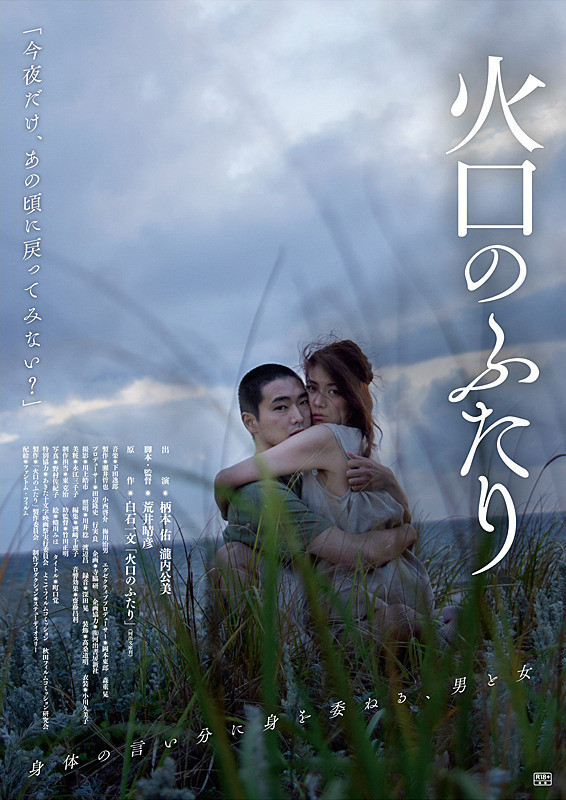
1. It Feels so Good (火口の ふたり)

Steamy drama from Haruhiko Arai – screenwriter, critic, and editor of film magazine Eiga Geijutsu, starring Tasuku Emoto as a young man who’s lost his job and got divorced. Retreating to his hometown, he reconnects with an old flame (Kumi Takiuchi) in the days before her wedding to another man.

2. Another World (半世界)

Male friendship drama from Junji Sakamoto in which a traumatised soldier returns to his small town home and tries to reconnect with the friends of his youth.

3. From Miyamoto to You (宮本から君へ)

Sequel to a TV drama directed by Tetsuya Mariko (Destruction Babies) starring Sosuke Ikematsu as a shy salesman who falls for Yu Aoi’s office worker.
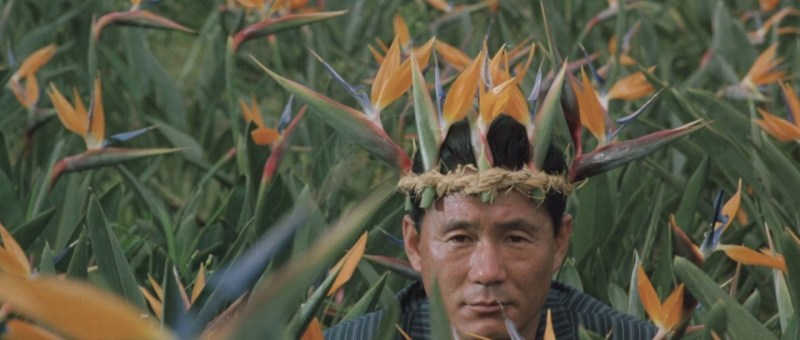
4. A Girl Missing (よこがお)
Drama from Koji Fukada in which a homecare nurse is implicated in the disappearance of her employer’s daughter.

5. Listen to the Universe (蜜蜂と遠雷)

Adaptation of Riku Onda’s novel following four aspiring concert pianists directed by Kei Ishikawa (Gukoroku: Traces of Sin)

6. Farewell Song (さよならくちびる)

Love triangle drama from Akihiko Shiota in which a two-piece folk band (Nana Komatsu & Mugi Kadowaki) go on one last tour with a male roadie (Ryo Narita) who disrupts their dynamic.

7. One Night (ひとよ)

Drama from Kazuya Shiraishi in which a scattered family reunites 15 years after one traumatic night.

8. Just Only Love (愛がなんだ)

Rikiya Imaizumi adapt’s Mitsuyo Kakuta’s novel in which a lovelorn office lady (Yukino Kishii) gets into a casual relationship with a colleague (Ryo Narita) but gradually realises he’s just not that into her.

9. RANDEN: The Comings and Goings on a Kyoto Tram (嵐電)

Three stories of love occur along the the iconic Kyoto tramline as a writer from Kamakura searches for a ghost train while recalling memories of his wife, a local girl helps a Tokyo actor master the Kyoto accent, and a girl from Aomori falls for a trainspotter!

10. To the Ends of the Earth (旅のおわり世界のはじまり)

Kiyoshi Kurosawa reunites with recent muse Atsuko Maeda as a lost TV presenter goes searching for herself while filming in Uzbekistan.

Best 10 International

  1. Joker
  2. Once Upon a Time in Hollywood
  3. The Irishman
  4. The Mule
  5. Green Book
  6. Sorry We Missed You
  7. Cold War
  8. Roma
  9. An Elephant Sitting Still
  10. Burning

Best 10 Documentaries

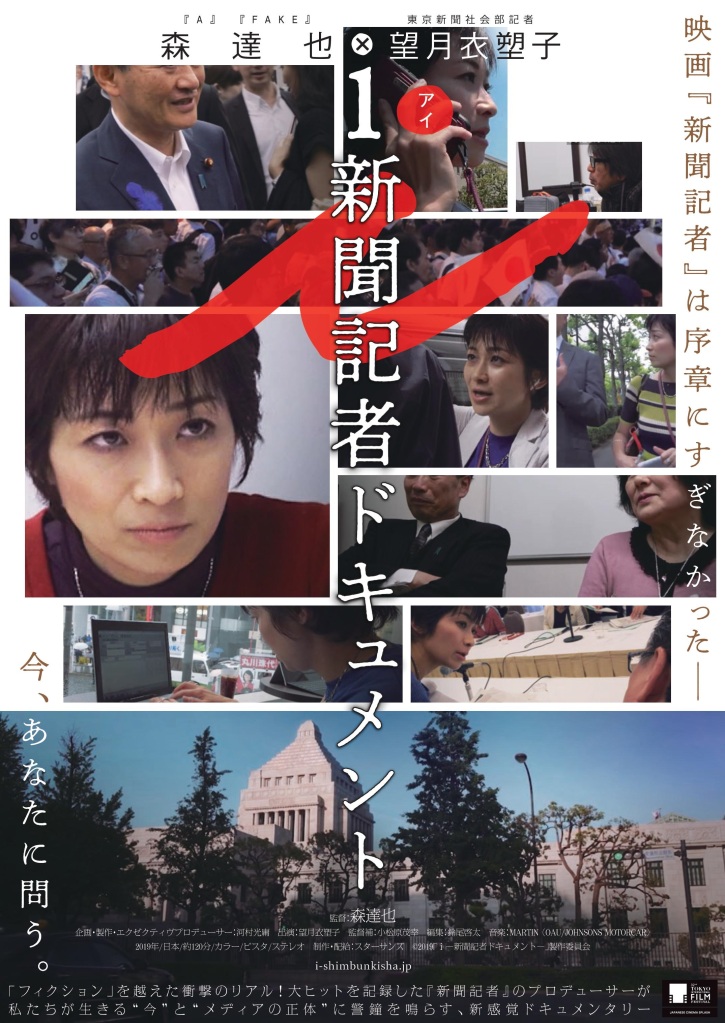
  1. i -Documentary of the Journalist- (i-新聞記者ドキュメント-, Tatsuya Mori)
  2. Fukushima Speaks (福島は語る, Toshikuni Doi) 
  3. Jinsei wo Shimau Toki (人生をしまう時間(とき), Sachiko Shimomura)
  4. Yamafutokoro ni Idakarete (山懐に抱かれて, Takashi Endo)
  5. Planet of the Crabs (蟹の惑星, Hiroyasu Murakami)
  6. Sakubei and the Mining of Japan (作兵衛さんと日本を掘る, Hiroko Kumagai)
  7. Tokyo High Tide (東京干潟, Hiroyasu Murakami))
  8. Dare ga Tame ni Kenpo wa Aru (誰がために憲法はある, Junichi Inoue)
  9. America ga Mottomo Osoreta Otoko: Kamejiro – Fukutsu no Shogai (米軍(アメリカ)が最も恐れた男 カメジロー不屈の生涯, Tadahiko Sato)
  10. Korean Schools in Japan (アイたちの学校, Ko Chanyu)

Readers’ Best 10 (Japan)

  1. Another World (半世界)
  2. Sea of Revival (凪待ち)
  3. The Journalist (新聞記者)
  4. One Night (ひとよ)
  5. Weathering with You (天気の子)
  6. Just Only Love (愛がなんだ)
  7. Typhoon Family (台風家族)
  8. From Miyamoto to You (宮本から君へ)
  9. A Girl Missing (よこがお)
  10. Talking the Pictures (カツベン!)

Readers’ Best 10 (International)

  1. Joker
  2. Green Book
  3. The Mule
  4. Once Upon a Time in Hollywood
  5. Roma
  6. The Irishman
  7. Capernaum
  8. The Favourite
  9. Sorry We Missed You
  10. Cold War

Individual Awards

Best Director: Kazuya Shiraishi (One Night, Sea of Revival, A Gambler’s Odyssey 2020)

Best Screenplay: Junji Sakamoto (Another World)

Best Director (international): Todd Phillips (Joker)

Best Actress: Kumi Takiuchi (It Feels So Good)

Best Actor: Sosuke Ikematsu (From Miyamoto to You)

Best Supporting Actress: Chizuru Ikewaki (Another World)

Best Supporting Actor: Ryo Narita (Just Only Love, Farewell Song, Chiwawa, Fly Me to the Saitama, No Longer Human)

Best Newcomer (actress): Nagisa Sekimizu (Almost a Miracle)

Best Newcomer (actor): Oji Suzuka (Listen to the Universe, The 47 Ronin in Debt)

Readers’ Choice Best Director: Junji Sakamoto (Another World)

Readers’ Choice Best Director (international): Todd Phillips (Joker)

Readers’ Choice Award: RHYMESTER Utamaru / Kazuko Misawa

Special Award: Makoto Wada

Source: Kinema Junpo official website.