
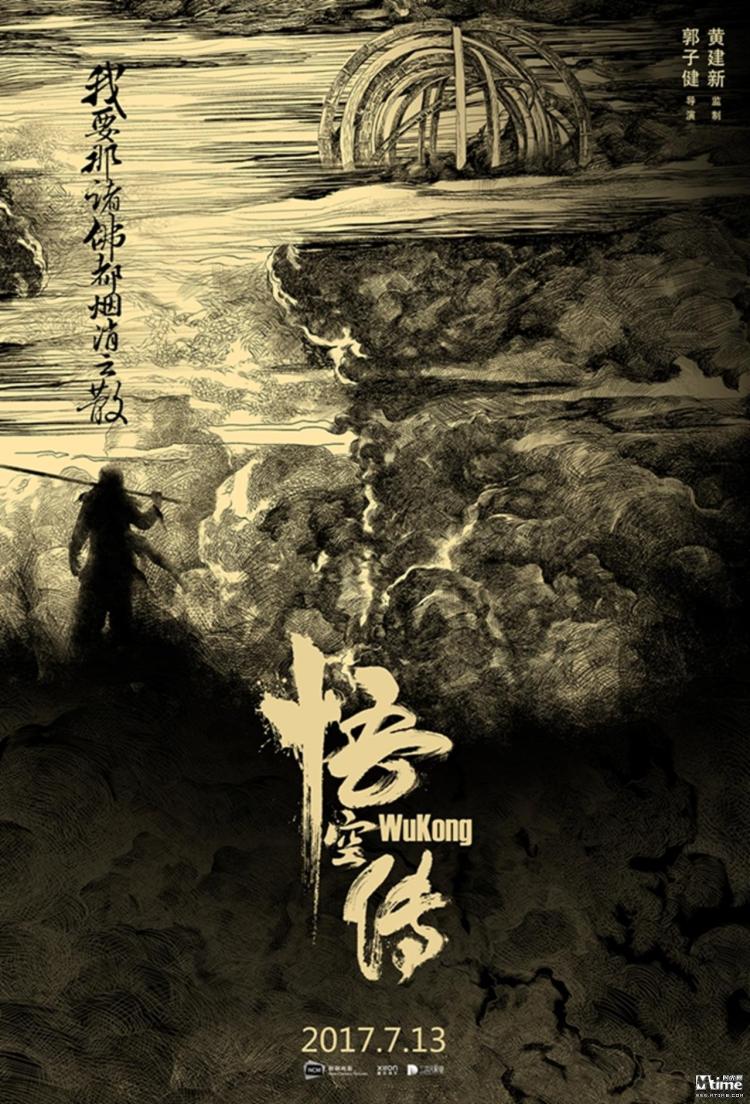
 As it stands, contemporary Chinese cinema is veering dangerously close to Monkey King fatigue. Stephen Chow brought his particular sensibilities to the classic Journey to the West before Donnie Yen put on a monkey suit for Cheang Pou-soi, both of which were quickly followed by sequels. Eddie Peng is the latest to pick up the staff for Gallants’ Derek Kwok, though this is a much more youthful incarnation of the iconic hero, acting as a kind of prequel to recent incarnations and as a coming of age tale for the titular “demon” as recounted in the popular online novel Legend of Wukong by Jin Hezai. Told in grand style, Kwok’s Wu Kong (悟空传, Wù Kōng Zhuàn) is a star studded box office extravaganza but embraces both extremes of its family friendly, mainstream blockbuster thrills.
So, Sun Wu Kong (the Monkey King), as you know, was born from a stone atop Mount Huaguo – a remnant of a giant who attempted to battle the heavens but was defeated. Heaven fears the existence of the mischievous demon and determines to destroy him but he’s saved by a teacher who gives him a human form and the name Sun Wu Kong. Devastated by the destruction of his homeland, Wu Kong (Eddie Peng) vows revenge on the Heavens and travels to voice his concerns in person. Resenting his “destiny” Wu Kong focusses his attentions on destroying the divine astrolabe which ascribes fate to all beings, but little does he know that its guardian, Hua Ji (Faye Yu), wants his heart for herself so that she might rule all of Heaven and Earth.
Kwok opens with a beautifully designed sequence modelled after traditional chinese ink paintings in which he recounts the pre-history and birth of the demon later known as Sun Wu Kong. Unlike some other recent attempts to tackle this famously fantastical world, Wu Kong boasts fabulously high production values as well as much better special effects than most Chinese blockbusters, and it helps that Eddie Peng is not burdened with spending the majority of the movie in prosthetics.
Nevertheless for all the lack of actual plot, there is a lot going on and the brisk pace of the exposition filled opening is hard to follow (but, thankfully, details are unimportant). As in his other adventures, Wu Kong ends up with a collection of friends and enemies including love interest Azi (Ni Ni) – the equally rebellious daughter of Hua Ji who has just returned from 100 years in “re-education” exile and fiercely resents her mother’s cruel and controlling nature. Likewise her half brother, Erlang (Shawn Yue) has also arrived home at just the right/wrong moment and is conflicted in his views towards the Heavens – wanting to be accepted as a true “immortal” but also wanting to protect his little sister, so obviously unhappy with the ruling regime. Two more cohorts appear in the gadget laden Juan Lian (Qiao Shan) – a kind hearted man with a hopeless crush on Azi, and the lovelorn retainer, Tian Peng (Oho Ou), still pining after his childhood sweetheart who was exiled to the mortal world.
Much of the central drama occurs after Wu Kong, Erlang, and Tian Peng destroy “The Bridge of Destiny” and are cast down to the mortal world themselves along with Juan Lian and Azi. Finding themselves in a desperate village which happens to be on the former site of Mount Huaguo, the five start to believe they’ll never be going home and discuss staying to help the villagers defeat the “Cloud Demon” which has been stealing all their water. Interacting with the villagers teachers each of them some vaiuable lessons, but “destiny” is still waiting, and trying to change the fate of these desperate people may have disastrous, unforeseen consequences.
Once again, Wu Kong’s battle lies in the Heavens and may end up costing more than it gains. Kwok’s direction is conventional in one sense, but also manages to add a youthful energy which befits the film’s message. Wu Kong’s rebellion is the same as many a young a man’s – against a pre-ordained fate. As he puts it in the punkish final title cards, he will not be blinded by the sky or bound by the Earth – he will decide his own destiny and will never submit himself to the authority of any god or Earthly power. Attempts at melodrama largely fall flat, as does the unwise decision to shift to fantasy sequences for moments of high emotion, not to mention the inclusion of a sappy pop song to really ram home the theme of tragic romance, but whatever Wu Kong’s failings it succeeds brilliantly in its primary objective as an admittedly vacuous summer blockbuster primed to speak to the hearts of hemmed in teens everywhere.
Currently on UK release at selected cinemas.
Original trailer (Mandarin with English/simplified Chinese subtitles)
 “It’s not all about tofu!” screams the heroine of Akanezora: Beyond the Crimson Sky (あかね空), a film which is all about tofu. Like tofu though, it has its own subtle flavour, gradually becoming richer by absorbing the spice of life. Based on a novel by Ichiriki Yamamoto, Akanezora is co-scripted by veteran of the Japanese New Wave, Masahiro Shinoda and directed by Masaki Hamamoto who had worked with Shinoda on Owl’s Castle and Spy Sorge prior to the director’s retirement in 2003. Like the majority of Shinoda’s work, Akanezora takes place in the past but echoes the future as it takes a sideways look at the nation’s most representative genre – the family drama. Fathers, sons, legacy and innovation come together in the story of a young man travelling from an old capital to a new one with a traditional craft he will have to make his own in order to succeed.
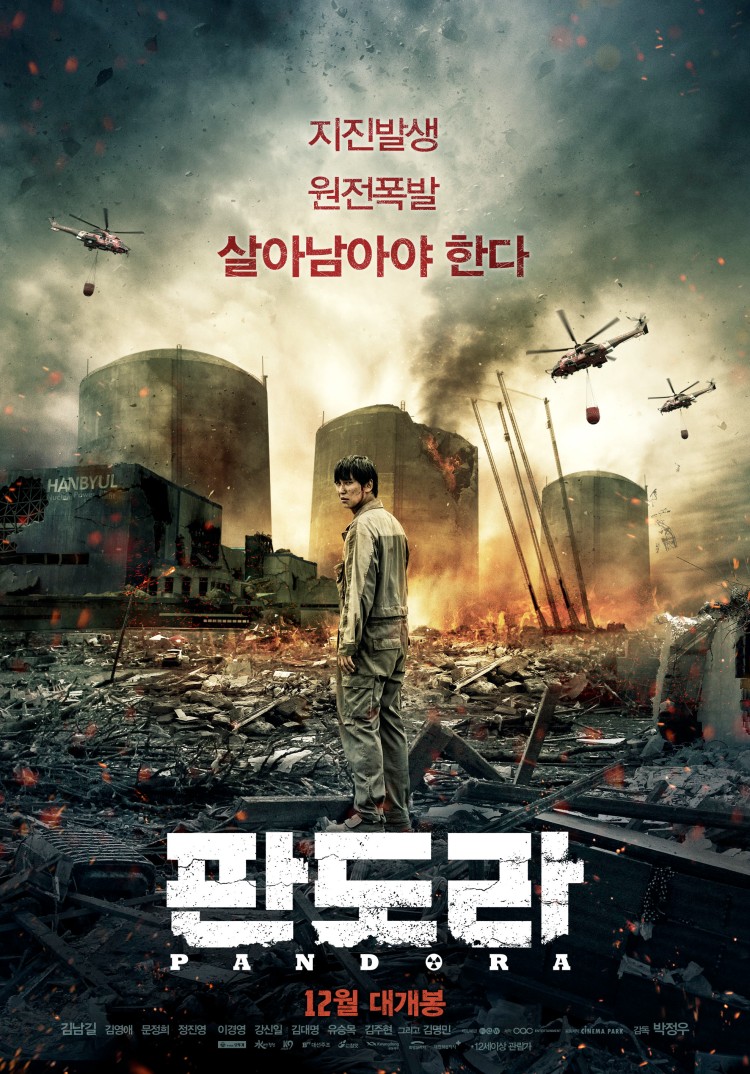 In a time of crisis, the populace looks to the government to take action and save the innocent from danger. A government, however, is often forced to consider the problem from a different angle – not simply saving lives but how their success or failure, decision-making process, and ability to handle the situation will be viewed by the electorate the next time they are asked who best deserves their faith and respect. Pandora (판도라) arrives at a time of particularly strained relations between the state and its people during which faith in the ruling elite is at an all time low following a tragic disaster badly mishandled and seemingly aided by the government’s failure to ensure public safety. Faced with an encroaching nuclear disaster to which their own failure to heed the warnings has played no small part, Pandora’s officials are left in a difficult position tasked with the dilemma of sacrificing a small town to save a nation or accepting their responsibility to their citizens as named individuals. Unsurprisingly, they are far from united in their final decision.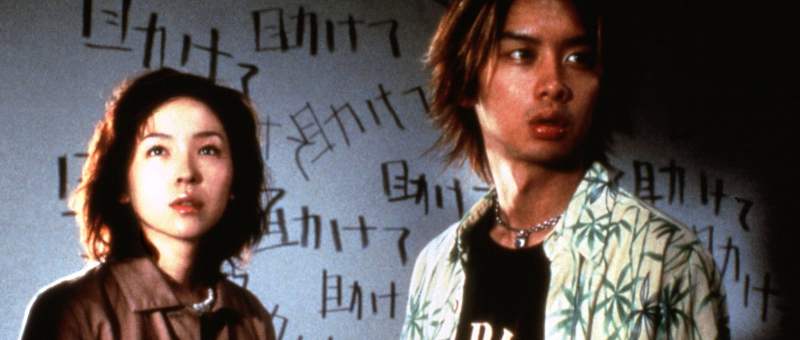
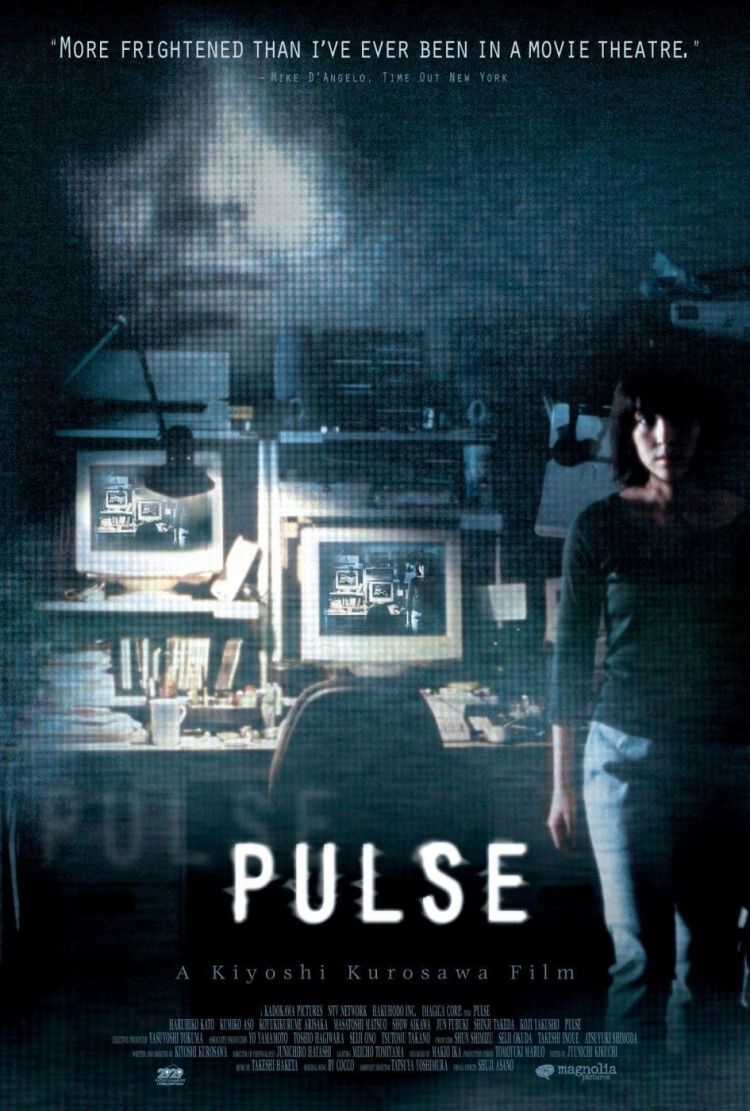 Times change and then they don’t. 2001 was a strange year, once a byword for the future it soon became the past but rather than ushering us into a new era of space exploration and a utopia born of technological advance, it brought us only new anxieties forged by ongoing political instabilities, changes in the world order, and a discomfort in those same advances we were assured would make us free. Japanese cinema, by this time, had become synonymous with horror defined by dripping wet, longhaired ghosts wreaking vengeance against an uncaring world. The genre was almost played out by the time Kiyoshi Kurosawa’s Pulse (回路, Kairo) rolled around, but rather than submitting himself to the inevitability of its demise, Kurosawa took the moribund form and pushed it as far as it could possibility go. Much like the film’s protagonists, Kurosawa determines to go as far as he can in the knowledge that standing still or turning back is consenting to your own obsolescence.
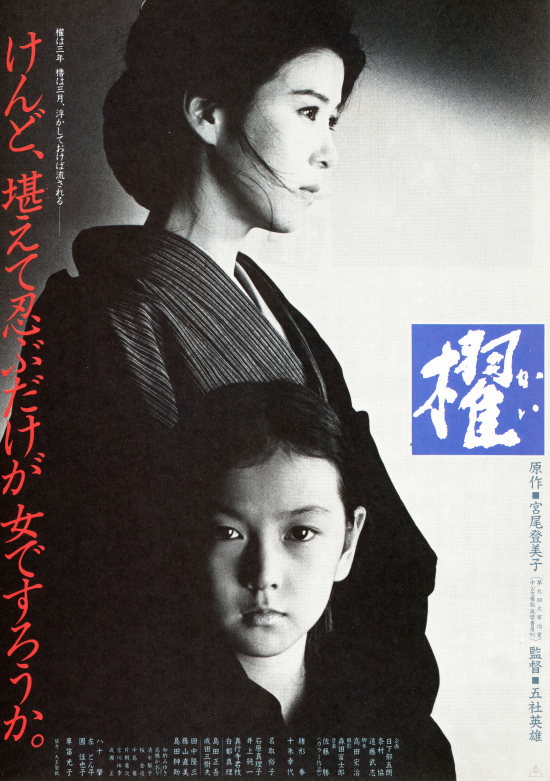 Until the later part of his career, Hideo Gosha had mostly been known for his violent action films centring on self destructive men who bore their sadnesses with macho restraint. During the 1980s, however, he began to explore a new side to his filmmaking with a string of female centred dramas focussing on the suffering of women which is largely caused by men walking the “manly way” of his earlier movies. Partly a response to his regular troupe of action stars ageing, Gosha’s new focus was also inspired by his failed marriage and difficult relationship with his daughter which convinced him that women can be just as devious and calculating as men. 1985’s Oar (櫂, Kai) is adapted from the novel by Tomiko Miyao – a writer Gosha particularly liked and identified with whose books also inspired
 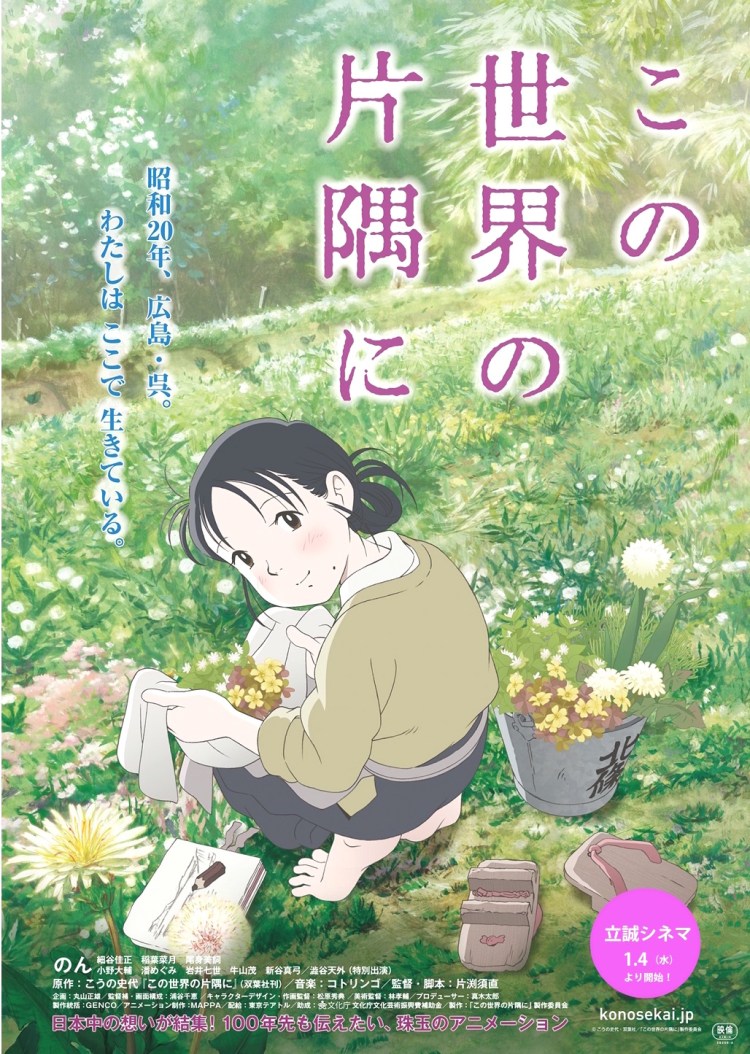 Depictions of wartime and the privation of the immediate post-war period in Japanese cinema run the gamut from kind hearted people helping each other through straitened times, to tales of amorality and despair as black-marketeers and unscrupulous crooks take advantage of the vulnerable and the desperate. In This Corner of the World (この世界の片隅に, Kono Sekai no Katasumi ni), adapted from the manga by Hiroshima native Fumiyo Kouno, is very much of the former variety as its dreamy, fantasy-prone heroine is dragged into a very real nightmare with the frontier drawing ever closer and the threat of death from the skies ever more present but manages to preserve something of herself even in such difficult times.
 Now in its 21st year, Montreal’s
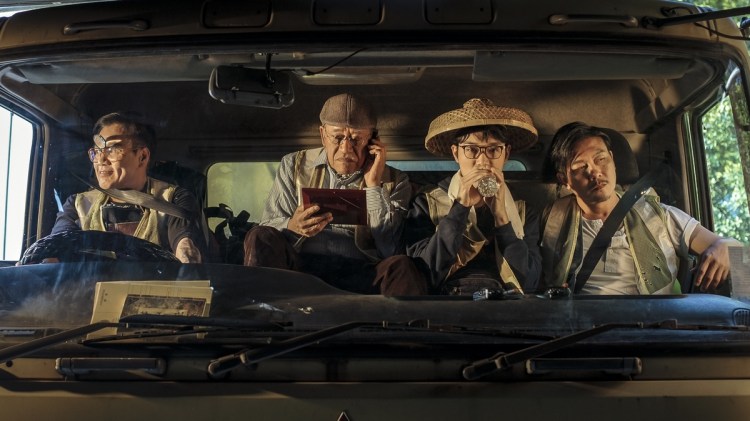
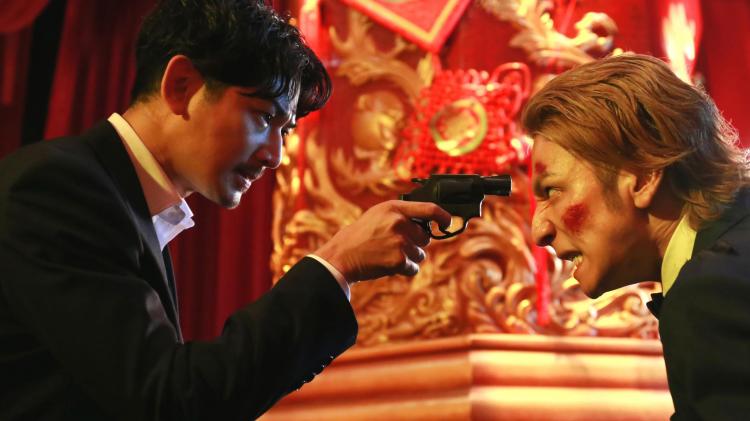
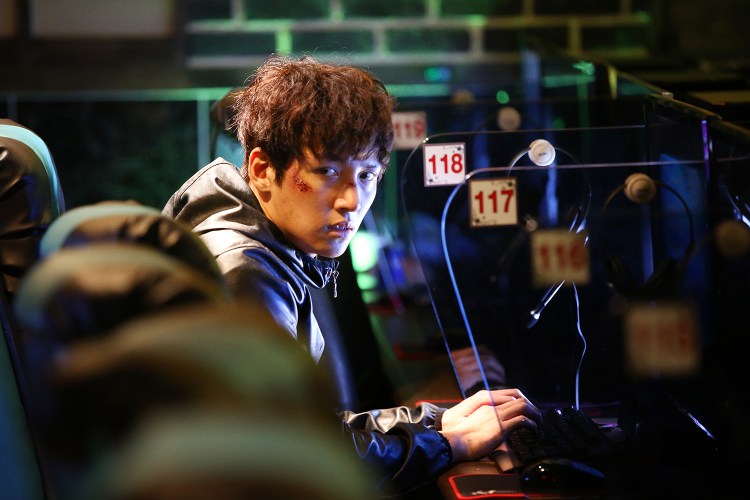

 The criticism levelled most often against Japanese cinema is its readiness to send established franchises to the big screen. Manga adaptations make up a significant proportion of mainstream films, but most adaptations are constructed from scratch for maximum accessibility to a general audience – sometimes to the irritation of the franchise’s fans. When it comes to the cinematic instalments of popular TV shows the question is more difficult but most attempt to make some concession to those who are not familiar with the already established universe. Mozu (劇場版MOZU) does not do this. It makes no attempt to recap or explain itself, it simply continues from the end of the second series of the TV drama in which the “Mozu” or shrike of the title was resolved leaving the shady spectre of “Daruma” hanging for the inevitable conclusion.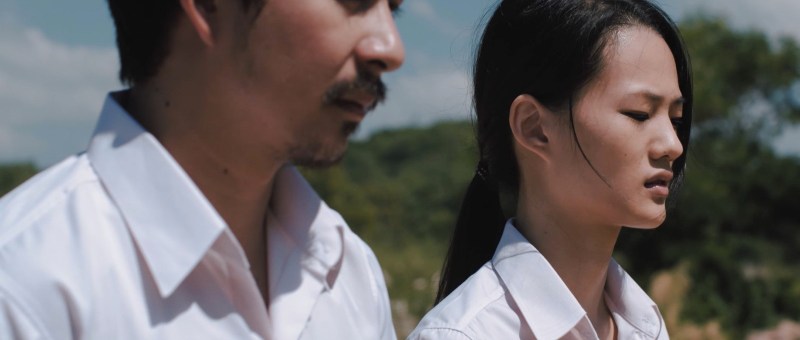
 Anocha Suwichakornpong’s second feature, By the Time it Gets Dark (ดาวคะนอง.Dao Khanong), bills itself as an exploration of a traumatic moment from the recent past but quickly subverts this conceit for a wider meditation on the veracity of cinema. Beginning in a manner typical of indie-leaning Thai films, Anocha gently undercuts herself as her images prism into their separate “realities”, informing and commenting on each other but perhaps not fully interacting. The Thammasat University student massacre of 1976 is the dark genesis of this fracturing future, but it’s also in the process of becoming a collective legend, cementing a “historical truth” as cultural currency even whilst expunged from the history books, leaving its young lost in a black hole of memory from which they are powerless to emerge.
 Some situations are destined to end in tears. Kaze Shindo’s Love Juice adopts the popular theme of unrequited love but complicates it with the peculiar circumstances of Tokyo at the turn of the century which requires two young women to be not just housemates but bedmates and workmates too. One is straight, one is gay and in love with her friend who seems to get off on manipulating her emotions and is overly dependent on her more responsible approach to life, but both are trapped in a low rent world of grungy nightclubs and sleazy hostess bars.
 Windows on Worlds