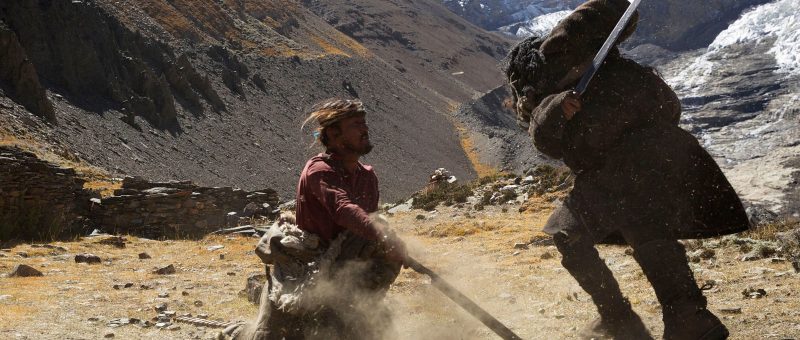
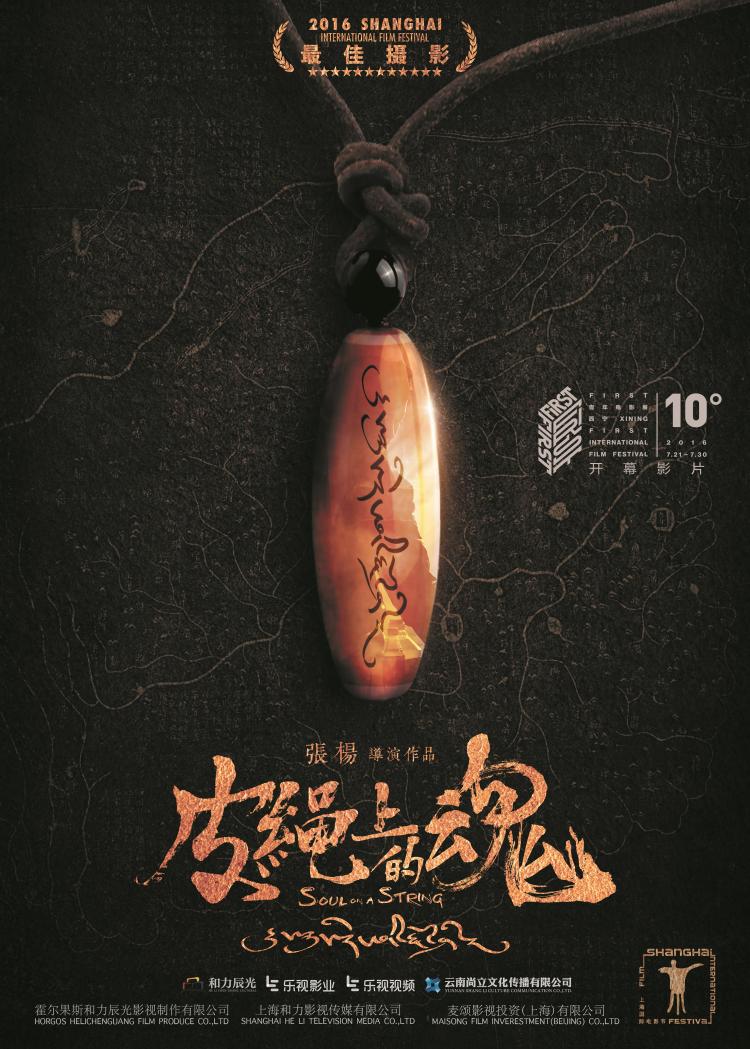
 At the end of Zhang Yang’s Shower, there’s a lengthy fantasy sequence taking place in a desert in which a young girl is about to enjoy the first and last bath of her life as a right of passage before she is married off. Intended to emphasise the importance of water, the need of which acts as the great leveller for all living things, the brief movement away from the struggles of two brothers and their soon to be torn down bathhouse acted as a kind of lament for a perceived decline in values and priorities in a period of intense economic development. Jumping on a few films and many years later, Zhang Yang’s desert odyssey Soul on a String (皮绳上的魂 , Pisheng Shang de Hun) again takes place in an arid land where values and humanity are in peril. Adapted from two novels by Tibetan-Chinese novelist Tashi Dawa (Tibet, The Soul Tied on a String, and On the way to Lhasa), Zhang’s Tibetan western marries the classic wandering stranger narrative with a Buddhism infused magical realism.
Ruthless loner Tabei (Kimba) kills a deer only to find a mysterious amulet in its mouth recently acquired from a little girl who fell off a cliff. Experiencing his first bout of divine retribution, Tabei is struck by lighting only to be mysteriously revived by a cryptic Buddhist priest who tells him it’s his job to take the amulet to the holy land where he will also be cleansed of his considerable sins. Taking his rebirth seriously Tabei takes off even though the priest’s only hints about the location of the holy land are that the distance is under his feet and that the road is on his back.
Meanwhile, hot headed youngster Guori (Zerong Dages) is on Tabei’s trail hoping to kill him in answer to a blood feud. Tabei has committed many sins of his own but the murder of Guori’s father in a pointless gambling dispute is not one of them. Tashi died at the hands of the father Tabei never knew but as custom dictates, sons may take vengeance from sons to satisfy their honour. Trudging on through his quest, Tabei will have to face the legacy of his past even if he doesn’t really want to. Acquiring a persistent follower in Chun (Quni Ciren), a young woman with whom he spent a night on the road, and later a mysterious child with strange powers, Pu (Yizi Danzeng), Tabei pursues his spiritual quest finding his soul becoming lighter all along the way.
The futility of a blood feud, perhaps more a feature of the spaghetti western than the classic Hollywood model, lies at the heart of the spiritual drama as the spectre of vengeance for a father’s crime has overshadowed Tabei’s entire life. Guori, young, tough, and angry is determined to avenge the father who left him in such a stupid and pointless way but only increases the depth of the debt. When we first meet him he thinks he’s met his target only for the man to explain to him that many men have the name Tabei and he’s looking for someone else. Guori doesn’t believe him and kills the man anyway. If this man had a son, there is now a blood debt on Guori’s head to equal that of his quarry.
Guori’s persistent failures cause nothing but consternation to his ambivalent mother who worries for her son but also wants to see him prove himself a man and avenge her husband’s death as honour dictates. Older brother Kodi (Lei Chen) is less committed to the idea of vengeance but eventually takes on its burden. Kodi, like Tabei, sacrifices much out of the necessity of achieving this pointless goal, abandoning a woman he loved and a happy future as the father of a family. Tabei offers this same excuse to Chun in explaining his reluctance to father a child – the blood curse will simply pass to him should he be forced to kill Kodi or Guori in defending himself. The cycle never ends, only perpetuating itself through successive acts of violence.
Yet as Tabei gets closer to the promised land, his soul begins to clear. No longer so gruff and unapproachable he allows Chun to travel with him, becoming a kind of father figure to a makeshift family completed by the strange little boy, Pu. Shot against the beautiful yet unforgiving Tibetan landscapes, Soul on a String is a tale of redemption, violence, love, and legacy shot through with ancient mysticism and obscure spiritual questioning yet for all of its inherent inscrutability Zhang’s return to the desert proves infinitely fascinating despite its necessarily epic dimensions.
Soul on a String was screened at the 19th Udine Far East Film Festival.
Original trailer (English subtitles)
 Conventional wisdom states it’s better not to get involved with the yakuza. According to Hamon: Yakuza Boogie (破門 ふたりのヤクビョーガミ Hamon: Futari no Yakubyogami), the same goes for sleazy film execs who can prove surprisingly slippery when the occasion calls. Based on Hiroyuki Kurokawa’s Naoki Prize winning novel and directed by Shotaro Kobayashi who also adapted the same author’s Gold Rush into a successful WOWWOW TV Series, Hamon: Yakuza Boogie is a classic buddy movie in which a down at heels slacker forms an unlikely, grudging yet mutually dependent relationship with a low-level gangster.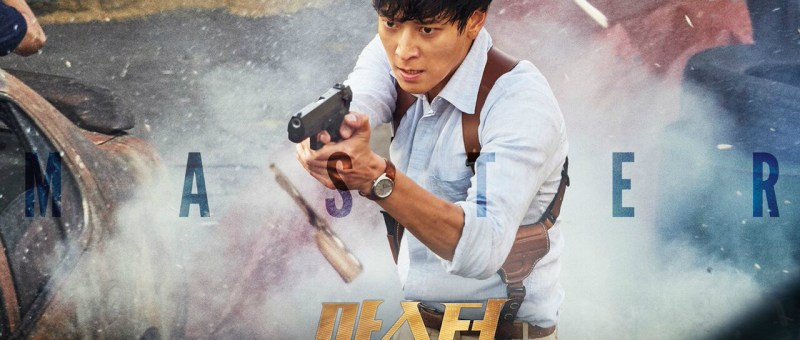
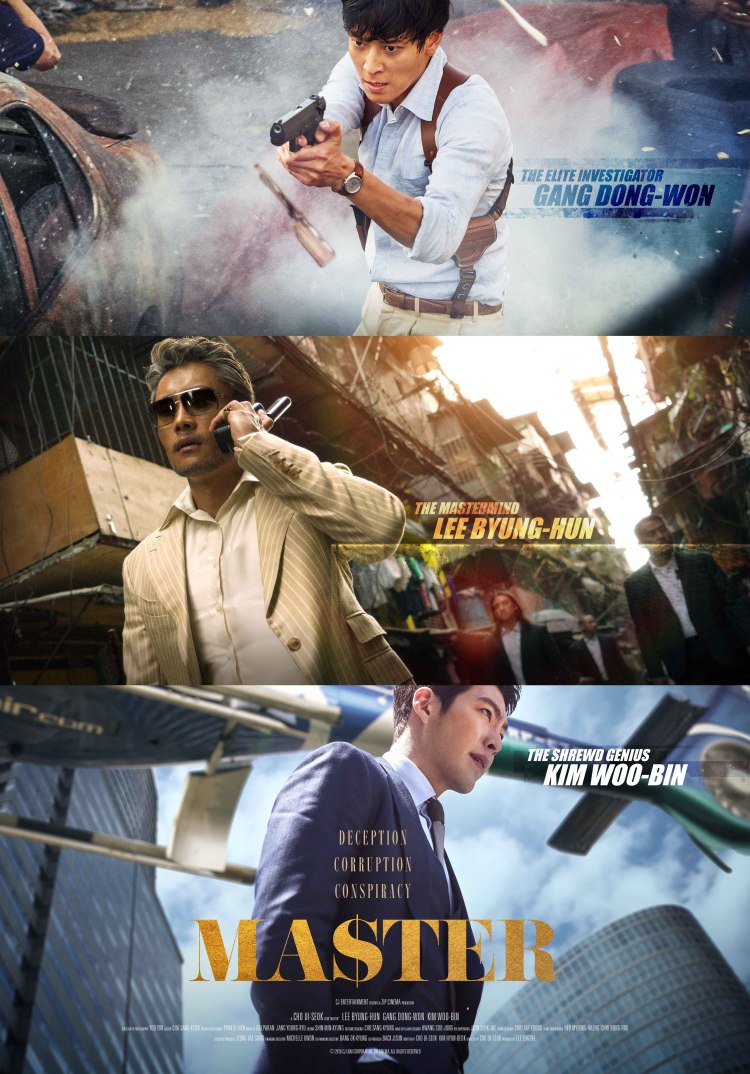 Corruption has become a major theme in Korean cinema. Perhaps understandably given current events, but you’ll have to look hard to find anyone occupying a high level corporate, political, or judicial position who can be counted worthy of public trust in any Korean film from the democratic era. Cho Ui-seok’s Master (마스터) goes further than most in building its case higher and harder as its sleazy, heartless, conman of an antagonist casts himself onto the world stage as some kind of international megastar promising riches to the poor all the while planning to deprive them of what little they have. The forces which oppose him, cerebral cops from the financial fraud devision, may be committed to exposing his criminality but they aren’t above playing his game to do it.
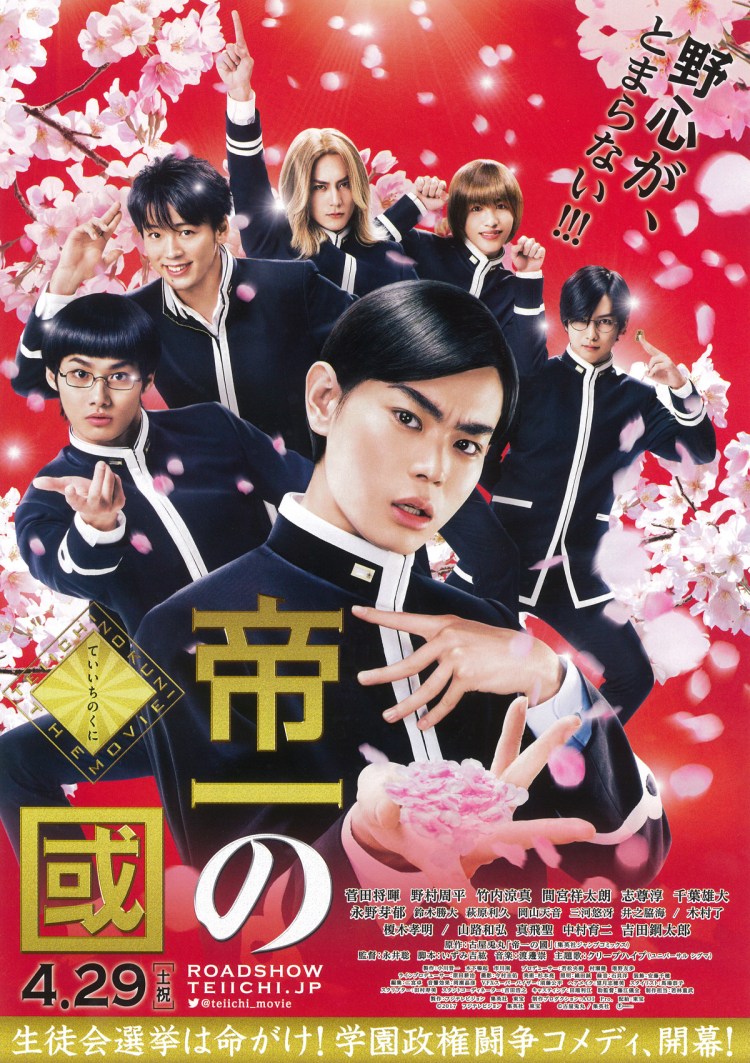 Back in the real world, politics has never felt so unfunny. This latest slice of unlikely political satire from Japan may feel a little close to home, at least to those of us who hail from nations where it seems perfectly normal that the older men who make up the political elite all attended the same school and fully expected to grow up and walk directly into high office, never needing to worry about anything so ordinary as a career. Taking this idea to its extreme, elite teenager Teiichi is not only determined to take over Japan by becoming its Prime Minister, but to start his very own nation. In Teiichi: Battle of Supreme High (帝一の國, Teiichi no Kuni) teenage flirtations with fascism, homoeroticism, factionalism, extremism – in fact just about every “ism” you can think of (aside from altruism) vie for the top spot among the boys at Supreme High but who, or what, will finally win out in Teiichi’s fledging, mental little nation?
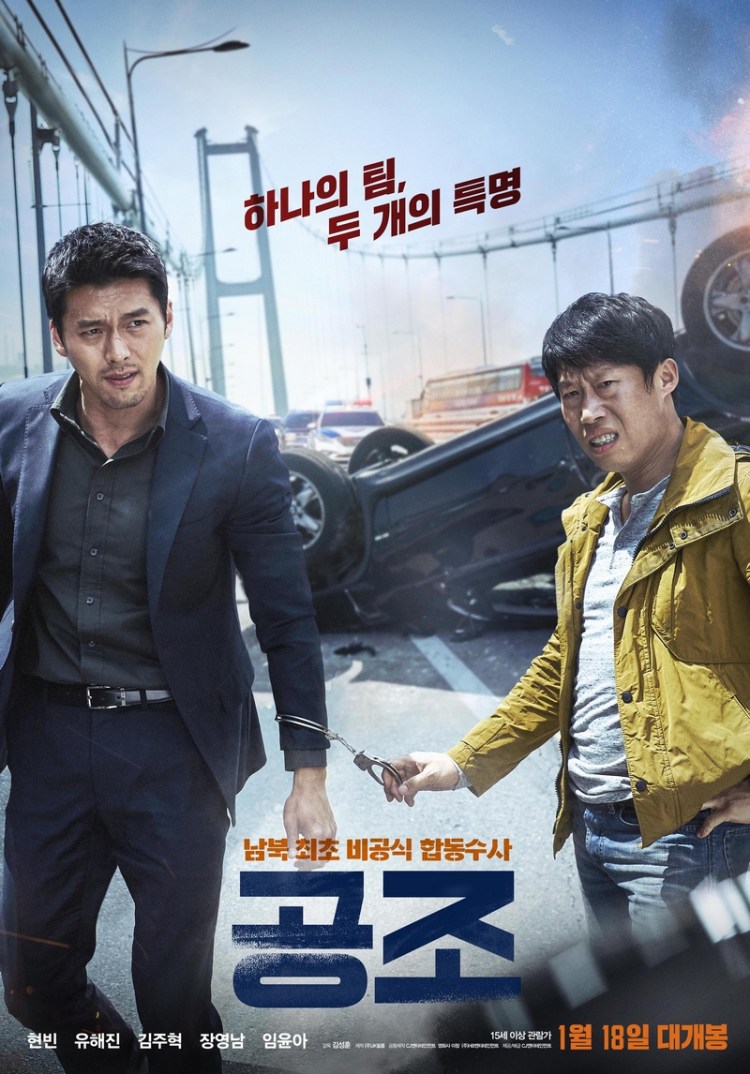 South Korean cinema has a fairly ambivalent attitude to its policemen. Most often, detectives are a bumbling bunch who couldn’t find the killer even if he danced around in front of them shouting “it was me!” whereas street cops are incompetent, lazy, and cowardly. That’s aside from their tendency towards violence and corruption but rarely has there been a policeman who gets himself into trouble solely for being too nice and too focussed on his family. Confidential Assignment (공조, Gongjo), though very much a mainstream action/buddy cop movie, is somewhat unusual in this respect as it pairs a goofy if skilled and well-meaning South Korean police officer, with an outwardly impassive yet inwardly raging North Korean special forces operative.
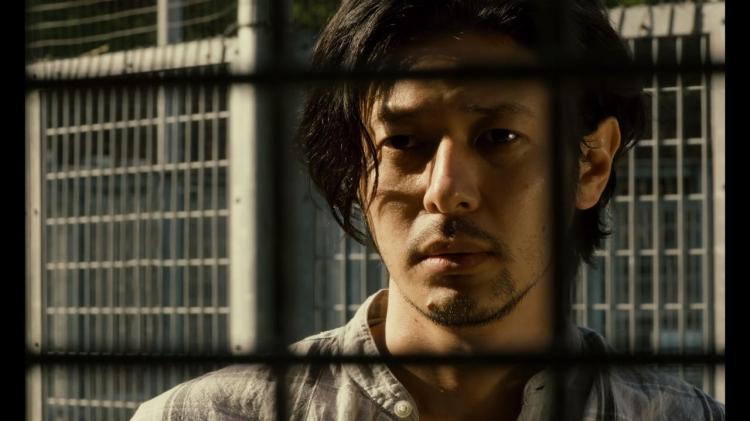 Japan Cuts returns for 2017 with even more of the best in recent Japanese cinema. Ahead of the full programme reveal the festival has announced a few early teasers for what promises to be another year of fantastic films from Japan.
 Fan favourite director Nobuhiro Yamashita will once again feature in the festival with his installment in the trilogy of movies inspired by author Yasushi Sato,
  Another festival favourite Sion Sono returns with his contribution to the Roman Porno Reboot Project, Anti-Porno.
 Kiyoshi Kurosawa’s first international production, Daguerrotype, also makes its way into the festival. Taking the director back to his psychological horror roots, this gothic European ghost story stars one of France’s best young actors, Tahar Rahim, as a photographer’s assistant caught up in both odinary and supernatural conspiracies.
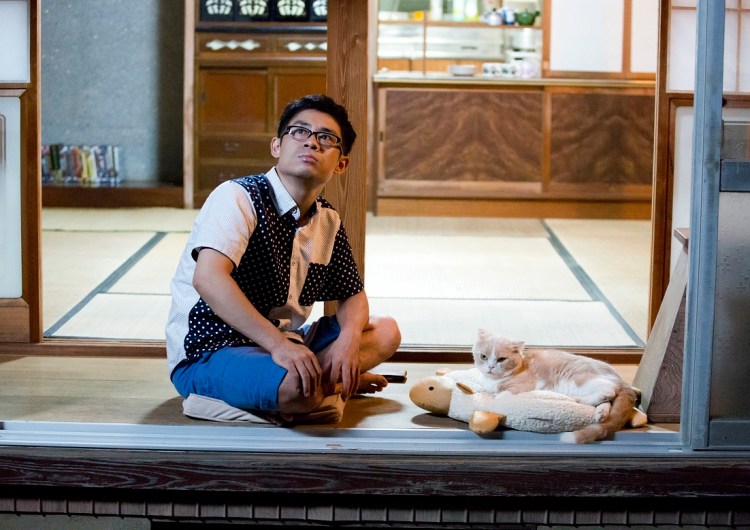 The one you’ve all been waiting for – Neko Atsume House! An adaptation of the popular smartphone game, Masatoshi Kurakata’s film stars Atsushi Ito as a novelist with writer’s block who moves house to stimulate himself only to be overrun with cute cats instead.
 The only documentary announced so far, Konrad Aderer’s Resistance at Tule Lake examines the case of 12,000 Japanese-Americans labeled “disloyal” for attempting to resist the government’s internment order.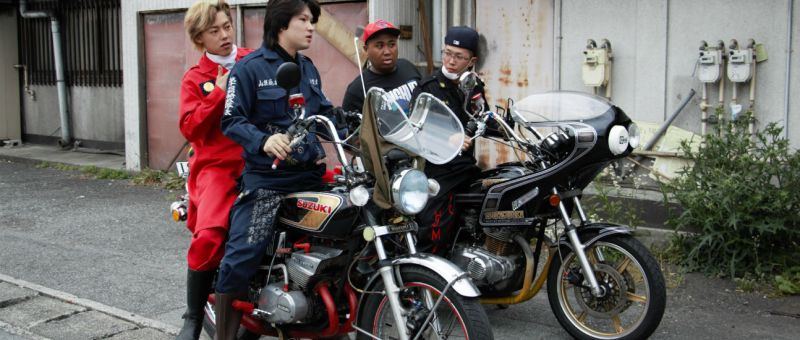
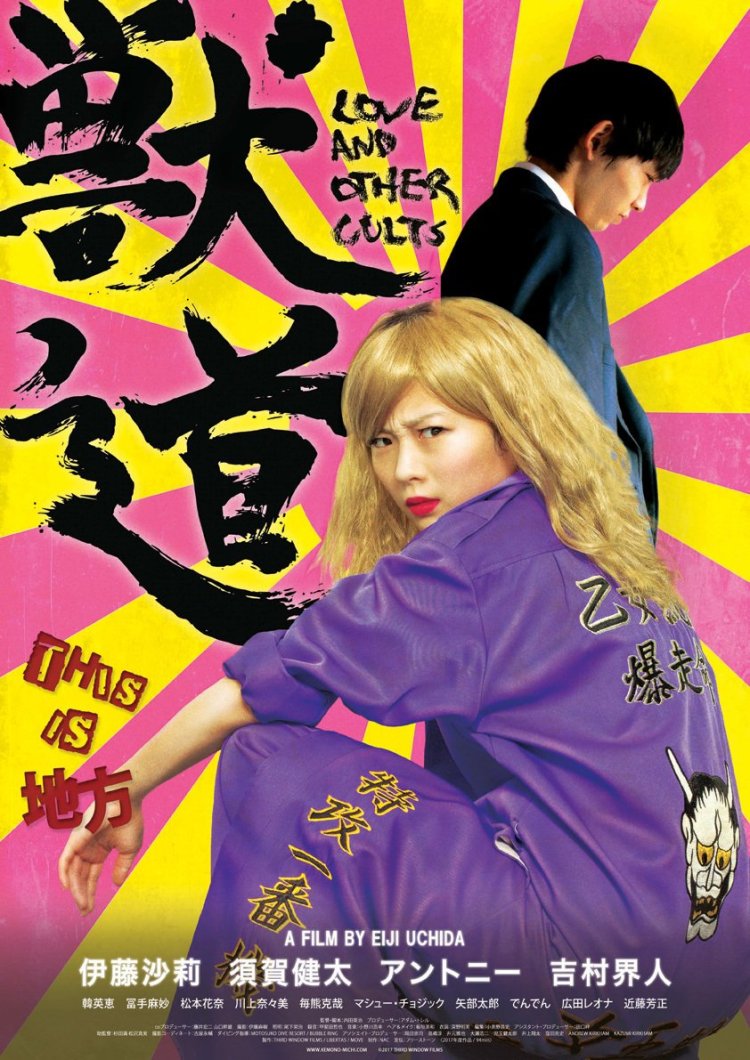 Eiji Uchida’s career has been marked by the stories of self defined outsiders trying to decide if they want to move towards or further away from the centre, but in his latest film Love and Other Cults ( 獣道, Kemonomichi), he seems content to let them linger on the margins. The title, neatly suggesting that perhaps love itself is little more than a ritualised set of devotional acts, sets us up for a strange odyssey through teenage identity shifting but where it sends us is a little more obscure as a still young man revisits his youthful romance only to find it as wandering and ill-defined as many a first love story and like many such tales, one ultimately belonging to someone else.
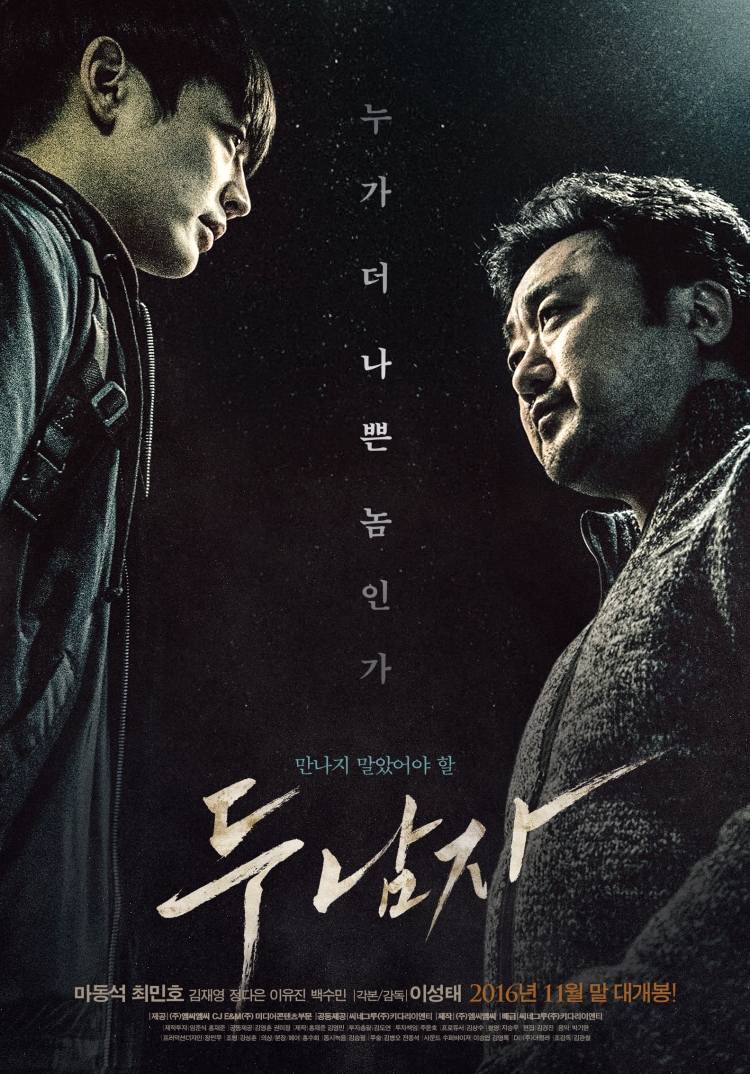 The best laid plans of mice and men often go awry, as the old saying goes, but for four down at heels street kids even their meagre attempts to evade a desperate situation land them in even more trouble than they’ve ever been in before. The debut feature from director Lee Sung-tae, Derailed (두 남자, Doo Namja) is bleak and gritty though underpinned by an ironic sense of love and connection which is itself often “derailed” or subverted as genuine feeling becomes a tool to be exploited in the ongoing war between those fighting amongst themselves to get a hand on the bottom rung of the ladder.
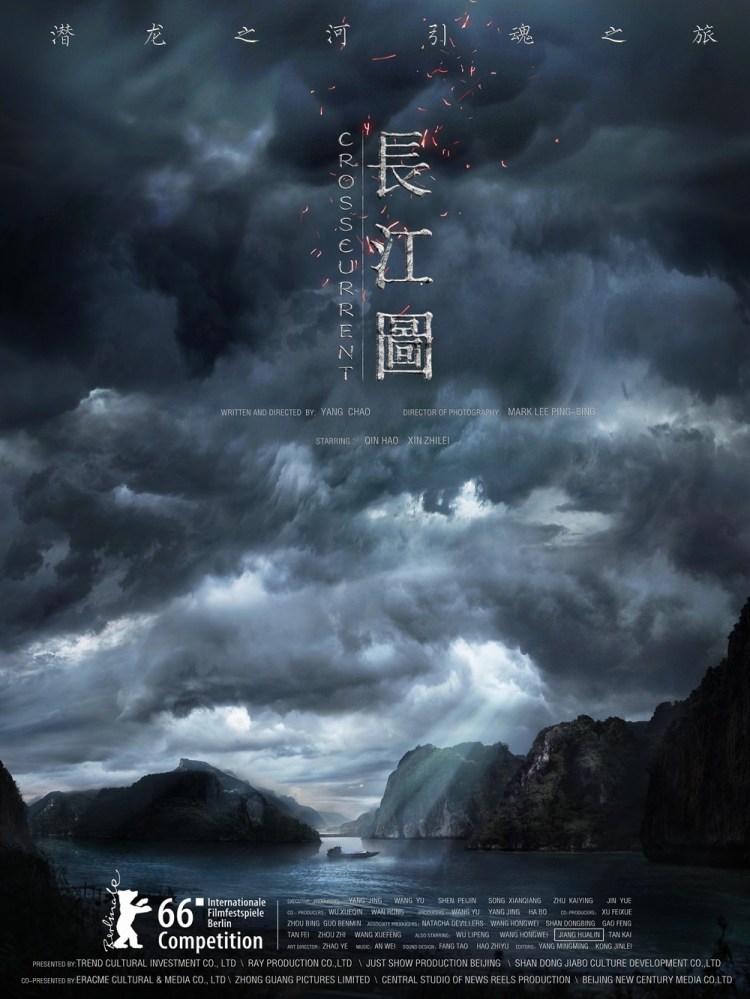 “Time, like a river, flows both day and night” as the narrator of Yang Chao’s poetical return to source Crosscurrent (長江圖, Chang Jiang Tu) tells us early on. Like the crosscurrent of the title, ship’s captain Chun sails forth yet also in retrograde as he chases a love he can never truly embrace. Truth be told, the philosophical poetry of a lonely sailor condemned to sail a predetermined course at the mercy of the winds and tides is often obscure and confused, like the half mad ramblings of one who’s spent too much time all alone at sea. Yet his melancholy passage is more metaphor than reality, or several interconnected metaphors as water yearns for shore but is pulled towards the ocean, a man yearns to free himself of his father’s spirit, and mankind yearns for the land yet disrupts and destroys it in its quest for mastery. Often frustrating in its obscurity, Crosscurrent’s breathtaking visuals are the key to unlocking its meditative sadness as they paint the beautiful landscape in its own conflicting colours.
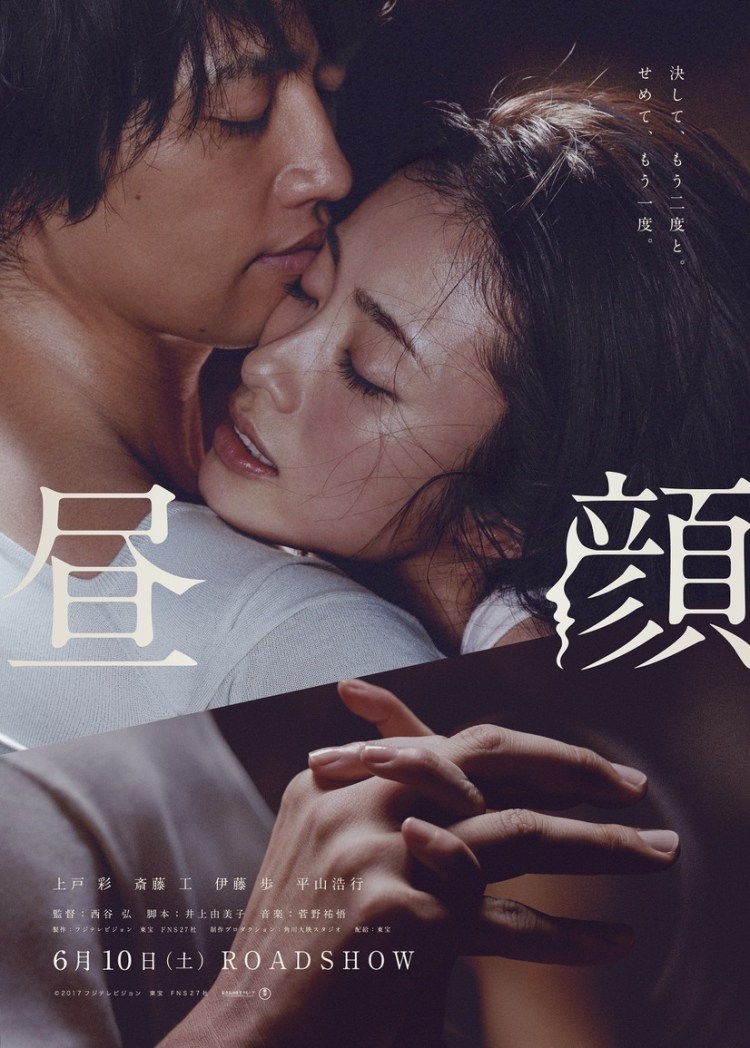 Hiroshi Nishitani has spent the bulk of his career working in television. Best known for the phenomenally popular Galileo starring Masaharu Fukuyama which spawned a number of big screen spin-offs including an adaptation of the series’ inspiration The Devotion of Suspect X and
