
Go! Crazy Gangster (風雲高手, Chang Ching-feng, 2016)

Nothing is impossible, according to the surreal logic of zany sports comedy Go! Crazy Gangster (風雲高手, Fēngyún Gāoshǒu). The only crazy gangsters here are two old men, childhood friends both obsessed with basketball, who work out their gang rivalry through the much more healthy medium of high school tournaments. The hero is not a gangster, but he does admittedly dress like one. In any case, the point is that given the right motivation, even the most hopeless of slackers, and the most rebellious of delinquents, can be reformed by the mutual solidarity of team sports. 

Lai-Fong (Alien Huang) is a reservist on a professional basketball team, a last resort player known chiefly for his laziness. Variously nicknamed “idler”, “benchwarmer”, or “waterboy”, he is not exactly keen to get on the court. Nevertheless, after getting hit by random meteorite the unthinkable happens. He not only gets to play, he becomes his team’s MVP and guides them to an unprecedented victory. Shortly after that, however, he’s seduced and blackmailed by pretty high school teacher Hsaio-Yun (Cyndi Wang) whose gangster father Liao (Liao Jun) then forces him to take a job coaching a losing girls’ high school team. Unbeknownst to Lai-Fong, Hsiao-Yun has become the subject of a bet between Liao and his friend Tseng (Ma Ju-lung) to the effect that her hand in marriage has been promised to his thuggish son Shuai-Nan (Dean Fujioka) if the team loses. 

The problem is that the high school basketball team is made up of delinquent girls because the school have been using it in lieu of detention. Predicatably, they don’t want to actually have to participate in sports and so they do everything they can to get rid of Lai-Fong before having a change of heart in realising the extent to which he actually does care for them in an admittedly fast turnaround from his “idler” persona. Thanks to his newfound sense of compassion and desire to assume his responsibility as a coach, he begins figuring out the girls’ problems from the ringleader’s difficult home life with her mother’s struggling business, to the demands of a showbiz dream. Meanwhile he’s apparently always been kind, Hsiao-Yun recalling that they have a childhood connection which has long given her strength seeing as she was herself lonely in her youth, the other kids unwilling to befriend the daughter of a scary gangster. 

Chang neatly subverts a number of conventional stereotypes, recasting his scary gangsters as childish old men who play video games and exercise their rivalry on the basketball courts rather than in the streets, the hint of violence lingering somewhere off screen. The women are tenacious and mature, the men feckless and ineffectual, but then there is the mild unpleasantness that Hsiao-Yun has been wagered by her father as part of the friendly rivalry he has with Tseng who also resents that he’s already “lost” in the child stakes because Hsaio-Yun is just much “better” than his son Shuai-Nan who despite studying abroad at Harvard seems none too bright and is little more than a vain thug. 

Nevetheless, what everyone learns is that it’s not really about winning or losing but gaining confidence in being yourself while drawing strength from mutual solidarity. Hsiao-Yun begins to stand up to her gangster dad, perhaps realising that he had no right to bet her in the first place so she doesn’t necessarily have to go along with it even if the team loses while Lai-Fong declares himself proud of the team whatever happens knowing how hard they’ve worked to come this far. His attitude may be defeatist, resigned to an inevitable loss, but he’s willing to chalk this up to experience, a valuable lesson for the road ahead. Hsiao-Yun, however, reminds him that they’ve come this far precisely because they were together and they’re still together now so as long as they stay that way there’s always a chance. 

To put it bluntly, Go! Crazy Gangster makes very little sense, a Taiwanese take on Hong Kong mo lei tau nonsense comedy it rattles absurdly from one unexpected plot development to the next. Nevertheless it hardly matters as the gang get their game on through sorting out their personal problems thanks to the love and support of their teammates, gaining the confidence to fight for their dreams on the court and off.


Go! Crazy Gangster streams in the US Nov. 27 – 29 as part of Asian Pop-Up Cinema & TACCGC’s @Home with Taiwan Cinema: Love & Hope

Original trailer (English subtitles)
Joyful Mystery (Misteryo sa Tuwa, Abbo Q. Dela Cruz, 1984)

If you “found” a fancy bag full of cash and the guy who was carrying it obviously won’t be needing it anymore, what would you do, hand it in, or take it and keep quiet? Many would have little problem with option two, though as someone later points out sometimes big money can be a big problem. Rarely seen on its release during the martial law era, Abbo Q. Dela Cruz’s Joyful Mystery (Misteryo sa Tuwa) is both a tale of human greed and selfishness and of the thinly veiled feudalistic corruptions of an era. 

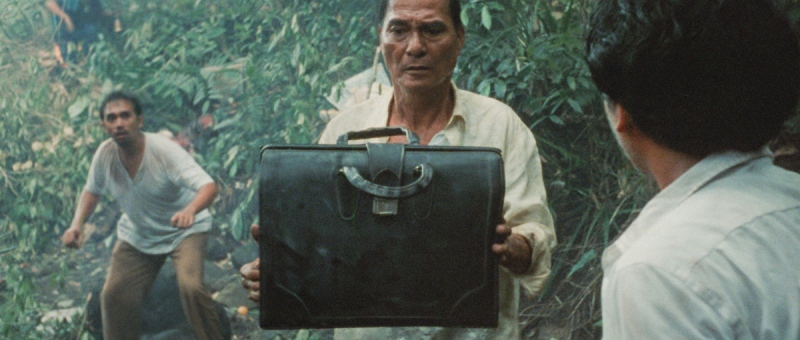
Clearly dated to the 19th August, 1950, the film opens with a raucous celebration for the baptism of the village chief’s youngest son Tiko (Kenneith Hutalla) which is all too soon disrupted by the harbingers of doom in the form of an aircraft trailing black smoke that duly crashes right into the forest in which we saw the villagers living and working throughout the social realist title sequence. The villagers rush to the scene, but once there they quickly start looting the wreckage largely ignoring the handful of bodies thrown out of the bisected plane despite the theoretical possibility that at least some of them may still be alive. The trouble starts when three men pick up a fancy briefcase belonging to “an American” and are spotted by a fourth man, a soldier, Castro (Lito Anzures), who claims to have found the briefcase first and laid claim to it. Soon after, the local mayor (Mario Taguiwalo) arrives with two Chinese businessmen who’ve come looking for their colleague who, they claim, was carrying a large amount of money intended to fund their business project. 

Despite the happy scene of the opening party at which it is assured there is food enough for everyone, it’s clear that the lure of the loot has exerted a corrupting force over the previously close village as each family attempts to hide whatever it was they took from the crash site for themselves so they won’t have to share. The three men, village chief Ponsoy (Tony Santos Sr.), problematic libertine Mesiong (Johnny Delgado), and earnest young man Jamin (Ronnie Lazaro), agree to share out the contents of the bag equally, all harbouring different dreams from a comfortable life in the city to owning a horse and the ability to get married, but are nervous about Castro, making a pact they won’t give up the money no matter what happens. 

That turns out to cause more of a problem once the authorities start looking for the bag. Captain Salgado (Robert Antonio), perhaps for obvious reasons the only incorruptible figure to be found, suspects that someone may have found the money already and decided to keep it, while the mayor admits he might have done the same, eventually entering into a pact with Castro to steal the bag from the villagers and split the contents between them. Living comfortably in the city, the mayor cares little for his co-conspirators, planning to blame the Huk rebels living in the forest for any negative fallout and otherwise making a patsy out of Castro to ensure he won’t have to part with too much of the money. 

At a loss for what to do, the villagers’ wives automatically suspect the mayor is involved, innately distrustful of authority figures, even doubting the captain whom they otherwise believe to be good and just. We’re repeatedly told that villagers are greedy mercenaries, they don’t agree to help the army with the bodies from the crash until offered money (nor do they seem worried about the fires) despite the fact that they will obviously encourage the encroachment of wild animals such as rats which are later seen to be enough of a problem that the mayor again offers a bounty on their heads in an effort to get the villagers involved in culling them. Yet we can also see that they’re trapped by a series of changing though outdated social codes in which the feudal relationships between peasants and landowners have crumbled but the farmers have been hung out to dry at the mercy of corrupt political figures such as the venal mayor and distrustful of the revolutionary Huk whose opposition to the feudal legacy they fail to understand. You can’t blame them for taking the money because they’re in desperate need and there are no other mechanisms by which they might improve their circumstances. It’s desperation rather than greed which begins to turn them against each other as they jealously guard the opportunity hidden in the money which points towards a better life for themselves and their families. 

Perhaps ironically, the film begins with a baptism and ends with a wedding which is to say that it travels anti-clockwise to come full circle as the villagers once again dance and celebrate, perhaps uncomfortably vindicated in their moral failing even as they “win” in overcoming the systemic corruption which otherwise oppresses them. Their victory however is only to a point, the social realism of the title sequence is repeated in the credits, the farmers returning to the forests just as they always have and perhaps always will no matter what illusionary dreams they might have had of escape fuelled only by the promise of misbegotten riches. 


Joyful Mystery streamed in its recent 4K restoration as part of this year’s San Diego Asian Film Festival.

Restoration trailer (English subtitles)

Path of Destiny (不得不上路, Yang Chun-Kai, 2017)

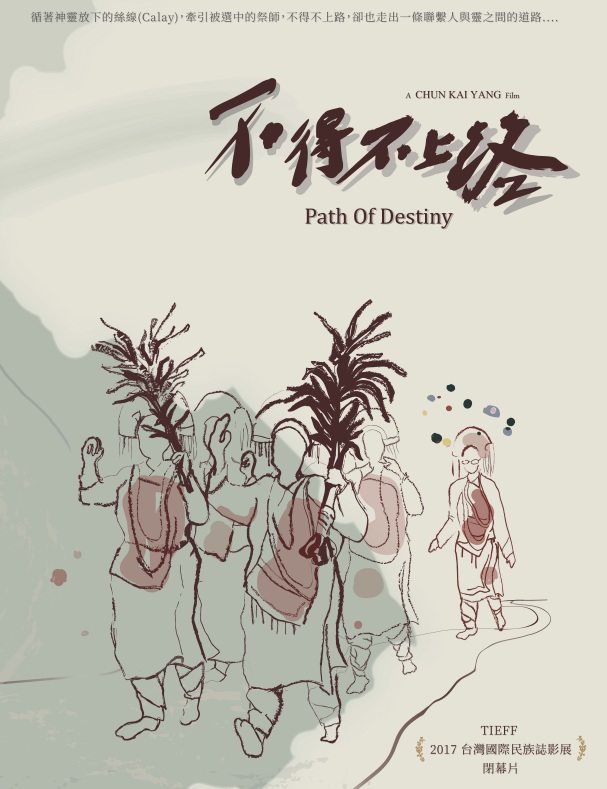
Taiwan’s indigenous culture is an all too often neglected facet of the island’s history, but as Yang Chun-Kai’s documentary Path of Destiny (不得不上路, Bùdébù Shànglù) makes plain, it is sometimes unknown even within its own community. Following researcher Panay Mulu who has been studying the Sikawasay shamans of the Lidaw Amis people in Hualien for over 20 years and has since become a shaman herself, Yang explores this disappearing way of life along with the (im)possibilities of preserving it for later generations in the fiercely modern Taiwanese society. 

A member of the indigenous community though from a Christian family, Panay Malu recalls witnessing Sikawasay rituals in her childhood though only at the harvest festival. Her family’s religion made the existence of the Sikawasay a taboo, viewed as a kind of devilry to be avoided at all costs. Yet running into an entirely different kind of ritual, Panay found herself captivated not least by the beautiful ritualised music and thereafter began trying to gain access to the community who were perhaps understandably frosty in the beginning. Eventually she gave up her teaching position to devote herself to research full time and was finally inducted as a shaman becoming a fully fledged member. 

Listening to the stories of the old ladies, they explain that those who become Sikawasay often do so after sufffering from illness, one of the main rituals involving a shaman using their mouth to suck out bad energy and cure illness. Yet they are also subject to arcane rules and prohibitions that they fear put younger people off joining such as refraining from eating garlic, onions, and chicken, and being required to avoid touch prior to certain rituals. Under traditional custom, widows are also expected to self isolate at home often for a period of years to avoid transmitting the “bad energy” of their grief to others. 

Perhaps for these reasons, Panay is the youngest of the small group of Sikawasay who now number only half a dozen. A poignant moment sees her looking over an old photograph from a 1992 ritual featuring rows of shamans dressed in a vibrant red smiling broadly for the camera. The first row and much of the second are already gone, Panay laments, and as we can see there are only old women remaining with no new recruits following Panay in the 20 years since she’s been with them. Even one of the older women confesses that she would actually like to give up being a Sikawasay, it is after all quite a physically taxing activity with the emphasis on ritual singing and dance, but she fears being punished with illness and so continues. This lack of legacy seems to weigh heavily on Sera, the most prominent among the shamans, who breaks down in tears complaining that she often can’t sleep at night worrying that there is no one behind them to keep their culture alive save Panay who is then herself somewhat overburdened in being the sole recipient of this traditional history as she does her best to both preserve and better record it through academic study. 

It’s a minor irony then much of her recordings exist on the obsolete medium of VHS, but one of the other old ladies is at least hopeful while taking part in the documentary that people might be able to see their rituals on their televisions in their entirety and the culture of the Sikawasay will not be completely forgotten. Panay expresses frustration that, ironically, their own culture is often explained back to them by external scholars from outside of the community, while another Amis woman praises her implying that their own traditional culture is something they have to relearn rather than simply inheriting. An old lady who says her husband was once a shaman though her son neglected his shamanic nature and left to study describes the Sikawasay as the “real Amis people”, vowing never to give up on shamanism though acknowledging there’s nothing much she could do about it if it disappears. In any case, through Yang’s documentary at least and Panay’s dedicated research, the rituals of the Sikawasay have been preserved for posterity even if their actuality risks extinction in the face of destructive modernity. 


Path of Destiny streams in the UK 28th November to 5th December as part of Taiwan Film Festival UK

Original trailer (English subtitles)

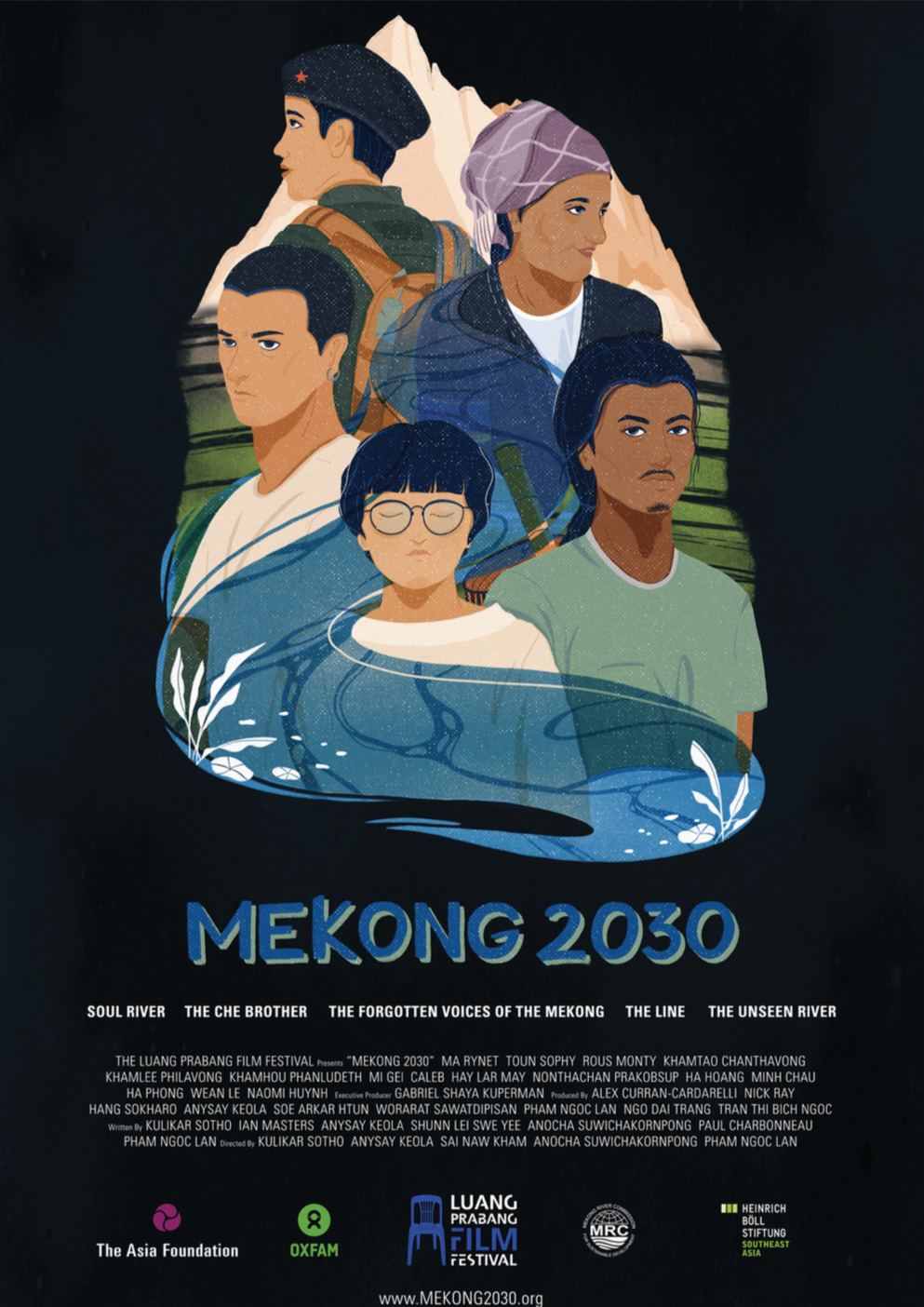
MEKONG 2030 (Kulikar Sotho, Anysay Keola, Sai Naw Kham, Anocha Suwichakornpong, Pham Ngoc Lân, 2020)

Literally on the shores of an ecological crisis, the communities along the Mekong River know better than most the dangers of climate change and increasing industrialisation. Commissioned by the Luang Prabang Film Festival, MEKONG 2030 takes its cues from the recent “ten years” phenomenon, bringing together five directors from different nations along the Mekong to imagine what the situation might be in a decade’s time. 

Environmental concerns and changing times are clearly at the forefront of Cambodian director Kulikar Sotho’s Soul River in which Klark, an indigenous huntsman, discovers an ancient statue in the forest and determines to sell it to buy a better future for himself and his wife having lost everything in a flood caused by deforestation and the affects of increasing industrialisation. Unfortunately he is challenged by Sok, a former fisherman forced onto the land due to the lack of fish in the river, who claims to be the land’s owner and insists the statue is his. An amusing stand off, Klark’s machete vs Sok’s walkie-talkie, signals their respective positions as avatars of new and old. Nevertheless, the statue is too heavy for one man to carry and so they agree to work together, occasionally quibbling over their respective cuts and irritating Klark’s conflicted wife Ladet whose premonition that the statue is cursed is well and truly borne out as the two men begin to lose themselves in greed and suspicion. Yet as her closing voice over reminds us their sin is emblematic of their times in their irresponsible and arrogant desire to “sell” their nation’s ancestral treasures, be they forests, rivers, or statues the protection of which should have been their only duty. 

Depleting fish stocks and industrial pollution are also a persistent theme in the entry from Laos as a worried sister explains to her student brother concerned to see nets covered in dust on his return home from university. Xe is worried because his sister has a bruise on her face and seems to have separated from her husband and children she says to look after their mother who, as it turns out, is immune to the ongoing plague and therefore a valuable commodity to those hoping to find a vaccine. The bruise was apparently caused when their older brother, who has since become a warlord, kidnapped mum in order to monopolise her exploitation. The sister wants Xe to kidnap her back, but the deeper he gets into this awkward situation the more conflicted Xe feels knowing that whatever is actually going on both of his siblings are in effect determined to bleed his mother dry for economic gain. 

The precarious position of the older generation and the side effects of industrialisation raise their heads again in chapter three, Myanmar’s The Forgotten Voices of the Mekong in which well-meaning young village chief Charlie determines to “modernise” his community by inviting a mining conglomerate to begin digging gold on their land. An old grandma patiently teaching her grandson to care for the local herb grown for its medicinal properties is the voice of opposition, pointing out that there is nothing wrong with their lives as they are and so she feels they don’t need the complications of the “modernity” Charlie is determined to bring them. He tells her that he’s the chief now and so they’ll do as he says and so she calmly walks out of the meeting, but her animosity is soon vindicated when farmers complain their livestock has been poisoned after drinking water contaminated by the mine. Not long after a child is taken ill. Devils devour everything, but there is something we can do the old woman assures her grandson: make the mountains green again. 

Shifting into a more abstract register, Anocha Suwichakornpong’s Thai entry The Line takes the river as a protagonist through the film within the film playing on a gallery wall though apparently in some way unsatisfying to its creator. Speaking in a robotic Mandarin, the video places an ironic voiceover on top of images of the river and the city juxtaposing an incongruous family history with a vision of modernity. Meanwhile, a young intern makes smalltalk with her temporary bosses who seem to have no time for her about a weird animal captured on camera in the river near her hometown, and the artist explains her intention of dramatising a vision of space and time through the story of the river.  

The sense of the Mekong as liquid time recurs in the final instalment, Vietnam’s The Unseen River, in which two stories, one of youth and the other age, run in parallel. While a young couple make a visit to a temple hoping to find a cure for the boy’s restless sleep, a middle-aged woman catches sight of a somehow familiar dog that serendipitously reunites her with her long-absent first love who went abroad to study shortly before they dammed the river. In a piece of possibly unhelpful advice, the old monk tells the young man that all he needs to do is “believe” in the act of sleeping. Sinking into a deep sleep is like surrendering yourself to the current he explains, directly linking the rythms of life to the river while the young monk attributes their youthful llistlessness, the failure to see a future that has prevented the young couple marrying, to the inability to dream. The river is both past and future, dream and reality. It is disconnection with the natural world which has so affected the young man, something he perhaps repairs borrowing the monk’s decommissioned fishing rod to gaze upon the wide river under the light of the moon. 

Giving voice to the anxieties of climate change, overdevelopment, the unequal power dynamics of large corporations operating in rural communities, the erosion of traditional culture, and the loss of the natural world, MEKONG 2030 issues a strong warning against ecological complacency but also rediscovers a kind of serenity in the river’s eternal presence even as it is perhaps flowing away from us. 


MEKONG 2030 streamed as part of this year’s San Diego Asian Film Festival. Readers in Poland will also have the opportunity to stream MEKONG 2030 as part of the 14th Five Flavours Film Festival 25th November to 6th December.

Original trailer (English subtitles)
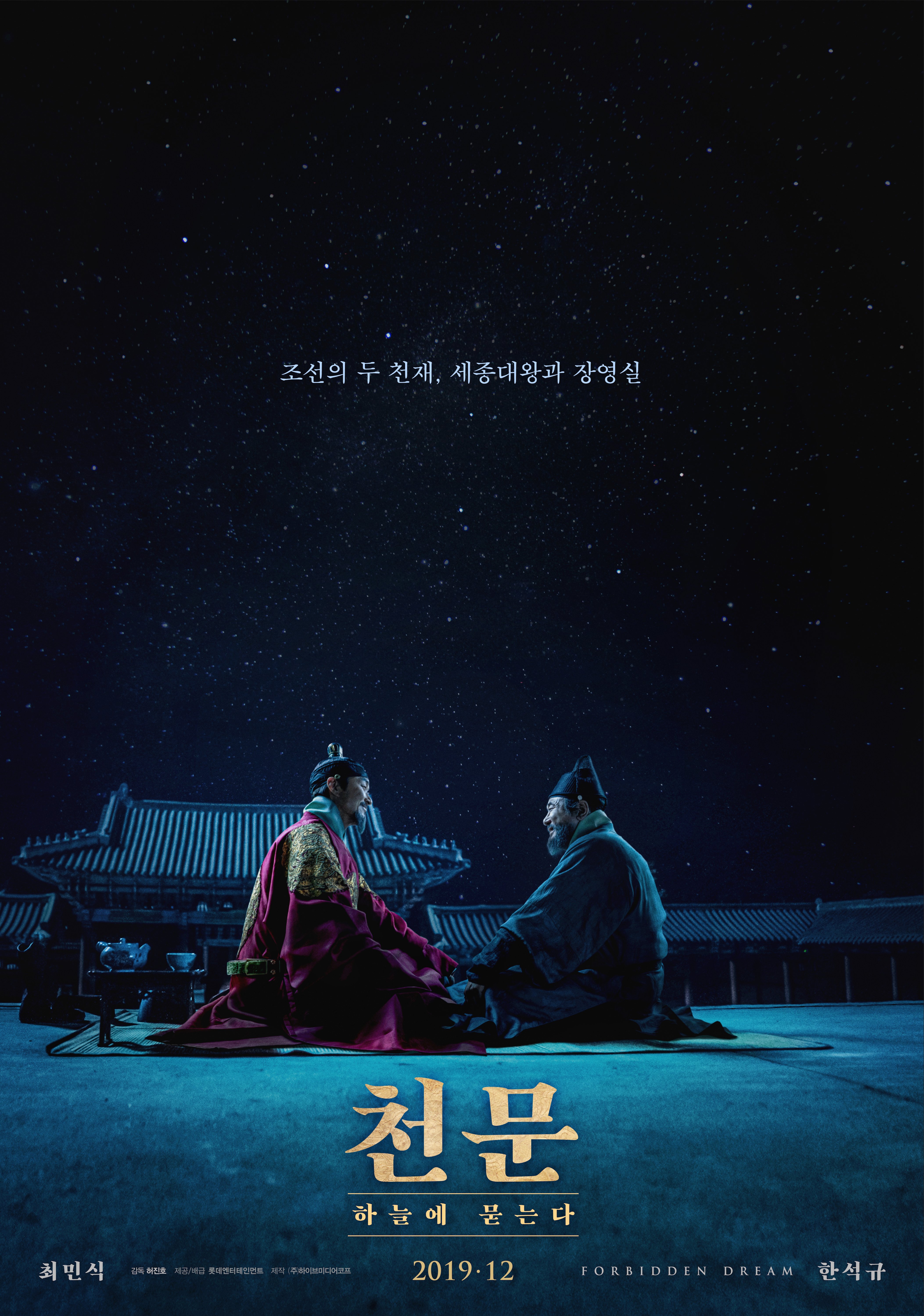
Forbidden Dream (천문: 하늘에 묻는다, Hur Jin-ho, 2019)

Technology is a great motivator for social change, which is one reason why there are those who would prefer to shut it down before it exists, afraid of the threat it poses to their own power and status. Best known for tearjerking romantic melodrama, Hur Jin-ho follows historical epic The Last Princess with a quietly nationalistic journey back to the Joseon era in which calls for greater sovereignty perhaps incongruously go hand in hand with progressive politics which see the good king Sejong (Han Suk-kyu) agitate for greater social equality through the democratisation of knowledge. This is his “Forbidden Dream” (천문: 하늘에 묻는다, Cheonmun: haneul-e mudneunda), the existence of a “fair” society in which anyone can read, write and learn regardless of the social class into which they were born.

Apparently inspired by the mysterious disappearance of legendary court inventor Jang Yeong-sil (Choi Min-sik) from the annals despite his close friendship with the king, Hur sets his tale in the 1440s during which time Korea is a tributary of the Ming. The problem with that is that though Korea remains a sovreign nation and Sejong its king, the Ming have positioned themselves as the culturally superior arbiters of knowledge. Facing persistent famines, Sejong is convinced that the key to agricultural prosperity lies in getting rid of the Ming almanac and using their own time zone which is better suited to the Korean Peninsula and will allow their farmers to make the best use of their land. The Ming, predictably, do not like his idea and are forever sending envoys to tell him to stop trying to “improve” on their technology. Nevertheless, he persists which is how he comes to meet Jang Yeong-sil, a technological genius whose innate talent has brought him to the palace despite the fact that he was born a slave. 

In Yeong-sil, the perhaps lonely king Sejong discovers a kindred spirit, the two men quickly, and transgressively, speaking as equals when it comes to developing their new technology. Giddy as schoolboys, they work on their inventions together for the betterment of the people, beginning with building a water clock to better indicate the time when the sun goes down. Sejong frees Yeong-sil and makes him a “5th rank scientist”, gifting him the clothes of a gentleman, but his open hearted egalitarianism sets him at odds with his ambitious courtiers who resent being forced to share their space with a former slave, puffed up on their feudal privileges that convince them advancement is a matter of name and intrigue. 

Just as Hur suggested in The Last Princess that the courtiers sold their country out because of an internalised sense that Korea was small and backward and could not stand alone, so Sejong’s ministers begin to abandon him and turn their fealty to the Ming. Sejong believes in Korean independence, certain that only by standing free can the country prosper and the people be happy. Others however fear Sejong’s “forbidden dream” of a more equal society knowing that it necessarily means a lessening of their own power and the privilege they feel themselves entitled to. Besides timekeeping, Sejong has also been working on a new alphabet which will further set them apart from the culture of the Ming. The ability to read and write using Chinese characters which Sejong feels are not perhaps well suited to Korean has hitherto been reserved for the elite. Sejong’s alphabet which will eventually become the Hangul still in use today removes the barriers to knowledge which ensure the rule of the few can never be challenged while also reinforcing the idea of a cultural Koreanness which is valid in its own right, equal to that of the Ming, and obviously a better fit for his people who will then be able to create glorious inventions of their own. 

Hangul is the “something eternal that no country can take away” that Sejong dreamed of as his legacy, but it’s also the thing that costs him his transgressive friendship with Yeong-sil as his courtiers reject his internal challenge to the social order, favouring the feudal certainties of the Ming over his revolutionary kingship. Undeniably homoerotic in the depths of its sincerity, the attachment of the two men, a slave and a king, is embodiment of Sejong’s forbidden dream as a symbol of a better world where all are free to innovate. “Class does not matter” he tells Yeong-sil as they stare up at the stars, “what matters is that we look at the same sky and share the same dream”. That better world, however, will be a long time coming, Yeong-sil a martyr punished for his class transgression but making a personal sacrifice on behalf of the king who was also his friend so he can bring about his forbidden dream of an independent Korea powered by cutting edge technology created by men like him with fine minds from all walks of life. Well, perhaps there’s still some work to do, but you get there in the end. Anchored by the magnetic performances of its two veteran leads, Forbidden Dream does not entirely escape the pitfalls of the Joseon-era drama with its palace intrigue and complex interpersonal politics, but is at its best when celebrating the intense friendship of two men united by the desire to innovate even if that innovation is not always convenient for the world in which they live.


Forbidden Dream streamed as part of this year’s New York Asian Film Festival.

International trailer (English subtitles)

Images: © 2020 LOTTE ENTERTAINMENT All Rights Reserved.

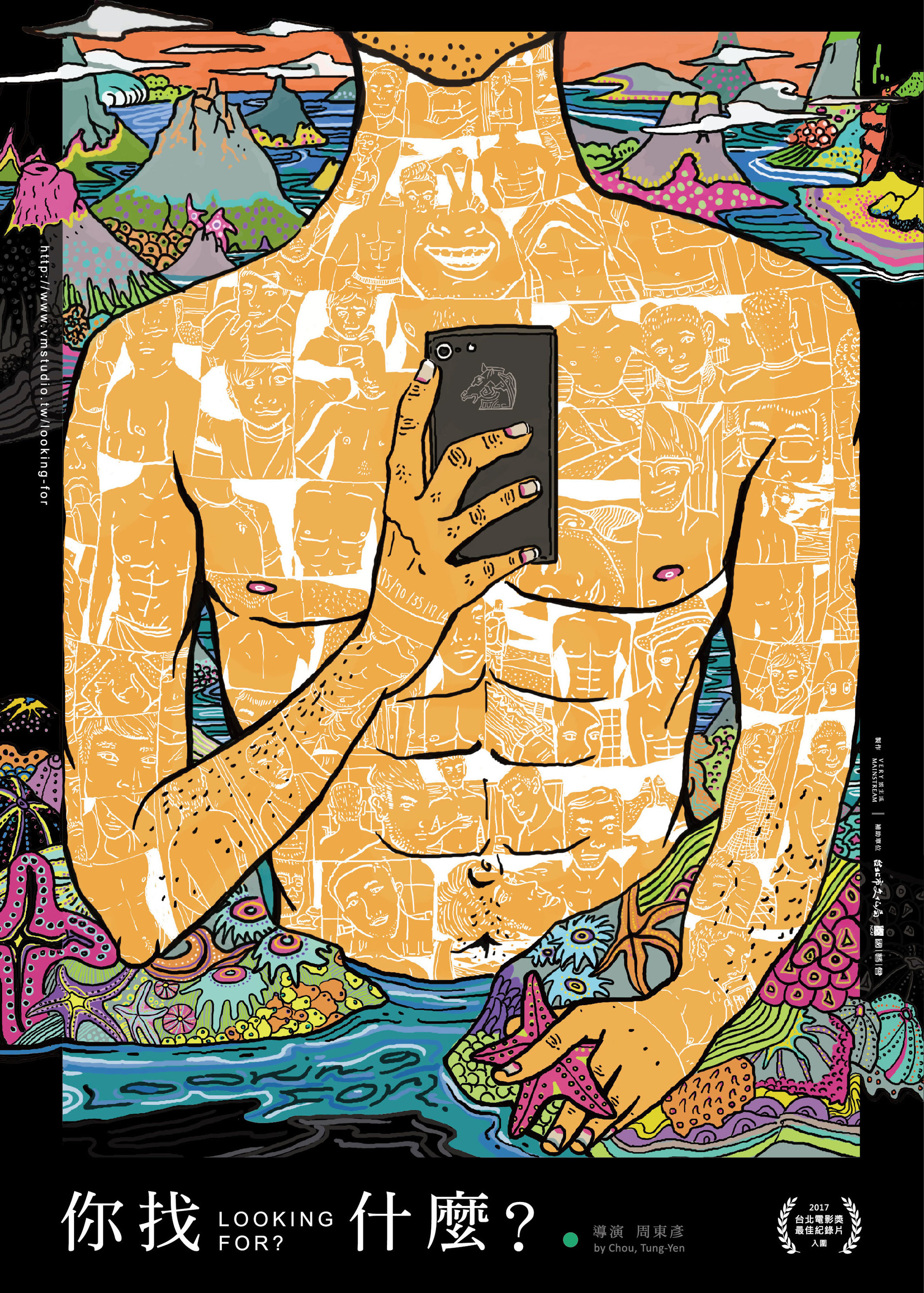
Looking For? (你找什麼?, Chou Tung-yen, 2017)

“Looking for?” (你找什麼?, Nǐ Zhǎo Shénme?) is a common enough ice breaker on gay dating apps but when you get right down to it it’s a difficult one to answer. Struggling with the question himself as someone who came to the app scene fairly late, director Chou Tung-yen interviewed 60 men from all around the world to ask them what it is they’ve been looking for, why they use dating apps, and how they really feel about them. 

As might be assumed, many of the men are using the apps for casual hook-ups citing the convenience as a major motivating factor. In the old days you wrote letters and hoped to get a reply to your PO box, or you went to a bathhouse, or invested time in someone at a bar, but now you just exchange messages and get what you need when you need it. One older user even likens the experience to that of a supermarket or even ordering fast food, an entirely disposable satisfaction of needs. He’s not necessarily making a criticism, but others ask if the commodification of the community is really a good thing. Most assume that in a more open society and most especially within your own community there ought to be more freedom to be your authentic self, but the apps are so interested in finding a perfect match that they try to force those who use them inside their narrow lines, tagged as a particular brand with some feeling as if they have to change themselves to be “marketable” or no one is ever going to be interested in them. 

Social media of all kinds can foster feelings of inadequacy, but paradoxically others report that they use dating apps precisely in order to boost their self esteem. They like it when people like their photos and enjoy the feeling of being desirable, counting the messages roll in from various suitors to whom they may or may not choose to reply. Those who’d previously felt themselves unattractive have learned to find their niche and become more comfortable in their bodies able to own their sensuality in all areas of their lives. But then some have run the other way, obsessively working out becoming perhaps dangerously addicted to online praise as they continue to alter their physicality to better conform to an external idea of conventional attractiveness. 

And then there are the other dark sides, the inherent danger and the potential toxicity of a party culture that encourages excessive drug use. One young man who appears only in silhouette, his voice disguised, reveals that he thoughtlessly had unprotected sex while high, while another man explains that he eventually decided to leave rave culture behind after a friend took his own life while under the influence and another died of a short illness caused by longterm drug use during which his friends continued to take him out partying despite knowing that he was seriously ill. 

The man whose face appears in silhouette laments that he no longer thinks it’s possible to find true love online, though there are those for whom that is exactly what they were looking for and some of them seem to have found it. Several couples report that they met through a dating app and then stayed together, even later got married. Others however find that while using the app their desire to find a monogamous partner decreased, they enjoyed the ability to have various experiences instead. Still more are looking for friendship or companionship more than romance, someone just to have dinner or share a deep conservation with. 

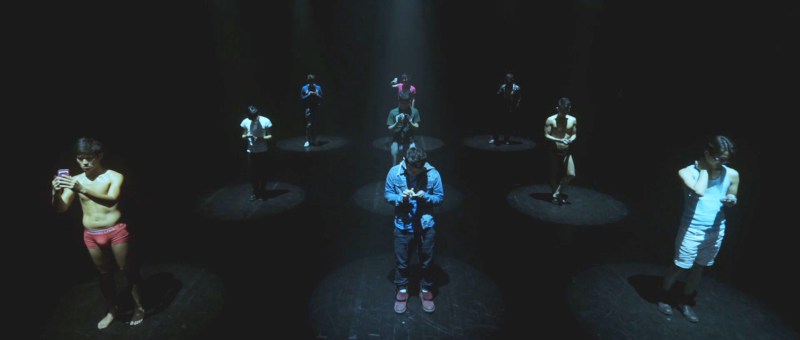
Towards the end, one interviewee reveals he no longer uses dating apps because he couldn’t figure out what it was he was looking for. Others drift away from them either because they found a stable relationship, began to age out or lost interest in the scene, whether having figured out what they want(ed) or not. Chou asks each of the respondents what love is, many of them talking wistfully about first love but seemingly jaded about grown-up romance or at least resigned to a cooler kind if perhaps still chasing that first flush of passion. Concentrating mainly on the interview sessions, Chou intersperses brief theatrical dance sequences and shots of himself captured alone at various points of transit in different cities, discovering at least a kind of commonality in the community of dating app users the world over who can understand each other even in the absence of shared language. Chou may not have discovered what it is he’s looking for, but has perhaps learned something else in his voyage through the trials of 21st century dating in that in the end you get out what you put in, which is to say what you’re looking for finds you whether you recognise it or not. 


Looking For? streams in the UK via Rio Player 20th – 26th November as part of this year’s Queer East.

Original trailer (English subtitles)
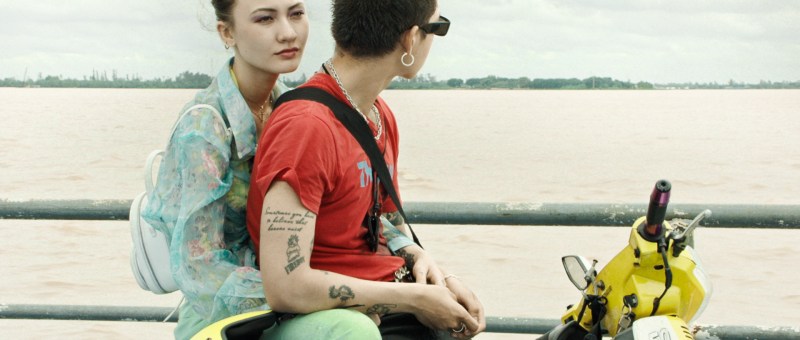
Dear Loneliness (致親愛的孤獨者, Lien Chien-hung & Sunny Yu & Liao Che-yi, 2019)

“After 10 years or 20 years, you will feel less lonely. Surely you will not be hurt anymore due to your pure feeling and kindness” a warmhearted bookstore owner (played by literary superstar Lo Yi-chin AKA Lou Yi-chun/Luo Yijun) advises a series of young women in a parting letter, reminding them that the reason they suffer so is only their youth and that too shall pass. Inspired by Hou Chi-jan’s documentary series Poetries from the Bookstores which highlighted 40 Taiwanese indie bookshops, omnibus film Dear Loneliness (致親愛的孤獨者, Zhì Qīn’ài de Gūdú Zhě) features three segments helmed by three promising young directors selected through Dreamland Image’s Storylab featuring three women each consumed by loneliness at differing stages of youth. 

In the first of the stories, 12-year-old Xiaoyu (Lin Chi-en) is introverted and friendless. In common with the heroines of the other two segments, she is disconnected from her family, raised by a grumpy grandpa who hates her reading habit which he sees as a waste of time because it makes no money. Like many of the other girls at school, she has a crush on handsome teacher David (Chung Cheng-Chun) whose obvious enjoyment of the attention he receives has his relatively more authoritative colleague feeling worried enough to ask him if his behaviour isn’t a little inappropriate. Burying herself in romance novels and engaging in mental fantasies of her teacher Xiaoyu struggles with her adolescent desire while firmly rejected by her peer group, the girl on the next desk going so far as to adjust the angle of her selfie to avoid Xiaoyu being caught in the background. The irony is that David may indeed be engaging in inappropriate conduct with his students, just not with Xiaoyu whose jealousy and resentment may accidentally expose him for what he is but leave her even more marginalised. 

Kai-han (Angel Lee), meanwhile, also experiences parental alienation, yelled at by her unsupportive father just at the moment she really needs some help. Having left her small town for uni in Taipei she discovers a girl from the Mainland already in the room she thought was hers. Owing to some kind of mix up, she finds herself abruptly without accommodation with term about while the harried office admin lady is decidedly unhelpful. After taking temporary refuge in a bookshop where she’s berated by her father over the phone who accuses her of being lax with details and bringing this on herself, she decides to try getting the Mainlander to vacate “her’ room, but she is understandably unwilling seeing as she’s paid her rent for the term already. Things take a turn for the unpleasant when Kai-han discovers her wallet missing and after reading a series of xenophobic online comments decides the Mainland girl took it. She tries to get it back, perhaps mistakenly feeling she’s standing up for herself and taking responsibility but incurring only tragic consequences which yield ironic results. 

The oldest of the women, Xiaoxun (Chang Ning) who gives her age perhaps unconvincingly as 20, left her “indifferent” family in Kaohsiung for love, ending up on the fringes of the sex trade because she needed money. Yet she ends up taking a strange job in prison “rehabilitation”, flirting with the various lonely men who request her and vowing to wait for each of them until they get out. Prisoner 2923 (Liu Kuan-ting) is a little different, deep and introspective he forces her to realise that she too is imprisoned. “Each day goes by whether you’re happy or sad” she cheerfully advances, deflecting his questioning until the time runs out. He sends her to a book store, because you can’t recommend the best book, the best book chooses you. Meanwhile, she reflects on her problematic relationship with her ex who is now dating her friend before realising she’s hooked on the mystery of 2923, eventually hearing his story but allowing it to free her from her sense of shame and inertia as she ponders a return to source, perhaps finally meaning it when she tells him too that she will wait for him. 

The three women each experience loneliness and despair at different stages of life, but as the bookseller points out they are all very young. The key to escaping their loneliness, he claims, lies in experience, filling the void with “the fullness of life”. Asked what it is they should do he can’t say, but assures them that he would give them a hug “because you are very precious, you just don’t realise that now”. A strangely life affirming experience, Dear Loneliness is a gentle hand in the darkness pointing the way for those who feel hopeless and alone back towards a place of light and safety to be found, it seems, in your local indie bookshop.


Dear Loneliness streamed as part of this year’s New York Asian Film Festival.

Original trailer (English/Traditional Chinese subtitles)

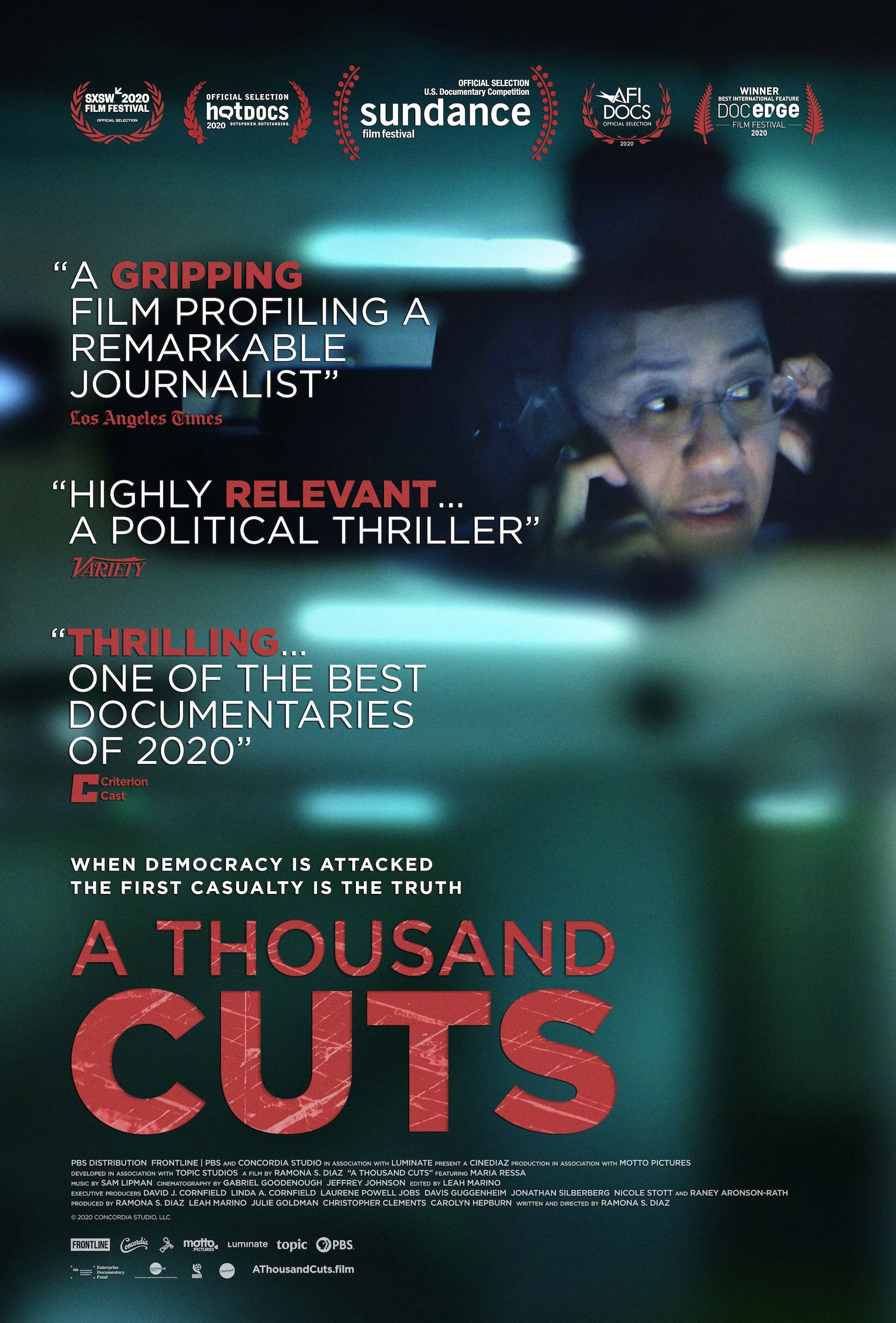
A Thousand Cuts (Ramona S. Diaz, 2020)

“Your concern is human rights. Mine is human lives” President Rodrigo Duterte disingenuously intones as part of his State of the Nation address, as if in the end they weren’t the same thing. Ramona S. Diaz’ clearheaded yet incendiary documentary A Thousand Cuts follows unfazable journalist Maria Ressa, head of online news site Rappler as she finds herself firmly within the president’s sights for her determination to challenge his “fake news” only to be accused of the same herself. Yet Ressa refuses to back down, holding the line even in the face of extreme threat to her person ranging from spurious prosecution to attempts to intimidate serious enough to have her wearing a flack jacket while travelling only by official car. 

As Ressa points out, the danger is not unique to the Philippines though through her investigations we see her map out the networks of bots and bad actors that allowed populism to prosper through social media, the most online nation apparently a guineapig for geopolitical manipulation. Remarkably even-handed in her presentation, Diaz introduces us to Ressa’s opposite number in Mocha Uson, a former pop idol turned rightwing blogger ensconced in the Duterte camp but scoffing at the idea her job is to spread pro-Duterte propaganda. Like fellow candidate Bato, a former police chief turned head of corrections, she likes to put on a show, a series of K-pop-style dance routines praising the president gracing her social media feeds. Cheerful scenes of dancing and celebration are directly contrasted with the disgruntled face of a female opposition candidate appearing directly below them as if in disapproval of their frivolous merrymaking.

Then again, the problem is the president is often overly “honest”, casually implying that he has personally killed and has no qualms doing so again as Ressa attempts to question him as if he were an ordinary politician. He is crass and sexist, constantly boasting of his sexual prowess at the podium while emphasising his virility,  literally playing the macho strongman, yet even as he says directly that he will kill people keep supporting him presumably believing that he means he’s going to kill other people but not them. One older woman even gets up to a mic at an event where Ressa is speaking to point out that the extra judicial killings may be awful but her pension’s gone up and she personally feels quite safe as someone unconnected to drugs so she struggles to see what the problem is. Meanwhile, the reporters recount the personal toll covering the killings can take on them as they witness the bodies lining the streets, discovered by wailing relatives protesting that their sons, husbands, and brothers were good people who didn’t deserve to die this way, not that anybody does. Not so much a war on drugs as a war on the poor, but populist politicians don’t hang on to their power by making things better, only by making them worse and then blaming someone else.  

Simply by reporting on the injustice of the killings, Ressa becomes a figurehead for the hate directed against Rappler and other news organisations prepared to challenge the president’s narrative. We see him humiliate a young reporter, answering her questions with an accusation of a lack of patriotism, before having her excluded from government briefings. The reporter later breaks down, revealing the strain placed on her by constant paranoia not just of becoming a direct target for government action but that she may someday make a mistake that would be used heavily against her. Yet she too is buoyed by the relentlessly positive presence of Ressa who refuses to be cowed, insisting that it’s not too late and that hope will win in the end. Don’t be afraid, she insists in the face of Duterte’s mantra that there must be fear, violence is his strength. Yet as the film’s title implies, the death of democracy comes in a thousand tiny cuts rather than a single blow, the cornerstones of accountability quietly chipped away while our attention is pulled in a thousand different directions. The parallels are obvious, populism on the march all over the globe, but there are at least those like Ressa willing to speak truth to power no matter what power might do to stop us listening. 


A Thousand Cuts streamed as part of this year’s San Diego Asian Film Festival.

Original trailer (English subtitles)
Unleashed (地下拳, Kwok Ka-Hei & Ambrose Kwok Yat-Choi, 2020)

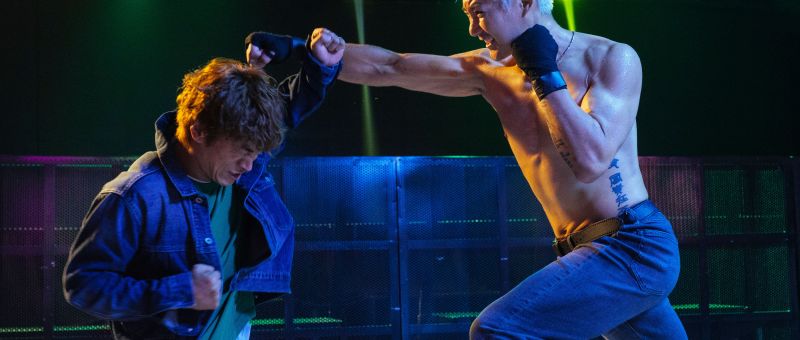
Victory lies in letting go in Kwok Ka-Hei & Ambrose Kwok Yat-Choi’s macho boxing drama Unleashed (地下拳). A familiar tale of a gym under threat, a master vulnerable, and a young man indignant, Unleashed isn’t claiming to be original but eventually wanders in an unexpected direction with the entrance of a young aspiring actress who finds herself at the mercy of a predatory industry, taking refuge in the ring as she undergoes research for an upcoming role as a top assassin. 

Fok Kit (Sun Zhen-Feng), the hero, is a champ of the underground boxing circuit living with his master Tak-bo (Ken Lo Wai-Kwong) at a struggling gym. When their landlord, Mr. Ho (Mok Wai-Man), comes calling, Tak-bo assumes he’s putting up the rent but the reality is even worse. Ho wants to sell the property after receiving an offer too good refuse, but he is willing to sell it to Tak-bo first if he can come up with the money. While the bank agree to loan him almost enough, Tak-bo is running a little short when he’s approached by an old pupil, Lok (Sam Lee Chan-Sam), with an offer of his own. He wants Fok Kit to face off against his guy Surat (Zheng Zi-Ping), a Thai boxer with a fearsome reputation. Tak-bo is reluctant, fearing for Fok Kit’s safety after hearing rumours that Surat killed a man in the ring, while it also turns out that there may be bad blood between himself and Lok who has not long got out of prison after being convicted of drug smuggling. Meanwhile, Fok Kit has taken on a new pupil, Effy (Venus Wong Man-Yik), who wants to join the gym to learn all the boxing she needs to know to convince in her role as an assassin in an upcoming movie. 

Left with no other options, Tak-bo gives in and lets Fok Kit fight Surat, but it goes just as badly as it could possibly go and not only does he lose but is rendered paralysed. In true boxing movie fashion, Fok Kit shifts from petulant unwillingness to undergo a risky operation that might allow him to walk again, to a full recovery and the desire for a rematch, but his scars are as much psychological as physical leaving him afraid to fight, seeing Surat’s smug grin in every challenger that swings a punch. He freezes, knocked out by even the weakest of opponents. Effy, meanwhile, is on an emotional rollercoaster of her own. The sleazy director she’s working with takes against her when she rejects his inappropriate advances, having all her scenes reshot and even using them as an excuse to use physical violence against her under the pretext of movie making. He eventually gets his comeuppance when a video of his behaviour is leaked and goes viral, but his drunken act of revenge, from which Fok Kit is unable to protect her because of his unaddressed trauma, may yet cost Effy her big break in leaving her with a prominent facial scar. 

As Tak-bo keeps telling him, however, the most important tool in boxing is not physical strength but passion, just as a good actor needs heart and dedication. “Clench your first too tight you may lose everything” Tak-bo insists gently guiding Fok Kit towards the power of letting go while he himself admits he’s been holding on to an insecurity that kept him out of the ring. A fear of losing, rather than the convenient excuse of his leg injury, had him give up the fight only now deciding that he’s tired of hiding from failure. If they want to save the boxing gym, they’ll have to face their respective fears in the form of the irredeemable big bad that is Surat, a total vacuum of humanity and unstoppable killing machine. The greedy and soulless are eventually made to pay a heavy price for their betrayal of the craft, while those who have true passion eventually prosper. Never quite managing to marry its twin plot strands with Effy’s desire to fight back against a sexist and exploitative industry taking a backseat to Fok Kit’s manly drama as he struggles to regain his confidence by beating his trauma in the ring, Unleashed moves swiftly towards it wholly expected finale but consistently lands its blows even in its willing conventionality.


Unleashed streamed as part of this year’s New York Asian Film Festival.

Original trailer (English/Traditional Chinese subtitles)

Images: © 2020 Orchid Tree Media

Drama Queen (Sắc Đẹp Dối Trá, Kay Nguyễn, 2020)

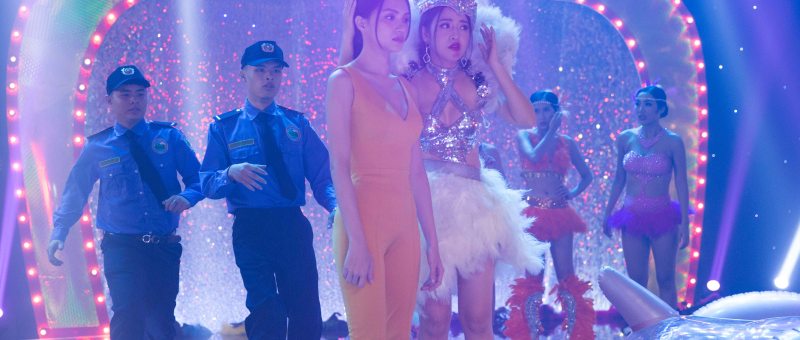
“I just changed my gender, I didn’t commit a crime” the heroine of Kay Nguyễn’s Drama Queen (Sắc Đẹp Dối Trá) answers after being publicly outed during a beauty contest. Sometimes people need a push to finally achieve their dreams, though witnessing a murder and becoming the target of shady gangsters is certainly an extreme motivation. Starring transgender pop star Huong Giang, Nguyễn’s playful drama is a win for representation as its steely heroine finds the courage to claim her space while keeping one step ahead of the mob and one step closer to beauty queen stardom. 

As the film opens, Duong (Huong Giang) is a lowly stuntman unexpectedly given the chance to shine when the lead actor goes AWOL. Unfortunately, Duong is a little too in love with the spotlight and can’t resist showing off his skills, effortlessly fighting off the ninjas who were supposed to despatch his character so he can finish his dance. In addition to irritating the crew, Duong’s improvements also result in the costume getting damaged, landing him a $500 bill he can in no way afford. The incident does at least introduce him to Hao, the actor who will be taking over. Unfortunately, however, the next time Duong encounters Hao he’s being stabbed in the street, later realising he’s been offed by Thien, the gangster who runs the stuntmen. Naively ringing his boss who turns out to be in league with Thien, Duong puts a target on his own back. Taking his friend Cutie’s (Phat La) advice and the money neighbour Ky (Puka) had been saving for a boob job he heads to Thailand for the gender reassignment surgery he always longed for but could never afford. 

The irony is that while Duong is getting her surgery, her father also falls ill and neither she nor her family have money to pay for his treatment having just spent it on her own. Though Duong’s mother had been extremely supportive, giving her all her savings and encouraging her to “get the best surgery and be beautiful”, Duong’s father disowned her on learning of her transgender identity and rejects her when she tries to visit him in hospital. Nevertheless, she remains determined to find the money to pay for his operation which is why she ends up entering the Miss Mother Earth beauty contest which admits only “natural” beauties who’ve achieved their good looks through hard work alone. 

While it might be assumed that taking part in a high profile beauty pageant when you’re meant to be in hiding from scary gangsters might not be the best idea, Duong is confident no one is going to recognise her, something that is more or less borne out by the fact that after a series of strange coincidences she ends up sharing a room with Ky who decided to enter to competition herself after catching sight of Cutie’s flyers and appears not to realise who she is. In it for the money more than the affirmation, Duong knows she has to keep her transgender identity secret or risk getting kicked out of the competition while challenged both by the idea of possible romance with sweet and handsome hotel man Tuan (Tuan Tran) and the presence of a gangster mole amongst the beauty queens after Ky in the mistaken belief that she maybe Duong. 

“Secrets make a woman a woman” Tuan unironically tells her, but Duong faces a series of very real threats because of her desire to live her truth. Publicly outed in the incident which opened the film, she grabs the mic to give a powerful speech, pointing out that before anyone mentioned the word transgender they all thought she was a hero for saving her friend’s life from a would-be-assassin, now all of a sudden she’s a criminal about to be manhandled off the stage. Yet in defiantly stepping into her own spotlight and claiming her space, she gains the confidence to be all of herself while forcing those around her to accept her as she is. Her new-found confidence inspires Cutie to pursue his own true self, as well as earning her a few fans of her own while the bad guys are forced into silence. A fairly surreal adventure encompassing everything from hitmen conspiracy to beauty pageant backstabbing, Drama Queen never takes itself too seriously but is rigorously sincere in messages of acceptance and the right of all to live their most authentic life. 


Drama Queen streamed as part of this year’s San Diego Asian Film Festival.

Original trailer (no subtitles)