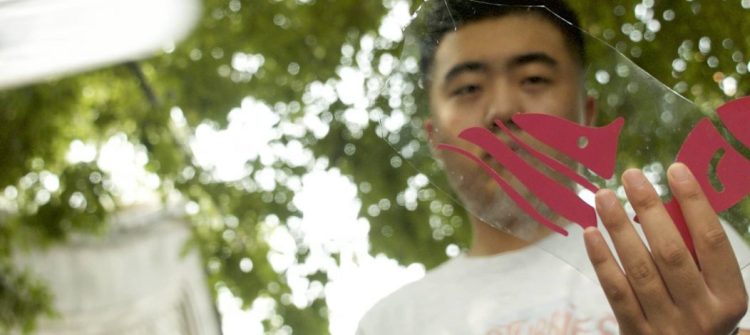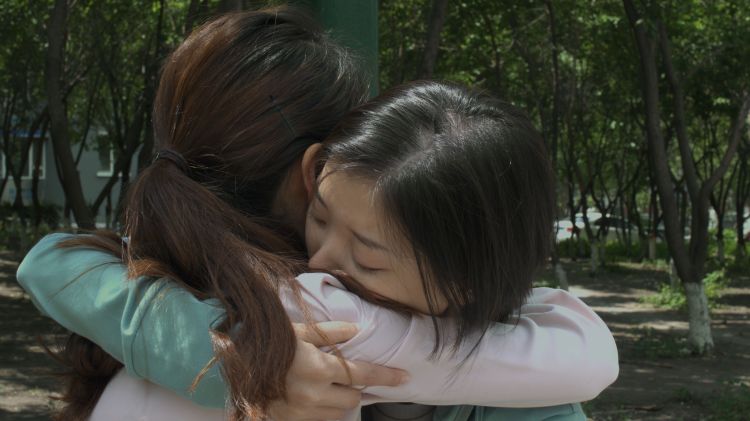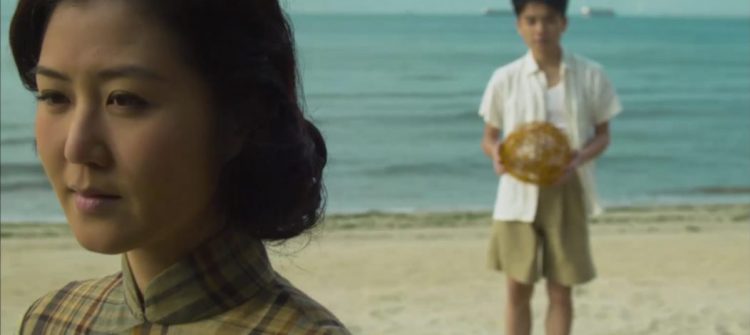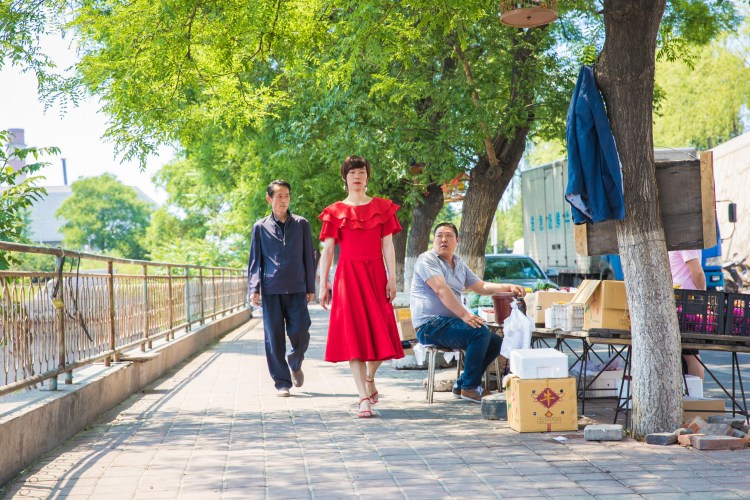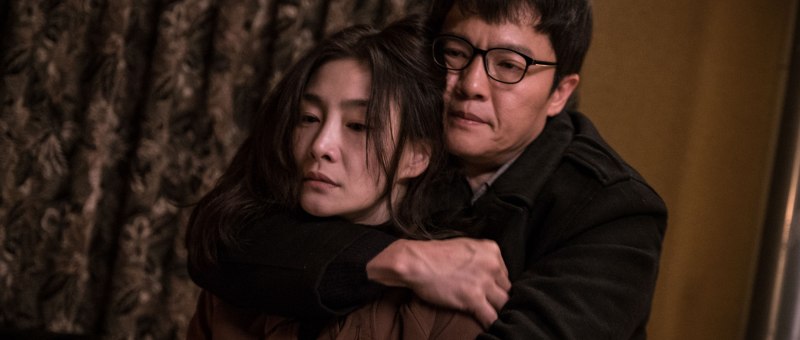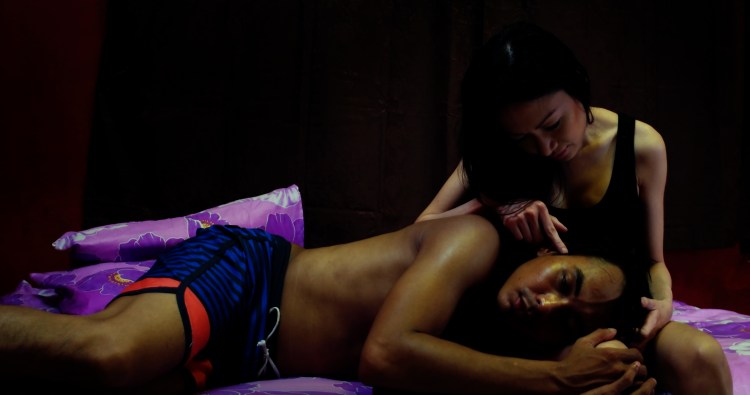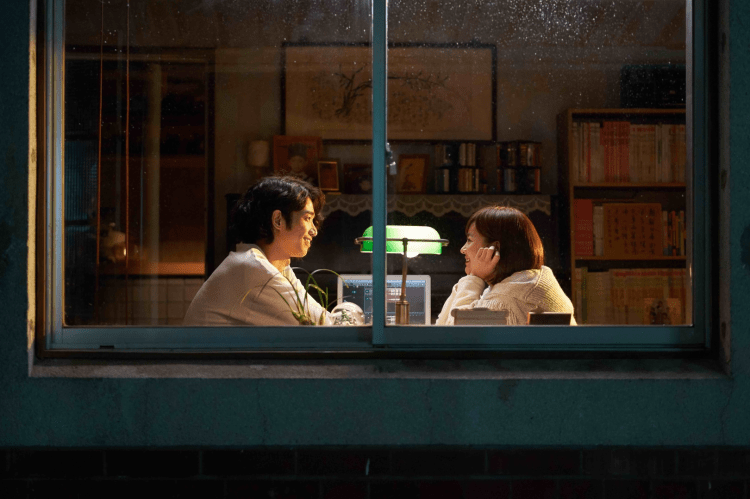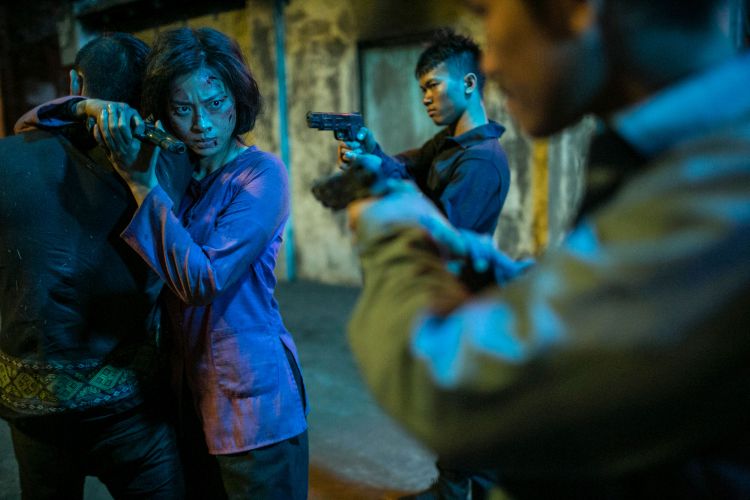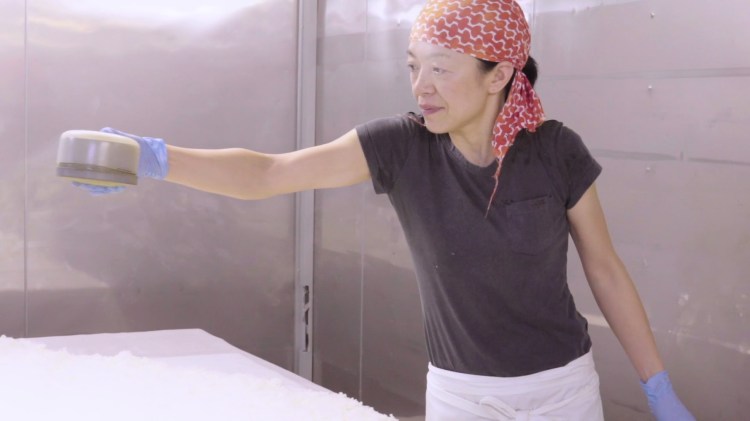
First Night Nerves (8個女人1台戲, Stanley Kwan, 2018)

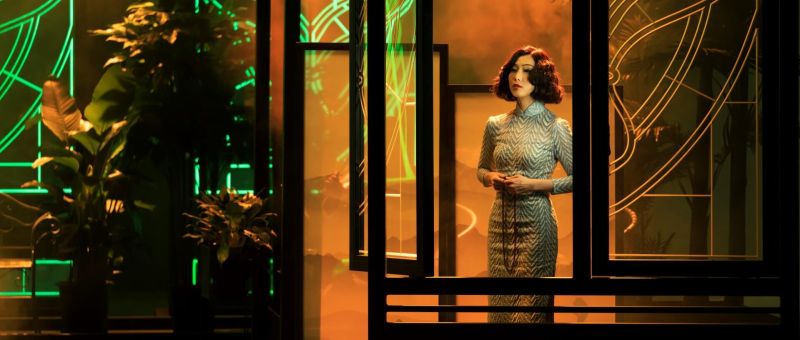
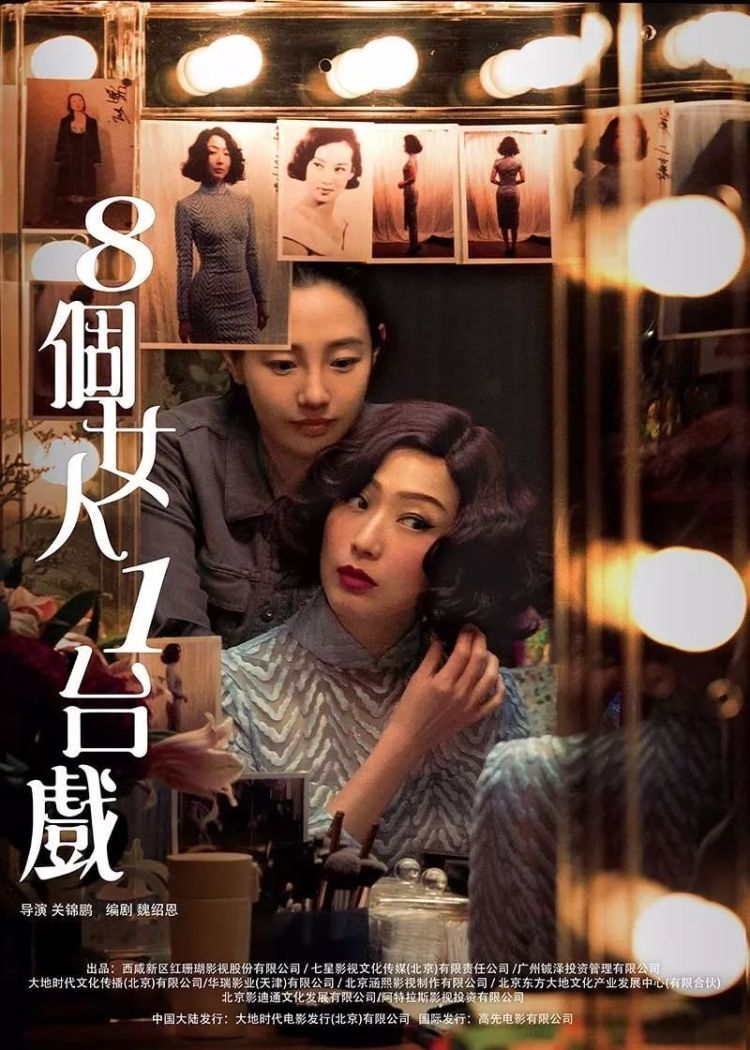
First night nerves posterStanley Kwan returns to the director’s chair after a lengthy hiatus with a cheeky piece of self-referential meta comedy revolving around two “stage sisters” and their parallel quests to seize the spotlight in the increasingly competitive and celeb obsessed Hong Kong entertainment industry. As implied by its Chinese title “Eight Women, One Stage”, First Night Nerves (8個女人1台戲) is an almost exclusively female affair in which straight men barely feature, but for as much as it heartily embraces the cattiness of backstage life it is also keen to affirm the many ways in which women support and nurture each other even if it is clear that the arts are not always as liberal as one might expect them to be.

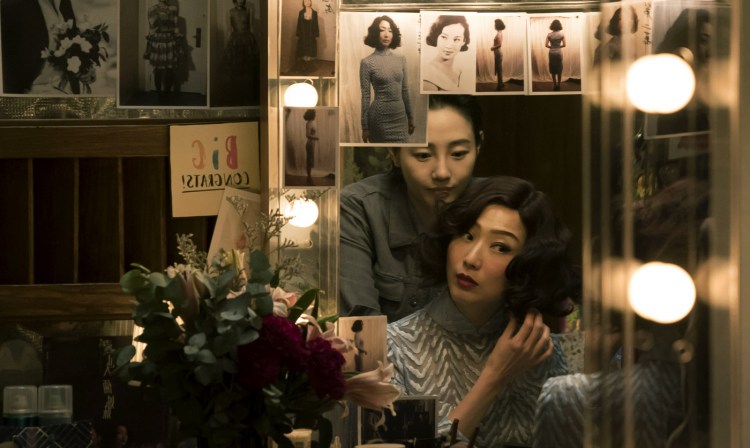
Kwan begins in high camp as the diva actresses square off during a tense press conference for an upcoming play which marks the long awaited comeback of veteran actress Xiuling (Sammi Cheng Sau-man) who abruptly retired some years previously, notably playing opposite the slightly younger starlet, Yuwen (Gigi Leung Wing-kei), many accuse of stealing her spotlight (and thereby forcing her off the stage). The behind the scenes gossip makes Two Sisters the hottest ticket in Hong Kong, which is all very good news for Xiuling’s sister-in-law Cong (Angie Chiu) – a wealthy Shanghainese heiress and theatrical impresario producing the play, some say, as a personal favour following the death of her brother in a recent plane crash which has become a minor scandal seeing as he died alongside his American mistress.

A canny business woman, Cong is not above pitting her two stars against each other as a means of getting bums on seats but she also needs to make sure the show goes on which is difficult when Yuwen, still insecure in her star billing, is intent on proving she’s not playing the second lead by constantly upstaging her co-star. Yuwen, it has to be said, is the less sympathetic of the pair – cast early as a divaish upstart who finagled her way into showbiz with sex appeal, while Xiuling remains the dignified, wounded star laid low by life. The truth is, of course, more complex as the two women circle around each other before reaching a kind of equilibrium born of mutual understanding and a healthier professional rivalry.

Before that, however, the two stars occupy two very different camps each with their own retinues. The assistants – Mainlander Nini (Qi Xi), a relative of Cong, and former pool hall girl Yilian (Catherine Chau), support their respective mistresses in different ways but are each responsible for and reflective of their emotional difficulties. Yilian, in a heartfelt conversation with the otherwise perspicacious Nini, explains that she puts up with Yuwen’s sometimes divaish antics and is happy to act as an all purpose maid because Yuwen has also been loyal to her – supporting both herself and her son even after she became famous, making plain that Yuwen is, deep down, a sincere and caring person. Xiuling, meanwhile, is cast as somewhat cold and distant, keeping Nini at arms length and the relationship professional despite Nini’s, as it turns out, entirely accurate characterisation of her strangely intense friendship with adoring lesbian heiress “Master” Fu Sha (Bai Baihe).

Despite the supposed liberality of the arts, Xiuling is not the only one to experience mild discomfort with homosexuality even if her coming around to a surprise announcement from her son eventually gives hope to the lovelorn Sha whose confused grandmother has offered a vast bounty in the hope of hooking a prime son-in-law in a ripped straight from the headlines subplot. Transgender playwright An (Kam Kwok-Leung) encounters frequent transphobic slurs passed off as an extension of divaish lovey banter and is never fully accepted as a woman by her colleagues, subtly hinting at the extent to which LGBTQ issues still struggle for mainstream acceptance.

Underneath the high camp and beautifully pitched melodrama, Kwan makes space for subtle barbs towards the creeping influence of the Mainland in Hong Kong cinema as Yuwen irritatedly admits she’s considering learning Mandarin while outraged that producers on a previous film had the audacity to dub her dialogue and insisting everyone stay in Hong Kong to watch the Cantonese version. Behind all the bitchiness and backstabbing, there is real affection for the Hong Kong entertainment industry if tempered by a mild anxiety for its future as exemplified by the strangely warm closing scene in which the two divas sit shoulder to shoulder appreciating the beauty of Victoria Harbour while acknowledging their own small role in ensuring it survives.


First Night Nerves screens as the opening gala of the 2019 Chinese Visual Festival at BFI Southbank on 2nd May where director Stanley Kwan will be present for a Q&A.

Original trailer (English subtitles)
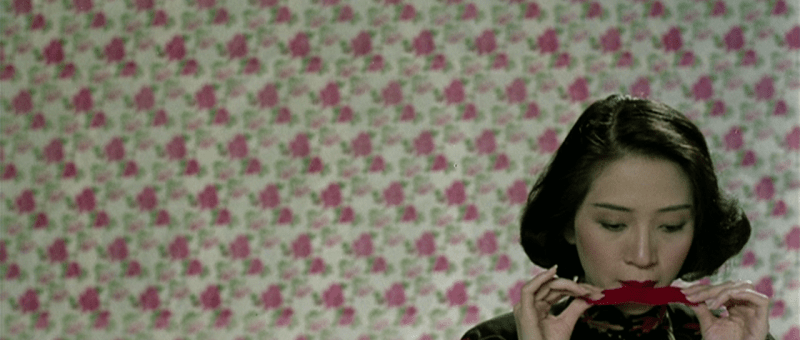
Rouge (胭脂扣, Stanley Kwan, 1988)

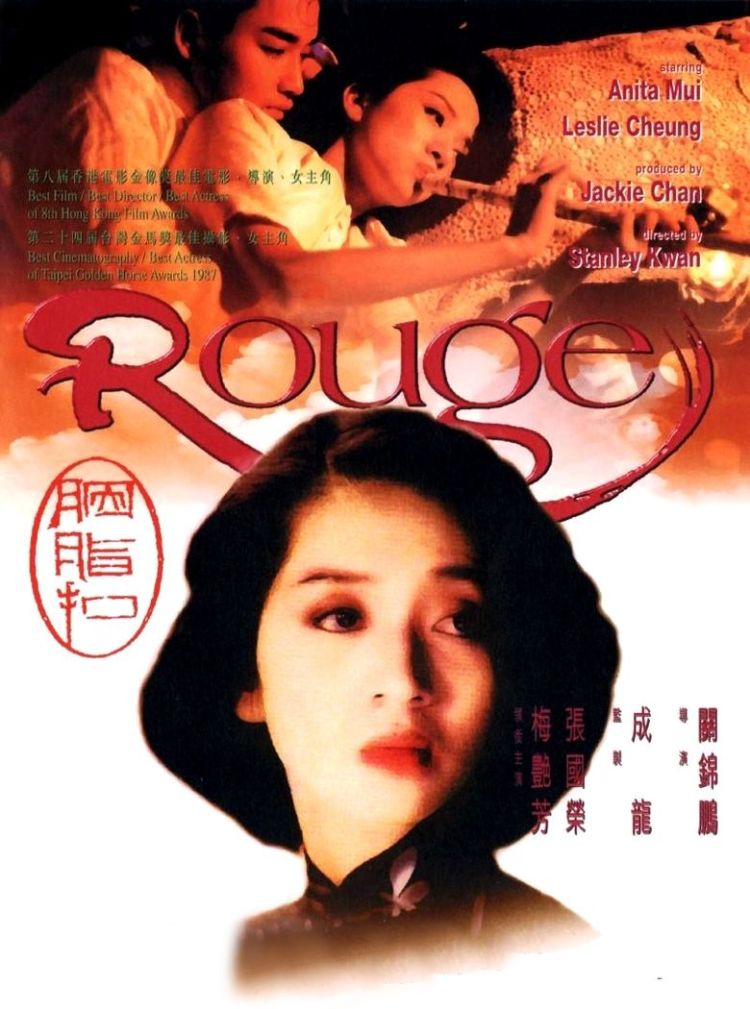
Rouge poster 2How long should you wait for love? They say every love story is a ghost story, and Stanley Kwan’s Rouge (胭脂扣) is a love story in more ways than one. A love letter to old Hong Kong, Rouge laments the passing of time and defeat of beauty by efficiency but then stops to wonder if perhaps that isn’t better and if we’re all secretly happier in world in which dying for love has gone out of fashion.

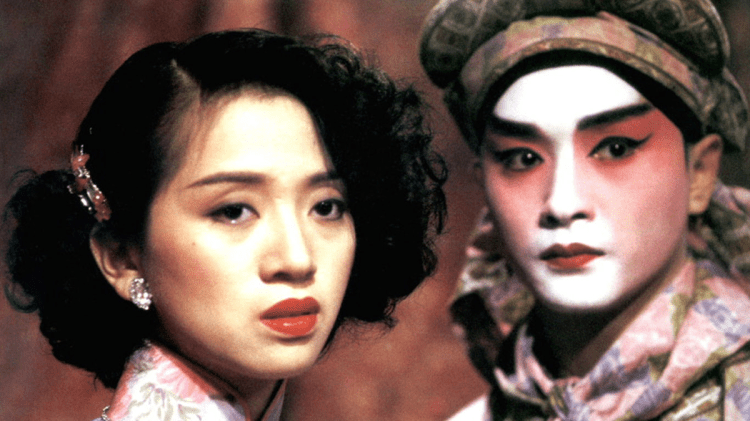
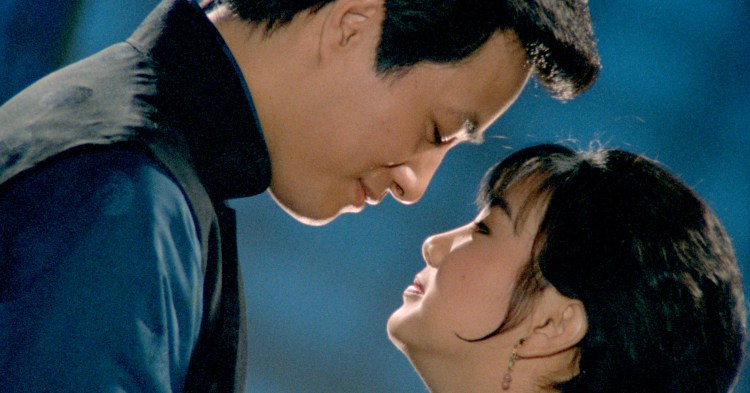
We begin in the early 1930s as courtesan Fleur (Anita Mui Yim-fong), dressed as a man and singing of doomed love, catches the eye of nobleman Master 12 Chan Chen-Pang (Leslie Cheung Kwok-wing). He lavishes gifts on her and the pair fall madly in love, but his family do not approve of the match and are set on Chen-pang marrying their chosen bride. Out of options, the pair decide on double suicide, but Fleur finds herself all alone in the afterlife and, after 50 years have passed, makes her way to the Hong Kong of the late 1980s in search of lost love.

Many things have changed in the Hong Kong of 1988, but luckily they still have classified ads which is how Fleur decides to find Chen-pang. Of course, ghosts don’t generally have need of money which means she’s still out of luck, but for some reason she finds herself attached to the kindly clerk, Yuen (Alex Man Chi-leung), who eventually agrees to “admit” her while he and his reporter girlfriend Chu (Irene Wan Bik-ha) help track down Chen-pang in the hope that Fleur can find him before the next memorial of her passing in two days’ time.

Kwan contrasts the opulence of the 1930s with the stark efficiency of the modern city in which pleasure palaces have been replaced with convenience stores. Fleur wanders through a world much changed, and sees its ghosts everywhere she goes. The Yi Hung teahouse is place of decadent delight filled with music, colour, and elegance but it’s also one built on misery in which young women are trapped and exploited as a direct result of generalised poverty. Hong Kong has moved on and is now one of the wealthiest cities in Asia, bustling with industry and ambition. The modern cityscape may be less aesthetically pleasing, but perhaps that’s not altogether a bad thing if that beauty had existed only to mask an unpalatable reality.

It is true enough that Fleur struggles to make herself understood to Yuen and Chu – her language is no longer current and her way of thinking arcane considering they are only two generations apart. Fleur wonders why the pair of them aren’t married, to which Yuen bemusedly replies that perhaps it’s that there’s no particular pressure urging them towards a more formal union. In any case their relationship seems solid enough in a pleasant, ordinary sort of way. Where Chen-pang gives Fleur the gift of an empty rouge case, Yuen notices Chu’s shoes are worn and thinks to buy her new ones seeing she’s always running about. They wonder if they’d commit suicide for love and come to the conclusion that they wouldn’t, but that doesn’t mean they don’t love each other only that life is precious and that kind of grand romanticism seems so absurd in the much more down to earth 1980s.

Still, Chu and Yuen can’t help but be captivated by the grandeur of Fleur’s romantic longing. They too want to see a happy ending to her tragic story that makes 50 years in limbo worth the wait, but what if Chen-pang was just a selfish coward who woke up from a romantic daydream and went back to his ordinary life of familial obligation and frustrated desire? Fleur died for love, but 50 years later it all seems so senseless and her return is, in a sense, an attempt to come to terms with disappointment – in love and in the world. The Hong Kong of 1988 may have been anxious too, if in a different way, as another uncertain dawn hovered on the horizon but Fleur’s parting gift is to accept that there’s no point waiting for someone who has no intention of coming. She says goodbye to the past, and walks into a new future with a lightness in her step while the past, suddenly burdened, can only look on with regret.


Rouge screens at the BFI on 4th May with director Stanley Kwan in attendance for a Q&A as part of the 2019 Chinese Visual Festival.

International trailer (dialogue free, English captions)

Women (女人心, Stanley Kwan, 1985)

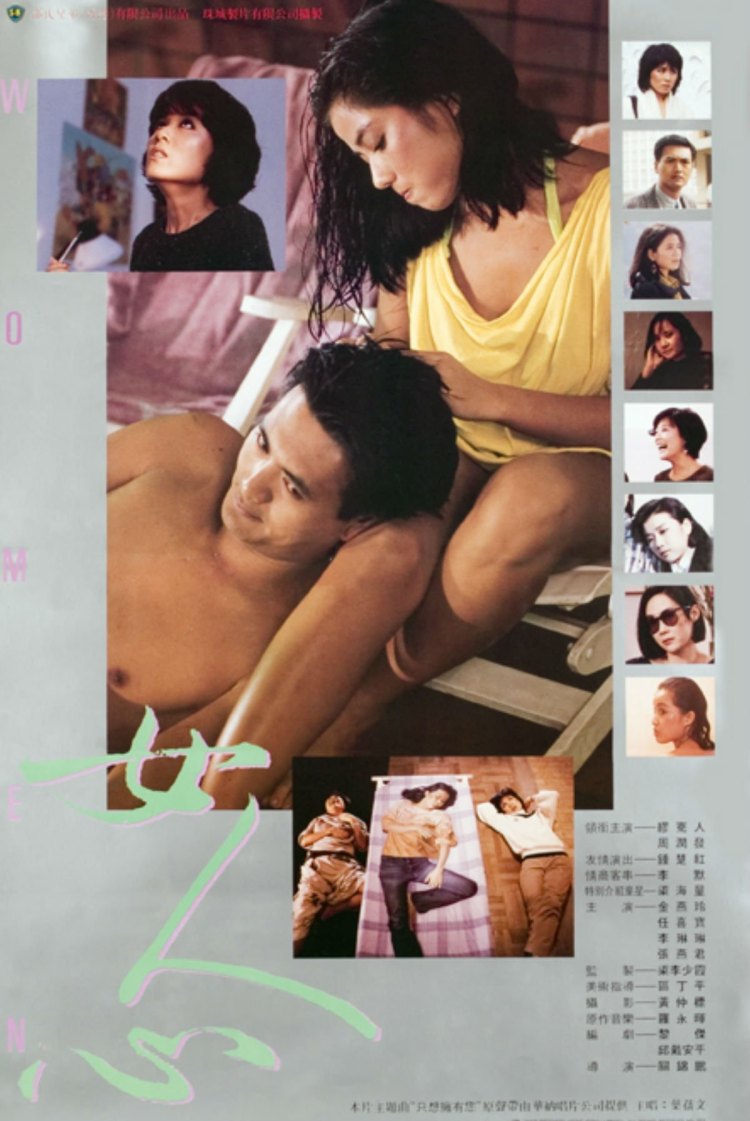
Women posterThings are changing in ‘80s Hong Kong, but when it comes right down to it are there really any more choices than there were in the past? Stanley Kwan would become known for his fiercely female led filmmaking and his debut, Women (女人心), is indeed a statement of intent if heeling close to the Shaw Brothers house style and possessed of a particularly mid-80s kind of cynicism. Marriage falls under the spotlight but for all of its minor oppressions and petty aggravations the net seems almost impossible to escape.

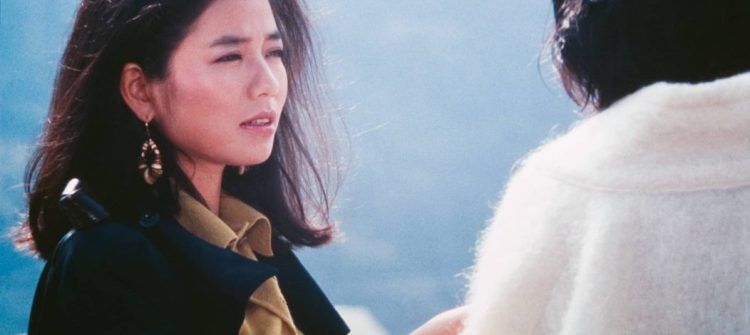
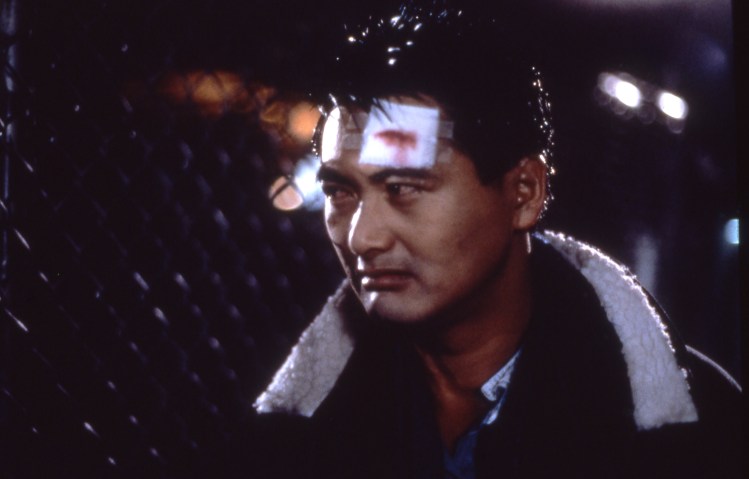
Kwan opens with a strangely cheerful family scene which quickly turns sour as housewife Bao-er (Cora Miao Chien-Jen) is excluded by her husband, Derek (Chow Yun-Fat), and son, Dang-dang (Leung Hoi-Leung), who close the bathroom door on her before declaring a pissing contest. Irked, Bao-er finds herself mildly enraged by the sight of her husband’s undies and decides to take this opportunity to tell him she wants a divorce. She’s found out all about Derek’s fancy woman Sha-niu (Cherie Chung Cho-Hung) and has had enough. Decamping to her mother’s with Dang-dang in tow, Bao-er finds herself the latest member of her friends’ “forever happy single women’s club” but remains conflicted when it comes to considering the further direction of her life.

The “forever happy single women’s club” is itself somewhat confused in its outlook in that most of Bao-er’s friends are not really intending to remain single forever but are hoping to find a new partner, if perhaps also enjoying playing the field while they look. None of them are really very happy with the status quo and the various get-togethers at which they enjoy lavish buffets and copious amounts of alcohol are mostly filled with bawdy discussions about men and sex, much to the consternation of the rather uptight Bao-er. 

In fact, Bao-er’s “refinement” seems to be one of the chief issues in her marriage which is perhaps why Derek has found himself intwined with a clingy free spirit who quickly moves into the family home and does her best to stake a claim on little Dang-dang but is unwilling to keep house with the consequence that the apartment is quickly overrun with old newspapers and empty food cartons – a sight which fair breaks Bao-er’s heart when she’s forced to visit only to be presented with some of Sha-niu’s patented “spicy soup”. During a candid conversation with her mother, Bao-er reveals that throughout her married life she’d gone to great lengths to preserve her feminine mystique only for Derek to take off with a woman prepared to let it all hang out. Her mother, broadly supportive of her choices, advises her to think carefully about her future. If the marriage was unhappy then it’s best to call it quits, but if Sha-niu is just a passing fad then perhaps she’s one worth putting up with in the absence of other options.

Bao-er’s mother seems to think that ignorance is bliss when it comes to a healthy marriage, but as a “modern” woman, Bao-er expected more. Even so, despite not requesting alimony (she only wants money to cover Dang-dang’s expensive private school fees), we don’t see Bao-er looking for work though it’s also clear she isn’t looking to remarry in the immediate future. Like many of her friends, Bao-er seems to have her doubts about living as an “independent” woman and continues to be irritated by Derek’s relationship with Sha-niu even while attempting to firmly close the door on her marriage.

The end of the relationship does however give her an opportunity to consider what it is that she wants, even if middle-class conservatism ultimately wins out. This is particularly true of an unexpected attraction to a lesbian friend which she chooses not to pursue seemingly because of the social taboo. Despite being fully out and accepted by the group, Terry (Cheung Yin-Gwan) is also pitied by some of the other members who believe she is locked out of the conventional family life most of them are looking for because she is looking for a woman and not a man. Even if it’s true that Bao-er can only really be fully herself with her female friends, she and the others still hanker after male companionship and do not feel complete without it.   

The major theme which emerges is that marriage and family are essential, if imperfect, and must be maintained even if perhaps superficially as the closing text which conveniently condones Derek’s poor behaviour while allowing Bao-er her “revenge” implies. A slightly cynical point, to be sure but undercut by Kwan’s sense of empathetic irony which asks what other real choices Bao-er has while refusing to condemn her for the ones she eventually makes. Socially conservative as it may be, the fact remains that possibilities are bleak for women of a certain age in ‘80s Hong Kong which remains a playground for men like Derek while women like Bao-er and her friends are left with only complicit means of personal rebellion.


Women screens as part of the 2019 Chinese Visual Festival on 5th May at King’s College London where director Stanley Kwan will be present for a Q&A.

Celestial Pictures trailer (English subtitles)

Tracey (翠絲, Jun Li, 2018)

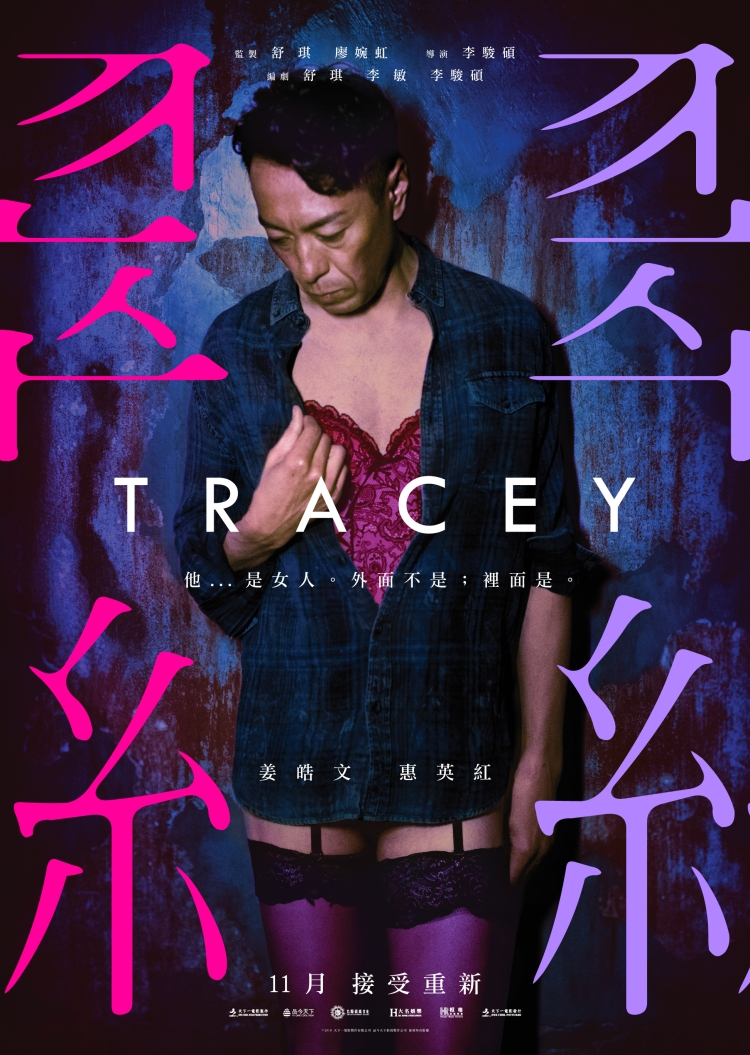
Tracey PosterHong Kong has often sought to present itself through its cinema as an ultramodern, cosmopolitan city, claiming a kind of cultural freedom from Mainland oppression. In truth, however, there are areas in which it may disappoint itself. Jun Li’s debut feature, Tracey (翠絲), is in many ways an empathetic attempt to redress the balance in making plain the destabilising effect emotional repression can exert across an entire society, causing nothing other than the mutual unhappiness which provokes one person to oppress another in service of nothing more than conventionality.

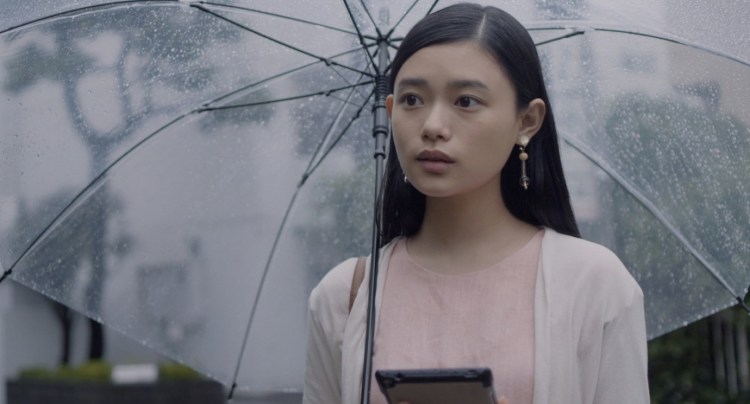
A married, 50-something father of two grown up children, Tai-hung’s (Philip Keung) conventional, ordered life is disrupted when he receives a phone call telling him that a treasured childhood friend, Ching, has been killed while working in Syria as a war photographer. Unbeknownst to anyone, and not quite admitted even to himself, Ching had been the love of Tai-hung’s life and his death finally forces him into a reconsideration of the feelings which are now, perhaps, a lost opportunity. The sense of loss is doubly brought home when he collects Ching’s partner, Bond (River Huang), from the airport and discovers that he had been legally married to another man in the UK though the pair’s marriage certificate is not valid in Hong Kong which presents a problem in trying to repatriate Ching’s ashes.

Bond, himself from Singapore where homosexuality is at least technically still illegal, knew of Ching’s love for Tai-hung and Tai-hung’s unrealised attraction to Ching but struggles with Tai-hung’s decision to not to embrace his sexuality, preferring to marry and have children in pursuit of a conventional life. Despite having grown up in an arguably even more oppressive society, Bond is 20 years younger and has perhaps benefitted from an increasingly liberal world in which greater awareness has afforded him the vocabulary to process Tai-hung’s complex identity with a delicacy that was not available to Tai-hung in his youth, nor to his quasi-mentor Brother Darling (Ben Yuen) – a performer of Chinese Opera who specialised in female roles and confided to Tai-hung that he identified as a woman but is unlikely to have ever come across the term “transgender” let alone claim it as an identity.

Nevertheless, Bond’s arrival begins to push Tai-hung’s long repressed longing to the surface even if his first attempt to explain to Bond that he too identifies as a woman is met with mild derision as Bond misunderstands him in assuming his claiming of a female identity is an attempt to reject his homosexuality. What Tai-hung tries to explain to him is that he does not see himself as a gay man but a straight woman and therefore felt that pursuing his love for Ching, a man who loved men, would never have been a possibility. Fearing his gender identity would never be accepted by anyone, Tai-hung kept his true self hidden even from his closest friends and unwittingly placed a wedge between himself and the man he loved.

Bond pushes him still further with the perhaps unfair charge that his entire life has been essentially selfish and founded on the continued deception of his wife and children. Despite its seeming conventionality, Tai-hung’s family life is not altogether happy. His wife, Anne (Kara Hui), is a fiercely conservative sort who prizes nothing so highly as respectability as she proves by rifling through the maid’s room in search of evidence of sexual indiscretion which she later uses as grounds to suggest firing her. As the couple’s son Vincent (Ng Siu-hin) points out, there is also an unpleasant racial component to her puritanical morality which objects to her Indonesian maid having a right to a private life, fearing that she will bring “disease” into the house by sleeping with another “foreigner”. This is perhaps why she objects to her pregnant daughter’s (Jennifer Yu) desire to divorce her highflying lawyer husband when she discovers that his serial philandering has resulted in a sexually transmitted disease which he has passed to her and which has thankfully been detected early enough to avoid harming the baby.

Despite Anne’s pleas with her daughter that you don’t reject someone for turning out to be different than you assumed them to be, she is obviously not ready to accept Tai-hung’s authentic self despite having been aware that there was always something slightly amiss within their marriage which prevented it from being a true and total union. It is perhaps this sense of nagging incompleteness and unhappiness which has pushed Anne’s need for respectable conventionality into overdrive, as if a superficially successful adherence to the rules could be a substitute for emotional fulfilment. Her own suffering then seeks to push her daughter into the same space as a self-sacrificing housewife who has exchanged personal happiness for the cold comfort of social respectability. 

Thanks to reuniting with a now elderly Brother Darling and finding himself accepted by the younger Bond, Tai-hung begins to find the courage to embrace his true self and discovers that many of his friends and relatives are more supportive than he might have assumed even if some of them may need time to get over the initial shock. As his mother tells him, the important thing in life is learning to find one’s peace of mind – something which could only be helped by abandoning the outdated Confucian ideas which continue to define the social order in favour of something warmer, freer, and fairer built on mutual acceptance and compassion.


Tracey screens as the closing night gala of the eighth season of Chicago’s Asian Pop-Up Cinema on April 24, 7pm, at AMC River East 21. It will also be screened in London as the closing night of this year’s Chinese Visual Festival on 9th May, 6pm, at BFI Southbank where members of the cast and crew will be attendance for a Q&A.

 Original trailer (English subtitles)
Memories of My Body (Kucumbu Tubuh Indahku, Garin Nugroho, 2018)

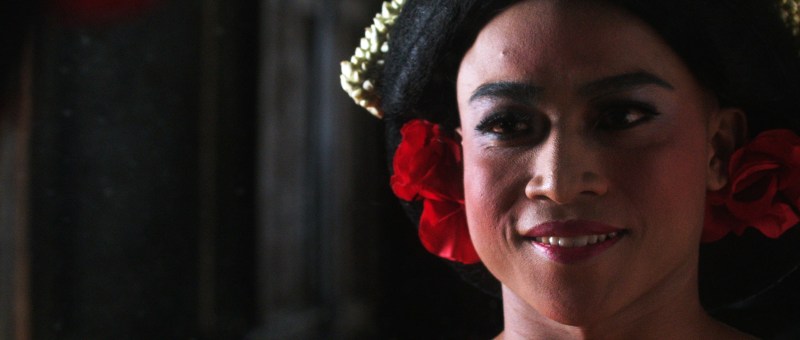
Memories of My Body posterYou view life through a tiny hole, as the narrator of Garin Nugroho’s Memories of My Body (Kucumbu Tubuh Indahku) so often observes. Loosely based on the life of Lengger Lanang dancer and choreographer Lianto, Nugroho’s 19th film examines the physicality of history as bodies become maps of trauma and dislocation while its itinerant hero is pushed from pillar to post through a series of abandonments and upheavals that leave him at the mercy of a society permanently on the brink of eruption.

We begin with the older Juno who narrates his story to us as if it were a piece of ritual theatre. The camera pans left and we meet Juno (Raditya Evandra) as a child – or more precisely, the child of the older Juno’s memory. Abandoned by his father, the boy begins hanging around a troupe of Lengger dancers for whom sensuality is all. Though Juno was originally attracted to the show for this very reason, peeping at the ladies through another “tiny hole” in the wall, he eventually becomes disillusioned with the dancers when he sees the group’s leader viciously beat an underling for having sex with his assistant at her instigation.

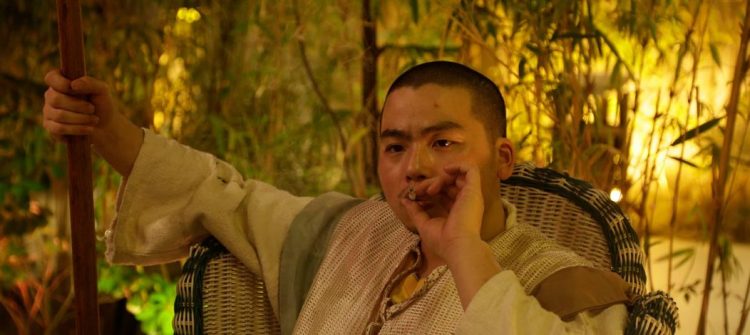
Sex, violence, and dancing continue to define the young Juno’s life even after he is taken in by an aunt when it becomes clear his father will never return. Following a brief obsession with chickens, Juno is then sent on to live with an uncle who trains him as a tailor where he develops a friendship with an ultra macho, soon-to-be-married boxer (Randy Pangalila) who too longs to be free of his bodily constraints but has become indebted to gangsters. Before long he finds himself in motion again before coming full circle as a costuming assistant with a troupe of travelling dancers where he becomes a favourite of the “Warok” (Whani Darmawan) but also the object of unattainable affection for the local military representative (Teuku Rifnu Wikana) of a corrupt regime whose insoluble jealousy seems set to burn the world around him.

As Juno’s uncle later tells him, bodies can go anywhere but they take their traumas with them. Even so, you have to love your body or all is lost. His uncle goes on to add that this family is particularly burdened, explaining the reason for his brother’s coldness to his son which turns out to lie in a rational distrust of family born of seeing his own massacred in a river, a sight he couldn’t seem to forget and eventually decided to erase by leaving his home and family far behind for the anonymous vistas of an unfamiliar island. Juno’s own traumas, as he seems to remember them, imprint themselves on his physicality and give weight to his dance as he tells his own story, filled with abandonments, rejections, transformations and rebirths in the intensely repressive atmosphere of a nation trapped in perpetual revolutions.

Juno’s own, slow path towards delight in his own body takes place against a series of external reformations obliquely referenced in a red terror threat to have the dancers denounced as communists, while primacy of religion remains paramount – the local military officer running for office, or more particularly his eminently practical but perhaps also compromised wife, is panicked by a photo in which he unwisely took Juno’s hand in public. Merely grasping a hand becomes suspect in an atmosphere of intense suspicion and any hint of impropriety potentially enough to destabilise an already volatile situation.

Illicit romantic jealously spurs on a greater tragedy, and Juno is soon on the road again. As Juno says, you see life only through a tiny hole – in this case through the rhythmic history of an itinerant dancer whose stage is perpetually ripped away from him as external freedoms shrink and all that remains is the unification of the contradictory elements of one’s own soul and the authenticity of touch and movement. Poetically told and boasting a wonderful selection of classic Indonesian pop music, Memories of My Body is a beautiful exploration of “muscle memory” as lived history and the tangible effects of a life lived in turbulent times.


Memories of My Body screens as part of the eighth season of Chicago’s Asian Pop-Up Cinema on April 23, at Joffrey Ballet Tower Studio A, 10 East Randolph Street, 7pm.

Original trailer (English subtitles)
Chinese Visual Festival 2019 Announces Full Lineup

Tracey still 3The Chinese Visual Festival returns for its 9th edition in May 2019 with a weeklong celebration of Chinese language cinema including a special focus on the legendary Hong Kong director Stanley Kwan who will be in attendance for a series of conversations and Q&As.

Thursday 02 May:

6.10pm: First Night Nerves + Stanley Kwan Q&A 

BFI Southbank, NFT1

first night nerves still 1Stanley Kwan returns to the stage with a backstage melodrama of backstabbing actresses as a veteran star makes her comeback alongside the talented youngster who threatens to eclipse her…

The legendary director will be present in person for a Q&A following the UK premiere of the film.

Friday 03 May:

4pm: Crack of Dawn: Roundtable Discussion with Director Ying Liang

King’s College London, Anatomy Museum
Ying Lang
Director Ying Liang whose When Night Falls, Sunny Day, and Family Tour are all screening in the festival will be in conversation with East Asian cinema specialist Tony Rayns, and film scholars Jessica Yeung and Victor Fan.

7pm: When Night Falls + Ying Liang Q&A

Joint ticket with A Sunny Day
King’s College London, Lucas Theatre

When Night Falls still 1The mother of a man sentenced to death for killing six policemen continues to fight for justice in Ying Liang’s probing drama. 

7pm: A Sunny Day + Ying Liang Q&A

Joint ticket with When Night Falls
King’s College London, Lucas Theatre

Sunny day still 1A young woman visits her father for lunch in Ying Liang’s Occupy-themed short.

Saturday 04 May:

2pm: A Family Tour + Ying Liang Q&A

King’s College London, Lucas Theatre

Family Tour still 1An exiled film director takes a “holiday” to Taiwan in order to tag along after her mother’s old persons’ tour bus knowing they will likely never meet again in Ying Liang’s poignant semi-autobiographical drama. Review.

6.15pm: Rouge + Stanley Kwan Q&A

BFI Southbank, NFT3

Rouge still 1Stanley Kwan’s sumptuous supernatural romance stars Anita Mui and Leslie Cheung as a pair of lovers who determine on double suicide, only she is the only one who dies. 50 years later, her spirit returns to a much changed ’80s Hong Kong in search of answers.

The director will be present for a Q&A following the film.

Sunday 05 May:

1pm: Stammering Ballad

King’s College London, Lucas Theatre

Stammering ballad still 1A Chinese folksinger leaves his hometown to wander and eventually ends up on China’s Got Talent only to return home and find his beloved landscape much changed in this visually stunning documentary.

3.30pm: Women + Stanley Kwan Q&A

King’s College London, Lucas Theatre

Kwan women still 1A woman leaves her husband after discovering he has been unfaithful and joins the “Spinsters’ Club” but is conflicted when he wants to patch things up. Stanley Kwan will also be present for a Q&A following a screening of his 1985 debut feature.

5.30pm: Stanley Kwan in Conversation

King’s College London, Lucas Theatre

Register Free

stanley kwan
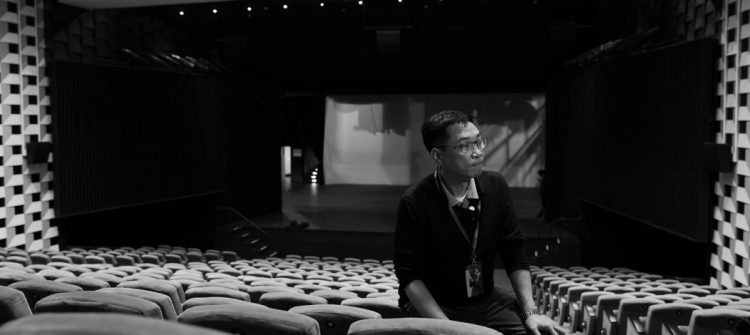
The legendary director joins EasternKicks’ Andrew Heskins and Professor Victor Fan from King’s College London to disuss his life and career in the Hong Kong film industry.

7.15pm: The Land of Peach Blossoms

King’s College London, Lucas Theatre
Land藕粉peachblossomsstill1
Documentarian Zhou Mingying explores a “utopian” restaurant run along collectivist lines in which personal thought is forbidden and becoming like the leader an ideal.

Monday 06 May

1pm: The Drum Tower + Fan Popo Q&A

King’s College London, Lucas Theatre

drum tower still 1An introverted high schooler and transgender vintage shop owner are the protagonists of the latest short from Fan Popo.

1pm: Meili

King’s College London, Lucas Theatre

Meili still 1A young girl abandoned by her parents and abused by her brother-in-law hopes to escape with her girlfriend in a powerful debut from director Zhou Zhou.

4pm: Thin Dream Bay + Imagining Evan Yang

King’s College London, Lucas Theatre
Imagining Evan Yang
Independent filmmaker Shu Kei explores the literary life of director and songwriter Evan Yang  .

7.15pm: The Rib

King’s College London, Lucas Theatre

47483187072_1c2af9ba0c_oFactory Boss‘ Zhang Wei follows a religious father’s struggle to accept his transgender daughter.

Tuesday 07 May

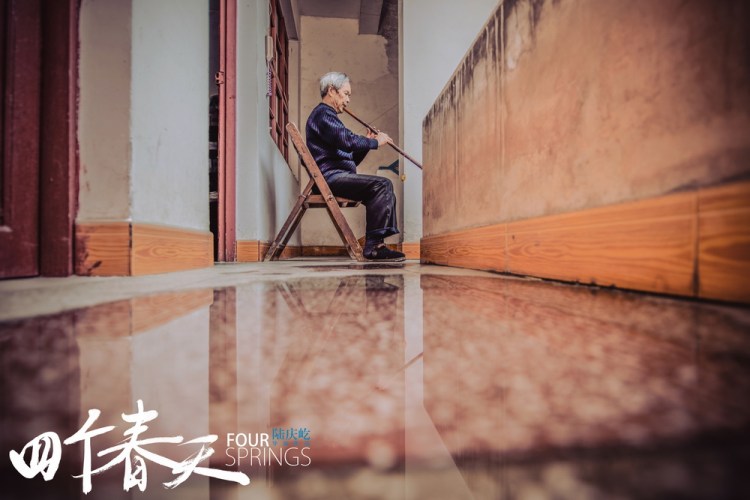
7pm: Four Springs

King’s College London, Lucas Theatre

four springgs still 1Director Lu Qingyi’s beautiful documentary follows his own family through four celebrations of New Year bringing with them both joy and sorrow. Review.

Wednesday 08 May

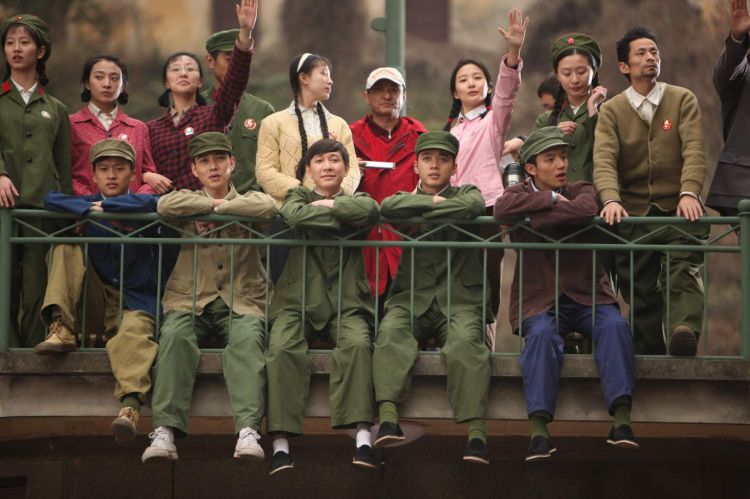
8.45pm: In Character

BFI Southbank, NFT3

In Character still 1A director making a semi-autobiographical film takes 13 actors back to the Cultural Revolution by bringing them to a disused firearms factory in Sichuan where they must wear the clothes and listen to the music of the era.

Thursday 09 May

3pm: Tracey Cast and Crew in Conversation

King’s College London, Nash Theatre

Tracey still 1The cast and crew of Tracey are in conversation with EasternKicks’ Andrew Heskins and Dr. Victor Fan from King’s College London.

6pm: Tracey + Cast & Crew Q&A

BFI Southbank, NFT2
Tracey still 2A 51-year-old married father of two grownup children begins to come to an acceptance of a transgender identity after hearing the news of the death of a close friend in the beautifully observed debut from Li Jun.

The Chinese Visual Festival runs at BFI Southbank and King’s College London from 2nd to 9th May 2019. Full details for all the films are available via the official website and you can keep up with all the festival’s latest details via the official Facebook Page, Twitter account, and Instagram.

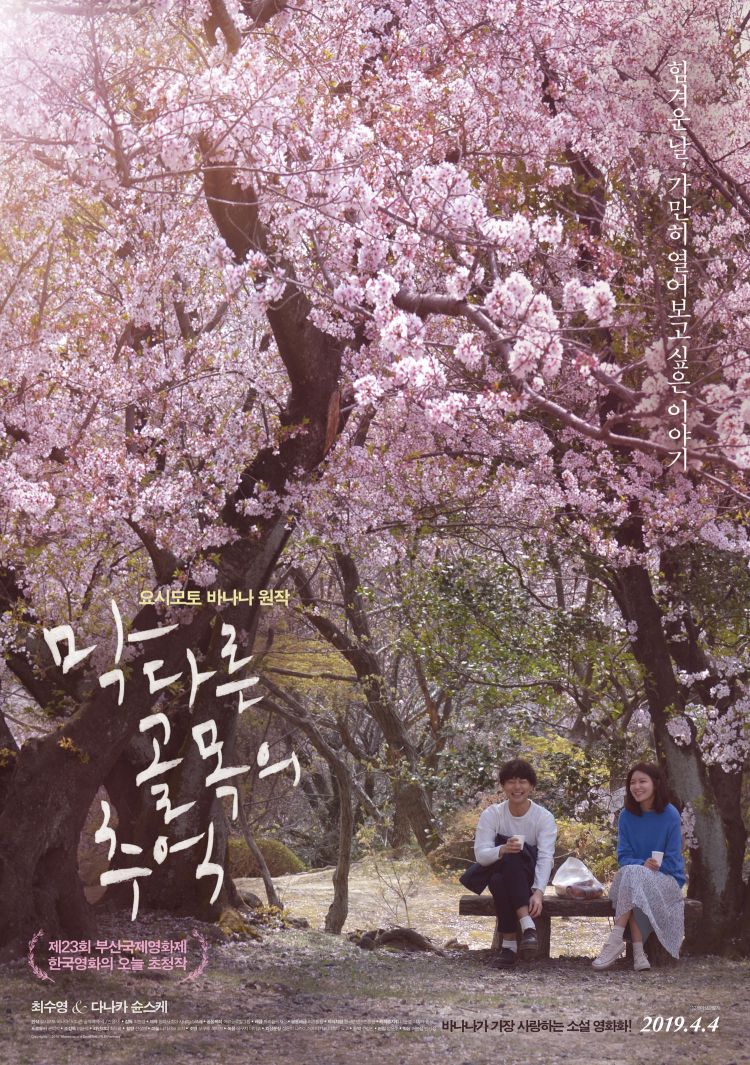
Memories of a Dead End (막다른 골목의 추억, Choi Hyun-young, 2018)

Memories of a dead end posterSometimes dead ends show up unexpectedly, as the heroine of Memories of a Dead End (막다른 골목의 추억, Makdareun Kolmokui Chueok) points out while ruminating on the abrupt revelation which has just rendered all her life’s hopes and dreams null and void. Adapted from the Banana Yoshimoto novella, Choi Hyun-young’s debut feature follows a young-ish Korean woman to Japan where she finds out something she probably knew already but didn’t quite want to accept and, thanks to the kindness of strangers, begins to see a way forward where she feared there might not be one.

Yumi (Sooyoung), a woman in her late 20s from a wealthy family, has been engaged to Tae-gyu (Ahn Bo-hyun) for the last few years but he has been working away in Japan supposedly preparing for their shared future. Unable to get in touch with him and worried he seems to be dodging her calls and refusing to return her texts, Yumi decides (against the advice of her steadfast sister) to go to Japan and confront him. Sadly, her family were right when they advised her that perhaps she should just forget her fiancé and move on. Tae-gyu has met someone else. On arriving at his apartment, Yumi is greeted by another woman who knows exactly who she is and why she’s come, but takes no pleasure in explaining that she and Tae-gyu plan to marry and were hoping Yumi would take the hint given a little more time.

Confused and heartbroken, Yumi checks into a hotel for the night planning to return to Korea the following day but a nagging phone call from her “I told you so / plenty of fish in the sea” mother (tipped off by her loudmouth sister) makes her think perhaps that’s not the best idea. Wandering around, she winds up at the End Point hotel and cafe where she cocoons herself away to think things through, trying to reconcile herself to the “dead end” she has just arrived at in the life path she had carved out for herself.

“End Point” is not perhaps an auspicious name for a hotel. A hotel is, after all, a deliberately transient space and not in itself a destination. The reason it might accidentally become one is perhaps on Yumi’s mind when she decides to check in, but despite the name the cafe is a warm, welcoming, and accepting place perfectly primed to offer the kind of gentle support someone like Yumi might need in order to rediscover themselves in the midst of intense confusion.

This is largely due to the cafe’s owner, Nishiyama (Shunsuke Tanaka), who, we later discover, was himself neglected as a child and almost adopted by the community who collectively took him under their wing and sheltered him from his childhood trauma. This same community still frequents the End Point cafe and is keen to extend the same helping hand to those in need, becoming a point of refuge for a series of lonely souls many of them travellers from abroad. Despite her desire for isolation, Yumi is finally tempted out of her room by the gentle attentions of the cafe’s regulars who make sure to include her in all their gatherings, reawakening something of her faith in humanity in the process.

In introducing her to the cafe, Nishiyama remarks that though it is literally in a dead end, many begin their forward journeys from here. A dead end does not, after all, have to be an “end point” but can become an opportunity to turn around and start again without necessarily having to go back the way you came. Yumi likes the End Point so much she briefly considers staying, but it would, in a sense, be a betrayal of its spirit. Nishiyama, becoming a staunch friend and ally, finally comes to the conclusion that her former fiancé was not a bad man even if he was a weak one, but that in all the time he knew her he never discovered the “treasure” of her heart as he seems to have done despite knowing her only a few days. Yumi takes this new knowledge with her on her forward journey as she abandons her much commented on practicality for warmhearted connection as a path towards fulfilment, learning to treasure her “dead end” memories not as time wasted but as a pleasant diversion which led her to exactly the place she needed to be in order to discover the treasure in her own heart and the willingness to find it in others.


Memories of a Dead End screens as part of the eighth season of Chicago’s Asian Pop-Up Cinema on April 17, 7pm, at AMC River East 21.

International trailer (English subtitles)

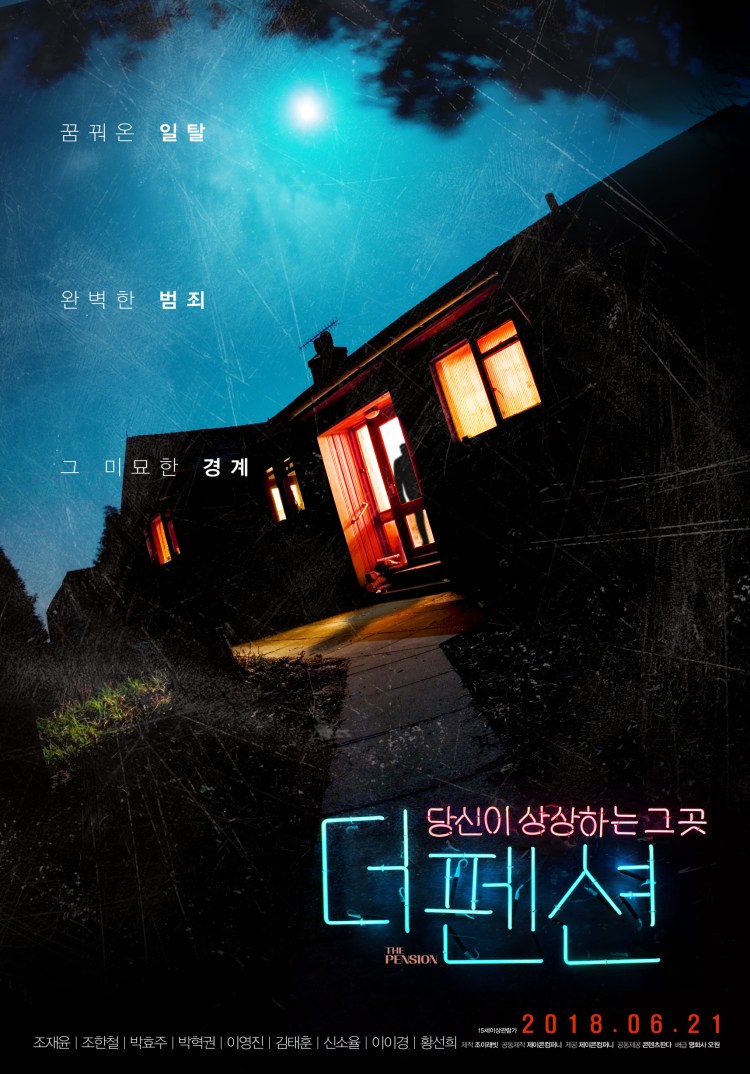
The Pension (더 펜션, Ryu Jang-ha, Yang Jong-hyun, Yoon Chang-mo, Jung Heo Deok-jae, 2018)

The Pension poster“We’re all lonely beings” the proprietor of a small mountain lodge advances hoping to comfort a distressed guest. The temporary denizens of The Pension (더 펜션), a four part omnibus set in a charmingly old-fashioned forest hideaway, are indeed mostly lonely beings making use of this liminal place to process the taboo away from the prying eyes of civilisation, embracing the savagery of the natural world as they cast off conventional morality to pursue their illicit desires be they vengeful, violent, protective or loving.

We begin with darkness as our first pair of guests, a man, Choo-ho (Jo Han-chul), and his wife Mi-kyung (Park Hyo-joo), seem to be all too interested in the family next door. Eventually we discover that the couple have come with ill intentions and revenge on their mind, though the man they’re after doesn’t seem so bad to begin with – he asks them to dinner with his wife and son who seem happy, but the atmosphere grows tenser as he begins to drink and a darkness creeps in. Before long Mi-kyung has set her mind on poetic justice, leaving the other couple’s young son in peril while Choo-ho struggles with his desire to stop his wife making a terrible mistake while not wanting to upset her.

Unhappy families continue to be theme with the second pair of guests – a married couple hoping to rekindle their listless romance in the peace and tranquillity of the remote mountain lodge. While the arrival is pleasant enough, perhaps too much so as the husband (Park Hyuk-kwon) puts on a show of making the effort, despair creeps in when he realises he’d made sure to bring his wife’s (Lee Young-jin) favourite coffee but forgotten the grinder. He wants her all to himself, but she just wants to go home and worries about their young daughter staying with a mother-in-law she doesn’t seem to like very much. Eventually the couple decide they need some time apart and she ends up meeting someone else (Kim Tae-hoon) in the woods to whom she recounts all the loneliness and isolation she experiences in her married life, seemingly trapped by conventionality but unconvinced that anything would be very different if she left.

The hotel owner (Jo Jae-yoon) might agree with her – a lonely soul he is too, though it appears he opened this hotel for just that reason, burying himself away from his heartache by coming to live alone with the transient presence of strangers and peaceful isolation of the woods. His mother, however, is not convinced and is constantly nagging him to get married – in fact, she’s set up a meeting for the following day meaning he’ll have to close the shop. That might be a problem, because he gets a surprise guest in the middle of the night, a distressed woman (Shin So-yul) intent on staying in a very particular room. Finding it odd, he can hardly turn her away with nowhere else to go but a TV programme on the causes of suicide (loneliness, the decline of the traditional family, economic pressures etc) convinces him he ought to check on her. Assuming she is merely lovelorn (as is he), he tries to comfort her with platitudes but pulls away from her emotional need only to find himself eventually wounded only in a much more physical way as he idly fantasises what it might have been like if he’d gone back to her room and been a bit more sympathetic.

Our proprietor is notably absent in the final segment, replaced by a much younger man (Lee Yi-kyung) with much more urgent desires. Despite being there to do a job, the boy has brought his girlfriend whom he alienates by failing to explain a mysterious text from another girl all while making eyes at the attractive young woman (Hwang Sun-hee) staying next door who claims to be “from the future”. When another guest turns up and starts making a fuss about a missing engagement ring she supposedly left behind, everything becomes much more complicated than it seems but one thing is certain – there is precious little love to be found in this hotel where everyone has come to embrace the side of themselves the city does not allow to breathe.

Much more cynical and obviously comedic than the preceding three tales, the final chapter perhaps bears out the message that it’s not so much rest and relaxation people have come to The Pension for, but “privacy” or to be more exact “discretion”. Some came for love, others for lack of it, but all of them are looking for something they are unlikely to find here though the first couple could perhaps have found it if only they had stuck together. Nevertheless, hotels are transient places for a reason – take what you need from your stay and leave the rest behind.


The Pension screens as part of the eighth season of Chicago’s Asian Pop-Up Cinema on April 16, 7pm, at AMC River East 21.

International trailer (English subtitles)

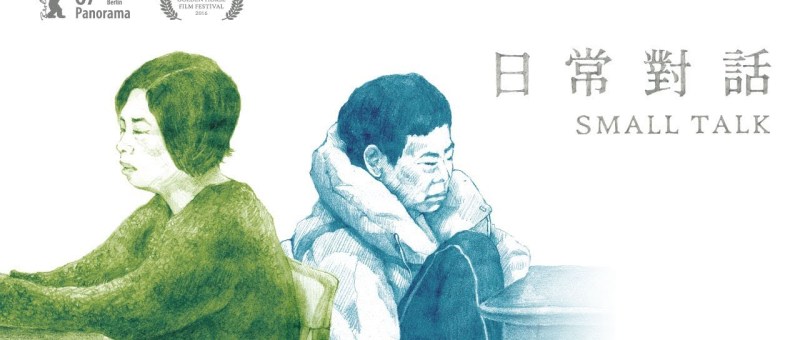
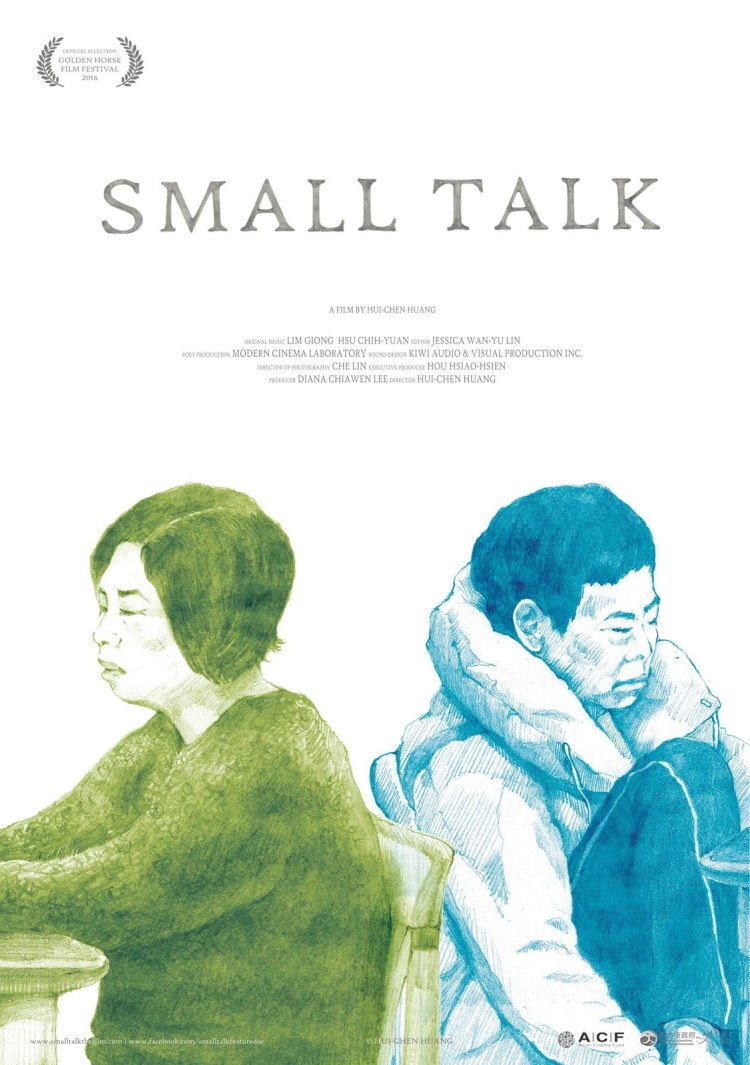
Small Talk (日常對話, Huang Hui-Chen, 2016)

Small talk poster“Who would want to understand me?” asks the laconic mother of filmmaker Huang Hui-Chen early in her autobiographical documentary, Small Talk (日常對話, Rì Cháng Duì Huà). “We do” the director replies, “but you won’t let us”. Huang’s film is, in a sense, an attempt to break through an emotional fourth wall in order to make sense of her complicated relationship with her distant mother Anu if only to ensure that her own daughter never feels as rejected or isolated as she herself has done living under the same roof with a woman she cannot quite claim to know.

In fact, Huang’s childhood memories of her mother are mainly to do with her absence. Even her younger sister eventually remarks that she always felt as if her mother was uncomfortable at home, preferring to spend time out with her friends rather than with her children. Forced to join her mother in her Spirit Guide business rather than attend school like the other kids, Huang began to resent her but also longed to be close to Anu despite her continuing distance. This desire for closeness is, ironically, only achieved through the introduction of the camera, acting as an impartial witness somehow uniting the two and making it possible to say the things which could not be said and ask the questions which could not be asked.

For Huang, the central enigma of her mother’s life is why she married man and had two daughters if she always knew she was gay. That her mother is a lesbian is something Huang always seemed to just know – it’s not as if Anu ever sat her down and explained anything to her, she gradually inferred seeing as her mother had frequent female partners and seemed to prefer spending time with groups of other women. Putting the question to her extended family perhaps begins to illuminate part of an answer. Like Anu, they will not speak of it. They claim not to know, that they do not want to know, and that they would rather change the subject. Even Anu, who otherwise seems to have no interest in hiding her sexuality, remarks that it “isn’t a good thing to talk about”. Nevertheless, her marriage seems not to have been a matter of choice. In those days marriages were arranged by the family, which is perhaps how she ended up with a man her sister describes as “no good” who later became a tyrannical, violent drunk she eventually had to flee from and go into hiding with her two young daughters.

Abusive marriages become a melancholy theme as Anu briefly opens up to recall throwing away sleeping pills her own mother had begun to stockpile in desperation to get away from her violent husband. A former girlfriend also mentions having divorced her husband because he was abusive, but seems surprised to learn that Anu had been a victim too. According to her, Anu had told her she was married once but only for a week and that her two children were “adopted”. Of course, this is mildly upsetting for Huang to hear, but seems to amuse her in discovering her mother’s tendency to spin a different yarn to each of her lovers to explain the existence of her family while also distancing herself from it. This seems to be the key that eventually unlocks something of Anu’s aloofness. Humiliated by her capitulation to marriage and then by her mistreatment at the hands of her husband, she cannot reconcile the two sides of her life and has chosen, therefore, to reject the idea of herself as a mother. Something she later partially confirms in admitting that though she does not regret her daughters, given the choice she would not marry again, not even if same sex marriages were legal believing herself to be the sort of person best off alone.

Huang interrogates her mother with a rigour that is difficult to watch, often to be met only with silence or for Anu to walk away with one of her trademark “I’m Off”s. It may be true that most people have something they would rather not talk about, and perhaps Anu is entitled to her silence but if no one says anything, then nothing will change and the cycle of love and resentment will continue on in infinity. Using the camera as a shield, Huang brokers some painful, extremely raw truths to her elusive mother and does perhaps achieve a moment of mutual catharsis but is also too compassionate to satisfy for laying blame, exploring the many social ills from entrenched homophobia to persistent misogyny and even the class-based oppression hinted at by the use of native dialect rather than standard Mandarin which help to explain her mother’s complicated sense of identity. Yet she does so precisely as a means of exorcising ghosts more personal than political in the hope that her own daughter will grow up to know that she is loved, unburdened by a legacy of violence and shame, and free to live her life in whichever way she chooses.


Small Talk was screened as part of the Taiwan Film Festival UK 2019.

Original trailer (English subtitles)
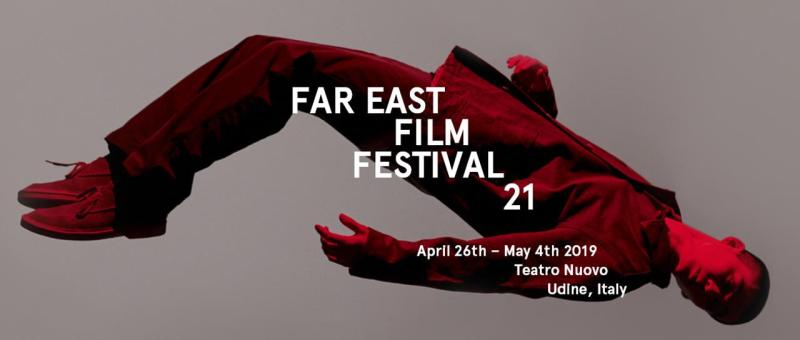
Udine Far East Film Festival Confirms Lineup for 21st Edition

47541986391_dbe90761ea_oThe Udine Far East Film Festival returns for its 21st edition on April 26! As usual, the festival has brought together some of the most highly anticipated East Asian cinema releases with 77 films included in this year’s programme including a retrospective strand dedicated to classic Korean cinema and sidebar on Korean indie comedy. This year’s guests of honour are veteran Hong Kong star Anthony Wong who will be receiving the festival’s Golden Mulberry Award, and Chinese superstar Yao Chen.

China

A Cool Fish Banner

  • A Cool Fish – comedy crime caper in which two losers, a woman in a wheelchair, and a dejected security guard get mixed up in a strange series of coincidences. Review.
  • Crossing the Border – heartwarming drama in which a grandpa goes on a tractor roadtrip with his 6-year-old grandson.
  • The Crossing – a teenage girl becomes a mobile phone mule in Bai’s sensitive coming of age drama. Review.
  • Dying to Survive – dark comedy drama in which an aphrodisiac seller becomes rich smuggling generic cancer medication.
  • Lost, Found – remake of the Korean film Missing in which a lawyer in the middle of a custody dispute discovers her nanny has disappeared with her daughter.
  • Pegasus – New Year comedy drama in which a disgraced middle-aged racing driver tries to make a comeback. Review.
  • The Rib – a trans woman tries to get the approval of her devoutly religious father.
  • When Love Blossoms – a Beijing delivery boy is inspired to pursue his secret crush on a real estate agent who is also his roommate.

Hong Kong

Project Gutenburg still 1

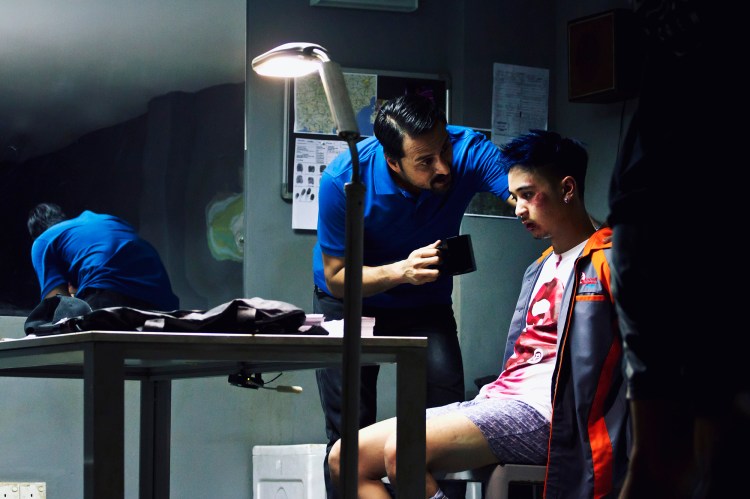
  • Bodies at Rest – a pathologist and his assistant are suddenly accosted by crooks wanting access to a body in Renny Harlin’s action drama.
  • A Home with a View – Mr. Lo sinks all his savings and his father’s pension into buying a flat which has a view of the ocean that calms the rowdy family down, but one day their lovely view is suddenly blocked by an illegal billboard in a dark family comedy from Herman Yau.
  • Hotel Soul Good – comedy in which a hardbitten exec starts seeing ghosts and then forces them to open a hotel with her.
  • Master Z: The Ip Man Legacy – spin-off / sequel to Ip Man 3 starring Max Zhang and directed by Yuen Woo-ping.
  • Missbehavior – New Year rom-com from Pang Ho-cheung in which a secretary tries to replace a bottle of breast milk belonging to her boss after accidentally using it to make coffee for a client.
  • Project Gutenberg – twisty action drama from Felix Chong starring Aaron Kwok and Chow Yun Fat. Review.
  • Still Human – Intouchables-esque drama starring Anthony Wong as a man in a wheelchair who doesn’t immediately take to his Filipina carer.
  • Three Husbands – Fruit Chan satirises modern Hong Kong through the story of a sex worker with a high libido who lives on a boat with her three husbands.

Indonesia

212 warrior

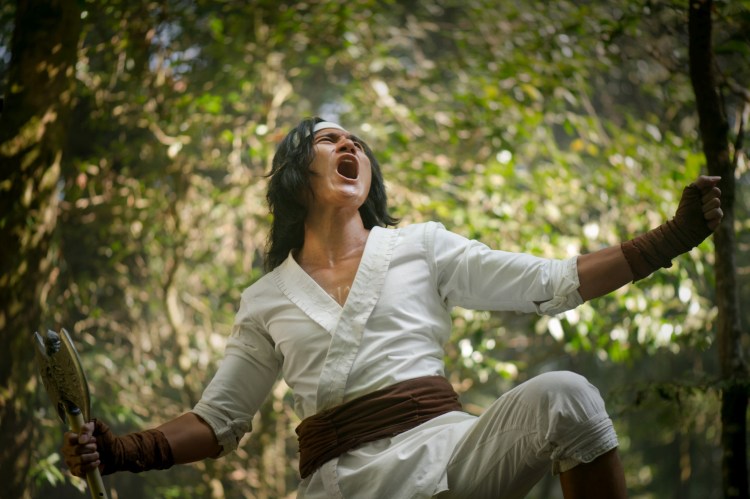
  • 212 Warrior – historical martial arts action comedy.

Japan

dare to stop us still 1

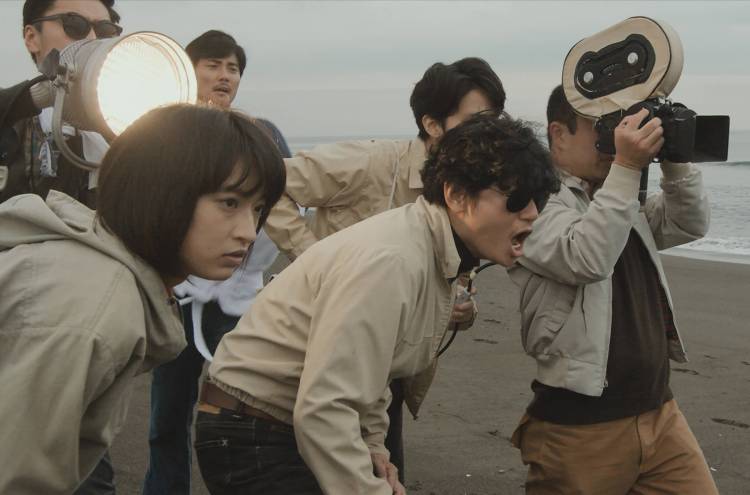
  • Dare to Stop Us – drama directed by Kazuya Shiraishi set at Wakamatsu Productions in the early 1970s.
  • Every Day a Good Day – tea ceremony drama featuring one of the last screen performances by the late Kirin Kiki.
  • Fly Me to the Saitama – local humour comedy in which residents of Saitama have been relegated to second class citizens. Review.
  • HARD-CORE – robot comedy from Nobuhiro Yamashita.
  • Jam – absurdist comedy from SABU in which a singer is kidnapped by a crazed fan.
  • JK Rock – comedy in which a washed up rocker mentors a girl group.
  • Lying to Mom – black comedy in which a family keep up the pretence that their oldest son who committed suicide is alive and well in Argentina.
  • Melancholic – a dejected university graduate takes a job in a bathhouse but discovers it is used as a location for killing after hours.
  • Only the Cat Knows – a disappeared cat places a wedge between husband and wife.

Malaysia

fly by night still 1

  • Fly by Night – taxi drivers running an extortion scam become embroiled in crime conspiracy
  • Motif – a policewoman investigating the disappearance of a teenage girl in a small town finds herself digging deep into family secrets.
  • Two Sisters – horror in which a woman is released from a psychiatric hospital and returns to live with her sister only to encounter dark family secrets.

The Philippines

47542035261_7d0d676976_o

  • Eerie – a clairvoyant guidance counsellor investigates the deaths of a series of girls at a convent school in Mikhail Red’s supernatural drama.
  • Heaven’s Waiting – two old souls trapped in purgatory find each other in Dan Villegas’ supernatural romance.
  • Miss Granny – Filipino remake of the classic Korean musical comedy in which an old woman becomes young and gets to relive her youth.
  • Signal Rock – indie drama set in an island community where a brother determines to help bring his sister and her daughter home to the Philippines on learning that she is in an abusive relationship abroad.

South Korea

Believer still 1

  • Believer – Korean remake of Johnnie To’s Drug war. Review.
  • Birthday – melancholy family drama exploring the aftermath of the Sewol ferry tragedy.
  • Door Lock – remake of Spanish film Sleep Tight in which a woman living alone suspects a stranger has been breaking in to her home.
  • Default – drama exploring the 1997 Asian Financial Crisis.
  • Extreme Job – bumbling police officers go undercover running a chicken restaurant to catch drug dealers but the restaurant ends up taking off.
  • The Great Battle – historical drama centring on the siege of Ansi Fortress.
  • Innocent Witness – Jung Woo-Sung stars as a lawyer defending a housekeeper accused of murdering her boss who discovers the only witness to the crime is an autistic teenage girl.
  • Intimate Strangers – Korean remake of the Italian film Perfect Strangers in which dinner party guests unwisely agree to share all their incoming mobile messages.
  • The Odd Family: Zombie on Sale – comedy in which a family’s life is disrupted when dad gets bitten by a zombie.
  • Rampant – historical zombie action starring Hyun Bin.
  • Romang – romantic melodrama in which an elderly couple fall in love all over again while suffering with dementia.
  • Unstoppable – Ma Dong-seok stars as a former gangster hot on the trail of human traffickers who’ve made the mistake of kidnapping his wife.

Singapore

konpaku

  • Konpaku – A young man upset after his girlfriend leaves him ends up in a relationship with the sensuous Midori but is disturbed when strange things start happening to those close to him.

Taiwan

More than blue still 1

  • The Devil Fish – spin-off/sequel to the Tagalong franchise this time revolving around an urban legend about a fish with a human face.
  • More than Blue – remake of the Korean romantic melodrama in which two young people try too hard to please each other. Review.
  • The Scoundrels – action drama in which a former basketball player gets mixed up in crime.

Thailand 

47489432632_1103a63727_o

  • Krasue: Inhuman Kiss – an innocent village girl discovers she is a victim of a strange curse in which her head detaches from her body to hunt for blood!
  • Reside – haunted house horror starring Ananda Everingham.

Vietnam

47585242932_0a092b7ec6_o

  • Furie – some thugs make a very bad decision when they kidnap a former gangster’s daughter.

Documentaries

47536019831_4ecb80fed6_o

  • BNK48: Girls Don’t Cry – Thamrongrattanarit Nawapol interviews members of the Thai idol group.
  • Kampai! Sake Sisters – documentary following three women in the historically male sake world.
  • People’s Republic of Desire – documentary exploring the growing Chinese online streaming industry. Review.
  • YI DAI YI LU – One Belt One Road – Italian documentary exploring the One Belt One Road initiative.

The Odd Couples

47489613742_b62f29b9e1_o

  • The World of Suzie Wong – classic 1960 British/American HK drama in which an American artist falls for a sex worker.
  • My Name Ain’t Suzie – 1985 HK drama following a 1950s bar girl.
  • City on Fire – 1987 Ringo Lam classic starring Chow Yun-fat and Danny Lee in which an undercover cop infiltrates a gang of thieves only for the operation to go very wrong.
  • Reservoir Dogs – Tarantino’s 1992 crime drama.

100 Years of Korean Cinema:
I Choose Evil – Lawbreakers Under the Military Dictatorship 

black hair still 1

  • Black Hair – Lee Man-hee classic from 1964 in which a betrayed gangster’s moll mulls going straight thanks to the attentions of a cheerful cabbie. Review.
  • The Body Confession – Jo Keung-ha’s 1964 melodrama in which a woman turns to sex work to raise her three children.
  • A Day Off – Lee Man-hee’s bleak 1968 melodrama following an impoverished couple as they face an impossible situation. Review.
  • Promise of the Flesh – 1975 melodrama from Kim Ki-young in which a young woman on temporary release from prison meets man and promises to meet him two years later.
  • Jagko – Im Kwon-taek pioneers the division film in exploring the parallel fates of a partisan and the man who failed to catch him in the very different world of 1980. Review.
  • The Last Witness  – a detective’s investigation of a brewery owner’s murder takes him right into the dark heart of the recent past in Lee Doo-yong’s powerful drama. Review.
  • Ticket – 1985 Im Kwon-taek drama exploring the lives of five “coffee girls”.
  • Lovers in Woomukbaemi – Jang Sun-woo’s 1990 romantic melodrama stars Park Joong-hoon as a henpecked husband who begins an affair with a battered wife. Review.

Info Screenings 

10 Years Japan still 1

  • A First Farewell – A muslim boy in Xinjiang prepares to say goodbye to his deaf/mute mother when his father decides to put her into a nursing home.
  • Ten Years Japan – omnibus film featuring five visions of near future Japan. Review.
  • Ten Years Taiwan – omnibus film featuring five visions of near future Taiwan.
  • Ten Years Thailand – omnibus film featuring five visions of near future Thailand.

Korean Independent Comedies

Coffee Noir

  • Coffee Noir: Black Brown – prohibition-themed comedy as a barista turns her coffee shop into a speakeasy following the outlawing of the beverage.
  • Passing Summer – A couple running a Jeju hotel are stunned when a pair of faces from the past turn up as guests.
  • Saem – a man goes to Seoul to look for his first love but has a rare condition in which he is unable to recognise faces.

Restored Classics 

wheel of Life

  • A Speck in the Water – 1976 Philippine fishing village drama from Ishmael Bernal
  • The Wheel of Life – Omnibus film featuring three tales directed by King Hu, Li Hsing, and Pai Ching-jui in which the same two actors play lovers across different ages.

The 21st Udine Far East Film Festival runs from 26th April to 4th May 2019. Full details for each of the films will be available shortly via the official website where you will also be able to find the daily screening schedule. Screenings take place both at the Teatro Nuovo and Cinema Centrale. You can keep up with all the latest festival news via the festival’s Facebook Page, Instagram and YouTube channels, Twitter account, and Tumblr.