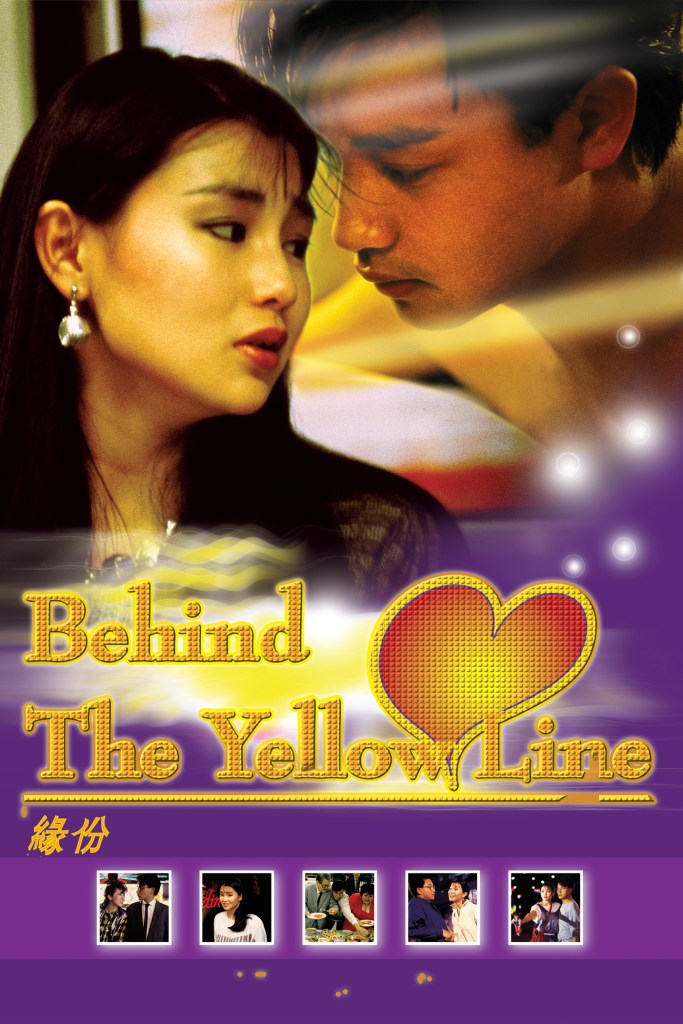
Behind the Yellow Line (緣份, Taylor Wong, 1984)

behind-yellow-lineBack in the 1980s, you could make a film that’s actually no good at all but because of its fluffy, non-sensical cheesiness still manages to salvage something and capture the viewer’s good will in the process. In the intervening thirty years, this is a skill that seems to have been lost but at least we have films like Taylor Wong’s Behind the Yellow Line (緣份, Yuan Fen) to remind us this kind of disposable mainstream youth comedy was once possible. Starring three youngsters who would go on to become some of Hong Kong’s biggest stars over the next two decades, Behind the Yellow Line is no lost classic but is an enjoyable time capsule of its mid-80s setting.

Paul (Leslie Cheung) is a mild mannered guy trying to get to work on time and make a good impression on his first day on the job but after having a taxi stolen out from under him and having to run some of the way, he rushes onto the underground where he has a meet cute with Monica (Maggie Cheung) – a sad looking lady who barely notices his presence. Paul is smitten and follows her onto the train where she continues to ignore him. Despite his best efforts he makes more of an impression on Anita (Anita Mui) – a wealthy and extremely fashionably dressed woman with giant 80s hair! Anita makes a play for Paul but he only has eyes for Monica. Monica is just getting over a failed affair with a married man and isn’t really sure of anything anymore. It’s all in the hands of fate and the mass transit authority but will true love really run its course?

Behind the Yellow Line (presumably so named for its train station setting, the chinese title is simply “fate”) is meandering mess of a picture though very much typical of its time. Paul and Monica get together but she’s still torn over her married lover who resurfaces at the most inconvenient moment whilst also fighting off the attentions of her flirtatious boss causing Paul to overreact in fit of jealously and almost ruin everything in the process. Eventually they decide to sort things out with a game of fate as Monica hides on the MTR expecting Paul to successfully pin point her location before the last train rolls so that she knows they are truly destined to be together.

This central spine of the film works well enough as Paul and Monica tempt fate with their true love romance but where does Anita fit into all this? Popping up now and then almost at random, Anita seems like a strange after thought or a refugee from another film. A stock ‘80s style kooky character, she’s all big hair and bold makeup but she’s also a wealthy woman trying to buy Paul (or more particularly his parents) with the promise of material security. ‘80s setting aside, consumerism is only a mild bi-product and neither Paul nor Monica is particularly pressed over material concerns – all that matters here is true love destiny and the successful resolution of their romantic difficulties. Anita becomes a kind of cupid, forsaking her own feelings in order to satisfy Paul’s in gesture of true love that also recognises having lost out in the great game of fate as her feelings are not returned. Or, there are things money cannot fix (at least, not in the way you want it to).

In this way Behind the Yellow line becomes more interesting as it’s Anita and Monica who begin to move the plot. Monica is quick to remind us that she’s a single woman and she has the right to choose – in this case, she feels sorry for both of her potential partners (whilst completely disinterested in her boss) and so is inclined to decide to remain alone. The film obviously doesn’t go this way, but it does present her choice as a perfectly valid one whilst also affording her the agency to choose her own destiny right the way through. Anita largely wields her power through her money (which appears to be inherited, the gang of other young people she hangs round with seem to be wealthy too making her choice of Paul a relatively strange one), but she exercises her individuality through her unconventional behaviour and bold fashion choices, refusing to give in to social norms but submitting to “destiny” in acknowledging that her feelings are unrequited.

Very much of its time, Behind the Yellow Line is an obvious piece of disposable entertainment designed to appeal to a very specific audience. Filled with cheerful ‘80s cantopop and bright neon lighting there’s relatively little angst in this tale of youthful romance. Everything bounces along much as one would expect with no melodramatic intrusions save Monica’s sometimes melancholy indecisiveness and Paul’s diffidence. Structurally the film is riddled with problems not least with its use of Anita who seems to appear and disappear as needed with no clear indication of her precise function yet it provides enough silly humour and good natured drama to coast though without too many problems. No great lost classic but enjoyable enough, Behind the Yellow is worth seeking out if only to witness the genesis of these three soon to be giants of the entertainment world whose careers became curiously intertwined before ending much too soon in the early years of the following century.


2003 Celestial Pictures trailer (English subtitles)

Original 1984 Cantonese trailer (English subtitles for onscreen text only, no subtitles for dialogue)

Three (三人行, Johnnie To, 2016)

Johnnie To is best known as a purveyor of intricately plotted gangster thrillers in which tough guys outsmart and then later outshoot each other. However, To is a veritable Jack of all trades when it comes to genre and has tackled just about everything from action packed crime stories to frothy romantic comedies and even a musical. This time he’s back in world of the medical drama as an improbable farce develops driven by the three central cogs who precede to drive this particular crazy train all the way to its final destination.
Dr. Tong (Zhao Wei), is a tough as nails neurosurgeon. Having arrived in Hong Kong from the mainland at 17, she learned Cantonese, got into medical school and has built a fine career for herself but this same drive means she’s unwilling to delegate and constant overwork is beginning to eat into her statistics. She thinks her day can’t get much worse after an angry patient rants and calls her a quack because there has been a complication with his surgery and he’s currently unable to walk but her next patient, a man with a gunshot wound to the head brought in by the police, is about to add to her already long list of workplace stressors.

Shun (Wallace Chung) is actually almost OK except for having a bullet lodged in his brain. Against all the advice, Shun refuses the offer to have it removed surgically because he’s playing a long game with the police and it’s his one bargaining chip. The police’s story is that Shun grabbed a gun and tried to escape whereupon an officer shot him. However, this turns out to be not quite true and Inspector Chen (Louis Koo) has twin worries – finding Shun’s accomplices and covering up the extreme misconduct committed by his team members.

The original Chinese title of the film, 三人行 which means three people walking, is inspired by the traditional saying that among three people you will always find someone you can learn something from. However, the tragedy of these three is that they’re incapable of learning anything from anyone else and are actually quite disinterested in other people. Tong is always thinking of her targets and can’t bear the thought of losing again if Shun dies of his injuries, but rather than learning to step back and recharge, she continues to push herself to near breaking point. Chen is series of walking contradictions – a lawbreaking policeman, so certain of his own ability to counteract crime that he’s lost all accountability. Shun’s big personality flaw is taking far too much pleasure in his playful scams. He wants to make a phone call so he refuses surgery until he can (quoting Bertrand Russell and throwing the Hippocratic oath back at Tong, already nearing the boil), never quite realising that the delay could very well signal the end of everything.

Tong, Chen, and Shun are three pillars of society – the respectability of the medical profession, the authority of law enforcement, and the inevitability of crime. Tong, the most sympathetic, propels herself into overwork but her selfish need to prove herself to herself puts patients’ lives at risk. The police force which is supposed to represent protection under the law, is shown to be corrupt and little more than criminal in itself. Chen says he can break the law to enforce the law, but what he’s really trying to do is save his own skin after going too far. Shun is simply a sociopathic genius intent on showing off his cerebral prowess to anyone who will give him the slightest bit of attention but like all criminals he’s a goal orientated, short term thinker. Each of the three is, in a sense, moving in their own universe and driven only by their own certainty of primacy.

As much as Three is a crime thriller, psychological character piece, and medical drama, what lies at the heart of it is farce. In keeping with much of his work, To’s world is an absurd one filled with eccentric fringe characters who may be more important than they otherwise appear and, as usual, the final god is luck – a paralysed man attempts suicide by throwing himself down the stairs only to suddenly find he can stand up by himself at the bottom, and Chen’s gun jams several times preventing him from taking decisive action. At one very strange juncture, Shun even tries to escape the hospital by making use of the classic boys own adventure tactic of tying a number of sheets together and using them to climb out of the window. To’s true centrepiece takes the form of a tense, exciting shootout which looks like slow motion but was apparently filmed in real time with the actors moving slowly in perfectly choreographed formation. The improbable scene of carnage, prefaced by bombs going off right, left and centre, is conducted to a the strains of a genial pop song extolling Confucianist wisdom. Beautifully balletic, the bullets hit in real time but the actors react as if stunned, allowing us to fully experience all of their fear and confusion at the centre of such a shocking event.

The man who may have the most to teach us the genial old man with a key stealing habit who erupts into a bawdy song as he’s being discharged. He may have the right idea when he suggests that everyone follow his example and learn to laugh loudly to live a happy life. To reinforces his absurd intentions with intense realism, embracing the ritualistic, “theatrical” nature of the operating room with all of its various performances set atop the heated bloody scenes of bodily gore and coldly metallic nature of the surrounding equipment. To’s gleefully graceful aesthetic is back in force for this tale of lonely wandering planets pushed out of orbit by the imposing centrifugal forces of their rivals. Strange and tinged with absurd humour, Three is To is in a playful mood but nevertheless deadly serious.


Reviewed at Raindance 2016.

Original trailer (English/Traditional Chinese subtitles)

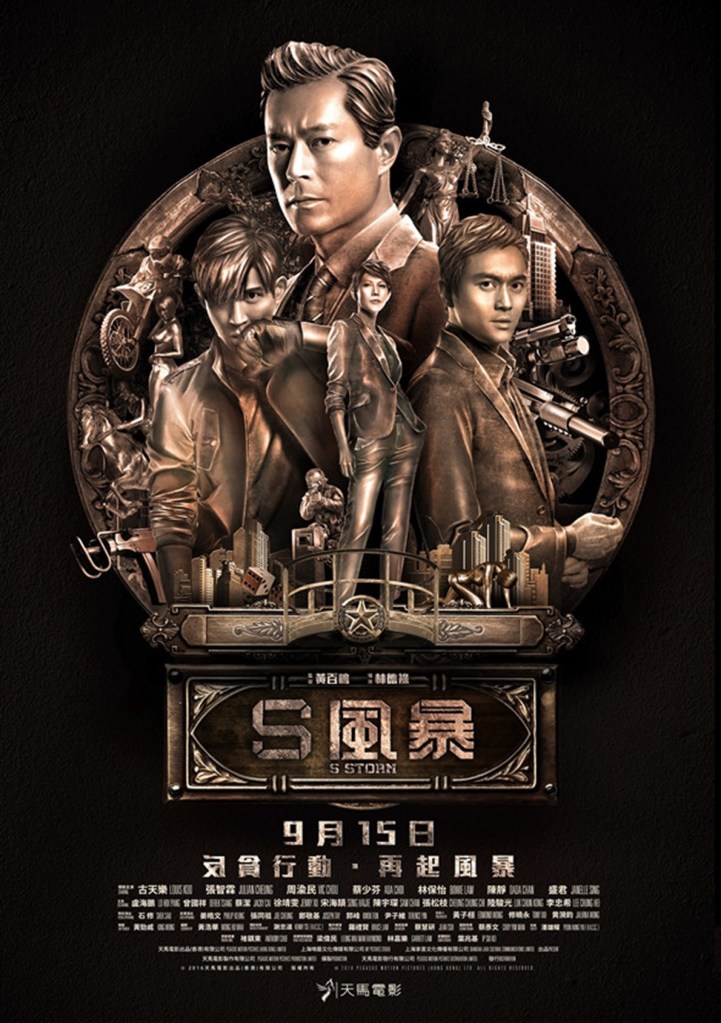
S Storm (S風暴, David Lam, 2016)

s-stormIt’s become almost a cliché to describe a sequel as “unnecessary”, but then assessing how any sequel or, indeed, any film might be deemed “necessary” (for what or whom?) proves more fraught than one might originally think. It might, then, be better to think of certain sequels as “unwise” – S Storm (S風暴), a followup to the similarly named Z Storm is just one such film. Z Storm’s critical reception was, shall we say, lukewarm and did not exactly inspire a burning desire to return to its world of corporate corruption vs different kinds of bickering policemen but, nevertheless, here we are.
Louis Koo returns as ICAC officer William Luk who has the misfortune to see one of his targets assassinated right in front of him. The trail leads him to Hong Kong’s famous Jockey Club and a trading scandal involving illegal behaviour in online football gambling. Being in the wrong place at the wrong time brings Luk into contact with depressed policeman Lau (Julian Cheung Chi-lam) whose sister just happens to work in the bar in which the mysterious hitman everyone is looking for is fond of taking a drink.

Refreshingly, S Storm’s plot is actually very straightforward – bets are being rigged and the people at the top of the tree are in on the plan. Some of them are willing to go try great lengths to stop anyone finding out and spoiling their fun. Cue gangster action and dastardly tricks as the anti-corruption guys try to clean things up. However, S Storm is very much a believer in the power of coincidence. Which is to say, Lau’s sister just happens to wind up fancying the hitman and Luk’s old boss just happens to be right at the centre of the action. Believability is not high on its list of priorities.

Added to the straightforward narrative spine, Lam throws in a number of subplots – the most interesting of them being with the mysterious hitman who visits a photography exhibition for some reason set up in a shopping mall which features scenes from global war zones. It seems our sad but noble hitman was some kind of child soldier (going by his flashback) though this is never fully explored and is rather crudely used to add some kind of spiritual quality to the hitman’s final journey.

Rather than mild rivals, ICAC and CID become awkward friends fairly quickly in the quest to investigate the mysterious deaths and corruption paper trail. Lau is a former gambler with a bad reputation hoping to make something out of himself by solving a high profile case. His relationship with his sister is somewhat strained as she recites the sad story of her upbringing which includes being gang raped by goons looking for a repayment on her brother’s gambling debts (as she improbably shouts out loud to the entire bar in which she works as a way of getting back at her policeman brother who’s asking too many questions). Luk and Lau eventually bond as their conflicting personalities complement each other well enough to create an unbeatable crime stopping team.

What the film lacks in intrigue it tries to make up for with action which it handles well though infrequently. A standout out scene features one of Luk’s female subordinates getting into a fight in a teahouse which is then followed by some fist fighting with the silent yet heroic hitman. Other standoffs are gun based but at least mildly interesting if not particularly original.

S Storm has some odd ideas about character arcs, shifting the most interesting elements to the fringes and thrusting the blandest to the front. plot elements are shoehorned in bluntly and without warning such as a forgotten tussle between Luk and a former associate over a woman which quickly becomes irrelevant. Luk is also given a rather odd character moment when he comes across the dying body of another major character and simply nods, as if identifying with their plight or sympathising believing that they’ve found peace now or some other such nonsense (given that he has never actually met this person and knows nothing of their backstory). The film’s rather abrupt ending in which justice is served but the bodies remain where they fell remains unsatisfying and testifies to the ultimate failure to make the scandal laden content as interesting as it strives to be.


Original trailer (English subtitles)

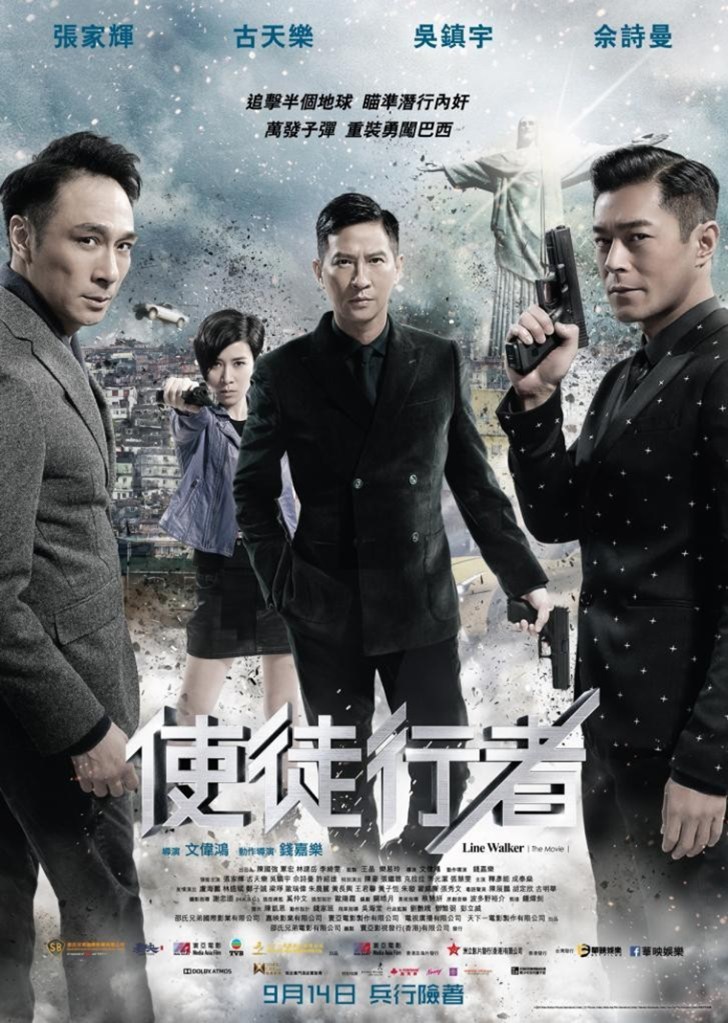
Line Walker (使徒行者, Jazz Boon, 2016)

When sitcoms make the transition to the big screen, they usually do so by going on holiday. Police procedurals are no different as Line Walker (使徒行者), a cinematic outing for a wildly popular Hong Kong TV series, proves by throwing its hat into the global ring with a Brazil bound drug based gang war. Taking more than a little inspiration from the classic undercover cop drama Infernal Affairs, Line Walker joins former undercover officer Ding and her handler Q as they receive a mysterious message from a missing operative identifying himself only as “Blackjack”.

Two years ago (as detailed in the TV series), a top Hong Kong detective, Hong, managed to find just enough time before being murdered to wipe all his data relating to officers currently working deep cover. Ditzy cop Ding (Charmaine Sheh) was one such asset, and together with her boyfriend who is also her boss, Q (Francis Ng), managed to round up and bring in all the other operatives save one whose file was corrupted beyond recovery. Therefore when they receive a message written in Hong’s unique code signed “Blackjack” they are cautiously optimistic.

The trail leads them to a corporatised Triad gang currently engaged in the usual Triad business of petty gang wars over drugs, territory, and power. Shiu (Louis Koo) and Lam (Nick Cheung) are best buds and underlings in the organisation with their eyes on bigger prizes. Making a trip to Brazil to broker a drugs deal the pair get themselves into various kinds of trouble which is only compounded by the “Blackjack” issue and suspicions of a possible mole in the gang.

Ding and Q are the only returning characters from the TV series which has received significant upgrades in the big screen jump with the addition of several Hong Kong superstars including Louis Koo and Nick Cheung. Though the central narrative stands alone, there is a degree of assumed familiarity with the ongoing backstory which is at times frustrating for the uninitiated but never much of a barrier. Line Walker does, however, suffer from the common pitfalls of the TV show making the jump into the cinematic world in that it can’t shake the artificial largeness of the small screen.

After beginning with a broadly comic sequence as Ding chases down Blackjack in a Macao casino whilst making time for slapstick pratfalls along the way, the tone progressively darkens until the final, gritty action based finale. Though the banter between the bickering couple Q and Ding is never less than amusing, Ding’s cutesy airhead routine feels out of place with the general tone of the rest of the film especially as she is also supposedly part of a team of elite undercover police officers.

In attempting to up the ante, Line Walker’s scriptwriters have thrown in twists and turns at every juncture as more and more diehard criminals suddenly confess that they are, in fact, undercover police officers. No one is telling the whole truth as double crosses and betrayals dominate the action with an overt Infernal Affairs homage set in the Olympic stadium. Frankly, it all borders on the ridiculous as plot twist plies on plot twist with predictable regularity though it does at least make things exciting.

Exciting is clearly the name of the game when it comes to the action set pieces which attempt to make the most of the cinematic budget. The most high profile of these are the Brazil set sequences filled with shootouts and car chases not to mention precision timed chain reactions of exploding vehicles used as bombs. The physical fights are impressively visceral but occasionally contrived. In one notable instance two men are attacked by a lone assassin armed only with a knife but almost allow themselves to be stabbed for no reason at all. When they do fight back, they do so one on one rather simply taking down the opponent by overwhelming him with their combined strength.

Caught between comedy crime caper and gritty heroic bloodshed, Line Walker can’t make either approach work leading to an abrupt and unsatisfying, if artistically pleasing, finale. Koo and Cheung do their best as the brothers in crime duo each realising that they can’t quite go through with betraying the other, moving from easy banter in the first half to angst ridden glares in the second, but they’re in a different picture from the sunny world of Ding and Q who are still stuck in the TV screen. Though the overworked plot and variable tone create serious problems, Line Walker does at least offer impressive action with a thin layer of comedy even if it fails to hit its emotional target.


Original trailer (English subtitles)

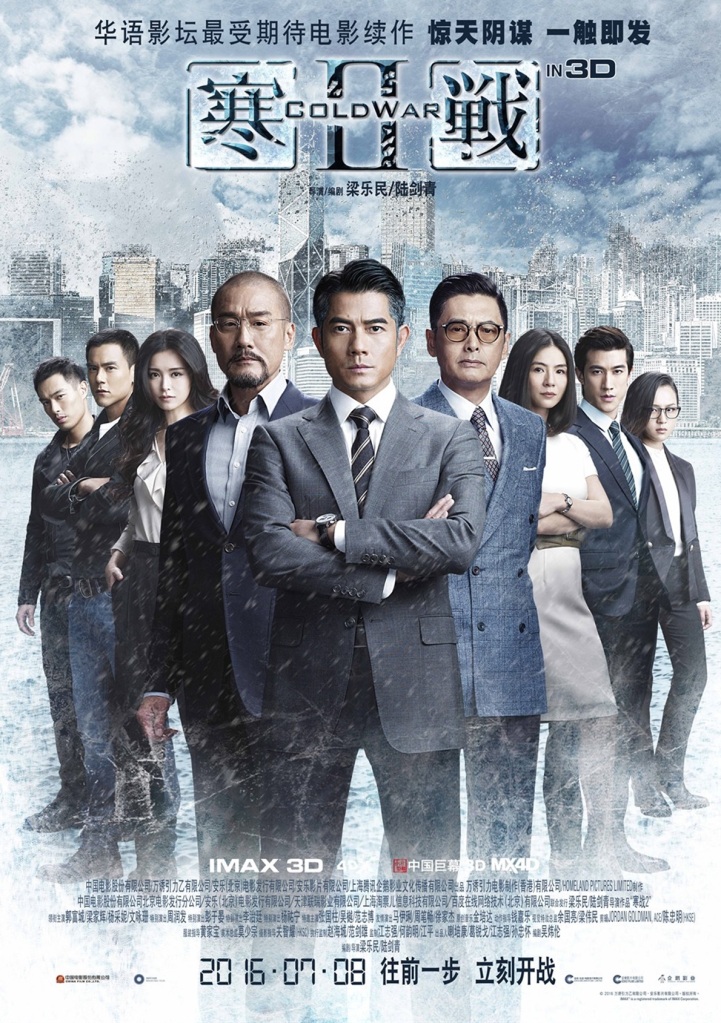
Cold War 2 (寒戰II, Longman Leung & Sunny Luk, 2016)

coldwar 2Cold War 2 (寒戰II) arrives a whole four years after the original Cold War rocked Hong Kong with police corruption scandals and fantastically convoluted internal plotting. Heroic policeman Sean Lau (Aaron Kwok) may have won the day, even if he ultimately had to compromise himself to do it, but the police van is still missing and MB Lee (Tony Leung Ka-fei) is still lurking in the background. As is his son, Joe (Eddie Peng) – languishing in prison but apparently still with the resources to cause trouble whilst behind bars.

Joe Lee has Lau’s wife kidnapped, forcing Lau to compromise himself by giving in to his demands all of which culminates in an intense subway set piece in which Lau inadvertently ends up handcuffed to an exploding smoke bomb while Joe Lee escapes. Embarrassing is not the word. Lau now looks bad, and old rivals have their eyes on the police chief’s chair. An enquiry is currently underway into goings on at police HQ lead by top lawyer Oswald Kan (Chow Yun-fat) but his impartiality is severely damaged when one of his own is caught in the crossfire whilst investigating Joe Lee’s nefarious activities.

Like the first film, Cold War 2 is an intense interpersonal thriller though this time the enemies are even closer as the old boys network becomes the means by which commissioners are unseated and installed. Service records are everything – Lau is unpopular with his colleagues because he started out at ICAC and has never served as a rank and file policemen. From one point of view, this makes him an ideal candidate because he has no personal ties to the body of serving officers but his rivals despise him for this very reason. He isn’t one of them, does not have first hand understanding of front line policing, and most importantly is not a part of their interconnected layers of military style brother-in-arms loyalties.

Lau’s predictable miscalculation regarding Joe Lee creates an opportunity to get rid of him and take back the force. “Save the police” is a message which is repeated over and over as the plotters attempt to win others over to their cause, insisting that Lau has lost the media battle for the hearts and minds of a public now trained to be afraid of their police force. Lau is the continuity candidate – mistakes have been made, but his stately manner and apparently steady hands may yet win the day. Those same hands are getting dirtier by the second, but they’ve been brushing the morally grey, not (yet, at least) immersed in the red of innocent blood like those of the corrupt top brass at police HQ.

If the plotting is intricate and filled with double crosses and betrayals, directors Luk and Leung have ensured a steady stream of explosive action sequences to accompany the ongoing cerebral games. Cold War also had its share of action packed spectacular set pieces but Cold War 2 may surpass them with the surprise factor alone including one shocking multi-car pileup inside a tunnel in which cars, buses and bikes go flying before an all out fire fight ensues. Lau’s constant gazing at the “Asia’s Safest City” signs which adorn police headquarters (right next to the metal detectors you need to pass through to get in) has never looked so melancholic and drenched in irony.

It’s a battle for the soul of the police service, but it’s being fought as a dirty war. Lau is the decent and honest man forced to behave in a slightly less honest and decent way, even if for the best of reasons. His rivals are running on pure ambition and pettiness. Despite their claims they do not have the interests of the people of Hong Kong as their foremost concern. The corruption stems far further back than anyone might have previously guessed and is more or less coded into the system. The police van and equipment are still missing and the central plotters are still in place. This is a partial victory at best but then what kind of action fest wouldn’t leave a door open for a sequel. The cold war maybe about to turn hot, but you can rely on the steely eyed Police Commissioner Sean Lau to be there, ready and waiting, when the first shots are fired.


Original trailer (English Subtitles)

Cold War (寒戰, Longman Leung & Sunny Luk, 2012)

cold war

Reworked from a review first published by UK Anime Network in June 2013.


Listen up!  You’re going to have to pay attention to this review because there’s an awful lot going on this film. If there were a prize for most subplots squeezed into 102 minutes there wouldn’t even be room for any other candidates on the nominations list. If you like your HK action thrillers super complicated (if a little on the ridiculous side) and filled with some truly explosive (!) action sequences Cold War (寒戰) is definitely up your street.

Whilst a major explosion rocks a busy public area in Hong Kong, a crazed drunk hurtles through the streets before crashing his car into the central reservation in a quite spectacular manner. Apparently unharmed, he then rants at the traffic police that his uncle is a judge so they can’t touch him – a quick phone call seems to indicate he might be mistaken in his uncle’s feelings towards him but in any case the situation changes dramatically as the police are suddenly ambushed and kidnapped. The kidnappers then attempt to ransom the officers and equipment to the HK police authorities who are already a source of some press interest regarding possible corruption and general incompetence. It is imperative that they regain their men and capture the culprits as quickly as possible to avoid their reputation being even further damaged.

However, there is also considerable friction between the leading players at HQ and some uncertainty over who is favoured to become the new police chief – the young bureaucrat or the grizzled street veteran. This situation is further complicated by the fact that one of the missing patrolmen is the son of current section chief MB Lee (Tony Leung Ka-Fei). His subordinate, Sean Lau (Aaron Kwok), feels this makes him unsuitable to lead the current investigation and so seeks to have Lee removed from his post and take over the position himself. The pair also attract the attention of an officer at ICAC who’s convinced one or both of them must have more to do with the case than it seems, meaning each is effectively fighting a war on three fronts – firstly trying to rescue the police officers, then unmasking the perpetrators and finding out what they want with the HK Police force, and finally sorting out who’s up for the top job at police HQ whilst also keeping Internal Affairs off their backs.

No matter which way you put it Cold War is still extremely convoluted and fails to make all of its various plot elements hang together in a coherent way. It’s also unfortunate that the culprit is a little predictable (largely thanks to the actor’s mustache twirling performance) but when the final reveal does come it’s baffling in its pettiness, not to mention the total implausibility of such a complicated plan. Perhaps its unfair to criticise a film like this for having a problematic plot structure, perhaps fans of the action genre don’t look for finely crafted plotting as much as they look thrills and technically impressive action sequences – after all, we can’t all be Infernal Affairs.

It has to be said that Cold War does deliver in the action stakes with some extremely high production values which surpass even the heights of previous HK action films. From the opening car crash to the motorway car chase and explosive finale there are several simply jaw dropping moments throughout. When it comes to the big and brassy set pieces, Cold War is pretty much unrivaled but perhaps lacks the personal, intimate touch of other genre favourites. Tonally it walks a fine line between a sort of quirky humour and slightly absurd feeling where you can’t be sure whether you’re actually watching a comedy or not – some viewers may find all this a little too silly but others may revel in its ironic tone.

Cold War is certainly a flawed film, a little ridiculous but nevertheless enjoyable. It seems as if it also wants to make serious points about the justice system, media and police force but ends up pulling all its punches. If you stop to think about any of the plot, it makes very little sense but if you can let that go and just enjoy the superb action sequences and great performances from the leads Cold War is definitely one of the more impressive action thrillers to come out of HK in recent years.


 Original trailer (Cantonese with English subtitles)

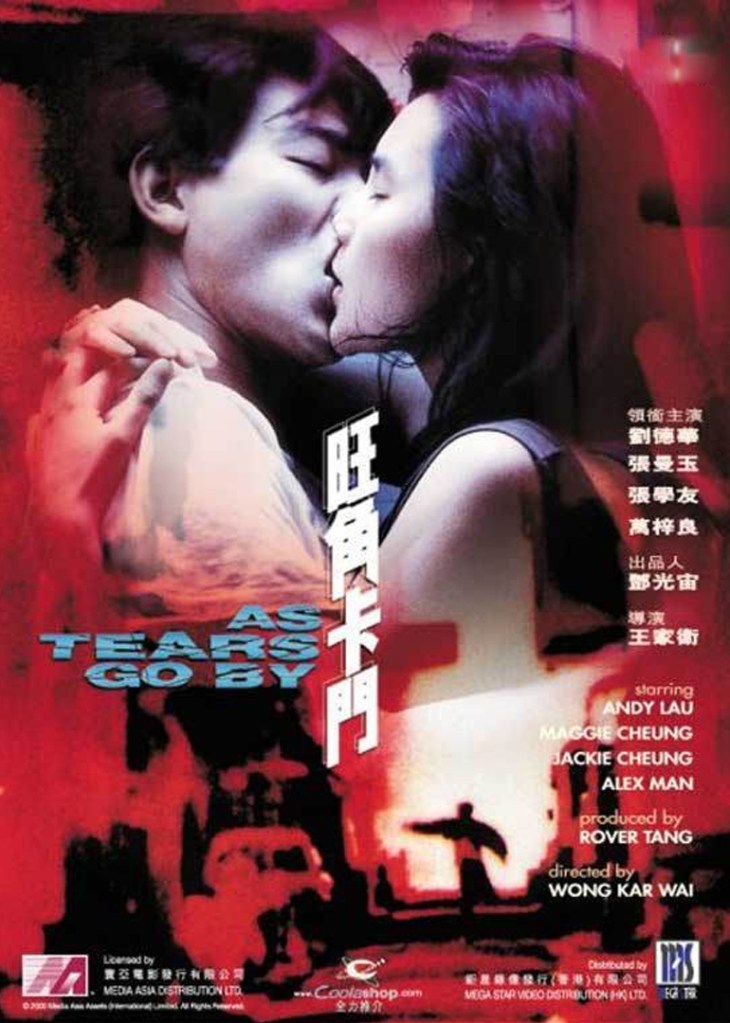
As Tears Go By (旺角卡門, Wong Kar-wai, 1988)

as tears go byThese days, Wong Kar-wai is an international auteur famous for his stories of lovelorn heroes trapped inside their memories, endlessly yearning in vain for the unattainable. In many ways his debut feature, As Tears Go By (旺角卡門, Mongkok Carmen) is little different save that it owes more to its vague heroic bloodshed, gangster inspiration and is less about memory than inevitability and a man abandoning his dreams of a better life with a woman he loves out of mistaken loyalty to his loose cannon friend.

The film opens with Wah (Andy Lau) still in bed despite it being late in the day only to be woken by a voice so piercing it can only belong to an aunty. It seems a mysterious cousin whom he’s never met before will be coming to stay with him as she has something wrong with her lungs and needs to see a specialist in town. Seconds after he puts the phone down the doorbell rings to reveal the cousin, Ngor (Maggie Cheung), standing outside. Slightly put out, Wah goes back to sleep despite the continuous phone calls from his friend, Fly, who is supposed to be collecting a bill but is not having much success. As he will do for the rest of the film, Wah will have to go down there himself and stop Fly making things even worse for everyone than they really needed to be.

For the early part of his career Wong had worked as a scriptwriter (a self confessed hack at times) and was finally given the opportunity to direct his own work as the Hong Kong film industry began to boom in the late ‘80s. This was of course largely due to the fantastically successful action flicks being made at the time including A Better Tomorrow, The Killer, City on Fire etc. so it’s not surprising that he chose the relatively safe arena of genre for his first foray into the director’s chair. His existing connections also enabled him to cast arguably the biggest young stars of the day including Andy Lau, Maggie Cheung and Jacky Cheung as his three leads meaning he had pretty much a safe bet on his hands whatever he decided to do. However, even if As Tears Go By is the most straight forward, even commercial, of his films that’s not to say it doesn’t bear many of the hallmarks of his later efforts.

Broadly speaking, As Tears Go By is a fairly standard gangster tragedy much indebted to Scorsese’s Mean Streets as its melancholic hero is caught between loyalty to his friend and the possibility of salvation through the love of a good woman. Fly is a one man disaster zone – a totally useless gangster who can’t take care of himself in a fight yet loves to buzz around irritating the hell out of everyone and starting gang wars over nothing every five seconds. Even the pair’s godfather warns Wah that sooner or later Fly is going to land him in big trouble and it would be better for everyone if they could find him something else to do. Wah seems to agree but is unable to guide his feckless friend away from the fleeting glory of the tough guy world. Wah is already tired of the gangster life, he feels old with it but knows somewhere deep down he’ll never be free. Either out of complete stupidity, mistaken loyalty and a desire for revenge, or just because he doesn’t think he deserves anything else Wah throws away his chance for something better in a pointless, though affecting, gesture of solidarity with Fly.

Shot by Andrew Lau (who would go on to direct his very own genre hit Infernal Affairs also starring Andy Lau only 15 years later), As Tears Go By sparks many of Wong’s consistent visual motifs including the use of slow motion and a persistent melancholic atmosphere which is also filled with tiny moments of contemporary life. Andy Lau makes for a super cool gangster hero in jeans, dark jacket and sun shades, cigarette hanging carelessly from his lips as he wanders about town in a perpetual statue of ennui. Like many of Wong’s subsequent lonely male heroes, he has an inner longing for something which he believes he can never have. Just as the best film noir tough guys do, he warns off his potential romantic salvation which comes in the pleasing form of Maggie Cheung by telling her that, being such as he is, he can promise her nothing because he’s learned never to bother thinking past tomorrow.

Taken on its own merits, As Tears Go By is an interesting addition to the canon of late ‘80s gangster movies which marries the classic tropes of heroic bloodshed with an arthouse aesthetic inspired by both “New Hollywood” classics and genre infused European cinema. Though he’d rarely return to such frenetic action scenes, here Wong shoots with energetic hand held camera and a kind of fury that might give Fukasaku a run for his money. Extraordinarily accomplished for a debut movie, As Tears Go By is very much a youthful feature which is stained with the same kind of unresolvable longing which would come to colour the rest of Wong’s work to date. A stylish genre effort, As Tears Go By is Wong finding his feet, but find them he does and leads us on a characteristically melancholy waltz as he does so.


Reviewed as part of HOME’s CRIME: Hong Kong Style touring season.

Such a pleasure seeing this again and in 35mm! Though there perhaps should have been a warning about how much of the film lacked subtitles (just as well I’d seen it before!).

As Tears Go By was previously released by Tartan in the UK but a word of warning as there was quite a big error involved with the UK edition in that Tartan were given the Mandarin dub of the film rather than the original Cantonese by mistake but opted to rush the film out in conjuction with the release of 2046 rather than fix the problem. Kino Lorber released the film in the US but maybe out of print. The good news is that the Hong Kong edition at least does have English subtitles.

Original trailer (no subs)

I’m not sure if the film’s title actually has anything to do with this song, but As Tears Go By is an appropriately melancholic ballad from The Rolling Stones, here’s a vintage version sung by Marianne Faithfull:

The original Cantonese title is Mongkok Carmen – Mongkok being an area of Hong Kong and Carmen referring to the opera by Bizet which certainly creates an interesting set of allusions!

The Teahouse (成記茶樓, Kuei Chih-Hung, 1974)

TheTeaHouse+1974-248-bWhere oh where are the put upon citizens of martial arts movies supposed to grab a quiet cup of tea and some dim sum? Definitely not at Boss Cheng’s teahouse as all hell is about to break loose in there when it becomes the centre of a turf war in gloomy director Kuei Chih-Hung’s social minded modern day kung-fu movie The Teahouse (成記茶樓, Cheng Ji Cha Lou).

Wang Cheng runs a small teahouse which prides itself on being the kind of progressive environment where everyone looks after each other as long as they play by the rules. Unfortunately, one of his young guys – Blackie, fresh off the boat from the mainland, has got himself into bad company and into trouble with the law. However, as he’s a minor, he gets off with barely any punishment at all. Cheng tells him he can stay at the teahouse only if he pays properly for his crime leading him to try and get himself arrested all over again so he can go to jail (which actually proves very difficult).

Another unfortunate side effect of Blackie’s adventure is that it brings some unwanted gangster attention and when two young thugs come looking for one of the waitresses, Boss Cheng is not going to stand for any nonsense. However, after his attempts to help the girl have failed, he finds himself in trouble with two different sets of gangsters and also a meddling police inspector who seems intent on using the teahouse to trap the triads.

Boss Cheng is a good and decent man but also someone with his own opinions on justice who is not afraid to take matters into his own hands. His rules for workers at the teahouse emphasise obeying the law and behaving like responsible citizens, but he’s not above carrying out a little corrective action of his own if the need arises.

The biggest theme of the film is the rising inequality and place of migrants from the mainland in contemporary Hong Kong society but the first target Kuei has his sights set on is out of control youth. Because of the lenient laws regarding child criminality, the young men of Hong Kong run rampant, safe in the knowledge that nothing is going to happen to them while they remain under the age of responsibility. The two gangsters accused of raping and attempting to force the teenage waitress at the teahouse into prostitution give their ages as 14 and 15 respectively to the trial judge and are released without charge to go back to their life of crime with impunity and no respect for the law or conventional morality. Sadly, this system just creates another child criminal but one who will receive a jail sentence even if a lighter one to be served in a reform school rather than a prison.

Blackie was seduced into crime by a lack of funds – having managed to make it over from the mainland he has nothing other than his job at the teahouse and the support of Boss Cheng. One day a ragged looking little boy leading his sister by the hand wanders into the teahouse to beg for food. It turns out his small family escaped from the mainland too but his father never made it to Hong Kong and his mother is ill, leaving the children to try and fend for themselves. Boss Cheng takes pity on them and gives the boy a job plus paying for his school fees but he still finds himself beaten up by thugs not much older than himself in the street.

All the while, corrupt fat cats are messing with the system to keep the poor in their place while the rich get richer. Cheng takes great pleasure in playing off a corrupt industrialist who tried to use him as a sacrificial pawn in his own war against the triads (well, the triads he doesn’t like, anyway). Amusingly, one of the triad bosses seems to think Cheng is also a brother forcing him to pretend to know all about triad rituals to attempt to make a truce with them. The teahouse is situated right between the territories of two rival gangs making it a prime spot for conflict. However, the real problem comes when the police start muscling in, giving off the impression that Cheng has turned traitor on the triads. Soon, Cheng becomes the single biggest threat to his own teahouse and the progressive environment he hoped it would foster.

The Teahouse is actually a little ahead of its time concentrating not on kung fu or street fighting but mixing in a little gun play and some bloody knife crime. The shooting style is impressive throughout with a realistic, gritty atmosphere which aims to put the real streets on screen. The film does, however, have a tendency to fall into an episodic rhythm and suffers from its abrupt and slightly odd, downbeat ending which finishes things on an unsatisfying note. That said, The Teahouse is a stylishly shot and socially engaged action extravaganza that makes up for its minor shortcomings with a degree of chutzpah which looks forward to the classic heroic bloodshed movies of the ‘80s.


Seen as part of HOME’s CRIME: Hong Kong Style touring season.

Unsubtitled trailer (Mandarin):


Killer Constable (萬人斬, Kuei Chih-Hung, 1980)

KillerConstable+1980-19-bEvery sovereign needs that one ultra reliable and supremely talented servant who can be called upon in desperate times. For the Dowager Empress of the Qing Empire, that man is Leng Tien-Ying – otherwise known as the Killer Constable. When a sizeable amount of gold goes missing from the Imperial Vaults, it’s Leng they call to try and get it back. However, what Leng doesn’t know is that there’s far more going on here than he could possibly have imagined and he’s about to wade into a trap so deep that you never even see the bottom.

At several points, the giant broadsword style weapon that Leng carries catches the light and appears to shine out with some kind of ethereal righteousness, yet if Leng wields the shining sword of justice he does so with a heart of ice. Early on one of his most trusted subordinates argues with him and says he intends to leave because he thinks Leng is more killer than policeman. He doesn’t take prisoners, where there’s reasonable proof of guilt he cuts the perpetrator down on the spot. At one point he tortures a suspect for information by mock drowning him in a lake while his wife and terrified children look on. When the wife complains, he hits her causing the husband to make the mistake of going for Leng which earns him the prize of getting his head cut off right in front of his family who are now left without any means of supporting themselves.

Leng cares only about the letter of the law. As the squad of policemen ride through the barren landscape, they pass through ruined towns filled with the starving and the desperate. One of the more compassionate men asks what’s happened here and if they, as policemen, shouldn’t be trying to help, but is reminded that these poor people are Hans and the policemen are Manchurians, so it’s just none of their business whether they live or die.

However, here is where Kuei’s film deviates from the accepted path. Leng’s generally bleak attitude to life is the one the film most closely identifies with. Any attempt at compassion is met with by betrayal, each act of kindness only earns retribution and being softhearted is almost another word for dying young. That is not to say the film is completely behind Leng as a hero or even as an anti-hero, he too will pay for the way he lives his life starting with realising that he alone is responsible for the deaths of the men that blindly followed him on a fruitless quest.

Killer Constable is more of a swordplay film than a kung-fu one and is filled with plenty of energetic and expertly choreographed fight sequences. The men fight in blazing heat (at one time literally), pouring rain and mud filled swamps against a suspiciously well trained gang of opponents who always seem to be lying in wait for them. The Killer Constable also seems to have something of a fetish for chopping off people’s legs which carries on right into the bloody finale with limbs flying off with oddly gleeful abandon.

As it turns out, the Killer Constable is not completely heartless, he’s just lived in this harsh world long enough to come to the opinion that the “bad” cannot be redeemed and need to be cut down like weeds so that the flowers can once again bloom. However, he, in his quest, has crossed the line and become that which he most hates. To nearly everyone else in the picture, Leng is a bad guy – the uncompromising face of the law and the knock at the door you most fear coming. In the film’s surprisingly downbeat ending he too will get what’s coming to him.

Bleak beyond measure, the only good and true thing in the cruel wold of Killer Constable is the blind daughter of one of the criminals. Kind and cheerful, she tries to help Leng as he lies wounded and is entrusted to him should her father die, yet she pays the heaviest price of all, left standing all alone in the rain waiting for the return of those who will never come home again. Far from heroic, Killer Constable is a critique of blind justice dealt out by self righteous egoists who will always discover the error of their ways far too late.


Seen as part of HOME’s CRIME: Hong Kong Style touring season.

The Pilferer’s Progress (发钱寒, John Woo, 1977)

Money CrazyJohn Woo is best known in the West for his “heroic bloodshed” movies from the ‘80s in which melancholy tough guys shoot bullets at each other in beautiful ways. However, he had a long and varied career even before which began with Shaw Brothers and a stint in traditional martial arts movies. What often gets over looked outside of Woo’s native Hong Kong is his many comedies, of which The Pilferer’s Progress (AKA Money Crazy, 发钱寒, Fa Qian Han) is one of his most successful.

The plot follows the comic adventures of two down on their luck hoodlums – would be bodyguard Poison (Ricky Hui) and “private detective” Dragon (Richard Ng Yiu hon), who keep running into each other so many times that they eventually end up having to become a team. After each becoming involved with the greedy business man Rich Chan (Cheung Ying), the two find themselves lusting after a set of three diamonds which he has in his possession. Their desire only grows after meeting Mary (Angie Chiu) and her godfather to whom the diamonds originally belonged before Chan cheated him out of them.

Love trumps money, at least for a while, as Poison and Dragon team up to get revenge on Chan and get the diamonds back for Mary. Of course, more personal concerns end up raising their heads towards the end as the duo realise that if they just give the diamonds back to Mary it might buy them some brownie points but they’ll be quite massively out of pocket. They come up with a suitably anarchic solution that involves dummies holding guns and a motorbike cleverly concealed inside a haystack not to mention a fake broken arm (unsurprisingly it doesn’t go quite as smoothly as they’d hoped).

Much more slapstick buddy comedy than crime thriller, The Pilferer’s Progress is full of innovative sight gags and the fast paced Cantonese wordplay that has become a hallmark of the genre. Neither Poison nor Dragon are born criminal masterminds, they’re both just muddling through with a kind of anarchic insouciance that lends their exploits a gleefully childish quality even when Dragon is doing something as shady as indulging in a bit of analogue photoshop to fabricate a picture of Chan with a mistress so he can blackmail him. Poison’s number one manoeuvre is to get a gang together to pretend to attack his target so he can pretend to fight them all off in the hope that the “victim” will be so grateful and impressed with his martial arts skills that he’ll take him on as a bodyguard.

Dragon seems to be an avid watcher of modern spy movies and has a host of fairly useless gadgets he can use to try and get the drop on Chan such as bugging his car (Poison puts the bug on the exhaust pipe), or drilling a hole from the kitchen below right into Chan’s toilet and sticking a periscope up there to scout out the room. Chan also has a fairly elaborate security system that he mostly uses to annoy his wife but Poison and Dragon get round it by drilling another, bigger hole in the ceiling and pulling a Mission Impossible style rope manoeuvre to try and grab the diamonds from around Chan’s neck while he’s asleep. Because he’s thought of everything, Dragon even pulls out a tiny umbrella and hangs it from his nose to catch the increasing stream of sweat falling from his brow in one of the film’s funniest moments.

Woo also mixes quite a lot of exciting kung-fu action with the pure comedy as Chan’s second bodyguard is a recently graduated shaolin monk who’s pretty much invincible – to normal people, but somehow Dragon and Poison manage to outsmart him every time. There’s also a fair amount of the gunplay that was to become Woo’s signature but there are no balletic sequences here – the guns look ridiculously fake, almost like children’s toys, and are always the “butt” of the joke, literally.

The Pilferer’s Progress may not be a great lost classic but it is heaps of period specific fun with an extremely catchy soundtrack including the title song sung by star Ricky Hui. Extraordinarily successful on its original release, The Pilferer’s Progress is undoubtedly very much of its time, as perhaps it was intended to be, but its fast paced, silly slapstick humour has a universal quality that proves that true comedy has no sell by date.


Seen as part of HOME’s CRIME: Hong Kong Style touring season.