Kinema Junpo Announces 94th Best 10 for 2020

Prestigious cinema magazine Kinema Junpo has released its always anticipated “Best 10” list for films released in 2020, the 94th edition. Top prize goes to Kiyoshi Kurosawa’s Silver Lion-winning Wife of a Spy while the late Nobuhiko Obayashi takes the Best Director award for his final film Labyrinth of Cinema which comes in second on the Best 10 list.

Best 10

1. Wife of a Spy (スパイの妻<劇場版>)
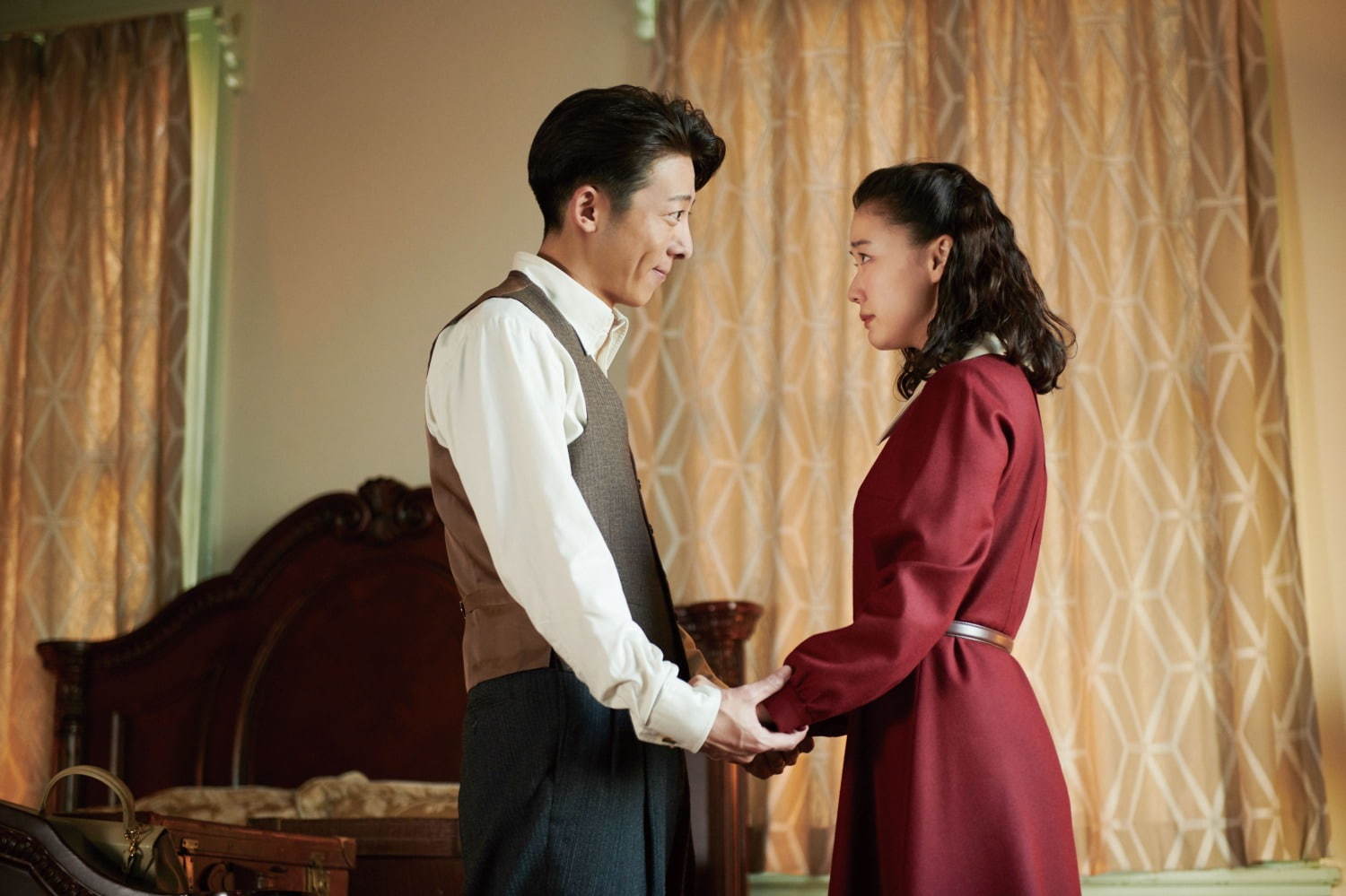
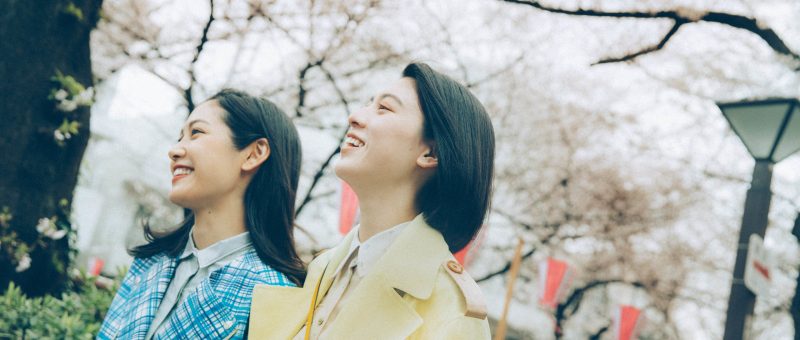
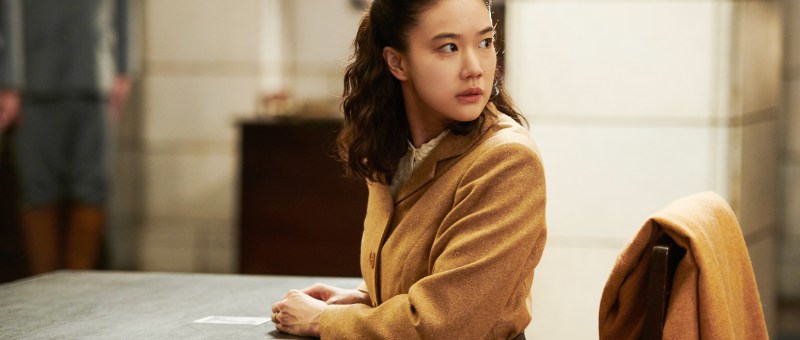
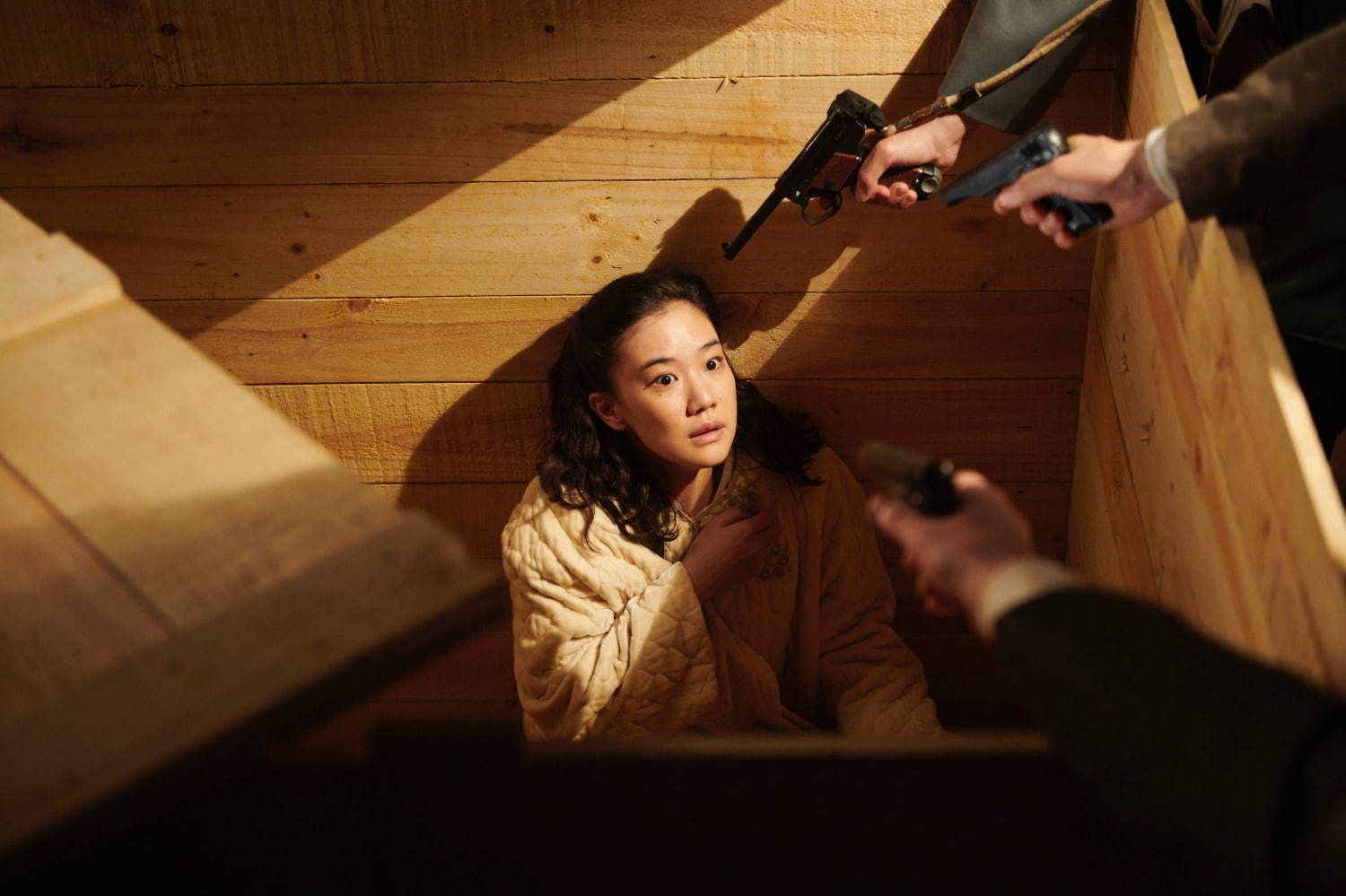
Originally commissioned for 8K TV, Kiyoshi Kurosawa’s wartime drama stars Yu Aoi as the titular wife who finds herself working against her husband, Issey Takahashi, when she discovers that he intends to blow the whistle after observing something he shouldn’t have while working in Manchuria. An awards season favourite, the film also picked up the Silver Lion at the 77th Venice International Film Festival.

2. Labyrinth of Cinema (海辺の映画館-キネマの玉手箱)
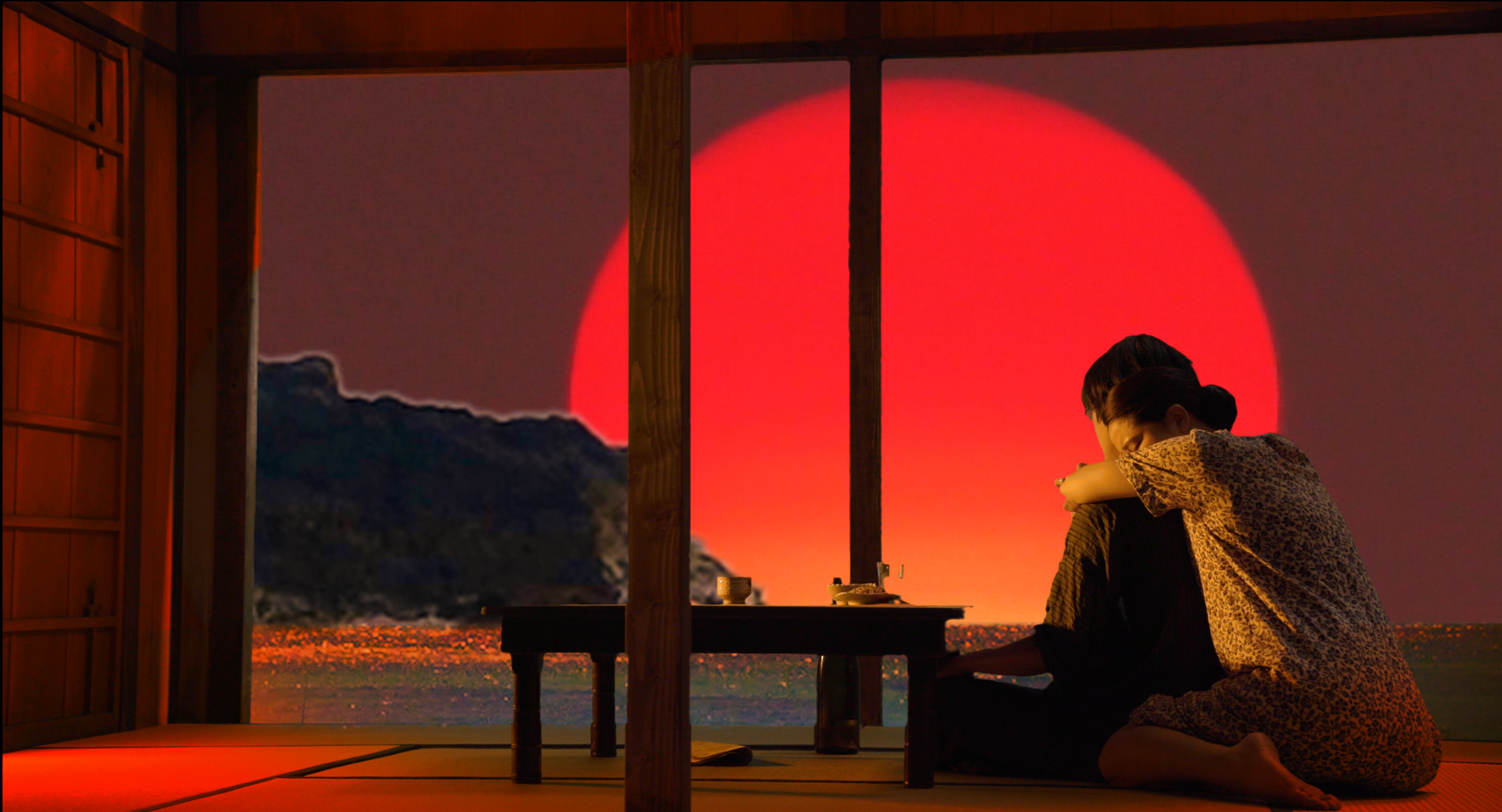
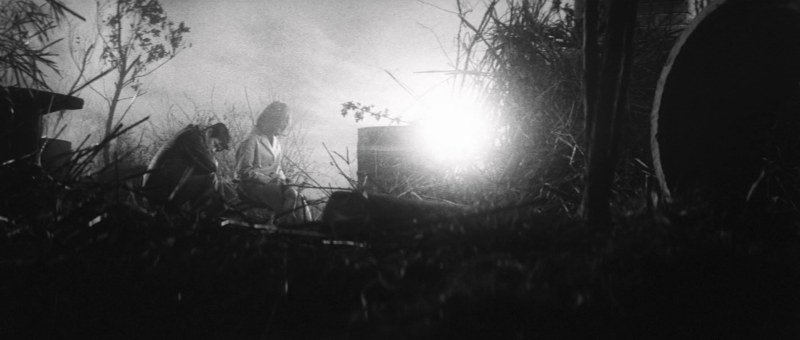
A poetic advocation for the transformative power of art, Nobuhiko Obayashi’s final film takes a surrealist odyssey through the history of warfare as three youngsters chase the image of Japan in the labyrinths of cinema. Review.

3. True Mothers (朝が来る)
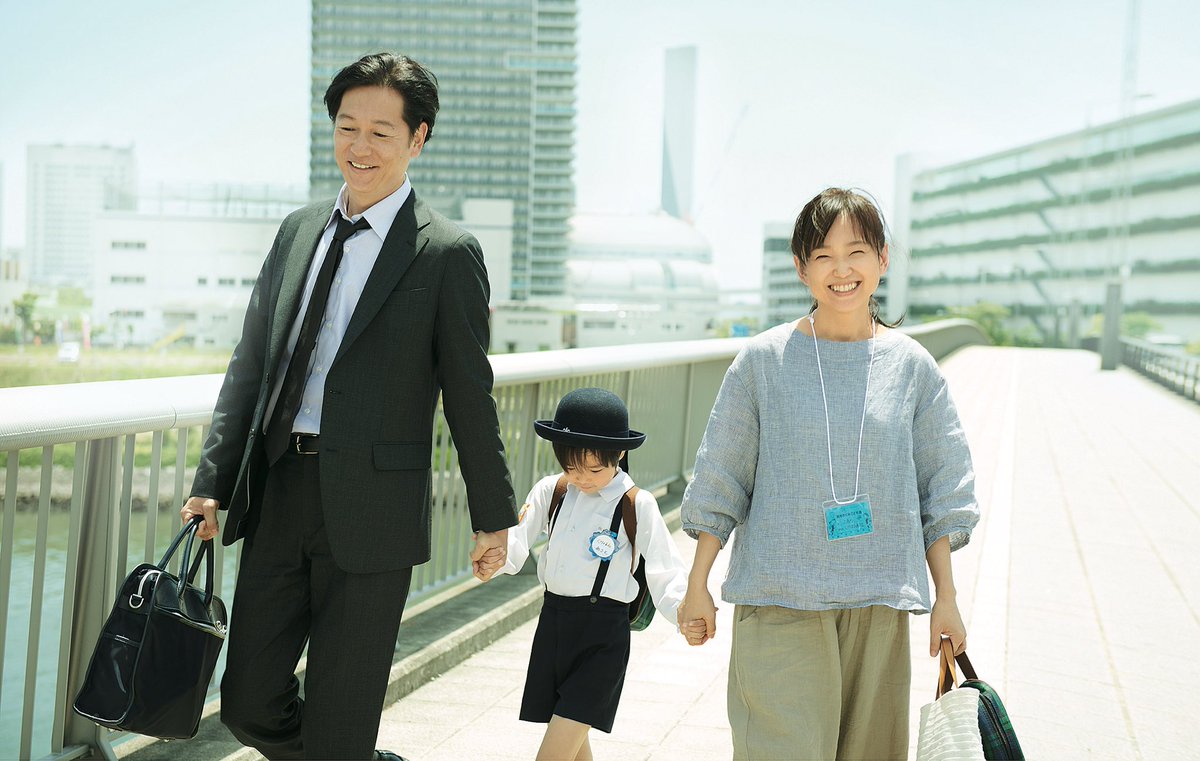
Festival darling Naomi Kawase adapts Mizuki Tsujimura’s novel in which a childless couple adopt the baby of a teenage mother only for her to return some years later and attempt to reclaim her child.

4. Underdog (アンダードッグ)
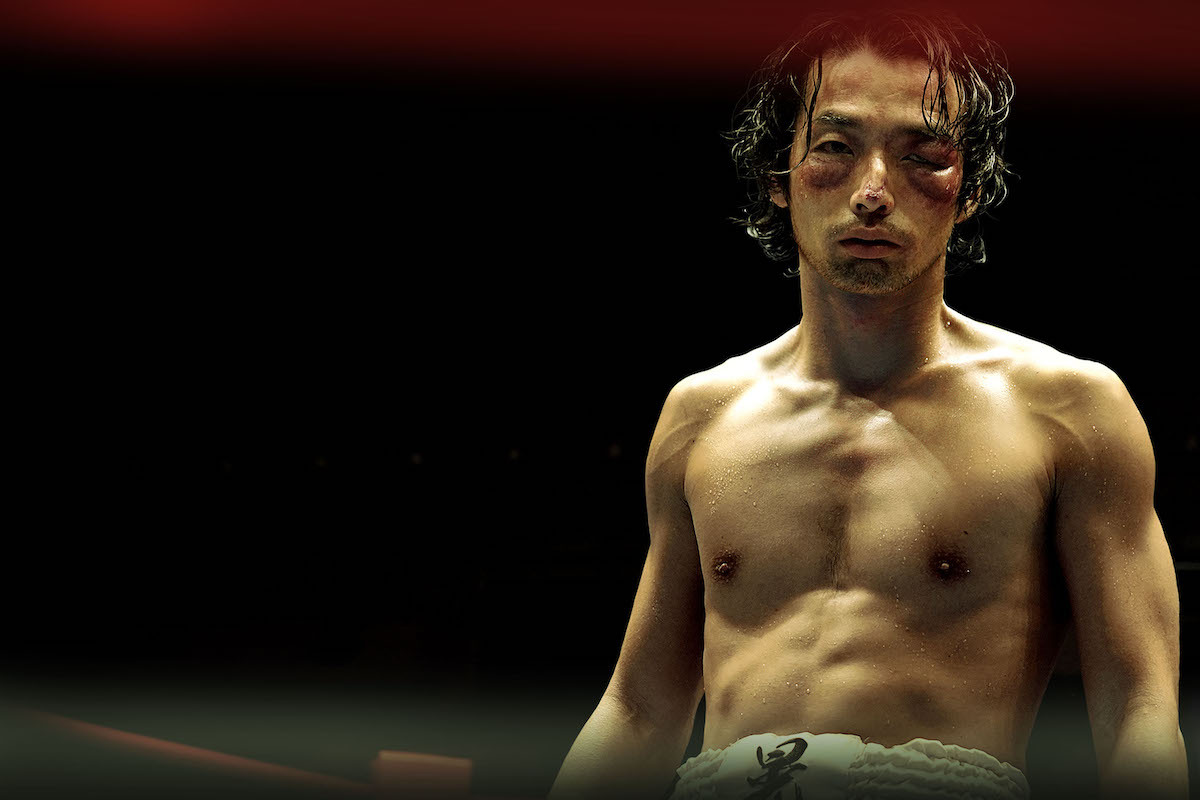
Two-part boxing drama from Masaharu Take (100 Yen Love) starring Best Actor winner Mirai Moriyama as a dejected featherweight fighter who’s never made it to champion finding himself faced with a TV comedian (Ryo Katsuji) giving it a go in the ring and a cocky up-and-comer (Takumi Kitamura) who can’t shake his violent past.

5. The Real Thing (本気のしるし<劇場版>)
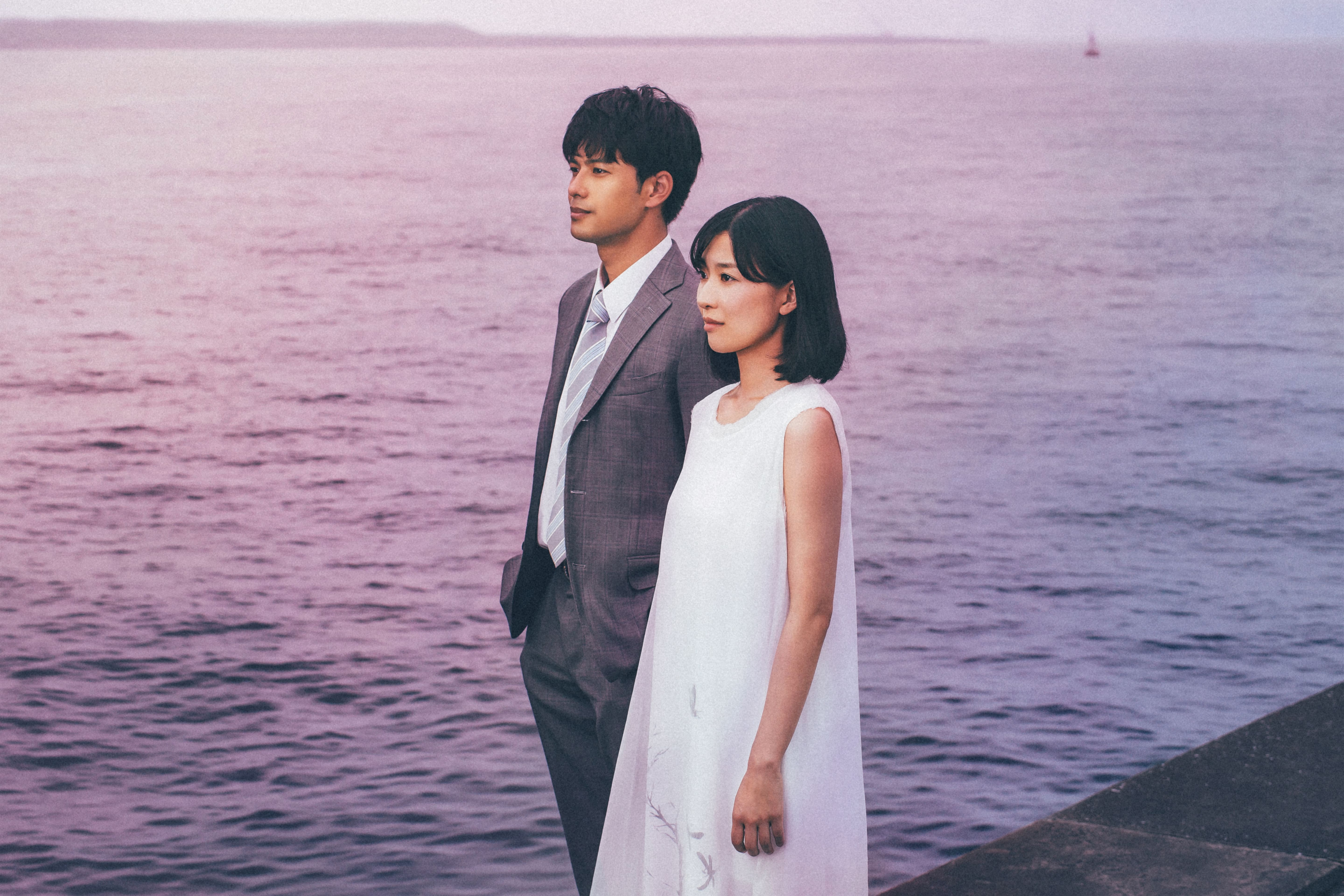
First aired as a 10-part TV drama then edited down to 233 minutes for theatrical exhibition, the latest from Koji Fukada (Hospitalité, Harmonium, A Girl Missing) adapts the manga of the same name and stars Win Morisaki as a bored salaryman whose life changes after he saves a mysterious woman, Kaho Tsuchimura, from an oncoming train.

6. 37 Seconds (37セカンズ)
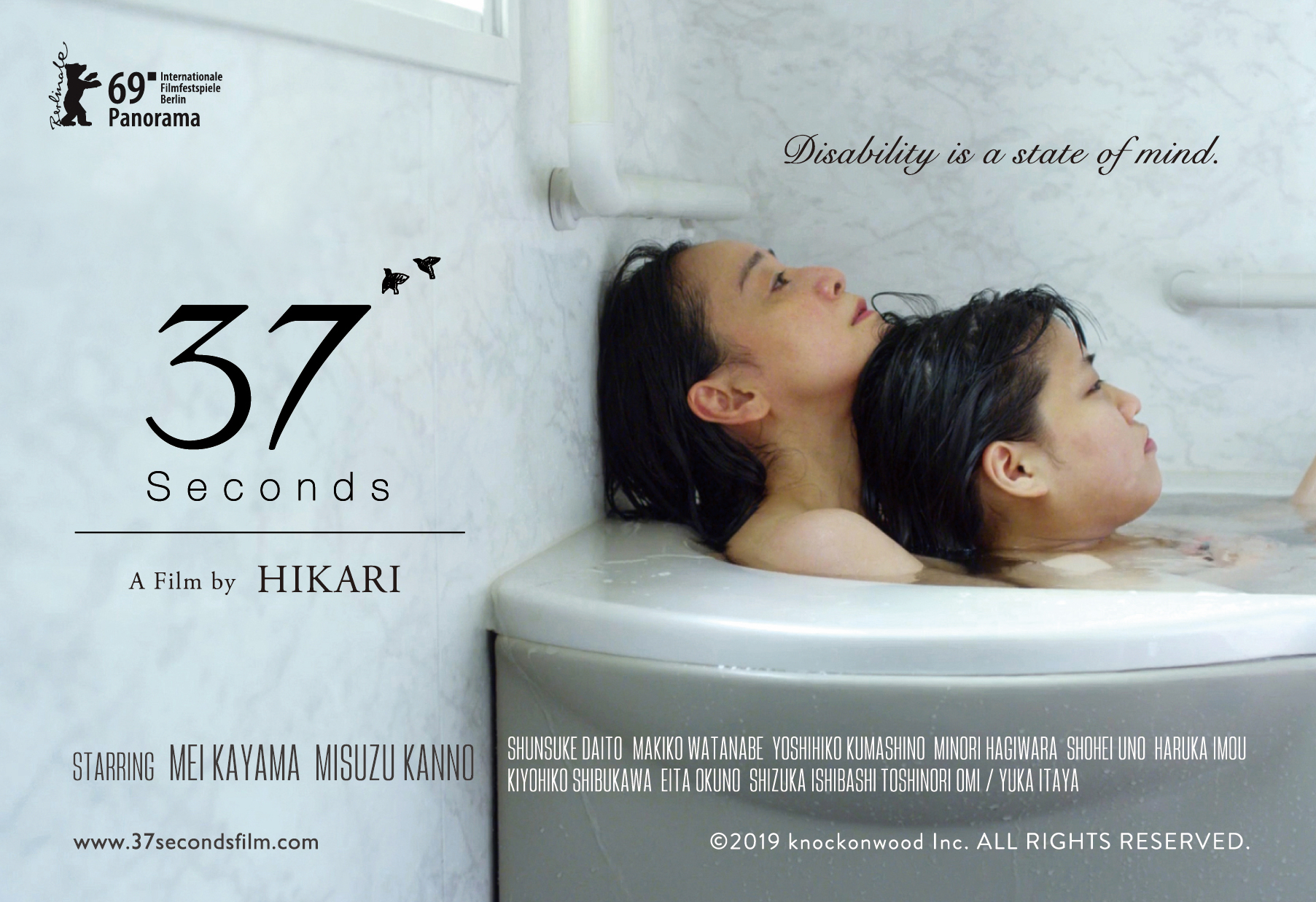
Written and directed by the single-named Hikari, vibrant drama 37 Seconds stars Mei Kayama as an aspiring mangaka with cerebral palsy striving to escape the overbearing caring of her well-meaning mother while trying to gain experience to make it in the world of erotic comics. Review. Streaming via Netflix in many territories!

7. The Voice of Sin (罪の声)
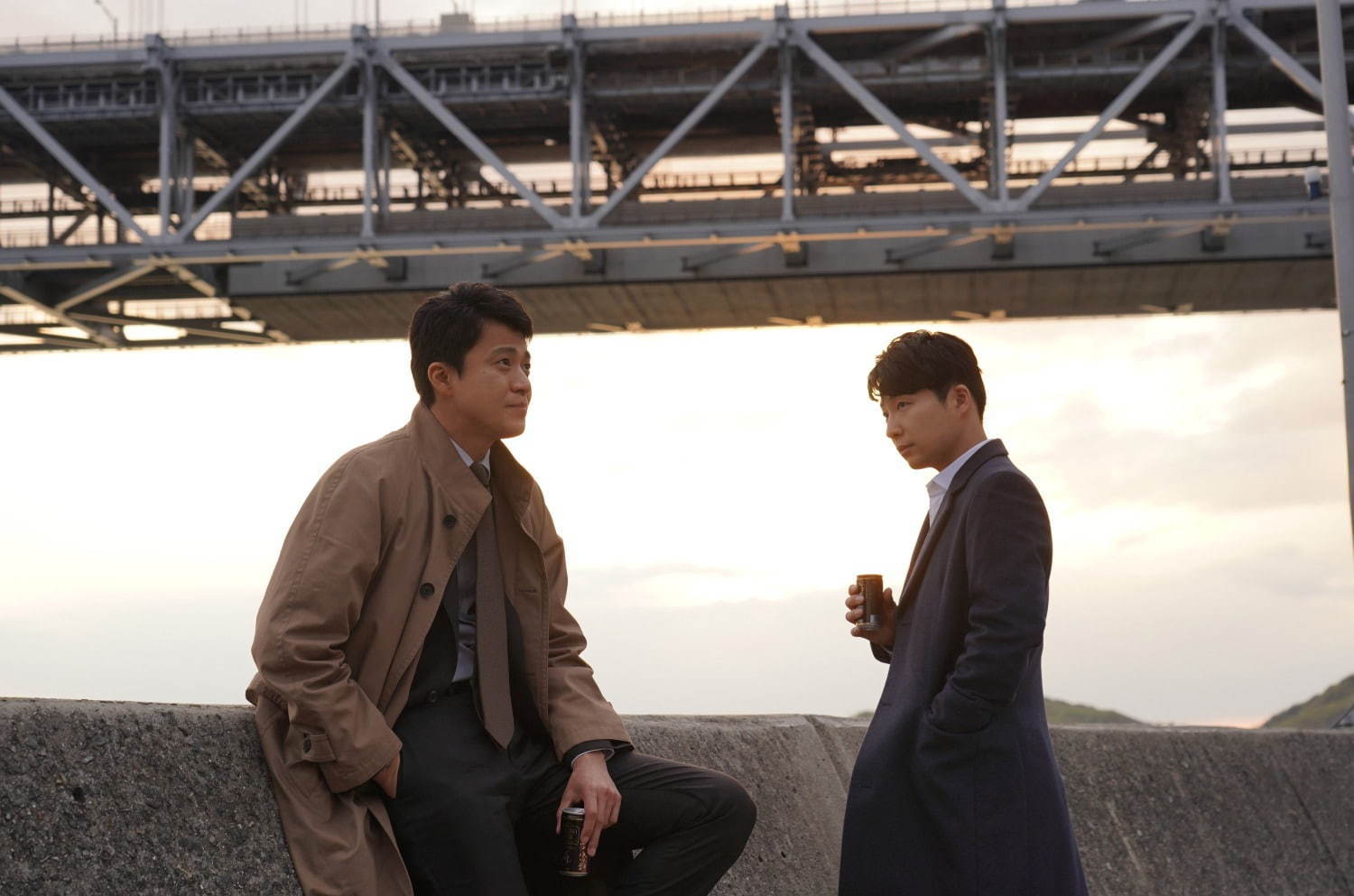
Mystery drama adapted from the novel by Takeshi Shiota starring Shun Oguri and Gen Hoshino as a reporter and tailor respectively who each find themselves investigating an unsolved murder from 30 years previously.

8. A Beloved Wife (喜劇 愛妻物語)

Semi-autobiographical comedy drama from screenwriter/director Shin Adachi exploring the toxic marriage between an unsuccessful screenwriter and his resentful, dipsomaniac wife (Best Actress winner Asami Mizukawa). Review.

9. Living in Your Sky (空に住む)
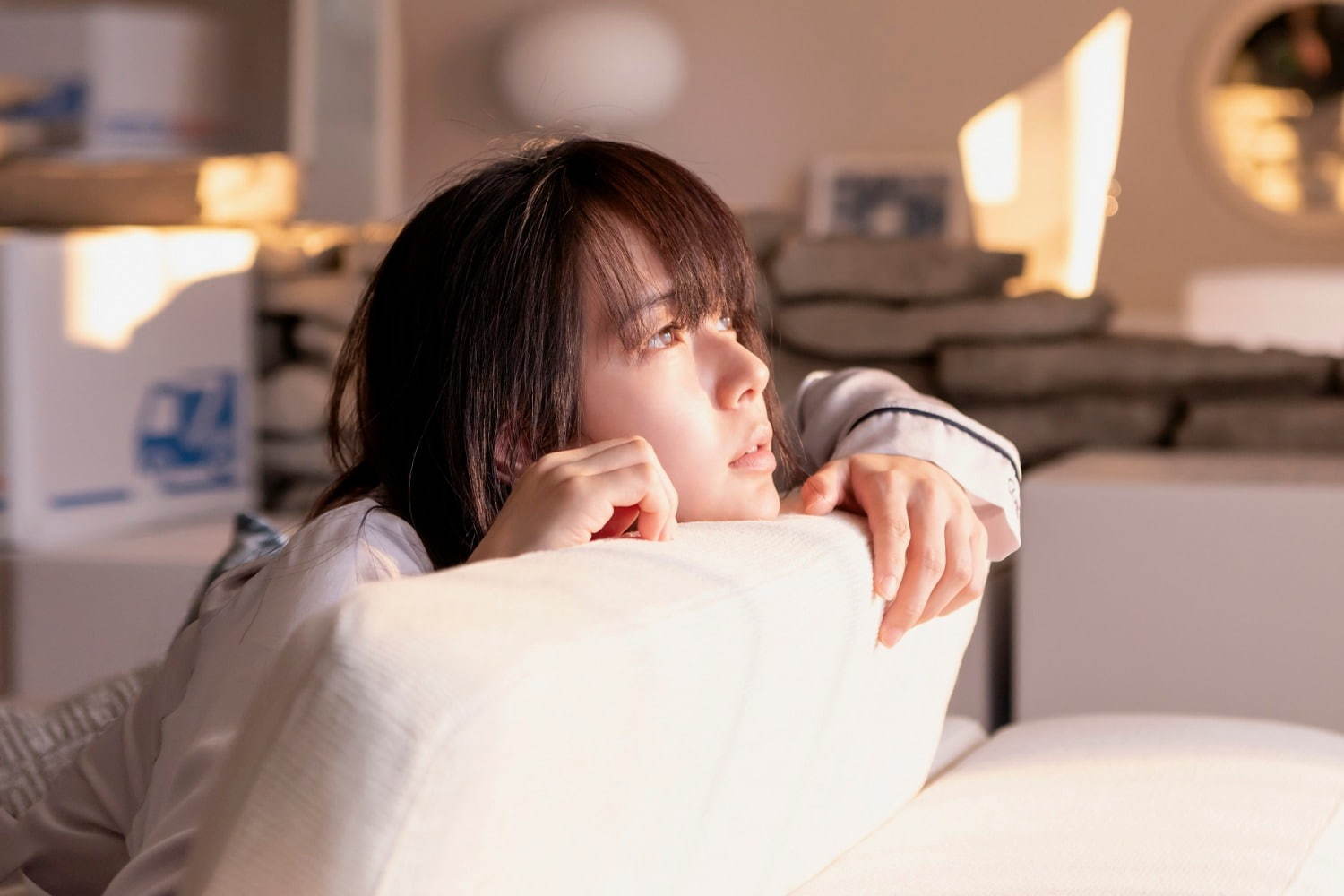
Shinji Aoyama returns to cinema screens for the first time in seven years following 2013’s Backwater adapting the novel by Masato Odake. Mikako Tabe stars as an editor at a publishing house who loses her parents suddenly and moves into a luxury apartment block managed by her uncle where she strikes up a romance with a movie star (Takanori Iwata) living a few floors above.

10. On the Edge of Their Seats (アルプススタンドのはしの方)

Indie drama adapting a popular play first performed by a high school theatre group and set on the bleachers of a high school baseball game.

Best 10 International
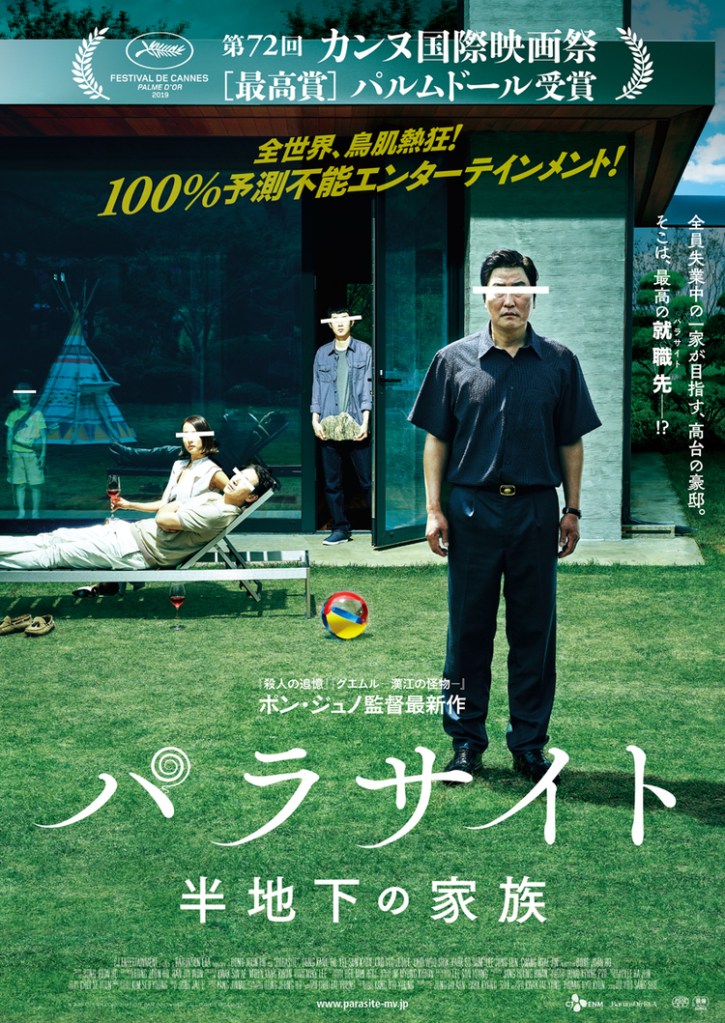
  1. Parasite
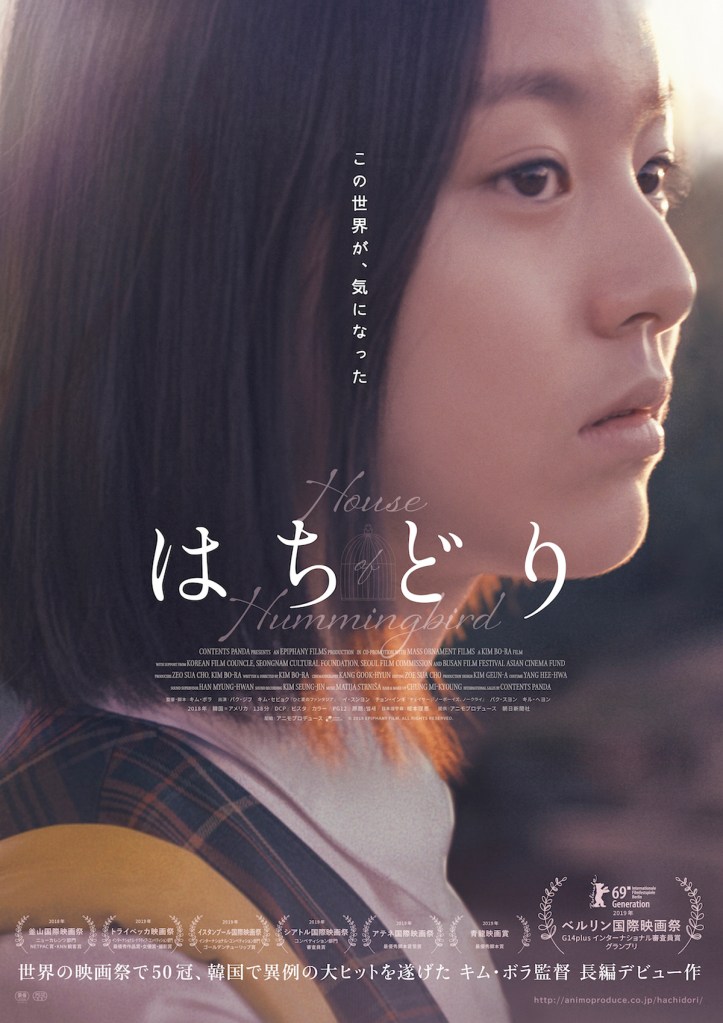
  2. House of Hummingbird
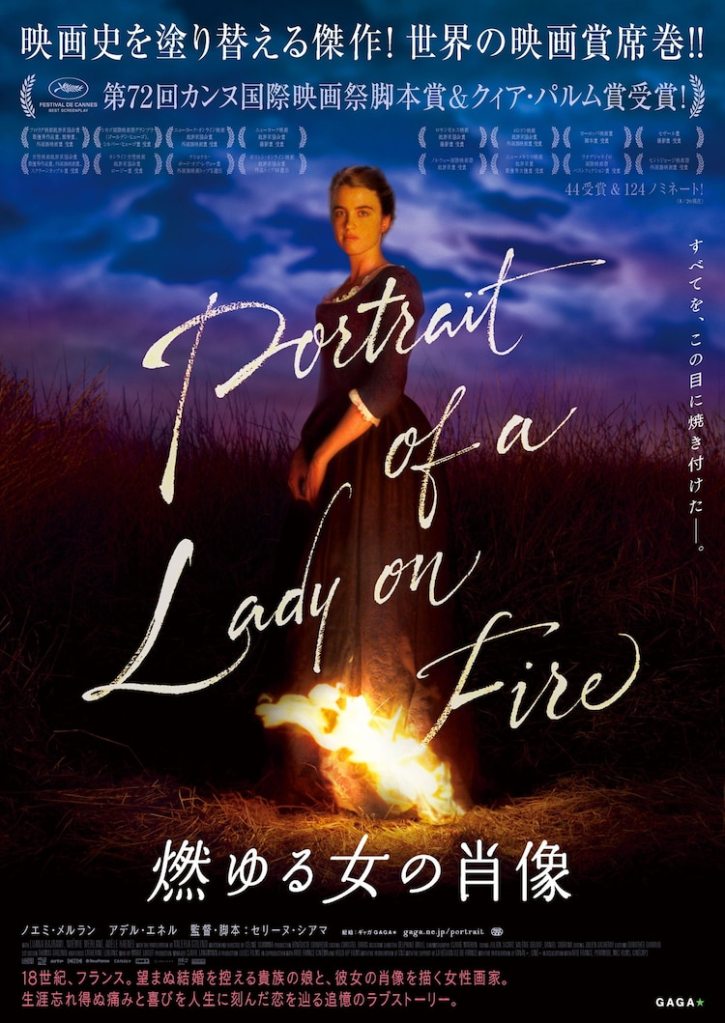
  3. Portrait of a Lady on Fire
  4. Little Women
  5. The Painted Bird 
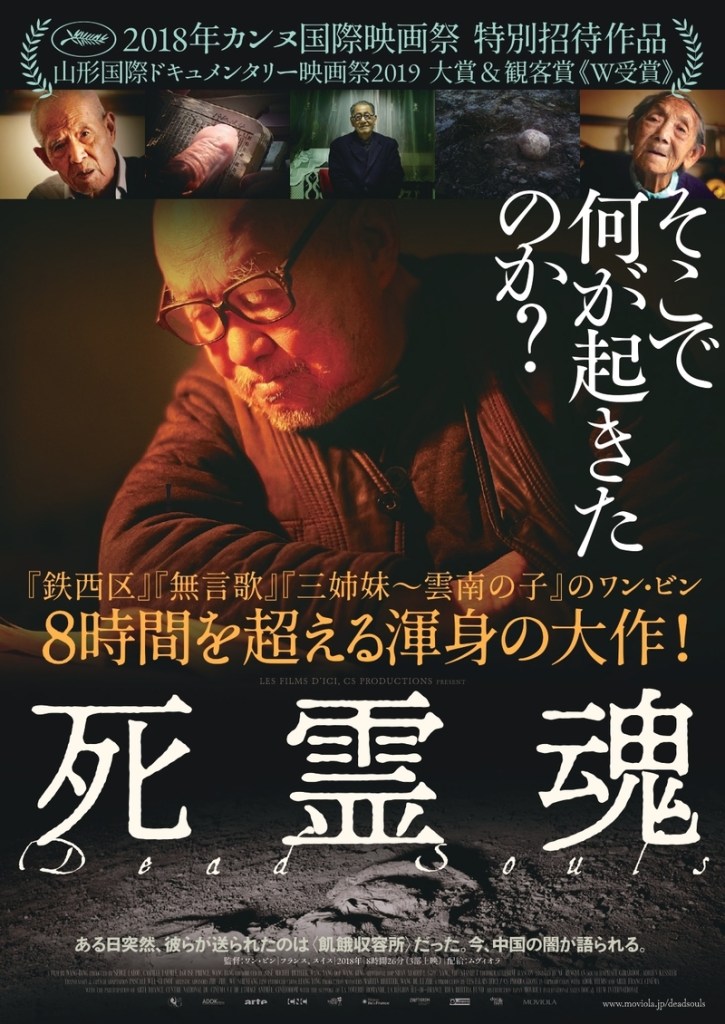
  6. Dead Souls
  7. Ford v Ferrari (Le Mans ’66)
  8. Pain and Glory
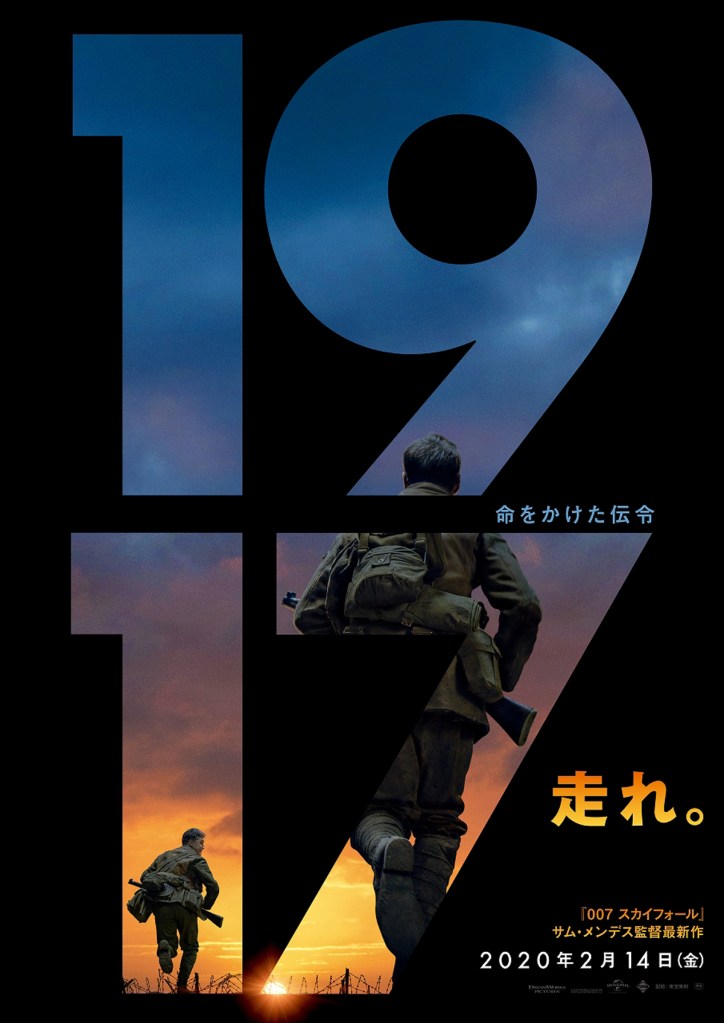
  9. 1917
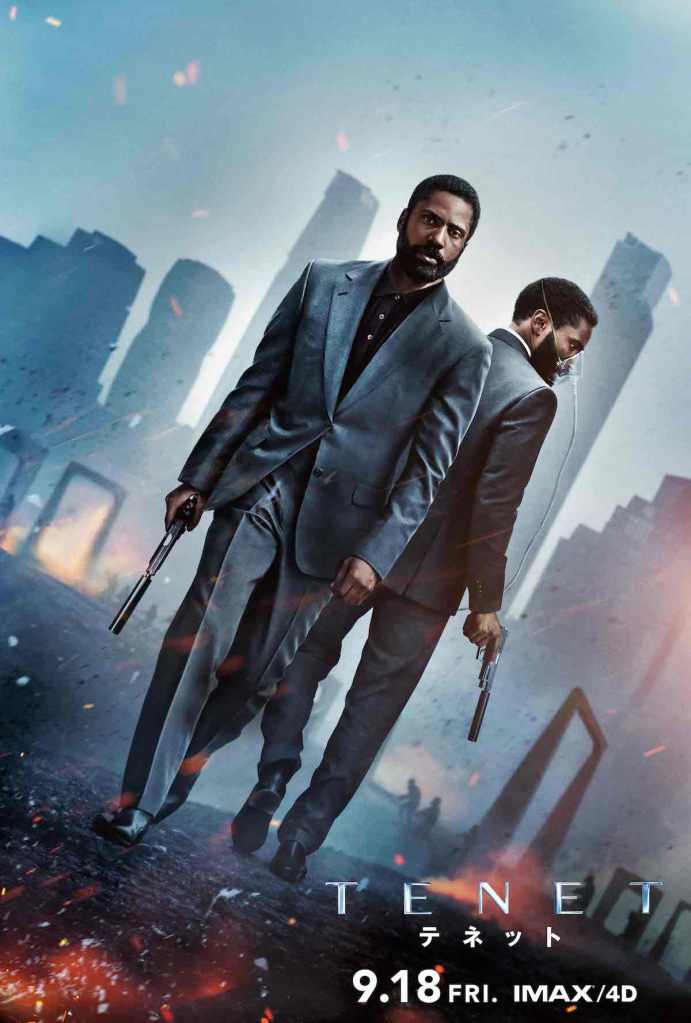
  10. Tenet

Best 10 Documentaries

  1. Why You Can’t Be Prime Minister (なぜ君は総理大臣になれないのか)
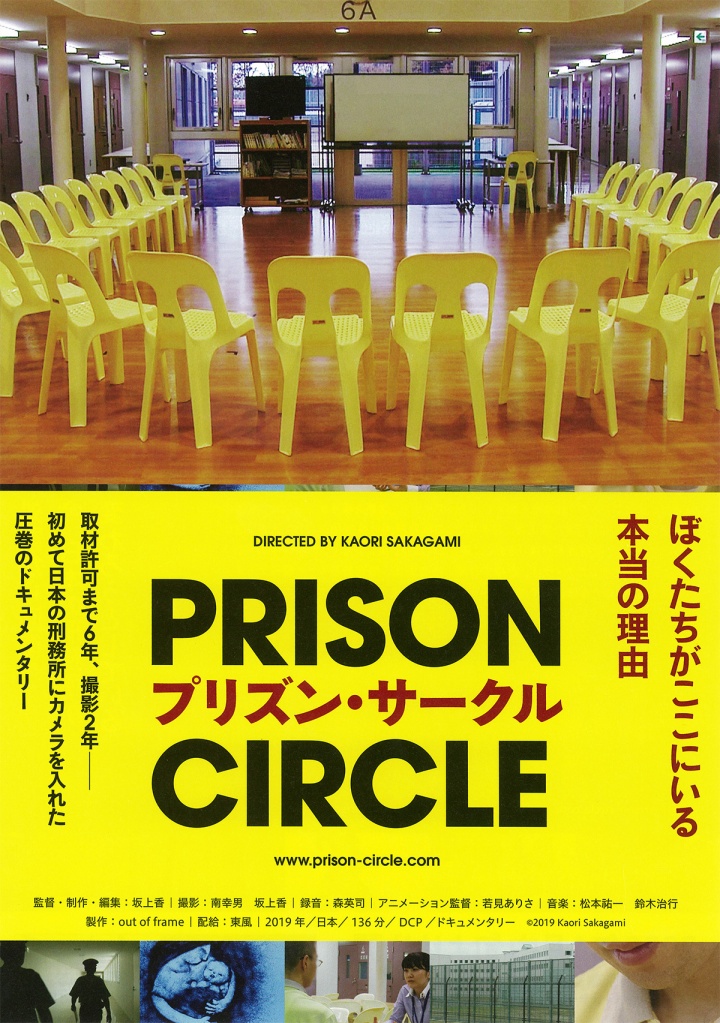
  2. Prison Circle (プリズン・サークル)
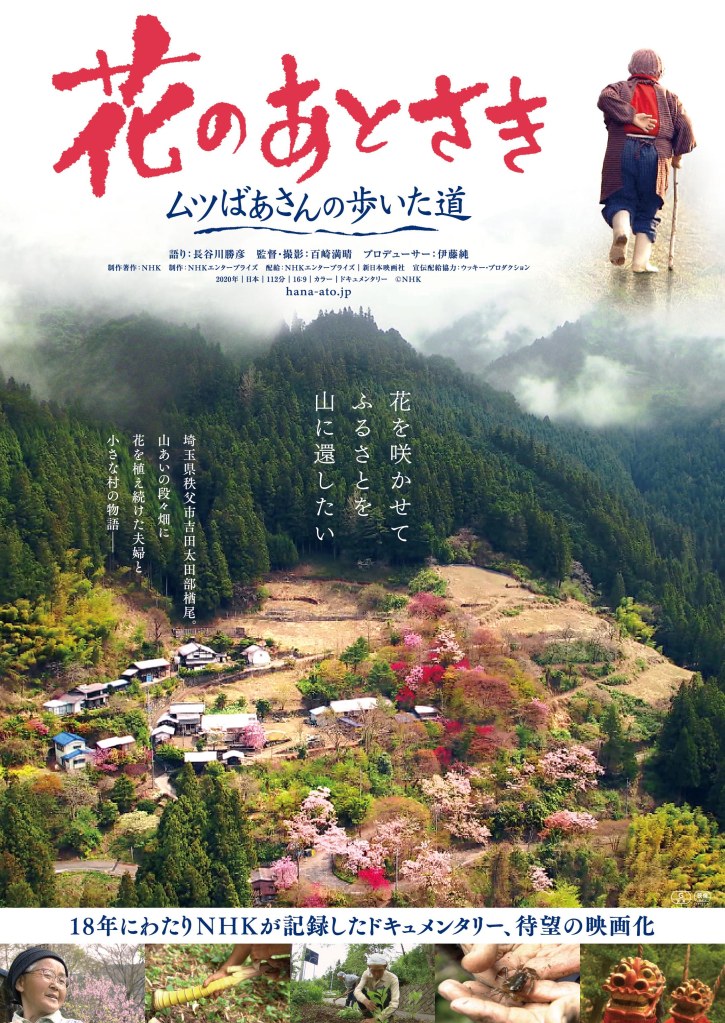
  3. Hana no Atosaki: Mutsu Baasan no Aruita Michi (花のあとさき ムツばあさんの歩いた道)
  4. Mishima: The Last Debate (三島由紀夫vs東大全共闘 50年目の真実)
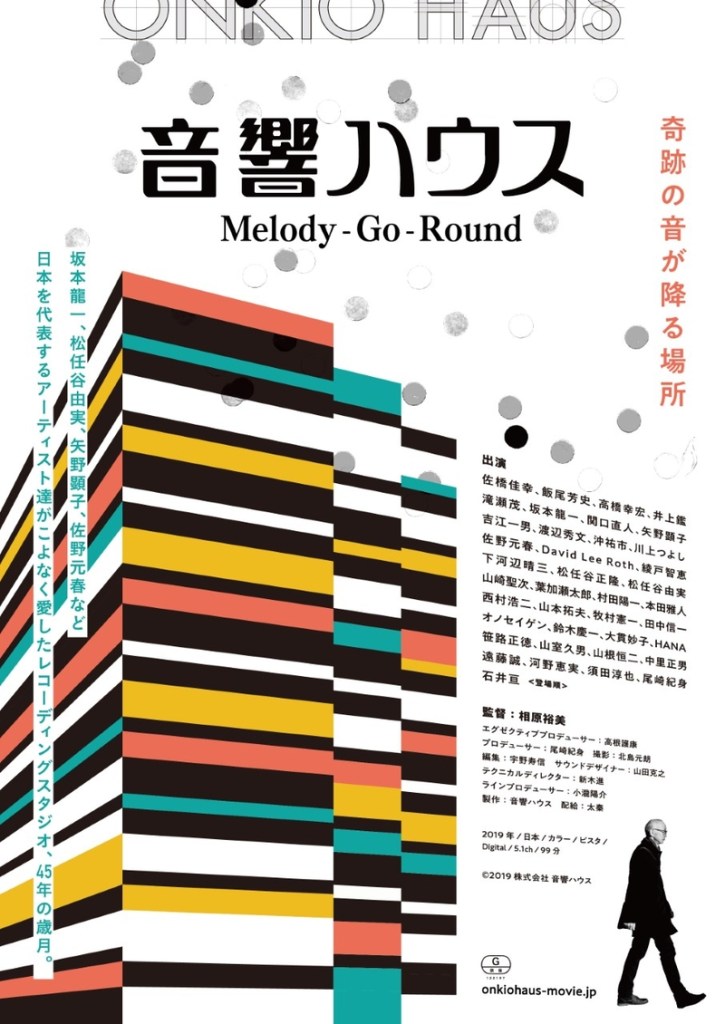
  5. Ongaku House Melody-Go-Round (音響ハウス Melody-Go-Round)
  6. Jose Mujica: Sekai de Ichiban Mazushii Daitoryo kara Nihonjin e (ムヒカ 世界でいちばん貧しい大統領から日本人へ)
  7. Tane wa Dare no Mono (タネは誰のもの)
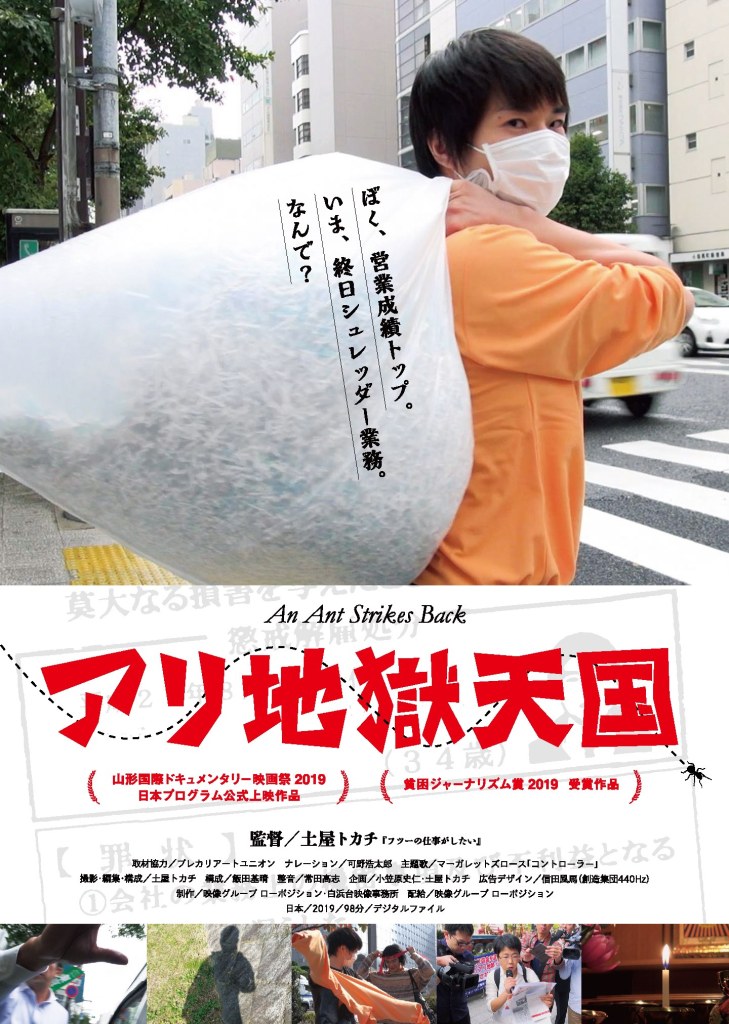
  8. An Ant Strikes Back (アリ地獄天国)
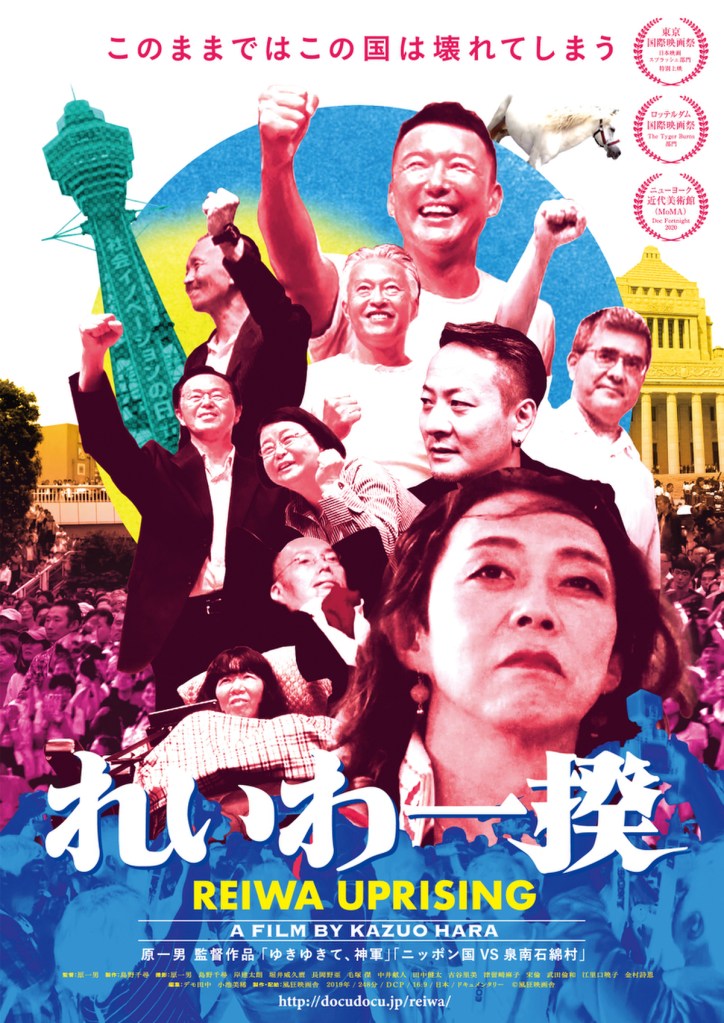
  9. Reiwa Uprising (れいわ一揆)
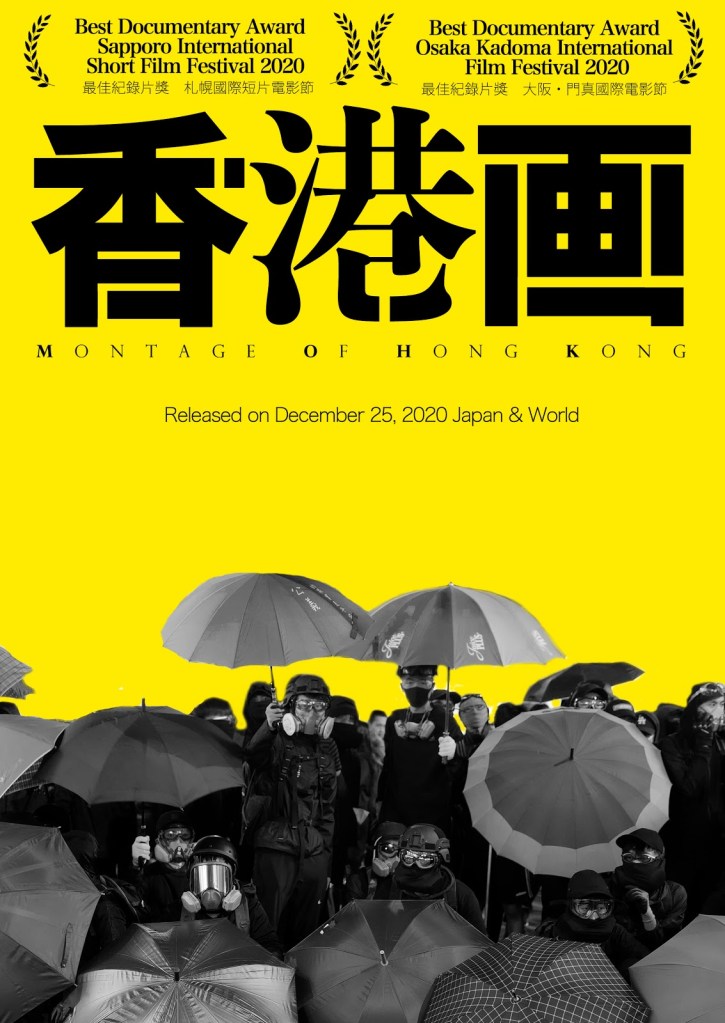
  10. Montage of Hong Kong (香港画)

Individual Awards

Best Director: Nobuhiko Obayashi (Labyrinth of Cinema)

Best Screenplay: Ryusuke Hamaguchi / Tadashi Nohara / Kiyoshi Kurosawa (Wife of a Spy)

Best Director (international): Bong Joon-ho (Parasite)

Best Actress: Asami Mizukawa (A Beloved Wife / Runway)

Best Actor: Mirai Moriyama (Underdog)

Best Supporting Actress: Aju Makita (True Mothers)

Best Supporting Actor: Shohei Uno (The Voice of Sin / The Real Thing / A Beast in Love / 37 Seconds / Child of the Stars)

Best Newcomer (actress): Serena Motola (Voices in the Wind / Life: Untitled)

Best Newcomer (actor): Daiken Okudaira (Mother)

Readers’ Choice Best Director: Mitsutoshi Tanaka (Tengaramon)

Readers’ Choice Best Director (international): Bong Joon-ho (Parasite)

Readers’ Choice Award: Saburo Kawamoto – Eiga wo Mireba Wakaru Koto (映画を見ればわかること)

Special Award: Teruyo Nogami (producer)

Source: Kinema Junpo official website.

Big Shots Die at Dawn (顔役暁に死す, Kihachi Okamoto, 1961)

“Assassins make the world an unfit place to live in” according to a random gas station attendant clueing our errant hero in to the fact his small-town home is now a “den of yakuza” and unlikely tourist hotspot. An early, delightfully absurdist yakuza romp from Kichachi Okamoto, Big Shots Die at Dawn (顔役暁に死す, Kaoyaku Akatsukini Shisu) is part Nikkatsu parody, part ironic western, and all cartoonish fun as a prodigal son returns to find his father murdered and his uncle on the throne. Sound familiar? 

Jiro (Yuzo Kayama) has been working for the forestry commission in Alaska and has not returned to his small-town home of Kuraoka in some time which is why he didn’t even know his father, the mayor, was dead let alone that he was apparently assassinated in a manner which strongly anticipates the Kennedy assassination though the film was released in 1961. He also had no idea his father, a widower, had remarried and his family home is now occupied by his stepmother Hisako (Yukiko Shimazaki), a former secretary who scandalously lounges around in her underwear all day. His uncle Imamura (Eijiro Yanagi) is now the mayor, and as he explains to him, the town is a hotbed of gangster activity apparently a consequence of his attempt to turn it into a tourist hotspot. In trying to find out who killed his father, Jiro finds himself quite literally in the middle of a petty yakuza gang war aided and abetted by corrupt police. 

Quite clearly influenced by American cinema, Big Shots Die at Dawn situates itself in the new frontier of small-town Japan in which a war is being fought over the spoils of the post-war era. Uncle Imamura’s legacy is apparently a children’s theme park with the distinctly pregnant name Dreamland. Apparently a man who just loves the children but was unable to have any of his own, he’s also opened a pre-school for the local kids. Meanwhile, in the yakuza-backed casino, obsessive gamblers brush their teeth at the tables while local kingpin Goto (Akihiko Hirata) attempts to fend off the incursion of the rival Handa gang. Jiro’s return puts the cat among the pigeons as both sides attempt to use him as a way to take out the other.

The dark heart of small-town Japan is however present in the greed and double dealing which extends even to the police, a corrupt officer offering to sell Jiro a key piece of evidence he had concealed in the hope of profit. Just about everyone tries to sell the evidence to someone else at one time or another, leveraging an idea of justice alongside greed and self-interest. Meanwhile, Yoshiko (Kumi Mizuno), a quasi-love interest and former girlfriend of a fallen foot soldier, reports that she gave the police valuable evidence that her fiancé’s death wasn’t a suicide but they ignored her.

Jiro’s come to clean up the town, but the showdown takes place incongruously in the children’s theme park complete with its cutesy mascot characters and adverts for chocolate in the background making plain that these venal gangsters are really just boys playing war, taking pot shots at each other from tiny trains. What could be a dark comment on a loss of innocence is more cartoonish irony from Okamoto who shoots in extreme closeup with intentionally humorous composition and slapstick choreography. Nevertheless the message is unmistakable as we piece together the connections between small-town government and organised crime underpinned with a rather creepy all for the kids justification. 

Then again, the world has its share of misogyny, everything coming down to the incursion of transgressive femininity as one duplicitous woman manipulating her feminine wiles becomes the common link between each of the warring factions, as if this is all her fault and Jiro’s return is a way of clearing up the pollution her arrival provoked. Nevertheless as even he says, his father, and implicitly his father’s generation, must share some of the blame. Filled with stylish action sequences, car chases, self-consciously cool dialogue, and scored with a mix of moody jazz and dreamy childlike melodies, Okamoto’s cartoonish takedown of the zeitgeisty youth movie is very much in keeping with Toho’s spoofier side but chock full of charm even if its hero’s particular brand of smugness occasionally borders on the insufferable. 


That Night’s Wife (その夜の妻, Yasujiro Ozu, 1930)

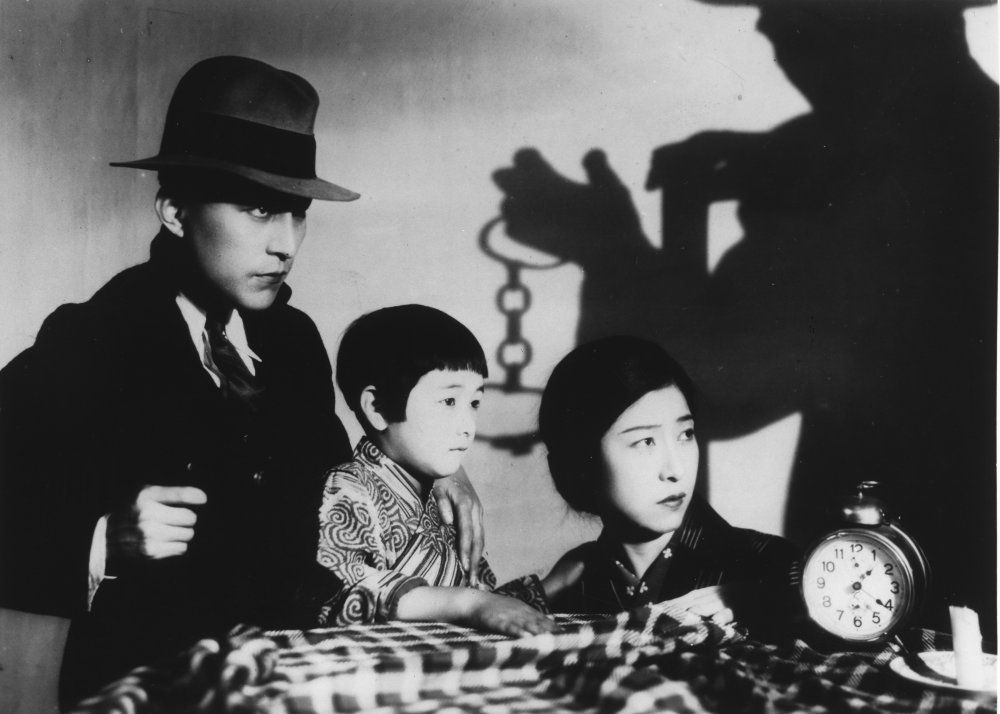
Most closely associated with his late career family dramas, Yasujiro Ozu has acquired a reputation for geniality which may in a sense be slightly unfair. He was always an astute chronicler of his times, often choosing to view them through the frame of family, and was never as blind to the issues of the day as some would have it. Ozu’s ‘30s work, that which survives at least, is in a sense fiercely political in its critique of the inequalities of the depression-era society. One of his early crime movies, the silent That Night’s Wife (その夜の妻, Sono yo no Tsuma) insists that justice must be done but does so with compassion in its full and total empathy for a man driven to extremes by the depth of his paternal love. 

Indeed, the early part of the film is tense noir chase as the hero, desperate father Shuji (Tokihiko Okada), attempts to evade a police dragnet to make his way home after robbing a bank to get money to pay for his sick daughter Michiko’s (Mitsuko Ichimura) medical care. Meanwhile, loyal wife Mayumi (Emiko Yagumo) has been patiently waiting at home tending to the child who refuses to sleep because she only wants her father and constantly asks where he is. Shuji eventually makes it back and tells his horrified wife what he has done, agreeing that he will turn himself in to the police once Michiko is well, but he’s already out of luck. The taxi he darted into was being driven by an undercover cop (Chishu Ryu) who installs himself in the apartment but agrees to wait until the doctor comes in the morning before taking Shuji in. 

Out of keeping with the rest of Ozu’s career but very much in the vein of his depression-era silents, That Night’s Wife concerns a poor but happy family mustering what little resources they have in the face of despair. Filled with tension as the policeman waits impatiently, the camera pans around the one room apartment where the family live and finds it to be a homely, bohemian space, apparently an artist’s studio with foreign film posters and travel souvenirs hanging from the walls. By all indications a starving painter, Shuji is a poor man brought to ruin by accidental tragedy. His daughter is deathly ill and doctors cost money. We can see that, by the standards of the time, he is a very hands on father beloved by his little girl and is obviously willing to sacrifice himself and his future to ensure her survival

It’s Mayumi, however, to whom the film’s title refers and in her role as wife rather than mother. The doctor (Tatsuo Saito) worries that she has not slept in the last few days, how could she when her child is so ill, but it’s she who eventually picks up the gun to protect the family by disarming the policeman and, essentially, keeping him hostage until the morning when, she claims, Shuji will willingly go with him after confirming Michiko’s survival. The world is turned upside down, no one quite plays the role they’ve been assigned. The loving father, an effete artist, turns unconvincing master criminal, the loyal wife gangster’s moll, and the policeman a calm and compassionate guardian deeply moved by the family’s predicament but also knowing that the law must be served. 

In a typically Ozu touch, the policeman pretends to be asleep with the intention of letting Shuji escape, but he once again makes an atypical choice. He refuses to run, swearing off “crazy ideas” but unrepentant in his crime. Shuji determines to pay his debt to society so that he can return home as a redeemed father and hold his daughter as a man unburned by his transgression. The message isn’t so much that crime doesn’t pay as that crime must be paid for. Shuji is acquitted in the moral courts of the audience’s hearts and not even the policeman blames him for what he has done which is all he could do as a father in an oppressive and indifferent society. A strange complicity develops between the two men who are restored to their original roles, both acknowledging that of the other and sorry for what they each know must happen next but already resigned. The father saves his family only through accepting his exile from it, but unlike Ozu’s wandering fathers of the 1930s, seems destined to return after redeeming himself in the eyes of a society which had long since abandoned him. 


Currently streaming in the UK via BFI Player as part of Japan 2020. Also available to stream in the US via Criterion Channel.

Lady Sen and Hideyori (千姫と秀頼, Masahiro Makino, 1962)

Son of cinema pioneer Shozo Makino, Masahiro Makino is most closely associated with the jidaigeki though he also had a reputation for highly entertaining, innovatively choreographed musicals some of which starred post-war marquee singing star Hibari Misora. The somewhat misleadingly titled Lady Sen and Hideyori (千姫と秀頼, Sen-hime to Hideyori), however, is pure historical melodrama playing fast and loose with the accepted narrative and acting as a star vehicle for Misora to showcase her acting talent in a rare dramatic role in which she neither sings nor engages in the feisty swordplay for which her otherwise generally lighthearted work at Toei was usually known. 

Lady Sen (Hibari Misora) is herself a well-known historical figure though Hideyori (Kinnosuke Nakamura) will not feature in the film beyond his presumed demise (his body was never found leading to various rumours that he had actually survived and gone into hiding) during the siege of Osaka in 1615. Born the granddaughter of Tokugawa Ieyasu (Eijiro Tono) who would later defeat the Toyotomi to bring Japan’s Warring States era to an end, Sen was sent to the Toyotomi as Hideyori’s future wife at seven years old (he was only four years older than she was and 21 at the presumed date of his death) and therefore perhaps far more Toyotomi that Tokugawa. In contrast to other portrayals of Sen’s life which centre on her understandable identity conflict and lack of agency in the fiercely patriarchal feudal society, Misora’s Lady Sen is clear in her loyalty to her husband whom she dearly loved and feels her father and grandfather who were directly responsible for his death are her natural enemies.  

Old Ieyasu and his son meanwhile do at least appear to care about Sen’s welfare, loudly crying out for a retainer to save her during their assault on the castle offering unrealistic rewards to any who manage a rescue. Unfortunately, however, having retrieved his granddaughter Ieyasu immediately marries her off to someone else demonstrating just how little control Sen has over her own destiny and how ridiculous it might be that she should have any loyalty to the family of her birth. His decision backfires on two levels, the first being that Dewa (Tetsunosuke Tsukigata), a lowly retainer responsible for Sen’s rescue from the falling castle, has taken a liking to her himself and fully expected to become her husband as a reward. While originally annoyed and hurt to think that perhaps she has rejected him because of the prominent facial scarring sustained while he was rescuing her, Dewa finally realises he just wants her to be happy only to be offended on realising that they’ve rerouted her bridal procession past his home which he takes as a personal slight. Nevertheless, in contrast with real life (Sen’s marriage to Honda Tadatoki was apparently amicable and produced two children though only one survived to adulthood) Sen’s relationship with her new husband is not a success, in part because she resents being used as a dynastic tool and in part because she remains loyal to Hideyori. In consequence, she makes full use of her only tool of resistance in refusing to consummate the marriage with the result that her new husband, Heihachi (Kantaro Suga), slowly drinks himself to death. 

Her other act of rebellion is however darker, striking down an old man who made the mistake of telling her with pride how he informed on retreating Toyotomi soldiers after the siege. Determining to become an “evil woman” she deliberately blackens the Tokugawa name by killing random commoners, chastened when confronted by a grieving widow but banking on the fact her relatives will not move against her and will therefore gradually lose public sympathy for failing to enforce the law against one of their own. The spell is only broken by the arrival of a former Toyotomi retainer (played by Misora’s frequent co-star in her contemporary films Ken Takakura) who reminds her of her loyalty to her husband’s legacy and prompts her retreat into religious life as a Buddhist nun mirroring the real Lady Sen who entered a convent after her second husband died of tuberculosis. Like most of Misora’s film’s Lady Sen ends with a softening, a rebuke to her transgressive femininity which in this case has admittedly turned worryingly dark her murder spree apparently a form of resistance to the entrenched patriarchy of the world around her and most particularly to her continued misuse at the hands of her father and grandfather. Despite the absence of large-scale musical numbers, Makino makes space for a fair few dance sequences along with festival parades and well-populated battle scenes but makes sure to place Misora centre stage as if countering the continual marginalisation of Lady Sen and all the women of feudal Japan. 


Clip (English subtitles)

The Men Who Tread on the Tiger’s Tail (虎の尾を踏む男達, Akira Kurosawa, 1952)

Like many directors of his age, Akira Kurosawa began his career during the war sometimes working on what were effectively propaganda films yet perhaps attempting to skirt around the least palatable implications of the task at hand. The Men Who Tread on the Tiger’s Tail (虎の尾を踏む男達, Tora no O wo Fumu Otokotachi) is an example of just that, repurposing a well known historical incident from its noh and kabuki roots and subtly undercutting it with a dose of irreverent humour unwelcome to those who liked historical tales because of their nationalistic connotations. This was not, however, the reason the film found itself out of favour so much as an ironically personal issue in which Kurosawa had apparently irritated one of the censors by pointing out his ignorance of cultural tradition leading him to conveniently leave Tiger’s Tail off the list of titles in production resulting in the American Censors rejecting it for being an unknown, illegal film which is why it languished on the shelf for seven years after filming was completed in 1945. The Americans may not have liked it much either given their aversion to period drama which they feared encouraged the kind of thinking incompatible with the democratic era, but like many of Kurosawa’s samurai dramas it has a rather ambivalent attitude to feudal loyalty both admiring of nobility and despairing of its austerity. 

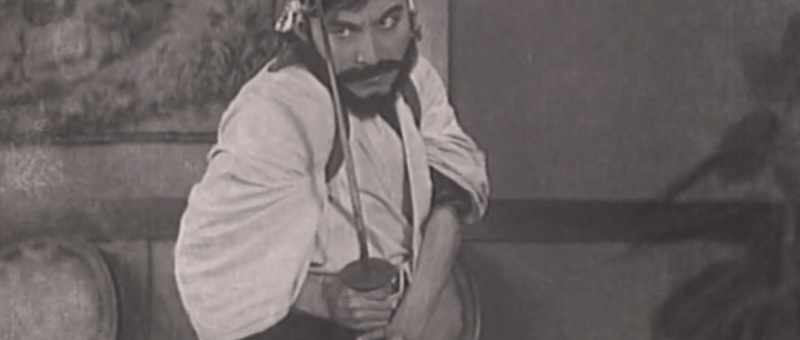
Set in the late 12th century, the action takes place during a period of warfare in which warrior Yoshitsune (Iwai Hanshiro X) has returned a victory for his brother, the ruler. His brother Yoritomo, however, feels as if his victory has perhaps been too good and he is therefore a threat to him. Yoritomo accuses his brother of sedition and puts a purge in motion, leaving Yoshitsune with no option other than to flee. With six of his best retainers, he escapes dressed as an itinerant Buddhist monk and tries to make his way to neutral territory in the North. To get there, however, they need to pass through a series of checkpoints which is why they’re currently accompanied by a cheerful fool in the form of a lowly porter (Kenichi Enomoto) supposedly guiding them along a secret path through mountain forests. 

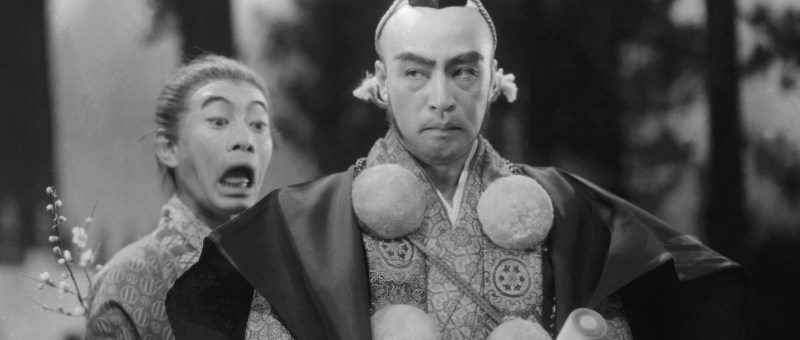
The porter is a new addition to the story added by Kurosawa for reasons of expediency and comic relief, yet his intrusion is also one which deeply angered the more nationalistic of the censors who resented the director’s irreverence towards a key historical event. Like many other of Kurosawa’s bumbling peasants, he’s both contemptuous and in awe of the world of the samurai, offering down to earth common sense takes on the politics of the day. He has already heard all about the Yoritomo/Yoshitsune drama and recounts it in the manner of a soap opera, quite reasonably asking if a quarrel between brothers could not have been sorted out with a good old-fashioned private fist fight rather than a state mandated manhunt which is also quite inconvenient for ordinary people in addition to being somewhat heartless. 

The samurai, not wanting to break cover, can only look sad and lament the cruelty of their codes, yet it’s precisely in the subversion of their ideology that they are able to escape. They have already transgressed, some with shaved heads and all already in the clothes of a monk. The porter looks at Yoshitsune, apparently a successful warrior, and remarks on his delicate physique and seeming femininity. Eventually he says too much, realises that the men are the fugitives everyone’s looking for and is suddenly afraid, forgetting for the moment that they need him to get out of the woods and knowing that samurai think nothing of killing “insignificant nobodies” like him. Nevertheless they do not kill him, but on hearing that there are lookouts on the horizon aware of Yoshitsune’s presence, they ask their lord to change places with a peasant, wearing his worn out clothes and carrying his heavy pack though the weight of it perhaps betrays him. As the porter points out, he does not have the look of a man used to trekking through the mountains and his delicate legs are already shaking under the unfamiliar strain. 

When the band is intercepted by loyal retainer Togashi (Susumu Fujita) who has been instructed to stop all priests in case Yoshitsune comes his way, Benkei (Denjiro Okochi), a real monk if also a warrior with a talent for bluff, manages to talk his way out of Togashi’s questioning, improvising an entire prospectus on the spot to convince him that they really are collecting money to repair a temple, quickly explaining that his robes are ornate because even ascetics have fashion sense. It’s not entirely clear if Togashi simply believes him, or if he too is wilfully subverting the code having recognised Yoshitsune and decided to help him escape. Might that not, in a certain sense, be the better way of serving a lord, preventing him from making a huge and painful mistake in killing his own brother out of a misplaced sense of paranoia? 

In any case, Benkei talks his way out of trouble only for a minor retainer to intervene, insisting that the porter is too pretty and bears a striking resemblance to Yoshitsune. Reacting quickly again, Benkei does the unthinkable. He strikes his lord and loudly berates him as if he really were a lazy porter failing in the duties for which he has been paid. The real porter becomes upset, placing himself in between Benkei’s staff and Yoshitsune’s body, either out of empathetic identification or horror in the betrayal of feudal loyalty. Benkei knows he must now be believed, no one would ever do what he has done because it is a complete and total negation of the samurai code. Yet in breaking it he saves his lord, which is all that really matters. Yoshitsune later forgives him, because he is a good lord after all and how could he not. But as Benkei was keen to keep pointing out, this isn’t the only checkpoint they must pass and their journey is without end, all they can do is “continue without rest”, taking this brief moment of unexpected levity provided by apology wine from Togashi and the hilarious antics from the porter before setting off once again. As for the porter, he is soon abandoned, left on one side of the samurai divide as the curtain closes on this brief strange tale. 


Currently streaming in the UK via BFI Player as part of Japan 2020. Also available to stream in the US via Criterion Channel.

The Scarlet Camellia (五瓣の椿, Yoshitaro Nomura, 1964)

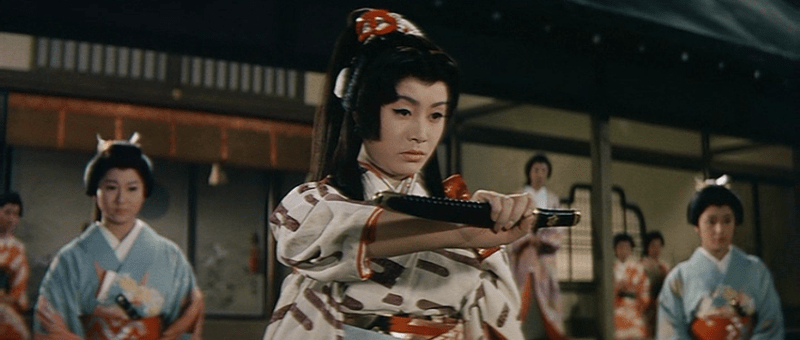
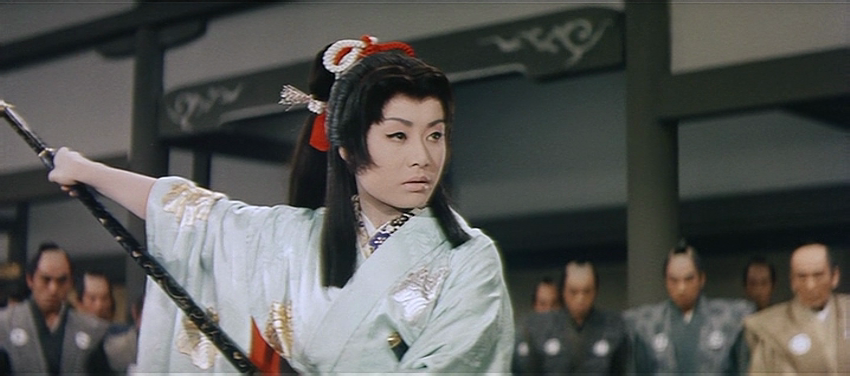
Little known outside of Japan, Yoshitaro Nomura is most closely associated with post-war noir and particularly with adaptations of Seicho Matsumoto’s detective novels, yet he had a wide and varied filmography directing in several genres including musicals and period dramas. The son of silent movie director Hotei Nomura, he spent the bulk of his career at Shochiku which had and to some degree still has a strong studio brand which leans towards the wholesome even if his own work was often in someway controversial such as in the shocking child abuse drama The Demon or foregrounding of leprosy in Castle of Sand. Part of the studio’s series of double-length epics, 1964’s Scarlet Camellia (五瓣の椿, Goben no Tsubaki) is nevertheless an unusual entry in Nomura’s filmography, adapting a novel by Shugoro Yamamoto essentially setting a policier in feudal Japan and perhaps consequently shot largely on stage sets rather than on location. 

Nomura opens with artifice as Shino (Shima Iwashita) stares daggers at an actor on the stage but later returns to his rooms every inch the giggling fan before finally offing him with her ornate silver hairpin leaving behind only the blood red camellia of the title. The first in a series of killings later branded the Camellia Murders, we later realise that the actor had to die because of his illicit relationship with Shino’s mother whom he brands a “nympho” and as we later discover had several extra-marital lovers. Extremely close to her father who, as we’re told, perished in a fire while resting in the country due to his terminal tuberculosis, Shino is apparently on a quest for revenge against the faithless men who humiliated him though her feelings towards her mother seem far more complex. 

Indeed, Shino regards her mother’s carrying on as “dirty” and seems particularly prudish even as she wields her sex appeal as a weapon in her quest for vengeance. Yet it’s not so much the free expression of sexuality which seems to be at fault but excess and irresponsibility. Shino resents her mother primarily for the ways in which she made her father suffer, off having fun with random men while he shouldered the burden of her family business which, Shino might assume, has contributed to his illness. Aoki (Go Kato), the Edo-era policeman to whose narrative perspective the second half turns, advances a similar philosophy in that there’s nothing wrong with having fun, he has fun at times too, but people have or at least should have responsibilities towards each other which the caddish targets of the Camellia Killer have resolutely ignored. He can’t say that he condones the killer’s actions, but neither can he condemn them because her motivations are in a sense morally justifiable. 

Realising the end is near, Shino indulges in a very modern serial killer trope in leaving a note for Aoki alongside one of her camellias in which she claims that she is exacting vengeance for “crimes not punishable by law”. There was nothing legally wrong in the way these men treated her mother or any other woman, but it is in a sense a moral crime. “You’re a woman and I’m a woman too” she later tells another scorned lover, a mistress thrown over by her patron with two small children after he tired of her, as she hands over a large sum of money and encourages her to return to her family in the country. Shino’s quest is essentially feminist, directed against a cruel and patriarchal society in which the use and abuse of women is entirely normalised, yet it is also slightly problematic in her characterisation of her mother as monstrous in her corrupted femininity for daring to embrace her sexuality in exactly the same way as her male counterparts though they, ironically, mainly seem to have been after her money rather than her body. 

Shino’s mother’s death is indeed regarded as “punishment from heaven” presumably for her sexual transgressions and neglect of her family, rejecting both the roles of wife and mother in a ceaseless quest for pleasure. Yet even in her resentment, Shino’s ire is directed firmly at the men taking the last of her targets to task when he justifies himself that women enjoy sex too and are therefore equally complicit by reminding him that he gets his moment of pleasure for free but the woman may pay for it for the rest of her life. Just as Shino’s mother neglected her family, the men harm not only their wives in their illicit affairs but cause concurrent damage to the mistresses they may later disown and the illegitimate children they leave behind. Abandoning the naturalism of his contemporary crime dramas for something much more akin to a ghost film with his eerie lighting transitions and grim tableaux of the skewered victims, Nomura crafts a melancholy morality tale in which the wronged heroine turns the symbol of constrained femininity back on the forces of oppression but is eventually undone by the unintended consequences of her quest for vengeance even as she condemns the architect of her misfortune to madness and ruin. 


Daughters (ドーターズ, Hajime Tsuda, 2020)

What does it mean to be a woman in the modern society? Two 20-somethings are confronted by just that question when one of them suddenly reveals that she is expecting a baby and plans to raise it alone but would be very grateful for the other’s support. Hajime Tsuda’s Daughters (ドーターズ) is the latest in a long line to ask a few questions about the nature of the modern family but does so through the eyes of these typical young women who find themselves perhaps a little more old-fashioned than they’d assumed as they determine to flout patriarchal norms and raise a child together as a platonic unit. 

High school friends Koharu (Ayaka Miyoshi) and Ayano (Junko Abe) have been living together in a tastefully decorated Tokyo flat for the past few years. Ayano works at a fashion magazine, and Koharu in events planning and installations. They have an active social life and enjoy the benefits of living in a big, vibrant city. All of that must necessarily change, however, when Ayano discovers she is pregnant after a meaningless one night stand with an old friend (Yuki Ito) who is about to accept a transfer abroad and had just been joking about reluctantly having to marry his girlfriend who wants to come with him. After thinking it over, Ayano decides she wants to have the baby without saying anything to the father but her decision comes as a shock to Koharu who is at once stunned by her friend’s sudden transition into adulthood. 

These really are just gals being pals, but there is perhaps something of repressed desire in Koharu’s lingering looks whether it’s actually Ayano that she wants or merely lamenting the imminent end of their lives as young women on the town not to mention a closeness she now fears will be diluted rather than perhaps deepened with the introduction of a third party in their relationship. For her this sudden end to the Tokyo high life may have arrived earlier than she expected, but it would have arrived soon enough in any case. Wanting to support her friend she remains conflicted and mildly resentful, partly it seems of the unnamed father but also despite herself carrying outdated ideas of social propriety firstly trying to dissuade Ayano from having the baby believing that raising it as a single-mother will be impossible. 

Ayano is told something similar by her father (Shingo Tsurumi) on a visit home, though he later comes round after a few stern words from her cheerful grandmother (Hisako Okata) who couldn’t be happier, insisting that children are a blessing however they arrive. At work, however, despite being surrounded by other women, she faces a series of similar discouragements, reminded that she can’t expect to return to the same position after giving birth because her priorities will have changed. She can no longer give “everything” to the company, she will need additional time off if her childcare falls through or her child is ill. She may need to leave early or come in late for the school run. Her boss does not intend this as a criticism but an acceptance of what it means to be a mother and an insistence a choice is being made, leaning into patriarchal, capitalist ideas of the employment contract which values an employee most for their availability rather their productivity or talent.  

Both women, meanwhile, harbour a lingering sense of social stigma when it comes to the subject of unmarried mothers. Koharu angrily fires the English phrase at her friend as if to discredit her decision, while Ayano finds herself earnestly asking her doctor (who appears to have seen through her ruse of introducing Koharu as her “sister”) if she sees a lot of women like her, the compassionate, supportive medical practitioner assuring her that 25% of women giving birth in Tokyo are single and though she has no idea what happened to them afterwards as a woman who has never has a child she is herself envious. Having agreed to raise the child together, Koharu still has her doubts that such an arrangement can really work, unsure of herself until heading off on a sulky solo holiday to the island paradise of Okinawa where she meets a woman (Tomoka Kurotani) who moved halfway across the country to raise her son alone. She seems happy and her son seems to have turned out just fine. 

As in Ayano’s rural hometown with its wide-open vistas, the relaxed Okinawan attitude perhaps bears out the maxim that Tokyo is often more conservative than provincial Japan, Ayano even slightly worried that having a caesarean section doesn’t really count and she’d be failing at motherhood before even really starting. In a symbolic act of transition the two women mirror the construction of a bunkbed on their moving in with the completion of the baby’s cot, built together with “faith in the future in this ephemeral city”. Stylistically innovative, filled with poetic monologues, and moving to the rhythm of a zeitgeisty pop score, Tsuda ends with the deceptively traditional as the two women find themselves confronted with a local festival but find in it strength and an acceptance that it is really OK as they embark on a new phase of their life as a family as entitled to the name as any other. 


International trailer (English subtitles)

I, the Executioner (みな殺しの霊歌, Tai Kato, 1968)

Nephew of Sadao Yamanaka, Tai Kato joined Toho as an apprentice in 1937, returning after the war training under Daisuke Ito and Akira Kurosawa, but later moved to Toei where he became closely associated with ninkyo eiga yakuza movies and jidaigeki. From the mid-1960s, however, he made several movies at Shochiku which had, it has to be said, a house style that was almost the polar opposite with a clear focus on polite, family-friendly melodrama. 1968’s I, the Executioner (みな殺しの霊歌, Minagoroshi no Reika) meanwhile is a surprisingly dark affair even among the grittier examples of Shochiku’s similarly themed B-movie thrillers, an avant-garde noir and proto-giallo in which the fugitive, serial killer antihero sees himself as an agent of divine justice in a hellish and immoral post-war landscape. 

Kato opens with a shocking scene of sexualised violence in which a woman is knocked unconscious, stripped, bound with telephone cord, and finally revived, forced to write down the names of four other women before being brutally raped and murdered by a killer whose voice we have not yet heard nor face seen. The police are mystified, attributing the woman’s death to the fact that she had worked as a bar hostess and maybe things like this are an occupational hazard for women who are surrounded by too many men. Her landlord, however, laments that hers is the second death to occur recently after a laundry boy threw himself off the roof. All things considered, he wishes the boy had picked somewhere else. 

The police have no reason to connect the two unfortunate events and so remain largely clueless, but we gradually become aware that the killer, Kawashima (Makoto Sato), is targeting the women because he holds them directly responsible for the boy’s death. He is the inspector that calls, avenging the death of this young man who, he has learned, like him hailed from Hokkaido and had come to the city at only 16 years old to earn money to support his family, saving almost all of his wages in the hope of opening a shop. Kato shows us scenes of a city under construction, a land of girders casting shadows on the ground like prison bars trapping men like these who are building the new Japan but will be discarded as soon the job is done and their labour no longer so much in demand. Kawashima has another reason for living like this, but he perhaps admires something pure and innocent in the desire of a young man leaving home to seek his fortune so that he might take care of those he loves and that this world betrayed that desire is something he finds impossible to forgive.

The five women have apparently done quite well for themselves, despite the fact that more than one of them has worked on the fringes of the sex trade. Their treatment of the boy is attributed to their boredom in the relative ease of their lives as monied women with little to occupy their time other than getting their kicks abusing the less powerful. It’s an uncomfortable role reversal that places women in a position of power and then sees them abuse it in the exact same way that men do, slinging back the same pithy justifications that men offer for sexual violence while the police meditate on the relative connotations of rape when the word is applied to a man at the hands of women rather than the other way around. If it were their sister, they could understand the desire to kill the men who had done it but a part of them struggles to see that a teenage boy may still find unwanted sexual contact a traumatic enough experience to push him towards suicide. 

Yet Kawshima appears to have no real connection to the boy, and his “revenge” is also a product of his misogyny in that as we later learn he also has reason to feel betrayed by womanhood and is already on the run from previous crime. Nevertheless, he is drawn to the innocent Haruko (Chieko Baisho), a girl-next-door type who works in his favourite ramen restaurant, only to discover that she too has a dark and violent past which may be why she seems to be drawn to him. He struggles with himself, but believes that he is taking revenge on a brutalising society defined by violence and abuse while sublimating his sense of emasculation in the face of women’s growing social and sexual freedoms in the post-war era. It is perhaps the post-war era which is cast as the major villain, one of the women later escaping her protective custody to dance furiously a hip nightclub only to return to the scene of her crime while refusing to see that she has done anything so “wrong” as to merit this kind of persecution. 

“The cycle of divine punishment must be fulfilled” Kawashima finally laments, acknowledging his grim place within this series of post-war tragedies. Surprisingly avant-garde, Kato experiments with blown out negatives, extreme close up, and deep focus mixed with his characteristic low angle composition to add to the sense of noirish dread which paints the modern city as an inescapable hellscape while even the romantic place of refuge shared by Kawashima and Haruko is a gothic moorland lit by moonlight and filled with eerie mist. Lurid and sweaty, the film has a grim sense of humour even in its oppressive atmosphere with a running gag devoted to the lead investigator’s painful case of piles, but its overriding fatalism nevertheless offers the hero a sense of redemption if only in acceptance of his narrative destiny. 


The Lady and the Beard (淑女と髭, Yasujiro Ozu, 1931)

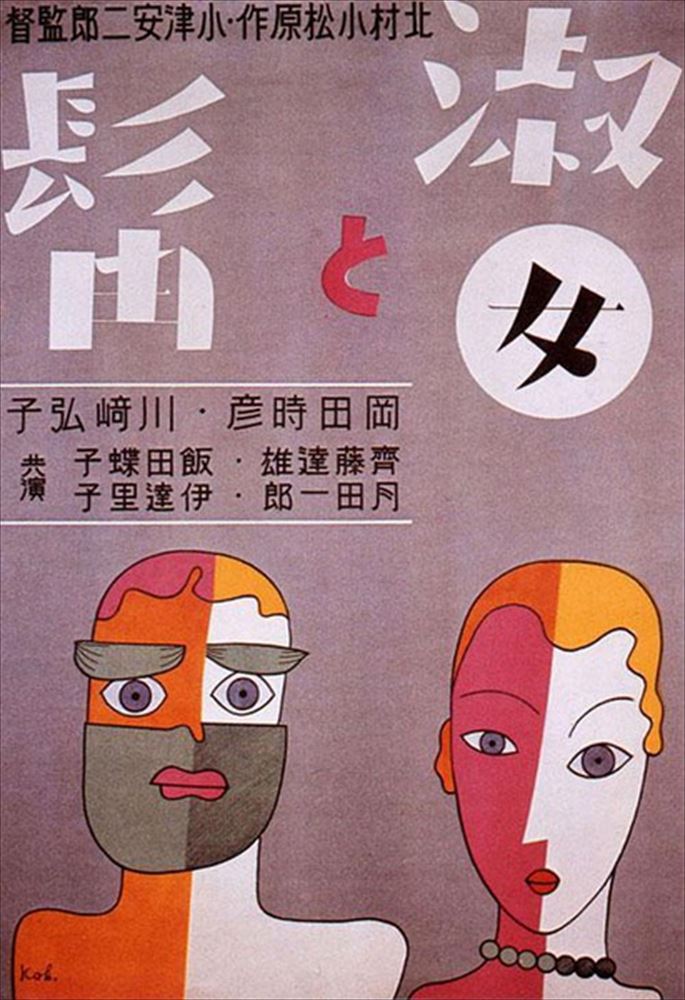
Yasujiro Ozu has sometimes been dismissed as middle of the road, particularly by the young radicals of the post-war generation who saw his, by then, rather conservative films as a symbol of everything they sought to reject in their national cinema. They may in some senses have had a point and, in 1931’s The Lady and the Beard (淑女と髭, Shukujo to hige), Ozu does indeed show us that the middle of the road might be the best place to be as his basically good yet rigidly traditionalist hero is cajoled towards modernity but ultimately rejects its extremes in pulling a “modern girl” back towards the path of righteousness. 

Recent graduate Okajima (Tokihiko Okada) is a kendo enthusiast with a rather unsettling beard which he has long refused to shave. Other than his strangely close friendship with nobleman Teruo (Ichiro Tsukida), he appears to have been rejected by mainstream society because of his odd appearance and socially awkward behaviour. Teruo invites him to his sister’s birthday party without bothering to ask her and consequently scandalises all of her friends who vow to humiliate Okajima as soon as he arrives. Okajima, however, has no idea he is being made fun of. He declines the invitation to dance with the young women in the modern fashion but volunteers to do a dance on his own, prancing about with a fan and waving his sword around in an unexpected display of traditional performance. When Teruo and his sister return after having a private argument, the party is ruined. All the girls have left, for reasons which Okajima seems not to understand. 

He is at least, however, chivalrous. Spotting a young woman in kimono being mugged in the street by a modern girl, he wades in to help, earning her eternal admiration while fending off the other members of the modern girl’s gang with his kendo skills. His heroism further pays off when he discovers that the woman he saved, Hiroko (Hiroko Kawasaki), is a typist at an office where he is interviewing for a job. Hiroko is able to explain to him that the reason he was turned down, despite the fact that the boss also had a big bushy beard, was his facial hair so he should try shaving it off. 

The beard is a symbol not only of Okajima’s traditional mindset but of a certain kind of masculinity which might not be welcome in the modern world. Teruo tries to defend it to his sister by showing her portraits of various great men from the past who all had facial hair while Okajima claims that his is inspired by Abraham Lincoln and is intended to put women off so that he doesn’t get distracted from becoming a great man himself. Okajima’s robust masculinity, avoidance of women, and intense friendship with Teruo, anxious should he get the wrong idea about women in his apartment, might hint at another possibility, but that soon goes out the window when he sheds the beard and instantly becomes irresistible to women. Not only is he developing a romantic relationship with the homely, traditional Hiroko but also becomes attractive to Teruo’s sister Ikuko (Toshiko Iizuka) and the modern girl Satoko (Satoko Date). 

Both Hiroko and Ikuko are attracted to Okajima because of his traditional masculinity in his capacity to protect them. Ikuko, rejecting a suitor who eventually exposes a problematic side to male dominance, tells him that she won’t consider anyone who’s not skilled in kendo because she is looking for a protector. He reminds her that’s what the police and the law are for, so she tells him fair enough, she’ll marry a policeman. Modernity codes “protection” into the system, depersonalised and in other ways perhaps problematic, where traditionalism relies on access to male strength. Ikuko disliked Okajima when he had a beard, but secretly desires those very qualities the beard was set to represent. 

Satoko, meanwhile, the modern girl, rejected Okajima because of his bizarre appearance while he rejects her for the same reason in a mirroring of the various ways we are the image we present. Kimono’d Hiroko is good, modern girl Satoko is bad. Even after shaving his beard, Okajima remains an undercover traditionalist, wearing his kendo clothes under his suit and chivalrous to the end. Not recognising him and possibly in the pay of Teruo trying to put his sister off marriage, Satoko seduces the clean shaven Okajima while he rejects her advances but tries to “save” her from an excess of modernity by getting her away from the gang. She fancies herself in love with him, but what he does is free her from the false image of the modern society to give her back the true freedom of her own agency. In the end he chooses the classically nice, middle of the road option in remaining with Hiroko who loved him with beard and without rather than modern girl Satoko or snooty aristocrat Ikuko. You trim it but it just keeps growing back, the final title card adds, but the message seems to be that too much of one thing be it nationalistic conservatism or hedonistic modernity is no good. The middle way it is, slow and steady and as wholesome as could be.


Currently streaming in the UK via BFI Player as part of Japan 2020. Also available to stream in the US via Criterion Channel.

Lovely Devils (可愛い悪魔, Nobuhiko Obayashi, 1982)

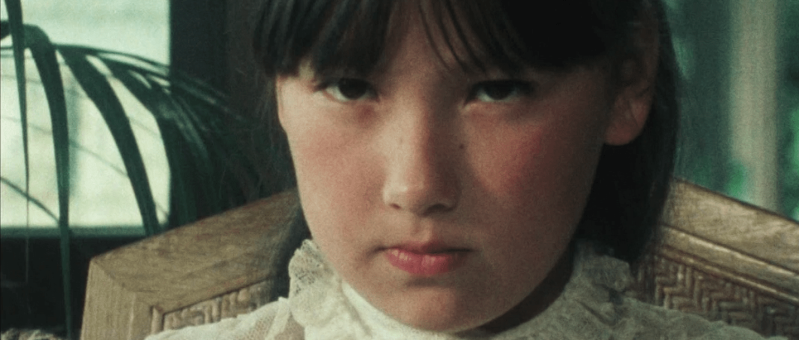
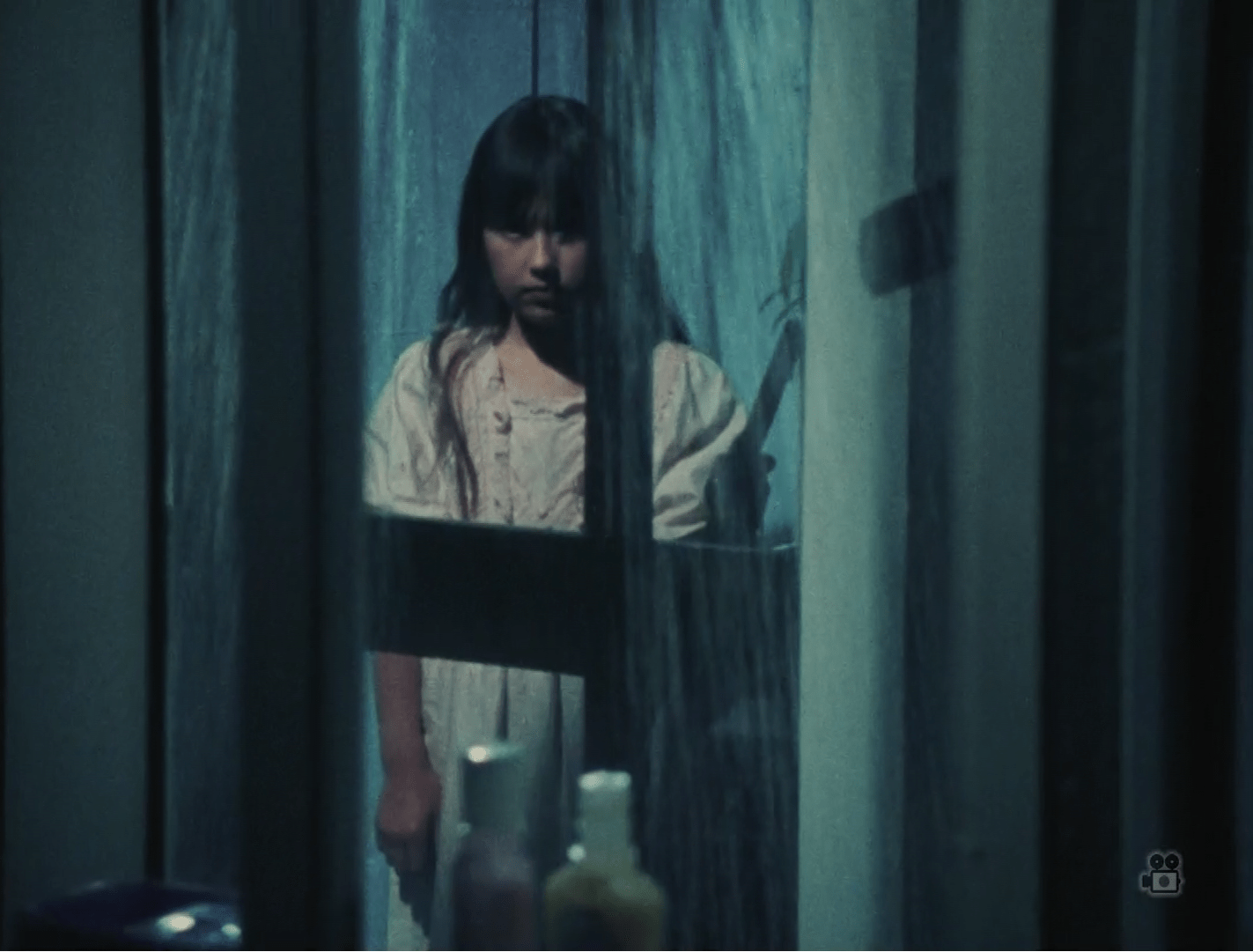
Until fairly recently, the work of Nobuhiko Obayashi had been largely unappreciated in the Anglosphere where he is associated most closely with his debut film House which was itself somewhat grudgingly respected as a “crazy” midnight movie. He was however surprisingly prolific and especially so for a director working through the difficult 1980s in a 60-year career which ended only with his death after a protracted illness itself ironically announced on the day his final film, Labyrinth of Cinema, should have opened in Japanese cinemas had it not been postponed in light of the coronavirus pandemic. Produced for television in the same year as I am You You Are Me, Lovely Devils (可愛い悪魔, Kawaii Akuma) is among those which Obayashi did not script for himself but is penned by Machiko Nasu and apparently inspired by The Bad Seed though Obayashi later revised the script to remove traces of the original work unwilling to create a simple homage. 

Similar in tone to Obayashi’s later The Deserted City, Lovely Devils is at heart a twisted gothic romance cautioning against the dangers of an excessive thirst for love. In ‘70s Japan, a wedding takes place at small church during which 5-year-old Alice, niece to Koji (Hiroyuki Watanabe) the groom, becomes overly attached to the veil of the bride, Fuyuko (Nao Asuka), and in the manner of entitled small children everywhere demands to be given it. Fuyuko tries to explain that she plans to hang on to the veil for the rest of her life as a keepsake and is sure that Alice will have an even prettier one of her own someday, but Alice creepily asks if that means she can have it when Fuyuko dies and, wanting to bring an end to the matter, she unwisely agrees. While everyone is busy assembling for the wedding photos in the garden, Fuyuko violently tumbles out of an upstairs window, her broken body landing on the patio below only to be met by Alice excited about collecting her veil. 

Meanwhile, at the same time in Vienna, Fuyuko’s exchange student sister Ryoko (Kumiko Akiyoshi) is in the middle of a difficult breakup with her local boyfriend Johann in which she, perhaps understandably, tells him to go die only to see him get hit by a car on his way out of her apartment. Overcome with guilt and grief in believing that she somehow killed Johann by wishing for his death, Ryoko goes quietly mad until her landlady contacts Koji who comes to bring her home and places her into a mental institution run by a convent in which the resident psychologist, Dr. Tsukahara (Toru Minegishi), is also a priest. After three years, Ryoko seems to be sufficiently recovered and so Koji asks his sister Keiko (Miyoko Akaza) to take her in as a governess to the now eight-year-old Alice (Tina Jackson). 

The central irony is that Ryoko is almost certainly not guilty of psychically killing Johann just someone who bitterly regrets saying something unkind in anger and having fate ironically follow through, where as Alice is definitely “demonic” and, as is later pointed out, a child who cannot discern right from wrong. In the liner notes for a later release for the film, Obayashi likened the figure of Alice who commits a series of murders with no conceptual understanding that it’s morally wrong to kill to that of himself as a thoroughly militarist boy in wartime who thought that Japan was just and everything outside Japan “bad”. Alice sees something she wants and has to have it. If someone else has it and won’t give it to her, they have to go (sometimes in quite elaborate ways). Ryoko’s battle is against the commonly held belief that eight-year-old girls are innocent angels, no one in their right mind (Ryoko has just been released from a psychiatric institution following a breakdown after all) would believe Alice capable of violent murder and especially not on the grounds that she simply wanted something trivial like a veil or a doll and was unable to accept that she could not have it. 

Later, Alice’s fragile, chain-smoking, dipsomaniac mother Keiko who always suspected there was something not quite right with her little girl attributes this extreme possessiveness to having discovered the body of her father after he unexpectedly hanged himself in their family home (it does not seem to occur to Keiko that perhaps he is merely the first victim, his ornate quill pen one of Alice’s favourite trophies). She thinks that lack of paternal love has made her seek attachment and permanence in objects but also dangerously in her uncle Koji whom she sees both as a surrogate paternal figure and as an incestuous love interest. It is also somewhat unfortunate that the actress playing Alice and the character herself is half-Japanese playing into an uncomfortable stereotype in gothic horror that posits these demonic qualities and romantic perversions as essentially an extension of foreignness, but in any case Obayashi leans in deep with the wedding imagery as Koji returns to rescue Ryoko in the white suit from his wedding firstly on her release from the hospital on which she too wears a white lace dress, and then subsequently with the still eight-year-old Alice who is dressed much the same only with the addition of an Edwardian-style sun hat to complete the look.  

It’s this final juxtaposition which pushes Ryoko towards accepting her imprisonment as a “criminal of love”, seeing herself and Alice as two of the same as if she really had caused Johann’s death through an excessive desire for a love he had but refused to give her in the same way Alice kills “out of a longing and thirst for love” sublimated into the acquisition of objects. Conjuring an intense and heady atmosphere of gothic unease with the remote country mansion and wandering ghostly brides, Obayashi once again plays with psychedelic surrealism with his romantic painted backdrops and characteristic use of colourplay particularly in flashback as Keiko recalls a sepia-tinged memory of the time they were “almost too happy”. Boasting high production values despite its TV movie genesis, Lovely Devils is defiantly an Obayashi production filled with his wistful sense of loss and nostalgia but also a deep darkness in its mildly disturbing, unconventional conclusion.