Japan Society New York has announced the lineup for its upcoming autumn programme of classic films and anime kicking off on Sept. 2 with a 35mm screening of Kihachi Okamoto’s satirical chambara Kill! and closing on Nov. 14 with the much loved Studio Ghibli classic My Neighbor Totoro.
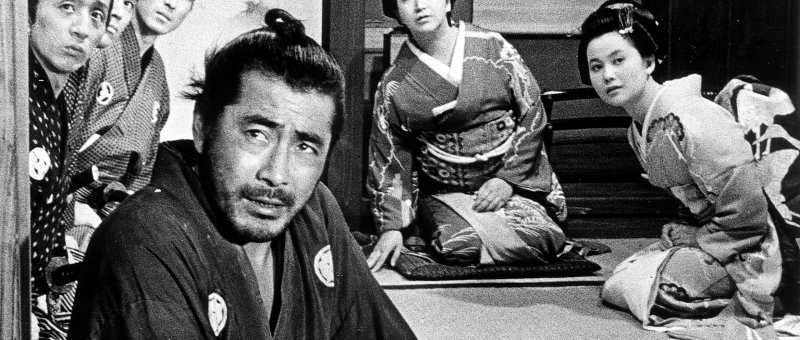
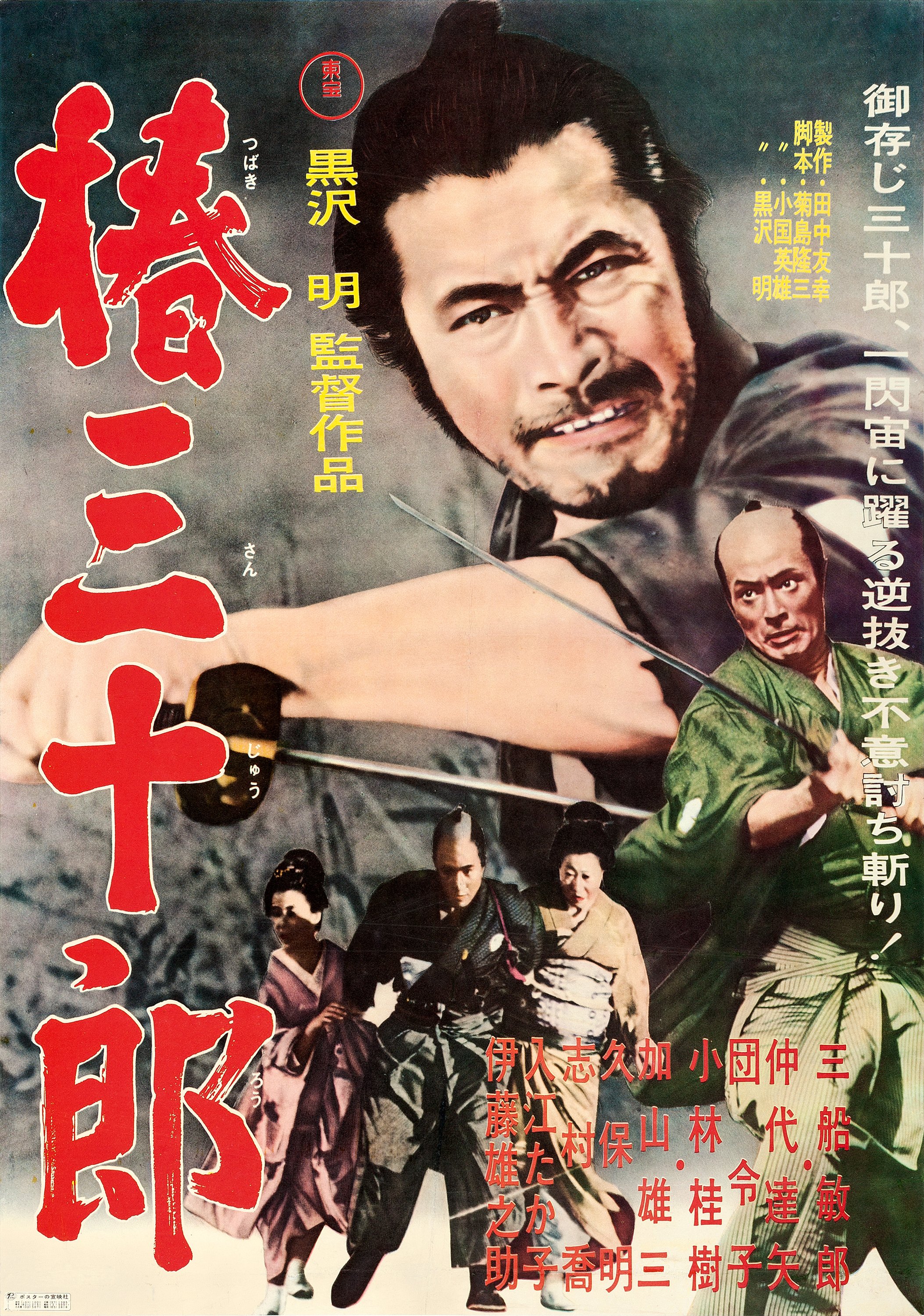
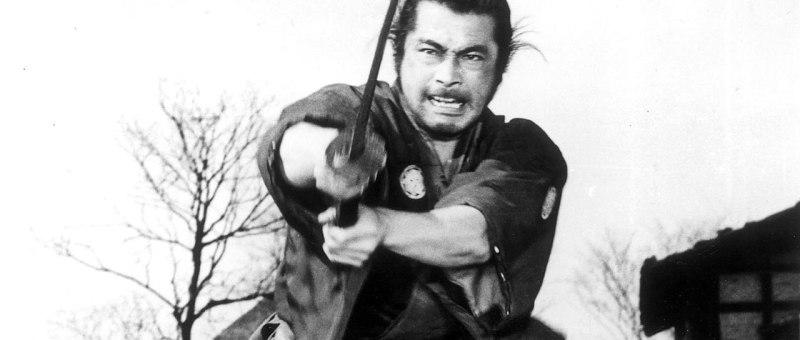
Inspired by the same source material as Akira Kurosawa’s Sanjuro, Kihachi Okamoto’s absurdist jidaigeki finds a naive farmer and jaded samurai turned yakuza swept into local conspiracy when seven samurai arrive intent on removing a corrupt lord little knowing they too are merely pawns in a much grander game.
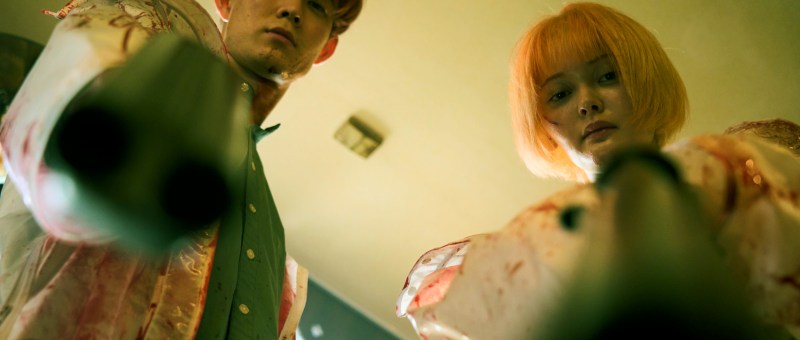
Landmark adaptation of the Taiyo Matsumoto manga directed by Michael Arias and following two street kids in a futuristic city who survive through pickpocketing only to have their territory contested by invading yakuza intent on building an amusement park.
Classic J-horror from 1998 directed by Hideo Nakata and adapted from the novel by Koji Suzuki in which a journalist with a young son begins investigating a series of unexplained deaths among teens who had each watched a mysterious videotape.
The much loved Studio Ghibli classic in which two little girls discover a new world of wonders after moving to the countryside while their mother is ill in hospital.
The fall season runs Sept. 2 to Nov. 4 at Japan Society New York. Tickets priced at $15 / $12 students & seniors, and $5 Japan Society Members are on sale now via the official website and you can also keep up with all the year-round events by following Japan Society Film on Facebook, Instagram, and Twitter.
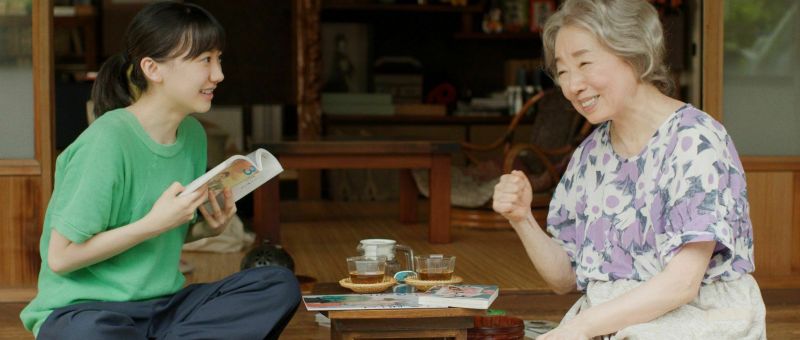
A diffident high schooler finds a new sense of confidence after a poignant summer adventure in Atsuko Ishizuka’s heartfelt coming-of-age anime, Goodbye, Don Glees! (グッバイ、ドン・グリーズ!). In many ways about finding direction in life, learning to live with grief, and making the moment count, the film is also a paean to male friendship as the trio at its centre develop new senses of security through mutual support while beginning to figure out what treasure it is they’re seeking in the further course of their lives.
For Roma (Natsuki Hanae), a farm boy largely rejected by the other kids in the village, this summer is a little different. Not only is it his first as a high schooler, it’s also the first since his best and only friend Toto (Yuki Kaji) moved to Tokyo for high school and despite their previously close relationship it’s clear there’s a minor awkwardness in the distance that’s arisen between them since they’ve been apart while Roma has also added a third boy, Drop (Ayumu Murase), to their secret Don Glees friendship group. Now that he’s been living in the city, Toto finds the whole Don Glees thing childish and decidedly uncool while Roma is obviously keen to hang on to their shared history and childhood friendship.
Their dilemmas may seem opposed but are in actuality very similar. Toto resents Roma for not having the courage to come with him to study in Tokyo where there are more academic high schools, choosing instead the safe option of attending a vocational school with a focus on agricultural education implying that he plans to stay in his hometown and take over the family farm. It isn’t immediately clear if it’s because this is what he wants to do with his life or if he is simply too afraid to strike out and try something different. Roma does indeed seem to lack confidence often remarking that he feels he’s not enough in some way or doesn’t have the right to chase after the things he wants. Unable to face his inability to tell his middle school crush Tivoli, who has since travelled to Ireland to study abroad, how he feels he ends up deleting his Instagram account to avoid being confronted with pictures of her exciting international life. Toto meanwhile is stressed out by his cram school lifestyle and newly uncertain in his decision making realising that he’s just been following the path his parents set out for him and wondering if he really wants to become a doctor after all.
The mysterious Drop makes constant suggestions that he can’t really afford to think about the future and is living intensely in the moment. He is insistent on finding some kind of treasure, afraid of ending his life without resolving this one mystery and keen to ask both boys what it is they’d regret if the world were to end tomorrow. The quest takes on literal dimensions when the boys are accused (falsely) of starting a forest fire and set out in search of a drone they were using, technically illegally, to capture a local fireworks display hoping it will contain footage to verify their innocence but getting lost along the way and eventually sharing their fears and anxieties alone together under the night sky. It seems this new friendship is destined to end in unexpected tragedy, but as Drop is fond of saying sometimes all it takes is a little courage to make a jump and see things from a different perspective allowing Roma to gain the confidence in himself he’d been lacking to chase the things he really wants.
A teen summer adventure movie, Goodbye, Don Glees! features lush animation of the Japanese countryside along with some enhanced CGI of nature in bloom captured forever via photograph which as Tivoli points out is like a freeze-frame in time trapping both the image and its accompanying emotions. That is perhaps what Roma learns, to make memories he can treasure when the moment ends while saying goodbye to something doesn’t mean it’s gone forever, it just exists in a different form. A warm and heartfelt tale of teenage male friendship and summer’s end, Goodbye, Don Glees! discovers a sense of the serene in the face of life’s futility through connections both momentary and eternal.
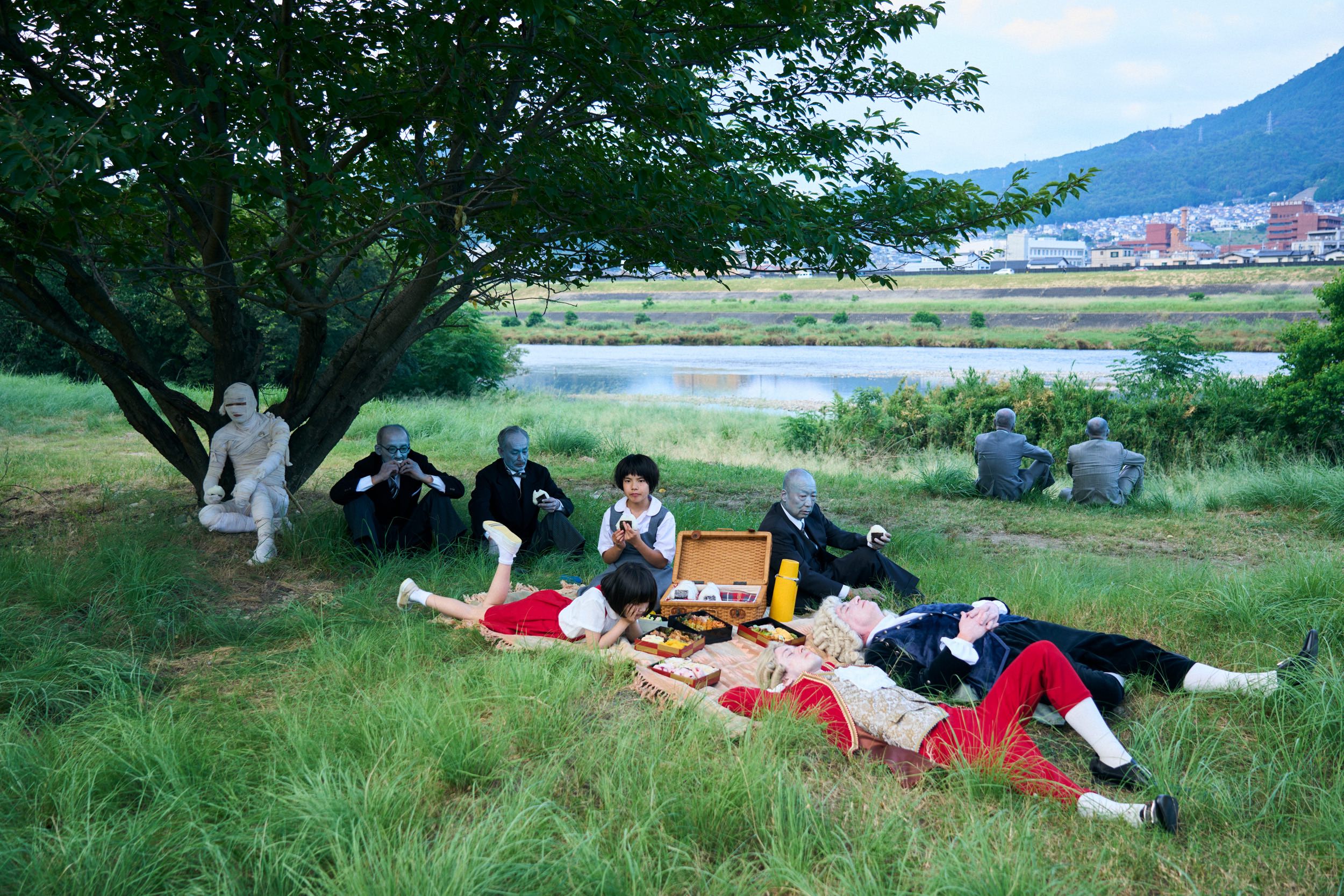
A documentary film crew hoping to discover long-hidden frescos by an artist with a tragic history find themselves on a quest to resurrect the traditional family in unlikely horror comedy Sweet Home (スウィートホーム). Written and directed by Kiyoshi Kurosawa, the film shares many of the hallmarks of his later career in his preoccupation with what lurks in the shadows, yet produced by Juzo Itami who also stars and apparently reshot some scenes himself it also mines a deep seam of ironic humour harking back to classic serials and contemporary kids adventures in the same way as Hiruko the Goblin among others would do just a few years later.
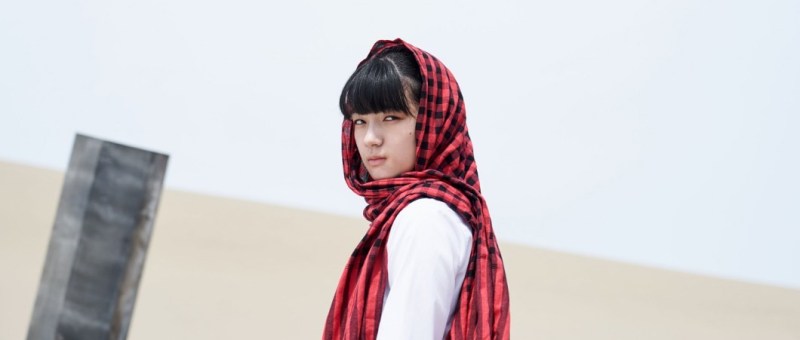
This strain of irony is perceptible in the opening scenes in which producer Akiko (Nobuko Miyamoto) appears in an elegant ’40s-style outfit more in keeping with an archeological dig than a haunted house adventure, her later attire strongly recalling that seen in Indiana Jones. The gang are waiting by their military-style jeep seemingly in the middle of a sandstorm while chief producer Kazuo (Shingo Yamashiro) is busy at the municipal office trying to get permission to enter the Mamiya Mansion which has been shut up for the last 30 years since the death of legendary artist Ichiro Mamiya who is the subject of their documentary. A diffident man as his daughter jokes, Kazuo finds it difficult to make headway until a slightly more cynical employee takes over the negotiations and hands over the key with the rationale that they’ll either find out the house isn’t haunted after all in which case they can turn it into a museum, or that they’ll get some tidy publicity out of the horrifying deaths of all concerned.
A western-style gothic mansion, the house is itself as imposing as it is ominous even without swirling mists or hovering gloom. Once inside the crew find what they’re looking for, a beautiful fresco with the title “home sweet home” painted in a corner. All we’re told about Ichiro is that he died in the house, but when all is said and done he, like Kazuo, is not terribly important and it is not his death which has cursed the mansion but that of his wife. The sweet home the couple had dreamed of was coming to fruition with the long-awaited birth of a child whose life was to inspire frescos on the remaining walls only tragedy struck. As a toddler the child somehow climbed into the furnace and was burnt alive when his unknowing mother ignited it. She then went mad, kidnapping other children and apparently burning them so her child would not be lonely before eventually throwing herself in too.
Perhaps uncomfortably, Sweet Home leans in to the kind of maternal questioning common to the genre as it considers the formation of a new family in the awkward romance between the shy widower Kazuo who has brought his teenage daughter Emi (Nokko) along on the job, and capable producer Akiko who is repeatedly questioned about marriage, children, and the reasons she currently has neither of them. Keying in to the terror of the house, Emi reveals that as she grows older the memories of her birth mother begin to fade to the extent that she can barely make out her outline, envisioning her merely as an indistinct light. She is prepared to accept Akiko as second mother, offering her the dress which her own mother used to wear only for Akiko to diffidently refuse on the grounds that the dress should be worn by Emi as her mother would have wanted perhaps hinting at the way Emi often treats her father as a clueless child in need of mothering himself.
Nevertheless, it’s the dress of maternity that Akiko must finally put on in order to claim the maternal space in venturing back into the haunted house in order to save Emi from becoming another playmate for Mrs Mamiya’s child. Rather than Kazuo, who proves rather ineffectual, she is guided by a weird old man, Yamamura (Juzo Itami), from the petrol station who apparently knows all about fighting ghosts but bluntly tells her she has no chance of success because she is not a mother herself and cannot understand the pain of a mother who has lost a child nor the magnetic pull between a childless mother and motherless child. In order to defeat the vengeful spirit, Akiko must fully embrace the role of the mother, easing the spirit’s pain with maternal compassion in returning to her what was lost. Her child restored to her, the spirit takes on the appearance of the Holy Mother ascending to Heaven bathed in golden light lifting the shadowy gloom that cursed the house.
Even so there is something insidious in the fact that as Yamamura says if you attempt to fight shadow with light all you get is more of the same, the crew trapped in the house with no means of defence against the encroaching darkness. This unknown, shadowy sense of threat, of being swallowed by darkness, is a key harbinger of a Kurosawa’s signature style as well as a clear evocation of the gothic dread focused on the house with the ironic failure of the “sweet home” dream which is in essence what Akiko, Kazuo, and an Emi are chasing as they try to escape the haunted mansion. Ironically enough, Sweet Home has become best remembered for fathering a video game which eventually led to the Resident Evil series while Kurosawa himself has all but rejected the film claiming Itami’s later interventions undercut his directorial vision. Featuring effects work by Dick Smith, the horror is visceral and disturbing at one point a man’s face melting, his skin slipping from his bones, while the score is cheerfully whimsical in keeping with the absurd lightness of tone that recalls classic teen adventures before heading into the fable-like conclusion in which Akiko must wrest her surrogate child from a vengeful spirit through maternal exchange. Having served its purpose the mansion implodes, freeing not only the spirits trapped inside but the new family now freed of the weight of traditional mores to embrace their new connection founded on love and empathy rather than duty or convention.
What is the place of art amid a global crisis? A young student finds herself wrestling with her sense of purpose uncertain if art is more necessary than ever before or a completely worthless waste of time that could be better used dealing with the situation on a more practical level. Written, directed, and edited by actress/singer Non, Ribbon is a response to pandemic anxiety but also a meta drama about an artist reclaiming a sense of confidence in their work along with their right to make it even if not widely understood.
As the film opens, art student Itsuka (Non) is lugging a series of paintings and art equipment back to her university for the upcoming graduation exhibition, only the exhibition has just been cancelled because the university will be closing its doors the following day due to the COVID-19 pandemic. Itsuka has to cart all her stuff home again, but she’s luckier than some she witnesses who are left with no choice other than to destroy the precious works of art into which they’ve poured four years of their lives because they can’t store them and neither can the university.
Watching her fellow students in tears as they crush, tear, and bludgeon their projects Itsuka can’t help but wonder what separates her painting from “trash”, seeing these precious pieces dismembered and left out for the binmen. The feeling is compounded when her mother (Misayo Haruki) pays her a visit, clad in a homemade hazmat suit, and throws the painting out justifying herself that as it had stuff stuck on it she thought it was just something she’d made messing around, more like a child’s collage than a serious piece of “art”. Unable to accept her mistake, Itsuka’s mother defensively doubles down leading to a climactic argument and the visits of other family members including her father (Daikichi Sugawara) who arrives with a social distancing pole and her sister (Karin Ono) who now dresses like an assassin each armed with passive aggressive peace offerings but ultimately seeking validations that her mother was right to dismiss her incomprehensible art.
While her friend Hirai (Rio Yamashita) is later caught sneaking into uni to work on her much more conventional piece, a large canvas painting featuring a young girl in a forest with giraffes and leopards, Itsuka has been unable to find the desire to paint. The painting, a mixed media portrait of a young woman surrounded by ribbons, sits looking down on her taped to the wall but she can’t get away from the idea that perhaps her work really is “trash” and she’s just been wasting her time on something meaningless that other people don’t understand or care about. The feeling is compounded when she’s informed that the job offer she had from a design firm for after graduation has been rescinded due to COVID uncertainty. Only when she accidentally reconnects with a middle-school classmate (Daichi Watanabe) who had praised her work does she begin to rediscover its value not least in allowing her to vent her frustrations not only with the pandemic-era society and its isolating anxieties, but the conservative ideas embodied by her mother’s constant complaints about her “attitude” reminding her she’ll never get married if she carries on as she is.
“This is what our frustration looks like” she explains incorporating her friend’s fractured painting to turn her formerly chaotic apartment into an installation covered in the ribbons which had previously swarmed around her. Opening with scenes of the deserted university peopled with broken statues, headless mannequins, and crude drawings on walls, Non captures a sense of the lonely despair of the early days of the pandemic allowing these now empty places to seem almost haunted by an eerie sense of absence. There is an unavoidable absurdity in the constant masking, obsession with social distance, and spraying anything and everything with sanitiser but also a care beneath the anxiety in the concern for others’ safety as well as one’s own. “Heavy” is how Itsuka frequently describes her situation not only the physical weight of her work but its spiritual burden along with her despair and anxiety for her uncertain future, but learning to bear it allows her to rediscover a purpose and value in art not despite but because of the times in which she lives. Quirky and heartwarming, Non’s accomplished directorial debut is not only a snapshot of ordinary life in a pandemic, but a meta tale of a young woman reclaiming her right to create and vent her frustrations towards a sometimes restrictive society.
The destructive effects of militarist folly are borne out in the fortunes of one bifurcated family in Miyoji Ieki’s impassioned social drama, Stepbrothers (異母兄弟, Ibou Kyodai). Ieki had joined Shochiku in 1940 and served as an assistant director to Minoru Shibuya making his directorial debut in 1944 taking over a project Shibuya had begun before being drafted, Torrent. After the war he became the head of the studio’s union and was subsequently dismissed during the Red Purge of 1950. Adapted from the novel by Torahiko Tamiya, Stepbrothers was produced by Dokuritsu Eiga which became a kind of refuge for left-leaning directors and makes a direct attack on lingering feudalism and the militarist past.
Spanning 25 years, the film opens in 1921 with pompous military officer Hantaro Kido (Rentaro Mikuni) riding his horse before immediately slapping his stableboy on dismounting apparently dissatisfied with his service in insisting there is something wrong with one of the horse’s shoes. This fear is later confirmed by the new maid he has just hied, Rie (Kinuyo Tanaka), who is the daughter of a recently deceased carriage driver. She has been hired because Hantaro’s wife is chronically ill and bedridden, no longer able to care for their two brattish sons Ichiro and Gojiro who imitate their father by pointing swords and guns at people while ordering them around. After asking Rie to check on the horse and observing her treating it with tenderness before pointing out the problem with its shoe unprompted, Hantaro loses control of himself, pushes her into the straw, and rapes her. With nowhere to turn Rie goes to the family friend who got her the job who discourages her from having an abortion and tries to make Hantaro take responsibility but he refuses to compensate her finally scoffing that there’s no way he would marry the mere daughter of a carriage driver.
Challenged by his superior officer, however, he pledges to do just that in order to save the honour of the Kido family along with that of the regiment but is soon sent off to a less prestigious provincial position. In appointing Rie as a maid, Hantaro had expounded at length on his family lineage as guardians of a particular style of kendo, but there’s no denying that he has acted dishonourably while Rie is forced to marry the man who raped her and is then rendered little more than an unpaid servant in his home who is essentially raped every night for the remainder of her married life. After giving birth to the baby, a son Yoshitoshi, she has another some years later, Tomohide, but she and her children are not regarded as members of the family and are forced to sleep in the kitchen. Ichiro and Gojiro still call her Rie rather than mother and order her around like a servant while Hantaro simultaneously rejects her sons and insists they follow the family tradition by becoming fine soldiers.
A poignant scene sees Gojiro looking on at Rie as Yoshitoshi and Tomohide cheerfully play cards with some of the servants one New Year implying he may in fact miss maternal closeness but is unable to express it because of his father’s code of manliness later tearfully asking his brother for memories of their mother when they are both grown men. The difference between the boys can seen in their names, those of Hantaro’s sons from his first marriage meaning something like “first son boss” and “strong second son” while those of Rie’s sons are much warmer, Yoshitoshi using the characters for good and benefit, and Tomohide’s wisdom and excellence. Ichiro and Gojiro continue to mercilessly bully Yoshitoshi and Tomohide, insulting them as sons of mistresses a term which Yoshitoshi does not fully understand but instantly associates with the way his family has been treated as other and inferior, confined to the parts of the house otherwise occupied by servants. When he says he’s no desire to become a soldier, Hantaro locks him in the cupboard under the stairs and seemingly never talks to him again.
Rie tells him that he will understand her actions when he’s older but he continues to blame her for them, angry that could not reject Hantaro’s authority to protect him nor would she escape the situation by simply leaving it. His criticism is unfair and ignores her continued suffering given the reality that as a young woman with no family or fortune she is left with no means of supporting herself that would make it possible to escape. But he may also have a point in that she is also the product of a feudal and patriarchal society and is spiritually unable to refuse Hantaro’s corrupt authority over her even as he dismisses her as a carriage driver’s daughter and her sons as unworthy by his name. She suffers and placates him to protect them but Yoshitoshi sees only her complicity.
Yet Hantaro’s pompous austerity which is also the code of the age later destroys him. He prattles on about his supposed military prowess while telling one of his sons that soldiers should be thought of as pawns to be sacrificed for the emperor only to lose both of them to the inevitable defeat. Portraits of his two sons sit proudly under a map of the Japanese empire now shorn of the flags he’d pinned to mark their victories, while Rie’s are hidden away on the shelf of a cupboard itself one of the few pieces of furniture they had not sold to survive in the difficult post-war period. Hantaro had rejected Tomohide (Katsuo Nakamura) who craved his approval because he was in poor physical health and therefore unable to fulfil his vision of manliness but it is he who alone survives having rejected his name after his father beat him for singing and sent Haru (Hizuru Takachiho), the cheerful servant girl he loved, away to be sold off to a brothel by her impoverished family.
When Tomohide returns home after some years of wandering to a mother who thought him dead only for Hantaro to reject him, his only living son, Rie finally finds the strength to reject his authority. This time she refuses to leave, insisting that the house is rightfully Tomohide’s and he should not surrender it to a Hantaro who is now beaten and defeated, a pitiful old man who can barely walk and is perhaps consumed by the humiliation of his life’s folly. It’s his hypocrisy and moral cowardice along with the cold austerity of mindless militarism that have ruined all their lives, yet in Tomohide who truly crossed the barriers of class in continuing to help Haru with her chores there is a hope for a new future as his mother and he fill the bath together and assume ownership in equality of the home which has always been their own.
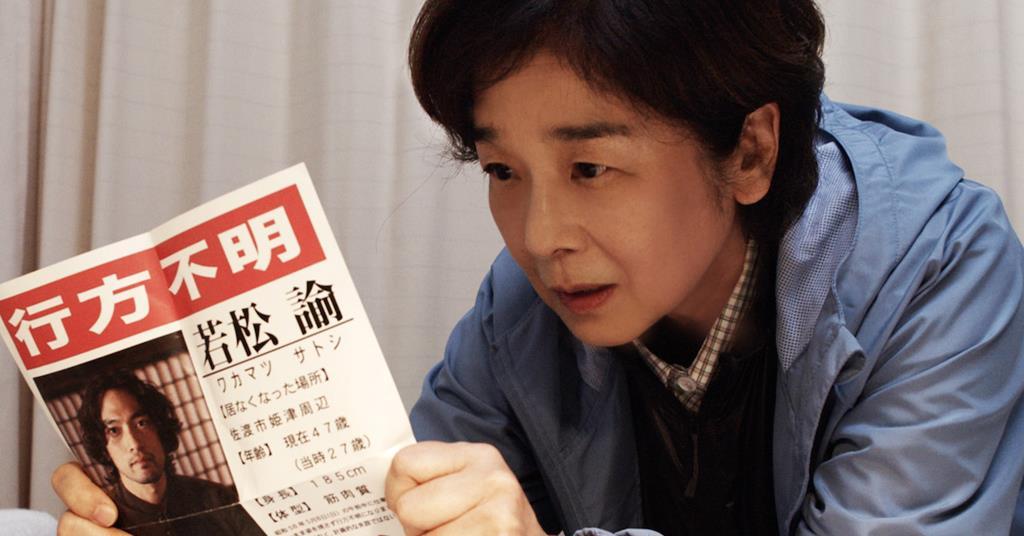
“This society pampers men too much, no matter their age” according to a middle-aged woman searching for her missing son, yet in many ways it’s the primacy of the mother and maternal neglect that drive Mayu Nakamura’s eerie psychological chiller, Intimate Stranger (親密な他人, Shinmitsuna Tanin). Perhaps in some ways, that’s what a mother and a son should become, of course close and loving yet each with their own lives unknown to one another but for Mrs Ishikawa those boundaries have perhaps become corrupt in her overwhelming need to embody the maternal ideal.
Mrs Ishikawa (Asuka Kurosawa) lives alone and is searching for her grown-up son, Shinpei, who went missing a year ago. She has a job in shop selling baby clothes and accessories but is described by other staff members as a bit strange though they continue to invite her to afterwork gatherings knowing she won’t come. One day she gets a call from a young man, Yuji (Fuju Kamio), who says he has information about Shinpei but in reality is part of a gang running “ore ore” scams who are also looking for him because he previously worked with them. Yuji’s purpose in approaching Mrs Ishikawa is to get info out of her, but she’s a little bit ahead of him and manages to plant the seeds of a dark seduction.
Seduced is what Yuji eventually is in a discomforting mix of the erotic and the maternal. Casting shades of Vertigo, Mrs Ishikawa persuades him to move into her apartment, sleep in Shinpei’s room, and wear his clothes keeping him a virtual prisoner while forcing him into the role of her surrogate son. As we later discover, Yuji was a teenage runaway seemingly abandoned by his mother and craves maternal affection but is ashamed of admitting and fearful of accepting it all of which would make him ideal prey for a woman like Mrs Ishikawa who at all rates seems to need a son to feel herself complete.
At the shop where she works, Mrs Ishikawa transgressively sniffs and fondles clothes for newborn infants while at one point driven to distraction by a crying child temporarily separated from its mother to the point that she inappropriately picks it up. She appears to be totally consumed by the maternal image and to that extent or else because of some previous trauma becomes extremely hostile when confronted with her sexuality. Her horror on being picked up by a gigalo when expecting to meet a man with info about Shinpei might be understandable, but the glee on her face after slashing a man with a straight razor when he attempted to attack her is less so while Yuji’s eventual confusion about the nature of their connection highlights the discomforting intersection of the maternal and the erotic.
We have to wonder if Shinpei simply decided to escape the grasp of an overbearing mother who could not bear to accept that her son was now a man, or if Yuji’s suspicions that he may have met a darker fate are more than mere reflections of his own fear of maternal connection. Yet like story of the bluebird of happiness that Shinpei was apparently fond of telling, perhaps each of them for a time found what they needed in the other only to lose it again on identifying the darkness that underlines their relationship.
Listening to a report on the news, Mrs Ishikawa explains that “ore ore” scams only happen in Japan because nowhere else would a parent drop everything and run cash in hand when told a grownup son is in financial trouble which might in a sense be unfair save for the urgency, similar scams circulate via text and messaging apps in many countries. Yet the scam hints at this same level of disconnection, that the often elderly targets cannot tell that it is not their son or grandson’s voice on the phone nor realise that the information they’re being given does not make sense so estranged have families become. The coronavirus pandemic meanwhile only makes the scammers’ job easier given the loneliness of enforced isolation coupled with generalised masking which decreases the level of intimacy on both sides dehumanising the target while allowing the scammer to further conceal their identity.
Mrs Ishikawa is in a sense wearing a permanent mask, consumed by the maternal ideal and unable to conceive of herself as anything outside of a mother. There is something unsettling and vampiric in her need as she at one point sucks blood from her finger and wields her razor with dangerous affection when offering Yuji the closest shave he’ll ever have but also a deep sadness that like the bluebird of happiness that which she most wants is always going to fly away from her one way or another. The uncanniness of the desaturated colour palate adds a further note of dread to the noirish tale of a young man seduced by Oedipal desire and drawn as much towards death as love.
“If both held their courses they would collide in nine seconds, and catastrophe would be inevitable” according to the voiceover which opens Sogo Ishii’s ethereal psychodrama Labyrinth of Dreams (ユメノ銀河, Yume no Ginga) though his words might as easily apply to the protagonist and her opposing number as a bus and a train locked as they are into a fateful cycle of love and death. Ishii had made his name in the ‘80s for a series of frenetic punk films such as Burst City and The Crazy Family yet adapted from the novel by Kyusaku Yumeno, Labyrinth of Dreams adopts the language of golden age cinema to tell a punk story as a young woman searching for freedom, independence, and a more exciting life finds herself drawn towards death in her inexorable desire.
Set sometime in the 1930s, the film opens with a taste of the gothic on a stormy night all mists and confusion as a bus heads towards and then unwisely across a level crossing in front of an oncoming train. “Double suicide or accident?” a newspaper headline asks, as we’ll discover on more than one occasion as this is not an isolated incident either bizarre cosmic coincidence or the work of a mysterious serial killer. The heroine, Tomoko (Rena Komine), had always wanted to become a bus conductress, explaining that they looked so “heroic” in their uniforms but has discovered the reality to be not quite so satisfying. “The female bus conductor only looks good on the surface. We must obey the driver’s orders, put up with all displeasure and work like a slave” she writes in a letter to a friend, Chieko (Kotomi Kyono), telling her in no uncertain terms that she must never become a bus conductress.
To a young woman from the country in the 1930s, such a job must have seemed exciting promising a way out of stultifying small-town life and a path to an independent urban future. It’s this sense of self-possession that Tomoko seems to have been seeking hoping that wearing a uniform even that of a bus conductress would grant her a level of authority she does not really have realising that she is a mere subordinate to the male bus driver and quite literally has no real control over the direction of her life. When she receives a letter from a friend who had also become a bus conductress only to die in a tragic accident explaining that she thinks her fiancé is a bus-based bluebeard rumoured to have seduced and murdered his previous conductresses Tomoko smells not danger but excitement in realising the new handsome driver with a flashy Tokyo haircut who’s just transferred to their station is none other than her friend’s possibly sociopathic former boyfriend.
Fully embracing a sense of the gothic, neither we nor Tomoko can ever be sure if Niitaka (Tadanobu Asano) is a coldblooded killer or merely the projection of a fantasy created by Tomoko’s repressed desires and yearning for a more exciting life. Having encountered him once before sleeping on the railway tracks as a train approached, he becomes to her something like an angel of death and though she believes him to be dangerous she cannot help falling in love with him anyway. Ishii constantly flashes back to deathly images, a pair of shoes abandoned on the rocks or a bunch of drooping lilies while a literal funeral procession eventually boards the bus just before the climactic moments on which Tomoko is in effect staking her life as she and Niitaka each refuse to deviate from their course, a set of railway points and a trapped butterfly added to the film’s rich symbolic imagery.
A policeman at the film’s conclusion makes a point of asking Chieko if Tomoko is known to be a habitual liar having found no evidence that Niitaka deliberately caused the deaths of his previous conductresses even if it seems unlikely that he is simply the victim of unhappy coincidence. “My life was miserable and lonely,” Tomoko writes, “but remember me as the one who wrestled her fate at the end”, staking her life on a “fatal romance” and in a sense overcoming existential dread by staring it down, a deathly desire leading finally to new life. Beautifully lensed in a golden age black and white with occasional onscreen text in the ornate font of the silent movies, Ishii’s ethereal drama freewheels between dreams and reality amid gothic mists and expressionist thunderstorms as it reels towards an inevitable collision. “They haven’t a clue about the truth” Tomoko sighs, perhaps all too aware.
The BFI Southbank, London will celebrate the work of golden age actress and director Kinuyo Tanaka throughout August and September 2022 beginning with a retrospective of her six directorial features before moving on to showcase some of her most iconic roles from the 1930s to her final major screen appearance in Kei Kumai’s Sandakan No. 8.
Scripted by Keisuke Kinoshita, Love Letter is an examination of the changing society of post-war Japan as an embittered veteran (Masayuki Mori) forced into making a living by writing letters for Japanese women left behind by American servicemen re-encounters his first love (Yoshiko Kuga) but firstly rejects her on realising she too had been the mistress of a US soldier. Review.
Tanaka’s second film was co-scripted by Yasujiro Ozu and features several homages to his visual style including the use of pillow shots but otherwise has a sensuality and sensitivity not common in his filmmaking. The comic melodrama follows the attempts of a young woman (Mie Kitamura) to set her lovelorn sister up with a sensitive visitor while falling for her childhood friend. Look out for Tanaka’s brief cameo as a ditsy maid. Review.
The first film Tanaka began independently, Forever a Woman (previously known as The Eternal Breasts) draws inspiration from current events to interrogate contemporary notions of womanhood through the story of a female poet suffering from terminal breast cancer who eventually rediscovers her femininity through the embrace of her sexual desire. Review.
Again based on very recent events, The Wandering Princess is a sumptuous romantic melodrama in which a Japanese noblewoman (Machiko Kyo) agrees to marry the brother of the former emperor of China now a puppet king of the Japanese colony of Manchuria but is eventually separated from him by the fall of the Japanese empire. Review.
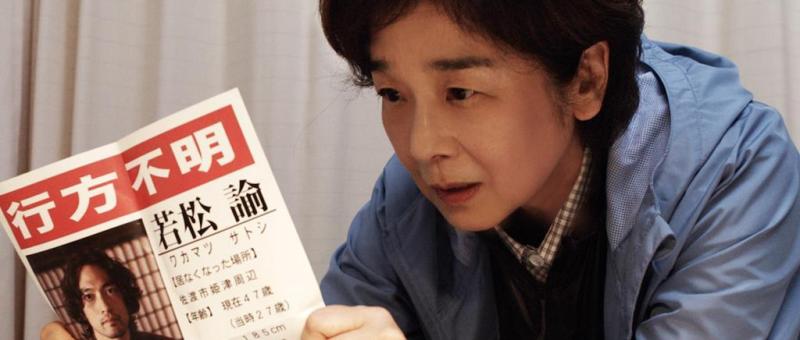
Recalling Tanaka’s role in 1948’s Women of the Night, Girls of the Night follows a young woman who is sent to a reformatory for former sex workers following the anti-prostitution legislation of the mid-1950s but discovers that no matter how well intentioned the program may be it nevertheless fails to account for the socio-economic realities of the contemporary society. Review.
Juxtaposing the use of the crucifix as a method of execution for sexual transgression with the growing influence of Christianity in late 16th century Japan, Takana’s final film as a director stars Ineko Arima as a young woman in love with a reticent lord (Tatsuya Nakadai) who is already married and among the growing class of merchant samurai who have converted to Christianity through trading links with European nations. Review.
Yasujiro Shimazu’s adaptation of a Junichiro Tanizaki novel in which Tanaka stars as a haughty maid blind since childhood and in an accidentally sadomasochistic relationship with her servant, Sasuke, which only deepens when she suffers a facial disfigurement at the hands of a rejected suitor. Review.
Keisuke Kinoshita’s 1944 melodrama saw him temporarily banned from filmmaking thanks to its subversive conclusion in which Tanaka is cast in the role of a self-sacrificing mother dutifully sending her son off to die for the emperor but desperately searching for him amid the faceless masses of other boys in uniform. Review.
An atypically dark drama from Yasujiro Ozu, A Hen in the Wind stars Tanaka as a young woman who is forced into a single night as a sex worker in order to pay for medical treatment for her sickly baby only to face domestic violence when her embittered husband finally returns from the war.
Tanaka stars as a noblewoman who falls to the level of a homeless sex worker after being thrown out of the court for falling in love with a man of lower status (Toshiro Mifune) in Kenji Mizoguchi’s melancholy life study.
In one of Mikio Naruse’s most cheerful films, Tanaka plays a self-sacrificing mother who stoically faces increasing hardships but tries to keep her family together after her husband dies while her self-centred daughter (Kyoko Kagawa) becomes convinced she is romantically involved with a family friend and does everything she can to put a stop to it. Review.
In this characteristically controversial film from Kei Kumai, Tanaka stars as a now elderly woman who was once of the “karayuki” or young girls from poor families who were sold into sex work and trafficked abroad but then often rejected on their return by those their money had helped to support. Review.
A naive exchange student finds a surrogate family while working at a Tokyo Chinese restaurant in Li Gen’s semi-autobiographical drama, Before Next Spring (如果有一天我将会离开你, rúguǒ yǒu yī tiān wǒ jiānghuì líkāi nǐ). Though it becomes obvious that almost everyone has come to Japan as a means of escape from personal troubles, the disparate collection of migrants eventually find solidarity with each other as they attempt to settle in to life in another culture while bonding with similarly troubled locals themselves excluded from mainstream society.
Li Xiaoli seems to have chosen to come to Japan to find some release from a difficult family situation caused by his father’s illness. His mother had to give up work to look after him so the family have little money but Xiaoli is determined to make the most of his year abroad. When a stint in a supermarket doesn’t work out, his classmate Chiu (Qiu Tian) gets him a job at a Chinese restaurant where her friend/colleague Zhao (Niu Chao) also works. Though Zhao immediately takes against him perhaps out of jealousy, Xiaoli is taken under the wing of the restaurant’s manager, Wei (Qi Xi), who has been in Tokyo for some time but has recently had her application for permanent residence turned down in part because she is not married and has no children meaning the authorities are not satisfied about her longterm ties to Japan.
Wei’s situation perhaps bears out the precarity of her life in Tokyo and the inability to fully feel at home experienced by many of the restaurant workers. Later it turns out that she is in need of an operation for uterine fibroids in part hoping to improve her chances of conceiving a child thought it’s unclear if her desire is solely to start a family or to give herself a better footing for getting her permanent resident card. Meanwhile the uncertainly undermines her relationship with chef Song (Song Ningfeng) who is undocumented and apparently in frequent contact with another woman who has her residence card already. The restaurant is frequently raided by police on the look out for anyone who might be working illegally, forcing Song to hide behind a fishtank in the basement like a criminal and giving rise to an atmosphere for persecution and anxiety. While the the pair are walking home one evening, they are hassled by a drunk man in the street who bumps into them and then demands they apologise. Song is visibility irritated by the humiliation of being forced to apologise to belligerent xenophobe and struggles to avoid losing his temper. Something similar occurs when a neighbour complains about the noise and then rings the police after hearing Song and Wei arguing, Xiaoli who was present at the time having to pose as Wei’s boyfriend flashing his legitimate student ID for the detectives.
Xiaoli also makes a friend of the middle-aged Chinese teacher at their school, played in an extended cameo from Sylvia Chang, who hints that in some ways the experience hasn’t changed since she arrived at the tail end of the Bubble era. She recounts working three jobs but being delighted on buying everything she ever could want during department store sales. Only now she’s as rootless and dejected as Xiaoli. Her husband has returned to China, and now she’s living alone trying to redefine her reasons for coming to and staying in Japan. Middle-aged Chef Wan (Chen Yongzhong), who also experiences a unpleasant incident of being accused of groping a woman on a train because he was holding his aching stomach on the way to a hospital appointment, is feeling something similar having dreamed of bringing his family to join him only to now wonder if there’s really any point after so many years apart.
The moody Zhao, meanwhile, is half-Japanese but has been all but abandoned by his parents and feels nothing for them other than resentment. Caught between two cultures, he insists on being called by the Japanese reading of his first name, Aoki, rather than the Chinese, Qingmu, and makes a point of talking to Xiaoli in Japanese rather than Mandarin despite being aware that his language skills are still undeveloped. He is in deep love with Xiaoli’s schoolfriend Chiu who works as a hostess in addition to her gig at the supermarket but is too diffident to say anything and though she seems to care for him she makes it clear she does not intend to wait.
The sense of loneliness each of them feel is echoed in the melancholy tale of an older couple who run a hairdresser’s and had no children of their own, finding themselves unanchored in their old age but discovering a place for themselves at the Chinese restaurant. The only Japanese worker, Watanabe who develops a maternal relationship with Zhao, finds something similar while working a second job at a supermarket raising her children and trying to care for her elderly mother. Told over the course of a year with Xiaoli’s departure date already set, Li Gen’s lowkey drama is content with a lack of resolution that suggests time in motion marked by a series of partings some of which may be more permanent than others but each in their own way meaningful.
In her 2006 documentary Dear Pyongyang, documentarian Yang Yonghi explored her sometimes strained relationship with her parents whose devotion to the North Korean state she struggled to understand. Her father having passed away in 2009, Yang returns to the subject of her family with Soup and Ideology (수프와 이데올로기) which is as much about division and how to overcome it as it is about her complicated relationship with her mother along with the buried traumas of mother’s youth as a teenage girl fleeing massacre and political oppression for a life in Japan marked by poverty and discrimination.
In animated sequence towards the film’s conclusion, Yang outlines the political history which led to the Jeju Uprising of 1948. Her mother Kang Junghi was born and raised in Osaka but when the city was all but destroyed in the aerial bombing of 1945, her parents decided to return to their hometown in Jeju. After the war, Korea was occupied by America and Russia and in 1948 an election was due to be held to ratify the upcoming divide. Ironically enough, the Jeju Uprising was a protest against division but brutally crushed by South Korean government forces resulting in a massacre in which over 14,000 people were killed. Then 18, Junghi lost her fiancé, a local doctor who went to fight in the mountains, and barely escaped herself walking 35km with her younger siblings in tow towards a boat which brought her back to Japan.
There are a series of ironic parallels in the lives of Yonghi and her mother, Yonghi forced to undergo a North Korean education with which she became increasingly disillusioned while her mother was educated in Japanese and obliged to take a Japanese name while living in a Zainichi community in Osaka. Near the film’s conclusion after Junghi has begun to succumb to dementia, she struggles to write her name in hangul on a visa needed to travel to South Korea but is able to recall it in Chinese characters, which also hang outside her home, perfectly. Meanwhile, Junghi was also parted from her family in tragic circumstances and left with a continual sense of absence and displacement. There is something incredibly poignant in seeing her at the end of her life surrounded by the ghosts family members who had long been absent, continually looking for her brother who moved to North Korea where he passed away, and asking for her late husband and eldest son who took his own life unable to adjust to the isolated Communist state where he was denied access to the classical music he loved.
Resolutely honest, Yonghi admits that she had little patience with her mother and saw her as a burden she cared for more out of obligation than love consumed with frustration and resentment towards Junghi’s devotion to North Korea and decision to send her three sons away leaving Yonghi a lonely child at home. An early scene sees her trying to confront her mother over her financial recklessness, pointing out that she is now retired and living on a pension. She can no longer afford to send the expansive care packages she prepared in Dear Pyeongyang which supported not only her sons and their families but whole communities in North Korea, while as Yonghi points out no one is going to be sending them after she passes away. Denied contact and company, these care packages were perhaps the best and only demonstration of maternal love available to her and the inability to send them is in its own way crushing.
Sending her brothers away, as she emphasises against their will, was the source of Yonghi’s resentment towards her mother yet on discovering the depth of her traumatic history as a survivor of the Uprising, Yonghi begins to understand, even if she does not condone, the various decisions her mother made throughout her life. Distrustful of the South Korean government having witnessed their treatment of ordinary citizens in Jeju while experiencing a hostile environment in Japan and forced to pick a side in the politicised environment of the Zainichi community, she sent her sons to North Korea ironically believing they would be safe from the kinds of horrors she encountered as a young woman. It is the literal, geographical and psychological division of Korea that lies at the heart of the divisions in Yonghi’s family dividing her ideologically from her parents and physically from her brothers while leaving Junghi orphaned in Japan
Banned from travelling to North Korea because of her previous films, Yonghi wonders how she will one day manage to deliver her mother’s ashes to their resting place next to her father in Pyongyang, but otherwise suggests that bridging the divide is possible not least in her marriage to a Japanese man, Kaoru, who adopts her mother almost as his own patiently taking care of her and learning the recipe for the traditional chicken soup she often makes stuffed with garlic from Aomori and generous quantities of ginseng. Touched by the sight of Junghi surrounded by photos of relatives she is unable to see, Kaoru tells Yonghi that even if they disagree politically they should make time to eat together peacefully as a family. A touching portrait of a difficult mother daughter relationship, Yang’s poignant documentary suggests there’s room for both soup and ideology and that divisions can be healed but only through a process of compassion and mutual understanding.