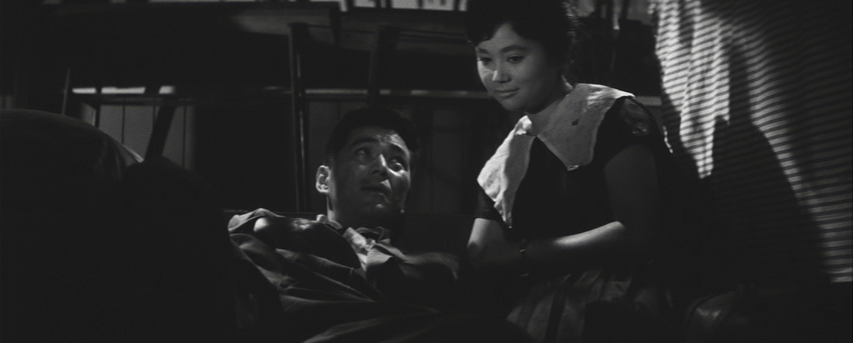
She Taught Me Serendipity (今日の空が一番好きとまだ言えない僕は, Akiko Ohku, 2024)

Akiko Ohku’s quirky dramedies have so far mostly focused on an introverted woman’s quest for love, but with She Taught Me Serendipity (今日の空が一番好きとまだ言えない僕は, Kyo no Sora ga Ichiban Suki to Mada Ienai Boku ha) she moves into new territory in adapting the novel by Shusuke Fukutoku in which an alienated college student is unwittingly caught between two women. Set in the picturesque city of Kyoto, the film echoes the work of Tomihiko Morimi and revels in the power of serendipitous connection but equally the melancholy loneliness that underpins it in the legacy of grief and regret.

Returning after a six-month absence following the death of his grandmother, Konishi (Riku Hagiwara) is indeed at odds with his environment. He walks as if in a fog and is slightly out of tune with the world around him while often carrying an umbrella, or parasol depending on the weather, as a bulwark to protect him from prying eyes. Unlike his classmates, he speaks in the standard dialect rather than with an Eastern-inflection which his only friend Yamane (Kodai Kurosaki) has taken to extremes, describing his manner of speech as “Yamane Dialect”. It’s on campus that he begins catching sight of a young woman Yamane has dubbed the “solo soba” diner who seems to be just as solitary as he is, though the pair later strike up a connection precisely because of their shared sense of alienation.

To that extent, it’s not unreasonable that Konishi might doubt his new friendship with his young woman, Hana (Yuumi Kawai), who seems to be tailor-made for him and appeared seemingly from nowhere during his absence. Meanwhile, he’s resumed his old job at a local bathhouse where he cleans after hours with a girl-named Sacchan (Aoi Ito) who, judging by the looks she exchanges with the owner’s daughter Kaho, is secretly in love with him though he hasn’t noticed. While Hana is like him quiet and mysterious, Sacchan is a live wire, a young woman full of life who can’t stop talking and makes each of their cleaning sessions a riot of fun and silliness. 

But in keeping with these kinds of stories, Konishi suffers from extreme main character syndrome and never really sees either woman as a whole person rather than as an extension of himself. As Sacchan says in a poignant monologue movingly delivered by Aoi Ito, he never even bothered to ask her full name. He promised to buy her dinner to make up for missing shifts and needing extra help, but most likely never planned to follow through, nor did he ever listen to the song she recommended to him, though he went and read the short story Hana referenced right away. On the one level, there was nothing he could do to avoid hurting her feelings when he couldn’t return them, but at the very least he’s been self-involved and insensitive, just as he is when Hana suddenly drops out of contact and he convinces himself she was only hanging out with him as a joke. Rather than process his pain, he lashes out at Yamane instead and almost loses his only remaining friend before finally growing up a bit and making the effort to say sorry. 

The Japanese title translates as something like “I, who still can’t say, ‘Today’s sky is my favourite’,” echoing a common phrase repeated by Hana’s late father and Konishi’s grandmother, and hinting at Konishi’s inability to embrace whatever life gives him and find joy within it. Nevertheless, he does perhaps learn the importance of saying how he feels before it’s too late while taking into account the feelings of others even if his final confession comes at an awkward and insensitive moment, though it’s true enough that he’s really talking to himself. On one of their surreal adventures, he and Hana visit an unusual restaurant where all the dishes have quirky codenames except for one. It turns out the proprietor used to have someone to help him, but for whatever reason they’re not around anymore. Playing with aspect ratios and split screen, Ohku often fills the frame with a sense of absence in which characters simply disappear quite abruptly, echoing the fragility of these connections and, in fact, of everything, but makes plain that the main thing is to embrace them when they come rather than live in the shadow of loss or let the chance for love pass you by in fear of its failure.


She Taught Me Serendipity screened as part of this year’s Toronto Japanese Film Festival.

Trailer (English subtitles)

Aimitagai (アイミタガイ, Shogo Kusano, 2024)

When we say, “what goes around comes around”, we usually mean it in a bad way that someone is only getting what they deserve after behaving badly themselves. But the reverse is also true. The smallest acts of kindness people do without thinking can have quite profound effects on the world around them because, in the end, we are all connected. A bereaved father remarks that he thought novels that only had kind-hearted characters were unrealistic, but now he wants to believe that kind of world could exist after realising the impact his late daughter’s kindness had on those around her.

It was Kanami (Sawako Fujima) who saved Azusa (Haru Kuroki) in middle school when she was being bullied for coming from a single-parent family and the pair remained firm friends ever after until Kanami was suddenly killed in an accident while working overseas. Kanami’s loss leaves Azusa struggling to move forward with her life while mired in grief and uncertainty. Having lost her mother some years previously, she has never really dealt with the trauma of her parent’s acrimonious divorce and has a rather cynical view of marriage despite working as a wedding planner where her unmarried status sometimes causes her clients anxiety though it obviously has very little do with her ability to do her job. She’s always been clear with her long-time boyfriend Sumito (Aoi Nakamura) that marriage isn’t something she sees in her future, though he seems to want more commitment, while she repeatedly describes him as “unreliable” and is hesitant to take the next step with their relationship whether it involves getting married or not.

In that sense it’s really Azusa’s inability to surrender herself to the concept of what her grandmother (Jun Fubuki) calls “amai-tagai”, or mutual solidarity, which they experience first-hand while visiting her as another old lady nearby comes rushing in saying her house is on fire. It’s not so much reciprocity as a generalised idea of having each other’s backs, that people help each other as needed without keeping score in much the same way as Azusa was saved by Kanami and as she later realises by Komichi (Mitsuko Kusabue) whose piano-playing soothed her spirit though Komichi intended to play in secret, allowing her music to blend in with the six o’clock chimes as a daily act of atonement for having played the piano for boys who were going off to war many of whom never returned. It is then Azusa who saves Komichi in turn by telling her that she felt comforted by her music and that she does not believe that she has no right to play it simply because of the ways it was misused in the past. 

What Azusa fears is that by getting married she would essentially be cutting herself off from her paternal grandmother who, aside from her aunt (Tamae Ando) who is also Komichi’s housekeeper, is the only other family member she seems to have a meaningful connection with. Unable to let go Kanami, she keeps sending her messages little knowing that her mother is actually reading them and feeling both sorry and grateful that her daughter had such a good friend who like her is also struggling to continue on without her. She and Kanami’s father (Tomorowo Taguchi) find solace in the letters they receive from children at an orphanage where Kanami used to donate cakes and sweets after visiting there on a job. The photos she took are on display at their bathrooms, Azusa said because Kanami wanted them to be in a place where the children felt free to embrace their feelings privately without fear of embarrassment. 

The photographs, letters, and belated gifts are all examples of the ways in which what Kanami sent around is still going around and will continue to do so long after she herself is gone. Through realising the reality of “aimi-tagai”, Azusa learns that the world can also be a kind place, Sumito might be more “reliable” than she thought, and it might not be such a bad idea to trust people after all. Based on the novel by Tei Chujo, the film’s interwoven threads of serendipitous connections and the unexpected results of momentary acts of kindness prove oddly life-affirming if only in the ways in which each realise that Kanami is always with them even if physically absent.


Aimitagai screened as part of this year’s Toronto Japanese Film Festival.

Trailer (no subtitles)

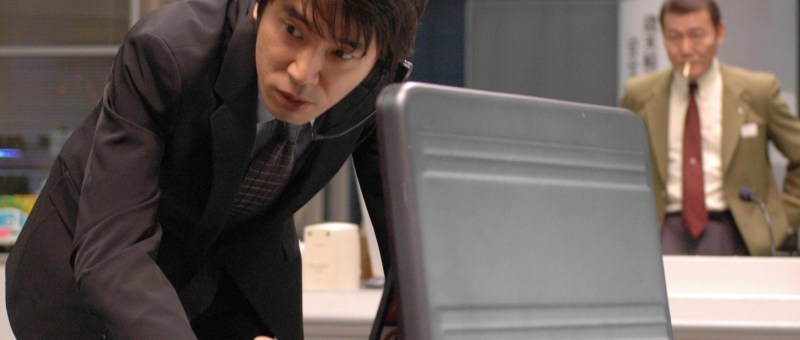
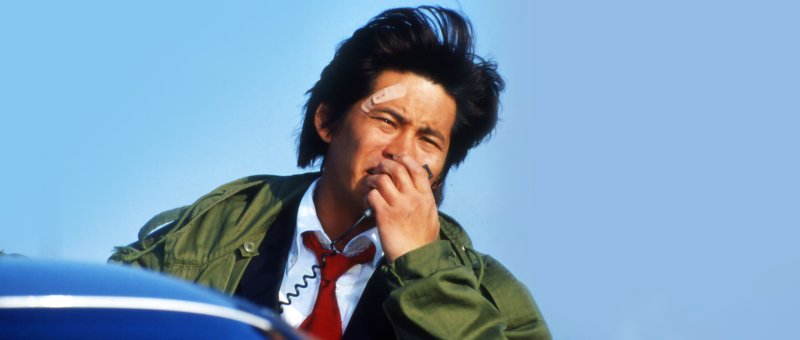
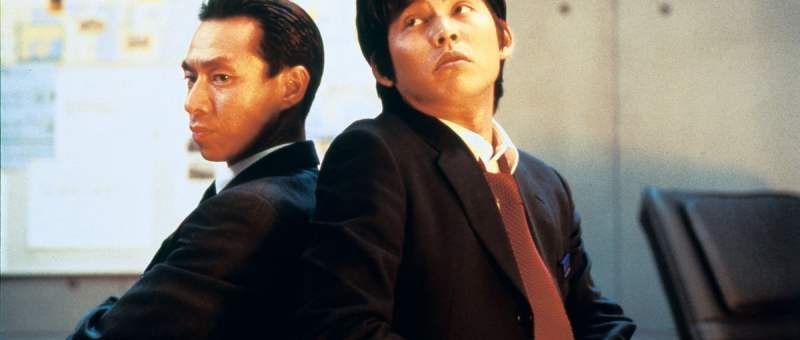
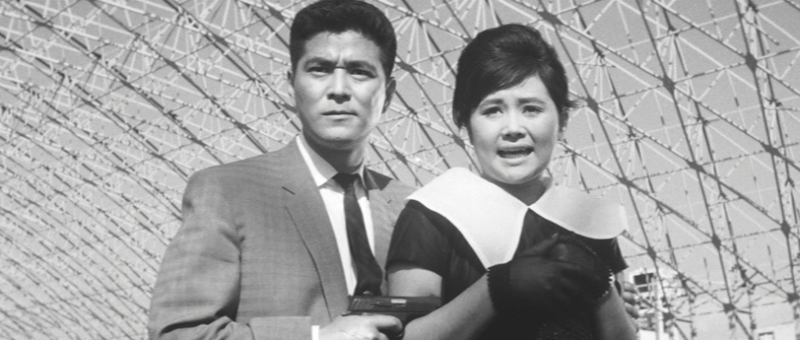
Kakashi (案山子, Norio Tsuruta, 2001)

There’s a village in Japan that’s mostly inhabited by scarecrows. One of the last remaining residents began creating them to replace something that had been lost, fashioning effigies of those who had passed away and immortalising them as if clinging to a distant past long before the shadows of rural depopulation were cast over the village. In a way, it’s an expression of grief or at least a lament for a loss of community and a sense of increasing loneliness and isolation. 

Adapted from Junji Ito’s manga, Norio Tsuruta’s Kakashi is also in its way about grief and the way in which it can consume those left behind so that they too have no more desire to live. Dr Miyamori (Kenzo Kawarasaki) later explains that in the village they co-exist with death and he returned to his home town in the hope that he could save his daughter, Izumi (Ko Shibasaki), through its peculiar magic of resurrecting the deceased as human scarecrows. As he freely admits, he could not accept his daughter’s death and so has chosen to stay here in the village though alive himself rather than attempt to remake his life without her.

The village itself appears to exist slightly outside of the mortal realm as Kaoru (Maho Nonami) discovers on encountering the long tunnel that leads to its entrance. Her car breaks down half-way through signalling her liminal status as one who does not yet belong on either side. It’s not quite grief that’s brought her here but still a nagging sense of foreboding in that she’s come in search of her missing brother, Tsuyoshi, after discovering a letter from an old school friend, Izumi, next to his telephone. Kaoru appears confused as to why the letter should be there and travels to the village hoping for answers, assuming that Tsuyoshi (Shunsuke Matsuoka) may have travelled there in search of Izumi.

As the landlady lets her into his empty flat, Kaoru explains that she is his only family and there’s a suggestion that her attachment to him is unnatural, bordering on the incestuous. A policeman taking a look at the photo Kaoru hands him remarks that they look like a couple, which they do, leading her to stuff the photo back in her pocket as if she were embarrassed. To that extent, she’s come to reclaim Tsuyoshi, not just from death, loneliness, grief, and depression, but from Izumi or at least the spectre of her. In life, she feared that Izumi would take him away from her and at least in Izumi’s mind frustrated their romance out of romantic jealously. Dr Miyamori implies it was this sense of despair that contributed to her death and it’s clear that Izumi’s mother also blames Kaoru while Izumi accuses Kaoru of being forever in her way.

But then again, she did not bring Kaoru to the village and is not targeting her personally out of vengeance. Rather, she has moved beyond that as she finally’s about to become “herself” thanks to the village’s dark magic and the following day’s scarecrow festival, and therefore no longer needs to care about the resentments of her mortal life even if her father says that her evil spirit has empowered the town. There is definitely something quite creepy in this weird village with its shades of the Wicker Man in its strange ritual and humanoid effigies where improbable numbers of children softly blow pinwheels under a large windmill that seems to be moving time itself. Tsuruta even borrows a particularly eerie shot from Don’t Look Now and emphasises the liminal qualities of the village in Dr Miyamori’s advice that Kaoru leave as soon as her car is fixed otherwise she may no longer wish to.

The village is apparently full of those like him who are trapped but wilfully so because they no longer desire to leave. Kaoru attempts to help one of them, a young living woman from Hong Kong unable to let go of the memory of her late father whose scarecrow eventually tells her to go. It’s a place for those who have no other place to go to because they cannot let go of their grief and despair. Thus Kaoru is pulled towards the edge of the tunnel, not so much to free her brother as, in a way, herself by allowing her grief to consume her and consenting to live this empty life alongside death rather than allow herself to accept her loss.


Trailer (no subtitles)

Hong Kong 1941 (等待黎明, Leong Po-Chih, 1984)

“Britain has reassured the people that it will not give up Hong Kong,” according to a radio broadcast at the beginning of Leong Po-Chih’s Hong Kong 1941 (等待黎明). The words have a kind of irony to them and not only because Britain did abandon the people following the Japanese invasion, but because the film was released on the eve of the Sino-British Joint Declaration in which it said something quite similar. 

But then again, the opening scenes are themselves quite critical of British rule as they, on the one hand, insist they aren’t going anywhere and, on the other, start evacuating women and children to “safer” areas of the commonwealth such as Australia. Out of work actor Fei (Chow Yun-fat) fled the Japanese incursion on the Mainland and came to Hong Kong, but now tries to stowaway abroad a boat going to Australia. He’s caught by a little British girl who speaks fluent Cantonese yet refers to him as her “slave” and insists that he “kowtow to me, now.” But then the girl suddenly adopts the persona of the Empress Dowager Cixi and demands the same. Fei makes the first of his many jumps into the water around Hong Kong, as if only in this liminal space can he be free. Anticipating the wave of migration occurring before and after the Handover, and also that of the present day, he and his friends Keung (Alexander Man Chi-leung) and Nam (Cecilia Yip Tung) set their sights on leaving to find Gold Mountain in Australia or America.

But they’re one day too late because the date of their departure is that the Japanese arrive in Hong Kong. Their haste to leave was in part caused by the fact that Nam’s father, Ha Chung-sun (Shih Kien), was trying to force her to go through with an arranged marriage her prospective groom didn’t want either. Nam is never really free as, as she points out, even after her father relents and allows Keung to marry her after she is raped by a police officer emboldened by the chaos and therefore worthless to him as currency, Keung never actually asked her and she’s in effect forced into a marriage with him instead. In fact, she returns to the shrine Keung lives in two find the two men constructing her marital bed for her with the double helix symbol of happiness already placed above it in an ironic expression of patriarchal oppression.

Indeed, her position is more precarious than either of the men and we see other families roughly cutting their daughters’ long hair to make them look like boys in fear of a rapacious Japanese army. But it largely turns out that it wasn’t so much the Japanese they needed to be worried about as the local population, experiencing a temporary limbo in which the social order has been suspended. Police officer Fa Wing (Paul Chun) who had acted as a lackey for Ha Chung-sun while constantly eying up Nam leads a gang of looters to Ha’s house to take their own revenge against his capitalistic oppression of them. Ha had largely made his money through rice profiteering and exploiting the local workforce. Recent layoffs at the warehouse had led to a labour riot, while Keung and his friends had been running a sideline skimming sacks of rice to sell on the black market. 

Ha and his henchmen anxiously await the arrival of the Japanese hoping that they will protect them from retribution, but the Japanese do not arrive fast enough. When they do, Ha collaborates and attempts to ingratiate himself with the Japanese officer in charge of the colony who once again takes a liking to Nam. General Kanezawa (Stuart Ong) also uses their poverty to starve them into submission, promising rice to anyone who will come and sing with him. The song he chooses is “Shina no Yoru” by Li Hsiang-lan, whom he describes as “their very own”, yet was actually a Japanese woman, Yoshiko Yamaguchi, groomed for stardom in Manchuria and marketed a Chinese star in propaganda films. Another song of hers, Ieraishan, can be heard earlier on the soundtrack as if heralding Japanese arrival. 

Though Nam tries to resist, Fei raises the trio’s arms in a cry of “banzai” in a moment of ostensible collaboration designed to buy them temporary safety. His philosophy and that of many others is to take the rice and deal with the rest later, which Fei does by becoming an enforcement officer with the Japanese to get papers that will allow all of them leave. He uses his position to help a gang of Mainlanders who are resisting the Japanese, and are, in fact, the last ones to stay behind and defend the colony, as well as well as save Keung when his attempt to rescue two friends who have been sold out for forced labour on another Japanese-controlled island by a local gangster backfires and he’s captured himself. 

Ironically enough, Fei had been the first one to try to leave and described himself as “selfish” after jumping back into the water to return to Nam and Keung who didn’t make the boat on time because they were trying to save a local eccentric everyone calls “emperor” played by the director himself. Fei is quite obviously in love with Nam, and she gradually falls for him in return though symbolically wedded to Keung, if not in the legal sense. Again, she has no say over her romantic future which is sorted out between the two men with Fei abiding to a code of honour in continuing to protect the relationship between Keung and Nam. Perhaps this echoes the way in which the Hong Kong people of 1941 or 1984 have little say in their future either as their fate is decided by two distant powers. Nevertheless, it leaves Keung feeling awkward and inadequate, realising that Nam likely prefers the smart and dynamic Fei over his constant failures and inability to protect her, though he is never jealous or resentful towards him only knowing that he is continually indebted. Yet it’s Nam who eventually strikes back for Hong Kong and for her own freedom while Fei looks on as children in the street play at beheadings as if they were Japanese soldiers. She embodies the spirit of Hong and carries it with her, and as the Chinese title of the film suggests, waits for a new dawn while accepting that just like old memories it will be replaced by what is to come. She speaks from a perspective that is both historical and uncertain, mourning the past while fearful of the future, but all the while continuing to live as one new dawn replaces another.


Hong Kong 1941 screened as part of this year’s Focus Hong Kong.

Trailer

Nine-Ring Golden Dagger (挡马夺刀, Feng Xiaojun, 2024)

The daughters of General Yang venture into Liao territory in search of their father’s famed “nine-ring nation stabilising sword” in Feng Xiaojun’s wuxia adventure, Nine-Ring Golden Dagger (挡马夺刀, dǎng. mǎ Set in the middle of the Song Dynasty, the film draws inspiration from the western in its dusty frontier town setting if also clearly from King Hu’s Dragon Inn in the design of its central staging post where a series of action set pieces take place.

Emperor Taizong has expelled the Khitan in the north and is intent on reclaiming the sixteen prefectures of Yan and Yun for the Han people. General Yang (Wu Yue) leads his men against the invading Liao while the Middle Army do nothing and wields his nine-ring nation stabilising golden sword but is cut down by Liao general Liu and his sword is captured as loot. Yangying, (Liu Shinlei) Yang’s ninth daughter, cannot stand the injustice and is determined to march into Liao and get it back. Her sister, Yanqi (Zhang Xintong), tries to stop her but then relents and decides to go with her instead. 

The sword is in the home of the South Prime Minister of Liao, Zhang Hua (Tan Kai), who is Han and resented by some of the Liao warriors for being a token hire designed to appeal to the Han population who they fear are taking over now they’ve joined the Liao. Though Dowager Empress Xiao is minded to make peace, General Liu and Zhang would rather the war continue because it facilities their advancement amid an otherwise rigidly hierarchical social system.

One expression of this is in hilarious comic relief character Xiao Pusage (You Xianchao) who has a long and pointless intro he’s fond of reciting that explains he’s the Dowager Empress’ nephew. Jiao Guangpu (Song Tianshuo), owner of the staging post, was thinking about killing him but decides to let him go instead because they only kill evildoers and Pusage actually seems quite nice and enjoys doing good things like helping the poor. Jiao is also a former Song soldier trapped behind enemy lines without the resources to go home but dreaming of reclaiming Yang’s sword and taking it back with him. Nevertheless, he originally distrusts the Yang daughters believing them to be Liao soldiers and therefore his enemies. He too has a witty intro song in which he gives away his origins only no one seems to be paying attention. 

But in some ways, Jiao’s desire to reclaim the sword is more sentimental than that of the daughters even though part of the reason why they want it is to avenge the deaths of their father and brothers. Even so, their main mission is taking it back to stabilise the nation and symbolically end the war with Liao. Jiao, by contrast, wants it to fulfil an obligation he feels to General Yang who fought bravely in the film’s opening sequence but was executed by a cowardly arrow from Liu. After a botched attempt at assassination and an intense fight through the inn, the trio form an uneasy alliance and agree to travel back to Song together only to be continually frustrated by Liao forces who eventually have them surrounded at the staging post.

While the design may echo Dragon Inn, Feng uses the techniques of Peking Opera to stage the battle between Yangqi and Jiao while otherwise echoing the western through the newspaper-like onscreen text and dusty frontier sensibility as the Yang sisters make their way back to the border with their father’s sword in hand. Through somewhat epic in scope despite its compact runtime, the film is essentially structured around a series of action sequences from the daring raid to retrieve the sword with its various booby traps to a chase through a cornfield and the final confrontation at the inn. Each is impressively choreographed and expertly performed to make full use of the well-designed sets and meagre budget. The lean, mean feel and linear progression also add to the retro sensibility while there’s something undeniably satisfying about seeing these two rather slight women run rings around the Liao forces thanks to the training they received from their father as they become the inheritors of his legacy and saviours of Song by retrieving the sword and ushering in a new era of peace and coexistence.


Nine-Ring Golden Dagger is released Digitally in the US on July 1st courtesy of Well Go USA.

Trailer (English subtitles)

The Black Tavern (黑店, Teddy Yip Wing-Cho, 1972)

One of the reasons that martial arts films are so popular is that it’s often easy to tell who is good and who is bad. In general, the just hero vanquishes the source of evil and corruption, thereby restoring a sense of moral order to a world that may in other ways be chaotic. But chaotic is probably the best way to describe the world of The Black Tavern (黑店) in which the titular inn becomes a nexus of greed and villainy where it is impossible to tell who, if anyone, is good, while almost everyone is actually bad and the heroine only really intervenes in the closing scenes.

One way you can tell that something is very rotten at the Gao Family Inn is that the cook suddenly emerges from a pit underground carrying someone’s leg, which he then chops up and uses to make buns. No one ever mentions this again. It’s a just symbol of how corrupt and hellish this world has become. The inn is apparently the only staging post on this route, which is presumably how they continue to get custom despite bumping off their guests, taking all their stuff, and then chopping them up to put in buns to serve to the next unfortunate person who arrives in search of a bed for the night. 

But the reason so many venal bandits are drawn here is that a beggar monk (Dean Shek) tells them he saw vast riches fall out of a chest belonging to Hai Gangfeng, a former official returning to his home province with all his ill-gotten gains from accepting bribes. Assuming Gangfeng will be stopping at the inn, everyone who heard the monk is on their way there. Only, as it turns out, the man we thought was Hai Gangfeng is actually a bandit, “Whipmaster” Zheng Shoushan (Ku Feng), who cunningly pretended to be him to take over the inn and wait for the real Gangfeng’s arrival. He does not, however, seem to have anticipated so many other bandit gangs each more outlandish than the last having the same idea.

One turns up with a band of hopping vampires who turn out to be crooks in disguise, while another is wearing a horned helmet that gets stuck in things when he’s trying to fight. Of course, they’re all trying to kill each other so they can be the ones in control when Gangfeng finally arrives. What they don’t realise is that the whole thing’s a honeytrap designed to lure them all to the inn for just this purpose, so that they’ll all kill each other and spare the forces of justice some trouble. Those would be Zhang Caibing (Shih Szu), a disciple of the Lady Hermit making this a kind of extended universe film of the Cheng Pei-Pei classic. Continuing her mentor’s mission, she’s out to skim off the “scum of the martial arts world,” explaining to Shoushan that if he doesn’t like it, he should have thought of that before committing so many “evil deeds”. 

On the other hand, Caibing does seem to be enjoying this quite a lot so perhaps she’s not quite so entitled to the moral high ground as she’d like to think. While taking a leaf out of King Hu’s book, Yip adds an edge of slapstick absurdity in setting up elaborate action sequences with well-deserved pay offs and indulging in goreless yet extreme kills such as a series of surprise decapitations. Shoushan’s bladed whip becomes a versatile weapon but also an extension of his character in his cowardliness and lack of morality. It’s only really any good at long range, which means that he keeps his opponents at arms’ length rather than confront them directly as in the typical tests of skill that define a martial arts battle. He coils it around their necks, snake-like, then either pops their heads off or strangles them to death. Just like the innkeeper he killed off at the start, he seems to have genuine affection for his female companions but eventually meets a similar fate as his trademark whip is ironically turned against him. 

There’s also a genuine, if underplayed, sense of ambiguity in the attraction between the mysterious swordsman (Tung Li ) and Shoushan’s daughter that prevents him from killing her while suggesting that he too was on some level attracted to banditry. Even if he rides off in the end with Caibing, it does not appear that their relationship is romantic. Nor is he allowed to claim victory by swooping in when all seemed lost for Caibing during the final fight, immediately encountering difficulty with Shoushan who puts up a good fight that again seems contrary to his moral character in the amount of skill and effort needed to beat him. Indeed, it often seems as if he will win after all. This world will fall to men like him and turn into one giant Black Tavern. In the end, it’s a team effort that takes him down, including the strange intrusion of the beggar monk who was after all the person who started all this by repeating the rumour in the last rest stop and may or may not actually be working with Caibing. In any case, the incredibly fast-paced action sequences and the dark humour that accompanies them lend the film an epic quality despite its tight duration along with an ironic kind of cynicism that insists this world is simply too silly to be evil but that the scum of the martial arts world will pay all the same.


The Black Tavern screened as part of this year’s Focus Hong Kong.

Tape (錄影歹, Bizhan M. Tong, 2024)

Up-and-coming filmmaker Jon (Kenny Kwan) says he wants to make real films that address social issues within Hong Kong, but his old high school buddy, Wing (Adam Pak), calls him pretentious, while the two continue to lay into each other about their respective life choices, But as it turns out, that isn’t why they’re here. Wing has laid a trap for Jon and is hoping he can force him into telling him once and for all what really happened on the night of their high school graduation 15 years previously so he can capture it on the various cameras he has hidden around the apartment.

Of course, what we have here is an ironic comment on the notion of consent as Jon has no idea he is being filmed and would not have said what he said if he did. Still, the question remains what the impact of the tape, Jon’s own words condemning him, has on his later actions. Would he ever really have reckoned with himself if his confession remained private, or would he have gone on forgetting it, justifying himself, claiming that it wasn’t “rape” just “a bit rough” and everyone does things they’re not proud when they’re young and drunk?

On the other hand, what are Wing’s intentions? Does he really have the right to force the issue or is he merely poking his finger into someone else’s wound and potentially hurting them in the process. Admittedly an unreliable narrator, Wing tells us that his girlfriend Winky broke up with him because of his “violent tendencies,” yet it’s Jon, the respectable filmmaker in expensive shoes, who starts throwing punches and tries to strangle Wing while demanding that he give him the video in which he admits that what he did to Wing’s girlfriend Amy (Selena Lee) amounts to rape. Wing suggests that he’s sick of the hypocrisy and outraged on Amy’s behalf, but his actions are motivated more by jealousy and resentment that Jon slept with his former girlfriend than concern for her. He convinces himself that it must have been rape because otherwise he can’t understand why Amy would have slept with Jon when she refused to sleep with him the entire time they were dating. 

To that extent, Amy becomes a kind of wager between the men. Wing invites her over to engineer a confrontation that is intended more as a provocation of Jon than it is a defence of his former girlfriend. Amy, however, immediately tries to turn the tables by rejecting the characterisation of events put forward by each of the men. Now a prosecutor who unlike Jon and Wing has remained in Hong Kong, Amy forensically questions Jon’s testimony and forces him to admit that he believes what happened between them was rape only for her to refuse his apology because she doesn’t agree. She refuses to be his victim, while he continues to dominate her by disregarding what she says and insisting that she’s in denial and “not in the right place” to hear his apology. 

Later Amy says that back then Jon had his hand over her mouth, and it’s true enough that the men each attempt to prevent her speaking and are unwilling to accept what she has to say. As she tells them, an apology is about the person who issues it’s desire for permission to let themselves off the hook. To her it’s meaningless, while it’s almost certain that Jon would never have even given it if it weren’t for the tape which could ruin his career and his marriage. “You want the last word, but it’s not yours to have,” she pointedly tells him while he struggles to accept the lack of control he has over this situation and indeed over Amy. She tells him that she was in love with him at the time which gave him power over her which he misused when he had no real feelings for her and may have just been trying to get back at Wing, just as Wing’s weaponising of whatever happened that day is about his relationship with Jon rather than her pain or trauma. Though he tries to weasel his way out of it and is confused by the realisation, Wing is also bent on asserting patriarchal control over Amy in feeling entitled to her virginity and annoyed that Jon “took” it, even as Amy points out that in any case they were no longer dating at the time and it’s really none of his business who she sleeps with because it’s entirely her own decision. 

But then again, she asks him if he’d marry a “rape victim”, and he doesn’t have an answer for her hinting at the societal stigmas in play along with her own desire not to see herself as one. Jon doesn’t want to see himself as a rapist either, continuing to insist that he’s a good person and, in any case, not the same as he was 15 years ago but now much more aware of women’s rights and position in society. Wing may just not want to see himself as a loser, aware that he’s living a life that looks unsuccessful as a lifeguard in Thailand making ends meet by peddling drugs to teenagers and trying to reclaim his masculinity by proving that Jon cheated him by assaulting Amy. Yet in updating Richard Linklater’s 2001 original, Tong really makes this about two tapes, the one from 15 years previously and the one Wing shoots in the present day which is immediately synced to the cloud. In revisiting the past, we gain a new perspective as the young Amy is given the opportunity to speak and unwittingly remarks on how she thinks of the past as something that can never really be destroyed but must dragged along in a box behind you that you occasionally peek into. Nevertheless, she may have succeeded in blowing it wide open in reclaiming her agency from the continually self-involved Jon and Wing.


Tape screened as part of this year’s Raindance Film Festival.

Trailer

Possession Street (邪Mall, Jack Lai, 2024)

Possession Street is a real street in Hong Kong, but its name doesn’t hint at the supernatural. Rather, it’s located on the former site of Possession Point where the British took possession of Hong Kong in 1841. Nevertheless, there is definitely some body snatching going on in Jack Lai’s claustrophobic zombie-esque horror set in the decidedly purgatorial space of a shopping centre on the brink of demolition. 

Indeed, it’s the vendors themselves that are in someways zombies. Representatives of a generation that is tired of fighting and barely clinging on to what they’ve got, they run their moribund stores stubbornly refusing to move with the times almost as if they were haunting the place. A former stuntman, Sam (Philip Keung Hiu-Man) runs an unprofitable video shop that plays classic Hong Kong wuxia movies of the kind he used to be in. Sam’s wife left him taking their daughter Yan with her when the shop first ran into financial difficulty and Sam refused to do much about it other than swear it would figure itself out in the end.

Which is one way to say young Yan (Candy Wong Ka-Ching) escaped the mall, though she continues to idolise her father and has developed a love of film precisely because of what he taught her. She tells him that she’s dropping out of uni to become a filmmaker because she wants to keep Hong Kong cinema alive in what seems to be a meta comment on the state of the industry in which Hong Kong cinema itself has become a kind of zombie, like the vendors simply treading water while trapped in a constant state of decline in its conflicted necessity to please the Mainland censors. 

In this way, the claustrophobic space of the post-war shopping centre stands in for Hong Kong itself. A place that’s lost its lustre and fallen behind the times, the mall has fallen into a state of disrepair. Many of the stores have already closed and there’s not much footfall. The mall has a serious rat problem, though really that’s about to be the least of its worries. Even so, it’s the rodents who are partially responsible for chewing on the power cables and requiring a trip to the super secret meter room where one of the vendors accidentally damages the seal keeping a not all that ancient evil from bubbling to the surface. 

As the ghost later explains, like the vendors they are those who have been left behind by the new Hong Kong and cannot progress into its future. The mall was built on top of an air raid shelter which was sealed shut by an American bomb leaving all those inside to turn to depraved acts of survival such as cannibalism along with violent outrages like rape before dying horribly inside. Their resentment has awakened another ancient evil that wants to kill everyone in the world, beginning with everyone in the mall which is locked shut until the following morning. Clearly influenced by the the Last of Us with its fungal zombies who spread the curse by coughing up a visible miasma and are covered in pustular growths, the infected echo a particular face of evil such as the fat cat capitalist constant running down his daughter who is the only one who tries to help him. He remarks that he’s glad her brother never showed up, because now the family name will continue. 

Meanwhile, Yan has been a part of this community since she was a child and fond attachments to many of the vendors including the Taoist priest whom she once-called Uncle Con-Man. Master Mak (Alan Yeung Wai-Leun) was entrusted with a mission by his former master who knew about the air raid shelter and was the guardian standing it over it, making the sure the evil didn’t leak out, but Mak has lost the faith and with the imminent demise of the shopping centre come to the conclusion that it’s time to call it quits. There is then something in the fact that this Taoist philosophy actually works and proves the only real way of overcoming the supernatural threat as if calling forth the spirit of Hong Kong. On the other hand, it’s really Yan who is trapped in this place and seeking escape in permission to move on but also to continue fighting for the Hong Kong that’s disappearing in keeping its cinema alive. When Sam tells her “ga you,” he echoes the words of the protestors while ironically telling her not to give up even though life rarely turns out the way you hoped. In effect, she liberates them all including herself from a self-imposed limbo of resigned stagnation while walking into the light of a new day determined to fight for the kind of future she wants for herself rather than what anyone else might have wanted for her.


Possession Street screened as part of this year’s Focus Hong Kong.

Trailer

Valley of the Shadow of Death (不赦之罪, Lam Sen & Antonio Tam Sin-yeung, 2024)

A pastor’s faith is tested when a young man who was involved with the death of his teenage daughter arrives at his church in search of salvation in Lam Sen & Antonio Tam Sin-yeung’s In Valley of the Shadow of Death (不赦之罪). Though his faith tells him that he must forgive and that it is his duty to help this lost young man who has no one else, it is obviously incredibly difficult for him to reconcile his Christian philosophy with the reality of his guilt and anger.

It’s this contradiction that’s at the heart of the film in examining whether Pastor Leung (Anthony Wong Chau-sang) is merely a hypocrite who expounds on “the beauty of suffering,” while wallowing in his grief and fundamentally unable to put what he preaches into practice. But the problem is it’s Leung’s religiously that’s a part of the problem in that its oppressive qualities and implacable rigidity also contributed to his daughter’s death. It’s convenient for him to shift all of the blame onto Lok (George Au) because it means he doesn’t have to think about the impact of his own choices or indeed question his faith in God as his wife (Louisa So Yuk-Wah) has done. 

Mrs Leung also seems to blame her husband on some level and the relationship between the pair has become frosty in the extreme. A reporter arrives to interview Leung about his work while Mrs Leung goes out of her way to make as much noise as possible as she leaves for work. She has since lost her faith, unable to understand why God would do this to them, while Leung regards Lok’s arrival, like many things, as a test yet already knowing he has been found wanting. He does his best to force himself to treat Lok with kindness, but in the end, if God really did intend to give him a son in place of a daughter, Leung cannot accept him.

But Lok looks to Leung as a more literal kind of father anyway. He is genuinely moved by Christianity and sees something in it that he equates with salvation, but at the same time perhaps only because he thinks it will confer “forgiveness”. His problem is also that he doesn’t seem to understand what was wrong about what he did despite completing his prison sentence and assumed that everything would be fine once he repaid his debt to society. Only on learning that Ching is dead does he begin to feel guilty and understand the full impact of his actions. On his release he’d tried to contact Ching on a messenger app though it’s not quite clear for what purpose. Even if he really did want to apologise or try to make a mends, it’s a selfish thing to do given that she almost certainly would not want to ever hear from him again and his resurfacing in her life would only cause her further pain. 

In any case, the film uncomfortably muddies the waters in implying that Ching herself is also responsible for what happened to her, while Leung never really reckons with the new information he’s learned about his daughter who may not have been as sweet and innocent as he’d assumed her to be. Likewise, the fact that Lok had such a difficult life encourages us to sympathise with him and minimise his crime, but he made a clear choice to what he did and is also responsible for it. As Leung is fond of saying, everyone is a sinner, though he doesn’t always seem to accept the same about himself. Lok too maybe entitled to redemption, and helping him may be a way for Leung to make sense of his daughter’s death while atoning for his part in it, but if it’s a test from God it’s one he’s struggling with and largely beyond the limits of his faith. In truth, some of the ideological questioning seems confused or contradictory, more like a thought experiment than a real situation and Lok a hypothetical rather than a lost young man who’s done something unspeakable but still doesn’t really understand why it was wrong. Obsessed with the concept of “forgiveness”, he childishly thinks that winning it would annul his crime as if it didn’t happen in same the way that baptism washes away sin. Leung, meanwhile, cannot practice what he preaches and uses his religion, the very thing that made him fail his daughter, as a shield to avoid thinking about his own culpability. Only God can forgive, Leung’s fond of saying, but the person he needs forgiveness from the most may be himself. 


Valley of the Shadow of Death screened as part of this year’s Focus Hong Kong.

Trailer

The Invisible Half (インビジブルハーフ, Masaki Nishiyama, 2025)

Most people don’t mean to, but in thinking they’re being nice all they do is make someone feel bad. Like they don’t belong, or there’s something wrong with them. Since returning to Japan from the UK after her parents’ divorce, Elena (Lisa Siera) can’t help thinking everyone’s staring at her. They call her the “gaijin” girl, a derogatory term for someone who is not considered to be Japanese, but Elena isn’t a “foreigner”, not that it matters. On her first day at her new school after leaving the last one due to relentless bullying, the teacher asks her what kind of mixed-ethnicity she is and then asks her to tell her all about England, though she’s been living in Japan for over 10 years and can’t really remember it. Nor can she remember much English, or perhaps simply doesn’t want to talk about it, though there’s no reason why she should anyway. 

Maybe not bringing it up would be worse, but the teacher’s ham-fisted attempts at inclusion only leave Elena feeling othered. These are just a few of the microaggressions she experiences in her daily life and even another girl who tries to make friends with her, Akari (Miyu Okuno), makes a few insensitive remarks like how she’d like to have “a gaijin’s face,” and that it’s not fair because she is Japanese. She also goes straight to using Elena’s first name, which could just be friendliness or possibility circumventing the usual rules of Japanese politeness because they don’t really apply to non-Japanese people implying Akari may not think of her as one. Elena says she just wants “a normal Japanese name”, so her new friend starts calling her “Rena” which Elena seems to like because it feels like acceptance, but is it, really?

In many ways, it’s the Elena/Rena dichotomy that’s at the heart of Masaki Nishiyama’s incredibly accomplished debut as she struggles to accept the “invisible” half of herself that is nevertheless what she thinks everyone is always staring at to the extent that they don’t even really see her. There’s another girl in her class, Ito (Runa Hirasawa), who appears to be a figure of fun who everyone, including Elena, avoids and considers “weird”. It’s after the class bullies take Ito’s phone and put it in Elena’s bag to kill two birds with one stone that Elena begins to feel especially haunted. A monster with a bandaged face she can only see when she’s holding her phone begins stalking her, leaving her in a permanent state of agitation.

The phone is otherwise a source of anxiety as it’s many through group chats, text messages, and social media that bullying takes place. Elena firmly believes that the monster is real, though in other ways it reflects her own sense of internal discomfort in being unable to accept what she perceives as two sides of herself as an integrated whole. Her not altogether sympathetic mother can’t begin to imagine what she’s going through, and there’s another part of her that wonders if she should have stayed with her father, though the situation may not have been much different in the UK. Her well-meaning teacher tells her she should learn to trust adults more, and asks why Elena is keeping things from her in a way that makes it sound like a personal slight or in someway a malicious act on Elena’s part. Elena replies it’s because she also Japanese, which is to say not someone Elena currently feels she can trust while also implying that Elena also does not quite consider herself to be “Japanese”.

The lumbering, bandaged monster reflects the way in which she is pursued by her own uncertain identity while craving acceptance from others but at the same time afraid to accept it. She doubts Akari’s sincerity and worries that her overtures of friendship are a prelude to a long-form pattern of bullying, but it’s finally Akari who is prepared to help her face her monster in accepting that it actually exists. Faced with another bandaged face, Elena comes to accept it as a friend along with embracing her whole self including her full name. Filled with a genuine sense of unease, Nishiyama’s eerie debut is both an exploration of societal prejudice and a coming-of-age ghost story in which a young woman learns to make her own place to belong regardless of the gaze of others.


The Invisible Half screened as part of this year’s Raindance Film Festival.

Trailer (English subtitles)