Aberdeen (香港仔, Pang Ho-cheung, 2014)

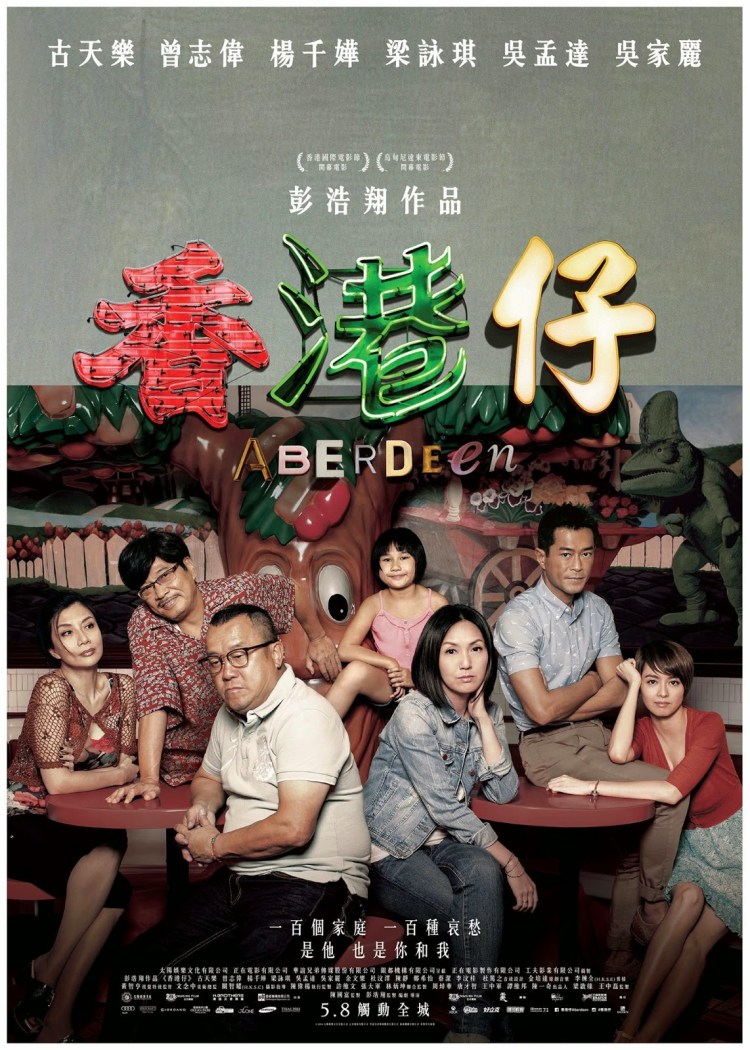
Aberdeen posterFamilies, eh? Too much history, not enough past. In Aberdeen (香港仔), Pang Ho-cheung applies his cheeky magic to the family drama, taking a long hard look at an ordinary collection of “close” relatives each with individual secrets, lies, and hidden insecurities which could destroy the whole at any given second. Fishermen driven ashore by the tyranny of “progress”, these troubled souls will need to decide in which direction to swim – “home” towards sometimes uncertain comforts, or away towards who knows what.

Grandpa Dong (Ng Man-tat), a Taoist priest, lost grandma a long time ago and is now in a relationship with Ta (Carrie Ng), a night club hostess. Dong’s son Tao (Louis Koo Tin-lok), a celebrity motivational speaker, does not entirely approve, feeling that the slightly taboo nature of Ta’s profession tarnishes his own veneer of glamour and may eventually cause him a public image crisis. Meanwhile, Tao’s wife Ceci’s (Gigi Leung Wing-kei) showbiz career is floundering now that she’s no longer as young as she was and she finds herself slipping into the seedier aspects of the business as her manager encourages her to “entertain” wealthy men to secure roles while her friend keeps inviting her to paid “parties”. Dong’s daughter, Wai-ching (Miriam Yeung), is married to a doctor, Yau (Eric Tsang Chi-wai), who unbeknownst to her is involved (unlikely as it seems) in a passionate affair with his nurse (Dada Chan) which she seems to think is more serious than it is.

Dong laments that his family can’t seem to stand being in the same room for more than a few seconds before someone ruins the whole thing with a stupid argument which might be a fairly common phenomenon in many families, but he worries that it’s all down to the fact that his ancestors were fishermen and now they’re paying for the bad karma of having killed all those fish. In fact, bad karma was one of the reasons his dad got him apprenticed to a relative who trained him up to be a Taoist priest so he could atone for generations of sin but it seems like the well ran far too deep.

Each of our protagonists is individually insecure, lacking the confidence that their family members truly accept them. Tao, vain and deeply cynical, doubts his daughter Chloe (Lee Man-kwai), whom he insists on calling “Piggy”, is really his because he thinks she isn’t very pretty and doesn’t fit with his slick, celebrity image. Nevertheless, he does love her deeply and worries that she will suffer in the long term through her lack of looks though this too is partly a self-centred projection stemming from long buried guilt over having bullied another “plain” girl while they were at school. He is also blind to the effect his constant references to Chloe’s supposed plainness are having on his wife, Ceci, who is carrying the scars of longterm insecurity regarding her appearance on top of the difficulties she is facing in her career.

Wai-ching’s problems run a little deeper in that she is convinced her mother stopped loving her after a slightly embarrassing childhood incident. The past literally returns to haunt her in the form of some paper offerings she made to her mother’s spirit which have been mysteriously sent back “return to sender” by the Hong Kong Post Office. Wai-ching’s mental instability seems to be a worry to her husband, but not so much so that he can’t just forget about it when his nurse comes calling with one of her cute little notes announcing that she’s in the mood.

Dong and Yau are in similar positions, each identifying with the figure of a beached whale – all washed up with nowhere else to go. As Dong puts it, as soon as you’re beached a part of you at least has died. Each of the older men has to accept that a choice has already been made and the energy needed to change it is no longer available. Pang allows each of the family members to find some kind of individual resolution, the family seemingly repaired as they chow down on generic fast food without making too much of a fuss, but then their solutions to their issues are paper thin and perhaps the family itself is merely the ribbon that flimsily binds an imperfectly wrapped gift that everyone has to pretend to like to avoid creating a scene. Still, sometimes the wrapping is the best part and it doesn’t do to go peeking inside lest you get a disappointing surprise.


Original trailer (English subtitles)
The Enchantment (誘惑者, Shunichi Nagasaki, 1989)

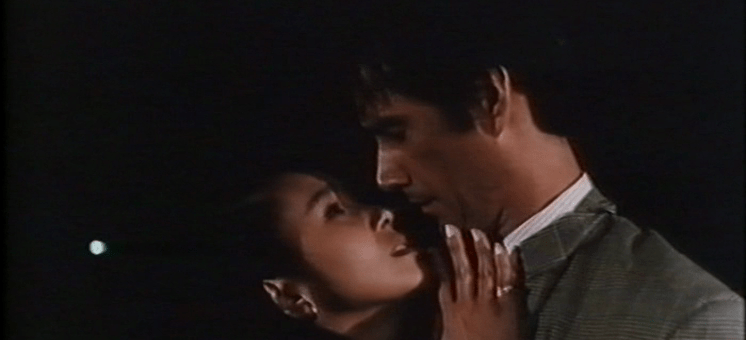
“A broken romance affects everybody” a sympathetic psychiatrist tries to reassure a patient suffering a dangerous romantic obsession with a possibly imaginary woman. Like so much of his work, they’re soft words offered casually as a path towards something deeper but in this case it’s not the patient we need to worry about but the doctor. The aptly named The Enchantment (誘惑者, Yuwakusha), somewhat less subtly titled “Temptress” in Japanese, takes its “hero” on a dark journey into fascination, the male need for domination, and the self delusions of irresolvable disappointment.   

The film opens with genial psychiatrist talking to a patient, Hirayama (Tsutomu Isobe), who proclaims himself more or less cured from a nervous breakdown born of a broken heart. Hirayama’s love affair may be largely imaginary, and he seems far from “cured”, but Doctor Sotomura’s (Masao Kusakari) failure to challenge him on his new affirmation that he’s over her because he’s realised she was “just a bitch” who treated him “like trash” might be a worrying oversight. Hirayama was supposed to be his last patient of the day, but a last minute walk-in, Miyako (Kumiko Akiyoshi), piques his interest enough to keep him in the office rather than on a planned date with his receptionist fiancée and surgeon best friend.

Miyako, nervous and reticent, tells him the appointment is “about a friend” and takes some coaxing before beginning to explain that she has been physically assaulted by her female roommate apparently jealous over the unwanted attentions of a man who developed an attraction for her at her job as a tour guide. Miyako does not spell it out, but somewhat implies that her relationship with her roommate Kimie is romantic while Sotomura has the good sense not to push the issue, only to urge her that perhaps she should think about staying with a friend a while if she doesn’t feel safe at home. Miyako, however, doesn’t want to do that and is only worried about what might have provoked this sudden and unexpected change, fearing most of all that she herself will fall out of love with Kimie if her moodiness continues to intensify.

Overstepping the mark, Sotomura is fascinated with his mysterious new patient, particularly after he becomes a kind of white night rescuing Miyako from a dangerous encounter with Hirayama who is under the delusion that she is the embodiment of his romantic obsession “Junko”. The fascination only intensifies after he makes a surprising discovery – Kimie is not “real” but a secondary personality inside Miyako. Infuriated by Sotomura’s romantic overtures, Kimie takes control and stabs him in the leg while Miyako continues to visit him in the hospital, unable to remember what exactly happened between them.

Sotomura’s obsession is both sexual and professional, after all how many sufferers of MPD is he going to meet in the course of his career? He is indeed ambitious, casually dating his receptionist Harumi (Kiwako Harada) mostly because she’s the daughter of his former professor. Though the couple live together, Harumi is constantly frustrated by his indifference to their relationship and foot dragging over making it official. Sotomura’s best friend, Shinbori (Takashi Naito), is facing much the same dilemma but has resigned himself to an arranged marriage to further his career and keep his family happy. Sotomura instinctively thinks he ought to do the same and tells Harumi that he’ll sort things out with her father, but remains fixated on the mysterious Miyako and her unconventional love life. 

A more cynical friend warns him that sex is the only thing that matters and it’s essential to avoid emotional entanglements. Nevertheless, Sotomura finds himself desperate to unlock the mystery of Miyako, but it remains open to debate which part of her he wants to “fix” – her MPD, or her sexual orientation. As we find out, Sotomura might assume that Miyako’s love for another woman has driven her “mad”, but in reality it’s more that a sense of impossibility led her to believe that there was no solution to her suffering other than death. Faced with unreconcilable loss, she internalised the figure of her fixation, literally becoming one with her lost lover in order to avoid facing that she was alone once again. Uninterested in Sotomura, Miyako/Kimie becomes fascinated with Harumi who eventually becomes so intensely obsessed with Miyako that she is willing to erase her own identity and become “Kimie” for her in order to support her sense of reality and protect the integrity of the Miyako personality.

Again, Sotomura has a few issues. The first is multi-layered sexual jealousy. Now that Harumi has moved on, found someone who “needs” her, and seems to be happier he is instantly irritated that she left him (for a woman) and desperate to win her back (along with the career boost he romanced her for in the first place). He resents Harumi’s differing vision of medical care, that she is willing to embrace Miyako’s delusion in order to keep her stable while wilfully abnegating her sense of self in a profound act of love. Sotomura the clinician wants to “cure” Miyako of her delusion, but his intervention is brutal, intruding on the mental space of her traumatic memory with physical violence designed to rip her from her safety of her artificial reality. He tries to insert himself between the two women, asserting his masculine “right” to dominate, but is eventually ejected by another knife blow to the thigh as the women assert their right to their own reality in the absence of men.

A strange psychosexual odyssey, The Enchantment spins a dark tale of obsession, delusion, and jealousy but ends on a broadly positive, if perhaps uncomfortable, note, in which the dominant psychiatrist is forced to recognise his irrelevance and the legitimacy of realities outside of his own. Broken romance affects everyone, as Sotomura said, but perhaps he doesn’t have the right to intrude on the broken hearts of others or judge the various ways in which they attempt to patch them back together again. A chronicle of bubble era Tokyo bathed in garish neon and a sense of infinite possibility, Shunichi Nagasaki’s heady feature is a surprisingly subversive affair in which trauma cannot be overcome but can perhaps become integrated in a mutually beneficial whole.


London East Asia Film Festival Announces Full Programme for 2019

Exit still 1The London East Asia Film Festival returns for its fourth edition on 24th October with a screening of Korean action drama Exit. This year the festival will host a special actor focus dedicated to Hong Kong star Aaron Kwok, as well as showcasing two films from North Korea, and paying tribute to the classic samurai movie.

Opening 

Exit banner

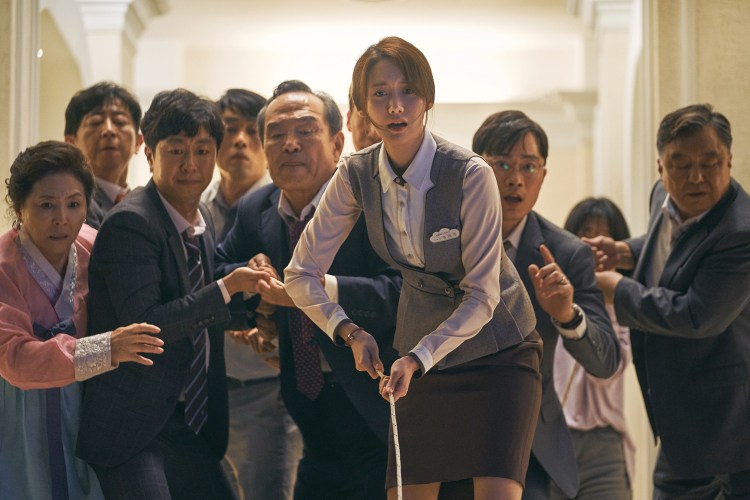
  • Exit – an unemployed rock climbing enthusiast finds himself in his element when his family is trapped by a mysterious white mist in a high rise restaurant he booked for his mother’s 70th birthday only because an old flame works there. Director Lee Sang-geun will be present for a Q&A.

China

The Crossing Banner

  • The Wild Goose Lake – Black Coal, Thin Ice’s Diao Yinan returns with another neo noir in which a smalltime mob boss tries to survive after he kills a policeman by mistake.
  • Balloon – Tibetan-language drama from Pema Tseden (Jinpa) following a sheep farming family.
  • Send me to the Clouds – a young woman diagnosed with ovarian cancer ends up writing a biography of an entrepreneur’s father and embarking on an existential journey.
  • Summer of Changsha – directorial debut from actor Zu Feng in which he also stars as a policeman investigating a possible murder after a severed arm is found in a river.
  • The Crossing – a teenage girl faces differing kinds of crossings as she finds herself embroiled in a world of crime smuggling phones across the Hong Kong/Shenzhen border. Review.

Hong Kong

Still human 1

  • Europe Raiders – third in the “Raiders” series in which two bounty hunters go on a search for the “Hand of God”.
  • G Affairs – gritty social drama in which a severed head exposes the unexpected connections between a disparate group of people. Q&A with Director Lee Cheuk Pan
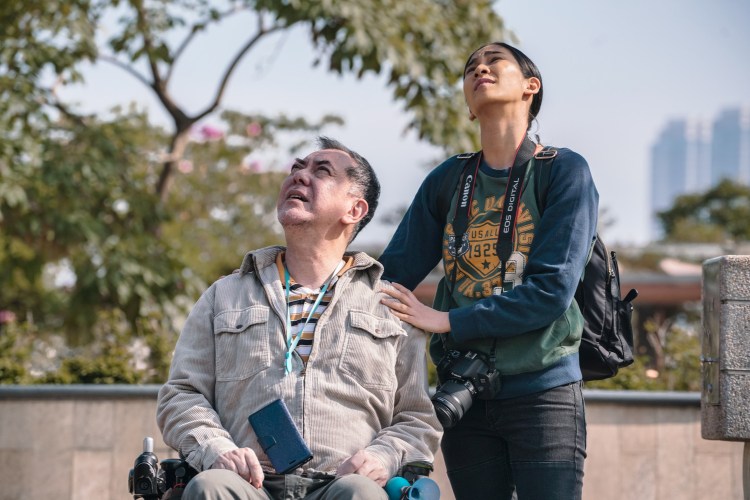
  • Still Human – touching drama in which a grumpy old man eventually bonds with his Filipina carer. Review
  • Three Husbands – latest from Fruit Chan in which a young woman lives a life at sea with her three husbands.
  • After This Our Exile – Aaron Kwok stars in Patrick Tam’s drama as a dejected husband and father who finds himself alone with his young son after his wife finally manages to leave.
  • Cold War – Aaron Kwok stars as an earnest ICAC agent trying to secure the release of kidnapped policemen. Plus talk with Aaron Kwok
  • Port of Call – Aaron Kwok stars as an eccentric detective investigating the death of a young girl in Philip Yung’s melancholy thriller. Review.
  • I’m Livin’ It – Aaron Kwok stars as a former finance worker rendered homeless. Closing gala with Kwok in attendance. 
  • Butterfly – a closeted lesbian married with a child falls for a younger woman in Mak Yan Yan’s sensitive drama.
  • Green Snake – Tsui Hark’s take on the classic Lady White Snake legend starring Maggie Cheung and Joey Wong.

Indonesia 

The Science of Fictions still 1

Japan

A girl missing still 1

  • A Girl MissingKoji Fukada reunites with Harmonium’s Mariko Tsutsui who stars as a carer implicated in a crime.
  • To the Ends of the Earth – Kiyoshi Kurosawa reunites with recent muse Atsuko Maeda as a lost TV presenter goes searching for herself while filming in Uzbekistan. Review.
  • Erica 38 – a middle-aged woman seeks chases illusionary success after getting involved with large scale fraud. Review.
  • The Woman Who Keeps a Murderer – Horror from Ring’s Hideo Nakata in which a traumatised woman’s world gradually collapses.
  • Under Your Bed – stalker drama from Mari Asato starring Kengo Kora as a lonely man obsessed with a former uni classmate now married with a child.

Korea

Gangster Devil Sop still 1

  • Long Live the King – comedy in which a mob boss aims to become president to win the heart of a woman who constantly rejects him and also save his friend who has been sentenced to death!
  • Another Child – teenage girls bond in unexpected friendship when they find out their parents are having an affair. Review.
  • Divine Fury – An MMA fighter battles his demons while teaming up with an exorcist priest! Review.
  • Money – a cynical stockbroker gets in over his head with an unscrupulous fixer. Review. Q&A with Director Park Noo-ri & Actor Ryu Jun Yeol.
  • Ms Purple – Drama set in LA’s Koreatown in which Korean-American siblings attempt to reconnect in their father’s final days.
  • The House of Us – Yoon Ga-eun’s The World of Us followup in which a young girl trying to get her parents to patch things up becomes a big sister figure to two other kids. Review.
  • The Battle: Roar to Victory – drama starring Yoo Hai-jin and Ryu Jun-yeol in which Resistance fighters in 1920 attempt to get funds to the Independence Movement in exile in Shanghai.
  • The House of Hummingbird – a young girl’s perspective widens when she connects with her enigmatic Chinese teacher. Review.
  • Tune in for Love – Romantic drama from Jung Ji-woo set in the ’90s following a baker who likes to call in to a radio requests show. Q&A with Actor Jung Hae-in
  • Inseparable Bros – two best friends, one who has a physical disability and the other learning difficulties, meet a woman who encourages them out into the world.
  • Juror 8 – comedy drama inspired by Korea’s first jury trial in which a strange young man refuses to abide by the majority opinion. Review.
  • The Gangster, The Cop, The Devil – Ma Dong-seok stars as a gangster attacked by serial stabber who teams up with a rogue cop to trap a serial killer. Review.
  • My Name is Kim Bok-dong – documentary exploring the life of “comfort woman” Kim Bok-dong who passed away last year after decades of trying to gain acknowledgement for women like herself forced into sexual slavery by the Japanese during the Second World War.
  • Rivercide: The Secret Six – documentary focussing on the outcome of President Lee’s Grand Canal project.
  • The Culprit – a man’s wife is murdered and circumstantial evidence suggests his best friend did it. He teams up with his friend’s wife to search for the truth!

North Korea

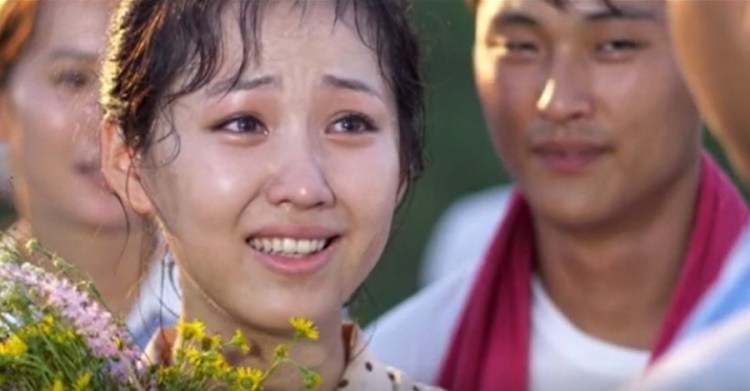
The Story of Our Home

  • The Story of Our Home – propaganda drama about a teenage girl who adopts a series of orphans.
  • A Broad Bellflower – propaganda romance in which a man dreams of moving to the city while his wife wants to improve their town.

Philippines

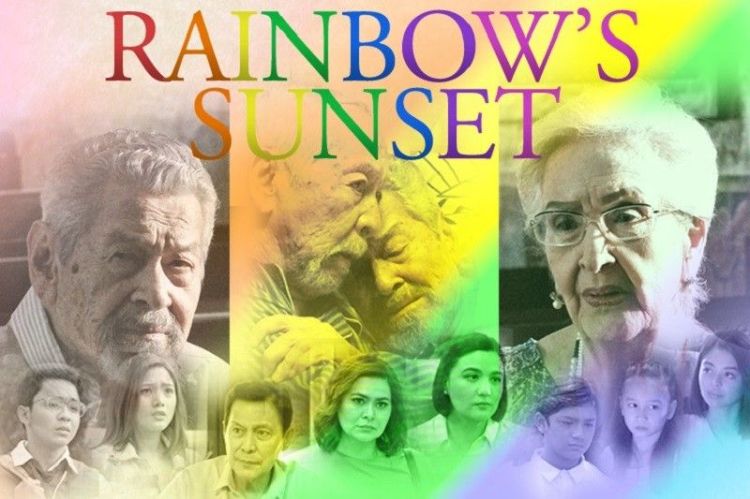
Rainbow Sunset

  • Rainbow’s Sunset – drama in which an 84-year-old man tells his family he is gay because he wants to care for his longterm lover in his final days.

Singapore

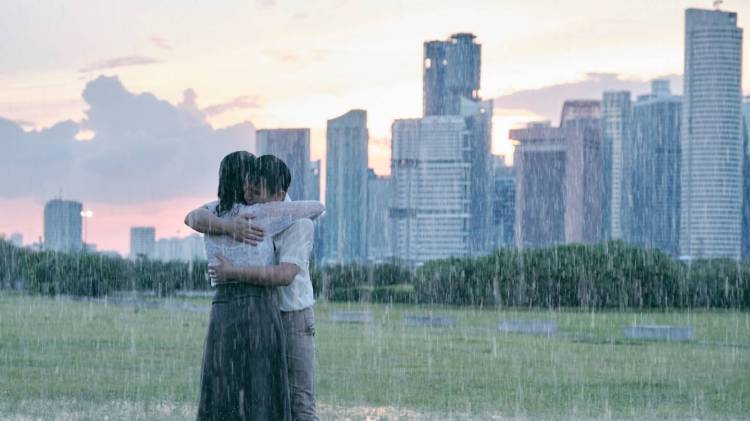
Wet season still 1

  • Wet Season – Ilo Ilo’s Anthony Chen returns with a monsoon tale in which a Mandarin language teacher is drawn to one of her students. Review.

Taiwan

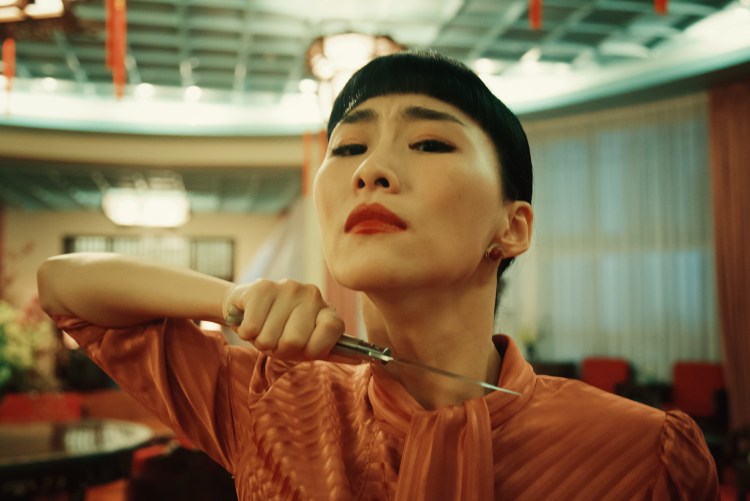
Nina Wu still 1

  • Cities of Last Things – tripartite story which begins with the protagonist’s suicide and then moves back to examine the events which led to it.
  • Nina Wu – psychological drama from Midi Z in which an actress gets her big break but is forced into uncomfortable situations by a difficult director.
  • Deep Evil – a top plastic surgeon is a prime suspect when a headless corpse is discovered.
  • Heavy Craving – a lunch lady hoping to lose weight strikes up unexpected friendships with a deliveryman and cross-dressing student.
  • Millennium Mambo – Hou Hsiao-Hsien drama starring Shu Qi as a young woman living in turn of the century Taipei.
  • The Tag-Along: The Devil Fish – spin-off to the Tag-Along series inspired by another urban legend in which fishermen notice a human face in their fish as they’re grilling it.

Thailand

The Pool still 1

  • The Pool – A man ends up having to clean a disused pool after a film shoot but falls asleep on an inflatable raft. When he wakes up, he finds that the water level has fallen so low he can no longer climb out. He screams for help, but the only creature to hear him is a crocodile…

Samurai Season

Sword of doom still 1

  • 13 Assassins – Takashi Miike’s remake of the 1963 Eiichi Kudo classic in which 13 assassins go up against a corrupt lord.
  • Harakiri – Kobayashi classic from 1962 starring Tatsuya Nakadai as a ronin taking a principled stand against samurai corruption.
  • Lone Wolf and Cub: Sword of Vengeance – first in the Lone Wolf and Cub series which sees a noble samurai fall from grace and take to the road with his small son in tow. Review.
  • Lone Wolf and Cub: Baby Cart at the River Styx – The second film in the Lone Wolf and Cub cycle in which Ogami is hired to take down a corrupt manager. Review.
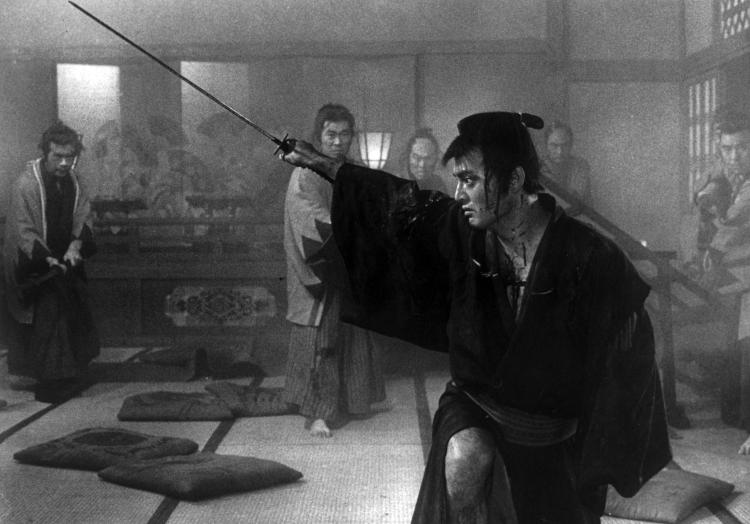
  • Sword of Doom – blistering drama from Kichachi Okamoto in which Tatsuya Nakadai stars as an amoral samurai.

The London East Asia Film Festival 2019 runs at various venues in Central London from 24th October to 3rd November. Full details for all the films as well as ticketing links will shortly be available via the official website, and you can keep up with all the latest news by following the festival on Facebook, Twitter, Instagram, and Flickr.

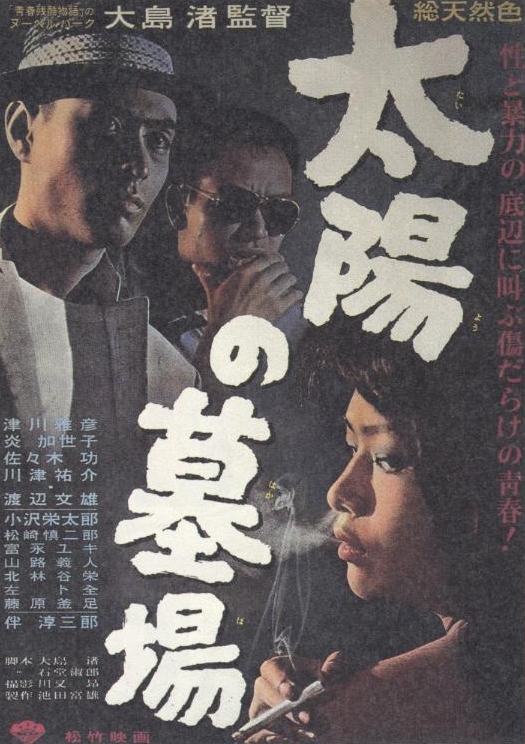
The Sun’s Burial (太陽の墓場, Nagisa Oshima, 1960)

sun's burial poster

“Love and hope for the youth!” reads a prominent sign in the middle of a hopeless slum in Oshima’s bitterly nihilistic youth drama The Sun’s Burial (太陽の墓場, Taiyo no Hakaba). Then at Shochiku, home of polite melodrama, Oshima was one of a handful of youngsters (that also included Kiju Yoshida and Masahiro Shinoda) bumped up to director ahead of schedule in an attempt to find voices who could speak to youth in much the same way Nikkatsu was doing with its incendiary tales of the new bright young things. The Sun’s Burial would be Oshima’s penultimate film for the studio before he stormed out after they pulled his next film Night and Fog in Japan from cinemas fearing its fierce critique of a divided left torn apart by dogmatic rigidity and generational conflict was too on the nose in wake of the assassination of the Socialist Party leader by a right-wing nationalist.

Set in the slums of Kamagasaki, Osaka, The Sun’s Burial follows a collection of desperate adolescents trying to survive in an intensely hostile environment. Our “hero” the conflicted Takeshi (Isao Sasaki), is inducted into a street gang after getting beaten up by young tough Yasu (Yusuke Kawazu). Along with his friend Tatsu, he is originally quite taken with the idea of becoming a gang member, but blanches when he passes a room full of captive women, one of whom is being beaten for having conceived a child.

Meanwhile, across town, his polar opposite, the cynical survivor Hanako (Kayoko Honoo) is running a blood racket, literally bleeding the proletariat to sell their bodily fluids on to the cosmetics trade. Technically operating under the aegis of her petty thug father Yosematsu (Junzaburo Ban), Hanako is in business with a doctor and a couple of minions but later has her authority undercut by a mad old imperialist known as “The Agitator” (Eitaro Ozawa) who keeps insisting that the Russians are coming and they have to be ready.

Not permitted to maintain power in her own right, Hanako is forced to shuttle between male protectors, occasionally pitting one against the other in a bid to come out on top. In addition to her blood business, she also engages in casual sex work and seemingly has no qualms about wielding her sex appeal as a weapon in order to manipulate male power. Pushed out by The Agitator, she turns to gang leader Shin (Masahiko Tsugawa) for a temporary alliance. When he too cuts her out, she thinks about tipping off the area’s big Yakuza boss, Ohama (Gen Shimizu), to Shin’s whereabouts, always looking a few moves ahead while the callous Shin remains wary and ever vigilant.

In a move which surprises and disturbs the naive Takeshi who is nevertheless captivated by her cynical self assurance, Hanako is entirely indifferent to the suffering of other women, willingly co-operating with Shin while knowing that he runs an abusive prostitution ring. Takeshi’s loss of innocence comes early when he is sent to go out and find some victims with his friend Tatsu who convinces him to club a high school boy canoodling with his girlfriend over the head so they can rob him. Takeshi looks on in mild confusion and horror as Tetsu proceeds to rape the young woman, turning to Hanako for guidance but all she does is shrug. The high school boy later commits suicide, presumably unable to bear the shame of having failed to protect his girlfriend, leaving Takeshi feeling as if he has blood on his hands. To Hanako, however, the boy’s death is no one’s fault but his own, a product of his own weakness. A strong person, she posits, would have sought revenge. What sort of person ups and dies without a fight?

Meanwhile, back in the slum, a man hangs himself after falling victim to The Agitator’s latest scam – getting involved with a dodgy gangster’s exploitative scheme to buy up legitimate IDs from desperate people and sell them to even more desperate undocumented migrant workers. Full of tales of Empire, The Agitator declares that he’s going to march them all up to Tokyo and teach those noisy students a lesson, proving somehow that populist militarism is not yet dead in quiet corners of Japan. The Agitator has several followers among the middle-aged and older denizens of Kamagasaki, taken in by his bluster and lacking any other sources of hope. They follow him because he demands to be followed and because he made them a series of promises. Only when they realise his plans rest on exploiting people even more unfortunate than they are, and suddenly realising he never got round to paying them either, do they finally rebel, burning down the slum in protest of their hopeless circumstances.

Berated for her cynicism by the now compromised Takeshi, Hanako offers only the defence that she has survived and will continue to survive where others may not if they allow their consciences to take precedence over self-preservation. Bleak as it gets, Oshima ends on with a note of anxious industry as his determined heroine dusts herself off and gets “back to work”, escaping from the ruins of the burned out slum in the bright morning sun. “No hope for Japan now” an embittered member of the older generation laments, and Oshima, it seems, is apt to agree.


Original trailer (no subtitles)

London Korean Film Festival Announces Full Programme for 2019

The Seashore Village - Opening Gala (1st Nov)The London Korean Film Festival kicks off its 14th edition in London on 1st November and runs until the 14th at venues across the city before touring to Edinburgh Film House, Watershed Cinema Bristol, Belfast Queen’s Film Theatre, Glasgow Film Theatre, Manchester HOME, and Nottingham Broadway Cinema from 18th to 24th. This year’s special focus is dedicated to Korean cinema history in celebration of its centenary and will feature a series of classics many of them making their UK cinema premieres. 

Opening

The Seashore Village poster 2

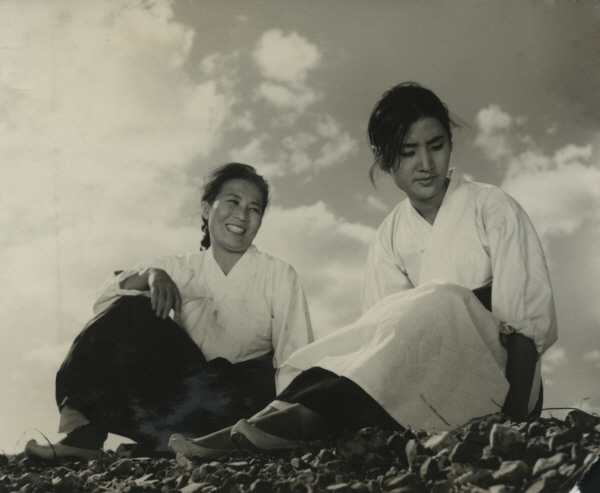
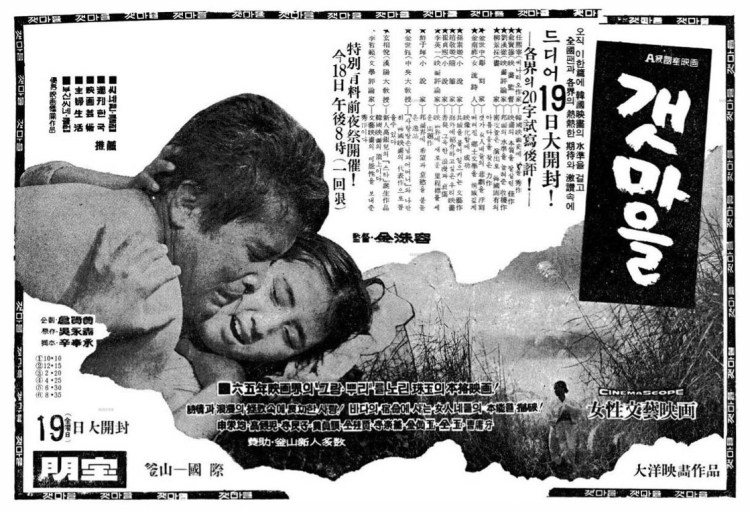
  • The Seashore Village – Opening for the first time with a retrospective title, the festival will pay tribute to veteran director Kim Soo-yong with his 1965 literary adaptation The Seashore Village in which a community of women left largely alone after losing husbands at sea have learned to support each other in the absence of men. Review. Director Kim will be present in person to discuss the film as well as his long career in the Korean cinema industry.

Closing

Scattered Night - Closing Gala (14th Nov)

  • Scattered Night – the festival will close on Nov. 14 with Kim Sol’s 2019 drama chronicling the dissolution of a family seen through the eyes of the children.

Special Focus: 100 Years of Korean Cinema

Devil's Staircase poster 2

  • A Hometown in Heart – touching drama from 1949 in which an orphaned child monk bonds with a widow.
  • Piagol – Lee Kang-cheon’s 1955 drama was originally banned for its sympathetic depiction of Communist soldiers as they wage war under a severe commander.
  • The Flower in Hell – Shin Sang-ok classic from 1958 in which a sex worker tries to find escape by seducing the younger brother of her boyfriend who makes a living stealing from the US military.
  • Aimless Bullet – bleak portrait of post-war life from Yu Hyun-mok. Review.
  • A Coachman – a single father struggles to provide for his family in Kang Dae-jin’s 1961 drama.
  • A Woman Judge – Moon Jeong-suk stars as a young woman determined to become a judge in the face of fierce social opposition. Review.
  • Bloodline – Another literary adaptation from Kim Soo-yong, Bloodline revolves around three families in a small courtyard in which the young long for freedom and a brighter future only for their parents to lament their declining authority. Review.
  • Goryeojang – 1963 drama from Kim Ki-young revolving around the ancient practice of abandoning the old in times of famine.
  • Ieoh Island – Kim Ki-young drama from 1977 in which a murder is committed on an island inhabited only by women.
  • The Devil’s Stairway – Hitchcockian drama with shades of Les Diaboliques from Lee Man-hee in which a doctor (Kim Jin-kyu) offs his inconvenient mistress (Moon Jeong-suk) to marry the boss’ daughter only to be haunted (or not?) by the memory of his transgression. Review.
  • Homebound – Moon Jeong-suk, the director’s then muse, stars again for Lee Man-hee as a middle-aged woman finds herself trapped between personal desire and social convention when she falls for a young reporter (Kim Jeong-cheol) and considers leaving her embittered, bedridden war veteran husband (Kim Jin-gyu). Review.
  • A Day Off – legendary, long believed lost drama from Lee Man-hui originally banned for its bleakness in which a young couple find themselves in an impossible situation. Review.
  • Ticket – ’80s drama from Im Kwon-taek exploring the lives of three young women working in a “ticket” bar “coffee delivery” shop. Review.
  • The Man with Three Coffins – 1987 drama from Lee Jang-ho in which a man wanders the country looking for a place to scatter his wife’s ashes.
  • A Pillar of Mist – a young couple grow apart over time in Park Chul-soo’s 1986 drama.
  • The Age of Success – Ahn Sung-ki stars as a salesman at a sweetner company who falls ill after battling a competitor and comes up with a genius idea to get back at them while in the hospital.
  • Why Has Bodhi-Darma Left for the East? – drama exploring the lives of three monks shot over seven years.
  • North Korean Partisan in South Korea (Nambugun) – 1990 drama inspired by the life of war correspondent Lee Tae.
  • A Single Spark – biographical drama about a Jeon Tae-il, a worker who self-immolated to protest unfair working conditions.
  • The Day a Pig Fell into a Well – debut from Hong Sang-soo in which a married man on a business trip gets stranded and ends up having a weird encounter with a sex worker.
  • Three Friends – debut from Lim Soon-rye in which three misfits report for military service.
  • The Contact – romance in which love blossoms over the airways.
  • Peppermint Candy – modern masterpiece from Lee Chang-dong in which a disappointed man looks back over his life.

Hidden Figures: Ha Gil-jong

Pollen of Flowers banner

  • The Pollen of Flowers – Ha Gil-jong’s debut makes a subtle jab at the repressive Park Chung-hee regime as a businessman introduces his male secretary into the home he shares with his mistress.
  • The March of Fools – 1975 drama which begins as campus comedy and then gets progressively melancholic and reflective. Review.
  • The Ascension of Han-ne – in the 19th century a woman is saved from suicide but ostracised by her community after a shaman pronounces her bad luck.

Cinema Now

birthday still 1

  • Grass – Hong Sang-soo drama starring Kim Min-hee as a writer eavesdropping in a coffee shop.
  • Birthday – powerful drama following a family bereaved by the Sewol ferry tragedy. Review.
  • A Resistance – historical drama inspired by the life of a teenage independence activist. Review.
  • Idol – neo-noir in which a bereaved father tries to expose the true facts surrounding the death of his son while a politician attempts to maintain his squeaky clean image. Review.
  • Extreme Job – broad comedy in which bumbling policemen open a fried chicken joint as part of a stakeout only for the place to take off. Review.
  • The Odd Family: Zombie on Sale – a weird family adopts a zombie after discovering his bite has healing qualities in Lee Min-jae’s hilariously surreal comedy. Review.
  • Height of the Wave – latest from Park Jung-bum following a policewoman transferred to a remote island.

Women’s Voices

A Bedsore (Women's Voices)

  • Youngju – a young woman looking after her brother becomes involved with the man who killed their parents.
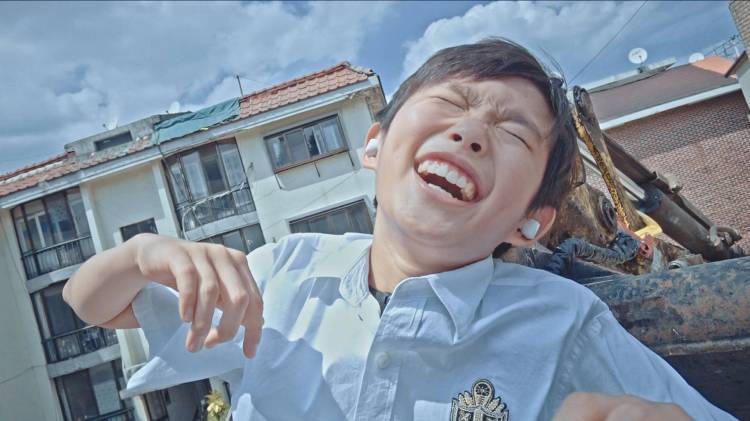
  • A Boy and Sungreen – a schoolboy and his friend attempt to track down his absent dad.
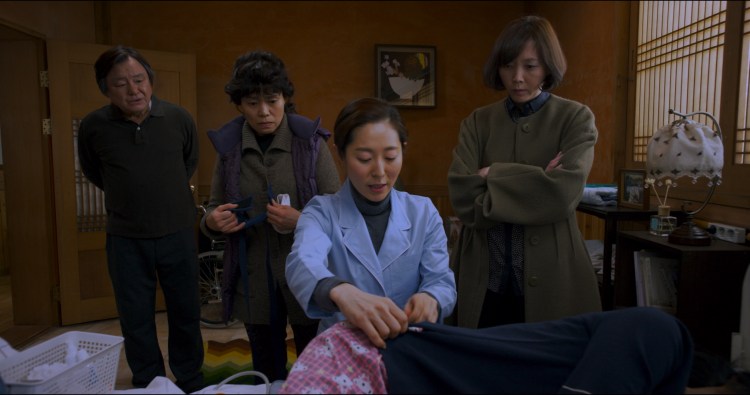
  • A Bedsore – grandma’s bedsore exposes the cracks in an ordinary family.
  • Yukiko – chronicle of a family scarred by war.

Documentary

night before the strike

  • Water Utilization Tax – documentary from 1984 following the four month struggle of farmers in Gurye.
  • Blue Bird – 1986 doc interviewing farmers about their working conditions.
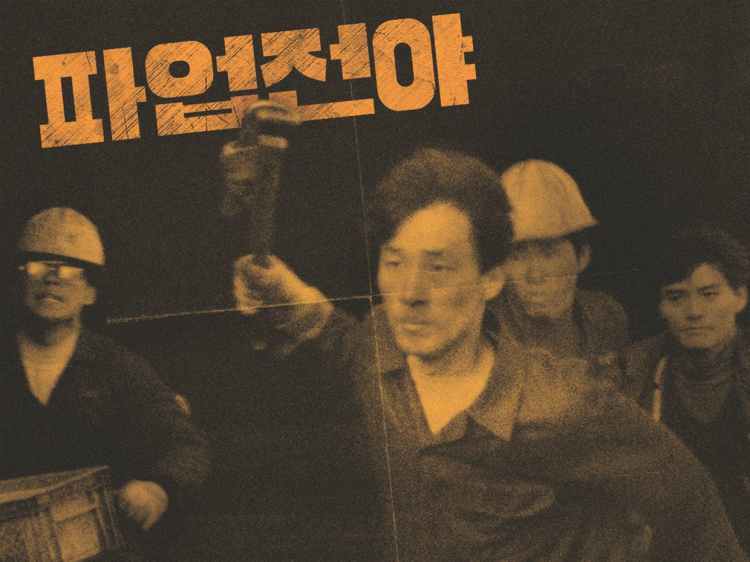
  • The Night Before the Strike – 1990 doc following factory workers’ attempts to unionise.

Animation

astro garnder

  • A Story of Hong Gil-dong – 1967 classic adapting the traditional folktale.
  • Astro Gardener – fantasy adventure with an ecological message.

Mise-en-scène Shorts

Yuwol

  • Freckles – bittersweet tale of first love.
  • To Each Your Sarah – a woman rebuilds her life after leaving her husband.
  • Goodbye Bushman – brothers discover a “bushman” in the woods.
  • Milk – a hotel maid commits a crime to pay for baby food.
  • Yuwol: The Boy Who Made the World Dance – musical following a young boy with an urge to dance.
  • Camping – a woman is kidnapped from a campsite.
  • The Stars Whisperer – a young girl with hearing difficulties makes a new friend.
  • The Lambs – a pastor and a member of his congregation share an obsession with a dead woman.

Artist Video

Songs from the North (Artist Video)

  • Songs from the North – Yoo Soon-mi’s documentary portrait of the North.
  • Dangerous Supplement – early work from Yoo Soon-mi showcasing the theme of memory.
  • Sets – Park Chan-kyong’s examination of the North’s vision of the South.
  • Flying – Park Chan-kyong explores the North/South divide.
  • Believe it or Not – Park Chan-kyong narrative piece inspired by those who have crossed the border.

The London Korean Film Festival runs 1st – 14th November in London before touring the country until 24th. Full details for all the films as well as screening times and ticketing information will be available shortly via the official website and you can keep up with all the latest news by following the festival on FacebookTwitter, and Instagram.

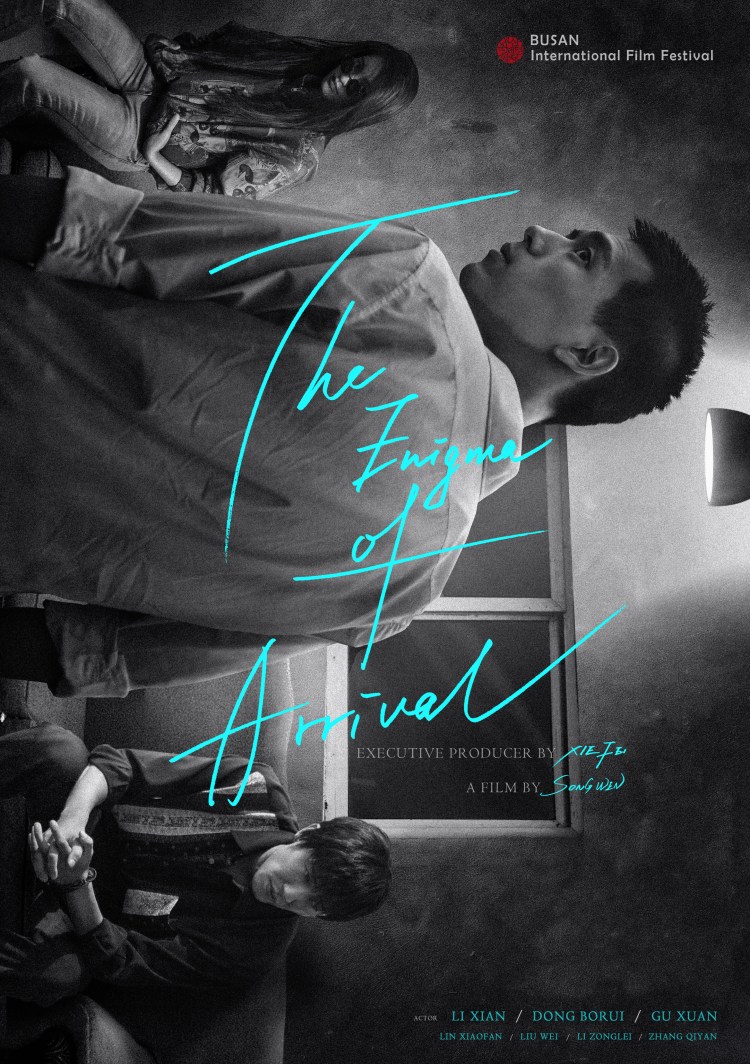
The Enigma of Arrival (抵达之谜, Song Wen, 2018)

The Enigma of the Arrival posterChinese cinema has always had a fondness for melancholy nostalgia. Perhaps its natural enough to romanticise one’s youth and long for a simpler time of possibility, though that same desire for “innocence” has often been read as a rebuke on the “soulless” modern economy and critique of Westernising individualism of a China some feel has lost its way since the economic reforms of the ‘80s and beyond. Song Wen’s The Enigma of Arrival (抵达之谜, Dǐ Zhī Mí), seemingly borrowing a title from the novel by VS Naipaul, seems more straightforwardly personal in its universality as it locates a single fracturing point in the lives of a collection of young people forced apart yet eternally connected by tragedy and disappointment.

Song begins in the present day with his 40-ish narrator, San Pi (Liu Wei), who tells us that he is looking forward to reuniting with his old friends with whom he has largely lost touch. Falling into a reverie, he takes us back to their harbourside hometown some 15 years or so previously when he used to hang out with three friends from school – Feng Yuan (Dong Borui), Xiaolong (Li Xian), and Da Si (Lin Xiaofan). Young men, they spent their time watching “cool” Hong Kong movies like Days of Being Wild and A Better Tomorrow, which were always followed by a blue movie watched incongruously in public. The trouble starts when the guys meet local beauty Dongdong (Gu Xuan) and are all instantly smitten. Hoping to get themselves a more impressive motorbike, they make a fateful decision to steal some diesel and sell it on, only the fuel they steal belongs to gangsters which lands them in a world of trouble they are ill-equipped to deal with despite their adolescent male posturing. Dongdong disappears without trace leaving the guys wounded and confused.

As San Pi tells us in his opening monologue, things are not always as they seem, “Life is floating between fiction and reality”. It’s a particularly apt comment from him because, as we later find out, he was present only for the single climactic events not for the ones which preceded and followed them. He didn’t go with the guys when they, mistakenly, tagged along with Dongdong to an athletics tournament to which she only intended to invite Xiaolong, and as he left soon after Dongdong disappeared his memories of those times are not first hand. He invites us to assume that each of the men has their own narrative which necessarily places themselves at the centre and offers a flattering portrait of their actions which attempts to absolve them of guilt for whatever they did or did not do to lose Dongdong.

A case in point, though it seems that Dongdong favoured Xiaolong who has spent the remainder of his life pining for her, Fang Yuan always thought she fancied him while Da Si was technically dating her friend Xiaomei (Zhang Qiyuan) but seems to have developed some kind of protective sympathy towards her which may have an edge of puritanical resentment. San Pi is the only one who does not seem to have engaged in sad romance, a perpetual outsider looking on from the edges. That might be why he seems to be the one eulogising their friendship, less hung up on what happened to Dongdong than on the effect it had on the later course of his life and that of his friends. Reuniting in a Japanese-style onsen, an ironic reminder of their youthful dreams to see Japan, he wonders if they might return to their teenage intimacy but discovers that youthful innocence cannot be reclaimed once lost, some secrets must stay secret, and some betrayals are too much to bear. They will never go to Japan together, or even catch a movie in a rundown theatre. It would be embarrassing; the moment has passed.

Song frames his tale in a mix of hazy images and black and white, neatly symbolising the patchwork quality of narrative assembled from memory and wishful thinking, coloured by a single perspective that lacks the composite whole of accepting the reality of others’ perceptions. In contrast to the longing for the old China that marks many a youth drama, Song’s young guys yearn for the world – they worship Hong Kong tough guys, listen to Western music, and dream of seeing Japan, but their present life is one of settled middle-aged disappointment marked by the unresolved tragedy of their pasts which both binds them together and forces them apart. “No one is flawless” Xiaolong is reminded, but somehow that only makes it worse. A melancholy ode to ruined friendship and the nostalgia of bygone adolescent possibility, Enigma of Arrival is a suitably abstract effort from the founder of the XINING FIRST International Film Festival and signals a bold new voice on the Chinese indie scene.


The Enigma of Arrival screens in Chicago on Sept. 19 as part of the ninth season of Asian Pop-Up Cinema where director Song Wen will be present for an intro and Q&A.

Original trailer (English subtitles)

It Was a Faint Dream (あさき夢みし, Akio Jissoji, 1974)

It was a faint dream posterFollowing his ultramodern Buddhist Trilogy, Akio Jissoji casts himself back to the Kamakura era for a tale of desire and misuse in It Was a Faint Dream (あさき夢みし, Asaki Yumemishi, AKA Life of a Court Lady). Taking its name from a Heian era Buddist ode to transience, Faint Dream follows its melancholy heroine on a fleeting path of love, loss, romantic disappointment, and finally spiritual rebirth while the nation faces the external threat of putative invasion by warlike imperialists hellbent on domination and conquest.

Shijo (Janet Hatta), an orphaned young woman taken as a concubine by the lord Tameie (Kotobuki Hananomoto), has returned home to await the birth of her child. The baby she is carrying, however, is not Tameie’s but that of another young noblemen, Saionji (Minori Terada), with whom Shijo had fallen in love before being taken by the lord. Hoping to pass the baby off as merely premature, Shijo has been deceiving Tameie and remains fearful she will be found out. Meanwhile, Saionji’s wife is also pregnant. When Saionji’s legitimate child is stillborn, an obvious solution presents itself and Shijo loses the first of her children.

A young woman without means or protectors, Shijo finds herself forced to indulge the whims of men in order to survive. Yet Tameie, falling ill, apparently thinks only of her when he pushes Shijo towards sleeping with other men in order to keep the peace, so that their resentment doesn’t become an all consuming evil. Thus it is that Tameie’s own brother, the high priest Ajari (Shin Kishida), falls for Shijo with a burning passion which Tameie fears could drag her down to hell with its implacable intensity. Reluctant and half disgusted, Shijo follows her lord’s advice, falling for the priest as she goes, and becoming pregnant with another child she must also lose.

Ajari’s radical Buddhist philosophy insists that chanting sutras is enough for salvation. It doesn’t matter if you’re high born or low or whether you believe or not, simply saying the words gets you into paradise. It’s a philosophy that appeals to Shijo for obvious reasons, but still she finds it near impossible to reconcile herself to her position of powerlessness within the court. A figure of desire, she is “courted” by just about every man she meets but has little right to refuse their attentions, especially as they often hold financial as well as social power over her. Tameie’s warning, ironic as it is in insisting that hell hath no fury like a man scorned, has its merit in bearing out the intensely destabilising properties of romantic love in a highly regimented society.

For all of that, however, Tameie is a romantic man, himself embittered by the disappointments of his life. Born to be a king, he prefers music and poetry to the sword but still laments his “betrayal” at the hands of the older generation who crowned him at three only to depose him at 16 and hand power to his 10-year-old brother with only a promise, apparently now broken, that his son would inherit the throne. Abandoned as a child, he has little sympathy for Shijo’s maternal pain on repeatedly having her children taken from her because of social propriety, merely reminding her that children and parents walk different paths and hers is evidently here, with him, at court.

Even so, men are content to have it both ways. Romance is a transient thing, Shijo is told, a flower which blooms in an instant of truth but then scatters. Attachment is the enemy of love, the wise man admires the flower as its falls but does not mourn its loss forever. Shijo finds this hard to understand, but continues to live her life as an object of desire rather than an active participant until she finally stops and makes a firm decision of her own in choosing to reject it. She becomes a nun and wanders the land looking for serenity despite being told that no woman can become a Buddha because of the five obstacles in her way no matter how nobly she might seek it.

Ironically enough, Shijo’s life is in itself a “faint dream”. She chooses to reject her desires, but admires other women for embracing theirs, and remains seemingly ageless while the fleeting loves of her youth grow old and fade. The lords sit around perfecting their poetry while boys are pulled off their farms to combat a Mongol invasion, and a deadly disease ravages the country. Shijo turns to ask her former lover about the child they conceived together, but it’s as if she were asking about someone else in another time. Having received her answer, she walks off into the distance, a nameless nun, free of the cares of the world and no longer burdened by desire.


It Was a Faint Dream is the fourth of four films included in Arrow’s Akio Jissoji: The Buddhist Trilogy box set.

Original trailer (no subtitles)

Poem (哥, Akio Jissoji, 1972)

Poem dvd coverThere might be a temptation to view Akio Jissoji’s “Buddhist Trilogy” as an intensely Japanese affair given its obvious preoccupation with Eastern religious thought and background dialogue with the political confusion of the day, but like fellow New Wave outsider Kiju Yoshida, Jissoji had studied French literature and there is something classically European about his nihilistic ennui in the midst of a decaying social order. Poem (, Uta), the trilogy’s final instalment, bears this out most of all as the servant boy of a noble house, secretly its spiritual heir, alone attempts to resist the march of time to save the natural essence of a culture about to eclipse itself in consumerist emptiness.

Jun (Saburo Shinoda), a strange young man, is a servant/legal clerk to a lawyer, Yasushi (Shin Kishida), who is the oldest son of the Moriyama family. Though he has inherited stewardship of the house and mountains, Yasushi and his wife Natsuko (Eiko Yanami) long to break free of its traditionalist constraints by ripping it apart and replacing tatami mat comfort with Western modernity. They can’t do that, however, because old Moriyama (Kanjuro Arashi), Yasushi’s father, is still alive and Yasushi doesn’t particularly want to have to talk to him. Meanwhile, the spacious mansion is also shared by a legal student, Wada (Ryo Tamura), who is kind of interning with Yasushi while repeatedly failing the bar exam, and the family’s maid Fujino (Hiroko Sakurai).   

Unlike Yasushi, Jun sees his life’s purpose as serving the Moriyama family. Intensely worried that a fire may engulf this fine house built with only the best Japanese cedar, Jun gets up every night at midnight and patrols with an electric torch, looking for loose sparks. One night he finds some, though not the kind he was expecting, on accidentally witnessing Wada make love to Fujino. Apparently uninterested, Jun looks it over and moves on while the lady of the house, Natsuko, starved of affection by her impotent husband, finds herself stirred by such unexpected eroticism.

Yasushi’s physical impotence is perhaps merely a manifestation emasculated powerlessness as the oldest son of a noble house who, nevertheless, wields no real power and is entirely unable to make decisions for himself. Yet his big case at work is thrown into confusion when his social climbing client suddenly tries to have his partner, Arita (Haruhiko Okamura), removed days before the court hearing because it might look nicer to have someone of Moriyama’s standing representing him. Even so, Yasushi is so clueless with the modern world that he needs Jun, a calligraphy enthusiast and advocate for the old, to operate the photocopier because he doesn’t know how (and neither does Wada). Only Jun, in another contradiction, insists on working to rule and leaving at 5pm because his “main job” is protecting the house and serving the Moriyama family, not Yasushi. Jun allows himself to be seduced by Natusko on the grounds that if she does not receive sexual satisfaction inside the house she will need to look for it outside which could bring shame on the Moriyama name. Finding out his wife is sleeping with another man, the weird servant boy no less, Yasushi doesn’t even care (besides being mildly turned on), as long as she doesn’t do anything which might arouse “rumours”.

The dirty secret that neither Yasushi or his debauched brother Toru (Eishin Tono) know is that Jun, whose name means “pure”, is their illegitimate half-brother that their father had with a maid. As we later discover, old Moriyama plans to divide his estate not in two but three, believing that it hardly matters anyway because division, in a break with the system of traditional succession by the oldest son, will be the end of the Moriyama family. He may well have a point as neither Yasushi, who eventually abandons the house to Toru and escapes to Kyoto, or his brother are interested in legacy. Once Moriyama passes, they plan to sell the entire plot, mountains and trees and all, to developers. In fact, the house already technically belongs to someone else because as soon as he moved in Toru started taking out exorbitant loans to fund his wastrel playboy lifestyle and has already figured out the jig is up and they’re all broke. Only Jun, who hears the voice of the mountains as if it were the voice of existence itself, is desperate to save the family name though he is at this point almost beyond saving himself.

Looking for the “absolute” in tombstones, Jun is told that only darkness exists inside. Yet he is certain that as long as form survives, content can return. He sees the Moriyamas’ forests as the essence of an older Japan and their untouched natural beauty the rock on which their souls are anchored. Yet his half-brothers oppose him. For them, Japan, even the world, is already ruined and nothing worth protecting remains. Existence itself is nothing more than a dream, and suicide no different. They no longer feel they can live “in such an age”.

Yet Jun, his father’s spiritual heir even if he doesn’t know it, keeps reaching, perhaps not quite hoping but demanding even in his powerlessness which may, in a sense result in a kind of transcendence in its purity. Unlike the ambiguously hopeful ending of This Transient Life, or the urgent ominousness of that of Mandala, Poem ends in defeat and futility, suggesting that time cannot be stopped or progress arrested even by those who seek the eternity of enlightenment. And so Jissoji brings us full circle by showing us a world in entropy unsalvageable in the cruelty of its contradictions.


Poem is the third of four films included in Arrow’s Akio Jissoji: The Buddhist Trilogy box set which also features an introduction and selected scene commentaries by scholar of the Japanese New Wave David Desser plus a 60-page booklet with new writing by Tom Mes and Anton Bitel.

Original trailer (English subtitles)

Mandala (曼陀羅, Akio Jissoji, 1971)

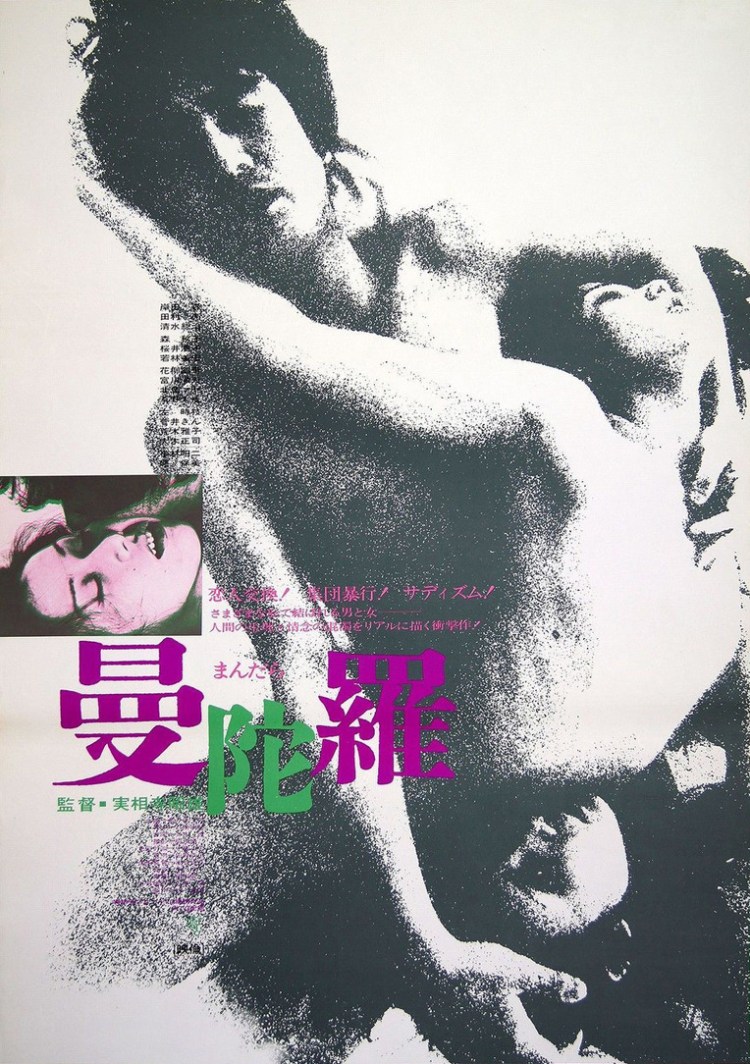
Mandala jissoji poster 2Politically speaking, the Japan of 1971 was trapped in a kind of limbo. The student movement had been dealt a serious blow with widespread supressionary measures in the run-up to the renewal of the ANPO treaty in 1970, which was finally signed despite opposition. It was not, however, yet dead and would stumble on, losing its way, until the climactic events of Asama-Sanso in 1972. Following hot on the heels of his radical This Transient Life, Akio Jissoji’s second film for ATG Mandala (曼陀羅) finds him exploring just this conflict as two young men look for “utopia” in an escape from the tyranny of time.

Kyoto uni students Shinichi (Koji Shimizu) and Hiroshi (Ryo Tamura) have taken their girlfriends to a strange little beachside inn for a spot of wife swapping. Where Shinichi’s girlfriend Yukiko (Akiko Mori) is only too happy to oblige her boyfriend’s whims, Hiroshi’s squeeze Yasuko (Ryo Tamura) goes along with it but instantly regrets her decision. Meanwhile, unbeknownst to them, the couples are being spied on by weird ultra-Buddhist cult leader Maki (Shin Kishida) who comes to the conclusion that Shinichi and Yukiko are good candidates to add to their commune which is built around the concepts of agriculture and eroticism. Maki’s violent recruitment method is knocking out the guys and then subduing the women so they can be raped by cult members and thereby inducted.

Maki’s strange philosophy which posits a new “utopian” future born of a return to a more primitive way of life in which love does not exist and sex is a free and natural act whose only purpose is reproduction, wins an acolyte of Shinichi because of its key offering – the ability to stall time. Always looking for a way to be dead yet alive, Shinichi is obsessed with the idea of stillness. Movement is the image of time passing. Coming to and finding the comatose, naked body of Yukiko lying on the beach after being raped by Maki’s minions, Shinichi cannot resist the urge to have sex with her “lifeless” body (which she apparently consents to, playing dead even after regaining consciousness part way through). Yukiko too confesses her own fantasy of being ravished as a corpse, a body outside of conscious time.

Shinichi, proclaiming he no longer believes in the future or in that a classless anti-State will ever arise, leaves the struggle and joins Maki’s atavistic utopia to which only those who “deny time and history” are permitted. Hiroshi, meanwhile, berates him for betraying the “continuous revolution” while he himself is on the run having left university after a disagreement with his Trotskyist protest group. The two men are each fleeing the centre and heading in different directions if perhaps ultimately bound for a similar destination. A hyper individualist, Hiroshi declares that there is no such thing as mankind, only a confluence of individuals, with the exception perhaps of those who have dedicated themselves to religion. He doesn’t want the child that Yasuko is carrying, not because he fears it may be Shinichi’s, but because he does not see the point in contributing to “the multiplication of mankind”, which is a key tenet of of Maki’s primitivist manifesto.

Unlike Hiroshi, Yasuko is not seeking revolution but conventionality. She wants the baby, and perhaps a marriage. At the end of her tether, having suffered horribly at the hands of Maki’s minions, she draws a small cottage with a friendly bird flying above as if to symbolise the simple dream that has been destroyed by the cruelty of men. Too late, Hiroshi realises that his irritation with Yasuko was simply a reaction against the shadow of himself he saw reflected in her, and he cannot forgive those who have caused her harm.

Harm there is plenty. Maki’s vile philosophy, overseen by his shaman wife (Yoshihiro Wakabayashi), supposedly the embodiment of many gods, strips women of their right to autonomy, insisting that “love” is an unwelcome modern sophistication which should be replaced by “benevolence” in an egalitarian affection for all mankind. In “ancient times”, he says, a woman would willingly submit to a man and, therefore, there was no such thing as “rape”. “A woman’s silence and resistance make a man a rapist” he tells his minions while Shinichi is busy raping the latest kidnap victim in a room equipped with CCTV for Maki to watch from behind a screen. His tenet of fecundity, both in terms of agriculture and human reproduction, comes at the cost of basic human decency and reduces the role of women to mere vessels for men’s desires.

Throughout the history of Japanese cinema, “love” has indeed been the destabilising, individualising force which threatens the social fabric, but for Maki it serves as a palpable evil. Like Hiroshi, he too believes that men exist as individuals, but also that “benevolence” could raise them to become a “community”. Hiroshi wants to live in a world of revolution, free of charisma and religion, but Shinichi seems to have found peace in atavistic simplicity. Faced with the choice, Hiroshi again chooses individualism, declaring that he would rather die alone than go mad along with everyone else. Yet his frustration may perhaps take him to a dark and unexpected place that sees him pick up a sword and a copy of the Manyoshu as if on some sort of nationalistic mission of revenge against an intransigent government and society. Revolutions fail, and then they start again. Hiroshi has perhaps picked a side, even if that side is merely opposition, but what he’s chosen is movement, action, maybe even life however fleeting, over the cold meaninglessness of Maki’s grand plan for a primitivist utopia.


Mandala is the second of four films included in Arrow’s Akio Jissoji: The Buddhist Trilogy box set which also features an introduction and selected scene commentaries by scholar of the Japanese New Wave David Desser plus a 60-page booklet with new writing by Tom Mes and Anton Bitel.

Original trailer (English subtitles, NSFW)

This Transient Life (無常, Akio Jissoji, 1970)

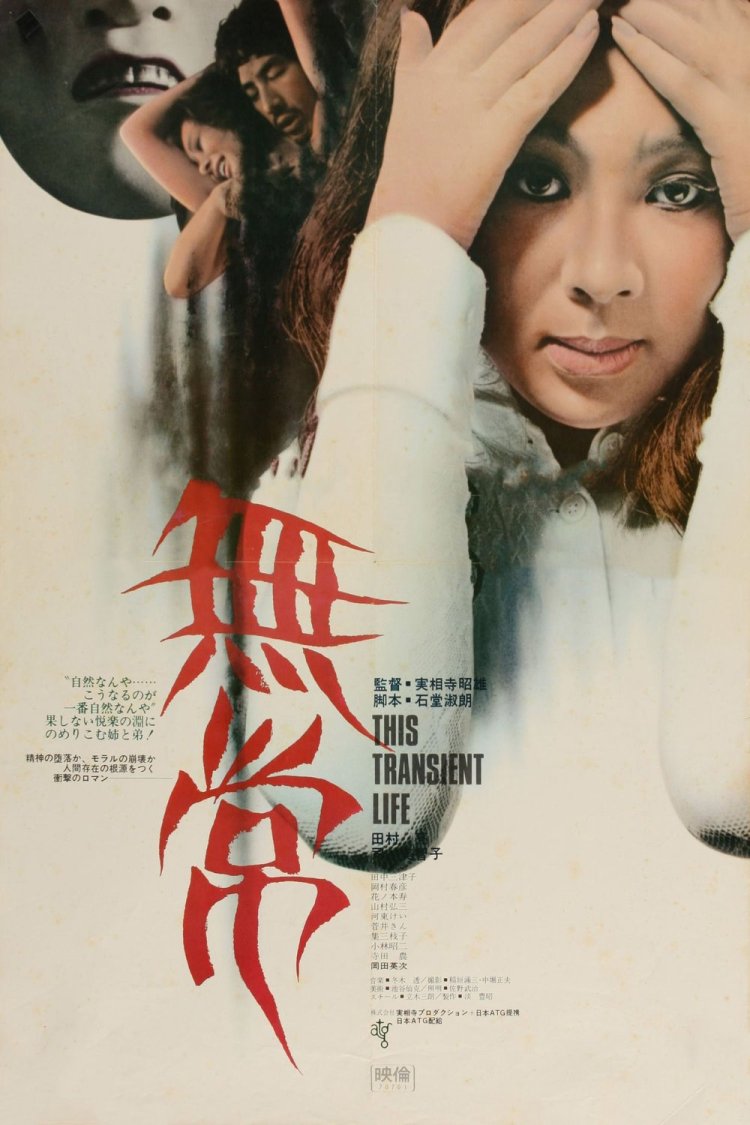
this transient life poster“People should do whatever pleases them, it’s because people suppress their desires that the world has become so complicated” the “hero” of Akio Jissoji’s 1970 Buddhist epic This Transient Life (無常, Mujo) impassively intones, “If we just do whatever pleases us, then everything will turn out fine”. As we will see, there are definite problems with Masao’s (Ryo Tamura) philosophy, but he may have something in the inherent paradox of Buddhism which finds serenity in nothingness while decrying nihilism.

We first meet Masao, a wealthy young man from a noble family, jumping over a wall in defiant violation of a no trespassing sign. He is in hiding, avoiding going home because his austere father (Kozo Yamamura) is due to arrive for another dose of parental oppression. His sister, Yuri (Michiko Tsukasa), comes to fetch him knowing that they cannot resist forever. Like her brother who rejects university and the corporate life, Yuri rejects marriage and seems intent on deciding her own future, only she does not seem to have any other path in mind. Left alone in the house while their parents attend a family function, disinviting the kids because of their ongoing recalcitrance, the siblings put on a pair of noh masks and chase each other around the house. Gradually a primal spirit takes over. Masao seduces his own sister, beginning a dangerous and necessarily illicit affair for no other reason than to prove that he can.

Ogino (Haruhiko Okamura), a reluctant Buddhist priest at the local temple who is perhaps himself in love with Yuri though apparently unwilling to pursue her even though there is nothing in his religion which forbids him, later takes Masao to task for his dark philosophy. Branding him a chaos agent who creates hell wherever he goes, Ogino urges him to absent himself from the society of others, go travelling, keep his hedonistic nihilism to himself. Masao, however, counters that he has only made the world more “colourful”, that in the end all he has done is dig out the true essence from the hearts of those around him. People do what they want, and nothing he says or does is in any way relevant save that they each faced their own destinies as they intersected with his. To Ogino’s mind, being overly aware of your destiny is no good thing, in fact Buddha will place his hand over your eyes to prevent just that, but to Masao the power to discern his own fate that which gives him the terrifying power to act solely according to his desires.

Meanwhile, the men around him seem to flounder in their own repression. Discovering the transgressive relationship between Masao and his sister, Ogino keeps quiet but finds himself caressing a statue of the goddess Kanon, while the family’s servant Iwashita (Kotobuki Hananomoto) secretly peeps on Yuri in the bath, and Masao’s later mentor, the sculptor Mori (Eiji Okada), actively encourages him to sleep with his much younger wife looking on as he does. “Women are nothing” Masao coldly exclaims, they are “curious animals” who want “immediate pleasure”. Seduced by Mori’s lonely wife Reiko (Mitsuko Tanaka), he later leaves decrying her as a whore who has commodified the act of love as if she were merely a receptacle for his desires much like the shapeless wood which receives the passions of the sculptor and eventually assumes its chosen form.

Masao and Yuri rebel against conventionality and bourgeois values through the ultimate taboo, bearing out Ogino’s criticism of Masao’s philosophy as “nothing but disorder”. Their transgression spirals and informs others. A disruptive influence in his master’s household, Masao pushes Mori’s resentful son (Isao Sasaki) into a quasi-incestuous relationship with his step-mother, while pushing his sister into a socially transgressive marriage to a servant to cover-up the “crime” of a child conceived not only out wedlock but with incestuous blood. He absolves himself for the blood on his hands claiming that every man makes his own choice, and posits himself as the only truly enlightened being as an embodiment of realised desire. Ogino calls him a mad man, but he alone is able to achieve a kind of enlightenment and enter a higher plane, transcending normal human consciousness. “Life and death are a great matter, treasure your time” the title card advises us. Masao rejects the “unappealing” simplicity of heaven for the chaotic pleasures of a transient existence, impressing his own desires on a repressive society and watching indifferently as their terrible flowers bloom.


This Transient Life is the first of four films included in Arrow’s Akio Jissoji: The Buddhist Trilogy box set which also features an introduction and selected scene commentaries by scholar of the Japanese New Wave David Desser plus a 60-page booklet with new writing by Tom Mes and Anton Bitel.

 Opening scene (English subtitles)