Paper Airplane (纸飞机, Zhao Liang, 2001)

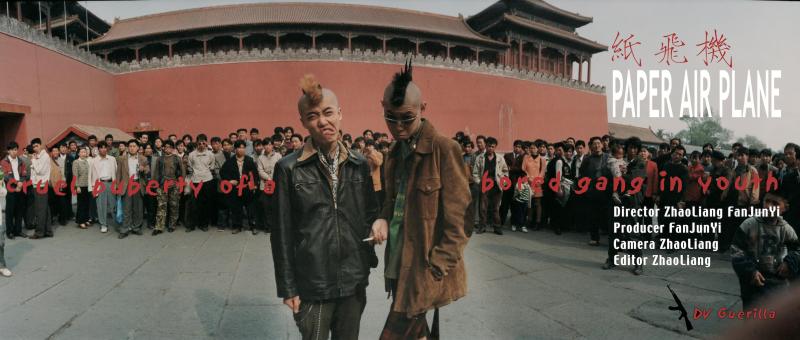
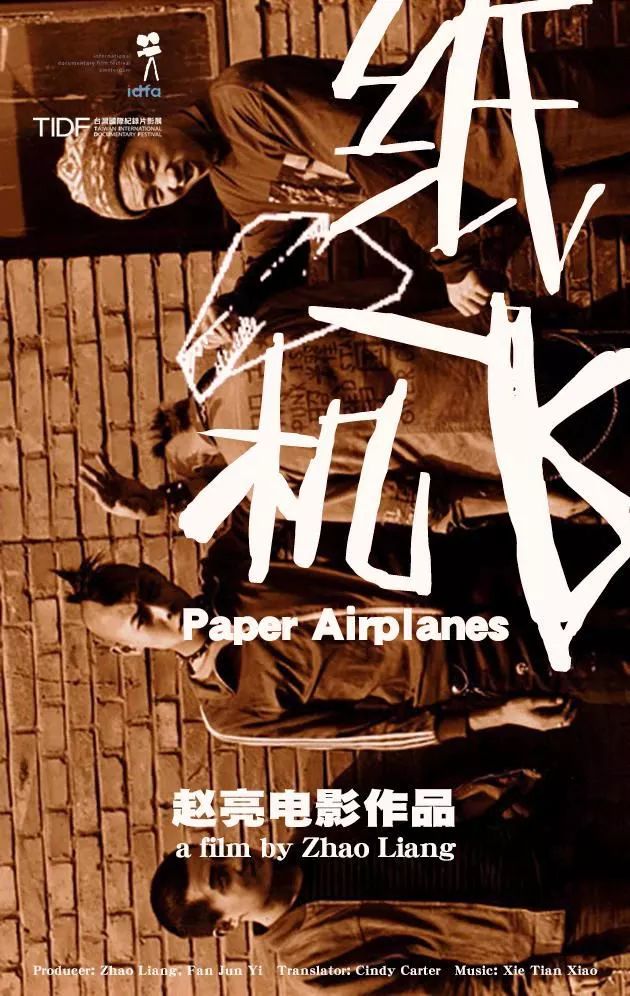
Paper Airplanes posterCritiquing the modern China has become a persistent theme in contemporary Chinese cinema, but questions were being asked even in the immediate aftermath of the reformist period of the late ‘80s and ‘90s. Zhao Liang’s Paper Airplane (纸飞机, Zhǐ Fēi) is on the one hand a sort of celebration of the new freedoms, but it’s also fuelled by the sense of confused hopelessness which engulfed many of those who came of age post-Tiananmen and could no longer rely on the iron rice bowl of the communist era while new opportunities largely failed to appear.

Zhao embeds himself deeply within a group of friends and relatives living a fairly bohemian existence on the fringes of the Beijing music scene. The film opens with a young man, Wang Yinong, cleaning a syringe with water while a young woman chats on the phone. Yinong has agreed to wait in for a friend, but then suggests going out to escort the woman home, as if he doesn’t quite want her to be there when the friend arrives. Shortly after, a young man in a leather jacket, Zhang Wei, turns up apparently having procured a small amount of drugs. Yinong asks him when he’s going to “kick” (the habit), to which he replies “in a few days” prompting an exasperated sigh from the woman next to him who exclaims that’s what everyone always says.

The rest of the film pivots around the various friends and their complicated relationships with drugs and the law. They get caught, often as part of complex entrapment schemes operated by the police, and are either fined and released or sent for rehabilitation which in the worst case scenario involves being sent to a reeducation labour camp. Only one of the group, Fang Lei, manages to evade the law but is himself later arrested and subsequently determines to kick the habit for good.

Fang Lei, sorting through a collection of pirated cassette tapes he sells on the streets in an attempt to earn a living (or at least money for drugs), puts it best when he says that by the time you realise that drugs are no good it’s already too late because you no longer need anything else. His sympathetic father sitting off to the side directly engages Zhao in one of the film’s few direct to camera moments when he pauses to remark that people need to see the stories of men like his son who have been left behind by their society, floundering around unable to find jobs with no one looking out for them.

Fang Lei does eventually manage to kick the habit, partly because he feels guilty for worrying his parents with his precarious lifestyle and partly, he admits, because this time he really wanted to. After getting off the drugs himself, he wants to help others do the same but knows all too well that you can’t help someone who doesn’t want to be helped. Another young woman, Liang Yang, attempts suicide by overdose after suspecting her boyfriend, a punk musician and fellow drug user, of cheating. She knows the drugs are bad for her and make her even more unhappy than she might be without them, but somehow she can’t seem to make the choice to live a different life and always finds herself returning to heroin. Unable to find a sense of positivity or an independent reason for living, she continues to seek escape from an unfulfilling existence in brief moments of drug-fuelled relief.

She too has a supportive mother trying to push her towards a more positive path, but the contrast here is starker. Liang Yang’s mother lives a humble existence little minding that she eats her dinner off a tiny tray on the floor of her kitchen and has learned to be happy with what she has. She doesn’t quite understand why her daughter can’t do the same. Fang Lei and Liang Yang’s boyfriend try to help her, even threatening to report her to the police so that she’ll have to go into rehab, but eventually have to concede defeat by giving her the money to buy methadone but leaving the choice of what to do with it up to her.

The “paper airplane” of the title is neatly explained by Yinong who, having been absent for much of the film, makes a surprise reappearance at its conclusion in a much reduced state. From a hospital bed he tells Zhao that he should call his film paper airplane because they’re bits of folded paper which sometimes fly very high but only for an instant before falling to the ground, paying a high price just for the chance to soar. Zhao had begun his film with a sense of youthful rebellion as these nihilistic youngsters forged a community of the dispossessed kicking back against an oppressive society, but he ends on a note of despair and futility which paints them as in some way trapped by the false promise of the modern China which denies them both freedom and a future. In an attempt to escape the crushing sense of impossibility and confusing lack of forward direction, they found fulfilment only in the “intense relaxation” of drug-induced highs but all too soon find themselves back on the ground again in the exact same place as they started with nothing much to show for their experiences other than regret and anxiety.


Screened as part of the 2019 Open City Documentary Festival in conjunction with Chinese Visual Festival.

Juror 8 (배심원들, Hong Seung-wan, 2019)

Juror 8 poster 1What is the role of the law in a free and democratic society? In an effort to democratise justice, Korea held its first jury trial in 2008 giving “the people” a voice in the courts. As might be expected the judiciary had its doubts. Where judges and lawyers are best placed to assess the evidence and draw their conclusions, might not ordinary citizens be swayed by emotion or argument? Then again, compassion might be a force sorely lacking in a legal process some might feel to have become too efficient in its keenness to see justice is done speedily, losing all important scrutiny and allowing corruption and complacency to sneak their way in.

Juror 8 (배심원들, Baesimwondeul), a courtroom comedy drama, subtly puts the nation on trial as it asks what the point of the law is if it’s wielded like a blunt object. The case in hand concerns a middle-aged man, Kang Du-sik (Seo Hyun-woo), accused of hitting his elderly mother (Lee Yong-yi) on the head with a hammer and then throwing her off the balcony to disguise the crime. Though the defendant made a confession to police shortly after the incident, he did so vaguely from a hospital bed after being knocked out and now claims he can’t remember the events in question. This presents a problem for the judiciary who had chosen this case for the first jury trial precisely because it seemed so open and shut, all the jury was supposed to do was consider sentencing. Now they’re being asked to consider guilt or innocence and asking lots of awkward questions in what was supposed to be a token effort on behalf of law enforcement to demonstrate that it is listening.

Everything might have gone to plan if it hadn’t been for problematic “Juror 8” Nam-woo (Park Hyung-sik ) who, despite giving some worryingly conservative answers in his interview, instantly sympathises with the suspect and worries that there are too many unanswered questions in the evidence presented. His conviction only strengthens when he wanders off trying to get to the patent office to file sample of a self-defence device he was trying to launch as a business and accidentally meets Kang who seems despondent and frightened, worried he really might be guilty but fundamentally unable to remember.

More cynical minds might ask if Kang’s memory lapse is merely convenient and he hopes to exploit the jury trial to win acquittal through sympathy. Having noticed that Kang has no fingers, Nam-woo insists on a test to see if he is able to swing a hammer only for others to point out that there is no real way to know if he is not physically able to do it or chooses not to to aid his case. Meanwhile, Kang sits sullenly like a defeated ball of pent-up rage, eventually exploding when the jury is handed a letter he claims he was forced to write expressing frustration with his mother’s refusal to sign a legal separation form so that he would be eligible to receive welfare payments.

As his lawyer later puts it, the real villain here is poverty. Kang was raised by a single-mother, something still frowned upon, who had to leave him alone to go out to work. She locked the door from the outside to keep him safe, but that also meant he was unable to escape a house fire and was badly burned at only five years old sustaining prominent facial scarring and the loss of the fingers on both hands which means he is unable to work and cannot easily write. According to the testimony, Kang and his mother argued constantly over money, especially since her job washing dishes at a restaurant came to an end. As her son and dependent, he was unable to claim benefits and wanted, the prosecution claims, to legally sever ties. When his mother refused, they allege that he lost his temper, killed her, and tried to make it look like an accident.

Nam-woo is unconvinced as is another juror whose 30 years as an embalmer tell him that the head wound was unlikely to have been caused by a hammer. Juror 6 is dismissed for speaking out in court, his exuberance held up as an example of teething problems in the jury system, but his words strike a chord with some of the other jurors who wonder if the smug expression on the forensic scientist is there to mask the fact that he didn’t really bother to investigate because there had already been a confession and all he needed to do was “confirm” the police’s findings. Time and again, the jurors accidentally uncover the failings of justice in a system geared towards efficiency. Kang was pushed to confess by police keen to meet their targets, the confession then became basis for deprioritising his case. Or as some of the legal minds put it, they got “sloppy” because there was no sense in devoting time and energy to a matter already closed.

The same thing happens in the jury room. The jurors are ordinary people. They have lives waiting for them. Nam-woo wants to file his paperwork for the business loan, another juror has a child to get back to, one is a salaryman with an angry boss on the phone. Everyone has a vested interest in getting this over with as quickly as possible so they can all go home, but they also take their responsibilities seriously – much more seriously than they were intended to. Korea is a conservative society in which it is natural to follow the guidance of the authorities and the collective will, and so it seems natural to everyone that you simply rubber-stamp whatever the judge says. Nam-woo is a bit different, he notices details and he asks awkward questions. “Just go with the flow” the other jurors urge him, “when in doubt follow their lead”, but he wants to do what feels right. The exasperated businessman orders him to fall in with the boss, in this case the judge, but crumbles when another juror asks for his own opinion. He doesn’t have one, because he’s corporate drone and he’s been conditioned to do whatever the boss says without really thinking about it.

In any case, the jury system itself is a bit of a sham. The jury’s opinion is not legally binding, the judge only has to take it under advisement and can overrule. Sympathetic judge Kim (Moon So-ri), defended in her appointment as “strong and resolute like a man”, is fighting her own battles in a male-dominated arena, hoping for a long overdue promotion following the successful handling of this high profile case she only got through lottery. She begins to notice things she might not have when it was just a formality of sentencing a man who had confessed, but she is under pressure to maintain control and authority while demonstrating the magnanimity of the state. The jurors’ deliberations expose their pettiness and snobbery, some taking against Kang just because he lives in the poor part of town, but also their keenness to ensure the law is fair and exists to protect and not to oppress. Genial and humorous, Juror 8 addresses a serious subject with a lightness of touch and a subtlety that gently exposes the shortcomings of its society while placing its faith in “the people” to make a compassionate choice in the face of a fierce pressure to conform.


Juror 8 screens in Chicago on Sept. 12 as part of Asian Pop-Up Cinema season 9 where director Hong Seung-wan will be in attendance for an introduction and Q&A moderated by Korean cinema expert Darcy Paquet.

Original trailer (English subtitles)

Crime and Punishment (罪与罚, Zhao Liang, 2007)

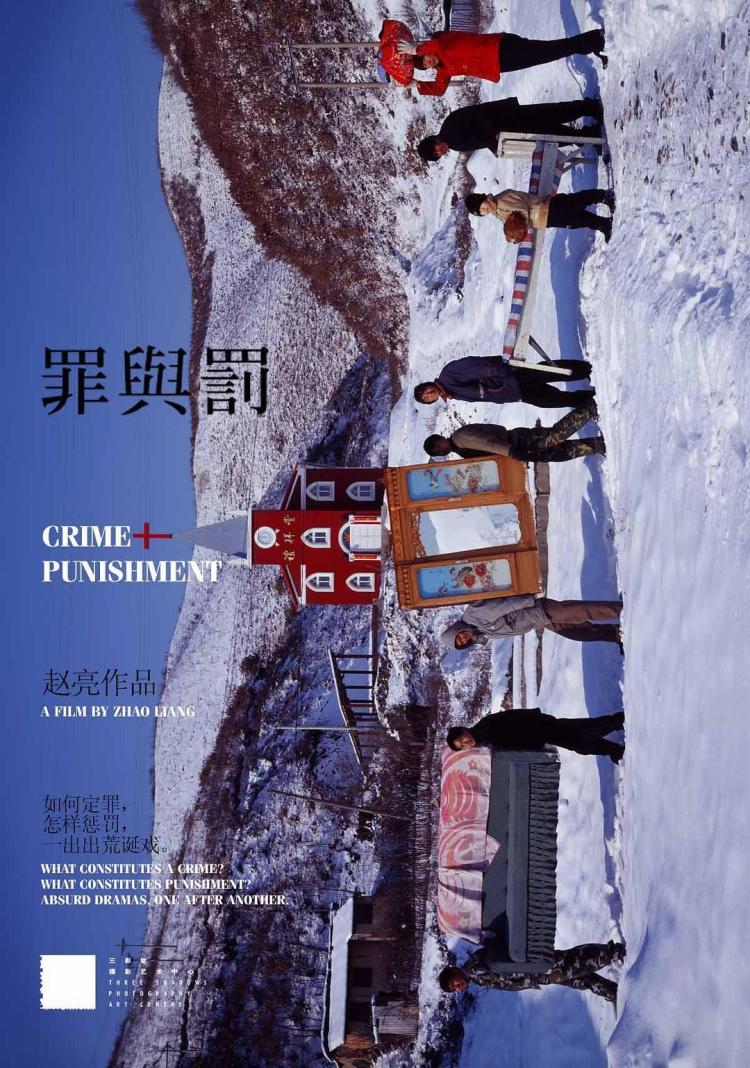
Crime and Punishment posterThe life of a small-town policeman is an often thankless one. When they’re not dealing with petty neighbourhood disputes, people who are essentially just lonely, and acts of elaborate busywork, there’s not much else to do but wear the uniform with pride. Unfortunately, the uniform can eventually consume the person inside it, turning them into fastidious prigs obsessed with the letter of the law. Locating itself in a small town near the North Korean border, Zhao Liang’s Crime and Punishment (罪与罚, Zuì ) paints an ambivalent portrait of local law enforcement, in this case operated by the Military Police who are themselves perhaps victims of the austerity of the system.

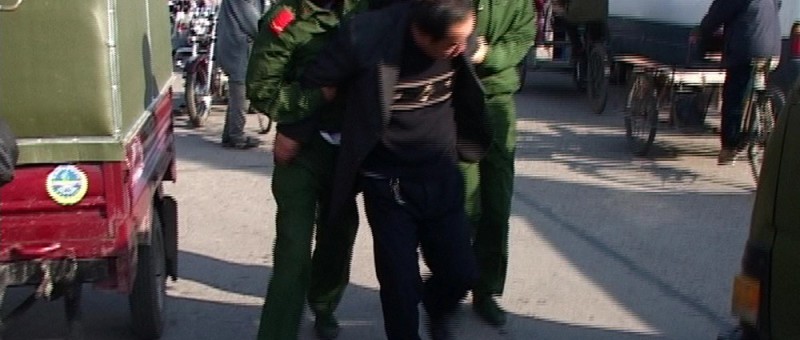
Zhao opens with a lengthy sequence of the soldier policemen meticulously folding their bedsheets into perfect squares, neatly symbolising their insistence on precision and discipline. Far from neat, however, their interactions with the locals are often messy and confused. Called out by a man with obvious mental health issues who wanted to report a murder but is discovered to have mistaken a bedsheet for a body, the pair of policemen are initially sympathetic if confused but become increasingly frustrated by his inability to acknowledge his mistake. Accusing him of drinking, they later threaten his elderly mother with wasting police time, suggesting that this sort of thing has happened before but refusing to believe that perhaps the man needs more help than they can give him, and that shouting at him to stop drinking is unlikely to have much effect.

Helping is not something they particularly see as their duty. They are, after all, here to be the face of authority, enforcing the law and keeping the locals in line. Thus they largely spend their time engaged in acts of extreme pettiness such as their dogged pursuit of an elderly man who can’t produce his permit for collecting junk. Old Wang gives them the runaround, claiming that the permits are all in order but at home, just trying to get them to give him his donkey cart so he can get back to business but the jobsworth on the desk isn’t having it. He won’t let the donkey go ’til they sort this out. No permits, no donkey. It’s then that Wang makes a strategic mistake in calling home. The jobsworth lends him a phone but on speaker, leading to a comical interlude of Wang’s presumably very young grandson screaming into the receiver before his son comes on and, not knowing he’s audible to all, says some very unkind things about policemen which don’t go down well with the guys in charge. Things aren’t looking great for Wang’s donkey, especially as his permits appear to have expired some years previously (which he blames on the permit office not sending the new documents), but by this stage all the jobsworth wants is an apology from Wang’s son for the stain on his honour as a policeman. Eventually he gets bored and lets Wang go with a warning, only for Wang to go around the corner with his donkey and immediately start collecting junk again.

This Kafka-esque futility is further rammed home when we see the police paste up a wanted sign for a suspected murderer. They set up a roadblock and earnestly question the passing cars only for one elderly gentleman to insist he doesn’t have time for this nonsense and speed off leaving the police dumbfounded and repeating his plate numbers with the intention of tracking him down later. As part of the sweep they discover a far more banal crime – three men with a pickup truck full of lumber they “found” supposedly abandoned and were hoping to sell to some guy named Wang in order to get a few extra pennies for the New Year. Eventually confessing, the ring leader is frogmarched home, allowed to remove his cuffs so as not to unduly alarm his family members, and forced to track through the mountains showing them the corpses of these illegally dismembered trees. The policemen with him are suddenly sympathetic, sorry for his obvious poverty and grateful for his co-operation (he even asks them to stay for lunch and apologises for making them tired with all this walking), offering to have a word with the chief to see if they can’t get the fine reduced. Of course, maybe that’s got something to do with his wife’s anger on noticing her husband’s swollen face and dejected expression. Her complaints about police brutality unsettle the officers so much that they overcompensate by giving the guys a token fine and letting them go home right away with all the lumber that they stole so that the families won’t kick up a fuss about the violence.

Despite the squeamishness, violence is a key tool of the military police who aren’t afraid of expressing their authority physically even knowing Zhao’s camera is capturing their every move. An old man is brought in on suspicion of stealing a mobile phone. So obsessed are they with shouting him into a confession, that it takes them a while to realise he is deaf and has a speech impediment which is why he is unable to answer their questions, but it doesn’t stop them whipping him with a belt to make him try. Eventually they have to let him go too because they don’t have an interpreter on hand and are unable to interview him or collect any evidence.

Life as a military policeman appears to be defined by tedium dressed up as correctness and punctuated by brief moments of brutality born of a desperate need to mask their sense of insignificance. They are victims of the system too. One young man who had invested everything in the dream of getting into the military academy laments that his life would be so easy if he had money for bribes and connections to hook him up, but he doesn’t so now he’s getting demobbed from the army against his will with no other choice than to go back home and live pretty much like the denizens of this tiny impoverished town where pensioners illegally hunt scrap and dejected dads steal trees to buy New Year gifts for their kids. One of the soldiers even complains that he’s losing his hair because of the stress and physical demands of the job, but there doesn’t seem to be much of an outlet for his frustrations other than taking pleasure in priggishness. A subtle and subversive condemnation of the violence embedded in the orchestration of the state, Crime and Punishment dares to suggest that its heroic policemen are little more than bumbling, self-important fools unable to think much beyond dogma, exerting authority through thuggery. Yet it is also reserves a degree of sympathy for them too, corrupt and cruel as they are, they are also products of the system that will eventually consume them.


Screened as part of the 2019 Open City Documentary Festival.

Ne Zha (哪吒之魔童降世, Jiaozi, 2019)

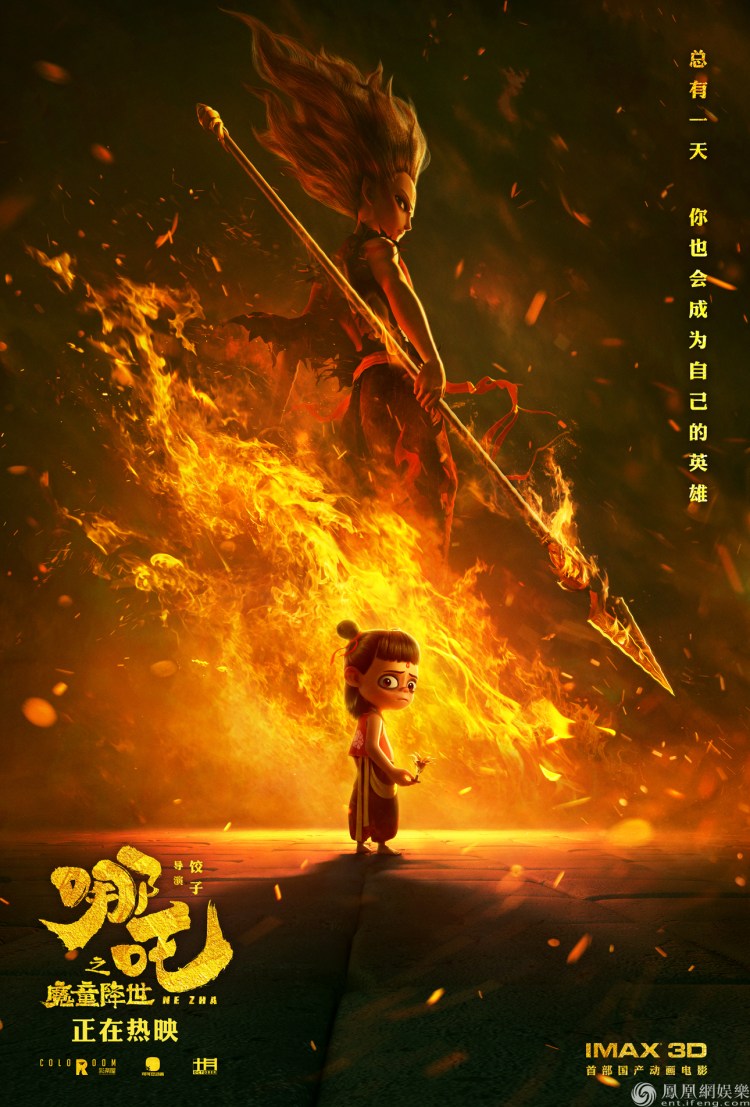
2755835c-570e-44bc-b2f2-515f706369bd_64fa474eb6b5a53c36be9bcd9311f283ce949be6_w1290_h1905Can you choose who you are, or is your identity constructed by accidents of birth and the society all around you? It’s a complicated question and even more so if you happen to have been born part demon thanks to a cosmological mixup. An origin movie of sorts for the titular hero familiar to most from classical Chinese folklore, Ne Zha (哪吒之魔童降世, Nézhā zhī Mótóng Jiàngshì) asks just that through the story of an extremely naughty, all powerful little boy who might be evil or just misunderstood and resentfully lonely because of the prejudice held against him by those fearful of his differences.

The trouble begins with the Chaos Pill which can pull power from sun and moon equally, threatening the integrity of the universe itself. Thankfully, the Heavenly King manages to split it into the Demon Pill and the Spirit Pill, enclosing both inside a lotus flower. He intends to send the Spirit Pill into the third son of general Li Jing (Chen Hao) and has put a curse on the Demon Pill so that it will be destroyed by lightening in three years’ time. Predictably nothing goes to plan because drunken deity Taiyi Zhenren (Zhang Jiaming) fails to stop the evil Shen Gongbao (Yang Wei) sending his minions in to steal the Spirit Pill and use it for his own ends. The Demon Pill ends up in the son of Li Jing, Ne Zha (Lü Yanting), who emerges from his mother’s womb as a bouncing ball of flesh before transforming himself into a small boy and proceeding to wreak havoc all over town.

Doting parents Li Jing and Madam Yin (Lü Qi) refuse to believe their son is all “bad” but recognise that they have a duty to the townspeople who are quickly fed up with Ne Zha’s antics and traumatised by years of being terrorised by “demons”. They would rather do away with the irascible little rascal, but could it be that he’s just bored and lonely? Given the increased demon threat, Madam Yin is often away slaying things and regrets she doesn’t have more time for her son while the other kids are afraid of him, both for quite rational reasons and also because his main way of making friends is quite mean. Increasingly resentful at being shunned as a “demon”, Ne Zha strikes back at the villagers in ways which are really just naughty rather than actually “evil” but obviously aren’t going to win him any friends.

Having failed to get help from the Heavenly Father who has predictably waltzed off for a bit as gods seem to do anytime there’s an actual problem in the mortal realm that they probably caused through inefficient planning, Li Jing decides to lie to his son that he’s really the Spirit Pill and has a duty to slay demons and help mankind. The deception begins to work. Imprisoned in a painting where Zhenren tries to teach him useful magic, Ne Zha takes his new responsibilities seriously, eventually escaping and trying to rescue a little girl who has been kidnapped by a water troll. Sadly, he goes about it all wrong and the townspeople embrace their prejudice to jump to the conclusion that he kidnapped the kid himself and has become even more dangerous.

Meanwhile, evil Shen Gongbao faces a similar problem as a deity shunned because he’s jaguar spirit who took human form. Allying with the villainous Dragons who have been given an ironic punishment to run a prison from which they can’t escape either, he gives the Spirit Pill to their bright hope Ao Bing (Han Mo) who, mirroring Ne Zha, struggles to accept his “evil” parentage and continues to do good and noble things behind his parents’ backs. Meeting by chance, the pair became friends but inevitably have to do battle before realising that they are two halves of one whole and thus represent a kind of salvation in linking hands rather than raising them.

Ao Bing, despite himself, is the more filial in that he thinks he has to accept the “destiny” his parents have given him as a liberator even if he doesn’t quite agree with their methods or reasoning. Ne Zha, by contrast, concludes that his fate is to resist his fate. He might not win, but he’ll fight it all the way and decide for himself who he is rather than allowing others to tell him. Genuinely funny, filled with amusing gags, and packed full of heart, Ne Zha is a gorgeously animated family fantasy and an impassioned advocation for living by your own principles while refusing to be bound by the unsolicited opinions of others.


Currently on limited cinema release courtesy of Cine Asia in the UK, and Well Go in the US.

Original trailer (English subtitles)

Love and Goodbye and Hawaii (恋とさよならとハワイ, Shingo Matsumura, 2017)

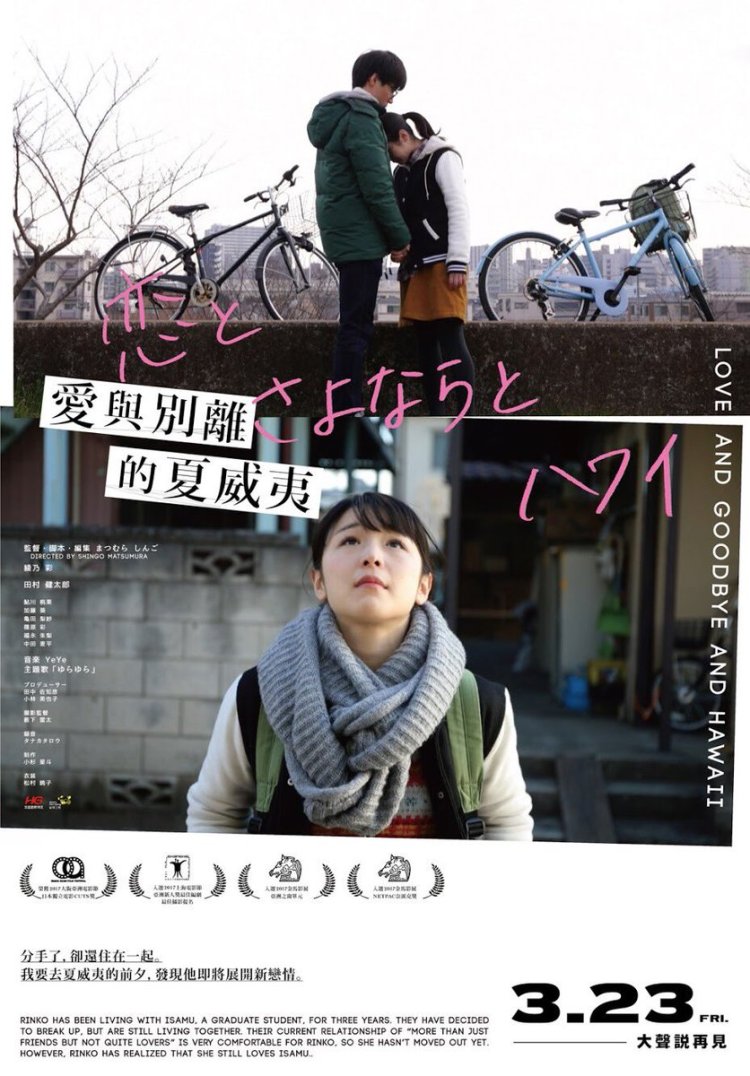
Love and Goodbye and Hawaii poster 1“To end something requires more courage than anything else” the conflicted heroine of Shingo Matsumura’s Love and Goodbye and Hawaii (恋とさよならとハワイ, Koi to Sayonara to Hawaii) is told by her well-meaning ex, but it’s a lesson she’s struggling to learn. Life may very well be a “road made of decisions”, but Rinko (Aya Ayano) doesn’t know how to make them and is rapidly becoming aware that if you don’t hit the relevant dialogue box fast enough they will largely be made for you. Less a tale of romantic confusion, Love and Goodbye and Hawaii is a young woman’s gradual path towards accepting that her attachment to the status quo is as much about the fear of moving forward as it is the pain of faded love.

Office worker Rinko has been living with her graduate student boyfriend Isamu (Kentaro Tamura) for the last three years. To all of their friends, they seem to have the perfect relationship but what no one knows is that, though they continue to live together, the couple broke up some months previously. Seeing as it was Isamu’s apartment in the first place, Rinko plans to move out as soon as she’s saved enough money to find somewhere new in the precarious Tokyo housing market, but then again now that they’re no longer “together” the arrangement has become so comfortable that there’s really no hurry to make a change. Matters come to a head, however, when Rinko discovers that a fellow student at Isamu’s university has taken a liking to him, and it seems he to her.

Despite having been broken up for almost six months, Rinko hasn’t quite accepted that it’s over. She demurs when her friends ask her if she’ll be getting married soon, only latterly admitting that they’ve technically broken up, and explaining that she really has it good now because it was too “heavy” before which is why they fought all the time. Now that there’s “nothing” to fight over and they’ve gone back to being platonic friends it’s all so much easier. Too easy, in fact, which why she isn’t really ready to move on.

Rinko’s unconventional living arrangements seem extremely strange to her friends. “Break up like normal people and never see him again” her friend tells her, offering her a space on the sofa if it’s money that’s the issue. Not that money’s not a problem, but even when well-meaning people offer financial help to end this “weird” situation, Rinko doesn’t really want to take it. She tells her friend that relationships are like driving and you don’t want to jump on the breaks incase they jam and you end up on the skids, but as her perceptive younger sister points out perhaps she just wants to get back together and doesn’t know how to go about it.

Analogies are something Rinko seems to have a taste for, unable to state her feelings plainly in a way others will understand she wraps them up in a more palatable narrative. So it is that she ends up telling her friend’s drunken younger sister that with Isamu she felt like she was CD no other player had worked out how to play. She figured out she liked the sound inside her when she was with him, but time moves on and it feels like she’s still a CD but Isamu is now an iPod and she doesn’t really know what to do with that. What she’s trying to say is that they’ve grown apart, but what she hasn’t quite admitted to herself is that maybe it’s not Isamu that she’s afraid of leaving but the vision of herself as reflected in him.

“Show your real self, put your real feelings out there” the younger woman tells her, but that’s something that doesn’t necessarily get easier with age. Finally gathering the courage, Rinko makes her way back to Isamu for a “serious talk”, only to run into her romantic rival but contrary to expectation the two women find that they have no interest in competition and only wish each other well. Rather than that “serious talk” however, Rinko ends up trying to sort out her romantic dilemma through the familiar medium of a walking race which does at least allow the diffident Isamu to make his feelings plain without actually having to say anything. Sometimes actions are kinder than words, and easier to understand. What Rinko needs to learn is that you can find self acceptance without needing to see it reflected in someone else, and that fear of moving forward is not a good reason for holding back. A quiet and melancholy look at life after love, Love, Goodbye and Hawaii is a gentle ode to the art of moving on with no hard feelings, looking straight ahead.


Original trailer (English subtitles)

Sandakan No. 8 (サンダカン八番娼館 望郷, Kei Kumai, 1974)

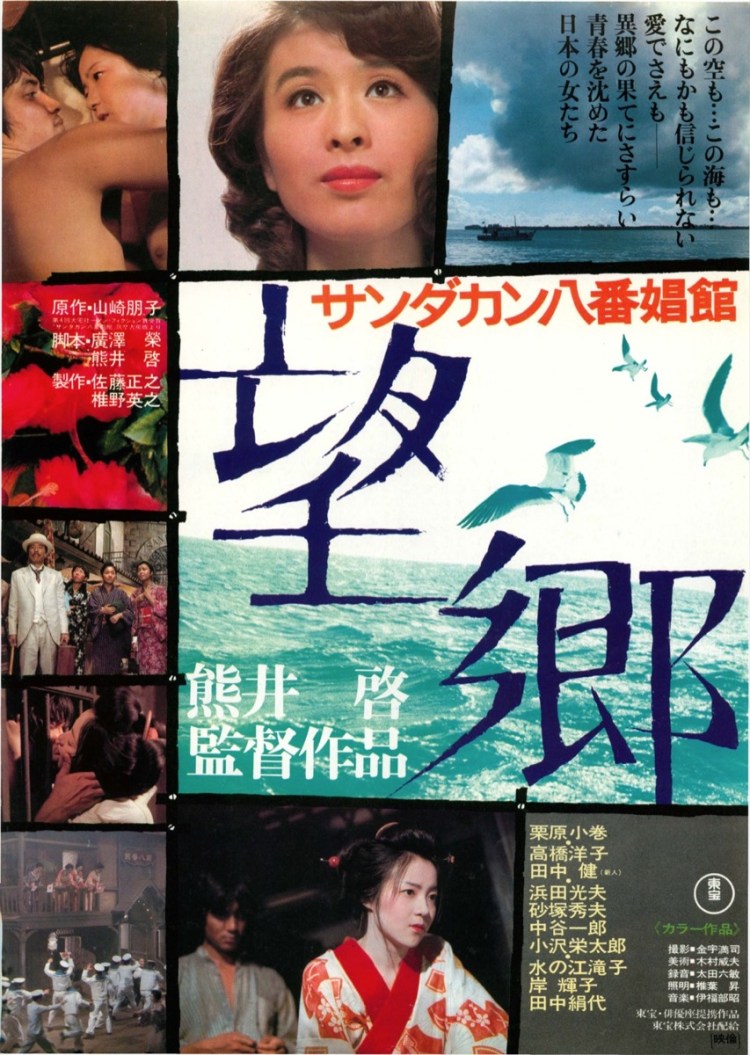
Sandakan 8 posterSome might argue that Japanese cinema has often been reluctant to examine the nation’s traumatic 20th century history with the proper rigour, but even if subtle and coming from unexpected angles there have been many and varied attempts to ask questions about the lingering consequences of feudalism. Sandakan No. 8 (サンダカン八番娼館 望郷, Sandakan Hachiban Shokan: Bokyo), inspired by a true life account of a woman unwittingly sold into sexual slavery as a child at the turn of the century, is not only a condemnation of socially approved people trafficking and its role in building the short-lived Japanese empire but a mild provocation of the contemporary society which refuses to engage with its traumatic past.

In the contemporary era, graduate student Keiko Mitani (Komaki Kurihara) is engaged in researching the “karayuki-san” – Japanese women who were sold into sexual slavery throughout Asia in the early 20th century. Almost forgotten, the karayuki-san are a taboo subject and even those still living in the areas from which women and girls were sent away are unwilling to speak of them. By chance, however, Keiko runs into an old woman in a cafe who speaks with a standard Tokyo accent and tells them that she spent most of her life “abroad”. Quickly realising she doesn’t mean she was a diplomat’s wife, Keiko wonders if the woman might be have been a karayuki-san and delays her return to Tokyo in order to find out.

There is something, it has to be said, ironically exploitative in Keiko’s determination to get the old woman, Osaki (Kinuyo Tanaka), to open up about a subject on which she so obviously does not want to be drawn. A visit to Osaki’s home reveals her to be living in a run-down hovel on the edge of town which is filled with stray cats whom Osaki feeds because “they’re all abandoned, but still they have to live”. Keiko gets herself brownie points by reacting politely to Osaki’s reduced living situation, eventually staying three weeks during which time she gradually teases out Osaki’s sad life story. Finally asking if there wasn’t anything Osaki might have liked to know about her, Keiko’s hypocrisy is fully brought home to her when Osaki admits that no one was more curious about Keiko than she was but that “people have reasons for not confiding in others” and if it’s something you need to ask about then it’s probably something that the other person may not want to share. In any case, Osaki seems to have known Keiko had an ulterior motive but does not regret sharing her story and has no worries about what Keiko might do with it as long as she makes sure to tell the truth.

The truth, in a sense, seems to be something the villagers feel themselves well acquainted with which is why Osaki lives in a shack on the edge of town. Tricked into sexual slavery as a child by an amoral people trafficker who lured her with promises of money to be made overseas, Osaki found herself in Borneo and a prisoner of “Sandakan No. 8” which was one of 10 numbered brothels on the island largely catering to Japanese travellers overseas, facilitating the expansion of the Japanese empire as accidental emissaries and ports of call. When Osaki was a child, Japan was a poor country and it was considered normal to sell one’s daughter in order to feed a family. Working overseas carried with it a kind of cache though no one, except perhaps her brother, seems to be fully aware of what Osaki is going to and she herself has not in any way chosen or consented to become a sex worker. When she eventually returns to Japan, she finds herself unwelcome in her brother’s house, which her money paid for, because of the shame associated with those who have “worked away”. Even 50 years later, she finds herself living alone, all but disowned by her only son, on the outskirts of her childhood village ostracised by the “respectable” townspeople who don’t for a second believe Osaki’s quick introduction of Keiko as her daughter-in-law.

The daughter-in-law deception is only one heartbreaking aspect of the complex relationship between the two women who are each, in a sense, hiding something from the other but end up forming a genuine connection anyway. Intensely lonely and having lived a life filled with suffering, Osaki is willing to pay for company with her story while Keiko is, not quite deliberately, using her loneliness against her in an attempt to earn her trust and get her to reveal her secrets. Nevertheless, Keiko is able to mine a rich and deep seem of 20th century trauma through the tragic story of just one woman which reaches out to hundreds like her some of whom rest in a graveyard in the forests of Borneo with their backs forever to Japan. The enemy is, once again, poverty more than it is patriarchy or even feudalism, a problem less of the essence in the rapidly improving post-war economy, but as Kumai is keen to point out, this system of state sanctioned people trafficking (finally outlawed only once Japan’s status on the world stage began to rise) had far wider implications than it might be thought which still echo into the present day and perhaps beyond if not for the efforts of women like Keiko who do not wish to forget.


Original trailer (no subtitles)

No Regret (후회하지 않아, Leesong Hee-il, 2006)

No Regret poster“Why do we have to be so miserable?” a frustrated cabaret bar owner exclaims part-way through a harebrained scheme to get both money and revenge against a lover’s betrayal and a relentlessly unfair society. The debut feature from Leesong Hee-il, No Regret (후회하지 않아, Huhoehaji Anha) is regarded as Korea’s first explicitly gay film from an out gay director but is as interested in social disparity and multiple oppressions as it is in contemporary gay life in a sometimes unforgiving Seoul.

Our hero, Su-min (Lee Yeong-hoon), is an orphan recently ejected from the orphanage after turning 18 and leaving high school. Like many young men in his position, Su-min has been effectively hung out to dry and has very little chance of making much of a life for himself. Quietly angry, he works hard in a factory by day, and studies at a cram school at night, hoping to make enough money to apply for college and ensure a better life for himself. He also has another part-time job as a “designated driver”, getting drunk people and their cars back home in one piece. One particular job, however, changes his life forever when he arrives to meet Jae-min (Kim Nam-gil) who, apparently, seems to fall in love with him at first sight. Despite perhaps being flattered, Su-min hesitates but turns down Jae-min’s overtures, either simply afraid and still uncomfortable with his sexuality or resentful of the awkward power dynamic between them.

The problematic power differential raises its head again when Su-min realises that Jae-min is the factory boss’ spoilt chaebol son seconds after learning he and his friend, both of whom are “casual” rather than “regular” employees, have been let go in a mass layoff. Jae-min, still smitten, pulls strings and makes sure Su-min keeps his job, but Su-min isn’t comfortable with being indebted in that way or of taking another man’s place just because the boss has taken a fancy to him so he quits in anger and does his best to shake Jae-min off his trail. Jobs are hard to come by for uneducated poor boys, and after a spell washing dishes proves unsuccessful he finds himself giving in and taking a job in a host bar karaoke box offering illicit sexual services to select clientele.

Su-min, as he later suggests to Jae-min, is perhaps freer than most to embrace his sexuality given that he has no family to disapprove of him. He is, in a sense, dependent on the feeling of solidarity he has with the other orphans, like his ladies’ man roommate who despite offering to take Su-min to a brothel so he’ll realise what he’s missing out on is actually broadly supportive of Su-min’s sexuality, but is afraid more of them discovering his “fall” into sex work than of them realising he is gay which most of them seem to have done already. In any case, it’s perhaps unsurprising that he personally continues to struggle with his sexuality given his extreme youth even after becoming used to life at the club and the financial benefits it can bring.

As the “madame” tells him, though he’s gay himself he doesn’t hire “gay” guys and it remains true that most of the other sex workers are straight men who are only in the business because they have no other way of making money. Jae-min, meanwhile, feels himself at least a prisoner of his privilege as he repeatedly fails to standup to his domineering mother who has arranged a marriage with a suitable young woman despite knowing that her son is gay. Well educated and wealthy, Jae-min has accepted his sexuality but is unable to embrace it or to break free of the patriarchal social codes which insist that, especially considering he is an only child, he has a responsibility to obey his parents’ wishes by living up to their conservative values, marrying a woman, providing an heir, and taking over the company. Jae-min’s mother even later tells him that she doesn’t care if he continues to sleep with men, but that he must marry the woman she’s chosen for appearance’s sake, little caring for the emotional wellbeing of the oblivious fiancée she is about to condemn to a loveless marriage.

Jae-min continues to chase Su-min who continues to rebuff him until finally seduced, but a note of darkness remains at the centre of their relationship in Jae-min’s self loathing and Su-min’s resentful sense of inferiority. An accidental betrayal born of momentary weakness and followed by an eventual breakthrough leads to a very dark place indeed as the wounded parties decide to take misplaced revenge, against an oppressive society as much as against those who have wronged them. Nevertheless, a kind of “equality” is perhaps achieved through wounds given and received giving way to a more openhearted connection albeit one with a dark genesis. An important step forward in representation, Leesong Hee-il’s indie drama is an oddly hopeful romance in which the heroes eventually succeed in becoming themselves in defiance of the societal oppression all around them.


US trailer (English subtitles)

Bright Future (アカルイミライ, Kiyoshi Kurosawa, 2003)

Bright future posterThe cinema of the late ‘90s and early 2000s is one defined by alienated youth kicking back against a stagnant society in which they see no place for themselves now that the dull and conventional salaryman world of their parents can no longer offer security in place of fulfilment. Kiyoshi Kurosawa’s early masterpieces had edged towards the nihilistic, embracing this sense of generational hopelessness but finding perhaps glimmers of possibility in the longing for escape no matter how far off. Bright Future (アカルイミライ, Akarui Mirai), shifting away from the genre fare which had made his name, does something much the same but perhaps even bleaker in its melancholy acceptance of intergenerational disconnection.

Our two heroes, Yuji (Joe Odagiri) and Mamoru (Tadanobu Asano), have workaday jobs at a factory which they find fulfilling only in their emptiness. The guys have found a fan in the factory’s ageing boss, Fujiwara (Takashi Sasano), who begins giving them special jobs and trying to hang out with them while promising a special signing bonus should they agree to become regularised employees. Bonding in their resentment towards men of Fujiwara’s age who romanticise their youth while exercising paternal authority and entitlement, the two hatch their revenge on an unforgiving society through the strange plan to acclimatise their pet jellyfish to life in modern Tokyo.

The jellyfish, closely associated with the ethereal Yuji, becomes a kind of symbol of the “bright future” the two young men fear will elude them. They, like the jellyfish, have tried to acclimatise themselves to living in the otherwise hostile environment of contemporary Tokyo but also accept that the ability to survive may not be enough and it may eventually be necessary to remove oneself from an unforgiving society until such time as it is possible to return.

This or something like it seems to be Mamoru’s key philosophy as the owner of the jellyfish and the chief architect of the “bright future” both men dream of – literally in the case of Yuji who is the idea’s unwilling prophet. Mamoru has, for reasons unknown, decided to take the strangely melancholic Yuji under his wing, eventually entrusting sole custody of the jellyfish to him in an attempt to force him to look after “himself”. In service of this ideal and perhaps of Yuji’s unwilling visions, Mamoru takes more immediate revenge against the literal Fujiwara – murdering his boss and his wife (Marumi Shiraishi) in their well appointed middle-class home (only their small daughter is spared). Yuji interprets this gesture as protective seeing as he himself had found the bodies after wandering into the Fujiwara home with violence on his mind, but misinterprets Mamoru’s intentions for him in disappointing his mentor by insisting that he is prepared to “wait” for him rather than take this cue to step up and take control of his own life’s direction. 

Yuji is indeed, like the majority of heroes in turn of the century Japanese cinema, entirely directionless. He appears to have no surviving family in the older generation, only an exasperated sister who does her best to help but doesn’t know how, attempting to straightjacket him into a salaryman world of conventional success with an office boy job at her understanding company. A strange young man, Yuji has has vivid dreams and a need for control and routine – it’s the closure of the local bowling lanes which sends him round to the Fujiwara’s in a calm yet violent rage while repeatedly losing in a video arcade to his sister’s boyfriend also sends his insecurity into overdrive. He once dreamt of a “bright future” but now sees only darkness. Stepping up onto the roof of a building in which he is learning to find a home, he is forced to admit that despite attempting to look far into the distance he can’t see much of anything at all from where he is right now.

Yet for all his resentment towards men like Fujiwara, it’s a father figure which eventually begins to push him in a more positive direction. Mamoru’s father Shinichiro (Tatsuya Fuji) takes his son’s vulnerable best friend under his wing, giving him a home and a purpose as he begins to teach him how to repair things that might ordinarily be thrown away. Shinichiro’s previous assistant quit because he saw no future in this line of work, but Yuji seems to delight in the repurposing of the previously useless for arcane ends even if his chief contribution is a continuation of his jellyfish experiments. Shinichiro, superficially supportive, cannot understand the obsession with the jellyfish. Attempting to reassure a thwarted Yuji, he asks him what exactly the jellyfish could achieve in a world so resistant to real change yet he also berates him with the impassioned impotence of age in decrying his contemptuous dismissal of the reality which, after all, belongs to men like Shinichiro who will demand respect while offering very little in return.

The jellyfish find they can’t live in Tokyo, but youth adopts a different solution as it runs rampant with out purpose or direction but seemingly delighting in meaningless anarchy. A group of teens Yuji runs into wear identical Che Guevara T-shirts while sporting light-up microphone headsets as they wander round the city kicking cardboard boxes and laughing as they go, like overgrown children with no clear forward path before them. Age and youth seem primed to exist in differing realities, perpetually unable to understand each other while youth struggles to find direction in the absence of parental guidance. Ironic in the extreme, the “bright future” here seems to exist only as a vague hope but, perhaps, the only guiding light in an ever darkening world.


Original trailer (English subtitles)

Apostasy (破戒, Keisuke Kinoshita, 1948)

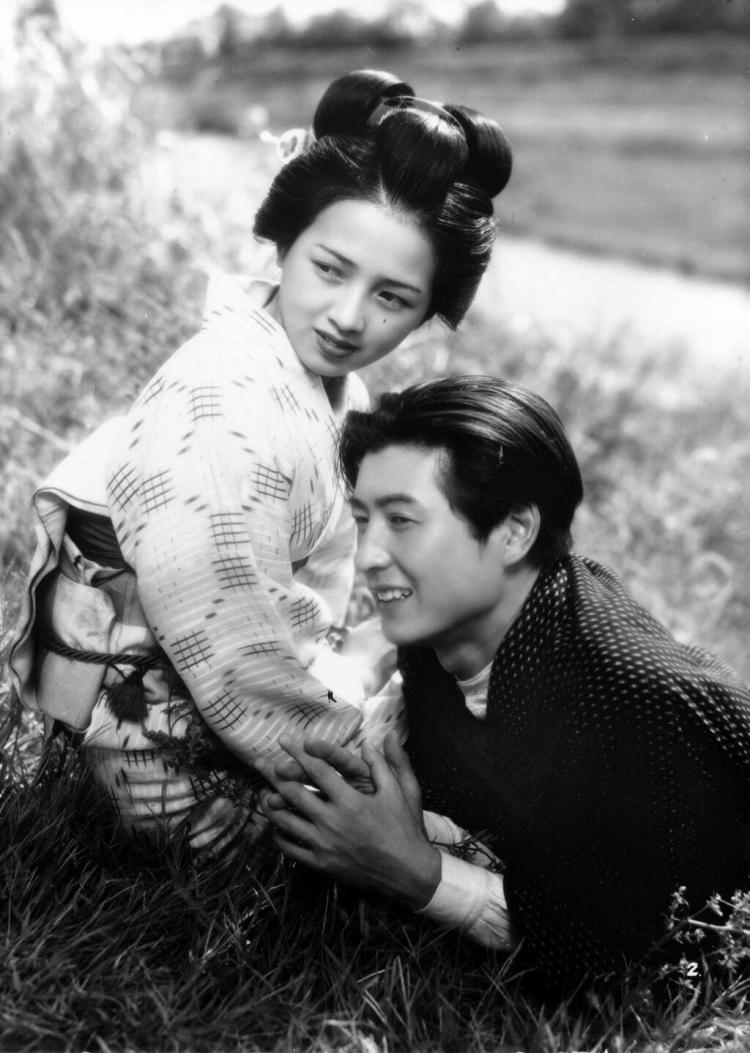
Hakai still 1For all his good hearted humanism and intense belief in the simple power of human goodness, the films of Keisuke Kinoshita can also be surprisingly conservative, most particularly in their attachment to the old, pre-war Japan which they often see as unsullied by the corruption and ugliness of the militarist era. A new constitution film, Kinoshita’s adaptation of the Toson Shimazaki novel The Broken Commandment, The Apostasy (破戒, Hakai), opens with a series of bold titles proclaiming “Freedom and equality”, and “respect for human rights” before breaking into an attack on the persistent feudalism which has managed to survive into the new era along with prejudice and contempt. Zooming back to the missed opportunity of Meiji-era liberation, Kinoshita too remains somewhat ambivalent about the the decline of a social order in a Chekhovian lament for the rise of the petty middleman and the fall of noble aristocracy.

In Meiji 35 (1902), despite the advent of the Meiji Restoration and abolishment of the class system, prejudice against the “burakumin” – untouchable “outcasts” who lived in isolated settlements and (historically) made their living in occupations connected with death, was still very much in existence. This is all too apparent to Segawa (Ryo Ikebe). A bright young man, Segawa’s father sent him out of their village to make something of himself with the solemn promise that he must never reveal his burakumin origins to anyone. The world being as it is, however, Segawa is conflicted especially as he has fallen in love with his mentor’s daughter Oshiho (Yoko Katsuragi) and wonders if it would be fair to marry a non-burakumin woman without telling her truth and live with the threat of discovery forever over their heads.

The Broken Commandment would later be adapted again by Kon Ichikawa whose focus is, perhaps quite surprisingly, very different to that of Kinoshita who, uncharacteristically, chooses to prioritise class concerns over the right to live freely and honestly in a compassionate society. Ichikawa’s adaptation deliberately widens the implications of Segawa’s dilemma, making it plain that he is talking not just about burakumin rights but directly to all oppressed peoples and most particularly to those who feel obliged to keep their true natures a secret in an oppressive and conformist society. Strangely, Kinoshita chooses not to engage with this theme which might otherwise seem tailor made for his persistent concerns if perhaps a little close to home, preferring to focus not on Segawa’s gradual shift into accepting his own identity and hearing the call to activism but on the reactions of the changing world around him which seems to be imploding while besuited upstarts enact their petty revenge on the chastened nobility.

This is most clearly seen in the unfair treatment of Segawa’s mentor and landlord, Kazama (Ichiro Sugai) – a former samurai and until recently the local school teacher. Mere months away from his retirement, Kazama has been instructed to resign so that the school will not need to pay his pension while his position has been taken by a pushy local man with limited education whose sole claim to the job is being of the people. Kazama is understandably resentful but stoic. Segawa’s liberal colleague, Tsuchiya (Jukichi Uno), takes the school board to task for its unreasonableness and underhanded attempt to save money by forcing an old man out of his position with no thought for his 30 years of service. Though Tsuchiya might be broadly in agreement with the changes taking place in Meiji-era society, he too worries about the greedy upstarts usurping privilege rather than seeking to eradicate it.

Stepping back for second, Apostasy is a post-war film designed to echo the egalitarian philosophies of the new constitution drawn up under the American occupation. It is then somewhat subversive that our villains are the Westernised lower middle classes of Meiji-era society who seem to have embraced “modernity” by dressing in suits but refuse to abandon ridiculous ancient prejudices such as that towards burakumin, doubtless because those prejudices largely work out in their favour. It would be tempting to read these prejudices as foreign imports, but that against the burakumin is wholly Japanese and truth be told somewhat backward in contrast to (the kimono’d) Tsuchiya’s forward looking socialist beliefs which superficially at least seem more in keeping with the age.

Yet it is in some senses Segawa himself who struggles to emerge from the feudal yoke. His promise to his father is a sacred vow underlined by loss and sacrifice. He feels it is his duty to live as his father wished, as a “normal” Japanese citizen in success and comfort, but also begins to become acutely aware that to do so may be cowardly and selfish. If he chooses to keep his promise to his father and never reveal himself as a burakumin, he will be complicit with the systems which oppress him and thereby ensure those like him will always be oppressed. His awakening comes, in a sense, from a second father – Inoko (Osamu Takizawa), a burakumin who has come out of the closet and loudly fought for burakumin rights along with the general liberty of all oppressed people. Caught between two fathers and his growing love for Oshiho, Segawa remains lost while one of the suited proto-militarists threatens to out him leaving him floundering in the face of intense social stigma and the possibility that those he loves may turn against him.

Segawa has to free himself or risk becoming like Kazama – a man haunted by the feudal past, as Tsuchiya puts it. Kazama himself is painted in broadly sympathetic terms, forced to endure the melancholy fate of being eclipsed by a Lopakhin-esque member of the insurgent middle-classes, but his prejudice is later exposed despite his original support of Segawa when he notices one of the suits smirking at him and instantly feels humiliated, turning his impotent rage back on the outcast as if his presence further dishonours him as a samurai. Segawa’s aim as a teacher had been to teach his children the power of individual thought, which would seem to be the best weapon against prejudice but his message has been cut off at source thanks to the self-interested school board who have been all to quick to claim the benefits of modernity with none of the responsibility. Resolved to fight for a freer future, Segawa finally accepts his responsibility as a burakumin spokesman in the knowledge that his calling is to educate and that only through education can anything ever change. The lessons of Meiji may have gone unheeded, but the opportunity presents itself again to abandon the feudal past in favour of an egalitarian modernity built on fairness and compassion rather than obligation and oppression.


Titles/opening (no subtitles)

Doubles Cause Troubles (神勇雙妹嘜, Wong Jing, 1989)

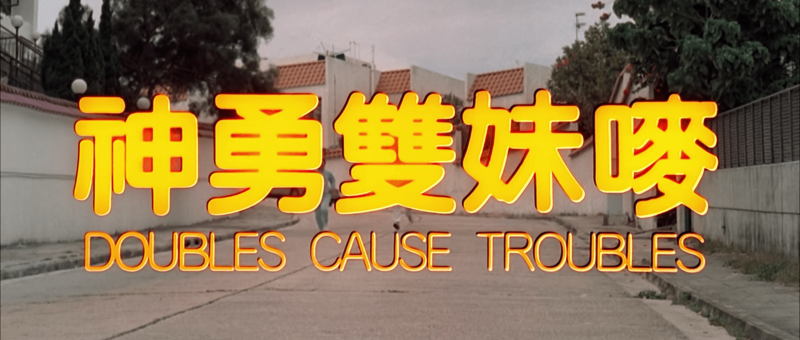
Doubles cause troubleWould you be willing to live with someone you hate for a whole year just to get a share in an apartment? According to the sheer prevalence of this plot device in comedies throughout the ages, the chances are most people would, especially in a city like Hong Kong where competition is fierce. In any case the duelling cousins at the centre of Wong Jing’s disappointingly normal farce Doubles Cause Troubles (神勇雙妹嘜) find themselves doing just that, only the situation turns out to be much more complicated than one might imagine.

When self-centred nurse Liang Shanbo (Carol “Do Do” Cheng Yu-Ling) receives a visit from a lawyer informing her that her grandmother has passed away she’s a little put out because the old lady owed her money. She’s comforted with the news that she’s been left an apartment, but less so when she learns there’s a catch. Shanbo’s grandma really wanted her to patch things up with her cousin, actress Zhu Yingtai (Maggie Cheung Man-Yuk), and has left the apartment to both of them with the caveat that they have to live there together for a period of one year after which they can sell it and inherit 50% of the proceeds each or else it’ll all go to charity. Neither Yingtai or Shanbo is very happy about the idea but it’s too good an opportunity to pass up and after all, it’s only for a year. When they arrive, however, they discover there’s another tenant – Ben (Poon Chun-Wai), a suave businessman who leaves them both smitten. Ben, it turns out, is not quite what he seems and staggers home on the first night to die in Yingtai’s arms after muttering something about a code.

Unlike most Hong Kong comedies of the era, Wong plays things disappointingly straight while remaining as broad as it’s possible to be. Odd couple Shanbo and Yingtai bicker and trade childish insults while throwing themselves first at the handsome Ben and then at his equally good-looking “brother” Sam (Wilson Lam Jun-Yin) without really giving too much thought to anything else that’s going on until they find themselves well and truly embroiled in a conspiracy. It turns out that Ben had been involved in a smuggling operation in which he betrayed his team and made off with a priceless Taiwanese “national treasure” that the rest of the gang would like to recover which is why Shanbo and Yingtai are being followed around by a “flamboyant” rollerskating henchman and a butch female foot-soldier.

The political realities of 1989 were perhaps very different, but there is an unavoidable subtext in the fact that the dodgy gangsters are all from the Mainland and are desperate to get their hands on a precious Taiwanese national treasure (which they intend to sell for a significant amount of money). The girls find themselves with ever shifting loyalties as they reassess Ben, come to doubt Sam, and fall under the influence of mysterious “inspector” Xu (Kwan Ming-Yuk) whose warrant card is “in the wash”. Completely clueless, they are helped/hindered by useless petty gangster Handsome (Nat Chan Pak-Cheung) and his henchman Fly (Charlie Cho Cha-Lee) who’ve been chasing Shanbo all along while Yingtai falls victim to Wong himself in one of his characteristically sleazy cameos as a lecherous businessman who has toilets instead of furniture in his living room and a boxes full of date rape drugs behind the bar (poor taste even for a Wong Jing movie).

Of course the real message is that blood ties and immediate proximity to danger can do wonders for a “difficult” friendship and so granny gets her wish after all even if not quite in the way she might have planned. Then again, why was Ben staying in her luxury apartment in the first place? Who can say. Setting a low bar it may be, but Doubles Cause Troubles is not even among Wong Jing’s funniest comedies though it does have its moments mostly born of sheer absurdity and enlivened by the presence of a young Maggie Cheung alongside a defiantly committed cast desperately trying to make the best of the often “risible” material.


Currently streaming via Netflix in the UK and possibly other territories too.

Celestial pictures trailer (English/traditional Chinese subtitles)