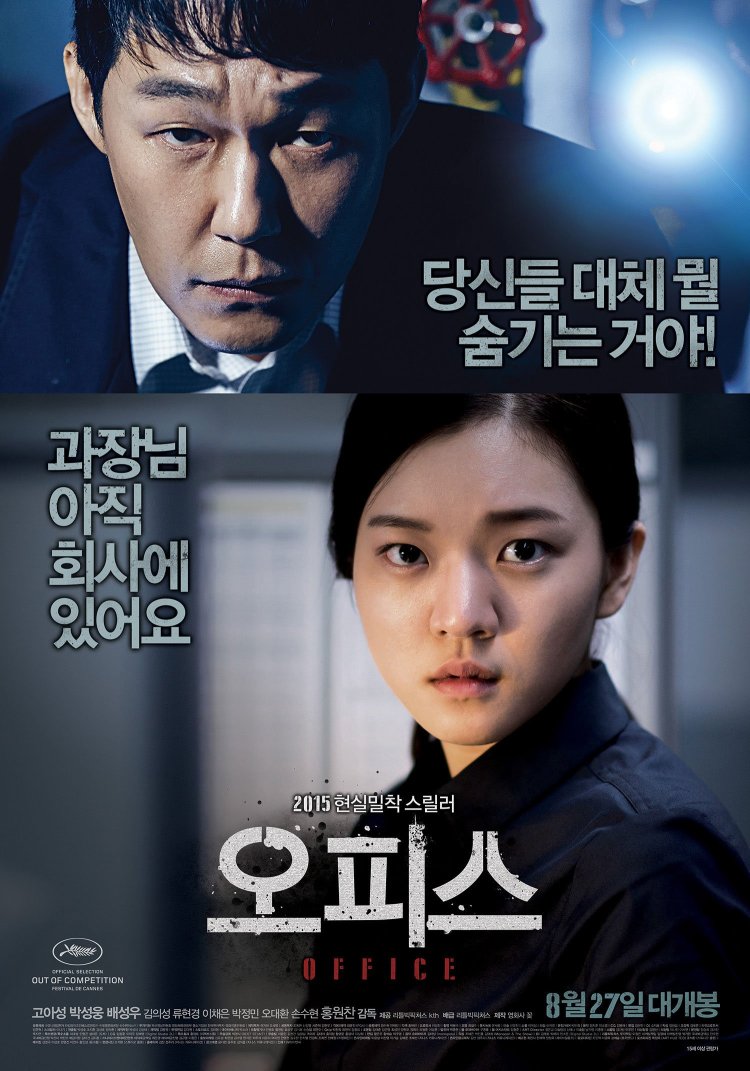
Office (오피스, Hong Won-chan, 2015)

office posterThe pressure cooker society threatens to explode in Hong Won-chan’s Office (오피스). The writer of recent genre hits The Chaser and The Yellow Sea, Hong has long experience of examining those living on the edge but in his directorial debut he takes things one step further in depicting an entire society running to keep up with itself, furiously chasing its own tail with barely suppressed rage. Not so much survival of the fittest as survival of the least scrupulous, the world of Office is the one in which the mad become the most sane, escaping the constraints of corporate oppression through social revenge but taking the innocent along with them.

Salaryman Byun-guk (Bae Seong-woo) has the soulless eyes of one whose dreams have already died. Dejectedly he sits alone at a coffee shop before cramming himself into the commuter train home where he sits, silently, among his busy family. They wonder why he hasn’t changed out of his suit, shed his corporate persona for his familial one, but when Byung-guk gets up he returns brandishing a hammer which he then, as if in a trance, uses to bludgeon to death his loving wife, disabled son, and senile mother.

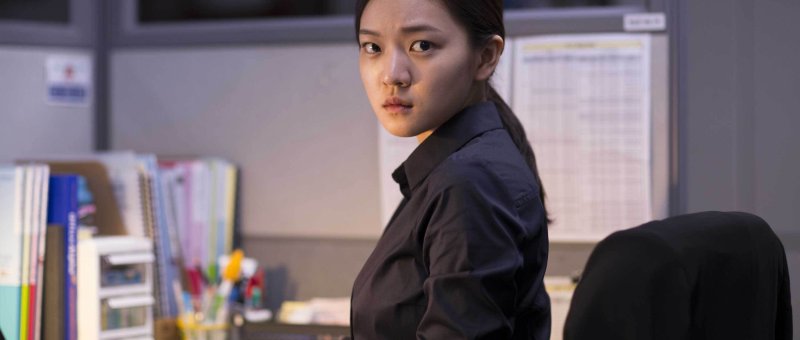
Byun-guk flees the scene of crime and is loose somewhere in the city. The police search his office for clues but his colleagues have already come up with their unified version of events, keeping the company out of it by claiming that they all loved Byun-guk and are shocked that he could have done something so horrifying. Meanwhile, intern Mi-rae (Go Ah-sung), who regarded Byun-guk as her only friend in the office, is upset but perhaps not quite so shocked. Excluded from the interoffice cliquery, no one has thought to brief Mi-rae on the party line leaving her a prime target for police inspector Choi (Park Sung-woong).

Byun-guk and Mi-rae are two of a piece – members of the upright and hardworking lower classes who have done everything right but somehow have never been accepted by their peers. Mi-rae, an ordinary girl from Gwangju who worked to lose her accent in her teens dreaming of the high life in Seoul, is shy and mousy but works hard – harder than anyone, to prove herself worthy of Seoul’s unrealistic demands. Her colleagues, privileged, confident, and also harried, do not forgive her for this. They find her earnestness “creepy”, her desire to succeed “suspicious”. Cruelly taken down a peg or two by a colleague taking out her own frustrations on the office nobody, another tries to comfort her with some advice – don’t try so hard, you make us all look bad and we wonder what your need is hiding. Mi-rae isn’t really hiding anything save her slowly fragmenting mental state and the overwhelming need to be accepted to a club that, in truth, is not open to people like her who value their integrity and still believe deep down that working hard and being honest are the only paths to true success.

Korean society, it seems, has become a giant chain of screaming. Byun-guk has been repeatedly passed over for promotion despite being the most reliable employee in the office but his ineffectual boss is overly wedded to the shouting school of business management. Faced with results he doesn’t like, Byun-guk’s boss picks someone to shout at to make them better but offers no further guidance. Railing at the police for not doing their job as if screaming will some how provoke major results even outside of the office, the boss can’t know that police also have their own chain of screaming and Choi has his own boss already taking care of that side of things, demanding results rather than truth or justice.

The meek are taking their inheritance ahead of schedule, but their revenge is born both of societal corruption and rejection. People like Byun-guk and Mi-rae, who are quiet, honest, kind but perhaps not good with people, become the bugs in a system which simultaneously holds them up as essential cogs. Those who cannot just pretend, grease the wheels with superficial social niceties, and accepted their place in the chain of screaming in order to climb further up it are condemned to wander idly around its lower levels going quietly mad until, perhaps, the system crushes them or else collapses.


International trailer (English subtitles)

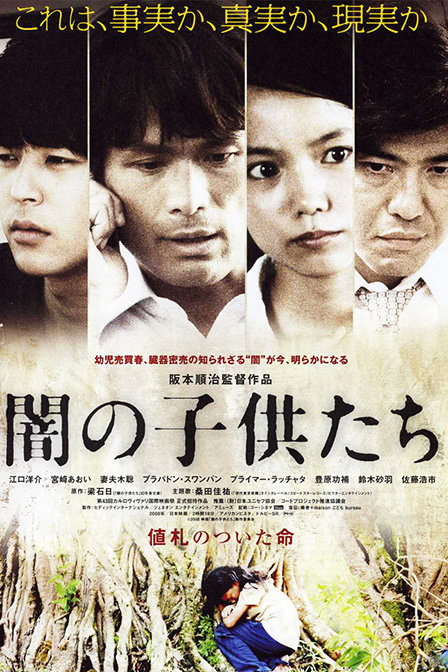
Children of the Dark (闇の子供たち, Junji Sakamoto, 2008)

Children of the Dark posterJunji Sakamoto’s career has been marked by a noticeable split between commercial projects and artier genre pieces but even considering his tendency towards socially conscious filmmaking, Children of the Dark (闇の子供たち, Yami no Kodomotachi) is a surprising entry into his filmography. Starring heartthrob Yosuke Eguchi as an earnest reporter determined to expose the extent of Japanese complicity in the exploitation of Thai children, Sakamoto’s film is hard hitting in the extreme, refusing to back away from the horrors that these children are forced to experience but perhaps taking things too far in putting his young actors through a series of emotionally difficult scenes. Children of the Dark was pulled from its slot in the Bangkok Film Festival for painting a less than idealised picture of the grim underbelly of Thai society but Sakamoto is also keen to point out that the problem is a global one which merely finds an unhappy home in a country many regard as a “paradise”.

Nanbu (Yosuke Eguchi), a Japanese ex-pat reporter living in Thailand, has been handed a hot tip on a difficult piece of investigate reporting relating to the illegal trafficking of human organs. His investigation brings him back into contact with a local NGO who operate a centre promoting educational and human rights whilst helping the impoverished children of the area. The NGO is currently investigating the disappearance of child they’d been trying to save, but the two investigations eventually overlap as it becomes clear that the organ trafficking and sexual exploitation of abandoned children are part of the same deeply entrenched cycle of human cruelty.

Nanbu’s key interest is in the Japanese connection to organ transplant case. A wealthy Japanese couple will apparently be bringing their son to Thailand for an illegal transplant to get around Japan’s strict medical ethics laws which prevent children becoming organ donors. Though it might be thought that the boy’s parents simply believe they will be undergoing a legitimate medical procedure only abroad, they are perfectly aware that the organ they will be receiving will have been acquired specifically for the purpose and will have been ripped from a healthy child rather than transplanted from an unfortunate accident victim.

Using the NGO’s contacts, Nanbu begins to realise how deeply the conspiracy runs. The NGO’s investigations lead them to a brothel in which extremely young boys and girls are kept in cages to be picked out like lobsters in a restaurant by the international clientele each after a different kind of sexual experience. The children are beaten if they refuse and literally “thrown out” in black bin bags should they contract illnesses such as AIDS. When one of the children is killed by a client who overdoses him on hormones, the matter is settled with financial compensation and the body disposed of. Many of these children are orphans from backgrounds of extreme poverty, neglected or abandoned by their parents into a life of sexual servitude in part caused by ongoing economic inequality which is only exacerbated by the thriving underworld enterprises of people and drug trafficking.

Nanbu is, however, only a reporter. Keiko (Aoi Miyazaki), a young and idealistic Japanese woman recently arrived in Thailand to work with the NGO, is committed to saving individual lives whereas Nanbu and the paper are committed to being passive observers exposing the truth in the hope that the whole sordid system will one day collapse. Keiko’s sometimes dangerous naivety is contrasted with Nanbu’s jaded complicity in essentially allowing a young child’s life to be sacrificed to get his story with only the justification that something might be done if the truth were known.

A final revelation, however, proves a step too far even if it encourages all to point the finger back on themselves and accept that personal complicity may run far deeper than most suspect. The tragedy is further undercut by the strange decision to end on an idyllic scene of paradise with a karaoke track playing over the top complete with lyrics pasted on the side – a tonal variation too far given the necessarily somber atmosphere of the the film as a whole. Despite the strangeness of the ending with its unexpected reversals and clumsy attempt at reflexivity, Children of the Dark is an urgent, difficult piece exposing the unspeakable cruelties hidden away in the underbelly of a foreign “paradise”.


Original trailer (no subtitles)

The Tokyo Night Sky is Always the Densest Shade of Blue Tops Kinema Junpo’s 2017 Best 10 List

tokyo night sky posterKinema Junpo, the prestigious Japanese film magazine, has announced its top 10 films of 2017. In a happy surprise two female directors have been included in this year’s Best 10 list in which veteran directors jostle with comparative newcomers.

10. Close-Knit (彼らが本気で編むときは)

close-knit still 1Naoko Ogigami’s touching family drama snatches the last spot on Kinema Junpo’s list. A departure of sorts from the director’s earlier career, Close-Knit drops the whimsy but not the heart in telling a story of changing family dynamics and pleading for a kinder, more understanding world where all are free to live the way they choose without let or hinderance. Review.
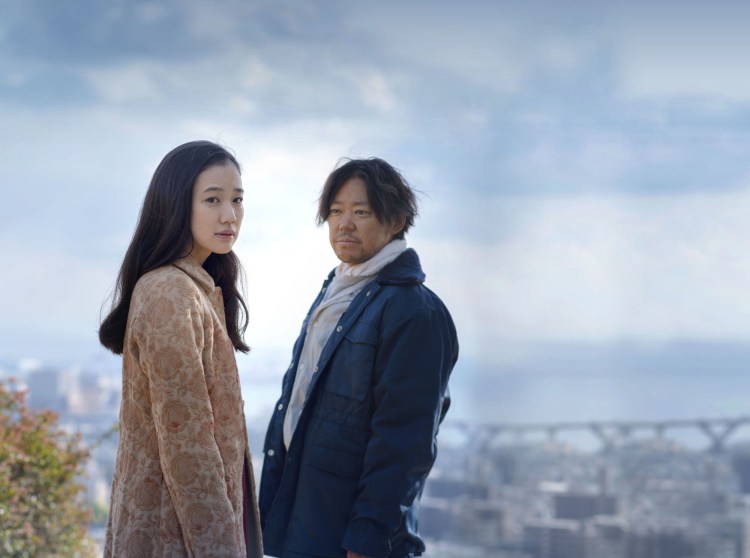
9. Birds Without Names (彼女がその名を知らない鳥たち)

birds without names still 2Dawn of the Felines director Kazuya Shiraishi returns to the world of mystery in a tale of dark romance and destructive desires. Yu Aoi stars as a young woman, Towako, living with an older man (played by Sadao Abe) whom she despises but tolerates because he continues to support her. Towako, however, cannot forget a violent ex-lover who has been missing for the last eight years. Screening in the upcoming Japan Foundation Touring Film Programme.

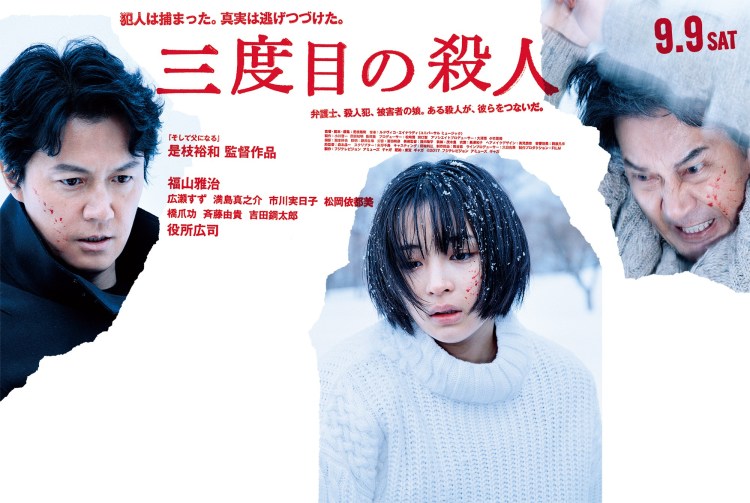
8. The Third Murder (三度目の殺人)

third murder horizontal posterHirokazu Koreeda makes a rare detour from the family drama for a high stakes legal thriller in which a veteran lawyer takes on the seemingly impossible task of defending a murder suspect who has already served time for violent crime and freely confesses his guilt, but the more the lawyer looks into the case the less confident he feels that his client is telling the truth.

7. Side Job (彼女の人生は間違いじゃない)

Sidejob bannerFukushima native Ryuichi Hiroki adapts his own novel for an exploration of precarious rural life on the edge of a disaster zone. Newcomer Kumi Takiuchi stars as a young woman with a regular office job living in temporary housing with her father (Ken Mitsuishi) after being displaced by the 2011 earthquake and tsunami. For unexplained reasons, the young woman travels to Tokyo at weekends and engages in casual sex work which brings her into contact with Kengo Kora’s conflicted driver.

6. Bangkok Nites (バンコクナイツ)

bangkok-nitesKatsuya Tomita’s Saudade followup has been doing the festival rounds for over a year now but finally getting its Japanese release lands in sixth place in Kinema Junpo’s 2017 list. Picking up threads from the earlier film, Tomita travels to Bangkok and examines the legacy of colonialism and exploitation in a land many see as a “paradise”. Review.

5. Before we Vanish (散歩する侵略者)

©2017 BEFORE WE VANISH FILM PARTNERSKiyoshi Kurosawa rolls back on the nihilism of Pulse for a tale of love and survival masquerading as an alien invasion movie. The Earth, it seems, is doomed – three alien scouts have been sent as a vanguard to log “humanity” before it is forever destroyed. Stealing and assimilating “concepts” from people’s brains as if playing a giant game of psychic Jenga, the alien invaders become more human by the day but the essence of the human soul remains a mystery to them… Review.
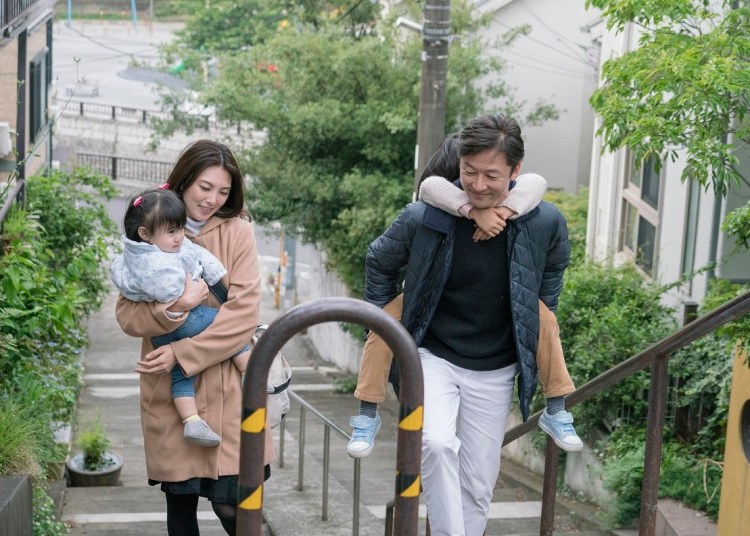
4. Dear Etranger (幼な子われらに生まれ)

Dear Etranger still 1Yukiko Mishima’s adaptation of the Kiyoshi Shigematsu novel stars Tadanobu Asano in a tale of family and the modern society. A middle-aged man, Makoto, leaves his first wife for a younger woman after they disagree about adding to their family – he wanted another child and she didn’t. His second wife has two children already and when she announces she is pregnant, Makoto is not so sure about becoming a father again…
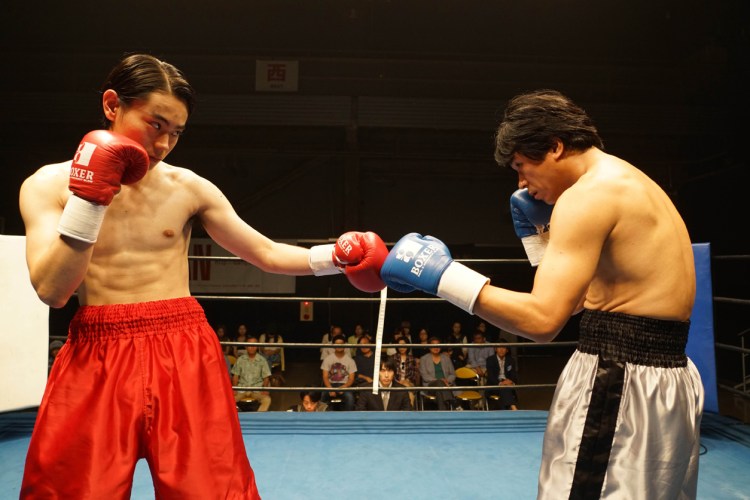
3. Wilderness Parts 1 & 2 (あゝ、荒野)

wilderness still 1Released in two parts, Wilderness adapts the classic 1966 novel by Shuji Terayama in which two men seek release in the boxing ring but also discover friendship and brotherhood in the shared connection of violence. Up and coming director Yoshiyuki Kishi builds on the promise of the impressive A Double Life and makes it into Kinema Junpo’s top three with only his second feature.
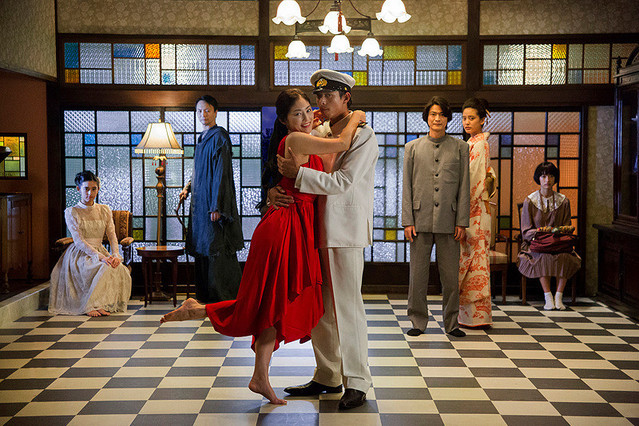
2. Hanagatami (花筐)

hanagatami still 1The latest from veteran director Nobuhiko Obayashi, Hanagatami is a project forty years in gestation. An adaptation of the wartime novel by Kazuo Dan, the film is a timely warning against the follies of war as a collection of youngsters dance along the edge of an abyss which will eventually engulf their entire generation.

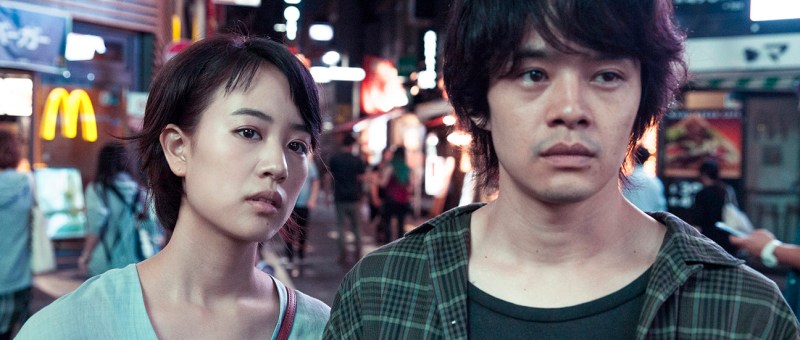
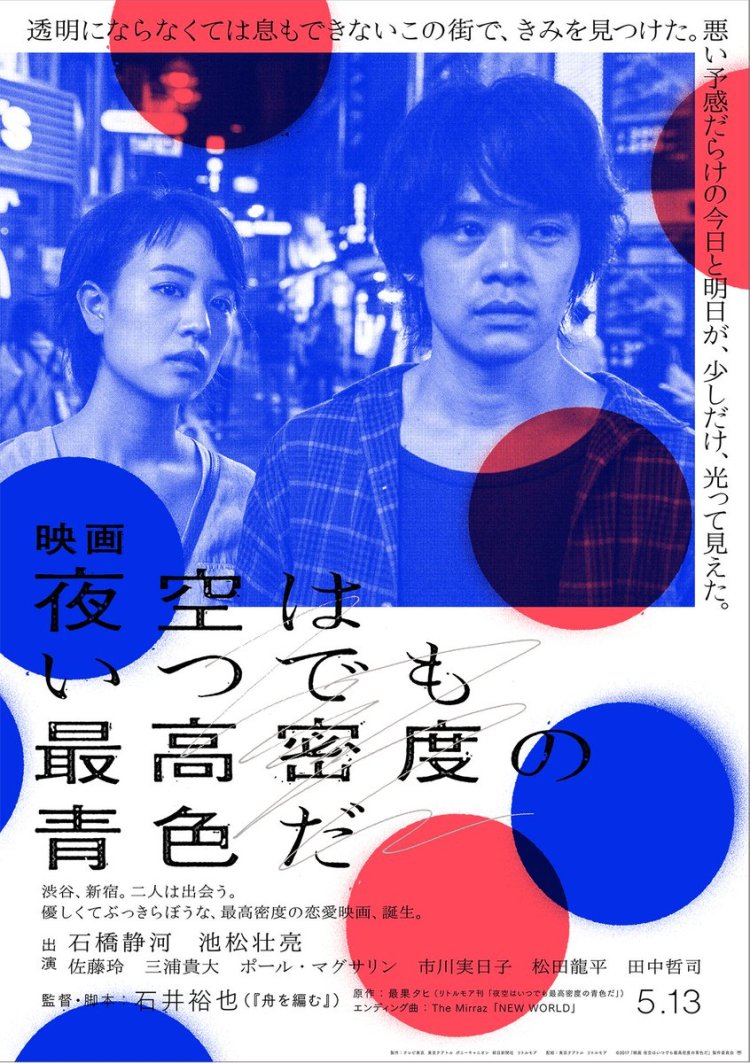
1. The Tokyo Night Sky is Always the Densest Shade of Blue (夜空はいつでも最高密度の青色だ)

THE TOKYO NIGHT SKY IS ALWAYS THE DENSEST SHADE OF BLUE stillTaking the top spot, Yuya Ishii’s melancholy romance is a love/hate letter to Tokyo and a poetical mediation on connection in the modern city. A depressed young woman and an anxious young man miraculously encounter each other thanks to the magic of the metropolis but their shared cynicism and distrust of feeling soon becomes a barrier to their growing romance. Review.
Individual Awards:

Best Director: Nobuhiko Obayashi (Hanagatami)

Best Screenplay: Yuya Ishii (The Tokyo Night Sky is Always the Densest Shade of Blue)

Best Actress: Yu Aoi (Birds Without Names)

Best Actor: Masaki Suda (Wilderness)

Best Supporting Actor: Yang Ik-june (Wilderness)

Best Female Newcomer: Shizuka Ishibashi (Tokyo Night Sky / Parks / Misshi to Bannin)

Best Male Newcomer: Ryosuke Yamada (Miracles of the Namiya General Store / Fullmetal Alchemist)

Source: Kinema Junpo official website

The Scarlet Letter (주홍글씨, Byeon Hyeok, 2004)

The Scarlet Letter posterSouth Korea has long had a reputation for being among the most conservative of East Asian nations, perhaps because of a strong Christianising influence, but even so the fact that adultery was only fully decriminalised in 2015 is something of a surprise. Ironically enough the legislation was enacted in the defence of women who enjoyed few legal rights and would be left destitute if their husbands left them, suffering not only the humiliation and social stigma of divorce but also having no independent income and very little possibility of gaining one. Nevertheless it quickly became another tool of social control, branding “harlots” rather than protecting “wives”. Byeon Hyeok’s The Scarlet Letter (주홍글씨, Juhong Geulshi) was released in 2004, which is a whole decade before adultery was removed from the statue books, and draws inspiration from the book of the same name by Nathaniel Hawthorne in which a young woman becomes a social outcast after giving birth to an illegitimate child.

Cocksure policeman Ki-hoon (Han Suk-kyu) lives in a world of his own dominion. Married to the elegant concert cellist Su-hyun (Uhm Ji-won), Ki-hoon is also carrying on an affair with the bohemian nightclub singer Ga-hee (Lee Eun-ju). One fateful day he is called to the scene of a bloody murder. The owner of a photographer’s studio has been found with half his head caved in and the prime suspect is his wife, Kyung-hee (Sung Hyun-ah), who found the body. Once she’s had some time to recover from the shock, Kyung-hee offers up some possible evidence regarding a local photographer who may have been semi-stalking her – something which had caused tension between herself and her husband. The photographer claims Kyung-hee asked him to take the photos, and others besides, but denies he was romantically interested in her or that the couple had been having an affair.

The murder case floats in the background as Ki-hoon’s personal life spirals ever more out of control. Both Su-hyun and Ga-hee are pregnant with his child and it seems inevitable the affair will be exposed. Ki-hoon fears this not out of guilt in causing emotional harm to one or both of his women, but out of a sense that it will be very annoying, inconvenient, and burdensome for him. When his wife does eventually confront him about the affair, Ki-hoon’s response is to ignore it and carry on as normal by acting excited about the baby as if to remind Su-hyun that she is already tied to him and it will be almost impossible for her to leave. Meanwhile, he refuses to give up Ga-hee whose mental state seems to be fracturing under the intense pressure of her need for Ki-hoon and his continuing disregard for the feelings of others.

Ki-hoon is a classic noir hero, wading into a morass of moral ambiguity and hurtling headlong towards an existential reckoning. A late, yet fantastically obvious, twist offers another perspective which the film has no time to expand on so caught up is it in the moral ruining of Ki-hoon in suggesting that oppressive social codes have in some way contributed to this intense situation, forcing three people into an uncomfortable love triangle where everyone has ended up with the wrong partner. Byeon does, however, choose to emphasise “morality” in lending a spiritual slant to Ki-hoon’s fall rather than choosing to attack the social oppression of Korea’s intensely conservative culture in which all the power was in Ki-hoon’s hands (even if he uses it to ruin himself, later left in a state of spiritual emptiness filled only with guilt and shame).

The reckoning comes in a literal evocation of Ki-hoon’s claustrophobic love life in which he finds himself trapped in an inescapable black hole, waiting to find out if he will be released or condemned to suffer an eternity of pain for his various transgressions. Byeon never quite manages to marry his higher purpose to the noir narrative, leaving his avant-garde final set piece out of place in an otherwise straightforward thriller while his final twist falls flat in retreading well worn genre cliches. Frank in terms of its depiction of sex and nudity, The Scarlet Letter takes on an anti-erotic quality, painting its various scenes of actualised sex as passionless acts of compulsion with only those of fantasy somehow imbued with colour and light though its melancholy conclusion suggests even these may carry a heavy price.


Original trailer (no subtitles)

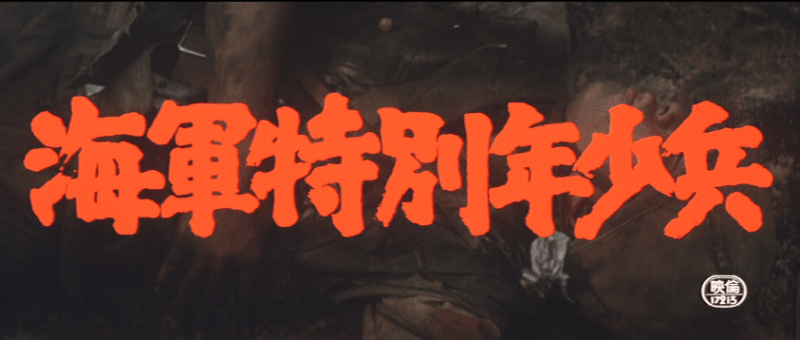
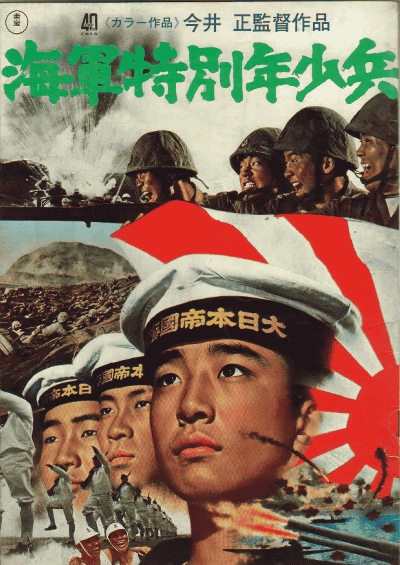
Eternal Cause (海軍特別年少兵, Tadashi Imai, 1972)

Marines cadets posterOften regarded as a “left-wing” filmmaker, even later pledging allegiance to the Communist Party of Japan, Tadashi Imai began his career making propaganda films under the militarist regime. Describing this unfortunate period as the biggest mistake of his life, Imai’s later career was dedicated to socially conscious filmmaking often focusing on those oppressed by Japan’s conservative social structure including the disenfranchised poor and the continued unfairness that often marks the life of women. 1972’s Eternal Cause (海軍特別年少兵, Kaigun Tokubetsu Nensho-hei, AKA Marines Cadets/ Special Boy Soldiers of the Navy) sends him back to those early propaganda days but with the opposite spin. Painting Japan’s tendency towards authoritarianism and its headlong descent into the folly of warfare as a direct result of social inequalities and the hierarchical society, Imai tells the dark story of the “special cadets”, children from military academies who eventually found themselves on the battlefield as members of the last, desperate defence of an already lost empire.

Imai opens at the grim conclusion – February 1945, Iwo Jima. A squad of young men catch sight of their “Instructor” just as he falls and are shortly all killed themselves by approaching American forces. The Americans, sympathetically portrayed, wander the corpse laden battlefield and lift the arm of one particular body lamenting that the fallen soldier is “just a boy”, and that Japan must be in a very bad state indeed if it has come to this. One of the soldiers, not quite dead as it turns out, manages to get to his feet. The Americans are wary but give him time in case he wants to surrender but the boy tries to charge them, crying out that he is a “Marine Cadet”. They have no choice but to shoot him dead.

Moving back around 18 months to June 1943, the “Marine Cadets” are new students at a military academy. On arrival they are instructed that everything they brought with them, including the clothes they are wearing, must be sent home. They are now at war and must forget civilian life. This dividing line neatly marks out the central contradiction in the Marine Cadets’ existence – they are children, but also marines.

Enrolment in the school is voluntary rather than conscription based and the young men have many reasons for having decided to enter the military, most of them having little to do with dying bravely for the Emperor. There is, however, a persistent strain of patriotism which brought them to this point as they find the sacrifice they offer to make all too readily accepted by their nation. The education on offer is wide-ranging and of high quality – the boys will learn English as well as geography, history, science and maths, all of which will hopefully turn them into well educated, efficient military officers, but there is profound disagreement between the teaching staff and “instructors” as to how that education should be delivered.

Sympathethetic teacher Yoshinaga (Katsuhiko Sasaki) believes in education and wants to contribute to raising these children in love seeing as he is in loco parentis. Kudo (Takeo Chii) the military instructor, however, disagrees. He believes in harsh discipline in which progress is encouraged through physical punishment and a strong shame culture. Yoshinaga reminds Kudo that the boys are just children and that such punishment based motivational techniques place the boys at each other’s throats and will undermine the spirit of comradeship and togetherness which is essential for the well functioning of any military unit. Kudo counters that the boys became men when they enlisted, that he was raised this way himself, and that a culture of violence binds the men together into a kind of hive mind which moves and thinks as one. Kudo does not waver in this belief even after his tactics have tragic consequences, but does come to love the children in his care, entrusting them to Yoshinaga as he prepares to face the battlefield himself.

As Kudo leaves, he stops to admit that the boys are children but also wants Yoshinaga to understand something he thinks may not have occurred to him. The boys are mostly poor children, who, he says, have only themselves to rely on unlike the officers who are by and large from middle-class families with extended safety nets of privilege. Kudo’s doctrine of progress through strength is born of being born at the bottom of the heap and needing to struggle to survive. They have made themselves strong in order to resist the consistent oppression of their economic circumstances which often prize nothing other than their physical capabilities.

Poverty is indeed a major motivator. The most sympathetic of the boys, Hayashi (Michiko Araki), has enlisted alongside another boy from his village, Enami (Taketoshi Naito), whose teacher father has fallen headlong for the militarist folly and is even allowing military representatives into his classroom to offer recruitment talks to the boys. He recommends Hayashi join the Marine Cadets as a matter of practically – Hayashi’s family is dirt poor and his father is a drunkard. Joining the academy means reducing the burden on the family who have many other children and also that he will eventually be able to send money home as well as being well provided for himself. Despite a lack of aptitude for soldiering, Hayashi is eventually grateful – in the academy he gets a taste of comfort he never knew at home as well as a sense of comradeship and brotherhood away from the hostile home environment dominated by the violence of a drunken father. Another boy makes a similar decision to escape his indifferent foster family after being orphaned. Despite the fact that his sister has embarked on a life of prostitution to support him, his relatives offer him only scant comfort and keep most of her money for themselves.

Yoshinaga’s complaints about the nature of the education the boys receive is quite naturally countered with a question as to why he is at the school at all given that these boys are destined only to become cannon fodder in a war which clearly all but over. His pleas for kindness and compassion largely fall on deaf ears. The boys are still children – our narrator is 14 when he enlists at the academy, but they have been encouraged to think of themselves as men. Their halfling status embarrasses them and they’re keen to prove themselves as brave soldiers of Japan. Yoshinaga, true to his word, tries to save the boys – ordering them to hide during final attack sure that the Americans will take pity on these child soldiers and prevent their lives from becoming meaningless sacrifices laid on the altar of an uncaring nation. He is unsuccessful because the boys’ heads are already filled with the idea of glorious sacrifice. Ashamed to be thought of anything other than Marine Cadets, they launch their own attack and sacrifice their lives willingly.

Imai is at great pains to remind us that this society cares nothing for the boys, 5,020 of whom fall on the battlefield, or for the poor in general who bear the brunt of a war that is waged against their interests. The approach is distinctly old fashioned for 1972 and the message at times unsubtle, but given that the film appears less than thirty years later than the events it depicts when those who survived would themselves still be young, perhaps fathers of teenage sons themselves, it serves as a timely reminder of past madness and a pointed warning for the consumerist future.


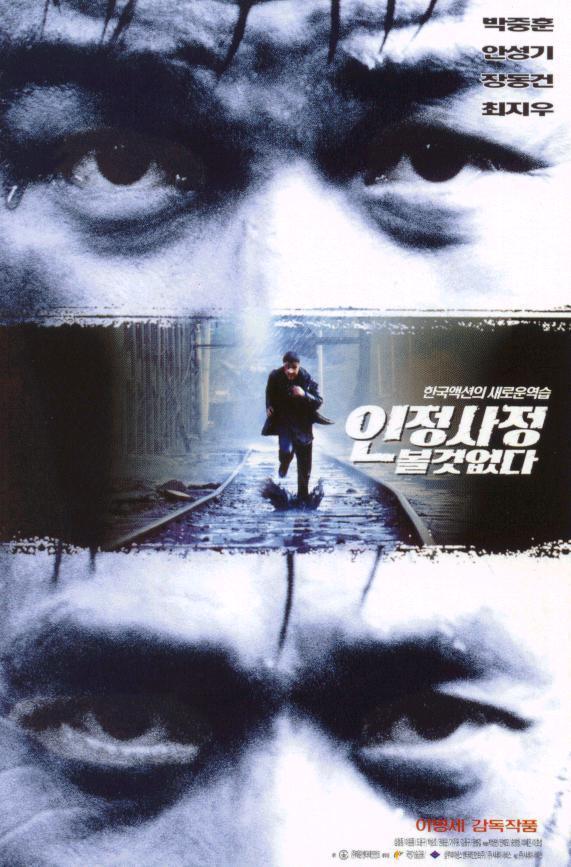
Nowhere to Hide (인정사정 볼 것 없다, Lee Myung-se, 1999)

Nowhere to hide poster

One of Korea’s foremost visual stylists, Lee Myung-se’s work has often been under appreciated at the time of its release. His desire to experiment finds fertile ground in the intensely kinetic ode to the police procedural, Nowhere to Hide (인정사정 볼 것 없다, Injeongsajeong bol Geos Eobsda). A tale of cops and robbers, Nowhere to Hide follows a cop who talks too much on the trail of a silent assassin who is, in fact, an expert at hiding in plain sight through the art of disguise. Moving quickly from one intense, beautifully choreographed set piece to the next, Lee draws inspiration from the crime-tinged tragedies of old Hollywood and beyond whilst embracing those of his home nation in the classic twin pairing of actors Ahn Sung-ki as the enigmatic assassin, and Park Joong-hoon as the bullheaded cop hot on his trail.

Lee opens in black and white with Inspector Woo (Park Joong-hoon) in full on gangster mode as he wanders through a ruined landscape, pausing only to tie his shoelace while the pulsing, punkish music continues in the background, before he walks in on an entire room of besuited gangsters and calmly sits down to introduce himself. Sometime later, Sungmin (Ahn Sung-ki), in sunshades and trench coat, patiently bides his time before committing a dramatic murder and making off with a mysterious briefcase.

What follows then is a game of cat and mouse as Woo chases the ghost of Sungmin through dingy back allies and neighbourhood dive bars, taking his more serious partner, Kim (Jang Dong-kun), whose more primary motivations include his family or more particularly his little girl, along for the ride. Woo lives only for his work, drawing more thrill from the chase than he is likely to admit. Through his pursuit of Sungmin, Woo draws closer to a side of himself he hoped to avoid, burying his natural rebelliousness in service of the law. We see him brutally interrogate suspects, even at one point trussing one up like a prize pig and suspending him between two desks in the middle of the police station. It is, in this sense, Woo who is left with “nowhere to hide”. As a young man, he had a violent streak which might well have led him into crime if his father had not pointed him towards the police, but he can no longer claim to be very much different than the quarry he pursues. His true nature has been laid bare by his opposing number.

Woo’s rage and unpredictable energy are tempered by Kim’s evenhandedness, but after a job goes wrong and Kim kills a suspect by mistake he starts to fall apart. Suddenly Woo cannot rely on Kim to save him from himself and then tragically fails to save Kim during another operation, leaving him open to serious injury. His quest is now as much one of vengeance and personal feeling as it is of justice.

Sungmin, by contrast, says not one word in the entirety of the film. A felt presence more than a seen one, he slips in and out of personas, escaping from the scene in various disguises as a figure more of legend than of reality. A close relationship with a bar hostess girlfriend is Woo’s way in to Sungmin’s world, correctly identifying a weakness and pressing it, pursuing a more concrete route to the centre of Sungmin’s existence than simply tracking him through the shady netherworld in which he lives.

The two men run from and mirror each other as pictures of action and stillness, resistance and urgency. Through a relentless pursuit of capture or escape, neither can evade the shadow of himself, each moving closer to their true selves as repressed elements surface and threaten to destroy the whole. Woo and Sungmin are each on a mutually destructive pursuit of the self as much as they are for their own, self defined goals.

Lee frames all of this within his characteristically ironic world view, painting the drama as comedy imbued with its own kind of cartoonish slapstick. Throwing in cinematic homages from a brief nod to Battleship Potemkin to an ending plucked straight out of The Third Man, Lee mixes freeze frames with an odd jump dissolve technique which lends his intensely beautiful choreography an impressionistic, fleeting quality. Two men chase the shadow of the other, engaged in a desperate game of hide and seek, but when the game is up neither may like what they see.


Screened at London Korean Film Festival 2017.

Robbery sequence (dialogue free)

Youth of the Beast (野獣の青春, Seijun Suzuki, 1963)

youth of the beast posterSeijun Suzuki had been directing for seven years and had made almost 20 films by the time he got to 1963’s Youth of the Beast (野獣の青春, Yaju no Seishun). Despite his fairly well established career as a director, Youth of the Beast is often though to be Suzuki’s breakthrough – the first of many films displaying a recognisable style that would continue at least until the end of his days at Nikkatsu when that same style got him fired. Building on the frenetic, cartoonish noir of Detective Bureau 2-3: Go to Hell Bastards!, Suzuki once again casts Jo Shishido in the the lead only this time as an even more ambiguous figure playing double agent to engineer a gang war between two rival hoodlums.

Suzuki opens in black and white as the bodies of a man and a woman are discovered by a small team of policemen. Finding a note from the deceased female which states that she settled on taking her own life because she loved her man and thought death was the only way to keep him, the police assume it’s an ordinary double suicide or perhaps murder/suicide but either way not worthy of much more attention, though discovering a policeman’s warrant card on the nightstand does give them pause for thought.

Meanwhile, across town, cool as ice petty thug Jo Mizuno (Jo Shishido) is making trouble at a hostess bar but when he’s taken to see the boss, it transpires he was really just making an audition. The Nomoto gang take him in, but Mizuno uses his new found gang member status to make another deal with a rival organisation, the Sanko gang, to inform on all the goings on at Nomoto. So, what is Mizuno really up to?

As might be expected, that all goes back to the first scene of crime and some suicides that weren’t really suicides. Mizuno had a connection with the deceased cop, Takeshita (Ichiro Kijima), and feels he owes him something. For that reason he’s poking around in the local gang scene which is, ordinarily, not the sort of world straight laced policeman Takeshita operated in which makes his death next to a supposed office worker also thought to be a high class call girl all the stranger.

Like Detective Bureau 2-3: Go to Hell Bastards!, Youth of the Beast takes place in a thoroughly noirish world as Mizuno sinks ever deeper into the underbelly trying to find out what exactly happened to Takeshita. Also like Detective Bureau 2-3: Go to Hell Bastards!, Youth of the Beast is based on a novel by Haruhiko Oyabu – a pioneer of Japanese hardboiled whose work provided fertile ground for many ‘70s action classics such as The Beast Must Die and Resurrection of the Golden Wolf, but Suzuki’s ideas of noir owe a considerable debt to the gangster movies of the ‘30s rather than the moody crime dramas of twenty years later.

Jo Shishido’s Mizuno is a fairly typical ‘40s conflicted investigator, well aware of his own flaws and those of the world he lives in but determined to find the truth and set things right. The bad guys are a collection of eccentrics who have more in common with tommy gun toting prohibition defiers than real life yakuza and behave like cartoon villains, throwing sticks of dynamite into moving cars and driving off in hilarious laughter. Top guy Nomoto (Akiji Kobayashi) wears nerdy horn-rimmed glasses that make him look like an irritated accountant and carries round a fluffy cat he likes to wipe his knives on while his brother Hideo (Tamio Kawaji), the fixer, is a gay guy with a razor fetish who likes to carve up anyone who says mean stuff about his mum. The Sanko gang, by contrast, operate out of a Nikkatsu cinema with a series of Japanese and American films playing on the large screen behind their office.

The narrative in play may be generic (at least in retrospect) but Suzuki does his best to disrupt it as Mizuno plays the two sides against each other and is often left hiding in corners to see which side he’s going to have to pretend to be on get out of this one alive. Experimenting with colour as well as with form, Suzuki progresses from the madcap world of Detective Bureau 2-3: Go to Hell Bastards! to something weightier but maintains his essentially ironic world view for an absurd journey into the mild gloom of the nicer end of the Tokyo gangland scene.


Original trailer (no subtitles)

Lost Paradise in Tokyo (ロストパラダイス・イン・トーキョー, Kazuya Shiraishi, 2010)

lost paradise in Tokyo posterHappiness seems an elusive concept for a group of three Tokyoites each chasing unattainable dreams of freedom in a constraining society. The debut feature from Kazuya Shiraishi, Lost Paradise in Tokyo (ロストパラダイス・イン・トーキョー) is much more forgiving of its central trio than many an indie foray into the forlorn hopes of modern youth but neither does it deny the difficulty of living in such frustrating circumstances.

Mikio (Katsuya Kobayashi) has a soul crushing job as a telephone real estate salesman at which he’s not particularly good and is often subject to trite rebukes from a patronising boss who breaks off from the morning mantra to enquire how the funeral went for Mikio’s recently deceased father only to then remark that Mikio’s dad won’t be able to rest in peace unless Mikio bucks up at work. At home, Mikio has just become the sole carer for his older brother, Saneo (Takaki Uda), who has severe learning difficulties and has been kept a virtual prisoner at home for the last few years. Saneo, however, is still a middle-aged man with a middle-aged man’s desires and so Mikio decides to hire a prostitute to help meet his sexual needs.

“Morin-chan” (Chika Uchida) as she lists herself, is also an aspiring “underground idol” known as Fala who makes ends meet through sex work. Depite Mikio’s distaste for the arrangement, Morin is a good companion to Saneo, calming him down and helping to look after him while Mikio is at work. In her life as Fala, Morin is also the subject of a documentary about underground idols and when the documentarians stumble over her double life they make her a surprising offer – allow herself to be filmed and they will give her a vast amount of money which might enable her to achieve her dream of buying a paradise island.

Mikio is doing the best he can but is as guilty of societal stigma relating to the disabled as anyone else and his guilt in feeling this way about his own brother coupled with the resentment of being obliged to care for him has left him an angry, frustrated man. Asked at work if he has any siblings Mikio lies and says he’s an only child, denying his brother’s existence rather than risk being associated with disability. At home he can’t deny him but neither can he be around to keep an eye on him all day and so there have been times when he’s had to literally (rather than metaphorically) lock his brother away.

Longing for freedom, Mikio wants out of his stressful, soul destroying job and the responsibility of caring for his brother while Morin is trapped in the world of “underground idols” who are still subject to the same constraints as the big studio stars only without the fame, money, or opportunities. As one of the documentarians points out, Morin (or Fala) is really a little old for the underground idol scene, her days limited and dreams of mainstream success probably unattainable. For as long as she can remember she’s dreamed of a paradise “island” where she can she live freely away from social constraints and other people’s disapproval.

Mikio had got used to thinking of his brother as a simple creature whose life consisted of needs and satisfactions but the entry of Morin into their lives forces him to consider what it is that his brother might regard as “happiness” and if such a thing can ever exist for him. Morin wants the three of them to go her paradise island where Saneo can live his life freely away from the unforgiving eyes of society but unbeknownst to any of them they may have already found a kind of paradise without realising.

Later Mikio admits that he and his father were content to lock Saneo away because they feared they wouldn’t understand him. Once Saneo hurt someone, not deliberately, but through being unable to express himself in the normal way and not fully understanding that his actions would cause someone else pain. Rather than deal with the problem, Mikio’s father decided to hide his son away – less to protect Saneo from himself, than in wanting to avoid the stigma resulting from his existence. Saneo, however, may not be able to express himself in ways that others will understand but is still his own person with his own hopes and ideas as his final actions demonstrate. Only once each has come to a true understanding of themselves and an abandonment of fantasy can there be a hope of forward motion, finally rediscovering the “lost paradise” that the city afforded them but they were too blind to see.


Available to stream in most territories via FilmDoo.

Original trailer (English subtitles)

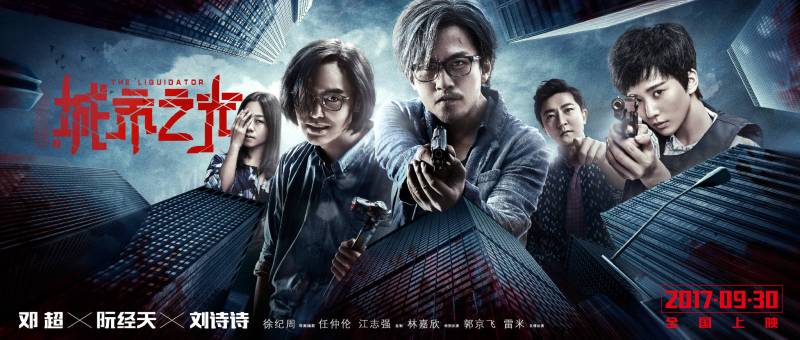
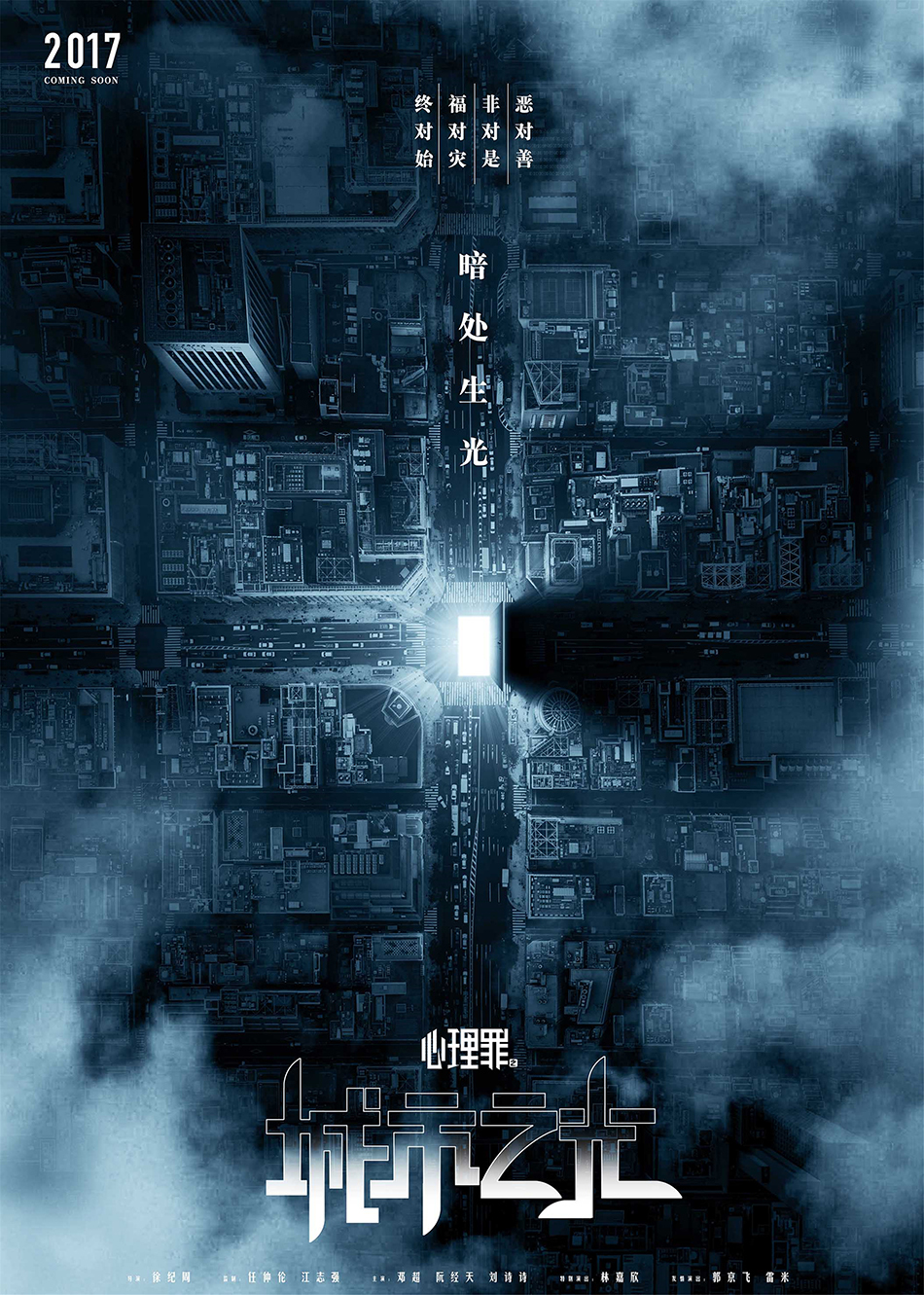
The Liquidator (心理罪:城市之光, Xu Jizhou, 2017)

The Liquidator posterGiven a strangely ‘80s nonsensical two word title, Xu Jizhou’s The Liquidator (心理罪:城市之光, Xīnlǐ Zuì: Chéngshì Zhī Guāng) is a retro throwback to the lurid macho pulp which has largely faded from the crime procedural since its ‘90s heyday. Adapted from a novel by Lei Mi, the film follows last year’s Guilty of Mind as the second in the Fang Mu series only this time the eccentric profiler is played by marquee star Deng Chao rather than Guilty Mind’s Li Yifeng or Chen Ruo Xuan who starred in the Fang Mu TV drama, Evil Minds. A pulpy battle of wits between a crazed vigilante and a world weary cop, The Liquidator is already treading on some overly familiar territory but its main target is the rule of law apparently under threat of mob justice now that China too has entered the social media age.

Fang Mu (Deng Chao) is no longer a police officer after becoming the prime suspect in the disappearance of a man who escaped justice through judicial corruption, but he’s pulled back into the law enforcement fold when young policewoman Mi Nan (Cecilia Liu) is dispatched to get his profiling opinion on a difficult murder case. Calling himself “The Light of the City”, a vigilante killer is already amassing a collection of dedicated online followers thanks to his choice of targets which, to put it bluntly, are not law breakers just terrible people that most would like to get revenge on for one reason or another.

Originally reluctant, Fang Mu is soon hooked on the case only to realise that the crime scenes are being created entirely for his benefit – the killer is attempting to pull him into a battle of wits and taking innocent lives to do it. As it transpires the killer’s name, Light of the City, is inspired by something Fang Mu said in his graduation speech to the effect that the police are the light that shines in the darkness. The killer thinks the law doesn’t go far enough – his targets are bullying teachers, impious sons, and greedy lawyers, the immoral rather than the criminal. He exposes their transgressions online and then allows “netizens” to have their say. Netizens, as they have often been in the “real” world, are not a particularly understanding bunch and are firmly behind the “entertainment” the killer is providing, even down to the decision to live stream a murder.

Fang Mu’s defining trait is his liminal status as a law enforcement officer often pulled towards the dark side – hence why many of his colleagues think it’s perfectly possible that he’s guilty of the crime that got him kicked off the force. The vigilante’s “plan” is to pull him over the line by forcing Fang Mu to execute The City of Light and thereby become the thing he most fears. The Liquidator posits that a robust judicial system free from interference from both government and people is a prerequisite of a well functioning society and the police must be the shining beacons of these laws – if not even law enforcement obeys the law, then all is lost.

What transpires is a battle of minds between the brainy Fang Mu and the psychotic killer, but it’s also a battle for the soul of “society” which ought to place compassion and rationality over the sensationalism of trial by media and arbitrary mob justice. The killer works out his frustrations by proxy through attacking those who committed the same “crimes” which have led to their feelings of frustration and humiliation – chief among them being Fang Mu who has, apparently, offended solely in his continued excellence, but the killer’s personal vengeance is harsh and unforgiving, handing down a death sentence simply for unpleasant or anti-social behaviour.

Beginning in a promising vein, Xu nevertheless introduces his dedicated female cop only to sideline her in favour of Fang Mu before turning her into a mild love interest, potential victim, and sometime comic relief. Filled with macho histrionics (including, at one point, a gun fired in the air followed by a manly wail of grief), The Liquidator is an old fashioned action drama filtered through pulp noir and ‘90s horror with its grimy walls and dingy basements, but it straddles a fine line between ridiculous slasher serial killer thriller and serious cerebral procedural, landing somewhere around heroic bloodshed without the bromance. Ridiculous and melodramatic, Xu’s debut feature boasts excellent production design and innovative photography, but its slick aesthetic cannot overcome the more outlandish elements of the otherwise generic script.


Currently on limited release in UK cinemas courtesy of Cine Asia

Original trailer (Mandarin with English subtitles)

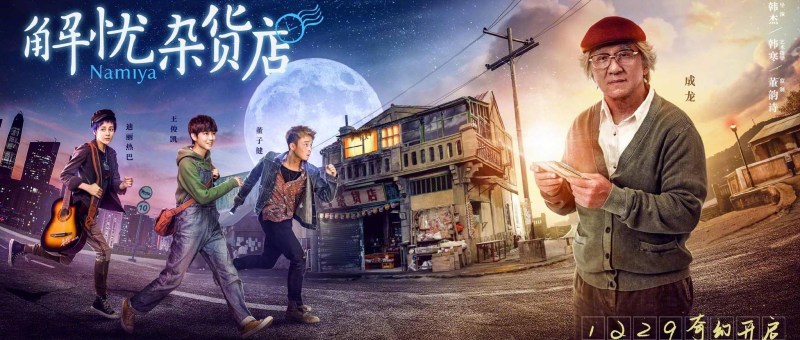
Namiya (解憂雜貨店, Han Jie, 2017)

Namiya posterKeigo Higashino is almost certainly best known for his crime novels and in particular his most famous detective, Galileo, whose exploits have spawned a successful TV drama series and a fair few cinematic adaptations including the international bestseller, The Devotion of Suspect X. One might expect a writer of mystery novels to be a fierce rationalist, but Higashino occasionally dabbles in the fantastic – The Miracles of the Namiya General Store is more or less a nostalgia fest praising the pre-bubble Japan, implying that the modern world is colder and less kind than the aspiring society of 1979. Adapted for the Chinese market by Han Jie, Namiya (解憂雜貨店, Jiě Yōu Zá Huò Diàn) retains the corner shop where time stands still but locates it in 1993, which is not so much a significant date save being 25 years in the past.

On New Year’s Eve 2017, three teens break into a woman’s home with the idea of causing some damage, but the event goes south when she comes home early and one of the three decides to tie her up and steal a bunch of her stuff. Having gone further than they meant to, the trio wind up in an unfamiliar part of town when the car they’ve stolen runs out of petrol. An improbably quaint, apparently disused corner shop attracts their attention but when they break in to shelter for the night they discover that this is no ordinary store. A ghostly miasma gradually creeps its way in and the three youngsters find themselves answering a collection of letters meant for the store’s owner written in 1993 but only dropping through the letter box now. They funny thing is, they get almost immediate replies.

As one of the teens points out, they weren’t even born in 1993 – this store might as well be from 1793 as far as they’re concerned. Though it drips with nostalgia for a simpler time, Namiya treads (understandably) more carefully in painting early ‘90s Beijing and its rural backwater setting, strenuously avoiding any mention of politics and characterising China’s economic development as an entirely good thing despite the troubles the three teens at the centre have been subject to throughout their apparently difficult lives.

The letter writers have various problems but each in someway relates to being a little lost, a little bit confused about how to move forward in life. A frustrated musician (Lee Hong-chi) whose career is not taking off wants to know whether he should give up and come home, a little boy has a bad relationship with his go-getter parents who have lost all their money and got into trouble with loan sharks, and a melancholy bar hostess (Hao Lei) wants to know if she should become the mistress of a gangster who promises to set her up in a shop that would get her out of her dead end life and still enable her to support her family. The kids are not really qualified to offer any kind of real life advice, with sensitive Xiaobo (Karry Wang) and plucky Tong Tong (Dilraba Dilmurat) reacting in broadly sympathetic terms while the sullen Jie takes a hardline moralist stance in which he just wants to write angry letters to everyone telling them they’re doing everything wrong.

Jie has his own reasons for being so angry, especially as one of the letters touches a nerve in his own personal history but his ambivalence was at one point shared by Papa Namiya (Jackie Chan) himself after he feared his treasured advice might have ended up having a negative effect on people’s lives. Papa Namiya tells the troubled little boy to stick with his parents no matter what because family is the most important thing in a person’s life which might be true much of the time, but not when the parents actively endanger their child. What he finally reassures himself with is that his advice was largely meaningless because most people have already made up their minds what they’re going to do, they just want someone to help them feel like they’re doing the right thing. In fact, no one really follows Papa Namiya’s advice anyway, but the kids are able to make a concrete change when they reveal the economic realities of modern China to a young hopeful who then uses the knowledge to build an international business empire (but makes sure to pay it forward whilst paying tribute to their roots by committing to sponsor an orphanage in need of renovation/expansion).

The slightly awkward message Namiya leaves behind is that dreams come true when people work hard to achieve them but that the young are also free to forge their own destinies, that the world is, for them, infinite and filled with boundless possibility. Optimistic and inspiring as it is, it isn’t terribly realistic and does rather imply that those who haven’t made it are either lazy or dishonest as echoed in the mildly moralistic tone taken with the bar hostess’ dilemma or the odiousness of the corrupt businessman and his failure to protect his family from his own mistakes. Moral judgements and naivety aside, Namiya is an otherwise heartwarming, deliberately uncynical New Year tale which does its best to engender hope for the future in an otherwise cold and unforgiving month.


Currently on limited release in UK cinemas.

Original trailer (Mandarin with English subtitles)