
 It’s Not Her Sin (그 여자의 죄가 아니다, Geu yeoja-ui joega anida) is, in contrast to its title, nowhere near as dark or salacious as the harsher end of female melodramas coming out of Hollywood in the 1950s. It’s not exactly clear to which of the central heroines the title refers, nor is it clear which “sin” it seeks to deny, but neither of the two women in question are “bad” even if they have each transgressed in some way. Drawing inspiration from the murkiness of a film noir world, Shin Sang-ok adapts the popular novel by Austrian author Gina Kaus by way of a previous French adaptation, Conflit. Shin sets his tale in contemporary Korea, caught in a moment of transition as the nation, still rebuilding after a prolonged period of war and instability, prepares to move onto the global stage while social attitudes are also in shift, but only up to a point.
Two women argue on the steps of the Office of Foreign Affairs. One dresses in traditional Hanbok and the other Western clothing. The traditionally dressed woman, Seong-hi (Ju Jeung-ryu), is desperate to stop the other woman, Yeong-suk (Choi Eun-hee) from going inside and doing something that will apparently “ruin” her. Yeong-suk does not listen. She turns her back on Seong-hi and climbs the stairs. They argue argue again and a gun falls out of Seong-hi’s bag. Losing her mind in panic, Seong-hi shoots Yeong-suk, thinking only of stopping her getting any further with her mysterious mission.
A conversation with the prosecutor reveals that Seong-hi is married to a respected diplomat and so the case is of national, rather than just personal, interest. The case will hit the papers, and it will run because it’s also very messy. Yeong-suk is Seong-hi’s adopted sister. So, what has happened between these three people – Yeong-suk, Seong-hi, and the respected diplomat Baek? The prosecutor thinks he’s got it all worked out though his theory really is the stuff of cheap melodrama. He thinks Seong-hi has probably been having an affair with Yeong-suk’s boyfriend, Yeong-suk found out and planned to tell her husband, Seong-hi panics and shoots. That does not, however, explain why the recovering Yeong-suk has forgiven Seong-hi unconditionally and does not want to pursue prosecution, or why the two women embrace each other warmly when the prosecutor engineers a meeting.
The relationship between the two women is close and filled with mutual respect and affection – there really is only one thing which could come between them and it isn’t a man. The secret, such as it is, is an obvious one and a frequent theme of maternal melodramas. The prosecutor, who seems to regard evidence as an optional extra, accidentally stumbles over a clue when he probes Baek about the status of his marriage. The couple have been married eight years and have only one son, which the prosecutor finds odd even given that Baek has spent much of the marriage living abroad. He imagines this as a possible indication that the marriage is unhappy, that Seong-hi is lonely, and that she might, then, have been engaging in illicit affairs which may result in blackmail and eventually murder.
All very fanciful, but the truth is more ordinary. Both Seong-hi and Yeong-suk are prisoners and victims of their social standing and responsibilities. Seong-hi is constrained in her marriage, her difficulty conceiving a child has affected her self esteem and faith in her husband. Yeong-suk, by contrast finds herself in a difficult position after being betrayed in love, misused and let down by an unscrupulous man. Her “muddy” past leads her to fear that she may not deserve a happy life with her new love, and that he too may leave if she reveals her own secret to him. The two women are left with no one else to rely on but each other and are then bound by the additional burden of a secret which they must protect at all costs, only to see their relationship placed under greater strain by its result.
Unlike many a Korean melodrama, It’s not Her Sin has a broadly happy, if bittersweet, conclusion in which the friendship between the two women is restored but also broken as one is forever exiled from her own family. In keeping with the title Shin refuses to condemn either woman, sympathising with their plight as they’re manipulated by circumstances beyond their control and oppressed by a very male world which forces them into making their illicit bargain in the first place. Beautifully played by leads Choi Eun-hee and Ju Jeung-ryu, It’s not Her Sin is, like all good melodramas, a chronicle of its times in its depiction of female friendship as the last bastion of defence against an unfair world.
Screened at the Korean Cultural Centre London. Also available to stream via the Korean Film Archive’s YouTube Channel.
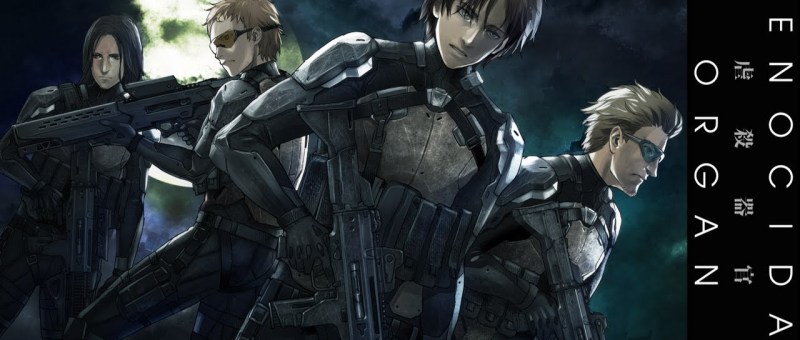
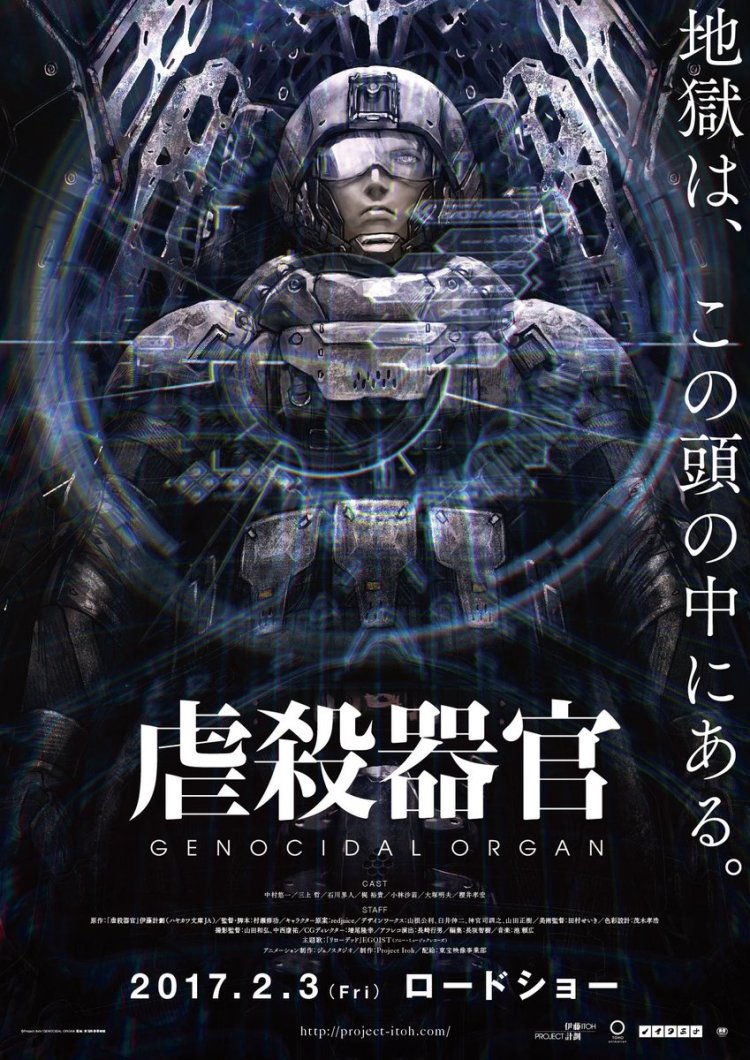 History books make for the grimmest reading, subjective as they often are. Science fiction can rarely improve upon the already existing evidence of humanity’s dark side, but Genocidal Organ (
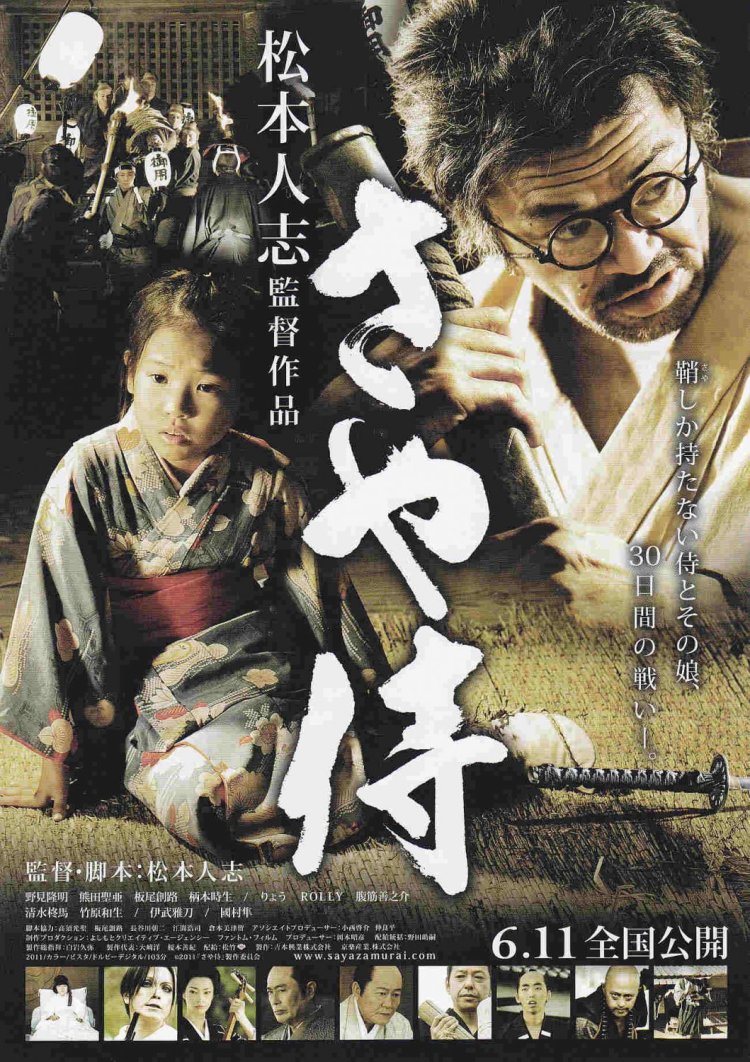 A samurai’s soul in his sword, so they say. What is a samurai once he’s been reduced to selling the symbol of his status? According to Scabbard Samurai (さや侍, Sayazamurai) not much of anything at all, yet perhaps there’s another way of defining yourself in keeping with the established code even when robbed of your equipment. Hitoshi Matsumoto, one of Japan’s best known comedians, made a name for himself with the surreal comedies Big Man Japan and
 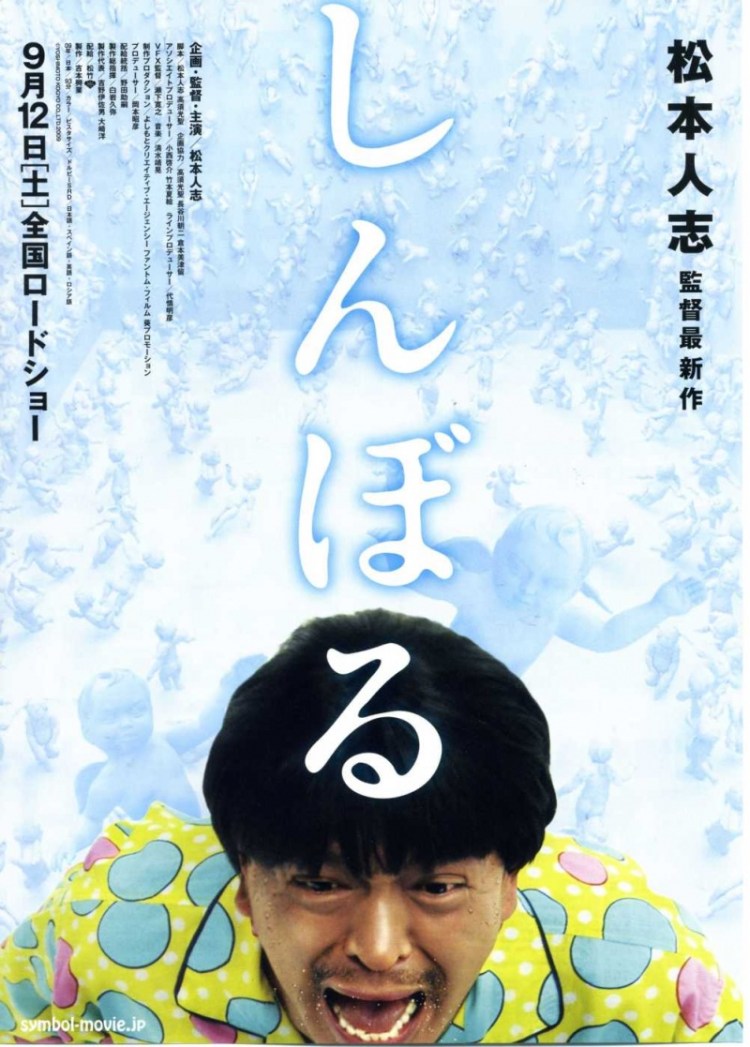 Symbol (しんぼる) – one thing which stands for another, sacrificing its own nature in service of something else. Hitoshi Matsumoto waxes philosophical in his follow up to Big Man Japan. Life, the universe, and everything converge in the seemingly unrelated tales of an unsuccessful Mexican luchador, and a confused Japanese man trapped in a surrealist nightmare. As expected, these two strands eventually meet, though not quite as one might expect.
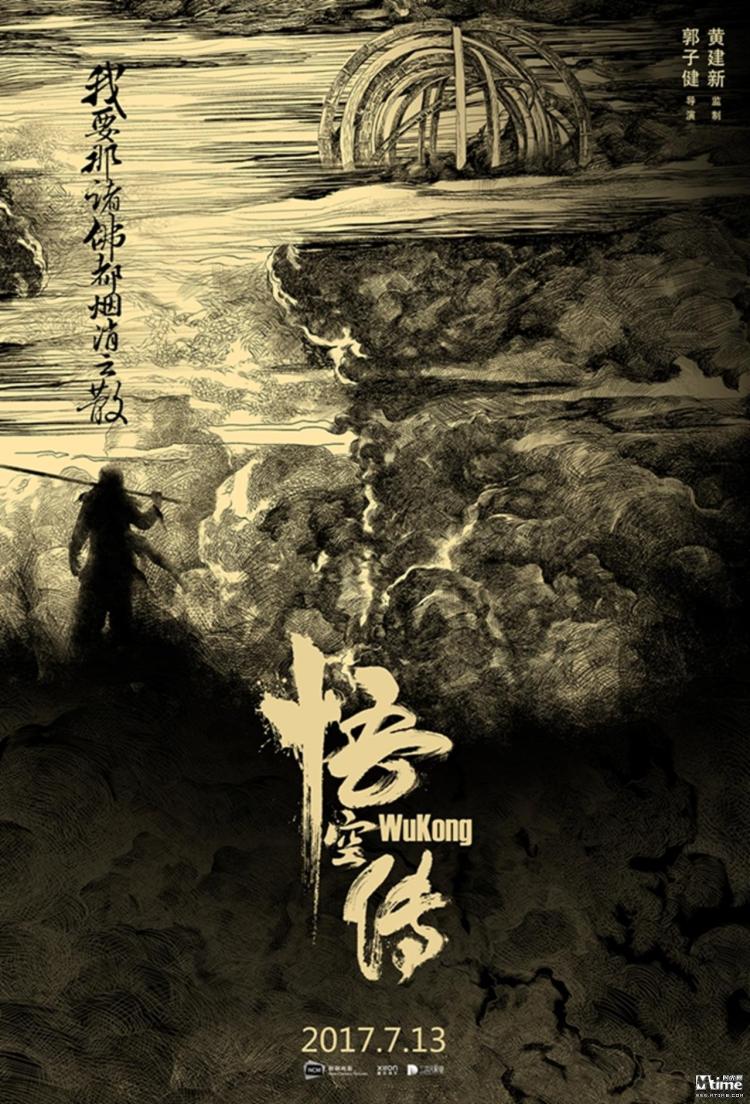 As it stands, contemporary Chinese cinema is veering dangerously close to Monkey King fatigue. Stephen Chow brought his particular sensibilities to the classic Journey to the West before Donnie Yen put on a monkey suit for
  “It’s not all about tofu!” screams the heroine of Akanezora: Beyond the Crimson Sky (あかね空), a film which is all about tofu. Like tofu though, it has its own subtle flavour, gradually becoming richer by absorbing the spice of life. Based on a novel by Ichiriki Yamamoto, Akanezora is co-scripted by veteran of the Japanese New Wave, Masahiro Shinoda and directed by Masaki Hamamoto who had worked with Shinoda on Owl’s Castle and Spy Sorge prior to the director’s retirement in 2003. Like the majority of Shinoda’s work, Akanezora takes place in the past but echoes the future as it takes a sideways look at the nation’s most representative genre – the family drama. Fathers, sons, legacy and innovation come together in the story of a young man travelling from an old capital to a new one with a traditional craft he will have to make his own in order to succeed.
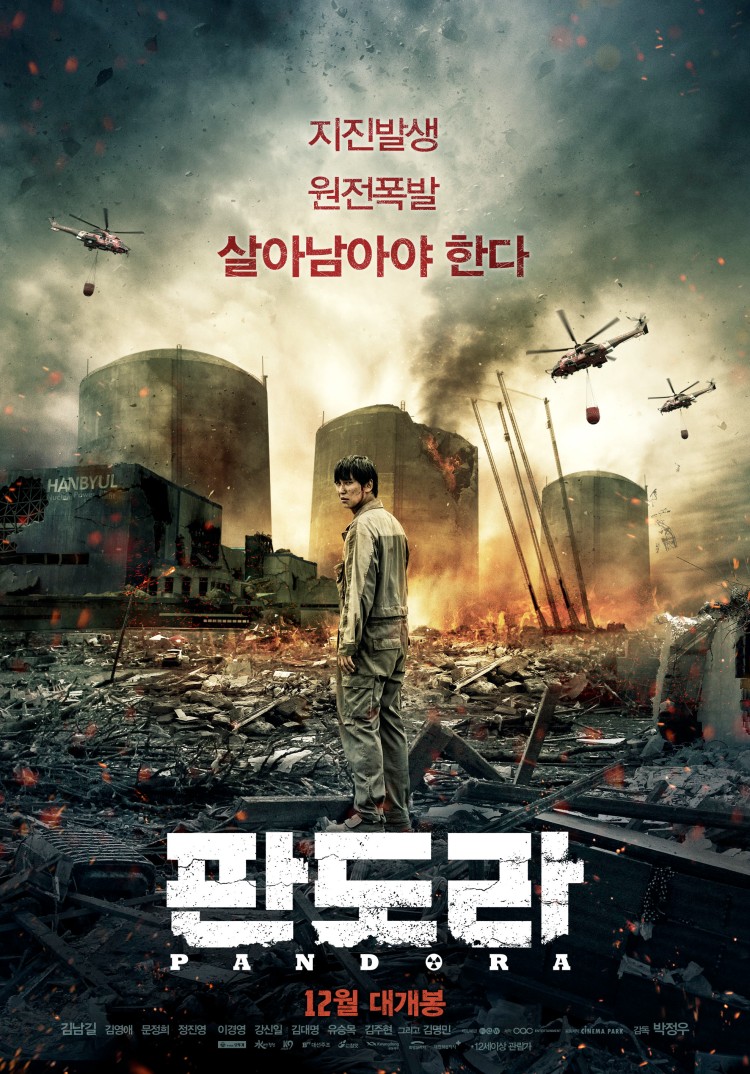 In a time of crisis, the populace looks to the government to take action and save the innocent from danger. A government, however, is often forced to consider the problem from a different angle – not simply saving lives but how their success or failure, decision-making process, and ability to handle the situation will be viewed by the electorate the next time they are asked who best deserves their faith and respect. Pandora (판도라) arrives at a time of particularly strained relations between the state and its people during which faith in the ruling elite is at an all time low following a tragic disaster badly mishandled and seemingly aided by the government’s failure to ensure public safety. Faced with an encroaching nuclear disaster to which their own failure to heed the warnings has played no small part, Pandora’s officials are left in a difficult position tasked with the dilemma of sacrificing a small town to save a nation or accepting their responsibility to their citizens as named individuals. Unsurprisingly, they are far from united in their final decision.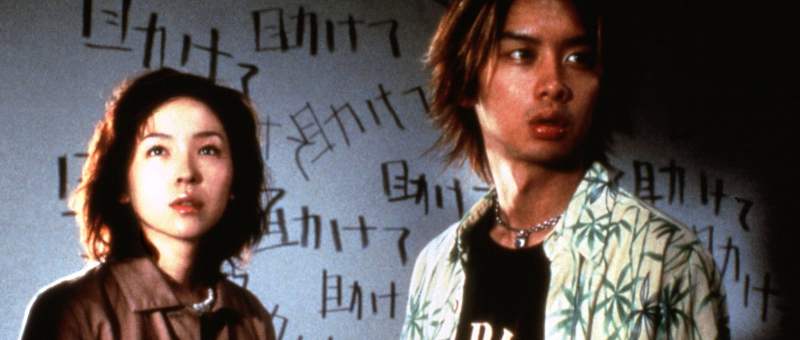
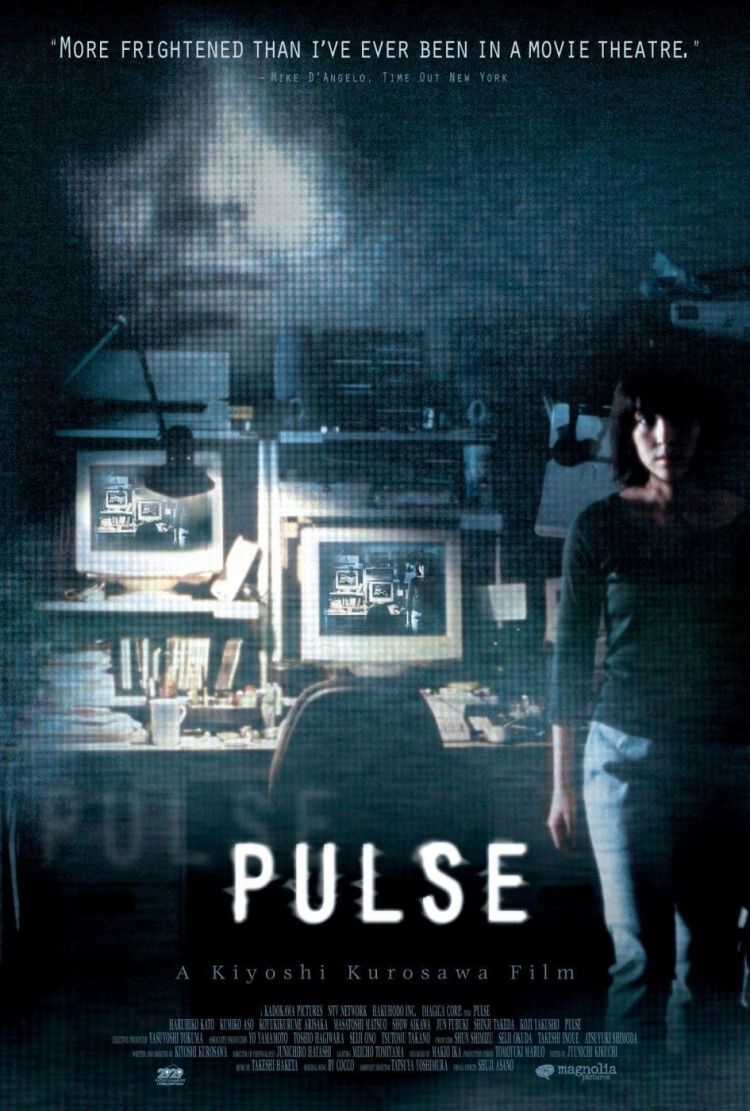 Times change and then they don’t. 2001 was a strange year, once a byword for the future it soon became the past but rather than ushering us into a new era of space exploration and a utopia born of technological advance, it brought us only new anxieties forged by ongoing political instabilities, changes in the world order, and a discomfort in those same advances we were assured would make us free. Japanese cinema, by this time, had become synonymous with horror defined by dripping wet, longhaired ghosts wreaking vengeance against an uncaring world. The genre was almost played out by the time Kiyoshi Kurosawa’s Pulse (回路, Kairo) rolled around, but rather than submitting himself to the inevitability of its demise, Kurosawa took the moribund form and pushed it as far as it could possibility go. Much like the film’s protagonists, Kurosawa determines to go as far as he can in the knowledge that standing still or turning back is consenting to your own obsolescence.
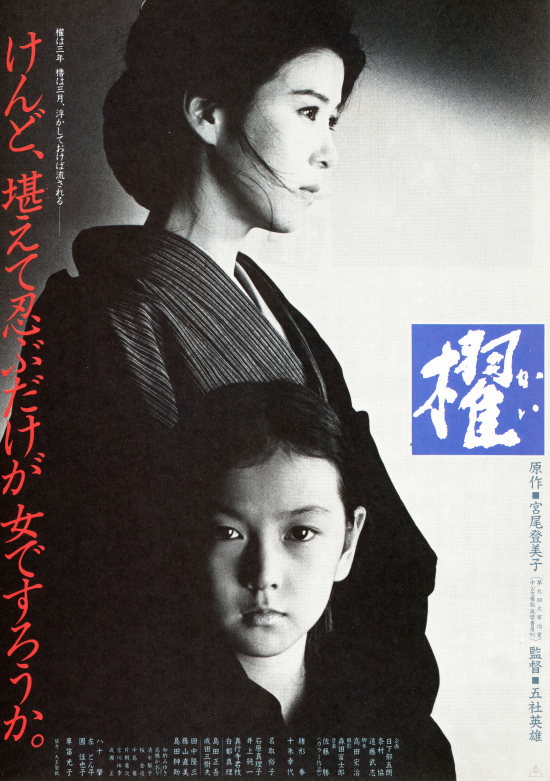 Until the later part of his career, Hideo Gosha had mostly been known for his violent action films centring on self destructive men who bore their sadnesses with macho restraint. During the 1980s, however, he began to explore a new side to his filmmaking with a string of female centred dramas focussing on the suffering of women which is largely caused by men walking the “manly way” of his earlier movies. Partly a response to his regular troupe of action stars ageing, Gosha’s new focus was also inspired by his failed marriage and difficult relationship with his daughter which convinced him that women can be just as devious and calculating as men. 1985’s Oar (櫂, Kai) is adapted from the novel by Tomiko Miyao – a writer Gosha particularly liked and identified with whose books also inspired
 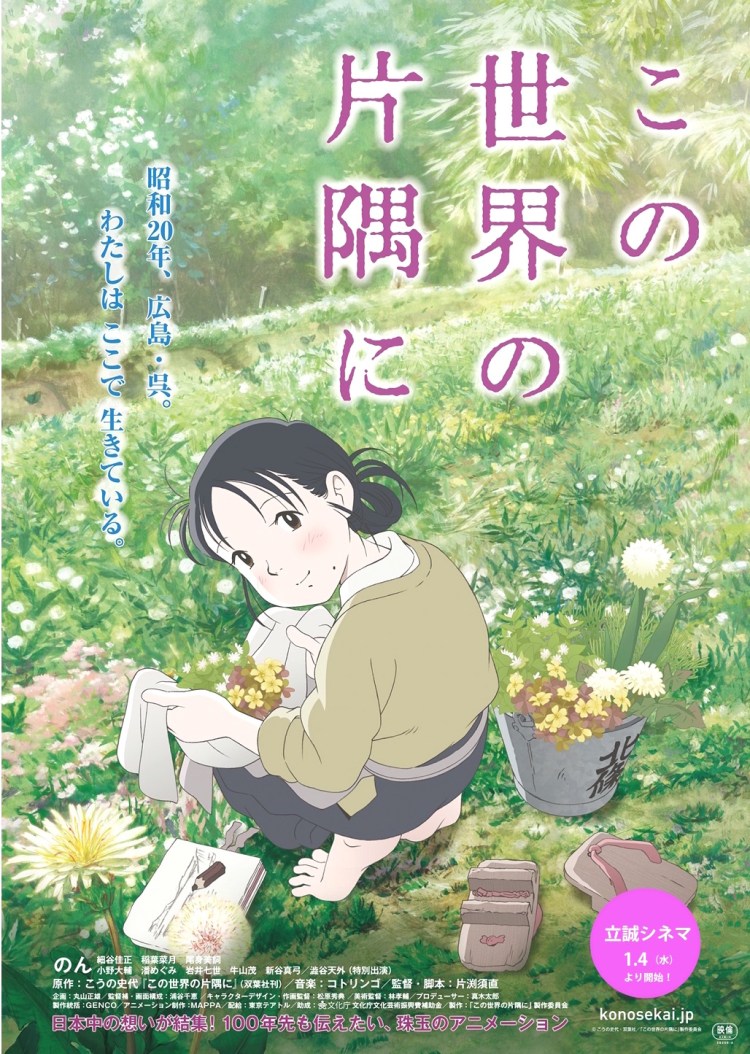 Depictions of wartime and the privation of the immediate post-war period in Japanese cinema run the gamut from kind hearted people helping each other through straitened times, to tales of amorality and despair as black-marketeers and unscrupulous crooks take advantage of the vulnerable and the desperate. In This Corner of the World (この世界の片隅に, Kono Sekai no Katasumi ni), adapted from the manga by Hiroshima native Fumiyo Kouno, is very much of the former variety as its dreamy, fantasy-prone heroine is dragged into a very real nightmare with the frontier drawing ever closer and the threat of death from the skies ever more present but manages to preserve something of herself even in such difficult times.
 Windows on Worlds