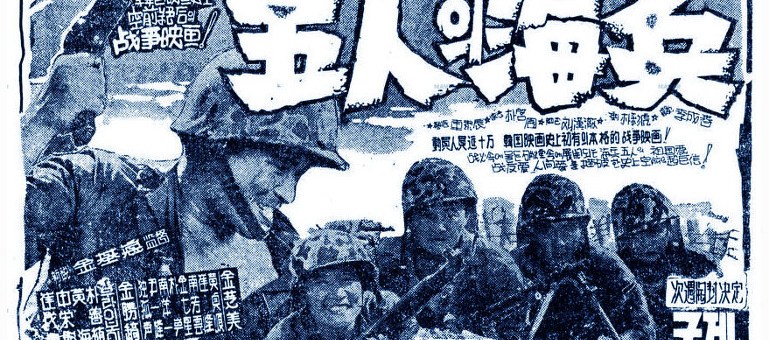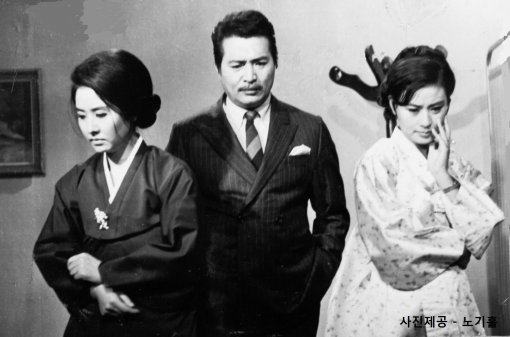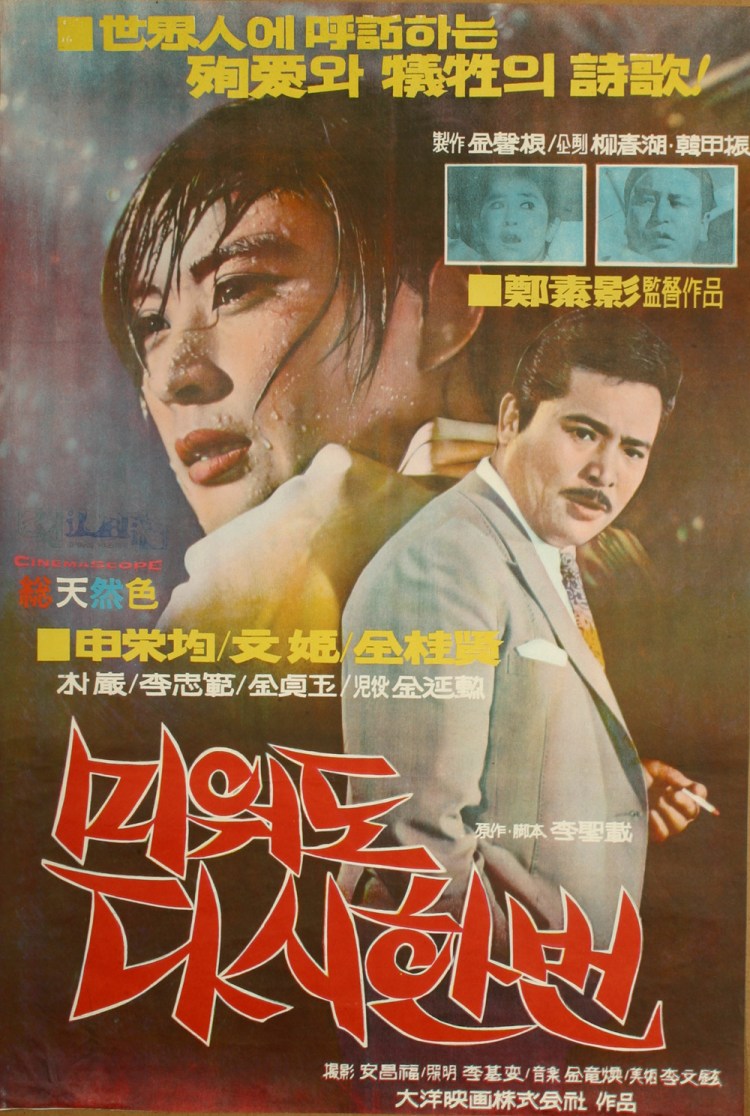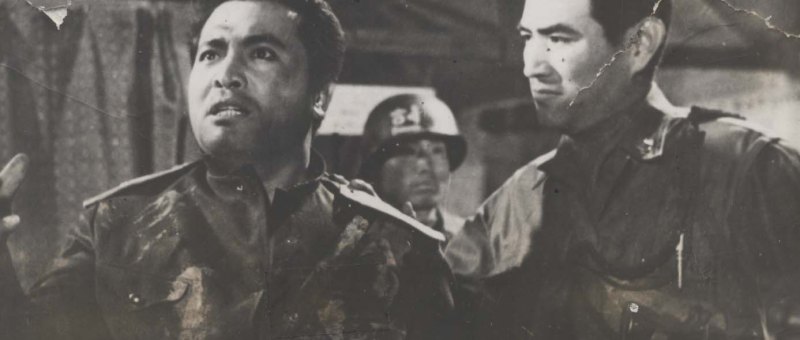
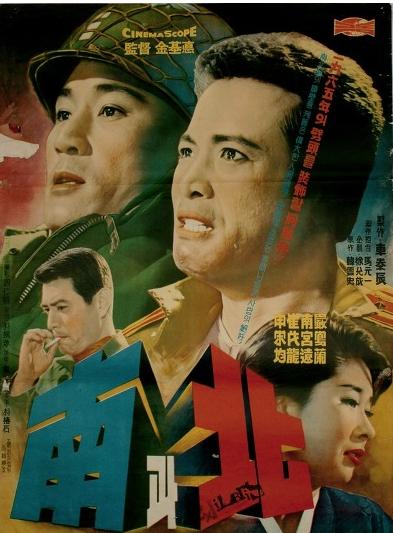
Melodrama has often been an unfairly maligned genre, dismissed as pandering to the sentimental or engaging in frivolous emotion but to do so misses the undercurrent of social questioning that such films often entail. Korea has made the melodrama its own – indeed, though genre is often a more fluid matter in Korea than it is elsewhere it’s difficult to find films of any kind which are completely devoid of melodramatic themes. It’s less of a surprise therefore to find that Korean cinema turns to melodrama to examine one the nation’s most pressing concerns – the relationship between North and South. Kim Ki-duk’s North and South (南과北/남과북, Namgwa Buk) is the story of a woman caught between two men, two nations, and two eras but it’s mediated through the story of a noble North Korean who has battled all in the name of love, left his family, his home, his country only to find that he is too late and the world has already left him behind.
The film begins with capture of a North Korean soldier in November 1952, the middle of the Korean War. Following normal procedure, the soldier, Major Jang Il-gu (Shin Young-kyun) is taken in for questioning but the major matter on his mind is the lady in the photograph he keeps brandishing to everyone he meets. Rather than political disaffection, Il-gu has defected to the South in the name of love – he’s looking for a woman he regarded as his wife, the mother of the son he has never seen. The South Korean officers are less than sympathetic, they’ve been noticing increased activities on the frontiers and they want to know some concrete military details before they even agree to admit Major Jang, but Il-gu won’t talk until they promise to help him look for Eun-ga (Um Aing-ran) – the woman for whom he has betrayed his comrades.
Captain Lee Hae-ro (Choi Moo-ryong), otherwise sympathetic to Il-gu’s plight, runs into a problem when elements of Il-gu’s story start sounding all too familiar. In a coincidence too staggering to believe, Eun-ga is Hae-ro’s wife. Originally reluctant to marry him, Eun-ga had explained that she had a son already and was waiting for the child’s father (to whom she was not “legally” married) from whom she had been separated by the 38th parallel. Lee was patient and persistent, he told Eun-ga that she was free to leave him should her long lost love return (never believing it was possible) and that he was content to look after her until that day came or, should he be so fortunate, for the rest of his life. Now Il-gu has arrived as if to punish him for disrupting this fairytale of doomed romantic love.
Unlike many films of the time, Kim is not interested in demonising the North so much as emphasising the tragedy of Korea’s division. Eun-ga and Il-gu are divided by more than just politics. Eun-ga was the middle-class daughter of a wealthy doctor, Il-gu was the son of one of their servants. Their love was not possible even before the war, but still it blossomed. Growing up together, Il-gu and Eun-ga experienced the quintessentially innocent taste of first love, vowing to stay together even in the face of fierce parental opposition and social convention, but it is the war which eventually seals their fate. Il-gu, not wanting to be conscripted into the Japanese army hides out in a shack where Eun-ga, the only person to know his whereabouts, spends a fateful night with him during which time their child is conceived.
Dreaming only of being re-united with his “wife” and child, Il-gu has been carrying around a picture of Eun-ga and looking for an opportunity to defect ever since the erection of the 38th parallel. Abandoning everything in the name of love, he has left his mother alone in the North and risked his life in hope of seeing Eun-ga once more. Hae-ro, a romantic man himself, is intimidated by Il-gu’s passion. The great, fated love he’d imagined for himself in marrying the nurse who had saved him at his lowest ebb suddenly pales in comparison to Il-gu’s willingness to sacrifice his life in pursuit of a true love dream. Understating Il-gu’s feelings, Hae-ro finds himself in a terrible position, worried that his love will leave him, feeling guilty for pestering her into a marriage she may not have really wanted, and unsure whether he should even tell Il-gu and Eun-ga that he holds the key to their long delayed reunion. Il-gu remains resolute, demanding love or death, but Hae-ro vacillates, drinks himself into solipsistic misery, and indulges his own weaknesses which are only made worse by Il-gu’s continued heroism.
Immediately before the final sequence in which the trio are forced to confront their emotionally difficult situation, Il-gu is threatened with a gun but refuses to give up any information without proof he can meet Eun-ga. Believing all hope to be lost, he asks only to be allowed to go up a mountain to die but is moved by the compassion of intelligence officer Kwon (Namkoong Won) who alone is committed to delivering Eun-ga and eventually gives up his information even though it pains him to betray his own comrades. In an impassioned debate with Kwon, Il-gu gives voice to the film’s overarching message in reminding him “Are we not all brothers”. Kwon, counters that the reason they fight is in service of Il-gu’s quest – it’s precisely so that he can come here, speak freely, and pursue his love unhindered. The “South” is winning, in a sense, but the message of brotherhood and understanding between men is the one which is delivered with the most clarity.
Understanding between men is indeed the theme of Hae-ro and Il-gu’s eventual meeting. Eun-ga’s torment is relegated to background detail as she sobs her heart out in the corner in the unfairness of her impossible situation. Her heart has always belonged to Il-gu and she feels herself to have betrayed him, betrayed love, in marrying an admittedly good and kind man out of reasons of practicality rather than passion. Coming to understand the situation, Il-gu responds with compassion and understanding even in the middle of his own heartbreak. He bitterly regrets his journey and wishes Hae-ro had told him Eun-ga was now his wife rather than allow him to hurt her by suddenly reappearing and breaking her heart all over again. Witnessing Il-gu’s magnanimity, Hae-ro is also moved, offering to step back and allow Il-gu to return to the family he may have lost. Both men recognise the goodness of the other, want nothing more than the best outcome of the situation for Eun-ga and her son, and are committed to moving forward with sensitivity in trying to minimise the emotional pain inflicted on the innocent Eun-ga who continues to suffer through no fault of her own.
The “fault” falls on the 38th parallel which, as Il-gu explains during a painful first meeting with his unknowing son, is “the worst thing ever made by stupid men”. The situation is indeed impossible, there is no easy answer for Eun-ga who will have to choose between past love and a present commitment (or, uncomfortably, have that decision made for her by her respective lovers). Kim dramatises their anguish perfectly through the extraordinary performances of his cast during the drawn out, painful encounter in which they attempt to forge a way forward, but Eun-ga, who stands in for her nation, stands to lose all when this same fierce love and understanding between men may cost her everything in tragic gestures of love and sacrifice.
Available on DVD as part of the Korean Film Archive’s Kim Ki-duk box set. Not currently available to stream online.
 The
The  Yo Oizumi stars as a high school teacher investigating the disappearance of a friend in another darkly comic, twist filled farce from Kenji Uchida (
 Kazuya Shiraishi (
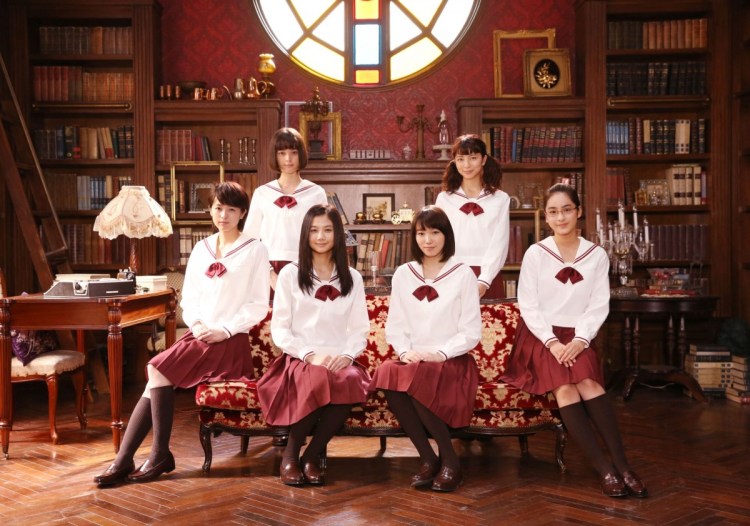 When a schoolgirl falls off a roof foul play is suspected. Who better to investigate than her fellow members of the literature club at an elite academy catering to the daughters of the rich and famous?
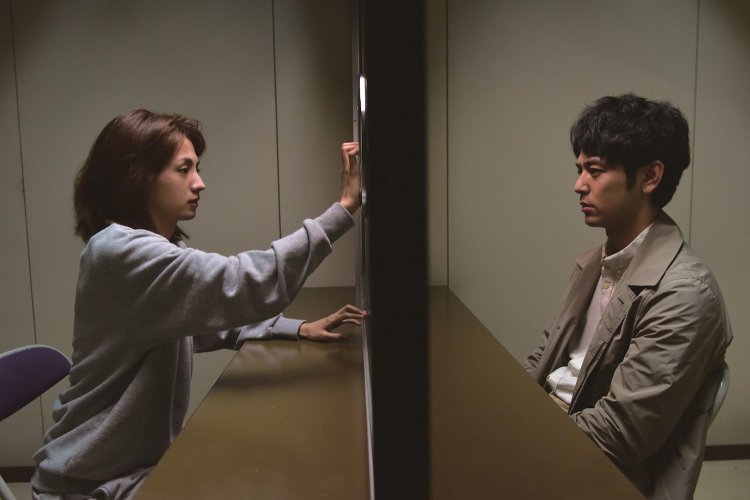 A young reporter (Satoshi Tsumabuki) investigates the brutal murder of a model family whilst trying to support his younger sister (Hikari Mitsushima) who is currently in prison for child neglect while his nephew remains in critical condition in hospital. Interviewing friends and acquaintances of the deceased, disturbing truths emerge concerning the systemic evils of social inequality.
 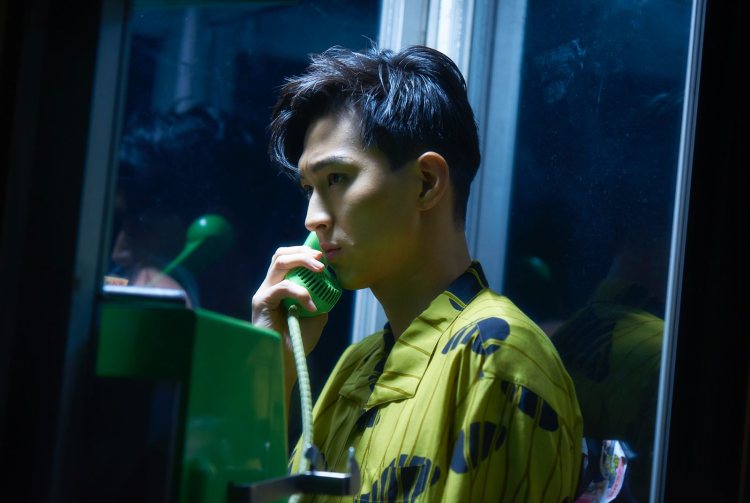 Based on a best selling romantic novel which captured the hearts of readers across Japan, Initiation Love sets out to expose the dark and disturbing underbelly of real life romance by completely reversing everything you’ve just seen in a gigantic twist five minutes before the film ends…
 A young woman goes missing and unwittingly becomes the face of a social movement in Daigo Matsui’s anarchic examination of a misogynistic society.
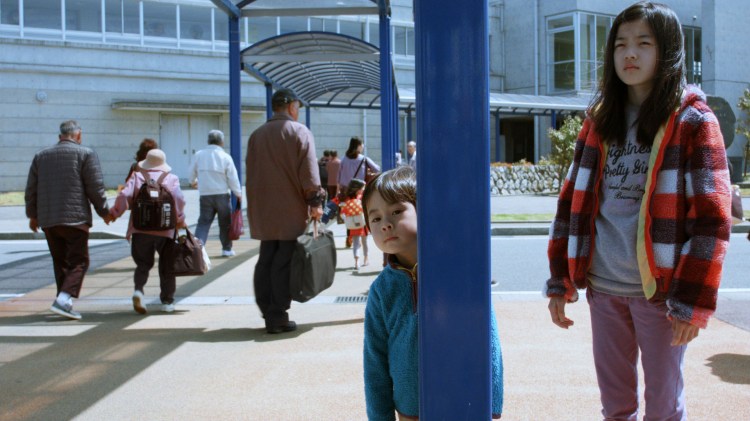 A brother and sister are orphaned after a natural disaster and taken in by relatives but struggle to come to terms with the aftermath of such great loss.
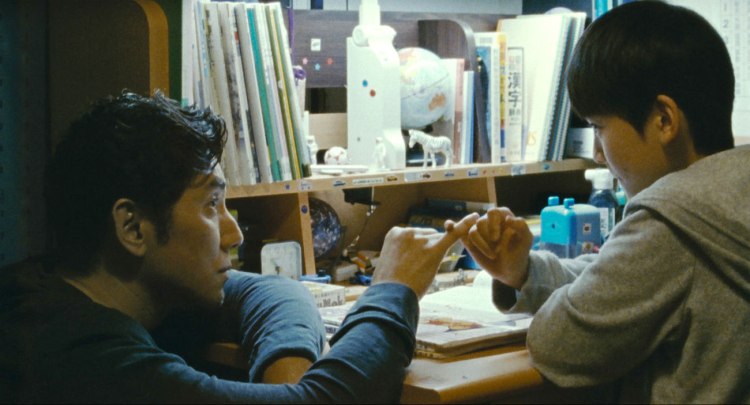 Miwa Nishikawa adapts her own novel in which a self-centred novelist is forced to face his own delusions when his wife is killed in a freak bus accident.
 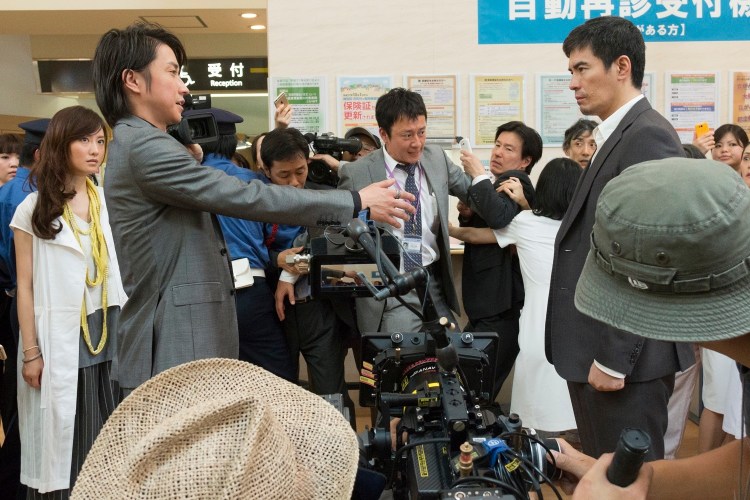 When the statute of limitations passes on a series of unsolved murders, a mysterious man (Tatsuya Fujiwara) suddenly comes forward and confesses while the detective (Hideaki Ito) who is still haunted by his inability to catch the killer has his doubts in Yu Irie’s adaptation of Jung Byoung-Gil’s Korean crime thriller Confession of Murder.
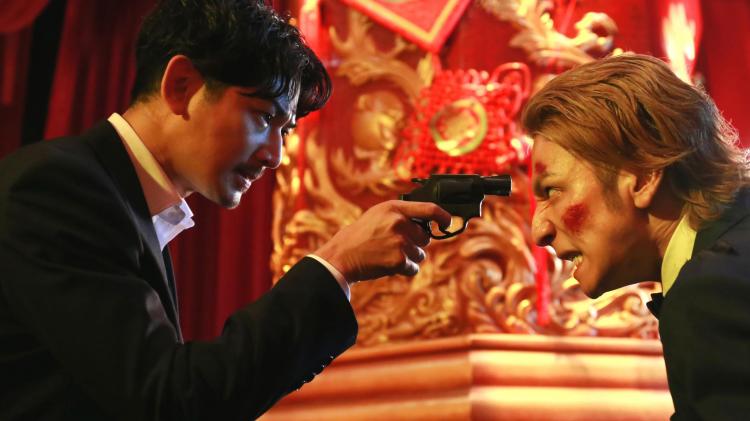 Toma Ikuta stars as maverick cop Reiji in Takashi Miike’s madcap manga adaptation. Reiji has been kicked off the force for trying to arrest a councillor who was molesting a teenage girl but gets secretly rehired to go undercover in Japan’s best known yakuza conglomerate.
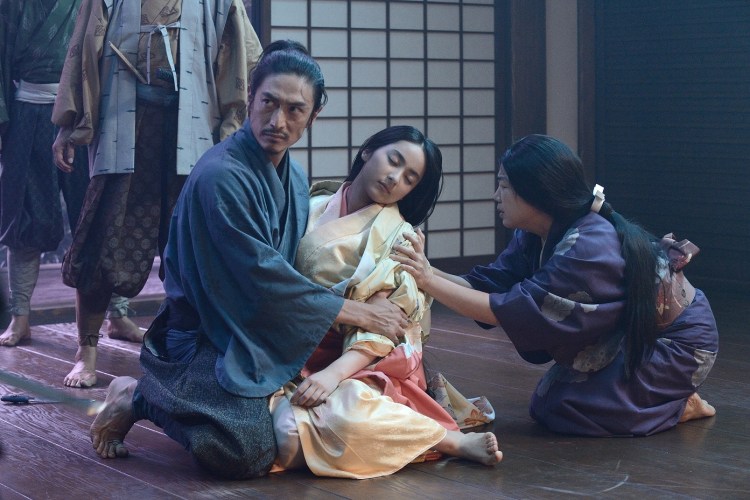 Yoshihiro Nakamura (
 Yuzo Kawashima would have turned 100 in 2018. A comic tale of life on the Osakan margins, Room For Let is a perfect example of the director’s well known talent for satire and stars popular comedian Frankie Sakai as an eccentric writer/translator-cum-konnyaku-maker whose life is turned upside down when a pretty young potter moves into the building.
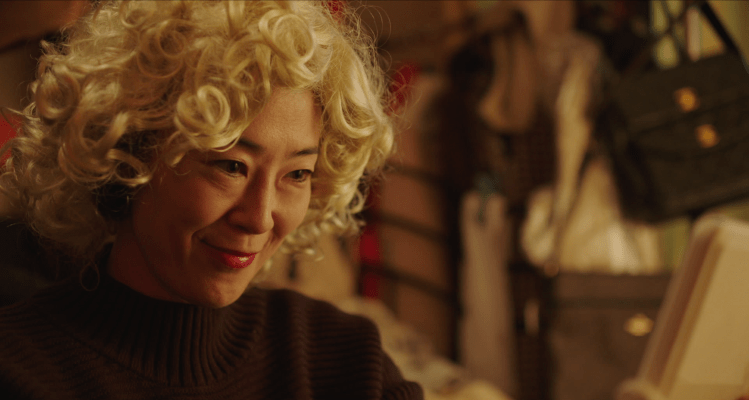 Embittered 55 year old OL Setsuko gets a new lease on life when introduced to an unusual English conversation teacher, John, who gives her a blonde wig and rechristens her Lucy. “Lucy” falls head over heels for the American stranger and decides to follow him all the way to the states…
  A remake of Korean hit
 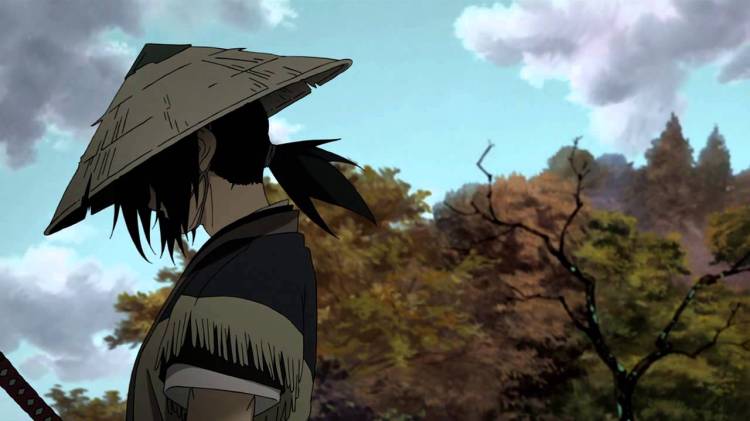 A small boy recruits the mysterious samurai “No Name” as a bodyguard after his dog is injured in an ambush in the landmark animation from 2007.
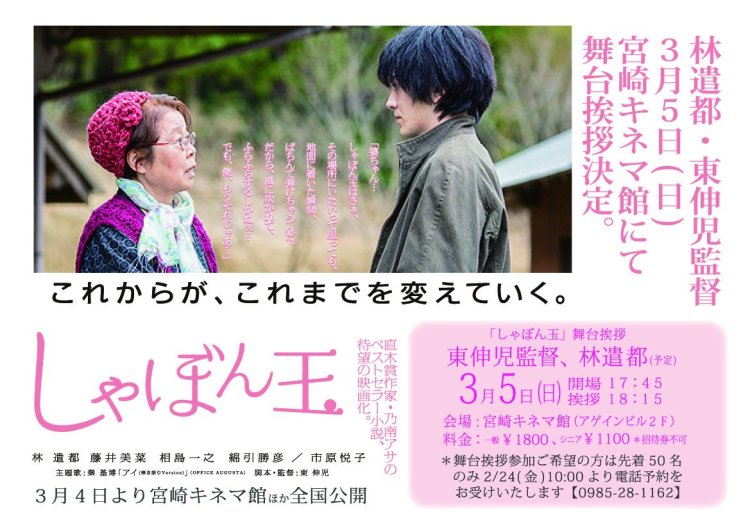 A no good lowlife makes his way by stealing from elderly women but experiences a change of heart when he’s taken in by a kindly old lady deep in the mountains.