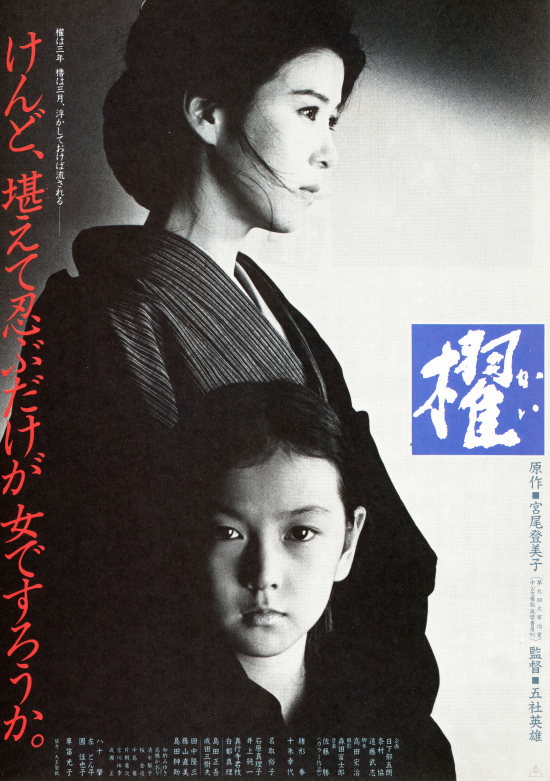
 Until the later part of his career, Hideo Gosha had mostly been known for his violent action films centring on self destructive men who bore their sadnesses with macho restraint. During the 1980s, however, he began to explore a new side to his filmmaking with a string of female centred dramas focussing on the suffering of women which is largely caused by men walking the “manly way” of his earlier movies. Partly a response to his regular troupe of action stars ageing, Gosha’s new focus was also inspired by his failed marriage and difficult relationship with his daughter which convinced him that women can be just as devious and calculating as men. 1985’s Oar (櫂, Kai) is adapted from the novel by Tomiko Miyao – a writer Gosha particularly liked and identified with whose books also inspired Onimasa and The Geisha. Like Onimasa, Oar also bridges around twenty years of pre-war history and centres around a once proud man discovering his era is passing, though it finds more space for his long suffering wife and the children who pay the price for his emotional volatility.
Kochi, 1914 (early Taisho), Iwago (Ken Ogata) is a kind hearted man living beyond his means. Previously a champion wrestler, he now earns his living as a kind of procurer for a nearby geisha house, chasing down poor girls and selling them into prostitution, justifying himself with the excuse that he’s “helping” the less fortunate who might starve if it were not for the existence of the red light district. He dislikes this work and finds it distasteful, but shows no signs of stopping. At home he has a wife and two sons whom he surprises one day by returning home with a little girl he “rescued” at the harbour after seeing her beaten by man who, it seemed, was trying to sell her to Chinese brokers who are notorious for child organ trafficking.
Iwago names the girl “Kiku” thanks to the chrysanthemums on her kimono and entrusts her to his irritated wife, Kiwa (Yukiyo Toake), who tries her best but Kiku is obviously traumatised by her experiences, does not speak, and takes a long time to become used to her new family circumstances. Parallel to his adoption of Kiku, Iwago is also working on a sale of a girl of a similar age who ends up staying in the house for a few days before moving to the red light district. Toyo captures Kiwa’s heart as she bears her sorry fate stoically, pausing only to remark on her guilt at eating good white rice three times a day at Iwago’s knowing that her siblings are stuck at home with nothing.
Iwago’s intentions are generally good, but his “manly” need for control and his repressed emotionality proceed to ruin his family’s life. He may say that poverty corrupts a person’s heart and his efforts are intended to help prevent the birth of more dysfunctional families, but deep down he finds it hard to reconcile his distasteful occupation with his traditional ideas of masculine chivalry. Apparently “bored” with the long suffering Kiwa he fathers a child with another woman which he then expects her to raise despite the fact that she has already left the family home after discovering the affair. Predictably her love for him and for the children brings her home, but Iwago continues to behave in a domineering, masterly fashion which is unlikely to repair his once happy household.
Kiwa is the classic long suffering wife, bearing all of Iwago’s mistreatments with stoic perseverance until his blatant adultery sends her running from marriage to refuge at the home of her brother. Despite the pain and humilation, Kiwa still loves, respects, and supports her husband, remembering him as he once was rather than the angry, frustrated brute which he has become. Despite her original hesitance, Kiwa’s maternal warmth makes a true daughter of Kiku and keeps her bonded to the eldest and more sensitive of her two sons, Ryutaro, even if the loose cannon that is Kentaro follows in his step-father’s footsteps as an unpredictable punk. Her goodheartedness later extends to Iwago’s illegitimate daughter Ayako whom she raises as her own until Iwago cruelly decides to separate them. For all of Iwago’s bluster and womanising, ironically enough Kiwa truly is the only woman for him as he realises only when she determines to leave. Smashing the relics of his “manly” past – his wrestling photos and trophies, Iwago is forced to confront the fact that his own macho posturing has cost him the only thing he ever valued.
Gosha tones down the more outlandish elements which contributed to his reputation as a “vulgar” director but still finds space for female nudity and frank sexuality as Iwago uses and misuses the various women who come to him for help or shelter. More conventional in shooting style than some of Gosha’s other work from the period and lacking any large scale or dramatic fight scenes save for one climactic ambush, Oar acts more as a summation of Gosha’s themes up until the mid-80s – men destroy themselves through their need to be men but also through destroying the women who have little choice but to stand back and watch them do it. Unless, like Kiwa, they realise they have finally had enough.
Short clip from near the beginning of the film (no subtitles)
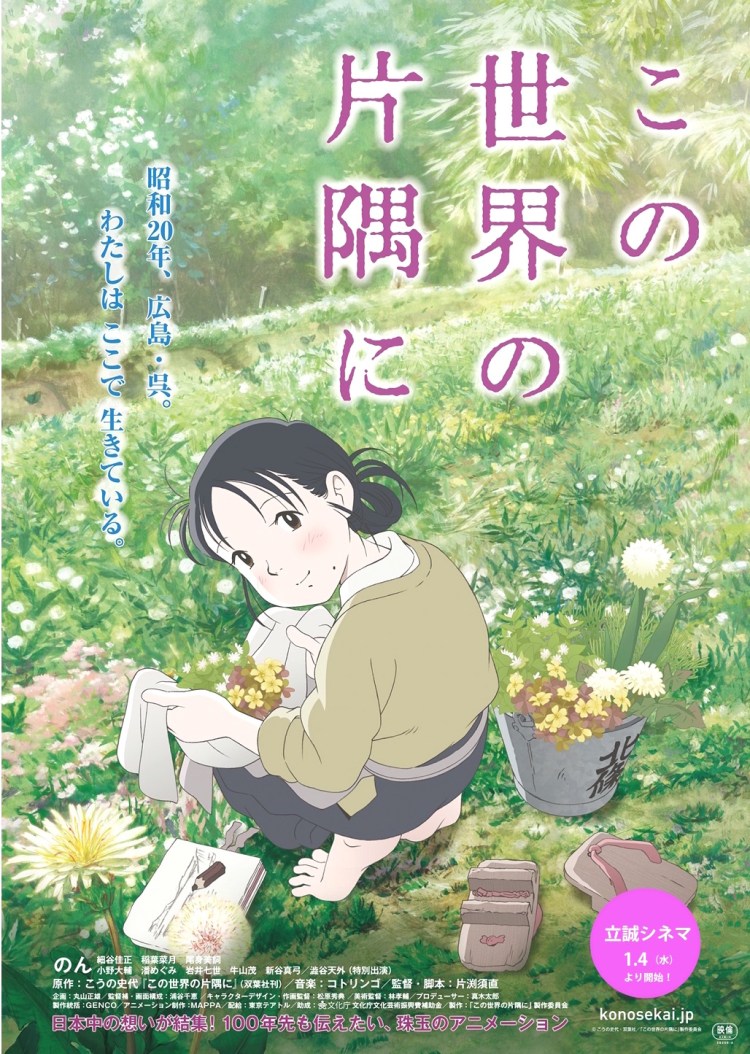 Depictions of wartime and the privation of the immediate post-war period in Japanese cinema run the gamut from kind hearted people helping each other through straitened times, to tales of amorality and despair as black-marketeers and unscrupulous crooks take advantage of the vulnerable and the desperate. In This Corner of the World (この世界の片隅に, Kono Sekai no Katasumi ni), adapted from the manga by Hiroshima native Fumiyo Kouno, is very much of the former variety as its dreamy, fantasy-prone heroine is dragged into a very real nightmare with the frontier drawing ever closer and the threat of death from the skies ever more present but manages to preserve something of herself even in such difficult times.
 Now in its 21st year, Montreal’s
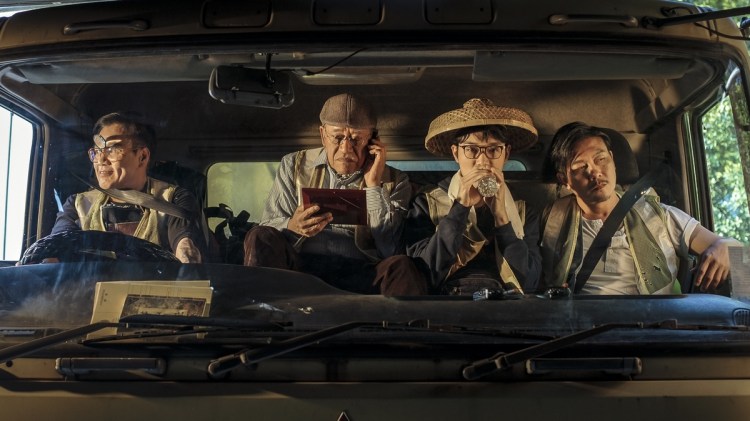
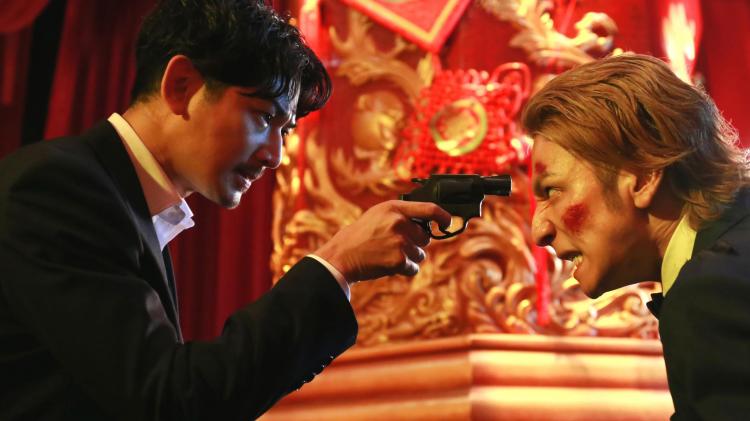
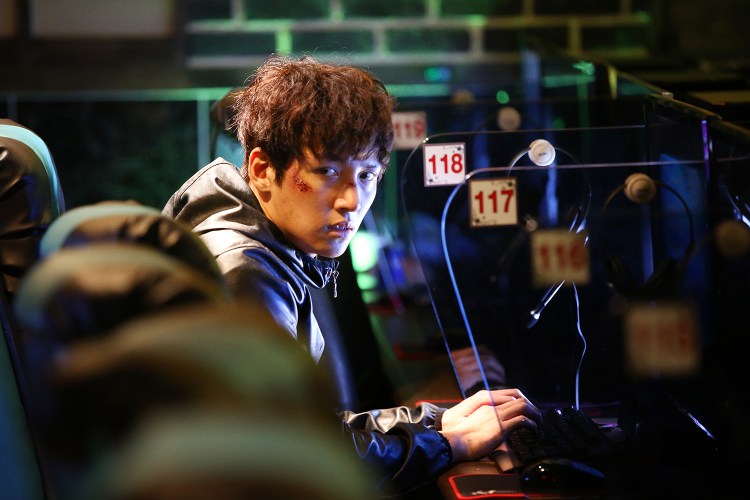
 The criticism levelled most often against Japanese cinema is its readiness to send established franchises to the big screen. Manga adaptations make up a significant proportion of mainstream films, but most adaptations are constructed from scratch for maximum accessibility to a general audience – sometimes to the irritation of the franchise’s fans. When it comes to the cinematic instalments of popular TV shows the question is more difficult but most attempt to make some concession to those who are not familiar with the already established universe. Mozu (劇場版MOZU) does not do this. It makes no attempt to recap or explain itself, it simply continues from the end of the second series of the TV drama in which the “Mozu” or shrike of the title was resolved leaving the shady spectre of “Daruma” hanging for the inevitable conclusion.
 Anocha Suwichakornpong’s second feature, By the Time it Gets Dark (ดาวคะนอง.Dao Khanong), bills itself as an exploration of a traumatic moment from the recent past but quickly subverts this conceit for a wider meditation on the veracity of cinema. Beginning in a manner typical of indie-leaning Thai films, Anocha gently undercuts herself as her images prism into their separate “realities”, informing and commenting on each other but perhaps not fully interacting. The Thammasat University student massacre of 1976 is the dark genesis of this fracturing future, but it’s also in the process of becoming a collective legend, cementing a “historical truth” as cultural currency even whilst expunged from the history books, leaving its young lost in a black hole of memory from which they are powerless to emerge.
 Some situations are destined to end in tears. Kaze Shindo’s Love Juice adopts the popular theme of unrequited love but complicates it with the peculiar circumstances of Tokyo at the turn of the century which requires two young women to be not just housemates but bedmates and workmates too. One is straight, one is gay and in love with her friend who seems to get off on manipulating her emotions and is overly dependent on her more responsible approach to life, but both are trapped in a low rent world of grungy nightclubs and sleazy hostess bars.
 North Koreans have become the go to bad guys recently, and so North Korean spies have become the instigators of fear and paranoia in many a contemporary political thriller. The Suspect (용의자, Yonguija), however, is quick to point the finger at a larger evil – personal greed, dodgy morals, and the all powerful reach of global corporations. Opting for a high octane action fest rather than a convoluted plot structure, Won’s approach is (mostly) an uncomplicated one as a wronged man pursues his revenge or redemption with no thought for his own future, only to be presented with the unexpected offering of one anyway alongside the equally unexpected bonus of exposing an international conspiracy.
 Kiyoshi Kurosawa has taken a turn for the romantic in his later career. Both 2013’s Real (リアル 完全なる首長竜の日, Real: Kanzen Naru Kubinagaryu no Hi) and
 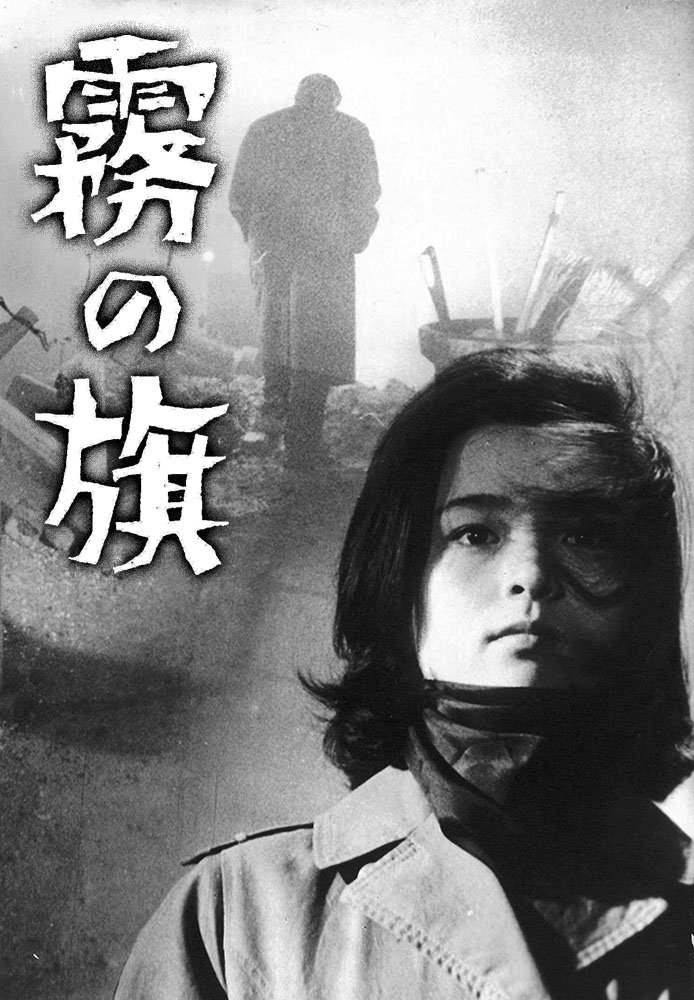 In theory, we’re all equal under the law, but the business of justice is anything but egalitarian. Yoji Yamada is generally known for his tearjerking melodramas or genial comedies but Flag in the Mist (霧の旗, Kiri no Hata) is a rare step away from his most representative genres, drawing inspiration from America film noir and adding a touch of typically Japanese cynical humour. Based on a novel by Japanese mystery master Seicho Matsumoto, Flag in the Mist is a tale of hopeless, mutually destructive revenge which sees a murderer walk free while the honest but selfish pay dearly for daring to ignore the poor in need of help. A powerful message in the increasing economic prosperity of 1965, but one that leaves no clear path for the successful revenger.
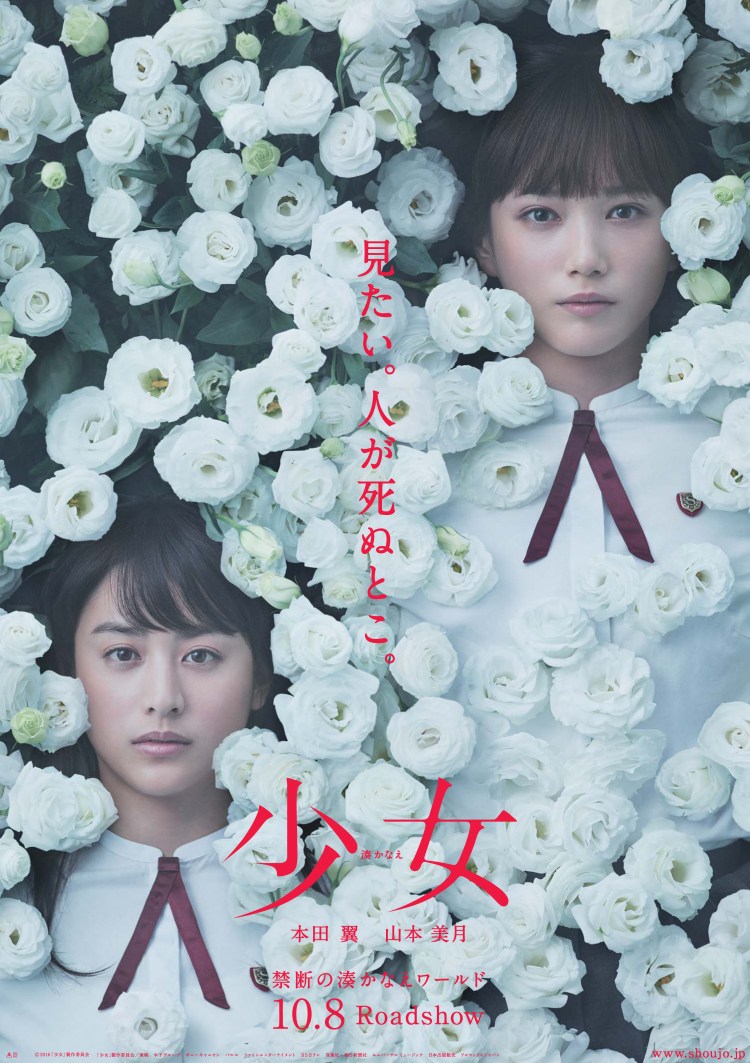 Kanae Minato is known for her hard-hitting crime stories from Confessions to
