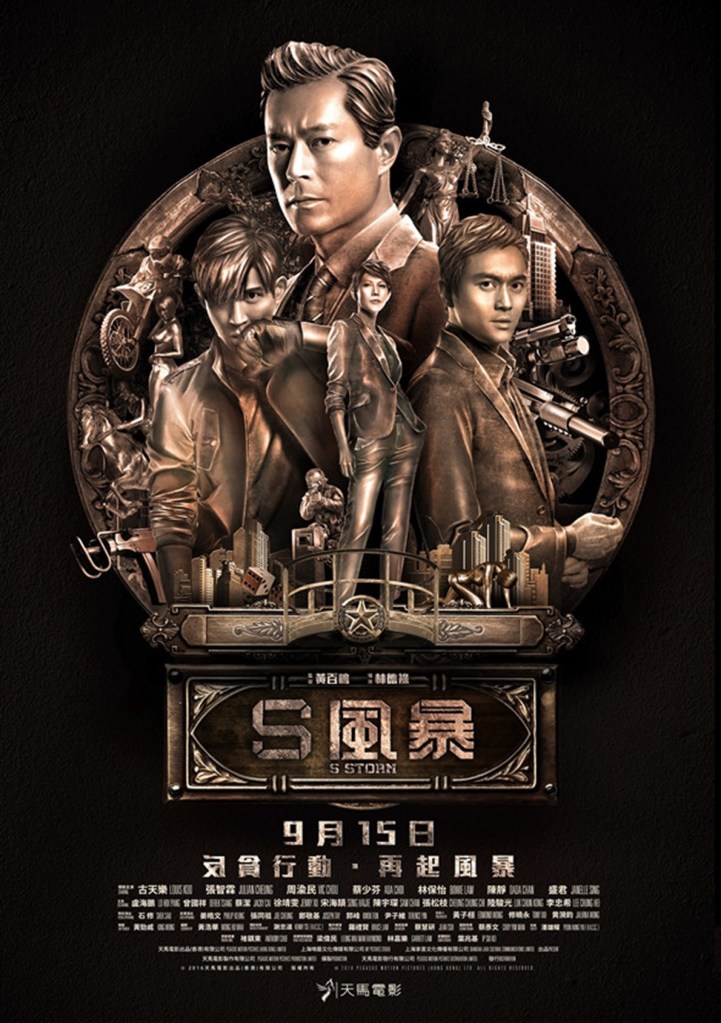
 It’s become almost a cliché to describe a sequel as “unnecessary”, but then assessing how any sequel or, indeed, any film might be deemed “necessary” (for what or whom?) proves more fraught than one might originally think. It might, then, be better to think of certain sequels as “unwise” – S Storm (S風暴), a followup to the similarly named Z Storm is just one such film. Z Storm’s critical reception was, shall we say, lukewarm and did not exactly inspire a burning desire to return to its world of corporate corruption vs different kinds of bickering policemen but, nevertheless, here we are.
Louis Koo returns as ICAC officer William Luk who has the misfortune to see one of his targets assassinated right in front of him. The trail leads him to Hong Kong’s famous Jockey Club and a trading scandal involving illegal behaviour in online football gambling. Being in the wrong place at the wrong time brings Luk into contact with depressed policeman Lau (Julian Cheung Chi-lam) whose sister just happens to work in the bar in which the mysterious hitman everyone is looking for is fond of taking a drink.
Refreshingly, S Storm’s plot is actually very straightforward – bets are being rigged and the people at the top of the tree are in on the plan. Some of them are willing to go try great lengths to stop anyone finding out and spoiling their fun. Cue gangster action and dastardly tricks as the anti-corruption guys try to clean things up. However, S Storm is very much a believer in the power of coincidence. Which is to say, Lau’s sister just happens to wind up fancying the hitman and Luk’s old boss just happens to be right at the centre of the action. Believability is not high on its list of priorities.
Added to the straightforward narrative spine, Lam throws in a number of subplots – the most interesting of them being with the mysterious hitman who visits a photography exhibition for some reason set up in a shopping mall which features scenes from global war zones. It seems our sad but noble hitman was some kind of child soldier (going by his flashback) though this is never fully explored and is rather crudely used to add some kind of spiritual quality to the hitman’s final journey.
Rather than mild rivals, ICAC and CID become awkward friends fairly quickly in the quest to investigate the mysterious deaths and corruption paper trail. Lau is a former gambler with a bad reputation hoping to make something out of himself by solving a high profile case. His relationship with his sister is somewhat strained as she recites the sad story of her upbringing which includes being gang raped by goons looking for a repayment on her brother’s gambling debts (as she improbably shouts out loud to the entire bar in which she works as a way of getting back at her policeman brother who’s asking too many questions). Luk and Lau eventually bond as their conflicting personalities complement each other well enough to create an unbeatable crime stopping team.
What the film lacks in intrigue it tries to make up for with action which it handles well though infrequently. A standout out scene features one of Luk’s female subordinates getting into a fight in a teahouse which is then followed by some fist fighting with the silent yet heroic hitman. Other standoffs are gun based but at least mildly interesting if not particularly original.
S Storm has some odd ideas about character arcs, shifting the most interesting elements to the fringes and thrusting the blandest to the front. plot elements are shoehorned in bluntly and without warning such as a forgotten tussle between Luk and a former associate over a woman which quickly becomes irrelevant. Luk is also given a rather odd character moment when he comes across the dying body of another major character and simply nods, as if identifying with their plight or sympathising believing that they’ve found peace now or some other such nonsense (given that he has never actually met this person and knows nothing of their backstory). The film’s rather abrupt ending in which justice is served but the bodies remain where they fell remains unsatisfying and testifies to the ultimate failure to make the scandal laden content as interesting as it strives to be.
Original trailer (English subtitles)
 Cities are often serendipitous places, prone to improbable coincidences no matter how large or densely populated they may be. Tokyo Serendipity (恋するマドリ, Koisuru Madori) takes this quality of its stereotypically “quirky” city to the limit as a young art student finds herself caught up in other people’s unfulfilled romance only to fall straight into the same trap herself. Its tale may be an unlikely one, but director Akiko Ohku neatly subverts genre norms whilst resolutely sticking to a mid-2000s indie movie blueprint.
 Below average student buckles down and makes it into a top university? You’ve heard this story before and Nobuhiro Doi’s Flying Colors (ビリギャル, Biri Gyaru) doesn’t offer a new spin on the idea or additional angles on educational policy but it does have heart. Heart, it argues is what you need to get ahead (if you’ll forgive the multilevel punning) as the highest barriers to academic success are the ones which are self imposed. Arguing for a more inclusive, tailor made approach to education which doesn’t instil false hope but does help young people develop self confidence alongside standardised skills, Flying Colors is the story of one popular girl’s journey from anti-intellectual teenage snobbery to the very top of the academic tree whilst healing her divided family in the process.
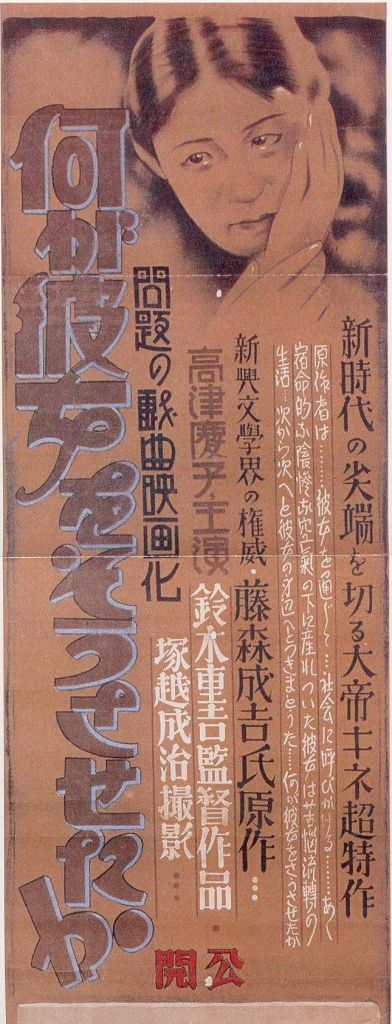 Like many other areas of the world in the first half of the 20th century, Japan also found itself at a dividing line of political thought with militarism on the rise from the late 1920s. Despite the onward march of right-wing ideology, the left was not necessarily silent. Ironically, the then voiceless cinema was able to speak for those who were its greatest consumers as an accidental genre was born detailing the everyday hardships faced by those at the bottom end of the ladder. These “proletarian films” or “tendency films” (keiko eiga) were increasingly suppressed as time went on yet, in contrast to the more politically overt cinema of the independent Proletarian Film League of Japan, continued to be produced by mainstream studios. Long thought lost, Shigeyoshi Suzuki’s What Made Her Do It? (何が彼女をそうさせたか, Nani ga Kanojo wo Sousaseta ka) was a major hit on its original release with some press reports even claiming the film provoked riots when audiences were passionately moved by the heroine’s tragic descent into madness and arson after suffering countless cruelties in an unfeeling world.
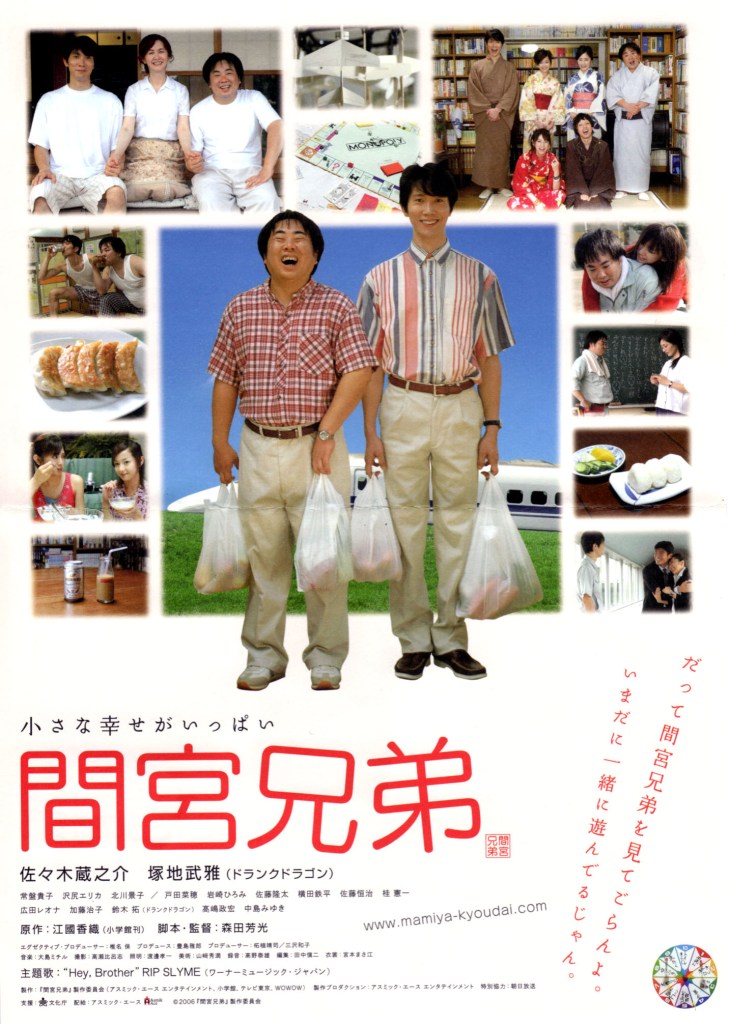 Ever the populist, Yoshitmitsu Morita returns to the world of quirky comedy during the genre’s heyday in the first decade of the 21st century. Adapting a novel by Kaori Ekuni, The Mamiya Brothers (間宮兄弟, Mamiya Kyodai) centres on the unchanging world of its arrested central duo who, whilst leading perfectly successful, independent adult lives outside the home, seem incapable of leaving their boyhood bond behind in order to create new families of their own.
 Review of Takeshi Kitano’s A Scene at the Sea – first published by
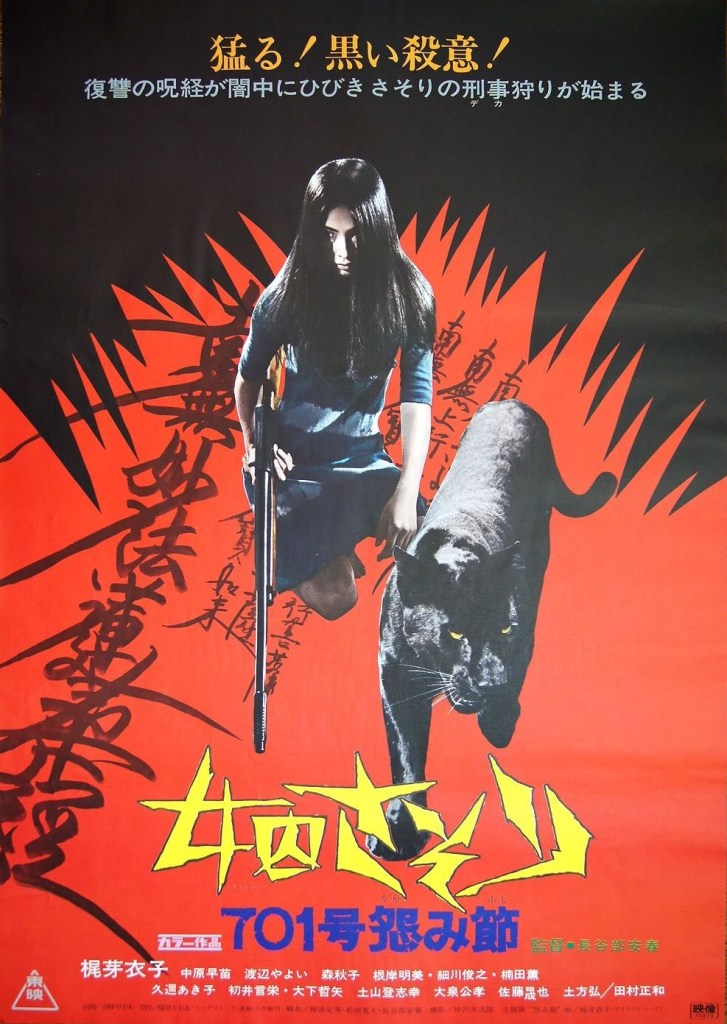 The saga seemed complete with the end of
  At the end of
 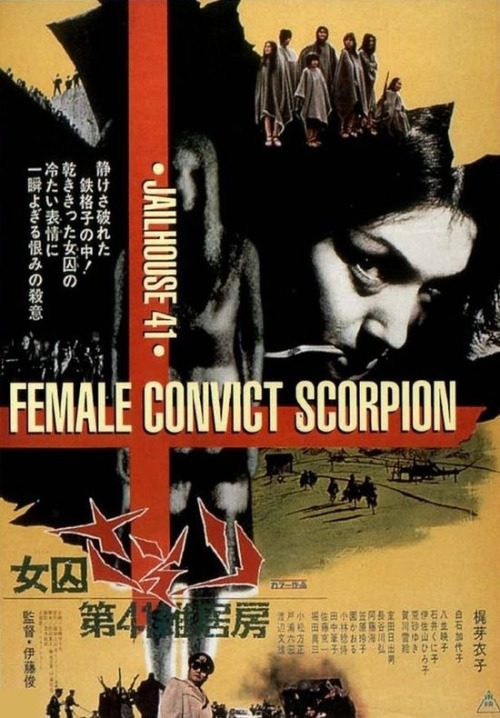 Female Prisoner Scorpion: Jailhouse 41 (女囚さそり第41雑居房, Joshu Sasori – Dai 41 Zakkyobo) picks up around a year after the end of
  Windows on Worlds