 Ohara Shousuke-san (小原庄助さん) is the name of a character from a popular folk song intended to teach children how not to live their lives. The Ohara Shosuke-san of Aizu Bandaisan has lost all his fortune but no one feels very sorry for him because it’s his own fault – he spent his days in idleness, drinking, sleeping in, and bathing in the morning. The central character of Hiroshi Shimizu’s 1937 film has earned this nickname for himself because he also enjoys a drink or too and doesn’t actually do very much else, but unlike the character in the song this a goodhearted man much loved by the community because he’s a soft touch and just can’t refuse when asked for a favour. An acknowledgement of the changing times, Shimizu’s Mr. Shousuke Ohara is a tribute to the soft hearted but also an argument for action over passivity.
If you turn up one day and ask for directions to the Sugimoto household, everyone will look at you with confusion but if you ask for Mr. Shousuke Ohara everyone will gladly walk you over and introduce you. Saheita Sugimoto (Denjiro Okochi) is the head of a once proud samurai household but his fortunes are far from those of his ancestors. Despite his pecuniary difficulties, Sugimoto is good hearted man who wants to help everyone that he can (out of a sense of altruism rather than duty or vanity). Consequently he is deeply in debt and nearing bankruptcy yet he can’t give up any of his three vices – drinking, gambling, and generosity.
The nature of the changing times is at the centre of this 1949 film. As Sugimoto is fond of telling people, his noble house used to stand for something but all of that historical influence is next to meaningless now. Though Western dress is not uncommon, the village is pretty much as it’s always been – children play in the fields and Sugimoto travels everywhere by donkey. Other than the tale of Sugimoto’s fall from grace, the central narrative concerns an election for a new village chief. Yoshida, a youngish man, wants Sugimoto’s support for his election campaign. His main campaign policy is modernisation – the introduction of electricity, modern transportation and communications, as well as greater cultural involvement starting with opening Western style ballroom dance classes for the children. Unfortunately his policies are not that firm and his motto seems to be “I’ll do that first!” to all aspects of his plan which is not very encouraging but still the desire is very much to move away from old fashioned village life towards a more sophisticated urbanism.
This of course also means an end to the inherited influence of idle nobleman such as Sugimoto. Though he’s a kind man who likes nothing other than helping other people, Sugimoto has been a passive steward, more consumed with his own idle pursuits than with making an active attempt at leading the village. This passivity has contributed to his downfall as he’s neglected the business of maintaining his own fortune. After taking out numerous loans which he only ever uses to help the villagers, Sugimoto has let the estate which ancestors founded, and which he was supposed to look after in the names of all that have gone before and all were to come after him, slip away. The ultimate failure and a disgrace to his ancestors, this loss of the ancestral home is an unforgivable betrayal yet there is something in Sugimoto which seems to regard it as right and proper that it should go.
Change is coming to the village, even if it isn’t coming with the speed that a young man like Yoshida may be hoping for. Change is also coming to Japan which is in the progress of rebuilding itself anew following long years of folly followed by confusion. There is no room for genial idleness anymore. “If you can work honestly with your hands you can make a living”, Sugimoto tells two would-be-burglars that he invites in for a drink as a apology for not having anything left for them to steal, but means the advice more for himself than anyone else. It’s time to say goodbye to Shousuke Ohara and the burden of inherited privilege and chart a new course as Seihata Sugimoto. Finishing on another of Shimizu’s much loved road shots, Sugimoto, like his nation, walks confidently along the road to an uncertain future yet he is not alone as he goes and may make something of himself yet.
 Johnnie To is best known as a purveyor of intricately plotted gangster thrillers in which tough guys outsmart and then later outshoot each other. However, To is a veritable Jack of all trades when it comes to genre and has tackled just about everything from action packed crime stories to frothy romantic comedies and even a musical. This time he’s back in world of the medical drama as an improbable farce develops driven by the three central cogs who precede to drive this particular crazy train all the way to its final destination.
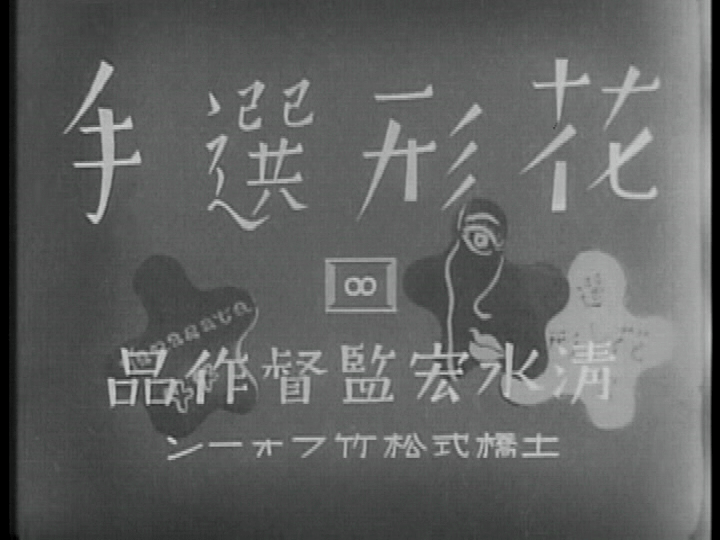 Japan in 1937 – film is propaganda, yet Hiroshi Shimizu once again does what he needs to do in managing to pay mere lip service to his studio’s aims. Star Athlete (花形選手, Hanagata senshu) is, ostensibly, a college comedy in which a group of university students debate the merits of physical vs cerebral strength and the place of the individual within the group yet it resolutely refuses to give in to the prevailing narrative of the day that those who cannot or will not conform must be left behind.
 Perhaps best known for his work with children, Hiroshi Shimizu changes tack for his 1937 adaptation of the oft filmed Ozaki Koyo short story The Golden Demon (金色夜叉, Konjiki Yasha) which is notable for featuring none at all – of the literal kind at least. A story of love and money, The Golden Demon has many questions to ask not least among them who is the most selfish when it comes to a frustrated romance.
 Sad stories of single mothers forced to work in the world of low entertainment are not exactly rare in pre-war Japanese cinema yet Hiroshi Shimizu’s 1937 entry, Forget Love For Now (Koi mo Wasurete) , puts his on own characteristic spin on things by looking at the situation through the eyes of the young son, Haru (Jun Yokoyama). Frustrated by both social and economic woes, little Haru’s life is blighted by loneliness and resentment culminating in tragedy for all.
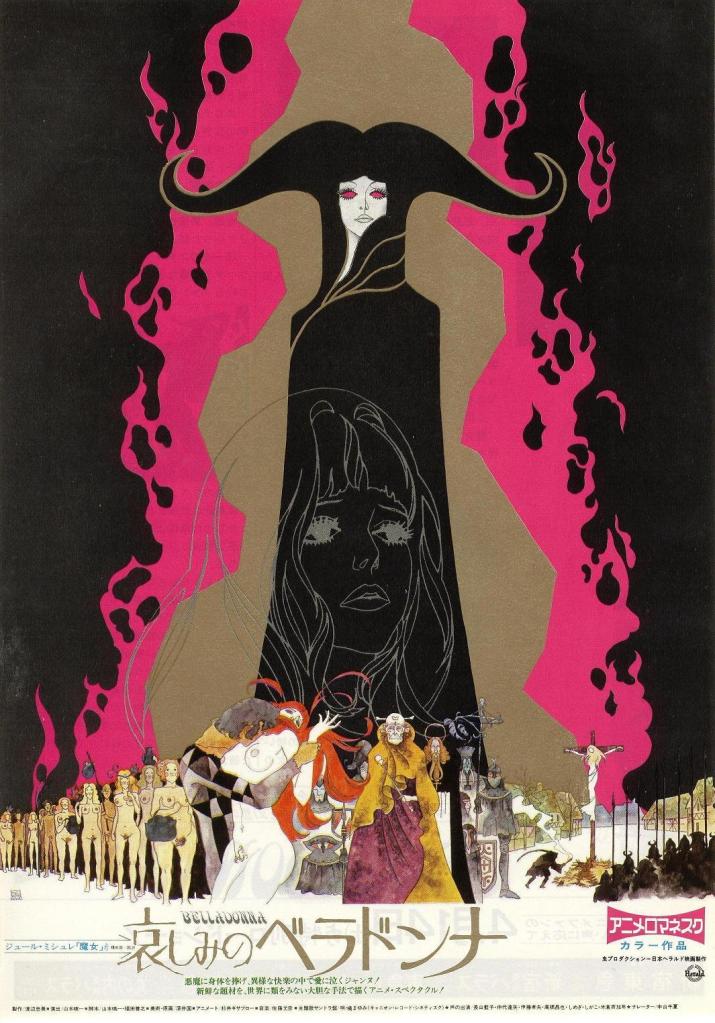 Loosely based on Jules Michelet’s La Sorcière (Satanism and Witchcraft) which reframed the idea of the witch as a revolutionary opposition to the oppression of the feudalistic system and the intense religiosity of the Catholic church, Belladonna of Sadness (哀しみのベラドンナ, Kanashimi no Belladonna) was, shall we say, under appreciated at the time of its original release even being credited with the eventual bankruptcy of its production studio. Begun as the third in the Animerama trilogy of adult orientated animations produced by legendary manga artist Osamu Tezuka’s Mushi Productions, Belladonna of Sadness is the only one of the three with which Tezuka was not directly involved owing to having left the company to return to manga. Consequently the animation sheds his characteristic character designs for something more akin to Art Nouveau elegance mixed with countercultural psychedelia and pink film compositions. Feminist rape revenge fairytale or an exploitative exploration of the “demonic” nature of female sexuality and empowerment, Belladonna of Sadness is not an easily forgettable experience.
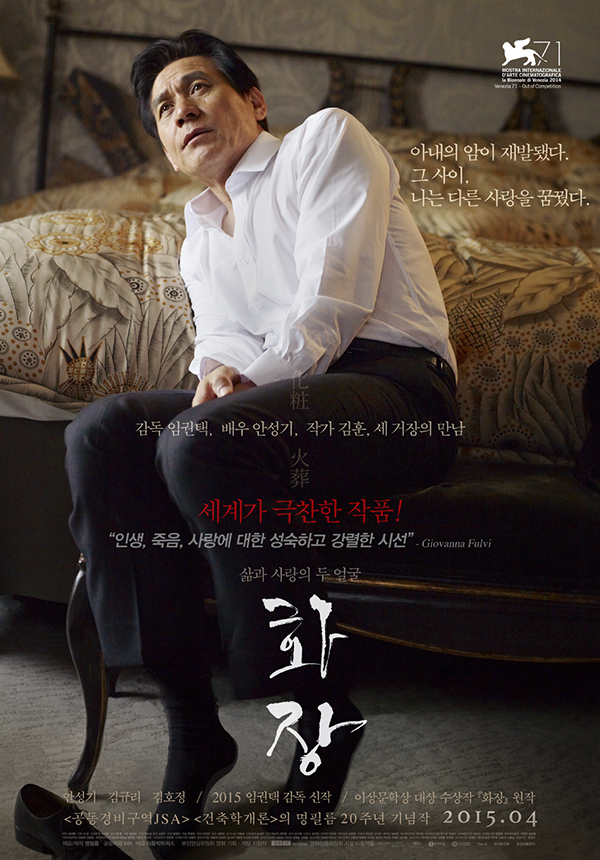 The 102nd film from veteran Korean film director Im Kwon-taek may appear close to the bone in its depictions death, suffering, and the long look back on a life filled with the quiet kind of love but Revivre (화장, Hwajang) is anything but afraid to ask the questions most would not want to hear as the light dwindles. The inner journey is just too hazy, as one man puts it, unknowingly commenting on the human condition, yet Im does manage bring us nicely into focus, if only for a moment.
 Those golden last few summers of high school have provided ample material for countless nostalgia filled Japanese comedies and 700 Days of Battle: Us vs. the Police (ぼくたちと駐在さんの700日戦争, Bokutachi to Chuzai-san no 700 Nichi Senso) is no exception. Set in a small rural town in 1979, this is an innocent story of bored teenagers letting off steam in an age before mass communications ruined everyone’s fun.
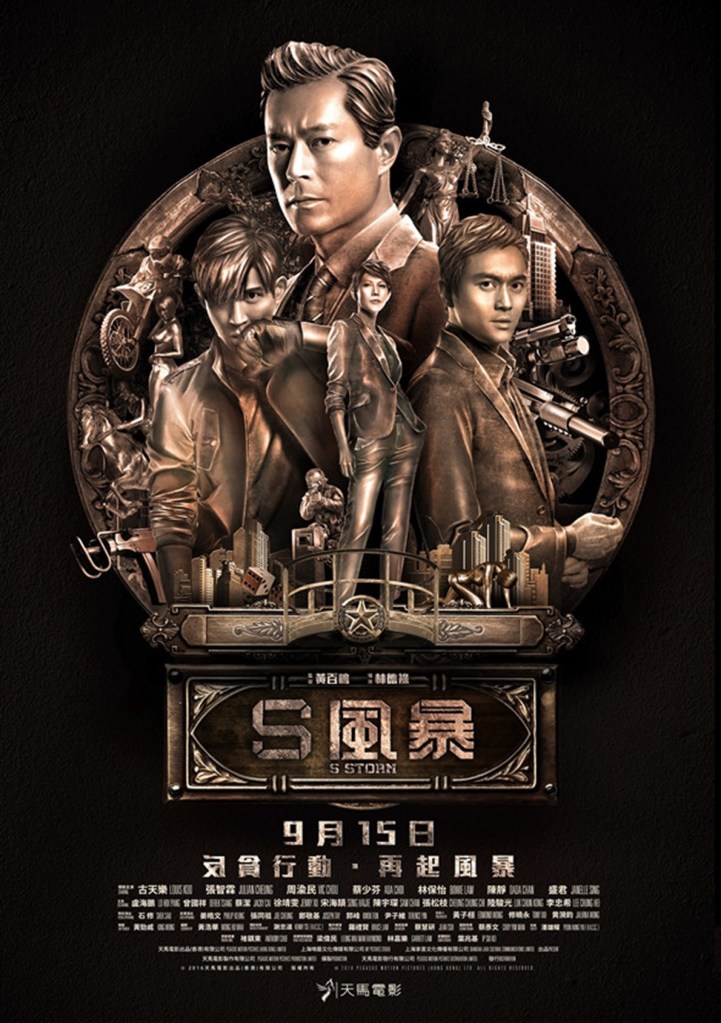 It’s become almost a cliché to describe a sequel as “unnecessary”, but then assessing how any sequel or, indeed, any film might be deemed “necessary” (for what or whom?) proves more fraught than one might originally think. It might, then, be better to think of certain sequels as “unwise” – S Storm (S風暴), a followup to the similarly named Z Storm is just one such film. Z Storm’s critical reception was, shall we say, lukewarm and did not exactly inspire a burning desire to return to its world of corporate corruption vs different kinds of bickering policemen but, nevertheless, here we are.
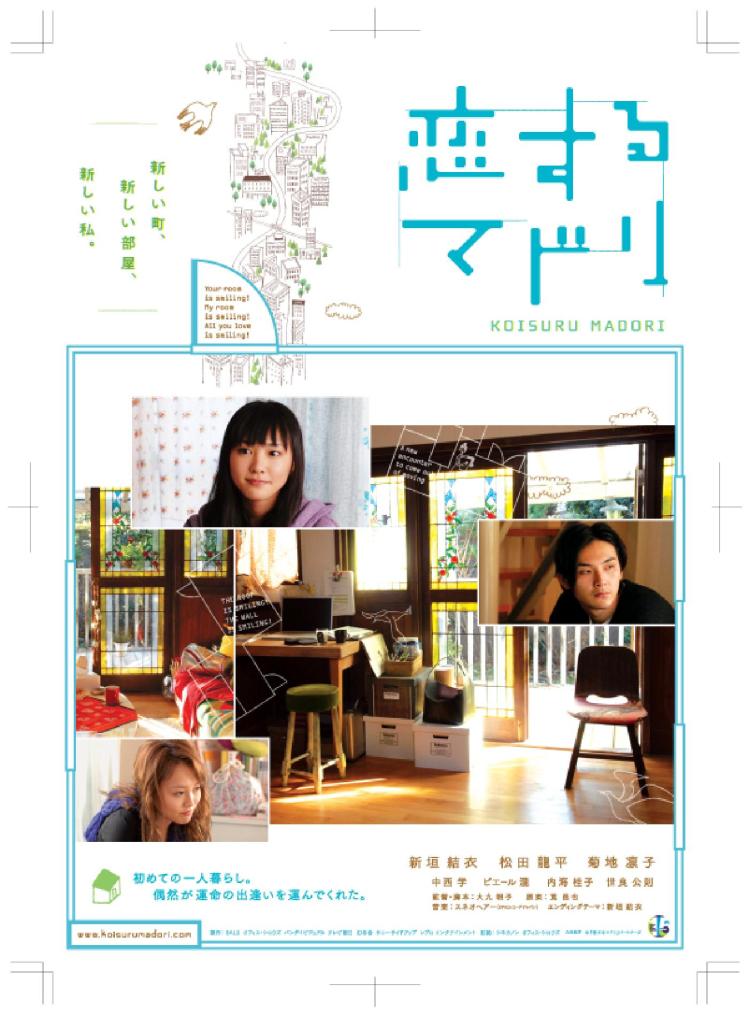 Cities are often serendipitous places, prone to improbable coincidences no matter how large or densely populated they may be. Tokyo Serendipity (恋するマドリ, Koisuru Madori) takes this quality of its stereotypically “quirky” city to the limit as a young art student finds herself caught up in other people’s unfulfilled romance only to fall straight into the same trap herself. Its tale may be an unlikely one, but director Akiko Ohku neatly subverts genre norms whilst resolutely sticking to a mid-2000s indie movie blueprint.
 Windows on Worlds