
Meiko Kaji had already become a familiar face in Nikkatsu’s genre output when she took on the role that would come to define her career at only 25 years of age. Toei’s Female Prisoner #701: Scorpion (女囚701号/さそり, Joshu Nana-maru-ichi Go / Sasori) would launch a series of similarly themed films and create a national pop culture icon in its central character. Based on a manga by Toru Shinohara, Female Prisoner #701 Scorpion is, at heart, a women in prison film and a cornerstone of the pinky violence genre but first time director Shunya Ito has more on his mind than salacious thrills and offers up a noticeably nuanced approach to his material filled with impressive art house flourishes.
701 is the number printed on the back of the prison uniform worn by inmate Nami Matsushima (Meiko Kaji). She makes a valiant escape attempt with a fellow prisoner, Yuki (Yayoi Watanabe), but the pair are caught and put into solitary confinement where they experience torturous treatment both at the hands of the guards and their fellow prisoners. Mostly known as Matsu but also given the nickname of “Scorpion”, Prisoner #701 is not exactly popular with the other ladies in the joint who seem to resent her escape attempts and quiet dignity, annoyed by her above it all demeanour.
Matsu has just one mission in life – vengeance, on the man who wronged her, on the society that allowed her to be wronged, and on the prison system with its sadistic guards and turncoat inmates. Once an ordinary, law abiding woman, Matsu had the misfortune to fall in love with a vice cop who convinced her to go undercover in a yakuza club to get some vital info he needs to bust it. However, Sugima (Isao Natsuyagi) turns out to be the biggest crook of them all and was merely using her to try and take out the local yakuza to get in with a bigger yakuza boss and key into a slice of the drugs trade. Matsu is brutally gang raped after her cover is blown and ends up being sent to prison after making an attempt to ice her former lover with the desire to get out and complete her mission the only thing that’s keeping her going.
Ito begins with an ironic scene in which one of the prison guards is receiving a commendation for his honourable service, Japanese flag flying proudly behind above, until the occasion is interrupted by the escaped prisoner alarm. Later Ito puts the yakuza boss in a building bearing the large banner “Beautiful Soul and Harmony of Japan” and he even adds in an expressive moment as Matsu surrenders her virginity to Sugima, staining her white sheets with a large red circle. Society is corrupt everywhere from Sugima’s bent copper to gang raping yakuza and the prison system itself.
The guards are effectively running their own little empire, cut off from mainstream law enforcement and left to their own “corrective” impulses. Ito gives us salacious shower scenes and women being marched around in the nude but he places us in the place of a voyeur, making it plain that the prison guards are sating their lust for power through humiliating their charges in sexual dominance and violence. Divide and rule is the name of the game as a top tier of prisoners are “employed” in various prison tasks earning them a different colour uniform and a status bump. These ladies are even worse than some of the male guards and are responsible for much of the cruelty inflicted on Matsu and Yuki during their time in solitary.
Inter-prisoner conflict is not the central theme of the film as Matsu continues to plan for her eventual escape and revenge on the man who has ruined her life. A slight spanner is thrown in the works when an inside woman is recruited to take Matsu out, but Matsu is painted as a the ultimate vengeful warrior. Barely speaking (the bulk of her dialogue is actually voice over for her flashback scene), Matsu waits silently, observing and plotting. Biding her time she manages to take an extremely skilful and poetic revenge against her solitary abuser despite her hands and feet being bound, and when a police mole is placed in a cell with her Matsu sees through the ruse straight away. Seducing her new cellmate, Matsu neutralises the threat with ease maintaining her trademark intense elegance all the way through.
Though the synopsis smacks of cheap and nasty exploitation Ito doesn’t see it that way and films with an art house aesthetic rather than a salacious eye. Matsu’s flashback takes a very theatrical form with a rotating set and Matsu remaining present in the corner as she narrates. Her rape scene is grotesque and nightmarish, shot through a see-through floor as her attackers grin and gurn away at her like fairytale monsters. Likewise, when Matsu traps another prisoner in her own scheme, the woman turns into a classic ghost creature, face white and staring, broken glass firmly gripped manically in front. The acting style is broad and absurd. Policeman laugh loudly and for too long, blood is an artificial kind of red, gloopy like paint, and pantomimeish grotesquery is everywhere. Ito’s backgrounds are expressionist rather than realist but always perfectly pitched.
You can tell a lot about a place from the way it treats its prisoners and when its as bad as this, you start to wonder which side of the bars you’re really on. The guards are only a representation of a consistently exploitative society, but they can at least be outsmarted. “To be deceived is a woman’s crime”, says Matsu, but it’s one she fully intends to atone for – in blood, settling not just her own score but those of all her fellow prisoners caught in the patriarchal trap of hollow promises and abused honour.
Original trailer (English subtitles)
 In 1925 an avid cave explorer, Floyd Collins, became trapped in a narrow crawl space. Though he was discovered and help came with food and water, a cave in left him sealed off down there and fourteen days later he died of thirst and exposure. As tragic as this obviously is, Floyd Collins is remembered for another reason – his rescue became one of the earliest mass media crazes. The surrounding media furore also inspired the 1951 Billy Wilder classic Ace in the Hole in which a grizzled reporter attempts to manipulate the fate of a man trapped in a cave for the maximum media coverage with the consequence that his delays cost the man his life. Jung-soo, a father on his way home with a birthday cake for his young daughter is about to join the marooned underground club when a shoddily built tunnel collapses sealing him inside. Unfortunately for Jung-soo, he finds that times have not changed all that much.
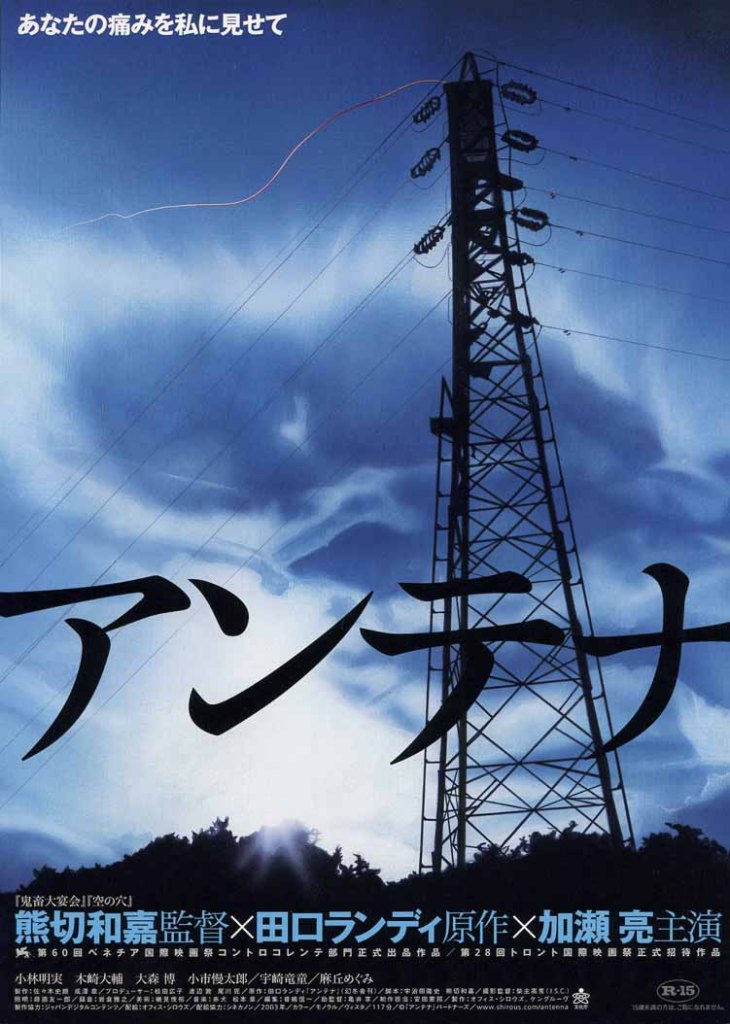 Scarring, both literal and mental, is at the heart of Kazuyoshi Kumakiri’s third feature, Antenna (アンテナ). Though it’s ironic that indentation should be the focus of a film whose title refers to a sensitive protuberance, Kumakiri’s adaptation of a novel by Randy Taguchi is indeed about feeling a way through. Anchored by a standout performance from Ryo Kase, Antenna is a surreal portrait of grief and repressed guilt as a family tragedy threatens to consume all of those left behind.
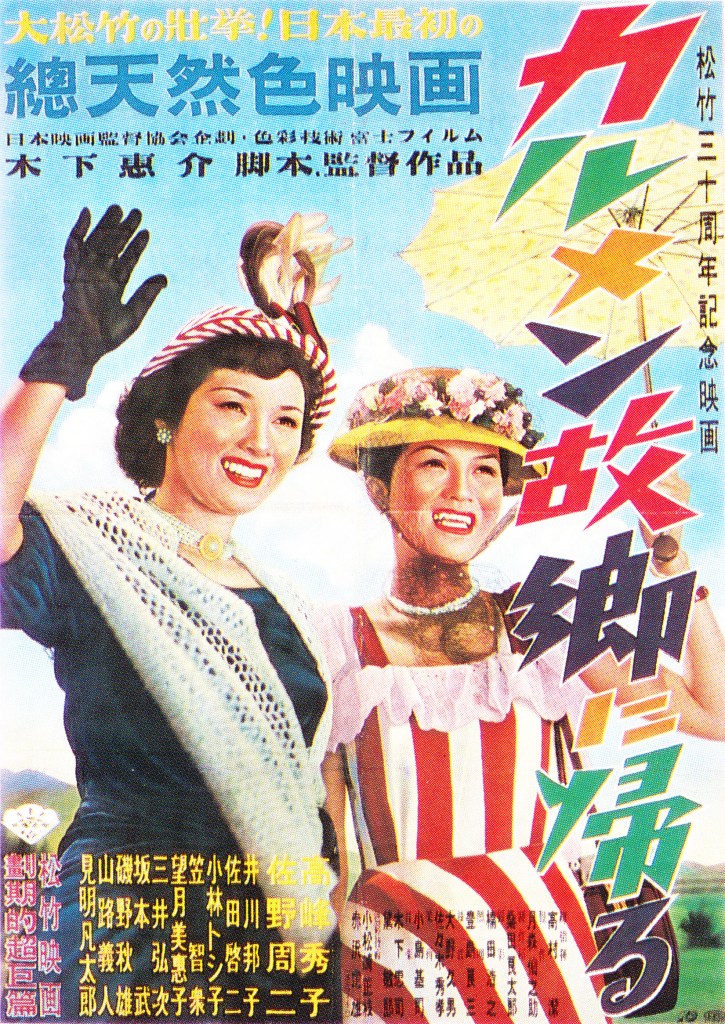 Shochiku was doing pretty well in 1951. Accordingly they could afford to splash out a little in their 30th anniversary year in commissioning the first ever full colour film to be shot in Japan, Carmen Comes Home (カルメン故郷に帰る, Carmen Kokyou ni Kaeru). For this landmark project they chose trusted director Keisuke Kinoshita and opted to use the home grown Fujicolor which has a much more saturated look than the film stocks favoured by overseas studios or those which would become more common in Japan such as Eastman Colour or Agfa. Fujicolour also had a lot of optimum condition requirements including the necessity of shooting outdoors, and so we find ourselves visiting a picturesque mountain village along with a showgirl runaway on her first visit home hoping to show off what a success she’s made for herself in the city.
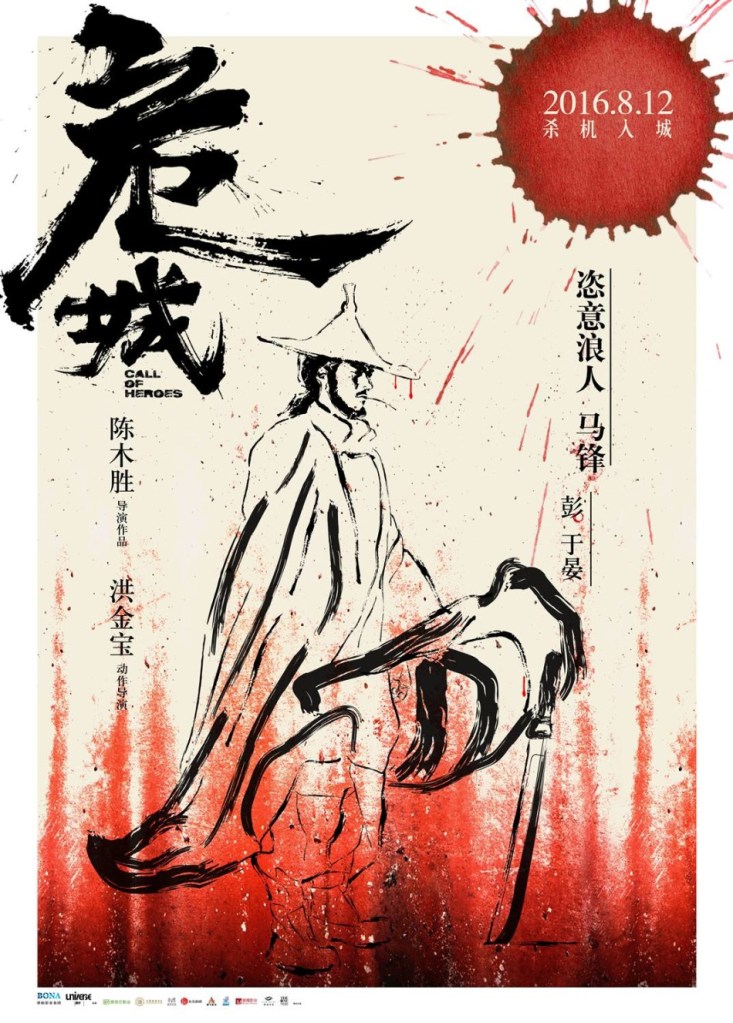 A blast from the past in more ways than one, Benny Chan’s Call of Heroes (危城, Wēi Chéng) is a western in disguise though one filtered through Akira Kurosawa and Sergio Leone more than John Ford. Filled with Morricone-esque musical riffs and poncho wearing reluctant heroes, Chan’s bounce back to the post-revolutionary warlord era is one pregnant with contemporary echoes yet totally unafraid to add a touch of uncinematic darkness to its wisecracking world.
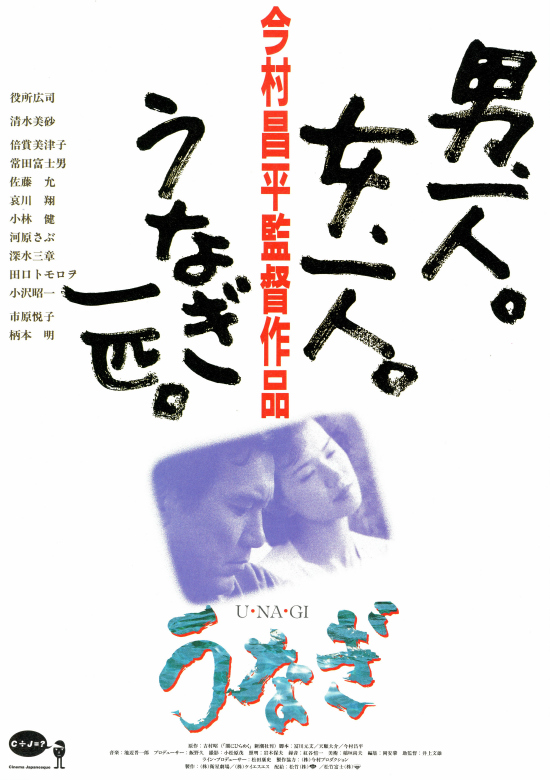 Director Shohei Imamura once stated that he liked “messy” films. Interested in the lower half of the body and in the lower half of society, Imamura continued to point his camera into the awkward creases of human nature well into his 70s when his 16th feature, The Eel (うなぎ, Unagi), earned him his second Palme d’Or. Based on a novel by Akira Yoshimura, The Eel is about as messy as they come.
 Sometimes love makes you do crazy things. Some people find themselves accomplishing previously unattainable feats powered only by the sheer force of romance. Unfortunately for the hero of Swimming Upstream (バタアシ金魚, Bataashi Kingyo), Joji’s Matsuoka’s adaptation of Minetaro Mochizuki’s manga, the task he sets for himself is a very lofty one indeed and may actually require him to abandon his love to complete it. Then again, the object of his affections shows little signs of reciprocation in any case.
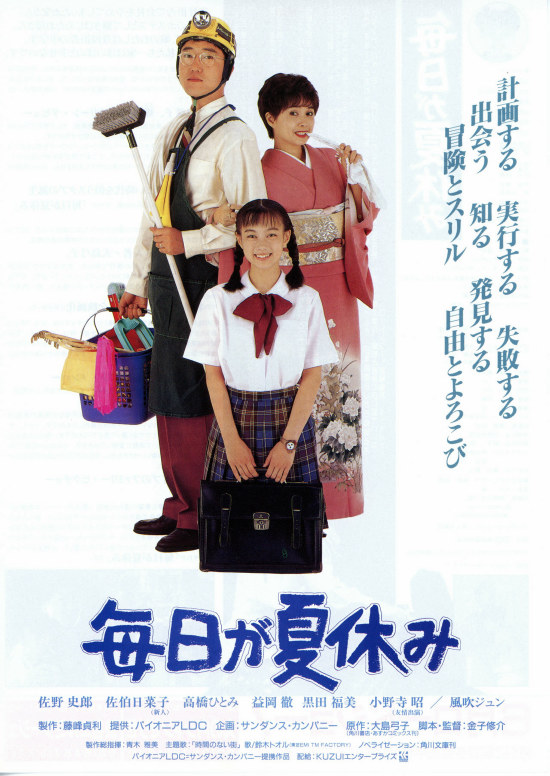 Summer Holiday Everyday – It’s certainly an upbeat way to describe unemployment but then everything is improbably upbeat and cheerful in the always sunny world of Shusuke Kaneko’s adaptation of Yumiko Oshima’s shoujo manga. Published in the mid-bubble era of 1988, Oshima’s world is one in which anything is possible but by the time of the live action movie release in 1994 perhaps this was not so much the case. Nevertheless, Kaneko’s film retains the happy-go-lucky tone and offers note of celebration for the unconventional as a path to success and individual happiness.
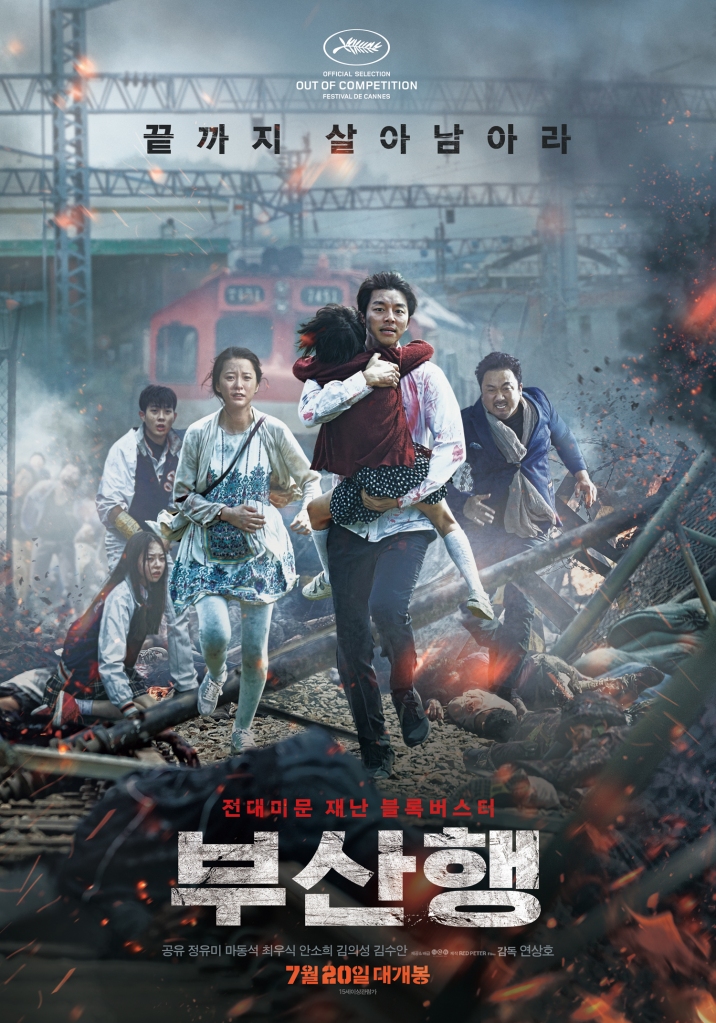 Many people all over the world find themselves on the zombie express each day, ready for arrival at drone central, but at least their fellow passengers are of the slack jawed and sleep deprived kind, soon be revived at their chosen destination with the magic elixir known as coffee. The unfortunate passengers on an early morning train to Busan have something much more serious to deal with. The live action debut from one of the leading lights of Korean animation Yeon Sang-ho, Train to Busan (부산행, Busanhaeng) pays homage to the best of the zombie genre providing both high octane action from its fast zombie monsters and subtle political commentary as a humanity’s best and worst qualities battle it out for survival in the most extreme of situations.
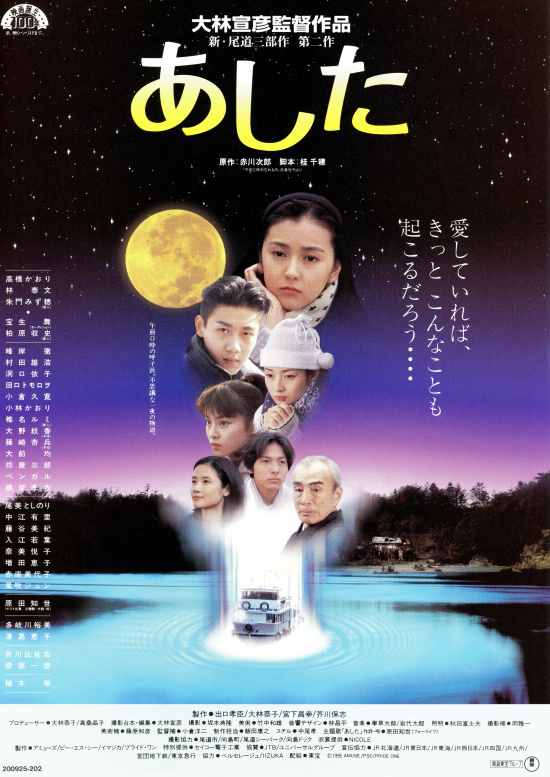 After completing his first “Onomichi Trilogy” in the 1980s, Obayashi returned a decade later for round two with another three films using his picturesque home town as a backdrop. Goodbye For Tomorrow (あした, Ashita) is the second of these, but unlike Chizuko’s Younger Sister or One Summer’s Day which both return to Obayashi’s concern with youth, Goodbye For Tomorrow casts its net a little wider as it explores the grief stricken inertia of a group of people from all ages and backgrounds left behind when a routine ferry journey turns into an unexpected tragedy.
 Windows on Worlds