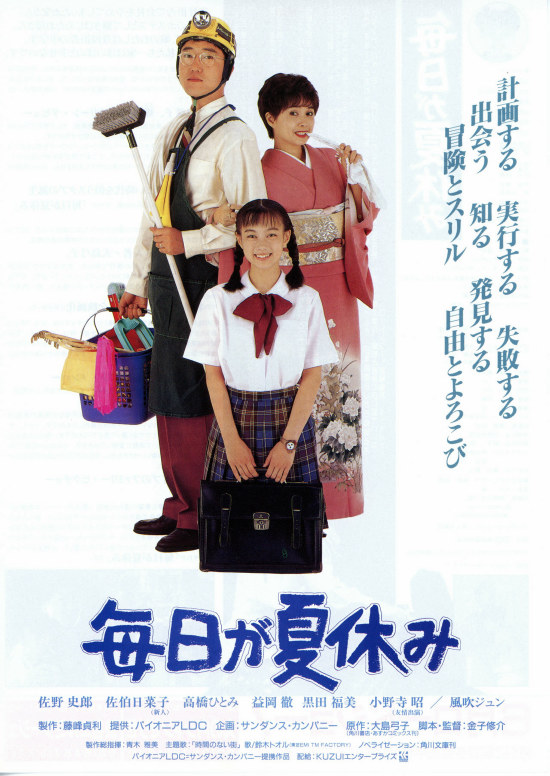
 Summer Holiday Everyday – It’s certainly an upbeat way to describe unemployment but then everything is improbably upbeat and cheerful in the always sunny world of Shusuke Kaneko’s adaptation of Yumiko Oshima’s shoujo manga. Published in the mid-bubble era of 1988, Oshima’s world is one in which anything is possible but by the time of the live action movie release in 1994 perhaps this was not so much the case. Nevertheless, Kaneko’s film retains the happy-go-lucky tone and offers note of celebration for the unconventional as a path to success and individual happiness.
Told from the point of view of 14 year old Sugina (Hinako Saeki) who offers us a voiceover guide to her everyday life, Summer Holiday Everyday (毎日が夏休み, Mainichi ga Natsuyasumi) follows the adventures of the slightly unusual Rinkaiji family. Sugina’s mother is divorced from her father and has remarried a successful salary man, himself a divorcee, ten years ago. The family lives in fairly peaceful domesticity and Sugina’s mother, Yoshiko (Jun Fubuki), even remarks how glad she is that her daughter gets on so well with her step-father, Nariyuki (Shiro Sano), though Sugina claims this is largely because she can’t remember actually speaking to him very much over the last ten years.
The pair are about become closer though it risks tearing their perfectly normal family apart. Sugina has been skipping school due to bullying and spends her days in the local park where, unbeknownst to her, her step-father has also been wasting his days after quitting a job he could no longer stand. After getting over the embarrassment of this accidental encounter, Sugina and Nariyuki confess everything to each other and Nariyuki makes a bold decision. Sugina can quit school (seeing as her grades were terrible anyway) and come work with him in his new enterprise – the Rinakaiji Heart Service, helping the community 24/7 with assistance in those difficult to handle odd jobs everyone needs doing.
Quitting a lucrative and secure job for the risk associated with staring a new business is a difficult decision in any society but is more or less unthinkable in Japan. Yoshiko is beyond stunned by her husband’s decision, not to mention the fact that her daughter has been deceiving her by skipping school and faking her report cards to make it look like her grades were much better than they are. Immediately worrying about what the neighbours will think, Yoshiko finds it hard to deal with the embarrassment of her husband and teenage daughter going door-to-door and doing menial work in the community, especially when she overhears the snickers of gossipy housewives in the local supermarket. For Yoshiko, whose sense of self worth was bound up with having a successful husband employed at a top tier company, Nariyuki’s sudden lurch towards individual freedom has destabilised her entire existence. Her world ceases to make sense.
Yoshiko’s sense of displacement is deepened when the fledgling company’s second job offer comes from Nariyuki’s ex-wife. Beniko (Hitomi Takahashi) left Nariyuki for another man because she failed to appreciate Nariyuki’s gentle charms and he was too mild mannered to fight for his wife even if he loved her deeply. What’s more, Nariyuki’s unconventional approach to life has earned him a spot in the papers and brought the family back to the attention of Sugina’s father, Ejima (Akira Onodera).
Early on Nariyuki states that life’s true radiance is only visible through suffering and later says that pain and suffering are essential parts of human existence. Nariyuki, now making a stand for himself for the first time in his life, remains philosophical in the face of hardship though perhaps has more faith in Yoshiko’s ability to follow him down this untrodden path than was wise. As a son and then a husband, Nariyuki may be a methodical sort but he’s unused to the idea of caring for himself as his comical attempts at doing the housework show. After almost burning the house down several times, Nariyuki does indeed figure out an efficient way of managing the household chores and seeing to Sugina’s education whilst also allowing his wife become the family breadwinner. However, Yoshiko’s new line of work is one she finds both unpleasant and degrading and she probably hoped that Nariyuki would strenuously try to stop her doing it so it’s not quite as much of a progressive approach as might be hoped.
After countless setbacks, humorous adventures, and a major fire Nariyuki’s enterprise begins to catch on. Brought together in shared crisis, the family unit only becomes stronger and more committed to their shared destinies. In fact, the family expands as Sugina rebuilds her relationship with birth father and even gains a new aunt figure in the form of her step-father’s youthful ex-wife. When you love what you do everyday is a holiday, and Sugina’s path, unconventional as it is, is one that leads her into the sunlight guided by Nariyuki’s oddly philosophical wisdom.
Original trailer (no subtitles)

 Many people all over the world find themselves on the zombie express each day, ready for arrival at drone central, but at least their fellow passengers are of the slack jawed and sleep deprived kind, soon be revived at their chosen destination with the magic elixir known as coffee. The unfortunate passengers on an early morning train to Busan have something much more serious to deal with. The live action debut from one of the leading lights of Korean animation Yeon Sang-ho, Train to Busan (부산행, Busanhaeng) pays homage to the best of the zombie genre providing both high octane action from its fast zombie monsters and subtle political commentary as a humanity’s best and worst qualities battle it out for survival in the most extreme of situations.
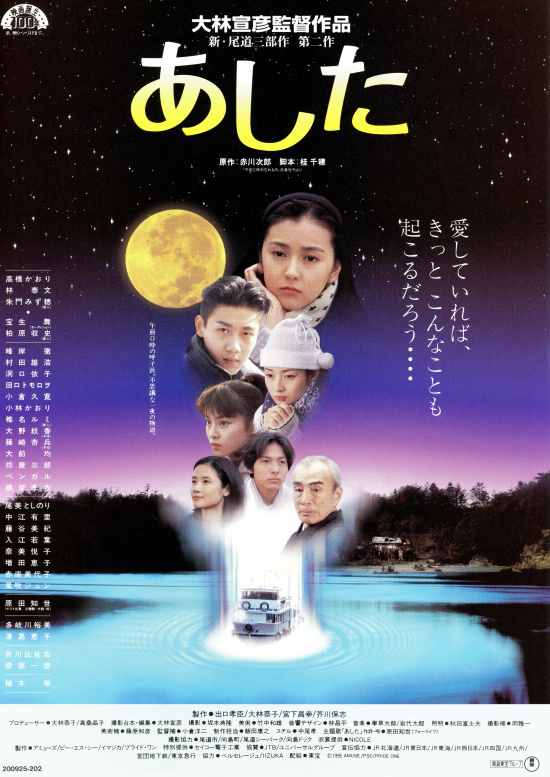 After completing his first “Onomichi Trilogy” in the 1980s, Obayashi returned a decade later for round two with another three films using his picturesque home town as a backdrop. Goodbye For Tomorrow (あした, Ashita) is the second of these, but unlike Chizuko’s Younger Sister or One Summer’s Day which both return to Obayashi’s concern with youth, Goodbye For Tomorrow casts its net a little wider as it explores the grief stricken inertia of a group of people from all ages and backgrounds left behind when a routine ferry journey turns into an unexpected tragedy.
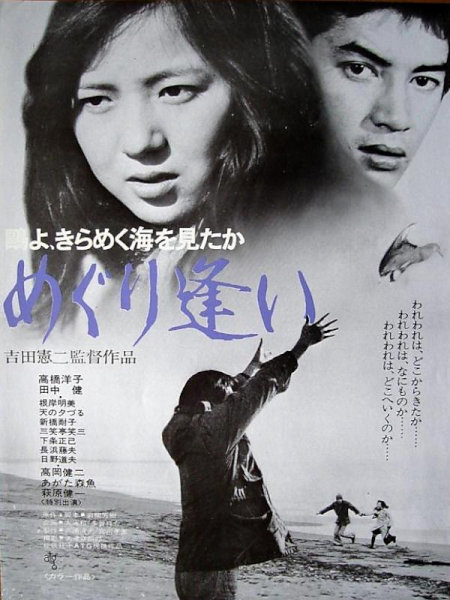 Sparkling seas sound like hopeful things, especially if you’re a majestic seagull flying far above, bathed in perpetual sunshine. But then, perhaps the water below is shining with the shards of broken hopes which float on its surface, is its beauty treacherous or in earnest? So asks the singer of the title song which recurs throughout the film as if to undercut even its brief moments of happiness. There is precious little joy to be found in the lives of the two protagonists of Oh Seagull, Have You Seen the Sparkling Ocean? : An Encounter (鴎よ、きらめく海を見たか めぐり逢い, Kamome yo, Kirameku Umi wo Mitaka: Meguriai), only pain and confusion as they try to rebuild their ruined lives in an uncaring city.
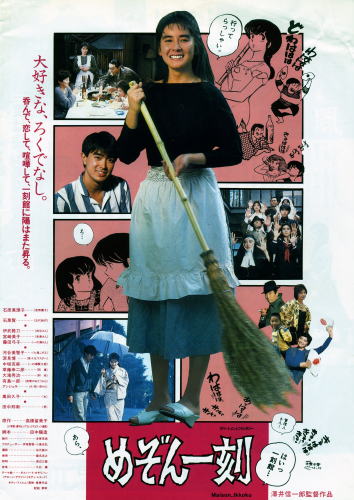 If you’ve always fancied a stay at that inn the
 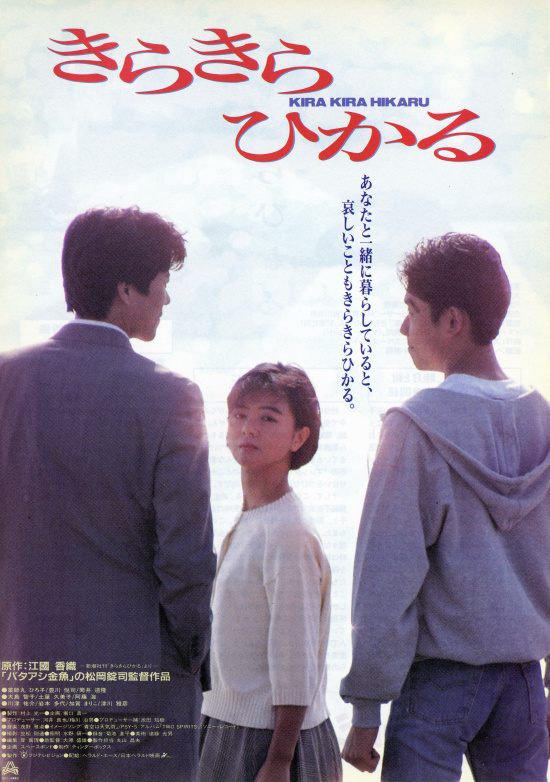 The end of the Bubble Economy created a profound sense of national confusion in Japan, leading to what become known as a “lost generation” left behind in the difficult ‘90s. Yet for all of the cultural trauma it also presented an opportunity and a willingness to investigate hitherto taboo subject matters. In the early ‘90s homosexuality finally began to become mainstream as the “gay boom” saw media embracing homosexual storylines with even ultra independent movies such as
  Evil, so a wise man said, begins when you start treating people as things. Fritz Lang’s Metropolis showed us a city that literally was its people – nothing but a vast yet perfectly functional machine with the workers little more than cogs to be replaced and discarded once worn out. Zhao’s Behemoth (悲兮魔兽, Bēixī Móshòu) is no fantasy but a very real journey through our own world and so we follow our narrator, a poetic, naked stand in for Dante’s Virgil, through hell and purgatory on a path to paradise only to find ourselves staring into a void filled with our unfulfilled desires and forlorn hopes.
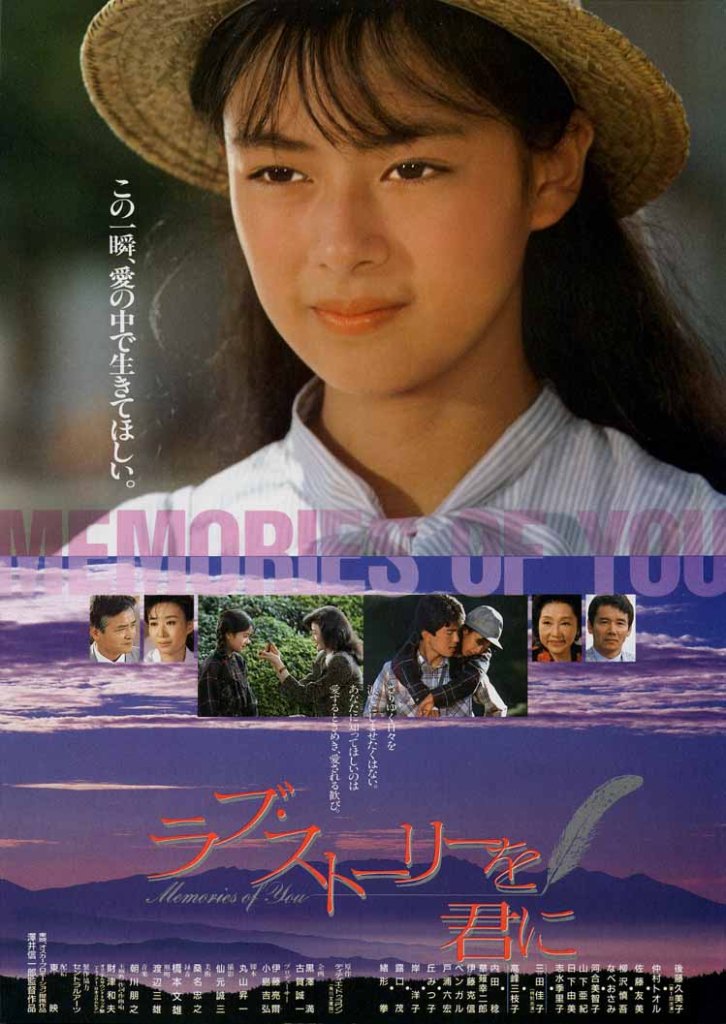 If you thought idol movies were all cute and quirky stories of eccentric high school girls with pretty, poppy voices then think again because Memories of You is coming for you and your faith in idols to make everything better. Directed by
 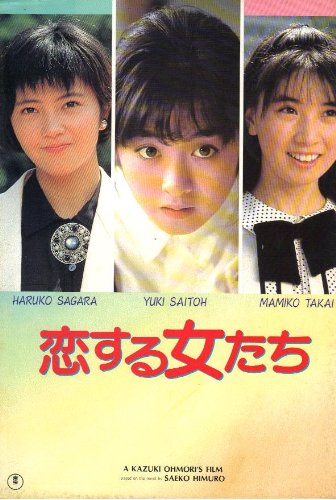 The friends you make in high school are the friends you’ll have the rest of your life, says Takako – the heroine of Kazuki Omori’s Young Girls in Love (恋する女たち, Koisuru Onnatachi). Only she doesn’t quite want hers – they’re weird and cause her nothing but trouble. Also one of them is too pretty so she soaks up all of the attention – where’s the fun in that? Takako is not altogether happy in her adolescence but at least she has her friends there beside her, right?
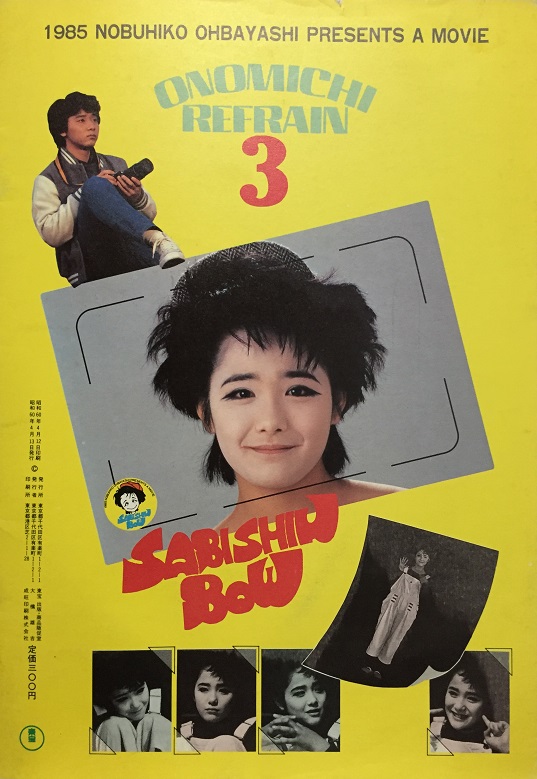 Miss Lonely (さびしんぼう, Sabishinbou, AKA Lonelyheart) is the final film in Obayashi’s Onomichi Trilogy all of which are set in his own hometown of Onomichi. This time Obayashi casts up and coming idol of the time, Yasuko Tomita, in a dual role of a reserved high school student and a mysterious spirit known as Miss Lonely. In typical idol film fashion, Tomita also sings the theme tune though this is a much more male lead effort than many an idol themed teen movie.
 Windows on Worlds