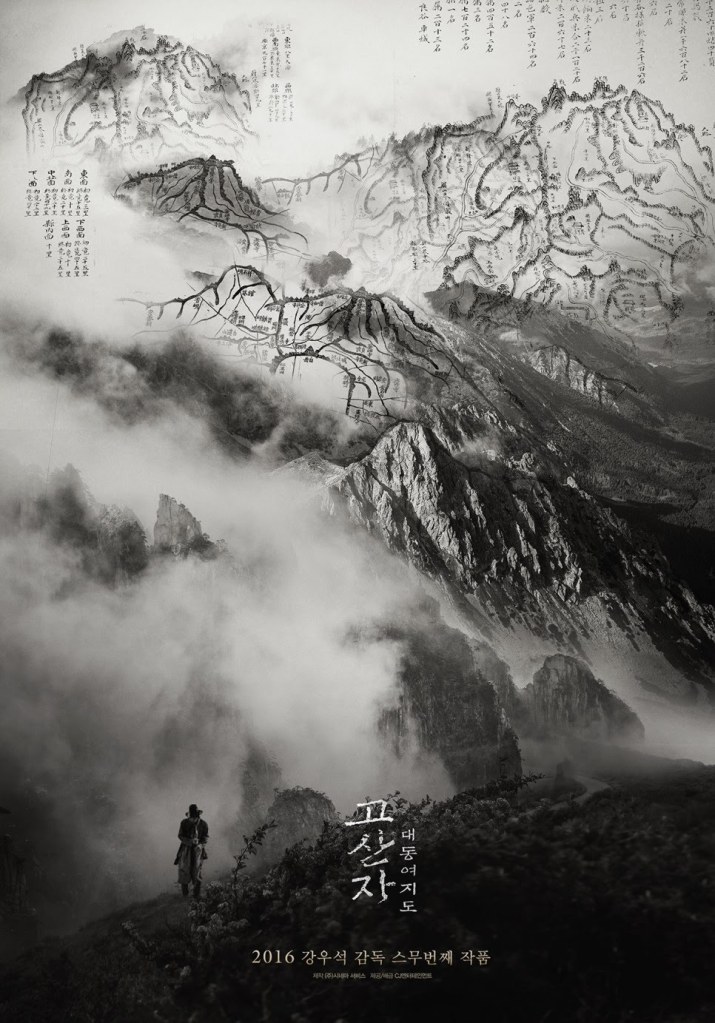
 The map is not the territory – as the old adage goes. There’s always a difference between the thing itself and the perception of it but, as the “hero” of The Map Against the World (고산자, 대동여지도, Gosanja, Daedongyeojido) points out, if you’re about to set off on a long journey it’s a good idea to not to rely on a linear map else you’ll run out of good shoes long before you reach your destination. Kim Jeong-ho (Cha Seung-Won) was, apparently, a real person (though little is known about him) who set out to make a proper map of the Korean peninsula after a cartographic error led to the death of his father and many other men from his village when they ran out of resources crossing what they thought was one mountain but turned out to be one mountain range.
The difficulty here is that The Map Around the World pivots around a man who is so crazed and obsessive in his quest that he causes serious problems not only for himself in a difficult political climate, but also for those close to him whose lives he ruins through neglect and abandonment. Is he a hero for following his dreams even though they cost others so dearly? The film seems to say yes, but it’s a difficult message to swallow.
Ever since Kim Jeong-ho’s father died, he’s been obsessed with the idea of creating an accurate map of the Korean peninsula from end to end including the “Dokdo” (or which ever name you wish to use) islands. Consequently, he spends much of his life wandering around on his own which has made him a bit strange. Returning home after a four year absence, Jeong-ho does not seem to be aware that time has been passing even in Seoul and his little daughter, Soon-sil (Nam Ji-hyun), is now all grown up. Jeong-ho also has a kind of relationship with his neighbour, Mrs. Yeonju (Shin Dong-mi), who has been looking after Soon-sil but it’s all a bit awkward.
Aside from Jeong-ho’s terrible performance as a family man, the main intrigue centres around his big philosophy – open access to information for everyone from the nobleman to the peasant. In order to make sure maps remain as accurate as possible, he’s hit on the idea of producing woodblocks so they can be reproduced en masse with fewer errors and then sold to anyone who wants one so that people are free to travel wherever they wish. This is an extraordinarily destabilising idea in the increasingly paranoid world of the late Joseon era under the Regent Heungseon Daewongun (Yu Jun-sang). The woodblocks are dangerous because the elites do not wish the common man to possess that kind of knowledge, would rather people did not travel very much, and there is always the old “national security” fear in which the rulers assert the danger of spies and invaders getting their hands on such an accurate guide to the terrain.
Of course, Heungseon Daewongun ruling as a Regent for his young son means there is also a simmering battle for power running in the background as second tier nobles snap away at each other trying to increase their status in the hope of making a bid for the big chair. Heungseon Daewongun has reason enough to be paranoid but his rule is an austere one in which all foreign elements are to be eliminated in their entirety.
Kim Jeong-ho’s world is difficult and often frightening but Jeong-ho cares for nothing but maps aside from the idea of the free exchange of information. The early part of the film is, broadly, a quirky comedy about an amiable eccentric laughing his way out of trouble whilst evading debt collectors and trying to earn the forgiveness of the women he’s abandoned with nary a word for the last four years.
Jokes about Jeong-ho’s awkward relationship with his neighbour, mild irritation with the idea that his now grown up daughter has a boyfriend, and buddy comedy with the guy helping him carve the woodblocks suddenly seem out of place when the film descends into a morass of cruelty and horror with no apparent warning. Jeong-ho himself is beaten by authorities determined to obtain his maps by underhanded means seeing as Jeong-ho wants them to be available to the people and therefore refuses to surrender them into the “care” of the state. When that doesn’t work, he places himself in line for more harassment, but that’s nothing compared to what happens when a secret sect of Christians (banned for fear of foreignness) is uncovered in the village. Brutally tortured and instructed to denounce others, the villagers are then publicly beheaded. Suddenly, maps don’t seem so important any more.
Nevertheless, Jeong-ho quickly gets over the stubbornness that has cost him the things he held most dear (aside, it seems, from maps) to get right back out there and do some hardcore cartography. The film ends on an oddly upbeat note as Jeong-ho ventures forth on another adventure, edging ever closer to completing his mission, but even if he is about to make his “dream” come true, that same dream has just got a number of people killed. Jeong-ho’s quest to make the maps available to all could be seen as resistance to the oppressiveness of the state, but it isn’t, he just really likes maps and thinks you should too. The Gangchi (otherwise known as “Japanese” sealions, apparently hunted into extinction by Japanese fishermen in the 1970s) frolic happily off the waters of Dokdo as Jeong-ho approaches, but it hardly seems like a cause for celebration.
Over long and tonally inconsistent, The Map Against the World is a frustrating and often dull experience. Hold the map against the world and see what you see, errors and imperfections everywhere. Yet fighting oppression through cartography is a difficult task, and when it comes down to it a map against the world is not enough on its own. Filled with picturesque shots of Korea’s natural beauty, The Map Against the World displays generally high production values but can’t decide if it’s the story of a valiant revolutionary waging a cultural war for freedom of information in the middle of a paranoid dictatorship, or just a film about a madman trying to map ever changing terrain. Jeong-ho’s quest may be a noble one, but his single minded determination and willingness to sacrifice other people’s lives in its service is far from heroic leaving the film’s bittersweet finale feeling very hollow indeed.
Reviewed at the 2016 London East Asia Film Festival.
Original trailer (English subtitles)
 Koji Fukada first ventured into the family drama arena with the darkly comic satire
  There are three kinds of actors – those who wait for roles, those who choose roles, and those who make roles for themselves. Ageing actress Go Ju-yeon (Kim Hye-soo) claims to be the third type, but at any rate she’s currently between gigs and facing professional scandals and personal crises from each and every direction. An unusual family drama, Familyhood (굿바이 싱글, Gotbai Singkeul, AKA Goodbye Single) is the coming of age story of a middle aged woman finally forced into adulthood through an unlikely friendship with a pregnant teenage girl.
 Kim Jong-kwan’s award winning unexpected indie box office hit has been given the rather odd English title of Worst Woman (최악의 하루, Choeakui Haru) in contrast with the original Korean which simply means “The Worst Day”. In fact, the film is about two people – an aspiring Korean actress with problems in her personal life, and a Japanese writer visiting for the launch of the Korean translation of his novel, each of whom is indeed having an exceptionally unlucky day. Part walking and talking, part split focus romantic comedy, Worst Woman is a polished piece of indie filmmaking anchored by quality performances and an interesting approach to its material.
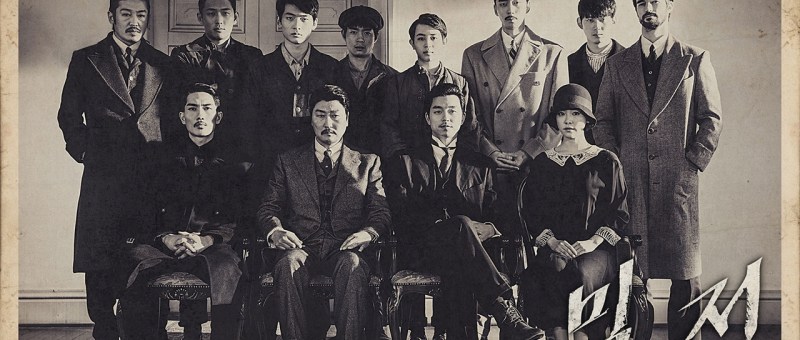
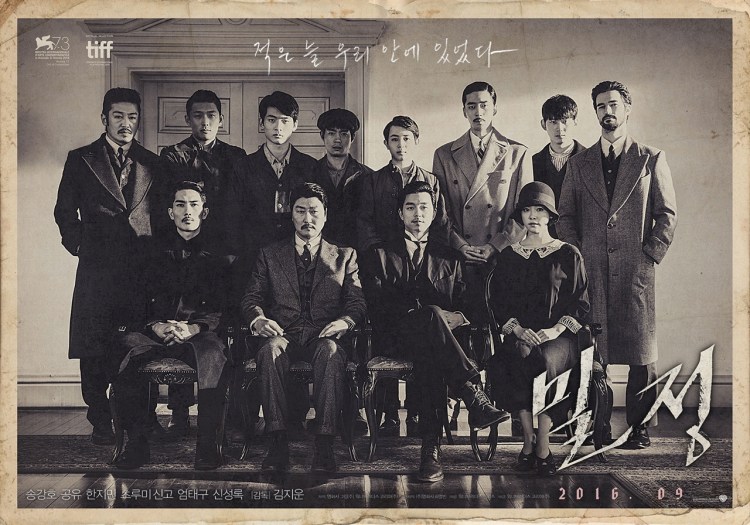 When the country of your birth has been occupied by another nation, what do you do? Do you fight back, insist on your independence and expel the tyrants, or quickly bow to your new overlords and resign yourself to no longer being what you once were? Kim Jee-woon becomes the latest director to take a look at Korea’s colonial past with the Resistance based thriller Age of Shadows (밀정, Miljung) which owes more than a little to Melville’s similarly titled Army of Shadows, as well as classic cold war spy dramas The Third Man and The Spy Who Came in From the Cold.
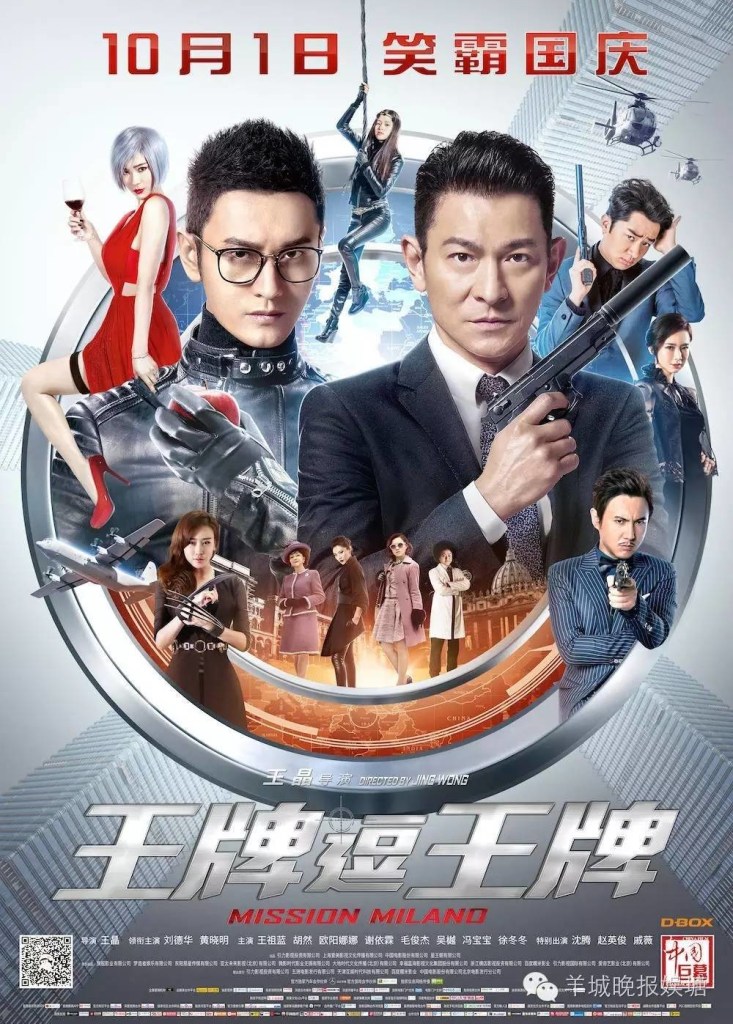 Despite its title, Mission Milano (王牌逗王牌, Wángpái Dòu Wángpái) spends relatively little time in the Northern Italian city and otherwise bounces back and forth over several worldwide locations as bumbling Interpol agent Sampan Hung (Andy Lau) chases down a gang of international crooks trying to harness a new, potentially world changing technology. Inspired by the classic spy parodies of old, Wong Jing’s latest effort proves another tiresome attempt at the comedy caper as its nonsensical plot and overplayed broad humour resolutely fail to capture attention.
 Every story is a ghost story in a sense. In every photograph there’s a presence which cannot be seen but is always felt. The filmmaker is a phantom and an enigma, but can we understand the spirit from what we see? Whose viewpoint are seeing, and can we ever separate that subjective vision from the one we create for ourselves within our own minds? The Man Who Left his Will on Film (東京戰争戦後秘話, Tokyo Senso Sengo Hiwa) is an oblique examination of identity but more specifically how that identity is repurposed through cinema as cinema is repurposed as a political weapon.
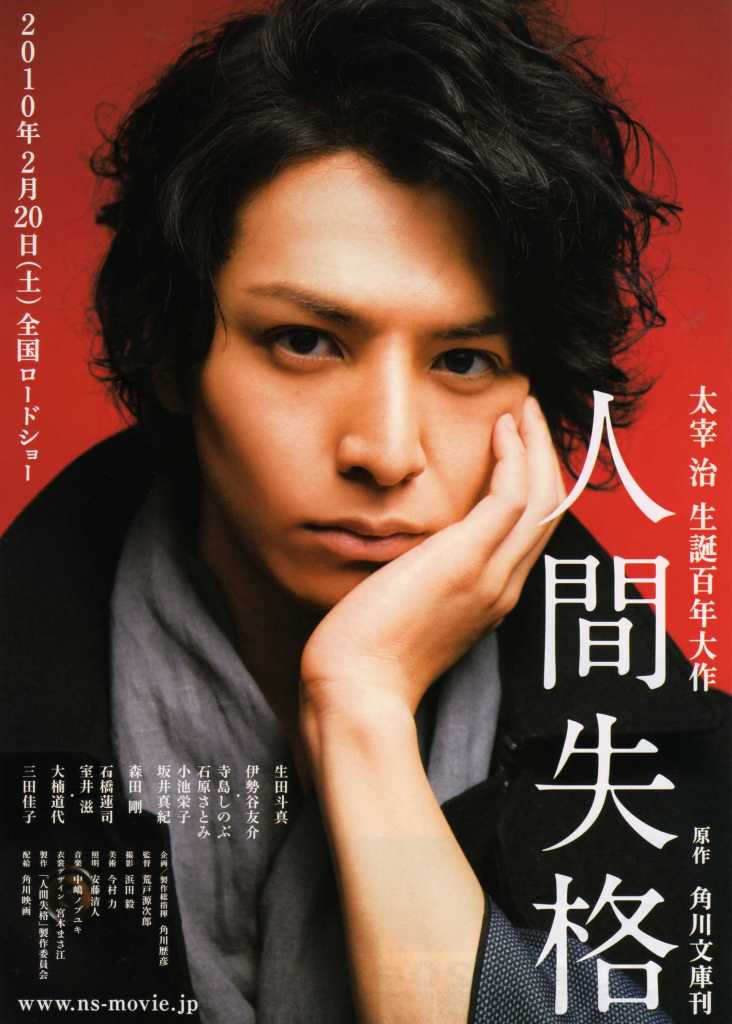 The Fallen Angel (人間失格, Ningen Shikkaku), based on one of the best known works of Japanese literary giant Osamu Dazai – No Longer Human, was the last in a series of commemorative film projects marking the 100th anniversary of the author’s birth in 2009. Like much of Dazai’s work, No Longer Human is semi-autobiographical, fixated on the idea of suicide, and charts the course of its protagonist as he becomes hopelessly lost in a life of dissipation, alcohol, drugs, and overwhelming depression.
 First time writer/director Wang Yichun draws on her own experiences for What’s in the Darkness (黑处有什么, Hei chu you shenme), a beautifully shot coming of age piece with serial killer intrigue running in the background. Seen through the eyes of its protagonist, What’s in the Darkness neatly matches the heroine’s journey into adolescence with the changing nature of Chinese society.
