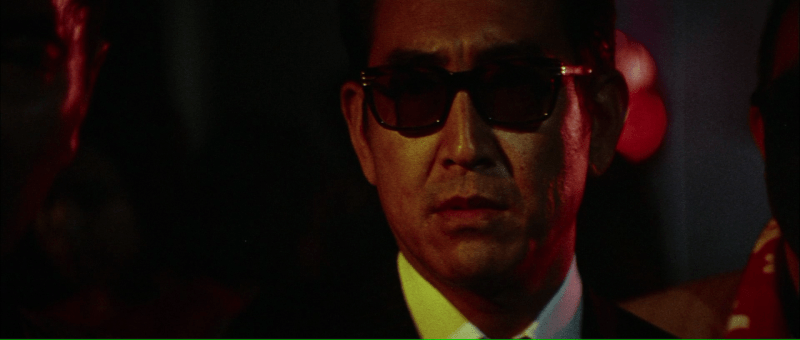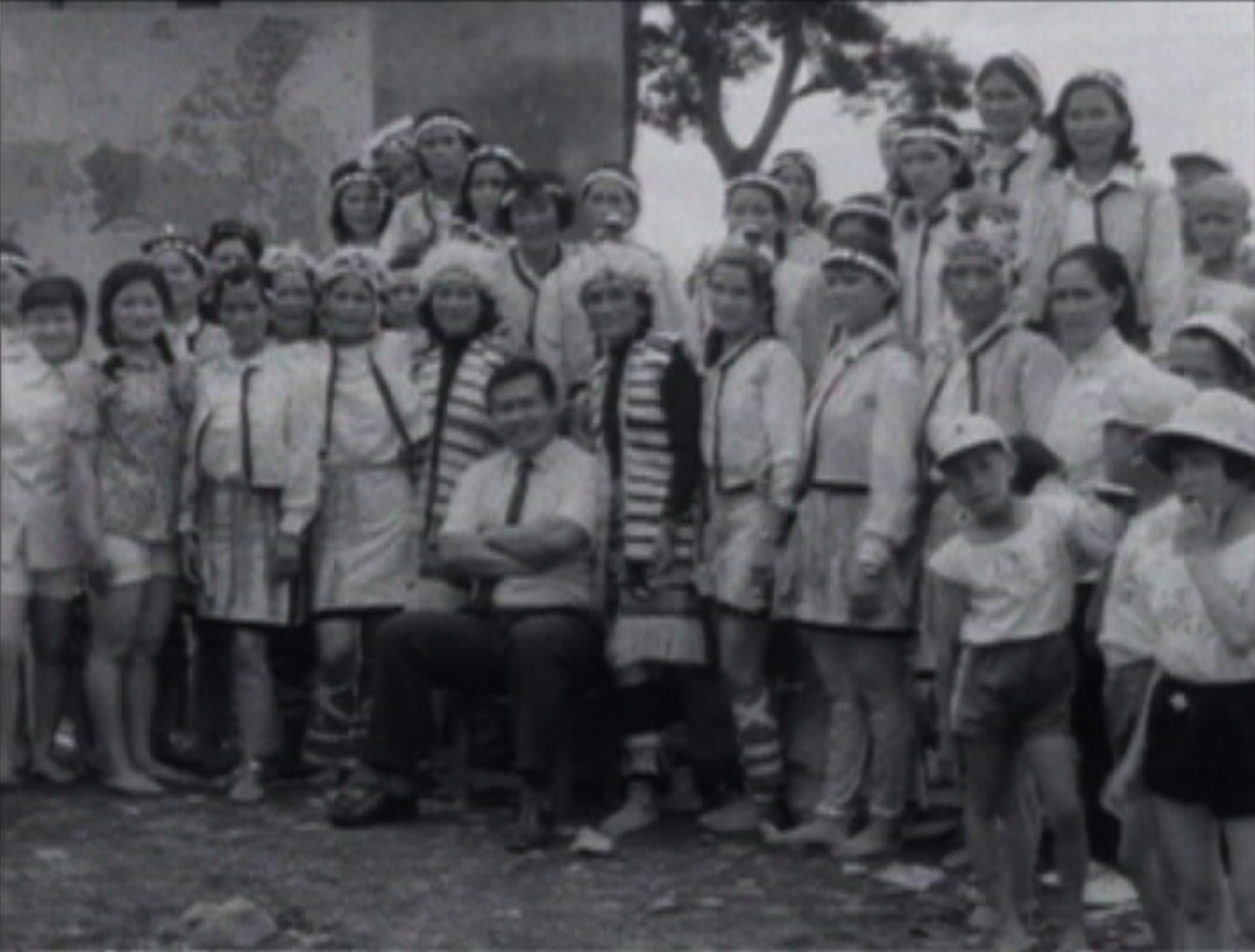
Tomodachi (ともだち, Yukihiro Sawada, 1974)

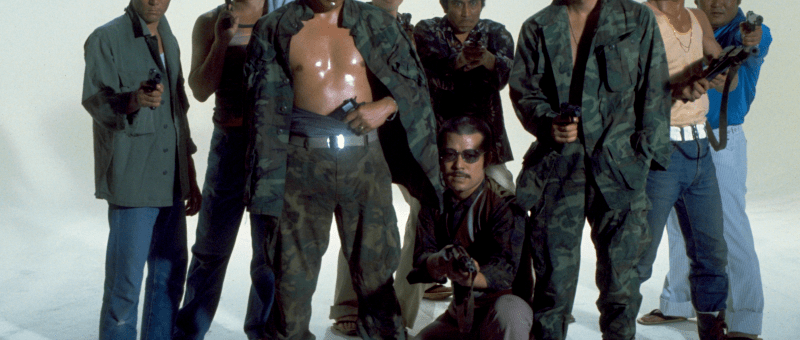
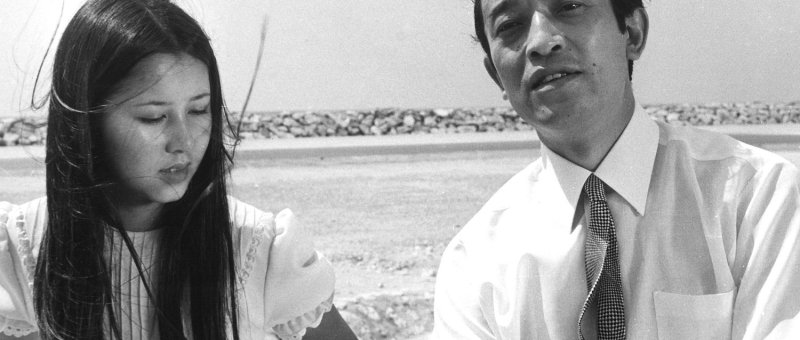
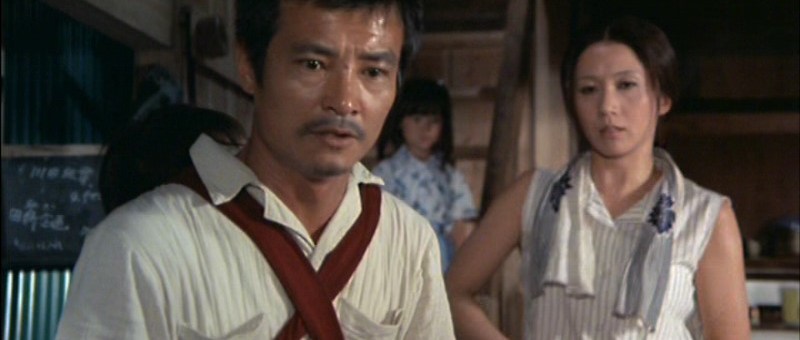
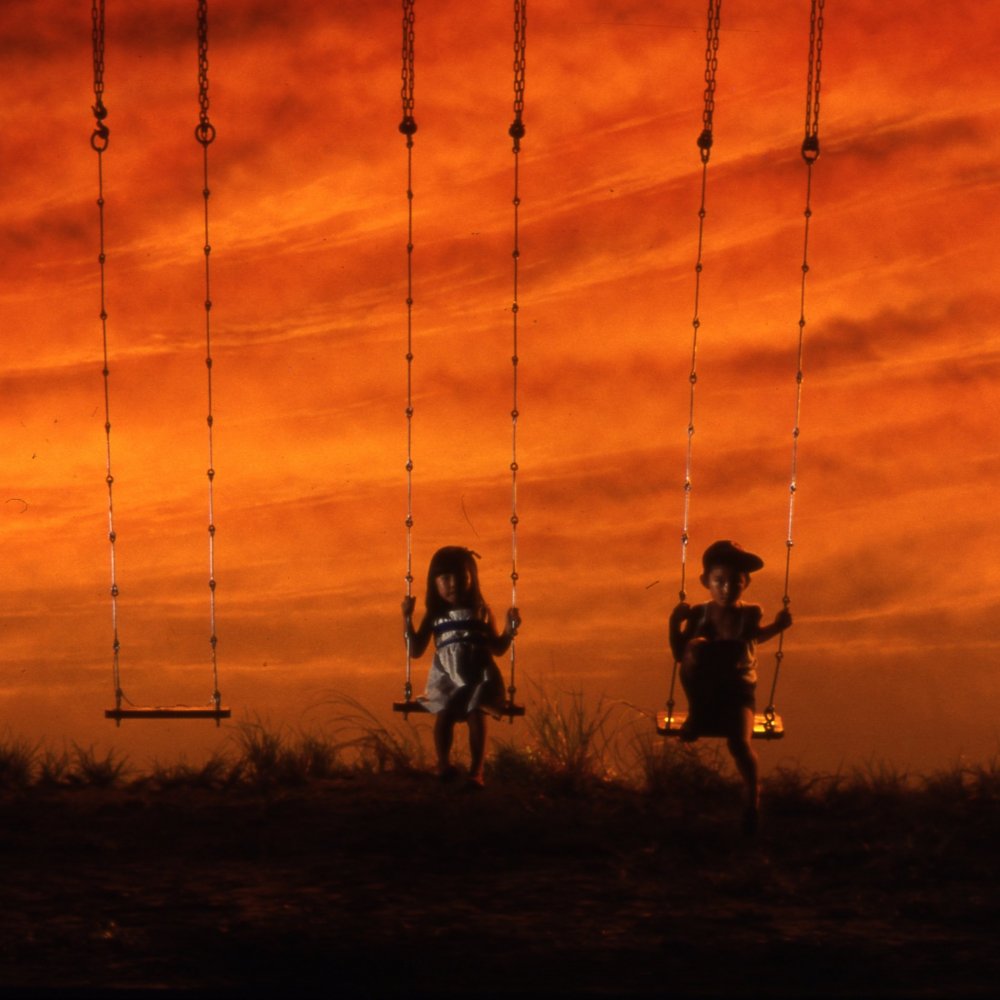
As the Japanese studio system began to implode in the late 1960s, Nikkatsu which had specialised in youth cinema, pivoted towards softcore pornography rebranding itself as Nikkatsu Roman Porno. At the same time, however, they also launched an unexpected sideline of family films with strong educational aims under the Nikkatsu Children’s Films banner. Selected by the Ministry of Education and recommended by various educational and parent and teacher associations, the second feature put out under the label, 1974’s Tomodachi (ともだち), is in its own way instructional with a strong anti-bullying theme but also has something to say about the literal pollution of the contemporary society. 

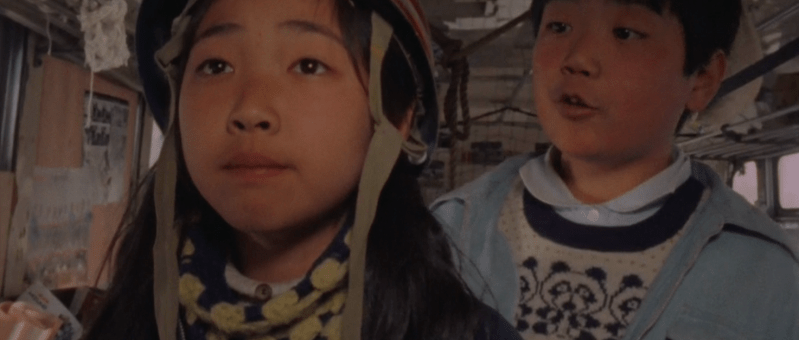
As such, the film revolves around the originally unsympathetic hero, Shinta (Hitoshi Abe), who openly bullies a girl in his class by kicking a football at her because she alone has been excused the after school duty of sweeping the school yard. Having transferred from rural Tohoko, Yoshiko (Noriko Suzuki) has developed serious asthma from living in the centre of industrial Kawasaki and has been instructed to avoid physical exertion or activities which might cause her to breath in additional dust and smoke. Shinta and his friends are however entirely insensitive, literally surrounding Yoshiko while they hound her with questions insisting she’s not really “ill” and merely shirking her duty. When the teacher tries to explain to them that Yoshiko has been excused because it would be bad for her heath to be sweeping dust, Shinta and his friends all immediately claim to be ill too, fake coughing and wheezing despite having just been playing football rather than doing their after school chores like the other kids. 

What doesn’t occur to Shinta is the loneliness, isolation, and embarrassment Yoshiko must feel on being singled out because of her illness. Rather poignantly, the school nurse and others describe how cheerful and friendly Yoshiko was when she first arrived only to reflect on how depressed and withdrawn she’s since become. This is partly as Shinta later learns because her classmates rejected her once she became ill. Asthma is obviously not a contagious disease, yet many of the other parents stopped their kids playing with her because of the stigma surrounding any kind of “illness” while simulataneously unwilling to bear the responsibility of needing to care for her if she should undergo an asthma attack while in their home or under their care fearing they would then suffer a reputational loss if they failed to treat her properly. 

For his part, Shinta is intensely resentful when the teacher sits him next to Yoshiko in the hope that his cheerfulness will help bring her out of her shell. Exclaiming that he hates sick people and thinks that Yoshiko is boring and creepy because she doesn’t really say anything, he begins to have second thoughts when the teacher implores him to help “as a man” suddenly discovering a sense of honour and justice that he doesn’t want to let down. His first action however is to continue kicking footballs at her, but strangely it works rather well providing a physical activity which is compatible with her asthma in not needing to move around while allowing her to feel part of the game. As he gets to know her more, Shinta comes to sympathise with his new friend and is angry with the other kids who reject her but discovers that his own parents are not much different refusing him permission to invite Yoshiko over on talking to other parents at the PTA in part because they run a bento store and are nervous of coming under suspicion if anyone notices a girl with a heavy cough coming and going and questions their hygiene practices. 

Shinta does, however, visit her small apartment which is unfortunately right behind a dusty construction site. As she explains, Yoshiko’s parents were part of a new agricultural drive which later failed and left them with massive debts which is why they had to leave the country to work in a factory in Kawasaki. As her parents often work late shifts for the extra money, she has to look after not only herself but her younger brother with only a pet squirrel for company. Constant references are made to other children having to change schools because their parents moved into a company dorm, while the poor quality of the air is repeatedly given as the cause of Yoshiko’s illness literally choked by the thoughtless post-war economic drive that continues to disrupt not only family lives but the local environment, Shinta also revealing that his parents used to farm seaweed but were forced to stop because of industrial pollution in local rivers. 

This destructive industry also creates unintended divisions among the children along class lines between those whose parents work manual jobs in the factories and those whose families are wealthier and involved in white collar work. The ring leader of the girls who reject Yoshiko, Ayako (Masayo Koga) is the daughter of a wealthy conservative family living in a large house with a mother (Yoshie Kitsuta) who wears kimono. When Ayako shuns her the other girls follow, Yoshiko inviting them to her birthday party only to discover them all together eating cake at Ayako’s house instead. She’d invited them partly out of worry that they were offended she hadn’t invited them to her small apartment, only then realising that they rejected her because of the stigma towards her illness leaving her feeling hopeless and dejected. As Shinta later points out, this kind of emotional pain negatively impacts her medical condition coming to despise the adult world describing his father as the worst in his class for his insistence that he should accept the way the world works rather than idealistically trying to help his new friend. 

The message of the film, however, is that it’s wrong to leave people out and that children in particular should always attempt to friendly with each other. Developing appendicitis, Shinta comes to a new appreciation of how difficult it can be being ill while his mother too starts to regret her decision finally inviting Yoshiko to come and visit them at their home after spotting her sadly walking around outside uncertain if it’s alright to come and visit Shinta on his sickbed. Shinta’s two best friends had also been not entirely supportive of his decision to bring Yoshiko into their group, referring to her as “goldfish poo” in her tendency to trail along behind them, though partly out of jealousy along with the natural awkwardness of a girl suddenly being introduced into a previously all male club but even they eventually come round and decide to reaffirm their friendship. Despite this rosy conclusion in which the other children are convinced to abandon their unfair prejudices and become friends with each other, the eventual conclusion seems rather cruel if returning to the minor theme of the destructive effects of increasing industrialisation even as Shinta’s father is also reminded of the importance of friendship in stating an intention to attend his own primary school reunion. A touching coming-of-age tale, Tomodachi puts its young hero through the emotional wringer but also allows him to discover a strong sense of justice and empathy towards those rejected by their society. 


Step on the Gas! (新宿アウトロー ぶっ飛ばせ, Toshiya Fujita, 1970)

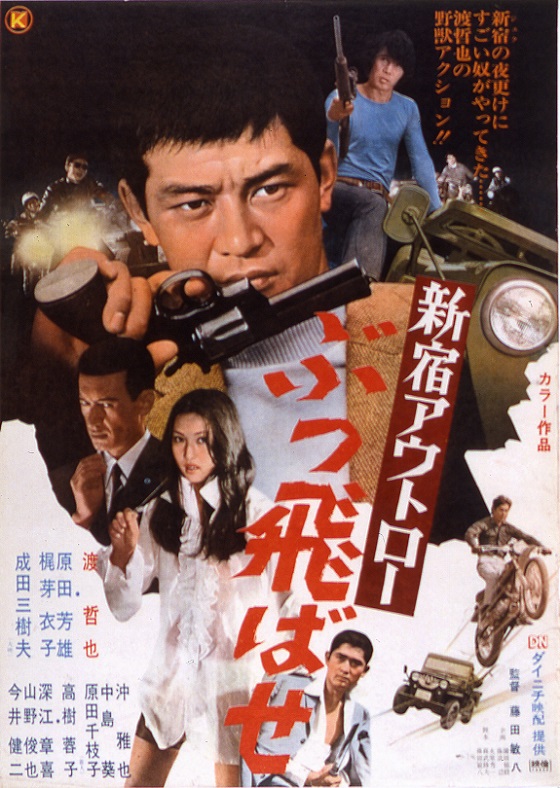
A recently released former gangster and the bored son of a CEO look for new directions in early ‘70s Japan in Toshiya Fujita’s Step on the Gas! (新宿アウトロー ぶっ飛ばせ, Shinjuku Outlaw: Buttobase). Released between his two instalments in the Stray Cat Rock series, Fujita’s freewheeling underworld drama is high on irony and shot in a surprisingly warm colour palate replete with pastels seemingly eschewing the seriousness of Nikkatsu’s earlier youth dramas for sense of youthful ennui eventually granting its mismatched heroes if not the direction they seek then at least possibility in their forever floating existence. 

“Angel of Death” Yuji (Tetsuya Watari) waltzes out of prison to be met by no one, only for another man it later transpires he does not know to attempt to flag him down in his military jeep. Ignoring him, Yuji jumps in a taxi and asks to go to Shinjuku, presumably his old stomping ground, before changing his mind and travelling on to Yokohama instead. This would indeed be a fantastically expensive journey, Yuji ironically taking the cabbie for a ride only for the mysterious man to appear and pay his fare for him. Giving his name as Nao (Yoshio Harada), he eventually explains that he’s trying to recruit Yuji for a job hoping to make use of his fearsome reputation to help him recover some missing drugs and get a gang of bikers off his back. 

As we later discover, however, Nao is not some street punk but the son of a wealthy businessman if one obviously at odds with this conservative father. That might be why he seems so hopelessly out of his depth in his relationship with the delinquent bosozoku motorcycle gang led by Rikki (Masaya Oki) who is perhaps equally in over his head in his rather naive approach to criminal enterprise. Nao and his friend Shuhei were supposed to handle a shipment of marijuana for the gang, but the deal went south and the drugs went missing along with Shuhei so now Nao owes them big time. He wants to use Yuji’s “Angel of Death” skills to find out what happened to Shuhei and retrieve the drugs to settle things with Rikki. 

Inevitably, events have a connection to Yuji’s former Shinjuku life Nao employing a woman he used to know, Shoko (Meiko Kaji) who is also Shuhei’s sister, to run his bar, while the icy enforcer working for the big enemy, corporatised yakuza, also turns out to be someone he knew before in the aptly named and distinctly creepy “Scorpion” (Mikio Narita) a former policeman turned amoral gangster. “His power lies not in fearlessness or being a good shooter but in the fact he doesn’t care about anything” Yuji later explains, describing him as the kind of man willing to knock off anyone in his way without a second thought be it a woman or a partner. One might have thought the same of Yuji in his breezy insouciance, but he is at heart noble despite his fearsome nickname displaying compassion and empathy for those around him along with old-fashioned values like loyalty siding with Nao against the twin threats of Scorpion and the biker gang with whom he later proposes a mutually beneficial alliance. 

Skipping between strangely whimsical folk music and a melancholy jazz score, Fujita’s freewheeling crime drama hints at a kind of aimless ennui Yuji and Nao both in differing ways emerging from a obsolescent past into a new and confusing world, Yuji realising the kind of life he lived before is no longer viable while Nao rejects his wealthy upbringing for a life of unglamorous crime engaging in drug use which he at one point hints has left him impotent. Meanwhile, the fading grandeur of old school yakuza is very much apparent in the cowardliness of the gang’s corporatised boss who hires a man like Scorpion to protect him because he cannot defend himself, planning to make off with the stolen money in a helicopter he has waiting rather than honourably facing off against Nao and Yuji in their quest to retrieve what was stolen from them. Constant red and white imagery recalling the Japanese flag clues us in to the sense of futility in their violence, but even so Fujita closes on an ironic note cementing the friendship of the two men but leaving them free floating with no clue how to land floundering for direction above an increasingly confusing society. 


Apart from Life (地の群れ, Kei Kumai, 1970)

By 1970, Japan had more or less cemented its economic miracle and in terms of cinema at least memories of the war were beginning to recede with the young keen to address other concerns such as dissatisfaction with increasing consumerism or resistance towards American foreign policy in Asia. Unjustly neglected by international scholars, Kei Kumai by contrast refused to turn away from issues others might have found taboo or at least unpleasant enough to avoid mentioning. Like A Chain of Islands, Apart of From Life (地の群れ, Chi no Mure) has an overt anti-American sentiment but in essence criticises a society in which people are dying of guilt and shame though essentially blameless while those marginalised continue to oppress each other and fight amongst themselves rather than unite to resist their marginalisation. 

Based on a novel by Mitsuharu Inoue, the film opens with a brief prologue set in 1941 before jumping forward to the mid-1960s in the naval port town of Sasebo, the naval facilities now operated by American forces. An ensemble drama, the tale revolves around a drunken doctor, Unan (Mizuho Suzuki), though this one is far from an angel merely another wounded and compromised soul of the post-war era wracked by guilt over his various moral failures which began with the incident in the prologue in which he attempted to weasel out of his responsibility after getting an ethnically Korean girl pregnant as a young teenager working in a coal mine. He is the first of many to insist “I know nothing” that he’s “responsible for nothing” firstly denying the child is his then trying to smooth it over with money before coldly telling the woman’s sister to take her to a hospital in nearby Sasebo where no one will know them in order to get an abortion and avoid the social stigma of unwed pregnancy. The sister can only look at him with contempt. Later he discovers that the young woman lost her life while trying to provoke a miscarriage. 

Hako died, in a sense, out of shame. Many of Unan’s patients face the possibility of something similar. One woman comes to him about her teenage daughter, Yoshiko, who is bleeding continuously as if constantly menstruating. Unan asks the mother if she was in Nagasaki at the time of the atomic bombing as the symptoms are similar to the effects of the radiation poisoning he observed while working as a doctor in the city. She continues to deny it, but flashbacks to conversations with her now absent husband and daughter suggest she may not be telling the truth at least in its entirety even though her daughter’s life is at stake. She doesn’t want to be associated with “those Kaito Shinden people”, referring to the industrial slumland where many refugees from Nagasaki have settled which is treated as a kind of plague town by the rest of the local area. If her daughter survives but is unmasked as a second generation A-bomb victim her mother fears she will never be able to marry and that she will have “no future”. 

Yet they are not the only ones facing marginalisation. A young woman, Tokuko, comes to Unan’s office wanting a certificate that proves she has been raped, but Unan doesn’t help her firstly for the understandable reason that she is, understandably, unable to explain the exact circumstances to him, and secondly because he just isn’t very invested in her wellbeing bizarrely suggesting she come back with a relative or the person responsible. As she later explains, the rapist threatened to expose the fact that her family are burakumin in order to keep her quiet while she clearly remembers that he wore a glove on his left hand which she believes probably hides a distinctive keloid skin lesion marking him as an A-bomb victim and probable resident of Kaito Shinden. Tokuko’s father had also been a victim of workplace discrimination presumably because of his burakumin heritage, his wife told that he had stabbed himself while confronting the workers who were harassing him advised to keep quiet rather than attract the attention of the authorities. Tokuko is originally shamed into silence not by her violation but by her marginalisation, later deciding to track down her assailant by herself after someone else reports the crime to the police who arrest a local Kaito Shinden troublemaker and attempt to frame him for the crime. 

The confrontation however leads to a small war between the Kaito Shinden A-bomb survivors and the burakumin community which results in the death of a burakimin woman after they tactlessly insist that Kaito Shinden is a buraku below the buraku and that their blood is “rotten” and will be for generations. Discussing the case, some had even suggested that the rape was itself a result of prejudice towards the A-bomb survivors seeing as they are unable to find wives. Yet Tokuko’s mother had asked if being burakumin means it’s OK to rape her daughter, in much the same way Hako’s sister might have asked if being ethnically Korean made it OK for Unan to so casually discard her. Explaining that the locals regard Kaito Shinden as a “sick village” Yoshiko’s mother says she doesn’t think the people there are any different from anyone else despite her determination not to be associated with the A-bomb “disease”. “If Kaito Shinden is sick, the whole of Japan is sick!” Unan fires back revealing that he himself was also in Nagasaki shortly after the bomb dropped, apparently objecting to these baseless prejudices but seemingly unwilling to cure them even while his patients quite literally die of shame. 

In his own case, however, it’s not prejudice or wartime trauma that have led to Unan’s alcoholism but his many moral failures and their resulting guilt. His wife (Noriko Matsumoto) wants to divorce him, partly because of the drinking, but also because of his longstanding guilt over the death of a friend who retreated to the mountains with the communists during the Red Purge of the early 1950s of whom he is also jealous in that he was previously his wife’s lover and he can’t get over wondering if he’d lived his wife would have chosen him. Guilt over Hako, perhaps mixed with the fears of his radiation exposure, have also led him to emotionally blackmail his wife into several abortions as if he thinks it improper to father a child. 

Meanwhile, we seem to see pregnant women everywhere. Nobuo (Mugihito), orphaned by the A-bomb, sees a pair of them walking ahead of a gaggle of nuns which he later decides to freak out by creepily staring at them before lunging wildly like a dog among geese. The film’s conclusion finds him on the run from a gang of burakumin boys looking for revenge, running far out of the slums into the suburbs and through one of those nice new danchi housing complexes where a row of pregnant housewives sits silently knitting, something almost creepy in the vacant way they smile at him as he runs past before tripping over a child’s toy car. Boys like Nobuo are it seems cast out from the newly consumerist society of the economic miracle while just about everyone is in some way marginalised and in some cases several times over: rape victim, burakumin, A-bomb survivor, troublemaker, orphan, divorcee, communist, Christian. Nobuo wonders why God chose Nagasaki for an A-bomb when it’s where all the Christians live while the head of a Virgin Mary statue is repeatedly smashed as if to imply there’s no more mercy to be found here. 

Kumai regularly cuts back to a disturbing visual motif of a cage filled with rats who kill a live chicken and fight over the scraps of rotting meat until ignited by a gust of fire, the survivors scrabbling over each other blindly looking for an exit. Meanwhile, US jet planes fly constantly overhead and all Unan can think to do is throw a rock at a flag flying on the base. “She was killed by everybody” Tokuko exclaims of the burakumin woman, suddenly seeing the webs of prejudice, oppression, and selfishness which created the circumstances which led to her death by stoning. Shot in a crisp black and white and academy ratio, Kumai’s steely drama lets no one off the hook implying that all of Japan is indeed “sick” wilfully leaving these marginalised people to fight amongst themselves for the scraps of a newly prosperous society. 


DVD release trailer (no subtitles)

The Demon (鬼畜, Yoshitaro Nomura, 1978)

By the late 1970s Japan had achieved its economic miracle, but it had yet perhaps to deal with the traumas of the immediate post-war era. Once again adapted from a story by Seicho Matsumoto, Yoshitaro Nomura’s shocking social drama The Demon (鬼畜, Kichiku) explores the radiating effects of orphanhood and economic privation on the family unit producing as a rather judgemental policeman eventually puts it a generation of parents who don’t know how to raise children and may even lack the inclination to do so even if thankfully not to the extent of the couple at the film’s centre.

Nomura opens with one of his trademark lengthy train sequences following a harried mother and her three children travelling in the sweltering heat from the countryside to the city as she makes a last, desperate attempt to remind the father, Sokichi Takeshita (Ken Ogata), of his responsibilities. Once a successful businessman, Sokichi has become financially ruined after a fire destroyed his print shop and no longer has the means to maintain a second household for his mistress and children at a discrete distance from the home he shares with his wife, Oume (Shima Iwashita). As Kikuyo (Mayumi Ogawa) points out to him, she is unable to support herself economically while caring for the children but he has little answer for her especially once the previously oblivious Oume overhears their conversation. After a series of heated arguments, Kikuyo makes the radical decision to simply abandon the children with their father and thereafter disappears having vacated her previous home and left no forwarding address. 

A part of the problem in the Takeshitas’ marriage had been that they have no children of their own, Sokichi remarking to Kikuyo, whom he met while she was working in a traditional teahouse where he used to take clients, that he had always wanted a child. Conventional gender roles have in a sense been reversed, Oume angrily insisting that her husband would never have made any money had not been for her while it appears that she is more or less in charge of their business affairs and he is the one largely looking after the children to the extent that they are “looked after”. To Oume, the siblings are partly a reminder that her husband betrayed her with another woman but also an attack on her femininity in reminding her that she was unable to become a mother while someone else has given birth to Sokichi’s children. For all of these reasons they are to her children which cannot continue to exist. She undermines Sokichi’s attachment to them by frequently questioning their paternity pointing out that they share little physical resemblance while reminding him that he met Kikuyo through her occupation on the fringes of the sex trade. 

Her mistreatment begins as neglect, refusing to feed or bathe “a stranger’s” child and then graduates to physical violence stuffing food into the mouth of Sokichi’s infant son Shoji after catching him playing with the dinner bowls. Yet when Sokichi finds her endangering the baby while moving heavy papers from a shelf he does nothing, suspecting his wife has become a threat to the children’s safety but also as she later implies wanting to be rid of them himself. The couple could, of course, have simply surrendered the children to an orphanage (it remains unclear how exactly their existence has been registered), but ultimately choose not to as if they wanted to obliterate the idea of them as if they had never been born. 

It may be tempting to view Sokichi as a helpless victim casting Oume as terrifying Lady Macbeth intimidating him into destroying the evidence of his indiscretion, but even if it was Sokichi “looking after” the children, it is finally he who must also “take care” of them. During his abandonment of his second child, 3-year-old daughter Yoshiko (Miyuki Yoshizawa), he takes her into a toy store where a group of boys are playing with remote control cars demonstrating that this is no longer an age of economic privation and that in the end the reason for the children’s second abandonment is not primarily financial even if Sokichi has been in a sense humbled, deluded into a false sense of security in his business success only to be robbed of the era’s increasing prosperity through a freak accident. “Everybody’s struggling” he eventually reflects as his assistant (Keizo Kanie) informs him that he is leaving, ironically to take better care of his ageing parents and small children presumably in a less toxic environment.

Yet as we discover the reasons for Sokichi’s sense of displacement stem back to his own post-war childhood, apparently born out of wedlock never knowing his father and then abandoned by his mother, bounced around between relatives all of them poor who viewed him as nothing more than a burden until effectively indentured to a print shop at ten years old by an uncle who stole his advance pay and once again abandoned him. These kinds of familial disruptions whether caused by a literal orphanhood or the economic constraints of the immediate post-war period have produced according to the moralising policeman at the film’s conclusion a generation of people who do not know how to parent because they were not effectively parented themselves many of whom go on to have children perhaps accidentally but have no idea how to relate to them, frightened of the responsibility or resentful of the “burden” as Sokichi eventually seems to have become. 

Nevertheless, Nomura ends on a note of ambiguity, the goodness in eldest son Riichi (Hiroki Iwase) emphasised as he refuses to name his father or reveal his abuse, an action interpreted by the police as an attempt to protect Sokichi but could equally be a trauma response owing to have been returned to him by the police once before. In any case the film asks if in being rescued from his toxic family circumstances, effectively orphaned, Riichi will simply end up continuing the cycle of displacement, another man unable to become a “father”. But then again, what of Kikuyo who branded Sokichi “inhuman” yet left her children with him and disappeared, perhaps as a neighbour implies with another man? A sympathetic policewoman (Shinobu Otake) reassures Riichi they’ll look for his mother, but as she too abandoned him would that actually help? The jury seems to be out on whether this sense of displacement, in essence the integrity of the traditional family, can ever effectively be repaired even as an increasingly consumerist society continues to erode its foundations. 


The Demon screens at the BFI on 12/19 December as part of BFI Japan. It is also available to stream in the US via Criterion Channel.

Original trailer (no subtitles)

Execution in Autumn (秋決, Li Hsing, 1972)

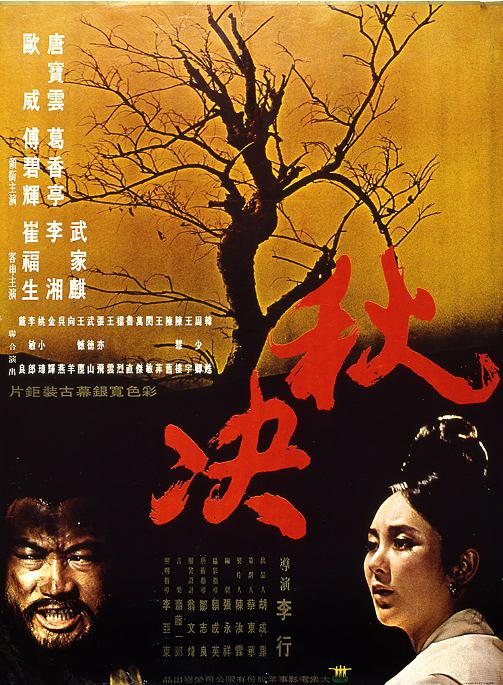
“We all have to die, but we must die in peace and honour” the hero of Li Hsing’s tale of spiritual redemption Execution in Autumn (秋決, Qiū Jué) finally realises, resigning himself to the cruelty of his fate. Partly an advocation for “responsible” childrearing, Li’s philosophical tale is also one of growing enlightenment as the boorish, entitled hero is cajoled towards a sense of social responsibility through the ministrations firstly of his cellmates and then of a good woman who finally learns to see the good in him if through a gentle process of emotional excavation. 

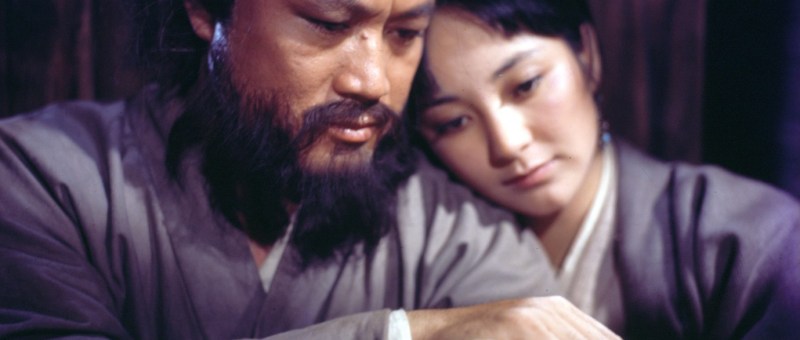
As the opening voiceover explains, at this time it was thought somehow offensive to conduct an execution during the seasons of life and rebirth and so they were relegated to the autumn amid its ominous mists. As we first meet Pei Gang (Ou Wei), however, he’s on the run, trying to make a break for it in refusing to accept the judgement which has been passed on him. The sole heir of a wealthy family, he has been convicted and sentenced to death for the murder of two men and a woman who claimed he was the father of her child (as for what became of the baby, no further mention is made). His grandmother (Fuh Bih-Huei) vows to get him out of jail, pulling every trick in the book and bribing a local official to engineer a good outcome at the upcoming retrial. But in an ironic indication of his buried goodness, Pei Gang refuses to lie to the court and freely admits his crime claiming he was “overcome with rage” believing the woman and her cousins intended to blackmail him but was otherwise in sound mind when he murdered her because he was “sick of being duped” and wanted to vindicate his family honour by taking vengeance on those who’d wronged him. 

Unable to save her grandson, Gang’s grandmother blames herself realising that her failure to discipline him in childhood has led to his immense sense of entitlement and conviction that the rules do not apply to him. Grandma promised that whatever sort of trouble he got into, she would get him out which is obviously a promise she wouldn’t be able to keep but also somewhat irresponsible. For these reasons, Gang regards his treatment as extremely unfair, unable to understand why any of this is happening to him or to accept that this is one fix grandma won’t be able to smooth over even with her money and the power of her name.  

The lesson would seem to be that you have to be cruel to be kind, a message later confirmed by Gang’s conflicted jailor (Ko Hsiang-Ting) who we learn had a son of his own he wrongly indulged which led to him becoming a wayward lad like Gang drowning in a river in the middle of a fist fight. Learning that his grandmother has passed away, Gang once again rails against his fate offering proclamations of hate which are really of love while blaming his grandmother for never having beaten him when he was a child recognising her problematic love for him, mixed as it was with his importance to her as the heir, but also his own abuse of her indulgence. Bad parenting may be the cause of Gang’s amorality, but he is not and never was blameless. He had a free choice to become a better person but did not take it, engaging in persistent boundary pushing even as an adult culminating in the murder of three people mostly out of spite. 

At first Gang can’t bear the mention of the word death, caught between the earthy philosophies of the street thief in the cell to him and the Confucianist scholar opposite serving a one year term as a proxy for his elderly, debt-laden father. Slowly he begins to come around the scholar’s way of thinking, coming to accept death as an inevitability of life as certain as the seasons. His second lessons begin on realising he cannot escape his sentence, his grandmother has given up on him and enacted her back up plan to ensure the family line continues by marrying him to his adopted “sister” Lian (Tang Pao-Yun). Other signs of his buried goodness manifest themselves in his initial reluctance to go along with the plan, not only resenting being used as a stud but unwilling to make Lian an instant widow. “I don’t want you to hate me the rest of your life” he adds in a moment of vulnerability, trying to convince his new bride to find someone more able to give her a happy life stretching further than the next autumn. 

Gang’s tragedy is, in a sense, that as he approaches his execution he experiences true happiness and is genuinely reformed but only by accepting the necessity of his death can he fully redeem himself. Though he tried to escape, he refuses to leave even when the jailor offers to let him go fearing both for the jailor’s fate and for that of his wife and child if he were to become a fugitive. Nevertheless he cannot prevent their victimhood, knowing that just as grandma and Lian had done he must sacrifice himself in order to protect his family accepting not just his moral and social responsibility but the filial. Taking place mostly within the claustrophobic confines of the prison, Li’s melancholy existential drama uses the rhythm of the seasons as a metaphor for life but also as a kind of ticking clock accelerating Gang’s remaining time as he lives out his glory days and twilight years in the span of months awaiting his execution as the first leaves fall. It might be tempting to draw the conclusion that they are each victims of a cruel and oppressive social system taken to authoritarian extremes though Li may have intended the opposite in reminding parents, literal and figural, that the moral education of their children through physical discipline is their primary duty. Nevertheless, Gang’s spiritual awakening and subsequent redemption prove profoundly moving even in their concurrent tragedy. 


Execution in Autumn screened as part of this year’s San Diego Asian Film Festival

Trailer (English subtitles)

A Touch of Zen (俠女, King Hu, 1971)

“A man has his code” a late villain explains in King Hu’s radical Buddhist wuxia epic, A Touch of Zen (俠女, Xiá Nǚ), justifying his villainy with weary fatalism as a matter dictated by the world in which he lives and of which he is merely a passive conduit. Based on a story by Pu Songling, Hu’s meandering tale begins as gothic horror yet ends in enlightenment parable that in itself reflects the values of Jianghu as a warrior monk achieves nirvana in the apotheosis of his righteousness. 

Hu begins however with slowly mounting tension as lackadaisical scholar Gu Shengzhai (Shih Chun) begins to notice something strange going on in the sleepy rural backwater where he lives. There are several strangers in town from the recently arrived pharmacist Dr Lu (Xue Han), to the blind fortune teller Shi (Bai Ying), and a young man who stops into his shop to have a portrait done (Tien Peng) but is behaving somewhat suspiciously. Shengzhai has also noticed unexpected activity at a house opposite his long thought to be “haunted”, activity which turns out to be caused by a young woman, Miss Yang (Hsu Feng), living in penury with her bedridden mother. 

Shengzhai is often described as feckless or immature, his mother (Zhang Bing-yu) constantly complaining that he refuses to take the civil service exam and has stubbornly wasted his life with “pointless” study while they live harsh lives with little comfort. Shengzhai is, however, an unconventional jianghu hero who has rejected a world of courtly corruption in order to live by his own principles even if that means a poor but honest existence. In a sense he becomes a man through his brief relationship with Yang who turns out to be a noblewoman on the run from the East Chamber after being sentenced to death because of her father’s attempt to expose the corruption of a high ranking eunuch. After he and Yang enjoy a single night of passion in the middle of a thunderstorm, Shengzhai becomes determined to protect her and reveals he has spent much of his life studying military strategy, but he also fully accepts Yang’s agency and right dictate her future walking back his claim of feeling duty-bound because they are “almost married” to be content to help “even as a friend”. 

Nevertheless, there is something of boyish glee in the machinations of his trickery, repurposing the gothic horror of the “haunted” fort as a means to “demoralise” the enemy. His second antagonist, Men Da (Wang Rui), refuses to take the rumours, ably spread by Shengzhai’s gossipy mother panel to panel through a series of expanding split screens, seriously describing them as something only “ignorant country folk” would believe but later falls victims to Shengzhai’s elaborate setup. After his victory, Shengzhai walks through the fort laughing his head off playing with the lifeless mannequins he positioned as ghosts and idly tapping various traps and mechanisms, but it’s not until he leaves the ruined building and ventures outside that he realises the true cost of his childish game in the rows of bodies stretching out and around before realising Yang is nowhere to be found. Shengzhai becomes a man again, forced to accept the consequences of his actions, but also defiant, ignoring advice and instruction on leaving home in search of a woman who asked him not to look for her. 

As he later discovers, Yang and her retainer have renounced the world for a monastic life returning to the Buddhist temple in which Yang learned martial arts during her two years of exile under the all powerful master Hui Yuan (Roy Chiao) who is now it seems close to achieving enlightenment though that won’t stop him helping Yang deal with her “unfinished business”. Like the heroes of jianghu, Yang removes herself from a world of infinite corruption though in this case to pursue spiritual enlightenment and thereafter forgoes her revenge, acting in defence only rather striking back at Eunuch Wei or the East Chamber. At the film’s conclusion, Hui Yang’s act of compassion brings about his betrayal but through it his enlightenment. Struck, he bleeds gold blood and sits atop a rocky outcrop as the sun radiates around his head in a clear evocation of his transcendence witnessed at a distance even by Shengzhai alone and placed once again in a traditionally feminine role literally left holding the baby but perhaps freed from the web of intrigue in which he had been trapped spun all around him just like that weaved by the spider in the film’s gothic opening. 

Stunningly capturing the beauty of the Taiwanese countryside with its ethereal rolling mists and sunlit forests, Hu’s composition takes on the aesthetic of a classic ink painting finding Shengzhai lost amid the towering landscape while eventually veering into the realms of the experimental in the transcendent red-tinted negative of spiritual transition. For Hu’s jianghu refugees, there can be no victory in violence only in the gradual path towards enlightenment born of true righteousness and human compassion.


A Touch of Zen streams in the US until Sept. 28 as part of the 13th Season of Asian Pop-Up Cinema.

International restoration trailer (English subtitles)

Sympathy for the Underdog (博徒外人部隊, Kinji Fukasaku, 1971)

Toei’s stock in trade through the 1960s had been the ninkyo eiga, chivalrous tales of noble gangsters set before the war and implicitly in a less corrupt Japan in which jingi could still triumph over the giri/ninjo conflict if at great personal cost to the idealistic hero. By the end of the decade, however, audiences were growing tired of yakuza romanticism particularly in the wake of grittier youth dramas produced by Nikkatsu. Originally conceived as a kind of sequel to Japan Organised Crime Boss, Kinji Fukasaku’s Sympathy for the Underdog (博徒外人部隊,  Bakuto Gaijin Butai) marks a shift towards the jitsuroku or “true account” trend of the 1970s which would come to dominate the genre following the success of his Battles Without Honour and Humanity cycle two years later, employing many of the same techniques from onscreen text to shaky handheld photography but doing so within the confines of moody noir as the hero emerges from a 10-year prison sentence into a very different Japan. 

When Gunji (Koji Tsuruta) gets out, he steps into an empty, windswept street his incongruous zori sandals clashing with his smart suit and sunshades and marking him out as a relic of a bygone era. He’s met only two loyal underlings, his gang apparently now disbanded following the death of his boss who refused to take his advice as regards the big name gang from Tokyo attempting to muscle in to their Yokohama territory. Part of the missing post-war generation, Gunji has no illusions about going straight, wandering into their former HQ now a derelict building and calling the guys, who’ve since moved on to more legitimate occupations, back together. He knows he can’t take on Daitokai with his meagre forces and so settles for extracting from them some compensation money to get out of town, later teaming up with Kudo (Noboru Ando) a similarly orphaned former member of a rival Yokohama gang wiped out by Daitokai, and resolving to relocate to Okinawa where he is convinced the post-war gangster paradise is still very much in existence. 

Okinawa was only “returned” to Japanese sovereignty in 1972, having been governed by the Americans since the end of the war, and of course maintains a large American military presence up to the present day. As such to Gunji, and in a yakuza movie trope which persists right into Takeshi Kitano’s Boiling Point, it exists in a permanent post-war present in which the conditions of the occupation are still very much in play. Gunji knows that he and his guys are products of the post-war era, they cannot adapt to the “new” world of corporatising yakuza in which street brawls and petty thuggery have given way to more sophisticated kinds of organised crime, and so they retreat into an Okinawan time warp, determining to steal turf from under two rival gangs who control between them the ports and the red light district mediated by black market booze from the American military.  

Fukasaku was apparently inspired by Pontecorvo’s The Battle of Algiers, intending to make a comment on resistance to American imperialism on the mainland though it has to be said that this is extremely ironic given that Japan is itself a coloniser of the Okinawan islands where there has long been a demand for self-determination and recognition of a distinct identity which has often been subject to oppression in the face of conformist Japanese culture. Nevertheless, the film continues the persistent theme that the chaotic post-war era which has come to a close thanks to rising economic prosperity in the time Gunji was inside is inextricable from the American occupation, implying that Okinawa is in a sense the last frontier and the only viable territory for men like Gunji who, like the melancholy ronin of the Edo era, lack the skills to live in time of peace.  

Nevertheless, modernity is also on its way to Okinawa and where there’s money there are gangsters so as expected Daitokai eventually rear their heads on the island pushing Gunji towards the revenge he didn’t want to take. The Okinawa he inhabits is one of loss and nostalgia, taking up with a sex worker who reminds him of the Okinawan woman who left him when he went to prison and perhaps playing into the slightly complicated political dialogue which positions Gunji as an ironic “migrant worker” salmoning back to Okinawa as many Okinawan youngsters are forced to travel to the mainland for work while the islands themselves remain, it’s implied, mired in poverty and crime economically dependent on the American military. Indeed, the head of the dock gang brokers a deal with Daitokai predicated on the fact that there is plenty of cheap labour available at the harbour. “Good place for a long life” he ironically adds, shortly before all hell breaks loose. Shot with typical Fukasaku immediacy, Sympathy for the Underdog looks forward to jitsuroku nihilism but does so through the prism of film noir cool as its fatalistic hero submits himself to his inexorable destiny.


Original trailer (English subtitles)

Graveyard of Honor (仁義の墓場, Kinji Fukasaku, 1975)

“Like hell you’re free” the “hero” of Kinji Fukasaku’s Graveyard of Honor (仁義の墓場, Jingi no Hakaba) coolly snaps back in squaring off against a rival gang in a crowded marketplace. Perhaps a familiar scene in the jitsuroku eiga, a genre Fukasaku had helped usher into being and later solidified in the hugely influential Battles Without Honour and Humanity series. A reaction against the increasingly outdated ninkyo eiga and their tales of noble pre-war gangsterdom, the jitsuroku or “true account” movie claimed a higher level of authenticity, inspired by the real lives of notorious gangsters and depicting the chaotic post-war period as it really was, a Graveyard of Honor. 

Based on another true crime novel by Battles Without Honour and Humanity’s Goro Fujita, Graveyard of Honour charts the slow self-implosion of reckless gangster Rikio Ishikawa (Tetsuya Watari). In keeping with the jitsuroku mould, Fukasaku opens in documentary mode, onscreen text giving us Rikio’s pregnant birthdate of 6th August, 1924 before giving way to the voices of, we assume, real people who actually knew him when he was child. They describe him alternately as shy, an oversensitive crybaby, and an evil genius in waiting who was always different from the others and had a lifelong ambition to become a yakuza. They wonder if it was the chaos of the post-war world which turned him into a “rabid dog” but note that he was in fact just as crazy before the war and after.

A cellmate during his time in juvenile detention recalls that Rikio would often liken himself to a balloon, intending to rise and rise until he burst but his trajectory will be quite the opposite. A mess of contradictions, he repeatedly tells his remarkably understanding boss Kawada (Hajime Hana) that whatever it is he’s done this time it was all for the gang but all he ever does is cause trouble, picking fights with the rival area gangs in an obsessive need for masculine dominance over his surroundings. His trip to juvie was apparently down to getting into a fight defending Kawada’s honour, implying that he was “the sort of kid who genuinely respected his godfather”, yet it’s in transgressing this most important of unwritten yakuza rules that he damns himself. Beaten up as punishment for setting fire to the car of a gang boss he felt slighted him, Rikio is asked for his finger but gets so drunk psyching himself up that he eventually turns on his own side and is exiled from the capital for a decade. 

That gang boss, meanwhile, Nozu (Noboru Ando), is currently running for political office in Japan’s new push towards democracy. He eventually loses but only by a small margin, bearing out that in this extremely difficult post-war environment, the yakuza is still a respected, if perhaps also feared, force providing services which ordinary people are sometimes grateful for in that they provide a buffer against other kinds of threat. Meanwhile, the first of Rikio’s gang raids is undertaken against so called “third country nationals” a dogwhistle euphemism for Zainichi Koreans, Chinese, Taiwanese, and other citizens from nations colonised by Japan during in its imperialist expansion who entered the country as Japanese citizens but have now been “liberated” only to face further oppression while those like Rikio accuse them of looking down on and taking revenge against the Japanese for the abuse they suffered as imperial subjects. When both sides are arrested a racist policeman allows the yakuza to escape, thanking them for helping him round up all the Chinese businessmen who will now go to jail for illegal gambling allowing the local gangs to seize their turf. 

The greatest irony is, however, that the American occupation forces may be the biggest gang of all, willingly collaborating with Kawada in peddling blackmarket whiskey (amongst other things) from the local base. The yakuza is also in collaboration with the local sex workers who use their connections with American servicemen to facilitate yakuza business. When Rikio starts a fight with a rival gang in a local bar that threatens to spark a war, it’s the Americans who are called in as neutral third party mediator, Nozu being unable to fulfil that role in having an affiliation with Kawada. The Americans, however, merely issue a loudspeaker announcement for the gang members to disperse or face possible arrest, keeping the peace if somewhat hypocritically. 

Rikio, meanwhile, continues to flounder. Exiled from his gang, he becomes addicted to hard drugs and gets a problematic minion of his own, Ozaki (Kunie Tanaka), not to mention contracting tuberculosis. In a particularly morbid moment, he has his own gravestone carved, perhaps detecting that the end is near or at least that an ending is coming for him. In another somewhat inexplicable turn of his life, though a common trope in jitsuroku, he eventually marries the sex worker who fell in love with him after he raped her, presumably touched by his concern after he burned a hole in her tatami mat floor. Wearied by grief and already out of his mind, a final act of nihilistic craziness sees him approach his former boss for the turf and capital to form his own gang, crunching his late wife’s bones as hardened gang members look on in utter disbelief. 

Rikio’s desire for freedom, to be his own boss, is elusive as the red balloon we often see floating away away from him, free in a way he’ll never be. “Don’t these young people respect the code anymore?” Kawada exasperatedly asks on hearing that Rikio has broken the terms of his exile and returned only a year into his sentence. But Rikio’s tragedy may in a sense be that he understood the code too well. On the side of his tombstone he writes the word “jingi”, honour and humanity, full in the knowledge that such concepts in which he seems to have believed no longer exist in the cruel and chaotic post-war world which forces even true believers to betray themselves in a desperate bid for survival. “We all live by a code” his friend echoes, “there’s just no way around the rules”. 

A case of printing the legend, Fukasaku’s take on the life of Rikio Ishikawa may not quite be the “true account” it claims but is in its own strange way a tale of frustrated gangster nobility, a cry baby’s failure to become the man he wanted to be in the complicated post-war landscape. Capturing the confusion of the era through frantic, handheld camera Fukasaku nevertheless takes a turn for the melancholy and mediative in his shifts to sepia, the listless vacant look of a drugged up Rikio somehow standing in for the nihilistic emptiness of a life lived in honour’s graveyard. 


Original trailer (English subtitles)

A True Story of the Private Ginza Police (実録・私設銀座警察, Junya Sato, 1973)

By the early 1970s the ninkyo eiga (pre-war tales of noble yakuza) had begun to fall from favour. Modern audiences were perhaps unconvinced by the romanticism of the honourable gangster caught between personal loyalty and his inner humanity, real life thugs are rarely so high minded after all. The cinema industry may have been in decline, but the consumerist revolution was well underway, the economic miracle was nearing completion, and there was perhaps a readiness to reckon with the recent past from a position of relative safety. The jitsuroku eiga did just that, providing a more “realistic” depiction of the yakuza life based on the recollections of real life gangsters and incorporating the aesthetics of reportage with the use of stock footage, newspaper montage, narratorial voiceover, and high impact text recording the names of characters along with the times of their deaths. 

Released in the same year as Kinji Fukasaku’s Battles Without Honour and Humanity which has perhaps become the jitsuroku archetype, Junya Sato’s A True Story of The Private Ginza Police (実録・私設銀座警察, Jitsuroku: Shisetsu Ginza Keisatsu) paints an even bleaker picture of the immediate post-war era as one in which chaos and inhumanity rule. The pre-credits sequence follows demobbed soldier Watarai (Tsunehiko Watase) who finds himself in a bombed out warehouse where a woman is drinking around an open fire with a US serviceman. Standing motionless he stares at an upper balcony where another woman is having sex with a black GI. It seems this woman is known to him, perhaps his wife or in any case a woman he thought he was coming back to. She is not overjoyed to see him, breaking down in tears while he spots a baby girl crying in the corner who also happens to be black. Unthinkably he takes the child and throws her into a flooded area of the floor below, chasing the mother when she goes after the baby, strangling and then bludgeoning her to death with a rock. 

All of this has happened in the first five minutes. There will be no heroism here, no noble act of resistance only shame and desperation. These are men brutalised by war who’ve come home to a land in ruins where the enemy is now in charge, ruling their streets and sleeping with their women. They are humiliated and resentful, many of them still in uniform likely because they simply have no other clothes. Sato introduces us to the later gang members in turn beginning with a scene which echoes those of the Battles Without Honour series as Iketani (Noboru Ando) is chased and beaten by an angry mob in the chaos of the marketplace after being accused of stealing. Masaru (Tatsuo Umemiya) meanwhile is beaten by GIs who come to the rescue of a sex worker he tries to rape, offended when she tells him she doesn’t go with Japanese customers dismissing him as “just another defeated soldier”. Iwashita (Hideo Murota) uses his service revolver to commit an armed robbery to get money to gamble. Only the gang’s later leader, Usami (Ryoji Hayama), is introduced without a wartime record, named only as a pre-war gangster. The gang is forged when they meet by chance in a gambling den and bond over a grenade, mounting a military operation against the Korean street gang who hassled Iketani by bombing their HQ. 

A few months later they’ve become the “Private Ginza Police Force” of the title, now all in smart suits, loud shirts, and sunshades. They have their eyes set on ruling the area, taking down rival gangsters the Nakane brothers through cunning and trickery, turning an underling by threatening his family. But there is no honour among thieves and the gang is only a temporary arrangement intended to last only as long it’s useful. Iketani goes his own way, starting a small business running black market goods from China, bribing the police to turn a blind eye while Usami runs a conventional protection scam targeting the Chinese owner of a cabaret bar, Fukuyama (Asao Uchida), run as a front for black market smuggling. The problems start when Iketani learns that Fukuyama has been colluding with a government accountant to misappropriate money intended to be used for subsidies. 

This world is infinitely corrupt, from the easily bribed policemen to the civil servants out for all they can get and those who merely make use of them like Fukuyama and Iketani. While the guys get rich opening gambling clubs in Ginza, a wide scale famine creates a shantytown of starving poor at Ueno station where six die per day from hunger. Iketani is in someways the “noble” thug, he looks after his guys and pays attention to their lives, perhaps even claiming that his black market activities are a public service but it’s still every man for himself and if he’s assuming post-war chaos is on its way out he is sadly mistaken. Having got him hopped up on heroine and used him as a ghostly assassin, the gang jokingly refer to Watarai as a zombie, somehow surviving every bizarre death experience that comes his way including being buried alive, but they are walking dead too, soulless men who left their humanity on the battlefield. Fearing the game may be up, Masaru suggests one last hurrah blowing their ill-gotten gains on sake and women. “I’ll show you how rape is done,” Usami deliriously exclaims”, “how we used to do it on the continental front.” Meanwhile, Masaru throws notes all around the room screaming “Rejoice! There will be no tomorrow” sending all into a Bacchanalian frenzy as they cram as much cash as they can grab inside what little clothing they still have on.

All moody, anarchic jazz score and canted angles, Sato’s post-war Tokyo is a world of constant anxiety, a maddening no man’s land of fire and rubble inhabited by ghosts of men who died long ago for whom the war never ended. In true jitsuroku fashion, the picture ends on a note of fatalistic nihilism, the screen filled with red as the narrator cooly informs us what became of our heroes as they find themselves consumed by the futility of their lives of violence.


Original trailer (no subtitles)

The House of Hanging (病院坂の首縊りの家, Kon Ichikawa, 1979)

Unlike many directors of his generation who either shifted into television or saw their careers stall, Kon Ichikawa was able to continue working throughout the difficult 70s and 80s precisely because he was less averse to taking on commercial projects such as 1976’s The Inugami Family, an ensemble mystery adapted from the bestselling book by Seishi Yokomizo and starring his famed detective Kosuke Kindaichi. The film proved an unexpected hit, an early success for Haruki Kadokawa’s new multimedia marketing model which would allow him to dominate cinema screens throughout the bubble era, and spawned a series of Kindaichi adaptations produced for Toho boasting a host of A-list stars. By 1979, however, the age of the prestige country house mystery was perhaps coming to a close and The House of Hanging (病院坂の首縊りの家, Byoinzaka no Kubikukuri no Ie) would be the last in the cycle of movies starring Koji Ishizaka who would eventually return to the role in Ichikawa’s 2006 remake of the original Inugami Family. 

Set quite specifically in 1951 (Showa 26), House of Hanging is among the more complex of Kindaichi’s cases and rests not on war trauma, which is only a background presence in the present venality of the post-war society, but on the decline of a once noble house ruined, as we find out, through the legacy of sexual immorality and abuse. For the moment, however, Kindaichi gets roped into the mystery after visiting an author friend (played by Seishi Yokomizo himself in a cameo) who recommends a photo studio he could visit in order to get a picture taken for his passport as he plans to travel to America. The photographer, Naokichi (Koji Shimizu), takes on an odd job from a strange young woman who asks them to take wedding photos of her sister but abruptly leaves explaining she’ll send a car later to bring them to an undisclosed location. That turns out to be the bombed-out former home of the Hogen family who own the local hospital. Escorted by a creepy young man, Naokichi finds himself in front of a traditional gold screen backdrop but feels uncomfortable because the bride does not seem to be very present and he worries that perhaps she’s been drugged and something untoward may have been going on. He shows the photo to Kindaichi for advice and is later called back to the same location to discover the severed head of the groom hanging from a ceiling light.  

In slightly comedic fashion, the circumstances of the case are so confusing that they have even Kindaichi admitting that he doesn’t quite follow while his temporary sidekick, photographer’s apprentice Mokutaro (Masao Kusakari), proudly holds up a chart he’s made to help keep track. Though the why is in this case more important than it might usually be, it boils down to the same old problem of buried secrets and past shame. We learn that the Hogen family is descended from a line of prominent doctors, though the family tree is complicated because it appears many of the sons of previous generations had illegitimate children, some of whom were later adopted or married to other adopted children in a quasi-incestuous union. With no one quite sure whose children are whose, incest appears to be the original sin which condemns the family, though as we later realise it’s another kind of abuse which sets the present events in motion.

The murdered man, Toshio (Teruhiko Aoi), was apparently part of travelling jazz band earning their living playing on American bases (the photographer also has a sideline in blackmarket army surplus). Aside from the original sin that connects the murders with melancholy fatalism, the additional victims damn themselves through their amoral greed, foolishly engaging in blackmail in the hope of improving their circumstances. Nevertheless, the sin remains the same, the theory being that Toshio was murdered by missing sister Koyuki who killed him in order to escape his inappropriate romantic obsession with her. The additional complication is that Koyuki looks near identical to Yukari (Junko Sakurada), daughter of the Hogen family, connecting the crime with the traumatic events of some years’ previously which led to the cottage becoming known as the “house of hanging” when the body of a young woman was found there having taken her own life. 

As in many of the other Kindaichi mysteries, the detective has only sympathy for those caught up in this complicated murder plot, many of whom are also victims acting simply to protect themselves ironically enough from the past trauma that has in a sense led to this sorry turn of events. Justice, in the end, takes care of itself though Kindaichi will also do his bit to protect those in need acting from a place of moral compassion rather than judicial censure. This final instalment in the Kindaichi cycle has slightly lower production values and a much less starry ensemble but sees Ichikawa adding a few idiosyncratic touches such as his fast, multi-angle cuts to a single person’s speech and a brief theatrical reconstruction sequence, while making time for the return of bumbling inspector Todoroki (Takeshi Kato) and the ironic comedy the series is known for. “Old things pass, that’s when new things are born” Yokomizo sagely advises in his cameo, Kindaichi apparently taking his leave from a corrupted post-war Japan for the bright lights of San Francisco, perhaps never to return. 


Original trailers (no subtitles)