

“Why choose Paris?” a mysterious voice inquires. “Because it’s Paris” comes the slightly depressed reply. In terms of the movies, the City of Light has an undeniably romantic reputation, but those who go there are often drawn more towards the darkness. Art director Tony Au Ting-ping’s distinctly European directorial debut The Last Affair (花城) helped to launch the film careers of then TV stars Chow Yun-fat and Carol Cheng Yu-ling and finds a lonely young woman trapped in an unhappy marriage travelling to Paris alone for a friend’s wedding only to discover that you cannot escape yourself through romantic delusion.
The dejected Ha-ching (Carol Cheng Yu-ling) once eagerly studied French after school with her best friend Bing (Pat Ha Man-lik) in the hope of travelling through Europe but married young and never got the opportunity while Bing moved to Paris and is about to marry a Vietnamese man who owns a family-run restaurant. Looking back at an old photo of the pair of them together, she laments that she was once young and full of dreams but is now middle-aged and filled with disappointment. Bing is surprised that Ha-ching has come to Paris on her own, but she deftly changes the subject, apparently unwilling to talk about her husband, Wai-ming seemingly a representative of an empty elitism of the newly prosperous society. Later she writes him a letter she doesn’t have the courage to send informing him that her trip to Paris has convinced her that she never loved him and she doesn’t see how their present relationship could continue.
In any case, Wai-ming is supposed to arrive just before the wedding but perhaps only because he’s also going to a big architecture conference in Lyon. When he eventually turns up, he’s extremely rude to Bing and her fiancé who is obviously irritated but making a tremendous effort to be polite while Wai-ming makes a fuss about the quality of the hotel, snapping at Ha-ching that she should have booked the Georges V because it’s not as if they don’t have the money while endlessly droning on about himself. In short, it’s not difficult to see why Ha-ching is unhappy.
Before he arrives, however, she starts to see a different future fuelled by ideas of European romance after locking eyes with handsome violinist Kwon-ping (Chow Yun-fat) busking in the subway. Awkwardly, Kwong-Ping turns out to be a member of Bing’s circle of friends, and the pair quickly hit it off, beginning a passionate affair. A phone call to his apartment from a French woman, however, has Ha-ching feeling uncertain. She has fallen in love with Kwon-ping and is intending to throw her life away for him, but he likes to have a good time in the bohemian bars of the city whereas she’d rather stay in cooking Chinese food to make them both feel more at home. Artists and dreamers all, the people at the bar make her uneasy. She’s always wanted to know how to find true happiness and has a feeling most of those at the bar are the same, never quite finding it and left with a terrible sense of incompleteness. In truth, she’s a little more conventional than she’d perhaps assumed.
That sense of existential displacement is something that, on the surface of things at least, doesn’t seem to bother Kwon-Ping, but then again perhaps explains the momentary monogamy of his womanising in which he loves them when he’s with them but forgets them when he’s not. For many, Paris seems to be the city of broken dreams. Melancholy art student Siu-tong is forced to make ends meet painting “traditional” furniture designs to European tastes while trying to make it as an artist. Bing’s fiancé is casually dismissive of those who paint for money by the river, but Siu-tong is left with no other choice, dismissed by the furniture maker and finding that all of the talk of his getting a solo show was just that. His girlfriend went back to the Philippines to study, worried he’d forget her, while he’s too ashamed to tell her that he’s giving up and going back to Hong Kong to be an art teacher.
Bing, meanwhile, has troubles of her own, preparing to get married but perhaps getting cold feet in settling while still hung up on old love. She can’t forgive Kwon-Ping for his womanising ways, but is too close to the matter to be able to talk to Ha-ching even if she can tell that there’s something not right with her old friend. Unable to accept that Kwon-Ping is not a one woman sort of man, Ha-ching begins to go quietly out of her mind, falling out with Bing while resentful of her husband and certain she does not want to return with him to her old life in Hong Kong. She meets a Canadian-Chinese man travelling Europe alone and making ends meet through selling handicrafts along the way, but ultimately reflects that solo travelling is not the path to happiness at least not for her and is therefore faced with the impossibility of witnessing the implosion of her romantic delusion. Framed in the grandiose tones of avant-garde opera, Ha-ching’s existential despair takes a much darker turn than might originally be expected, but is perhaps in keeping with Au’s overtly European arthouse aesthetics.
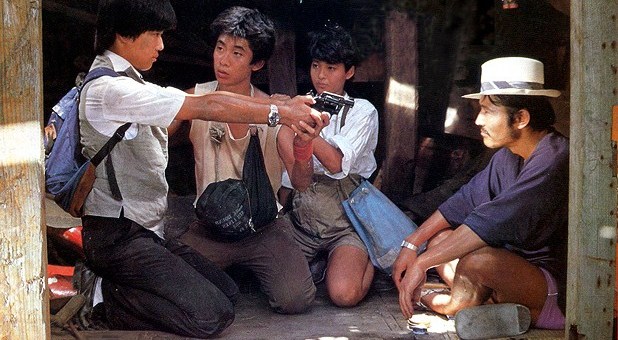
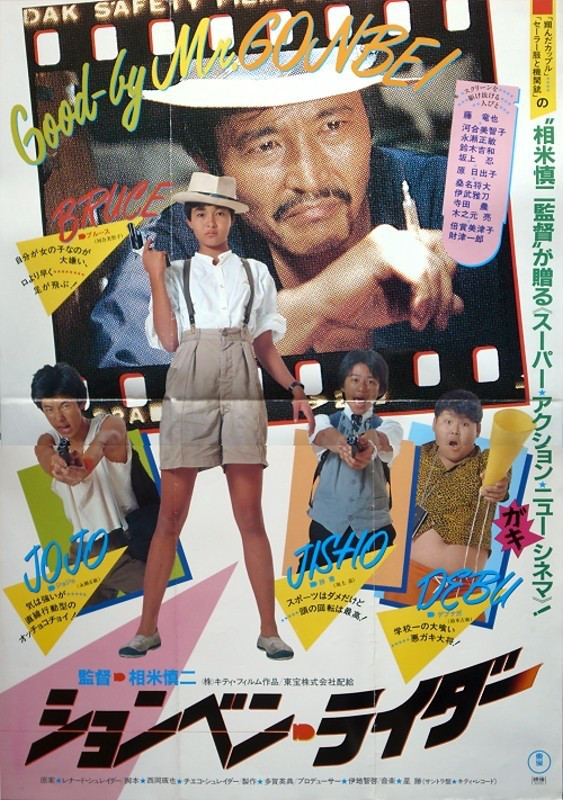
 The Girl Who Leapt Through Time is a perennial favourite in its native Japan. Yasutaka Tsutsui’s original novel was first published back in 1967 giving rise to a host of multimedia incarnations right up to the present day with Mamoru Hosoda’s 2006 animated film of the same name which is actually a kind of sequel to Tsutsui’s story. Arguably among the best known, or at least the best loved to a generation of fans, is Hausu director Nobuhiko Obayashi’s 1983 movie The Little Girl Who Conquered Time (時をかける少女, Toki wo Kakeru Shoujo) which is, once again, a Kadokawa teen idol flick complete with a music video end credits sequence.
 Yusaku Matsuda became a household name and all round cool guy hero thanks to his role as a maverick private eye in the hit TV show Detective Story, however despite sharing the same name, Kichitaro Negishi’s Detective Story movie from 1983 (探偵物語, Tantei Monogatari) has absolutely nothing to with the identically titled drama series. In fact, Matsuda is not even the star attraction here as the film is clearly built around top idol of the day Hiroko Yakushimaru as it adapts a novel which is also published by the agency that represents her and even works some of her music into the soundtrack.
 “Why do we have to make such sacrifices for our children?”. It sounds a little cold, doesn’t it, but none the less true. Yoshimitsu Morita’s 1983 social satire The Family Game (家族ゲーム, Kazoku Game) takes that most Japanese of genres, the family drama, and turns it inside out whilst vigorously shaking it to see what else falls from the pockets.
 Of all the post-war Japanese filmmakers, the one who liked to twist the knife the most was surely Oshima. No subject too taboo, no pain too raw – he liked to find the sore spot and poke at it a little, if only in the hope of encouraging an accelerated healing, albeit one which would leave a scar to remind you that once you suffered. With Merry Christmas, Mr. Lawrence (戦場のメリークリスマス, Senjou no Merry Christmas) he takes an unflinching look at the treatment of Japan’s prisoners of war and contrasts the Japanese forces with the different attitudes of the (mostly) British soldiers held within the walls of the camp.
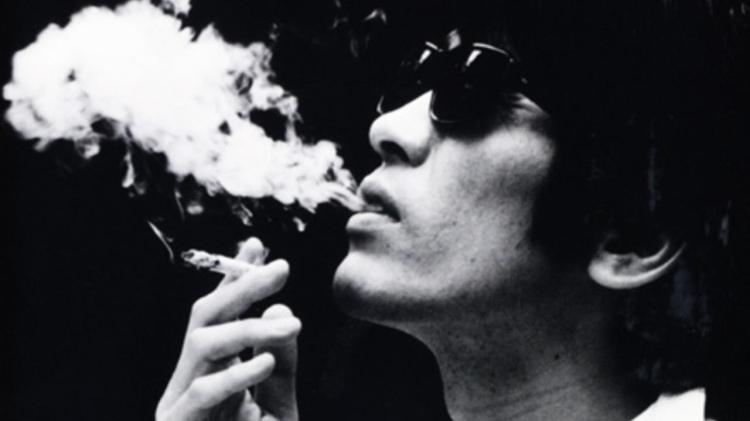 When you learn someone has died, suddenly everything they have ever done becomes tragic. No matter how old they were, this fact remains. Ryuji is a film which is always going to be overshadowed by the fact that its leading actor and screenwriter sadly passed away at the extremely young age of 33 from a terminal illness only days after the film’s release. Well, in actuality, the film was only “released” in a very limited sense, perhaps no one really had the heart to go on with it. However, it left its mark on all who saw it and eventually became a cult hit and influential classic on VHS. On paper, its tale is conventional – an existential yakuza drama about a man torn between conflicting desires and his own nature but on film, it’s something else.
 Windows on Worlds