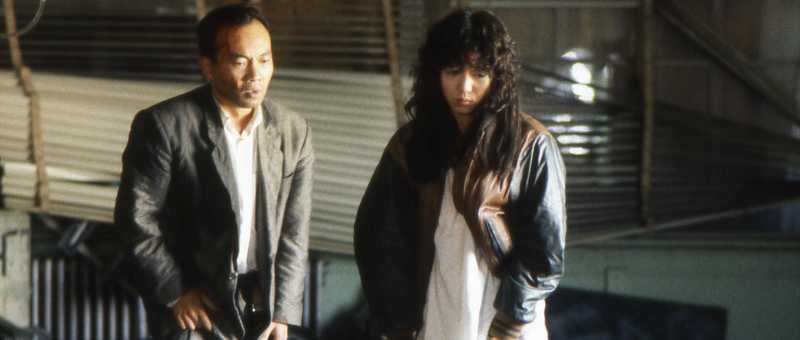
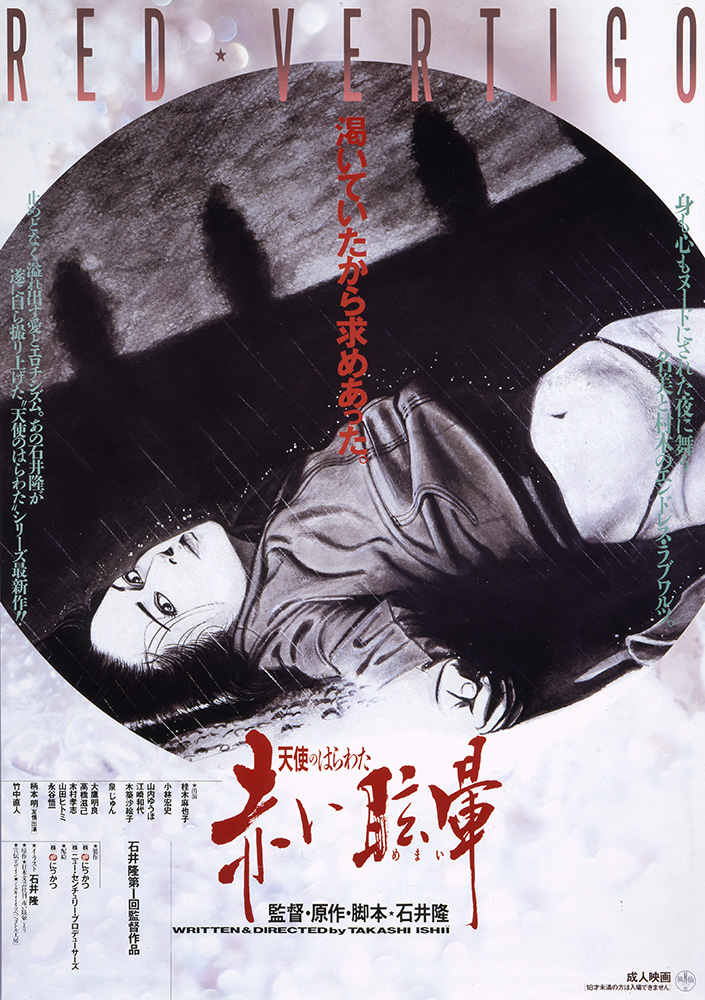
Autumn Tempest (落山風, Huang Yu-Shan, 1988)

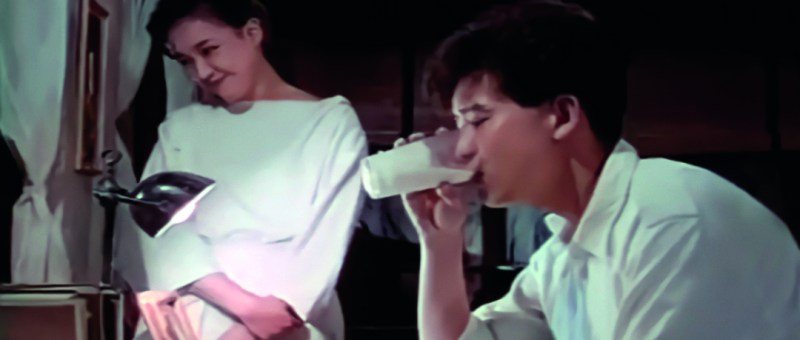
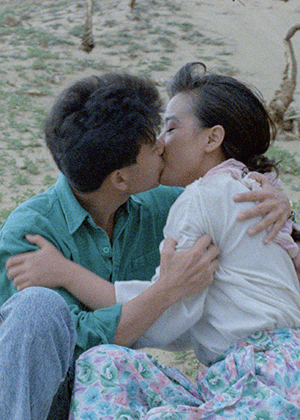
When the autumn tempest comes, it can launch a buffalo into the air, according to a middle-aged woman working at a remote mountain temple. Wen-Hsiang (Yang Ching-huang) is in the spring of his life, but the tempest is coming for him too as he finds himself consumed by the desires he’s supposed to be shaking off after becoming fixated on a lonely, young-ish novice at the temple in flight from a failed marriage.

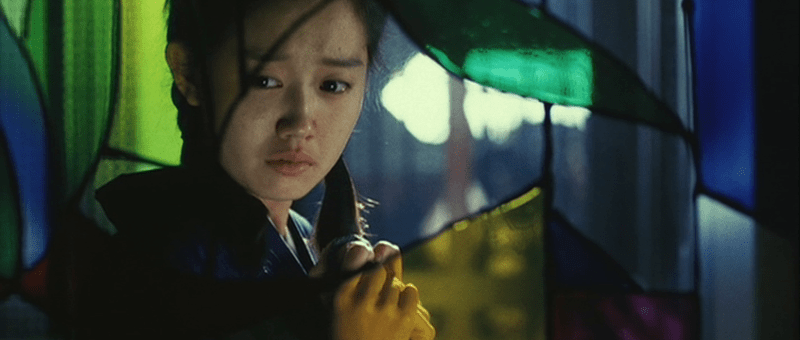
Su-pi’s (Kang Soo-yeon) decision to become a nun is reflective of the repressive patriarchal social codes under which she was living. We’re told that she’s essentially been rejected because she was unable to produce a male heir. Her husband has since got his mistress pregnant, or so he thinks, and the mother-in-law, who is really the one in charge, has decided to move her in, telling Su-pi she can like it or lump it. Unsurprisingly, Su-pi chose to leave but the temple hasn’t really accepted her either. Su-pi wants to shave her head and be admitted as a nun, but the abbess says she’s not ready. 

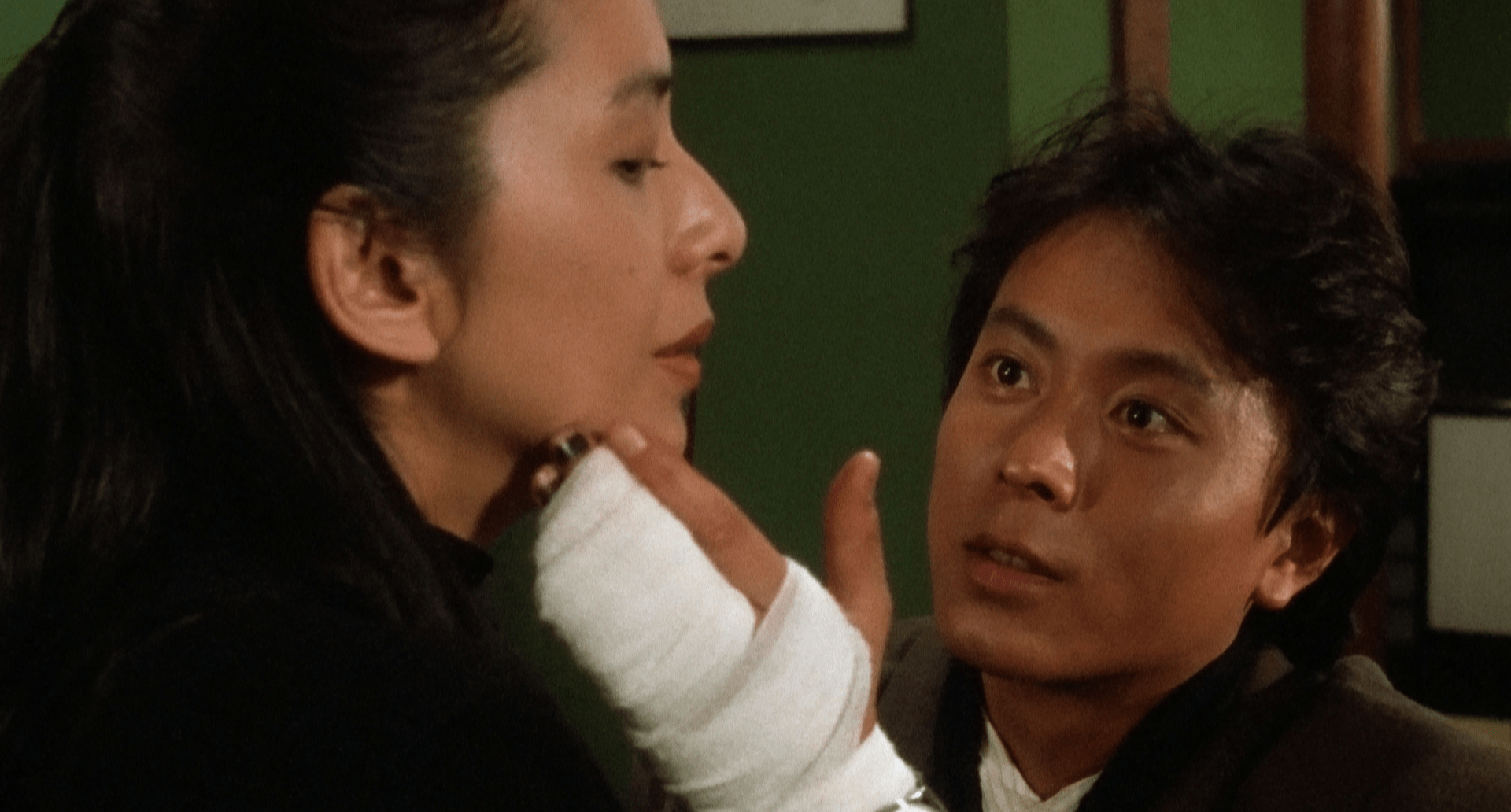
Su-pi does indeed have lingering attachments to this world and they seem to lead in two directions, firstly her unfilled and at the time taboo sexual desires, and her resentment towards her husband couple with the sense of righteous anger over her unfair dismissal. This desire to be desired is what draws her to Wen-Hsiang who is probably not all that much younger than her but is also a “kid” too young to know anything of real love. She asks him if she’s still young and pretty and if he loves her to which Wen-Hsiang readily agrees though it’s more that he becomes obsessed with her, drunk on his desire and his own need to be needed.

Wen-Hsiang’s parents’ marriage collapsed some years previously though they’ve never divorced because of the social stigma and now Wen-Hsiang’s mother has taken his sister to the US leaving him behind. Not getting along with his father, his doting grandmother sends him to the temple to help him study so he can fulfil his familial obligations, get into medical school, and follow in his father’s footsteps. No one seems to want Wen-Hsiang, not even the old girlfriend who wouldn’t stop calling when he first went to the temple but has since moved on. But even on decamping to the mountains, Wen-Hsiang can’t leave the city behind. He packs a series of coffee-related accoutrements as well as tapes of Western and Japanese pop music he listens to while he studies. When he finds the Buddha’s eyes intrusive, he simply throws his jacket over them.

But the transgressive sexual relationship they enter into also nearly kills the abbess who is struck down by some kind of psychic force that seems to emanate from it. Though the couple think they’ve kept it quiet, everyone appears to know, the abbess warning Su-pi that young men are impulsive, like bulls who can’t be tamed, and should be avoided. Struck by the weight of this spiritual transgression, Su-pi tries to end it but is both drawn by her own desire and by Wen-Hsiang’s obsession. The realisation that she is pregnant forces her hand, though we might also wonder if in the end her greatest desire was always for revenge or just to avenge herself by forcing her husband to realise the fault lies with him. She is fully capable of fulfilling the role society has forced on her though she may also reject it symbolically by becoming a nun while fulfilling her own desires by telling her husband where to go when he comes crawling back.

Though the film sets out to punish Wen-Hsiang for his transgressions, it cannot help but implicate Su-pi for his downfall, implying it’s is her fault rather than resolutely his own in his inability to overcome his desires. She meanwhile is equally punished by the film’s ambiguous ending in which she may have to live with the unintended consequences of embracing her sexuality as opposed to abandoning it by joining the temple. Even so, there’s something so classical about her features that they almost resemble the face of Buddha, not unlike that Wen-Hsiang’s grandmother prays to in the hope he’ll get into medical school. Huang frequently uses natural imagery to express the tumultuous emotions of the pair of lovers in contrast to the ordered and tranquil environment of the temple but also perhaps suggests that not even here can they really free themselves of the authoritarian oppressions of the city.


Autumn Tempest screened as part of the BFI’s Myriad Voices: Reframing Taiwan New Cinema.

Labyrinth Romanesque (花園の迷宮, Shunya Ito, 1988)

“Poor things, born in the wrong time,” a woman laments of two girls perhaps not that much younger than herself yet as trapped by the age of militarism as anyone else. Adapted from a short story by Edogawa Rampo, Shunya Ito’s gothic mystery Labyrinth Romanesque (花園の迷宮, Hanazono no Meikyu) effectively skewers militarism’s hypocrisies and lays bare the dehumanising effects its nihilistic philosophy has wrought on the nation as a whole. When killing is almost an imperative, life has little value and brutality seemingly the only acceptable response to mass violence.

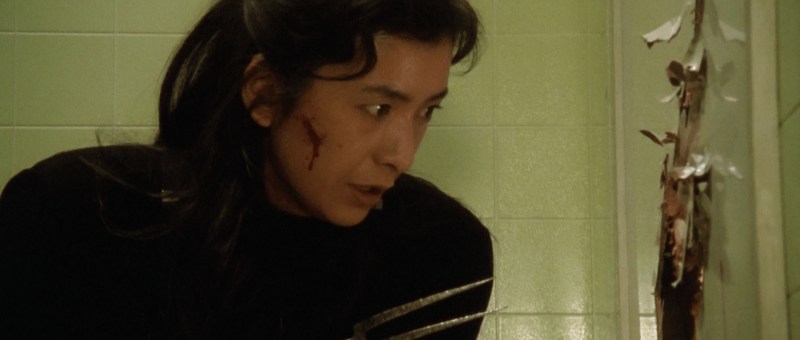
Ito conjures a sense of haunting by adding a modern day framing sequence in which the abandoned hotel is an eerie space of cobweb-ridden collapse. A wrecking ball arcs back and fore, threatening to unearth a truth long buried and this is after all a mystery, at least in part. With extraordinary finesse, the camera travels from the ruins into the hotel of old as a woman enters the frame. We are now in 1942. This is Yokohama, a harbour town, and so the “hotel” is filled with military personnel though transgressively it also seems trapped in a kind of before time. The sailors dance to American standards such as Georgia on my Mind and Goodnight Sweetheart though otherwise at war with America. All eyes are on sex worker Yuri (Hitomi Kuroki) and her dashing Zero Fighter pilot boyfriend, Takemiya (Tatsuo Nadaka).

But later we learn that Takemiya hated planes and was scared of heights to the point that it kept him up at night. Apparently from a military family, he felt unable to avoid going on with this militaristic charade and saw no future for himself other than glorious death. Everyone at the Fukuju Hotel is in their way already dead and chief among them the madam, Tae (Yoko Shimada), who becomes the prime suspect when her unpleasant husband Ichitaro (Akira Nakao) is murdered during the night. Her nemesis is however. Ichitaro’s sister, Kiku (Kyoko Enami), who has just been deported from the US where she had been living after selling herself into sexual slavery in order to financially support Ichitaro after their parents died. 

Kiku had been Tae’s madam, bringing her over from Japan at 17 and as she will do again, actively sitting on her face when she screamed and fought after being assigned her first customer. This brutalisation seems have driven Tae towards a desire for escape, but that was only available to her by marrying Ichiro who then betrayed his own sister to open another brothel that he ran with Tae before leaving the US and setting up in Yokohama in light of the declining relationship between America and Japan. Though she herself was brutalised, Tae can only earn her freedom by exploiting other women. At the beginning of the film two young girls, Mitsu (Mami Nomura), 18, and Fumi (Yuki Kudo), 17, arrive from the country excited for their new lives but without fully understanding what they’ve signed up to. Like Tae, Omitsu fights back when chosen by a sleazy, nouveau riche factory owner who made his money making planes for the navy, and while Tae tries to talk her down Kiku simply sits on her face and tells the man to do his business. Afterwards, Mitsu tries to kill herself and her friendship with Fumi is strained by her internalised sense of shame. Determined to save enough money to redeem Fumi’s contract before the same thing happens to her, she throws herself into sex work and begins to lose Fumi’s respect. 

It’s the two girls who see this place as haunted most clearly, firstly in catching sight of Tae wandering the corridors in her nighty on the night of her husband’s murder, and then by Fumi’s belief she has seen the pale ghost of a geisha only to realise it was just a wig on a shelf. Mitsu says it belonged to a woman who contracted syphilis, went mad, and then died, a fate she now fears may also befall her. Like many of the other women, the girls have been sold into sexual slavery by their parents most likely because their families are poor and they can’t feed their other children. This kind of rural poverty is of course exacerbated by the financial demands of imperial expansion while the dehumanising elements of militarism, the belief that everything must be devoted to the war effort, allow this heinous relic of the feudal past to continue. Sons after all belong to the emperor and will become brave soldiers fighting for their nation, while daughters have no intrinsic value other than as wives or sex workers to be advantageously traded or sold on.

It’s this that Fumi comes to realise and resent. She insists that she will never return to her home or parents because at the end of the day, they sold her. Yet she feels little sympathy on learning that one of the other women is a notorious criminal who murdered her foster parents because they too took girls in to sell them on. The hotel somehow becomes the nexus of all this pain and violence, a place the women can never escape. Ito does his best to make clear that this is hell by travelling through the air ducts, on towards the eerie glow of the furnace and the dank passages running under the hotel and out into the sea. The boiler room connects all other areas of the hotel and exposes all their secrets in the sound that travels through the ducts. But some secrets are designed to remain forever hidden until the wrecking balls of the contemporary era force them into the light and confront us with this buried history. Until then, the hotel exists in a ghostly state, Ito flooding it with hazy images and visitations that read as eternal apparitions of this place’s inescapable despair trapping all within its labyrinth of unresolved longing.


Trailer (no subtitles)

The Eighth Happiness (八星報喜, Johnnie To, 1988)

A literal series of crossed wires provoke romantic intrigue for three eccentric brothers in Johnnie To’s smash hit Cinema City Lunar New Year comedy, The Eighth Happiness (八星報喜). As so often in To’s subsequent films, a random instance of fatalistic chance changes each of brothers’ lives though not perhaps permanently as the surprisingly ironic coda makes plain. Even so, their parallel quests for love of one kind or another perhaps tell us something about the changing Hong Kong society in the midst of rising economic prosperity and looming Handover anxiety. 

Seemingly without parents, the three Fong brothers live together in a well-appointed multi-level home owned by oldest sibling Fai (Raymond Wong Pak-ming) who hosts a daytime television program titled Mainly Housewives which includes a cookery/agony aunt segment in which he attempts to solve someone’s relationship problems through food. As in many of Raymond Wong’s other roles in Cinema City comedies, Fai is feminised throughout not only in acting as the “mother” of the family preparing all the meals at home but also in his single status and the focus of his television show which nevertheless intros him with the James Bond theme. 

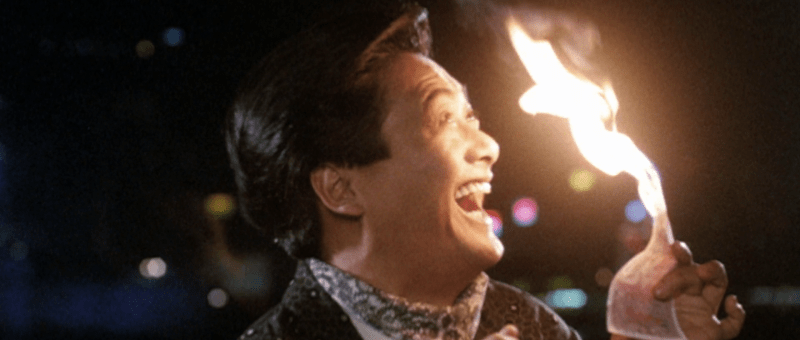
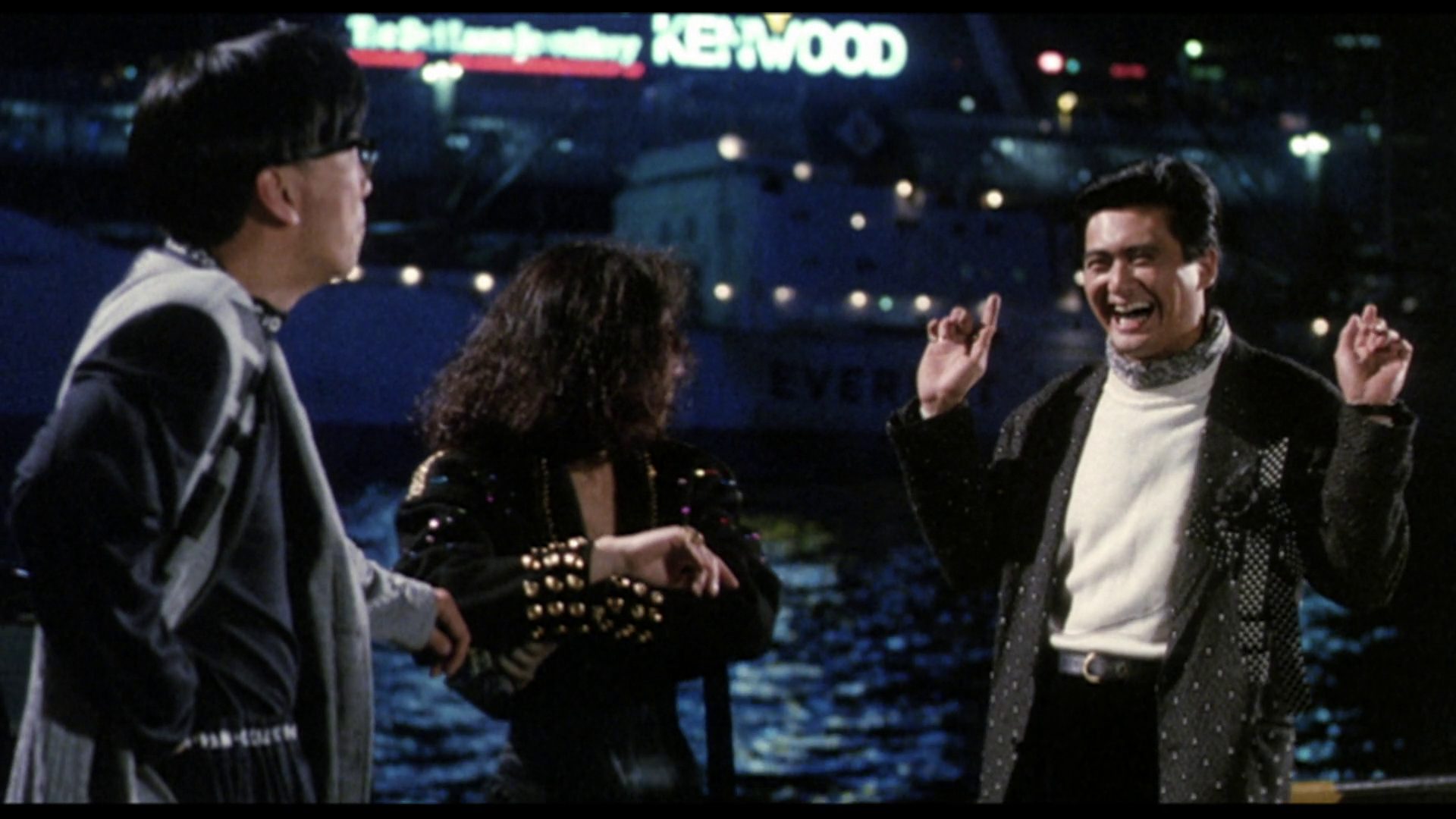
Second brother Long (Chow Yun-fat), meanwhile, actively camps it up claiming that he pretends to be gay in order to get girls after lulling them into a false sense of security. Despite being engaged to air hostess Piu Hung (Carol Cheng Yu Ling), he has a side mission going to sleep with a woman from each of Hong Kong’s 19 districts and is a relentless Casanova striking up an affair with unexpectedly chaotic department store assistant “Beautiful” (Cherie Chung Chor-hung). Youngest brother Sang (Jacky Cheung Hok-yau), meanwhile, is a painfully shy aspiring cartoonist who becomes an accidental white knight to a young woman caught up in a bizarre flashing incident in the local park only to be mistaken for the culprit himself. 

Each of the brothers is offered a new romantic possibility because of a telephone malfunction caused by an elderly lady driver forgetting her glasses and ploughing through local works mangling the lines. Sang is reunited with Ying Ying (and her martial arts champion swordsman mother) after overhearing a suicide attempt but ending up at her apartment by mistake, thereafter finding himself facing a challenge of masculinity on discovering that she already has a very buff and macho boyfriend who in his own way also seems jealous and insecure. Meanwhile, Long overhears a conversation between Beautiful and a colleague at the store about their ideal men, entering into passive aggressive courtship while discovering that her boyfriend is fabulously wealthy (or, at least, his father is) leading to a standoff in which he ends up proving his masculinity by burning money he doesn’t really have, smashing his own cheapo watch to intimidate the other guy into destroying his diamond Rolex, and then trashing the car he borrowed from Fai to expose the fact the other guy isn’t really wealthy or man enough to do the same because at the end of the day it’s his father’s money and he’s not so rich that these very expensive status symbols mean little to him. 

Fai meanwhile has a much more normal romance which is disrupted, mostly, by his brothers’ chaos and then near destroyed rather than forged through a misdirected phone call. After Long trashes his car, he asks Sang for the number for a repair guy but instead gets through to Fong (Fung Bo Bo) whose musician husband has just walked out on her seconds before which is why she’s quite rude to him on the phone, slamming the receiver down the second time he rings. Annoyed on a personal level Fai asks Long to troll her by ringing up at 3am every night causing her to injure her ankle and later fall on stage during a Cantonese opera performance. Then he ends up meeting her by chance in real life when she ends up buying the last of his favourite biscuits at a local cafe, only to discover she’s his interview for that day’s show where she’s supposed to talk about her art but finds his face so funny she can’t stop laughing. Had it not been for business with the telephone harassment they might have had a conventional romance, but the further machinations of the chaotic brothers soon convince her that Fai is not a reliable life partner. 

To convince her he’s really a good guy, Fai undertakes a grand gesture making himself the focus of his culinary/agony item by cooking up the spiciest soup imaginable and drinking it on live TV to atone but such a meaningless feat does nothing for Fong who doubtless is over romantic stunts and looking for something more concrete. Long’s grand gesture, by contrast, fares much better as he chases Piu Hung to a fancy hotel and makes a scene from the other side of the glass before falling in the pool while trying desperately to save an engagement ring while suddenly on the back foot after she learns about his philandering. Fai is only able to redeem himself through artifice, he and Fong signing through their romantic drama while performing Cantonese opera surrounded by the brothers and their girls trying at least to support him in his own romantic endeavour which their chaos has largely undermined. 

It’s another cosmic irony therefore that whereas the chaos of the misdirected telephone calls earns both Sang and Long everything they wanted in both career and romantic success, Fai who generally does the right thing ultimately loses out through another chaotic development while even Beautiful apparently achieves her dreams. Despite his earlier protestations during get phone call that Hong Kong was beautiful and there was no need to leave, Song and Ying Ying decide to travel the world perhaps expressing a degree of anxiety in pre-Handover Hong Kong, while Long is left with internalised anxiety over his new role as husband and father, and Fai is back pretty much where he started. A typical Lunar New Year nonsense comedy, there’s no disputing that much of the humour in The Eighth Happiness is of its time, but there is something of To’s later obsessions with comic fate and romantic farce that transcends Raymond Wong & Philip Cheng’s Cinema City silliness. 


Trailer (no subtitles)

The Big Heat (城巿特警, Andrew Kam & Johnnie To, 1988)

A Hong Kong cop struggles with his sense of responsibility when faced with the fatalistic existential threat of the imminent Handover in Johnnie To’s first foray into the genre with which he would later become most closely associated outside of Hong Kong, the action crime drama. After a handful of Cinema City comedies, To is credited as a co-director along with Andrew Kam Yeung Wah though the production of The Big Heat (城巿特警), loosely inspired by the Fritz Lang film of the same name, was notoriously complicated passing through several hands over its unusually long gestation of almost two years, according to an interview with screenwriter Gordon Chan Kar-Seung, with producer Tsui Hark also heavily involved in the shooting. 

Tsui’s involvement is apparently responsible for the unusual level of explicit violence more usually found in horror exploitation rather than gangster noir, though there is perhaps something in the constant bodily destruction that aligns with the pre-Handover setting in which the “big heat” hanging over the city is an increasing existential panic which has created the maddening environment in which this surreal violence can occur as revealed in the opening dream sequence which features a drill piercing a man’s hand with small pieces of flesh speeding off it. The dream will turn out to be a prophecy foreshadowing the final shootout in which Inspector Wong (Waise Lee Chi-Hung) is shot thought the hand though at this point it signals both a psychological and physical fracturing. Owing to a neurological condition, Wong has lost full control over his right hand which leads him to question his ability to protect his city if he is unable to pull the trigger when needed which might also explain why he is frequently seen practicing his marksmanship at the firing range. 

Because of this anxiety, Wong had planned to resign but changes his mind on learning that his former partner who sustained an injury that Wong felt himself responsible for has been brutally murdered by Hong Kong gangsters in Malaysia after coming across a secret folder “by chance” containing photos used to blackmail a shipping magnate over his his homosexuality and an incriminating invoice. To do the right thing, Wong also temporarily breaks up with his forensic scientist girlfriend Maggie (Betty Mak Chui-Han) whom he was due to marry in a fortnight’s time suggesting that they not see each other until he’s solved his friend’s murder and then presumably plans to retire from law enforcement. 

Essentially, he deprioritises his personal, romantic relationships in favour of the homosocial brotherhood of the police both avenging his friend and dedicating himself to protecting Hong Kong from an oncoming threat represented by gangster Han (Paul Chu Kong) who is later revealed to be in cahoots with Russian mafia who ironically have a large portrait of Lenin on their boat and hammer and sickle flags everywhere while vowing to continue “selling drugs and capitalism” in the seemingly lawless environment of pre-Handover Hong Kong where everyone apparently wants to make enough money to be able to leave if the situation declines, “communist” Russians perhaps standing in for looming Mainland authoritarianism. Han even offers to sell “everything including Hong Kong” passing a list of names of “important people in the government” he apparently has access to in vast network of corruption. “Cheers to 1997” they ironically toast for their burgeoning business opportunity. 

It’s this corruption that is the source of Wong’s anxiety, fearing he doesn’t have the strength to stop it while his compromised hand is a symbol of both fate and an impotence that is later exorcised when he receives the corresponding physical injury yet is saved by a crucifix necklace that previously belonged to his girlfriend while in another instance of foreshadowing the corrupt policeman is eventually taken out by his own malfunctioning gun backfiring just like that which ruined an assailant’s hand in the drug bust in which Wong’s partner was injured. Having regained mastery over his hand, Wong is therefore more assured in his ability to protect Hong Kong from whatever it is that’s coming remaining within the police force while those who pay the heaviest price are an idealistic young rookie unable to adapt to the morally compromised world of pre-Handover Hong Kong, and Wong’s fiancée who becomes a symbol of that which he could not protect having prioritised his role as a police officer. Though somewhat disjointed having passed through so many hands, there are some typically To flourishes in the fluidity of the camerawork in the early stretches along with a gloomy romanticism in the fatalistic noir of the pre-Handover society even as he continues to find his feet as a purveyor of moody policier. 


Trailer (no subtitles)

Summer Vacation 1999 (1999年の夏休み, Shusuke Kaneko, 1988)

The curious thing, or perhaps a curious thing among many, about Shusuke Kaneko’s loose adaptation of Moto Hagio’s The Heart of Thomas Summer Vacation 1999 (1999年の夏休み, 1999 Toshi no Natsuyasumi) is that it takes place in a theoretical future that is also quite clearly an imaginary past. In a second introductory sequence, the voice of an adult man tells us that his is his memory, a fragment of the past kept alive by the clarity with which he remembers it. We don’t know who this voice belongs to, though the images encourage to think it must be the man the boy on screen, like the others played by a girl, will one day become but in another sense this boy doesn’t really exist either or at least is the bearer of several different identities.

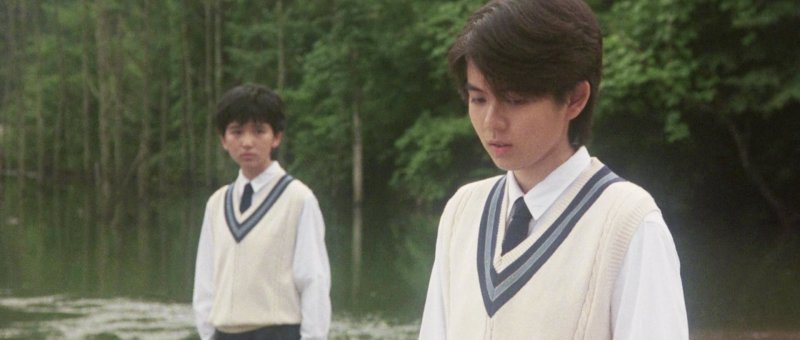
The fact he travels to this remote mansion in the countryside on an otherwise empty train signal’s the place’s unreality and detachment from the regular world. We’re told it’s 1999, a year that was still to come on the film’s release in 1988, and inevitably hints at a millennial dread along with the new dawn the writer describes himself having in experienced in what is otherwise a summer holiday movie. However, in the opening sequence we witnessed a boy who looked very like this one slip what is later assumed to be a suicide note under another boy’s door before walking through the gothic space of the country mansion and out to a rugged cliff where he takes his own life by jumping into a nearby lake. The name of the boy who died, apparently brokenhearted and filled with despair after his romantic overtures to another boy were rebuffed, was named Yu (Eri Miyajima). This one claims his name is Kaoru (also Eri Miyajima) and is different in temperament in character to the boy who may have died, his body has not been found, though to the others staying at the school over the summer holiday he seems somehow like a vengeful ghost arriving to take them to task for Yu’s death. 

Kaneko specifically frames the school as haunted through the gothic photography of its billowing curtains and 19th century European aesthetics but also through its emptiness. The sound of children laughing, the boys who have left and returned somewhere else, echo through empty corridors further framing it as a place of memory and it seems true enough that the other boys who remain are trapped here in the same way they are trapped within themselves in their inability to express their emotions. The youngest of the boys, the sensitive Norio, (Eri Fukatsu) intensely resents Kazuhiko (Tomoko Otakara) who is as he describes beloved by all but himself cannot bear to be loved and may have contributed to Yu’s suicide through the abruptness of his romantic rejection. 

Later Kazuhiko recalls a memory of himself watching the sunset as a child in which he felt so terribly alone, as if he were the only person left on earth and there was no one with whom he could share this beauty. This sense of loneliness and isolation is further symbolised by the remote nature of the boarding school which seems to exist outside of time itself. Inspired by the setting of the novel, the boys dress in a fashion more associated with 19th century aristocracy than the late 1980s yet they are surrounded by machines and makeshift, retro futuristic technology in which they spend their days programming some kind of computer system. The leap into the lake is also into memory, but otherwise a kind of rebirth or rebaptism which allows Kazuhiko to make sense of himself and the other boys to come to an acceptance of Yu, Kaoru, and everything he embodies in relation to themselves. 

Even so, the elliptical nature of the film’s ending hints that this is a continually looping story replaying endlessly in the memory of a now much older man recalling the journey into adolescence in which he ruptured the shell of his ignorance much as the caterpillar becomes a butterfly even if that butterfly was something that Kaoru wanted to kill without harming its beauty. Perhaps in away that’s what the man has done in preserving this memory with its all of its gothic shades of billowing curtains and shadowy corridors amid the ethereality of the twilight of youth.


Summer Vacation 1999 screened as part of this year’s Queer East.

Door (Banmei Takahashi, 1988)

You like to think you’re safe behind closed doors, that nothing that happens behind them is anybody’s business and you’re free to be yourself. But a door is as much about keeping things in as it is about keeping them out and perhaps you’re not as in control of it as you thought. Arriving at the tail end of the Bubble era, Banmei Takahashi’s giallo-esque home invasion thriller is at heart about insecurity, a feeling of anxiety and ever impending doom under the watchful eyes of a judgemental society. 

At least, Yasuko (Keiko Takahashi) feels the eyes of her neighbours keenly on her, nervously attempting to live up to the role that’s been assigned to her as a moderately affluent housewife in a nice middle-class area that is nevertheless full of hazards even if many of them are social and psychological rather than directly physical. We can feel her discomfort when an anonymous neighbour passive aggressively returns her rubbish to her front door when she attempts to throw it out on the incorrect day, her husband’s (Shiro Shimomoto) advice simply to make sure she follows the bin day timetable correctly in the future. Another neighbour whose face is also not seen later stares at her when she drops a tissue that has been placed in her letterbox by a salesman (Daijiro Tsutsumi) who is harassing her, forcing Yasuko to pick it back up and take to her own apartment to dispose of lest she be judged for failing to obey this simple rule of urban living despite realising that the tissue likely contains unpleasant bodily fluids. 

The great mystery is why Yasuko, who clearly finds the salesman’s attentions threatening, does not immediately hang up when he calls her but continues to listen to his ominous conversation which heavily implies he is close by and watching her. Previously he’d daubed an obscene message on her front door branding her as “sexually frustrated” which as it turns out may not be far off the mark. Her husband is largely absent and often works away. When he returns she tries to wake him up after putting their son to bed, but he’s dead to the world and leaves the next morning having explained that he’ll be away the next three nights due to a colleague falling ill. Among the junk mail delivered to their flat were a series of business cards for cabaret bars that he jokingly suggested keeping, though as it turns out he really is at work and not spinning a yarn for a three-day jaunt with a mistress even if you could make a case that he’s in an extra-marital affair with his career. Yasuko almost says as much when she calls and tells him she’s scared but he refuses to come home, crying out that he obviously has no regard for his wife and child. 

It’s clear that the economic demands of the late Bubble era have endangered the traditional family even as they’ve provided a level of financial comfort that enables Yasuko to live in this “nice” apartment even if it’s perhaps only ordinarily nice for a middling middle-class couple living a stereotypically middle-class suburban life. Yasuko’s sense of anxiety partly stems from being constantly observed by those around her in an alienating urban environment but also suggests an insecurity in her social status which is after all dependent on a financial security which may be about to disappear as the Bubble bursts. The home is also a burden, and the space behind the door one of isolation rather than safety that leaves her feeling vulnerable and alone in the continual absence of her husband. 

Tellingly all of the voices she hears other than his (and their son’s) are filtered as if they were speaking to her via telephone. She has two handsets in her home, one belonging to the phone itself, black with an answering machine, and the other to the intercom, white and wall-mounted, which is intended to give her control over her door but which in the end offers little comfort just like the near pointless chain-lock intended to keep strangers at arm’s length but in reality easily breakable. In this society of ultra-politeness simply not answering an urgent knocking may not be an option, but behind the door Yasuko is also lonely so perhaps those nuisance cold calls telling her she’s won a cruise, encouraging her to take up English conversation classes, or maybe join a cult, are not really so much of a nuisance at all simultaneously interrupting her loneliness while also penetrating the protective sanctuary of the private space of the home much as the salesman will eventually do in physically breaking a protective barrier. 

When Yasuko fights back, she does so with a housewife’s weapons such as carving forks and chopping boards even picking up her son’s rollerblades to enlist him in the resistance. Takahashi films the final confrontation from above in a complex aerial shot that suggests a literal cat and mouse game as if Yasuko were intent on ejecting a stubborn rodent from her home, the rounded, doorless entranceways between rooms almost like oversized mouse holes in a scene from a cartoon. The question is whether Yasuko can in fact protect this space, a space which represents her family, in overcoming her own anxieties and the latent dark desire which draws her towards her stalker in her loneliness and lack of fulfilment. Yet the answer doesn’t quite lie in perfecting the persona of the perfect housewife even if it could on one level be argued that she’s saved by another kind of male protector but in taking care of business and reasserting her control over the space by means of resetting its boundaries very much on her own terms.


Door is released in the UK on blu-ray 30th October courtesy of Third Window Films.
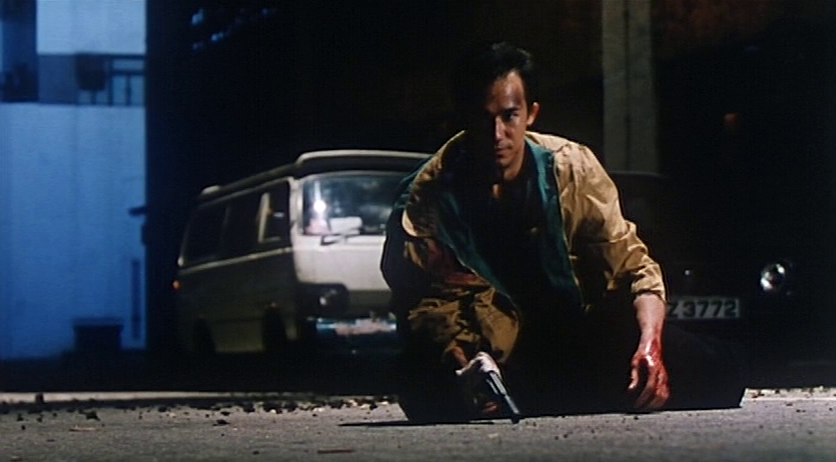
Restoration trailer (English subtitles)

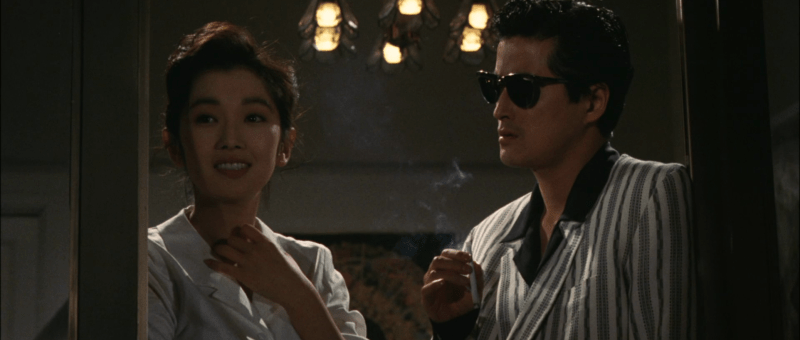
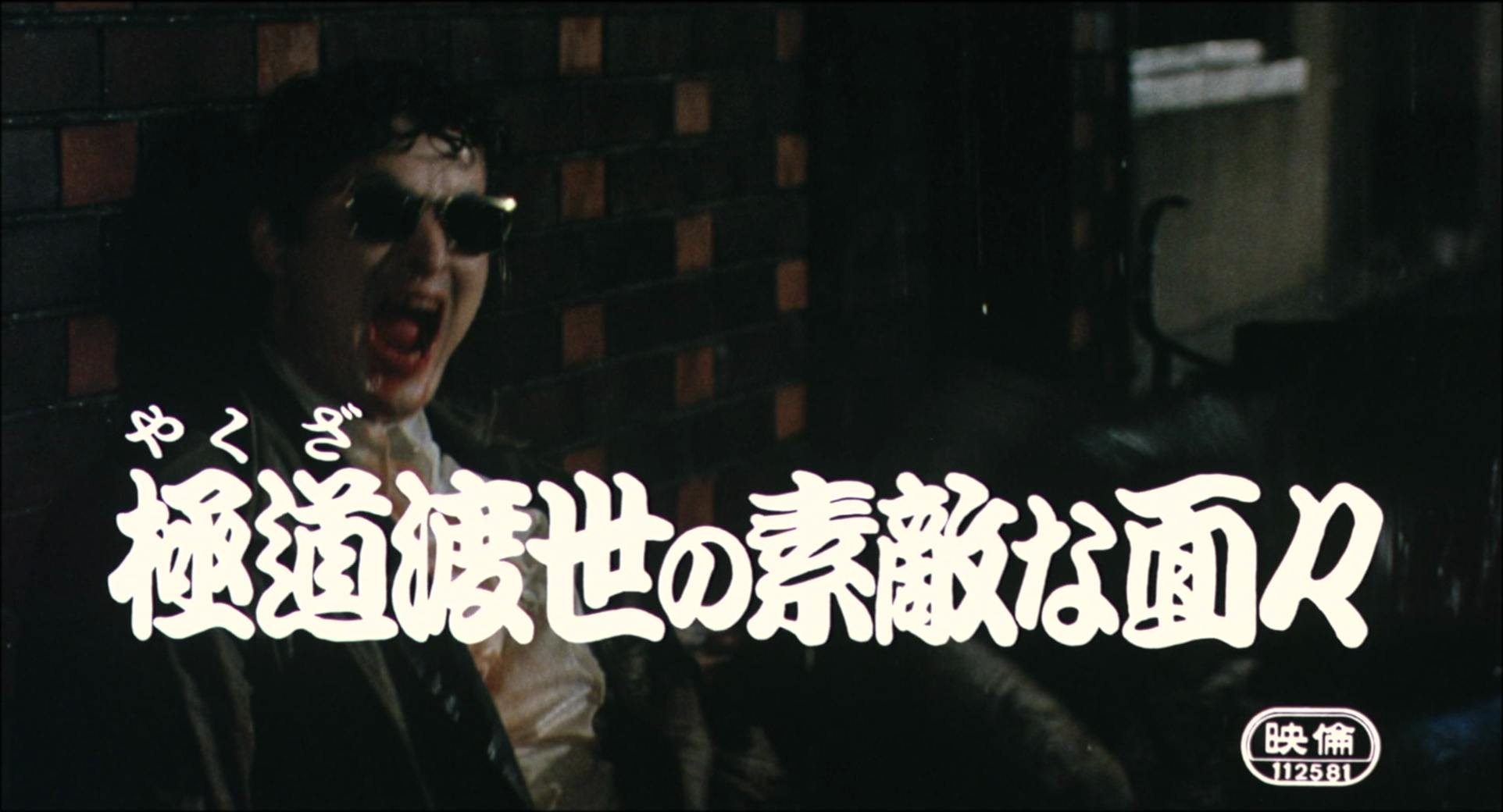
Those Swell Yakuza (極道渡世の素敵な面々, Seiji Izumi, 1988)

The yakuza movies of the post-war era had largely depicted the gangster world as being one of internecine desperation and even if the hero was a pure-hearted defender of a traditional honour code those around him were anything but honourable. By the late 1980s, however, the yakuza were increasingly seen as an outdated institution amid the high rise office blocks of a prosperous Bubble-era Japan in which the street thug had given way to more corporatised kinds of organised crime. 

This might help to explain the ironic title of Seiji Izumi’s 1988 comedy Those Swell Yakuza (極道渡世の素敵な面々, Yakuza Tosei no Sutekina Menmen) which simultaneously presents a nostalgic view of gangster cool and a way of life which is more rooted in the everyday existence of a contemporary petty outlaw. The hero, 24-year-old Ryo (Takanori Jinnai), is a former banker who evidently rejected the heavily corporatised nature of the Bubble-era society and left his stable job to open a record store which subsequently went bankrupt leaving him with huge debts to yakuza loansharks. It’s these debts he’s trying to escape by wandering into a mahjong parlour and getting carried away with his early success despite the advice of steady hand Nakagawa (Takeshi Kusaka) who eventually covers his losses when it turns out that Ryo started playing without any stake money. A ageing yakuza, Nakagawa takes him outside to teach him a lesson explaining that the parlour is run by Taiwanese gangsters and he’s lucky to be leaving with his life. Nevertheless, Nakagawa is impressed by his hutzpah and leaves his business card in case Ryo has the desire to get in touch. 

Ryo’s decision to become a yakuza reflects both a sense of emptiness in the Bubble-era society and a nostalgic longing for post-war gangsterism and the theoretical “freedom” is represents to a man like Ryo though of course there’s not so much autonomy to be had in the life of a petty footsoldier who is always beholden to the whims of his boss. Nakagawa becomes to him a kind of father figure, though he’s also someone who has largely lost out in having achieved little in the realms of gangsterdom while his friend and contemporary Kanzaki (Hideo Murota) has successfully climbed the ladder to become a high ranking officer. Kanzaki takes him to task for visiting the mahjong parlour in part because the Taiwanese gang has gained a reputation for dealing with drugs of which their organisation does not approve and it would present a problem if his connections to them were to come out during any potential anti-drug action by the police. By the film’s conclusion, Nakagawa has become something of a tragic figure more or less excluded from the yakuza world while his body is ravaged by alcoholism and his finances by gambling addiction. 

Ryo, meanwhile, seems to live the yakuza dream. He gets stabbed while defending a bar hostess from a yakuza from a different gang and then meets the love of his life, Keiko (Yumi Aso), who similarly rejects the constraints of the contemporary society by refusing the marriage arranged by her father for his own benefit to spend three years waiting for Ryo who goes to prison after shooting Kanzaki in the arm to avenge a slight against Nakagawa who also cuts off his finger to fulfil the codes of yakuza honour. Wandering around in sunshades and flashy suits, Ryo soon attracts a fiercely loyal band of followers of his own and despite the tragedy of losing one of his men to an assassin proves adept in navigating the yakuza world to present an idealised image of masculine cool perfectly tailored to the Bubble era.

Despite the shooting that landed him in prison and the mission of revenge he leaves his own wedding (after the ceremony) to complete in the film’s conclusion, Ryo’s yakuza existence is otherwise fairly non-violent and based in a kind of trickery that makes him seem clever rather than exploitative given that as Nakagawa had suggested the way forward for the modern yakuza is scams not drugs. As one of his prison buddies puts it, there are old school gangsters like Ryo ready to die for the clan, and then there are those like himself intent on filling their boots. Largely, most of these guys are old school yakuza who do obey the code and have some kind of scruples about how they make their money which adds to their aspirational allure as Ryo seems to lead a fairly charmed life of idealised masculinity with a pretty wife and fancy apartment seemingly free of the petty oppressions faced by workaday salarymen. Izumi makes frequent reference to classic Toei gangster pictures from a decade previously with appearance from from genre stalwarts such as Hideo Murota, Nobuo Ando, and Mikio Narita, but lends the action a contemporary spin in the ironic sense of cool even if the implications of ambiguous ending may be far less upbeat.


Break Out (行き止まりの挽歌 ブレイクアウト, Toru Murakawa, 1988)

Good cop or bad cop? A maverick detective crosses the line in the name of justice in Toru Murakawa’s hardboiled thriller, Break Out (行き止まりの挽歌 ブレイクアウト, Ikidomari no Banka: Break Out). Like many of Murakawa’s films throughout the ‘80s, the main villain turns out to be political corruption along with a complicit police force which the hero must in a sense divorce realising that he can enforce the law only by breaking it but tragically failing to protect those most in need of his care. 

Kaji (Tatsuya Fuji) is indeed the archetype of the lone wolf cop. Stumbling out of bed with an obvious hangover and fuzzy beard that stands in stark contrast to his clean-shaven colleagues, he immediately butts heads with follow officer Sakura (Renji Ishibashi) who is technically in charge of the latest homicide case which Kaji believes may be connected to the death of a young woman at a hotel that the force has so far proved reluctant to investigate. To him, it all seems to point to local gangster Nakai (Kiyoshi Nakajoe) with whom he seems to have an ongoing rivalry which might be why Nakai has implicated Kaji’s ex wife Saeko (Saiko Isshiki) in his drug smuggling operation. 

Kaji quickly identifies the body as a bass player, Shimada, who just happens to have played at a club connected to Nakai, and soon realises that a young woman, Miki (Yoko Ishino), who belongs to a local biker gang, is most likely responsible for his death. But, somehow feeling sorry for her and suspecting she may have access to information that would help him take out Nakai for good, Kaji actively helps Miki evade the police by harbouring her in his own apartment while they are both stalked by a mysterious, Terminator-esque hitman who seems intent on recovering some kind of evidence obviously harmful to his client whoever that may be. 

Murakawa’s greatest successes had occurred in the 1970s partnering with the great Yusaku Matsuda who had at this point moved away from genre films though he would later reunite with the director in his final screen appearance, a television movie in which he played an earnest policeman investigating a terrorist incident, before sadly passing away of bladder cancer at only 39. In any case the image of Matsuda hangs heavy over Murakawa’s subsequent films and it’s quite obvious that the menacing hitman has a distinctly Matsuda-esque silhouette, while Tatsuya Fuji plays a similar role to that he’d inhabited in Yoichi Sai’s Let Him Rest in Peace only this time as a world weary ‘80s cop who has his own particular code of righteousness he feels the world has failed. 

His more cynical boss, played by Murakawa stalwart Mikio Narita, is quick to tell him that he should have resigned after a previous incident and that if he had done so his wife would not have left him, a sentiment which she later confirms which is in part surprising because the incident involved him fatally shooting her father. The implication is that Kaji is a true defender of justice who refused to surrender to institutional corruption even at great personal cost. Yet we do definitively see him cross the line, coldly executing a suspect who goads him by claiming he has already killed someone he cared about and thereafter little caring for conventional morality deciding to take the bad guys down with him no longer having anything left to lose except perhaps the girl, Miki, with whom he has developed a paternal bond. 

Meanwhile his earnest partner, Nishimura (Hiroaki Murakami), who originally disapproved of Kaji’s old school, maverick policing has changed his tune now seeing the value in his belligerence not least when his own wife is taken hostage by Nakai leaving him equally powerless at police HQ. Kaji is constantly told to back off the hotel case because of pressure from above, eventually discovering a connection to a sleazy politician but knowing that he can’t touch him or Nakai while bizarrely ordered to continue investigating Shimada’s death despite the evidence that suggests they are quite clearly connected. Still as the rather more poetic Japanese title which means something more like “elegy for a dead end” implies, this world is already beyond redemption and the only recourse open to Kaji is to make a sacrifice of himself in the name of justice. A good bad cop, all he can do is pass on his outrage to those left behind. Shot with Murakawa’s trademark hardboiled mist, and a noirish sense of fatalism the film paints a bleak picture of infinite corruption in Bubble-era Japan in which the only hero on offer is a morally compromised cop prepared to die for an illusionary justice. 


Sa Bangji (사방지, Song Kyung-shik, 1988)

The presence of an intersex person presents an existential threat to a fiercely patriarchal social order in Song Kyung-shik’s intense feudal-era drama, Sa Bangji (사방지). Inspired by the life of a historical figure who was exiled from mainstream society because of their gender identity, the film finds its protagonist continually exploited as a fetishised object of desire challenging the sexual repression of a society in which women were required to display no sexuality. 

The monks at the temple where Sa Bangji (Lee Hye-young) was raised advise them that they cannot live in the secular world and with good reason, as the hostility with which they are later greeted makes clear. On looking at them, a shamaness immediately has a vision of a snail, which is as she later explains a “hermaphrodite” creature, and immediately seems to have grasped their secret. The shamaness explodes with rage and insists the noble house by whom Sa Bangji has reluctantly been taken in as a maid should expel them at once for they will only bring misfortune and potentially death. They are later told that they are abomination born from their parents’ bad karma and made to pay the price for it with only the kind Buddhist monk reminding Sa Bangji that there will always be a place at the temple for them and that bad karma can always be overcome with goodness and light. 

Sa Bangji hadn’t wanted to leave the temple because they longed to see the world beyond it, only that even in this comparatively safe space they felt a burden while again ironically caught between two worlds neither nun nor layman. Though they present as a woman, Sa Bangji has male genitalia and is at pains to keep their true nature hidden. When the widow Lee So-sa (Bang Hee) encounters Sa Bangji at the temple, she too is drawn to their uncanniness and determines to “rescue” them from a monastic existence by taking them back to her home as a maid. Once there, she begins on what can only be described as a campaign of sexual harassment in which she continually makes advances to Sa Bangji who repeatedly turns them down because they are afraid of what will happen once their gender atypicality is exposed. So-sa in fact forces it out of them by accusing Sa Bangji of stealing a precious ring as a pretext for strip searching them. 

This ring is later exchanged as a token of their love once they have indeed become intimate and discovered in each other romantic fulfilment. Yet the ring also echoes the constraint which surrounds each of them by virtue of not being male in feudal society. “How dare you make decisions all by yourself” So-sa is told when she arrives home to the estate of her husband’s family with Sa Bangji in tow, even as a noblewoman unable to exercise much agency and dependent on relatives who blame her for her late husband’s death. Her chief oppressor is of course her mother-in-law who, as an older woman, has more power, though no more freedom, and uses it to control other women. So-sa keeps Sa Bangji captive as a kind of plaything and accidental sex slave, in part to ensure their identity is not revealed, but they do seem to have found a transgressive freedom in the genuine connection between them which is brokered by Sa Bangji’s otherness.

It is Sa Bangji’s hidden “masculinity” that both gives them power and makes them vulnerable. So-sa eventually betrays them, unable to defy the feudal order to protect the person she loves, and Sa Bangji finds themselves once again imprisoned this time by the shamaness who pimps them out to other sexually frustrated women who are not permitted to express sexual desire such as widows and concubines as part of what she originally claims is a plot of revenge against oppressive nobility who forced her shaman husband to father a noble woman’s child and then killed him to keep the secret. 

Sa Bangji too wants revenge and eventually insists that they are going to show the word the beauty of their body, only for that body to be repeatedly commodified and seen as little more alive than the dildo So-sa shockingly removes from a locked chest in order to ease her frustrated desires as a youthful widow. They are called a “freak”, and eventually come to see themselves as a “monster”, “neither male nor female” and therefore existing outside of the tightly ordered patriarchal feudal society which is what makes them such a threat. In the end, not even the sacred land of the temple is safe from secular intrigue. Sa Bangji makes a drastic decision in an attempt to free themselves from gender-based oppression but it isn’t enough to overcome the world’s cruelty and leaves them once again caught between two worlds, unable to overcome the fragile masculinity of the patriarchal feudal order. 


Sa Bangji screens at Genesis 29th April as part of this year’s Queer East 

Seven Days War (ぼくらの七日間戦争, Hiroshi Sugawara, 1988)

“What’s wrong with a little happiness?” one of the “eight heroes” of Aoba Jr. High Class 1-A asks, retreating from the duplicitous adult world into a teenage paradise. Another Kadokawa teen movie, Seven Days War (ぼくらの七日間戦争, Bokura no Nanoka-kan Senso) adapts the first in a series of Kadokawa novels by Osamu Soda and situates itself very much in the throws of the Bubble era in which the young rail not only against a rigid, conformist society but familial disappointment and the enduring legacy of the authoritarian past. 

According to the principal’s assembly speech, at Aoba Jr. High the motto for the day is “intellect, morality, and physique”. While he’s busy talking, another teacher, Yashiro (Shiro Sano), is patiently going through students’ bags and confiscating things he doesn’t like, even such innocent items as hairbrushes lest they should be used “to attract boys” rather than to maintain one’s appearance as the school would doubtless wish seeing as we later see the same teacher taking a ruler to make sure all the girls’ skirts are at regulation length. A boy late for assembly is also taken to task over his hair, accused of having had a perm and physically dragged towards a water butt by violent P. E teacher Mr. Sakae (Yasuaki Kurata) who later beats another overweight student for not performing well enough on the monkey bars. 

It’s small wonder the kids want to rebel. Eight of the boys in Yashiro’s class suddenly disappear one day, seceding to form their own society hiding out in a disused factory. Discovered and questioned, their only demands are to have the bad teachers fired and for all the students to be treated equally, but as expected their requests fall on deaf ears. Mindful of the school’s reputation, the principal tries to calm the anxious mothers but his underling, Nozawa (Yasuo Daichi), cooly absolves himself of all responsibility insensitively telling the parents that their children’s actions are obviously a reflection of poor parenting rather than a reaction to conditions at the school. 

As crude as that sounds, it’s accidentally echoed in another of the children’s demands in that they reject the idea that “children are robbers of parents’ lives”. Many of them are dealing with some degree of familial discord, often caused by the socio-economic stresses of the Bubble era in which everyone works all the time. The parents of ringleader Eiji (Kenichiro Kikuchi) are always arguing because his father is never around to help out at home, claiming that his golf weekends etc are essential work activities while his mother complains she’s worn out expected to handle the domestic responsibilities all alone. The broody Hiroshi (Toshitada Nabeshima) resents his mother for never being home, forever off working and communicating with him largely through answerphone messages. Nakao (Ken Ohsawa), the most studious of the boys, complains that he doesn’t really like the subjects he’s forced to study and only goes to cram school to please his parents. Hitomi (Rie Miyazawa), a female student who ends up joining the group later, is often left to her own devices with her father away working in Mexico and her mother always off “playing golf” which she seems to suspect is a euphemism for some other activity. 

What the kids want is to be free to be themselves, rejecting the salaryman straitjacket the mainstream world seems to be preparing for them. This being 1988, it goes without saying that the older teachers were children themselves during wartime and the legacy of militarism seems to have endured in their extreme love of order and discipline which has also infected the slightly younger and especially scary Yashiro. The wartime echoes are driven home by the very random find of a WWII tank for some reason hidden in the factory which the kids eventually repurpose and weaponise as part of their resistance, fortifying their hideout with a series of otherwise non-lethal booby traps to keep the authorities out even after the principal orders armed troops in. In the final confrontation, Nozawa turns up wearing a WWII German uniform only to be humiliatingly defeated by one of the gang’s Mousetrap-esque devices. 

Their rebellion, however, remains temporary and goodnatured, culminating in a beautiful fireworks display that has the adults admiring their artistry, while they later appear dressed once again in their school uniforms apparently considering their next revolutionary act. A Bubble-era time capsule, Seven Days War has much in common with other ‘80s kids movies, but positions its contemporary teens at the intersection of the authoritarian past and the consumerist present each of which conspire to rob them of their freedom but in their own way fighting back for their right to be themselves in a still conformist society.


Music video (no subtitles)