Suzaku (萌の朱雀, Naomi Kawase, 1997)

Changing times and economic malaise slowly encroach upon the lives of an ordinary rural family in Naomi Kawase’s Caméra d’Or winning feature debut, Suzaku (萌の朱雀, Moe no Suzaku). Previously known for her experimental 8mm documentaries, Kawase maintains a trademark naturalism in capturing both the beauty of the natural world and the incidental details of everyday life as the family finds itself at odds with its environment, facing a moment of extreme transience as they recognise the existential threat to their way of life that is caused by, perhaps ironically, a failure of modernity. 

The action opens in the early 70s as an ordinary family take breakfast in a remote rural cabin with a picturesque view of a verdant local mountain. Patriarch Kozo (Jun Kunimura) lives with his wife Yasuyo (Yasuyo Kamimura), mother Sachiko (Sachiko Izumi), daughter Michiru (Machiko Ono), and Eisuke (Kotaro Shibata), the son of his estranged sister whose continued absence already seems to hint at cracks in the family unit. Meanwhile, the village has been badly hit by an economic downturn causing many of the younger people to leave and seek their fortunes in the city. Hopes have been pinned on a controversial rail line with Kozo one of its foremost proponents, hoping that with greater infrastructure provision the town will be reinvigorated. Kawase then flashes forward 15 years during which a now grown Eisuke has become the family’s breadwinner with a job at an inn outside of the village while Kozo appears depressed and Yasuyo seems to be suffering from some kind of illness. The long delayed rail project is finally cancelled, much to the consternation of the local community who now seem to have universally come round to the idea. They fear that cut off as they are, the village will dwindle, they will find it harder to find spouses, and their children will have far fewer possibilities. 

The smallness of the community is both a strength and a weakness as Kawase plays with the less palatable sides of isolation in the awkward adolescent infatuation of Michiru for her cousin who has been raised more or less as her brother while he appears to have a not altogether maternal appreciation for his aunt who is nearing the end of her tether with stultifying rural life and her husband’s emotional absence, her mysterious illness perhaps a manifestation of her existential unease. She takes a part time job at the inn, moving further away from the family home, out of the village and towards the town while Kozo walks in the other direction, retreating into nature unable to step into the present let alone the future. 

Kozo’s camera reels may not contain any great secret but perhaps have their own profound truths, mimicking Kawase’s documentary practice as he captures the smiling faces of local farmers amid the natural greenery. It is precisely this, it’s implied, that he wanted to save, the traditional way of life with its tightly bound communities and local festivals, a life lived in concert with the natural world in all its glorious greenery. He watches the old couple next-door prepare to leave the village because their children have decided to put them in a nursing a home and the sight breaks his heart. He can’t bear to go on living in such a declining world. Pinning all his hopes on modernity he throws himself into the rail project, but in a slightly overworked metaphor the tunnel stops right in the middle. He cannot cross to the other side, and neither can Eisuke, permanently trapped by a painful sense of nostalgia but exiled from his natural habitat. 

Eisuke himself is already displaced as a foster child whose mother has abandoned him, apparently in the city but out of contact with her family. Michiru faces a similar dilemma when her mother finally decides it’s time to leave and return to her hometown. Grandma Sachiko sings a folksong sitting on her front porch which quickly gives way to the voices of children echoing those we heard in the opening sequence of 15 years previously in which the local kids played together happily making the most of a warm summer’s day. The family is scattered, divided along its natural fault-lines and trapped between tradition and unrealised modernity with only the melancholy comfort of transience to sustain them.


Suzaku streams in the US until Dec. 23 series alongside Naomi Kawase’s 2018 drama Vision as part of Japan Society New York’s Flash Forward series.

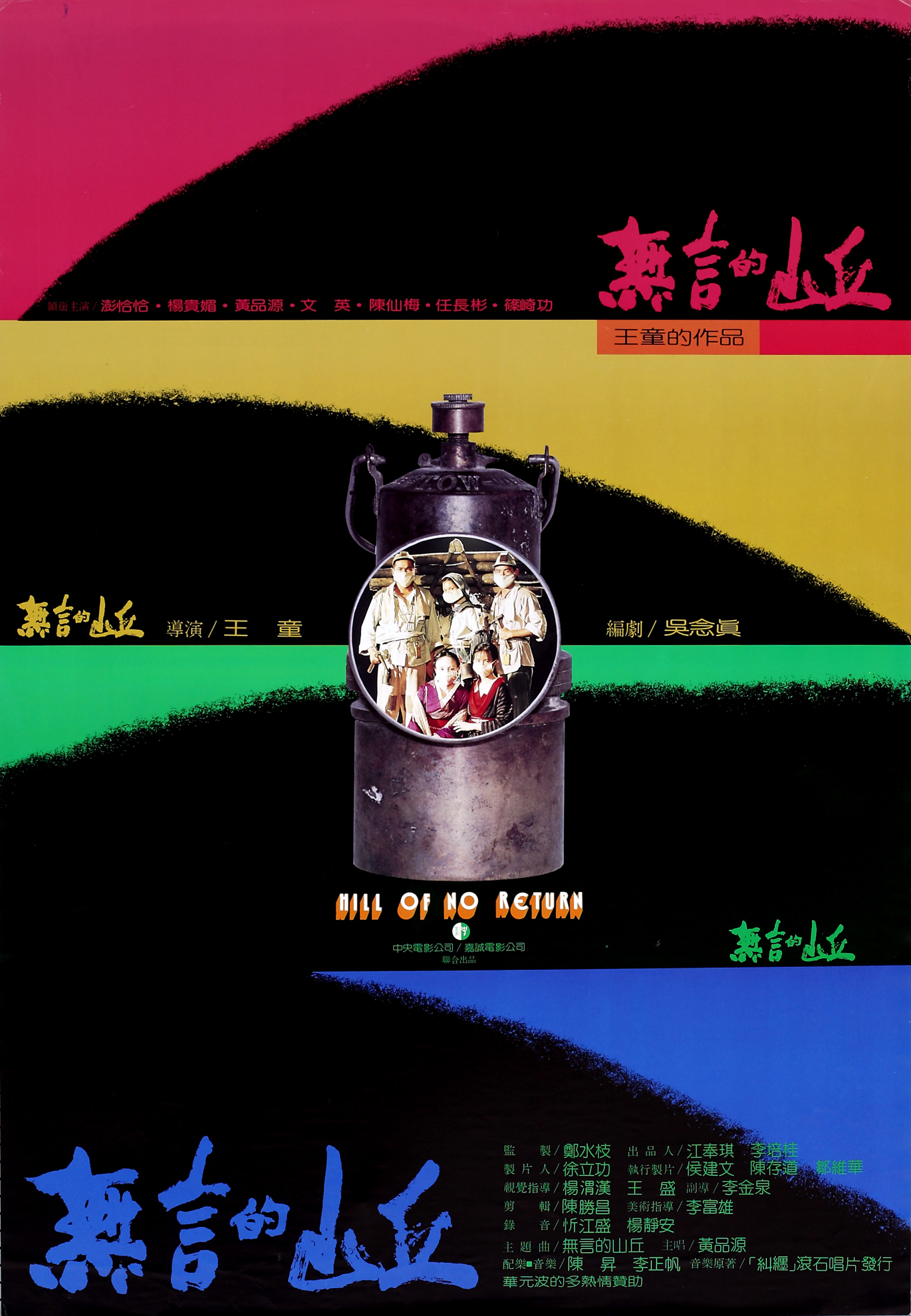
Hill of No Return (無言的山丘, Wang Tung, 1992)

Two orphaned brothers set out to find a literal goldmine, but discover only relentless exploitation and defeat in Wang Tung’s meditation on oppression and colonialism, Hill of No Return (無言的山丘, Wúyán de Shānqiū). The third in a trilogy of films exploring Taiwanese history, Wang’s tragic melodrama finds commonality if not solidarity among a collection of villagers living in a small town sustained entirely by the mine which produces riches only for the Japanese while those who risk their lives underground deprived of the light of the sun delude themselves that if they work hard they too can become rich only to discover each of their attempts to escape the constraints placed against them leading to nothing other than despair. 

As the film opens, brothers Chu (Peng Chia-Chia) and Wei (Huang Pin-Yuan) who have signed long-term five year contracts as farm labourers, are listening to an old man’s story about the grandfather of a local man who followed a frog to a mountain noticing its skin glowing gold and thereafter filling his pockets with gold dust he later used to buy up land and become rich. Chu thinks the man was foolish for not going back and becoming even richer, but the old man explains that he was reminded in a dream that excessive greed would only anger the gods and lead to his downfall. Fed up with their lives as labourers, the brothers take the story to heart and decide to look for their own mountain of gold, their backs too bathed in the light of the sun as they rest while looking for the goldmine town of Jiou-fen, later coming across a grisly and ominous scene shortly before they arrive. 

Both illiterate and speaking only Taiwanese, the brothers are each intent on becoming landowners partly in order to give their late parents, apparently killed by TB, a fitting resting place, but soon find themselves once again exploited, Wei becoming increasingly disillusioned with being trapped underground whereas in the fields at least he’d had the sun. The mine is of course a Japanese concern and its operators care little for the local Taiwanese workforce even if their treatment may not be as deliberately brutal as it might have been elsewhere. The new director is convinced that the miners are pocketing gold before it reaches the surface, instituting several new controls which threaten the local economy and especially that of the Japanese-style brothel which depends entirely on the mine for its survival. 

Like many, Hong-mu (Jen Chang-bin), a young man raised in the brothel by its madam following the death of his mother, looks up to the Japanese colonisers seeing them as innately “better” than the Taiwanese all around him. “People will respect me if I wear Japanese clothes” he tells the madam disappointed on receiving a new outfit in the local fashion. Having been told that his father, whom he has never met and was presumably a client of the brothel, was Japanese he speaks the language fluently and believes himself to be slightly superior by virtue of his birth but only too late learns his mistake in collaborating with the mine owners believing they would help him marry a young Japanese woman working at the brothel as a maid, Fumiko (Mayko Chen Hsien-Mei), and finding himself betrayed. As Fumiko is from the Ryukyu islands (Okinawa), the mine owner doesn’t quite see her as fully “Japanese” either and thinks nothing of using and abusing her in the course of his activities. 

The wily madam quips that you can’t call yourself Taiwanese if you haven’t figured out how to do illegal things legally finding ways of getting around the prohibition on accepting gold from the miners as payment, but that doesn’t stop the military police later raiding the brothel and brutally taking back “their” gold even though it has already changed hands albeit not entirely in good faith. The sex workers too are victims of this same vicious cycle, dependent on the custom of the miners for their livelihood while deprived any real possibility of escaping their desperate circumstances. Meanwhile, the brothers’ grumpy landlady, Ro (Yang Kuei-mei), is a twice-widowed single mother of numerous children left with no choice other than to engage in independent sex work, advertising herself as the more economical, local alternative to the Japanese-style “opulence” of the traditional teahouse. While Wei falls for the melancholy innocence of Fumiko singing Okinawan folksongs in a field of golden flowers, Chu takes a liking to Ro and her many children but though they both dream of the same thing, saving enough money to buy a farm, their tempestuous romance is later frustrated by Chu’s reckless decision to take advantage of chaos at the mine in an attempt to get rich quick by harvesting a mega load of gold while no one’s looking. 

He has perhaps been too greedy, ignoring the lessons from the old man’s story. The brothers are continually forced to pay for their transgressions, Chu cutting off his own fingers when cornered by thugs sent out by his previous employer to satisfy their literal demand for an arm and a leg in satisfaction of the broken contract, while Wei’s foot is later injured in a partial cave in when caught underground during an earthquake. Ro calls Chu foolish in his delusion that hard work will bring him a comfortable life, watching him slaving away to make the Japanese rich but what other choice do either of them really have? Only later does Wei begin to reflect on the possibility that the treasure of the mountain was the bright yellow flowers which covered it, a natural beauty soon destroyed by industrial exploitation. A melancholy chronicle of life in a small mountain town in the colonial era, Hill of No Return finds only despair and impossibility for its orphaned brothers whose eternal quest for ownership of their own land leads to nothing but continual disappointment. 


Hill of No Return streams in the UK until 31st October as part of this year’s Taiwan Film Festival Edinburgh.

Trailer (Traditional Chinese / English Subtitles)

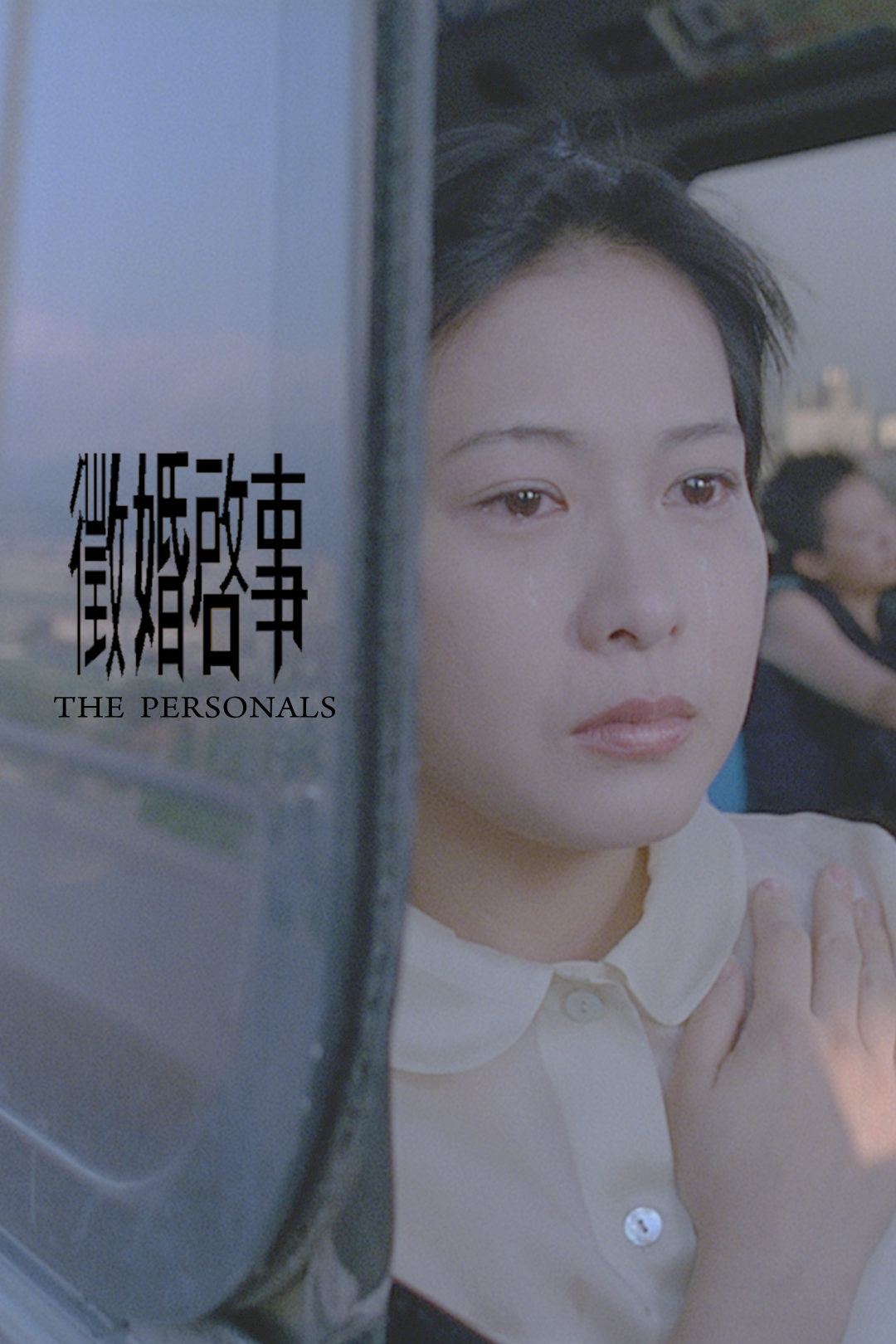
The Personals (徵婚啓事, Chen Kuo-fu, 1998)

Looking for love in all the wrong places, a Taipei career woman suddenly decides to give up her life and place a personal ad stating that she’s looking for a husband, “Who knows, maybe I’ll find happiness” she unconvincingly explains. Chen Kuo-fu’s sophisticated dramedy The Personals (徵婚啓事, Zhēnghūn Qǐ Shì) sends its heroine on a dating odyssey through the contemporary capital but is at heart the story of a woman learning to see herself while grieving a failed relationship and the married ex who won’t return her calls. 

Tu Chia-wen (Rene Liu Ruo-ying) was a successful eye doctor at a Taipei hospital, explaining to a patient that some people lose the ability to produce enough tears after the age of 30, but abruptly quits her job later claiming that she wanted sever connections with her past which is another reason why she’s decided to place an ad rather than asking friends to set her up with eligible bachelors. Implicitly, it also seems that Chia-wen feels her status as a doctor may be intimidating to some men in the still patriarchal society, if also a clue to her true identity which she has otherwise chosen to keep hidden going instead by the name of Miss “Wu” which just happens to be the name of her lover’s wife. 

Of course, it’s illogical to use a false identity if your end goal is finding a life partner, a factor which later feeds in to Chia-wen’s half-hearted conclusion that it isn’t the fault of the men she’s been meeting that they didn’t hit it off but her own in that she’s so far failed to fully “open up” to any of them. Despite newspaper personal ads not featuring photos, Chia-wen receives 100 messages in the three days after her details are posted from a varied cross section of applicants some more suitable than others. One gentleman who unconvincingly claims to be in his 30s reels off his CV as if he were introducing himself at a job interview while wearing a cheerful farmer-style straw hat. A factory worker chews betel nut and smokes tobacco at the same time while exposing an insecurity over his financial situation in complaining that modern women are too materialistic. One suitor is a woman who struggles to explain her gender and sexual identity with the terminology of the time causing Chia-Wen a degree of consternation. Another potential date is a shoe fetishist with a large suitcase intent on some kind of cinderella role-play closely followed by an executive who enthusiastically explains his only hobby outside of drinking is an encyclopaedic knowledge of S&M porn, while a son brings his father as a potential match because his mum’s “gone abroad” and in a heartbreaking moment a worried mother tries to negotiate on behalf of her son who appears to have learning difficulties and might not be sure what’s going on, hoping to find someone to look after him when she’s gone. 

It may be a biased sample, but it doesn’t speak well for the men of Taipei and that’s without even getting into the guy trying to recruit Chia-wen as a high class call girl, the obvious married man after no strings sex, or the salesman trying to peddle women’s self defence equipment with a case full of tasers and pepper spray. Chia-wen pours out her frustrations in daily calls to her ex’s answering machine, leaving long messages she knows he won’t reply to but somehow it makes her feel close to him. Gradually through her monologues we begin to piece together the trauma that she’s struggling to accommodate while a late and unexpected twist keys us in to the cosmic tragedy of her frustrated romance. “Choose what you can endure” she’s advised by a professor friend who confesses to her that he’s chosen to suppress his homosexuality out of a desire for a “normal” life as a husband and father hinting at the still conservative nature of the contemporary society. 

It’s not until she’s caught off guard by a potential match seeing through her ruse that Chia-wen begins to reconsider her experiment, eventually captivated by a sensitive young man who’s not long come out of prison but has an endearingly awkward smile that reminds her of her own. She meets each of the men in the same cafe where she had her first date with her former lover, taking on a slightly different character as she attempts to interview them about their lives, getting to know their hopes and desires often tinged with a note of loneliness or despair. They seldom seem very interested in her, but instantly propose marriage or at least some sort of serious courtship without even finding out about her hopes and aspirations in life. Chia-wen’s often comical encounters from the teenage boys trying their luck to the old men taking their last chance each expose something of contemporary gender dynamics as well as hinting at increasing urban loneliness and romantic desperation but in the end it’s herself Chia-wen must face in learning to let go of past trauma in order to give herself permission to move on in her ever evolving quest for love.


The Personals streams in the UK 25th to 31st October as part of this year’s Taiwan Film Festival Edinburgh.

Trailer (Traditional Chinese / English subtitles)

Peony Birds (牡丹鳥, Huang Yu-Shan, 1990)

Two women struggle with inter-generational conflict and the changing Taiwanese society in Huang Yu-Shan’s melancholy familial drama, Peony Birds (牡丹鳥, Mǔdan Niǎo). Perhaps the love birds of the title, mother and daughter find themselves at odds partly through a series of misunderstandings but also in the strange reversals of their social outlook, the older woman eventually becoming a successful industrialist rejecting the patriarchal social codes of her upbringing while the younger remains prudish and resentful, unfairly blaming her mother for her father’s early death. 

The film opens with two children accidentally releasing a pair of caged birds before the camera lights on the melancholy figure of Ah-chuan (Su Ming-ming), absentmindedly embroidering beneath a large picture which appears to be of herself. The portrait, a source of contention with her husband Cheng, will follow her throughout her life a symbol of herself as a young woman with choices falling in hopeless love with a Japanese-speaking doctor, Kuo, who never gave her a second glance and later married someone else. Seemingly on the rebound, Ah-chuan consented to an arranged marriage to the wealthy son of a rice merchant who thinks himself a member of the local aristocracy, forever throwing around his money and reminding people of his good name, but the marriage is unhappy Cheng frustrated that his wife loves someone else and Ah-chuan unable to let go of her idealised image of Kuo. Soon enough, Cheng drowns, falling into the river stumbling around in a drunken stupor. As they pull his body out of the water, doting daughter Shu-chin remembers her father bitterly exclaiming that her mother loved someone else and, noticing the comforting arm of childhood friend Chin-shui on her shoulder, assumes it must be him.  

It’s this fundamental misunderstanding that continues to colour the frustrated relationship between the two women, the grown-up Shu-chin (Vivian Chen Te-Yung) childishly complaining that Ah-chuan failed in her wifely responsibilities and has never been a mother to her, blaming her for Cheng’s death while criticising her commitment to her career almost as a betrayal of womanhood. By this point, Shu-chin is in her 20s and has a job as a record producer, later attempting to push her mother towards retirement claiming her salary is enough to support both her and her artistic brother but eventually leaving home entirely after beginning an affair with an unsuitable man defiantly ignoring Ah-chuan’s attempts to convince her she is making a huge mistake. 

Meanwhile, Chin-shui resurfaces in their lives having become a wealthy real estate magnate, a career we saw him start back in the village by taking advantage of the post-war land reforms to buy up the redistributed estates of formerly noble families, some of it Cheng’s. In some ways, former sharecropper Chin-shui is a villainous Lopakhin intent on paving over the beautiful Taiwanese countryside with towering high rise buildings, a symbol of the nation’s transformation from agrarian economy to financial powerhouse and of the hollowness it implies. Yet Ah-chuan’s business is floundering partly she claims because of protectionist US trade laws leaving her at the mercy of men like Chin-shui who, though not the man in her heart, has long carried a torch for her despite knowing of her impossible, unrequited love for Dr. Kuo. Shu-chin finds herself in a similar position in her affair with free-spirited colleague Li Kang whose previous girlfriend attempted to take her own life, discovering the mutability of his affections after he becomes famous with one of his solo compositions, while also drawn to a more suitable match in the more traditional Yi-cheng who eventually pledges his love to her, offering to make her a home explaining that having a home is what gives the young confidence to wander. 

Yet “home” is what Shu-chin continually rejects, yearning for her childhood in a more rural, quasi-feudal Taiwan while misunderstanding the tragedy of her parents’ toxic romance, only latterly reawakening to her mother’s love for her and discovering a new sense of security in a changing Taiwan as Ah-chuan frees them both in literally setting fire to the frustrated hopes of the past, reminding her “It’s always been our home”. A touching story of two women finally coming to understand each other while learning how to live in a changing society, Huang Yu-Shan’s maternal drama eventually bridges a generational divide as mother and daughter finally flee the coop but choose to fly together. 


Peony Birds streams in the UK 25th to 31st October as part of this year’s Taiwan Film Festival Edinburgh.

Clip (English subtitles)

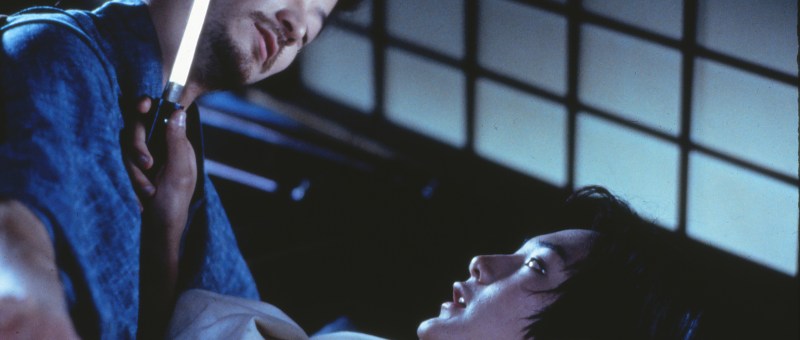
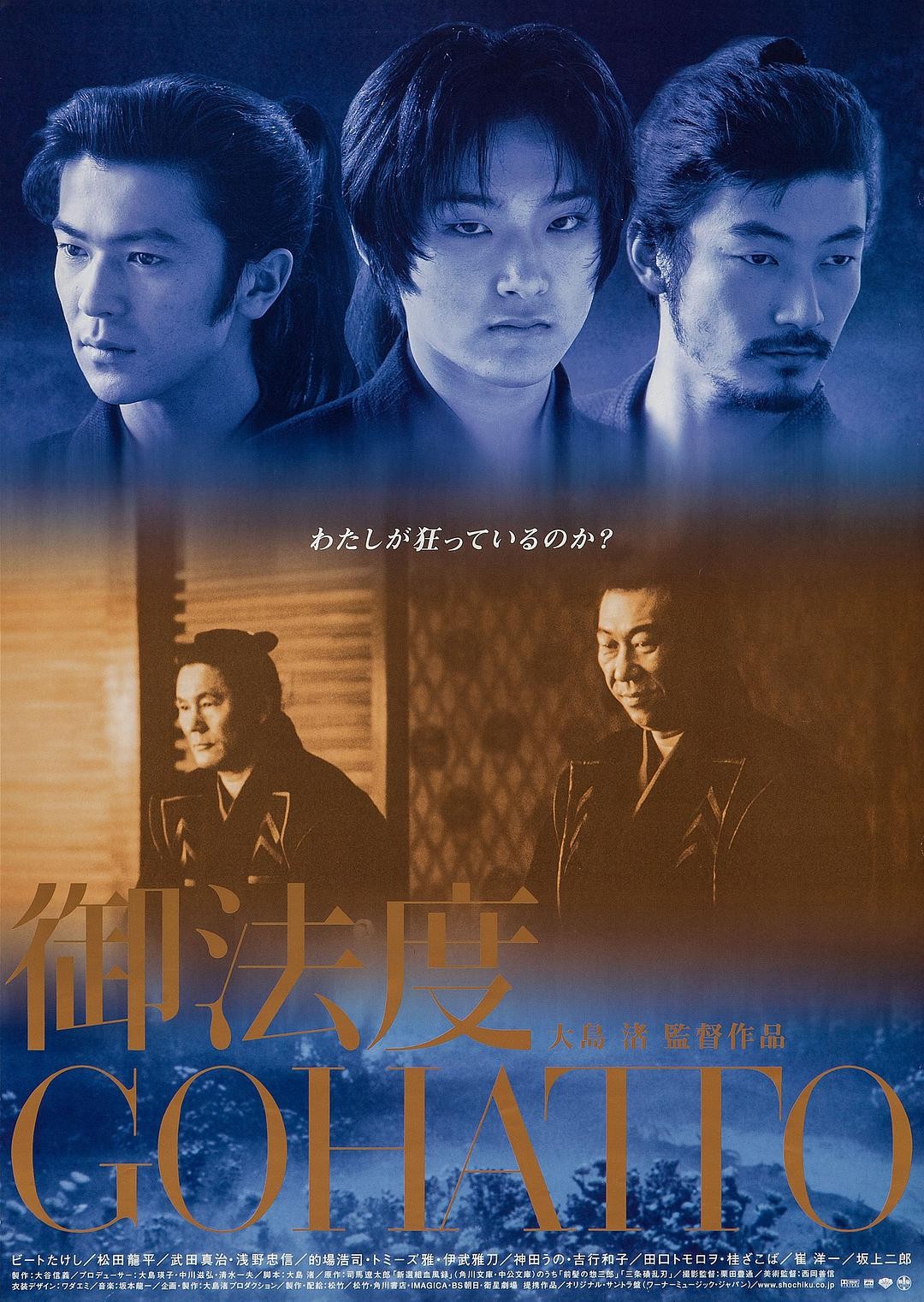
Gohatto (御法度, Nagisa Oshima, 1999)

Nagisa Oshima once said that his hatred of Japanese cinema extended to absolutely all of it, decrying the hackneyed nativism of “foggy beauty and stupid gardens”, yet his final film is filled with Mizoguchian mist and almost a paen to Japanese aesthetics which ends with a cherry blossom tree in full bloom cut down in its prime. Burdened by the slightly more salacious title “Taboo”, Gohatto is less about love between men in an intensely homosocial world even as it asks what it might mean by “forbidden” or “against the law” than it is about idealism and aesthetics as its band of contradictory conservatives unknowingly approach the end of their world in a coming modernity ushered in by dangerous beauty. 

Set in the Kyoto of 1865, a scant three years prior to the Meiji Restoration, the film opens with an audition of sorts as the Shinsengumi search for promising new recruits among talented swordsmen. Already a mess of contradictions, the Shinsengumi is, loosely, a kind of official police force dedicated to defending the Shogunate against the revolutionary forces set on restoring power to the emperor. Nevertheless, in an odd way and in contrast to the elite Mimawarigumi which was staffed only by direct retainers to the Shogun, the Shinsengumi was noted for its lowkey egalitarianism in that it made a point of admitting those of ordinary birth as well as lower level samurai and ronin. Of course, the notions of equality only went so far and perhaps only fuelled its reputation for merciless savagery, but also make it a strangely progressive force fighting against progress in defence of the feudal status quo. 

Only two of the hopefuls are thought to be any good, one a young ronin, Tashiro (Tadanobu Asano), and the other a beautiful boy, Kano Sozaburo (Ryuhei Matsuda), the third son of a wealthy merchant whose line were once samurai but are no longer counted among the noble retainers. A talented swordsman, Sozaburo’s dangerous beauty presents an existential threat to the Shinsengumi order, the steely Hijikata (Takeshi Kitano) looking on conflicted in witnessing the way his commander, Kondo (Yoichi Sai), looks at this vision of androgynous beauty remarking that he had not known him to be “that way inclined”.

Being that way inclined does not seem to be a particular issue within the Shinsengumi, it is not against their draconian rules and in fact appears to be tolerated at least as long as it causes no further problems. Kondo is however mindful of the chaos caused by a similar wave of homoerotic lust which took hold shortly before a climactic battle which would prove to be their last success. What Sozaburo seems to arouse in them is something more dangerous than the accepted patterns of love between military men which is in a sense sublimated as a mentor/student relationship, loyalty more than romance. Tashiro, who is of a similar age to the apparently 18-year-old Sozaburo, lets his desire be known, vowing to sleep with him before he dies ironically acknowledging Sozaburo for what he is, an angel of death. 

For his part, Sozaburo remains curiously passive in each of his encounters, aroused only it seems by the act of killing. Yet Hijikata discerns that he has indeed become Tashiro’s lover on witnessing them fight, Sozaburo losing clumsily despite being the more skilled in a dynamic that mimics their relationship in which Tashiro is the dominant partner. Aware of the danger in Sozaburo’s allure, Kondo suggests having a superior take him to the red light district to show him the delights of woman hoping to guide him back towards a less dangerous path, only the attempt backfires on several levels. Firstly, Sozaburo has no interest in women and continues to decline believing his commander is also hitting on him (like everyone else), thereafter determined to seduce him after all. Another retainer does indeed succeed in seducing Sozaburo, developing a mild obsession, but later ends up dead, Tashiro a main suspect in his murder with the motive of sexual jealousy though all of this additional violence is perhaps only an expression of Sozaburo’s dangerous beauty. 

As so often, sex if not love becomes the force which destabilises the social order only here it’s equated both with death and with an alternative mediation of male violence. Perhaps reflecting the way they look to the 18-year-old Sozaburo who makes a faux pas in accidentally suggesting at least one of them is of pensionable age, the ranking members of the Shinsengumi are played by actors already well into their golden years as if relics of a bygone era though in reality most were in their 30s. As Soji (Shinji Takeda), a filial figure like Sozaburo wearing long hair, puts it, there are no old men in their unit which is in essence an anti-revolutionary force. Nevertheless, the Shinsengumi is on the wrong side of history and already living in its end times, perhaps ushered towards its doom by the figure of the beautiful boy. “You were too beautiful”, Hijikata eventually laments as he finally perhaps understands the nature of the revolution he is witnessing. Perverse to the last, Oshima sets his ethereal finale in a stygian fog and pays an ironic tribute to the Mizoguchian classicism he so railed against in his youth, taking a sword to the cherry blossoms as he like Hijikata severs his own legacy in a moment of destructive beauty. 


Gohatto screens at Genesis Cinema on 25th September as part of this year’s Queer East

International trailer (English subtitles)

Hiruko the Goblin (ヒルコ/妖怪ハンター, Shinya Tsukamoto, 1991)

Shinya Tsukamoto burst onto the scene with indie cyberpunk classic Tetsuo: The Iron Man, an avant-garde body horror exploration of dehumanising industrialisation. After performing as a virtual one man band, however, Tsukamoto’s second film, Hiruko the Goblin (ヒルコ/妖怪ハンター, Hiruko / Yokai Hunter), was his studio first accepting the opportunity to direct a feature adaptation of Daijiro Morohoshi’s Yokai Hunter manga. Some have seen this as a huge stylistic departure, shifting from the punk aesthetics of Tetsuo towards warmly nostalgic summer adventure, but it is in fact perfectly in keeping with Tsukamoto’s earlier 8mm work such as Adventures of Electric Rodboy while also reminiscent of the kind of wistful teen adventures Nobuhiko Obayashi among others had been making throughout the Bubble era. 

Nevertheless, Hiruko’s main lessons seem to relate to the dangers of buried history and its corrupted parental legacy. The franchise protagonist, Reijiro Hieda (Kenji Sawada), is a once promising archeologist ostracised by his peers for his determination to prove the existence of yokai or “goblins”. Still grieving the death of his wife Akane (Chika Asamoto), Reijiro is summoned to her hometown by his brother-in-law, high school teacher Mr. Yabe (Naoto Takenaka), who informs him that he’s found something in a burial mound which he believes was built “by the ancients to appease evil spirts”. Yabe insists that he doesn’t believe in yokai, but thinks it might be a good opportunity for Reijiro to further investigate his theory. By the time Reijiro arrives, however, Yabe has already disappeared along with high school girl Tsukishima (Megumi Ueno) after exploring the tomb alone. 

Though set in the present day, Tsukamoto plays with horror serial gothic motifs such as the creepy tombs, suspicious janitor, and the continually befuddled Reijiro dressed in his old-fashioned white suit while armed with an arsenal of yokai fighting gadgets all contained in the Mary Poppins-like suitcase he continually carries around though at one point he seems to try catching escaped yokai with fly paper and is generally found wielding bug spray. Despite constantly working with dirt, an early joke sees him undone by spotting a creepy crawly in his room. This does not bode well for him, because Hiruko’s end game is convincing its victims to decapitate themselves before attaching their severed heads to weird, spider-like bodies. 

It does this seemingly by locating a pleasant, poignant memory and promising to prolong it forever. Reijiro’s nephew Masao (Masaki Kudou) is almost seduced on seeing an idyllic scene of missing high school girl Tsukishima dressed in white and enjoying a picnic on a summer’s day only to be suddenly brought back by his uncle. The inheritor of a curse, Masao is often struck by fits of furious burning in which his clothes seem to steam while he later displays strange scars on his back which take on the appearance of human faces. His predicament is largely his grandfather’s fault in having kept from his father the truth about the mound, leading him towards an over curious investigation during which it appears he accidentally released a bunch of demons from their eternal imprisonment. Now all Hiruko wants is to find the spell to open the door so they can all escape for good. 

Having been in a sense betrayed by a corrupted parental legacy, Masao nevertheless finds salvation in his history by way of his uncle who has of course memorised the entirety of the “Kojiki”, an ancient chronicle of myth and folklore, and recognises the two passages necessary for opening and closing the stone enclosure one found on a broken stele and the other hidden inside an ancient helmet appropriated by Yabe. Masao can only save himself and lift the curse by learning the truth which had been hidden from him, ironically putting on the helmet while others lose their heads. 

Yet Hiruko itself is also perhaps a manifestation of grief, something which cannot be eliminated but must in a sense be contained. Reijiro is almost tricked by Hiruko on being shown a vision of his late wife, unwittingly revealing the opening spell in return for being able to remain within the memory. Masao is similarly seduced by his vision of Tsukishima, but must then deal with the loss of his father who sacrificed himself trying to save others having realised his mistake in unearthing truths intended to stay buried. The fault lies however with Yabe’s own father whose attempt to keep him safe only endangered him. 

In keeping with much of Tsukamoto’s work, Hiruko’s threat lies in the loss of bodily autonomy and corporeal destruction forcing the victim into an act of mortal self-harm and thereafter repurposing and remaking the physical form in its own image. Tsukamoto’s characteristically elaborate practical effects and use of creepy stop motion add to the sense of the uncanny, horror lurking in dark corners everywhere waiting for the opportunity to strike. Even so, Hiruko is not without its sense of silliness, Tsukamoto playing gleefully with genre archetypes while conforming fully to the summer adventure movie necessarily filled with a sense of wistful nostalgia. Having contained their demons, Masao and Reijiro emerge at summer’s end, but are greeted with another hazy goodbye if each a little more secure in having learned to accommodate their corrupted legacies. 


Hiruko the Goblin streamed as part of this year’s Japan Cuts.

Original trailer (English subtitles)

Supermarket Woman (スーパーの女, Juzo Itami, 1996)

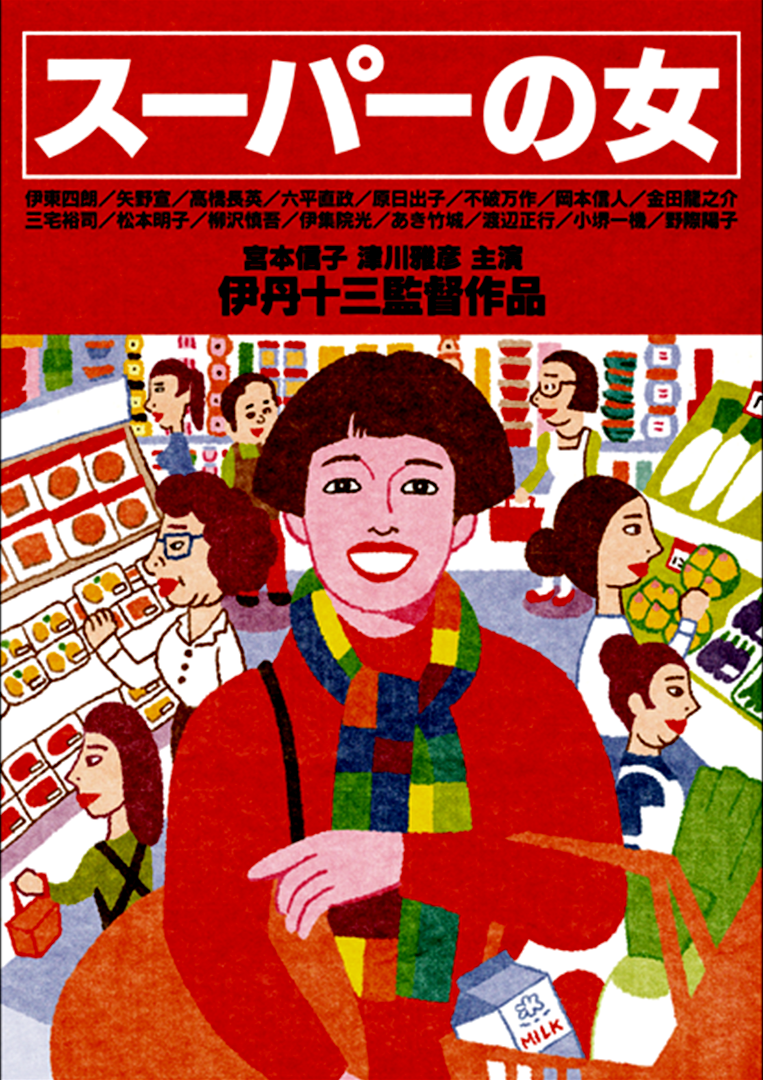
By 1996 Japan had entered an extended period of economic stagnation which signalled the end of post-war aspiration but for many at least the false promises of the Bubble era proved hard to dispel. In what would be his penultimate film, Supermarket Woman (スーパーの女, Supa no Onna), Juzo Itami turns his attentions to the insular world of the nation’s family-held, independent supermarkets to ask a few questions about integrity in business which cut straight to the heart of what kind of society post-Bubble Japan intended to be given yet another opportunity to make itself anew. 

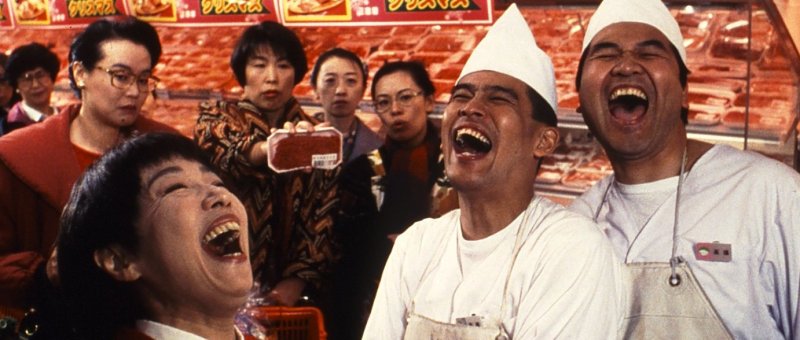
As the opening text crawl explains, this is a story not about giant supermarket chains but your friendly indie local. “Honest Mart” is a family-owned, mid-range supermarket in a declining industrial area nominally run by absentee CEO Goro (Masahiko Tsugawa) who was bequeathed the place by his father but is a melancholy drunkard delegating responsibility to his manager. The store has a huge problem in that a rival has recently re-opened under the new name “Discount Demon” and seems primed to steal all their business. On a stakeout of the new place, Goro runs into a childhood friend, Hanako (Nobuko Miyamoto), who is now a widow returning to the area. With her lifelong experience as a veteran housewife, Hanako knows a few things about supermarkets and she’s not very impressed with Discount Demon, doing a few quick calculations to realise the supposed discounts aren’t as enticing as they seem while common gimmicks like the all pervasive red glow that makes their meat look fresher than it really is only irritate her. Goro asks her for a “professional” opinion on Honest Mart without telling her who he is, only to discover she’s even less impressed with them, certain that his place is on the way out thanks to its dated decor, uninviting atmosphere, and low quality produce. 

The irony is Honest Mart is not much better than Discount Demon, both stores are subject to the same industry standards in which a certain degree of obfuscation is permissible. “In business honesty doesn’t pay” Hanako is told by the onsite butcher after she questions his tendency to mix meats to pass them off as more expensive cuts, while she later discovers that the store engages in the practice of repackaging unsold meat and fish with new expiration dates and is not very particular about its suppliers when it comes to buying in ready-made products. Brought on board to save the store, Hanako breezes in with a new mission to win the hearts and minds of her customers, and she can’t do that if she can’t have confidence in her stock. In any case, her the customer is always right policy quickly brings her into conflict with the store manager, an older more conservative man who actively resists innovation and resents having his authority undercut by an interloping woman. 

Meanwhile, we can also see that customer attitudes have changed. There’s a problem with availability of trolleys because, perhaps unusually for Japan, customers are just abandoning them willy-nilly in the carpark instead of retuning them to the trolley point like responsible shoppers. One man is even for some reason intent on stealing a large number of shopping baskets, caught by Hanako loading them into his car. Everybody wants cheap, which is understandable especially given the economic situation, and they might even be a little underhanded when it comes to getting it, but they also expect a reasonable level of quality and to be able to trust that the food they’re buying is safe to feed their families. Hanako is most alarmed that the ladies who work in the kitchen area, who are obviously wives and mothers themselves, do not shop at Honest Mart because they know what goes on at the store and they don’t trust it. 

“A housewife knows” Hanako is fond is saying. Her revolution is in essence a vindication of “the housewife”, perhaps the most maligned and dismissed figure of the mid-90s society, putting to good use all of her veteran experience both of running a home and of working a series of part-time jobs including those in supermarkets which she claims to love. Approaching the problem from the point of view of a consumer, she attempts to help Goro achieve his dream of making Honest Mart number one in Japan not through making it the most financially successful but the most loved by listening to women like her in the form of a focus group of local aunties some of whom had previously been serial complainers. 

Then again, some of her decisions are in a sense contradictory as she attempts to streamline the business along classically capitalistic lines in suggesting that the store doesn’t really need its overqualified butcher and fishmonger because the part-timers could be trained to do a “good enough” job. “Good enough” is in a sense her business philosophy, only not in the sense that somewhere like Discount Demon which falsely advertises regular steak as discount Wagyu means it, rather that her customers are after an everyday level of produce and so it’s not surprising that premium meats don’t sell. She wants to get rid of the butcher, who turns out to be on the fiddle, and the melancholy fishmonger disappointed no one wants his top quality seafood, because their “artistic temperament” is disruptive to the flow of the store and their presence is perhaps emblematic of the bloated, pretentious management style which is holding it back. 

Positioning the “housewife’s choice” as the ultimate seal of approval, Supermarket Woman advocates for a return to wholesome, small-town values, prioritising a sense of integrity as Honest Mart projects itself as a corporate force their customers can trust, perhaps anticipating a trend in dedicating itself to providing good quality fresh produce at fair prices in direct opposition to Discount Demon and its underhanded trickery. “Honest Mart keeps its word” Goro assures, pledging to honour a mistaken ad which promised eggs at prices so good it caused minor riot. In the end, it’s all about trust and integrity. If you don’t have that, you don’t have anything and the housewives of post-Bubble Japan will it seems vote with their feet. 


Currently available to stream in the US via Criterion Channel.

Original trailer (no subtitles)
A Dedicated Life (全身小説家, Kazuo Hara, 1994)

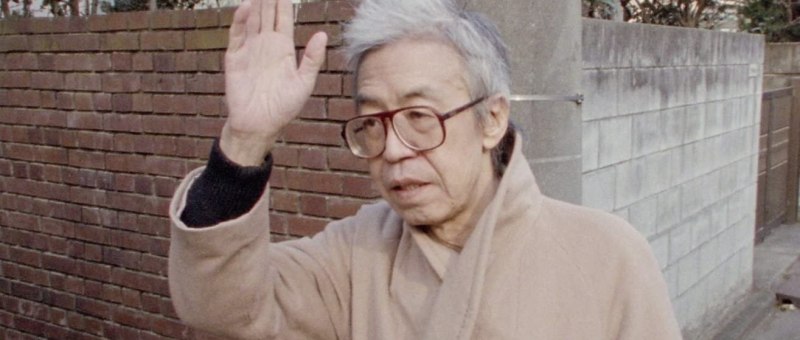
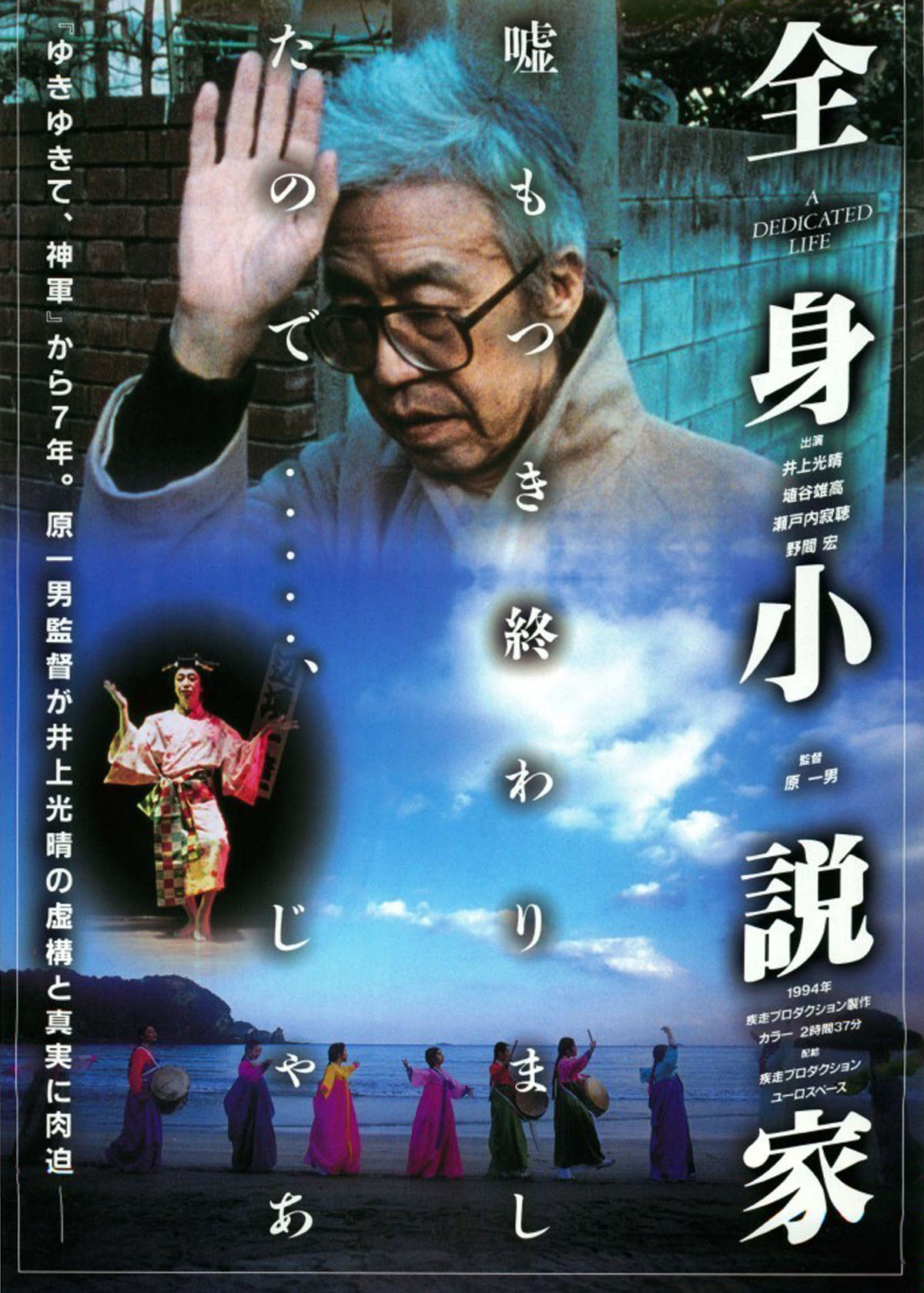
“Human beings have things they don’t want to share with others. This is the truth, but what we choose to tell from the truth is fiction” according to the elusive subject of Kazuo Hara’s probing personality doc, A Dedicated Life (全身小説家, Zenshin Shosetsuka). “Full of lies and contradictions” as a friend later describes him, Hara had apparently planned to follow controversial author Mitsuharu Inoue for a number of years only for his subject to be diagnosed with terminal liver cancer shortly after filming began. 

Even as the film opens, however, we can intuit that much of the life of Mitsuharu Inoue is performance, an adoring audience of his students and followers screaming in pleasure as he performs a striptease while dressed as a geisha to the classic enka hit Tsugaru Kaikyo Fuyugeshiki. Seconds earlier he’d told them that he longed to belong to a theatre troupe and that his grandfather had been a famous kabuki actor, a claim that later seems to be entirely untrue. Nevertheless, Inoue commands almost cult-like adoration from the mainly middle-aged women who surround him, one after another confessing their undying love for the genius author in successive to camera interviews and only occasionally hurt or frustrated in the often callous way he seems to have treated each of them. As we later realise, somewhat casually, Inoue is also married to patient and presumably very understanding wife who tenderly cares for him throughout his illness. 

To begin with, Hara presents us with a vision of Inoue at face value as a fun loving libertine living it up with his students/disciples who can also be cuttingly cruel in his criticism, humiliating one of his female followers at the podium by tearing apart her assignment in front of the class, later doing the same thing to a male author at a dinner party. After making a good recovery from his first battle with cancer he vows to go in harder with his students, reminding them that he can be friendly and charming one minute and unceremoniously cut them off the next should they disappoint him. Nevertheless, they apparently remain devoted to their mentor or at least the image of himself he seeks to project. 

Those who’ve known him many years appear to know that Inoue is a habitual liar and that even his much praised autobiography is largely an act of autofiction. An author friend and Buddhist nun later suggests that Inoue perhaps had something deep inside him he didn’t want to share and lying was his way of taking control over his life, his cultivated persona an avant-garde literary act. Having presented him as he is or claims to be, Hara eventually begins to undercut Inoue’s image by interviewing friends, relatives, and acquaintances who frequently debunk his sometimes outlandish claims while also hinting at the half-truths and mysteries at the centre of his family history. Following Inoue’s sister Tazuko who remains as clueless as her brother realising they’ve either misremembered her grandmother’s name or it was wrong on the family register, Hara uncovers a melancholy tale of marital failure and maternal abandonment once again embellished by Inoue who alternately gives differing accounts of his youthful attempt to reconnect with the mother who left him behind which are themselves disputed by the recollections of others. 

His grandiose claims go seemingly unexamined by his followers, eating up his tales of how he founded the first Communist Party in Japan only to become disillusioned by the movement and be kicked out after writing a story criticising the Party (a friend from the time describes him as more of an errand boy who was never really “serious” in his politics), or the tragedy of his first love which ended with a Korean classmate sold to a brothel where he later lost his virginity in a not quite consensual chain of events he claims left him feeling violated while she laughed from an upper window witnessing his defeated retreat. In a break from his usual observational shooting style, Hara adds a series of dramatic reconstructions tinted in a pre-war blue the unreality of which stands in stark contrast to the almost too intimate scenes of Inoue’s cancer diagnosis and subsequent operation as his liver is lifted from his belly and taken away as if presented for the camera. In a revealing moment, Inoue remarks that an alternative medical practitioner he’s just consulted going by the name “Redbeard” just like the movie is not convincing, lacking credibility because he failed to fill the gap between his words perhaps hinting at the techniques he himself uses to convince himself and others of his self-created image. Hara does not so much try to dissect it as to look quizzically at its contradictions, admiring the beauty of the enigma if in reflection of its intrinsic sadness. 


A Dedicated Life streams in the US & Canada until July 2 as part of Japan Society New York’s Cinema as Struggle: The Films of Kazuo Hara & Sachiko Kobayashi

DVD rerelease trailer (no subtitles)
Sayuri Ishikawa’s Tsugaru Kaikyo Fuyugeshiki

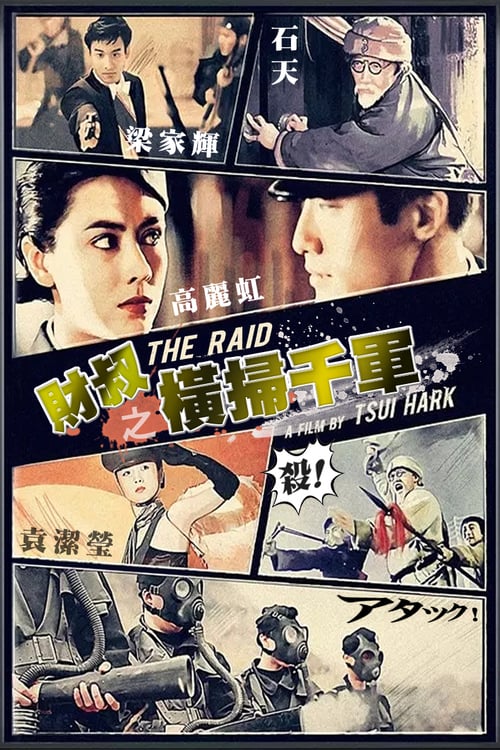
The Raid (財叔之橫掃千軍, Tsui Hark & Tony Ching Siu-Tung, 1991)

Comic book heroes often rise in resistance to a label others have placed on them, but Uncle Choy (Dean Shek Tin) may be the first to offer fierce opposition to societal ageism. Inspired by a series of comic books which ran from 1958 to the mid-1970s, Tsui Hark and Tony Ching Siu-Tung’s The Raid (財叔之橫掃千軍) is at great pains to make plain that you shouldn’t write people off because of a few numbers on an ID card as its admittedly geriatric hero proves that he’s the force for good the Resistance has been waiting for. 

That would be the Resistance towards the Japanese and the new puppet state of Manchuria in the confusing world of 1932. Tsui and Ching open with Pu Yi himself getting out of a limo in a sparkling white uniform adorned with meaningless medals glinting in the sun before he takes to the stage and bizarrely likens himself to Hitler while insisting that he’s here to unify China because his ancestors told him to in a dream. Meanwhile, the Resistance has already infiltrated his forces and installed dynamite in his microphone only for his right-hand man, Matsu (Tony Leung Ka-fai), to catch on right before it explodes. Pu Yi is saved, for now, while Matsu declares himself unfazed by the Resistance fighter’s dying words that he will be coming back to haunt him. 

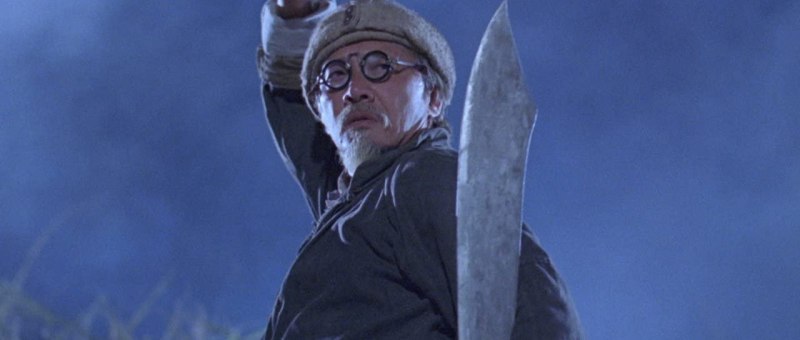
In another part of the jungle, a team of mute locals is trying to bring a doctor to some soldiers hiding out in a remote shack. After narrowly escaping a plane attack by blowing a hole in a dam and drowning it with water, Uncle Choy arrives to discover that the men are victims of a new kind of poison gas. It’s too late to save the commander, but Choy manages to restore the others to health and even offers to join them in their new mission of destroying the poison gas factory, but Lieutenant Mong (Paul Chu) tells him to go home. He’s too old to be of help and would only get in the way. As expected, Choy finds that very upsetting. Unwrapping the giant sword he fought with in his youth, he leaves a note for his adopted daughter Nancy and heads off on his own towards the revolution, but she follows him with her giant spear and is then followed by a cheeky young guy armed with slingshot. 

There is something a little bit suggestive about this rag tag bag of patriots trying to stop the poisonous fumes of a new China wafting over towards the land they love. Pu Yi, the “last emperor” is something of a tragic figure, a bumbling fool with some weird ideas but also a noticeably progressive streak which sees him tell Matsu, in the middle of an otherwise silly and slightly homophobic joke, that he firmly believes love is love and he plans to make a law that says so. He is, however, just a puppet himself, caught between the villainous Matsu and beautiful actress/super spy Kim Pak-fai/Kawashima Yoshiko (Joyce Godenzi).

Matsu is fond of telling the heroes that they cannot win against a force with superior technology, that old Uncle Choy’s sword and fists are useless in a modern world of guns and chemical warfare. To perfect their poison gas, they’ve been working with a local gangster who cares only for money and has been willingly sending them test subjects. Big Nose (Corey Yuen Kwai) is currently engaged in a turf war with the equally greedy Bobo Bear (Jacky Cheung Hok-yau), testifying to the tendency of oppressed people to fight amongst themselves rather than unite against the true evil. Bobo Bear is also in love with the famous actress Kim Pak-fai and deeply regrets getting mixed up with the Resistance, but later falls for nerdy undercover spy Tina (Fennie Yuen), who is the real brains of the operation, and comes over to the side of right. As does Big Nose after getting a dressing down from Uncle Choy and being confronted with the consequences of his actions by an overconfident Matsu. 

According to Matsu whoever has the best weapon controls the world, but as in any good kung fu movie the best weapon is righteous solidarity. Uncle Choy’s sword turns out not to be so useless after all, while he also makes himself useful as a doctor to the revolutionaries, proving that old people still have a lot to offer and don’t deserve to be put out to pasture by patronising youngsters. Making plenty of space for cartoonish slapstick fun and a series of farcical episodes including the classic misdirected love letter and spy hiding under the bed, The Raid is pure pulp but never pretends to be anything more than it is even while leaving its earnest revolutionaries in media res as if to remind us that a battle still rages even in 1991.


Short clip (no subtitles)

Zodiac Killers (極道追踪, Ann Hui, 1991)

Melancholy exiles seeking a better future find only futility in the dying days of the bubble economy in Ann Hui’s 1991 gangster drama, Zodiac Killers (極道追踪). The English title is admittedly misleading, there’s seemingly no connection to any kind of “zodiac” and no hint of conspiracy murder except those forced by the world’s enduring cruelty, though the Chinese is perhaps equally so meaning something like “yakuza pursuit” which is accurate but only to a point.

The hero, Ben (Andy Lau Tak-wah), has come to Tokyo from Hong Kong to study film but rarely goes to classes, preferring to learn how to make money instead. Making the most of the then affluent city, he works as a tour guide for Chinese tourists, dutifully delivering the men to the strip clubs of Shinjuku in the evenings for kickbacks and giving his boss a kicking when he tries to stiff him out of the agreed amount, heading to his second job in a kitchen immediately afterwards. “Man does not live to make money only, you must learn to spend it too”, he explains to his friend, Chang (Tou Chung-hua), persuading him to come hang out in a swanky bar they’ve been invited to by Ben’s shady relative Ming (Suen Pang) who is currently trying to make it as a yakuza by marrying the boss’ mama-san sister Yuriko (Junko Takazawa). It’s at the bar that Ben first sets eyes on Tieh-lan (Cherie Chung Chor-hung), a young woman from the Mainland in Tokyo studying at a Japanese language school and working as a hostess to make ends meet though as she points out “not every Chinese girl likes to work here”, instantly offending Ming but interestingly not Yuriko who seems sympathetic if embarrassed. 

All of them are in Tokyo because at that moment in time Japan looked like the future, though the window was rapidly closing. Tieh-lan is beginning to wonder why she came. Her friend Mei-mei (Tsang Wai-fai) has ended up in an unwanted sexual relationship with the man who sponsored their visas, Harada (Law Fei-yu), who nevertheless continually sexually harasses Tieh-lan. “Why did we come here?”, Tieh-lan asks Mei-mei, “for our future or for men? You can debase yourself at home, why have you come to Japan to do it?”. Ben later asks something similar of Ming who freely admits that he is prepared to sell his body for influence, “satisfying” Yuriko in order to buy influence with her brother and be admitted into his yakuza clan. The Tokyo they inhabit is one steeped in exile. They surround themselves with other Chinese migrants, be they from the Mainland, Hong Kong, or Taiwan, and congregate in the seedier parts of Shinjuku living on the fringes of society, working as bar hostesses, or gangsters, or in kitchens. For Ben whose bachelor pad student dorm is adorned with posters of Bruce Lee and Rocky, his purpose is more adventure and youthful longing for freedom than escape which is why he makes a point of ignoring his loving mother’s phone calls, but even he struggles to find what he needs on the unforgiving streets of a hostile city. 

That hostility is first brought home to him by a gang of ultranationalist bikers flying the imperial flag one of whom threatens him with a samurai sword (a moment which is tragically echoed in the film’s nihilistic conclusion). They are not, however, the only ones feeling displaced, as a heartbreaking cameo from golden age star Kyoko Kishida as an ageing geisha makes plain. Asano (Junichi Ishida), the melancholy yakuza with whom Tieh-lan has fallen in love much to Ben’s disappointment, declares himself “always a loner”, returning to Tokyo after years of exile in South America. An orphan, Asano laments that the beach he visited as child no longer exists and the city he’s come home to is changed beyond all recognition. Perhaps for that reason he falls for melancholy exile Tieh-lan as they bond in a shared sense of hopeless rootlessness. 

With the surprise introduction of Asano, Hui transitions into the moody noir with which the film opened, shots of Andy Lau plaintively looking back at the shore from a boat on the open sea intercut with Cherie Chung walking sadly through an empty, neon-lit city. Asano hoped for reconciliation but found only betrayal, there can be no home for exiles even if they return. The trio’s broken dreams find their final expression in the nihilistic violence of a non-existent yakuza war. Asano’s final gesture was one only of futility, no one wants to hear his inconvenient truth because the clans in question have already made “peace” and are intent on working together for future prosperity. “Your heart is too soft for this wicked world” Ming says of Ben but it’s a statement that rings true for them all, living life by movie logic in which good will eventually triumph. Ming sees no point in returning to Hong Kong because he’d be a nobody, tragically believing that being a gang boss’ brother-in-law is close enough to somebody in Shinjuku. Only Chang, who came to Japan to look for his missing sweetheart, manages to keep himself safe but largely, as we later find out during a rather bizarre sequence featuring a surprise outdoor porno shoot, because he does not yet know that his dream is futile too. A chronicle of a world in collapse, Zodiac Killers leaves its marginalised heroes with no place left to run, permanent exiles denied safe harbour sailing towards a promised horizon with no land in sight.


Original trailer (no subtitles)