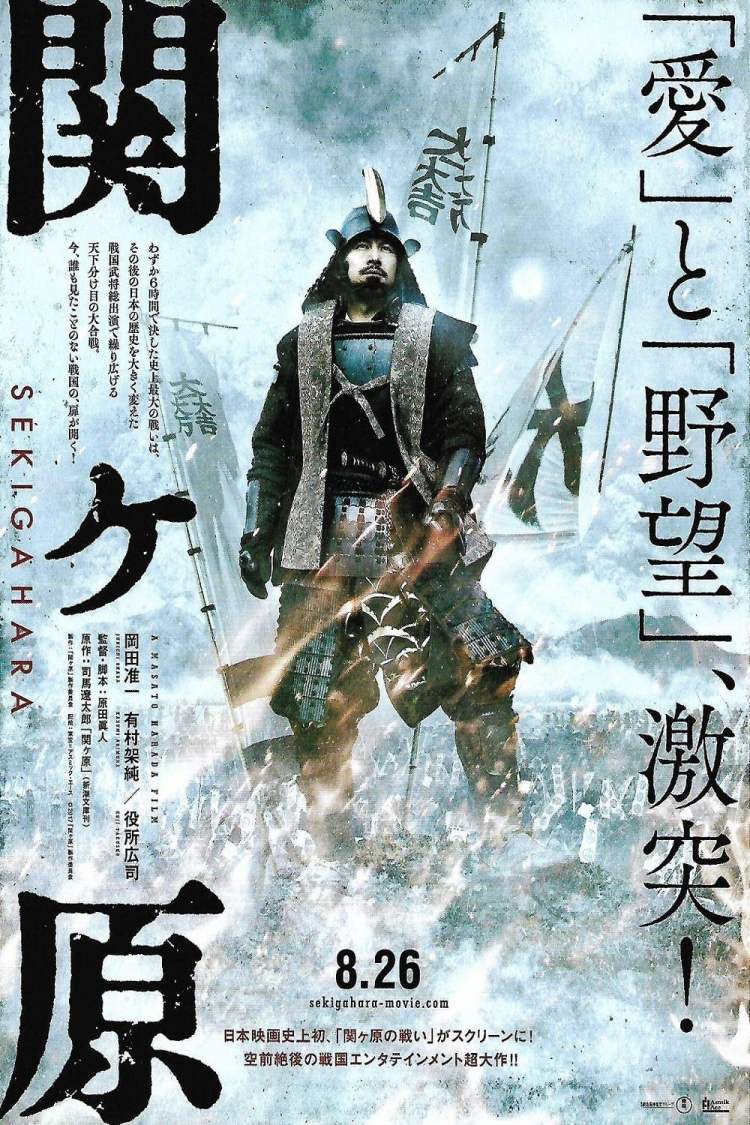
Sekigahara (関ヶ原, Masato Harada, 2017)

Sekigahara posterWhen considering a before and an after, you’d be hard pressed to find a moment as perfectly situated as the Battle of Sekigahara (関ヶ原). Taking place on 21st October 1600 (by the Western calendar), Sekigahara came at the end of a long and drawn out process of consolidation and finally ended the Sengoku (or “warring states”) era, paving the way for the modern concept of “Japan” as a distinct and unified nation. In actuality there were three unifiers of Japan – the first being Oda Nobunaga who brought much of Japan under his control before being betrayed by one of his own retainers. The second, Toyotomi Hideyoshi, continued Oda’s work and died a peaceful death leaving a son too young behind him which created a power vacuum and paved the way for our third and final creator of the modern Japanese state – Tokugawa Ieyasu whose dynasty would last 260 years encompassing the lengthy period of isolation that was finally ended by the tall black ships and some gunboat diplomacy.

Loosely, we begin our tale towards the end of the rule of Toyotomi Hideyoshi (Kenichi Takito) though, in a nod to the novel, director Masato Harada includes a temporal framing sequence in which our author depicts himself as a boy during another war sitting in these same halls and hearing stories of heroes past. As well he might given where he was sitting, the narrator reframes his tale – our hero is not the eventual victor, Tokugawa Ieyasu, but a noble hearted retainer of the Toyotomi, Mitsunari (Junichi Okada).

Riding into battle, Mitsunari reminds his men that this is a war of “justice and injustice” – they cannot lose. Yet lose they do. The narrator recounts Mitsunari’s improbable rise as an orphan taken in by Hideyoshi on a whim who nevertheless became one of the most powerful men in late 16th century Japan. Despite his loyalty to his master, Mitsunari cannot abide the cruelty of the samurai world or its various modes of oppression both in terms of social class and even in terms of gender. He resents the subversion of samurai ethics to facilitate “politics” and longs to restore honour, justice, and fairness to a world ruled by chaos. Rather than the bloody uncertainty and self-centred politicking that define his era, Mitsunari hopes to enshrine these values as the guiding principles of his nation.

On the other hand, his opponent, Tokugawa Ieyasu (Koji Yakusho) is famed for his intelligence and particularly for his political skill. Hoping to swoop into the spot vacated by Hideyoshi which his young son Hideyori is too weak to occupy, Ieyasu has been playing a long game of winning alliances and disrupting those other candidates had assumed they had secured. Unlike Mitsunari, Ieyasu is ruthless and prepared to sacrifice all to win his hand, caring little for honour or justice or true human feeling.

The framing sequence now seems a little more pointed. Sekigahara becomes a turning point not just of political but ideological consolidation in which Mitsunari’s ideas of just rule and compassionate fair mindedness creating order from chaos are relegated to the romantic past while self interest triumphs in the rule of soulless politickers which, it seems, travels on through the ages to find its zenith in the age of militarism. Mitsunari is the last good man, prepared to die for his ideals but equally prepared to live for them. His tragedy is romantic in the grander sense but also in the more obvious one in that his innate honour code will not let him act on the love he feels for a poor girl displaced from Iga whose ninja service becomes invaluable to his plan. With a wife and children to consider, he would not commit the “injustice” of creating a concubine but dreams of one day, after all this is over, resigning his name and position and travelling to foreign lands with the woman he loves at his side.

Working on a scale unseen since the age of Kurosawa, Harada patiently lays the groundwork before condensing the six hours of battle to forty minutes of fury. The contrast between the purity of the past and the muddied future is once again thrown into stark relief in the vastly different strategies of Ieyasu and Mitsunari with Ieyasu’s troops armed to the teeth with modernity – they fire muskets and shout cannon commands in Portuguese while Mitsunari’s veteran warriors attempt to face them with only their pikes and wooden shields. Unable to adapt to “modern” warfare and trusting too deeply in the loyalty of his comrades, Mitsunari’s final blow comes not by will but by chance as a young and inexperienced vassal vacillates until his men make his decision for him, betraying an alliance he may have wished (in his heart) to maintain. Goodness dies a bloody death, but there is peace at last even if it comes at a price. That price, for some at least, may have been too great.


Original trailer (no subtitles)
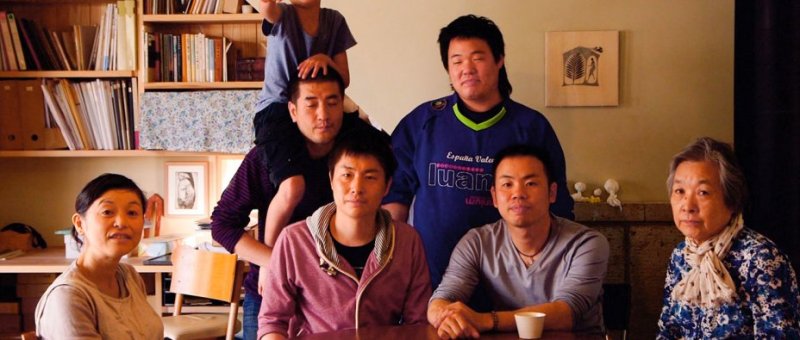
Of Love & Law (愛と法, Hikaru Toda, 2017)

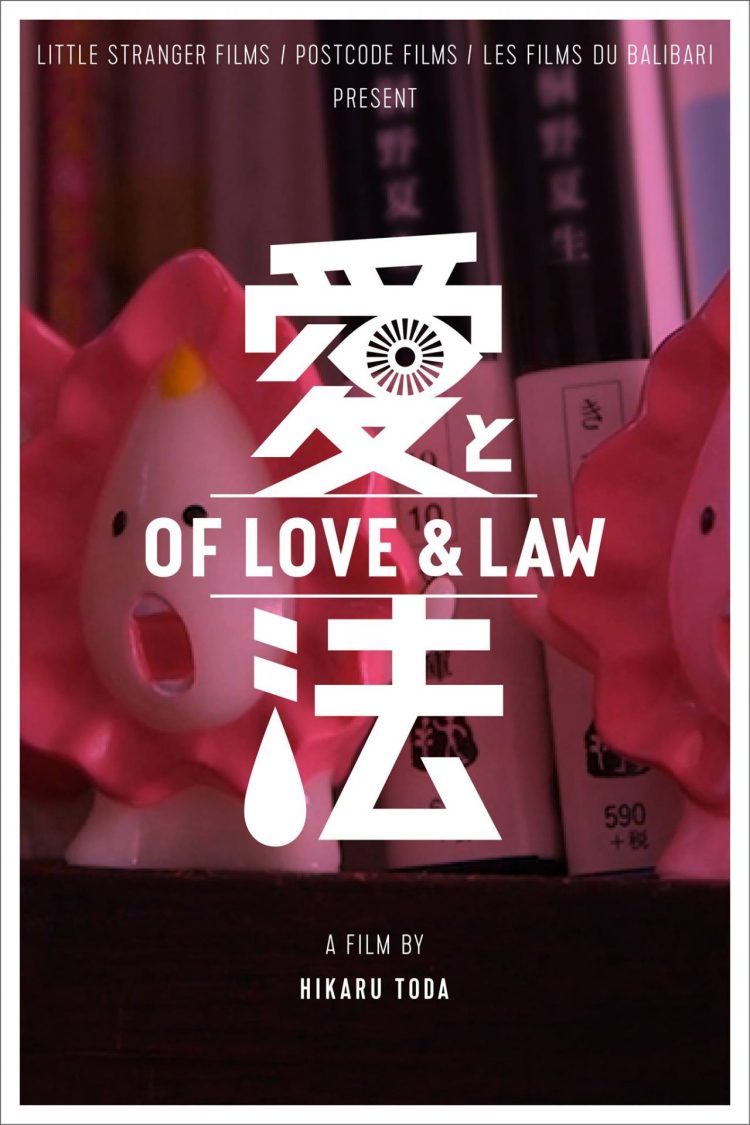
of love and law posterIn Japan the nail which sticks out is hammered down. Conformist societies promise mutual support, but all too often only when it suits the collective – those not deemed part of the club are wilfully left to fend for themselves with the dangled promise of readmission if one promises to reform and abide by the rules. We first met the couple at the centre of Hikaru Toda’s Of Love & Law in her previous documentary, Love Hotel, which documented their struggles with discrimination in frequently being turned away by establishments who did not wish to rent a room to two men. A same sex married couple in Japan’s second city of Osaka, Kazu and Fumi run their own law firm and operate under the mission statement of representing those who often find themselves without a voice in a culture which favours silence.

Opening at a local Pride event, the camera attempts to capture some talking heads but no one will bite. Asked for comments, the visitors each refuse to show their faces, revealing that they aren’t fully out, fearing that it might cause problems for them at work, or just embarrassed to go on the record about something so taboo. Though the law practice is not limited to representing LGBT issues, they are clearly a key concern to Fumi and Kazu who spend their “free” time engaging in outreach projects trying to foster a little more education and understanding of sexual minorities. Kazu brings this home when he tells his own coming out story in which his stunned mother exclaimed that she’d never heard of anything like this and therefore could not understand it. The problem wasn’t prejudice, it was ignorance mixed with fear.

Ignorance mixed with fear could equally well describe most of the cases brought against Kazu and Fumi’s clients. The protagonist of the second strand – artist and mangaka Rokudenashiko whose legal troubles even made the foreign press, attributes many of these issues to an inability to “read the air” or aquedately understand the unspoken rules of society and then silently abide by them. The law firm makes a point of defending those who have chosen to fly in the face of social convention, flying a flag for the freedom of choice in a society which often deliberately suppresses it.

The freedom of choice is certainly a key issue for the teacher suing the Osakan school that fired her for refusing to stand for the national anthem. Arguing that standing when one is forced to stand is hardly a declaration of patriotism and fearing the lurch to the right which has made even implicit indifference to the Imperial family a hot button issue, the teacher puts her foot down but finds that few will listen. Similarly, Rokudenashiko finds herself arrested for obscenity regarding her vagina themed artwork while the court undermines its own argument by accidentally proving that her work has socio-political merit.

Yet Rokudenashiko and the teacher have each, in a sense, made a firm decision to challenge the intransigence of their society, hoping to prevent a further decline even if not overly hopeful of improvement. Other clients on the roster include a fair few who are accidentally undocumented through no fault of their own thanks to Japan’s arcane and idiosyncratic legal system which makes it difficult to register births of children born out of wedlock or in difficult family circumstances meaning that youngsters sometimes grow up without the proper papers leading to problems with accessing education, employment, healthcare and welfare provisions. Getting someone a birth certificate who doesn’t currently “exist” can prove a taxing ordeal, especially as government officials often regard children born to “immoral” women as “unworthy” of care or attention.

Getting a call from the mother of a victim, Fumi is shocked when she makes a point of enquiring about the nationality of the perpetrator. He is unsurprised but disappointed in witnessing the various ways one oppressed person (both the victim and plaintiff are from impoverished, single parent backgrounds) can turn their oppression back on others as an odd kind of social revenge. Luckily, however, there are good people everywhere such as the fine young man Fumi and Kazu end up temporarily fostering after his care home is unexpectedly closed down. Kazuma accepts their relationship without a second thought, enjoys learning to cook from Fumi and blends right into Kazu’s extended family who each seem as warm and accepting as the couple themselves. Family is not about a register, it’s having a place to go where they’ll always take you in. Fumi doesn’t trust society because society shirks its responsibilities, but thankfully there are those who know better and continue on in hope tempered with patience.


Screened at BFI Flare 2018.

Malila: The Farewell Flower (มะลิลา, Anucha Boonyawatana, 2017)

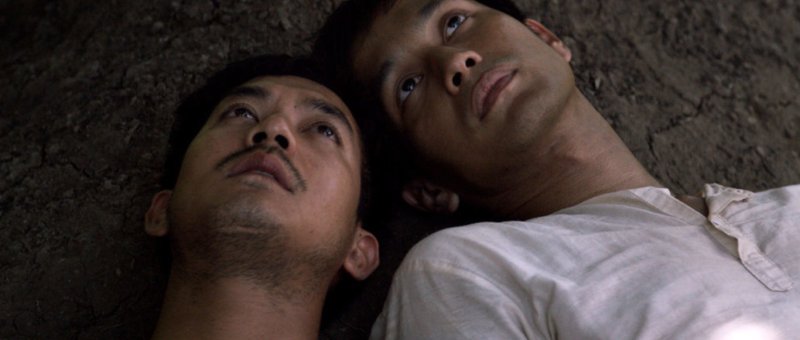
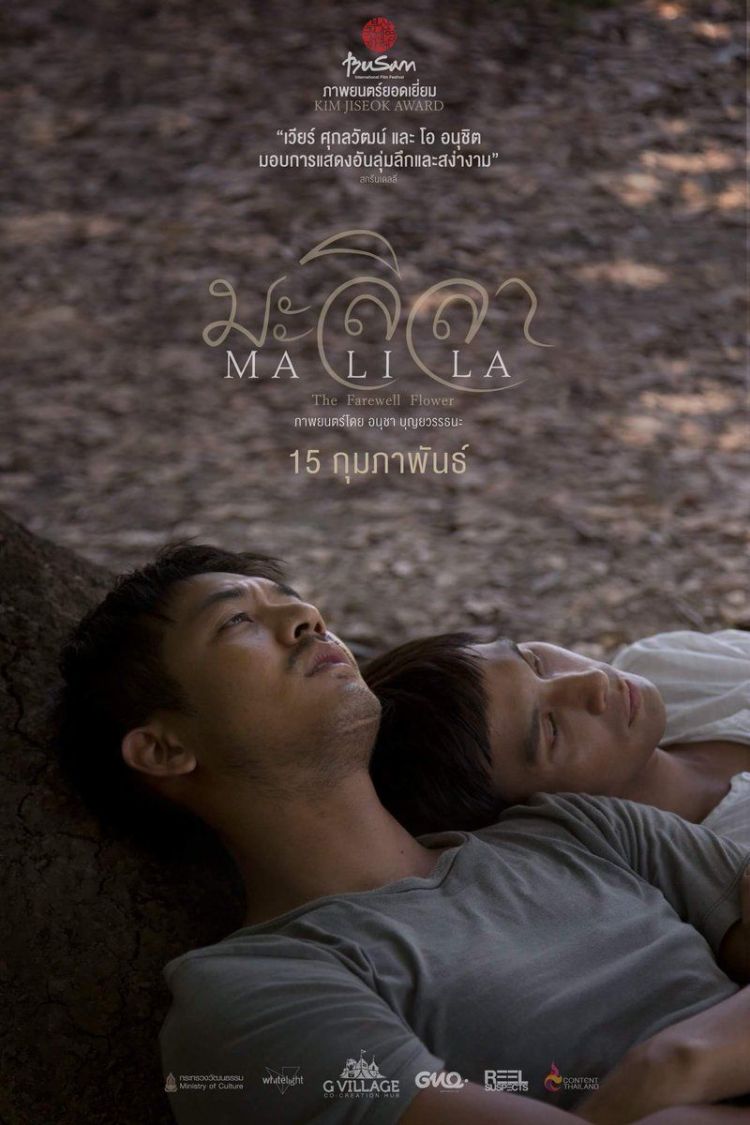
Malila posterAnucha Boonyawatana’s second feature, Malila: The Farewell Flower (มะลิลา), opens with a quotation from a 19th century poem. The poem laments that even a Baisri painstakingly created to honour the gods will eventually be cast away once it has served its purpose. No longer divine, its soul departed, the ornament is just another thing to be disposed of. Like the beautiful Baisri, two men’s souls will briefly intertwine only for the flowers of their love to wither on the vine, fading away with the great work still incomplete. This incompleteness, the lingering sense of absence and irreconcilable longing, propel the one left behind onto a spiritual journey hoping to discover if the answers to his need lie within or are not to be found at all.

Shane (Sukollawat Kanarot), the owner of a jasmine plantation, has recently begun to rebuild his life following a period of heavy drinking during which his wife left him and his young daughter was killed by a python in the jungle. Reuniting with his former lover, Pich (Anuchit Sapanpong), Shane is distraught to find out that he is terminally ill with lung cancer and has decided to give up on conventional medicine and devote the rest of his life doing the things that make him happy. Pich’s one form of “treatment” is in his constant making and dispatching of “Baisri” – ornaments constructed from leaves and flowers for ceremonial occasions which, painstakingly created, must be sent away on the river after they have fulfilled their purpose.

Jasmine flowers are, as Pich remarks, too weak – they wither before the Baisri is completed. Though the two men are able to rekindle their romance, their time is limited. Shane contemplates becoming a monk in the hope that his good karma can be transferred to Pich but it is not to be. Alone, he sets out on a spiritual journey guided by another monk hoping to encounter the ghosts of himself and of his loves to absolve himself of his guilt and loneliness.

Set against the beautiful Thai landscape, Malila is a tale of fading flowers and eternal regrets. The art of Baisri requires intense focus and dedication in order to repurpose and reorder nature into something essentially manmade but beautiful. Later, during his quest, Shane will be met with a terrifying though no less intense experience when his guide and fellow monk instructs him in the art of corpse meditation. The sight of the body, putrid and infested with hungry maggots busily going about their business, presents a strong contrast with the otherwise idyllic scenery and forces a more literal contemplation of the process of decay as the human form dissolves leaving only memory and a ghost of past emotion in its place.

Ironically, or perhaps not, a Baisri is intended to mark a new beginning – a “farewell” on an onward journey. Shane sets off on a spiritual quest, suffering nobly in the forests with their frequent rainstorms and learning to be in the moment in the company of the comparatively better experienced monk who guides him, a former soldier now on the spiritual path. His search is internal but illuminated by the world around him and his gradually increasing connection with it.

Eventually transcending this world for another, Shane begins to find his answers and finally cleanses himself of his loss and suffering. Mixing lyrical poetry with beautifully photographed naturalism, Anucha Boonyawatana tells a painful tale of love lost and found, hearts broken and repaired, and finally of acceptance both of one’s self and of the transience of all things. Malila: The Farewell Flower is a parting gift to a departing love, filled with sorrow and regret but also with beauty even in decay.


Screened at BFI Flare 2018.

Original trailer (English subtitles)

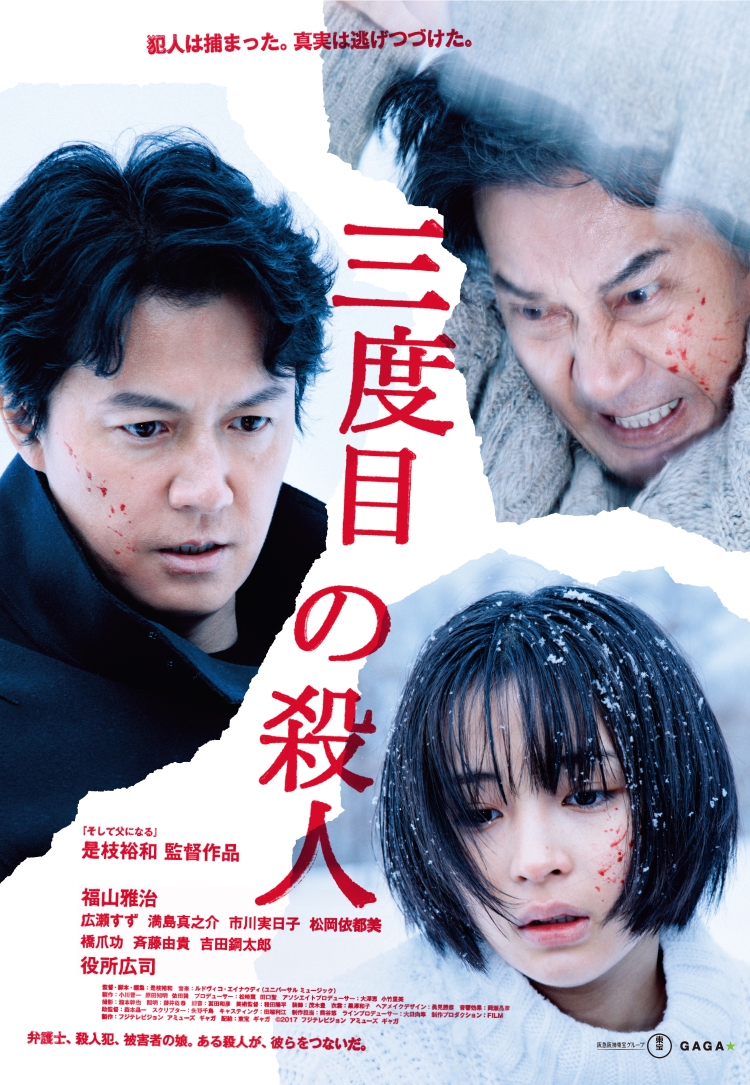
The Third Murder (三度目の殺人, Hirokazu Koreeda, 2017)

Third Murder posterJapanese cinema has often put the justice and legal system on trial and found it wanting. From Yoji Yamada’s Flag in the Mist in which a “selfish” lawyer contributes to the death of an innocent man, to Yoshitaro Nomura’s spiralling, feverish The Incident, Yoshimitsu Morita’s Kafka-esque Keiho, Gen Takahashi’s pointed Court of Zeus, and Masayuki Suo’s comparatively more straightforward I Just Didn’t Do It, the entire justice system takes on an almost spiritual quality of absurdity, tormenting the accused for the sake of a pantomime of justice, little caring for his or her guilt or innocence and intent only on propping up its own sense of absolute authority.

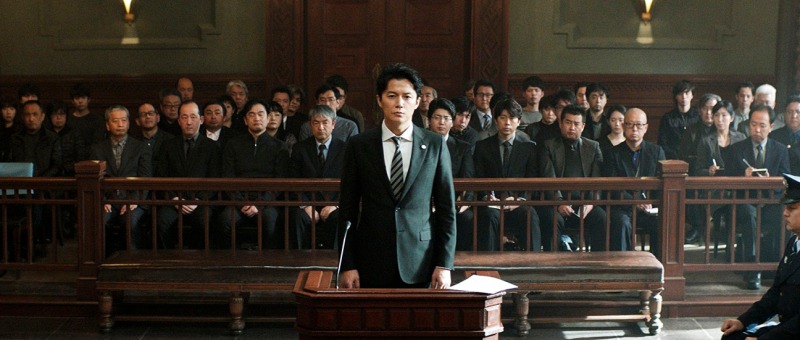
Like Yoji Yamada in Flag in the Mist, The Third Murder (三度目の殺人, Sandome no Satsujin) finds director Hirokazu Koreeda in unfamiliar territory though, at heart, it all comes back to family. A top lawyer, Shigemori (Masaharu Fukuyama), currently in the middle of a divorce, is asked to represent a man who has freely confessed to murder. As the son of the original judge who sentenced the accused, Misumi (Koji Yakusho), to the 30 year sentence he had not long been released from before (allegedly) committing the crime, Shigemori feels a responsibility to act but is frustrated by his client’s constantly shifting story. Nothing he says adds up, and every new angle Shigemori uncovers provokes only more doubt as to the true nature of the case at hand.

Shigemori, somewhat condescendingly, criticises the junior lawyer in the office for his naivety in wanting to to investigate the crime. Understanding and empathy are “unnecessary” in defending a client. The business of a lawyer, on either side, is to assess the evidence at hand, create an argument that withstands scrutiny, and eventually triumph in debating one’s opponent. In the face of the law, the “truth” is an irrelevance.

Shigemori’s cynicism is however rocked by the eerie presence of Misumi who seems to carry with him a kind of deepening emptiness. Misumi has already served 30 years in prison for the murder of two loansharks, the theft of their money, and an act of arson committed on their property to disguise the crime. Shigemori’s father, now a much older man, laments his youthful naivety in handing down a compassionate judgement which took into account the mitigating circumstances – Misumi’s troubled childhood, his poverty, the dire economic situation in which the closure of the local mines had led to mass unemployment and provided fertile ground for unscrupulous money lenders, and a series of personal tragedies which may have unbalanced his mind, but now he thinks some people are just bad and Misumi’s third murder is, in a sense, also his responsibility in allowing him the freedom to commit it.

Yet, there is also a doubt that Misumi’s first crimes are even his. We are told that, like the current case, Misumi couldn’t stick to one story – a common phenomenon with those who confess under duress, saying yes to everything in order to make the questioning stop but later forgetting what exactly they confessed to. Misumi later says he confessed only because he was told that confessing was the only way to avoid the death penalty which, ironically enough, is what he now faces. He also claims he was intimidated by the (admittedly stern) prosecutors, and when it looks as if a new trial may be necessary, the judge opts for the most “judicially economical” solution to incorporate the new demands into the current trial for reasons which the lawyers attribute to his personal need to get the case off his docket in good time so as not to muddy his own reputation. Japan’s 99% conviction rate is less an endorsement of judicial efficiency than a worrying indictment of the legal process in which trials are mere formalities held for show, a pantomime intended to reinforce an idea of “justice” which does not quite exist.

The weight of justice itself is called into question. We learn that the victim was guilty of several crimes, some of them more forgivable than others. Yet is his death “justice” or “murder”, was he “killed” or was the act one of “salvation” for his victims? There are no easy answers and the uncomfortable fact remains that one kind of justice may not necessarily be any different from another. Misumi remains a cypher, his motives for committing the crime(s) (if he even did commit them at all) unclear yet there is also something in him that suggests he is merely a reflection of ourselves, a projection of our own primal need to see justice done that our civil selves have tried and failed to codify into a universally recognised system of fairness known as law. Then again perhaps all we really want is a story we can understand and empathise with, perhaps we don’t want justice at all – we want narrative, a strategy for defence against the cruel and arbitrary charges of an unforgiving world. Shigemori stands at a crossroads, cleansed of his cynicism but unsure what to replace it with, as, perhaps, as we.


Currently on limited release in UK cinemas courtesy of Arrow Academy.

International trailer (English subtitles)

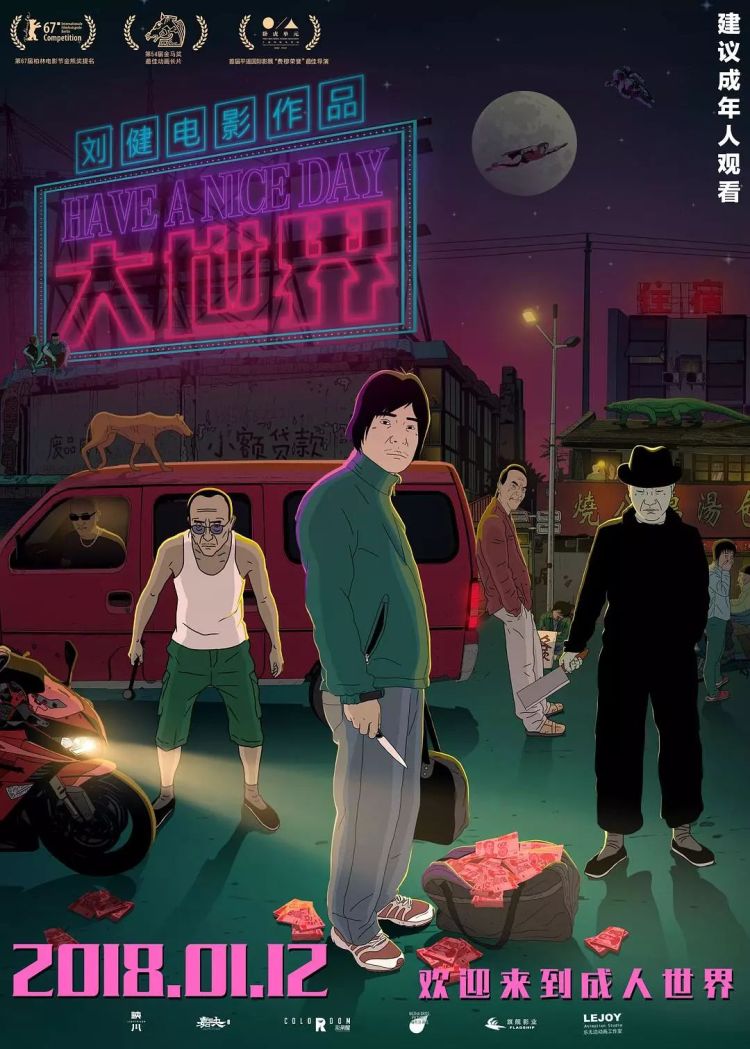
Have a Nice Day (大世界 / 好极了, Liu Jian, 2017)

Have a Nice Day poster 1Even when everything is pointless, still you have to try to live. “Spring is spring”, as the opening quote by Leo Tolstoy proclaims and so there is life even among the ruins which, in this case, exist in the mysterious “development zone” somewhere in the modern China. This backstreet noir takes place in a world of near apocalyptic dilapidation though the effect is more one of incompleteness than destruction, as if an over excited city planner had randomly started projects one after another but suddenly tired of each of them. Jack Ma may have affirmed that everyone has a dream in his heart, but the dreams here are small and mostly unattainable, locked into a claustrophobic atmosphere of inescapable despair.

Xiao Zhang (Zhu Changlong), a lowly construction driver, decides to seize his chance of happiness with both hands in lifting a vast sum of cash which belongs to mob boss Uncle Liu (Yang Siming). Uncle Liu, however, is busy torturing his childhood friend for supposedly sleeping with his wife. He sends his best guy, enigmatic hitman Skinny (Ma Xiaofeng), after Zhang but before Skinny can get to him, Xiao Zhang is is picked up by “inventor” Yellow Eyes (Cao Kou) whose X-ray specs have spotted the money and decided it’s too good an opportunity to miss. He takes off with his kind-of-girlfriend (Zheng Yi) who is also the sister-in-law of a guy who works with petty gangster Lao Zhao (Cao Kai) who is the guy Xiao Zhang took the money from in the first place. Meanwhile, the mother of Xiao Zhang’s girlfriend has asked her niece, Ann Ann (Zhu Hong), to have a look into what’s going on with Xiao Zhang because he’s been sending some very suspicious messages.

Everything here is in transit. Hitman Skinny is fond of telling people that he’s “just passing through” but so is everyone else, there is nothing here to stop for, except that it’s impossible to escape. All the significant places are also points of transit or hope for connection – the “Integrity” internet cafe, a “business” hotel, a road which leads nowhere through a landscape permanently “under construction”. Everything is half formed or falling down, the world is indistinct as if it hasn’t discovered its own identity and has tried to cobble something together from the back streets of other cities glanced in violent movies from somewhere far away.

Xiao Zhang, (almost) our hero, is almost the same – he tells Skinny that his dream was to be a man like him rather than the spineless coward he feels himself to be because guys like him always seem so cool in the movies. Doubtless Skinny doesn’t seem so “cool” with his foot on Xiao Zhang’s chest, but Xiao Zhang’s need is as much about escape as it is a matter of practicality. Though the practicality is ironic enough – he wants the money to pay for more plastic surgery for his fiancée whose face has apparently been ruined by a botched operation. Xiao Zhang hopes they can escape to South Korea, world capital of cosmetic procedures, where they can repair what the modern China has destroyed.

It isn’t difficult to see why Have a Nice Day (大世界, Dàshìjiè, previously titled 好极了, Hǎojíle) rubbed the censors the wrong way. Liu’s vision of the China of today is a lawless wasteland in which despair and inertia reign while those of the post ‘80s generation flail wildly in the wind, drinking in overseas culture from Hong Kong and the West and wanting more than their society can give them. In a running joke everyone has a startup idea they’re sure will be the next big thing but when it comes right down to it, even with the money they’ve no idea what they’re doing. Two boys chatting idly about the future find only futility with one lamenting that if he wanted to make it he’d have gone to England to study, only for the other to ask what the point would be now the UK has left Europe. He has a radical startup idea of his own – a restaurant! After all, people will always need to eat. You have to admire his practicality, even if bemoaning his lack of imagination.

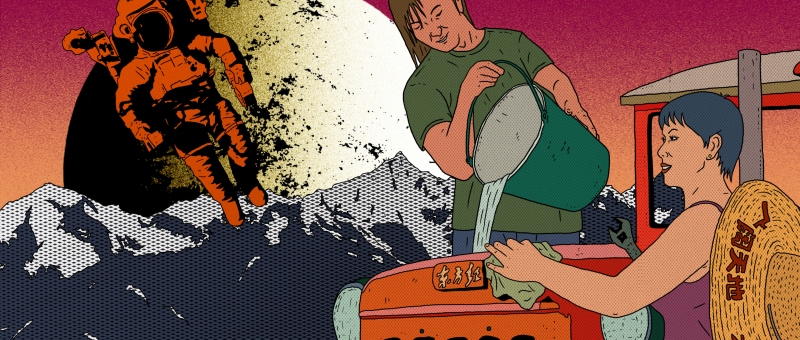
Meanwhile, the cousin of Xiao Zhang’s fiancée and her boyfriend, having figured out that Xiao Zhang really does have the money and intending to take it from him, fantasise about finding their own “Shangri-La”. Breaking into a lengthy karaoke-style video sequence, Liu paints a jagged picture of Ann Ann’s visual ideology which quickly descends into a mish-mash of Mao-era socialist propaganda posters and their collections of cheerful country women enthusiastically driving tractors and juggling sheep while posing in traditional Chinese dress with children in neckerchiefs reading improving literature. Everything is for sale, even apparently the innocence of the past. A friend of Lao Zhao’s expounding on the nature of freedom describes it as a three tiered system – the farmer’s market, supermarket, and online, your degree of personal autonomy and happiness reduced to a question of how the place you buy your groceries informs your sense of self worth.

Rampant capitalism has led to moral as well as physical decay as the half-finished buildings collapse under the weight of national hubris, a weathered statue standing in for a real life policeman as the hollow representation of the authority of an absent regime. Animated with an oddly naturalistic minimalism and filled with whimsical absurdity, Have a Nice Day serves as a condemnation of the last 30 years of Chinese history but it does so with a wistful irony. After all, it’s not as if things are much better anywhere else.


Have a Nice Day is released in UK Cinemas on 23rd March courtesy of Mubi. Check the official website to find out where it’s screening near you.

International trailer (English subtitles)

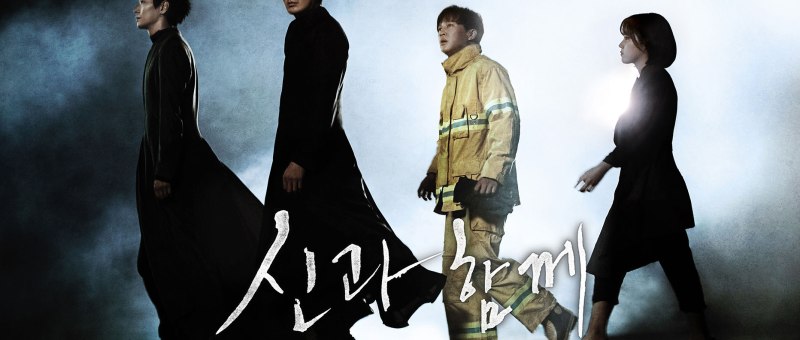
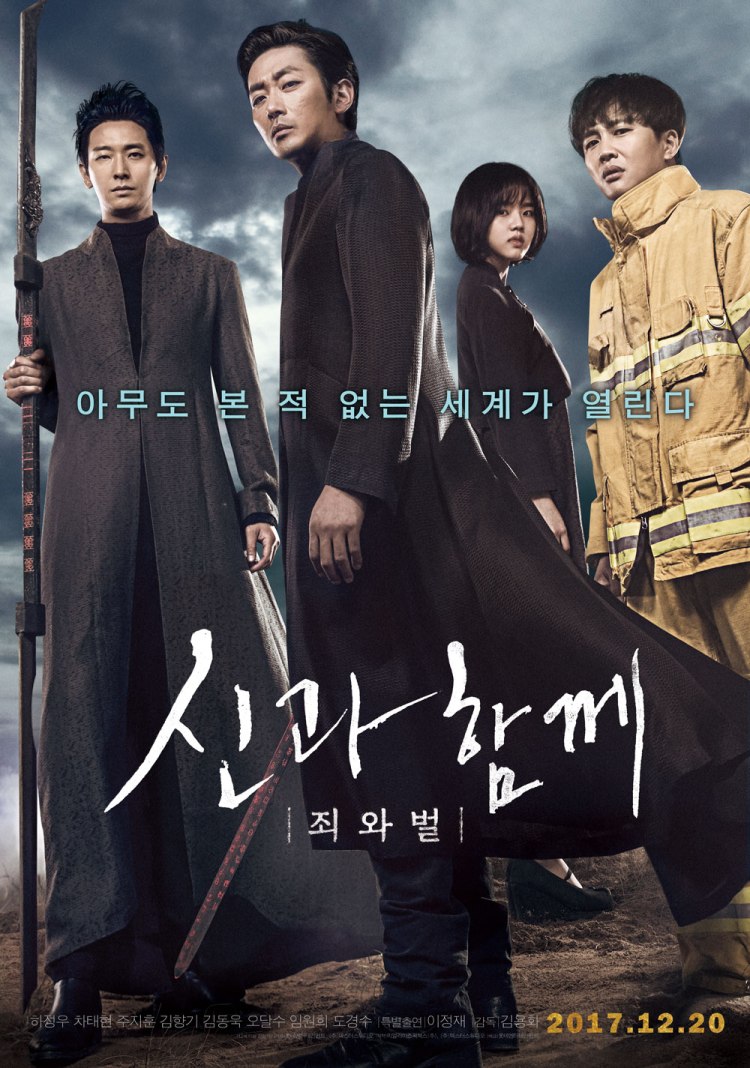
Along With the Gods: The Two Worlds (신과함께-죄와 벌, Kim Yong-hwa, 2017)

Along With the Gods- The Two Worlds posterThere’s nothing like death to give life perspective. If life is a series of tests, death is the finals but if you pass you get to come back and do it all again, otherwise you’ll have to spend some time in the afterlife thinking hard about what you’ve done and presumably studying for some kind of resits. At least, that’s how it seems to work in the complicated Buddhist hell of Kim Yong-hwa’s fantasy epic Along With the Gods: The Two Worlds (신과함께-죄와 벌, Sin gwa Hamkke – Joe wa Beol). The first in a two part series, The Two Worlds takes a saintly man and tries to pull him down only to build him back up again as a potent symbol of filial piety and wounded selflessness.

Firefighter Kim Ja-hong (Cha Tae-hyun) is killed leaping heroically from a burning building with a little girl wrapped in his arms. He doesn’t realise he’s dead until he’s greeted by two neatly suited, official looking types who explain to him that they are his “Guardians” and will be looking after him on his journey through the afterlife. It turns out that Ja-hong’s heroic death has earned him a “Paragon” badge – a rare occurrence, and he has a good chance of reincarnation before the 49th day if he can successfully pass each of the seven trials which mark passage through Buddhist Hell.

As the Guardians point out, it would be extremely difficult for a “normal” person to pass these seven trials and achieve reincarnation but as a Paragon Ja-hong should have an easier ride. Ja-hong is, however, an ordinary person with an ordinary person’s failings even if his faults are comparatively small. Ja-hong is literally on trial seven times – represented by his team of defence lawyers, the Guardians, he is charged with various sins each “judged” by a god presiding over a custom courtroom. Murder Hell is fiery chaos, indolence is assessed by a stern older lady (Kim Hae-sook), and deceit by (who else) a small child (Kim Soo-ahn) licking a large lollipop.

Ja-hong is indeed a “good person” but he has also been to dark places, wilfully deciding to turn and walk away from them in order to repurpose his rage and resentment into a determination to care for his seriously ill mother (Ye Soo-jung) and younger brother (Kim Dong-wook). Working tirelessly, Ja-hong has been selfless in the extreme, saving lives and saving money for his family whilst sacrificing his own life and prospect of happiness in order to provide for others. That’s not to say, however, that there isn’t a degree of “sin” in the selfishness of Ja-hong’s selflessness or that he hasn’t also been cowardly in making a symbolic recompense for a guilty secret rather than a personal apology.

Kim Yong-hwa weaves in a series of subplots including a lengthy shift into the life of Ja-hong’s brother Su-hong, a possibly gay soldier with an intense attachment to a comrade which eventually has tragic results. Su-hong’s mild resentment towards his brother becomes a key element in his trial, eventually developing into a more literal kind of spectre haunting the proceedings while perhaps creating even more turmoil and confusion in the living world thanks to a moustache twirling villain whose desire to “help” is probably more about saving face – the kind of “betrayal” which is not “beautiful” enough to get a pass from the Goddess.

In the end the court seems to bend towards Ja-hong’s moral philosophy, excusing his human failings through moral justification even when that justification remains flimsy as in the case of his “fake” letters intended to make people feel better through the comfort of lies. The essence of the judgement, however, looks for forgiveness – if a sin is forgiven in the mortal world, it is inadmissible in a celestial court. The message seems clear, face your problems head on and sort out your emotional difficulties properly while there’s time else you’ll end up with “unfinished business” and get bogged down in Buddhist Hell being attacked by fish with teeth and having old ladies asking you why you spent so much time watching movies about death rather than living life to the fullest.

Ambitious in its use of CGI, Along With the Gods: The Two Worlds acquits itself well enough in its carefully drawn (if lifeless) backgrounds and frequent flights of fancy which allow Ha Jung-woo’s enigmatic Gang-lim ample opportunity to whip out his fiery sword of justice. Narratively, however, it’s comparatively clumsy and content to revel in the melodrama of its tearjerking premise. A post-credits teaser linking part one and part two through the recurring figure of an old man who can see the Guardians presents a familiar face in an extremely unfamiliar light and hints at a great deal of fun to be had next time around – appropriate enough for a film about reincarnation, but then again it’s as well to have some fun in this life too, something The Two Worlds could have used a little more of.


Currently on limited UK cinema release courtesy of China Lion.

Original trailer (English subtitles)


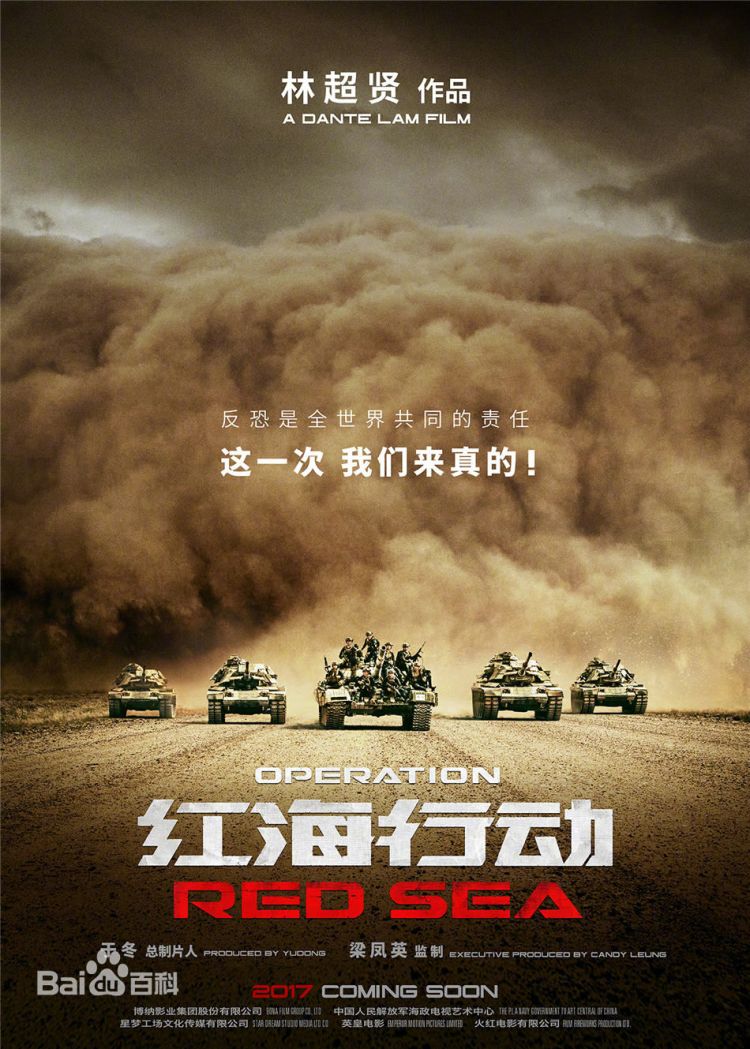
Operation Red Sea (红海行动, Dante Lam, 2018)

Operation Red Sea posterDante Lam, a Hong Kong action icon, is one of many to have begun looking North, tempted by the bigger budgets and audience potential of the Mainland. Following 2016’s Operation Mekong, Lam is back on manoeuvres with a second in what may develop into a series, Operation Red Sea (红海行动, Hónghǎi Xíngdòng). Red Sea is not connected to Mekong in terms of narrative and only features a cameo by the earlier film’s star, Zhang Hanyu, who remains firmly ensconced on the bridge of the all powerful Chinese warship while an elite troop of special forces handles the rapidly deteriorating situation on the ground, but it is once again “inspired” by a true story and perfectly positioned to show the Chinese security services in a more than favourable light.

The action begins in 2015 when the Chinese navy wades in to defend a merchant ship attacked by Somali pirates, managing to apprehend the “bad guys” with a minimum of bloodshed before they escape Chinese waters. Having suffered a casualty, the squad are then dispatched to rescue Chinese citizens caught up in an Middle Eastern coup. Their mission is helped and hindered by intrepid Chinese-French journalist, Xia Nan (Hai Qing), who has discovered evidence that a dodgy “businessman” caught up in the attack is in possession of a consignment of “yellowcake” along with a deadly dirty bomb formula which he plans to sell on to the terrorists currently waging war on the city.

Though Operation Red Sea is, perhaps, no more jingoistic than any British or American war film, its focus is more definitively centred on home concerns than an attempt to police the world. The Chinese military exists to defend Chinese citizens, even if those citizens are increasingly scattered throughout an unstable world. This presents a point of conflict between idealistic, and occasionally reckless, journalist Xia Nan whose mission is to stop the terrorists and rescue her friends, and the soldiers whose primary mission is to evacuate Chinese citizens though they hope to be able to provide assistance to citizens of other nations too if their mission parameters allow.

The Jiaolong, elite Chinese special forces, are indeed an impressive fighting force who proceed with military precision but are not without compassion. Informed by a local soldier that the terrorists often force civilians to become suicide bombers, the team’s bomb disposal officer puts himself at great risk to defuse a device and free a man destined to become a car bomb, rather than simply neutralising the threat. Protecting Chinese in peril is the official goal, but on a human level the soldiers are overcome with sorrow and anger for the local population, lamenting that they may have saved some lives but many have lost their homes and they will simply leave them behind to deal with the situation alone when they succeed in their mission of evacuating stranded Chinese diplomatic personnel.

Despite the overtly propagandistic elements which paint the Chinese military as a force for good, fighting bravely for their countrymen overseas, the landscape of war Lam paints is a hellish one full of blood, guts, and scattered body parts. Much of the film plays as a two hour recruiting video for the Chinese navy – it’s almost a surprise there aren’t people waiting with clipboards outside the theatre, but it’s difficult to believe anyone would be in a big hurry to sign up after witnessing the pure human carnage of a foreign battlefield and the very real threats the soldiers subject themselves to all while stoically pursuing their mission, committed to the protection of their nation and people.

Nevertheless Lam’s spectacle is impressive and action choreography unsurpassed. Working on a huge scale with everything from snipers to tank battles, Lam keeps the tension high as the team attempt to adapt to a situation which is rapidly deteriorating leaving them all but stranded behind enemy lines where each and every one of them faces a very real threat of death or serious injury. Despite an overuse of CGI slow motion bullet vision, Operation Red Sea largely earns its bombast with relentless fury, leaving its propaganda aims to dangle the background until the final coda which seeks to remind us that China rules the waves and will protect its citizens and territory wherever they may be.


Currently on limited release in UK cinemas courtesy of China Lion.

Original trailer (English subtitles)

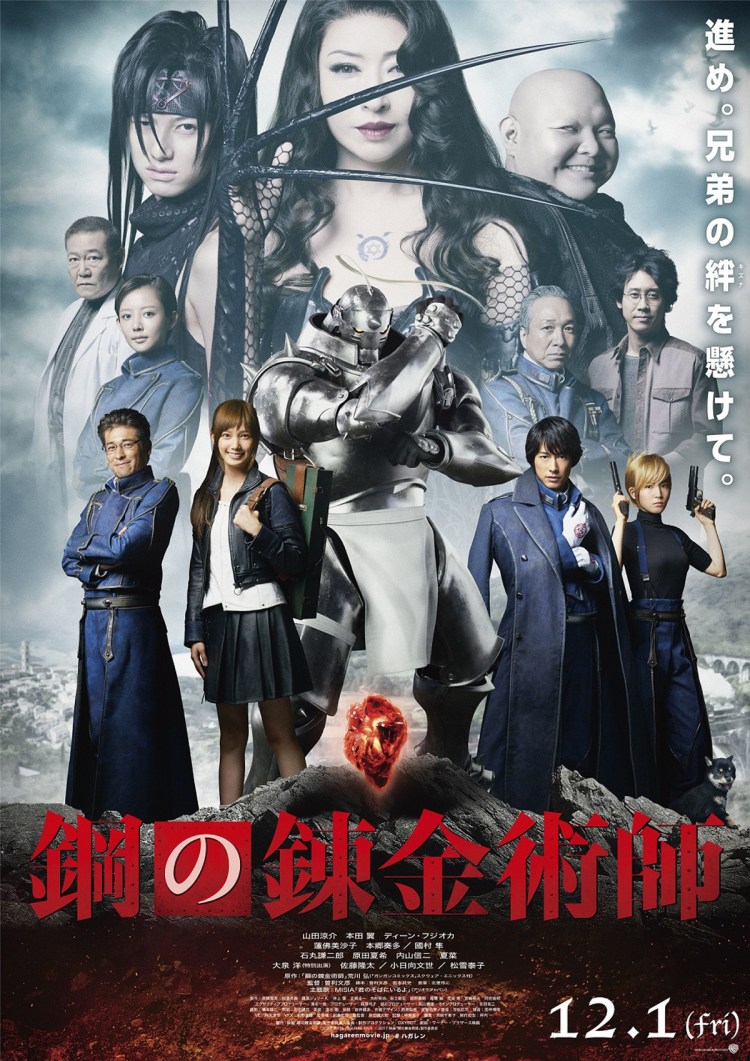
Fullmetal Alchemist (鋼の錬金術師, Fumihiko Sori, 2017)

Fullmetal Alchemist posterEvery so often a film comes along which makes you question everything you thought you knew. Fullmetal Alchemist (鋼の錬金術師, Hagane no Renkinjutsushi) is just such as film but less for the philosophical questions fans of the source manga may have been expecting, than for the frankly incomprehensible fact that it exists at all. Produced not by a major studio but by Square Enix – best known as a video game studio but also the publisher of manga magazine Monthly Shonen Gangan in which the series was originally serialised, and effects studio Oxybot Inc., Fullmetal Alchemist is not the big budget extravaganza a franchise of this size might be expected to generate but a cut price blockbuster attempting to pack a much loved, long running saga into just over two hours.

For the uninitiated, the movie begins with the little Elric Brothers – Ed and Al, who live in the countryside with their doting mother while their father is away. When their mother is struck down by a sudden illness and dies, the boys raid their dad’s Alchemy library for clues as to how to bring her back. There is, however, a taboo surrounding human transmutation and when the brothers cast their spell they pay a heavy price – Al loses his entire body though Ed manages to save his soul and bind it to a suit of armour by sacrificing his own right arm.

Many years later, Ed (Ryosuke Yamada) and Al (Atomu Mizuishi) are still looking for the mythical “Philosopher’s Stone” which they believe will allow them to cast another spell and get their fleshy bodies fully restored. This takes them to a small town where they encounter a dodgy priest and their old commander, Captain Roy Mustang (Dean Fujioka), who wants to bring them back into the State Alchemist fold. The priest’s stone turns out to be a fake though his connections to the film’s shady antagonists are all too real, and the brothers are soon faced with another dilemma in their quest to restore all they’ve lost.

Sori shifts away from the frozen Northern European atmosphere of the manga for something sunnier and less austere, shooting in Italy’s Volterra with its narrow medieval streets and iconic Tuscan red roofs. He is, however, working on a budget and it shows as his cast are costumed at cosplay level with awkward blond wigs attempting to recreate the manga’s European aesthetics. Al, rendered entirely (and expensively) in CGI, is deliberately kept off screen while the quality of the effects often leaves much to be desired.

Al’s frequent absence is a major problem seeing as the series’ major theme is brotherhood and Ed’s tremendous sense of guilt over his brother’s condition coupled with his recklessness in his need to put things right is only explained in a piece of bald exposition following a fight between the pair after Al’s mind has been corrupted by a mad scientist who implied that he may not really be “real” after all. While Al’s false memory paranoia may be among the more interesting issues the film attempts to raise, it’s quickly pushed into the background, eclipsed by the ongoing conspiracy narrative which places the Elric Brothers in a difficult position regarding their need to get their body parts back. 

A symptom of the attempt to condense such a much loved and well known manga into a two hour movie, there is rather a lot of plot going on and numerous side characters on hand to enact it. Though fans of the original manga may be pleased to see their favourite characters have made it into the movie, they maybe less pleased about how one note they often are or the various ways their personalities have needed to shift in order to fit into the new narrative arcs the film employs. Aside from the young and pretty cast, Fullmetal Alchemist also finds room for a host of veteran talent from the ubiquitous Jun Kunimura in a small role to Yo Oizumi turning villainous and Fumiyo Kohinata at his most Machiavellian.

Extremely silly, poorly put together and burdened with some very unfortunate wigs, the Fullmetal Alchemist live action adaptation is as much of a misfire as it’s possible to be but viewers hoping for a continuation to the tale would do well to stay tuned for a post-credits sting strongly hinting at a part two.


Streaming worldwide on Netflix.

Original trailer (English subtitles)

Ambiguous Places (うろんなところ, Akira Ikeda, 2017)

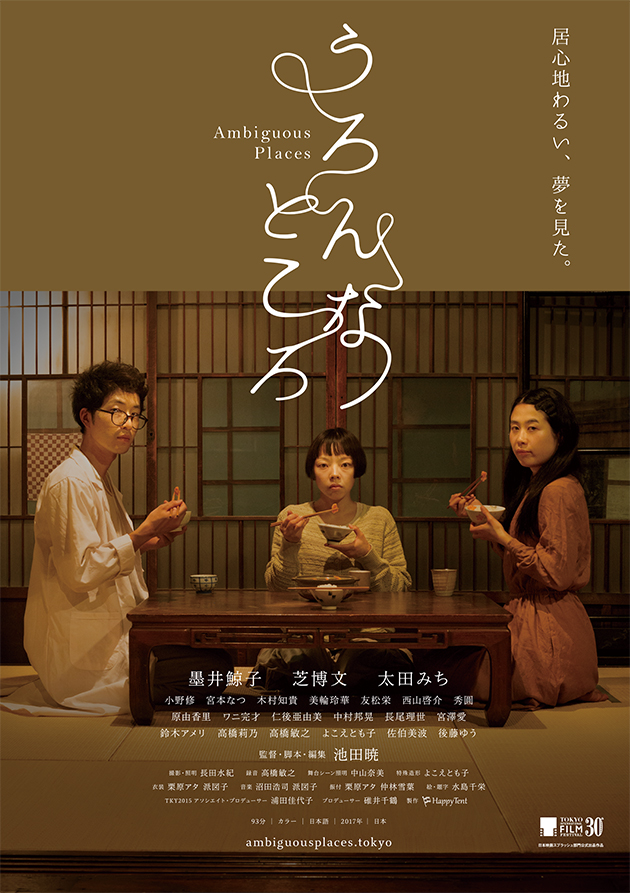
Ambiguous places poster

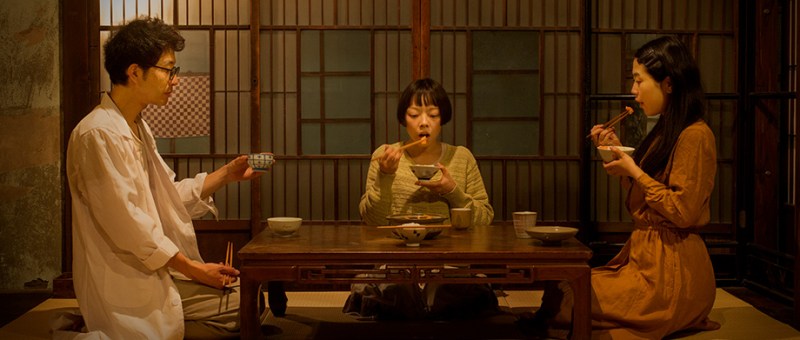
The world is quite a strange place at the best of times, but for a small collection of people living in between some Ambiguous Places (うろんなところ, Uronna Tokoro) everything seems pretty much normal. Akira Ikeda whose Anatomy of a Paperclip won a Tiger Award at International Film Festival Rotterdam, returns with another surreal tale inspired by the land of dreams. 

Konoko (lit. “this girl”) washes up on a beach trapped in a net and tries to sing but the other people on the beach tell her to stop, because she’s rubbish. Konoko’s other problem is that she’s got a bug stuck in her hair and will need to find a barber to take it out. Travelling with a man whom a strange lady looking for “nuts” on a beach assures her is her dad, Konoko wanders off to look for a hairdresser only to sell her “dad” to a couple of near silent dango makers and then discover that the only barber’s in town is actually a soba shop (which serves udon) and she needs to go the pharmacy only the pharmacist is out at the moment because he had to get some gloves made in celebration of his wife’s pregnancy…

Ambiguous Places is actually a cyclical collection of three stories running more or less concurrently in which the same collection of strange people reappear in different stages of their own adventures. Konoko’s “Meeting Nyoraga” segues into the pharmacist’s odyssey of glove making and forced marriage “Celebrate with Gloves”, and that in turn leads into “Get My Hair Washed” which pops out of the pharmacist’s dream about a girl with foamy hair and features a quest to rid one’s home of scary blue ghosts only to end with everyone sitting down and having dinner together instead.

To begin with everything seems very strange but like the best of dreams it eventually starts to make sense and though there is more than a little violence and hostility, broadly everyone seems to accept things just the way they are. Still, from our point of view this is all terribly surreal. At one point the pharmacist, who has just spent ages having gloves knitted around his hands in a bizarre ritual encounters the man who will later own the dango shop just as he’s carting his wife around covered by a sheet and sitting in a wheel barrow filled with vegetables. The man explains that this is his people’s way of celebrating. The pharmacist looks him dead in the eye and remarks “strange custom”. Well, quite. Mozart’s The Magic Flute also plays a large role in the proceedings in somewhat mangled German with bits of Japanese creeping in until a young lady is forced to have a go after criticising Konoko’s singing and finds she is able to sing the Queen of the Night aria complete with coloratura almost faultlessly.

The atmosphere is indeed dreamlike as the various tales weave in and out of each other with a kind of surreal logic that has its own internal consistency even if it’s quite hard to pin down. Absurd in the extreme, Ikeda opts for deadpan delivery that adds to the bizarre humour and ethereal quality of the strange “ambiguous places” which seem to exist in this odd little seaside town. Yet also like dreams the deeper meaning (if there is any) is hard to discern. Nevertheless, even if it is all random and essentially meaningless, Ambiguous Places is unexpectedly warm and filled with enough zany humour to keep things ticking along even when wondering if one needs to be afraid of the postman or if Nyoraga is really as dangerous as they say…


Streamed via Festival Scope as part of their International Film Festival Rotterdam tie-up.

Original trailer (English subtitles)

Monster Hunt 2 (捉妖記2, Raman Hui, 2018)

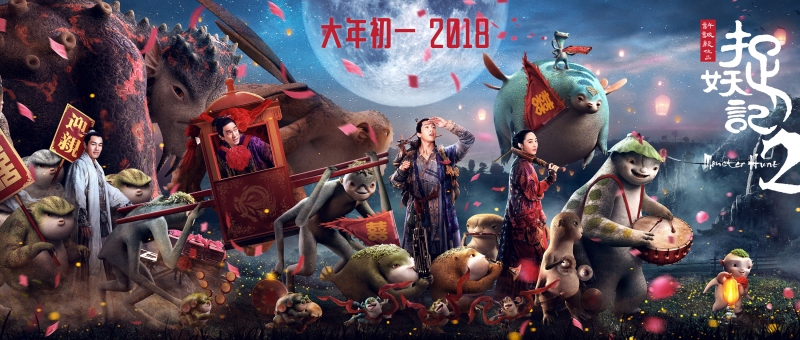
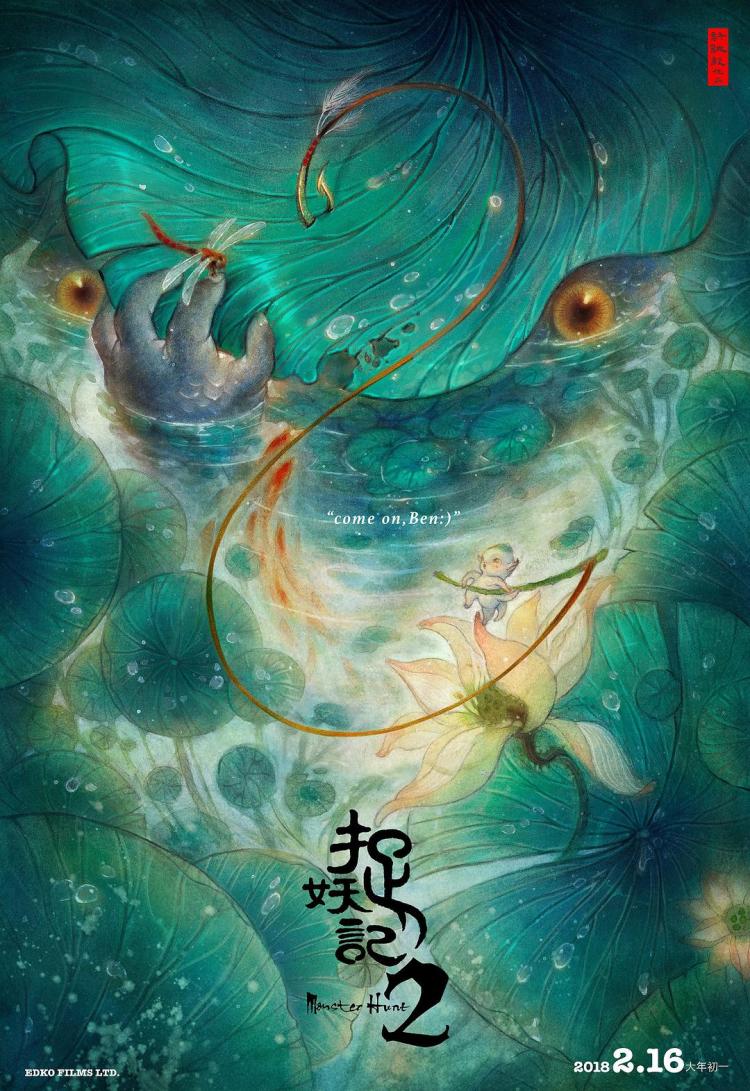
Monster Hunt Poster 2Despite numerous production difficulties, Monster Hunt went on to become a bona fide box office smash and international pop culture phenomenon on its release in 2015. Children and adults alike fell in love with the adorable little radish monster Wuba who, in grand fairytale tradition, is the secret heir to all of Monsterdom and the subject of a prophecy which posits him as the long awaited unifying force set to restore equality between humans and their Monster brethren. By the time this sequel, Monster Hunt 2 (捉妖記2, Zhuō Yāo Jì 2), rolls around, things are looking up for Wuba seeing as no one’s actively trying to eat him, but like so many kids in modern China he misses his human mum and dad who made a difficult decision at the end of the last film that Wuba should live with Monsters in Monsterland because it just wasn’t safe for him in the human realm.

Consequently Wuba has been living happily in the forest where the Monsters have made a little village for themselves. The Monster village is a place of laughter and song where everyone is welcome and they dance cheerfully all night long. That is, until evil monsters turn up looking for Wuba again, destroying the village and leaving him on the run all alone back in the human world. Meanwhile, Tianyin (Jing Boran) and Xiaolan (Bai Baihe) are on a quest to look for Tianyin’s long lost dad – a famous monster hunter who left Tianyin behind as a child to keep him safe, just like Tianyin had to leave Wuba. Nevertheless, though Tianyin and Xiaolan have developed a sparky domesticity, they’re both unwilling to admit how much they miss little Wuba and wish they could go get him back from Monsterland even if they know he’s probably safer hidden away from those who might want to do him harm. While looking for Tianyu and Xiaolan, Wuba gets himself semi-adopted by a very odd couple of chancers in the form of shady gambler Tu (Tony Leung) and his monster partner Ben-Ben.

Once again the theme is family. Monster Hunt spoke, perhaps, to all those separated families in modern China or more particularly to the children in revealing that parents sometimes have to make difficult choices and end up living apart from their kids so that they can give them a better life. Monster Hunt 2 accepts the premise but then provides an emotional correction in making plain the pain Tianyu and Xiaolan feel on being separated (perhaps forever) from Wuba, until they eventually settle on tracking him down and facing whatever dangers come their way together. They come to this realisation after saving a mother and son who’ve been (unfairly) arrested by the Monster Hunt Bureau and witnessing their happiness just in being together despite the sticky situation they may be in.

Meanwhile Wuba, sad and alone, is happy to have found himself a surrogate family in the form of kindly Ben-Ben and the spiky Tu – a virtual mirror of Tianyu and Xiaolan when they first met. As in the first film, Tu originally takes Wuba in because he wants to sell him to Madame Zhu (Li Yuchun) – a woman he has cheated in both love and money, whose patience apparently knows no end. This brief episode of Wuba and his two new uncles is a subversive one in terms of mainstream Chinese cinema, and unlike the early union of Tianyu and Xiaolan there is little comedy in the easy coupledom of Ben-Ben and Tu who become two men raising a child together in relative happiness. This is perhaps the reason for the strange coda in which Tu and Ben-Ben have a brief chat about girls, relegating Tu’s earlier awkward admission of affection one more of brotherhood than love and affirming their total heterosexuality (both the female love interests are also from the same species, just to make things crystal clear).

Yet the message is strong – families want to stay together, parents want to be with their kids and kids want to be with their parents so maybe the world should just let them, even if those families aren’t quite like everyone else’s. With much better production values than the first film and a much more consistent tone, Monster Hunt 2 is a vast improvement on its predecessor though it treads more or less the same ground and is content to meander between several set pieces with more than a few seemingly extraneous sequences of Tu getting up to mischief or Xiaolan using her feminine wiles on a nerdy inventor (though these at least add to the more complex arc of the feminised Tianyu and masculine Xiaolan each moving towards a gender neutral centre). Monster Hunt 2 maybe more of the same and little more than the next instalment in a series, but nevertheless its winning charm and gentle warmth are enough to ensure there will still be devotees of Wuba ready to reserve their seats for the inevitable part three.


Currently on limited release in UK cinemas. Screening locations for the UK, Ireland, US and Canada available via the official website.

International trailer (English subtitles)