 As you read the words “adapted from the novel by Kanae Minato” you know that however cute and cuddly the blurb on the back may make it sound, there will be pain and suffering at its foundation. So it is with A Chorus of Angels (北のカナリアたち, Kita no Kanariatachi) which sells itself as a kind of mini-take on Twenty-Four Eyes (“Twelve Eyes” – if you will) as a middle aged former school mistress meets up with her six former charges only to discover that her own actions have cast an irrevocable shadow over the very sunlight she was determined to shine on their otherwise troubled young lives.
Haru has been working as a librarian in the city for the last twenty years and has finally reached retirement age but before that she was a school teacher in Japan’s frozen north. Before she can even think about enjoying her new found freedom, a pair of policeman turn up at her door to ask her a few questions about one of her former pupils, Nobuto, who is a suspect in a murder case. It seems that they found Haru’s address amongst Nobuto’s possessions and are keen to find out what kind of relationship she had with him and anything she might know about his current whereabouts. Haru is shocked to the core but remembers that she always gets a New Year card from one of Nobuto’s classmates, Manami, and decides to return home at long last to try and put to rest some wandering ghosts.
Like much of Kanae Minato’s work, A Chorus of Angels is a perfectly constructed mystery only this time much more of the heart than of the head. Consequently, it would be wrong to reveal too much of the plot but suffice to say that a traumatic incident twenty years ago left a profound effect not only on each of the children but also on their teacher and others in the surrounding area. Re-encountering each of her six pupils again, Haru discovers that each of them has been harbouring a deeply buried sense of guilt and shame, believing themselves to have been responsible for what happened that day. That sense of unresolved trauma has prevented each of them from fully getting on with their lives, as if some part of each of them was frozen in time when they were just primary school children singing in a choir and feeling proud of themselves for the first time in their lives.
Their teacher, Haru, also left a part of herself behind in that snowy northern landscape. Having committed something which some would regard as a sin, she’s hounded off the island – or perhaps allows herself to be, giving in to a punishment that she sees as befitting her own sense of guilt. However, as is customary for Minato, Haru’s “crime” is not such a black and white affair. If she betrayed someone, that person understood and, ultimately, only wanted the best for her. That she sacrificed the things that might have allowed her to go on living a happy life is the kind of tragic irony Minato is known for and the lonely, cold and shut off appearance of Haru’s twenty years of librarianing exile is another perfect example. She didn’t really do anything wrong except for try to live, and yet she’s paid for that with the next twenty years of her life and not only that, in robbing the young children who’d come to see her as something of a guardian angel of her very presence, she’s left them to pay too. Guilt grows like a mountain until it eclipses even the brightest of suns.
Despite its unfeasibly starry cast which radiates around veteran actress Sayuri Yoshinga and includes such young talents as Hikari Mitsushima, Mirai Moriyama, Ryuhei Matsuda, Ryo Katsuji, Aoi Miyazaki and Eiko Koike, A Chorus of Angles is actually fairly ordinary in terms of its directorial style and though it manages to stay on the right side of saccharine, never quite manages to make its tear-jerking set-up quite as moving as it seems to want to be. That said, it does boast some extraordinarily beautiful scenes of the Hokkaido snowscape which is a perfect setting for this chilling, frozen ghost story in which no actual ghosts appear. The children’s childhoods are all blissful blue skies and sunny summer days but in the future there’s only snow and cold winter sunshine. Just stay alive, it would be enough – to live is to suffer, but you have to go on. The important thing to learn is that it’s one thing to forgive everyone else, but there comes a time when you have to forgive yourself, too.
The Hong Kong release of A Chorus of Angels includes English subtitles!
Unsubtitled trailer:
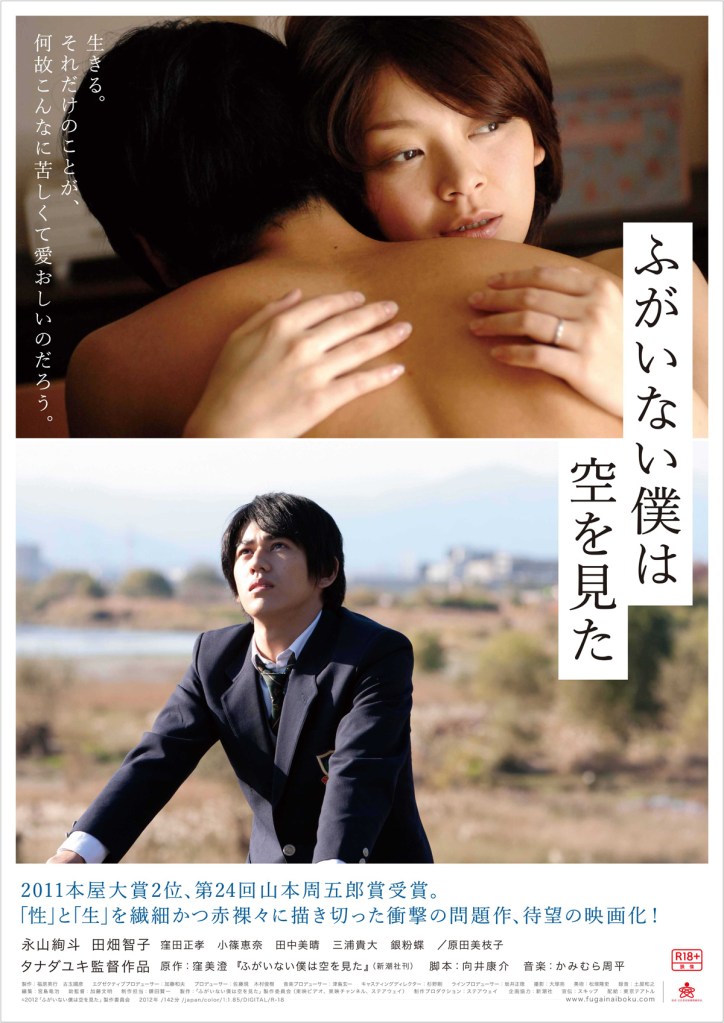 The work of director Yuki Tanada has had a predominant focus on the stories of independent young women but The Cowards Who Looked to the Sky sees her shift focus slightly as the troubled relationship between a middle aged housewife who escapes her humdrum life through cosplay and an ordinary high school boy takes centre stage. Based on the novel of the same name by Misumi Kubo, The Cowards Who Looked to the Sky (ふがいない僕は空を見た, Fugainai Boku wa Sora wo Mita) also tackles the difficult themes of social stigma, the power of rumour, teenage poverty, elder care, childbirth and even pedophilia which is, to be frank, a little too much to be going on with.
 “Being good”. What does that mean? Is it as simple as “not being bad” (whatever that means) or perhaps it’s just abiding by the moral conventions of your society though those may be, no – are, questionable ideas in themselves. Mipo O follows up her hard hitting modern romance The Light Shines Only There by attempting to answer this question through looking at the stories of three ordinary people whose lives are touched by human cruelty.
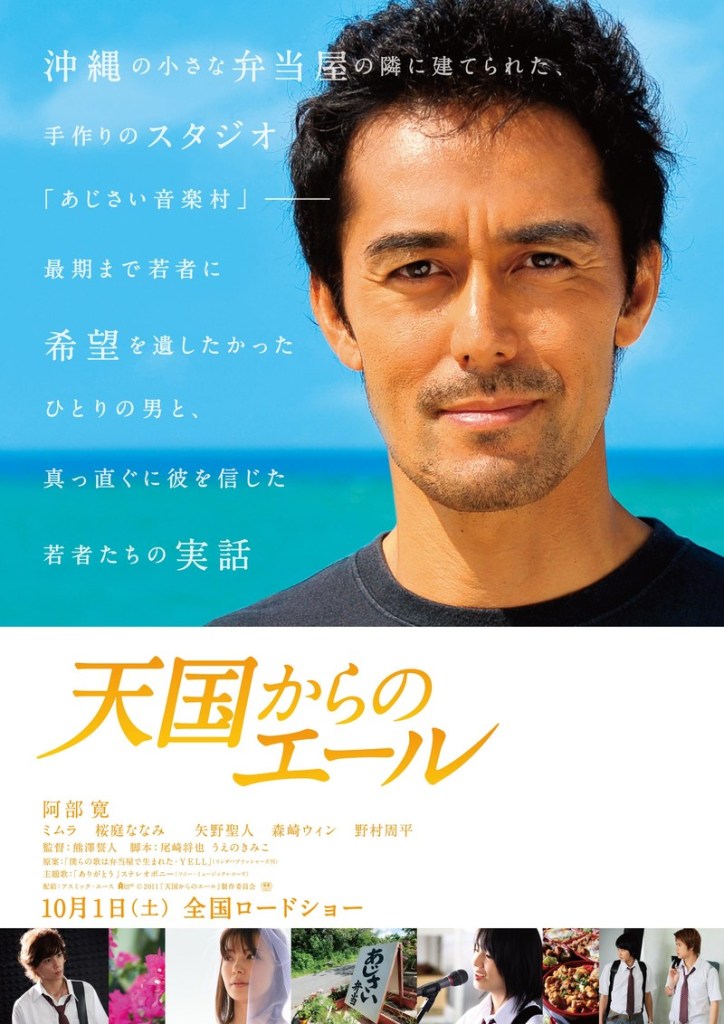 Okinawa might be a popular tourist destination but behind the beachside bars and fun loving nightlife there’s a thriving community of local people making their everyday lives here. Just like everywhere else, life can be tough when you’re young and the town’s teenagers lament that there’s just not much for them to do. A small group of high schoolers have formed a rock band but they’re quickly kicked out of their practice spot at school after a series of noise complaints from neighbours.
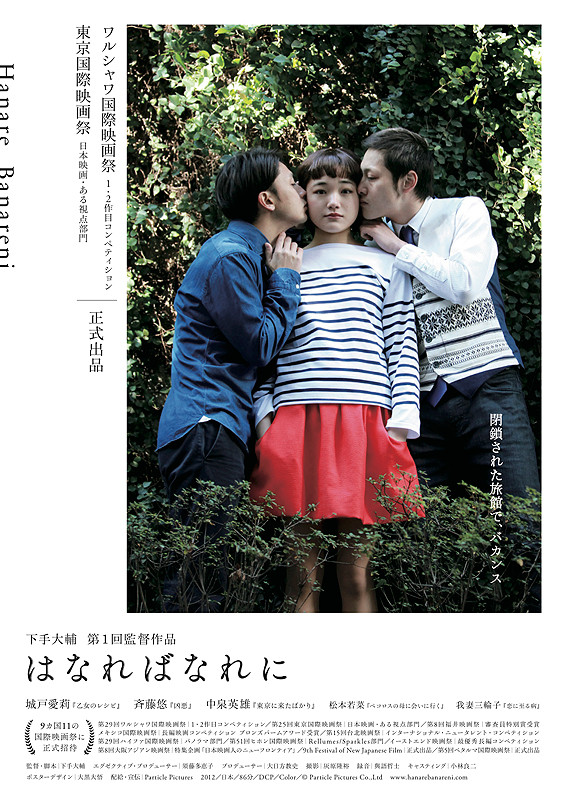 All these years later, it’s easy to forget just how revolutionary the wheezy, breezy youthfulness of the French New Wave was. Kuro proves that there’s life in this whimsical, summer seaside feeling yet as three misfits find themselves holing up at a disused small hotel to think about what they’ve done until they learn to grow up a little.
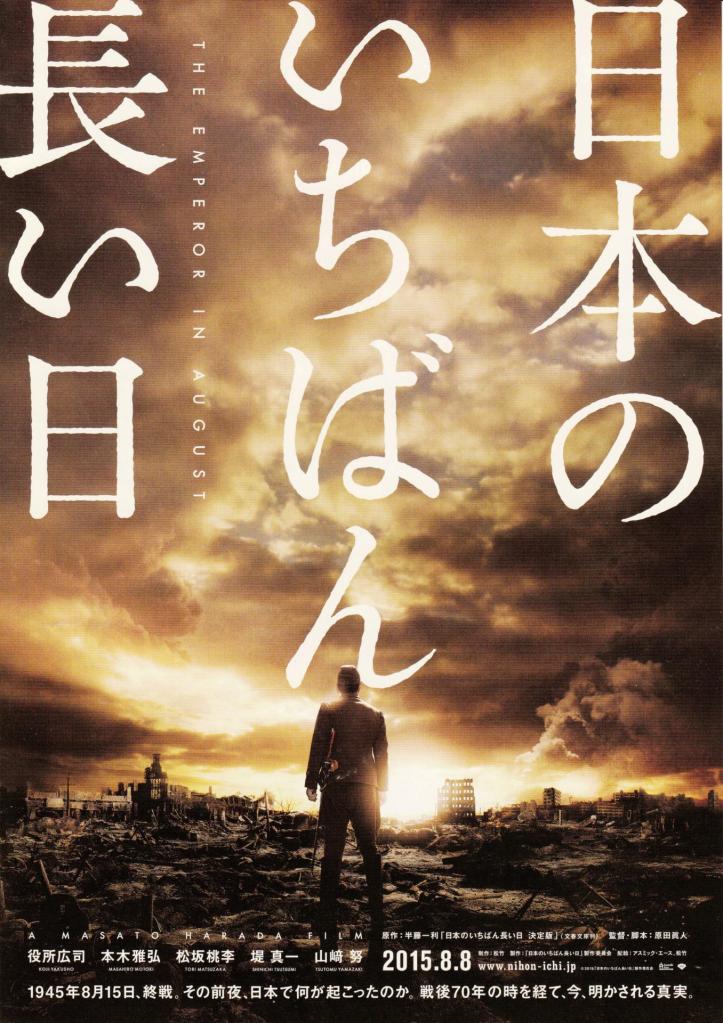 How exactly do you lose a war? It’s not as if you can simply telephone your opponents and say “so sorry, I’m a little busy today so perhaps we could agree not to kill each other for bit? Talk later, tata.” The Emperor in August examines the last few days in the summer of 1945 as Japan attempts to convince itself to end the conflict. Previously recounted by Kihachi Okamoto in 1967 under the title Japan’s Longest Day, The Emperor in August (日本のいちばん長い日, Nihon no Ichiban Nagai Hi) proves that stately events are not always as gracefully carried off as they may appear on the surface.
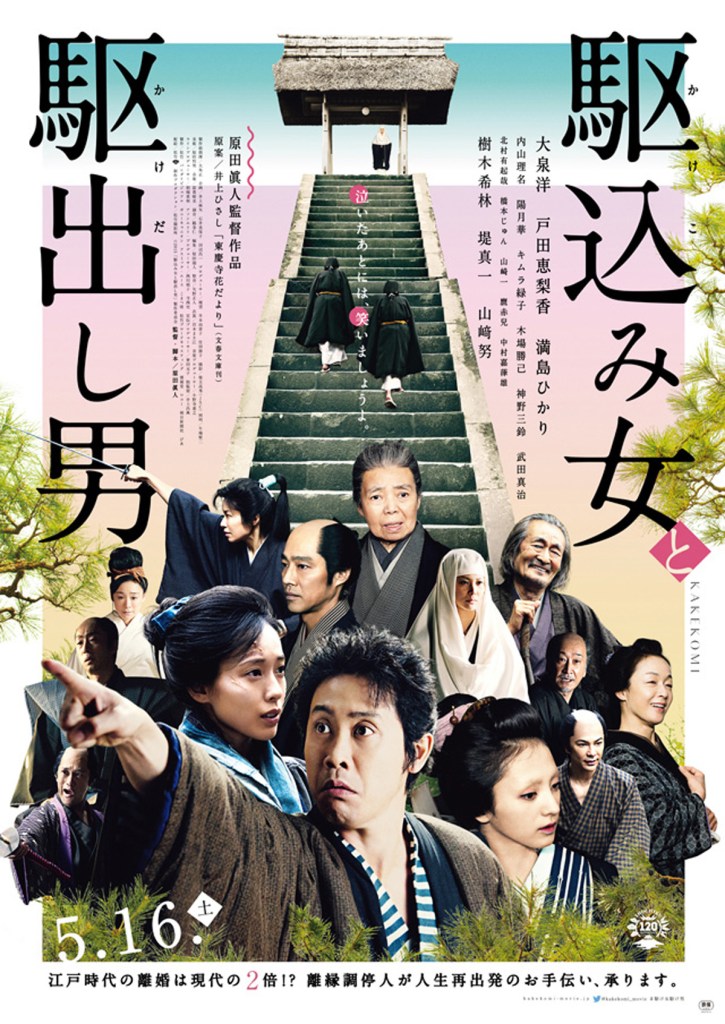 The world of the classical “jidaigeki” or period film often paints an idealised portrait of Japan’s historical Edo era with its brave samurai who live for nothing outside of their lord and their code. Even when examining something as traumatic as forbidden love and double suicide, the jidaigeki generally presents them in terms of theatrical tragedy rather than naturalistic drama. Whatever the cinematic case may be, life in Edo era Japan could be harsh – especially if you’re a woman. Enjoying relatively few individual rights, a woman was legally the property of her husband or his clan and could not petition for divorce on her own behalf (though a man could simply divorce his wife with little more than words). The Tokeiji Temple exists for just this reason, as a refuge for women who need to escape a dangerous situation and have nowhere else to go.
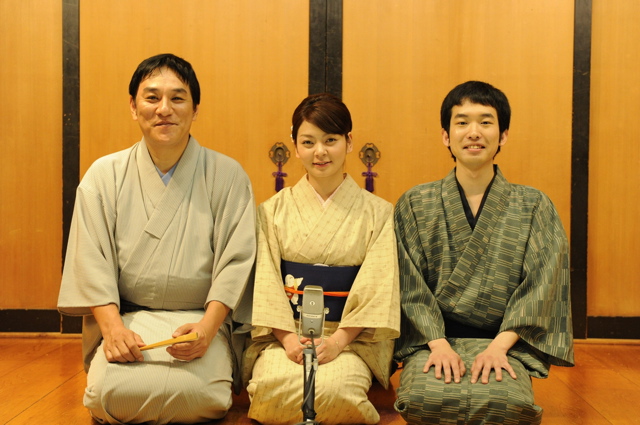 When it comes to the classic Japanese art forms, kabuki, noh and maybe even bunraku are not so uncommon overseas. Rakugo, however, has not been as lucky. Famously impenetrable for non-native speakers even if their language skills are otherwise top notch, rakugo is the art of traditional comic story telling in which the “rakugo-ka” recites a standard monologue with the aim of mining it for laughs in their own individual fashion. These stories date back to the Edo-era and rely heavily on classic Japanese puns, stock characters and cultural assumptions, consequently, their appeal has been on the wane in Japan for sometime. That’s not to say the art form is quite dead yet though, as real life rakugo-ka Shinpei Hayashiya’s Rakugo Monogatari attempts to prove.
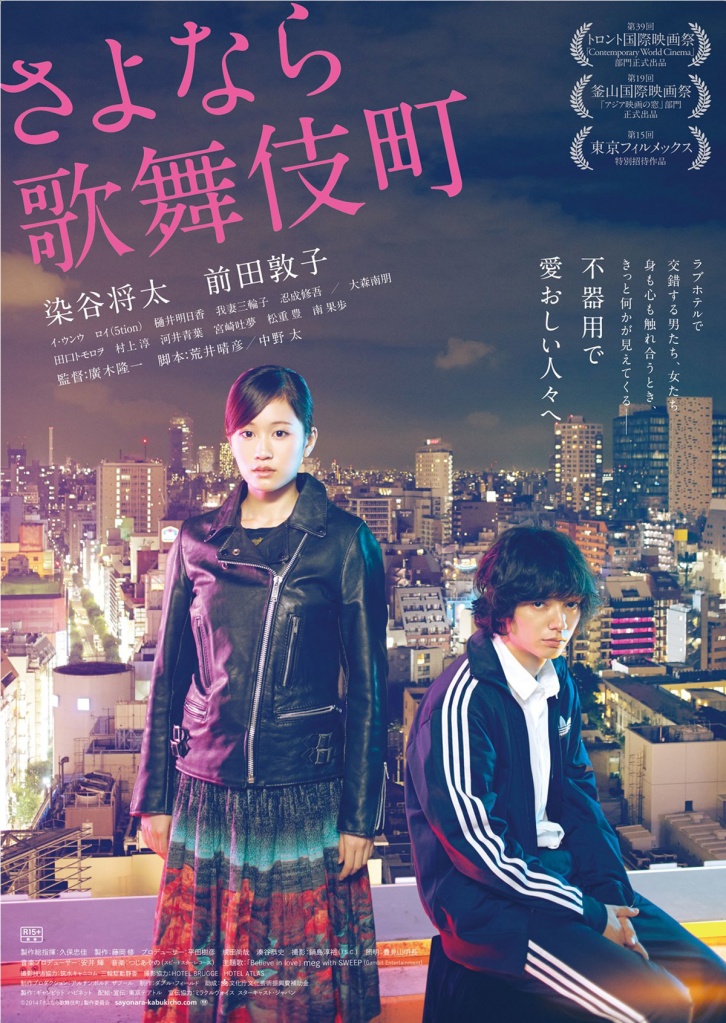 Kabukicho Love Hotel (さよなら歌舞伎町, Sayonara Kabukicho), to go by its more prosaic English title, is a Runyonesque portrait of Tokyo’s red light district centered around the comings and goings of the Hotel Atlas – an establishment which rents by the hour and takes care not to ask too many questions of its clientele. The real aim of the collection of intersecting stories is more easily seen in the original Japanese title, Sayonara Kabukicho, as the vast majority of our protagonists decide to use today’s chaotic events to finally get out of this dead end town once and for all.
 Nobuhiro Yamashita has made something of a career out of championing the underdog and La La La at Rock Bottom (味園ユニバース, Misono Universe) provides yet another foray into the lives of the disposed and degraded. With a lighter touch than some of his previous work, the once again musically inflected film is another testament to the power of redemption and that you can still turn your life around if you only have the courage to take the chance.
 Windows on Worlds