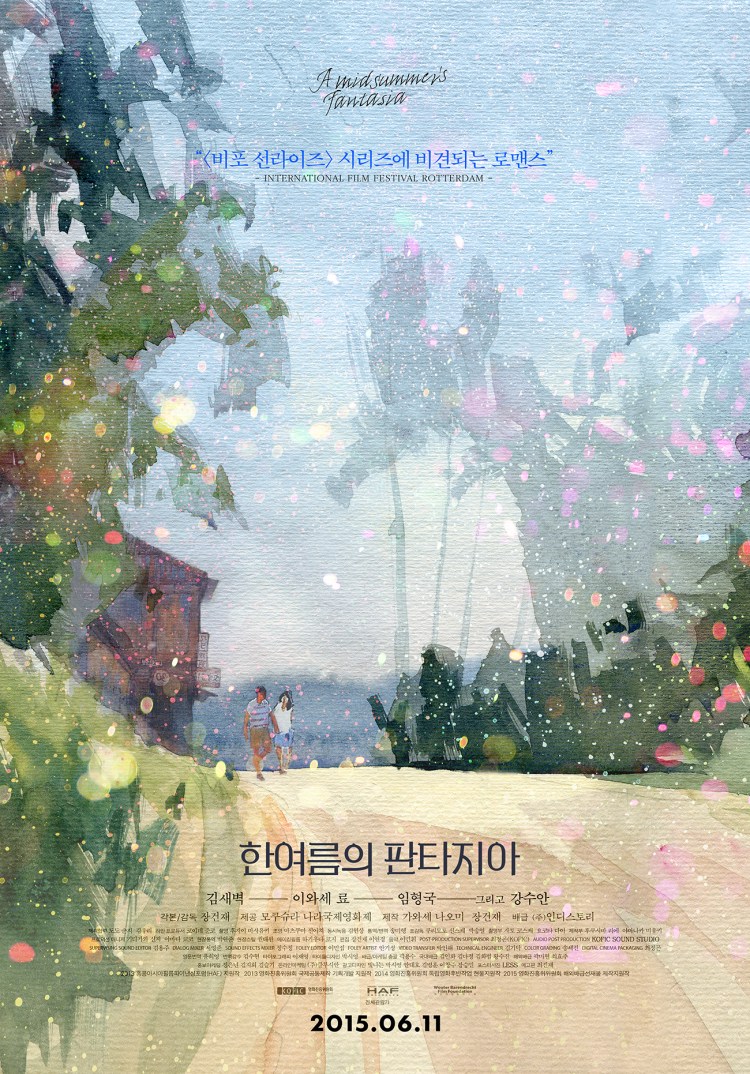
 Following his “sleeper” hit, Sleepless Night, Korean indie director Jang Kun-jae gets a touch of the Hong Sang-soos in the bifurcated tale of artistic inspiration found in a foreign land with the Korean/Japanese co-production A Midsummer’s Fantasia (한여름의 판타지아, Hanyeoreumui Pantajia). Mixing naturalism with hyperreality, Jang’s exploration of cross cultural pollination is one which offers both fireworks and quiet contemplation.
Neatly split into two parts, the film begins with a black and white sequence titled First Love in which a Korean director travels to a tiny Japanese town on a location shoot accompanied only by his assistant playing the role of interpreter. A beautiful country idyll, the village is also dying as the population ages leaving the local school abandoned for over 25 years with only the elderly left behind by their children who’ve fled to the cities. After talking with some of the residents, the director is captivated by the romantic tales of a local civil servant who acted as a guide for a young Korean girl some years previously and that of a slightly older man who once worked in the big city of Osaka and took a liking to a Korean bargirl who reminded him of his first love but tragically lost touch with her after deciding to return home.
Inspired by these twin tales of frustrated cross cultural romance, part two switches to colour for a story titled The Well of Sakura in which a Korean woman pays a visit to the same small town before heading home. A local man from the tourist office helps her out by showing her around a little and is, in truth, disappointed that she will be leaving soon never to be seen again.
The first half is shot entirely in black and white with a documentary style approach filled with ugly jump cuts and direct to camera speeches from the local residents about their daily lives in the town. Wandering around the picturesque settlement and listening to the stories of its lonely older population, what the director is most taken with is the wistfulness of the place – the sense of unresolved longing, faded promise and missed opportunities the abandoned village seems to evoke.
Part two is his response, a constructed tale of unresolved romantic connection between a Japanese man and a Korean tourist who’s ventured somewhat off the beaten path both physically and spiritually in visiting this quiet backwater before returning to the various problems which seem to be proving disruptive in her everyday life in Korea. Picking up elements from part one such as the abandoned school and its mysterious photograph, it weaves an ordinary tale of love as two people begin a dialogue they may never have the opportunity to end.
However, part one is not quite as naturalistic as it first seems with its wandering ghosts and strange symbolism. Even if the bright colours of the film’s second half are intended to feel more “cinematic” and therefore less “real” than the black and white, talking heads doc meets indie movie feel of part one it’s clear that both segments are involved in a dialogue, or perhaps even a romance, with each other – a case of call and response which begins and ends with fireworks.
It’s difficult to unsee Hong Sang-soo in Jang’s dual structure and straightforward if occasionally whimsical approach, yet he’s a little less flippant than Hong’s often ironic tone and is content to let even his imagined tale of a failure to launch romance say something more meaningful if only through simple conversation. Filled with cross cultural detail, A Midsummer’s Fantasia is both about place and not as it, like the director of the first half, is keen to point us to the who and not the where – people rather than place are the name of the day. Filled with an oddly melancholy warmth, A Midsummer’s Fantasia is another excellently produced character piece from Jang which explores larger themes with a poetic economy and heart filled with “romance” in much a larger sense.
A Midsummer’s Fantasia is available on English subtitled Region 3 DVD from Korea.
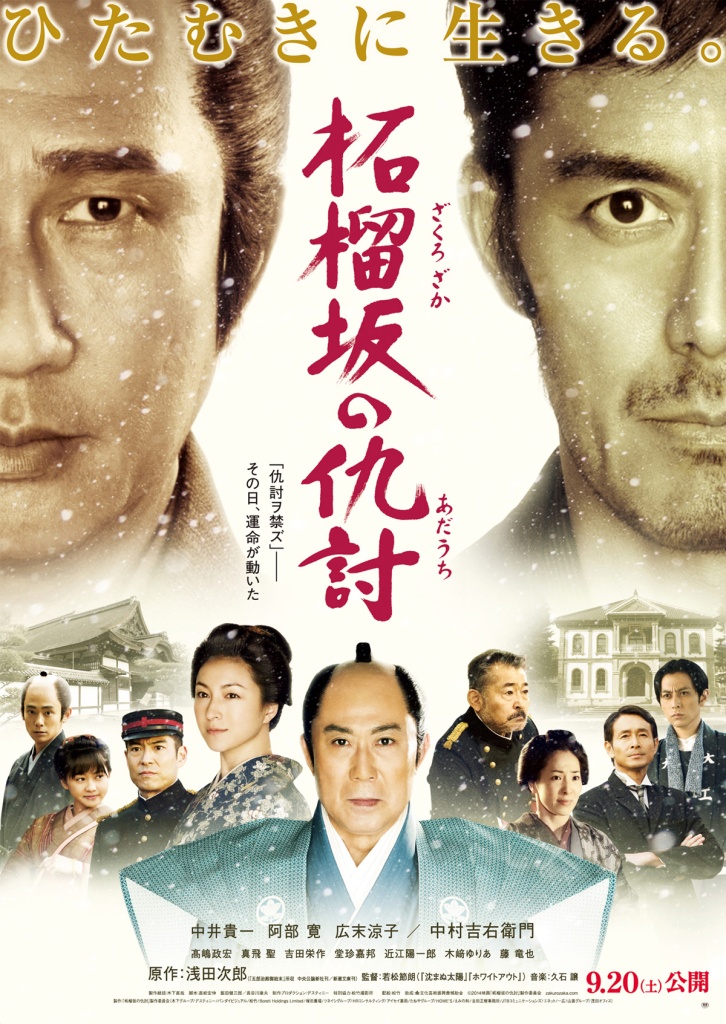 Times change, and men must change with them or they must die. When Japan was forced to open up to the rest of the world after centuries of isolation, its ancient order of samurai with their feudal lords and subjugated peasantry was abandoned in favour of a more Western looking democratic solution to social stratification. Suddenly the entirety of a man’s life was rendered nil – no more lords to serve, a man must his make his own way now. However, for some, old wounds continue to fester, making it impossible for them to embrace this entirely new way of thinking.
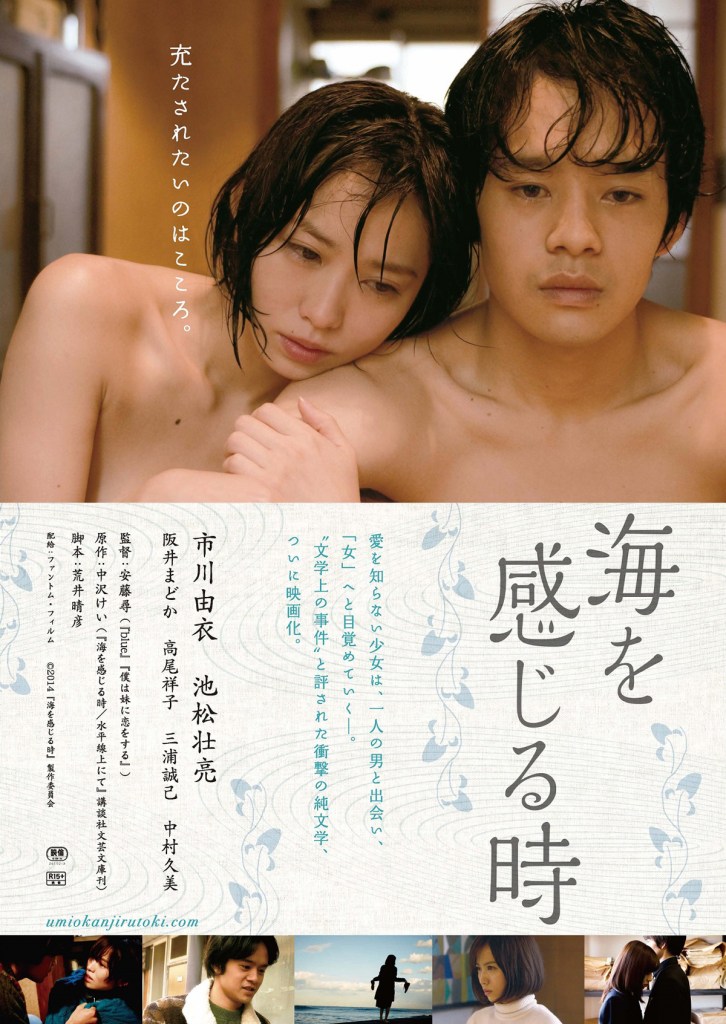 One of the most surprising things about the 1978 novel When I Sense the Sea is that its author was only 18 years old when the book was published. Though the protagonist begins as a 16 year old high school girl, author Kei Nakazawa follows her on into adulthood as the damage done to her teenage psyche radiates like a series of tiny, branching chasms stretching far back into a difficult childhood. This 2015 adaptation from Hiroshi Ando, Undulant Fever (海を感じる時, Umi wo Kanjiru Toki), maintains a distant and detached tone which, while not shying away from the erotic nature of the discussion, is quick to underline the unfulfilling and often utilitarian nature of the central couple’s relationship.
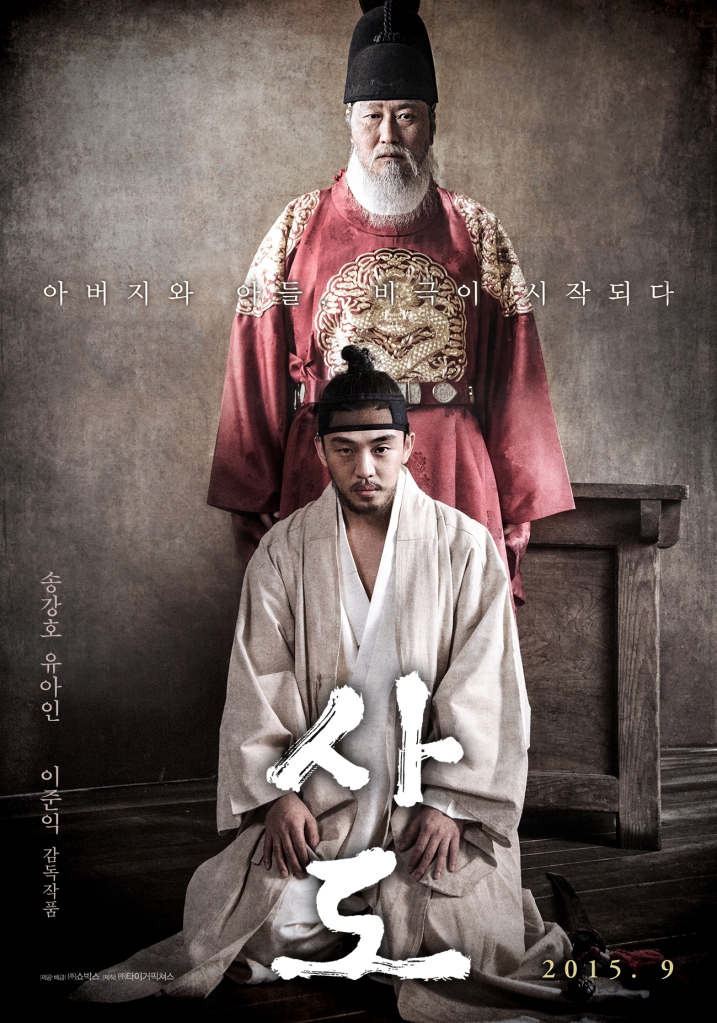 Which one is worse, the son who tries to kill his tyrannical father, or the tyrannical father who executes his own son and heir? A collection of sad stories all round, Lee Joon-ik’s The Throne (사도, Sado) is a historically inspired tale of familial conflict played out on a national stage. Where another nation might have entered into a bloody civil war, this very private tragedy keeps its bloodshed within the palace walls but still does not lack for cruelty.
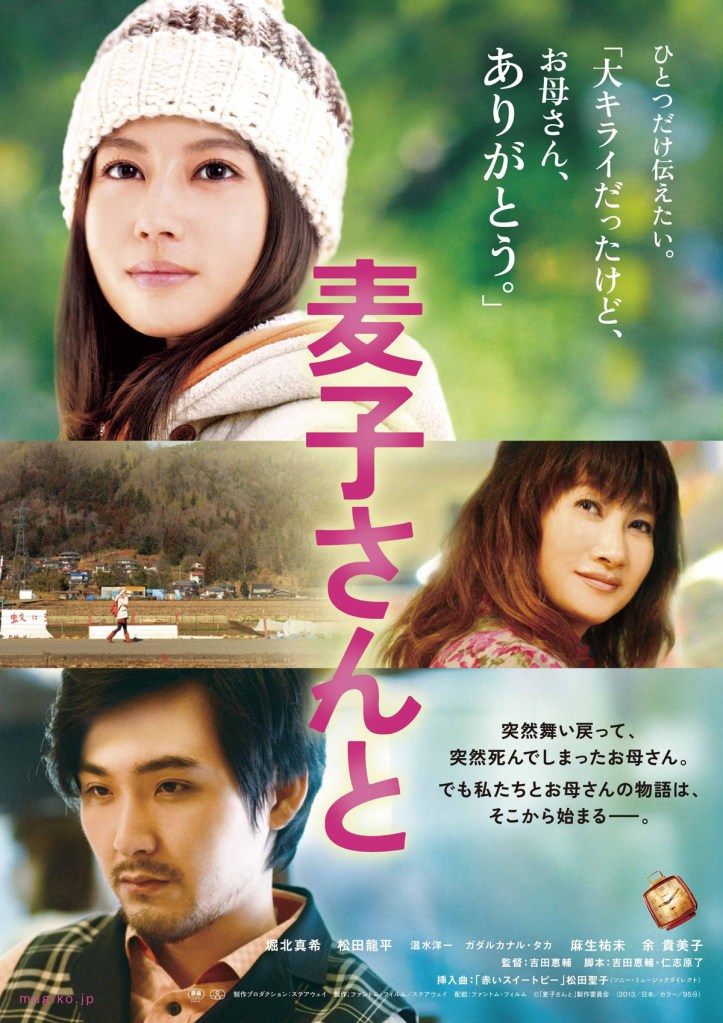 How many times were you told as a child, someday you will understand this? There are so many things you don’t see until it’s too late, and children being as they are, are almost programmed to see things from a self directed tunnel vision. Such is the case for Mugiko – a young woman with dreams of becoming an anime voice actress who is suddenly reunited with her estranged mother of whom she has almost no memory.
 Italian cinema once had a hearty appetite for genre fare, but has long since abandoned the weird and wacky in favour of the arty or the populist. You wait years for an Italian superhero movie and then two come along at once. Following on from Gabriele Salvatores’ much younger skewing The Invisible Boy which perhaps owed more to Spy Kids than anything else, first time director Gabriele Mainetti brings us a bloody, R-rated yet humour filled look at the superhero genre filtered through Japanese manga and anime rather than US comic books.
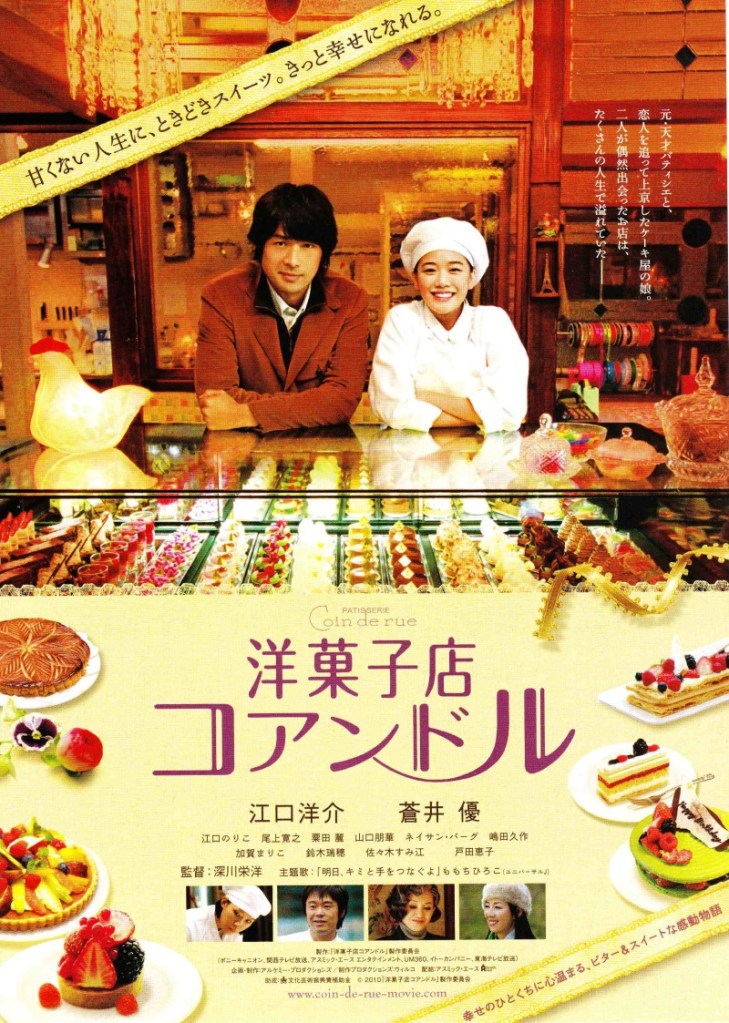 You know how it is, when you’re from a small town perhaps you feel like a big fish but when you swim up to the great lake that is the city, you suddenly feel very small. Natsume has come to Tokyo from her rural backwater town in Kagoshima to look for her boyfriend, Umi, who’s not been in contact (even with his parents). When she arrives at the patisserie he’d been working at she discovers that he suddenly quit a while ago without telling anyone where he was going. Natsume is distressed and heartbroken but notices that the cafe is currently hiring and so asks if she may take Umi’s place – after all she grew up helping out at her family’s cake shop!
 In late June of 1945, one woman is escorting another through a US checkpoint in Berlin. The young American soldier is somewhat cocky and feigns an officious sort of suspicion that causes him to demand the bandaged woman reveal her face – just to be sure. The obvious agony she feels just beginning to unwind the various layers which hide her identity is enough to convince him that he’s made a cruel mistake and he lets the pair pass.
