Samurai Marathon (サムライマラソン, Bernard Rose, 2019)

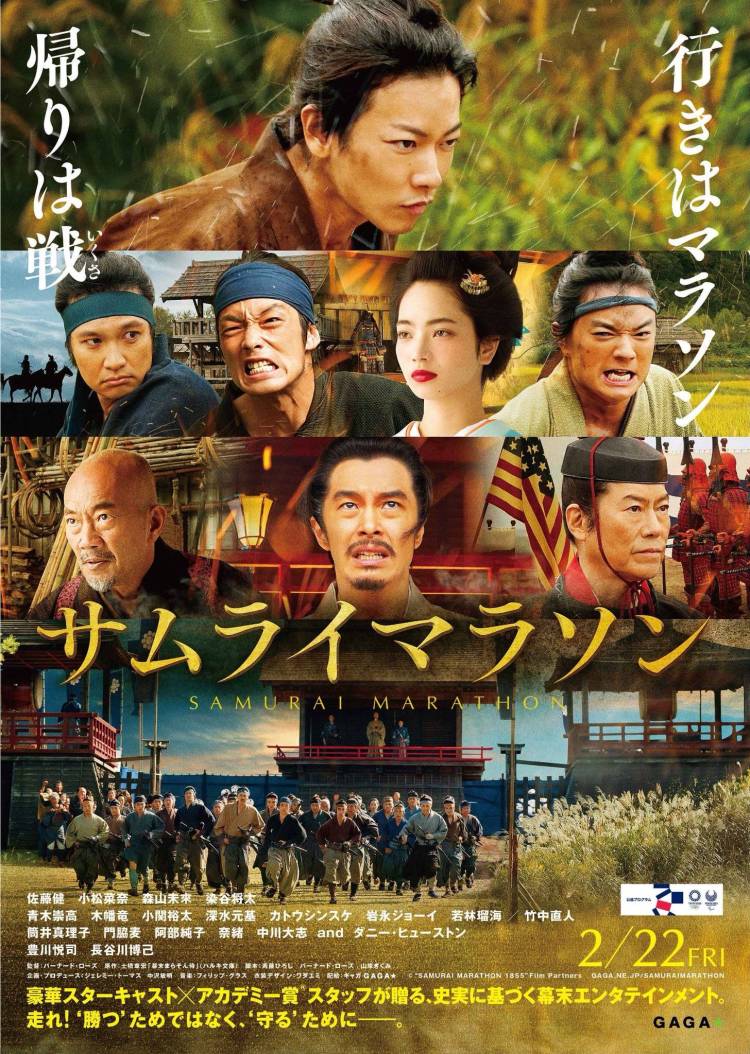
Samurai Marathon posterAfter two and a half centuries of peaceful slumber, Japan was jolted out of its isolation by the arrival of Commodore Perry’s Black Ships. The sudden intrusion proved alarming to most and eventually provoked a new polarisation in feudal society between those who remained loyal to the Shogun and the old ways, and those who thought Japan’s best hope was to modernise as quickly as possible to fend off a foreign invasion if it did eventually arise as many feared it would. Lord Itakura (Hiroki Hasegawa) has a foot in both camps. He has no desire to move against the Shogun, but fears that centuries of peace have made his men soft and complacent. His solution is to institute a “Samurai Marathon”, forcing his retainers to run 36 miles to prepare for a coming battle.

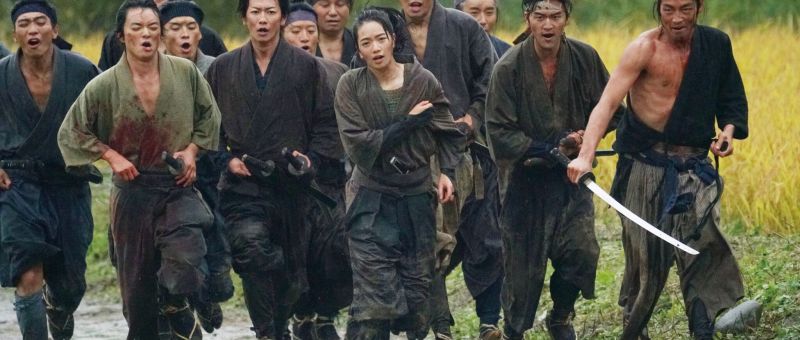
If you’ve spent your life sitting around and occasionally waving a sword at something just to keep your hand in, suddenly trying to run 36 miles might not be the best idea, as many samurai keen to win favour through racing glory discover. There is, however, an additional problem in that, unbeknownst to anyone, samurai accountant Jinnai (Takeru Satoh) is a secret ninja spy for the shogun. Confused by the preparations for the race, he reported that a possible rebellion was in the offing only to bitterly regret his decision on realising Itakura’s anxieties are only related to external, not internal, strife. All of which means, the Shogun’s men are on their way and Itakura’s retainers are sitting ducks.

Helmed by British director Bernard Rose, Samurai Marathon (サムライマラソン) plays out much more like a conventional European historical drama than your average jidaigeki. Where samurai movies with an unusual focus tend to be comedic, Rose opts for a strangely arch tone which is somewhere between po-faced Shakespeareanism and post-modern irony. Rather than the stoical elegance which defines samurai warfare, the violence is real and bloody, if somewhat over the top in the manner of a gory Renaissance painting complete with gasping severed heads and gruesome sprays of dark red blood.

A chronicle of bakumatsu anxiety, the film also takes a much more pro-American perspective than might perhaps be expected, taking the view that the arrival of the Americans heralded in a new era of freedom and the origins of democracy rather than the more ambivalent attitude found in most jidaigeki which tend to focus much more strongly on the divisions within samurai society between those who wanted to modernise and those who just wanted to kick all the foreigners back out again so everything would go back to “normal”. Itakura, like many, is suspicious of foreign influence and the gun-toting, yankee doodle humming Shogunate bodyguard is indeed a villain though it’s Itakura himself who will end up firing a gun as if conceding that the future has arrived and the era of the sword has passed. 

Ramming the point home, Itakura is also forced to concede to the desires of his wilful daughter, Princess Yuki (Nana Komatsu), who wanted to travel and see the world while her society (and conventionally minded though doting father) insisted all there was for her was marriage and a life stuck inside castle walls. Managing to escape and disguising herself by cutting her hair and putting on peasant clothes, Yuki is able to evade detection longer than expected precisely because few people have ever seen her face. She also gets to make use of some of the samurai training she’s received by holding her own out on the road, though it seems improbable that her father would let her ride out alone even if he finally allows her free rein to go where she chooses.

Meanwhile, other ambitious retainers try to use the race to their own advantage though there’s poignant melancholy in one lowly foot soldier’s (Shota Sometani) dreams of being made a samurai considering that in just a few short years the samurai will be no more. The final sepia shift into the present day and a modern marathon may be a stretch, as might the unnecessary final piece of onscreen text informing us that we’ve just watched the origin story for the Japanese marathon, but the main thrust of the narrative seems to be that the samurai were running full pelt into an uncertain future, preparing to surrender their swords at the finish line. An unusual take on the jidaigeki, Samurai Marathon perhaps takes an anachronising view of Bakumatsu chaos in which the samurai themselves recognise the end of their era but finds its feet on the road as its self-interested heroes find common purpose in running home.


Samurai Marathon screens as the opening night gala of the 2019 New York Asian Film Festival on June 28 where actress Nana Komatsu will be in attendance to collect her Screen International Rising Star Asia Award.

Original trailer (no subtitles)
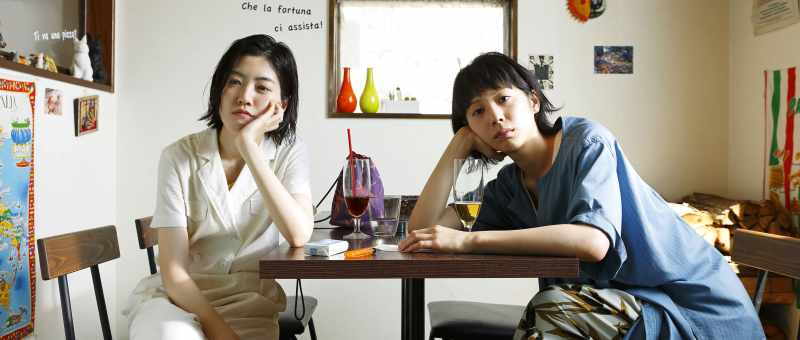
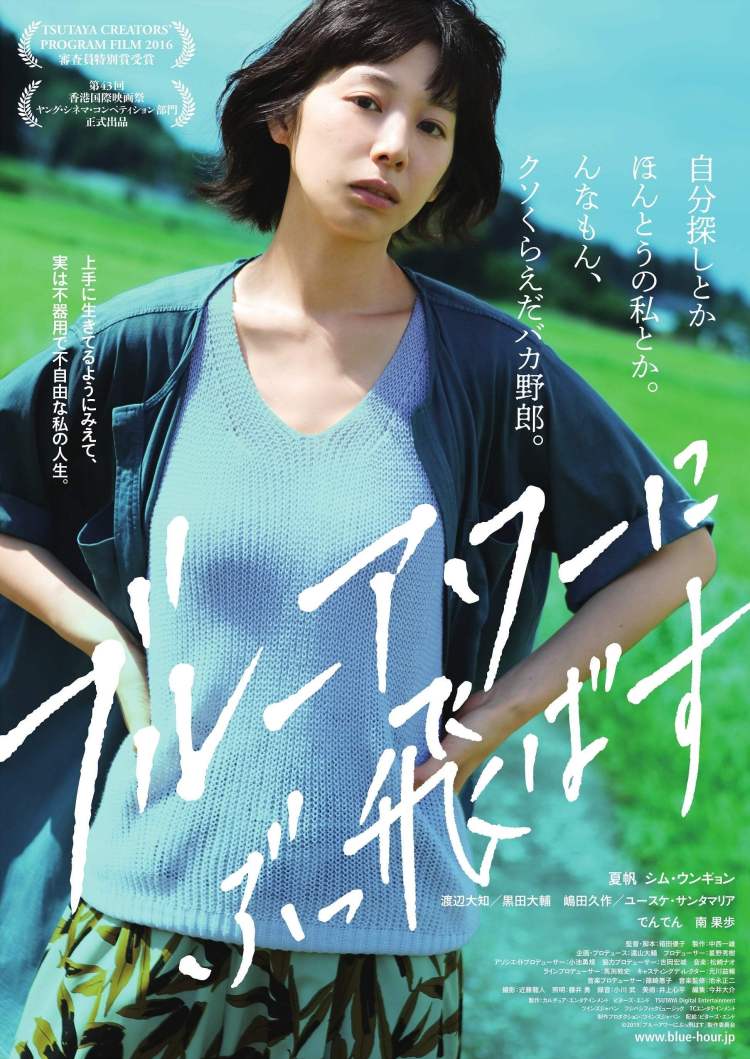
Blue Hour (ブルーアワーにぶっ飛ばす, Yuko Hakota, 2019)

Blue Hour poster“I don’t like people who like me” confesses the heroine of Yuko Hakota’s first feature Blue Hour (ブルーアワーにぶっ飛ばす, Blue Hour ni Buttobasu) to her best friend, who presumably is excluded from the statement. Then again, perhaps not. Running from or running to, Sunada (Kaho) can’t seem to escape herself while chasing the ghost of small town ennui in frenetic Tokyo. An impromptu road trip with a lively partner in crime returns her to the problematic roots from which she struggles to break free, but maybe breaking free wasn’t exactly what she needed anyway.

At 30 or so, Sunada has worked her way up to directing commercials but much of her job involves negotiating workplace sexism and stroking the egos of stars. In any case, she doesn’t seem to find the work particularly fulfilling and on looking around has noticed that there don’t seem to be a lot of women over 40 working in her industry which has her wondering what’s next in her possibly dead end career. Meanwhile, she’s married to a perfectly nice, mild-mannered sort of guy (Daichi Watanabe) but is secretly having an affair with a married colleague (Yusuke Santamaria) whose wife is currently pregnant with their second child. More stressed out and confused than she’d perhaps like to admit, Sunada has been putting off visiting her sickly grandmother because she isn’t the sort of person who deals with crisis well and so she was waiting in the hope her grandmother’s health would improve. Now that it has, she’s talked into an impromptu road trip with her freewheeling mangaka friend Kiyoura (Shim Eun-kyung).

True to form, Sunada doesn’t even really bother telling her husband where she’s gone because she doesn’t want “that sort of closeness”. Returning home, however, necessarily means reengaging with her distinctly odd family which is perhaps both easier and more difficult with her crazy friend in tow. While Sunada’s dad (Denden) seems to have picked up a habit of frittering money away on antique swords and suits of armour, her weird high school teacher brother (Daisuke Kuroda) cracks distinctly unfunny jokes about molesting pupils (a theme later echoed by her mother (Kaho Minami) who warns her men can’t be trusted, not even her brother). Out in the country there’s not much to do but drink, but this is not Tokyo and the bars are full of sleazy old men feeling up the hostesses and hogging the karaoke mic in an attempt to escape the stultifying boredom of their small-town lives. This is what Sunada has been running from. Ashamed of her bumpkinish childhood, she threw herself headlong into Tokyo sophistication only to find it equally unfulfilling.

Kiyoura is in many ways a projection of her other self. Childishly giddy, willing to jump into any situation with fearless enthusiasm, Kiyoura is a middle-class girl from the city and knows no shame. Only to her does Sunada seem to express her true self. Fearing intimacy, she keeps herself aloof but resents her lover’s family while pushing back against her husband’s meek indifference. “All ghosts are lies” her grandmother told her, which may be truer in some senses than others, but Sunada continues to haunt herself as she recalls the spirit of her free and easy childhood in which she snuck out to enjoy the “blue hour”, waiting for the sun to rise in peace and tranquility.

Only by confronting her grandmother’s ill heath can she begin to move forward towards a greater emotional clarity. Gently clipping the older woman’s nails, Sunada gets to hear her life philosophy or at least her parting words, “I try to make the best of every day, but what does that even mean anyway?”. Suddenly freed of her fear of attachment, her anxieties for the imperfect future, and even perhaps of her intense self loathing, Sunada prepares to take the wheel and confidently head in a more positive direction. “Being tacky means being alive”, her other self tells her, finally accepting her small-town roots and all that goes with it only to discover they were already accepted by someone who was paying more attention than she gave them credit for. A melancholy but ultimately hopeful and warmhearted exploration of midlife ennui and urban disconnection, Blue Hour is a delayed coming of age tale in which the heroine comes to an acceptance of adulthood only by reconnecting with her childhood self and all the fantastical promise of her sleepy rural youth.


Blue Hour was screened as part of the 2019 Nippon Connection Film Festival.

Original trailer (English subtitles)

We Are Little Zombies (ウィーアーリトルゾンビーズ, Makoto Nagahisa, 2019)

Little Zombies poster“Reality’s too stupid to cry over” affirms the deadpan narrator of Makoto Nagahisa’s We Are Little Zombies (ウィーアーリトルゾンビーズ), so why does he feel so strange about feeling nothing much at all? Taking its cues from the French New Wave by way of ‘60s Japanese avant-garde, the first feature from the award winning And So We Put Goldfish in the Pool director is a riotous affair of retro video game nostalgia and deepening ennui, but it’s also a gentle meditation on finding the strength to keep moving forward despite all the pain, emptiness, and disappointment of being alive.

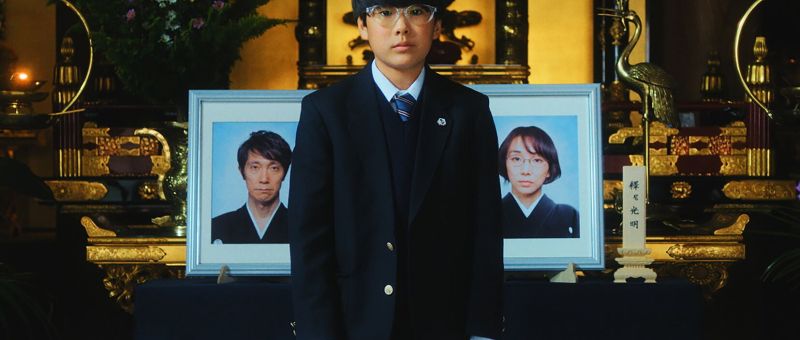
The “Little Zombies”, as we will later discover, are the latest tween viral pop sensation led by bespectacled 13-year-old Hikari (Keita Ninomiya). Recounting his own sorry tale of how his emotionally distant parents died in a freak bus accident, Hikari then teams up with three other similarly bereaved teens after meeting at the local crematorium where each of their parents is also making their final journey. Inspired by a retro RPG with the same title, the gang set off on an adventure to claim their independence by revisiting the sites of all their grief before making themselves intentionally homeless and forming an emo (no one says that anymore, apparently) grunge band to sing about their emotional numbness and general inability to feel.

Very much of the moment, but rooted in nostalgia for ages past, Little Zombies is another in a long line of Japanese movies asking serious questions about the traditional family. The reason Hikari can’t cry is, he says, because crying would be pointless. Babies cry for help, but no one is going to help him. Emotionally neglected by his parents who, when not working, were too wrapped up in their own drama to pay much attention to him, Hikari’s only connection to familial love is buried in the collection of video games they gave him in lieu of physical connection, his spectacles a kind of badge of that love earned through constant eyestrain.

The other kids, meanwhile, have similarly detached backgrounds – Takemura (Mondo Okumura) hated his useless and violent father but can’t forgive his parents for abandoning him in double suicide, Ishii (Satoshi) Mizuno) resented his careless dad but misses the stir-fries his mum cooked for him every day, and Ikuko (Sena Nakaijma) may have actually encouraged the murder of her parents by a creepy stalker while secretly pained over their rejection of her in embarrassment over her tendency to attract unwanted male attention even as child. The kids aren’t upset in the “normal” way because none of their relationships were “normal” and so their homes were never quite the points of comfort and safety one might have assumed them to be.

Orphaned and adrift, they fare little better. The adult world is as untrustworthy as ever and it’s not long before they begin to feel exploited by the powers intent on making them “stars”. Nevertheless, they continue with their deadpan routines as the “soulless” Little Zombies until their emotions, such as they are, begin inconveniently breaking through. “Despair is uncool”, but passion is impossible in a world where nothing really matters and all relationships are built on mutual transaction.

Mimicking Hikari’s retro video game, the Zombies pursue their quest towards the end level boss, passing through several stages and levelling up as they go, but face the continuing question of whether to continue with the game or not. Save and quit seems like a tempting option when there is no hope in sight, but giving in to despair would to be to let the world win. The only prize on offer is life going on “undramatically”, but in many ways that is the best reward one can hope for and who’s to say zombies don’t have feelings too? Dead but alive, the teens continue their adventure with heavy hearts but resolved in the knowledge that it’s probably OK to be numb to the world but also OK not to be. “Life is like a shit game”, but you keep playing anyway because sometimes it’s kind of fun. A visual tour de force and riot of ironic avant-garde post-modernism, We Are Little Zombies is a charmingly nostalgic throwback to the anything goes spirit of the bubble era and a strangely joyous celebration of finding small signs of hope amid the soulless chaos of modern life.


We Are Little Zombies was screened as part of the 2019 Nippon Connection Film Festival.

Original trailer (English subtitles)

Makoto Nagahisa’s short And So We Put Goldfish in the Pool

Music videos for We Are Little Zombies and Zombies But Alive

A Home with a View (家和萬事驚, Herman Yau, 2019)

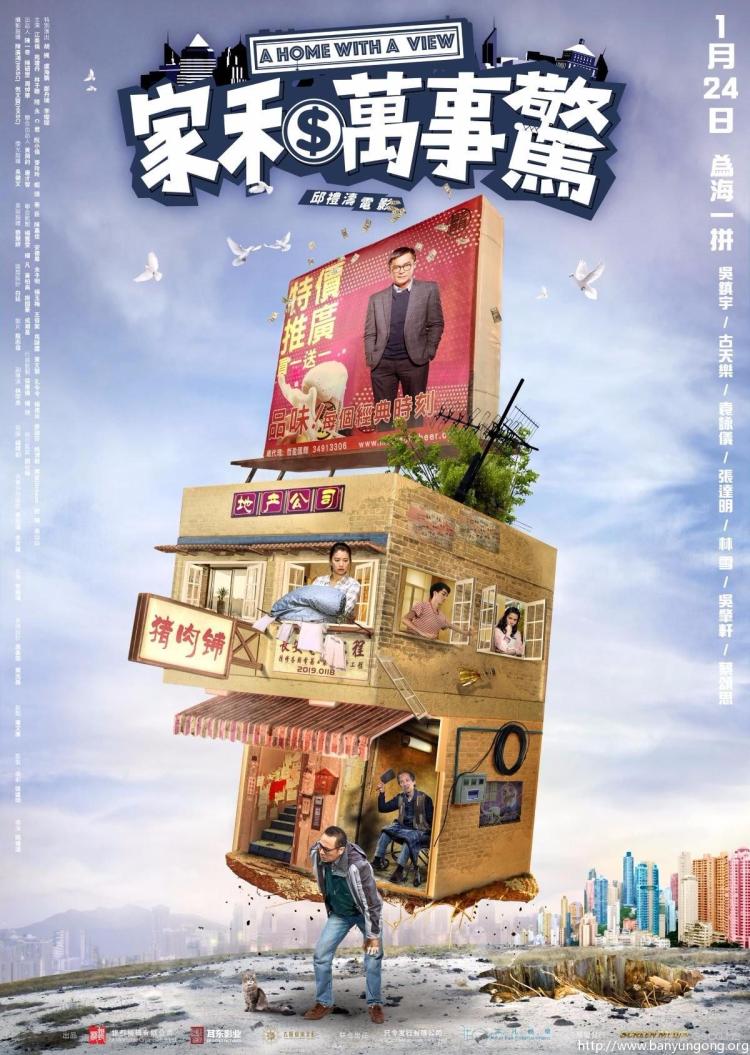
Home with a view poster 2Everyone needs an oasis. It might be a mirage, but still you need to believe in it anyway or with the world the way it is you might just go crazy. For the Lo family, that oasis was their tiny harbour view for which they paid handsomely even though their home could be described as modest at best. Relying on the calming vision of the sea to preserve their peace of mind, the family are constantly preoccupied by the rapid increase in high rise apartment buildings which threaten it, but did not bank on a cynical businessman setting up home on the rooftop opposite and putting up a giant advertising billboard to make a few extra pennies.

Adapting the stage play by Cheung Tat-ming, Herman Yau uses the woes of the Lo family to satirise the effects of Hong Kong’s ongoing housing crisis as they find themselves living in a cramped apartment block where everyone seems to have problems but no inclination to mind their own business. Mrs. Lo, Suk-yin (Anita Yuen Wing-yi), is fed up with the butcher (Lam Suet) who lives directly above them and his habit of loudly mincing pork while she’s trying to eat her dinner in peace, while the kids – son Bun-hong (Ng Siu-hin) and daughter Yu-sze (Jocelyn Choi), resent the intrusion of cigarette smoke wafting up from the flat below belonging to an elderly resident whose oasis is presumably tobacco. Meanwhile, Grandpa (Cheung Tat-ming) is in poor health and in the process of losing his marbles all of which makes for a very exciting home environment where chaos rules and there is always something new to bicker about.

Family patriarch, Wai-man (Francis Ng Chun-yu), sunk considerable expense into buying this apartment because of its sea view. In fact he’s still paying off a hefty mortgage which is why the family is engaged in a money saving competition where they challenge each other to come up with the best schemes and bargains, but he is at heart a kindhearted man which is perhaps why he finds himself handing over a huge wad of cash to pay off the overdue rent of the lady next-door who was threatening to commit suicide rather than risk eviction with her husband seemingly having disappeared off somewhere leaving her alone with her young son. He is not, however, above jamming with the system and is himself an estate agent peddling “low cost” subdivided flats with no widows or kitchens and only access to communal bathrooms in disused but not quite redeveloped former industrial buildings.

Desperate to reclaim their access to serenity, the family set about trying to get the cynical businessman opposite, Wong (Louis Koo Tin-lok), to take the billboard down but he proves smug and indifferent to their plight. In fact, his resentment towards those who can afford swanky sea view apartments is one of the reasons he put the billboard up in the first place so he’s not about to take it down just because he’s realised its presence is inconsiderate. Trying to get the authorities, including an old friend with a longstanding crush on Suk-yin, involved proves largely fruitless with the family locked into a bureaucratic nightmare which saps all their energy and only drives them all crazier even as they begin to unite in pooling their efforts to outsmart Wong who insists the billboard is “art” which he made himself and enriches the city.

The intersection between art and advertising, as well as mild motion towards both things as acts of protest, is only one of the film’s meta touches, but its main theme is indeed family and the various ways the modern society both frustrates and cements it. The Los who were always at each other’s throats, became calm sitting together gazing out at the peaceful harbour but later returned to their individual spheres before reuniting in conflict. Meanwhile, we discover that Wong has a sad story of his own which paints him as a lonely man without a family who likes the attention the billboard has brought him because it’s finally forced people to acknowledge his existence. Rather than managing to make friends with him, the Los descend further into their psychotic fury as they try to defeat Wong, ironically rediscovering their family solidarity in the process. “In this terrible world only family can protect us”, Grandpa says, and in this crazy cutthroat society he may be right. Perhaps the best course of action is to all go mad together rather than try to resist the craziness.


A Home with a View was screened as part of the 2019 Udine Far East Film Festival. It is also currently available to stream via Netflix in the UK (and possibly other territories).

Original trailer (English subtitles)

Extreme Job (극한직업, Lee Byeong-heon, 2019)

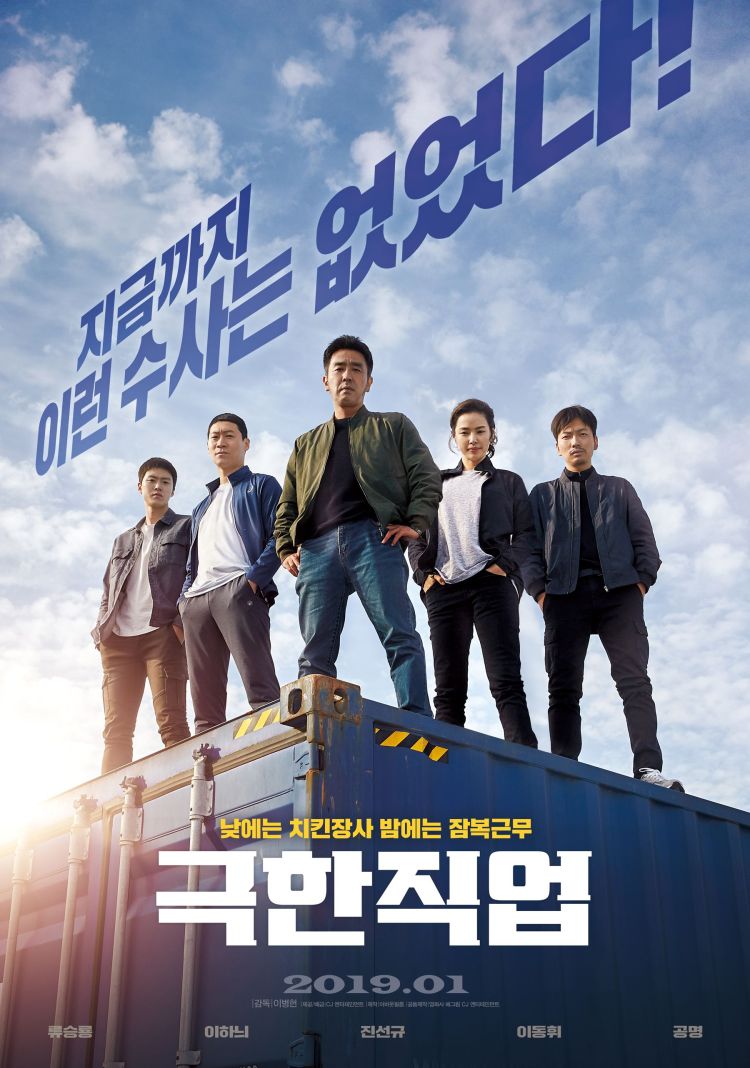
Extreme Job poster 2Another in the increasingly popular trend of multi-territory simultaneous productions, Twenty director Lee Byeong-heon’s Extreme Job (극한직업, Geukan Jigeop) shares its premise with recent Chinese hit Lobster Cop but swaps low budget zaniness for the kind of high concept comedy that dominated Korean cinema in the 2000s. Where the Chinese version was perhaps bold in making its law enforcers look like idiots, the Korean version is very much in the long tradition of idiotic but sincere policemen eventually making good, if perhaps more by accident than design.

The film opens with Chief Go (Ryu Seung-ryong) dangling on a window washing wire and making small talk with his quarry who then manages to get away leaving Go quite literally spinning in the wind. The rest of the team give chase, but the guy eventually ends up in a bad way with the gang’s exploits causing a multi-car pileup and a significant amount of public damage for which Go and his team are now responsible. Facing the threat of disbandment, the team senses opportunity when they get a lead on the Korean HQ of a notorious international drug gang and vow to break the case before a rival squad to prove their worth as police officers.

Bedding in for a 24-hr stakeout, Go & co hole up in a small fried chicken restaurant which happens to be right next to the bad guys’ hide-out only to discover the moribund eatery will soon be closing. The good news is the property is up for sale and Chief Go, borrowing the life savings of rookie Jae-hoon (Gong Myung), decides it’s worth the investment to crack the case. The only problem is, despite having been the only visitors for days, the guys keep getting interrupted by potential customers and are forced to open the chicken shop for real as a cover with the secretly excited officer Ma (Jin Seon-kyu) as chief fryer. Ma’s family recipe rib sauce proves an unexpected hit with chicken lovers and so a new food sensation is born, which is an inconvenience when you’re trying to balance running a restaurant with taking down a drug den.

Like Lobster Cop, Extreme Job satirises modish internet success as something as down to earth and ordinary as fried chicken becomes the latest foodie sensation. So taken with their success are they, that the guys begin to forget about the drug dealers in order to facilitate their chicken business all the while conveniently forgetting that they’re technically moonlighting even if it’s in service of an active investigation (albeit one they weren’t actually assigned to). Deciding that they’ve gone too far the guys raise the price to extreme levels, but that only makes the problem worse as does an attempt to rebuff the attentions of a foodie TV programme who then take against them and attempt to ruin their reputation at the worst possible moment.

Meanwhile, Go’s loyal wife is pleased with the extra money coming in but also suspicious. She doesn’t really like him being a policeman – mostly because his nickname is “zombie” on account of all the times he’s nearly died, but she probably wouldn’t want to be married to a chicken shop manager either. For some reason, owning a chicken shop seems to be a shameful occupation that everyone is embarrassed about, though through his unexpected business success Go eventually learns to embrace his inner chicken man and become a better police officer because of it.

The one officer intent on watching the bad guys finds himself excluded from the group as the others regard him as a shirker for not helping out with the chicken business. Nevertheless, in true cop comedy fashion, it’s team work that counts as the guys come to understand their complimentary strengths and start working together as a unit so they can take down the drug dealers if in bumblingly idiosyncratic fashion. As if to ram the point home, Lee closes with Leslie Cheung’s iconic theme from A Better Tomorrow running in the background to remind us that this has all been about brotherhood, togetherness, and holding the line as much as it’s been about fried chicken success. Slapstick laughs collide with ironic familial comedy and a dose of mild social commentary as the bumbling cops eventually make good by embracing their inner chicken men and reclaiming their dignity in the process.


Extreme Job was screened as part of the 2019 Udine Far East Film Festival.

International trailer (English subtitles)

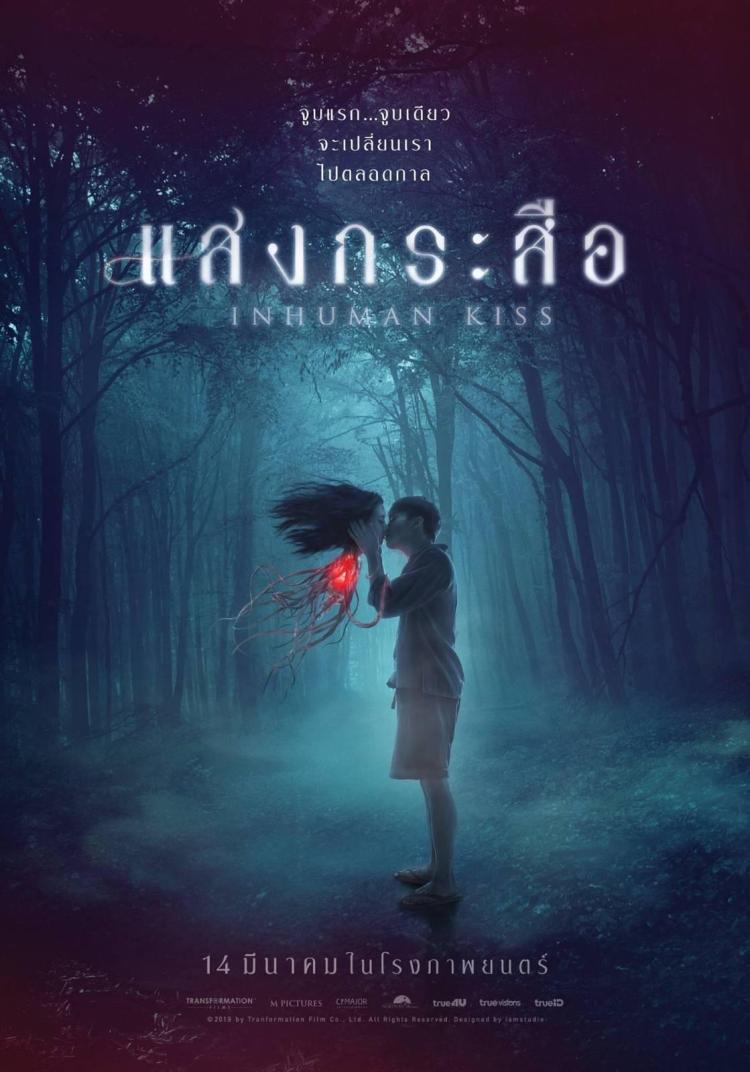
Krasue: Inhuman Kiss (แสงกระสือ, Sitisiri Mongkolsiri, 2019)

Inhuman kiss poster 2Vengeful ghosts are one thing, but what if you get possessed by a malevolent entity and go about committing evil deeds during the night only to forget them by the morning? A Krasue, in Thai mythology, is a supernatural creature which infects an ordinary woman with a curse which causes her head to detach from her body at night to devour nearby cattle. The heroine of Krasue: Inhuman Kiss (แสงกระสือ) received the curse as an overly curious child only for it to activate on entering puberty during which time she is also caught between the love of her two childhood best friends.

The gentle Sai (Phantira Pipityakorn) first encountered the Krasue when dared to go into a creepy “haunted” cottage by her cowardly friends who largely stayed outside. 10 years later, she still misses her best friend Noi (Oabnithi Wiwattanawarang) to whom she gave her protective amulet, while her other best friend, Jerd (Sapol Assawamunkong) silently pines for her but despite his confident persona is too shy to declare his feelings. Shortly after Noi returns from Bangkok in order to escape the approach of the war, a Krasue comes to town. Gradually, Sai begins to worry something is wrong when she keeps waking up with bloodstained sheets but is at a loss for what to do. Meanwhile, a band of bandit Krasue hunters has also descended on the village with the intention of “purifying” it of the troublesome curse.

Set around the time of the Second World War, Krasue: Inhhuman Kiss takes place in a rural idyll untouched by conflict but also home to ancient superstition and primitive prejudice. Though belief in the Krasue is fading, the evidence of its reappearance is undeniable and even if the townspeople can consider themselves “safe” because the monster only targets cattle, they still fear it and that their wives and daughters could become infected. Noi, who left the village long ago for Bangkok, has come back in search of safety but finds himself longing once again for the civilisation of the big city where monstrous curses are regarded as ridiculous superstition and modern medicine a potential cure for any ailment.

Thus when he realises that Sai has become a Krasue, his ultimate plan is to flee with her to the city where they might find help or at least different kind of safety in the midst of civil unrest. Originally horrified, Noi turns to a local monk for advice who counsels him that he should believe what he sees, but do as his heart tells him. Therefore he tries to protect Sai by preparing food for the Krasue so she won’t have to leave her house and risk discovery while he looks for a cure.

Meanwhile, Jerd becomes increasingly jealous of the obvious bond between Sai and her childhood friend but lacks the courage do much more about it than pout and resent Noi’s unexpected reappearance. Jerd joins the hunters, seemingly looking to emphasise his manliness against Noi’s intellectualism while allying himself with strong male role models like the worryingly intense Tat (Surasak Wongthai). In the end, however, both men act to protect the woman that they love albeit in different ways even as they fear she has become monstrous and a danger to herself.

The curse of the Krasue is, it turns out, the legacy of an ancient love triangle and an all powerful man who couldn’t accept that the woman he loved had fallen in love with someone else. Tat’s band of rage fuelled bandits are as much about misogynistic prejudice towards transgressive women as they are about protecting cattle from “supernatural” threat and their intimidating presence eventually puts a stronghold on the increasingly jumpy village in which the torches and pitchforks eventually come out in a show of intense paranoia.

The wartime corruption has finally reached the village, rendering it no safer than the city and infected with a deeper, older anxiety born of wounded male pride and female subjugation. Selfless love struggles to endure but may be no match for the humiliated rage of a spurned lover leaving acts of mutual sacrifice perhaps the only path towards salvation. A supernaturally tinged coming of age tale in which a teenage love triangle neatly overlaps with an ancient curse, Krasue: Inhuman Kiss is a surprisingly rich and delicate experience which imbues its essential horror with genuine warmth and deeply felt compassion.


Krasue: Inhuman Kiss was screened as part of the 2019 Udine Far East Film Festival.

International trailer (English subtitles)

JK Rock (JK☆ROCK, Shunji Muguruma, 2019)

JK Rock poster 1The heyday of the idol movie may have passed with the Showa era, but the genre proves itself alive and kicking with the infinitely charming JK Rock (JK☆ROCK). Starring the members of Drop Doll – a band formed by the three actresses from director Shunji Muguruma’s previous short Little Performer: The Pulse of Winds, JK Rock is a spunky coming of age tale in which three lost high school girls end up starting band at the behest of a strange old man (Masahiko Nishimura) who owns a rock and roll bar in bohemian Kichijoji and secretly wants to coax reluctant rocker Joe (Shodai Fukuyama) back to the stage.

Joe was once in a promising band, JoKers – a combination of his own name and that of his best friend and bandmate whose initials are also JK. A year earlier, however, he appears to have got cold feet and left music behind him for good in order to concentrate on a law degree. He still has his adoring fans though, these days he’s known as the “purple prince” because he drives round campus in an ostentatious purple Lamborghini. A fateful meet cute brings him into contact with feisty high school girl Sakura (Chihiro Hayama) when she decides to take a middle-aged man to task for queue jumping in a convenience store only for Joe to calmly point out that she’s now the one holding everyone up. Somewhat grateful for Joe’s life lesson, Sakura is non-plussed when he calls her a weirdo as he leaves. It’s no surprise to discover that Sakura is a regular at Teru’s Rock ’n Roll Cafe where Joe used to play and so fate is set in motion.

The film’s name, “JK Rock” is a witty multilayered pun in that it refers both to the multiple “JKs” and to the more obvious “Joshi Kosei” which means “high school girls”. Sakura is joined by two more frequenters of Teru’s – waitress and track star Mao (Yuina) who takes up the guitar, and fabulously wealthy Rina (Yukino Miyake) who practices bass in secret so her ultra ambitious mother won’t stop her doing what she loves. In true idol movie fashion, everyone seems to be fairly well off in an aspirational sense but each has their own problems which run from an inappropriate crush on a supportive teacher to overbearing parents keen to stamp their own view of success on their kids in order to stop them making their own mistakes.

Meanwhile, Joe is battling the usual early life crises as he weighs up following his dreams against the safety of conventionality. “You can’t fire up my rock spirit and then run away!” Sakura angrily tells him in a line that seems oddly filled with subtext, but running away does seem to be Joe’s problem. He didn’t go with his friend to America, and the other Joe is now big international star. Snapped at by the band’s manager that he had no guts and no love for rock, Joe decided he was unworthy for the stage and had no right to play, forcing himself into a dull but conventionally successful life as a lawyer. Consequently, he is a grumpy, empty shell of a man driving round in a stupidly big and colourful car with a superficial girlfriend who assumes she’ll soon be getting married to an independently wealthy professional grade husband. Through jamming with Sakura he begins to rediscover some of his rock spirit and get his mojo back to realise he’s free to play with whoever he wants on his own terms.

A musical coming of age tale, JK Rock does its best to showcase the musical talents of Drop Doll which appear to be vast. JoKers plays only a minor role in brief flashbacks of what might have been (and perhaps could be again) for the dejected Joe while the girlband studies intently under his, originally reluctant, tutorship to become fine musicians in their own right. Of course, when it comes down it, it’s not just music but youthful solidarity and the true power of friendship which eventually show the way as old wounds are repaired and new bonds formed between the variously troubled youngsters who eventually realise that they’re figuring things out and will probably be OK. A charming, sprightly youth movie filled with true punk spirit and genuine warmth, JK Rock is an improbable delight and sure to make stars of its three leading ladies.


JK Rock was screened as part of the 2019 Udine Far East Film Festival.

Original trailer (no subtitles)
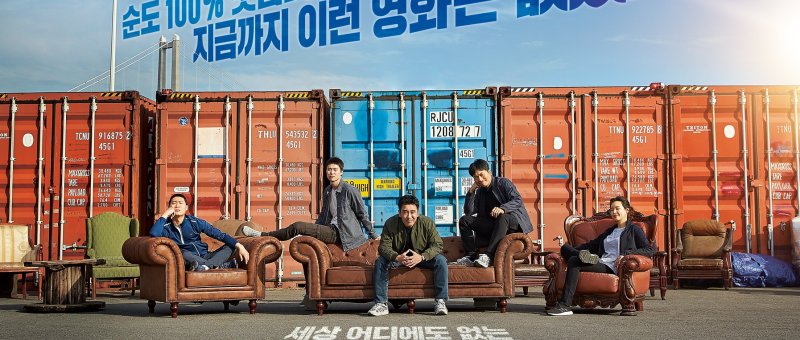
Short version of the music video for the movie’s theme song – Secret Voice

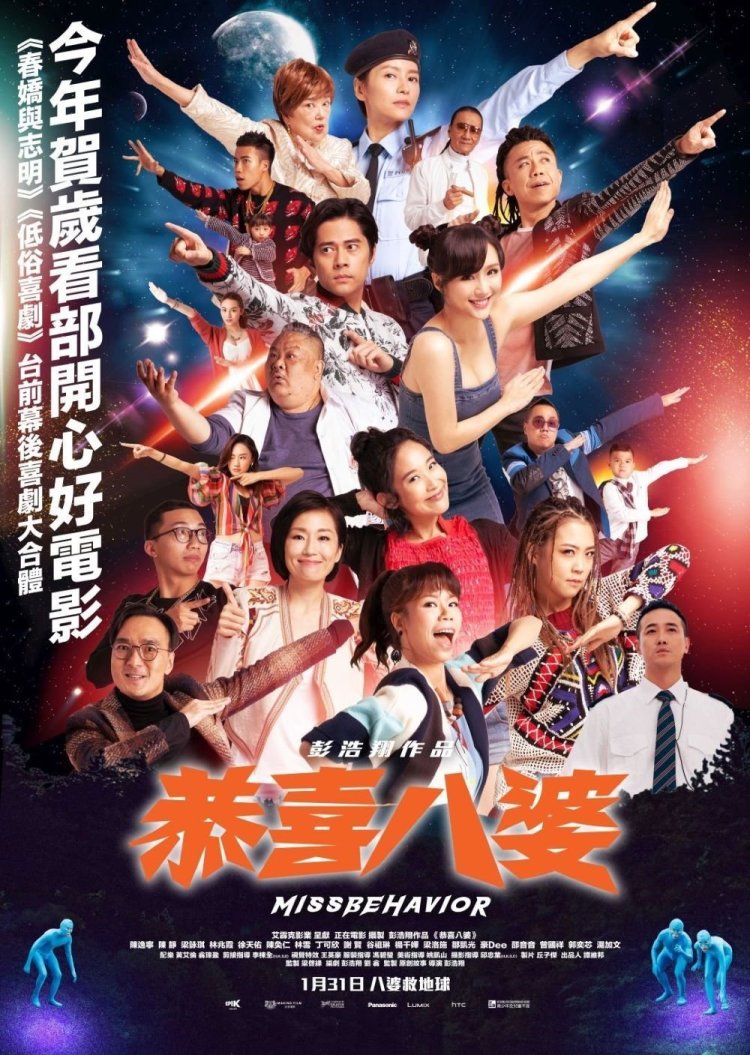
Missbehavior (恭喜八婆, Pang Ho-cheung, 2019)

Missbehaviour poster 1Pang Ho-cheung has become the king of salty, vulgar yet somehow sophisticated Cantonese comedy. Strangely, and then again maybe not, he’s never ventured into the realms of the New Year movie, until now. Missbehavior (恭喜八婆) returns the director to the bawdiness of Vulgaria but brings with it the sense of warmth and cheerful irony that marked his genial Love trilogy. A timely reminder that life’s too short for pointless grudges and maybe you should check in on that friend you haven’t seen in a while, Missbehavior is a grown up New Year treat that as silly as it often is has genuine heart and a cheerful, compassionate spirit.

The central crisis revolves around June (June Lam Siu-ha) – a model employee well used to putting up with the ridiculous requests of her boss who now demands to be known as “Luna Fu” (Isabella Leung Lok-Sze) after returning from maternity leave. Worried the new office girl Irene who is none too bright will end up offending an important client, June is charged with making his coffee but mistakes the milk labelled L.F. in the office fridge as “low fat” rather than belonging to her boss. That’s right, June has just poured her boss’ breast milk into her client’s coffee. He loved it, but Luna probably won’t which is why June calls her friend Isabel (Isabel Chan Yat-ning) who vows to mobilise their WhatsApp group to find June a new bottle of breast milk before 5pm so her boss will be none the wiser.

Once a tightly connected circle of friends, the usual middle-aged problems have led the “Bitches” to drift apart. Policewoman May (Gigi Leung Wing-kei) fell out with Isabel because she was convinced that she stole her boyfriend – her evidence being that his phone “inexplicably” connected to her wi-fi automatically despite his claims of never being in her house before. She is however big hearted enough not to let her animosity towards Isabel stop her helping out June whom, it seems, is the gang’s lynchpin and always there for everyone else in a crisis. Busy on the beat, May sends Isabel looking for some of the others all of whom have petty minor disagreements which make them reluctant to work together like rising ukulele star Minibus (Yanki Din) and her former partner Rosalin (Dada Chan Ching) who has fallen out with just about everyone thanks to writing a best selling book revealing her friends’ most embarrassing secrets.

Rosalin’s book became a hit not because of her writing talent (at least according to her friends) but because of the glamour shot she put on the cover which has earned her an army of adoring male fans which can be mobilised to help them get hold of some breast milk (though it’s unlikely any of them have babies of their own). Rosalin and Isabel chase dubious leads, while Minibus and gay couple Boris (Tan Han-jin) and Frank (Chui Tien-You) who seem to be having a few problems of their own try their luck on the black market.

Pang sends the gang all around Hong Kong (quite literally as he superimposes them on various skyscrapers so we can keep track of where they all are) on a wild goose chase trying to track down the elusive substance through various crazy capers while each of the friends gets a chance to readdress old grievances before finally coming back together again. A zany odyssey through the modern city, Missbehavior packs in the meta commentary with five year olds demanding payments to put towards their apartment funds while riffing strongly off local culture with references to aggressively rude waiters (in a scene stealing cameo from Lam Suet) and a bizarre fire fighting mascot which became an ironic internet hit.

Despite working within the relatively family friendly remit of the New Year comedy, Pang’s humour is (almost) as raucous and surreal as it ever was but he also makes time for more serious intent as in his sensitive inclusion of LGBT issues which eventually sees the gang set up a fake charity to collect milk for gay men raising babies and ends in a delightful set piece with everyone trying to evade shopping mall security by running around in rainbow capes like especially progressive superheroes. Packed out with cameos from Pang regulars, Missbehavior is an appropriately light and fluffy entry perfect for New Year that is above all else a tribute to the power of friendship and to the importance of putting aside petty disagreements and minor differences because a friend in need really is a friend indeed.


Missbehavior was screened as part of the 2019 Udine Far East Film Festival.

Original trailer (English subtitles)

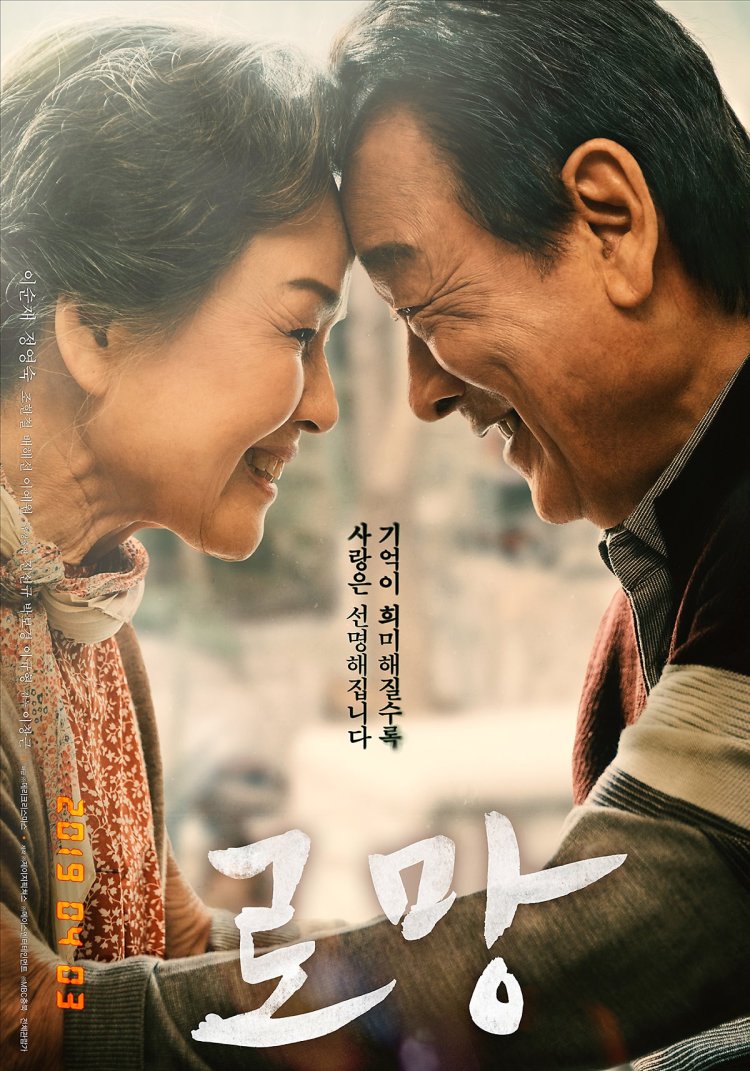
Romang (로망, Lee Chang-geun, 2019)

romang posterKorea, like many developed nations, is facing a demographic crisis as society continues to age at an unprecedented pace. While cultural norms demand deference to older people, the many problems they face in a society where welfare provisions are still minimal have often gone unaddressed in the assumption that family members have a duty to look after their relatives in their old age. This is, however, not always possible and there are occasions where considering opting for outside help becomes unavoidable.

This is the dilemma faced by elderly taxi driver Nam-bong (Lee Soon-jae) as he gradually comes to the conclusion that his wife, Mae-ja (Jung Young-sook), is suffering from dementia. The couple share their house with grown-up son Jin-soo (Jo Han-Chul), his wife Jeong-hee (Bae Hae-sun), and their young daughter Eun-ji who had mostly been cared for by Mae-ja while Jeong-hee was the family’s only breadwinner seeing as Jin-soo is an out of work academic (not particularly actively) looking for a new position. Mae-ja’s condition gradually declines to the point at which she begins to pose a danger to her remaining family members causing Jeong-hee to leave Jin-soo and take Eun-ji to her parents’ out of the way.

Gruff and insensitive, Nam-bong decides to send Mae-ja away to a hospice despite Jin-soo’s pleas but eventually reconsiders and brings Mae-ja home where he is committed to care for her himself. However, he too begins to experience the early signs of dementia and is at a loss as to how to proceed in the knowledge that it will become increasingly difficult for him to look after his wife or she him.

The onset of dementia, the film seems to imply, perhaps allows the troubled couple to begin to move past a central moment of trauma in their relationship which has left a lasting thread of resentment between them. Nam-bong, a chauvinistic, difficult husband is not well liked by his family members and most particularly by his son while Mae-ja had, maybe reluctantly, stood by him physically at least if not emotionally. His decision to send Mae-ja away is then a double betrayal in his abnegation of his duties as a husband and in his spurning of all Mae-ja has had to put up with over the last 40 years.

The distance between the couple has also had an effect on Jin-soo who always felt himself pushed out as an accidental victim of his parents’ emotional pain. It is clear that Nam-bong, a traditionally minded patriarch, has little respect for his son who, in his view, is a failure for not having secured a steady career which can support a wife and child, “allowing” his wife to work in his stead. For Nam-bong, being a man is all about “supporting” a family but not actually having to be around very much. For Jin-soo, a modern man, it’s very different. He wants to be there for his wife and daughter so that they have good memories of him hanging out and having fun rather than being that guy who turns up at dinnertime to shout at everyone and then leaves again.

Nevertheless, Nam-bong is eventually forced to accept his emotional duty to his family when he decides to care for Mae-ja. While their mutual condition begins to bring old, negative emotions never fully dealt with to the surface, it also allows them to rediscover the innocent love they had for each other as a young married couple. When Jin-soo eventually leaves the family home to return to his wife and child, the couple decide to isolate themselves, holing up in the living room and communicating via a series of poignant post-its which remind them to care for each other as the darkness intensifies.

Yet it’s not quite all sweetness and light as the elderly romantics rediscover a sense of warmth and connection they assumed long lost. Despite the support shown for Jin-soo’s modern parenting, there is a notably conservative spin placed on the story of Mae-ja and Nam-bong which may very well mark them out as simply being of their time but a late poignant scene in which the young Mae-ja declares her dream to be having a good husband while Nam-bong’s is to support a family sits uncomfortably in its unsubtle defence of traditional gender roles. To make matters worse, the final moments seem to suggest that there is no place for the elderly couple in contemporary society in allowing them (well, Nam-bong) to take control of their destinies only in the most final of ways. Maudlin and sentimental, Romang sparkles when embracing the unexpected cuteness of the late life love story but too often opts for easy melodrama over emotional nuance in its refusal to address its darker elements and eagerness to romanticise the business of ageing.


Romang (로망) was screened as part of the 2019 Udine Far East Film Festival.

International trailer (English subtitles)

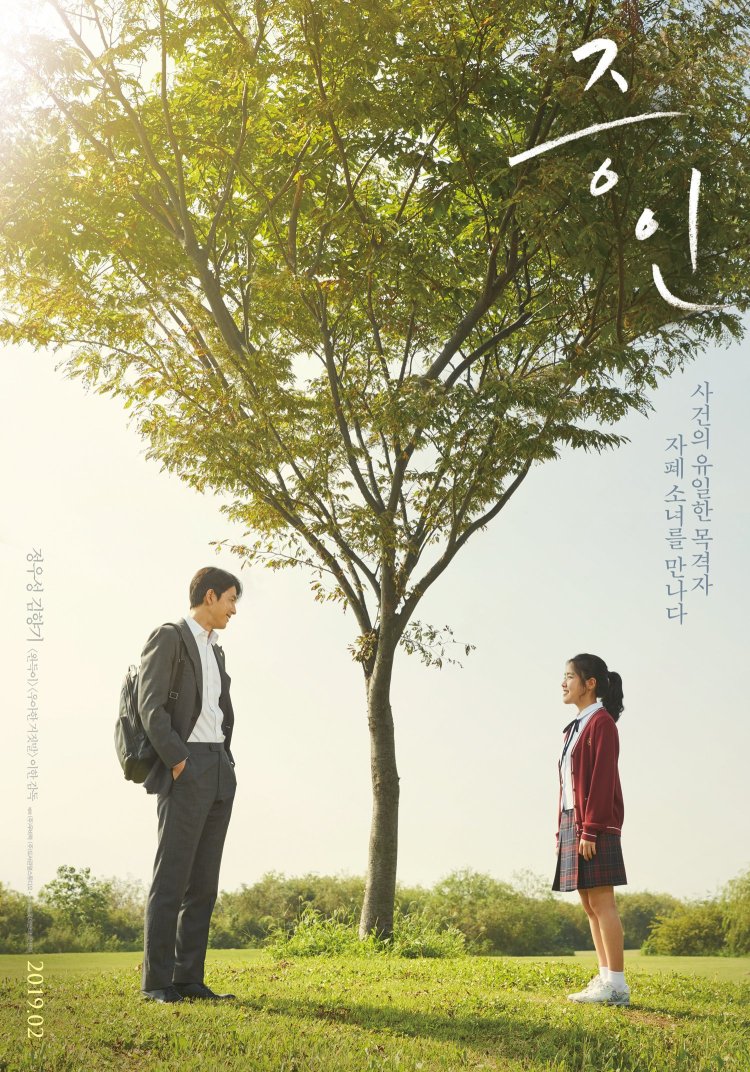
Innocent Witness (증인, Lee Han, 2019)

Innocent Witness poster“Are you a good person?” asks the confused girl at the centre of Lee Han’s Innocent Witness (증인, Jeungin). Her question comes after a series of surprising revelations which have left her questioning all of her relationships and the nature of the world itself, yet it’s one that’s largely impossible to answer. Formerly idealistic lawyer Soon-ho (Jung Woo-sung) thinks he’s been given the kind of case he can get behind, but as usual nothing is quite as it seems and if he wants to get to the truth of the matter he’ll have to learn to think differently.

Soon-ho began his career as an activist lawyer working for NGOs, but now he’s “sold out” to join an elite law firm with a dodgy reputation in order to pay back debts his father unwisely guaranteed for a friend. Because of his precarious financial status, Soon-ho has put-off marriage and relationships, despite his father’s nagging, believing them to be out of his reach and is conflicted by his recent career choices which leave him on the opposite side from old friends. When he’s handed a pro-bono case to defend a housekeeper (Yum Hye-ran) accused of murdering her employer he thinks it’s the best of both worlds. All the evidence points to suicide, but there’s a witness testimony which suggests otherwise. Seeing as the testimony is from a 15-year-old autistic girl who witnessed the crime from across the street, Soon-ho feels he can easily have it discounted.

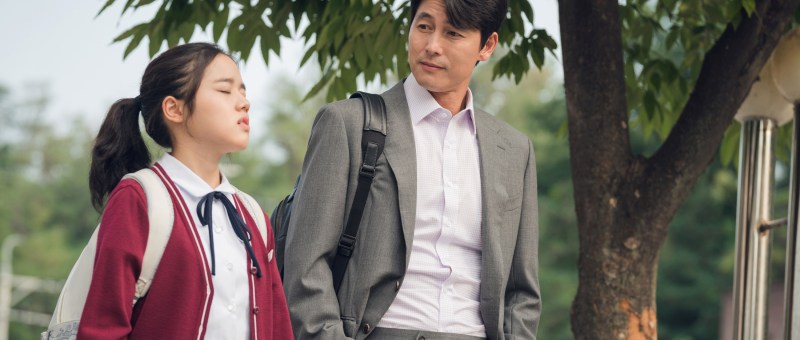
Like many in the film, Soon-ho doesn’t know much about autism and writes Ji-woo (Kim Hyang-gi) off as “mentally impaired”, believing that will be enough for the jury to disregard her testimony especially as it so strongly conflicts with the rest of the evidence. Refused permission to meet with her in person, Soon-ho begins trying to befriend Ji-woo on the way home from school and eventually comes to realise that she is highly intelligent if easily distracted and uneasy in social situations. What he discovers is not that Ji-woo is unable to communicate with the world, but that the world is unwilling to communicate with her. If he wants to bond, he will need to learn her language and earn her trust.

Trust maybe he hard to come by as he witnesses the minor aggressions she goes through every day like the horrible boys at school who taunt her mercilessly and the supposed friend bullying her in secret, not to mention a world full of barking dogs and ringing telephones. When he finally puts her on the stand, his own co-defence chair reads out passages from a book about autism which describe it as a “mental disability” before painting her as a deranged idiot who probably half-imagined what she saw from things she’d seen on television – an act which has profound ethical implications in eroding Ji-woo’s sense of self. Ji-woo told Soon-ho she wanted to be a lawyer because lawyers are good people who help those in need, but Soon-ho has to ask himself whose interest destroying a 15-year-old girl on the stand is really serving.

The law firm Soon-ho joined does seem to be a sleazy one. Despite hiring him to improve their image, Soon-ho’s boss tells him that his new clients won’t be comfortable with him unless he gets himself a little “dirty” while inviting him to awkward parties with call girls in high class hotels. Meanwhile, Soon-ho remains conflicted – especially after potentially losing a 20-year friendship through saying the wrong thing to a still idealistic lawyer and passing it off as an attempt to be “realistic”. Realism is one thing, but Soon-ho seems to have given up and decided if you can’t beat them join them. His dad, sensing his son’s unease, writes him an impassioned letter in which he tells him that the most important thing in life is to be happy with yourself, everything else you can figure out later.

Realising his mistake, Soon-ho begins to see the light. Through bonding with Ji-woo, he learns that seeing things differently can be advantage and that society should have a place for everyone where they shouldn’t have to worry about being themselves. Tellingly, no one ever bothered to ask Ji-woo about the most important part of evidence in her testimony because they all had too many prejudices about her delivery. Only Soon-ho, having bothered to get to know her, was able see what it was that she wasn’t saying. The film perhaps missteps when it has Ji-woo come to the conclusion that she can’t be a lawyer because of her autism, but otherwise presents a sensitive portrayal of a society trying to be better in accommodating difference and doing it with empathetic positivity while subtly waving a finger at the self-serving forces of conservative corruption.


Innocent Witness was screened as part of the 2019 Udine Far East Film Festival.

International trailer (English subtitles)