Family Bond (太陽の家, Hajime Gonno, 2020)

“All I ever wanted was to make everyone happy” claims the father at the centre of Hajime Gonno’s Family Bond (太陽の家, Taiyo no Ie). Once again placing the modern family under the microscope, Gonno’s take is perhaps more traditional than most taking a largely uncritical stance against its extremely patriarchal patriarch whose heart might be in the right place even if his extremely outdated vision of idealised masculinity continues to undermine the idea of family that he is endeavouring to build. 

A manly man, Shingo (Tsuyoshi Nagabuchi) proudly introduces himself as a “Master Builder”, tearing up some revised blueprints from his excited newlywed clients who admittedly unreasonably have proposed major changes to the design at the groundbreaking ceremony on their new home. Such fits of artistic temperament are apparently not uncommon, Shingo’s understanding wife Misaki (Naoko Iijima) profusely apologising and later talking him down while reminding him that he might be a master craftsman but he also runs a business and his family need to eat. Shingo prides himself on being a paterfamilias, subscribing to a traditional ideal of masculinity in which a man must be strong to protect his family, and most particularly his women, but that protection extends in the main to the physical. As Misaki later complains, he largely does what he likes because family means no consequences, rarely bothering to consider the feelings of others in his impulsive drive to live in a thoroughly manly way. 

That’s perhaps one reason why he walks off the site of the traditional woodframe house he’s being paid to build to have coffee with a pretty young woman, Mei (Ryoko Hirosue), who as it turns out has an ulterior motive in that she wants to sell him an insurance policy. Despite all his life claiming that insurance is for cowards, Shingo signs as gesture of patriarchal solidarity helping out a struggling single mother while perhaps harbouring sightly less altruistic intensions. Nevertheless, it’s her son Ryusei that he’s eventually taken by, struck by the loneliness in his eyes as a boy without a father and taking it upon himself to fulfil that role. For her part, Mei is disturbingly unconcerned by this strange, over friendly, middle-aged man with a strong interest in her young son, encouraging Ryusei to hang out with him expressly because Shingo signed a policy with her as if she were in a sense loaning him out in exchange. In any case, it’s difficult to believe a modern woman would be entirely happy about Shingo’s well-meaning fathering, transmitting this extremely problematic, toxic masculinity to a new generation in instructing Ryusei that he needs to get strong because it’s a man’s responsibility to “protect womenfolk” and Ryusei’s to protect his mother as the man of the house. 

These outdated chauvinistic ideas also undermine his relationships with his wife and children, teenage daughter Kanna (Mayu Yamaguchi) resentful at his bond with a random little boy whom he seems to be grooming as a replacement son and potential heir having already alienated his adopted son and apprentice Takashi (Eita Nagayama). Kanna, studying to become an architect, resents her father for his sexism, largely ignoring her because she is a girl and therefore in his eyes unable to assume the family business. Takashi meanwhile resents him because he sent him off to apprentice as a plasterer rather than training him in carpentry as if suggesting he didn’t have what it takes to become a master builder himself. Both of them are hurt by his desire to simply get a new son in its implication that they were never good enough, a feeling compounded by the fact that they are both adopted. Shingo later signals something similar himself when Ryusei’s estranged birth father resurfaces, immediately backing off believing that he couldn’t win against blood as if that really is everything. 

“It’s all a big lie” Kanna and Takashi yell on different occasions trying to get through to their irritatingly distant father whose manly code means he doesn’t engage with emotion or feel the need to respond to their distress, eventually striking Kanna for her disrespect and kicking her out of the house. Of course, he doesn’t really mean it but it’s just another example of the ways his problematic manliness continues to destroy his relationships, Takashi also apparently harbouring resentment towards him for his unreconstructed chauvinism in his many affairs believing his desire to help Mei is just him getting up to his old tricks again. What Shingo discovers however is that he’ll have to literally repair his family through building it anew by helping Mei and Ryusei do the same as her estranged husband reassumes his male responsibility to protect his family. In essence, he’s forced to accept the family he has rather than chasing a better one, drawing a clear divide in building a house for Ryusei and his parents which is separate from his own while entreating his children to return to him through getting them to help build it. Shingo might not have changed, still defiantly patriarchal, but he has perhaps begun to accept that family is a mutual construct that requires strong support. In the end you have to build it together or the structure won’t hold.


Family Bond streams in the US via the Smart Cinema app Aug. 28 to Sept. 12 as part of this year’s New York Asian Film festival.

Original trailer (no subtitles)

Love You Forever (我在时间尽头等你, Yoyo Yao Tingting, 2020)

“Don’t overthink it. It’s fiction” the hero of Yoyo Yao Tingting’s tearjerking romance Love You Forever (我在时间尽头等你, Wǒ Zài Shíjiān Jìntóu Děng Nǐ) advises the heroine, attempting to keep his secret right until the very end. Inspired by Zheng Zhi’s novel, the original Chinese title translates to the more poetic “I’ll wait for you at the end of time”, hinting at the central, sci-fi-inflected romantic tragedy in which the hero finds himself selflessly sacrificing his years on Earth to fulfil the dreams of the woman he loves. 

Describing himself as a man who does not exist because there are no memories of him in this world, Lin Ge (Lee Hong-chi) is writing a memoir as a way of recapturing the past. He tells us of his lifelong love for Qiu Qian (Li Yitong), a woman he first met when they were both children in the summer of 1991 shortly after his mother had passed away from illness. Lin Ge describes her dancing like sunshine piercing through the thick clouds, a force which has illuminated his life. Trying to retrieve her lost marble from a pond, he discovers a mysterious clock which inspires their childish games all through that golden summer, yet at summer’s end they are cruelly separated when Qiu Qian moves away. At 17 he meets her again and she playfully pretends not to remember him, later embarking on a tentative teenage romance only for Qiu Qian to be hit by a car and killed on her way home from a birthday date. Activated by his tears, the mysterious clock sends Lin Ge back in time, or more accurately into a parallel universe where he is able to prevent the accident and save her life but only at the cost of his existence. This time Qiu Qian really doesn’t remember him because he never existed. Not even his father (Fan Wei) knows him, and he seems to have aged a good decade which in itself presents a barrier to possible romance. 

There’s something of a poignant metaphor in Lin Ge’s intense desire to crawl back inside his memories by writing them down, neatly laying out the various timelines of his life which he has willingly sacrificed to save Qiu Qian resigned to the fact that, in the final version, she will never know him. Later, she asks him how he knows the woman in his novel would be happy with the future he has engineered for her in which he is a deliberate absence but Lin Ge has no answer for her. The Qiu Qian that we see has achieved her dreams of becoming a prima ballerina with the Shanghai ballet, but she is perhaps unfulfilled aware there’s something missing in her life. About to leave the stage, she’s engaged to an old school friend, Huang (Chao Zhang), who is distant and controlling, actively discouraging Qiu Qian from continuing to dance after they marry and emigrate to America reminding her that she’ll have “more important things to think about” once she’s his wife. Lin Ge, meanwhile, now appearing as a man around 60, has taken a job as a caretaker at the theatre where he watches over Qiu Qian from the wings only for her to discover his memoir and become intrigued by its similarities to her own life. 

“The fate is destined, you will use up your time” an Eastern European fortune teller cautions Lin Ge after realising there’s something not quite right with Qiu Qian’s lifelines, “Don’t change the fate again, otherwise everything will become tragic”. Conflicted in her dance career, Qiu Qian reflects that had she known how it would turn out she’s not sure if she would have pursed her dreams, but Lin Ge, perhaps talking more for himself, affirms that of course she would. Even knowing how it would end, he’d do it all again for the brief moments of happiness he spent with Qiu Qian, “it only counts when we’re by each other’s side” as it says in the diary. Fate, however, keeps conspiring against him even as Qiu Qian undergoes her own parallel quest to solve the mystery of their love story in reverse. A poetic meditation on the lover’s exile, selflessness, the power of memory, and the indelible connection of a fated love, Love You Forever is genuinely romantic in all senses of the word even in its inescapable melancholy for those who pledge to love until the end of time.


Love You Forever is currently on release in UK cinemas courtesy of Cine Asia.

UK release trailer (English subtitles)

I WeirDO (怪胎, Liao Ming-Yi, 2020) [Fantasia 2020]

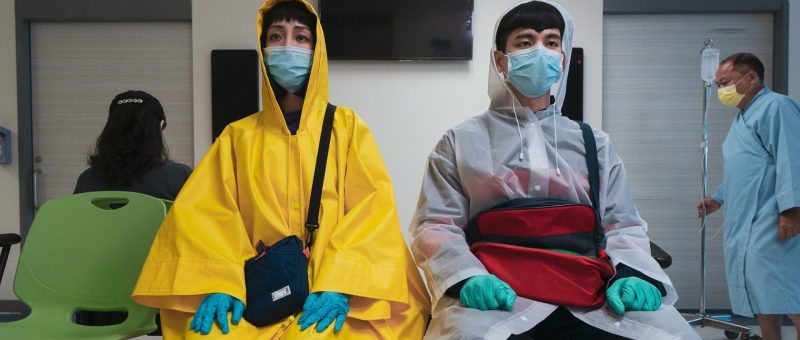
Being in love can be a little like a sickness, but what happens when the spell wears off? A meditation on fatal attraction syndrome and the duplicitous delusions of “normality’, Liao Ming-Yi’s charming romance I WeirDo (怪胎, Guàitāi) arrives at the most opportune moment in which we’re all “weirdos” now, stuck at home obsessively washing our hands and dutifully remaining “alert” as we disinfect everything we see. Liao’s PPE-clad heroes find love in shared anxiety, but happiness is the enemy of fear and the things that brought you together may in the end drive you apart.

Chen Po-ching (Austin Lin Bo-hong) is somehow able to afford a spacious two-level home working as a full-time literary translator despite the fact it takes him ages because he’s unable to type. A sufferer of severe OCD, he lives by strict routine and is deathly afraid of germs. For most of his life he simply remains at home, but on the 15th of every month he dons full body PPE and braves the outside to pay his bills, do his shopping, and visit a doctor he hopes can help him beat the condition but only gives him mysterious medication which doesn’t seem to make much difference. His life changes one particular 15th when he spots a woman dressed much like himself who is also headed to the supermarket where she shoplifts a bar of chocolate and buys up the remaining stocks of his favourite disinfectant. Chen Ching (Nikki Hsieh Hsin-Ying), as she later gives her name, approaches him to make sure he’s not going to dob her in about the chocolate which she doesn’t even like, it’s just a compulsion. She suffers from OCD too along with a skin allergy that means she’s not supposed to spend a lot of time outdoors. 

Love eventually blossoms. Ching opens up Po-ching’s world, conspiratorially involving him in her shoplifting and inviting him to visit her at work as a life model for a drawing class where she’s asked to pose like a fallen angel with broken wings. They go on weird “dates” taking germ challenges like eating at tiny eateries with questionable hygiene standards and picking up rubbish before Po-ching realises that going “out” so much is placing a strain on Ching’s health so he proposes she move in with him. Luckily she’s an ace typist so she can help with his work as well as the intensive cleaning regime he already has in place. What they’ve made is a blissful world of two, isolated from the confusing pollution of regular society. But paradise can also be a cage, and it’s natural enough to long for freedom. Before long a problematic pigeon and a loitering lizard have them each pondering life in the outside.  

Opening in a boxy, claustrophobic square, Liao eventually swaps narrators and switches to a comparatively open widescreen as horizons quite literally expand, a development which introduces, ironically, a new but distinctly unhelpful anxiety into a relationship both apparently hoped would be unchanging. The couple’s OCD struggles become a stand-in for the giddy obsession of new love as they cocoon themselves happily within their romantic bubble only for the magic to inevitably begin wearing off. Despite all they have in common, the pair have an ideological mismatch. She actively craves their difference, believing OCD is a gift that allows them to lead unique lives, but he secretly yearns for “normality”, to be cured and become a “normal” person living a “normal” life. She’s for staying in, he’s for going out. “Why do we have to be the weirdos?” Ching asks Po-ching seconds after revealing suicidal tendencies. He tells her he’s never given it too much thought. His OCD simply is, it can’t be changed, so he just accepted it. But change, which is of course what they most fear, eventually comes, paradoxically because when you’re “happy” and you feel accepted perhaps you don’t need so much obsessive control over your life. 

Liao undercuts the darker side of a life ruled by intense anxiety through whimsical production design adding a touch of fairytale glamour to the sad romance of the two similarly named protagonists falling in love in an uncertain world. Shot entirely on iPhone, the cinematography is unexpectedly rich and innovative, handsome even in its immediacy and like the protagonists embracing its limitations with wit and charm. Perfectly tailored for the post-corona world, I WeirDo wants to ask us if love can survive our fear of change or if our intense need for control over our lives robs us of the ability to live, if being “normal” is worth the price of love, and if there’s really anything wrong with being a “weirdo” especially if you find someone to be a weirdo with. Po-ching and Ching are still figuring it out, but aren’t we all even in these admittedly strange times? 


I WeirDO streamed as part of this year’s online edition of Fantasia International Film Festival.

Original trailer (English subtitles)

Monster SeaFood Wars (三大怪獣グルメ, Minoru Kawasaki, 2020) [Fantasia 2020]

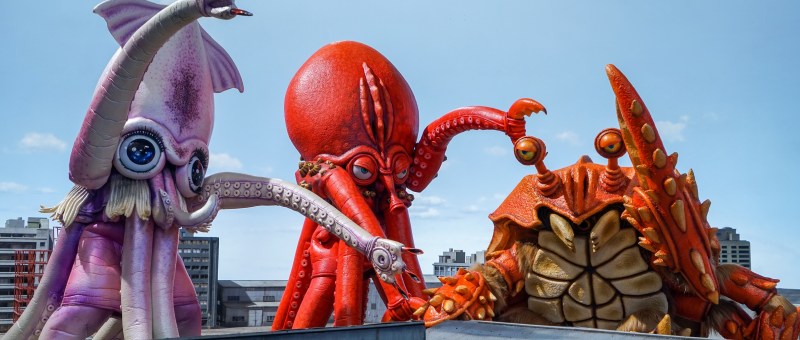
Ever wondered what happens to a fallen kaiju? After Godzilla and friends have ransacked the city, there’s certainly a lot of cleaning up to do but disposing of kaiju corpses isn’t something your average monster movie gives a lot of thought to. According to Monster SeaFood Wars (三大怪獣グルメ, San Daikaiju Gourmet), there’s surprisingly good eating to be had in monster meat and when it comes to taking down a giant squid, perhaps it’s better to ask a chef rather than a scientist or the boffins from the Ministry of Defence. 

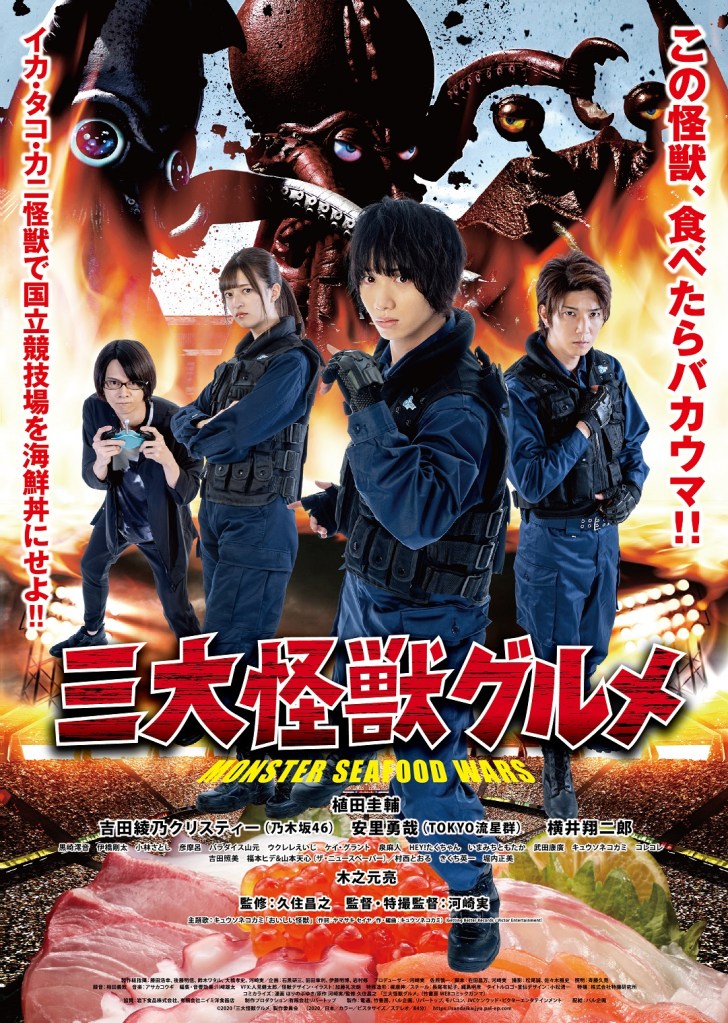
Switching between documentary sequences featuring talking heads looking back on the bizarre events and the events themselves, Monster SeaFood Wars follows scientist/sushi shop heir Yuta (Keisuke Ueda) who accidentally unleashes three giant kaiju on the city of Tokyo after he’s knocked off his bike while delivering some prize seafood to the local temple as an offering. In addition to being the heir to a sushi shop, Yuta is also a scientist apparently obsessed with giant monsters which he describes as “cute” and had been working on a serum, Setap Z, to turn ordinary foodstuffs giant in order to end world hunger. Before you know it, angry octopus Takolla and his frenemy Ikalla are on the rampage through the city. 

Of course, Yuta is the prime suspect which is perhaps why he somewhat arrogantly describes himself as the “biggest victim” while reluctantly agreeing to help out SMAT, Seafood Monster Attack Team, as they try to figure out how to mitigate the effect of Setap Z and stop the kaiju assault but is further irritated by being denied a spot on the team as a full member. Meanwhile, he’s also facing off against rival scientist Hikoma (Yuya Asato) who impresses with an obvious idea, vinegar, while charming Yuta’s childhood friend and unrequited crush Nana (Ayano Christie Yoshida) who now works for the Ministry of Defence and has only contempt for the weirdo monster geek. 

Yuta’s plan had been to let Takolla and Ikalla duke it out, assuming Takolla would win and then they’d somehow lure him into a giant octopus trap. Hikoma meanwhile suggests giant rice vinegar cannons, regular missiles already having proved ineffective against the sea creatures’ springy flesh. Hikoma’s plan would have worked, had it not been for the sudden and unexpected return of Kanilla whose hard shell protects him against the corrosive effects of the vinegar. During the fight, however, some of Takolla’s tentacles are chopped off, chunks of meaty white flesh falling to the ground as SMAT commander Hibiki (Ryo Kinomoto) unconsciously licks his lips. 

While very much a classic kaiju movie, Monster SeaFood Wars has its tongue firmly in its cheek, scaling back on the monster-fighting action for some gentle satire as the gang find they just can’t resist the urge find out what kaiju tastes like. The answer is surprisingly good, with the effect that kaiju meat becomes the latest culinary trend. “Forget bubble tea” one commentator says, monstrous squid is where it’s at. The TV news also comes in for a kicking with its placard unveiling confirming the kaiju’s name as well as a state of the nation address from an Abe-esque PM using the crisis to further his quest to “take back Japan” while speaking in a distinctly squeaky voice.

Meanwhile, drunk salarymen complain about their exploitative working conditions, joking that they’d need to be eight-armed octopuses to get through the amount of work expected of them only for Takolla to appear out of nowhere and slap them down seconds after they’ve made a few inappropriate remarks to some passing young ladies. Aside from the kaiju, the big bad does seem to be pervasive sexism with Ministry of Defence employee Nana often relegated to little more than eye candy and eventually the subject of an offensive bet between the icy Yuta and slick Hikoma whose equally sexist cheesy lines actually seem to impress her. 

Yuta, however, gets the chance to redeem himself by revealing that the really did make the formula to help starving people in Africa rather than just because he actively wanted to usher in the great kaiju apocalypse, owning his legacy as the son of a sushi shop while his best friend Niima (Shojiro Yokoi) has a few surprises of his own up his sleeve which prove that the best person to have at a giant octopus is a skilled chef. Of course Setap Z turns out to cause a few additional problems, accidentally spreading itself around after hitting the mosquito population, while it seems the villain is not quite done with their desire to misuse the serum, hinting at a possible sequel. A humorous but never mocking take on the classic tokusatsu, Monster SeaFood Wars pits culinary science against the giant monster threat and discovers that all you need to save the world is a good cook.


Monster SeaFood Wars streams in Canada from 20th August to 2nd September as part of this year’s online edition of Fantasia International Film Festival.

Original trailer (no subtitles)

Crazy Samurai Musashi (狂武蔵, Yuji Shimomura, 2020) [Fantasia 2020]

Action star Tak Sakaguchi rose to fame in Ryuhei Kitamura’s low budget zombie movie Versus, thereafter starring in a series of similarly pitched splatter and exploitation films as well as appearing in long running tokusatsu series Kamen Rider and making his own directorial debut with manga adaptation Be a Man! Samurai School in 2008. Much to fans’ disappointment, Sakaguchi announced his retirement as a performer in 2013, but has since made several high profile returns to the big screen including Yuji Shimomura’s Re:Born in which he played a former JSDF elite soldier living quietly in the countryside until an old enemy tracked him down. 

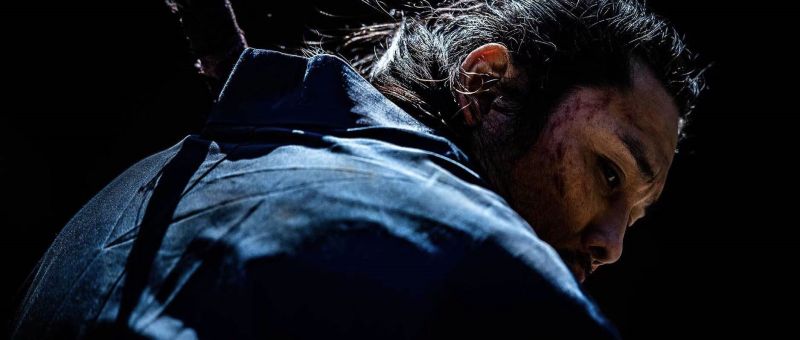
Again emerging from semi-retirement, Crazy Samurai Musashi (狂武蔵, Kurui Musashi) sees Sakaguchi reunite with Shimomura to play the most famous of legendary samurai Miyamoto Musashi in an all out action fest including a 77-minute one cut assault during which he singlehandedly kills 588 men. Unsurprisingly light on dialogue, the film credits Sion Sono with original concept and Atsuki Tomori with screenplay who do at least add a little context which frames this, to an extent, as a tale of merciless samurai hypocrisy and the fallacy of “honour” as a code for living. 

As the film opens, a small boy stares in wonder at a white butterfly before being reminded that he has, as the head of this clan, apparently challenged the great Miyamoto Musashi to a duel in revenge for his murder of two of their previous leaders. Affable retainer Chusuke (Kenta Yamazaki) tells the boy not to worry, he’s not going to let anything happen to him, but stops short of explaining that he’s really just a kind of bait. Nevertheless, Chusuke has his reservations about their plan. After all, it’s not very befitting of a samurai’s honour to challenge someone to a private duel but invite 400 retainers to the surprise party. 400 against one seems faintly ridiculous. It might even be embarrassing if anyone else finds out, but then as the priest (Yosuke Saito) says you can just kill them too. In any case, while Chusuke is talking to the priest and the mercenaries are busy arguing with the retainers, Miyamoto Musashi sneaks through the perimeter and fells the small boy who is technically the “leader” of the clan with one flying sword blow, kickstarting a scene of utter carnage as he attempts to fight his way out of the compound.   

“How many more?” Musashi asks in exasperation during a momentary pause, later doing a few calculations. He thought there’d be about 70, but it feels like he’s killed a few more than that. True to form, the samurai warriors largely follow the protocols of honour. They fight one-on-on, and only at the end does anyone attempt to attack Musashi from behind. He makes swift work of them, taking each man out with maximum economy, occasionally challenged by complete randomers who apparently aren’t even part of the clan, they just really don’t like him. Though necessarily repetitive, Shimomura’s innovative, non-stop fight choreography follows a realtime, broadly naturalistic logic in which duels are generally brutish and short. Musashi begins to tire as he continues to fight for his life, taking brief breaks for water, food, and existential questioning, before heading back into the fray. 

“Duty? Honour? Who gives a crap? I just wanna win” he later says in what is simultaneously a rejection and an embodiment of the samurai code. “I’ll die one day anyway” Musashi chuckles to himself before rejoining the fight, wilfully embracing the nihilism of the samurai existence that allowed him to kill a child without thinking twice. Chusuke failed to protect his honour, or save his clan, his earnestness perhaps betrayed by his mentor’s underhandedness in unwisely hiring vast numbers of mercenaries and sending his own unprepared students, many of whom simply flee (a wise decision), to face off against an unstoppable killing machine. Paradoxically, Miyamoto Musashi will survive because he doesn’t care about playing fair, he may not even care about surviving, all he wants is to win. “A kid who knows nothing of war”, Chusuke’s stubborn insistence on illusionary samurai honour will lead only to more suffering and violence while all Musashi can do is sigh in resignation and ready his sword. 


Crazy Samurai Musashi streams in Canada from 20th August to 2nd September as part of this year’s online edition of Fantasia International Film Festival.

International trailer (English subtitles)

The Day of Destruction (破壊の日, Toshiaki Toyoda, 2020)

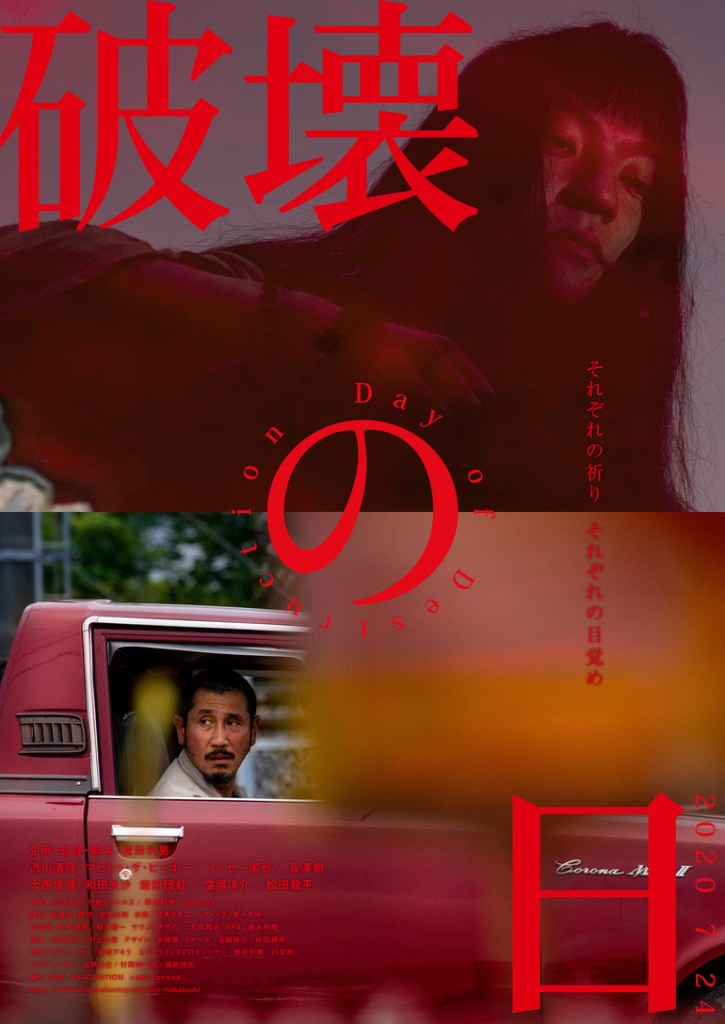
“I want to create a movie that exorcises Tokyo of its possession by the spectre of capitalism.” so goes the introduction* given by director Toshiaki Toyoda to the crowdfunding project for his latest mid-length movie, The Day of Destruction (破壊の日, Hakai no Hi). Set to open on July 24, the day which should have marked the opening of the 2020 Olympic Games had it not been for their postponement, The Day of Destruction returns Toyoda to the disillusioned rage of his early career in a painful wail of protest against an infinitely self-interested society in which there is “a price tag on our lives fluttering in the wind”. 

Toyoda opens in black and white with snow falling like ash across the gate of a shuttered mine. City slicker Shinno (Ryuhei Matsuda) has come to see the monster, and he’s brought an envelope of cash for just that purpose, handing it to former miner Teppei (Kiyohiko Shibukawa) now unemployed thanks to the “rumours” of what might be lurking in the darkness. Shinno presses on alone and discovers a pulsating, gelatinous mass at the end of his path but merely laughs, muttering “one hell of a monstrosity has been born, huh?” as he turns around and walks away seemingly unimpressed.  

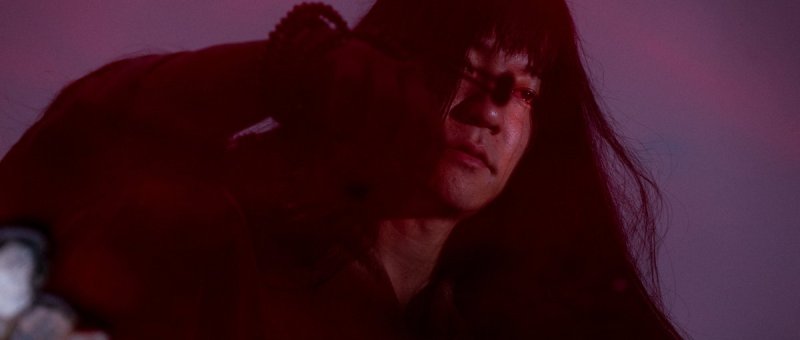
Shifting into colour and the present day, Toyoda pans past the Diamond Princess cruise ship, controversially quarantined for two weeks in Yokohama Harbour, before taking us straight into the city of Tokyo and the Olympic stadium which he then implodes with the “Genriki” spiritual power later explained onscreen, ending on the face of a mummified monk. Back in the country, at the Mt. Resurrection-Wolf shrine mountain ascetic Kenichi (Mahi To The People) is attempting to mummify himself as a sacrificial offering to stop the “plague” which has been spreading since the monster’s discovery but his efforts are disrupted by an earthquake which sends him into existential torment from inside his coffin while collapsing the mine in which the monster had taken root. 

On his way to rescue Kenichi, Teppei, apparently a former monk himself now working as a mechanic, encounters a crazed salary man ranting that the monster has infected us all. He’s not the only troubled soul Teppei encounters, later passing a woman in the middle of her shopping screaming that we’re all in hell and it’s the monster’s fault, but as head monk and herbalist Jiro (Issei Ogata) points out, nothing can destroy the evil spirit haunting the town because you cannot kill what is intangible. You can’t end the plague by killing the monster, only by curing it because the monster is a part of nature too. Humans possessed by demons are cured by humans who might also in fact be demons themselves. There is only imperfection and co-existence. All you can do is show the way. 

The irony is that Kenichi, eaten up by rage and resentment over the death of his younger sister Natsuko (Itsuki Nagasawa) from the epidemic, thought he could change the world through prayer fiercely believing in the prophesied return of the Maitreya but if there is a Maitreya here it is Natsuko who appears to each of our heroes and eventually reveals the only real cure to her brother in instructing him to heal himself. Only by changing himself can he change the world. With the power of his Genriki, he knocked the demon of apathy out of Teppei but now he must point the finger within towards his own darkness, the rage and impotence that has in its own way made him selfish and left him blind to the true nature of sickness blighting his society. 

That sickness is embodied in the stadium that looms in the background of the hospital rooftop where Kenichi meets his sister, explaining that he sees no point in competition and that the Olympics are nothing more than a “greed-filled field day”. The crazed salaryman bangs on the palace doors begging to be let in, berating the “politicians, landowners, bankers, and monks” for locking themselves away in safety, refusing their responsibility to those like him. Kenichi says he’s going to change the world through prayer, but Natsuko, child of summer, tells him nothing will change, not her or her illness. You can’t change the world by withdrawing from it, mummifying yourself is not the answer in fact it’s the essence of the problem and somewhat symptomatic of Kenichi’s egotistical saviour complex. You have to start with yourself, but in the end we save each other or nothing ever changes. 

As topical as it’s possible to be, The Day of Destruction was shot in only eight days from June 22 to 30 with editing and postproduction on the incredibly rich sonic experience lasting until July 20 with the DCP arriving at cinemas the day before the release date of July 24 which is of course the “Day of Destruction” that should have marked the opening of the 2020 Olympic Games. It makes direct reference to the official wording of the government advice urging “self restraint” in light of the pandemic and situates itself in the “broken days of summer” of a lost year. Yet for all the fatalism and despair it also reminds us that “Everyone on Earth is a central player, we’re all in the same boat called Generation”, calling out for change but pointing an accusatory finger directly at the camera to remind us where the responsibility lies.


The Day of Destruction streamed for one day only as as part of this year’s Japan Cuts.

Original trailer (English subtitles)

*translation by Ben Dimagmaliw of Indievisual

Fukushima 50 (フクシマ50, Setsuro Wakamatsu, 2020)

The “Fukushima 50” (フクシマ50), as the film points out, was a term coined by the international media to refer to the men and women who stayed behind to deal with the unfolding nuclear crisis at the Fukushima Daiichi Nuclear Power Plant. Loosely inspired by Ryusho Kadota’s non-fiction book On the Brink: The Inside Story of Fukushima Daiichi which featured extensive interviews with those connected to the incident, Setsuro Wakamatsu’s high production value film adaptation arrived to mark the ninth anniversary of the devastating earthquake and tsunami which occurred on 11th March, 2011 and closes with a poignant callback to the plant’s role in Japan’s post-war reconstruction as the nation once again prepares to host the (now postponed) Olympics with a torch relay beginning at Fukushima as a beacon of hope as the country continues to rebuild in the wake of the disaster. 

Though inspired by real events Wakamatsu’s dramatisation is heavily fictionalised and while surprisingly frank for a mainstream film in its criticism of the official reaction to the disaster, is also quietly nationalistic while doing its best to pay tribute to the selfless sacrifice of the plant workers who stayed behind to do what they could many of whom had little expectation of surviving. Chief among them would be Izaki (Koichi Sato), an imperfect family man and veteran section chief, and the plant’s superintendent Yoshida (Ken Watanabe) who are both local men and old friends. Local, it seems, is later key with multiple appeals to the furusato spirit as each is at pains to point out that they stay not only to prevent a catastrophic meltdown that would leave most of central Honshu including Tokyo uninhabitable, but because they feel a greater duty to protect their hometown and the people in it. 

Meanwhile, they find themselves burdened rather than assisted by official support as government bodies’ political decision making undermines their attempts to avert disaster while the boardroom of TEPCO who operate the plant reacts with business concerns in mind. A few hours in the prime minister (Shiro Sano) decides to make a visit, in political terms he can’t not national leaders who don’t visit sites of crisis are never forgiven, but his presence actively hinders the recovery efforts. Referred to only as the PM, Wakamatsu’s film presents the man leading the nation as an ignorant bully overly obsessed with his personal image. He has little understanding of nuclear matters or the implications of the disaster, refuses to abide by the regular safety procedures required at the plant, and mostly governs through shouting. Beginning to lose his temper, Yoshida does his best to remain calm but resents the constant interference from those sitting in their offices far away from immediate danger while he does his best to contend with the increasingly adverse conditions on the ground, mindful of his responsibilities firstly to his employees and secondly to those living in the immediate vicinity of the plant who will be most at risk when measures taken to prevent meltdown will lead to an inevitable radiation leak. 

Yoshida’s hero moment comes when he ignores a direct order from the government to stop using seawater to cool the reactors, knowing that he has no other remaining options. Meanwhile, the government refuse offers of help from the Americans, who eventually make a strangely heroic arrival with Operation Tomodachi, discussing plans to move their families to safety while their commander reflects on his post-war childhood on a military base near the site of the nuclear plant. Japan’s SDF also gets an especial nod, granted permission to leave by Yoshida who is beginning to think he’s running out of time but vowing to stay and do their duty in protecting civilians in need. 

In essence, the drama lies in how they coped rather than the various ways in which they didn’t. The conclusion is that the existence of the plant was in itself hubristic, they are paying the price for “underestimating the power of nature” in failing to calculate that such a devastating tsunami was possible. They thought they were safe, but they weren’t. Perhaps uncomfortably, Wakamatsu mimics the imagery of the atomic bomb to imagine a nuclear fallout in Tokyo, harking back to ironic signage which simultaneously declares that the energy of the future is atomic while the plant workers reflect on the sense of wonder they felt as young people blinded by science back in the more hopeful ‘70s as the nation pushed its way towards economic prosperity. Frank for a mainstream film but then again perhaps not frank enough, Fukushima 50 is both an urgent anti-nuclear plea and an earnest thank you letter to those who stayed when all looked hopeless, suggesting that if the sakura still bloom in Fukushima it is because of the sacrifices they made.


Fukushima 50 is available to stream in the US until July 30 as part of this year’s Japan Cuts.

International trailer (English subtitles)

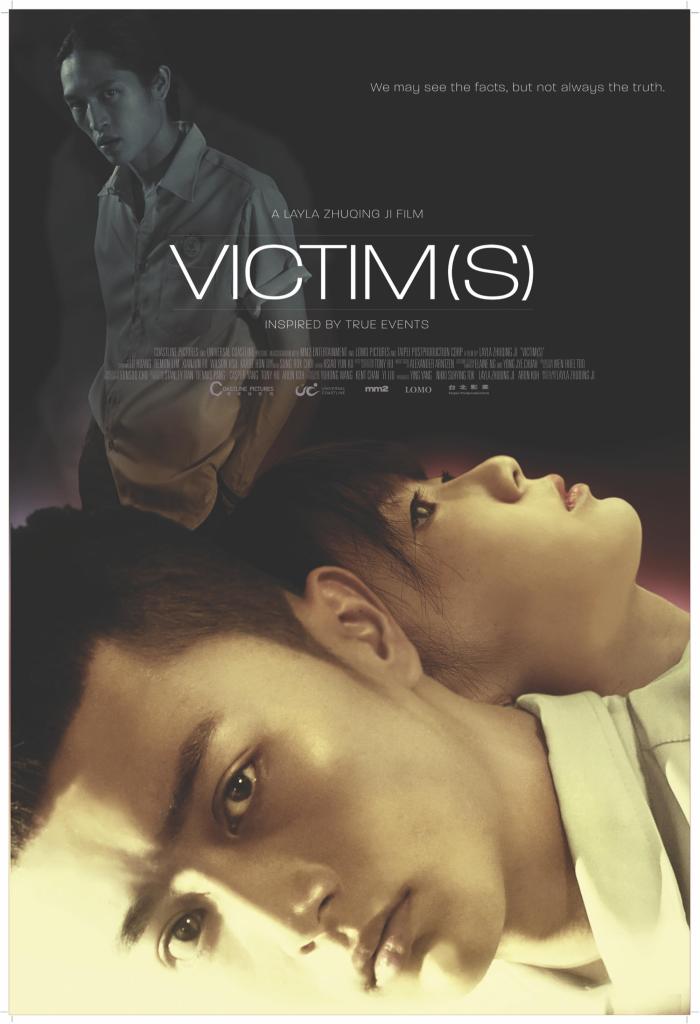
Victim(s) (加害者、被害人, Layla Zhuqing Ji, 2020)

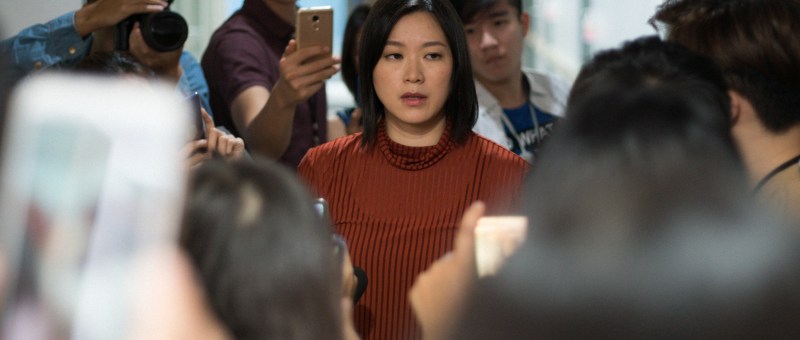
“People don’t care about the truth, they just need someone to blame because that’s the easy thing to do” according to a secondary victim caught up in the complicated events which led to the killing at the centre of Layla Zhuqing Ji’s empathetic debut feature, Victim(s) (加害者、被害人, Jiāhàizhě, Bèihàirén). A tale of two mothers, Victim(s) does its best not to apportion blame to any one individual but points the finger at a rigid and austere conformist society in which conservative social codes and a culture of victim blaming conspire to restrict freedom and breed unhappiness. 

Cast in the roles of victim and killer are high school students Gangzi (Kahoe Hon), the son of a poor masseuse (Remon Lim) stabbed to death beside an ATM, and Chen (Fu Xianjun) son of a wealthy single-mother (Huang Lu) who some say made her money in questionable ways. Students at the school speak of discord between the two boys, describing Chen as strange, a bit of a loner with an unpleasant superiority complex that, coupled with his status as top of the class, led him to look down on those around him. They say he viewed Gangzi with disdain because of his working class background and was upset because they both liked the same girl, transfer student Qianmo (Wilson Hsu), but she turned him down in favour of Gangzi. After a few days on the run, Chen turns himself in and confesses to the crime but has a slightly different story, claiming that, in fact, he was bullied by the other kids including Gangzi partly because he was wealthy, they were roughing him up for money, and partly because he was an outsider at school widely disliked as a swot. 

Of course, both mothers are convinced their sons are perfect angels but are eventually led to discover that perhaps they didn’t know their children as well as they thought they did. The technological divide between the generations trumps that of social class with the kids largely living in an online world where the traditional prejudices are only magnified through teenage gossip. Rather than swapping notes like in the old days, they group chat during in lessons and reinforce social hierarchy through shame and bullying. Transfer student Qianmo quickly finds this out to her cost, becoming a target for the ruling group of popular girls after she declines to join their dance troupe, while the boys are determined to hit on her despite her obvious lack of interest. 

Qianmo was forced to give up dancing and leave her previous school which specialised in the arts because, it’s implied, her dance teacher was molesting her, yet she’s already been branded a “teenage slut” online for supposedly seducing him. The other girls are remarkably unsympathetic, engaging in sexualised bullying they proudly film and share amongst themselves. The boys are doing something similar, yet even though the point of these videos is that the kids share them widely to humiliate each other, they are never a part of the official investigation and the adults have no idea they exist. Qianmo is too afraid to report her bullying because she fears they’ll ask why it is she’s being bullied and then say it’s her own fault, while Chen who finds himself scapegoated after a homoerotic porn magazine is discovered in the dorm, simply fears reprisals. Questioned by the police the other kids all toe the line, afraid that they’ll become targets too for speaking the truth, all too happy to let Chen take the blame while allowing the awful status quo to continue but resentful that he will most likely wield his privilege to escape justice. 

Chen meanwhile blames himself, repeatedly asking if he’s the the cause of others’ suffering while Gangzi works out his frustrations with his abusive father and repressed sexuality through delinquency. Both mothers desperately try to save their sons, but find themselves struggling to comprehend the gap between the image they had of the young men their children were becoming and the unpleasant truths they are beginning to discover. Meanwhile, external bullying from a media mob further obfuscates the truth, baying for blood and creating only more victims in the process as it insists its brand of socially conservative, compassionless justice be served at all costs. Yet against the odds, the women eventually come to a kind of understanding, choosing to accept the reality while protecting other victims, refusing the “easy” option of a prepackaged “truth” that neatly fits the needs the needs of a bullying society. Ji’s hard-hitting debut too refuses easy answers, finding that in the cycle of violence and abuse perpetrators and victims are often one and the same but each subject to the same petty oppressions contributing to an atmosphere of rigid social conformity which breeds nothing but misery.


Victim(s) streamed as part of this year’s Udine Far East Film Festival.

Original trailer (English subtitles)

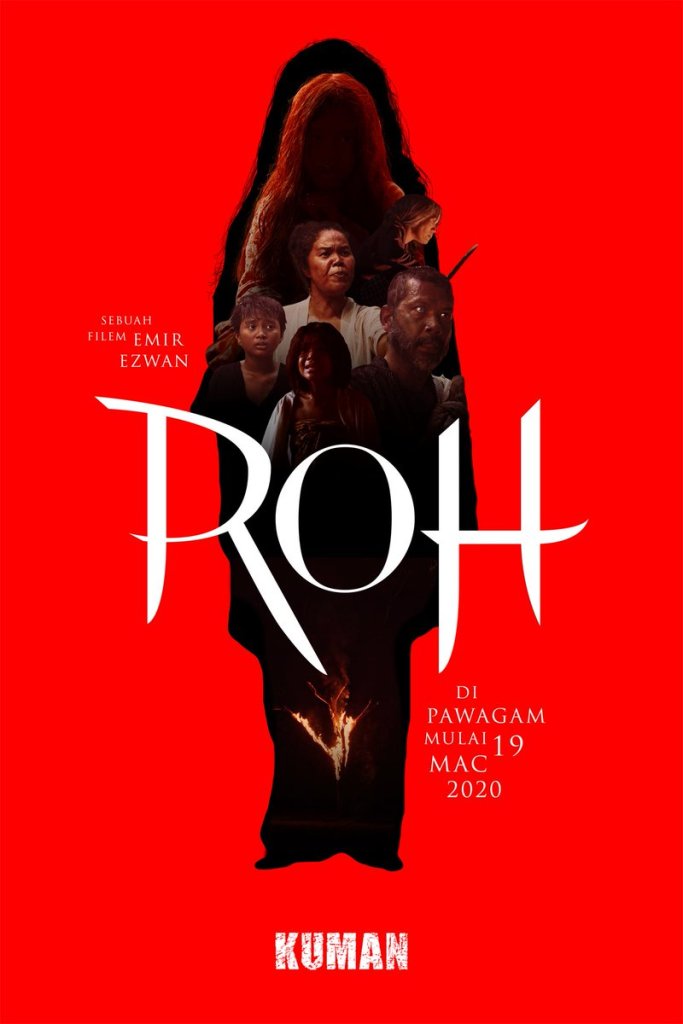
Soul (Roh, Emir Ezwan, 2020)

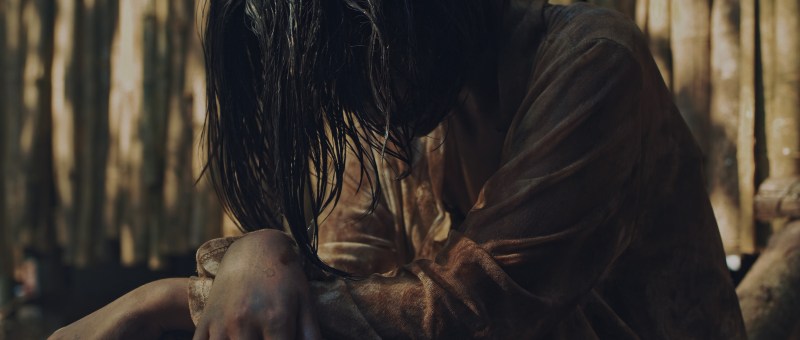
“We’re now living in a dangerous time. Many people are desperate and feel unsafe” according to the beleaguered single-mother at the centre of Emir Ezwan’s slow burn folk horror Soul (Roh). The latest film produced by Malaysian powerhouse Kuman Pictures which specialises in low budget horror, Ezwan’s tale of supernatural dread situates itself in a world in which there is “always something evil around us” and existential threat may arrive in the most unexpected of forms. 

This a small family discovers to its cost when they come across a little girl (Putri Qaseh) wandering in the jungle and, as anyone would, take her into their home where they give her food and shelter while trying to find out where she’s come from and what might have happened to her. Unfortunately, however, after some ominous events, the girl tears apart one of their chickens and eats it raw before cursing them by issuing the prophecy that they will all be dead by the next full moon, thereafter slashing her own throat. The woman, Mak (Farah Ahmad), and her two children, daughter Along (Mhia Farhana) and son Angah (Harith Haziq), are obviously upset and afraid but have no idea what to do. They take the body further into the jungle and leave it there. After that more visitors arrive at their remote hut, a hunter with a spear and a milky eye (Namron), and a wise old woman, Tok (June Lojong), who always seems to be offering them advice only to remember that she has other important business to attend to before imparting it. 

Things only get worse for the woman and her children who, as far as we know, have done nothing wrong, only try to help a lost little girl. Living as they do on the edge of the forest, they are well acquainted with its duplicitous mysteries. “Never believe anything that you see or hear in the jungle” Mak cautions the children, scolding her hungry son who’d wanted to take a deer he and his sister found mysteriously hanging from a tree and bring it home to eat. Along fears a tiger, but logically someone put that deer there for a reason and might not be happy if someone walked off with it, though as far as the family knew they were the only ones nearby. Still they don’t seem to find anything odd in the sudden arrival of the old woman who tells them she’s come from across the river to gather herbs, warning them that there are bad vibes all round their house and something untoward is sure to befall them if they don’t take care. 

Caught between the wise woman and the vengeful man apparently hot on the trail of the little girl, the family has no idea who to believe or where to turn. The old woman tells Angah that he has no need to be afraid, evil is all around us but can only hurt through other humans which is why it’s better not to trust anyone. Yet supernatural threat is always lurking, waiting for an opportunity to strike. We have no power over you, it later confesses, all we had to do was whisper and you obeyed. Mak, alone with her children, is entirely cut off from the outside world. She has no idea what has happened in the village across the water, and no recourse to help outside of Tok and the power of prayer, something she is later accused of not having valued enough. She and her children are accidental bystanders in someone else’s spiritual battle, completely powerless and entirely at the mercy of those who selfishly pursue their own desires with little thought to the family’s lives. 

Ezwan conjures a deep atmosphere of existential dread as the darkness begins to seep out of the forest and engulf all around it. Mak warned the children that they shouldn’t go taking things out of the jungle, but despite the eerie superstitions of ghosts and ghost hunters she knew from her youth was all too easily tricked by something that walked out on its own and followed them home. There is darkness everywhere, and with darkness fire. “Your next life will be as eternal as your soul” the voice of darkness warns, make your choices wisely.


Soul is available to stream in Europe until July 4 as part of this year’s Udine Far East Film Festival.

Original trailer (English subtitles)

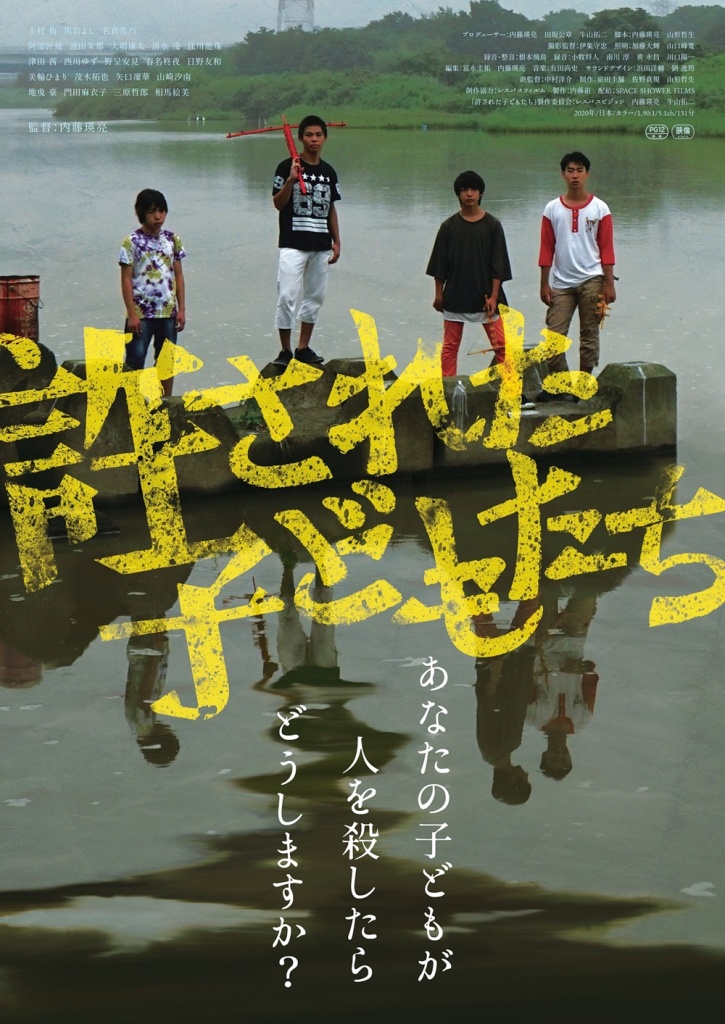
Forgiven Children (許された子どもたち, Eisuke Naito, 2020)

“You can’t steal a life and get off the hook” a sheepish young man is told by an unsympathetic police officer pushing him to confess his crime, but the “justice” he will later face will be of a less official kind. Eisuke Naito’s ironically named Forgiven Children (許された子どもたち, Yurusareta Kodomotachi) is, in some ways, a tale of sympathy for the bully in the acknowledgement that a bully can be a victim too, but it’s also a condemnation of a bullying society defined by pent up, misdirected rage in which wounded people take out their hurts for thousands of petty humiliations on those they see as in some way vulnerable in an attempt to prove that they are not. 

The “hero”, Kira (Yu Uemura), was mercilessly bullied in primary school. The first time we meet him he is wandering wounded, bleeding profusely while stumbling home without shoes. Some years later, now 13, Kira has a scar on his cheek and a mean look in his eye. At school he’s an angry young man and petty delinquent while at home a dutiful son cheerfully singing karaoke with his loving parents. Everything changes one day when he bullies another boy into bringing a homemade crossbow to the riverbank. Without really knowing why, Kira fires it and pierces him through the neck. Terrified, the other boys flee leaving Itsuki (Takuya Abe) to die alone by the water undiscovered for hours. 

Kira and the others are not that smart. They’re on CCTV heading to the riverbank, and there are messages on Itsuki’s phone from Kira telling him to meet them there. It is obvious they are involved though in legal terms the evidence is circumstantial. The policeman who visits encourages Kira to confess, implying it was an accident, or risk further punishment if he says he’s innocent and is later found not to be. Kira confesses, but his overprotective mother (Yoshi Kuroiwa) convinces him to recant, hires a fancy lawyer who bullies the only one of the other boys brave enough to tell the truth into straightening his story, and gets him off but the right wing internet trolls have already gone into overdrive and guilty or not Kira will not be allowed forget his crime. 

This is of course ironically another kind of bullying. The constant through-line is that Kira is the way he is because of the bullying he endured in primary school. He is a young man consumed by rage and taking revenge for being made to feel small and vulnerable by making others feel the same. After being forced to move around a few times, Kira ends up in a new school where they’re supposed to discuss how to address the bullying problem but worryingly most of the other kids have no desire to solve it. Rather than ask why people bully others, they universally blame the victims, insisting that it is their own fault simply for being the sort of people who get bullied. That might be because they are in some way different or vulnerable, but oftentimes is just a cosmic quirk of personality. Of course, bullies rarely think of themselves in those terms, which might be why one particularly vindictive young man voices the worrying principle of “justifiable bullying”, branding himself as a hero of justice as he prepares to unmask Kira as a murderer in hiding. 

Kira meanwhile remains conflicted, unable to come to terms with his crime or his internalised rage. Some might feel his bullying is indeed “justifiable” because in this case he is guilty and could make some of it at least stop by engaging in dialogue with Itsuki’s parents even if he cannot expect to be forgiven and must consent to carry the burden of his crime for the rest of his life, but it does not excuse the wholesale hounding of himself and family which prevents any kind of future restitution. Why is this society so angry that people go online to issue death threats against a 13-year-old boy over a crime that has absolutely nothing to do with them, what it is that they are really so outraged about? Kira is merely a product of an inescapable spiral of misdirected rage and emotional austerity. 

The children turn a blind eye to the bullying of others, or are encouraged to join in to avoid becoming victims themselves while adults claim to want to help but only contribute to the stigmatisation of those who are bullied. Kira says he thinks that he had a reason for doing what he did, but no longer remembers, later refocussing his rage on bullies to avoid having to recognise the bully in himself. But society is itself a bully, consumed by misdirected rage and a socially conservative tendency to blame and exclude rather than understand which ensures that there can be no end to the cycle of violence and abuse until society learns to look within itself. 


Forgiven Children was streamed as part of this year’s online Nippon Connection Film Festival.

Original trailer (English subtitles)