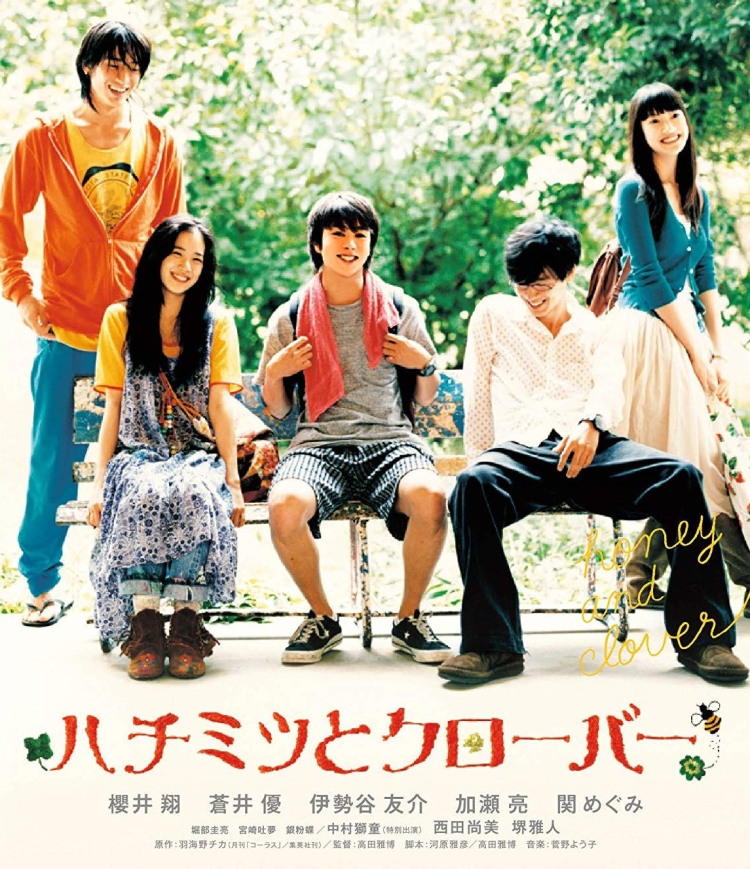
 Ah youth! Chica Umino’s phenomenally popular manga Honey and Clover (ハチミツとクローバー, Hachimitsu to Clover) is, essentially, a coming of age story in which love, requited and otherwise, plays a significant part. Masahiro Takada’s adaptation is no different in this respect as its central group of friends learn to come into themselves through various different kinds of heart break leading to soul searching and eventual self actualisation. The path to adulthood is rocky and strewn with anxieties, but has its own charms as our self branded Mr. Youth seems to have figured out, romanticising his own adolescence even while he lives it.
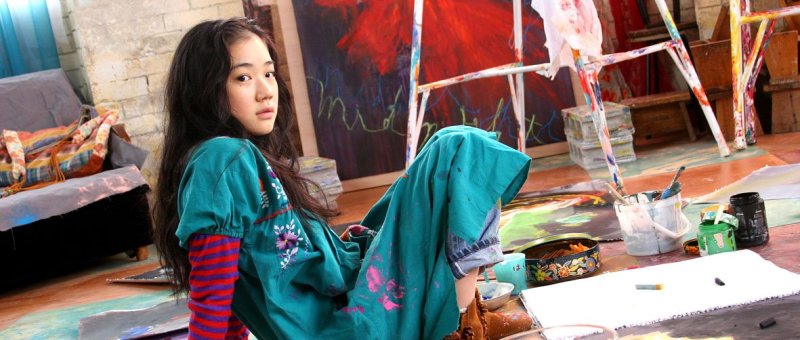
The action kicks off at an art college in Tokyo where a circle of friends is temporarily shaken by the arrival of a new student – a distant relative of a popular professor, Hanamoto (Masato Sakai). Our youth loving hero, Takemoto (Sho Sakurai), falls instantly in love with Hagu (Yu Aoi) – a genius self-taught painter with a dreamy, ethereal personality and negligible interpersonal skills. Hagu, however, seems to have developed a strange connection with conceited sculptor Morita (Yusuke Iseya) who continues to struggle with his conflicting interests in art and commerce. Meanwhile, geeky design student Mayama (Ryo Kase) has a problematic crush on his boss, Rika (Naomi Nishida), whose husband went missing some years ago, and has begun semi-stalking her. Unbeknownst to him, Mayama is also being semi-stalked by Yamada (Megumi Seki) – a spiky ceramicist who refuses to give up on her unrequited crush despite being fully aware of his one sided love for a brokenhearted middle-aged woman.
In actuality all of our protagonists are a little older than one might assume – all past the regular age for graduating college and either hanging around after being unable to complete their studies or pursuing additional training in the hope of furthering their art. They are all also hopelessly lost in terms of figuring out who they are – perhaps why they haven’t quite got a handle on their art, either. Hagu, younger than the others, seems to have an additional problem in existing outside of the mainstream, experiencing difficulties with communication and needing some additional help to get into the swing of college life. Perhaps for this reason, maverick professor Hanamoto palms her off on the “least arty” (read “most responsible”) of his students, Takemoto, who is tasked with accompanying her for meals – something for which he is quite grateful given his first brush with love on catching sight of her at her easel.
Hagu is also, however, the most sensitive and perceptive of the students even if she can only truly express herself through canvas. Her most instantaneous connection is with Morita, whose instinctive approach perhaps most closely mirrors her own though where Hagu is quiet and soulful, Morita is loud and impetuous. Watching him creating his centrepiece sculpture, Hagu is honest enough to tell Morita that he’s overdone it. Morita agrees but ends up exhibiting the piece anyway and not only that – he sells it for a serious amount of money despite knowing that it lacks artistic integrity. Hagu is unimpressed and her disapproval only adds to Morita’s sense of self loathing in his ambivalence towards to the fleeting rewards of superficial success versus the creation of artistic truth.
A similar sense of ambivalence imbues the romantic difficulties which neatly divide the group into a series of concentric love triangles. Takemoto, the selfless hero, realises the best thing he can do for Hagu is try to help Morita be less of a self-centred idiot while simultaneously dwelling on his fleeting youth and actively pursuing himself while debating whether or not to hit the road and leave his lovelorn friends to it. Mayama and Yamada, by contrast, are content to dance around each other, understanding the irony of their respective unreturned crushes while not quite bonding over them but both determined not to give up on their dreams (romantic and professional).
Despite the central positioning of our shy hero as he walks towards the end goal of being able to state his feelings plainly, the drama revolves around the enigmatic Hagu whose descent into an intense depression after an ill-advised moment on a beach is only eased by the careful attentions of her new friends finally realising that their artistic souls benefit from compassion for others rather than remaining solipsistically obsessed with their own romantic heartbreak. Despite its noble intentions, Honey and Clover misses the mark in charting the heady days of youth though our confused heroes do eventually manage to find themselves and each other along the road to adulthood as they chase down disappointments romantic and professional and discover what is they really want in the process.
Original trailer (no subtitles)


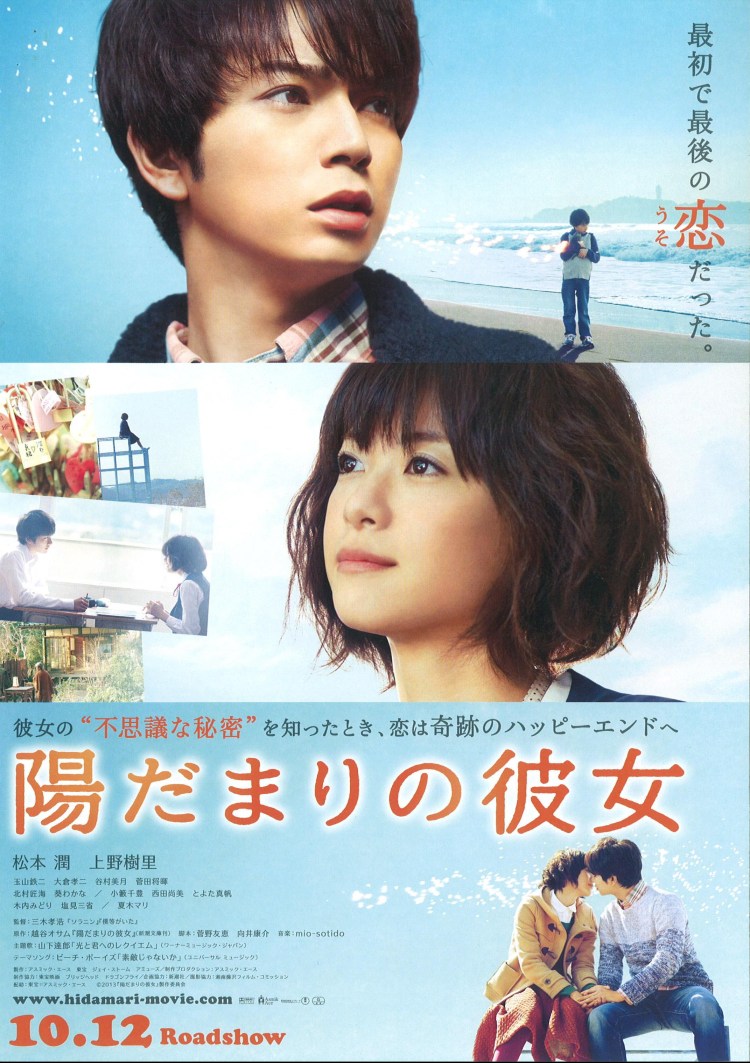 The “jun-ai” boom might have been well and truly over by the time Takahiro Miki’s Girl in the Sunny Place (陽だまりの彼女, Hidamari no Kanojo) hit the screen, but tales of true love doomed are unlikely to go out of fashion any time soon. Based on a novel by Osamu Koshigaya, Girl in the Sunny Place is another genial romance in which teenage friends are separated, find each other again, become happy and then have that happiness threatened, but it’s also one that hinges on a strange magical realism born of the affinity between humans and cats.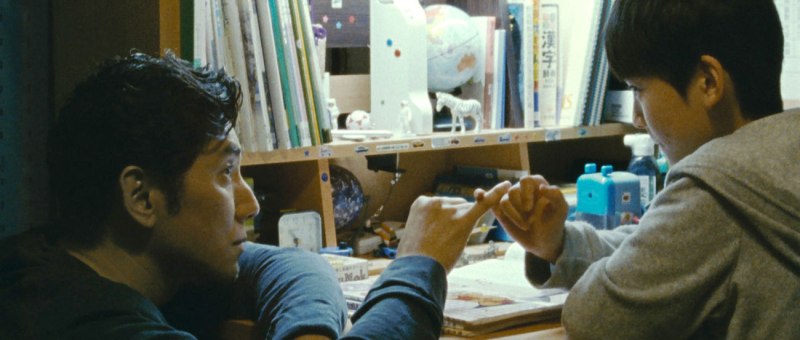
 Self disgust is self obsession as the old adage goes. It certainly seems to ring true for the “hero” of Miwa Nishikawa’s latest feature, The Long Excuse (永い言い訳, Nagai Iiwake) , in which she adapts her own Naoki Prize nominated novel. In part inspired by the devastating earthquake which struck Japan in March 2011, The Long Excuse is a tale of grief deferred but also one of redemption and self recognition as this same refusal to grieve forces a self-centred novelist to remember that other people also exist in the world and have their own lives, emotions, and broken futures to dwell on.
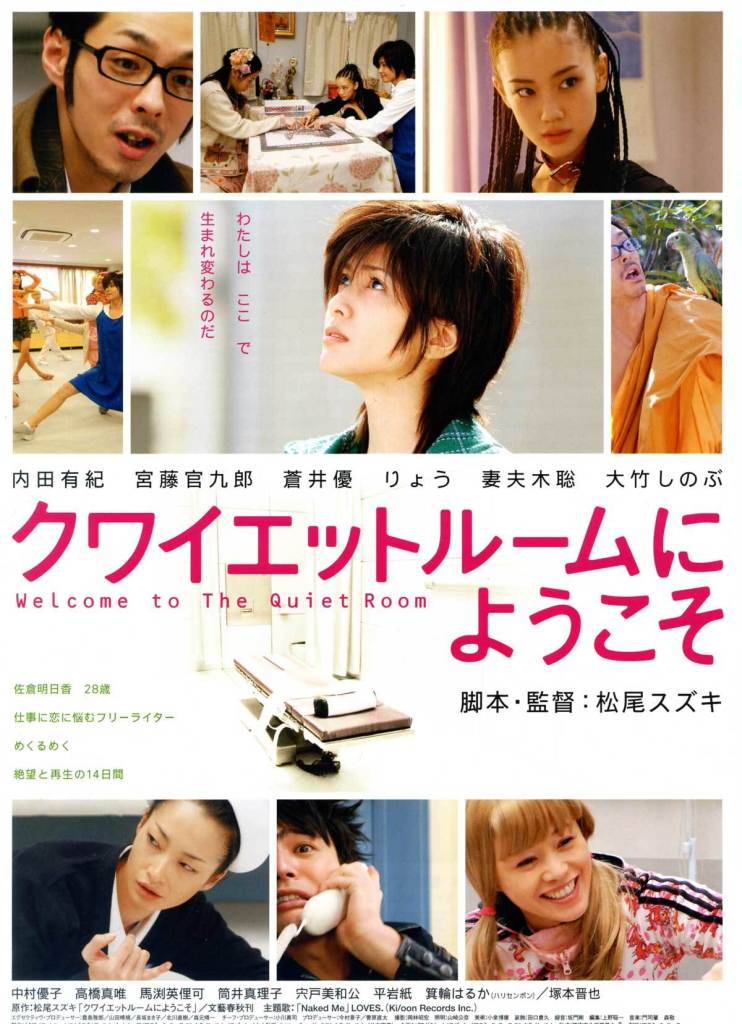 Everyone has those little moments in life where you think “how did I get here?”, but thankfully most of them do not occur strapped to a table in an entirely white, windowless room. This is, indeed, where the heroine of Suzuki Matsuo’s adaptation of his own novel Welcome to the Quiet Room (クワイエットルームにようこそ, Quiet Room ni Yokoso) finds herself after a series of events she can’t remember but which seem to have involved pills and booze. A much needed wake up call, Asuka’s spell in the Quiet Room provides a long overdue opportunity to slow down and take a long hard look at herself but self knowledge can be a heavy burden.
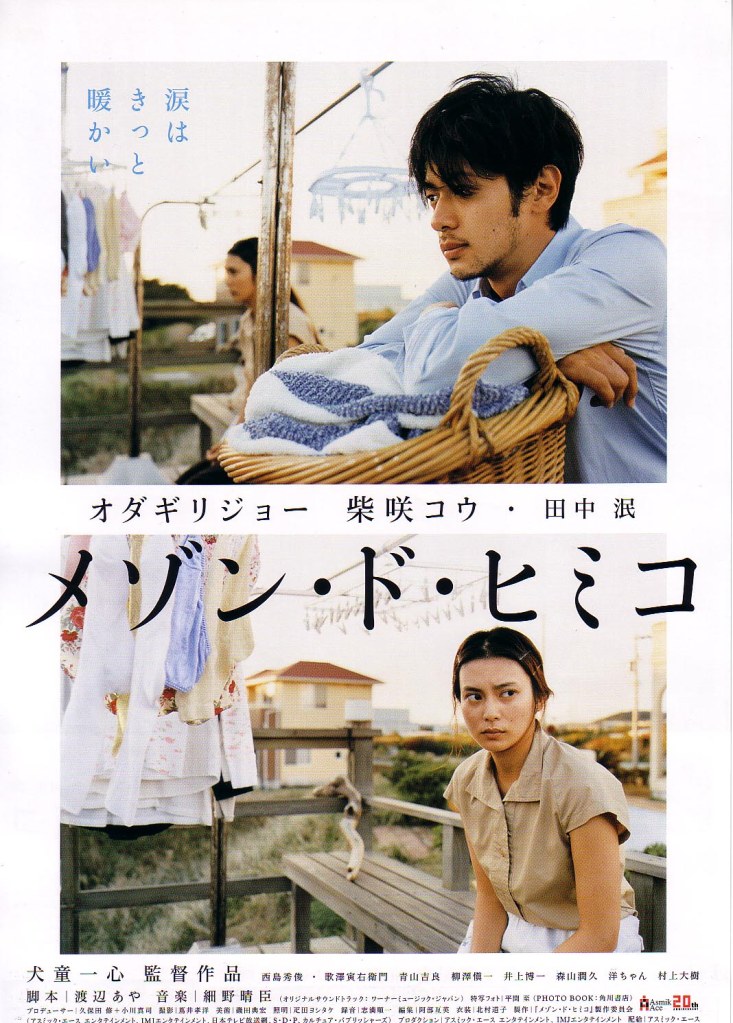 In Japan’s rapidly ageing society, there are many older people who find themselves left alone without the safety net traditionally provided by the extended family. This problem is compounded for those who’ve lived their lives outside of the mainstream which is so deeply rooted in the “traditional” familial system. La Maison de Himiko (メゾン・ド・ヒミコ) is the name of an old people’s home with a difference – it caters exclusively to older gay men who have often become estranged from their families because of their sexuality. The proprietoress, Himiko (Min Tanaka), formerly ran an upscale gay bar in Ginza before retiring to open the home but the future of the Maison is threatened now that Himiko has contracted a terminal illness and their long term patron seems set to withdraw his support.
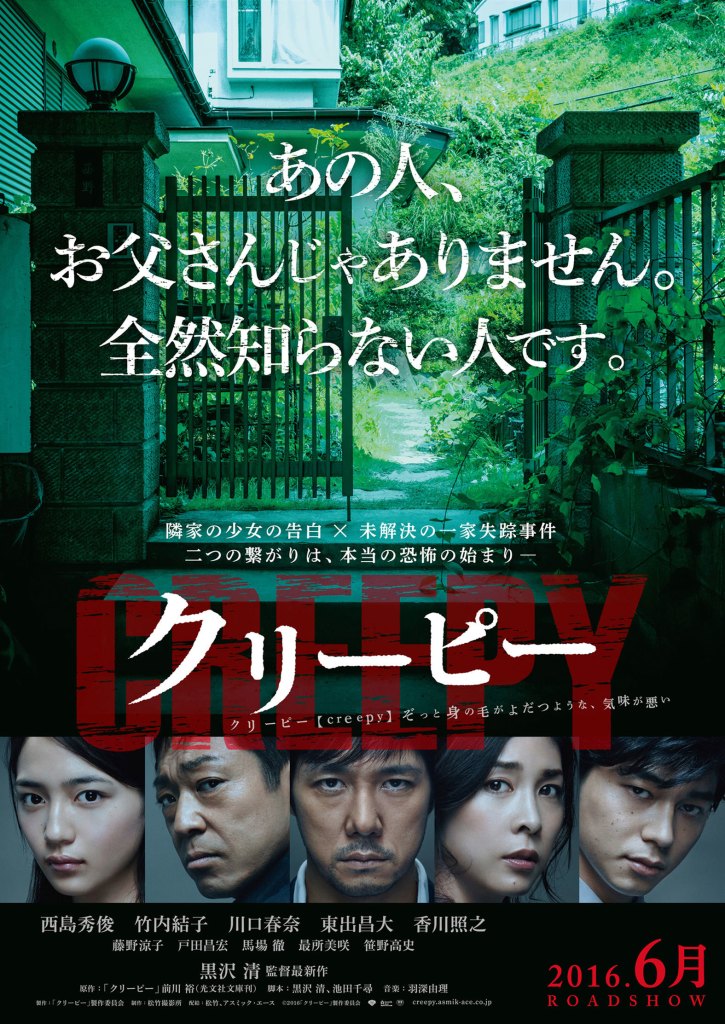 How well do you know your neighbours? Perhaps you have one that seems a little bit strange to you, “creepy”, even. Then again, everyone has their quirks, so you leave things at nodding at your “probably harmless” fellow suburbanites and walking away as quickly as possible. The central couple at the centre of Kiyoshi Kurosawa’s return to genre filmmaking Creepy (クリーピー 偽りの隣人, Creepy Itsuwari no Rinjin), based on the novel by Yutaka Maekawa, may have wished they’d better heeded their initial instincts when it comes to dealing with their decidedly odd new neighbours considering the extremely dark territory they’re about to move in to…
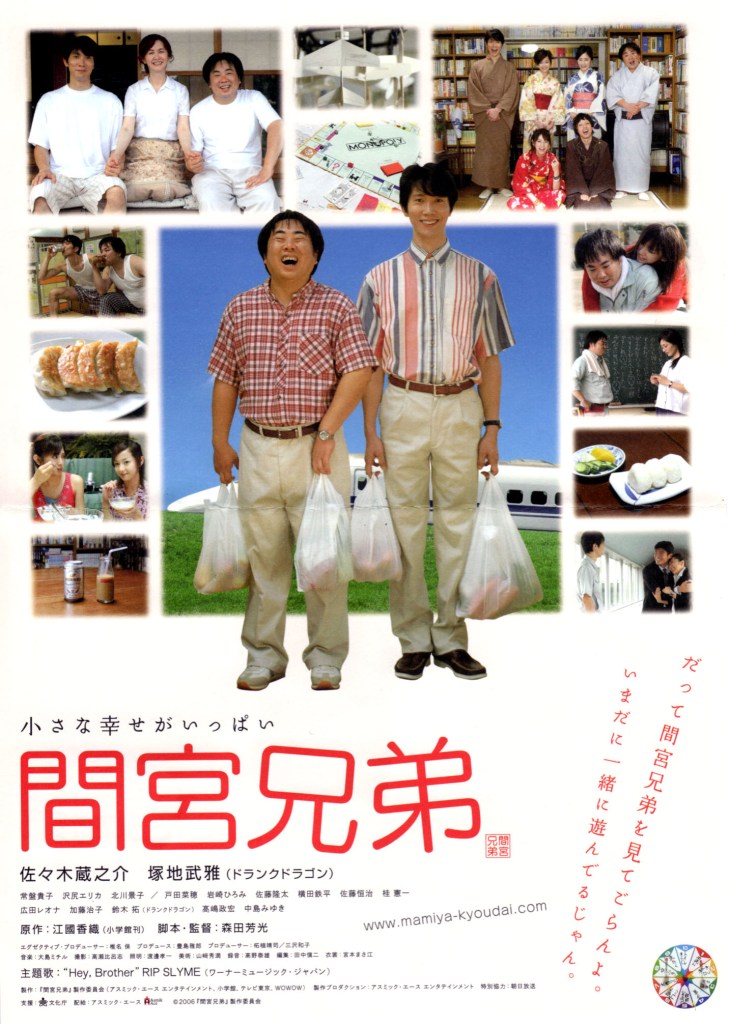 Ever the populist, Yoshitmitsu Morita returns to the world of quirky comedy during the genre’s heyday in the first decade of the 21st century. Adapting a novel by Kaori Ekuni, The Mamiya Brothers (間宮兄弟, Mamiya Kyodai) centres on the unchanging world of its arrested central duo who, whilst leading perfectly successful, independent adult lives outside the home, seem incapable of leaving their boyhood bond behind in order to create new families of their own.
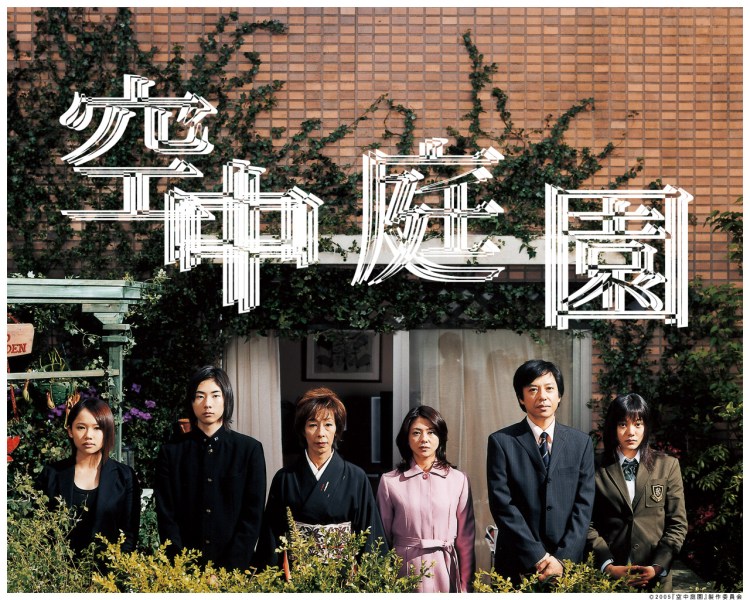 If you wake up one morning and decide you don’t like the world you’re living in, can you simply remake it by imagining it differently? The world of Hanging Garden (空中庭園, Kuchu Teien), based on the novel by Mitsuyo Kakuta, is a carefully constructed simulacrum – a place that is founded on total honesty yet is sustained by the willingness of its citizens to support and propagate the lies at its foundation. This is
  Windows on Worlds