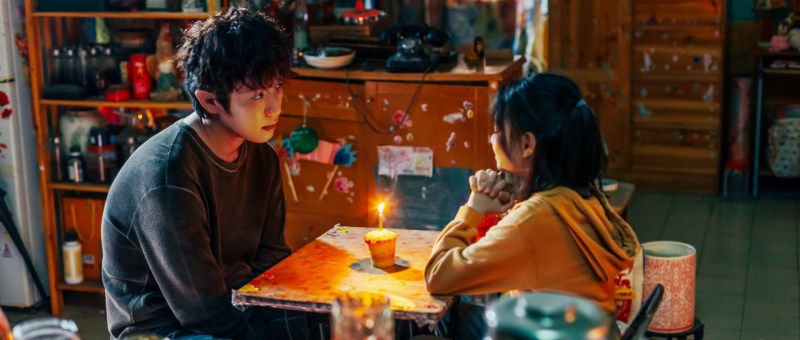
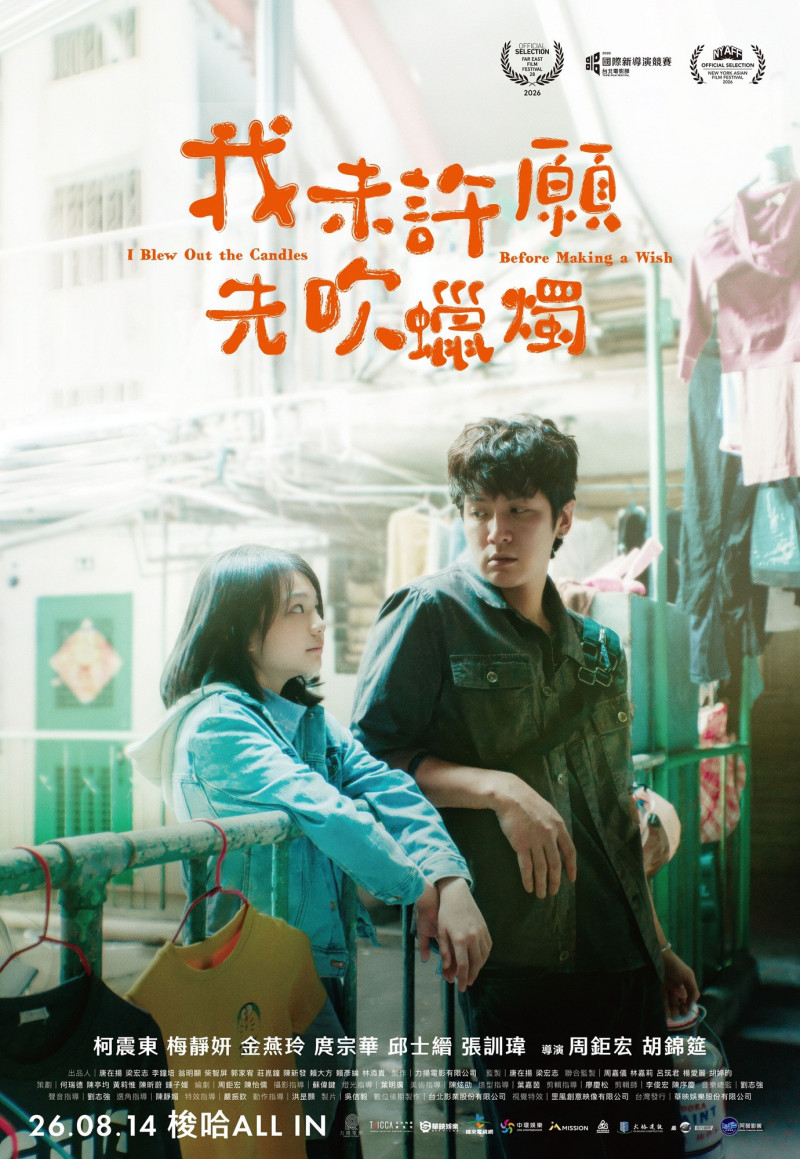
“Money can’t solve everything,” according to Jojo’s teacher, but life without it is certainly very difficult in Chao Koi-Wang and Hu Chin-Yen’s heartwarming drama I Blew Out the Candles Before Making a Wish. The film’s title perhaps bears out the sense of disappointment and futility among those trapped on the margins of contemporary Macanese society where life is one great crap shoot and the only way out of their straitened circumstances is to win big at one of the area’s famous casinos.
But as recently released ex-offender Hua points out, there are wins and losses in gambling and more often than not they lost. Jojo is living with her elderly grandmother following her parents’ divorce and father’s disappearance after fleeing to avoid loan sharks who now pester them for their money. Jojo’s father told her he was scammed by his business partner, but her grandmother suggests it was down to a gambling problem. It’s ironic then that Jojo’s proposed solution is to use an insanely large number of “dead chips”, those that can’t be cashed in but can be used to place bets, to get rich quick and pay off her father’s debts so he can come and the family can live in a comfortable environment. The only snag is that, thankfully, they don’t yet let small children enter casinos.
While it’s clear that everyone seems to be feeling a sense of desperation, there are also those who help others such as the landlord that lets Jojo’s grandmother rent a makeshift rooftop apartment cheaply while even the evil loan shark turns out to have a compassionate side. Nevertheless, Jojo’s attempts to lean on adults for help largely fail, beginning with her hypocritical teacher who criticises gambling but agrees to help her then pockets the money for himself telling her he lost it all. He’s later seen looking in an estate agent’s window with his girlfriend, implying he wanted the money to buy a flat because, realistically speaking, there’s no way he could do that on a teacher’s salary and without the means to own property things like marriage and a domestic life also become more difficult.
Hua, who came to Macau from Taiwan for love, also believes his economic situation caused the breakdown of his marriage and is desperate to win his wife back. Fearful she’d leave him, he committed a scam to buy a flat she moved out of when he went to jail. He’s now renting it out to a collection of migrant workers like himself to cover the mortgage while working as a debt collector. Yet he too is touched by Jojo’s plight and agrees to help her, though even he is tempted by the idea of scamming her out of her all money. Perhaps he sympathises with her because they are both in effect waiting for someone who likely won’t return, he his wife and she her father. As such, they form a kind of familial bond with Hua trying to take care of Jojo and her grandmother while keeping half an eye on the prospect of paying off his mortgage.
On the other hand, it says something about societal indifference that Jojo goes on living on her own while her grandmother’s in hospital and their electricity has been cut off because she’s not around to pay the bill. They need someone to sign a consent form so her grandmother can have surgery, but there don’t appear to be any other responsible adults in Jojo’s life. An attempt to ask her mother, who has remarried and has a new family, proves more traumatic than anything else. No one except the loan sharks appears to check in her at all. She is resourceful and proactive, but also still a child and largely unable to understand the long-term implications of her plan or that gambling is a dangerous habit that, as Hua says, can ruin lives.
In that way the film is subtly critical of Macau’s economic dependence on the casino industry and the wealthy inequality that comes along with it. Jojo is only a little bit worried about the owner of the chips coming back for them, while Hua suggests they have belonged to someone so rich they probably just forgot about it. Gambling is something rich people do he says, and after all you can only really do it responsibly by playing with money you can afford to lose which neither of them have. Still, they keep rolling the dice anyway, hoping that their numbers will come up. Grandma may try to caution them, revealing a mistake she made in her own youth born of fear and desperation, that greed will always come back to bit you, but there is at least a sense of tempered optimism in their mantra of “lose today, win tomorrow,” that keeps hope alive when all else seems bleak.
I Blew Out the Candles Before Making a Wish screens as part of this year’s New York Asian Film Festival.
Trailer (Tradition Chinese / English subtitles)

