First Love (첫사랑, Lee Myung-se, 1993)

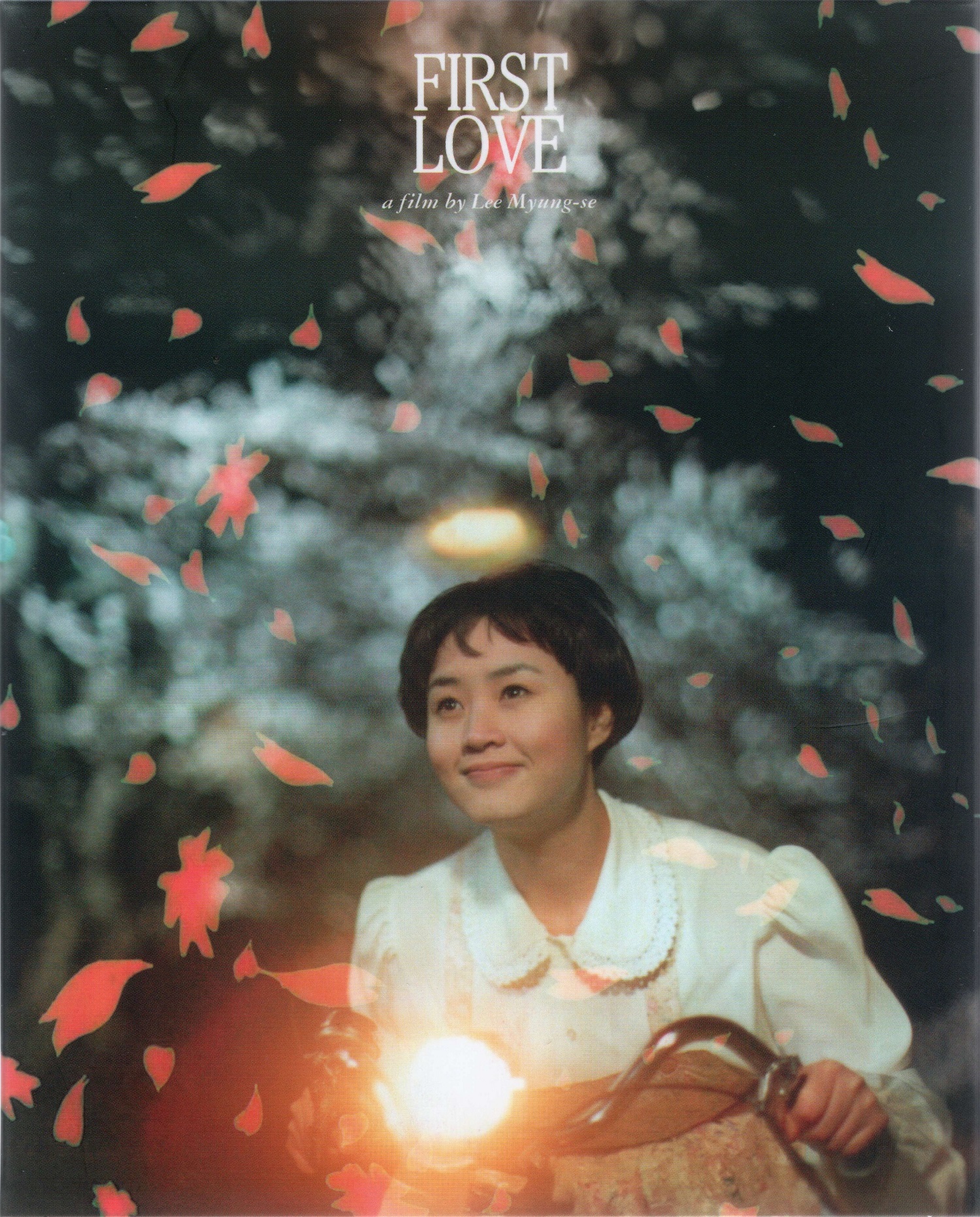
Expectations were high for Lee Myung-Se’s third film, First Love (첫사랑, Cheot Sarang), given that My Love, My Bride had been a runaway success. First Love proved to be, however, one of the worst box office disasters in Korean cinema history, selling fewer than 6000 tickets in Seoul during the Lunar New Year holiday. The film was however well received by the industry with star Kim Hye-soo picking up best actress at that year’s Blue Dragon Awards. Lee had originally intended to cast Choi Jin-sil, the female lead of My Love, My Bride, who had even turned down a TV drama series to do the film, but she apparently didn’t take to the personality of the character after reading the script and withdrew. Casting former child star Kim Hye-soo was seen as a left-field choice, but paid off in spades as Kim perfectly embodies the innocence and heartbreak of first love in charming fashion.

In some respects, the film is structured in a similar way to Thornton Wilder’s Our Town which first-year university student Young-shin’s (Kim Hye-soo) theatre club is performing. As the Stage Manager explains in the play, the first act will deal with everyday life, the second with first love, and the third with something else he assumes the audience will be able to guess, in case of the play, death. The film, however, ends with something more like continuity as the street where Young-shin lives turns from summer into autumn, winter, and then comes full circle into spring as one of the poems that pepper the screen pops up to remind us that everything begins and ends with nothing, or in other words, life goes on.

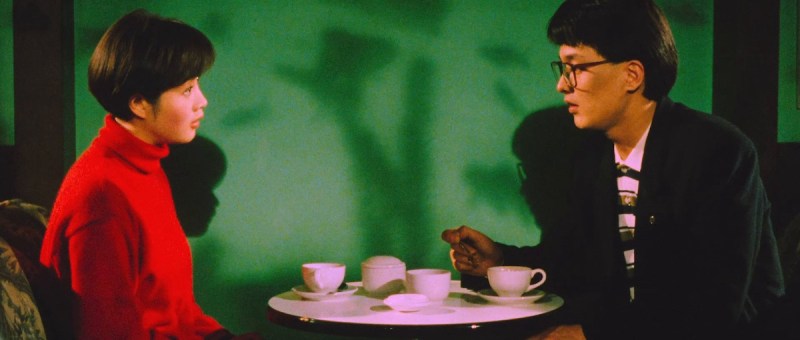
Set in the 1970s, the film opens with Young-shin taking a trip to Seoul from her rural hometown where she is a student in order to recruit a director for their play. She is immediately disappointed by Kang Chang-Wook (Song Young-chang), reflecting that she was expecting someone much more literary and poetic who in contrast to the local men wouldn’t smoke and drink excessively. Chang-wook even has an off-putting habit of rubbing his hair to shake the dandruff out which suggests poor hygiene. Nevertheless, her initial aversion to him soon transitions into attraction and an all-consuming, obsessive love, though she is only 19 and he 32. 

Much of the film takes place within her romantic fantasy and flights of fancy in which she develops superpowers such as invisibility or telekinesis while pursuing Chang-wook, her bicycle seemingly moving on its own under the vibrant cherry blossoms. She frequently addresses the camera directly to explain aspects of her life, particularly how boring it is in this rural town where the height of excitement is sending her younger sister out on an illicit late night mandu run. This thrill of romance is also, in that sense, a way of passing the time, though it’s often difficult to see what she sees in Chang-wook who is often patronising and has a bad drinking habit. When the pair go on a kind of date to a historical temple, he drinks so much that they miss the last train and Young-shin has to take him to a hotel, booking into a rent by the hour type place without realising and having to lie about her age on the register. 

But while she is experiencing her first love, so are others. Her childhood friend Moon-su (Jo Min-ki) is clearly in love with her, trying to declare his feelings by giving her a copy of Tugenev’s First Love, though this proves too obscure a clue for Young-shin who is still wrapped up in her own romantic drama. The deliberately artificial set design, mostly taking place on a studio set, evokes a strong sense of nostalgia for an idealised youth. Young-shin and her friend fancy Gregory Peck and Jean-Paul Belmondo, while there are posters for South Pacific in the background, echoing the ways in which Young-shin has also turned her life into a romantic melodrama. The saturated colour scheme also echoes the Technicolor past, golden light pouring in through the studio windows as Young-shin ponders her romantic dilemma. Only once are we reminded of the less cosy side of the ‘70s as the sirens blast to mark the start of the curfew, trapping Young-shin in the motel room with a passed-out Chang-wook waiting for the first train. Young-shin’s story may be tinged with melancholia as her romantic illusions are smashed by an unexpected discovery, but she still holds on to the memories of this magical time while knowing that there are other loves to still to come as time marches on.


Trailer (no subtitles)
My Love, My Bride (나의 사랑 나의 신부, Lee Myung-se, 1990)

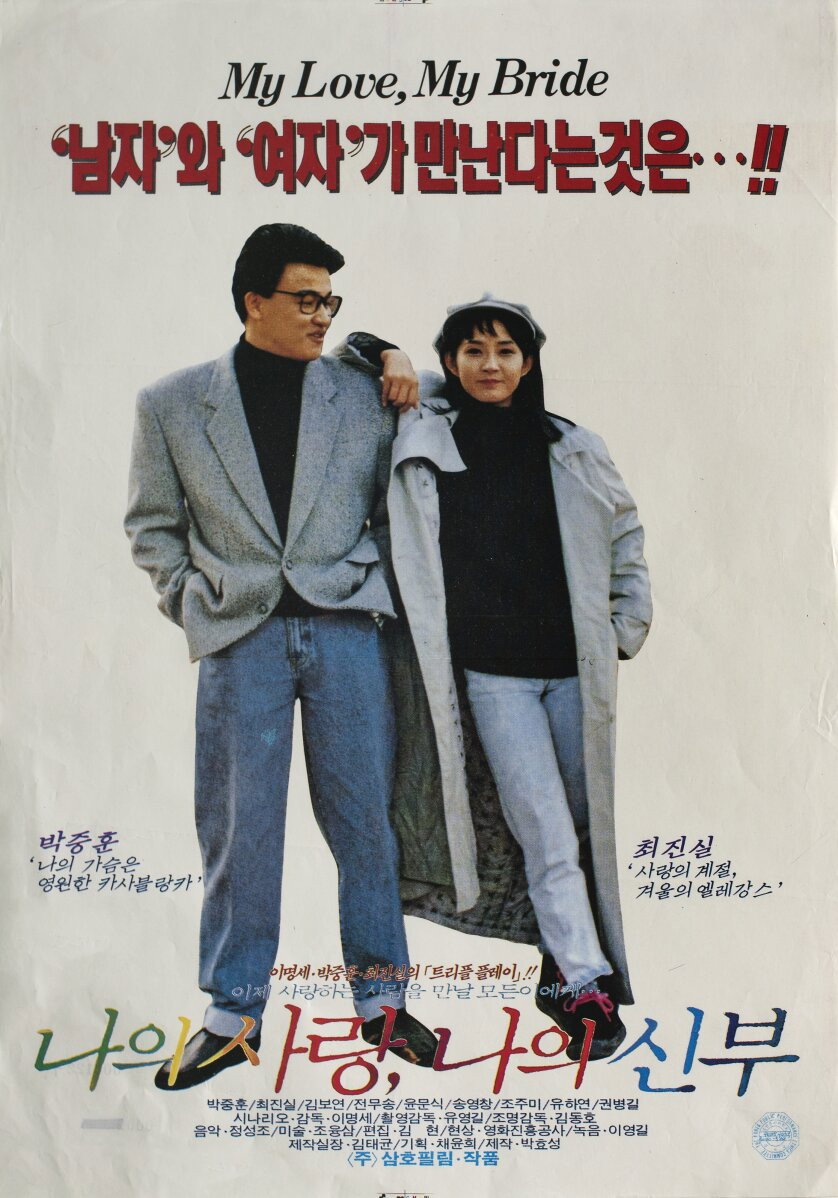
Following his anarchic debut Gagman, Lee Myung-se’s My Love, My Bride (나의 사랑 나의 신부, Naui sarang, naui sinbu), might seem like a more subdued affair recalling the technicolor rom-coms of 1960s Hollywood, yet makes use of innovative stylistic techniques to explore the lives of a newlywed couple in a newly democratising Korea. Like many similarly themed films, it is keen to poke fun at the protagonist’s chauvinistic perspective and self-involvement, but cannot completely condemn them either in expecting at least a degree of audience identification with this Korean everyman.

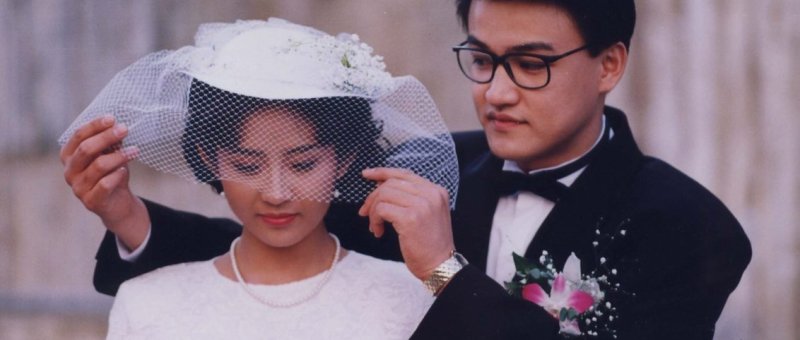
The film opens boldly with Young-min (Park Joong-hoon) directly addressing the camera to introduce himself and explain that this is the most important day of his life as he plans to propose to university girlfriend Mi-young (Choi Jin-sil). She, however, has got the wrong end of the stick and is convinced that he’s going to dump her. This set of mismatched expectations and miscommunication sets the tone for much of their early marriage as they struggle to settle into the rhythms of co-habitation and gendered expectations of married life.

Mi-young has given up work on her marriage, though Young-min often stays late at the office and expects Mi-young to take care of all the domestic responsibilities. When Mi-young tells him that she’s going to stay overnight after visiting her mother, his first question is what he’s supposed to do about his dinner. Mi-young has already prepared it and left it in the fridge for him to warm up later, specifically instructing him not to stay out too late drinking. Young-min, however, takes this as an opportunity to rebel against the constraints of his newly married life and fill the temporary feminine absence by pursuing a colleague, Seung-hee (Kim Bo-yeon).

Seung-hee is in many ways portrayed as the polar opposite of country girl Mi-young whom Young-min occasionally mocks and looks down on for what he sees as her lack of sophistication and poor cultural knowledge. Seung-hee is a poet who dresses in smart suits exuding confidence and power that suggest she will not be subservient to men but assert her power over them. She shows Mi-young up first when everyone at the office suddenly invites themselves over to Young-min’s apartment for a “house warming”, expecting Mi-young to conjure up a dinner party to show off her domestic skills at moment’s notice. Seung-hee is a fine singer and offers a poignant rendition of Love Me Tender, prompting Young-min’s boss to insist Mi-young entertain them with a song. She obliges with a popular love song, but her singing voice is much more ordinary and her inability to hit the high notes provokes horrified faces from Young-min’s colleagues who continue to make fun of the pair because Mi-young had spelled out “I love you” in peas in the lunchbox she made for Young-min. The older men, meanwhile, all go to lunch together reflecting that they can hardly expect the same from their own wives after so many years of marriage.

Young-min is also constantly asking himself what love is and wondering if his married life will continue to be happy. Split into a series of chapters, the film focuses a number of episodes in which the couple must confront various issues from a fairly traumatic honeymoon and wedding night to Young-min’s wandering eye and irrational jealousy. Though he tells Seung-hee that marriage should be about love rather than ownership, on spotting Mi-young in a cafe with another man he jumps to the immediate conclusion that she must have met with an old lover who is trying to win her back. In fact, it was her old boss whom she ran into by chance while waiting for Young-min, and the reason that she’s crying is that he informed her one of their former colleagues has passed away. Young-min makes no attempt to talk to Mi-young about any of this, but starts giving her the cold shoulder for no reason endangering their growing bond as newlyweds. Mi-young, meanwhile, looks back on first love after receiving a letter from an old boyfriend who moved to Canada. He is no longer the handsome young man she once knew but portly middle-aged father of two. 

To escape the boredom of her married life she takes a trip to a random rural town where she buys cigarettes, has her photo taken, and is offered an unexpected job opportunity after wandering into a cafe that is clearly a front for a delivery coffee service. Though Young-min is often quick to pride himself for his emotional intelligence as a writer, he’s often inconsiderate of Mi-young. When he wins the New Writer’s Award, he insults Mi-young’s outfit moments before they leave implying that she looks cheap and common and that people will expect a writer’s wife to look sophisticated. At the party, she’s sat sadly on her own ignored by everyone including Young-min, while he expects to trot her out for interviews as his loyal and supporting wife. Even when, she’s taken ill, his mind flashes to the scenario of her death on which his main thoughts are that he’s too busy for all this right now, and though it might be nice to live alone, who’s going to take care of his laundry?

Nevertheless, Mi-young’s temporary absence does make him realise that he misses her in ways other than the practical and seems to paper over the other cracks their relationship so that they can put all the petty disagreements to one side and love and accept each other. Lee uses a series of humorous devices including onscreen graphics and speech bubbles to reflect the protagonists’ thought processes, while the fantastic production design gives their world a sense of cosy unreality. Meanwhile, he uses the changing of the seasons to reflect the changing dynamics of couple, embracing romantic imagery such as the moon rising and snow falling as Young-min and Mi-young fall into a more settled rhythm and an older Young-min reflects that he is still in the process of finding out what love is, but is grateful for the happy life he’s been able to make for himself as a husband and father.


Trailer (no subtitles)