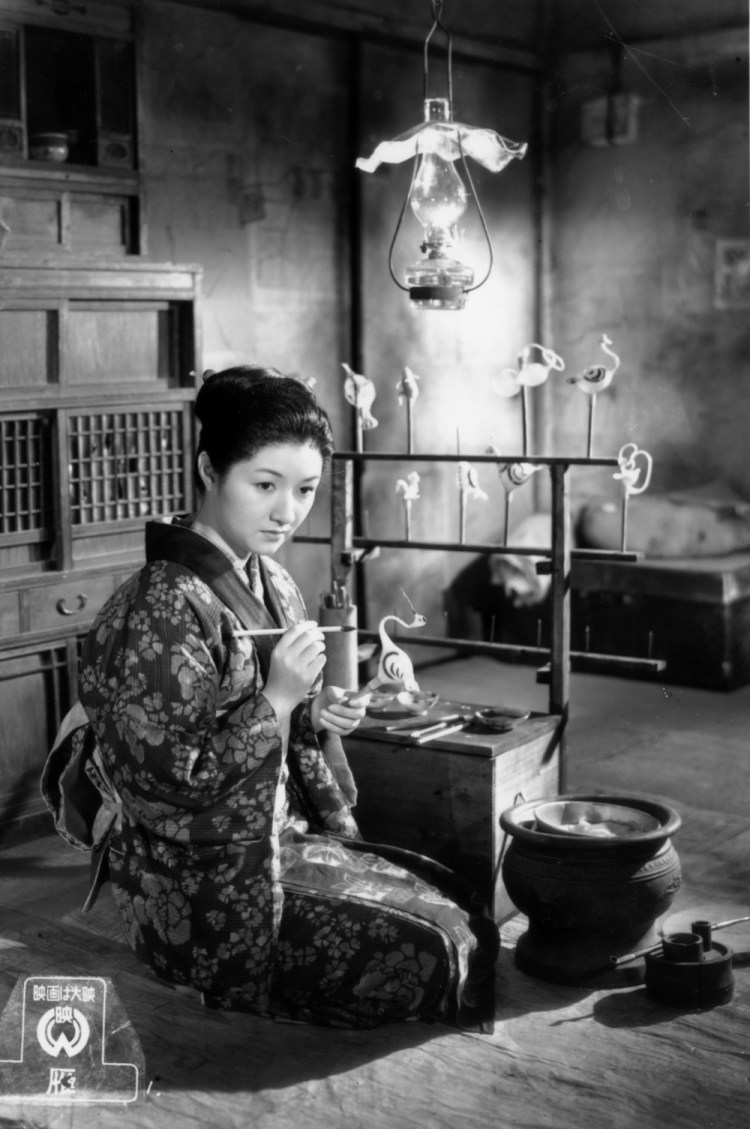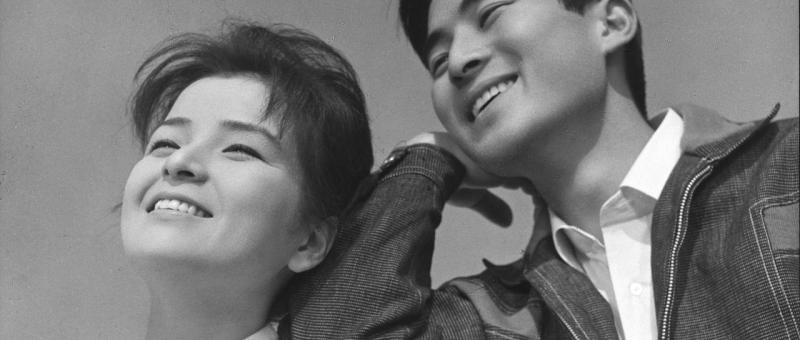
Cupola, Where the Furnaces Glow (キューポラのある街, Kirio Urayama, 1962)

(C) Nikkatsu 1962

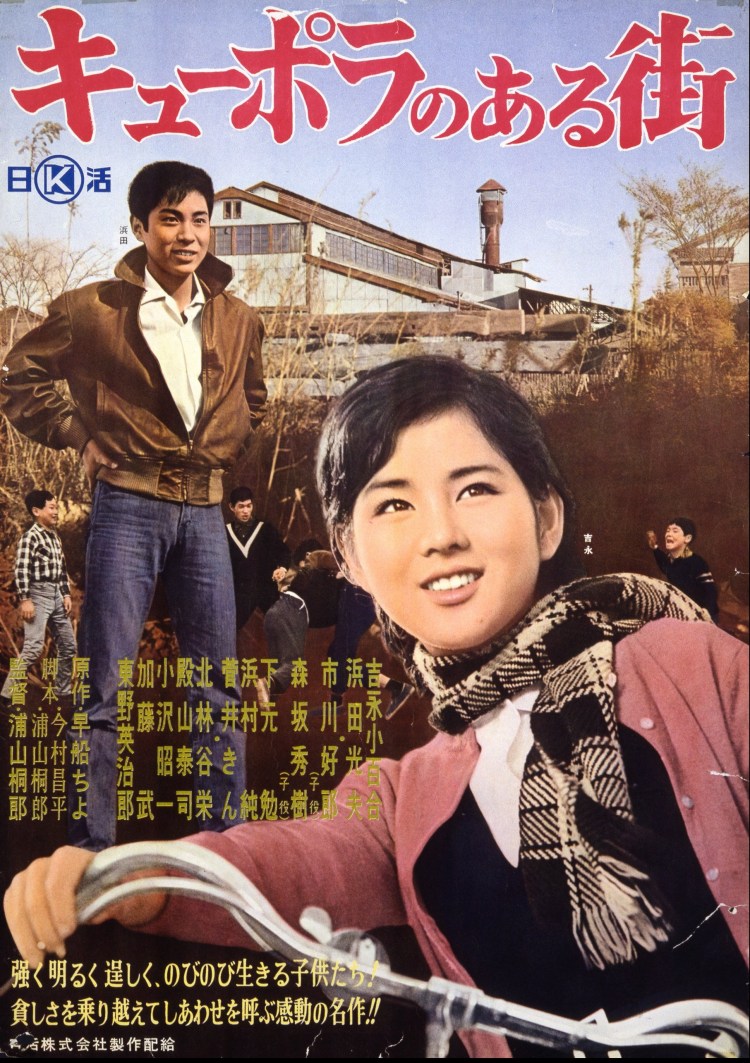
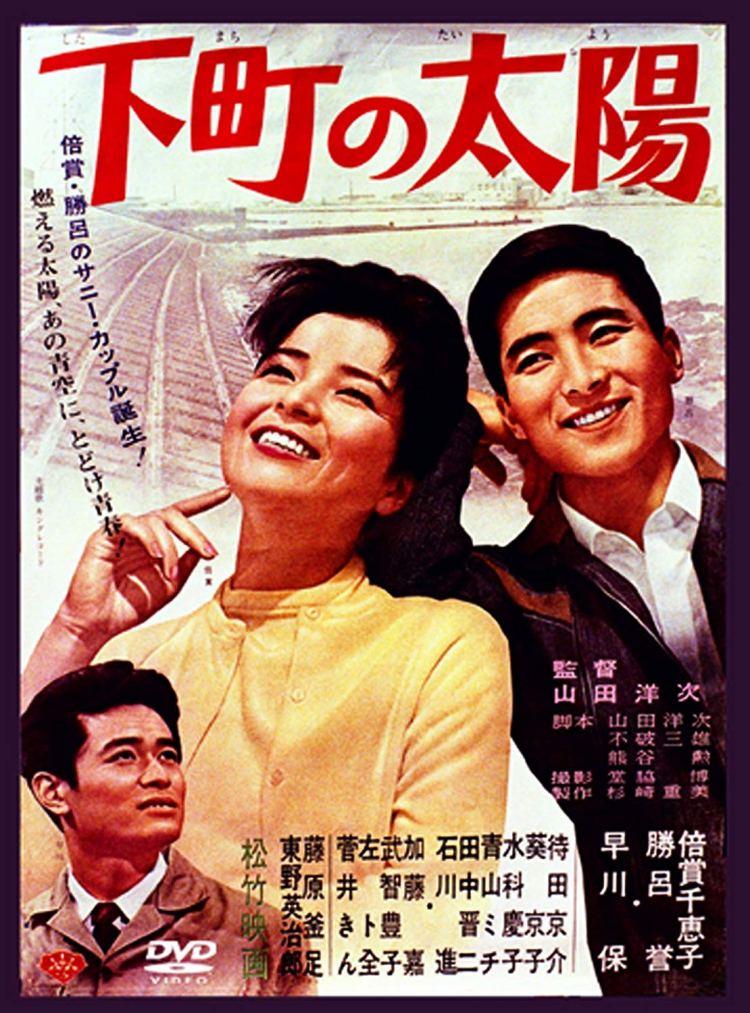
cupola-poster-e1539038053246.jpgThe “shomin-geki” is generally associated with naturalistic depictions of the lives of “ordinary people”, but in reality most often focuses on the polite lower middle classes – white collar workers, shop keepers, small business holders etc, in short the sort of people who aren’t wealthy but aren’t starving either and generally live in moderate family homes rather than tenements or cramped apartment blocks. Blue collar lives are a less frequent sight on screen – something director Kirio Urayama seems to highlight in his mildly exoticised opening which introduces us to Kawaguchi, Saitama, a small town across long bridge not so far from Tokyo.

Unlike the bustling city still fighting its way back from post-war privation, Kawaguchi is a “town of fire and sweat” where the landscape is dominated by the “cupolas” of the title (Cupola, Where the Furnaces Glow , キューポラのある街, Cupola no aru Machi, AKA Foundry Town). Rather than the beautiful architectural domes the name might imply, these cupolas are the industrial kind – chimneys from the 500 foundries which are the area’s dominant economic force. There is, however, trouble in that the steel industry has been decline since the immediate post-war heyday and increasing automation is changing the face of working life.

Our heroine, Jun (Sayuri Yoshinaga), is a young woman with post-war ambitions trapped in the depressing blue collar world of Kawaguchi. She’s currently in her last year of middle school and is determined to carry on to high school and perhaps even beyond, but the family is poor and her father, Tatsugoro (Eijiro Tono), has just lost his job at the local steel works. The family’s neighbour, Katsumi (Mitsuo Hamada), is big into the labour movement and has been protesting the changes at the works which has been bought by a bigger concern who are intent on compulsory layoffs. Tatsugoro, however, likes to think of himself as a “craftsman” rather than a “worker” and refuses to join the union partly out of snobbery and partly out of an entrenched fear of “communism”. He refuses to fight his compulsory redundancy because he is still wedded to the old ideas about loyalty to one’s superiors whilst simultaneously viewing himself as “better” than the other workers because of his long experience and skilled craftsmanship.

Nevertheless, Tatsugoro continues to selfishly abnegate his responsibilities to his family, refusing to insist on his severance pay and drinking the little money he still has left. Tatsugoro has four children ranging from teenager Jun to an infant born just as he lost his job. Some way into the film, Jun and and her younger brother Takayuki (Yoshio Ichikawa) take their father to task for his continued selfishness but the confrontation ends only in defeat. Tatsugoro simply doesn’t care. Loudly exclaiming that he has no daughter and will send Takayuki to the boys’ home, Tatsugoro destroys their hopes by reminding them that their fate is the same his – leave school early, work in a factory, marriage, children, drink yourself into an early grave. The argument proves so disheartening that Jun gives up on a school trip she’d been given a special subsidy to attend to roam around the streets, sadly visiting the prefectural high school that she has now given up on attending and accidentally witnessing another reason to give up on life that she, naively, misunderstands.

Meanwhile, Jun and Takayuki have also made friends with a family from North Korea who will be returning (without their mother) under a preferential “repatriation” programme organised by North Korean officials in Japan with the backing of the US and the Japanese government which, uncomfortably enough, saw only advantage in reducing the ethnic minority population. Though the film adopts a mildly positive view of repatriation – after all, no one really knew what North Korea was like in 1961 and many saying goodbye to their friends fully expect to stay in touch and perhaps meet again one day, it does highlight the persistent layer of xenophobic prejudice that the children face. Sankichi (Hideki Morisaka), one of Takayuki’s best friends, is taunted from the audience whilst on stage in a children’s play by cries of “Korean Carrot” (he is wearing a funny wig at the time) while Jun’s mother makes no secret of her dislike of the children’s friendships, believing that the Koreans are “dangerous”. Others associate the North Korean (in particular) population with communism and possible insurrection, fearing that Japan might be pulled into another nuclear war in Asia by political troubles across the sea.

The repatriation program is attractive not only as a means of escaping a world of constant oppression, but because of the entrenched poverty of the Kawaguchi area and the relative impossibility of escaping it. In a poignant, resentful school essay Jun wonders why her future is dictated by a lack of money, why she alone will be prevented from going on to high school and pulling herself out of the lower orders solely because of her responsibility to her family and father’s fecklessness. Tatsugoro is eventually offered another job thanks to the kindness of the father of one of Jun’s wealthier school friends, but continues to view himself as a “craftsman” and resents being ordered around by youngsters. What’s more, the factory is much more advanced – doubtless, the father of Jun’s friend (so different from her own) thought it might be better for Tatsugoro whose health is poor because the work would be less physically strenuous, but Tatsugoro finds it impossible to adapt to automated working methods and soon quits, leaving the family cash strapped once again.

An inability to adapt is Tatsugoro’s tragedy though he later makes amends when he consents to join Katsumi’s union and takes a job in a new factory, confident that he can’t be summarily dismissed ever again. Jun, meanwhile, has discovered a third way. Longing to escape the burden of her family she resolves to step forward alone but also instep with her society. Having discovered the existence of a progressive factory which is run with friendliness and consideration and even provides education for employees, Jun realises she can have the best of both worlds. Though Jun’s decision is perhaps one of individualism and a bold assertion of her own agency, it’s also in keeping with the broadly socialist message of the film which insists that a problem shared is a problem halved and places its faith in ordinary people to look after each other. Optimistic, perhaps, but a perfect encapsulation of post-war humanism and growing hopes for the future for those who are prepared to work hard on behalf not only of themselves but also for the social good.


Original trailer (no subtitles)

Cupola, Where the Furnaces Glow was scripted by Shohei Imamura whose work often focusses on the working classes and rural poor. As such it shares some similarity with his early film My Second Brother which also touches on the lives of ethnic Koreans living in Japan though this time in a mining village where the labour movement is engaged in actively opposing the exploitative practices of the corporate mine owners.

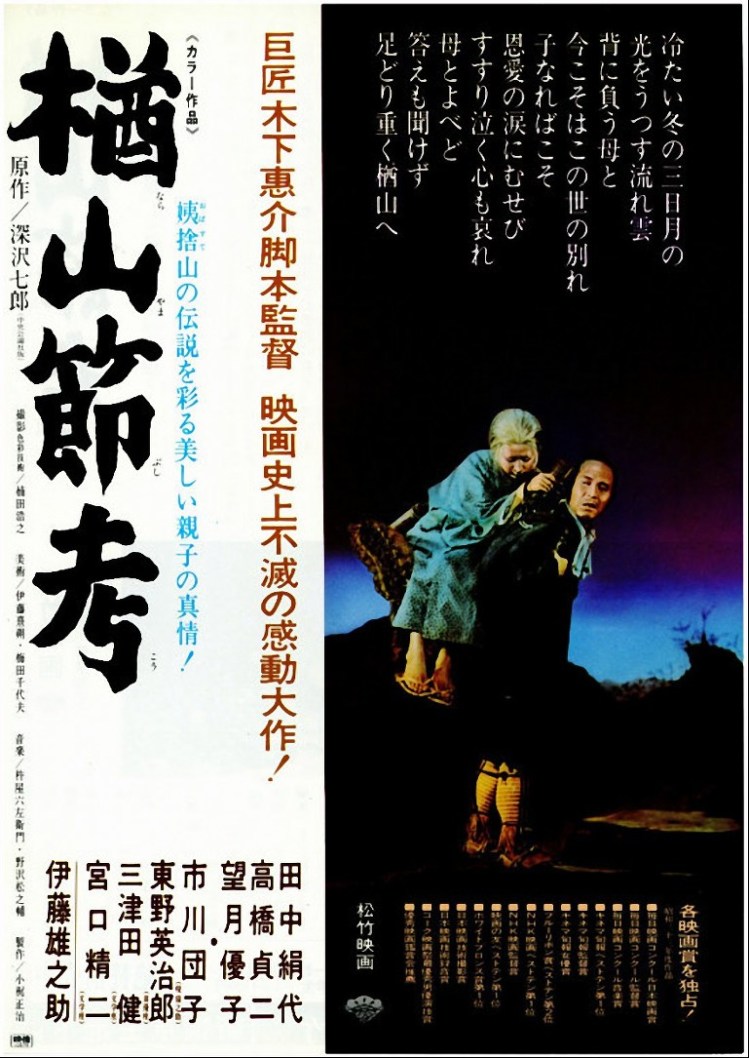
The Ballad of Narayama (楢山節考, Keisuke Kinoshita, 1958)

ballad of narayama kinoshita 1958 posterMany naughty children running low on filial piety have probably been told the folktale about a man who took his son along when he abandoned his senile father on a mountain to die only to have his son later do the same thing to him. In Japan, the mythical practice of “obasute” or “ubasute” is a kind of Logan’s Run equivalent in which elderly people elect to remove themselves from society in order to reduce the burden on the young. The Ballad of Narayama (楢山節考, Narayama-bushi Ko) has, perhaps, taken on an additional degree of pathos in ageing Japan in which many elderly people find themselves metaphorically cast out from a society in which they have become the majority, but the idea of “obasute” is intended to be a lesson to the young to treasure their elders and accept the responsibility to care for those who can no longer care for themselves in the knowledge that they too will one day be old.

Keisuke Kinoshita is sometimes criticised for his supposed sentimentalism but his central concern was always in the redemptive power of the relationships between people, that there is always kindness even in the worst of circumstances and that this is enough for hope to survive. In telling the sorry tale of Narayama in which those of over 70-years-of-age are forced into a ritual suicide by social convention, Kinoshita opts for alienation in deliberately shifting into a theatrical register inspired by kabuki featuring obvious studio sets, stylised action, and traditional narration, but his decision to pull back makes the message all the more painful, as does the insistence on the timelessness of his tale.

Long ago in the distant feudal past, 69-year-old Orin (Kinuyo Tanaka) knows that it will soon be time for her widowed son, Tatsuhei (Teiji Takahashi), to carry her to Narayama where she hopes to die of exposure in the New Year snows. She has made her peace with this, it is the will of the gods and she has no call to disobey. Her son, however, is distraught to think of the time he will be expected to carry his elderly mother to a remote spot in the mountains and leave her there, alone, to die of cold and starvation. When a messenger arrives from Orin’s home village to propose a match for Tatsuhei, a recently widowed woman of exactly the same age – Tama (Yuko Mochizuki), Orin is overjoyed – she can go to Narayama without fear or worry, her son and grandsons will be looked after even after she is gone.

The tradition began because the villages in this region are extremely poor. Tatsuhei and Orin will be enjoying their one and only bowl of white rice for the year in celebration of Bon. Orin’s self-centred grandson Kesakichi (Danko Ichikawa) has made up a horrible song about his grandma in which he criticises her for still having all her own teeth at 70 – implying that, as she is not malnourished enough to have lost them, she must have been greedy and taken more than her fair share of food. Unable to bear such reproach, Orin smashes out her own front teeth to better conform to the conventions of her society and make herself a more acceptable sacrifice to the gods as a good and pious woman.

This early horrific act is perhaps the key in illuminating Kinoshita’s gentle critique of social conformity as a tool of social control – something which had become increasingly apparent during the militarist era. Orin, a kind and decent woman, is herself complicit in this abhorrent custom – her acceptance of it is part of her goodness, a sign of her altruistic self-sacrificing nature, but her own unwillingness to challenge the darker aspects of the society in which she lives leads only to their perpetuation and an ongoing descent into unkindness and cruelty.

Tatsuhei, a good and pious son, cannot reconcile himself to his mother’s fate, while his own son, Kesakichi, openly mocks his grandmother for not going sooner and Kesakichi’s pregnant girlfriend (Keiko Ogasawara) looks on enviously at the extra beans on offer if there were one less mouth to feed. Old and bent, Orin still plays a vital part in her community – she harvests the rice while Kesakichi lounges in trees, and she alone knows the best place to catch trout, a valuable skill in a village where food is scarce. Despite the possibility for disaster, Orin and Tama bond instantly as kindred spirits, both kind people in an often unkind world. It’s to Tama that Orin finally divulges her knowledge – something the village will be poorer for when she is gone, having passed her familial responsibilities to another woman and seen her son happily settled with a perfectly suited second wife.

When Tatsuhei returns, broken, after having performed the dreaded ritual he watches his own cruel son laughing and joking from within their shared home, caring only for himself and his easy pleasures. Tama, equally upset over the loss of Orin with whom she had bonded as mother, tries to comfort her husband but is eventually overcome by the tragedy of life, taking comfort only in the fact that, when they are 70, she and Tatsuhei will climb Narayama together.

Hardship, far from bringing people together in the famous harmony that Japanese society praises itself for, has forced them apart, infected them with a sense of mutual distrust and a them or us mentality. Orin feeds the senile old man cast out from his own unfeeling family, but she also urges him towards making a sacrifice of himself on Narayama, genuinely believing that both of their existences have become inappropriate, a greedy usurpation of time which rightfully now belongs to others. Kinoshita respects Orin for her stoicism and righteousness, but pities her for the cruelty of the world in which she lived and was so powerless to resist that it never occurred to her that she should. There is a painful sensitivity around those who willingly went to their deaths in service of something they believed to be right because their society said it must be so, never daring to consider the ways in which their society may be mistaken.

Heavily stylised and markedly experimental for a mainstream Shochiku melodrama of the late 1950s, Kinoshita’s The Ballad of Narayama is a heartrending tale of transience and inevitability, but it’s also one of the various ways a stringent society erodes the bonds between people. The intense love of Tatsuhei for his mother is destroyed by a terrible custom that no one is brave enough to defy, leaving the family rudderless and the village poorer for having been robbed not only of Orin’s wealth of experience but of her warmth and kindness. Kinoshita ends on an ambiguous image showing us the modern train station which stands on the former village of “Obasute”, demonstrating the passage of time and arrival of “modernity” but also that ancient customs are never quite as “ancient” as they seem.


Scene from near the end of the film (English subtitles)

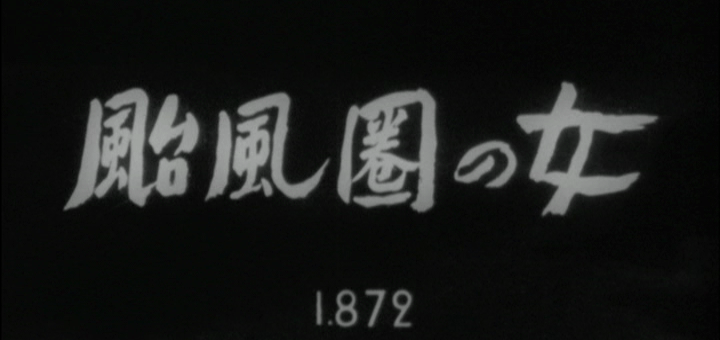
A Woman in the Typhoon Area (颱風圏の女, Hideo Oba, 1948)

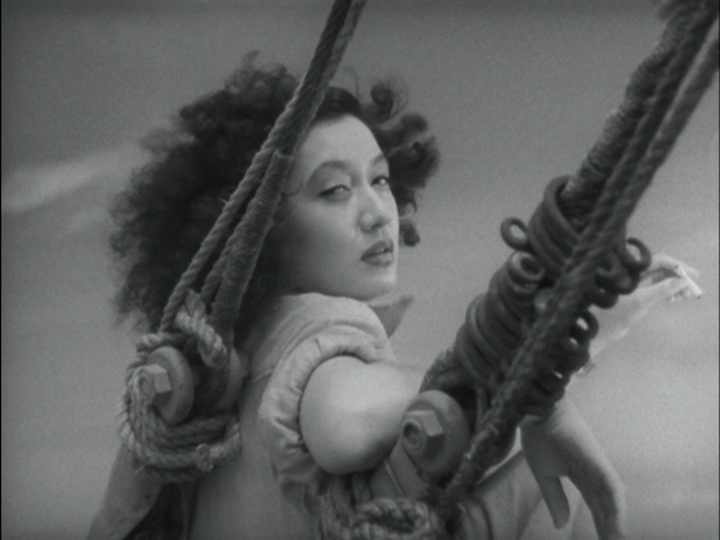
vlcsnap-2017-12-14-23h50m20s302Setsuko Hara acquired the nickname “the eternal virgin” from her fans inspired by the genial ingenue roles she was most associated with especially in her long career with Yasujiro Ozu in which she often played a reluctant daughter finally getting married (though only at the end of the picture). The nickname took on something of an ironic quality after her abrupt retirement from the acting world in which, rather than getting married, she remained single and locked herself away in her quaint little house in Kamakura, refusing all subsequent requests relating to showbiz. Woman in the Typhoon Area (颱風圏の女, Taifuken no Onna) is a rare entry in her filmography in which she plays completely against type (and does so brilliantly) as a damaged, brassy, and sensual woman caught up in a storm of her own as the sole female between a gang of vicious smugglers and a nerdy group of weather scientists marooned on an island by a typhoon.

As the film opens, the smugglers have been spotted by the coastguard and are engaged in a lengthy firefight trying to escape. Eventually they manage to evade government forces, but they’re way off course and running out of fuel while one of their number is also badly injured. Luckily they eventually run into an island which is home to a Japanese weather station. Unfortunately, the weather station has received a telegram from the coastguard and works out who the smugglers are. There isn’t enough fuel or food for the smugglers to steal and escape, but even if there were the approaching typhoon means it would be unwise to try.

The set-up is uncannily close to that of John Huston’s Key Largo, released the same year, though the tiny band of smugglers is nowhere near as intimidating as Edward G. Robinson’s band of thugs, nor are they particularly emblematic of a persistent lingering threat of fascism in the rise of bullies making their way through fear. What the smugglers are is mildly pathetic and intensely self interested. The weather station staff, government officials, are the good guys but they’re also easily cowed by three men (and a sympathetic/indifferent woman) with a single gun. The major conflict is over control of the radio which the smugglers have temporarily broken in fear of someone calling the coastguard. The weathermen want to repair it because it’s imperative they let the surrounding area know that a dangerous typhoon is on the way.

Like many films of the immediate post-war era, the central theme is one of the common good vs selfish interest. The radio operator, Amano (Jun Usami), is determined to act for “the common good” and is confident that he is the sort of person who will do the “right” thing at the right time. The smugglers don’t particularly care if a lot of people end up dying because they weren’t warned about the storm as long as they don’t get caught by the coast guard. For Kijima (So Yamamura), the boss of the smugglers, all that matters is strength – a strong man will never kneel but Amano would kneel if it meant he could get up later and do the right the thing even if it then costs him his life.

Where gangster narratives are often about surrogate families, the band of smugglers actively rejects familial bonds and only maintains cohesion through shared suspicion. Kuriko (Setsuko Hara) is Kijima’s girl, but Kataoka (Isao Yamaguchi) continually goes behind his boss’ back to seduce her finally even attempting rape. Though second mate Yoshii (Eijiro Tono) may seem more loyal, he too holds little love for his boss and will betray him if he thinks Kijima no longer strong enough to rule. Trapped within the claustrophobic environment of the weather station, the gang destroys itself in petty rivalries and long standing suspicions. Kijima was right when he said you couldn’t trust anyone on a ship, but he can’t trust his guys on land either.

The war is an obvious and recurrent theme but Kuriko’s troubles were only exacerbated rather than caused by it. An abandoned child, she recounts eating cold rice with strangers at 11 and it doesn’t take a lot of imagination to figure out what she means when she says she remembers the name of her first man but not his face. Kuriko is a good girl turned bad by persistent social indifference and subsequent trauma experienced as a nurse in frontline field hospitals. She’s distant and embittered, living as a man on ship, dressing in slacks and shirts and chain smoking her life away. Trapped in the station and exposed to the “goodness” of Amano she starts dressing in more feminine fashions and reconsidering her gangster lifestyle. Though she starts to change, helps the weather station to save the locals, it’s clear that it’s already too late for her to save herself other than through a final act of sacrifice in service of a new ideal and an old love.

Only 70 minutes long Woman in the Typhoon Area is a taught, tense character piece which doesn’t quite manage to make the most of its intensely claustrophobic settings but still manages to reinforce its central message of selfishness being bad and altruism good. Hara is a revelation in such an unusual role, stealing each and every scene in steely uncertainty, giving the impression of a woman whose ongoing fall is as much a willing act of self harm as it is a natural consequence of her impossible circumstances.


Wild Geese (雁, AKA The Mistress, Shiro Toyoda, 1953)

(C) Daiei, 1953In the extreme turbulence of the immediate post-war period, it’s not surprising that Japan looked back to the last time it was confronted with such confusion and upheaval for clues as to how to move forward from its current state of shocked inertia. The heroine of Shiro Toyoda’s adaptation of the Ogai Mori novel, Wild Geese (雁, Gan, AKA The Mistress), finds herself at a similar crossroads to the women of the 1950s, caught between tradition and modernity as they embrace the new freedoms but remain constrained by a conservative society. Toyoda, well known for his adaptations of great literature, makes a few key changes to Mori’s novel in effect placing a Showa era heroine in a recognisably “Meiji” world.

The Japan of the 1880s is one of extreme contrast and rapidly unfolding modernity. Having finally opened its doors to the outside world, the nation is in a big hurry to “catch up” to those it sees as its equals on the world stage. Consequently, Western thoughts and values are flooding into the country, bringing both good and ill. Arranged marriages are still common and Otama (Hideko Takamine) has been married once but the marriage has failed – she was deceived, the man she married already had a wife and child. Still, having lived with a man as his wife, Otama is considered “damaged” goods and will find it difficult to make a good match in the future (especially given the whiff of scandal from being involved in an illegitimate marriage with a bigamist).

When a matchmaker (Choko Iida) arrives with a potential husband it proves hard to turn down but the matchmaker is not quite on the level. Suezo (Eijiro Tono), she says, is a recently widowed man with a young child who is in need of a new wife but cannot marry again immediately for propriety’s sake. Otama will be his mistress and then in due course his wife. However, the matchmaker is an unscrupulous woman who has spun Otama a yarn in the hope of getting her debt written off by getting the shady loanshark she owes money to a pretty young woman to have some fun with.

The position Otama finds herself in is one of impossibility. A woman cannot survive alone in the Meiji era and its lingering concessions to feudalism. For a woman as poor and lowly as Otama whose marriage prospects are slim there are few options available. Otama’s neighbour (Kuniko Miyake) has managed to carve out a life for herself as a single woman through teaching sewing classes but such opportunities are few and far between, as Otama is warned when she considers following her example. The “arrangement” with Suezo may not seem too bad on the surface – he looks after her and her father, has set her up in a house, and treats her well even if his behaviour leans toward the possessive. Despite confessing to her father that she feels trapped and miserable, humiliated on learning she has been ostracised as the mistress of a married loanshark, Otama finds little sympathy as her father declares himself “very happy” and councils her against leaving because he has no desire to return to a life of poverty, remaining selfishly indifferent to his daughter’s suffering.

Resigned to her fate, Otama does her best to adapt to her new life but remains as trapped within Suezo’s house as the caged bird he presents her with “for company”. Jealous and fearing that his wife will find out about the affair, Suezo’s preference is for Otama to stay indoors waiting for him to call. His visits are routine and perfunctory. Handing the maid a few coins to go to the public bath, Suezo signals his intentions in the least romantic of ways, pausing only to lock the garden gate.

Catching sight of an earnest student who passes by everyday at 4, Otama begins to dream of something better. The student, Okada (Hiroshi Akutagawa), is a source of fascination for all the young women in the neighbourhood but he too is instantly captivated when he glimpses the beautiful Otama trapped behind the bar-like slats of Suzeo’s love nest. Adding a touch of biblical intrigue, it is a snake which eventually leads to their meeting but no matter how deep the connection this is a love destined to fail – Otama is the kept woman of a loanshark, and Okada is a medical student with international ambitions. They inhabit different worlds and, as his friend (Jukichi Uno) puts it, this is still the Meiji era, the times will not allow it.

Nevertheless, even if her brief infatuation seems doomed, the mere act of wanting something else provokes a shift in Otama’s way of thinking. This act of fierce individualism which prompts her to defy the dominant male forces in her life whose selfish choices have caused her nothing but misery would normally be severely punished in the name of preserving social harmony but Otama’s epiphany is different. The opening title card reminded us that this was a time wild geese still flew in the skies above Tokyo. It seems to imply that birds no longer fly here, that there is no true freedom or possibility for flight in the modern age of Showa, but Otama is a woman trapped in the cage of Meiji suddenly realising that the doors have been open all along. Her choices amount to a humiliating yet materially comfortable life of subjugation, or the path of individualistic freedom in embracing her true desires. Her dream of true love rescue may have been shattered, but Otama’s heart, at least, is finally free from the twin cages of social and patriarchal oppression.


Screened at BFI as part of the Women in Japanese Melodrama season.

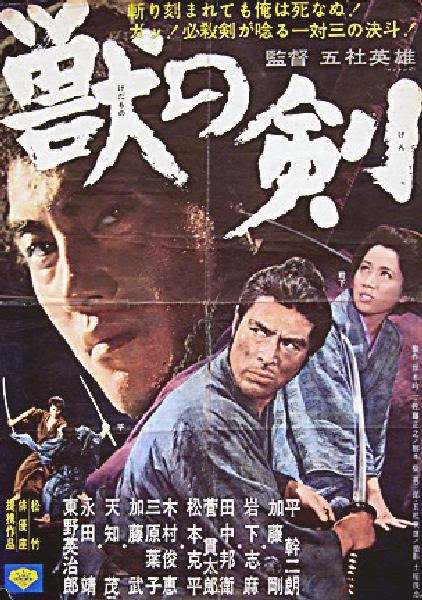
Sword of the Beast (獣の剣, Hideo Gosha, 1965)

sword of the beast posterHideo Gosha’s later career increasingly focussed on men at odds with their times – ageing gangsters who couldn’t see their eras were ending. His second feature, Sword of the Beast (獣の剣 Kedamono no Ken), is much the same in this regard but its youthful hero knows perfectly that change is on the horizon. Gennosuke (Mikijiro Hira) tries to ride that change into a better, more equal future but the forces of order will not allow him. The cinematic samurai world of the post-war era is no longer that of honourable men, manfully living out the samurai code even when it pains them to do so. It is one of men broken by oppressive feudal rule, denied their futures, and forced to betray themselves in service to systemic hypocrisy. Yet even if men think of reforming the system, they rarely think to escape it unless it actively spits them out.

When we first meet Gennosuke, he’s crawling around in a muddy grass field, dishevelled and hungry. A lone woman spots him and plies her trade leading Gennosuke to embrace his baser instincts and give vent to his lust, but the pair are interrupted by the sound of approaching horses. Gennosuke is on the run from his clan for his part in the murder of a lord. His pursuers scream at him, “have you no pride?”, lamenting his lack of stoical resignation to one’s fate so central to the samurai ideal. “To hell with name and pride” Gensosuke throws back, “I’ll run and never stop.”

Gennosuke’s odyssey leads him into the path of petty bandits who’ve been swiping gold out of the local river. Unbeknownst to them, a couple from another clan have been living an isolated life in a small cottage where they too have been skimming the Emperor’s gold, only they’ve been doing it for their lord. The man, Jurota (Go Kato), is excited about this work because he thinks when it is completed he’ll finally be accepted as a true samurai and the future for himself and his wife, Taka (Shima Iwashita), will be much brighter. He is quite wrong in this assumption.

Gennosuke, it is later revealed, committed his fateful act of murder upon the assumption that he was part of a revolutionary vanguard, removing cruel and corrupt lords from their positions so fairer minded, decent men could rule in their stead. Instead he realises he’s been rendered a disposable pawn in a political game and that the new master he believed would usher in a brighter future only envisaged one for himself. Jurota has been duped in much the same way, asked to do something illicit, immoral, and against the samurai code under the assumption that he will finally be accepted as “one of us”. He has not considered the corruption of those he wants to join, and does not see that his crime likely means he cannot be allowed to live.

Gennosuke and Jurota are cynical men who nevertheless possess true faith in the way of the samurai. Exiled from his clan, Gennosuke is a wandering beast who pretends not to care about the people he meets, but ends up saving them anyway. Yet if Gennosuke has been “freed” from his illusions, Jurota’s devotion to them makes him a less heroic figure. When Taka is captured by bandits who threaten her life, Jurota has a difficult decision to make – surrender the gold or his wife. Jurota chooses poorly and abandons his wife to a fate worse than death at the hands of uncivilised ruffians. Taka finds this hard to forgive. No longer wishing to stay with a man who values her so lightly she turns to Gennosuke – her accidental saviour, and reveals to him that she longs to become “a beast” like him. Now “freed” of her own illusions as regards her husband’s love, their shared mission, and the fallacy of their future together as noble samurai, Taka is prepared to exile herself from the samurai world as Gennosuke has, but, as he tells her, the wife of a retainer cannot choose the life of a beast.

This world of samurai is facing its own eclipse. The Black Ships have arrived, the spell has been broken, and the modern world awaits. Gennosuke can see this future, he tried to grasp it in the murder of his lord, but it is not here yet. Gennosuke’s friend, Daizaburo (Kantaro Suga), is duty bound to take his revenge as the fiancé of the murdered lord’s daughter though he’d rather not do it, and does so only to give Gennosuke an “honourable” death. The daughter, Misa (Toshie Kimura), is understandably angry and filled with hate but she pays dearly for her vengeance. Following their ordeal, neither Daizaburo or Misa can return to their clan. They are also “freed”, their illusions broken, their debts forgiven. Breaking with the burden of their past, they would now follow Gennosuke into his new world, even if none of them know exactly where they’re going.

These private revolutions amount to a kind of deprogramming, reawakening a sense of individual agency but one which is unselfish and carries with it the best of samurai honour. Gennosuke may be a “beast” on the run, reduced to a creature of needs rather than thoughts, but there’s honesty in this uncivilised quest for satisfaction which leaves no room for artifice or hypocrisy. It may be a rough world and lonely with it, but it is not unkind. To hell with name and pride, Gennosuke will have his honour, even as a nameless beast, a self-exile from a world of cruelty, greed, and inhumanity.


Original trailer (no subtitles)

https://www.youtube.com/watch?v=R_eddPRh5eY

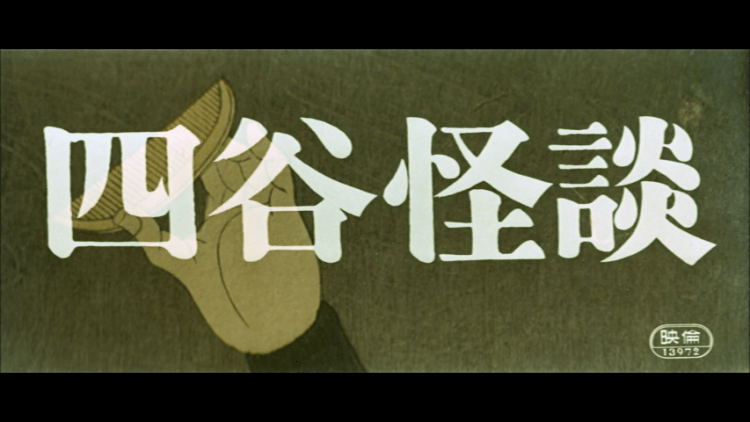
Illusion of Blood (四谷怪談, AKA Yotsuya Kaidan, Shiro Toyoda, 1965)

vlcsnap-2017-07-01-00h50m36s347Shiro Toyoda, despite being among the most successful directors of Japan’s golden age, is also among the most neglected when it comes to overseas exposure. Best known for literary adaptations, Toyoda’s laid back lensing and elegant restraint have perhaps attracted less attention than some of his flashier contemporaries but he was often at his best in allowing his material to take centre stage. Though his trademark style might not necessarily lend itself well to horror, Toyoda had made other successful forays into the genre before being tasked with directing yet another take on the classic ghost story Yotsuya Kaidan (四谷怪談) but, hampered by poor production values and an overly simplistic script, Toyoda never succeeds in capturing the deep-seated dread which defines the tale of maddening ambition followed by ruinous guilt.
As usual, Iemon (Tatsuya Nakadai) is a disenfranchised samurai contemplating selling his sword due to his extreme poverty. Iemon had been married to a woman he loved, Oiwa (Mariko Okada), whose father called her home when Iemon lost his lord and therefore his income. Oiwa’s father is also in financial difficulty and Iemon has now discovered that he has been prostituting Oiwa’s sister, Osode (Junko Ikeuchi), and plans a similar fate for Oiwa.

Still in love with his wife, Iemon decides that his precious sword is not just for show and determines to take what he wants by force. Murdering Oiwa’s father, Iemon teams up with another reprobate, Naosuke (Kanzaburo Nakamura), who is in love with Osode and means to kill her estranged fiancee. Framing Osode’s lover Yoshimichi (Mikijiro Hira) as the killer, Iemon resumes his life with Oiwa who subsequently bears their child but as his poverty and lowly status continue Iemon remains frustrated. When a better offer arrives to marry into a wealthier family, Iemon makes a drastic decision in the name of living well.

The themes are those familiar to the classic tale as Iemon’s all consuming need to restore himself to his rightful position ruins everything positive in his life. Tatsuya Nakadai’s Iemon is among the less kind interpretations as even his original claims of romantic distress over the loss of his wife ring more of wounded pride and a desire for possession rather than a broken heart. Selling one’s sword is the final step for a samurai – it is literally selling one’s soul. Iemon’s ultimate decision not to is both an indicator of his inability to let go of his samurai past and his violent intentions as the fury of rebellion is already burning within him.

Iemon defines his quest as a desire to find “place worth living in”, but he is incapable of attuning himself to the world around him, constantly working against himself as he tries to forge a way forward. Oiwa’s desires are left largely unexplored despite the valiant efforts of Mariko Okada saddled with an underwritten part, but hers is an existence largely defined by love and duty, pulled between a husband and a father. Unaware that Iemon was responsible for her father’s death, Oiwa is happy to be reunited with him and expects that he will honour her father by enacting vengeance. Only too late does she begin to wonder what her changeable husband’s intentions really are.

An amoral man in an amoral world, Iemon’s machinations buy him nothing. Haunted by the vengeful spirit of the wife he betrayed, Iemon cannot enjoy the life he’d always wanted after purchasing it with blood, fear, and treachery. Despite the odd presence of disturbing imagery from hands in water butts to ghostly presences, Toyoda never quite achieves the level of claustrophobic inevitability on which the tale is founded. Hampered by poor production values, shooting on obvious stage sets with dull costuming and a run of the mill script, Illusion of Blood has a depressingly unambitious atmosphere content to simply retell the classic tale with the minimum of fuss. Only the final scenes offer any of Toyoda’s formal beauty as Okada appears under the cherry blossoms to offer the gloomy message that there is no true happiness and her husband’s quest has been a vain one. Achieving her vengeance even whilst Iemon affirms his intention to keep fighting right until the end, Oiwa leaves like the melancholy ghost of eternal regret but it’s all too little too late to make Illusion of Blood anything more than a middling adaptation of the classic ghost story.


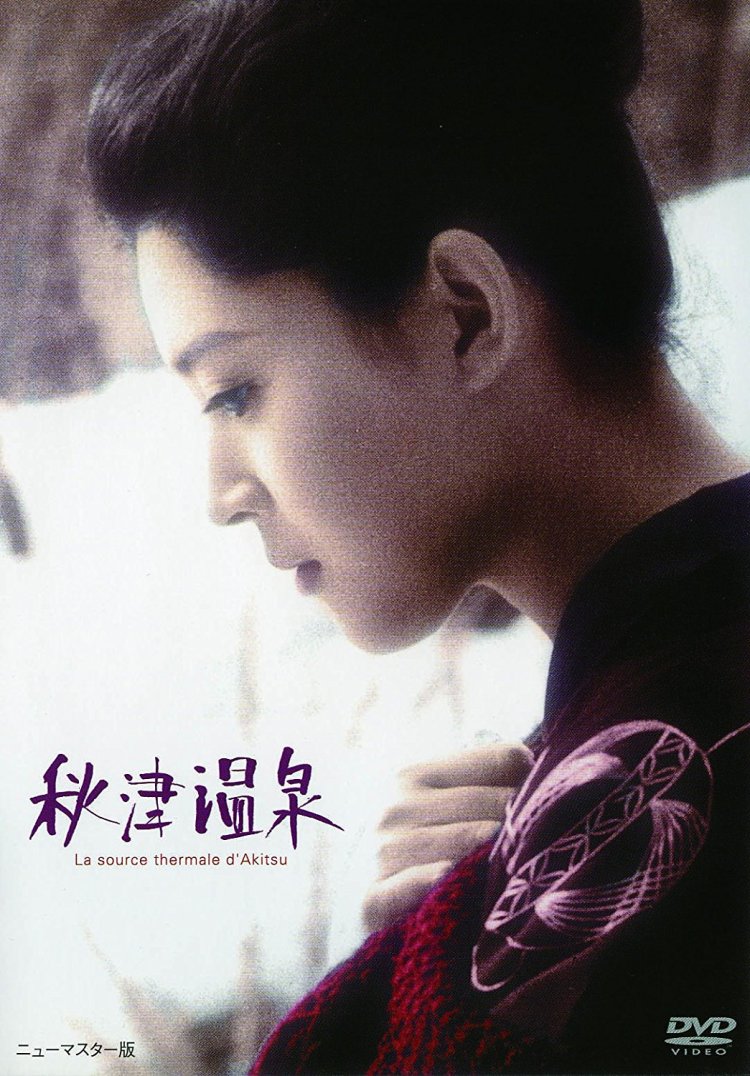
Akitsu Springs (秋津温泉, Kiju Yoshida, 1962)

akitsu springsKiju (Yoshishige) Yoshida is best remembered for his extraordinary run of avant-garde masterpieces in the late 1960s and early 1970s, but even he had to cut his teeth on Shochiku’s speciality genre – the romantic melodrama. Adapted from a best selling novel, Akitsu Springs (秋津温泉, Akitsu Onsen) is hardly an original tale in its doom laden reflection of the hopelessness and inertia of the post-war world as depicted in the frustrated love story of a self sacrificing woman and self destructive man, but Yoshida elevates the material through his characteristically beautiful compositions and full use of the particularly lush colour palate.
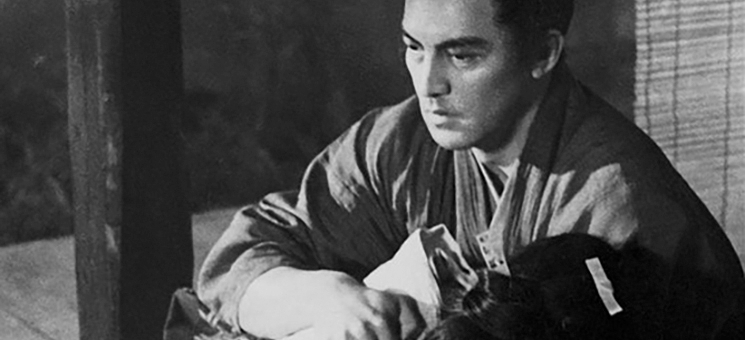
At the very end of the war, consumptive student Shusaku (Hiroyuki Nagato) finds his aunt’s house destroyed by aerial bombing. Attempting to find her but proving too ill to go on, Shusaku is taken to a nearby inn by a good samaritan where he first encounters the innkeeper’s daughter, Shinko (Mariko Okada). Despite her mother’s protestations, Shinko takes a shine to Shusaku and is determined to nurse him back to health. Shusaku, however, is a gloomy sort of boy and, ironically, longs only for death. Though the pair fall in love their youthful romance is forever tinged with darkness as Shusaku declares his love not with a ring but with a rope – he asks Shinko for that most classically theatrical of unions in proposing a double suicide.

Shinko agrees, but is not quite ready to die. In another dose of irony, Shinko’s tears of fear and despair on hearing the Emperor’s final wartime broadcast confirming his surrender inspire Shusaku to want to live but the pair are eventually separated. Reuniting and parting over and over again, their complicated love story repeats itself over a period of seventeen years but the painful spectre of the past refuses to allow either of them the freedom to move beyond Akitsu Springs.

Mariko Okada was only 29 in 1962, but she’d already worked with some of the best directors of the age including Ozu whose An Autumn Afternoon was released the same year, and Naruse in Floating Clouds which has something of a narrative similarity to Akitsu Springs. This prestige picture was her 100th screen appearance for which she also took a producer credit. Despite the obvious importance attached to both of these elements, the studio took a chance on a rookie director with only three films under his belt. Two years later Okada would become Yoshida’s wife and go on to star in some of his most important pictures including Eros + Massacre and Heroic Purgatory. At first glance her role here is a conventional one – a love lorn, melancholy woman unable to let the ghost of a failed romance die, but Okada’s work is extraordinary as Shinko travels from flighty teen to rueful middle aged woman, hollowed out and robbed of any sense of hope.

At Akitsu Springs time passes and it doesn’t all at once. Yoshida refuses to give us concrete demarcations, preferring to simply show a child being born and growing older or someone remarking on having been away. The inn becomes a kind of bubble with Shinko trapped inside, but Shusaku comes to regard the place as a temporary haven rather than a permanent home or place to make a life. For her everything real is at the spring, but for him everything at the spring is unreal – an unattainable paradise. She cannot leave, he cannot stay. Only for short periods are they able to indulge their romance, but the time always comes at which they must part again often swearing it will be for the last time, never knowing if it will.

Yoshida neatly bookends the relationship with announcements over loudspeakers as Shinko originally fails to understand the Emperor’s speech in which he remarks on enduring the unendurable, only to be prompted into later action by the banal drone of a train station tannoy. It’s almost as if their lives are being entirely dictated by outside forces, powerless drifters in the post-war world, condemned to a perpetual waiting sustained only by hopelessness.

Shinko may have convinced Shusaku to live but his growing successes only seem to deplete her. Wasting away at an inn she always claimed to hate, Shinko grows old while Shusaku grows bitter yet successful in the city. They move past and through each other, unable to connect or disconnect, yearning for the completion of something which consistently eludes them. Yoshida films the standard melodrama with appropriate theatricality but also with his beautifully composed framing as the lovers are divided by screen doors or captured in mirrors. Okada glows in the light of falling cherry blossoms, acknowledging the tragic and transitory character of love, but her final action is one which echoes the beginning of her suffering and finally declares an ending to an unendurable romance.


Original trailer (no subtitles)

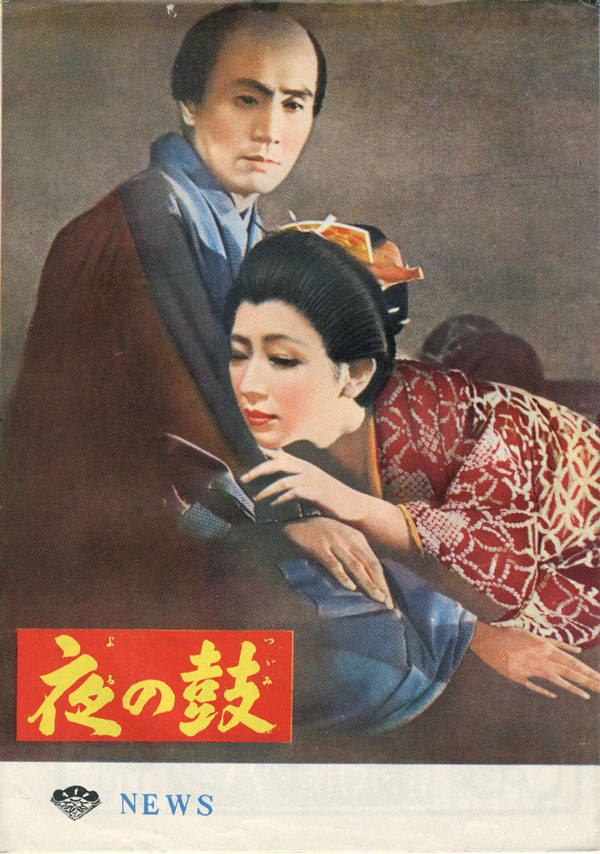
Night Drum (夜の鼓, Tadashi Imai, 1958)

night-drum

The works of Chikamatsu Monzaemon continue to have a large influence over Japanese drama even if not as frequently and directly adapted as they were in the immediate post-war period. Famous for tales of tragic love suicides and romantic heroes who risk all in the service of deep emotion, Chikamatsu’s works perhaps found even greater resonance in the turbulent years in which individual freedom and adherence to tradition found themselves in even greater conflict than ever before. Tadashi Imai makes the most of Chikamatsu’s melancholy fatalism to take a sword to the samurai order itself with all of its arcane rules and the essential hypocrisy which underlines its cruelty.

Hikokuro Ogura (Rentaro Mikuni) has been in Edo for a year with the shogun and is now on his way home. Stopping at an inn, he has a low level argument with his brother-in-law who warns him the men are getting restless and need to blow off some steam preferably with some sake. Hikokuro is in charge of the purse strings and knows all of this pageantry costs money the clan do not quite have hence he’s reluctant to fritter it away on alcohol no matter how much the men might resent him for it.

That’s not to say Hikokuro is a particularly officious person, he’s kind and cheerful by nature but also tired and eager to get home after such a long time away. His wife, Otane (Ineko Arima), is very happy to see him but something seems different about her and there’s a tension in the air among some of the other women. It seems, there are rumours about Otane and a travelling musician (Masayuki Mori) who frequented the house during the summer while Hikokuro was away. Rumours are often just that, especially in these petty circles of nobility, but female adultery is punishable by death and so is not something to be gossiped about idly.

Night Drum (夜の鼓, Yoru no Tsuzumi) begins with the ominous sound of the drum itself, beating out the inevitably tragic fate of all concerned with a melancholy fatality. The tale proceeds in a procedural fashion as the authorities become involved, hearing witness testimonies and trying to discover if there could be any truth at all in these unpleasant rumours. Matters are further complicated by the pecuniary difficulties the clan currently finds itself in – the elders are half hoping it is true because it would be a good excuse to expel the Ogura household and thereby save the money which goes on its upkeep. They are aware, however, that they’re talking about the life of a previously unblemished woman as well as the ruin of her extended family.

The life of a retainer is not as easy as it sounds and we’re constantly reminded of just how much money is necessary to keep up appearances. The clan authorities are dismayed when they hear of Otane earning money on the side through needlework though other retainers are quick to confess their wives also help out, they just can’t survive on such meagre stipends. Each lord is required to hire servants as befits their status but they aren’t given the money to do so. Hikokuro is also required to serve the shogun in Edo every other year for at least twelve months meaning Otane is left alone at home with almost nothing other than her needlework to do except wait patiently for her husband’s return.

Given these circumstances, it’s easy to understand how such pernicious rumours might begin. The sole basis of the evidence seems to rest on a tip off that Otane is thought to have been alone in a room with a man who is not her husband. That she may be put to death solely for the crime of sharing the same space as someone of the opposite sex seems extreme, but this is the feudal world where rules and propriety are all. The men can cavort with geishas to their heart’s content, but Caesar’s wife must be above suspicion.

The action unfolds piecemeal as each of the various witnesses offers their testimony of events. Given the gravity of the situation, few are eager to recount their suspicions – especially the other women who fear the rumour may be true but are also unwilling to believe it. Hikokuro does not want to believe it either but faced with such convincing, if circumstantial, evidence doubt creeps into his mind and finds an anchor in Otane’s guilt ridden behaviour. Ironically, this entire situation developed only because of Otane’s attempts to avoid it – remaining at an inn rather than travelling with a man on the road only for one of her husband’s friends to attempt to rape and blackmail her. Having had far too much to drink in an attempt to steel her nerves and cover up the embarrassing assault, Otane finds herself at the mercy of man who should have known better than to take advantage of another man’s wife in such a moment of weakness.

One stupid mistake born of alcohol, loneliness, and a series of male betrayals is enough to bring down the social order all on its own. Rentaro Mikuni plays the part of the previously affable wounded spouse with an exceptional level of nuance as he accepts his part in his wife’s downfall thanks to the the circumstances of their lives which have kept them apart and left her at the mercy of untrustworthy lords. There is anger here, and shame, but there is still love too which only makes the inevitable outcome all the more painful for everyone concerned. Hikokuro plays the part he’s expected to play, but it pains him and you can’t wipe a slate clean with blood. Imai has his eyes firmly on the civilised society with all of its rigid yet often cruel and unfair rules for living. Shot with a kind of hypnotic dreaminess in which each of our unfortunate players is swept along by events they are powerless to influence, Night Drum beats out the death knell of those who allow their individual desires to overwhelm their “civilised” conformity but it does so with a rhythm that is filled with anger rather than sorrow, for those who are forced to leave half their lives unlived in maintenance of the very system which oppresses them.


An Autumn Afternoon (秋刀魚の味, Yasujiro Ozu, 1962)

an-autumn-afternoonAn Autumn Afternoon (秋刀魚の味, Sanma no Aji) was to be Ozu’s final work. This was however more by accident than design – despite serious illness Ozu intended to continue working and had even left a few notes relating to a follow up project which was destined never to be completed. Even if not exactly intended to become the final point of a thirty-five year career, An Autumn Afternoon is an apt place to end, neatly revisiting the director’s key concerns and starring some of his most frequent collaborators.

Returning to the world of Late Spring, An Autumn Afternoon once again stars Chishu Ryu as an ageing father, Shuhei, though this time one with three children – the oldest, a son, married and left home, the middle one a daughter not yet married at 24, and the youngest boy still a student living at home. Michiko (Shima Iwashita), like Noriko, is devoted to the family home and has no immediate plans to marry despite the urgings of her father’s good friend who has already picked out a good prospect for an arranged marriage.

Shuhei had been content with this arrangement, after all as a 50-something man of 1962 he’s in need of someone to look after him and likes having his daughter around the house. A class reunion with some of his friends and an old teacher begins to change his mind when “The Gourd” (as the boys liked to call him) speaks somewhat unkindly of his unmarried, middle-aged daughter, later regretting that he acted selfishly in turning down marriage proposals which came her way because he wanted to keep her at home for his own upkeep. Taking the extraordinarily drunk The Gourd home, Shuhei and his friend encounter the daughter for themselves (as played by frequent Ozu collaborator Haruko Sugimura) and find her just as embittered and shrewish as The Gourd had implied. What they don’t see are her tears of heartbroken frustration at being left all alone to deal with this hopeless case of her dead drunk, elderly father.

At the end of the film, following the inevitable marriage, Shuehei retreats to a friendly bar just as the father of Late Spring had done before him though this time he goes there alone, not wanting to return to his now much quieter home before time. Whilst there the mama-san (Kyoko Kishida) for whom Shuhei has developed a fondness as something about her reminds him of his late wife, notices his attire and asks if he’s just been to a funeral. “Something like that”, he replies. Shuehei is being a little maudlin and self indulgent but what he says is almost true – he has, in a sense, lost a daughter though the Japanese way of doing things does not quite allow for the rejoinder of gaining a son.

All of this is to be expected, it is the best outcome. Time moves on and the baton passes from one generation to the next, one family is broken so that another may be created. Ozu revisited this universally tragic element of the life cycle several times throughout his career and even echoes himself in the final shots as Chishu Ryu sits with his back to the camera, less visibly shaken than in Late Spring but no less bereft. What Ozu gives us next is not the image of transience in the ebbs and flows of a stormy sea, but a parade of emptiness in which Michiko is ever present in her absence. Shuehei is not alone, he has his younger son Kazuo, but the house is now a soulless and colourless place filled with uninhabited rooms and mirrors with nothing to reflect.

In the end, life is defined by this final loneliness as children depart, setting off on a path which has to be entirely their own. The Gourd laments that he is all alone despite having, in part, destroyed his child’s chances of personal happiness in order to maintain his own, but Shuhei and his friends are also left to reflect on the same problem as fathers who’ve each successfully married off daughters only to find themselves rendered obsolete in the new family order. The times have changed, but they have not changed in this. Shuhei is left alone with his memories of youth, trying to bully his sadness into submission by humming a popular military march from his wartime glory days but the pleasures of the past are always hollow and melancholy, at best a mirage and at worst quicksand.

Ozu maintains his trademark style, mixing humour with wistful sorrow, resigned to the inherent sadness of life but determined to find the warmth there too. His sympathies, however, have shifted as he reserves a little of his bite for the modern young couple as exemplified by Shuehei’s oldest son, Koichi (Keiji Sada), and his wife (Mariko Okada) whose concerns are material (refrigerators, vacuum cleaners, handbags and golf clubs) rather than existential as they struggle to attain the “aspirational” quality of life the burgeoning post-war boom promises and have to rely on frequent “loans” from Shuehei to maintain it. The world moves on apace and leaves old sailors behind, alone and adrift on seas now much quieter than they have ever been but the peace and solitude is the sign of a life well lived and in a strange way its reward as the time slips by unhurriedly and only as painful as it needs to be.


Original trailer (no subtitles)

https://www.youtube.com/watch?v=Wq0XhT1SRho

The Fireflies (螢火, 1958, Heinosuke Gosho)

bxbnzqmccaa5-cg-jpg-largeHistory marches on, and humanity keeps pace with it. Life on the periphery is no less important than at the centre, but those on the edges are often eclipsed when “great” men and women come along. So it is for the long suffering Tose (Chikage Awashima), the put upon heroine of Heinosuke Gosho’s jidaigeki The Fireflies (螢火, Hotarubi). An inn keeper in the turbulent period marking the end of the Tokugawa shogunate and with it centuries of self imposed isolation, Tose is just one of the ordinary people living through extraordinary times but unlike most her independent spirit sparks brightly even through her continuing strife.

Beginning in the “present” – the late 1860s, Tose is the de facto manager of Teradaya, a successful inn in Kyoto. Japanese history buffs will instantly recognise the name of the establishment, as well as that of Tose’s 18 year old adopted daughter, Oryo (Ayako Wakao). Nevertheless, that story can wait as we flashback with Tose as she gazes blankly at a stretch of water, remembering the time she first came to Teradaya as a young bride. The daughter of peasant farmers, Tose was not welcomed by her mother-in-law, Sada, both because of the class differences, and because the man she’s married is not Sada’s son but that of a concubine and she would prefer her biological daughter, Sugi, to inherit. Tose’s husband Isuke, though by no means unpleasant towards her, is a feckless man obsessed with cleaning and singing folk songs, leaving the bulk of the work to his wife.

Tose bears all, taking on the running of Teradaya and making it the most popular inn in town thanks to her friendliness, efficiency, and discretion. However, her position is threatened when she is almost ruined by a bizarre scam involving dummies and ventriloquism. Vindicated, Tose’s position is strengthened but there is more trouble in store when Sugi runs off with the conman leaving her infant illegitimate daughter in Tose’s care. Becoming a mother as she’s always wanted, Tose begins to find a little more fulfilment in her life only to have her dreams cruelly dashed once again. In an act of kindness she later adopts another orphaned girl, Oryo, who arrives at the inn starving and in the care of an older man who’d been looking after her since her doctor father was murdered for supposedly collaborating with the rebel ronin trying to over throw the shogunate.

This is the first mention of the ongoing political instability present in the country at large but largely unseen in the peaceful world of a small inn in Kyoto. Of course, you can’t say Teradaya and Oryo without eventually saying Sakamoto Ryoma (Miki Mori). Ryoma does eventually arrive in all his revolutionary glory albeit in an appropriately humanised form and proceeds to turn Tose’s life upside down in more ways than one. Locked into her loveless, but far from cruel, marriage Tose’s spirited nature is reignited by Ryoma’s fervour. Falling in love with him for his commitment to creating a better world for all, Tose’s dreams drift a little but are dashed again when she realises he and Oryo are the more natural pair.

Though Tose reacts badly to the discovery that Oryo is also in love with Ryoma, she is later able to patch things up, entrusting the man she loves to her daughter in an act of maternal sacrifice. Tose talks about her admiration for those who sacrifice all of themselves for other people but this is exactly what she has done with her own life, only in a much quieter way. Where Ryoma was a father to a movement, Tose is a mother to the world. Denied a child of her own through her husband’s indifference, Tose first adopts her niece and then an orphaned girl but consistently acts in the best interests of others rather than herself. Hearing the cries of betrayed revolutionaries, she describes them as sounding like howling babies – an idea she repeats several times including when describing Oryo’s famous naked dash from the bath to warn Ryoma of the impending arrival of the Shinsengumi. Tose’s only instinct is to silence those cries through maternal warmth, even if it ultimately causes her pain.

Tose, for Gosho at least, is no less a heroic figure than Ryoma as her everyday acts of kindness and strength contribute to an ongoing social change. Where other inn owners turn in the rebels either for material gain, active opposition, or desire to avoid the hassle, Tose stands firm and allows Teradaya to become known as a safe haven for the revolutionary movement. Ryoma shone brighter but for a short time, whereas Tose’s life goes on and Teradaya continues to be the favourite stop for beleaguered travellers passing through the old capital in these difficult times. Reconciling with her husband who finally offers the possibility of having a child of their own to inherit the inn, there is a glimmer of hope for Tose once again even if it’s clear that Isuke hasn’t really changed. It may seem that Tose’s firefly has blinked out as she takes her dull and self centred husband back, vowing to spend less time on the inn as she does so, but there is a glint of light in her few final words which are followed by putting her apron straight back on to meet the first boat, shouting the virtues of her beloved Teradaya all the way.