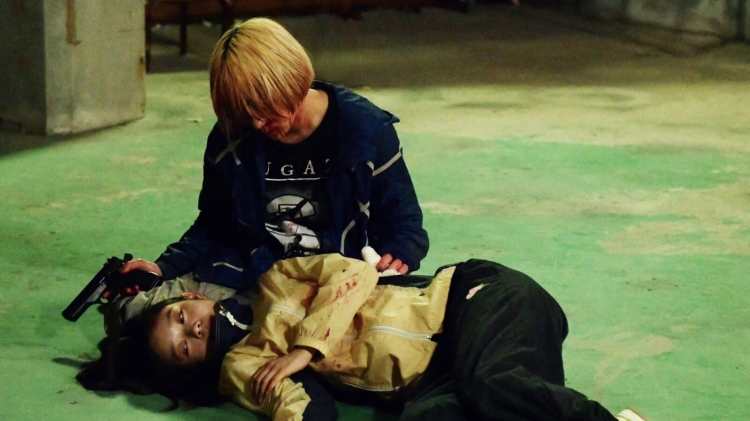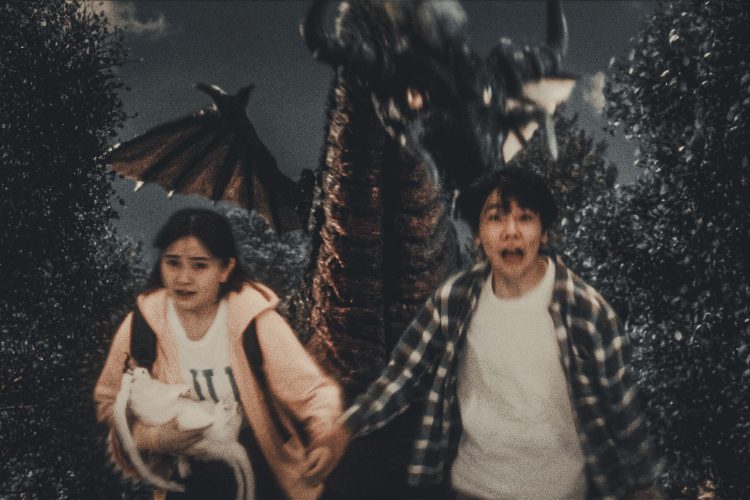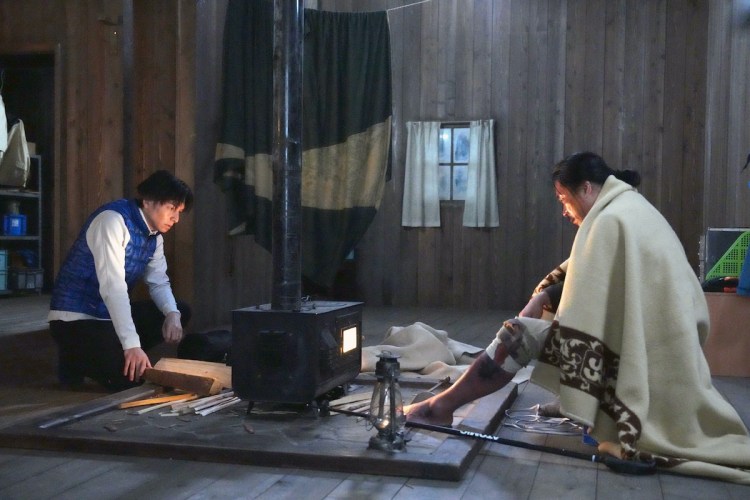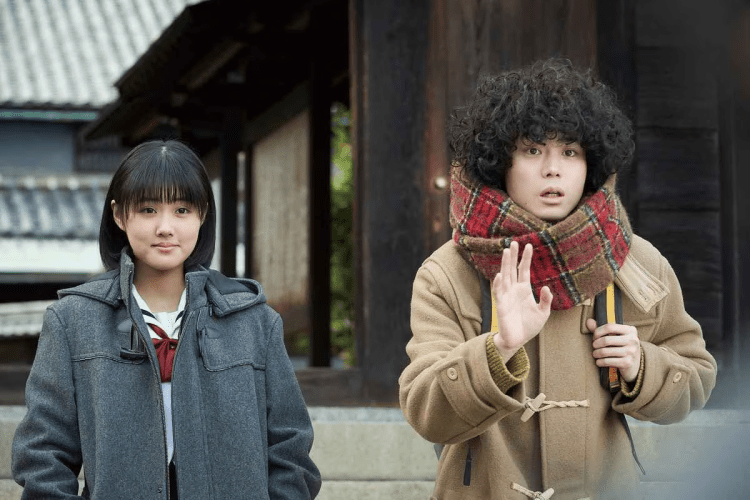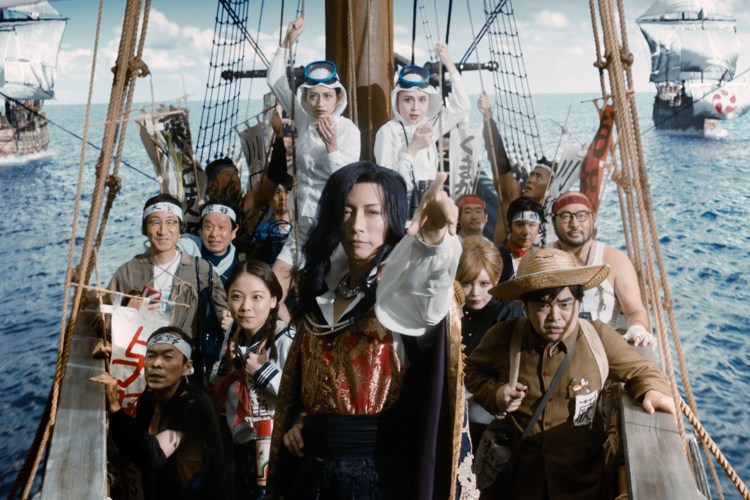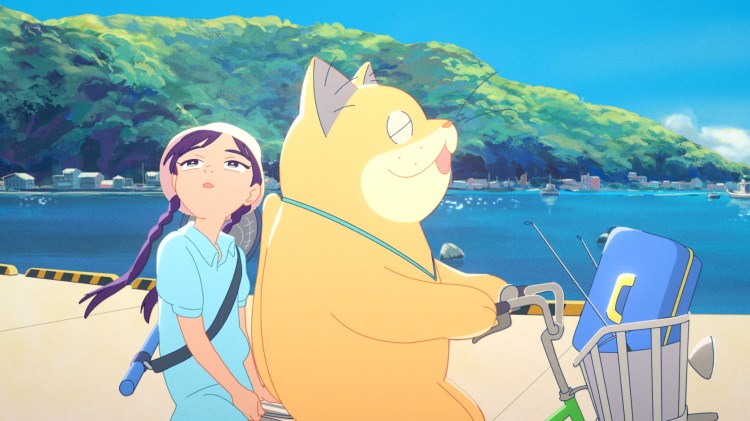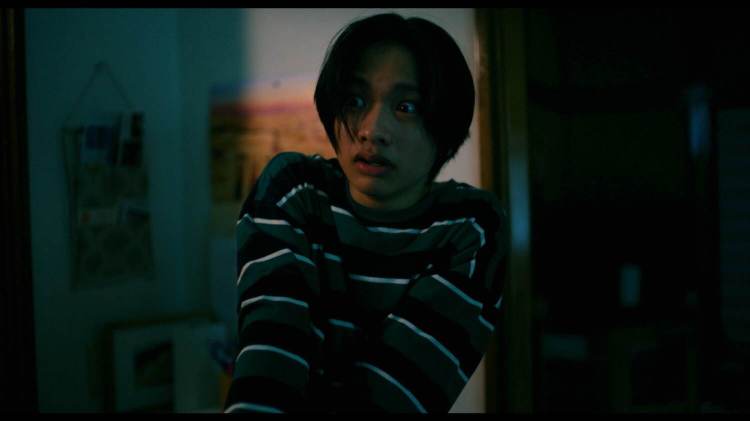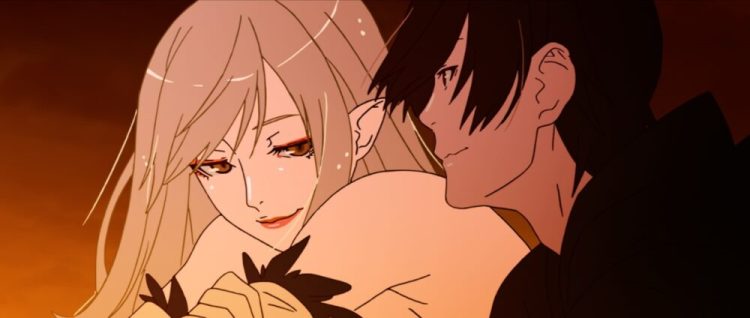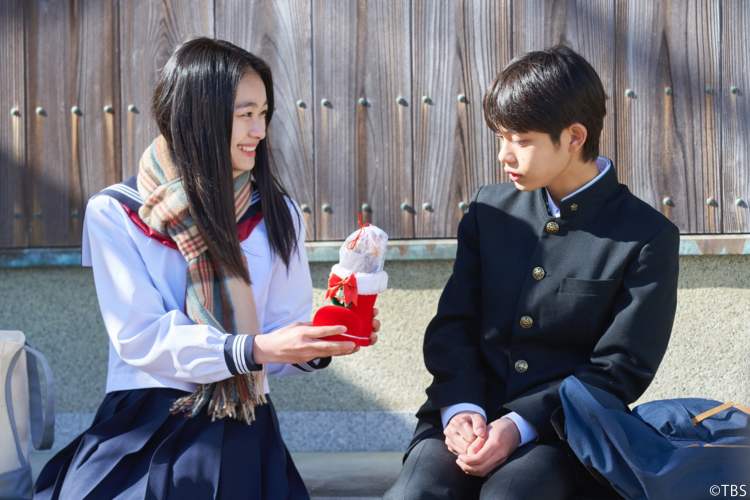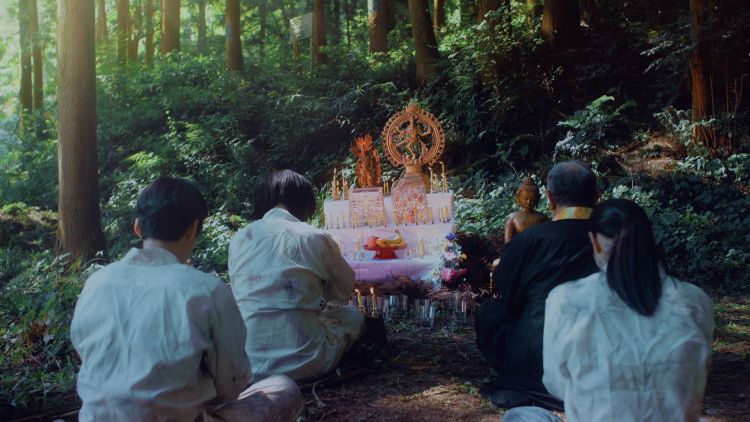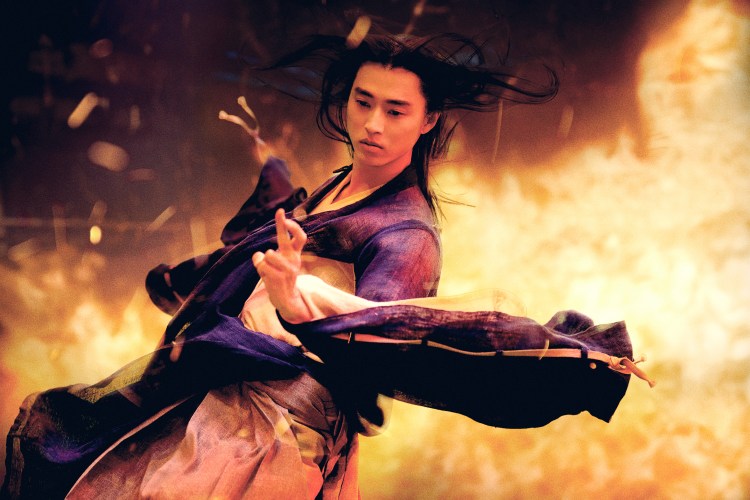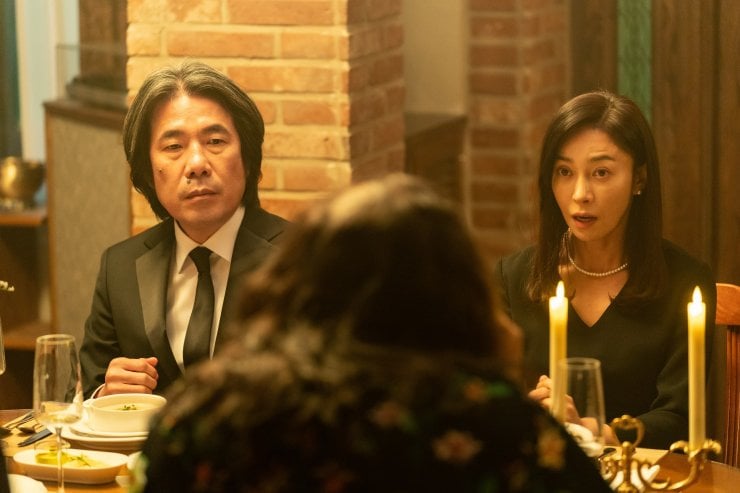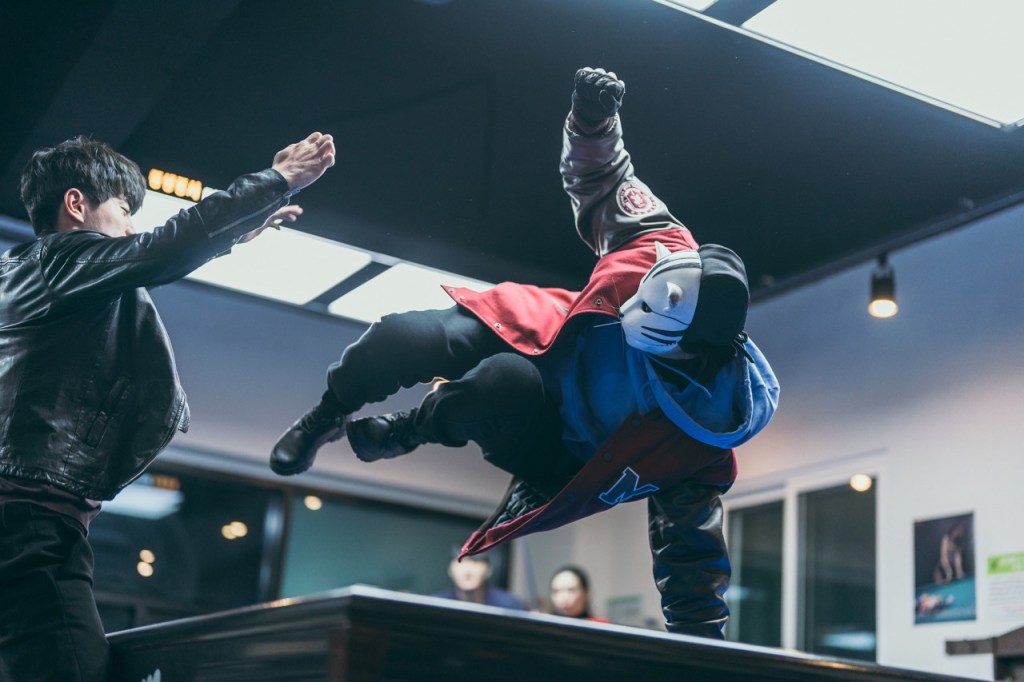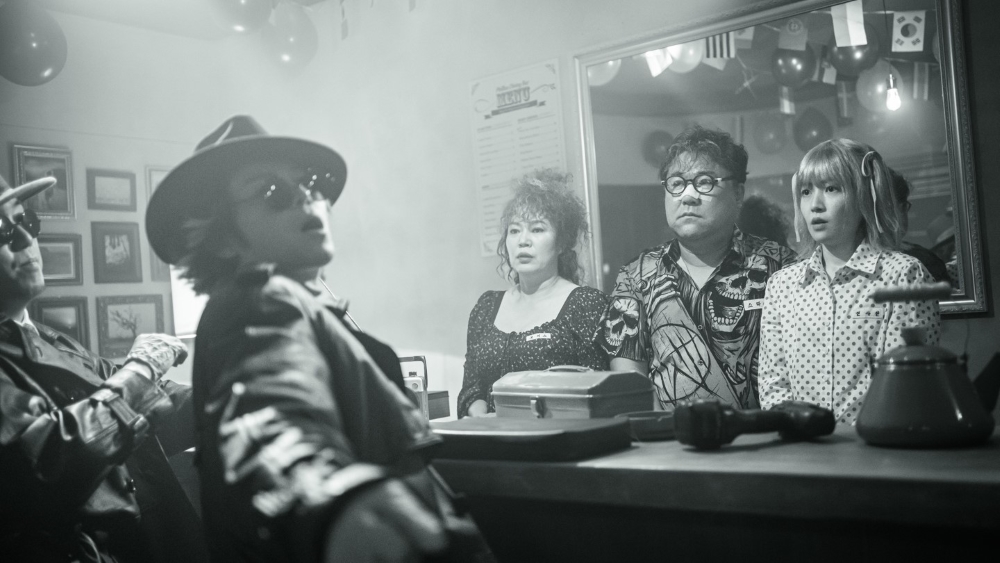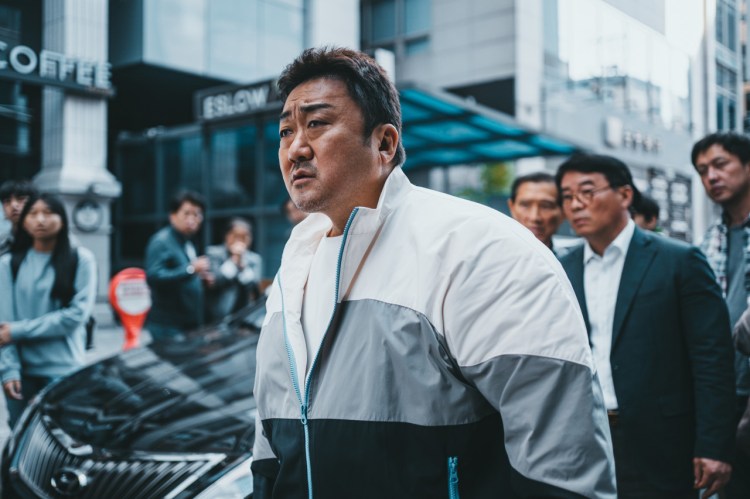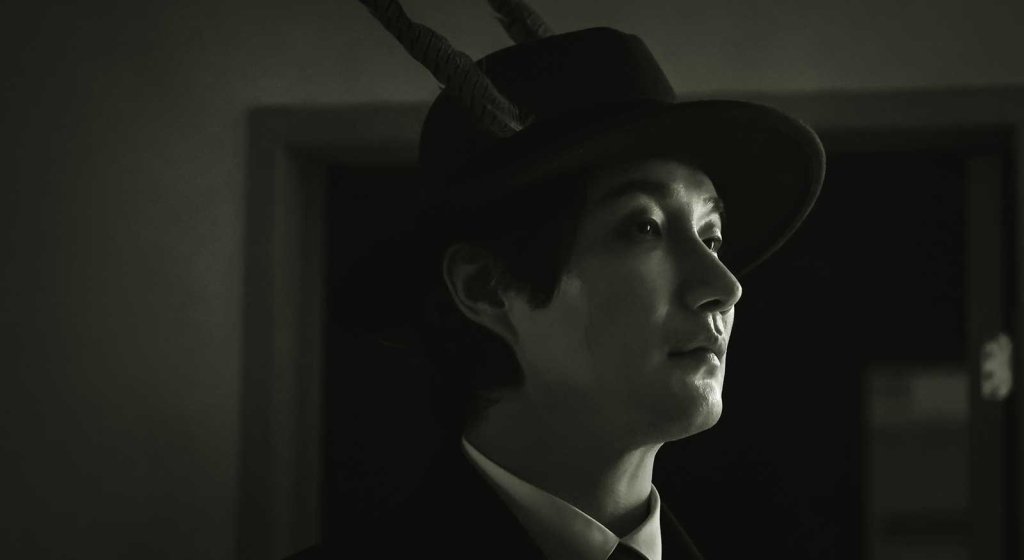
Mash Ville (매쉬빌, Hwang Wook, 2024) [Fantasia 2024]

The Hwaseong of Mashville (매쉬빌), a far out rural backwater, is a kind frontier town drenched in moonshine and melancholy where the local pastime is loneliness. You can almost see what attracted the murderous cultists at the film’s centre to their strange conviction that a convoluted ritual will save a world that’s fallen into chaos with “pure love”, were it not that one of them also remarks on how foolish he feels remembering himself as man who once believed all were equal before the law. 

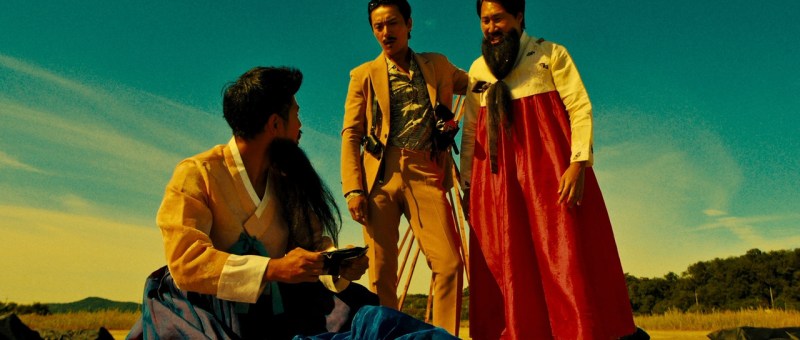
The law in these parts is a laughing policeman who doesn’t like it when things happen outside of his jurisdiction, but actually does not very much at all to prosecute the “pseudo-religion” he later tells a colleague he’s been tracking while arriving to clear up their mess. Otherwise, there are two other concurrent crimes that should probably be pressing on his time including the deadly moonshine pedalled by liquor entrepreneur Se-jeong and his two bearded brothers, and the strange case of a young woman charged with acquiring a fake zombie corpse for a movie shoot only to turn up with what she suspects is an actual dead body. A rather strange set of events brings them all into the same orbit while preventing them from leaving Hwaseong where the cultists, who are all male but dress in female hanbok for otherwise unexplained reasons, are still on the prowl looking to complete their zodiac of sacrificial victims. 

Then again, the cultists may be victims too. Their former leader soon turns up in town apparently regretting his life’s work while explaining cryptically that the darkness is in his bag, which turns out to be full of money. We sees the eyes flash of Hyun-man, a local man, when he opens it as if he were corrupted in one instant though this day of being targeted by religious extremists already seems to have taken its toll on him. In the opening sequence, he’d celebrated a kind of birthday with two friends, asking only for a hug but both men refused him. He’s also one of the few villagers that didn’t leave on a trip to the hot springs which lends Hwaseong a lonelier air than it might otherwise have had. 

Even the brothers are longing for someone, yearning for the return of their mother who abandoned them many years ago and if Se-jeong’s dream is to be believed sending them the incredibly inappropriate gift of Wild Turkey whiskey when they were just kids waiting for her to come home. Se-jeong feels he can’t leave Hwaseong because a part of him’s waiting for his mother to come back, but the other half is perhaps just afraid to do so. In any case, a mistake by his strange brothers seems to have turned his whiskey into poison, so his hand’s been forced even if it weren’t for all the other weird goings on.

The irony maybe that pure love really does save the world, Se-jeong reflecting that he might have been in love for the first time in his life while finally gaining the courage to move on from Hwaseong in acceptance of the fact his mother likely won’t be returning anyway. His brothers almost got inducted into the cult, mistaken as fellow priests and strangely captivated by the weird ritual movements the killers perform of over the bodies acknowledging that there is something relaxing in thrusting their hands up into the air while curious enough about the ritual to see it through despite its grimness and moral indefensibility. 

Like the cult’s beliefs, not much makes a lot of sense though Hwang lends his strange small town enough crazy vibes to make it all hang together in a place in which whiskey itself appears to be close to a religion and as much of a salve for the world’s unkindness as anything else. “You need to quit drinking,” one his brothers ironically tells Se-jeong when he tries tell him about his recent emotional experiences though in another way he may actually have been saved by an unexpected miracle provoked by the ritual which didn’t work in the way it was intended but may have banished darkness from Se-jeong’s life at least, freeing him from a life in “mash ville” and the kind of the liquor that causes the dead to rise.


Mash Ville screened as part of this year’s Fantasia International Film Festival.

Trailer (English subtitles)
Brave Citizen (용감한 시민, Park Jin-pyo, 2023) [Fantasia 2024]

There’s an intentional irony in the mantra teacher Si-min (Shin Hae-Sun) is fond of repeating that “If you do nothing, nothing will happen,” in that on the one hand it means that until people decide to act a dissatisfying status quo will continue, but on the other it may also seem threatening implying that if only you keep quiet nothing will happen to you. The main thrust of Park Jin-pyo’s webtoon adaptation Brave Citizen (용감한 시민) does seem to be that abuses of power take place because so few people are willing to challenge them or indeed to stand up for those who cannot stand up for themselves.

That’s something Si-min discovers when a student comes to her and says he’s being harassed by notorious bully Su-kang (Lee Jun-Young). A former boxer/martial artist, Si-min is on a temp contract and evidently waited quite some time to be offered a position so takes it to heart when her boss, Mrs Lee (Cha Chung-Hwa), warns her not make waves and jeopardise her hopes of being hired full-time. Somewhat cynical she tries to talk herself out of standing up for him, talking herself into turning a blind eye to injustice as nothing to do with her but at the end of the day she isn’t someone who can just sit by and take it nor watch as others are harmed while Su-kang goes unchallenged. 

He’s unchallenged largely due to the socio-economic conditions of contemporary Korea in which the wealthy and well-connected are able to live above the law. When one of Su-kang’s victims tries to report him to the police, they are the ones who end up accused of making a false report while Su-kang gets off scot free because he counts judges and prosecutors among his relatives while his mother is a prominent lawyer. His family apparently also donate large amounts of money to the school, which has won a series of “anti-bullying awards,” which is why he can’t be expelled. Si-min’s predecessor took her own life because of Su-kang’s bullying while pretty much everyone is scared stiff of him.

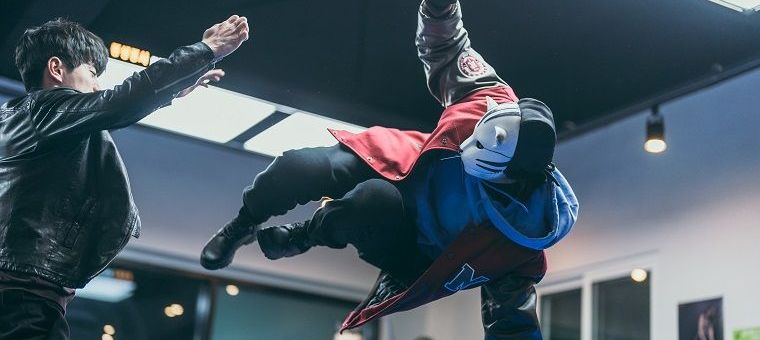
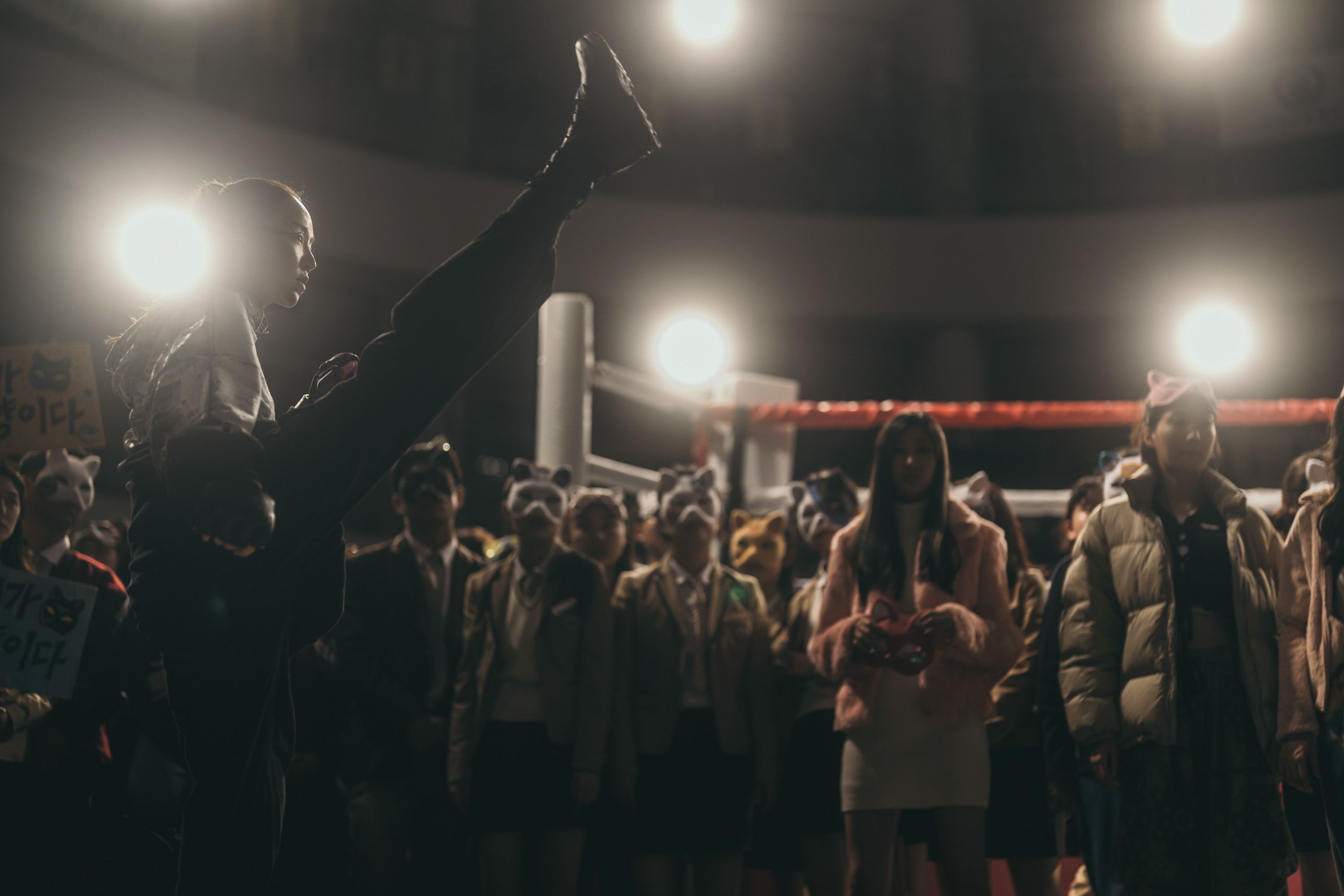
It’s for these reasons that Si-min turns to violence in the hope of giving Su-kan a little “off-site education” and perhaps you can’t blame her when faced with such intransigence from compromised authority. Yet standing up for the students is also a way of learning to stand up for herself, not to succumb to turning a blind eye to injustice simply because it’s more convenient. It’s this wilful suppression of one’s rage towards the persistent injustices of society that ends up spreading them, a continuous chain of abuse in which people take out their frustrations on those unable to defend themselves like the drunk man who yells at Si-min in the street and comes to realise he’s picked on the wrong person. 

Then again, when questioned why he behaves this way Su-kang only answers that “it’s fun”. It’s difficult to believe he would be insecure in his status, yet he persistently mocks those he sees as socially inferior, “nobodies” and ”hobos”, as opposed to elites like himself. The suggestion is that he and his friends have become this way because of a lack of boundaries and a sense of invincibility, which is partly what annoys him so much about an intervention from an authoritarian figure such as Si-min over whom he has no authority because she has decided not to grant it to him. 

This might be what makes her a “brave citizen,” the name of an award granted to ordinary people working in favour of justice that her father had once won after otherwise ruining his life through unwisely guaranteeing a loan and being left on the hook for paying it back. Embracing the absurdity of the webtoon, Park goes big and bold painting the inequalities of the contemporary society in stark relief while injecting a sense of catharsis into Si-min’s attempts to smack some sense into the bullies while rediscovering her own desire to challenge injustice rather than remain complicit with it even if it is personally inconvenient. Her rebellion encourages others to do the same while robbing the bullies of their privileged position and exposing them to the consequences of their actions. Of course, fighting violence with violence may not be the best solution but does at least allow Si-min to make the most of what she has and to recover the self that had been beaten down and defeated but is now capable of fighting back both for herself and others.


Brave Citizen screened as part of this year’s Fantasia International Film Festival.

International trailer (English subtitles)
Kizumonogatari -Koyomi Vamp- (傷物語 -こよみヴァンプ-, Tatsuya Oishi, 2023) [Fantasia 2024]

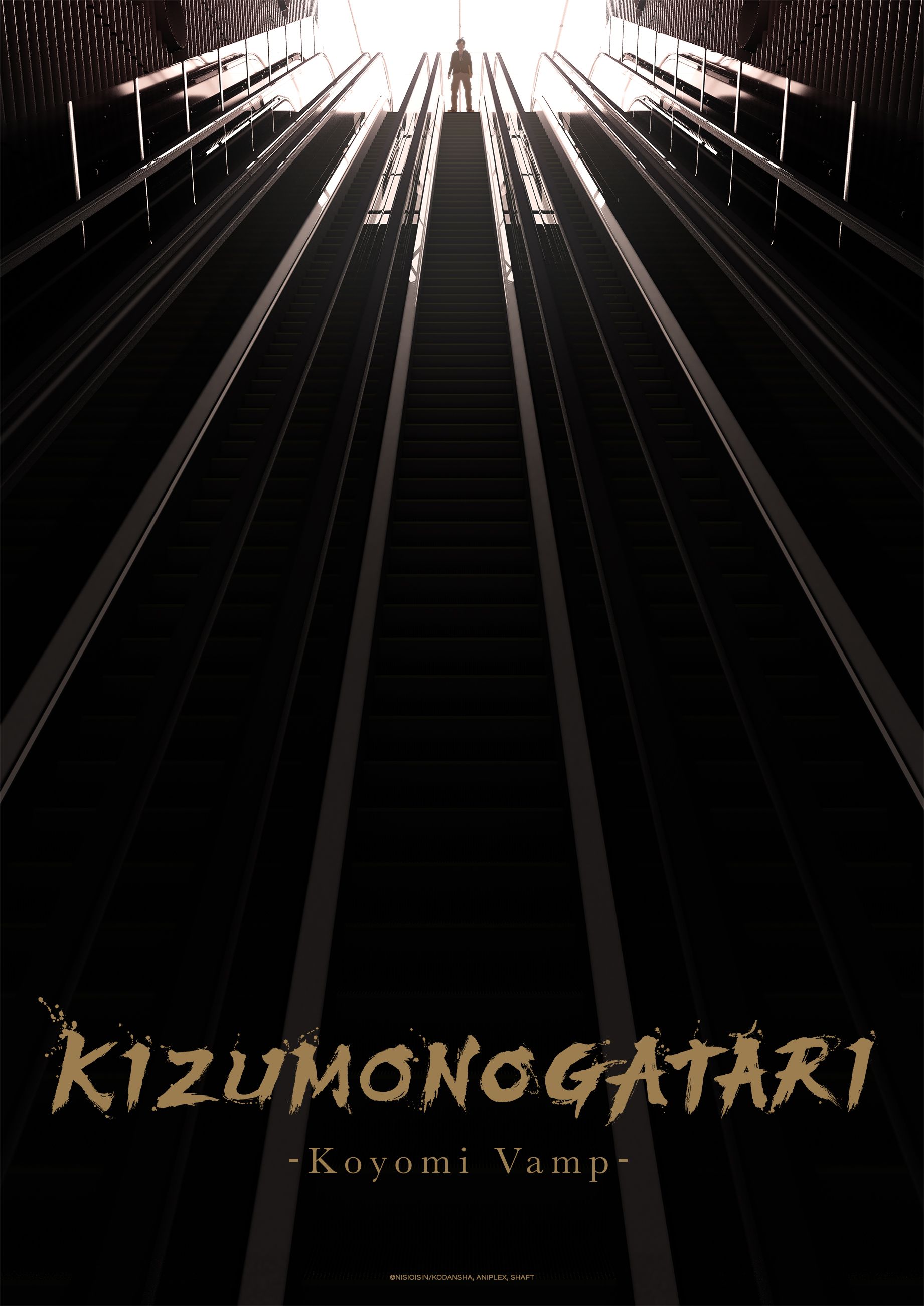
A young man walks into an empty subway station already ominously strewn with blood and finds there the corpse of a woman shorn of her limbs. The corpse rises and begs him to have her life by sacrificing his own in allowing her to suck his blood and surprisingly the young man agrees. He does not, however, die but is brought back as something else, not quite human and definitely subservient to the creature he has saved. 

Running 2.5 hours, Tatsuya Oishi’s Kizumonogatari -Koyomi Vamp- (傷物語 -こよみヴァンプ-) is in fact a compilation of three films released in 2016 and a part of the long running Kizumonogatari series which originated with Nisio Isin’s light novels and has gone to spawn an expansive universe of interconnecting spin-offs. This is technically a prequel, and in that sense begins with a black slate but also deliberately drops us into confusion with breakneck pace through the hero’s quest to recover himself and his place in the world after this rude awakening to the supernatural. 

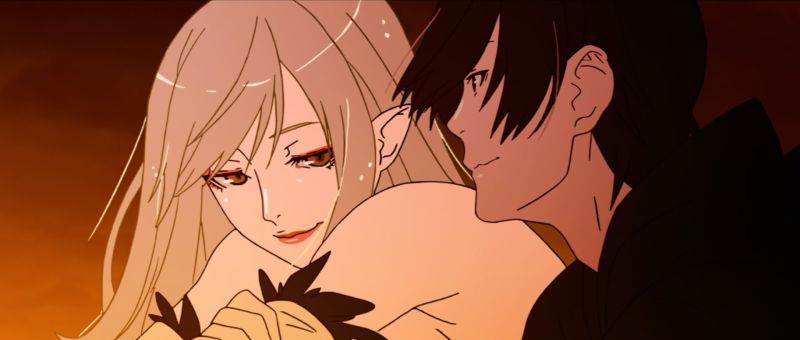
Rude is in many ways a defining characteristic of Kiss-shot, the 500-year old vampire Araragi finds bleeding in the subway station at that point a blonde and alluring figure of forbidden desire. Araragi is drawn to her in an unconscious death wish linked with the sexual desire he struggles to understand, running into the subway minutes after buying a pornographic magazine from a convenience store after striking up a friendship with fellow student Hanekawa. But once he saves her life, Kiss-shot is transformed into a cheeky little girl who now tells him that he is her minion and he must recover her severed limbs from a trio of vampire in order to be restored to humanity even as the power dynamic between them becomes confused and distorted.

In his vampire state, Araragi becomes immortal, powerful and free of mortal jeopardy yet he remains uncertain and insecure while reliant on the support of Hanekawa who encourages him to reject his desire for death and remain alive. But this also presents a problem to Araragi who sees himself as self-sacrificing and is unwilling to accept the what he sees as a self-sacrifice from Hanekawa for whom he feels unworthy and inadequate. In some senses it’s a typically self-centred, adolescent male perspective that rejects any idea of her own agency and assumes Hanekawa performs these actions for him rather than considering that she performs them for herself and is simply doing what she wants to do which in the end is not really about him at all. He declares it a burden he’s too weak to carry, which might in some senses be fair but also again a mischaracterisation that is further evidence of his lack of self-worth.

It’s this sense of inadequacy that lies behind his desire to reclaim his humanity along with the concurrent disgust he feels in the degradations of vampirism. It genuinely comes as a surprise to him that Kiss-shot feeds on human beings and lost her own humanity so long ago that she no longer gives it a second thought. She is after all only being what she is, but like Araragi is drawn to death partly out of frustrated longing and lingering boredom with a relentless yet apparently uneventful 500 years behind her in which the only other highlight was her previous minion who rejected this life much more quickly than she ever expected.

Even so, Oishi lends their mutual dilemma a degree of absurdity in the expectedly comic sight of severed heads littering a sports filed or launching themselves in toothy attacks. Heavily inspired by the French New Wave, he breaks the action with sometimes barely legible title cards often reading a single world while his composition has a kind of jauntiness that is also bleak and melancholy. The world surrounding Araragi veers between the pristine entrance to the high school, and post apocalyptic devastation littered with crows emblematised by the depilated cram school in which Kiss-shot keeps him. Backgrounds often have a photo realistic quality that further sets the world at a kilter when matched with the more conventional character designs of the central players. The conclusion that Araragi is presented with amounts a sharing of the misery which is also akin the burden he didn’t want to carry but also perhaps symbolic of his path towards adulthood in acceptance of compromise and selflessness in being willing to carry a small part of others’ pain and despair and allowing them to carry a part of his own.


Kizumonogatari -Koyomi Vamp- screened as part of this year’s Fantasia International Film Festival.

Original trailer (English subtitles)
A Samurai in Time (侍タイムスリッパー, Junichi Yasuda, 2024) [Fantasia 2024]

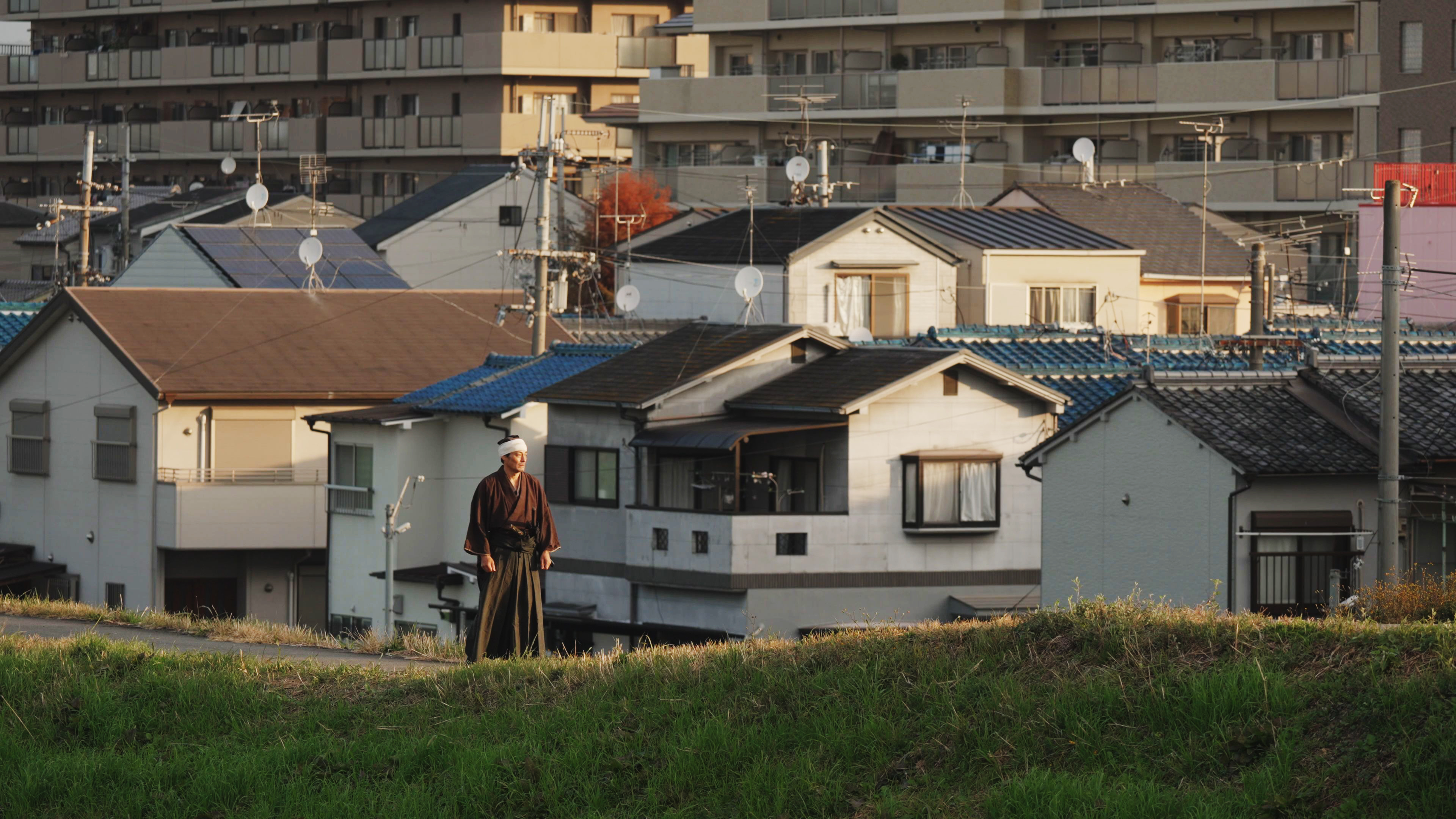
Is there something a little sad about being forced to reenact your reality as theatre, or is it something to be proud of in adapting to the times and bringing the essence of what you once were with you? Junichi Yasuda’s A Samurai in Time (侍タイムスリッパー, Samurai Time Slip) like A Boy and His Samurai sees an Edo-era retainer transported to the present day but is less about contrast with the feudal past than how to carry on or start again when your time has ended.

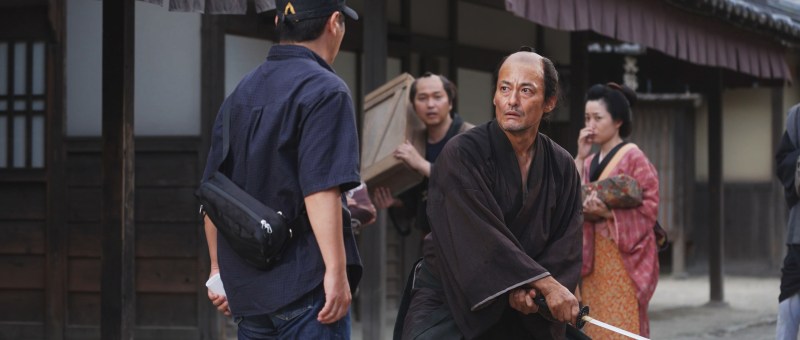
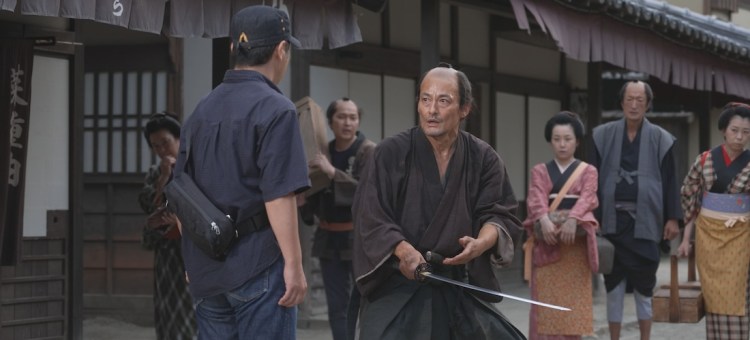
At least that’s how it is for Kosaka Shinzaemon (Makiya Yamaguchi), a member of the Aizu Clan loyal to the Tokugawa Shogunate in the twilight of the feudal era. In arriving in our present, he’s forced to admit that days of the samurai are long over, and finds himself a man with out a place, adrift in a classless society in which the only skill he possesses, swordsmanship, is all but obsolete. The irony is that, after being transported by a Terminator-style lightening strike, Shin arrives on the set of a jidaigeki, or samurai-themed television drama which is to say an artificial recreation of his reality. Thus he’s confused when he tries to ask passers-by for directions and they seem alarmed and ignore him while his attempt to intervene when a young lady is bullied by rogue samurai earns him a dressing down from a man in strange dress we obviously know is the director. When he’s knocked out from a bump on the head, everyone assumes he’s got amnesia and has become confused between his role as an extra on a samurai drama in which he may have overinvested and his “real” life, which in a way maybe true.

Just as he’d come from the end of the feudal era, so he’s arrived in the dying days of the jidaigeki. Once a mainstay of the entertainment industry in its heyday of the ’50s and ‘60s when historical dramas ruled the airwaves, the genre has long been in decline and somewhat out of favour with both filmmakers, seeing as they’re much more expensive to make, and audiences. In fact, the place where Shin arrives is a former shooting set that’s been turned into a theme park recreating the reality of the jidaigeki serial rather than that of the feudal era.

In an analogy which might prove slightly awkward, Shin’s fate is aligned with that of the jidageki itself but by accident of birth he is also on the wrong side of history both literally and metaphorically. As he later learns, his Aizu clan and the shogunate it served would not prevail. Yet ultimately he likes this new Japan, a place of prosperity where anyone and everyone is free to eat what to him seems like the food of the elite. Embarking on a career as a jidaigeki stuntman, a kiriyaku or extra who dies on screen, he becomes committed to protecting the jidaigeki in the same way he protected the shogunate even as everyone around him says he must be mad to take up this sort of work now when jobs are few and far between. 

To that extent, it’s really about learning to adapt to another reality preserving what you can (and wish to) about the past but continuing to move forward like a samurai living life fully in service of an ideal. In a sense, this is something the Aizu could not do for they were defeated during in the Boshin War which solidified the victory of progressive revolutionaries who believed that modernisation and Westernisation were the only ways to save Japan bringing the age of the samurai to a close. In strange ways, Shin finds himself re-enacting this internal dilemma through his meta performance, bringing a note of authenticity to the jidaigeki genre which as we can see from that being filmed is not always terribly serious or earnest about historical accuracy. 

There is though an earnest desire to preserve it, if also to modernise for a contemporary era accepting that the days of classic jidaigeki are over but the genre may live again if in different ways. Through roleplaying his internal conflict, Shin is able to overcome his lingering feelings of guilt towards the clan and attachment to the more destructive sides of the samurai code, rejecting his opportunity for revenge and deciding to live well instead in this brave new world seemingly filled with potential for reinvention and recreation in which the past need not be cast away or overwritten but carried forward into new futures of its own.


A Samurai in Time screened as part of this year’s Fantasia International Film Festival.

Original trailer (English subtitles)

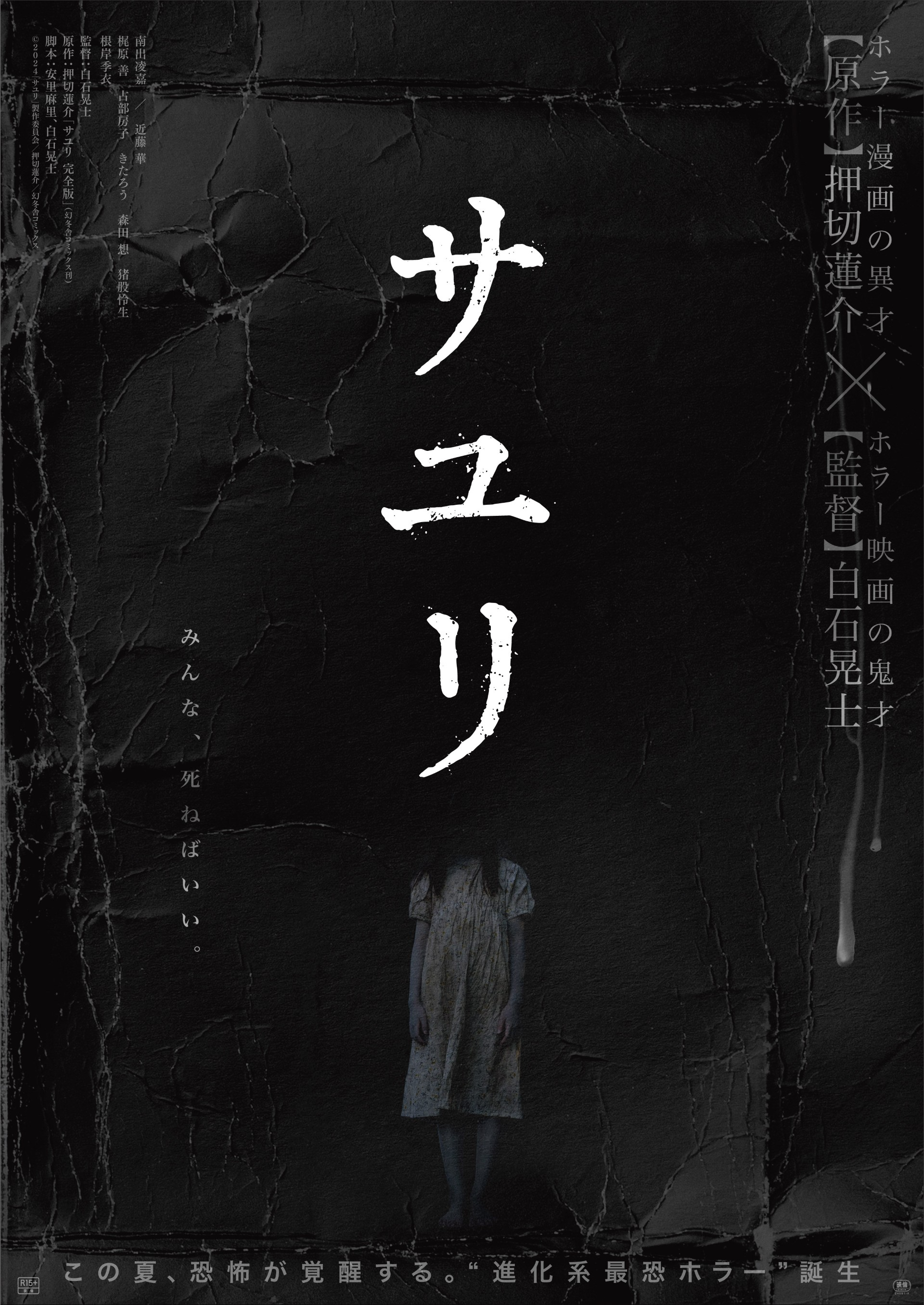
House of Sayuri (サユリ, Koji Shiraishi, 2024) [Fantasia 2024]

An excited family discover the perils of buying a “used” home in Koji Shiraishi anarchic haunted house horror House of Sayuri (サユリ, Sayuri). Unlike many other nations, Japan does not really have a comparable housing market as, given changing building regulations etc, it’s common to demolish the original structure and build a bespoke home in its place rather than move into one someone else has vacated. That obviously means that opting for an existing property can be a little bit cheaper, which is presumably how the Kakimis have finally managed to move into what they describe as the dream home, escaping a cramped city apartment for a spacious rural mansion with room enough for grandma and grandpa too.

Of course, this particular home is probably cheaper because something untoward once happened there, though the Kamikis probably don’t know that, and everyone who’s lived there since has moved out a short time later. In a way referencing Shiraishi’s previous work, we can’t really tell whether the malevolent spirit wants the family out or is merely trapped in a loop of revenge on the family that badly betrayed them. In any case, it makes its way through the Kamiki family unit starting with daughter Keiko and causing all manner of strange events in the house. Sensibly, older son Norio begins to ask why they don’t just move but the parents are so committed to their dream of homeownership that they can’t bear the thought and remain determined to hang on to it at whatever cost. 

In any case, some wise words from grandma advance a more positive way of battling the ghost, that they should fight it with the force of their lives. They laugh in its face and shout vulgar phrases that send it scuttling away in outrage. The best way to fight the darkness, grandma says, is to live well. Like the house itself, it seems grandma has a well hidden secret that makes her the film’s key asset, a hilarious force of nature and eternal wise woman otherwise ignored because her dementia undermines her credibility. Meanwhile, Norio makes an unexpected friend at school who just happens to be a psychic and is keen to warn that a little girl ghost has latched on to him and it would obviously be better if he could just move out on account of all the evil emanations that appear to be coming from his home.

But as grandma says, it’s the grudges of the living they ought to be afraid of. The house of course holds its secrets and its labyrinthine, multilevel structure is perfect for concealing them. Unfortunately the Kamikis have bought into this poisoned legacy and slowly start seeing their familial bonds fracturing while the ghost takes advantage of their vulnerabilities, their negative emotions and insecurities. In a sense it becomes a question of whether they can endure a place of trauma to maintain their dreams of homeownership or are prepared to make the more sensible decision of ceding ground and moving somewhere less toxic while Norio tries to reclaim his place in his family and protect what remains of it. 

Truly heading in some unexpected directions particularly in its unpredictable send half, the film takes on an absurdist quality but also returns to classic genre tropes of the legacy of child abuse and the betrayal of a parent who saw and did nothing perhaps because, like the Kamikis, they were prepared to accept this this kind of toxicity to maintain a happy family home and be seen as a model upper-middle class family living in a country mansion. It turns out, the only way to exorcise this much more literal ghost is by directly confronting the traumatic past and attempting to find accommodation with it be that through violence or forgiveness. But as grandma had said, the best weapon is love and life, throwing back at the ghost what it no longer has in a defiant expression of being alive and that joy contains which is also of course as grandpa had said a way of honouring the dead resolving to make the most of one’s remaining time in their memory. In any case, Norio discovers that you do not have to continue living in a haunted house but unlike a ghost are in fact free to leave the scene of trauma and seek new happiness in a less upsetting place.


House of Sayuri screened as part of this year’s Fantasia International Film Festival.

International trailer (English subtitles)
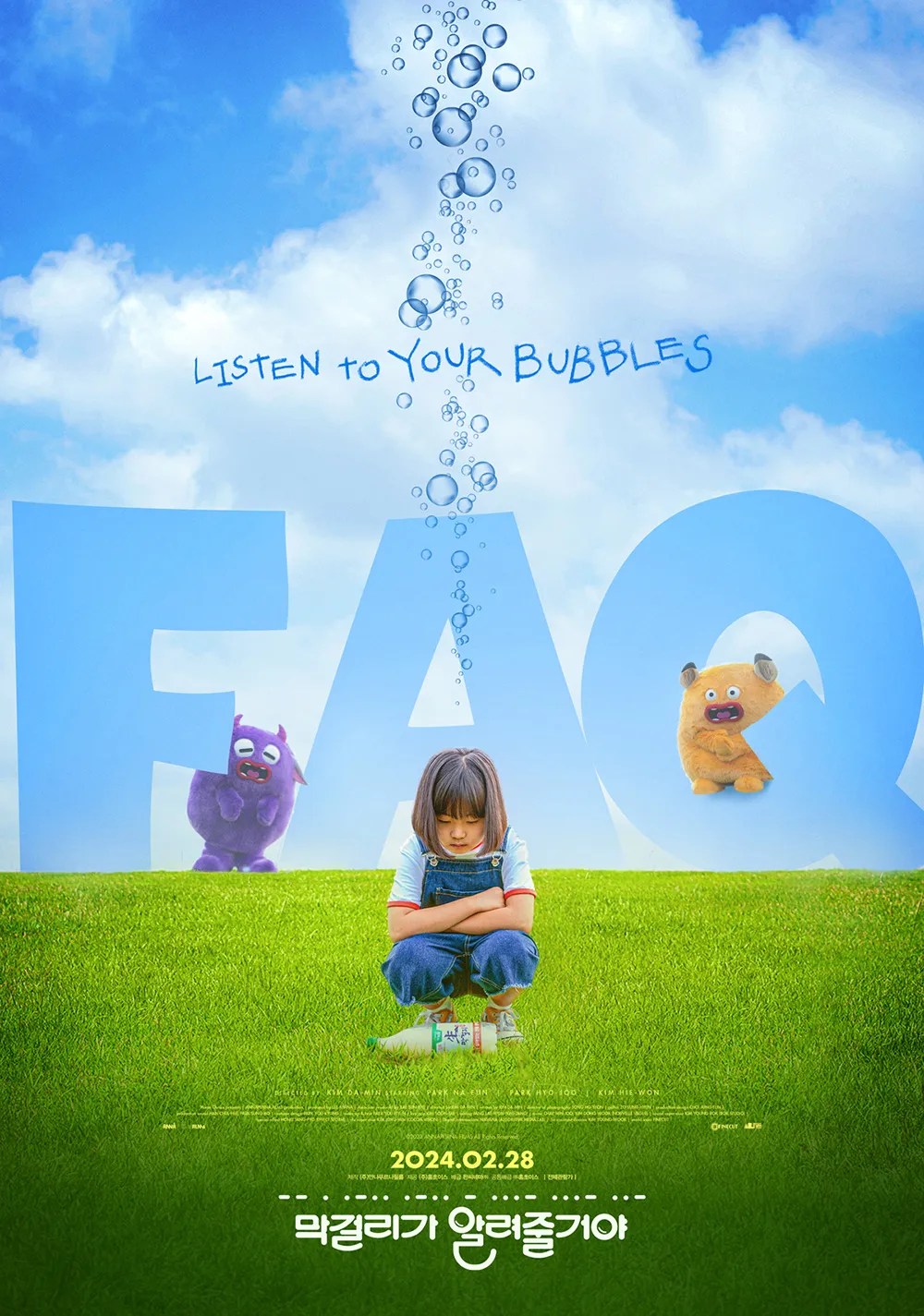
FAQ (막걸리가 알려줄거야, Kim Da-min 2024) [Fantasia 2024]

The sad thing is that Dong-chun, the heroine of Kim Da-min’s charming if also searingly bleak exploration of a Korean education FAQ (막걸리가 알려줄거야), is full of questions the adults around her don’t want to answer. To be charitable, it could be because they want her to have the ability to solve problems on her own, but less so because in the adult world there really is only one correct answer and finding solutions that are entirely your own can make others uncomfortable. 

This is something Dong-chun starts to realise, remarking that she now understands why adults don’t like it when you ask questions when her two imaginary friends ask her how she’s going to explain that she got the winning lottery numbers from a bottle of makgeolli that communicates with her through morse code but in Persian. Even Dong-chun knows, she probably shouldn’t mention that part out loud but there’s something quite poignant about the fact that the makgeolli is her only real friend. Her tendency to ask questions, which is difficult for her because of he shyness, has already seen her labelled as weird as by several of her classmates including the obnoxious Na-young who pretends to get along with her because their mothers are friends but is really much more of a model child try hard already obsessed with being on the right track and getting in the best lane for the university application she won’t be writing for another decade.

That’s something else that’s difficult and inexplicable. The education system keeps changing so you can’t even try to game it because they constantly move the goalposts. The reason why the mothers enrol the girls in Persian classes is because they think top universities will be making special offers to people who speak Persian when they come to apply, but also they might not. Concerned that she’ll be disadvantaged by her short stature, Dong-chun’s mother Hae-jin starts injecting her with a growth serum and advises she go to bed earlier, but the girl points out that she needs to stay up to 11pm to finish all her homework. She has cram school and activities nearly every day including an art class that doesn’t even start until 9pm. No one seems to be asking what effects persistent sleep deprivation may have on her later life and mental health besides impacting her height. 

In short, it’s not surprising if her mind’s begun to crack under the constant pressure of being forced to conform to a very rigid sense of social success which begins in early childhood and largely disregards everything that makes Dong-chun interesting from her insatiable curiosity to her empathetic nature and bashful friendliness. We can also get a glimpse ahead by looking at the life of her mother, Hae-jin, who reveals that she suffers from depression in part because she won a full scholarship to a good university and had a high paying corporate job she was pressured to give up to become a housewife and mother. A therapist perhaps problematically told her that she had the wrong attitude because she was now doing the most important thing in the world by raising a child which is why she begins pinning all her vicarious hopes on Dong-chun as a vessel for her own success as a mother in submitting herself to the nation’s relentlessly patriarchal social codes. 

Dong-chun’s parents aren’t bad people, they love her and are actively supportive. They aren’t angry when she experiences stage fright at a speech competition and later tell her she can sit the next one out if she feels uncomfortable (genuinely, not out of a desire to avoid their own embarrassment). But they’re so focussed on her future they’re missing her present, which is why it takes Hae-jin so long to realise she’s fermenting makgeolli in her room. Later she reflects that perhaps they should move to another country, one where Dong-chun would be free to be herself but it may already be too late. In any case, we can see Hae-jin’s contempt for those who choose to live outside of Korea’s rigid ideas of social success in her reaction on finally finding her long lost brother who graduated from Seoul University and had a big corporate job but dropped out to be hippy living off grid. He doesn’t know it and neither does she, but he ends up forming an unexpected connection with his neice Dong-chun being one of the few people who actually listens to her. 

When it finally speaks, the makgeolli has the voice of her science teacher who was the only person who did actually answer one of her questions if only to explain that know one knows yet but he’ll be sure to pass on the information when they do. In a way, getting this cosmic message and focussing how to solve this great mystery at the centre of her life help Dong-chun find her direction even if it’s leading towards “fermentation” in the great black hole of adulthood. The ambiguity of the ending restores a kind of darkness to Kim’s quirky tale but in any case allows Dong-chun to escape through the imagination and free herself from the constraints of a rigid society in which asking questions, let alone answering them, is very much not the done thing. 


FAQ screened as part of this year’s Fantasia International Film Festival.

International trailer (English subtitles)
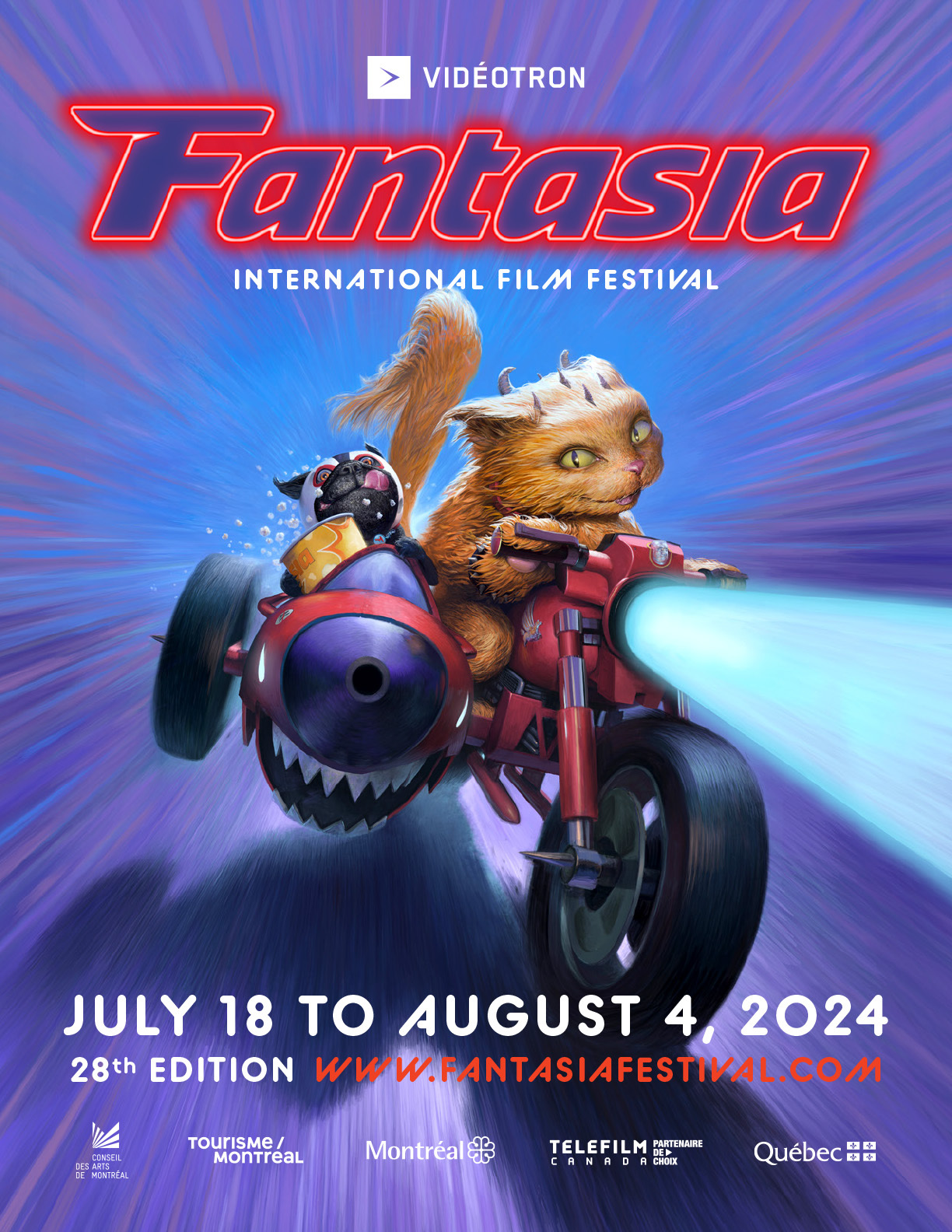
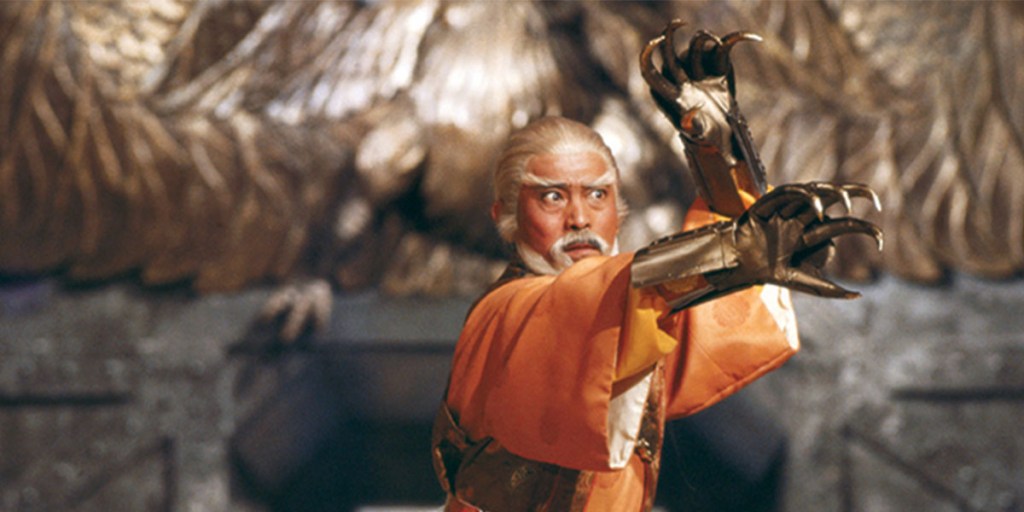
Fantasia International Film Festival Confirms Complete 2024 Programme

The Fantasia International Film Festival returns for its 28th edition taking place once again in Montreal from July 18 to Aug. 4. As usual this year’s programme includes a host of new and classic features from East Asia .

China

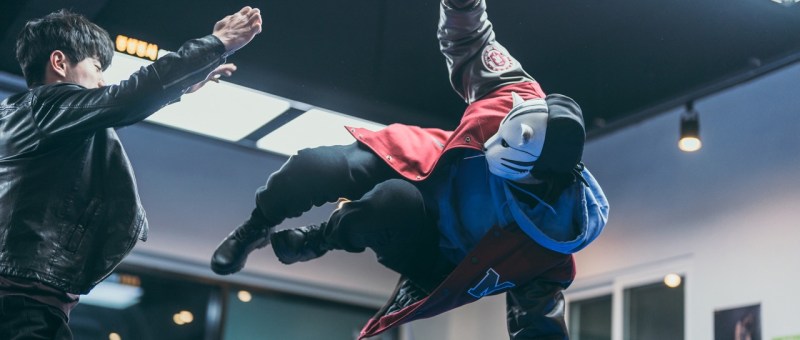
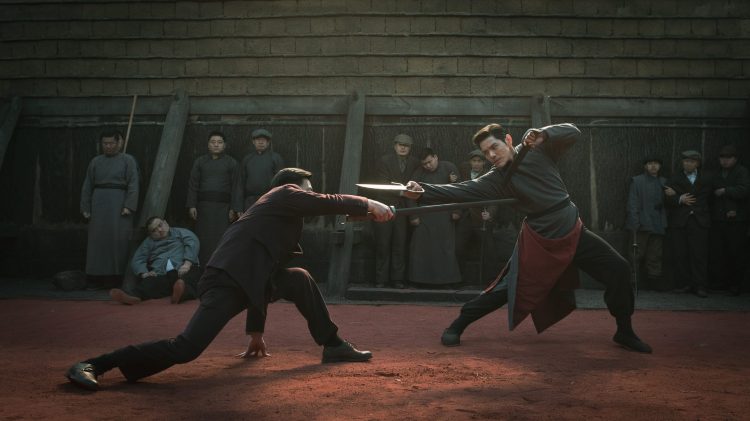
  • 100 Yards – martial arts drama set in 1920s Tianjin.
  • A Legend – Epic historical drama from Stanley Tong starrying Jackie Chan.
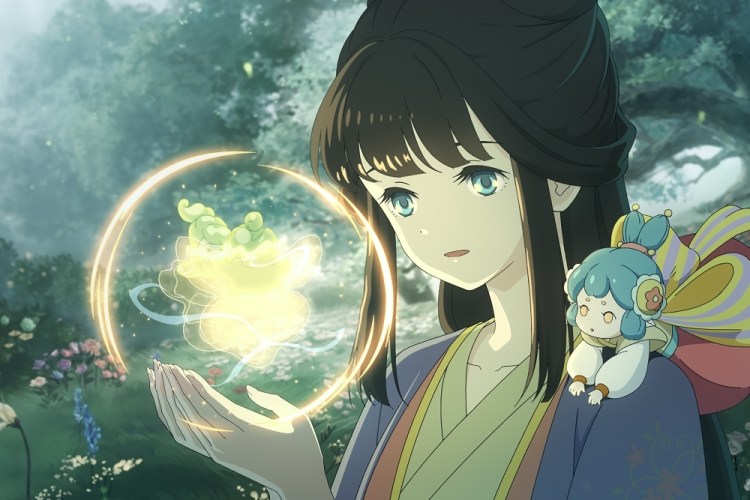
  • The Umbrella Fairy – Chinese animation revolving around the spirits of a sword and umbrella.

Hong Kong

Japan

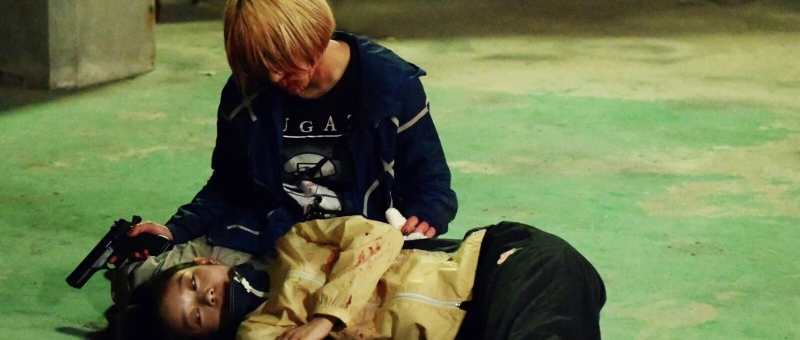
  • Baby Assassins Nice Days – latest in the popular series of slacker hit girl comedies.
  • Brush of the God – drama in which a young woman inherits her grandfather’s kaiju legacy.
  • Confession – latest from Nobuhiro Yamashita starring Toma Ikuta and Yang Ik-june as two men hiking in memory of a late friend.
  • Don’t Call it Mystery – Totono is one again swept into intrigue in this big screen instalment of the TV drama.
  • Fly me to the Saitama: From Lake Biwa with Love – Osaka is on the March in the sequel to the popular comedy.
  • Ghost Cat Anzu – animation co-directed by Nobuhiro Yamashita in which a young girl is entrusted to an immortal Ghost Cat.
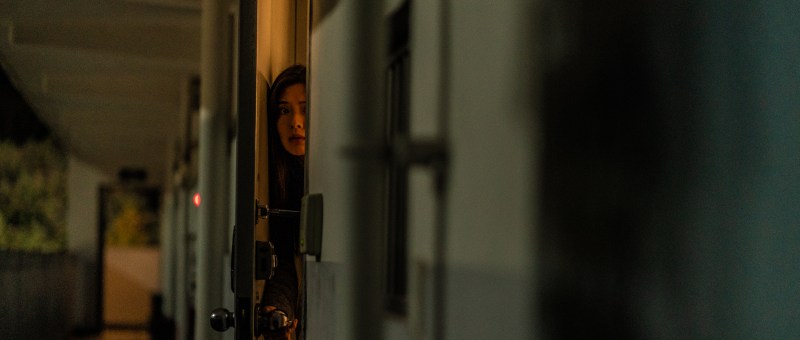
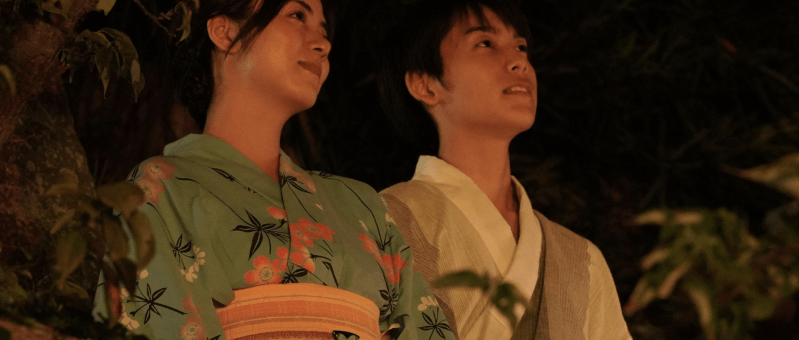
  • House of Sayuri – horror from Koji Shiraishi in which a family moves into a house in the country which turns out to be haunted.
  • Kizumonogatari: Koyomi Vamp – latest in the sprawling Monogatari series
  • Love and Pop – classic compensated dating drama from Hideaki Anno.
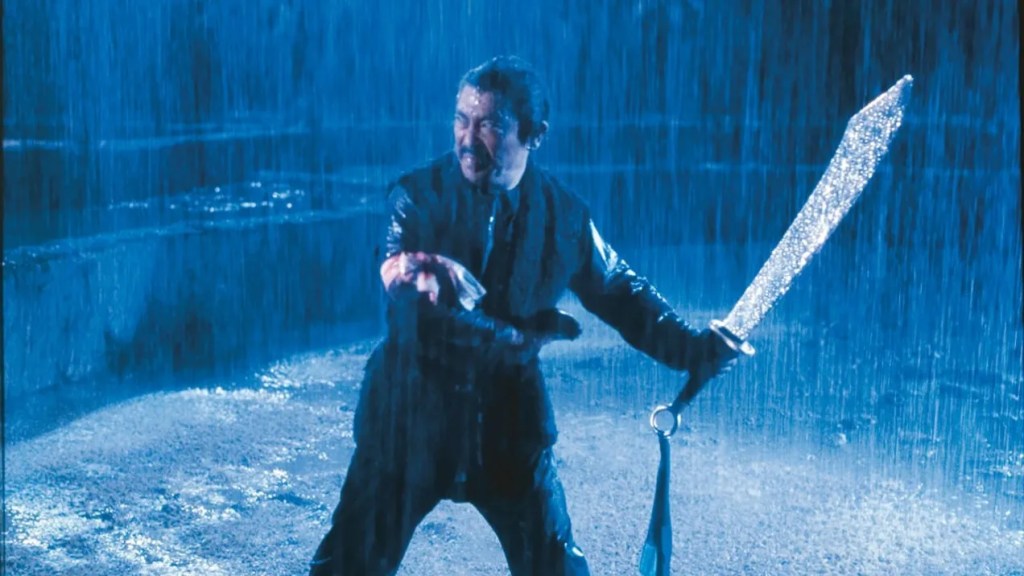
  • Mononoke the Movie: Phantom in the Rain – striking animation from Kenji Nakamura.
  • Penalty Loop – a man trapped in a timeloop of vengeance begins to realise the fallacy of revenge in Shinji Araki’s absurdist drama.
  • Samurai in Time – a samurai retainer is suddenly catapulted into the modern age and the set of a jidaigeki.
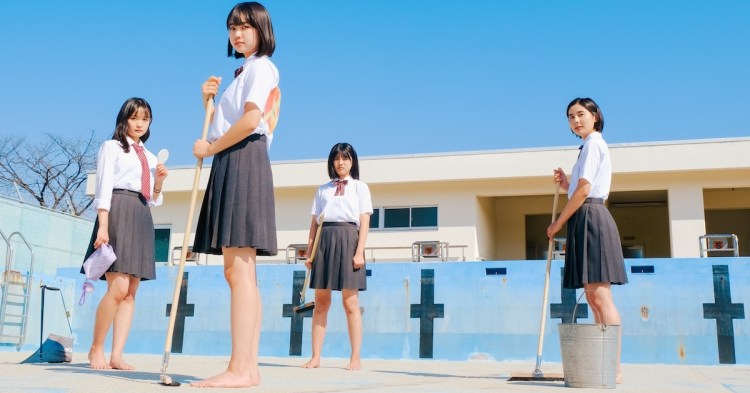
  • Swimming in a Sand Pool – a group of high school girls ponder the role of gender in their lives while shovelling the sand in Nobuhiro Yamashita’s charming teen comedy.
  • Tatsumi – a fisherman/cleaner for a drug gang teams up with his ex-girlfriend’s sister to avenge her death.
  • Teasing Master Takagi-san – adaptation of the popular manga picking up with Takagi’s return to Japan.
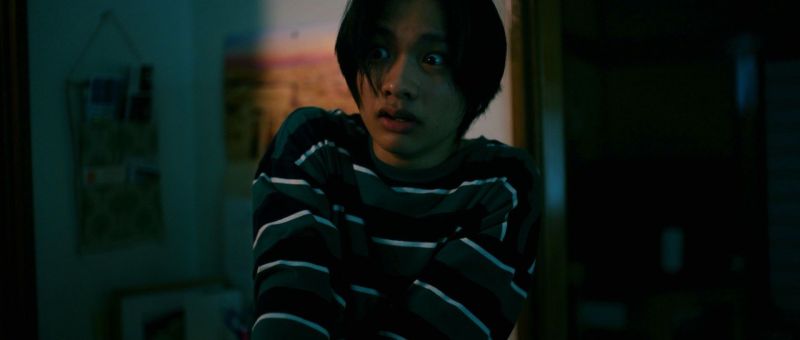
  • This Man – eerie folk horror from Tomojiro Amano.
  • The Ying-Yang Master Zero – lavish historical fantasy from Shimako Sato

Korea

  • 4pm – a couple find themselves plagued by an eerie house guest after moving to the country.
  • Brave Citizen – a former boxer stands up against a bullying culture.
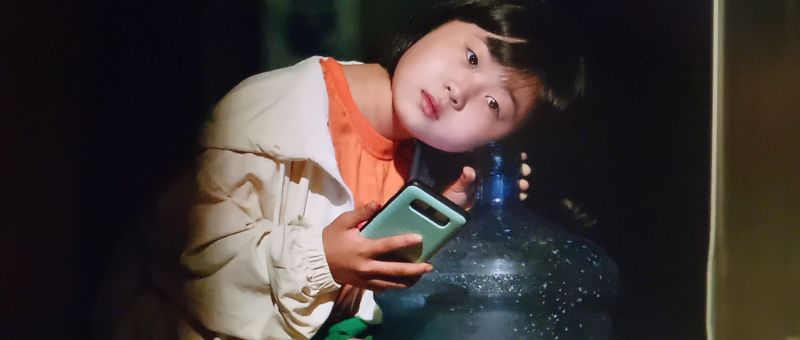
  • FAQ – quirky drama in which a girl makes friends with a bottle of makgeolli.
  • The Killers – anthology film featuring four tales of hired killers.
  • The Roundup: Punsishment – Ma Dong-seok returns to investigate the death of a Korean in the Philippines in the latest instalment in the Roundup series.
  • The Tenants – a man finds himself in a waking nightmare after taking in some eccentric tenants.

Thailand

The Fantasia International Film Festival runs in Montreal, Canada, July 18 to Aug 4. Full details for all the films along with scheduling and ticketing information are available via the the official website, and you can also keep up with all the latest news via the festival’s official Facebook pageX (formerly Twitter) account, Instagram, and Vimeo channels.

River (リバー、流れないでよ, Junta Yamaguchi, 2023) [Fantasia 2023]

Some might say time stands still in the “peaceful” hot springs town of Kibune, but on this particular day it’s more than usually true in Junta Yamaguchi’s followup to the cult hit Beyond the Infinite Two Minutes, River (リバー、流れないでよ, River, Nagarenai de yo). This time around, the staff of a hotel along with its guests find themselves trapped in an infinite two minute loop in which they retain all their memories but are constantly returned to where they were two minutes previously no matter what they do. 

Depending on the situation, two minutes can be an eternity or an instant (or perhaps it’s always both) and in this case there isn’t much you can do in such a short time. The hotel staff find themselves constantly running up stairs and through corridors trying to coordinate their actions while accepting that nothing is permanent and any changes they try to make to their situation will be wiped out in the next loop. A chef who is also apparently a science enthusiast cautions them against taking any rash actions seeing as they can’t know when time will start flowing normally again, though for some the opportunity to embrace guilty pleasures such as poking a hole in the shoji is too good to pass up. 

As for what’s causing it, no one really knows but as it turns out everyone has a reason they might want to stop time. For maid Mikoto (Riko Fujitani) it’s that she fears her boyfriend plans to move abroad to study French cooking while another pair of guests secretly wanted to ask each other favours but are having trouble plucking up the courage and a blocked writer consumed with guilt for having killed off a key character is glad he can finally take some time out only to be slowly bored out of his mind when faced with an eternity of nothingness. The irony is that people come to places like these precisely because they’re “boring”, free from the chaos and stress of their ordinary lives. Mikoto says as much while wondering if that’s why her boyfriend wants to leave, that he feels as if he’s stagnating in a place where nothing changes and time doesn’t flow and that while he could be “happy” here with her living an ordinary life there’d always be a part of him wanting more.

Still, having this additional time helps each of them find clarity and begin to resolve some of their worries and anxieties. Even if they had “more time” in the more conventional sense, they may never have been able to speak plainly but given the enforced constraints of the time loop in which they quickly run out of other things to do and are more or less forced to talk to each other, they are all able to come to some kind of accommodation with what’s been bothering them. The two male guests are able to clear the air after an argument, the writer comes to a new appreciation of his characters thanks to his own sense of despair being trapped in the loop, and Mikoto realises she’ll have to let her boyfriend go in the hope that he’ll circle back around to her in time. 

The complexities involved are unlike those in Beyond the Infinite Two Minutes given that time constantly resets so the only point of consistency is the initial position of each person though the infinite quality of the looping provokes an additional layer of existential questioning as each of the various protagonists is forced to ask if they’re really moving on with their lives or even notice that time is indeed flowing. The clue that something is continuing to move lies in the differing levels of snowfall in each of the loops hinting at the increasing depths of their despair as they realise that not even death might free them from the maddening cycle of repetition while accepting they’ll have to work together to figure out what’s going on and how to escape the loop. The farcical humour soon gives way to a more poignant sense of reflection but also to a renewed joy and excitement that the future might actually be fun too and maybe it’s less scary to go there than be quite literally stuck in the present for all of eternity.


River screened as part of this year’s Fantasia International Film Festival.

Original trailer (English subtitles)
Deep Sea (深海, Tian Xiaopeng, 2023) [Fantasia 2023]

“For you who passed through the darkness” runs a dedicatory title card at the conclusion of Tian Xiaopeng’s stunning animated drama, Deep Sea (深海, Shēn Hǎi). Aimed squarely at younger audiences, the film is an exploration of depression and despair as the young heroine is plunged into a dark sea feeling that her life has no value but there encounters a fantastical world of colour and light while chasing the ghost of the mother who abandoned her.

As if to signify her loneliness, the film opens in a blizzard in which Shenxiu (Wang Tingwen) desperately searches for her mother only for her shadow to turn into a strange, many eyed monster. Back in the “real” world, she’s off on a family holiday with her father, his new wife, and their baby son, the family of three sitting in front while she remains behind on her own wearing the red hoodie that once belonged to her mother. About to get on a boat for a six-day cruise, she drafts a message to her mother about how excited she is to see the ocean but then scrolls back up and remembers all the times her mother didn’t reply and the times she did to tell her she’s busy and wishes Shenxiu wouldn’t contact her if it isn’t urgent. She deletes the message and rejoins her family but they’re so busy fussing over the baby that they don’t have time for her either and in fact seem to have forgotten that today is her birthday.

Venturing out on the deck in a storm, Shenxiu is sucked into a tornado in which she sees the outline of her mother and meets a strange sea creature, Hijinx, from a story her mother had told her believing that it has come to guide her to where her mother is living. Before too long she arrives at a bizarre floating restaurant where aquatic creatures go to eat run by “avant-garde” chef Nanhe (Su Xin). In some ways, Nanhe comes to represent her mother in that he first rejects her, insisting that she’s bad luck and kicking her out but later takes her back and tries to make her happy in an effort to stave off the “Red Phantom” that threatens to consume her, taking on the form of her mother’s red hoodie in which she attempts to bury herself as a symbol of her loneliness and despair. 

Beautifully animated, the world of the restaurant is a silkpunk paradise of chaotic action, part pirate ship and part fantastical submarine powered by walruses on stationery bicycles. Tian Xiaopeng makes fantastic use of the projector screen to illuminate Shenxiu’s fantasies, neatly including a cartoon within the cartoon in a more traditional 2D style while otherwise reflecting Nanhe’s broken dreams for a homeland he says he can never return to. Shenxiu too shifts between alternate “realities”, experiencing brief flashbacks to happy memories of her mother and others of less happy times as she’s sent for counselling by a school concerned she seems withdrawn only to be told the solution is to smile more so she’ll fit in better encouraging her to bury herself and her feelings under an affected facade of cheerfulness for the comfort of others.  

Nanhe’s final acceptance of her comes when he tells he that he hopes all her future smiles will be from the heart unlike the clown face he sometimes wears with its eerie, false grin intended to ward off other people’s discomfort but largely masking pain in himself. He also tells her that though the “real” world may seem grey and miserable in comparison to the dazzling colour of her dreams, there will bright moments waiting for her that no matter how small are worth living for. It might seem a heavy message to deliver to small children, but also one that some may sadly need to hear. Tian opts for a more realistic conclusion than many might expect in which Shenxiu but nevertheless allows her to punch through her loneliness and despair into a happier existence bonding with her stepmother and seemingly better integrated into her family no longer feeling excluded or alone. Absolutely breathtaking in its execution, Tian’s incredibly rich fantasy world is a riot of whimsy but also tempered by a deep empathy and compassion for anyone who’s battled their way through a dark sea. 


Deep Sea screened as part of this year’s Fantasia International Film Festival.

Original trailer (English subtitles)

Mad Cats (Reiki Tsuno, 2023) [Fantasia 2023]

The captive felines of Japan are mad as hell and they aren’t going to take it anymore in Reiki Tsuno’s absurd action comedy, Mad Cats. Sick of mistreatment and exploitation at the hands of humans who breed them for sale, these cats have transformed into a cult-like band of vigilantes thanks to a forbidden ancient Egyptian catnip that grants superpowers unearthed by a cat-loving Egyptologist who has been missing for the previous two years.

Mune (So Yamanaka) had been the responsible brother and in his extended absence, Taka (Sho Mineo) has become an irresponsible layabout behind on his rent and surrounded by old food cartons. A cassette tape delivered in a letter addressed only with his first name alerts him to the fact his brother is being held captive in a place where they once found a black cat and needs rescuing while he should also make sure to pick up a small wooden box on his way. Taka jumps straight on his bike, but unfortunately is not the sharpest knife in the drawer and finds himself ill-equipped to face off against the Mad Cats who are only more annoyed when he makes off with the their secret stash of forbidden Egyptian catnip.

Despite becoming anthropomorphised the cat women (they are all female cats) still behave in noticeably feline ways with their strange grins and vacant eyes not mention to weird head tilts and cat-like gestures such as pawing the air or slapping an opponent when otherwise not armed with axes or nunchucks. Later Taka is joined by another mysterious woman, Ayane, who apparently once belonged to the same cat lady cult but is somehow immune to the catnip aside from having become human and is determined to stop the others from going too far on their quest for revenge against human cruelty. 
Perhaps you can’t really blame them for that, though their vengeance does take on a rather ironic quality as they keep Mune tied up in a cage and force him to eat like a cat hunched over on his knees with his hands bound. Meanwhile, Taka teams up with a homeless man who is also enjoys cat food and is forever complaining that he’s not supposed to be here he just got swept up in some bizarre events while minding his own business. Takezo (Yuya Matsuura) also seems to be somewhat displaced, estranged from his wife and family and like Taka is looking for a way to go home even if he didn’t have running away from mad cats on his bingo card. 
The pair of them go through a training bootcamp thanks to Ayane but otherwise continue to flounder, forgetting everything they’ve learnt and cowering cartoonishly when faced with a marauding cat hoping Ayane will arrive to save them after all. Then again, they aren’t particularly bothered about trying to save the corrupt pet shop owners who callously breed cats for sale in poor conditions to possibly unsuitable people, perhaps sympathising with their concerns as genuine cat lovers reevaluating their thinking around pet “ownership”. 

Rounding out the absurdity, Tsuno adds in a series of action set pieces featuring cat-like choreography as Ayane squares off against the rest of the Mad Cats who are otherwise dressed in eerie white gowns like the members of a bizarre cult living an isolated existence in the mountains. From the cassette tape to the roller diner where Taka and Takezo are first attacked, the film has a quirky, retro sensibility that is perfectly in tune with its absurdity even as the guys drive around a borrowed car that has a registration plate reading “killer blow” while tracked by the seemingly unstoppable Mad Cats who, as we later realise, really do have nine lives. There is something quite touching underneath the strange allusions to Egyptian cat gods, superpowered catnip, and vengeful felines in the strength of the relationships not just between the brothers but between cats and their guardians despite the vengeful mission of the Mad Cats who reject their captivity by ridding themselves of irresponsible cat traffickers. Deadpan and surreal, the film has an infectious sense of fun in its boundless inventiveness and quirky composition while also carrying a more serious message about animal cruelty and responsible pet guardianship in a world in which even the lives of living creatures have been commodified.


Mad Cats screened as part of this year’s Fantasia International Film Festival.

Teaser trailer (dialogue free)