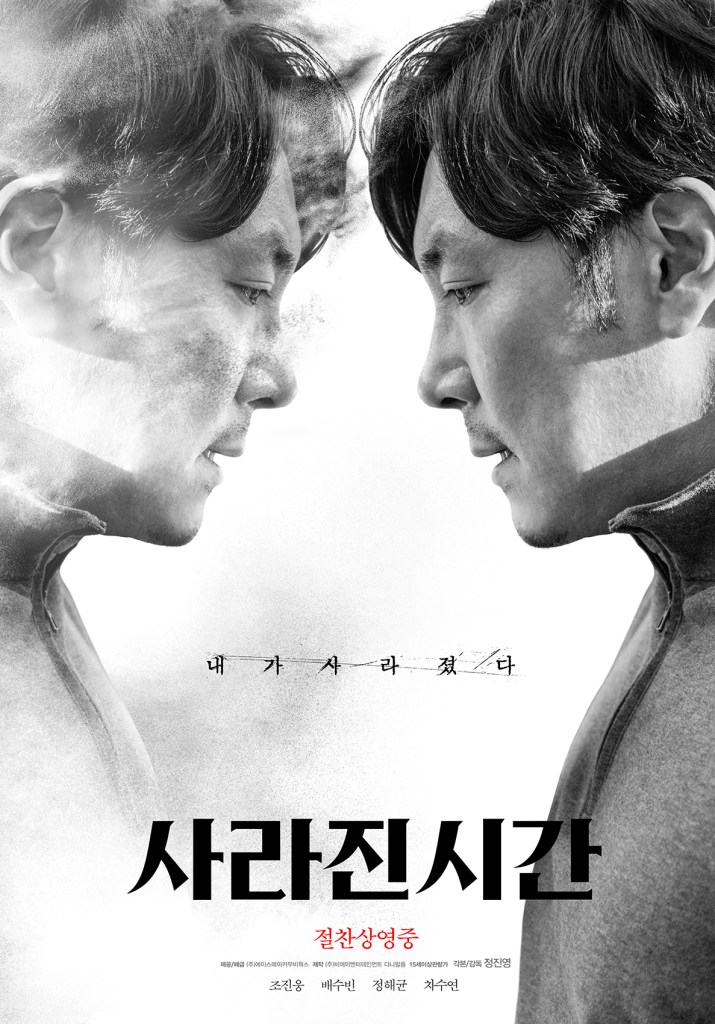
Me and Me (사라진 시간, Jung Jin-young, 2020) [Fantasia 2020]

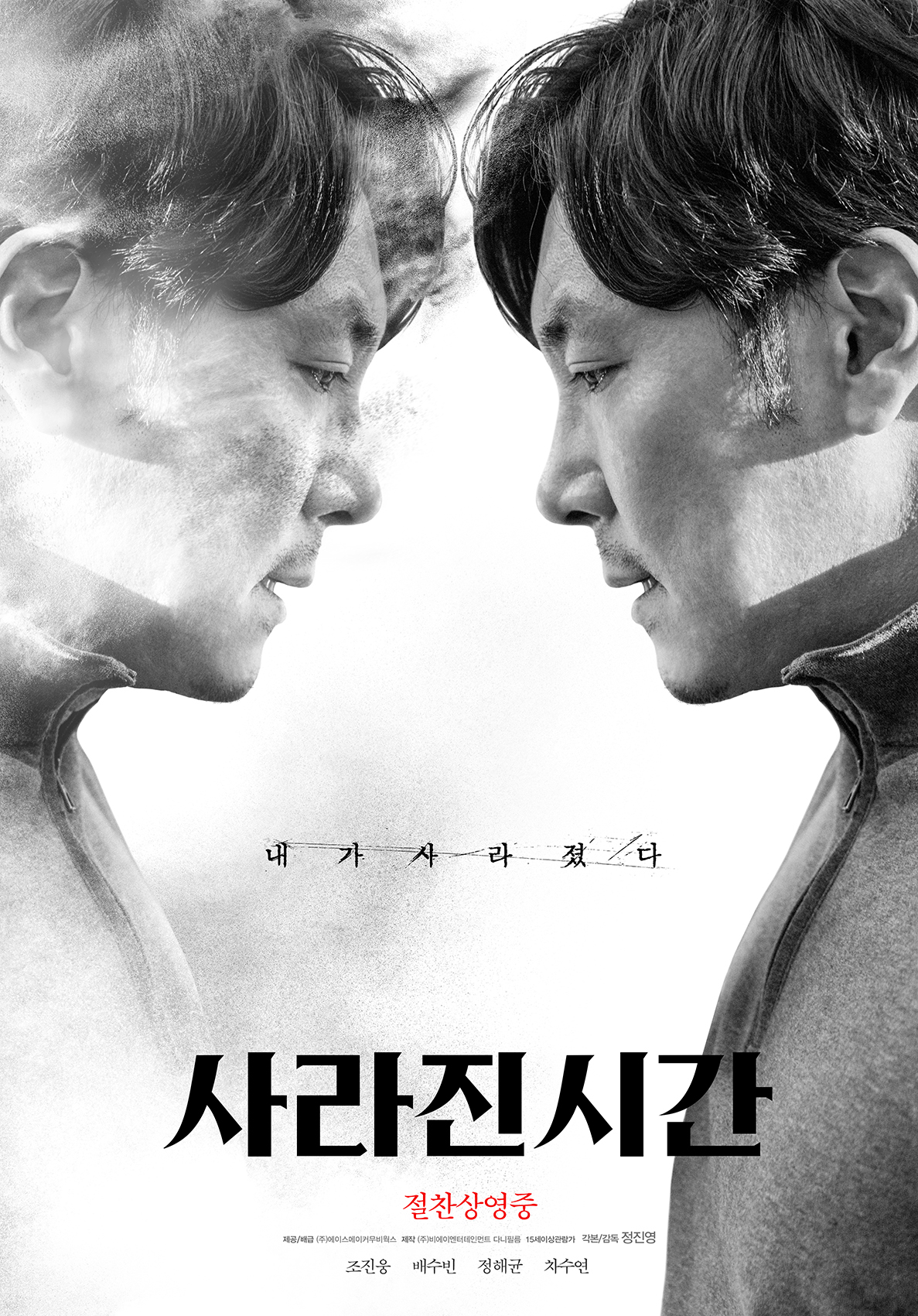
“Don’t invent stories, just go with what you see” the hero of Jung Jin-young’s Me and Me (사라진 시간, Salajin Shigan) is advised, only to find himself investigating his own disappearance. The first directorial feature from the veteran actor, Me and Me throws its existentially displaced hero into another world but then asks him who it is he thinks he is if everyone is telling him he’s someone else. “It’s painful” he finally commiserates unexpectedly encountering a similarly troubled soul, living with another self inside him and consumed by a sense of loss for another life that perhaps never was or will be.

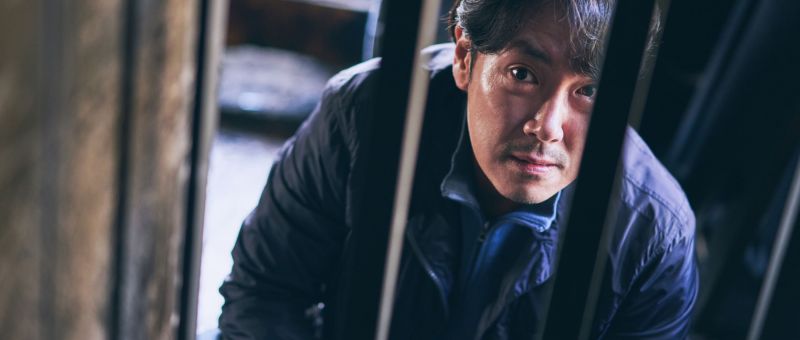
After a brief black and white title sequence featuring policeman Hyung-gu (Cho Jin-woong), Jung opens with a lengthy prologue following primary school teacher Soo-hyuk (Bae Soo-bin) who has just moved to a small, rural town along with his wife Yi-young (Cha Soo-yeon) who has, we discover, a secret. When the locals find out that at night she’s quite literally someone else, repeatedly possessed by departed spirits, they decide that she must be dangerous and install bars and a gate inside her home to cage her inside. Soo-hyuk refuses to leave her, asking to be locked inside too, and the sense of partial acceptance, that the townspeople know of her condition and have decided to meet her halfway, seems to free his wife. Having long been resistant, Yi-young warms to the idea of having a child, that perhaps they could have a happy family life despite her unusual affliction. 

Unfortunately, however, the house is consumed by fire and as they were locked inside, village foreman Hae-gyun (Jung Hae-Kyun) who has the key apparently out of town in a love hotel with the wife of the local police chief, Soo-hyuk and his wife are unable to escape. Hyung-gu finally arrives to investigate the crime, only to be bamboozled by the anxious locals who trick him into drinking some of their homemade pine needle liquor after which he wakes up to discover that he’s not a policeman after all, but the local schoolteacher and he’s very late for work. 

Obviously confused, Hyung-gu tries to figure out what’s going on. He misses his wife and his sons, but is distressed to discover that none of his neighbours recognise him, someone else lives in “his” apartment, and according to the school his kids don’t exist. Half-wondering if the pine needle liquor did something funny to his brain or even perhaps catapulted him into an alternate reality, Hyung-gu is forced to wonder if his previous life was a dream he’s now physically but not mentally woken up from, which means his wife, children, colleagues, and position in society as a policeman were not “real” no matter how real they might seem to him. The dilemma he now faces is in whether he should carry on trying to “wake up” from his new life to return to his “true” reality, or accept his new identity in the knowledge that this too could also be a “dream” from which he may someday wake and will eventually grieve. 

“When it’s time a new season comes” Hae-gyun reminds him, “and when it’s time it goes away”. Freeing himself, having the bars removed from his new home, Hyung-gu begins to accept his new reality, after all what choice does he have? But still he reflects on his own interior life, necessarily a secret from those around him and filled with private sorrow. Even little Jin-kyu, Hae-gyun’s dreamy son, had insisted on his right to privacy over his messy school locker which itself contains a secret pain for another life that he perhaps cannot share with those closest to him. “Everyone’s got a sickness” Hyung-gu sympathises with his new friend as she begins to tell him hers which is, ironically, another echo of his “dream” but also points towards the secret lives that most people have or more to the point never have, carrying something inside them never to be shared. “Don’t worry,” he reassures her, “you’re not the only one”. Each person is a hundred different people, or maybe just one in a hundred different parts. Perhaps in the end it is other people who will tell you who you are and you’ll eventually agree with them because it’s less painful than resisting, leaving that other life as a half-remembered dream. Elliptical and contemplative, Jung’s existential detective story refuses clear interpretation but is in its own way filled with a gentle humanity and a sense of acceptance for all of life’s transitory sorrows as well as its comfort and joy. 


Me and Me streamed as part of this year’s online edition of Fantasia International Film Festival.

Original trailer (no subtitles)
Project Dreams: How to Build Mazinger Z’s Hangar (前田建設ファンタジー営業部, Tsutomu Hanabusa, 2020) [Fantasia 2020]

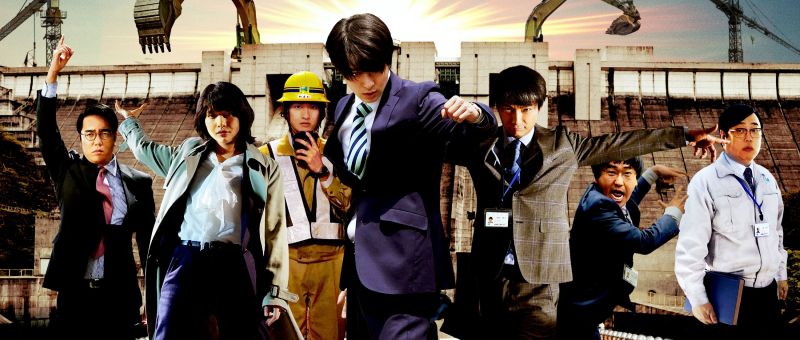
Construction was the post-war powerhouse and a traditional solution for governments looking to boost the economy but what are successful firms to do when everything’s already been built? Maeda made a name for itself as an expert in the construction of dams, but there are only so many you can build and theirs were state of the art so no one’s really looking for any more in the near future. Enter enterprising PR chief Asagawa (Hiroaki Ogi) who has a bold new plan to raise the company’s profile – start an enticing web project in which they draft iconic buildings from the fantasy world as if they existed for real starting with the underwater hangar from nostalgic ‘70s mecha anime, Mazinger Z!

As you can imagine, not everyone is taken by the idea even if initially swept up by Asagawa’s impassioned sales pitch. Being an otaku isn’t something you really want to advertise at work, and perhaps especially if you’re really into kids robot shows from 40 years ago. The point however is less about Mazinger Z than it is that Maeda can build anything it sets its mind to and if it can figure out the wilfully outlandish designs of classic anime which, it has to be said, rarely thought through the real world physics of its creations which are not even generally internally consistent, there’s nothing it cannot handle. 

The major sticking point with the Mazinger Z design is that the hangar is covered by a large amount of water (Mazinger Z is made from a special metal which is completely rust proof) which, given their proficiency with dam technology, shouldn’t be so much of a problem, but the more they look into it the more issues they find from the joints on the “roof” to the platform which pushes Mazinger Z into the launch position needing to boost him within 10 seconds. It doesn’t help that the anime often ignored the constraints of the original design for reasons of plot such as when Dr. Yumi suddenly has the robot slide to the left and bust out of the concrete rather than using the shoot. 

The team will need to show all of their engineering knowhow in order to solve the increasingly annoying number of problems, which is in a sense the point of the project in showcasing Maeda’s superior engineering power. Not all employees are originally behind it, however. Emoto (Yukino Kishii), a young woman entirely uninterested in mecha anime discovers that her colleagues quickly leave the canteen when they see her coming, while reluctant office worker Doi (Mahiro Takasugi) and former engineer Besso (Yusuke Uechi) both find themselves accosted by section chiefs who want them to undermine the project because they are embarrassed to be associated with something so “silly” and worry it will damage the firm’s reputation. Asagawa however is undaunted, sure that this kind of “silliness” is perfect for improving the company brand and capturing an online audience that will eventually lead to more business in the future even if it’s true that their “Fantasy World” clients aren’t going to be paying them nor will they actually be building any of their designs. 

In this Asagawa may well have a point because Project Dreams: How to Build Mazinger Z’s Hangar (前田建設ファンタジー営業部, Maeda Kensetsu Fantasy Eigyobu) just might be the most accessible intro to civil engineering imaginable as they somehow manage to make even the driest of calculations seem exciting in direct contrast to the frequent complaints that the ideas they’ve come up with aren’t “glamorous” enough. Dragged along by his passion, the team gradually come on side one by one with even Doi, the most cynical who told himself that he needed to knuckle down after becoming a regular salaryman, realising that there’s no shame in having fun at work, unexpectedly finding a new appreciation for the craft of engineering after being ordered to read a lot of books about dam building by the company’s foremost expert, himself quietly in favour of the project in its capacity to show off their collective know how and inspire the next generation of engineers. Contrary to expectation, they discover there’s much more industry support than they ever could have imagined for this kind of “silliness” with other companies enthusiastically coming on board to help them achieve their Mazinger dreams. Inspired by true events, Project Dreams has real love and affection for the craft and for those who are just very good at what they do no matter what it might be, embracing a childish sense of fun and imagination along with teamwork and camaraderie which suggests that anything really is possible when you put your mind to it, even constructing an underwater hangar for a robot that doesn’t exist to defend the world against the forces of evil.  


Project Dreams: How to Build Mazinger Z’s Hangar streamed as part of this year’s online edition of Fantasia International Film Festival.

Original trailer (English subtitles)

I WeirDO (怪胎, Liao Ming-Yi, 2020) [Fantasia 2020]

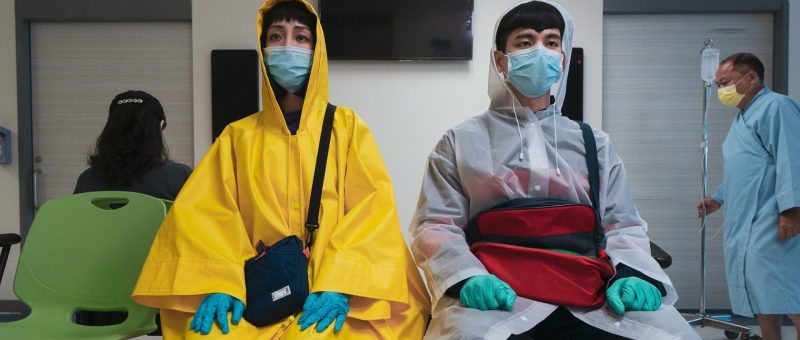
Being in love can be a little like a sickness, but what happens when the spell wears off? A meditation on fatal attraction syndrome and the duplicitous delusions of “normality’, Liao Ming-Yi’s charming romance I WeirDo (怪胎, Guàitāi) arrives at the most opportune moment in which we’re all “weirdos” now, stuck at home obsessively washing our hands and dutifully remaining “alert” as we disinfect everything we see. Liao’s PPE-clad heroes find love in shared anxiety, but happiness is the enemy of fear and the things that brought you together may in the end drive you apart.

Chen Po-ching (Austin Lin Bo-hong) is somehow able to afford a spacious two-level home working as a full-time literary translator despite the fact it takes him ages because he’s unable to type. A sufferer of severe OCD, he lives by strict routine and is deathly afraid of germs. For most of his life he simply remains at home, but on the 15th of every month he dons full body PPE and braves the outside to pay his bills, do his shopping, and visit a doctor he hopes can help him beat the condition but only gives him mysterious medication which doesn’t seem to make much difference. His life changes one particular 15th when he spots a woman dressed much like himself who is also headed to the supermarket where she shoplifts a bar of chocolate and buys up the remaining stocks of his favourite disinfectant. Chen Ching (Nikki Hsieh Hsin-Ying), as she later gives her name, approaches him to make sure he’s not going to dob her in about the chocolate which she doesn’t even like, it’s just a compulsion. She suffers from OCD too along with a skin allergy that means she’s not supposed to spend a lot of time outdoors. 

Love eventually blossoms. Ching opens up Po-ching’s world, conspiratorially involving him in her shoplifting and inviting him to visit her at work as a life model for a drawing class where she’s asked to pose like a fallen angel with broken wings. They go on weird “dates” taking germ challenges like eating at tiny eateries with questionable hygiene standards and picking up rubbish before Po-ching realises that going “out” so much is placing a strain on Ching’s health so he proposes she move in with him. Luckily she’s an ace typist so she can help with his work as well as the intensive cleaning regime he already has in place. What they’ve made is a blissful world of two, isolated from the confusing pollution of regular society. But paradise can also be a cage, and it’s natural enough to long for freedom. Before long a problematic pigeon and a loitering lizard have them each pondering life in the outside.  

Opening in a boxy, claustrophobic square, Liao eventually swaps narrators and switches to a comparatively open widescreen as horizons quite literally expand, a development which introduces, ironically, a new but distinctly unhelpful anxiety into a relationship both apparently hoped would be unchanging. The couple’s OCD struggles become a stand-in for the giddy obsession of new love as they cocoon themselves happily within their romantic bubble only for the magic to inevitably begin wearing off. Despite all they have in common, the pair have an ideological mismatch. She actively craves their difference, believing OCD is a gift that allows them to lead unique lives, but he secretly yearns for “normality”, to be cured and become a “normal” person living a “normal” life. She’s for staying in, he’s for going out. “Why do we have to be the weirdos?” Ching asks Po-ching seconds after revealing suicidal tendencies. He tells her he’s never given it too much thought. His OCD simply is, it can’t be changed, so he just accepted it. But change, which is of course what they most fear, eventually comes, paradoxically because when you’re “happy” and you feel accepted perhaps you don’t need so much obsessive control over your life. 

Liao undercuts the darker side of a life ruled by intense anxiety through whimsical production design adding a touch of fairytale glamour to the sad romance of the two similarly named protagonists falling in love in an uncertain world. Shot entirely on iPhone, the cinematography is unexpectedly rich and innovative, handsome even in its immediacy and like the protagonists embracing its limitations with wit and charm. Perfectly tailored for the post-corona world, I WeirDo wants to ask us if love can survive our fear of change or if our intense need for control over our lives robs us of the ability to live, if being “normal” is worth the price of love, and if there’s really anything wrong with being a “weirdo” especially if you find someone to be a weirdo with. Po-ching and Ching are still figuring it out, but aren’t we all even in these admittedly strange times? 


I WeirDO streamed as part of this year’s online edition of Fantasia International Film Festival.

Original trailer (English subtitles)

Baby : The Secret Diary of A Mom To Be (Baby復仇記, Luk Yee-sum, 2019) [Fantasia 2020]

“You’re finally a mom just like us!” a supportive friend exclaims in Luk Yee-sum’s pregnancy comedy Baby: The Secret Diary of a Mom to Be (Baby復仇記), “women are destined to be moms, that makes your life perfect”. A humorous take on maternal anxiety, Luk’s otherwise warm and empathetic screenplay cannot help but feel slightly out of touch in its wilfully mixed messages, as evidenced in the total lack of irony in the above statements. While the heroine is encouraged to have it all, her existence is still defined by the ability to bear children, all her other achievements apparently meaningless should she “fail” to become a mother while the choice not to is so invalid as not even to be considered. 

In her early 30s, Carmen (Dada Chan Ching) is a high-flying career woman who has elected not to have children with her basketball player husband, Oscar (Kevin Chu Kam-yin). She’s just been (verbally) offered a big promotion managing a new office in Vietnam, while her circle of friends are all housewives and mothers. Carmen had in any case believed that she would not be able to have a child due to suffering with polycystic ovary syndrome, but the discovery that she may be expecting could not have come at a worse time especially as her overbearing mother-in-law Margaret (Candice Yu On-on) has hired a weird maternity coach (Tam Yuk-ying) to help Carmen fulfil her purpose in life by providing a grandchild. She considers taking an abortion pill without telling Oscar about the baby but when he finds out by accident they decide to go through with the pregnancy. 

Of course, that means Vietnam is off. According to her boss they wanted someone “right away” and so sent a colleague instead. “Maybe you’ll think differently after your baby is born” the boss adds, not quite suggesting her career’s over but definitely implying her prospects have been significantly reduced. Meanwhile, the other women in the office no longer seem to take her seriously. Everyone is telling her to take things easy, leave the heavy work to the young ones, as if she’s just biding her time to motherhood and an early retirement from the employment scene. 

Carmen’s anxieties are in many way in regards to the ways her life will change along with the impending loss of freedom and independence. She resents the baby for messing up her career plans, while fearing that she’s being asked to abandon her own hopes and desires in order to become someone’s mum rather than just someone. It doesn’t help that Margaret has already more or less taken over, wielding both her economic advantage and her position as grandma-in-waiting to exert control over Carmen’s living situation. She moves maternity coach Tam into the couple’s home, the pair of them boxing up her evening attire and designer shoes as things a mother no longer needs without bothering to ask her, literally ripping away the vestiges of her old life while refusing her any kind of autonomy. 

Yet her reluctance is reframed as childhood trauma in dysfunctional relationships with her own mother who was apparently largely absent playing mahjong, and a nun at her school who was perhaps a surrogate maternal figure she was unfairly ripped away from when her mother ran out of money for the fees and she had to leave. Carmen’s lack of desire for motherhood is then framed as a kind of illness that must be cured so her life will “perfect”, the implication being that the free choice not to have children is not valid, only a corruption of the feminine ideal born of failed maternity. By paying a visit to Sister Cheung and then to her mother (who remains off screen) she can “repair” her problematic attitude, eventually submitting herself entirely to Margaret’s maternal authority in recognising that her overbearing caring also comes from a place of love and kindness even as it reinforces conservative social codes. 

In a surprising role reversal, meanwhile, Oscar adopts the position of the trophy husband whose career ambitions are perhaps unfairly dismissed by Carmen who has the better prospects for offering financial security. With impending fatherhood on the horizon he tries to assert his masculinity in looking for a steady job but soon realises he has no real skills for the workplace and is later inducted into a strange dad’s club which provides odd jobs and a place for harried fathers to hang out playing video games in escape from their stressful family man lives. A kind and patient man Oscar is perhaps understandably irritated when Carmen ironically snaps at him that he should give up his career ambitions to facilitate hers but later signals his willingness to become a househusband which reinforces the broadly positive have it all message while problematically continuing the narrative that a woman’s fulfilment is found only in motherhood and without it her life is incomplete. 

Nevertheless, Baby: Secret Diary of a Mom to Be has its charms in its empathetic examination of maternal anxiety while highlighting if not quite condemning the costs of living in a patriarchal society. Carmen’s “happily married” friends each have problems of their own they’re afraid to share lest it damage the image of familial bliss they’ve been keen to cultivate. Their secret unhappiness is strangely never a factor in Carmen’s decision making, nor is the quest for that ideal ever critiqued despite Carmen’s eventual success in finally having it all. Still despite its mixed messaging and subtly conservative overtones, Luk’s sophisticated dialogue and quirky sensibility lend a sense of fun and irony to a sometimes dark exploration of impending parenthood.


Baby : The Secret Diary of A Mom To Be streams in Canada from 20th August to 2nd September as part of this year’s online edition of Fantasia International Film Festival.

Original trailer (English / Traditional Chinese subtitles)

Monster SeaFood Wars (三大怪獣グルメ, Minoru Kawasaki, 2020) [Fantasia 2020]

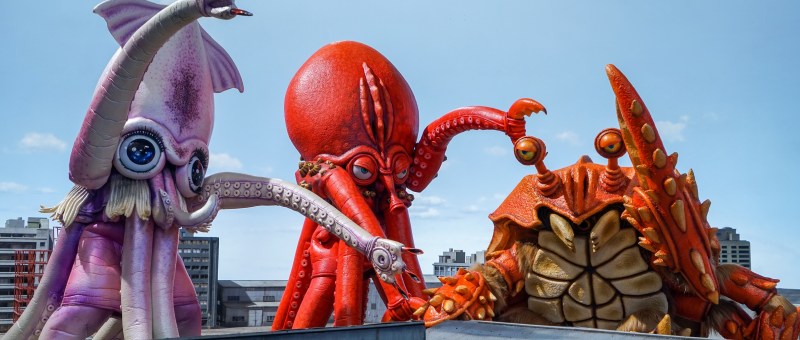
Ever wondered what happens to a fallen kaiju? After Godzilla and friends have ransacked the city, there’s certainly a lot of cleaning up to do but disposing of kaiju corpses isn’t something your average monster movie gives a lot of thought to. According to Monster SeaFood Wars (三大怪獣グルメ, San Daikaiju Gourmet), there’s surprisingly good eating to be had in monster meat and when it comes to taking down a giant squid, perhaps it’s better to ask a chef rather than a scientist or the boffins from the Ministry of Defence. 

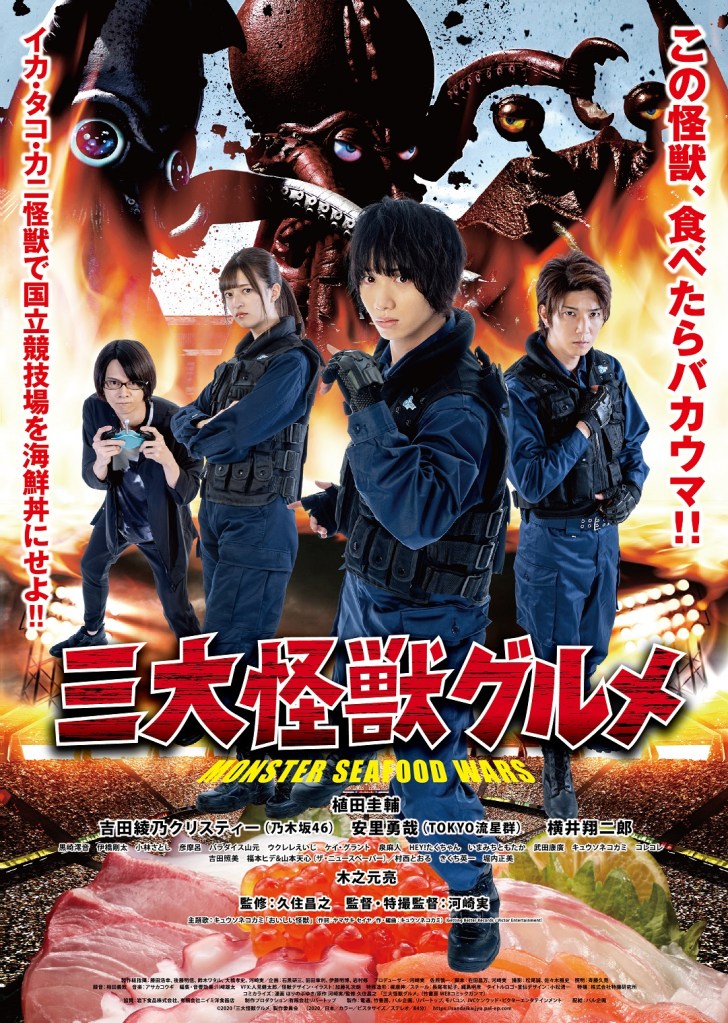
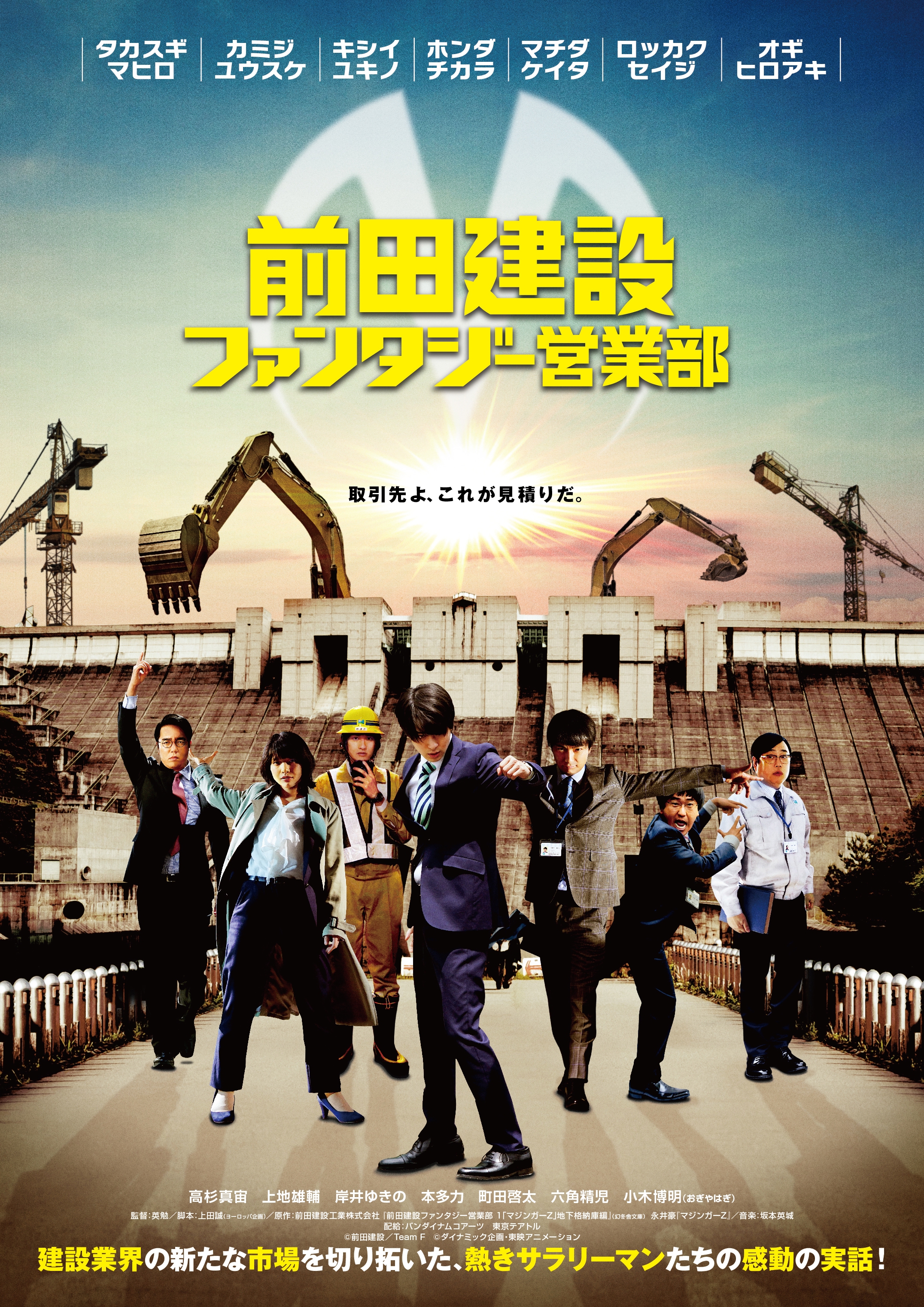
Switching between documentary sequences featuring talking heads looking back on the bizarre events and the events themselves, Monster SeaFood Wars follows scientist/sushi shop heir Yuta (Keisuke Ueda) who accidentally unleashes three giant kaiju on the city of Tokyo after he’s knocked off his bike while delivering some prize seafood to the local temple as an offering. In addition to being the heir to a sushi shop, Yuta is also a scientist apparently obsessed with giant monsters which he describes as “cute” and had been working on a serum, Setap Z, to turn ordinary foodstuffs giant in order to end world hunger. Before you know it, angry octopus Takolla and his frenemy Ikalla are on the rampage through the city. 

Of course, Yuta is the prime suspect which is perhaps why he somewhat arrogantly describes himself as the “biggest victim” while reluctantly agreeing to help out SMAT, Seafood Monster Attack Team, as they try to figure out how to mitigate the effect of Setap Z and stop the kaiju assault but is further irritated by being denied a spot on the team as a full member. Meanwhile, he’s also facing off against rival scientist Hikoma (Yuya Asato) who impresses with an obvious idea, vinegar, while charming Yuta’s childhood friend and unrequited crush Nana (Ayano Christie Yoshida) who now works for the Ministry of Defence and has only contempt for the weirdo monster geek. 

Yuta’s plan had been to let Takolla and Ikalla duke it out, assuming Takolla would win and then they’d somehow lure him into a giant octopus trap. Hikoma meanwhile suggests giant rice vinegar cannons, regular missiles already having proved ineffective against the sea creatures’ springy flesh. Hikoma’s plan would have worked, had it not been for the sudden and unexpected return of Kanilla whose hard shell protects him against the corrosive effects of the vinegar. During the fight, however, some of Takolla’s tentacles are chopped off, chunks of meaty white flesh falling to the ground as SMAT commander Hibiki (Ryo Kinomoto) unconsciously licks his lips. 

While very much a classic kaiju movie, Monster SeaFood Wars has its tongue firmly in its cheek, scaling back on the monster-fighting action for some gentle satire as the gang find they just can’t resist the urge find out what kaiju tastes like. The answer is surprisingly good, with the effect that kaiju meat becomes the latest culinary trend. “Forget bubble tea” one commentator says, monstrous squid is where it’s at. The TV news also comes in for a kicking with its placard unveiling confirming the kaiju’s name as well as a state of the nation address from an Abe-esque PM using the crisis to further his quest to “take back Japan” while speaking in a distinctly squeaky voice.

Meanwhile, drunk salarymen complain about their exploitative working conditions, joking that they’d need to be eight-armed octopuses to get through the amount of work expected of them only for Takolla to appear out of nowhere and slap them down seconds after they’ve made a few inappropriate remarks to some passing young ladies. Aside from the kaiju, the big bad does seem to be pervasive sexism with Ministry of Defence employee Nana often relegated to little more than eye candy and eventually the subject of an offensive bet between the icy Yuta and slick Hikoma whose equally sexist cheesy lines actually seem to impress her. 

Yuta, however, gets the chance to redeem himself by revealing that the really did make the formula to help starving people in Africa rather than just because he actively wanted to usher in the great kaiju apocalypse, owning his legacy as the son of a sushi shop while his best friend Niima (Shojiro Yokoi) has a few surprises of his own up his sleeve which prove that the best person to have at a giant octopus is a skilled chef. Of course Setap Z turns out to cause a few additional problems, accidentally spreading itself around after hitting the mosquito population, while it seems the villain is not quite done with their desire to misuse the serum, hinting at a possible sequel. A humorous but never mocking take on the classic tokusatsu, Monster SeaFood Wars pits culinary science against the giant monster threat and discovers that all you need to save the world is a good cook.


Monster SeaFood Wars streams in Canada from 20th August to 2nd September as part of this year’s online edition of Fantasia International Film Festival.

Original trailer (no subtitles)
Crazy Samurai Musashi (狂武蔵, Yuji Shimomura, 2020) [Fantasia 2020]

Action star Tak Sakaguchi rose to fame in Ryuhei Kitamura’s low budget zombie movie Versus, thereafter starring in a series of similarly pitched splatter and exploitation films as well as appearing in long running tokusatsu series Kamen Rider and making his own directorial debut with manga adaptation Be a Man! Samurai School in 2008. Much to fans’ disappointment, Sakaguchi announced his retirement as a performer in 2013, but has since made several high profile returns to the big screen including Yuji Shimomura’s Re:Born in which he played a former JSDF elite soldier living quietly in the countryside until an old enemy tracked him down. 

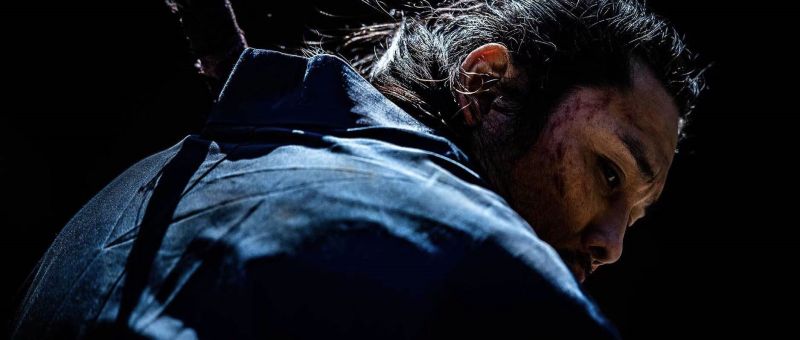
Again emerging from semi-retirement, Crazy Samurai Musashi (狂武蔵, Kurui Musashi) sees Sakaguchi reunite with Shimomura to play the most famous of legendary samurai Miyamoto Musashi in an all out action fest including a 77-minute one cut assault during which he singlehandedly kills 588 men. Unsurprisingly light on dialogue, the film credits Sion Sono with original concept and Atsuki Tomori with screenplay who do at least add a little context which frames this, to an extent, as a tale of merciless samurai hypocrisy and the fallacy of “honour” as a code for living. 

As the film opens, a small boy stares in wonder at a white butterfly before being reminded that he has, as the head of this clan, apparently challenged the great Miyamoto Musashi to a duel in revenge for his murder of two of their previous leaders. Affable retainer Chusuke (Kenta Yamazaki) tells the boy not to worry, he’s not going to let anything happen to him, but stops short of explaining that he’s really just a kind of bait. Nevertheless, Chusuke has his reservations about their plan. After all, it’s not very befitting of a samurai’s honour to challenge someone to a private duel but invite 400 retainers to the surprise party. 400 against one seems faintly ridiculous. It might even be embarrassing if anyone else finds out, but then as the priest (Yosuke Saito) says you can just kill them too. In any case, while Chusuke is talking to the priest and the mercenaries are busy arguing with the retainers, Miyamoto Musashi sneaks through the perimeter and fells the small boy who is technically the “leader” of the clan with one flying sword blow, kickstarting a scene of utter carnage as he attempts to fight his way out of the compound.   

“How many more?” Musashi asks in exasperation during a momentary pause, later doing a few calculations. He thought there’d be about 70, but it feels like he’s killed a few more than that. True to form, the samurai warriors largely follow the protocols of honour. They fight one-on-on, and only at the end does anyone attempt to attack Musashi from behind. He makes swift work of them, taking each man out with maximum economy, occasionally challenged by complete randomers who apparently aren’t even part of the clan, they just really don’t like him. Though necessarily repetitive, Shimomura’s innovative, non-stop fight choreography follows a realtime, broadly naturalistic logic in which duels are generally brutish and short. Musashi begins to tire as he continues to fight for his life, taking brief breaks for water, food, and existential questioning, before heading back into the fray. 

“Duty? Honour? Who gives a crap? I just wanna win” he later says in what is simultaneously a rejection and an embodiment of the samurai code. “I’ll die one day anyway” Musashi chuckles to himself before rejoining the fight, wilfully embracing the nihilism of the samurai existence that allowed him to kill a child without thinking twice. Chusuke failed to protect his honour, or save his clan, his earnestness perhaps betrayed by his mentor’s underhandedness in unwisely hiring vast numbers of mercenaries and sending his own unprepared students, many of whom simply flee (a wise decision), to face off against an unstoppable killing machine. Paradoxically, Miyamoto Musashi will survive because he doesn’t care about playing fair, he may not even care about surviving, all he wants is to win. “A kid who knows nothing of war”, Chusuke’s stubborn insistence on illusionary samurai honour will lead only to more suffering and violence while all Musashi can do is sigh in resignation and ready his sword. 


Crazy Samurai Musashi streams in Canada from 20th August to 2nd September as part of this year’s online edition of Fantasia International Film Festival.

International trailer (English subtitles)
Fantasia International Film Festival Confirms Complete 2020 Programme

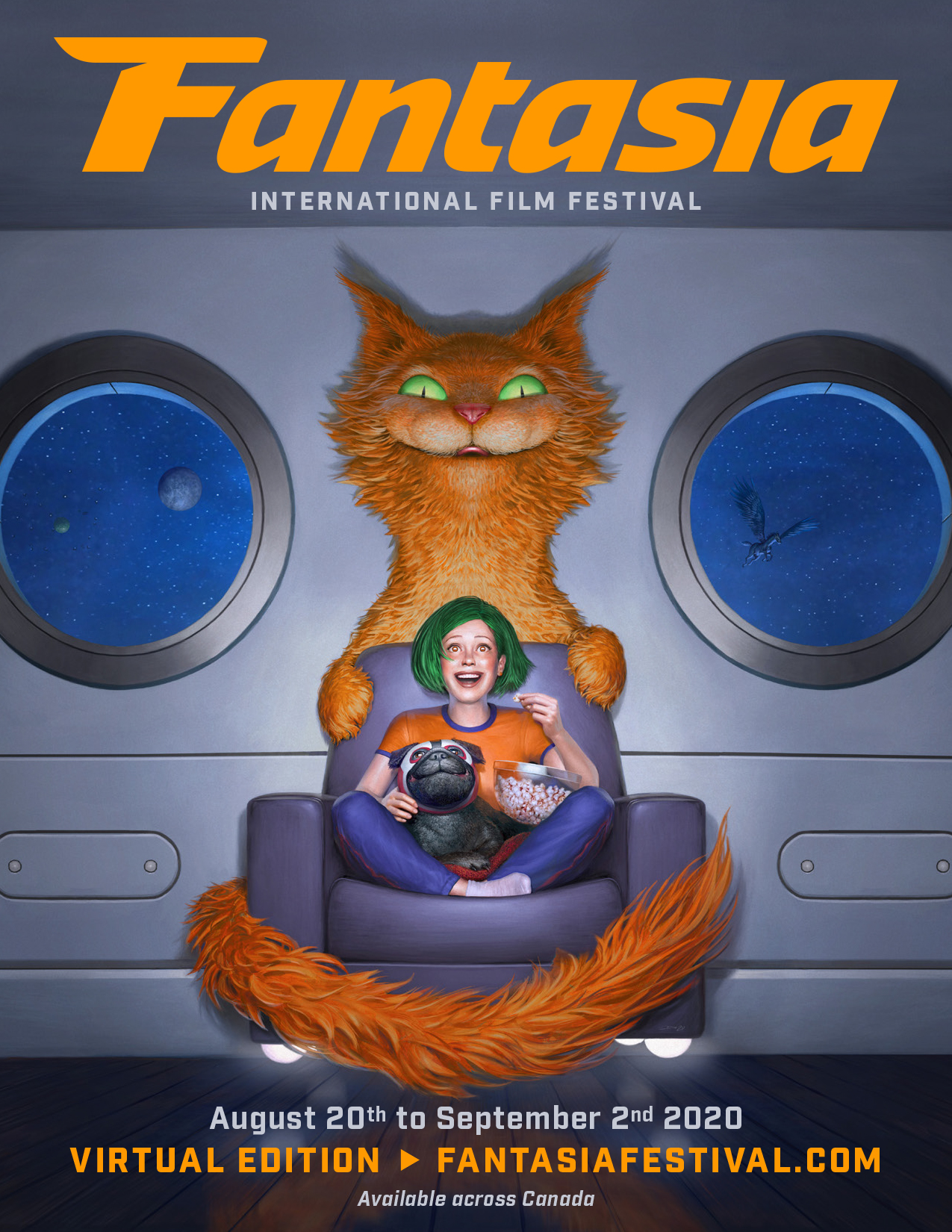
Montreal’s Fantasia International Film Festival returns for 2020 in an online edition bringing the latest genre hits from around the world to homes across Canada 20th August to 2nd September. As usual the programme features another fantastic selection of movies from East Asia both new and old.

China

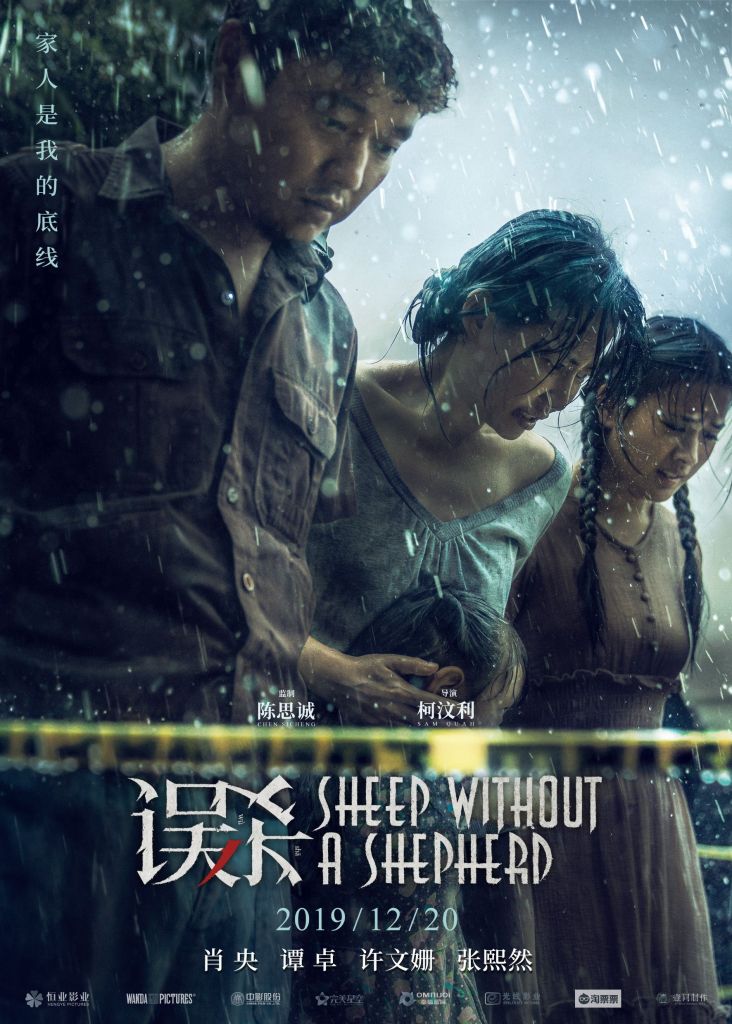
  • Sheep Without a Shepherd – blockbuster Chinese remake of Indian thriller Drishyam in which a movie buff’s daughter accidentally kills a schoolmate who has powerful parents.

Hong Kong

  • Baby: Secret Diary of a mom to be – a high-flying PR executive wrestles with the idea of having it all when she suddenly becomes pregnant.
  • Chasing Dream – stylish romance from Johnnie To in which a boxer and singer fight for their respective dreams. Review.
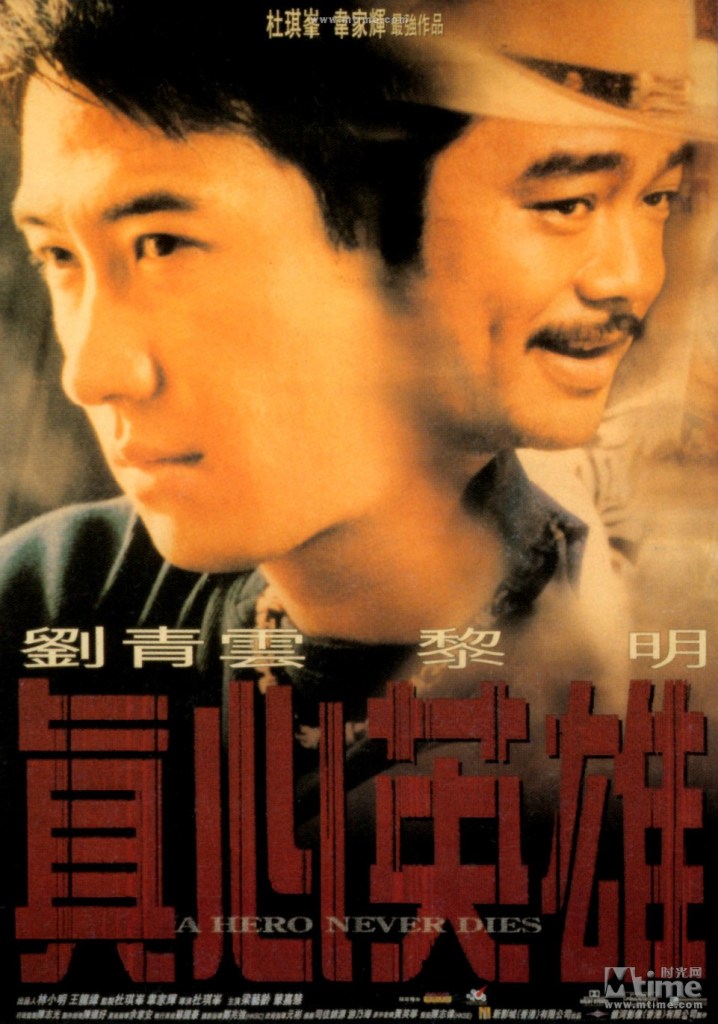
  • A Hero Never Dies – Johnnie To classic from 1998 in which two noble hitmen find themselves at the mercy of the nihilistic underworld
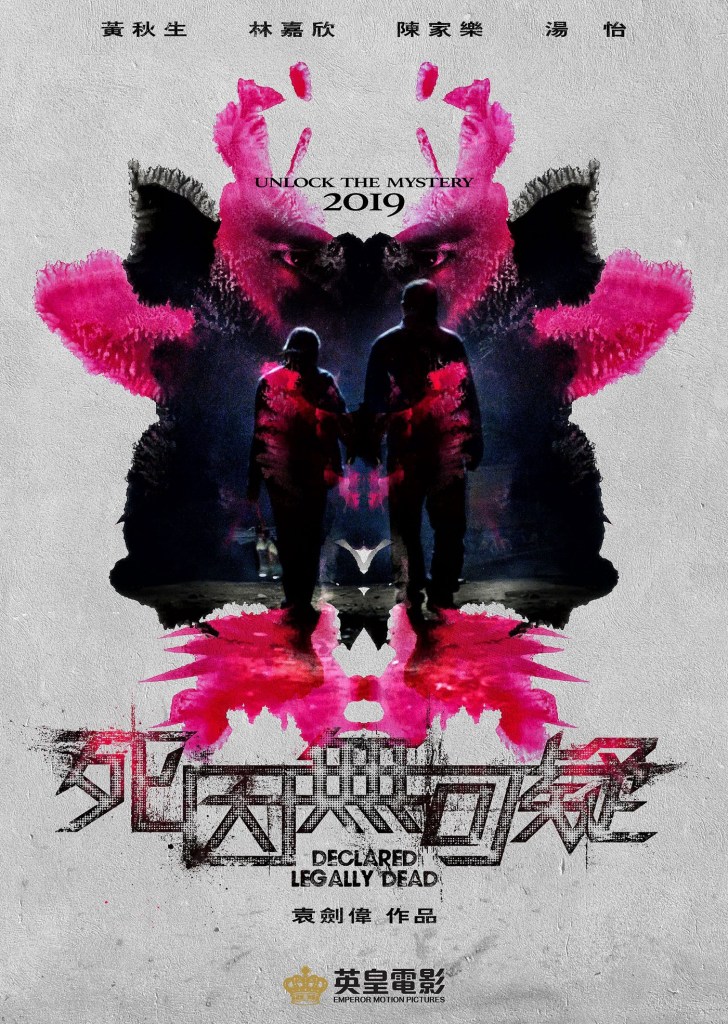
  • Legally Declared Dead – HK adaptation of Yusuke Kishi’s novel The Black House in which an insurance broker descends into paranoia after suspecting a client has faked his son’s suicide to collect on a policy.
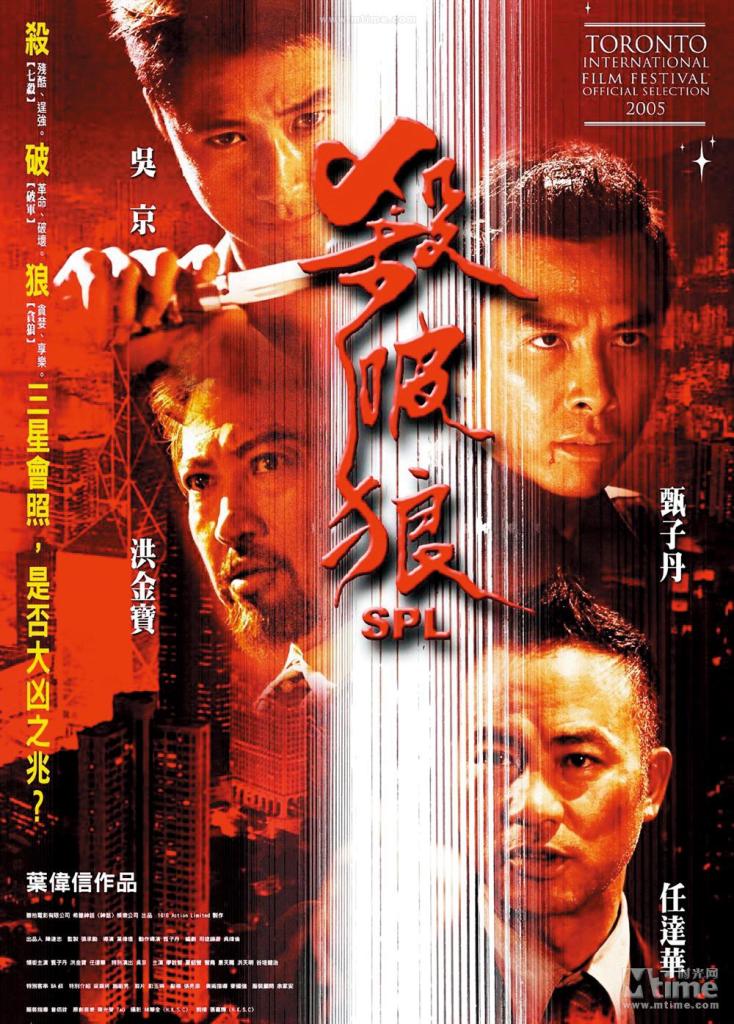
  • SPL Kill Zone – first in Wilson Yip’s SPL series starring Donnie Yen as a cop clashing with Sammo Hung’s gang boss.
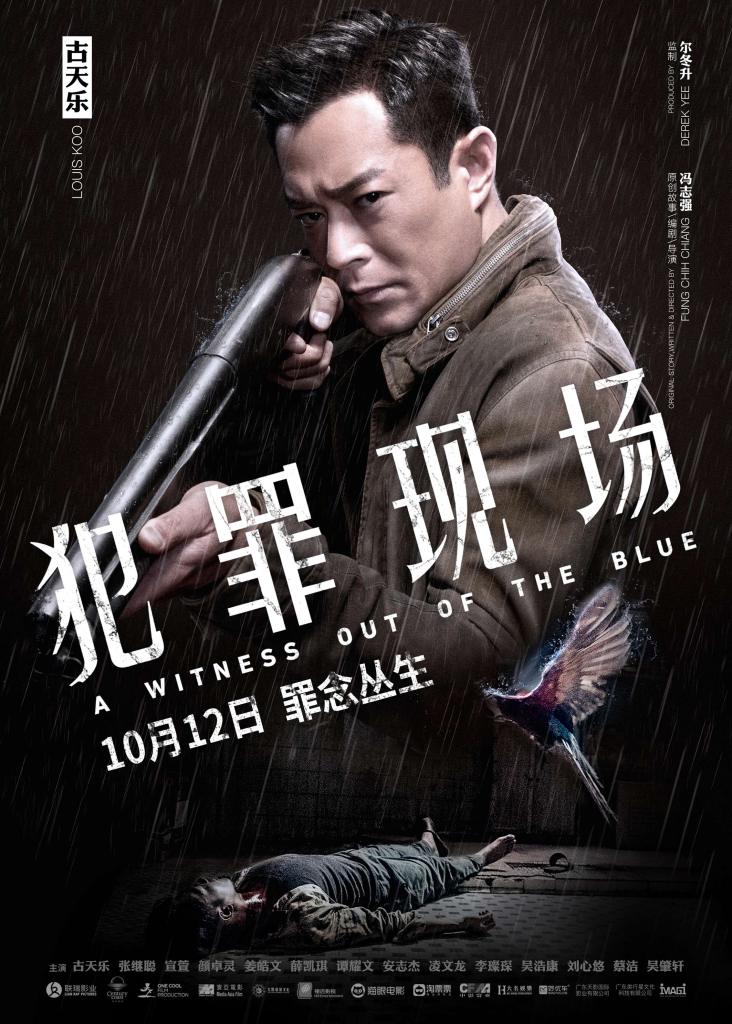
  • Witness Out of the Blue – Louis Koo is a criminal mastermind on the run after a botched robbery while an eccentric cop tries to crack the case with the help of its only surviving witness – a parrot!

Japan

  • Air Doll – Kore-eda classic starring Bae Doona as a sex doll come to life.
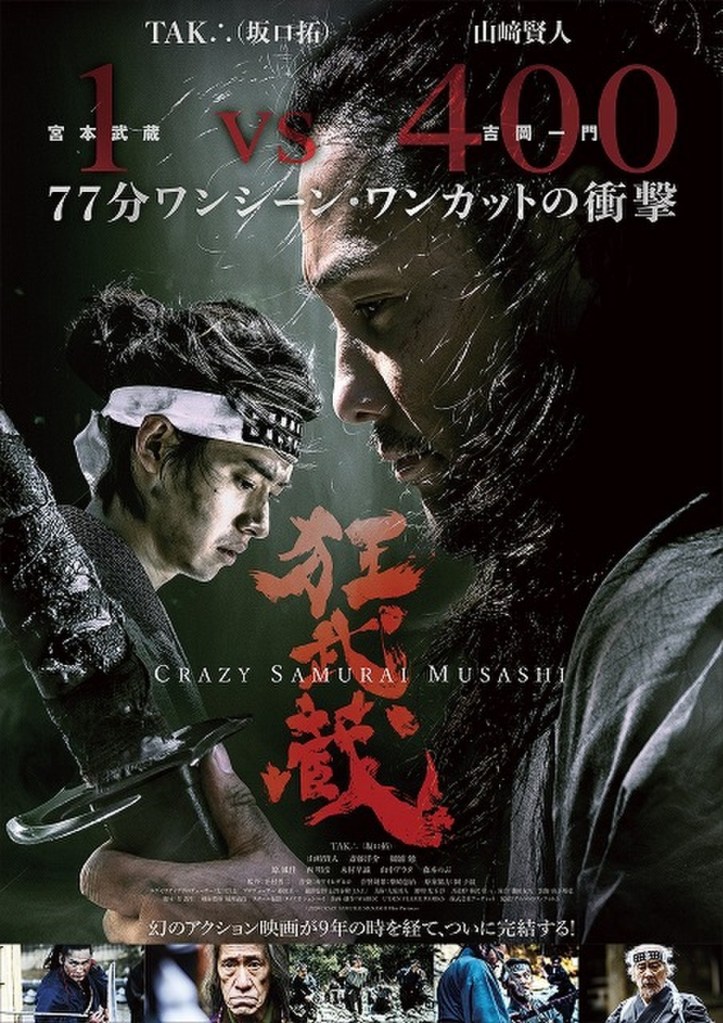
  • Crazy Samurai Musashi – samurai action drama featuring the long-awaited return of Tak Sakaguchi.
  • Fly Me to the Saitama – absurdist comedy in which the residents of Saitama have become an oppressed minority. Review.
  • Fukuchan of Fukufuku Flats – quirky comedy from Yosuke Fujita about a cheerful man whose fear of women is challenged when an old friend returns.
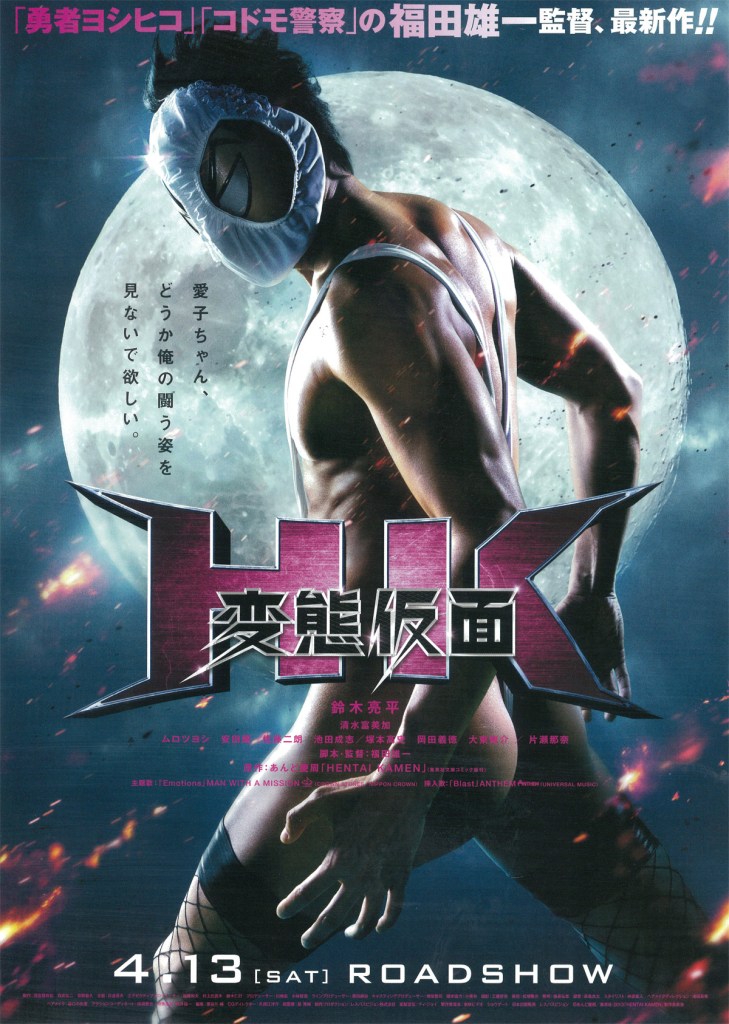
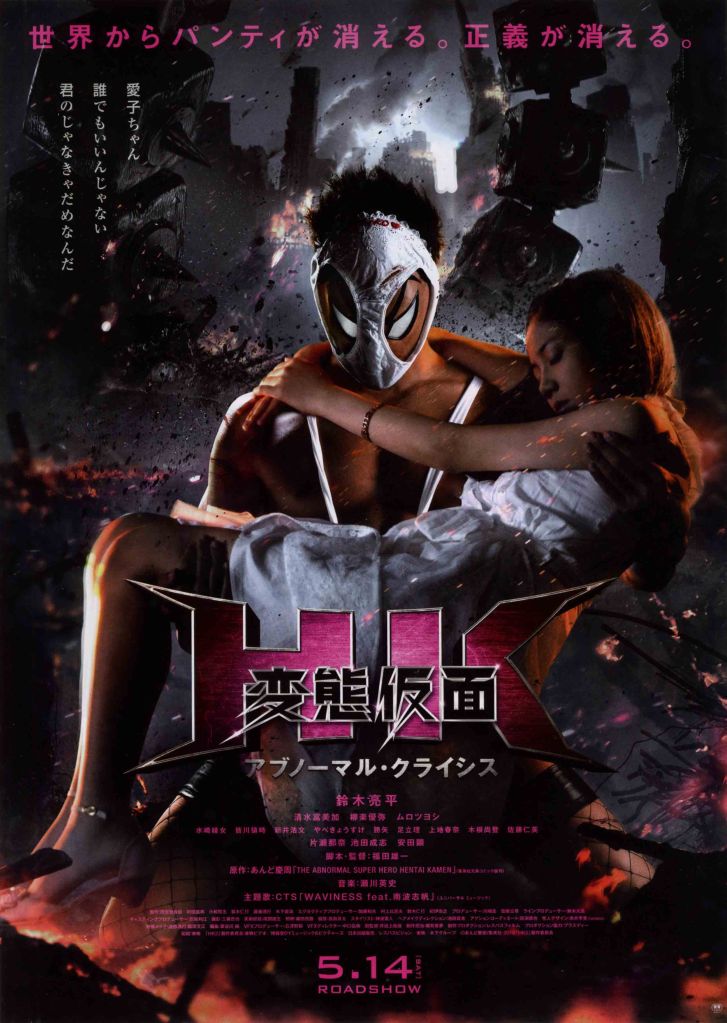
  • HK: Forbidden Superhero – 2013 low-budget comedy from Yuichi Fukuda in which a nervous young man turns into a superhero after putting ladies knickers on his face.
  • HK2: The Abnormal Crisis – 2016 sequel in which the hero’s girlfriend is getting fed up with his underwear shenanigans.
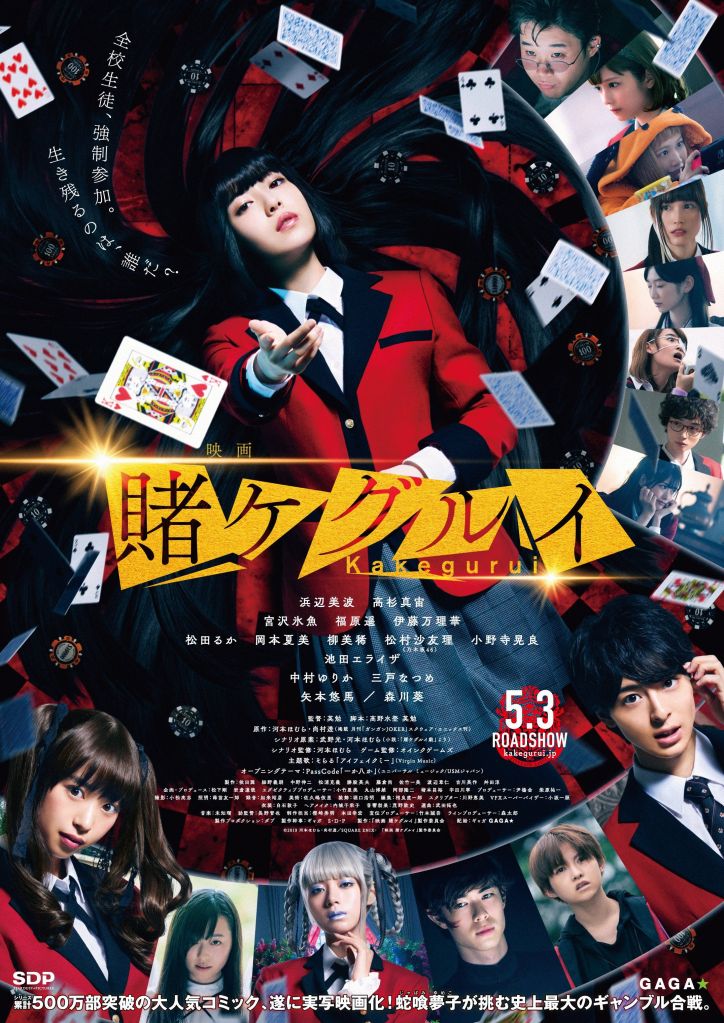
  • Kakegurui – adaptation of the popular manga set in a school where heirarchy is determined by skill at gambling. Review.
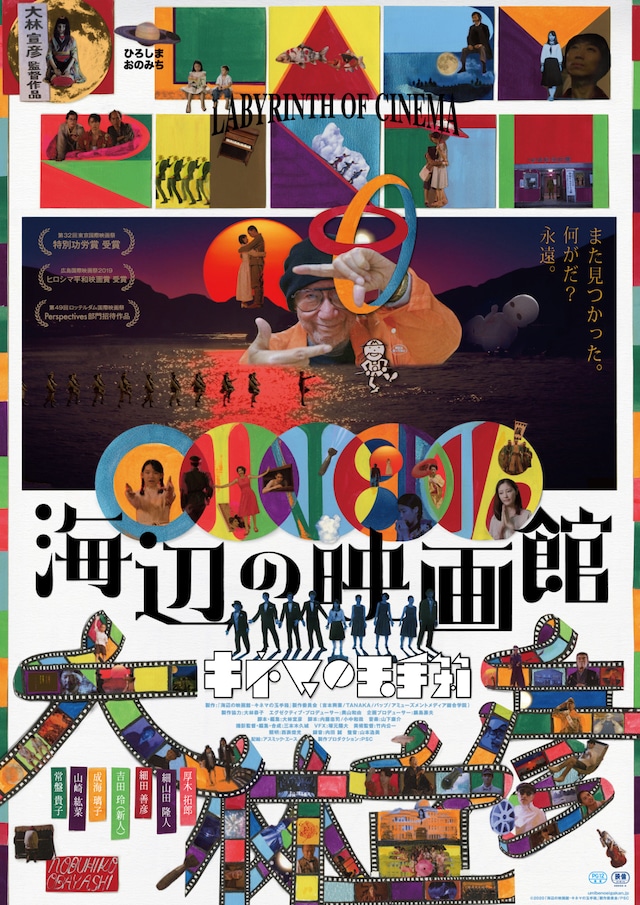
  • Labyrinth of Cinema – final film from Nobuhiko Obayashi in which three youngsters find themselves lost in the movies. Review.
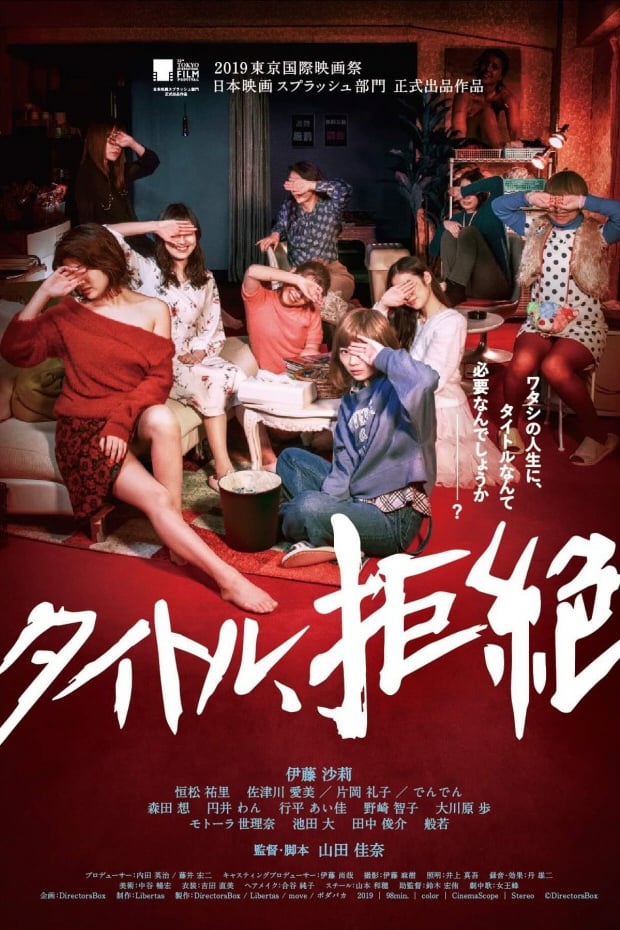
  • Life: Untitled – Kana Yamada adapts her own stage play set in the office of a Tokyo escort service. Review.
  • Milocroze: A Love Story – cult quirky comedy from 2011 starring Takayuki Yamada.
  • Monster Seafood Wars – comedic tokusatsu in which the son of a sushi shop’s experiments to solve world hunger through making foodstuffs giant has unexpected results.
  • No Longer Human – Mika Ninagawa’s dramatisation of the final days of Osamu Dazai along with the three women who inspired him: his wife, his mistress, and the woman he finally died with.
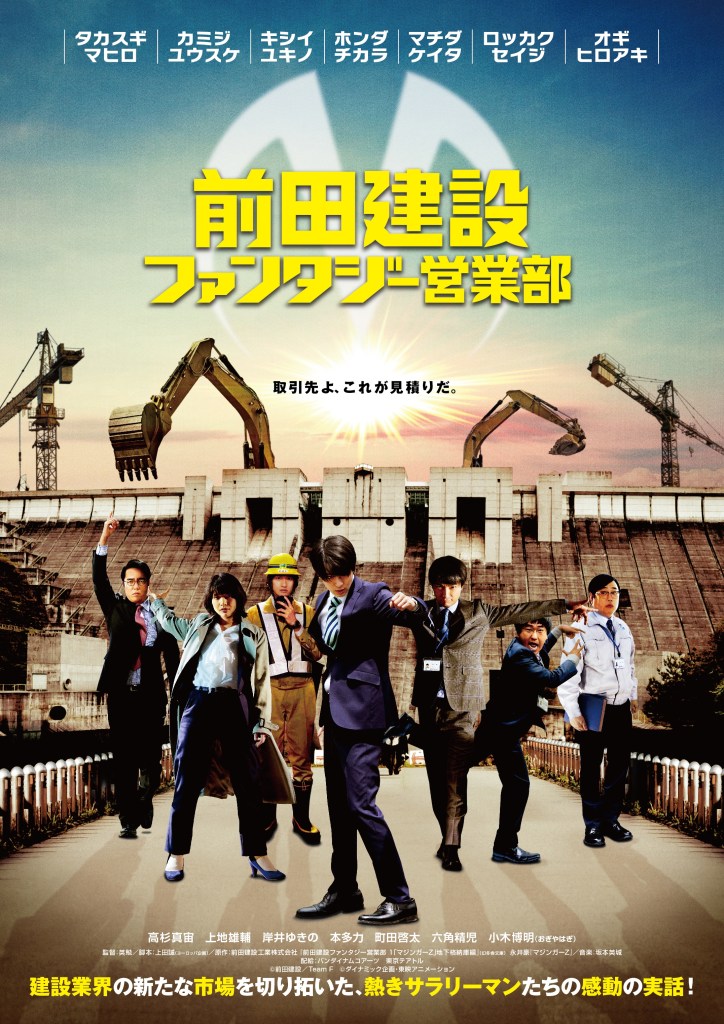
  • Project Dreams: How to Build Mazinger Z’s Hangar – employees at an engineering firm attempt to draft the hangar from the legendary mecha anime.
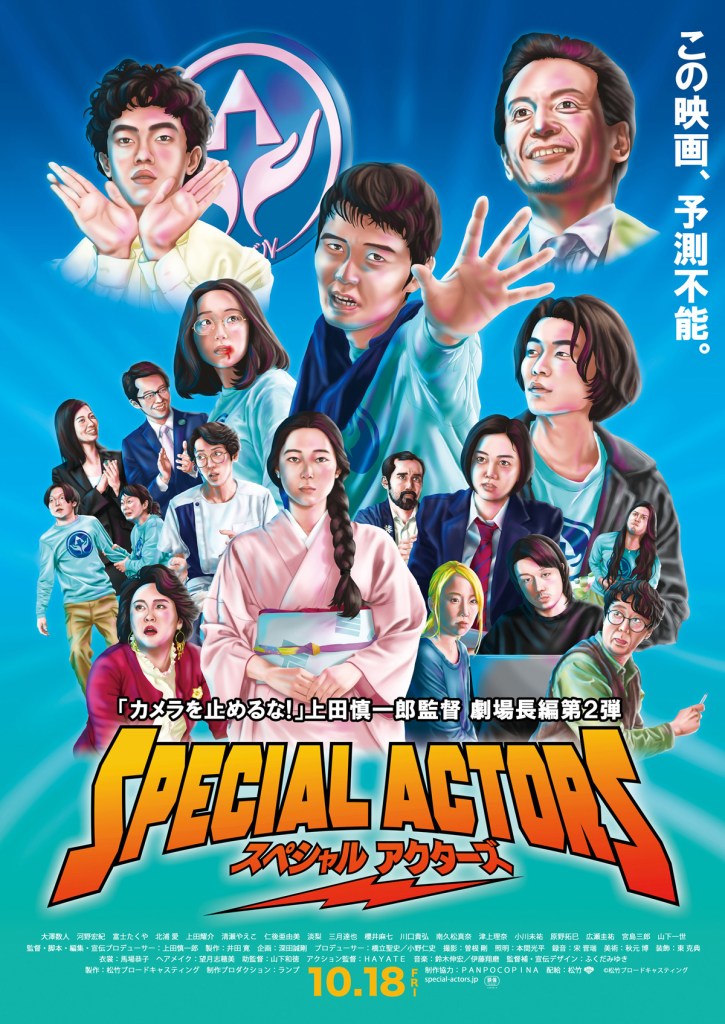
  • Special Actors – meta-narrative from One Cut of the Dead‘s Shinichiro Ueda in which a shy aspiring actor joins an unusual agency where he’s asked to play a part in other people’s “real life”. Review.
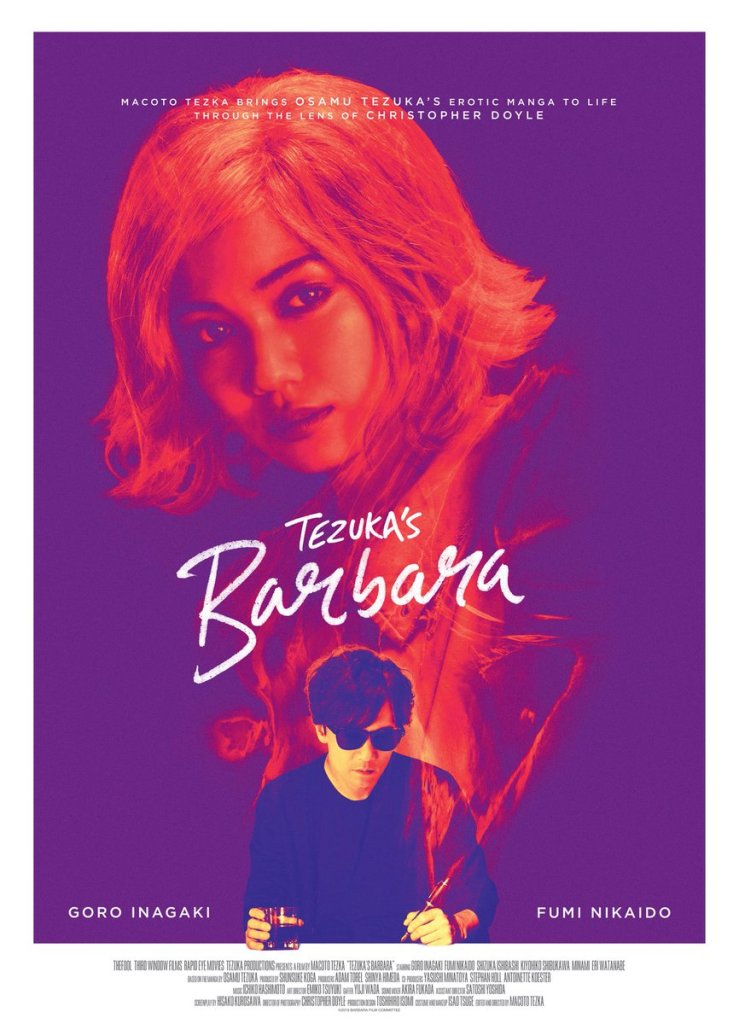
  • Tezuka’s Barbara – Macoto Tezka adapts the manga by his famous father in which a novelist (Goro Inagaki) becomes obsessed with a woman he picks up off the street (Fumi Nikaido). Review.
  • Travelling Cat Chronicles – tearjerking drama in which a young man goes on a road trip looking for someone to take care of his cat.
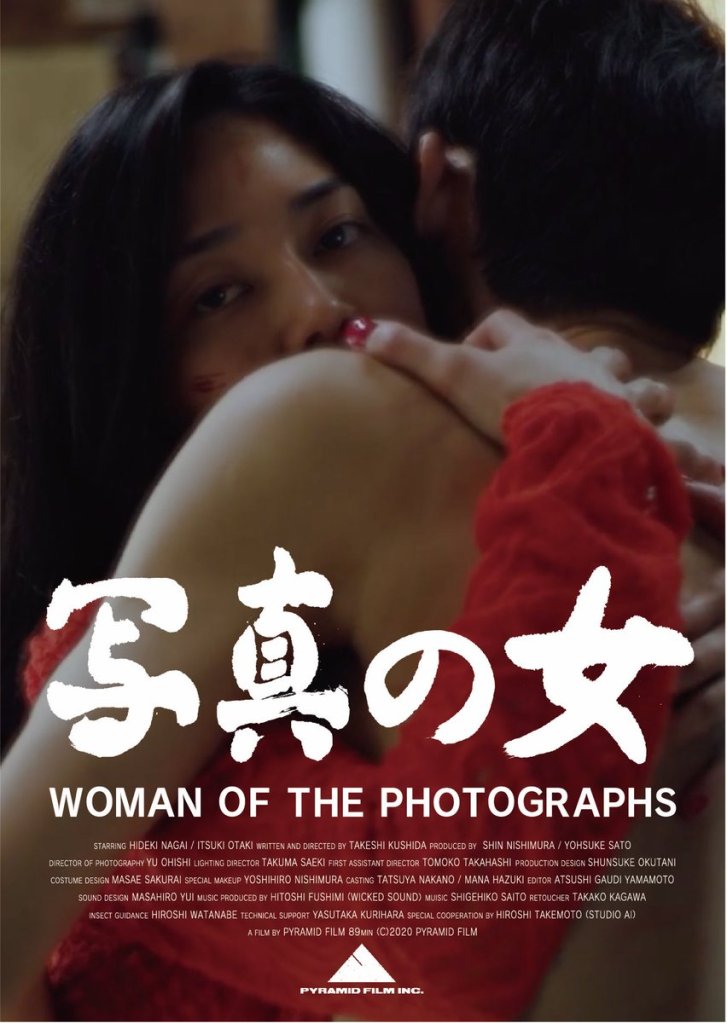
  • Woman of the Photographs – An isolated photographer’s life of stillness is interrupted by the arrival of a beautiful dancer in Takeshi Kushida’s gentle meditation on desire and reality. Review.
  • Wotakoi: Love is Hard for Otaku – Yuichi Fukuda musical comedy adapted from the popular manga.

Korea

  • Beauty Water – animation in which a woman who believes herself ugly tries an experimental treatment to make herself beautiful.
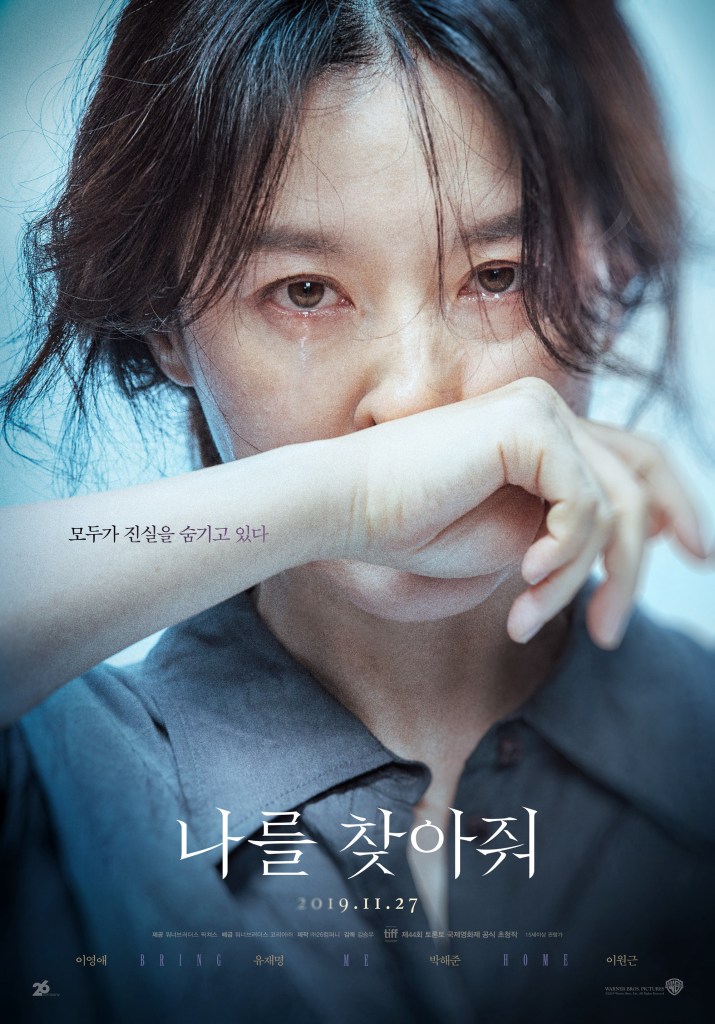
  • Bring Me Home – a nurse’s tireless search for her missing son takes her to a fishing village with a dark secret.
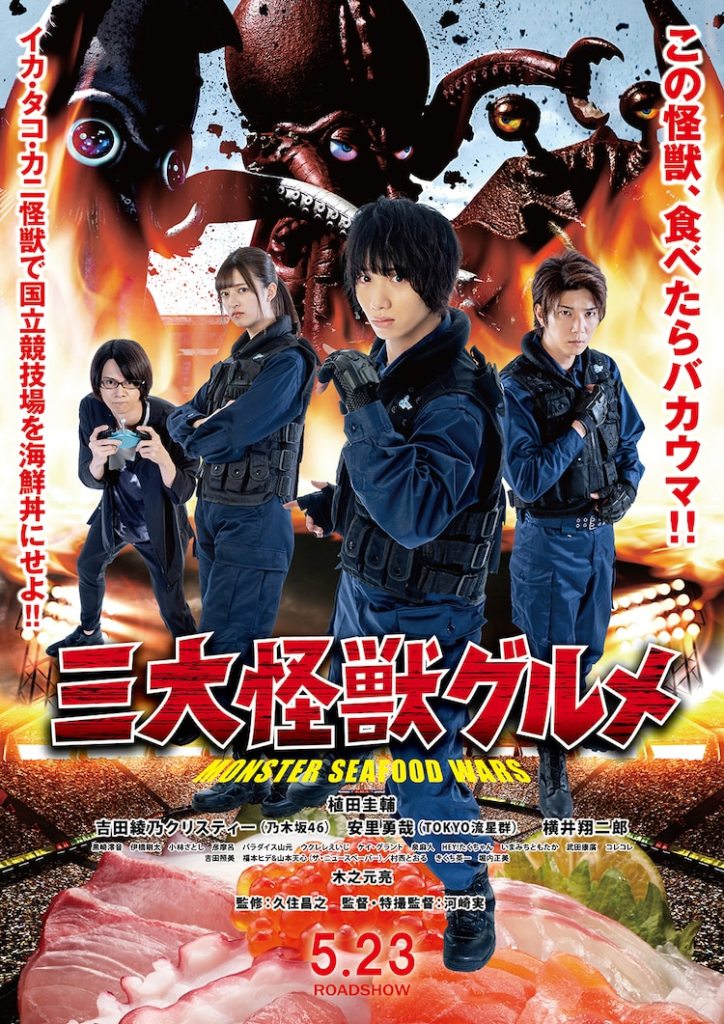
  • Jesters: The Game Changers – Joseon-era street entertainers get into trouble for spreading fake news in a period drama from The Grand Heist’s Kim Joo-ho.
  • Me and Me – directorial debut from actor Jung Jin-young in which a policeman wakes up one day to discover he’s someone else.
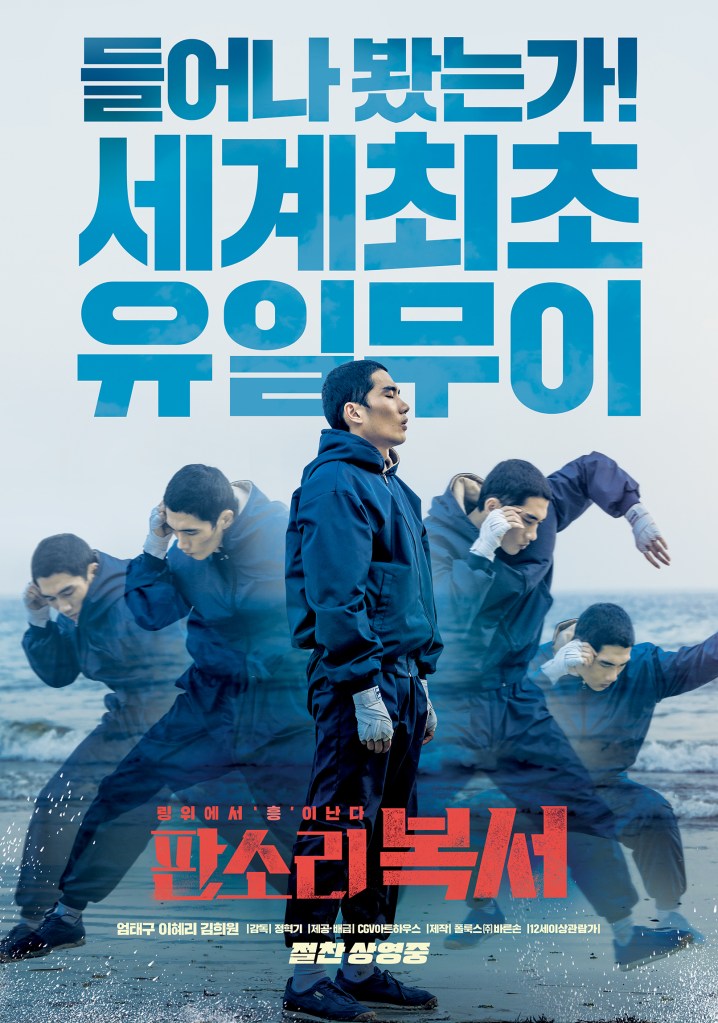
  • My Punch-Drunk Boxer – a former boxer picks up the rhythms of pansori.
  • Vertigo – a young office worker is rescued from her sense of existential vertigo by the gentle presence of a chivalrous window washer. Review.

Taiwan

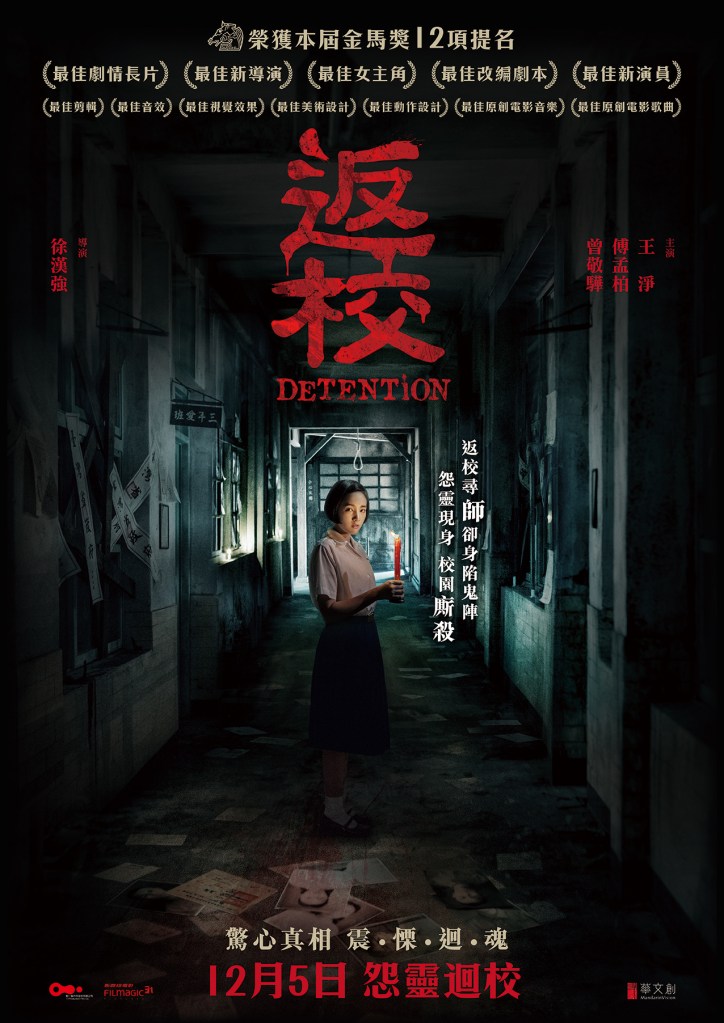
  • Detention – horror-inflected video game adaptation dramatising the trauma of the “White Terror” martial law era. Review. 
  • I WeirDo – madcap OCD rom-com shot on an iPhone.

Vietnam

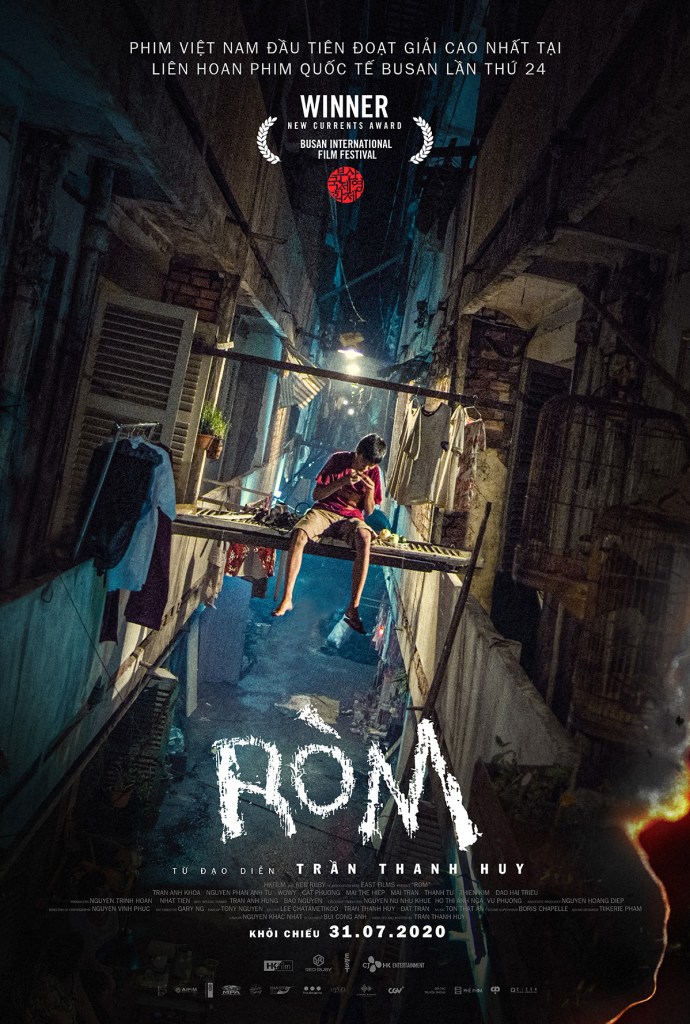
  • Rom – a 14-year-old boy hopes to earn enough money to reunite with his parents through running lottery numbers while living a precarious existence in a rundown tenement.

The films will be available to stream in Canada from 20th August to 2nd September. “Tickets” for each film are limited in number comparable to the size of a physical auditorium and while much of the programme is available on demand selected films will stream live only. Full details for all the films are available via the the official website, and you can also keep up with all the latest news via the festival’s official Facebook page, Twitter account,  Instagram, and Vimeo channels.

Fantasia Confirms Second Wave of Titles for 2020 Virtual Edition

Montreal’s Fantasia International Film Festival is the latest to head online in these troubled times and will bring its trademark brand of diverse genre cinema to homes across Canada from August 20 to September 2. With the second wave of the lineup now announced, here’s a look at how the East Asian selection is shaping up ahead of the full programme reveal on Aug. 6:

Japan

  • Crazy Samurai Musashi – samurai action drama featuring the long-awaited return of Tak Sakaguchi.
  • Labyrinth of Cinema – final film from Nobuhiko Obayashi in which three youngsters find themselves lost in the movies.
  • Life: Untitled – Kana Yamada adapts her own stage play set in the office of a Tokyo escort service. Review.
  • Project Dreams: How to Build Mazinger Z’s Hangar – employees at an engineering firm attempt to draft the hangar from the legendary mecha anime.
  • Special Actors – meta-narrative from One Cut of the Dead‘s Shinichiro Ueda in which a shy aspiring actor joins an unusual agency where he’s asked to play a part in other people’s “real life”. Review.
  • Tezuka’s Barbara – Macoto Tezka adapts the manga by his famous father in which a novelist (Goro Inagaki) becomes obsessed with a woman he picks up off the street (Fumi Nikaido). Review.

Korea

  • Beauty Water – animation in which a woman who believes herself ugly tries an experimental treatment to make herself beautiful.
  • Jesters: The Game Changers – Joseon-era street entertainers get into trouble for spreading fake news in a period drama from The Grand Heist’s Kim Joo-ho.
  • Me and Me – directorial debut from actor Jung Jin-young in which a policeman wakes up one day to discover he’s someone else.
  • My Punch-Drunk Boxer – a former boxer picks up the rhythms of pansori.
  • Vertigo – a young office worker is rescued from her sense of existential vertigo by the gentle presence of a chivalrous window washer. Review.

Taiwan

  • Detention – horror-inflected video game adaptation dramatising the trauma of the “White Terror” martial law era. Review. 
  • I WeirDo – madcap OCD rom-com shot on an iPhone.

This year’s festival will be entirely digital with all titles available to stream across Canada from August 20 to Sept. 2. Further details along with the full programme will be announced on August 6.

The Wonderland (バースデー・ワンダーランド, Keiichi Hara, 2019) [Fantasia 2019]

birthday wonderland poster 1The demands of adulthood are apt to overshadow any young teen’s life, but you can’t shake them off just by lying in bed and refusing to age. So the heroine of Keiichi Hara’s The Wonderland (バースデー・ワンダーランド, Birthday Wonderland) discovers as she determines to hideout from emotional complexity, waiting for the storm to pass and cowardly failing to defend a friend in the process. The last thing she wants is the responsibility of being “the chosen one”, but the thing about that is that you don’t get to choose and if the universe has plans for you it would be very irresponsible to refuse.

After (not) getting involved in a minor spat amongst friends about coloured hair clips, Akane (Mayu Matsuoka) decides the best solution is to feign illness, turn off her phone, and avoid going to school. Her kindly mother (Kumiko Aso), seemingly aware she’s not really ill, decides to let her stay home anyway but all she ends up doing is mistreating the cat in frustration and moping about, so her mum despatches her to her aunt Chii’s (Anne Watanabe) place to pick up her birthday gift which she presumably can’t open until the big day tomorrow. Truth be told, Akane doesn’t much like her aunt Chii, she’s far too free spirited and unpredictable for the neurotic teen, but she could stand to learn something from her irrepressible lust for life.

Akane gets the perfect opportunity to do just that when she sticks her hand onto a palm print in her aunt’s shop and is promptly greeted by a dapper-looking man with a fabulous moustache and his tiny minion (Nao Toyama) who crawl up through the hidden basement to explain that she is the “Goddess of the Green Wind” they’ve been searching for and must come with them right away because their nation is in peril! As expected, Akane doesn’t want to go, but is chivvied along by her overexcited aunt and a strange amulet the man, an alchemist named Hippocrates (Masachika Ichimura), places around her neck.

The amulet, he tells her, helps you move forward even if you want to go back. That is, in a sense, Akane’s entire dilemma as she finds herself on the cusp of adulthood, afraid to step forward and accept the responsibilities of maturity while longing to return to carefree childhood days when there was nothing much to worry about and always someone around to look after her. Like any good fairytale, she finds her mirror in the other world in a melancholy prince who remains so reluctant to take part in an essential ritual that he is almost willing to burn the world to avoid having to acknowledge his royal responsibilities.

Meanwhile, Akane is slow to adjust to the charms of her new Wonderland, refusing to engage and loudly stating her desire to go home while her aunt tries to encourage her to embrace a sense of adventure. Chii, the film’s best asset who proclaims “no alcohol no life” while thoroughly enjoying sparring with the uptight Hippocrates (who perhaps is also enjoying the challenge though might not want to admit it), might in some senses be a barrier to Akane’s self-actualisation but is also an important source of safety for her in an unsafe world and just irresponsible enough to push her niece towards taking the right kind of risks in order to do the right thing and save the kingdom.

The reasons the kingdom is in peril in the first place are hugely symbolic – an ongoing water crisis caused by governmental negligence is draining the world of colour while literally drying it out. Getting used to her new surroundings, Akane begins to see their charm. This world, near identical to her own in many ways, diverged around the industrial revolution. Where “our” world rocketed into a frenetic lust for convenience, the rhythms of this one stayed the same, a perpetual village society in which cheerful people live laidback lives surrounded by the beauty of nature – something Akane later comes to worry her own world is losing. Gradually letting go of her fear and getting a better idea of the kind of life she might want, Akane gains the courage to embrace responsibility through directly supporting someone else as they learn to do the same.

A whimsical coming of age tale, The Wonderland excels in world building but somehow never quite achieves the level of emotional engagement it seems to be looking for even as its sullen, detached heroine perhaps begins to realise she did a great disservice to her friend when she failed to defend her during the silly hair ornament argument largely because she personally didn’t want to rock the boat and put herself in the firing line. Her horizons suitably expanded, Akane finds she no longer needs an amulet to keep moving forward even when longing to look back and resolves to step into adulthood with an easy, laidback confidence learned from her palls on the other side.


The Wonderland was screened as part of the 2019 Fantasia International Film Festival.

Original trailer (English subtitles)

Day and Night (デイアンドナイト, Michihito Fujii, 2019) [Fantasia 2019]
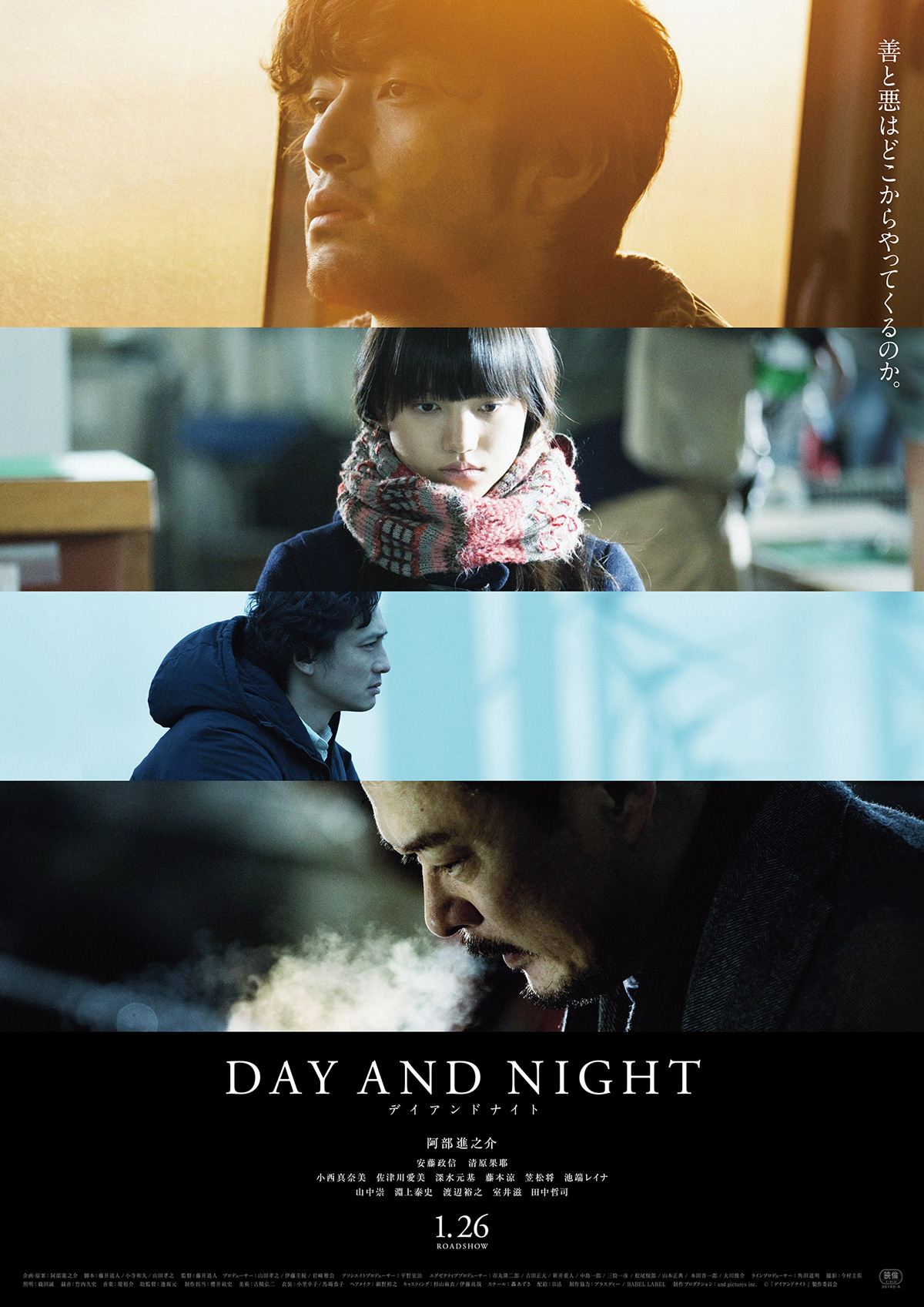
day and night poster 1Can two wrongs ever really make a right? Michihito Fujii’s Day and Night (デイアンドナイト) wants to ask if the difference between good and evil is really as stark as that between dawn and dusk, or if life is really more like twilight in which morality is a relative concept and acts cannot by judged individually but only as a part of the whole. What the hero discovers, however, is that the world is an inherently unfair place and it may not be possible to “win” against the forces of self-interest solely through being pure of heart.

The drama begins with a stunned Koji (Shinnosuke Abe) returning to his small-town home to graffiti scrawled across his fences and his father lying in repose inside after having apparently taken his own life. No one will quite explain to Koji what exactly has happened, but it seems there has been some unpleasantness surrounding his father’s auto business. Though most of the other townspeople including his old friends are civil, they are also frosty and obviously unwilling to address the subject of Mr. Akashi save to press Koji for money they might still be owed as employees.

Meanwhile, poking around the garage in search of answers, he runs into the mysterious figure of Kitamura (Masanobu Ando) who claims to have known his father well though Koji’s mother claims never to have heard of him. Seeing as Kitamura is the only person willing to speak to him, Koji ends up taking a job at the orphanage where he works which turns out to be a little different than he thought seeing as Kitamura is actually the head of a local crime ring which exists with the sole purpose of keeping the orphanage running.

Though Koij, like his father, is an upstanding, law-abiding young man, he is quickly pulled into Kitamura’s world of moral justifications when presented with his personal philosophy in which the greater good remains paramount. Kitamura steals cars by night, stripping the unsellable ones for parts, which is where Mr. Akashi came in having succumbed to a life of “crime” in order to support himself while his business was suffering. He also does some possibly less justifiable work in the red light district while making a point of beating up drug dealers because 80% of the kids in his care have a parent in jail for crimes related to substance abuse. In Kitamura’s view at least, these are all “justifiable”, morally defensible “crimes” given that they are necessary to ensure the protection of the orphans. Though the money is good and Koji does need it, they are not in this for personal gain but to protect something they feel is important.

As Kitamura puts it, Mr. Akashi put his faith in laws that are meant to protect people but in the end it killed him. Having discovered a serious flaw in the auto parts he received from a local company he did the “right thing” and blew the whistle but Nakamichi Autos is the major player in the local economy and many people did not take kindly to having their reputation called into question. Nakamichi rallied its supporters and had Akashi hounded into submission. As one of the former employees tells Koji, the truth “hardly matters anymore”. Nakamichi doesn’t care there is a minor flaw in their products because they feel the chance of a fatal accident is slim enough not to need to worry about and happy to let the risk continue as long as they maximise their profits.

Miyake (Tetsushi Tanaka), Nakamichi’s CEO, also has his justifications, insisting that there’s no such thing as right and wrong only the cold logic of numbers and that the death of one man will not change anything. Increasingly pulled into Kitamura’s world of crime, Koji opts for underhanded methods to expose the truth about Nakamichi and clear his father’s name but finds in the end that no one is interested in facts. Listening in to some of his father’s old employees enjoying their belated severance pay he is dismayed to hear them too justifying their actions as they each insist that they did what they thought was “best” for everyone, for a peaceful life, for their families.

In truth, Koji claims he hated his father. That he resented him for always working all the time. Now however he begins to see that Akashi was only trying to protect his family by providing for it. His father was a “good” man, and he did the “right” thing, but he also became involved with Kitamura’s morally questionable crime syndicate. Kitamura wants to protect the orphans and takes care of them well, but can he really justify his actions solely on the grounds that there is no honest way to care for children who are often victims of an unfair society the pressures of which have pushed their parents from the “moral” path? What Koji’s left with, broadly, is that “good” people do “bad” things for “good” reasons, but bad people do bad things because they’re selfish and so they hardly care about the consequences of their actions. He starts to believe that the only way to resist is to fight fire with fire, but discovers that the little guy is always at a disadvantage when there is too much vested interest in not “making trouble”. It turns out everyone is OK with the status quo, so long as it’s not their car that might suddenly lose its wheels. As Miyake says, “that’s just how society works”.

A bleak meditation on the wider nature of justice and moral greyness of the world, Fujii’s noirish drama suggests good and bad are less like day and night than a shady evening in which the only shining light is the greater good. The world, however, continues on in self interest and the “good” will always lose to the “bad” as long it compromises itself trying to play by the other guy’s rules. Koji finds himself torn between a desire to avenge his father and a new sense of fatherhood fostered by bonding with a teenage girl at the orphanage as he contemplates the existence of a line between good and evil and his own place along it, but his old fashioned “nobility” finds no answer in the infinitely corrupt moral dubiousness of the modern society.


Day and Night was screened as part of the 2019 Fantasia International Film Festival.

Original trailer (no subtitles)