The Empty Hands (空手道, Chapman To, 2017)

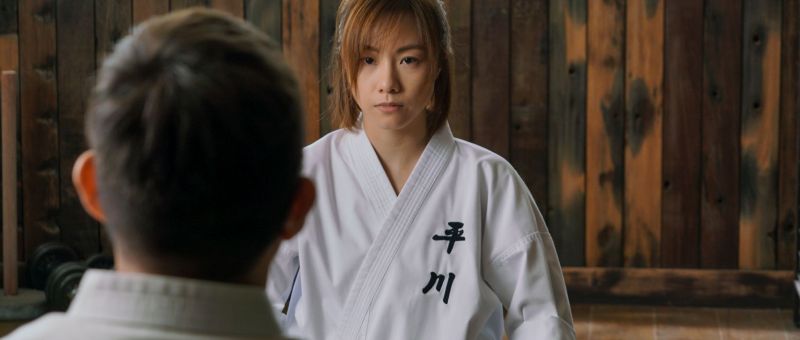
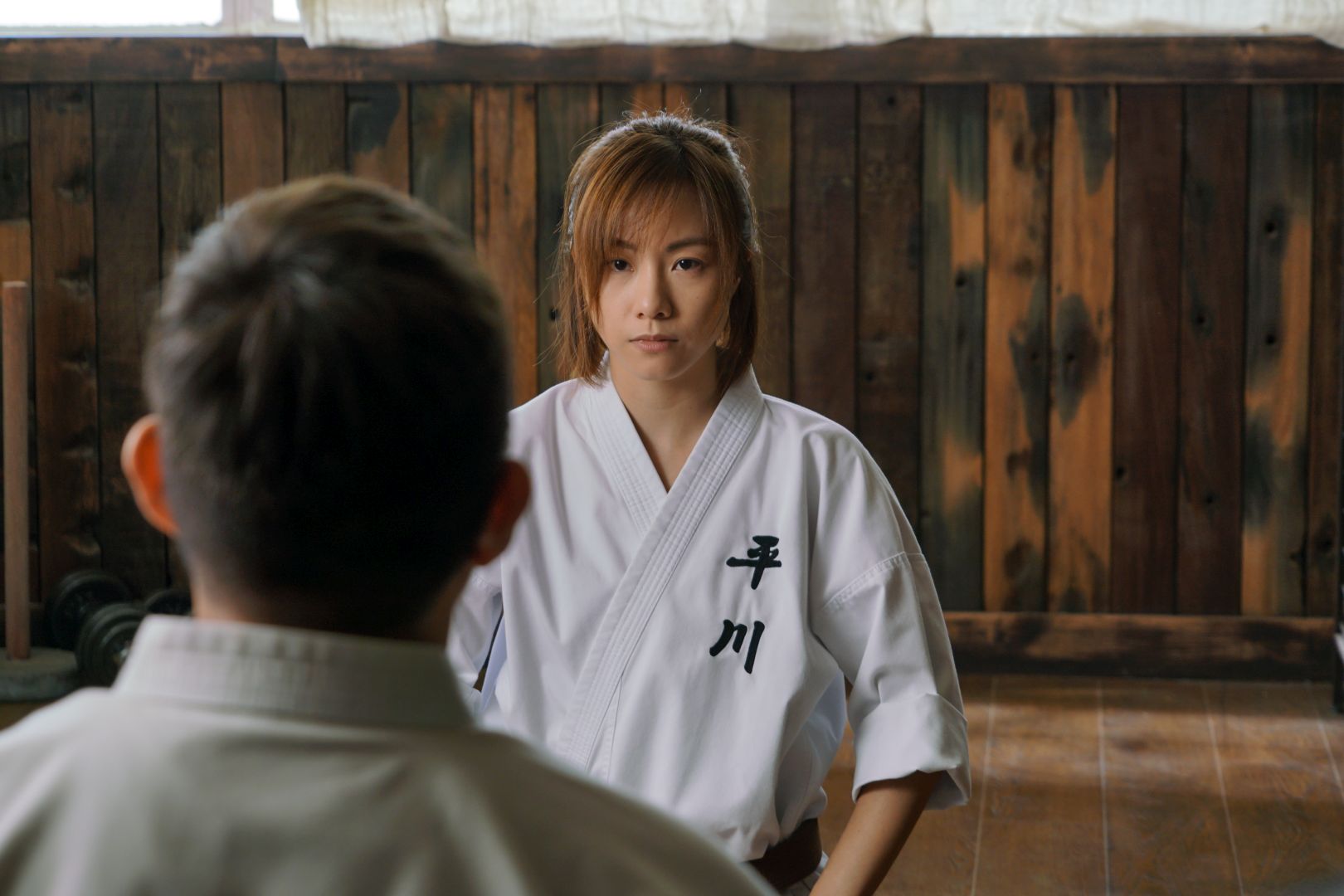
“You have to remember. You’ll always meet someone stronger than you. They might beat you down, but no matter what you need to have the courage to face it.” the defeated heroine of Chapman To’s second feature The Empty Hands (空手道) is reminded by her rediscovered mentor pushing her towards a literal reclaiming of her space in accepting her father’s legacy. The title, a literal translation of the characters which form the word “karate”, is perhaps also an allusion to the heroine’s sense of powerlessness and displacement even as she learns to rediscover a source of strength in that which she had previously dismissed as a worthless burden. 

30-something Mari Hirakawa (Stephy Tang Lai-Yan) is the daughter of a Japanese émigré, Akira (Yasuaki Kurata), who came to Hong Kong in 1972 on a work transfer and later married a local woman. Teaching karate as a hobby in his spare time, he eventually discovered that in the Hong Kong of the late 70s and 80s, martial arts was a valuable commodity and so he sunk all his savings into buying a sizeable flat in Causeway Bay, converting the living area into a Dojo with the family relegated to neighbouring rooms. The business did well but the family floundered and when Mari’s mother asked Akira to mortgage the dojo to help out her brother who ran into financial trouble during the 89 crisis his refusal and the uncle’s subsequent suicide led her to leave the family. A lonely child, Mari complains that her overly strict father forced her to practice karate against her will, something which she gave up as a brown belt after an unexpected tournament defeat swearing off the practice ever since.

When Akira dies suddenly, however, Mari is forced into a reconsideration of her life choices on discovering that he has left only 49% of the apartment/dojo to her with the controlling share entrusted to a former pupil, Chan Keung (Chapman To Man-Chat). Prior to this discovery, she had been cynically planning to subdivide the apartment into seven units, renting out six and living in the seventh solely on her proceeds from exploiting Hong Kong’s notoriously difficult housing market. Mari is, it has to be said, often difficult to like, defiantly aloof and with a healthy contempt for other people even throwing back a racial slur, albeit with a pinch of irony, at a little boy who’s been frequenting the dojo expressly in order to fight back against the discrimination he faces in everyday life as a member of the Indian community. This might be something you’d expect Mari to show a little more empathy for but she seems ambivalent in her sense of identity immediately introducing herself as Japanese on giving her name to man who works at the radio station where she gets a job as a security guard and with whom she drifts into a doomed affair. 

Mari’s affair with a married man is another thing of which she believes her father disapproved, but it’s also a reflection of her low self-esteem and awkward relationship with paternal authority in that she continues to seek but is afraid to ask for approval from emotionally distant men. She claims to have only one friend, Peggy (Dada Chan Ching), whom she somewhat cruelly dismisses as “all boobs and no brain”, explaining to her that what she likes about Ka Chun (Ryan Lau Chun-Kong) is his “loyalty” ironically admiring his refusal to leave his childhood sweetheart wife but also confident that he will one day choose her. Beaten down by life, Mari has perhaps backed away from the fight passively retreating while refusing to deal with her conflicted sense of identity and desire. She resents the implication that she petulantly jacked in karate after a single defeat destroyed her sense of confidence, but as we discover it is indeed her fear of failure which has been holding her back. Chan Keung’s bet that he will sign over his share of the apartment if she can remain standing, even if she loses, after three rounds in an upcoming competition is then a subtle way of getting her stand up again and rediscover a sense of confidence to fight for herself in the arena of life. 

Ironically enough, Chan Keung had been kicked out of the dojo for doing just that, told off for using karate to prove himself when its true purpose should be in the defence of others in need of help. He rediscovers the true spirit of karate after rescuing a little girl from a predatory triad, but Akira’s mission is also one of redemption for Chan Keung as he patiently mentors the originally reluctant Mari back towards an acceptance both of her father and of her relationship with karate along with the confidence that counters defeat. A meditative mood piece from the hitherto comedian To anchored by a stand out performance from Tang (who apparently spent six months training for the role) pushing back against glossy rom-com typecasting, The Empty Hands is less martial arts movie than gentle life lesson as its beaten-down heroine learns to fight her way out of existential malaise towards a more forgiving future. 


The Empty Hands streams in the UK 9th to 15th February as part of Focus Hong Kong

Original trailer (English subtitles)

Focus Hong Kong Film Festival to Launch in UK in February 2021

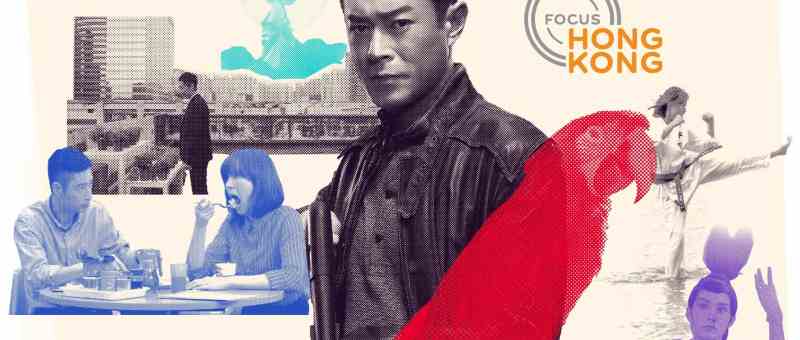
With cinemas closed for the foreseeable future, the team behind Chinese Visual Festival is the latest to head online with a brand new mini film festival dedicated to Hong Kong cinema arriving just in time for Chinese New Year. Focus Hong Kong will stream five features, one classic and four contemporary, as well as a series of Fresh Wave Shorts to homes around the UK from 9th to 15th February.

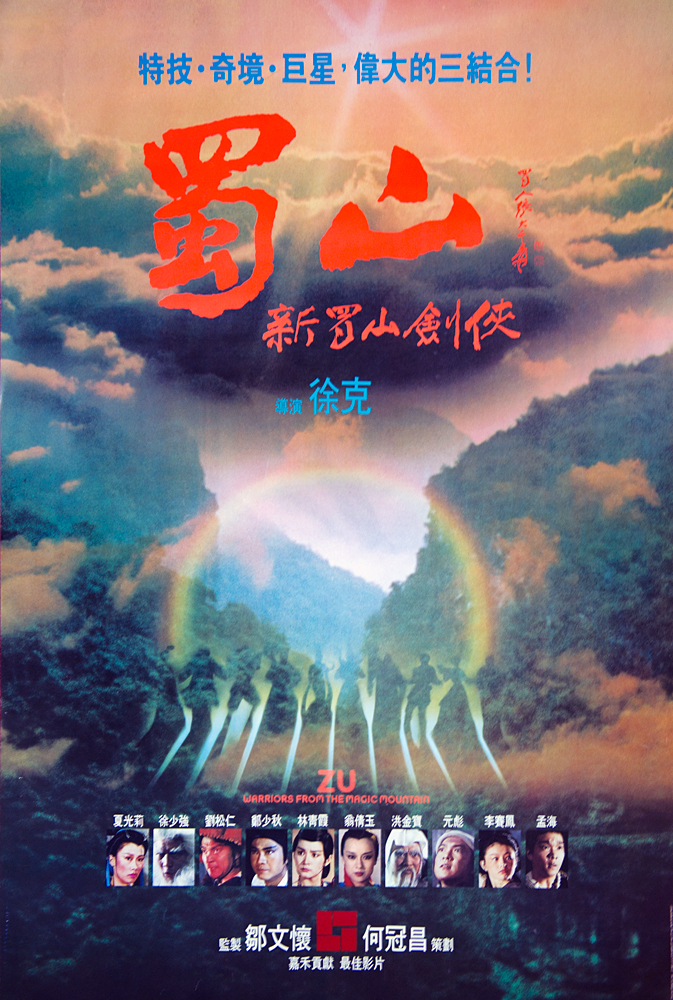
Zu Warriors from the Magic Mountain

Anarchic wuxia action from Tsui Hark in which a reluctant Tang Dynasty soldier ventures through a crevice and into a supernatural conflict. Released in the wake of Star Wars this zeitgeisty 1983 SFX fest has lost none of its charm.

Memories to Choke On, Drinks to Wash them Down

Leung Ming Kai & Kate Reilly’s omnibus film explores the unique culture of Hong Kong at a moment of crisis through four very different stories. Review.

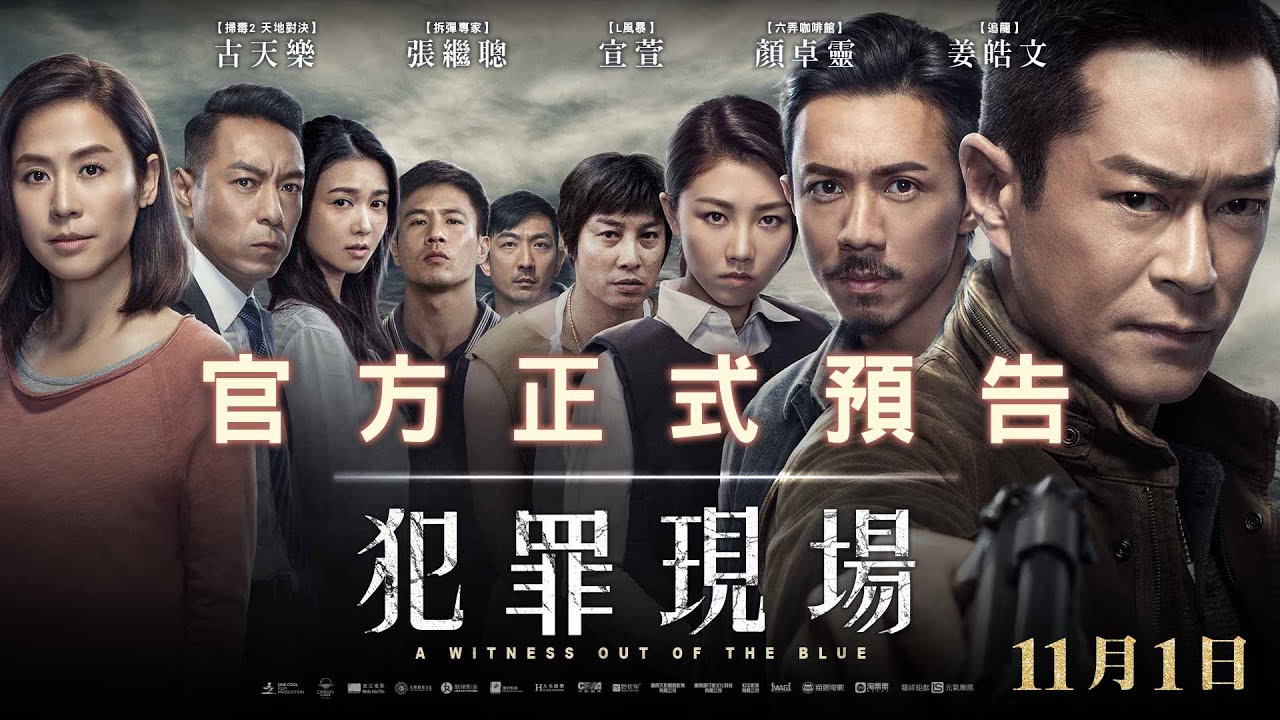
A Witness out of the Blue

An eccentric policeman investigates a murder based on the testimony of the only eyewitness, a parrot, in Andrew Fung Chih-chiang’s absurdist noir thriller. Review.

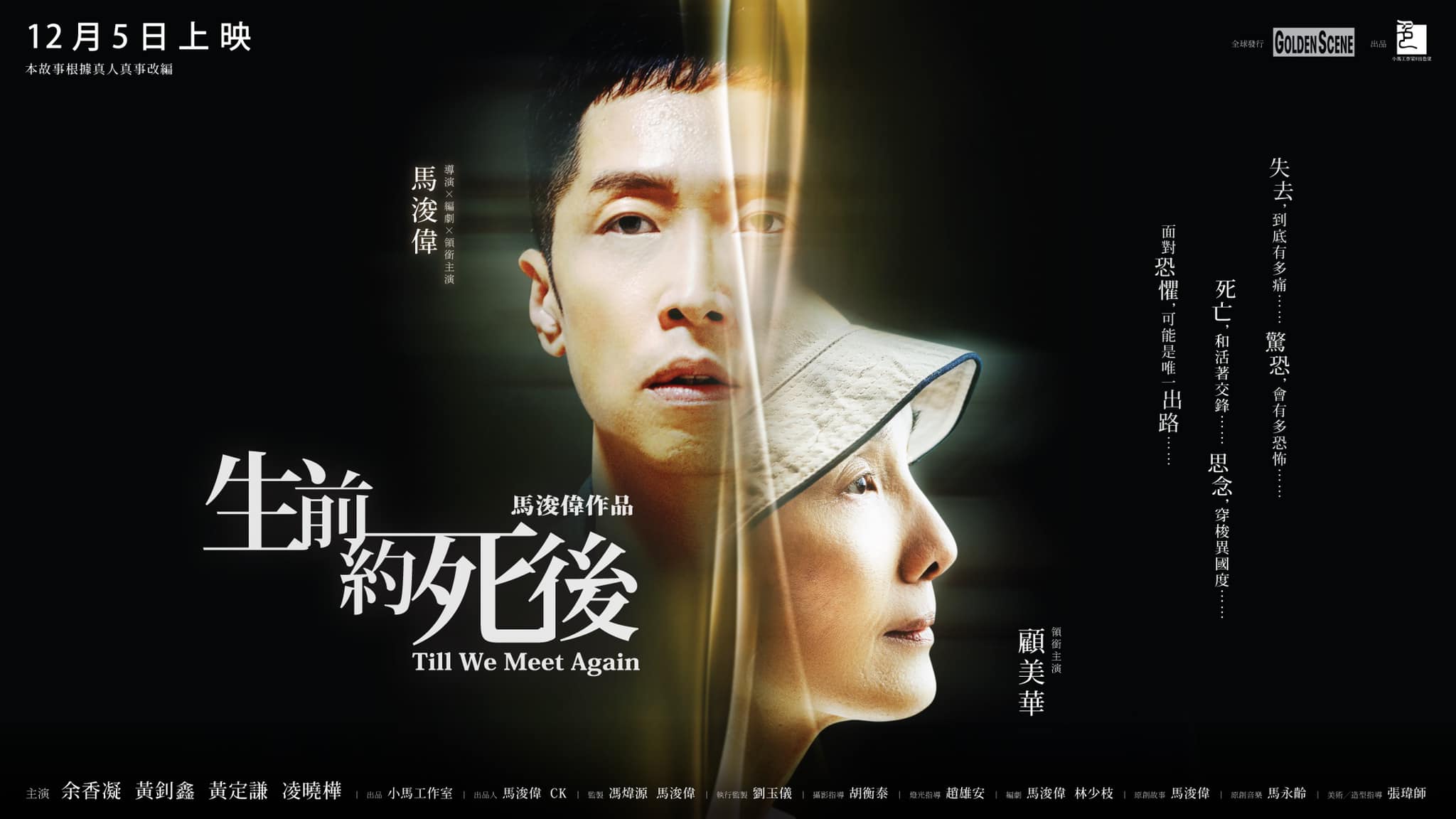
Till We Meet Again

Struggling to come to terms with the death of his mother a decade earlier, a fragile man undergoes a psychological crisis in Steven Ma’s sensitive, semi-autobiographical drama.

The Empty Hands

A young woman reaches a crisis point when her Japanese father suddenly dies and she discovers he’s left half the dojo (which was also their home) to a former pupil who pledges to sign his share over to her if she can last three rounds in a fight in this unusual character drama directed by and starring Chapman To with a stand out leading performance from Stephy Tang.

“Tickets” are on sale now via the official website for the reasonable price of £2.99 for features while shorts stream for free and you can also pick up an all access pass for £8.99. The festival will be back for another mini fest in March before returning later in the year for its first full edition and you can keep up to date with all the latest news via the official website, Facebook Page, Twitter account, and Instagram channel.

That Demon Within (魔警, Dante Lam, 2014)

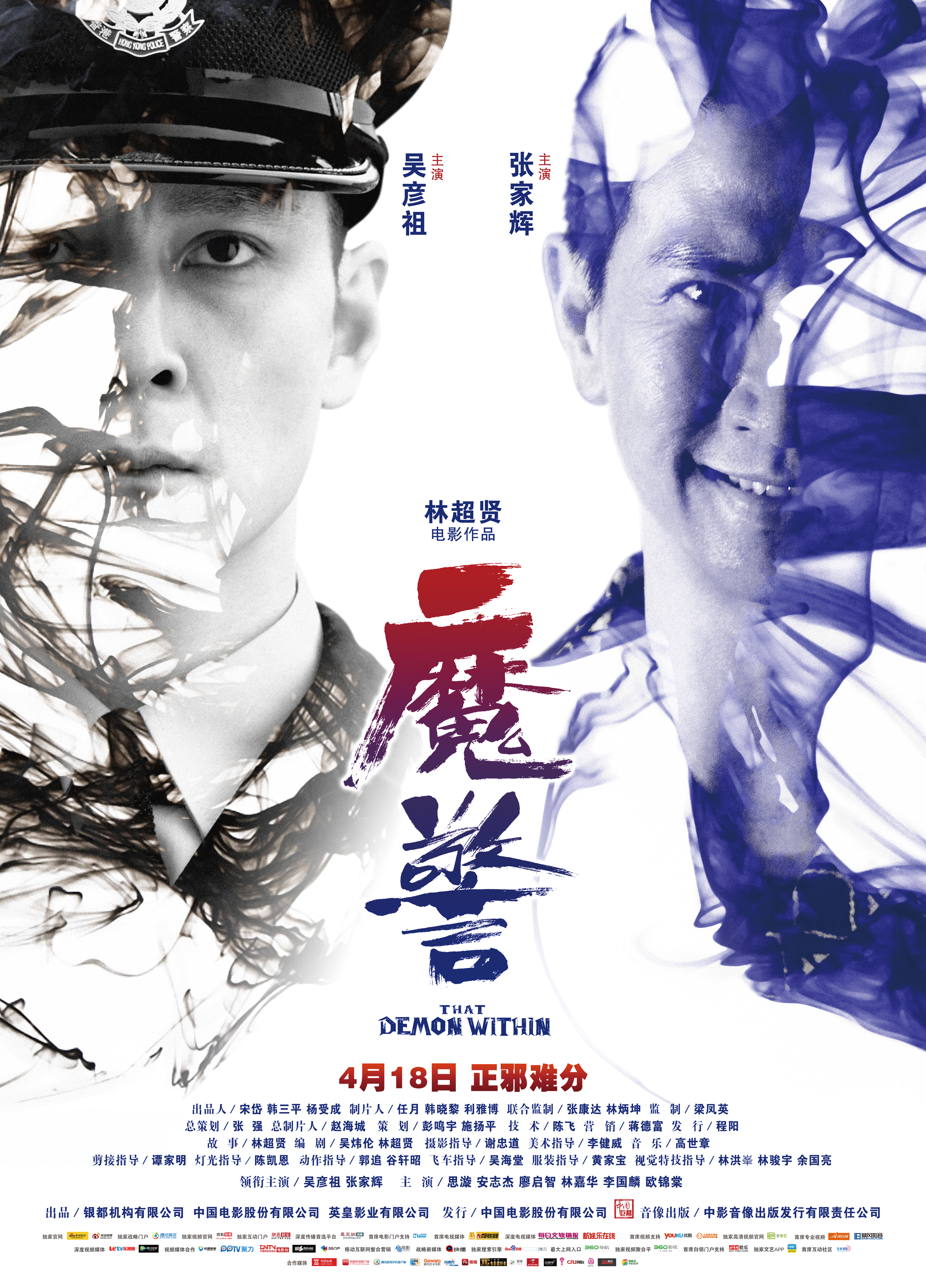
“Every man has his own fear, and different ways of hiding it. But fear will never go away” according to the hero of Dante Lam’s That Demon Within (魔警), a twisty, metaphysical take on the futility of violence and inevitability of karmic justice. Hong Kong cinema has often held that cop and criminal are merely two sides of the same coin, but rarely has it taken its mistrust of authority and nihilistic cynicism to such great heights as in Lam’s B-movie-inflected psychological thriller.

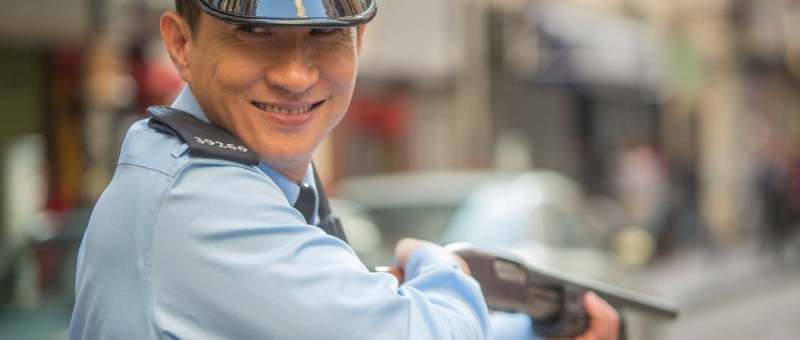
The hero, Officer Wong (Daniel Wu Neh-Tsu), is a fearful man. Now 35 and a 17-year veteran of the Hong Kong police he’s still a lowly beat cop currently occupying the police box in the reception area of a less than busy hospital. He tells us, paradoxically, that he puts on the uniform because it makes him feel safe. His life begins to change, however, when he makes the selfless offer to give some of his own blood to a man who staggers in badly injured after a bike accident. What Wong didn’t know is that the man is Hon (Nick Cheung Ka-fai), a notorious local gangster known as the Demon King responsible for the deaths of two fellow officers during the escape which led to his accident. Wong gets a dressing down from the Inspector in charge, Pops (Dominic Lam Ka-wah), and is thereafter haunted by his ironic action of being a policeman who saved the life of a cop killer.

Of course, others might say Wong did the right thing so that Hon can face justice and in any case it would be wrong to deny someone lifesaving treatment because of a moral judgement, but Wong can’t see it that way and continues to punish himself (quite literally) for his “mistake”, remembering the authoritarian father who taught him that mistakes are a sin. It turns out that Wong’s career has floundered because of “personality issues”, those being that he’s a bit of a prig, overly serious and by the book when most his fellow officers are anything but. His new commanding officer is, as it turns out, an old academy classmate who perhaps remembers what those issues might be but doesn’t see why they should have disrupted his career to the extent that they have and actively wants to help him get over them with the aid of a hypnotherapy psychologist.

Wong, however, is like everyone else dealing with his own demons but his decision to face them by chasing down Hon who has escaped to presumably do even more crime proves increasingly problematic as his sense of reality begins to unravel. There is something quite ironic in the fact that Hon’s “gang” (well, bunch of guys he hired for the job) is based in a funeral home and mostly involved with the rituals of death which, whichever way you look at it, is particularly convenient for their side business. Lam’s Hong Kong is a grimy, film noir land of dread and violence, a shadowy hellscape where no one is safe from the fire of karmic retribution. Wong has been in hell all along, waiting for the flames to consume him, but is only just starting to notice that it’s beginning to get warm.

Overcome with rage, Wong’s world literally glows red around the edges while Lam shifts to a steady cam closeup on his final mental break in the face not only of tremendous grief but the sudden impossibility of redemption and the manifestation of his guilt. Becoming a policeman was to Wong a way to protect himself from himself, an ironic form of atonement for past transgression. The source of all his trauma is echoed in the present plague of low level thuggery that sees “repo men” splash grease and paint on the homes of mostly elderly poor people presumably to pressure them to move while a single act of (accidental) police brutality at a protest against forced eviction changed not only his life but those of several others forevermore, kickstarting a chain of karmic retribution that leads us right back into the flames. If Wong is “mad” it’s because the world made him that way. Treading firmly within the realms of the B-movie with its comicbook-style aesthetic, incongruous score, and pop psychology take on the legacy of trauma, Lam’s nihilistic psycho-supernatural thriller leaves no doubt that cop or criminal there’s a demon within us all looking for an excuse to raise hell in a land of fear and violence.


Currently available to stream on Netflix in the UK and possibly elsewhere.

Original trailer (English subtitles)

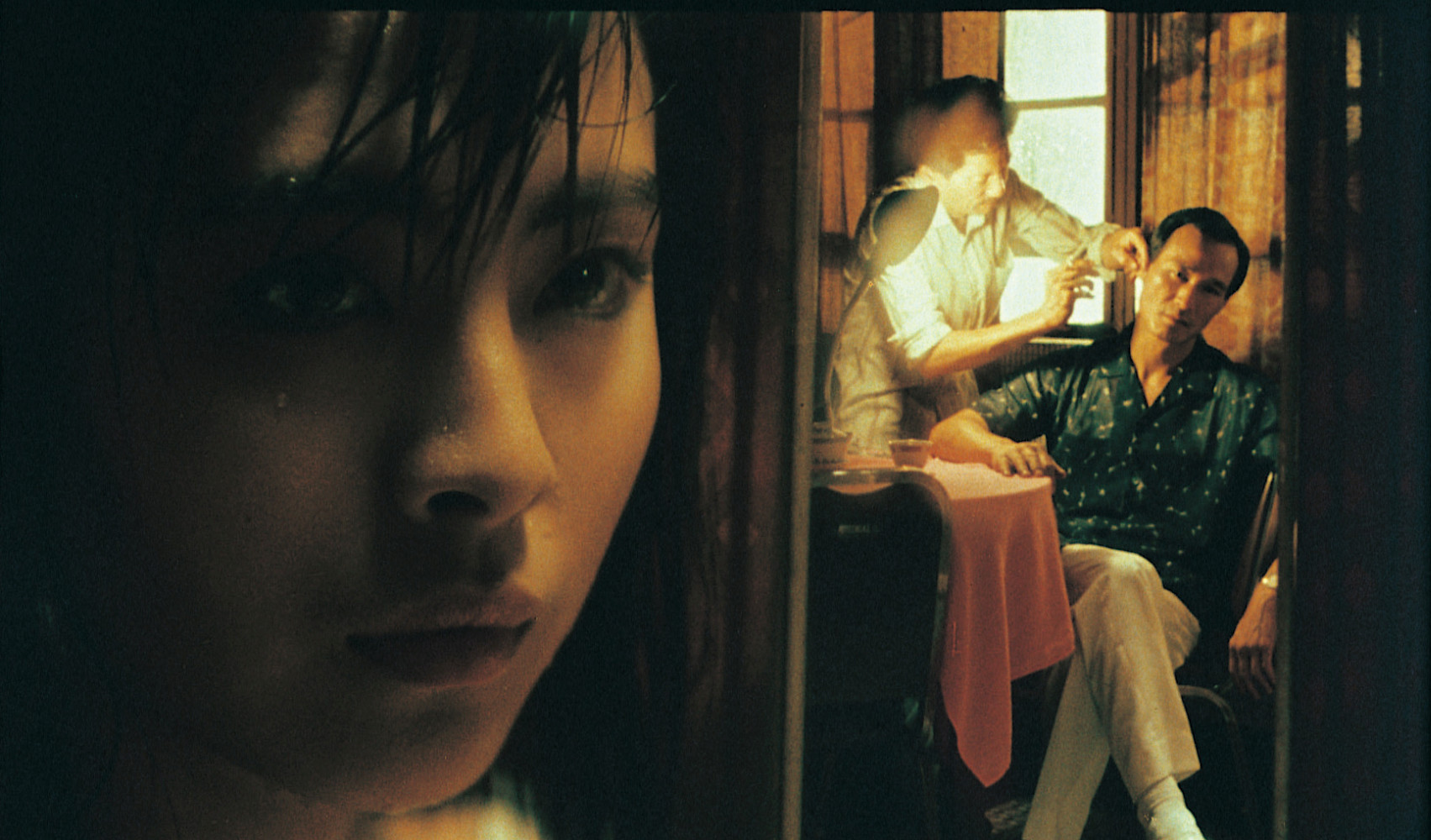
My Heart Is That Eternal Rose (殺手蝴蝶夢, Patrick Tam Kar-Ming, 1989)

“Now no one owes anything to anyone” a petty gangster ironically states on completing an errand for a friend in Patrick Tam’s heroic bloodshed off-shoot My Heart is that Eternal Rose (殺手蝴蝶夢). As the name perhaps implies, Tam’s film is less brotherhood than tragic romance as the fatalism of the noirish gangster world ruled by debt if not by honour conspires against love, not only romantic but filial and brotherly, in its infinite web of violence and futility.

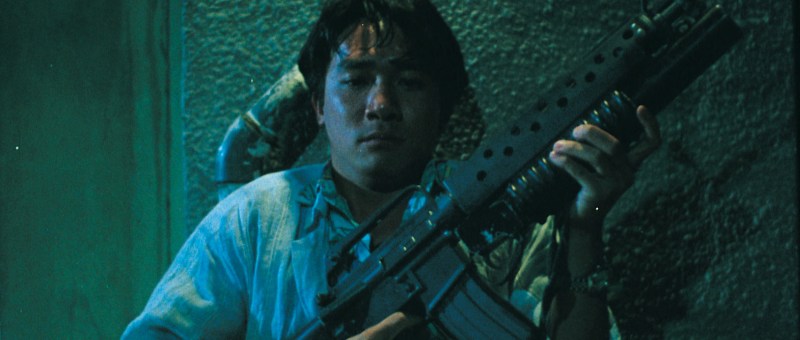
Pinching a classic noir narrative, the picture opens in a cheerful waterside tavern run by former gangster Uncle Cheung (Kwan Hoi-Shan) where carefree gambler Rick (Kenny Bee) is in love with the old man’s daughter Lap (Joey Wong Cho-Yee) who works behind the bar. Uncle Cheung thinks he’s escaped the triad world, but the past is not done with him. Approached by local tough guy Law (Gam Lui), Uncle Cheung is made an offer he can’t refuse to help smuggle Law’s son (Cheung Tat-ming) to Hong Kong from the mainland. He asks Rick to pitch in as the driver and recruits corrupt cop Tang (Ng Man-tat) to help him get past the checkpoints. But Law’s kid is a chatterbox, excited to be in Hong Kong and eagerly boring everyone with his future plans to become a famous singer. Unwisely he drops his father’s name and rouses Tang’s interest. Tang makes the gang pull off at a rest stop so he can strong arm Uncle Cheung into ringing Law to up his pay, but the loudmouth kid jumps the gun, literally, and gets himself killed. Tang turns on Rick and Uncle Cheung to clear up loose ends but Rick kills him, escaping with Uncle Cheung and leaving the old lady at the rest stop to clean up the mess. Left with no choice but to flee, the trio arrange passage to the Philippines but Uncle Cheung is snatched by Law before they can leave. Lap is forced to make a deal with rival kingpin Godfather Shen (Michael Chan Wai-man) to save her dad, putting Rick on the boat with a promise to meet him later but knowing that she will likely never escape Shen’s grasp.

Six years pass, during which Lap becomes Shen’s right-hand woman entertaining wealthy Japanese businessmen in his swanky club as a singer and hostess. Consumed by guilt and remorse in knowing his daughter continues to pay the price for his mistake, Uncle Cheung has become a drunken liability while Lap is lost in romantic melancholy, mooning over the ruined love of her youth and dreaming that some day Rick may return and take her away from all this. Meanwhile, innocent rookie (confusingly also named) Cheung (Tony Leung Chiu-Wai) has fallen in love with her, captivated by her sadness and the futility of her life with Shen. Of course, Rick, having become a hit man, eventually returns leading to a confrontation not just with Shen but with the triad world itself. 

In the gangster universe, everyone owes something to someone. Debt is a kind of currency, and every bargain accrues its particular kind of interest. Lap is forced to sacrifice herself to save the men she loves by trading the only currency she has, her body, knowing that in doing so she destroys the possibility of a happy romantic future with Rick in order to keep him safe. Six years later she thinks she’s paid her debt to Shen, he has plenty of other women what difference can keeping her captive make? But that’s not the way the gangster world works. Shen merely gifts her to the psychotic underling who propositioned her on their first meeting and moments earlier had tried to betray his boss by raping her. Only Cheung, pure hearted and naive, is uncorrupted by the venal cruelty of the triad world, consumed by a truly selfless love that sees him determined to help Lap escape and save her future with Rick. 

This selfless love, however, eventually creates another debt in the moral dilemma faced by the lovers who know that if they escape alone they leave Cheung at the mercy of Shen while to return spells certain death. Co-shot by Christopher Doyle, Tam’s moral universe is lit by the red-tinted glow of the neo-noir, a dizzying yet melancholy world of violence and futility in which freeze frames and ethereal dissolves hint at the transient meaninglessness of the triad life where love and death go hand in hand while betrayal is an ever present companion. Only those sufficiently uncorrupted by the moral duplicities of an increasingly bankrupt existence are permitted to survive, but even so emerge beaten, wounded, and pale with loss literally at sea perpetual exiles without home or harbour.


Original trailer (Dialogue free, contains major spoilers)

Moon Warriors (戰神傳說, Sammo Hung, 1992)

“In fact, some stories are true. Especially the heartbreaking ones” according to a melancholy fisherman in Sammo Hung’s tragic wuxia romance, Moon Warriors (戰神傳說). Arriving in the middle of a fantasy martial arts boom, Moon Warriors boasts some of the biggest stars of the day in a beautifully composed tale of intrigue and derring-do as well as featuring an A-list creative team with such high profile talent as Mabel Cheung, Alex Law, Ching Siu-Tung, and Corey Yuen also involved in the production. 

Somewhere in feudal China, 13th Prince Shih-san (Kenny Bee) is on the run after being usurped by his evil brother, the predictably named 14th Prince (Kelvin Wong Siu) who burnt down his castle and has been following him throughout the land razing villages wherever he goes. Accompanied by trusty bodyguard Merlin (Maggie Cheung Man-Yuk) who is silently in love with him, Shih-san is desperate to get in touch with the Lord of Langling (Chang Yu), also the father of his betrothed princess Moony (Anita Mui Yim-Fong), in the hope of uniting their forces to retake the country together. Meanwhile, goodhearted yet eccentric fisherman Philip (Andy Lau Tak-Wah) is doing a spot of hunting in a bamboo grove during which he notices Shih-san and the others wading into a trap and leaps to the rescue, helping to despatch the black-clad assassins. As Shih-san is badly injured, he takes them back to his cheerfully idyllic village, serves them the local delicacy of spicy shark fin soup, and generally befriends them before 14th Prince’s goons track them all down again at which point he takes them to his secret hideout which turns out to be an ancient temple dedicated to Shih-san’s emperor ancestors. 

We find out just how evil 14th Prince is when he gets his minions to kill all of Moony’s ladies-in-waiting and dress up in their clothes to mount a sneak attack on the Langling estate while holding on to the pretty kites Moony was flying before the gang arrived. Though petulantly flying kites seems like quite a childish activity for a princess about to be married off, Moony more than holds her own in the fight even if finding it difficult to deal with having killed someone for the first time. Sent to protect her, Philip is less than sympathetic, but after a few arguments, a near death experience, and some magic glitter, the pair begin to fall in love, which is a problem because Moony is betrothed to Shih-san. 

What develops is a complicated love square in which Merlin pines for Shih-san who seems more interested in Philip, while Philip repeatedly tries to leave the group because of his conflicted loyalties and a feeling of inferiority as a peasant suddenly mixed up in imperial intrigue and forbidden romance. Moony tries to give him her half of a precious jade talisman which plays beautiful music, but her melancholy suggestion that it will sound better with his flute than with the other half which is held by Shih-san flies right over his head. Shih-san, meanwhile, who was spying on them talking, suddenly decides to give him his half too, leaving Philip holding the whole thing. Merlin, as it turns out, has a series of interior conflicts of her own that leave her resentful of just about everyone except Shih-san. 

Eventually, however, nowhere is safe from the destructive effects of political instability and Philip’s fishing village is soon a target for the vicious 14th Prince, ensuring he enters the fight with the help of his improbable best friend, a killer whale named “Sea-Wayne”. Before the romantic dilemmas can be resolved, the courtly intrigue collapses in on itself, fostering an accidental revolution in the literal implosion of an old order, suddenly becoming dust as in some long forgotten prophecy. In a strange moment of flirtatious smalltalk, Philip had remarked that legend has it the flowers in these fields are only so beautiful because they grow on top of bodies buried far below, something he later discovers to be more than just a fanciful story. 

There might be something in the tragic tale of two branches of elites destroying each other in order to take control of a disputed territory while the ordinary man is left behind alone to reflect on the fall of empires, but perhaps that’s a reading too far in a melancholy wuxia of 1992 and its unexpectedly gloomy ending in which true feelings are spoken only when all hope is lost. Nevertheless, with all of its high octane fight scenes, painful stories of romance frustrated by the oppressions of feudalism, and surreal killer whale action, Moon Warriors is a strangely poetic affair as doomed love meets its end in political strife.


Trailer (no subtitles)

The Last Affair (花城, Tony Au Ting-Ping, 1983)

“Why choose Paris?” a mysterious voice inquires. “Because it’s Paris” comes the slightly depressed reply. In terms of the movies, the City of Light has an undeniably romantic reputation, but those who go there are often drawn more towards the darkness. Art director Tony Au Ting-ping’s distinctly European directorial debut The Last Affair (花城) helped to launch the film careers of then TV stars Chow Yun-fat and Carol Cheng Yu-ling and finds a lonely young woman trapped in an unhappy marriage travelling to Paris alone for a friend’s wedding only to discover that you cannot escape yourself through romantic delusion. 

The dejected Ha-ching (Carol Cheng Yu-ling) once eagerly studied French after school with her best friend Bing (Pat Ha Man-lik) in the hope of travelling through Europe but married young and never got the opportunity while Bing moved to Paris and is about to marry a Vietnamese man who owns a family-run restaurant. Looking back at an old photo of the pair of them together, she laments that she was once young and full of dreams but is now middle-aged and filled with disappointment. Bing is surprised that Ha-ching has come to Paris on her own, but she deftly changes the subject, apparently unwilling to talk about her husband, Wai-ming seemingly a representative of an empty elitism of the newly prosperous society. Later she writes him a letter she doesn’t have the courage to send informing him that her trip to Paris has convinced her that she never loved him and she doesn’t see how their present relationship could continue. 

In any case, Wai-ming is supposed to arrive just before the wedding but perhaps only because he’s also going to a big architecture conference in Lyon. When he eventually turns up, he’s extremely rude to Bing and her fiancé who is obviously irritated but making a tremendous effort to be polite while Wai-ming makes a fuss about the quality of the hotel, snapping at Ha-ching that she should have booked the Georges V because it’s not as if they don’t have the money while endlessly droning on about himself. In short, it’s not difficult to see why Ha-ching is unhappy. 

Before he arrives, however, she starts to see a different future fuelled by ideas of European romance after locking eyes with handsome violinist Kwon-ping (Chow Yun-fat) busking in the subway. Awkwardly, Kwong-Ping turns out to be a member of Bing’s circle of friends, and the pair quickly hit it off, beginning a passionate affair. A phone call to his apartment from a French woman, however, has Ha-ching feeling uncertain. She has fallen in love with Kwon-ping and is intending to throw her life away for him, but he likes to have a good time in the bohemian bars of the city whereas she’d rather stay in cooking Chinese food to make them both feel more at home. Artists and dreamers all, the people at the bar make her uneasy. She’s always wanted to know how to find true happiness and has a feeling most of those at the bar are the same, never quite finding it and left with a terrible sense of incompleteness. In truth, she’s a little more conventional than she’d perhaps assumed.

That sense of existential displacement is something that, on the surface of things at least, doesn’t seem to bother Kwon-Ping, but then again perhaps explains the momentary monogamy of his womanising in which he loves them when he’s with them but forgets them when he’s not. For many, Paris seems to be the city of broken dreams. Melancholy art student Siu-tong is forced to make ends meet painting “traditional” furniture designs to European tastes while trying to make it as an artist. Bing’s fiancé is casually dismissive of those who paint for money by the river, but Siu-tong is left with no other choice, dismissed by the furniture maker and finding that all of the talk of his getting a solo show was just that. His girlfriend went back to the Philippines to study, worried he’d forget her, while he’s too ashamed to tell her that he’s giving up and going back to Hong Kong to be an art teacher. 

Bing, meanwhile, has troubles of her own, preparing to get married but perhaps getting cold feet in settling while still hung up on old love. She can’t forgive Kwon-Ping for his womanising ways, but is too close to the matter to be able to talk to Ha-ching even if she can tell that there’s something not right with her old friend. Unable to accept that Kwon-Ping is not a one woman sort of man, Ha-ching begins to go quietly out of her mind, falling out with Bing while resentful of her husband and certain she does not want to return with him to her old life in Hong Kong. She meets a Canadian-Chinese man travelling Europe alone and making ends meet through selling handicrafts along the way, but ultimately reflects that solo travelling is not the path to happiness at least not for her and is therefore faced with the impossibility of witnessing the implosion of her romantic delusion. Framed in the grandiose tones of avant-garde opera, Ha-ching’s existential despair takes a much darker turn than might originally be expected, but is perhaps in keeping with Au’s overtly European arthouse aesthetics. 


Chasing the Dragon II: Wild Wild Bunch (追龍II:賊王, Wong Jing & Jason Kwan, 2019)

In the grandest tradition of Hong Kong “sequels”, Chasing the Dragon II: Wild Wild Bunch (追龍II:賊王) has almost no connection to 2017’s Chasing the Dragon which starred Donnie Yen and Andy Lau as famed ‘70s gangster Crippled Ho and bent copper Lee Rock respectively. It is however part of a planned trilogy of films directed by Wong Jing and Jason Kwan “celebrating” legendary Hong Kong “heroes”. Abandoning the grand historical sweep of the first film, Wild Wild Bunch situates itself firmly in 1996 on the eve of the handover when, it claims, Hong Kong was close to a lawless state seeing as the colonial British authorities were already in retreat and therefore largely disinterested in governing. 

It’s this laxity, coupled with an age of excess, which has enabled the rise of real life kidnapping kingpin Cheung Tze-keung (Tony Leung Ka-fai) also known as Big Spender and here known as Logan Long. Logan makes his money by ransoming the richest figures not only in Hong Kong but the wealthier stretches of the Sinosphere and the Mainland cops are after him because they see him as an inconvenience from old Hong Kong they’d rather not inherit. Accordingly, they enlist veteran Hong Kong policemen, Inspector Li (Simon Yam Tat-wah) and bomb disposals expert He Sky (Louis Koo Tin-lok), to help them because they’ve heard that Logan is in need of a new explosives guy after the last one blew himself up. Sky is supposed to go deep undercover in Logan’s gang to save his next victim and take him down in the process. 

Though inspired by the real life legend, Sky’s infiltration is obviously fiction and in actuality Cheung Tze-keung was caught before his kidnapping of Macau gambling magnate Stanley Ho, here Standford He (Michael Wong Man-tak), could take place though setting the tale in the former Portuguese colony famous for its casinos (illegal in Mainland China) adds another meta level of colonial critique in situating itself firmly in the world of wealthy elites corrupted by their fabulous wealth. Real life gangster Cheung was apparently a well-liked figure, branding himself as a loveable rogue and less altruistic Robin Hood who liked to spread his wealth around by giving out lavish gifts seemingly at random though also enjoying living the high life himself. Logan is much the same, holing up at his mansion safe house in the rolling hills with his criminal “family”, declaring himself a fair man. If you cross him he’ll be sure to investigate fully but if he finds you betrayed him his revenge will be merciless. He cares deeply about his guys but also, perhaps unwittingly, terrorises them to the extent that they all pretend to enjoy eating durian fruit to please him, while reacting to tragedy with old-fashioned gangster ethics in trading his own girlfriend and a significant amount of cash to a gang member whose pregnant wife ended up dead because of his cowardly brother Farrell (Sherman Ye Xiangming) who is frankly a walking liability. 

Sky too is a family man, constantly worrying about his elderly mother and giving instructions to Li as to how to look after her if anything goes wrong and he doesn’t make it back from Macau. Sky’s mum is also quite concerned that her son has never married, and there is something quite homely in the strangely deep friendship between Li and Sky which has its unavoidably homoerotic context in Li’s cheerfully intimate banter in which it often seems he’s about to kiss his brother-in-arms which might not go down so well with the Mainland censors board who are otherwise so obviously being courted with the heroic presentation of the PRC police force only too eager to clear up the mess the British left behind. 

Then again, Cheung Tze-keung’s case was notable in that is presented an early constitutional conflict to the One Country Two Systems principle seeing as he was a Hong Konger tried (and sentenced to death) on the Mainland for crimes committed outside its jurisdiction, something which had additional resonance in the climate of summer 2019 in which vast proportions of the city came out to protest the hated Extradition Bill. In any case, Wild Wild Bunch owes more to classic ‘90s Hollywood actioners than it perhaps does to local cinema with its frequent bomb disposal set pieces and final climactic car chase which nevertheless literally pushes Logan over the line and into the arms of the PRC, the flamboyant gangster taking a bow as he tears up his ill gotten gains with a rueful grin in acknowledging his loss to a superior power. 


US release trailer (English / Traditional Chinese subtitles)

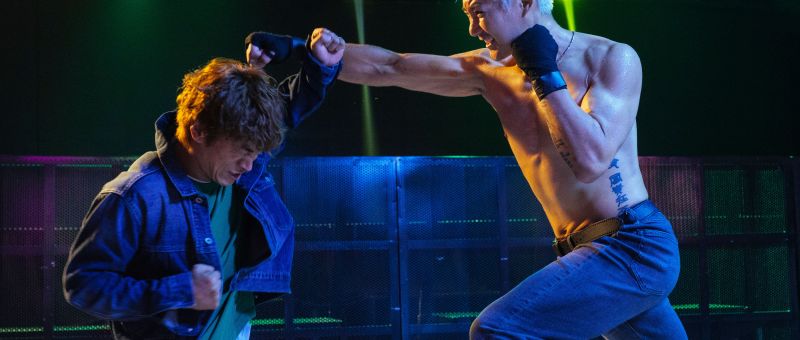
Unleashed (地下拳, Kwok Ka-Hei & Ambrose Kwok Yat-Choi, 2020)

Victory lies in letting go in Kwok Ka-Hei & Ambrose Kwok Yat-Choi’s macho boxing drama Unleashed (地下拳). A familiar tale of a gym under threat, a master vulnerable, and a young man indignant, Unleashed isn’t claiming to be original but eventually wanders in an unexpected direction with the entrance of a young aspiring actress who finds herself at the mercy of a predatory industry, taking refuge in the ring as she undergoes research for an upcoming role as a top assassin. 

Fok Kit (Sun Zhen-Feng), the hero, is a champ of the underground boxing circuit living with his master Tak-bo (Ken Lo Wai-Kwong) at a struggling gym. When their landlord, Mr. Ho (Mok Wai-Man), comes calling, Tak-bo assumes he’s putting up the rent but the reality is even worse. Ho wants to sell the property after receiving an offer too good refuse, but he is willing to sell it to Tak-bo first if he can come up with the money. While the bank agree to loan him almost enough, Tak-bo is running a little short when he’s approached by an old pupil, Lok (Sam Lee Chan-Sam), with an offer of his own. He wants Fok Kit to face off against his guy Surat (Zheng Zi-Ping), a Thai boxer with a fearsome reputation. Tak-bo is reluctant, fearing for Fok Kit’s safety after hearing rumours that Surat killed a man in the ring, while it also turns out that there may be bad blood between himself and Lok who has not long got out of prison after being convicted of drug smuggling. Meanwhile, Fok Kit has taken on a new pupil, Effy (Venus Wong Man-Yik), who wants to join the gym to learn all the boxing she needs to know to convince in her role as an assassin in an upcoming movie. 

Left with no other options, Tak-bo gives in and lets Fok Kit fight Surat, but it goes just as badly as it could possibly go and not only does he lose but is rendered paralysed. In true boxing movie fashion, Fok Kit shifts from petulant unwillingness to undergo a risky operation that might allow him to walk again, to a full recovery and the desire for a rematch, but his scars are as much psychological as physical leaving him afraid to fight, seeing Surat’s smug grin in every challenger that swings a punch. He freezes, knocked out by even the weakest of opponents. Effy, meanwhile, is on an emotional rollercoaster of her own. The sleazy director she’s working with takes against her when she rejects his inappropriate advances, having all her scenes reshot and even using them as an excuse to use physical violence against her under the pretext of movie making. He eventually gets his comeuppance when a video of his behaviour is leaked and goes viral, but his drunken act of revenge, from which Fok Kit is unable to protect her because of his unaddressed trauma, may yet cost Effy her big break in leaving her with a prominent facial scar. 

As Tak-bo keeps telling him, however, the most important tool in boxing is not physical strength but passion, just as a good actor needs heart and dedication. “Clench your first too tight you may lose everything” Tak-bo insists gently guiding Fok Kit towards the power of letting go while he himself admits he’s been holding on to an insecurity that kept him out of the ring. A fear of losing, rather than the convenient excuse of his leg injury, had him give up the fight only now deciding that he’s tired of hiding from failure. If they want to save the boxing gym, they’ll have to face their respective fears in the form of the irredeemable big bad that is Surat, a total vacuum of humanity and unstoppable killing machine. The greedy and soulless are eventually made to pay a heavy price for their betrayal of the craft, while those who have true passion eventually prosper. Never quite managing to marry its twin plot strands with Effy’s desire to fight back against a sexist and exploitative industry taking a backseat to Fok Kit’s manly drama as he struggles to regain his confidence by beating his trauma in the ring, Unleashed moves swiftly towards it wholly expected finale but consistently lands its blows even in its willing conventionality.


Unleashed streamed as part of this year’s New York Asian Film Festival.

Original trailer (English/Traditional Chinese subtitles)

Images: © 2020 Orchid Tree Media

Memories to Choke On, Drinks to Wash Them Down (夜香・鴛鴦・深水埗, Leung Ming Kai & Kate Reilly, 2019)

Neither as maudlin nor as ironic as its witty English title implies, Leung Ming Kai and Kate Reilly’s four-part anthology Memories to Choke On, Drinks to Wash Them Down (夜香・鴛鴦・深水埗) attempts to capture the flavours of a Hong Kong in transition. Imbued with a gentle nostalgia the four stories do not so much eulogise as celebrate the island’s unique culture while perhaps provoking questions about an uncertain future in the face of political instability and widespread protest. 

The first of the four shorts, however, looks back towards the past as an old lady suffering with dementia repeatedly tells the same handful of stories to her patient Indonesian helper, Mia. In an ironic twist, the tale takes the two women on a circular journey as Chi Yin, the old woman, becomes determined to reconnect with her history through visiting a reunion for those who came to Hong Kong from her village on the Mainland while Mia patiently tries to explain that her son has instructed her not to take his mother out. Eventually she relents, humorously videoing the old woman promising not to tell her son so she can show her later, but thinks better of it after realising Chi Yin’s real longing to visit him at his job in the city. Mia is of course separated from her own son while caring for Chi Yin, the commonalities between the two women becoming ever more clear as their stories mix, mingle, and repeat in the confused mind of the older woman herself a migrant to Hong Kong who came to the island in childhood, recounting a life of hardship thankfully long since past. 

The city’s economic development is also at the forefront of the second tale which sees two grown up brothers revisiting their mother’s toy store in a now rundown part of town where, as another store keeper puts it, everyone is old and so there is no more call for toys. That might be one reason why it seems that their mother has decided to sell up, but the loss of their history seems to weigh heavier on one brother than the other. While the older has married and has a child of his own with another on the way, the younger has lost his job and secretly wants to take over the shop himself only is uncertain how this news will read to his mother. While they reminisce and recover long buried treasures of their youth, the differences and dilemmas between the two men are perhaps emblematic of the push and pull of modern Hong Kong torn in two directions uncertain which parts of the past to discard and which to keep. Nevertheless, the two men eventually find common ground and mutual support even as their conflicting desires send them each in opposing directions. 

The two at the centre of Yuenyeung meanwhile were always destined to part, yet their separation has its share of confusion and awkwardness. The titular Yuenyeung is a local drink acknowledged as intangible culture which has, according to the knowledgable protagonist, a slightly dark history in that it was created in part to enable further exploitation of port workers under British colonialism and consists of super strong Ceylon tea and caffeine high coffee mixed with condensed milk. American teaching assistant Ruth is keen to try it as part of her total immersion in Hong Kong culture, but local economics teacher John isn’t much of a fan not just because of its slightly sour history but because he seems to have an internalised snobbery when it comes to being a Hong Konger. Nevertheless, with an obvious ulterior motive that Ruth either is oblivious to or chooses to ignore, he joins her on her voyage through the city’s lower end eateries where the locals choose to eat with the occasional visit to a “romantic” KFC which whatever else you might want to say about it has a lovely view of an idealised Hong Kong street scene. Tellingly, Ruth is already planning to move on to China, while a rebound John who perhaps misunderstood her has his eyes ironically set on an extended trip to the States on a kind of cultural odyssey of his own. 

Breaking entirely with the first three sequences, and in truth a little out of place, the last is the most direct in abandoning the dialogue heavy, two-hander focus for pure documentary following an eccentric young woman running as a candidate for political office in order to provide opposition for an otherwise unopposed incumbent during the fractious 2019 elections. Jennifer describes those who don’t support the protests as “weird”, but also affirms that ideally she wants a steady job in a bank and to live a dull, comfortable life as a “useless” person. When not out flyering she works as a barista/bar tender and later claims that she didn’t even want to be on the council because the local populace is quite annoying. In a strange way she provides the perfect encapsulation of a fractious political moment, a mix of surprisingly conventional thought patterns coupled with a real desire for freedom and lasting social change. Never quite as a maudlin as the title suggests, Memories to Choke On, Drinks to Wash Them Down is perhaps filled with a nostalgia for a Hong Kong that’s not quite gone but also has within it a quiet resilience if only in its insistence on memory as a political act. 


Memories to Choke On, Drinks to Wash Them Down streams in California until Oct. 31 as part of this year’s San Diego Asian Film Festival.

Original trailer (English subtitles)

Beyond the Dream (幻愛, Kiwi Chow Kwun-Wai, 2019)

Two troubled souls battle illusionary love in Kiwi Chow Kwun-Wai’s existential romance, Beyond the Dream (幻愛). What is love when divorced from fantasy, and once you know do you have the courage face it? That’s a question asked by each of the mirrored protagonists who’ve convinced themselves they are unworthy of love while struggling to extricate themselves from past trauma and present insecurity as they find the sands of reality constantly shifting beneath their feet. 

Chow opens with a street scene, the evening crowds gently parting to find a woman in distress, Ling (Wong Lam), who eventually begins to take off all her clothes. While passersby stare and film her public breakdown, a man, Lok (Terrance Lau Chun-Him), who recognises her from a support group for sufferers of schizophrenia, comes to her rescue as does a mysterious woman who wraps her cardigan around her giving her both modesty and warmth. Helping Ling into an ambulance, Lok ends up with the mystery woman’s cardigan somehow captivated by her, touched by the way she came to Ling’s rescue when everyone else was intent on ridicule. Sometime later he is surprised to realise that the woman lives on the floor above him on his estate. Returning her cardigan he discovers her name is Yanyan (Cecilia Choi Si-Wan) and she lives with her violent drunk of a father (Ng Kam-Chuen). The pair become a couple and Lok starts to wonder if he should tell her about his struggles with mental health only for his symptoms to begin resurfacing. Much to his horror he realises that his relationship with Yanyan is nothing but a vivid fantasy, a figment of his illness which exists only his mind. 

Yet even fantasy is built on a grain of truth as Lok later discovers when “Yanyan” turns up at one of his support group sessions only she’s a post-grad psychology student by the name of Yip Nam who is looking for volunteers to participate in her research into erotomania in those diagnosed with schizophrenia. Nam hopes to find out if lack of love is a causal factor in the condition through the stories of those who become consumed by romantic delusion. Unfortunately, her project is rejected by her supervisor, Dr. Fung (Nina Paw Hee-Ching), on the grounds that she has no viable subjects. Lok would seem to be the ideal patient, were it not for the awkward fact of which Nam is still unaware that she herself is the subject of his fixation, the “real” woman who came to Ling’s rescue all those months ago. 

“Relationships are always your problem” Nam is warned, herself carrying the burden of a traumatic past which, according to her mentor Fung, has also convinced her that she doesn’t deserve love, mirroring Lok’s fantasy of Yanyan and her imprisonment at the hands of the abusive father who eventually keeps them apart. In her role as his therapist, she counsels him to “find your true love in reality”, interpreting his recurring dream as a metaphor for his desire to lose himself in the comforting fantasy of his illusionary love for Yanyan rather than take the risks concurrent with seeking happiness in the “real” world. But she herself is also seeking wilful oblivion in other kinds of illusionary romantic distraction pursued perhaps as a form of self harm or at least a means of blaming herself for something for which she has no need to apologise. 

For Lok, meanwhile, romance is still more uncertain, his sense of reality permanently impaired as he finds himself pulled between his idealised love for Yanyan and the problematic relationship with Nam while convinced that no one could ever love him because of his mental illness. “No matter who you really are, you’ll all leave me in the end” he sadly affirms, later advising Nam that “it’s time we wake up from our dreams” ironically advocating for a return to “reality” while simultaneously running from it. Continually divided in Chow’s elegant composition, forever gazing through mirrors and seeing only the reflection of unfulfilled desire, the lovers struggle to overcome their psychological barriers to move beyond the dream of love into something more concrete if perhaps no less illusionary, chasing self-acceptance in the eyes of another as they surrender to romantic destiny as its own kind of “reality”. 


Beyond the Dream screens at Chicago’s Davis Drive-in on Oct. 10 as the closing night of the 11th season of Asian Pop-Up Cinema.

Original trailer (English subtitles)