Unleashed (地下拳, Kwok Ka-Hei & Ambrose Kwok Yat-Choi, 2020)

Victory lies in letting go in Kwok Ka-Hei & Ambrose Kwok Yat-Choi’s macho boxing drama Unleashed (地下拳). A familiar tale of a gym under threat, a master vulnerable, and a young man indignant, Unleashed isn’t claiming to be original but eventually wanders in an unexpected direction with the entrance of a young aspiring actress who finds herself at the mercy of a predatory industry, taking refuge in the ring as she undergoes research for an upcoming role as a top assassin. 

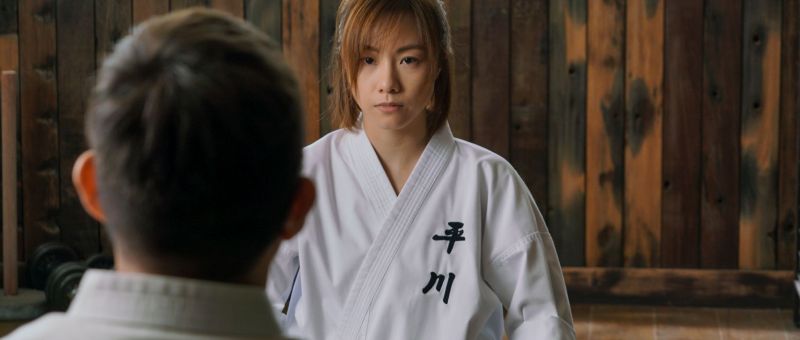
Fok Kit (Sun Zhen-Feng), the hero, is a champ of the underground boxing circuit living with his master Tak-bo (Ken Lo Wai-Kwong) at a struggling gym. When their landlord, Mr. Ho (Mok Wai-Man), comes calling, Tak-bo assumes he’s putting up the rent but the reality is even worse. Ho wants to sell the property after receiving an offer too good refuse, but he is willing to sell it to Tak-bo first if he can come up with the money. While the bank agree to loan him almost enough, Tak-bo is running a little short when he’s approached by an old pupil, Lok (Sam Lee Chan-Sam), with an offer of his own. He wants Fok Kit to face off against his guy Surat (Zheng Zi-Ping), a Thai boxer with a fearsome reputation. Tak-bo is reluctant, fearing for Fok Kit’s safety after hearing rumours that Surat killed a man in the ring, while it also turns out that there may be bad blood between himself and Lok who has not long got out of prison after being convicted of drug smuggling. Meanwhile, Fok Kit has taken on a new pupil, Effy (Venus Wong Man-Yik), who wants to join the gym to learn all the boxing she needs to know to convince in her role as an assassin in an upcoming movie. 

Left with no other options, Tak-bo gives in and lets Fok Kit fight Surat, but it goes just as badly as it could possibly go and not only does he lose but is rendered paralysed. In true boxing movie fashion, Fok Kit shifts from petulant unwillingness to undergo a risky operation that might allow him to walk again, to a full recovery and the desire for a rematch, but his scars are as much psychological as physical leaving him afraid to fight, seeing Surat’s smug grin in every challenger that swings a punch. He freezes, knocked out by even the weakest of opponents. Effy, meanwhile, is on an emotional rollercoaster of her own. The sleazy director she’s working with takes against her when she rejects his inappropriate advances, having all her scenes reshot and even using them as an excuse to use physical violence against her under the pretext of movie making. He eventually gets his comeuppance when a video of his behaviour is leaked and goes viral, but his drunken act of revenge, from which Fok Kit is unable to protect her because of his unaddressed trauma, may yet cost Effy her big break in leaving her with a prominent facial scar. 

As Tak-bo keeps telling him, however, the most important tool in boxing is not physical strength but passion, just as a good actor needs heart and dedication. “Clench your first too tight you may lose everything” Tak-bo insists gently guiding Fok Kit towards the power of letting go while he himself admits he’s been holding on to an insecurity that kept him out of the ring. A fear of losing, rather than the convenient excuse of his leg injury, had him give up the fight only now deciding that he’s tired of hiding from failure. If they want to save the boxing gym, they’ll have to face their respective fears in the form of the irredeemable big bad that is Surat, a total vacuum of humanity and unstoppable killing machine. The greedy and soulless are eventually made to pay a heavy price for their betrayal of the craft, while those who have true passion eventually prosper. Never quite managing to marry its twin plot strands with Effy’s desire to fight back against a sexist and exploitative industry taking a backseat to Fok Kit’s manly drama as he struggles to regain his confidence by beating his trauma in the ring, Unleashed moves swiftly towards it wholly expected finale but consistently lands its blows even in its willing conventionality.


Unleashed streamed as part of this year’s New York Asian Film Festival.

Original trailer (English/Traditional Chinese subtitles)

Images: © 2020 Orchid Tree Media

Memories to Choke On, Drinks to Wash Them Down (夜香・鴛鴦・深水埗, Leung Ming Kai & Kate Reilly, 2019)

Neither as maudlin nor as ironic as its witty English title implies, Leung Ming Kai and Kate Reilly’s four-part anthology Memories to Choke On, Drinks to Wash Them Down (夜香・鴛鴦・深水埗) attempts to capture the flavours of a Hong Kong in transition. Imbued with a gentle nostalgia the four stories do not so much eulogise as celebrate the island’s unique culture while perhaps provoking questions about an uncertain future in the face of political instability and widespread protest. 

The first of the four shorts, however, looks back towards the past as an old lady suffering with dementia repeatedly tells the same handful of stories to her patient Indonesian helper, Mia. In an ironic twist, the tale takes the two women on a circular journey as Chi Yin, the old woman, becomes determined to reconnect with her history through visiting a reunion for those who came to Hong Kong from her village on the Mainland while Mia patiently tries to explain that her son has instructed her not to take his mother out. Eventually she relents, humorously videoing the old woman promising not to tell her son so she can show her later, but thinks better of it after realising Chi Yin’s real longing to visit him at his job in the city. Mia is of course separated from her own son while caring for Chi Yin, the commonalities between the two women becoming ever more clear as their stories mix, mingle, and repeat in the confused mind of the older woman herself a migrant to Hong Kong who came to the island in childhood, recounting a life of hardship thankfully long since past. 

The city’s economic development is also at the forefront of the second tale which sees two grown up brothers revisiting their mother’s toy store in a now rundown part of town where, as another store keeper puts it, everyone is old and so there is no more call for toys. That might be one reason why it seems that their mother has decided to sell up, but the loss of their history seems to weigh heavier on one brother than the other. While the older has married and has a child of his own with another on the way, the younger has lost his job and secretly wants to take over the shop himself only is uncertain how this news will read to his mother. While they reminisce and recover long buried treasures of their youth, the differences and dilemmas between the two men are perhaps emblematic of the push and pull of modern Hong Kong torn in two directions uncertain which parts of the past to discard and which to keep. Nevertheless, the two men eventually find common ground and mutual support even as their conflicting desires send them each in opposing directions. 

The two at the centre of Yuenyeung meanwhile were always destined to part, yet their separation has its share of confusion and awkwardness. The titular Yuenyeung is a local drink acknowledged as intangible culture which has, according to the knowledgable protagonist, a slightly dark history in that it was created in part to enable further exploitation of port workers under British colonialism and consists of super strong Ceylon tea and caffeine high coffee mixed with condensed milk. American teaching assistant Ruth is keen to try it as part of her total immersion in Hong Kong culture, but local economics teacher John isn’t much of a fan not just because of its slightly sour history but because he seems to have an internalised snobbery when it comes to being a Hong Konger. Nevertheless, with an obvious ulterior motive that Ruth either is oblivious to or chooses to ignore, he joins her on her voyage through the city’s lower end eateries where the locals choose to eat with the occasional visit to a “romantic” KFC which whatever else you might want to say about it has a lovely view of an idealised Hong Kong street scene. Tellingly, Ruth is already planning to move on to China, while a rebound John who perhaps misunderstood her has his eyes ironically set on an extended trip to the States on a kind of cultural odyssey of his own. 

Breaking entirely with the first three sequences, and in truth a little out of place, the last is the most direct in abandoning the dialogue heavy, two-hander focus for pure documentary following an eccentric young woman running as a candidate for political office in order to provide opposition for an otherwise unopposed incumbent during the fractious 2019 elections. Jennifer describes those who don’t support the protests as “weird”, but also affirms that ideally she wants a steady job in a bank and to live a dull, comfortable life as a “useless” person. When not out flyering she works as a barista/bar tender and later claims that she didn’t even want to be on the council because the local populace is quite annoying. In a strange way she provides the perfect encapsulation of a fractious political moment, a mix of surprisingly conventional thought patterns coupled with a real desire for freedom and lasting social change. Never quite as a maudlin as the title suggests, Memories to Choke On, Drinks to Wash Them Down is perhaps filled with a nostalgia for a Hong Kong that’s not quite gone but also has within it a quiet resilience if only in its insistence on memory as a political act. 


Memories to Choke On, Drinks to Wash Them Down streams in California until Oct. 31 as part of this year’s San Diego Asian Film Festival.

Original trailer (English subtitles)

Beyond the Dream (幻愛, Kiwi Chow Kwun-Wai, 2019)

Two troubled souls battle illusionary love in Kiwi Chow Kwun-Wai’s existential romance, Beyond the Dream (幻愛). What is love when divorced from fantasy, and once you know do you have the courage face it? That’s a question asked by each of the mirrored protagonists who’ve convinced themselves they are unworthy of love while struggling to extricate themselves from past trauma and present insecurity as they find the sands of reality constantly shifting beneath their feet. 

Chow opens with a street scene, the evening crowds gently parting to find a woman in distress, Ling (Wong Lam), who eventually begins to take off all her clothes. While passersby stare and film her public breakdown, a man, Lok (Terrance Lau Chun-Him), who recognises her from a support group for sufferers of schizophrenia, comes to her rescue as does a mysterious woman who wraps her cardigan around her giving her both modesty and warmth. Helping Ling into an ambulance, Lok ends up with the mystery woman’s cardigan somehow captivated by her, touched by the way she came to Ling’s rescue when everyone else was intent on ridicule. Sometime later he is surprised to realise that the woman lives on the floor above him on his estate. Returning her cardigan he discovers her name is Yanyan (Cecilia Choi Si-Wan) and she lives with her violent drunk of a father (Ng Kam-Chuen). The pair become a couple and Lok starts to wonder if he should tell her about his struggles with mental health only for his symptoms to begin resurfacing. Much to his horror he realises that his relationship with Yanyan is nothing but a vivid fantasy, a figment of his illness which exists only his mind. 

Yet even fantasy is built on a grain of truth as Lok later discovers when “Yanyan” turns up at one of his support group sessions only she’s a post-grad psychology student by the name of Yip Nam who is looking for volunteers to participate in her research into erotomania in those diagnosed with schizophrenia. Nam hopes to find out if lack of love is a causal factor in the condition through the stories of those who become consumed by romantic delusion. Unfortunately, her project is rejected by her supervisor, Dr. Fung (Nina Paw Hee-Ching), on the grounds that she has no viable subjects. Lok would seem to be the ideal patient, were it not for the awkward fact of which Nam is still unaware that she herself is the subject of his fixation, the “real” woman who came to Ling’s rescue all those months ago. 

“Relationships are always your problem” Nam is warned, herself carrying the burden of a traumatic past which, according to her mentor Fung, has also convinced her that she doesn’t deserve love, mirroring Lok’s fantasy of Yanyan and her imprisonment at the hands of the abusive father who eventually keeps them apart. In her role as his therapist, she counsels him to “find your true love in reality”, interpreting his recurring dream as a metaphor for his desire to lose himself in the comforting fantasy of his illusionary love for Yanyan rather than take the risks concurrent with seeking happiness in the “real” world. But she herself is also seeking wilful oblivion in other kinds of illusionary romantic distraction pursued perhaps as a form of self harm or at least a means of blaming herself for something for which she has no need to apologise. 

For Lok, meanwhile, romance is still more uncertain, his sense of reality permanently impaired as he finds himself pulled between his idealised love for Yanyan and the problematic relationship with Nam while convinced that no one could ever love him because of his mental illness. “No matter who you really are, you’ll all leave me in the end” he sadly affirms, later advising Nam that “it’s time we wake up from our dreams” ironically advocating for a return to “reality” while simultaneously running from it. Continually divided in Chow’s elegant composition, forever gazing through mirrors and seeing only the reflection of unfulfilled desire, the lovers struggle to overcome their psychological barriers to move beyond the dream of love into something more concrete if perhaps no less illusionary, chasing self-acceptance in the eyes of another as they surrender to romantic destiny as its own kind of “reality”. 


Beyond the Dream screens at Chicago’s Davis Drive-in on Oct. 10 as the closing night of the 11th season of Asian Pop-Up Cinema.

Original trailer (English subtitles)

Hell Bank Presents: Running Ghost (冥通銀行特約:翻生爭霸戰, Mark Lee, 2020)

“The most important thing in life is to know how we die” according to the very efficient lady manning the desk in the Labour Department of Hell where, it seems, everyone has to do their bit. No rest for the wicked, even in death. A glorious satire on the business of modern living, Mark Lee’s Hell Bank Presents: Running Ghost (冥通銀行特約:翻生爭霸戰) sends its recently deceased hero on a quest to find meaning in his life from the other side as he becomes an unwilling contestant in an undead variety show. 

Wong Hui Kwai (Wong You-nam) has been dead for 22 days. Unusually, he can’t remember how he died, and as he tells the lady at Labour Department of Hell when asked what he achieved while alive was known chiefly for his ability to install internet cables with maximum efficiency (unfortunately Hell is already fully covered for wi-fi). Sadly, Hui Kwai didn’t do anything of note in his life and now it’s over he’d really rather just take it easy, which is why when he’s offered a nice job he tries to back out towards fiery torture. Nevertheless he finds himself a sudden replacement for a contestant who ascended at an extremely inconvenient moment right before he was supposed to take to the stage on Hell’s hottest variety show Hell Bank Presents: Running Ghost in which the prize is instant resurrection. Hui Kwai needs to succeed in three rounds of ghostly pranks, making the living faint, possessing a living person, and then scaring someone to death. 

Asked again on the stage where the MC reframes his abilities as a cable guy to paint him as a concealment expert, a very useful skill for a ghost trying to scare people, Hui Kwai is again forced to confront the fact that his life was extremely disappointing, his only “talent” was going to work, sleeping, and then going to work again. You might even say he was already a ghost before he died, though the resurrection prize does sound good because it would allow him to take care of some “unfinished business” with his childhood sweetheart Bo Yee (Venus Wong) whom, he fears, is being taken advantage of by an unscrupulous estate agent. As General Bull tells him, his problem is he needs to believe in himself more, pointing out that his nerdy appearance is just like that of a super hero before they discover their hidden powers. He never accomplished anything because he never really tried, if he wants his life back he’ll have to actually fight for it. 

Unfortunately, having been dead only 22 days he’s not exactly powerful which is why he’s abruptly sucked into the dream catcher set up by eccentric ghost enthusiast Ling Kay (Cecilia So Lai Shan) who has some “unfinished business” of her own, trying to trap a spirit in the hope that they’ll be able to make contact with her late father. Lee has a lot of fun with the gadgetry of the supernatural which runs from Ling Kay’s old school dream catcher and Ouija boards to water pistols filled with ghost-busting pee and children’s flashlights “blessed” with the ability to burn up spirits. Are you a ghost needing to find an unlucky person to scare? There’s an app for that, and it works with your “Fat-bit” wristwatch. Meanwhile, even in Hell there are variety shows sponsored by Starbucks Coffins which have breaks featuring ads for services you can use to offload your unwanted funerary offerings. Paper money is no longer any good, in the after life they use “Helipay”, but General Bull who can presumably beam himself anywhere still travels in a gothic rickshaw pulled by an unfortunate underling forced to re-enact his suicide every night as part of his eternal torment. 

Running Ghost excels in its madcap world building in which the after life is somehow much more technologically advanced than the mortal realm, all slick touch screens and augmented reality, but perhaps still subject to the same old vices in which the undead vacuously watch reality shows and get their kicks pranking the living. Still, only after he’s died can Hui Kwai make the zero to hero journey, realising his unfinished business is really learning to unlock his latent potential which he does by protecting someone else, just not the someone he originally came back to protect. A much needed shot in the arm for HK supernatural comedy, Hell Bank Presents: Running Ghost is a spooky delight. 


Hell Bank Presents: Running Ghost streamed as part of this year’s New York Asian Film Festival.

Original trailer (Cantonese with English & Traditional Chinese subtitles)

Legally Declared Dead (死因無可疑, Steve Yuen Kim-Wai, 2019) [Fantasia 2020]

“The road to hell is paved with good intentions” a well-meaning insurance agent is advised in Steve Yuen Kim-Wai’s Legally Declared Dead (死因無可疑), though he struggles to fully understand its meaning and in the end you have to wonder how good his intentions really were. Yusuke Kishi’s novel The Black House has been adapted twice before, firstly in an idiosyncratically absurdist take by Yoshimitsu Morita, and then in Korea by Shin Terra who remained firmly within the realms of contemporary K-horror. Yuen lands somewhere between the two, adopting a stylish veneer of neo noir as the traumatised hero has his worldview upended by heinous immorality. 

Yet as Wing-shun (Carlos Chan Ka-Lok) tells Ching (Stephen Au Kam-tong), the office investigator, he’s just a broker and it doesn’t do to be suspicious of all his clients. A nice, well mannered young man, Wing-shun is all poised customer service charm, but he also firmly believes that the business of insurance is a noble good, that he’s helping people by being there for them when disaster strikes. As such, he doesn’t like to think that people are abusing the system, and is reluctant to reject a claim. On the other hand, he calms a pair of panicked gangsters who are most definitely on the fiddle by explaining that neither he nor his colleague can help them because being a broker is like being a dealer at the casino, they can only push the paperwork to the floor manager who alone has the authority to decide whether or not to pay out and wait for their instructions. 

Wing-shun’s casino metaphor is more true than he intends it, what else is insurance after all than a kind of gambling? Wing-shun can tell himself he’s there to provide relief and support in times of need, but really he’s betting against misery which might be better than betting in its favour but it’s still wagering people’s lives. That fact’s brought home to him when he takes a call late one evening from a man who asks him if they pay out on suicide. Cheerful as ever, Wing-shun asks for his policy number to check the paperwork before realising the darkness inherent in the question and telling the person on the other end of the phone not to do anything rash, “money doesn’t solve everything”. The man simply asks for his name and then abruptly hangs up. Wing-shun chalks it up to just another weird thing that sometimes happens and forgets about it but the next day he’s told that a client has personally requested him to talk over their policy and wants a home visit to a rural location outside the city. A little bemused, Wing-shun does as he’s told and encounters Chu Chun-tak (Anthony Wong Chau-Sang), not realising he’s the man from the phone only noticing he’s behaving quite strangely. Suddenly Chun-tak starts shouting for his son Kafu and gesturing to another room inside which Wing-shun discovers the boy hanging. 

The boy’s death triggers painful memories for Wing-shun who is burdened with a sense of guilt over the death of his older brother in childhood. Unable to escape the idea he’s been set up and Chun-tak only invited him out here to “find” the body, Wing-shun is convinced that he killed Kafu in order to claim his life insurance payout. Kafu was Chun-tak’s stepson and also had learning difficulties, while Chun-tak’s wife Shum Chi-ling (Karena Lam Ka-Yan) is partially sighted and walks with a pronounced limp. Wing-shun is particularly worried because Chun-tak also has a policy on her and it’s reasonable to assume she’ll be next in the firing line. He struggles, however, to convince others of his suspicions. The policeman investigating closes the case when the autopsy comes back with suicide as the cause of death, attributing the motive to exam stress, while the insurance company fails to find evidence to deny the claim.  

Unlike the other adaptations, Legally Declared Dead keeps the suicide option on the table while Wing-shun begins to go quietly out of his mind. Meanwhile, his psychology student girlfriend (Kathy Yuen Ka-Yee) hooks him up with her dubious professor (Liu Kai-chi) who is studying the “criminal personality” and claims that while some people commit crime because of trauma and desire a few so because they’re simply born bad and can never be saved. These people, he says, are manipulative narcissists who often exploit the vulnerable, making them a kind of “slave”. Professor Kam becomes overly invested in Wing-shun’s case, convinced on meeting him that Chun-tak is a clear case of “criminal personality”, murdered his son, and is almost certainly going to murder his wife. But is it really fair to decide someone’s killed their child just because they’re a bit odd and admittedly desperate for money, aren’t they just being judgemental and prejudiced? Come to that, is it sexist and ablest to assume that Chi-ling is naive and powerless, that she is a potential victim and could not have been involved in her son’s death or conversely maybe planning to off her husband?

Wing-shun lives with a collection of rare insects including a few praying mantises, which he states cannot be caged in pairs because the female will devour the male, but he continues to think of Chi-ling as sweet and harmless seeing her tenderly calm her husband down after starting to accompany him on their daily visits to the insurance office to ask about the money. On the other hand, with her limp and milky eye Chi-ling is also uncomfortably coded as villainous in an unpleasant alignment of physical deformity and “evil”, while Chun-tak is also assumed to be abusive largely because he struggles to communicate in the “normal” way. 

Nevertheless, the idea that some people are deliberately maiming themselves to claim on “workers’ insurance” either at their own behest or forced into it by loansharking gangsters pursuing gambling debts is presented as no real surprise just another element of a cynical and duplicitous society. Wing-shun knew this, but perhaps didn’t really believe it. The Chu case exposes to him the ugliness of the world in which he lives, raising with it old memories of his childhood trauma, the very kind of trauma which professor Kam insists causes some to commit crimes. Becoming fixated on the idea of Chun-tak as a murder, Wing-shun descends into nervous paranoia but is perhaps less interested in getting justice for Kafu and protecting Chi-ling than vindicating himself and defending the “nobility” of insurance as a concept for social good while avoiding dealing with his own childhood trauma in refusing his responsibility towards his brother. 

Shooting the pulpy material with a stylish, B-movie sheen, Yuen closes with a Silence of the Lambs-inspired climax which sees Wing-shun venture alone into the nest of a killer, repeatedly blinded by ultraviolet light and denied the ability to fully asses his reality. He thinks he finally understands Ching’s caution that the “road to hell is paved with good intentions” which he perhaps had in his desire to get justice for Kafu and protect Chi-ling, but in the end he might have to admit that the killer had a point when they said he  was “just like me”, a “criminal personality” consumed by latent violence caused by unresolved childhood trauma. “You do what you need to to survive, you scam people and they scam you” Wing-shun’s friend shrugs, but it’s a lesson Wing-shun learns all too well, once again refusing his responsibility as a secondary victim looks to him for help but discovers only cold and cynical resentment.


Legally Declared Dead streamed as part of this year’s online edition of Fantasia International Film Festival. It will also be available to stream in New York State on Sept. 5 only as part of this year’s New York Asian Film Festival.

Original trailer (English subtitles)

The Story of Woo Viet (胡越的故事, Ann Hui, 1981)

Displacement and a legacy of violence conspire against a young man attempting to escape the trauma of war in the second in Ann Hui’s “Vietnam trilogy”, The Story of Woo Viet (胡越的故事, AKA God of Killers). Starring a young Chow Yun-fat as Chinese-Vietnamese refugee headed to Hong Kong with a hope of making it to the US, Woo Viet’s story suggests that violence may be impossible to escape in a world increasingly corrupted by human indifference while only crushing disappointment awaits for those who live on dreams alone. 

After years fighting for the South Vietnamese army, Woo Viet (Chow Yun-fat) is one of many young Chinese-Vietnamese men attempting to escape through claiming asylum in Hong Kong so that he can eventually apply for a visa to the US. The reasons he needed to leave are readily apparent. Even on the overcrowded, primitive boat on which he arrives in Hong Kong, Woo Viet has already witnessed several atrocities in which fellow passengers were dumped overboard, killed, or marooned on isolated islands. He has become the surrogate father to a little boy who is now alone on the boat because his dad was killed by the guards, and subsequently becomes a target for Viet Cong “special agents” after they strangle his friend in his sleep for having seen something he shouldn’t have.  

Luckily, Woo Viet has a friend in Hong Kong, a female “penpal” Lap Quan (Cora Miao Chien-Jen) who sent him letters he rarely answered all through the war. After Woo Viet is forced to kill a special agent in the refugee camp in order to ensure his own survival, he finds himself relying on Lap Quan to help him organise a fake passport. He no longer has the luxury of waiting to do things properly, he needs to leave the country as soon as possible. The fake passports available are, for some reason, Japanese meaning he has to learn to at least sound plausible by picking up a few handy phrases to fool the border guards. It’s in the language classes that he meets fellow refugee Shum Ching (Cherie Chung Chor-hung) who is travelling to the US because a former customer who has already emigrated told her that he wanted her to come no matter what the cost. The problem is the HK trafficker has not been honest with either of them. Woo Viet may have a decent shot at actually making it to the US, but the girls are to be sold on at the first available Chinatown, which in this case is Manila where they’re waiting for a connecting flight. Having bonded with Shum Ching, Woo Viet surprises the traffickers by giving up his chance to go to America to stay in the Philippines to try and rescue her. 

“Whichever Chinatown it is, I think my situation will be the same” Woo Viet writes back to Lap Quan, keeping up a correspondence which becomes increasingly dishonest as he struggles come to terms the shattering of all his dreams. Trapped in a Philippine Chinatown, he discovers the only way he can save Shum Ching is by serving the gangsters that “bought” her from the HK trafficker. Yet, also in his letter to Lap Quan he claims that “it is much simpler to kill people here compared to Vietnam”, while suggesting that the reason his situation is “the same” in Chinatowns the world over is that he has no real identity and can therefore “solve people’s problems with no problem” which is why he’s ended up working as a hired gun for HK gangster Chung. 

Even so, he still harbours hopes of making it to the US when he’s made enough money to “redeem” Shum Ching who is already dreaming of finding a tiny house for them both where she can cook him proper Vietnamese food. While in Manila, he’s partnered with a slightly older man, Sarm (Lo Lieh), who came from Hong Kong a decade earlier. Woo Viet thinks he should have earned plenty of money after a decade making kills for Chung, so he doesn’t understand why he’s still here rather than off somewhere else enjoying a better life. He still doesn’t quite see that Sarm is a vision of his possible future, a man so beaten down by life that his only goal is to drink himself into an early grave. Sarm no longer believes in a future for himself, but he wants to believe in one for Woo Viet, and so he tries to help him but brotherhood, like love, is no match for the casual cruelty of the world in which they live. 

Woo Viet’s floating rootlessness is perhaps an echo of a potential anxiety in a Hong Kong facing its own sense of displacement with the handover less than 20 years away, as perhaps are his feelings of hopelessness as he attempts to write himself into a better future in his now constant letters to Lap Quan in which he somewhat insensitively talks of his love for Shum Ching born precisely out of that same sense of rootless desperation. Soon after they meet, the pair attempt to visit a flower market at night but their romantic moment is disrupted by another refugee couple being caught and dragged away by police, instantly throwing a fatalistic shadow over their innocent connection. All Woo Viet wanted was an ordinary settled life, perhaps adopting that orphaned little boy from the refugee camp and bringing him with them as he and Shum Ching claim a better life in the US, but even small dreams are seemingly impossible in a world in which the predominating force is not love or compassion but violence.  


Chasing Dream (我的拳王男友, Johnnie To, 2019)

“You gotta give everything to get everything” according to an intense rocker in Johnnie To’s musical boxing romance, Chasing Dream (我的拳王男友). What turns out to be most important however is not physical endurance but emotional authenticity, if you want to be taken seriously then you have to take yourself seriously first and that means learning to find the courage to embrace your authentic self. A tale of two crazy kids chasing the Chinese Dream, To’s colourful fantasy world is not without its bite as he leans in hard to what it costs to succeed and not in what is often a merciless society.

Our hero Tiger (Jacky Heung Cho), “The Gluttonous Boxer”, is a young man who broke with his boxing master to step into the MMA ring but is also an enforcer for a shady local loansharking gang run by his manager. Aware he is approaching the end of his career – a doctor later tells him he’s in danger of going blind, rupturing his liver, and getting Parkinson’s – Tiger’s life changes one day when he recognises one of the ring girls, Cuckoo (Wang Keru), as the granddaughter of an old woman who used to sell noodles back when he studied boxing in his rural hometown. Unfortunately, Tiger’s boss has also recognised her because she is in deep debt with the mob. Some of the guys want to cut their losses and sell her on to the sex trade but Tiger, seemingly indifferent, claims he can find her a way to work off her debt and thereby kickstarts his rescue not only of her but of himself from the increasingly empty life of an ageing prize fighter. 

What he discovers is that Cuckoo is harbouring intense resentment over being seduced and betrayed by one of China’s biggest pop stars who made himself a name as the “king of originality” after stealing all of her songs and leaving her in the lurch. Qu Fengfeng (Ma Xiaohui) is now a judge on China’s biggest TV singing competition Perfect Diva and Cuckoo has a plan to confront him by getting on the show, the only snag being that she is extremely unpolished as a performer. Tiger, meanwhile, wants to get out of the ring and has a plan to start his own hotpot empire essentially by copying all the best bits of the major chains and bringing them together. He vows to help Cuckoo train by having her mimic the performance styles of major stars, but what she quickly discovers is that there is no substitute for emotional authenticity. A fellow constant decides to switch her routine at the last minute after catching sight of Cuckoo rehearsing, but is unceremoniously voted off by judges who’d rather she “performed a tacky fan dance” (as she was originally planning to do) than simply copycatting famous artists. Challenged that her songs are too similar to Qu Fengfeng’s Cuckoo snaps back that it’s his style that’s close to hers, earning the admiration of astute female judge Zhao Ying (Wu Yitong) who can perhaps detect the artist inside her beginning to free itself from her sense of insecurity. 

Achieving your dreams can however come at a heavy cost. Pearl “the kick ass rocker” (Kelly Yu Wenwen) has an intense, aggressive performance style but in a running gag turns up at each consecutive audition with a new incapacity, eventually using a wheelchair and wearing a back brace only able to move her arms. “Totally worth it in the name of music!” she cheerfully explains, literally destroying herself to get to the top. Tiger does something much the same exploited as he is by his unscrupulous gangster manager, shouting out “it doesn’t hurt” as he trains by having people jump on his belly, but the battering he takes is not so much for himself as for others, stepping back into the ring in defence first of Cuckoo and then of his dejected master, Ma Qing (Shao Bing), whose attempt to defend the dignity of the noble art of boxing against the modern upstart MMA goes horribly wrong. But Tiger cannot fight others’ battles for them, and the only way he can win is by being himself while honouring their legacy. 

Finally finding how to bare their souls for all to see and “have someone share the fatigue of loneliness”, the pair learn to recalibrate their dreams while falling in love discovering that mutual support is their guiding light as they give each other the strength to be all they can be. Ostensibly somewhere in Mainland China, To’s make believe, retro future city has a colourful comic book intensity that adds a mythic quality to the saga of Tiger and Cuckoo that is perfectly in tune with his dreamy romanticism in which sudden flights of fancy including a full-blown Bollywood-style dance sequence seem entirely natural. A surprisingly moving, wilfully absurd musical love story between wildly grinning pugilist and a young woman learning to sing from the the heart, Chasing Dream is a delightful sugar pop confection in which two crazy kids find love in the ring and with it the power to believe in themselves and a better future.


Chasing Dream streamed as part of this year’s Udine Far East Film Festival.

Original trailer (Cantonese, no subtitles)

Dragon in Jail (獄中龍, Kent Cheng Jak-Si, 1990)

“For the poor life is a punishment” according to Henry (Andy Lau Tak-Wah), the embattled hero of Kent Cheng Jak-si’s Dragon in Jail (獄中龍), a subdued heroic bloodshed offshoot in which a poor boy and rich kid meet in juvie and become best friends for life even though fate seems to have very different paths in store for them. Less a critical expose of the cruelties of an increasingly stratified society than an ode to intense male friendship, Dragon in Jail puts its hero in a different kind of cell as he tries to escape the triad net but finds himself ensnared by past crime and present rage. 

Rich kid Wayne (Kenny Ho Ka-King) ends up in a reformatory for pulling petty stunts supposedly because he doesn’t like it that his widowed mother has remarried. Different from the other boys, he’s immediately hazed and asked for his gang affiliation, only he doesn’t have one. Tough boy Henry stands up for him, roping in his other friend Skinny (John Ching Tung) to take on the cell’s Mr. Big after which the boys become firm friends as they study together to sit their A Levels while inside. Wayne wasn’t planning to take his exams as a way of getting back to his mother, but Henry convinces him that education is the one way to show the world who’s boss. The boys come top in their class, Wayne gets out and decides to go the UK to study law, while Henry serves out the remainder of his sentence in an adult prison, sentenced to four years for manslaughter after accidentally killing a triad member during a fight over protection money at his family’s kiosk. 

Despite the differences in the scope of their possibilities, Henry and Wayne remain good friends, but once Henry gets out of prison he’s nothing much to look forward to. His hopes of attending a university are dashed by his defeatist father who thinks education is pointless and blames him for the failure of their business, while he struggles to find steady employment as a man with a criminal record. Eventually he decides to work as a mechanic by day and a cram school teacher by night with the aim of saving enough to apply for uni at later date so he can marry his longstanding girlfriend, Winnie (Gigi Lai Chi). Skinny, meanwhile, gets out of jail and heads straight back to the triads, trying to convince Henry he should join too. Henry doesn’t want to, but faces constant harassment from Brother Charlie (William Ho Ka-Kui), the boss of the man he killed in the fight. When his little brother is badly burned in a triad attack, he decides his only option is to become one himself to earn the protection of Boss Sean (Leung Gam-San) who mediates an uneasy truce with the psychopathic Charlie. 

When Wayne returns from the UK after graduating law school, Henry is married and a father-to-be living in a swanky apartment having risen in the triad ranks, but he’s also a hotheaded opium addict still sparring with the very present Charlie. “I’m a bad egg! I deserve it!” Henry wails on being confronted by Wayne who points out that it was he who was always encouraging him to study so that no one would ever look down on him. Henry thinks he’s not good enough to be Wayne’s friend and fully expects to be abandoned, but after some strong words of defence from Winnie, Wayne comes around, resolving to help get his friend off the stuff. The problem is the sense of futility which has already set in. Henry has become what everyone expected him to be, a thuggish triad, because they convinced him he could become nothing else.

Winnie berates Henry for keeping his sorrows to himself, remaining sullen and resentful at his inability to escape the triad world for an honest life of safety with his new family, though he once told Wayne that he should “speak up if you feel unhappy”. Despite everything the intense friendship between the two men endures. Cheng adds to the faintly homoerotic tone by shooting his early prison scenes with a lingering romantic gaze, while Wayne seems to pine for his broody friend, affirming that “no matter what you are, you are my buddy”. A caged dragon, Henry’s vengeance is swift and brutal but he retains his nobility even in the depths of his despair, eventually taking refuge in an unconditional friendship which transcends the forces which imprison him.


The Occupant (靈氣逼人, Ronny Yu Yan-Tai, 1984)

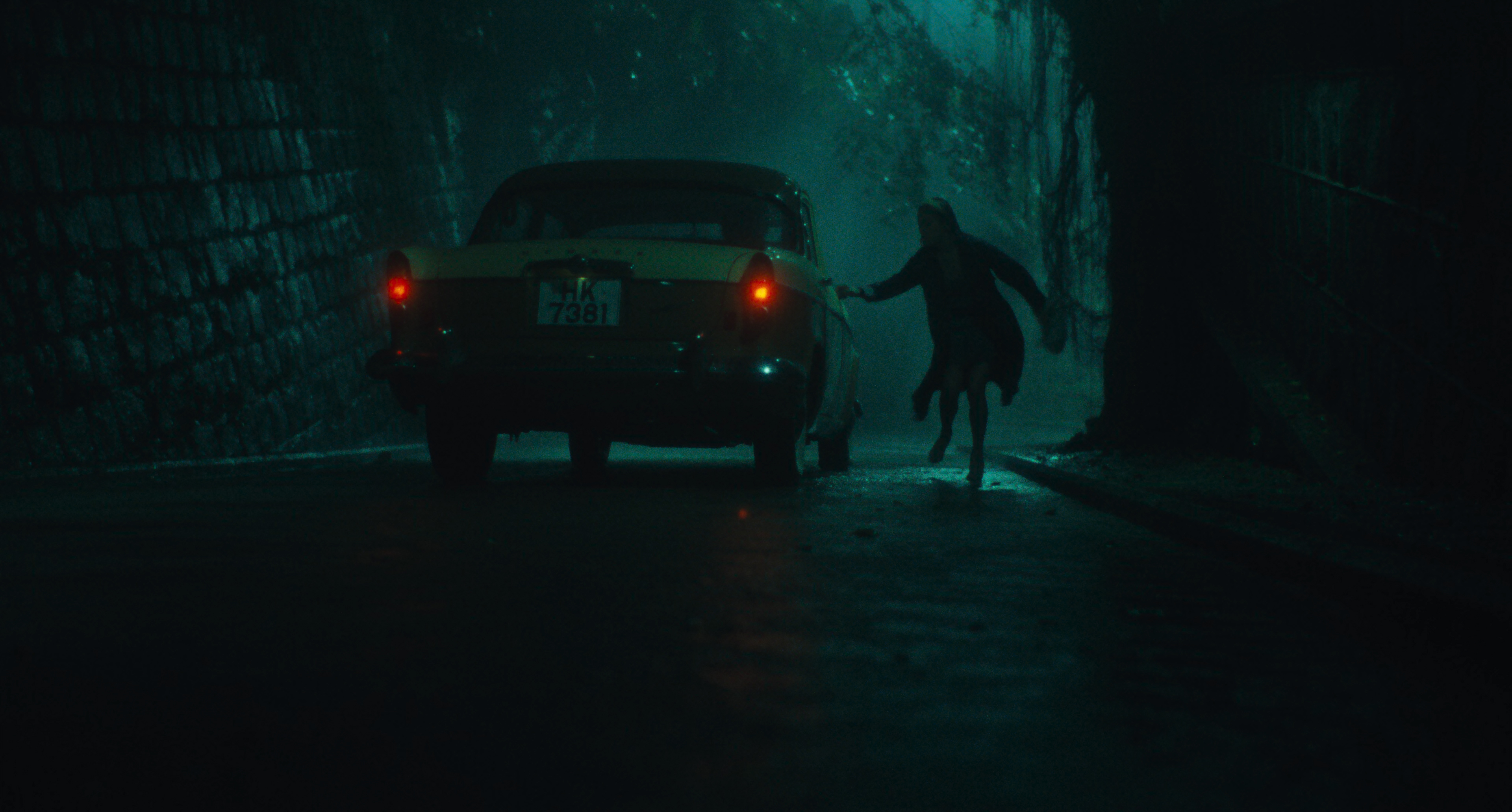
There’s no such thing as a reasonably priced apartment, and so when you find one that seems strangely spacious for the rent, it’s prudent to wonder why that might be. Yes, that’s right, your dream apartment may in fact be haunted! Going a bit meta, Ronny Yu Yan-Tai gets in on the comedy ghost game with The Occupant (靈氣逼人), a tale of supernatural suspense starring Taiwanese-Canadian actress and singer Sally Yeh as a young woman returning from Canada for a three week stay to work on her dissertation researching “Chinese superstition”.

Having not thought to book ahead for her accommodation, Angie (Sally Yeh Chian-Wen) is shocked to discover that hotel rooms in the Hong Kong of 1984 are in no way cheap. Locked out of even the cheapest flea pits, she decides to try renting an apartment only to run into the slimy Hansome Wong (Raymond Wong Pak-Ming), an unscrupulous estate agent/used car salesman. Angie spots an apartment sitting on his board that’s in her budget and asks to see it. Hansome is delighted because it’s been on the market ages, but what he doesn’t disclose is that the reason it’s so cheap is that the place is haunted. Angie is originally quite confused by the fact her furniture seems to move back to its original position all by itself, and irritated by loud noises such as a woman singing and a couple having an argument late at night, but on being told that she’s the only resident by the decidedly creepy caretaker (Yam Ho), decides she’s not really bothered if the apartment has another occupant besides herself and anyway it might be quite useful for her thesis. 

Very much in the Wong Jing vein, much of the early comedy revolves around Hansome’s cringeworthy attempts to worm his way into Angie’s life. Luckily for her, he says, Hansome is a very “superstitious” person and so offers to show her around all the best “superstitious” sights of the city, particularly a local temple where they seem to do every kind of taoist ritual going. The problem is that Angie can’t seem to get rid of him. He even pulls the trick of saying that he left something behind in her apartment so he can come in and retrieve it, only to get his arm trapped in a priceless vase. Hearing about the ghost he vows to stay the night and protect her from the boogeyman, but he didn’t count on the real thing turning up and expelling him from the apartment in exasperation with creepy men everywhere. 

Meanwhile, Angie is actually quite taken with a handsome policeman she runs into at the airport, but incorrectly assumes he’s a “sex maniac” because he was only hanging out with her as camouflage for surveilling another woman who turned out to be a pickpocket. Valentino (Chow Yun-Fat) is an honest cop, which is why he ends up getting asked to take some time off after discovering a fellow officer visiting an establishment they were raiding on a tip off that it was employing underage girls. Like Hansome, Valentino has also taken to Angie, if in a slightly less creepy way, and the three of them eventually get together to try and solve the ghost problem (not that Angie actually has much of a problem with it). 

On investigation, Angie discovers that the previous occupant of the apartment was a nightclub singer who apparently shot herself after a failed affair with a married man who wouldn’t leave his family. She becomes ever more obsessed with the dead woman, Lisa Law (Kitman Mak Kit-Man), despite the warnings from Valentino’s former policeman turned taoist priest buddy (Lo Lieh) who tells her that the ghost most likely bears a grudge and will try to engineer a reprise of her tragedy using a susceptible subject. Yu has fun parodying some of the genre staples like magical charms supposed to ward off ghosts which get mysteriously lost at critical moments, but edges towards a real supernatural dread as the curse takes hold, swallowing our trio in a bizarre recreation of the past which accidentally reveals a long hidden truth and helps to alleviate the ghost’s anger. In her frequent voice overs recorded on a dictaphone, Angie reveals that she came to Hong Kong with a low view of “Chinese superstition” but thanks to her experiences now has a new appreciation for the power of the supernatural. Ghosts it seems can’t be exorcised so much as appeased, ignore them at your peril.


Original trailer (no subtitles)

Au Revoir, Mon Amour (何日君再來, Tony Au Ting-Ping, 1991)

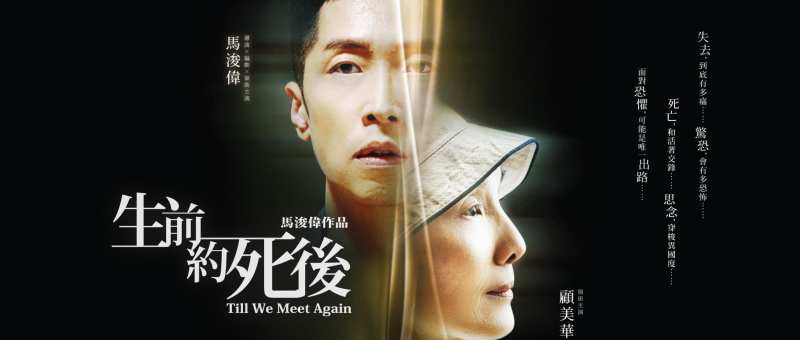
Love and Resistance go to war in Tony Au’s noirish romance, Au Revoir, Mon Amour (何日君再來, AKA Till We Meet Again). The evocative title sets the scene for a tale of love betrayed by changing times, but ultimately asks if love is a question of priorities and if you have the right to put your romantic destiny on hold to serve a greater good, even if that greater good is a shared ideal. Predictably, the answer may be no, because in the world of the movies at least love is an absolutist choice and you won’t be forgiven for resisting it. 

One fateful evening in the Shanghai of 1941, Resistance operative Sum (Tony Leung Ka-Fai) is an accidental witness to the murder of “notorious Japanese monks” which he later learns may have been set up by the Japanese authorities themselves. Chasing the perpetrator, Shirakawa (Jun Kunimura), through a series of back allies where he slices and dices his now redundant Chinese mercenaries, Sum is brought to a smoky nightclub where the singer, Mui-Yi (Anita Mui Yim-Fong), is none other than his one true love whom he met thanks to the Resistance movement some years earlier but was forced to leave behind with only a heartfelt letter explaining that he would return when the battle was done. Returning the favour Sum had done her in saving her life when she was about to be hit by a car, Mui-Yi tosses him a gun that allows him to defend himself against a crazed Shirakawa and thereafter shelters him in an abandoned garage until he is well enough to return to his mission. 

Heartbroken and embittered, Mui-Yi is still lowkey anti-Japanese and seemingly unafraid of telling the local goons where to get off despite her father’s attempts at collaboration. Her aunt Jing (Carrie Ng Ka-Lai), however, finds herself succumbing to the dubious charms of violent and thuggish turncoat Tit Chak-Man (Norman Chu Siu-Keung) who is working with the Japanese apparently because he thinks China is weak and unsophisticated. Tit Chak-Man thinks nothing of blowing up little children and blackmailing suspects which is how he begins to manipulate Mui-Yi after seizing her father’s bar and having him put in prison on a trumped up charge. Meanwhile, she flip flops in her relationship with Sum, at once resenting him for his tendency to disappear and then longing for his return, while he berates her in a mistaken assumption that she has decided to collaborate but promises that he will be hers and hers alone once the war is over. 

Unlike many similarly themed movies from both the Mainland and Hong Kong, the big bad is not the Japanese themselves but the Chinese who betrayed their country and sided with the enemy. Somewhat two dimensional, Tit Chak-Man is a thuggish brute who is prepared to do anything and everything to stamp out the Resistance but is at once humanised by his intense romance with Jing which continues even after she attempts to assassinate him and eventually proves his weakness when he refuses to abandon her to escape from a baying mob. Though Shirakawa is indeed crazed and bloodthirsty, we’re shown his opposite in the gentle, sensitive Noguchi (Hidekazu Akai) who has also fallen in deep and selfless love with Mui-Yi and is willing to facilitate her romance with Sum while doing everything he can to keep her safe. 

Years later, Sum irritably points out that Noguchi had a choice in serving his country and was therefore free to choose love instead which seems extremely disingenuous seeing as he was most likely (in some way) a conscript too but was in his own way resisting in order to serve the best interests of his country. Sum chose China over Mui-Yi. It’s unreasonable to expect someone to wait in line until you’ve finished being a revolutionary hero and have the proper time to devote to love, no one likes being second choice even if you’re right behind “freedom” when it comes to priorities. To save his love, Sum sent it into the arms of the enemy but failed to realise that she might also find a home there or at least a sense of relief in no longer needing to wait for someone who might never return. Can there be love in time of war? Yes, but love like revolution is a choice and it won’t wait for you forever, if you betray it you may not be forgiven. 


Fortune Star trailer (no subtitles)