There ain’t no cure for the summer time blues! Unless, of course, you have a time machine. For the boys of the sci-fi club the long, boring summer vacation is just getting started. They mess around playing baseball while the two girls from the photography club who’ve been unceremoniously ousted from their club room in favour of the boys take photos of them. Then some weird stuff starts happening and their air con remote gets broken and it’s just so hot! When the boys somehow end up with a mysterious time machine, the solution is obvious…
Full of nostalgic charm, Summer Time Machine Blues is a fitting tribute to all those endless, golden summers of adolescence. Hanging out in the university club room even though they’re on their summer break, the kids waste time in distinctly old fashioned ways – playing baseball, going to the baths, working on a photo project etc. Though the guys are nominally the “science-fiction club” they actually aren’t very interested in science fiction and kind of make fun of the sort of people who would belong to the very club that they do, actually, belong to. Perhaps they just wanted the bigger room with the air conditioner and were lucky enough to get it as their two female friends are the only two members of the photography club and mostly hang out in the dark room at the back anyway.
The film began as a stage play put together by Europa Kikaku and though it makes the cinematic jump extremely confidently also maintains its youthful absurdist tones and theatrical comedy beats. The humour itself is cheerfully bizarre, full of fast comebacks and naturalistic sounding banter between a group of young guys. Added to this there are numerous references to other popular science fiction and time travel themed franchises such as the obvious homage to the Back to the Future series which is even prominently showcased in poster form at the local rep cinema. The cinema itself (a mini plot point in the movie) is run by a total sci-fi buff and time travel story expert who dresses (from the waist up) in a Star Trek: The Next Generation Command uniform complete with Communicator Badge. He seems to have something of a beef with the only actual scientist in the film who never has much success with his discoveries and only succeeds in boring everyone around him with his needlessly complicated theories.
Directed by Katsuyuki Motohiro who may be best known for the Bayside Shakedown series, Summer Time Machine Blues, also mixes in plenty of fun stylistic devices like the anachronistic tape rewinds or the elaborate disappearing of the time machine itself. He also makes good use of split screens to compare and contrast what’s happening where and pays especial attention to make sure everything works out in the most completely satisfying way.
Indeed, one of the most satisfying things about Summer Time Machine Blues is that despite essentially becoming a parody of time travel movies, all of its complicated paradoxes are internally consistent and even though it doesn’t really have an obligation to, it all makes sense no matter how hard you poke at it trying to find the holes. Of course, there’s also the more melancholic side of time on show as the scientist points out he’s riding a time machine as well – just one that will never go backwards, only very slowly into the future. This aimless summer will end at some point, as will college and eventually the universe too, one supposes.
However, that’s no reason not to enjoy the time you have, as one character realises towards the end as he fears his romantic desires may come to nothing going on some hints from the future. An enjoyably absurd and youthful farce, Summer Time Machine Blues is lives up to its name as a transporting delight which carts the viewer back to their own days of long and boring summers filled with improbable adventures. Smart, funny and beautifully crafted, Summer Time Machine Blues is the perfect way to while away an aimless afternoon at any time of the year.
 Yaro Abe’s manga Midnight Diner (深夜食堂, Shinya Shokudo) was first adapted as 10 episode TV drama back in 2009 with a second series in 2011 and a third in 2014. With a Korean adaptation in between, the series now finds itself back for second helpings in the form of a big screen adaptation.
 Bunraku playwright Chikamatsu Monzaemon had a bit of a thing about double suicides which feature in a number of his plays. Though these legends of lovers driven into the arms of death by a cruel and unforgiving society are common across the world, they seem to have taken a particularly romantic route in Japanese drama. Brought to the screen by the great (if sometimes conflicted) champion of women’s cinema Kenji Mizoguchi, The Crucified Lovers (近松物語, Chikamatsu Monogatari) takes its queue from one such bunraku play and tells the sorry tale of Osan and Mohei who find themselves thrown together by a set of huge misunderstandings and subsequently falling headlong into a forbidden romance.
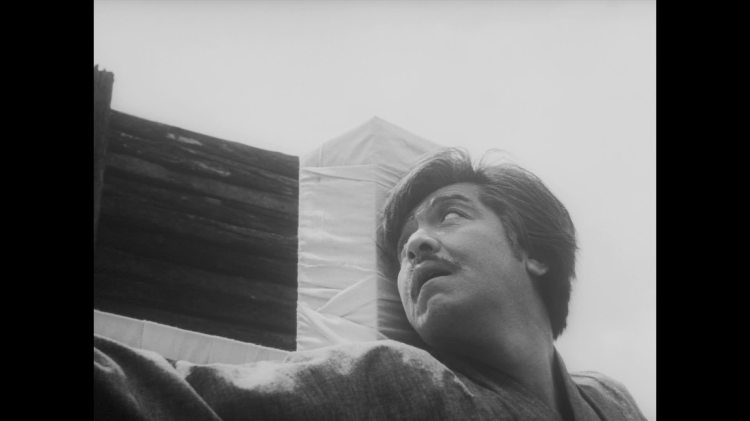 Having taken avant-garde story telling to its zenith in
 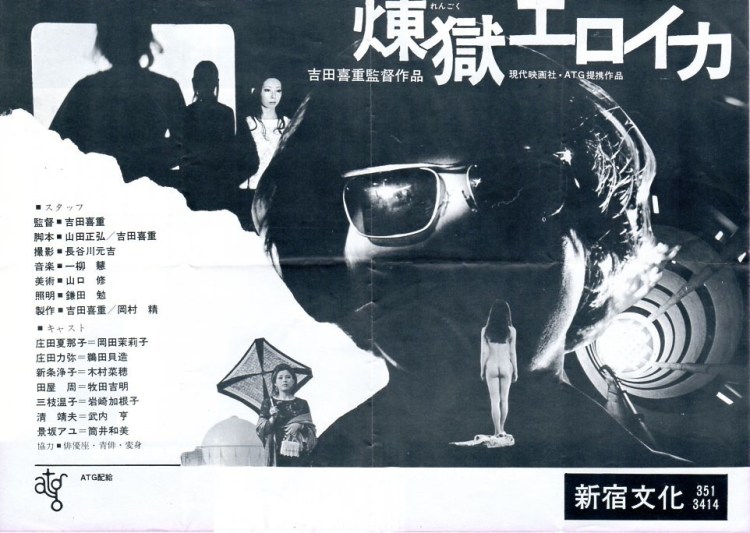 The second film contained within Arrow’s Kiju Yoshida boxset is perhaps his least accessible. Ostensibly, Heroic Purgatory (煉獄エロイカ, Rengoku Eroika) is an examination of leftist politics in the years surrounding the renewal of the hugely controversial mutual security pact between Japan and America. However, it quickly disregards any kind of narrative sense as time periods blur so finely as to leave us with no objective “now” to belong to and characters switch identities with no warning or discernible reason. Yoshida is not really after objective truth here – there is no truth in cinema, film lies repeatedly until it finally exposes the truth.
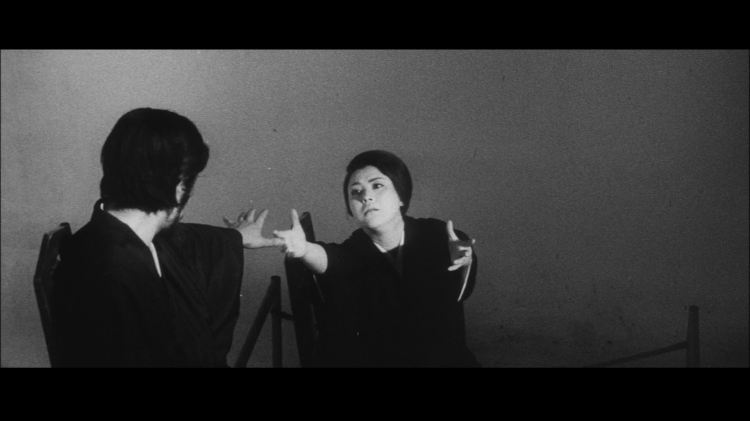 One of the foremost avant-garde filmmakers of the New Wave era (though he detested this term which, in fairness, is a retrospective and often arbitrary label), Kiju (Yoshishige) Yoshida has remained largely unseen in the West. Some of this is his own fault – fiercely independent, Yoshida nevertheless found himself working with ATG after leaving Shochiku but the relationship was an unusual one and often far from easy. All but the latest film in Arrow’s Kiju Yoshida boxset,