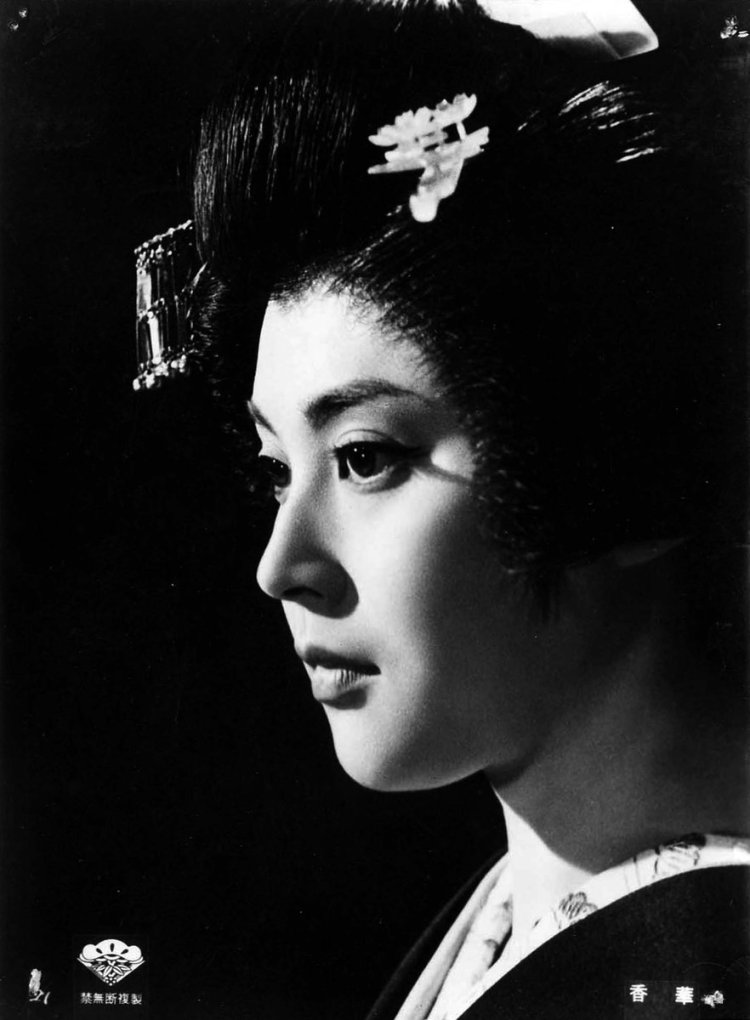
The Scent of Incense (香華, Keisuke Kinoshita, 1964)

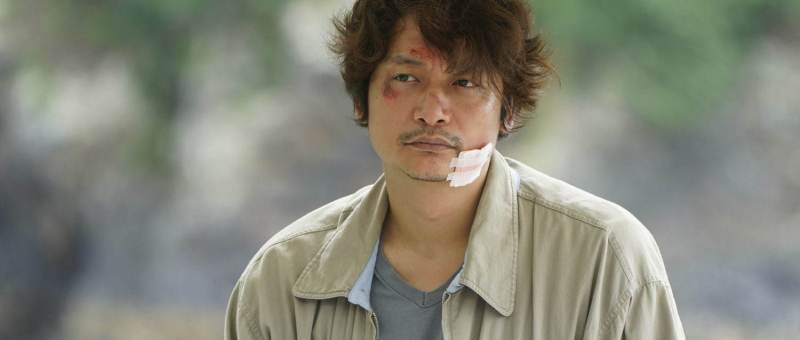
Scent of Incense still 1Sometimes regarded as overly sentimental, Keisuke Kinoshita’s later career grew progressively harder around the edges, as if he began to lose faith in the efficacy of human goodness but never it seems in its capacity for endurance. Spanning more than 50 years in the turbulent history of mid-20th century Japan, The Scent of Incense (香華, Koge) reverses the path of the hahamono in dramatising the complicated relationship of two women – a “selfish” mother and her “self-sacrificing” daughter who finds herself unable to give up on maternal approval despite the many disappointments of her life.

We open in late Meiji with a funeral interrupted by news from the Russo-Japanese war. Shortly after, young widow Ikuyo (Nobuko Otowa) argues with her mother, Tsuna (Kinuyo Tanaka), over custody of her five-year-old daughter Tomoko. Ikuyo is planning to remarry and her new husband has three children of his own. Fearing Tomoko would be an inconvenience, Ikuyo proposes to make her heir to her mother’s family, leaving her behind in her grandmother’s care. Though Tsuna loves Tomoko dearly, she resents her daughter’s intention to abandon them just because she’s got a better offer, and perhaps privately wonders how long she’ll actually stick it out for seeing as, as we later see, she has a strong tendency to give up when the going gets tough.

The prediction proves accurate. Ikuyo persuades her new husband to abandon his existing children and family home for the bright lights of Tokyo, while Tomoko and her grandmother live on alone in the country. Ikuyo has another daughter, Yasuko, but the couple quickly become impoverished without access to her husband’s family money. When Tsuna dies, Ikuyo decides to fetch Tomoko from the family residence, but then sells her to a geisha house. A few years later, she too falls into the sex trade but as a less exulted “oiran”, embarrassingly re-encountering her daughter from the other side of a brothel. Despite her abandonment and shame over her mother’s profession, Tomoko (Mariko Okada) continues to try to help her, maintaining an awkward familial relationship with a woman who only pays attention to her when she needs something.

Perhaps ironically, in one sense, Tomoko ends up becoming a successful, independent woman in pre-war Japan but is forever denied the kind of familial life she craves as a conventionally respectable wife and mother of the kind her own was not. In the course of her work, she meets dashing military cadet Ezaki (Go Kato) and, despite the warnings of her madam (Haruko Sugimura) who cautions her that she’s the type to fall in love too deeply, embarks on a longterm affair with him. Though he is obviously aware that she is a geisha, he is confident that his family would accept a marriage, but Tomoko’s hopes are later dashed when his pre-marital investigations turn up the fact that Ikuyo has worked as a “common prostitute”. Heartbroken, she resents once again paying the price for her mother’s transgressions, but does not break with her completely.

Tomoko’s liminal status is further brought home to her when her elderly patron, who has set her up with a geisha house of her own, suddenly dies and not only is she informed some days later by the madam at another house, but she’s not even permitted to attend the funeral. Another man, Nozawa (Eiji Okada), who’d had his eye on her but honestly admits that men of his class do not engage in “serious” relationships with geisha, asks her to become his mistress but she has had enough of the shadow life, vowing both that she doesn’t want to be “owned” anymore, and that her next man (if there is one) will have to marry her.

Loneliness renders that particular vow void as she finds herself embarking on a casual affair with Nozawa while Ikuyo considers getting married for the third time – this time, rather transgressively, with the family’s recently widowed former servant, Hachiran (Norihei Miki), who married into a wealthy family and apparently made something of himself. Hachiran, however, finds it difficult to shake off the old class attitudes, treating Ikuyo like a goddess while she bosses him around and makes a pretence of leaving every time she gets fed up.

Later we might wonder if Ikuyo’s sudden exit from Hachiran’s distant home is more that she missed her daughter than it was boredom with her husband. “I don’t think of her as a mother” each woman says, Ikuyo on learning that Tsuna is dangerously ill, and Tomoko when Nozawa suggests making a detour to visit Ikuyo and Hachiran. Ikuyo, it is true, is a cold woman who abandoned her daughter only to reclaim her in order to sell, later giving up two more children one of whom apparently disappears without trace. The proof of her love is found only in its end, while Tomoko suffers on all the long years otherwise alone, until in an immense act of circularity she at last becomes a kind of mother to another woman’s son.

Forever haunted by the spectre of soldiers, Tomoko loses everything in the Great Kanto Earthquake of 1923, but perseveres and rebuilds. She loses everything again in the firebombing of Tokyo, only later remembering her foresight in burying a large collection of crockery in the cellar which might allow her to open a restaurant. She resents her mother but keeps her close, while Ikuyo’s affections seem to ebb and flow as she disappears off to greener pastures only to resurface again when they’ve been thoroughly grazed. A flighty, perhaps selfish woman, Ikuyo too proves unable to sever connection from her daughter. Tomoko disapproves of her mother’s gaudiness, her unbridled lust for life and disregard of social conventions, but the two women are more alike than they first seem – each in their own way fiercely independent and unwilling to allow their desires to be defined or defeated by the world around them.


Original trailer (no subtitles)

Shippu Rondo (疾風ロンド, Teruyuki Yoshida , 2016)

Shippu Rondo posterIn this new age of anxiety, can we find the time to laugh about the possible release of a deadly bioweapon illegally developed and then stolen by a disgruntled employee who then finally gets hit by a truck before he can reveal what he did with it? On watching Shippu Rondo (疾風ロンド), your answer may be a predictable no. Adapted from a novel by Keigo Higashino, who is not particularly known for his sense of humour, Shippu Rondo fails to capitalise on the inherent absurdity of its premise, lurching between broad comedy and existential dread before making a late in the game shift towards sentimental family melodrama.

The trouble begins when a disgruntled employee (Shigeyuki Totsugi) fired for his zeal in creating a virulent bioweapon returns and steals its only sample, skiing out into the woods and burying it in a canister which will open automatically should the temperature rise above 10ºC. Hoping for a hefty ransom, he nails a teddybear containing a radio signal to the nearest tree and sends an email asking for cash in return for the location. Unfortunately, he gets hit by a truck before he can give more detailed information but does at least leave a radio transmitter and a photo as a clue.

Hapless widowed researcher Kuribayashi (Hiroshi Abe) is the one charged with bringing the extremely dangerous K-55 back under control, taking his 14-year-old son Shuto (Tatsuomi Hamada) along as a kind of guide/cover in the exciting world of Japanese ski resorts. The problem is, Shippu Rondo can’t decide if it wants to be an absurd black comedy about the potential death of thousands because of self-centred, selectively stupid scientists, a serious crime thriller, or a tearjerking melodrama of emotional repression and filial misconnection.

Thus, after arriving at the ski resort, we largely forget about the urgency surrounding the missing canister of deadly toxins while becoming involved in the various dramas of the otherwise peaceful town. The younger sister of one of the local teens apparently died of flu, leaving a nasty rumour behind that her depressed mother, who runs the local cafe, secretly plots revenge against the youngsters who “spread” the disease. Meanwhile, a man in a funny hat (Tsuyoshi Muro) keeps following Kuribayashi around while he looks for the canister, and the ski patrol guy (Tadayoshi Okura) tries to encourage his friend (Yuko Oshima) and probable love interest that she should fight for her sporting dreams while she wonders if to do so is irresponsible in the wake of mass tragedy like the 2011 earthquake and tsunami.

The irony of the flu proving deadly while the threat of mass death from incurable anthrax looms over the heads of everyone is never lost, though its eventual resolution is underbaked in the extreme. Despite the fact we’re repeatedly told that the lid on the canister is designed to dissolve if the temperature exceeds 10ºC, someone carries it in their pocket for an undetermined amount of time while considering whether to use it to poison all their friends in the hope of cheering someone up and rising in their estimation. It’s a peculiarly Higashino-esque touch in its bizarre mean-spiritedness, but then gives way to broad sentimentality as the beneficiary of the action reminds the would-be mass killer that they shouldn’t wish misfortune on others but rather should double up on happiness for all. Meanwhile, Kuribayashi’s jaded middle-aged cynicism rubs up against his son’s adolescent idealism as he tries to process the fact that his dad works in illegal weapons, has lied to everyone around him by telling them they were looking for an experimental vaccine needed to save a terminally patient, and is planning to brush the whole thing under the carpet to save his own skin.

More gentle comedy than disaster thriller, the crisis eventually works itself out if in continually farcical episodes of swapped vials and villains falling off cliffs, while Kuribayashi’s self-interested boss Togo (Akira Emoto) dances maniacally around his office. Low budget in the extreme, Teruyuki Yoshida’s direction is of the TV special variety, veering between broad comedy and a cynical drama in which the day is saved largely because a teenage boy has entirely lost faith in his feckless father to do the right thing. Still, it all ends in a positive message as the champion snowboarder resolves that the best way to help people might lie in embracing your unique skillset while her bashful friend supports from the sidelines, the older generation remember their responsibility to lead by example, and evil corporate mad scientists are forced to own their casual disregard for public safety.


Original trailer (English subtitles)

Sada (SADA〜戯作・阿部定の生涯, Nobuhiko Obayashi, 1998)

Sada poster“Facts can easily become fiction when recounted by someone, even by oneself. But with a bit of sincerity lies can become truth”, our genial guide explains, paradoxically telling us that the heroine, a woman he regards as a loveable kid sister, wants to tell us her story herself. Apologising in advance for her “rudeness”,  he reveals to us that the woman is none other than the “notorious” Sada Abe, a woman who, apparently now forgotten, was once a front page sensation for having killed her lover and cut off his penis to carry him with her always.

Despite the narrator’s claims that Sada’s fame has faded, her story has proved fertile cinematic ground, most famously inspiring Oshima’s In the Realm of the Senses which sees her claustrophobic descent into sexual obsession as a reaction to the intense austerity of militarism. Obayashi, however, is keen to remember that that aside from the newspaper headlines, the salaciousness and peculiar romanticism of her story, Sada was a real woman who suffered in an intensely patriarchal society and was perhaps seeking something that the world was unable to give her.

As she reminds us, Sada too had a childhood. Obayashi opens the film with a young Sada innocently throwing hoops over a tall phallic object. Six years later, her life changes when a college boy drags her off the street into a nearby inn and rapes her, claiming that she is well known as a good time girl and that he is perfectly entitled to behave in the way he is behaving. Deed done, the college boy leaves but Sada (Hitomi Kuroki) is rescued by the gentlemanly figure of sickly medical student Okada (Kippei Shina) who has a patch over his eye and a romantic disposition. Okada gives her not only a lifelong and strangely erotic attachment to donuts, but a junai foundation in an eternally unrealisable longing for a pure and innocent love.

Okada, as Obayashi later tells us, is also a “real” person though he has no real evidence that he and Sada ever crossed paths. He gives her the knife she will later use to sever her lover’s penis and tells her to use it to cut out his heart, which belongs to her. Okada, claiming that he will forever watch over her, introduces a secondary theme in that he is a sufferer of Hansen’s disease, or leprosy, then thought incurable and “treated” only by exile. Sada loses her pure love and never knows why, but sadly chooses not take his advice to remember that she is an honest girl and refuse to be corrupted by her trauma. Now unable to marry and it remaining a virtual impossibility to enter any other kind of profession, Sada becomes a geisha, later giving that up for the more lucrative world of casual sex work.

Perhaps ironically, it’s through her life as a sex worker that Sada begins to find a degree of freedom amidst the impassioned atmosphere of increasing militarism. While the men are caught up in destructive games of martial glory, Sada is just trying to live her many lives and dreaming her dream of love. It’s that dream of love that brings her to Tatsuzo (Tsurutaro Kataoka), a married, poetic ladies’ man with whom she eventually retreats into an isolationist kingdom of two. Yet their intensely co-dependent relationship is never quite enough for her because it fails to marry her physical need with the emotional, and the figure of Okada, the innocent, romanticised white knight of her youth, lingers in her mind. Sada kills Tatsuzo not quite by accident, attempting to take ownership of something which can never be hers in her fiercely patriarchal world where her clients coldly chide her for not being “polite” enough and despite the earning potential of her profession, she remains dependent on men to escape it.

Sada’s “crime” might not quite be revenge for all she’s suffered but it is a pointed act of rebellion towards a conformist society. She laments that her notoriety soon faded, that if being forgotten is like dying then she died long ago, but for a short time all of Japan was captivated not by the outrageous horror of her transgression but by an idea of “romance” that stood behind it as if Sada had moved beyond double suicide into new territories of eternal love through seeking to possess her lover even in death. The narrator, Sada’s sometime pimp, tells us that few remember Sada now and suggests that Japan is once again in a dark age, stopping only to remark that people were beautiful then too despite or perhaps because of the darkness. Fittingly the figure of the “real” Sada retreats and we’re left again with her legend, an imagined future for a woman who faded into pre-war tragedy as a symbol of its dangerous intensity. Even so, Obayashi is intent to show us that there was indeed a woman named Sada Abe who found herself at the mercy of her times but tried to live all the same, dreaming of impossible love in a world of corruption.


Original trailer (English subtitles)

Blue Ribbon Awards Announces Nominations for 62nd Edition

Katsuben still 1Presented by film critics and writers in Tokyo, the Blue Ribbon Awards has announced its nominations for the 62nd edition which honours films released in 2019. In addition to nominating a “best” picture, the best film long list will also be whittled down to a “best 10” when the polls close later this month. Winners are usually announced in advance of the prize giving ceremony which this year takes place on 18th February.
Best Film / “Best 10” 

This slideshow requires JavaScript.

  • The Great War of Archimedes – wartime drama from the director of The Eternal Zero starring Masaki Suda as a maths genius trying to expose corruption in the military.
  • Welcome Back, Tora-san – 50th anniversary tribute to Yoji Yamada’s long running Tora-san series.
  • It Feels So Good – steamy drama from screenwriter Haruhiko Arai in which a bride-to-be (Kumi Takiuchi) reconnects with an old flame (Tasuku Emoto)
  • Talking the Pictures – Masayuki Suo’s tribute to the age of the “benshi” silent movie narrator.
  • Hit Me Anyone One More Time – latest from Koki Mitani in which a man gets a blow on the head and loses his memory only to be told he is actually the prime minister of Japan!
  • Kingdom – “wuxia” manga adaptation from blockbuster maestro Shinsuke Sato.
  • The Confidence Man JP – big screen outing for a TV drama starring Masami Nagasawa as a conwoman.
  • The Bucket List – Isshin Inudo’s remake of the US comedy starring Sayuri Yoshinaga and Yuki Amami as two terminally ill women who find the bucket list of a 12-year-old girl and decide to follow it.
  • 12 Suicidal Teens – 12 depressed teens meet in a disused hospital to die but discover new will to live after investigating a murder.
  • The Journalist – political thriller starring Shim Eun-kyung as a reporter attempting to expose governmental corruption and Tori Matsuzaka as a conflicted civil servant.
  • Typhoon Family – family drama in which siblings reunite 10 years after their parents robbed a bank and disappeared.
  • Weathering with You – latest animation from Makoto Shinkai in which a boy runs away from home and meets a girl who can control the weather.
  • Fly Me to the Saitama – broad comedy in which the residents of Saitama have become an oppressed minority.
  • Sea of Revival – drama from Kazuya Shiraishi in which a man moves back to his partner’s home town but finds that trouble follows him.
  • Another World – Three high school buddies reunite in their small-town home hoping to restore the easy bond of their adolescence while battling middle-aged disappointment in the latest from Junji Sakamoto.
  • One Night – drama from Kazuya Shiraishi in which a scattered family reunites 15 years after one traumatic night.
  • Closed Ward – drama in which a murder occurs at a psychiatric hospital.
  • Masquerade Hotel – mystery starring Takuya Kimura as a detective working undercover at a hotel where he clashes with front desk manager Masami Nagasawa as they try to catch a serial killer.
  • Listen to the Universe – adaptation of Riku Onda’s novel following four aspiring concert pianists directed by Kei Ishikawa (Gukoroku: Traces of Sin)
  • From Miyamoto to You – sequel to a TV drama directed by Tetsuya Mariko (Destruction Babies) starring Sosuke Ikematsu as a shy salesman who falls for Yu Aoi’s office worker.

Best Director

Best Actor

  • Shingo Katori (Sea of Revival)
  • Masaki Suda (The Great War of Archimedes)
  • Kiichi Nakai (Hit Me Anyone One More Time)
  • Ryo Narita (Talking the Pictures)
  • Tori Matsuzaka (The Journalist, Iwane: Sword of Serenity)

Best Actress

  • Yu Aoi (A Long Goodbye)
  • Masami Nagasawa (The Confidence Man JP)
  • Fumi Nikaido (Fly Me to the Saitama)
  • Mayu Matsuoka (Listen to the Universe)
  • Riho Yoshioka (Blind Witness)
  • Sayuri Yoshinaga (The Bucket List)

Best Supporting Actor

  • Go Ayano (Closed Ward)
  • Itsuji Itao (My Father, the Bride; The 47 Ronin in Debt)
  • Kiyohiko Shibukawa (Another World, Closed Ward)
  • Ryo Narita (Chiwawa, Fly Me to the Saitama, Farewell Song, No Longer Human)
  • Tori Matsuzaka (Listen to the Universe)
  • Ryo Yoshizawa (Kingdom)

Best Supporting Actress

  • Yuki Amami (The Bucket List)
  • Chizuru Ikewaki (Another World)
  • Nana Komatsu (Samurai Marathon, Closed Ward)
  • Masami Nagasawa (Masquerade Hotel, Kingdom)
  • Mayu Matsuoka (One Night)
  • MEGUMI (Typhoon Family; Little Nights, Little Love; One Night)

Best Newcomer

Sources: Eiga Natalie, Sports Hochi

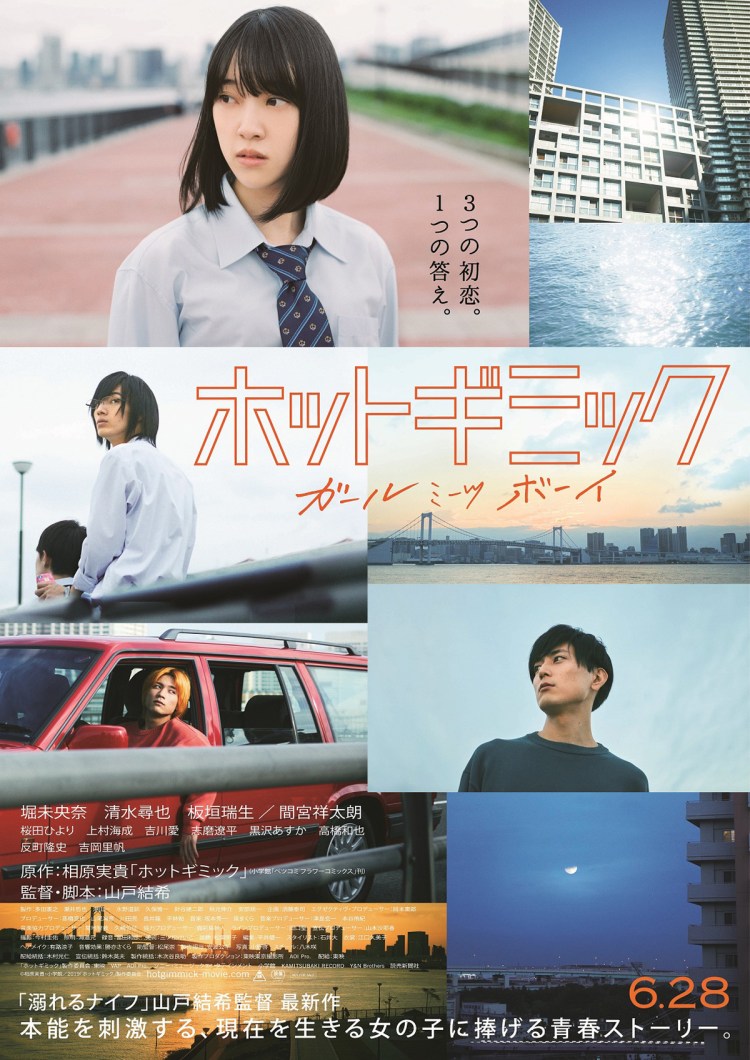
Hot Gimmick: Girl Meets Boy (ホットギミック ガールミーツボーイ, Yuki Yamato, 2019)

Hot Gimmick posterStrangely enough, shojo manga adaptations can in fact be among the most problematic exercises in contemporary Japanese cinema. Targeted very specifically at adolescent girls, the romantic world that they present is often consumed by its own sense of blind innocence as the shy heroine eventually finds love with a “handsome prince” who, though sometimes an inappropriate figure, is either improbably gentlemanly or a “difficult” Mr. Darcy type who more or less bullies her into submission. Yuki Yamato’s adaptation of Miki Aihara’s Hot Gimmick, given the subtitle “girl meets boy” (ホットギミック ガールミーツボーイ), however, seems to be well aware of the genre’s uncomfortable tendency to reinforce conservative social norms and normalise unhealthy relationship dynamics, even if it perhaps fails to entirely reject it in its broadly positive yet ambivalent conclusion.

Innocent and naive high schooler Hatsumi (Miona Hori) has been charged with secretly picking up a pregnancy test for her younger yet much more worldly sister Akane (Hiyori Sakurada) who ends up losing it on their way home from school. Unfortunately, it’s found by a schoolmate, Ryoki (Hiroya Shimizu), who uses it to blackmail her, forcing her to become his “slave” or he’ll send the test straight to her mother. For reasons not entirely clear besides her natural diffidence, Hatsumi goes along with it but is still carrying a torch for a childhood friend, Azusa (Mizuki Itagaki), who has since gone on to become a top idol. Unbeknownst to her, Azusa has in fact returned, apparently missing them all at the estate where he used to live. Increasingly terrorised by Ryoki, Hatsumi is more worried that Azusa will get the wrong idea and assume she is romantically involved with him. Meanwhile, her brother Shinogu (Shotaro Mamiya) is worried about both guys, overprotective in a disappointingly patriarchal way.

This is indeed a very patriarchal world. Unlike her sister, Hatsumi is romantically naive and terrified of the consequences of someone finding out about the pregnancy test even if Akane is fairly unfazed, simply brushing off questions from her mother by implying that someone is probably playing tricks on them. Hatsumi is preoccupied with the nature of “cuteness” and intensely insecure, which is perhaps why she allows herself to go on being manipulated by Ryoki even while knowing that is exactly what he’s doing. “I’m just stupid and unattractive” she’s fond of saying, fully believing that she has no right to her own agency because she is unable to see her own worth.

That essential insecurity seems to make her a magnet for all the creepy guys in a 10 mile radius. Talking to another somewhat imperfect boy, Akane tells him that guys like girls like Hatsumi who seem “vulnerable”, lamenting for a moment that that’s something she definitely is not (ostensibly, at least), but stopping short of reflecting on how dark a comment that might actually be or how the whole concept of “kawaii” is built on the idea of disempowered femininity. Azusa, who is originally posited as the “innocent” love interest, later turns out to be anything but, while Ryoki is later redeemed (to a point) in leading Hatsumi towards an awareness of an agency over her own body, while she, again problematically, turns to her protective brother rather than engage with the various ways in which all three guys have continually misused and manipulated her.

A intense subplot concerning the legacy of illicit romantic relations in the previous generation binds all of the troubled teens inside a net of moral resentment in which they embrace a kind of conservatism they reject their parents for rejecting. They are all, in a sense, attempting to break free of familial legacies, but find themselves paying for their parents’ mistakes while the parents themselves remain more or less absent, occasionally resurfacing to enforce obedience through shame. What Hatsumi comes to realise, however, is that the lesson they were teaching her was not quite wrong but misguided. Where they told her that she should guard her body because not to do so was shameful, she discovers that there is power in owning herself, that she is free to decide what she does and does not do with her body and has the right to grant or refuse access to it.

Nevertheless, her final sense of empowerment is undercut by her continued relationship with Ryoki who, while perhaps growing to accommodate a less misogynistic world view, is still a boy who tried to make her his slave and repeatedly calls her stupid even if eventually agreeing that the whole world turns in her. Yamato’s stylish visuals add to the sense of absurdity which defines the closing moments as Hatsumi at once affirms an awareness of herself as a being with worth and agency, yet also embraces her “stupidity” as she takes her first few diffident steps towards an assurance of adulthood.


Currently available to stream via Netflix in the UK (and possibly other territories)

Original trailer (no subtitles)

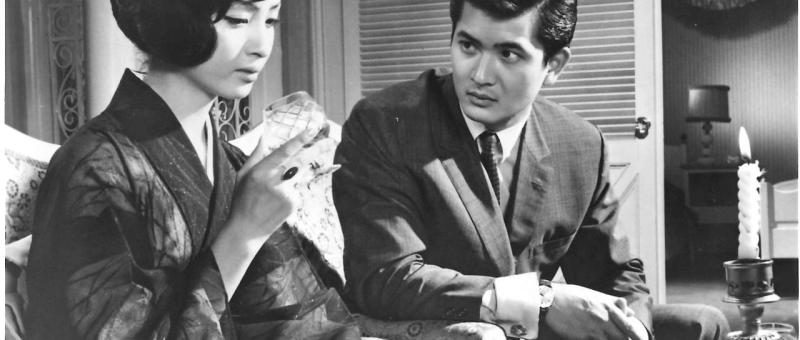
Our Blood Will Not Forgive (俺たちの血が許さない, Seijun Suzuki, 1964)

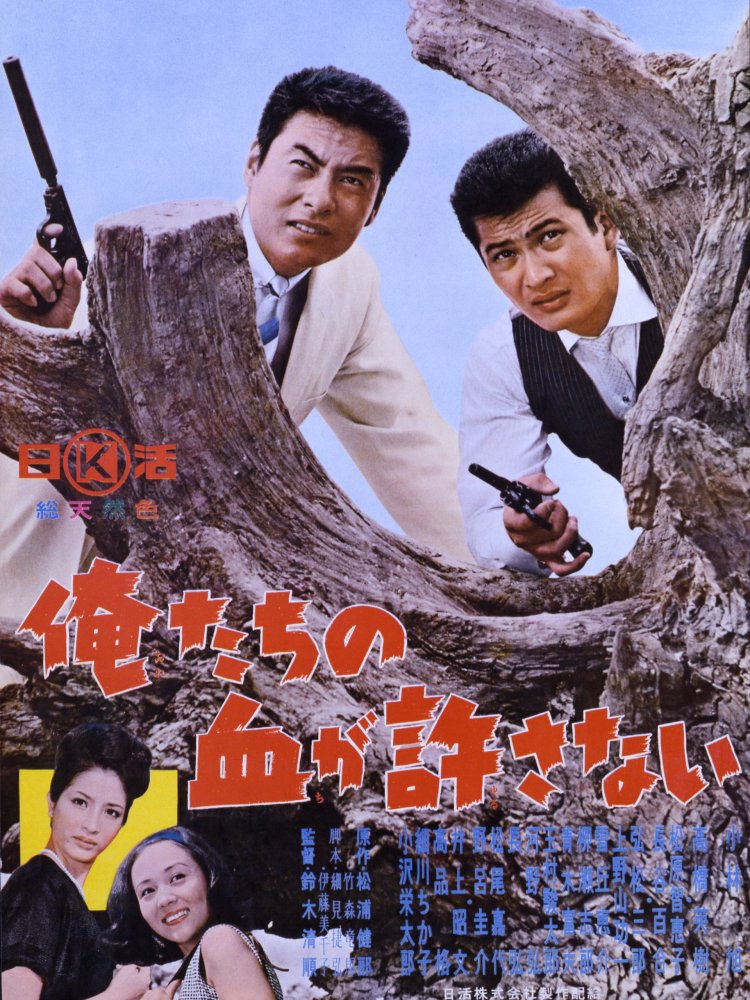
Our blood will not forgive posterIn Japan, “kaeru no ko wa kaeru”, or “a frog’s son is also a frog”, is an often heard idiom, sometimes disparaging but often affectionate. Can a yakuza’s son become anything other than a yakuza, or does your blood define you in ways you cannot defy? Our Blood Will Not Forgive (俺たちの血が許さない, Oretachi no Chi ga Yurusanai), an early semi-absurdist gangster drama from Seijun Suzuki’s mid-period at Nikkatsu, asks just that question as two brothers battle the legacy of their slain father whose dying wish it was that the yakuza line die with him.

After their father was assassinated at home by sword, the Asari brothers were raised by their mother, Hatsu (Chikako Hosokawa), who did her best to keep them out of the underworld. After the war, however, times were tough. Older brother Ryota (Akira Kobayashi) had to work as a delivery boy to keep the family fed, studying hard at the same time and getting in to a good university. Now grown up, he’s a smart suited night club manager. His younger brother Shinji (Hideki Takahashi), meanwhile, is a clownish goof-off with a good job at an ad agency he’s always in danger of losing (like a fair few jobs before). Today, Shinji was meant to collect his bonus, but he’s bunked off to take part in a local festival which is unfortunate, because he’s got a visitor – Tobita (Akifumi Inoue), the man who killed their father without knowing why and now regrets it. He’s managed to track Shinji down thanks to the fact he looks just like his dad and has a habit of doing stupid things that get his picture in the papers like winning eating competitions and getting lucky on the horses only to get mugged outside.

Tobita’s desire to apologise to the boys exposes their father’s sordid yakuza past and forces them to deal with the legacy of their gangster blood. Though Ryota is more sanguine and simply declares that he “hates all yakuza” before asking Tobita to leave and never come back, Shinji immediately attacks him but then becomes enamoured of the romanticism of the gangster life and considers restarting the Asari clan after getting fired when a picture of him fighting with thugs on the company away trip makes the papers with the headline “yakuza’s son”.

The central irony is that Ryota, who was his mother’s favourite and ostensibly the steady, respectable son, has secretly been a yakuza for quite some time. The club he runs is a yakuza front, which is why he tries to talk Shinji out of trying to get a job there, leading him to feel rejected enough to have too much to drink and start a bar fight, causing problems for Ryota with his boss.

“All yakuza are the same,” Ryota confesses to Shinji as they argue in a car incongruously surrounded by roaring waves, “they’re violent because they’re afraid”. Despite graduating from Tokyo University, Ryota couldn’t get an honest job because they always found out his dad was a yakuza. Out of other options, he decided he had no other choice but to become one too, that he could not escape his blood but might be able to make sure his brother could. Shinji has romantic dreams of the yakuza lifestyle (his bedroom wall’s covered in pictures of Al Capone et al), but Ryota knows what it means, which is why he hates all yakuza, including himself. He’s planning to marry his secretary girlfriend, Yasuko (Chieko Matsubara), but his emotions are so corrupted that he isn’t quite sure if he really loves her or is only making a bid for respectability as a kind of atonement to his mother. In any case, he also feels guilty, knowing that just as his father eventually made his mother miserable, no woman can be happy with a yakuza.

“Yakuza are so stupid, you’re all obsessed with dying – what’s the point?” Shinji eventually exclaims, finally thoroughly disillusioned as his brother goes out in search of an honourable ending rather than trying to escape from certain death at the hands of his vengeful boss. “It may not be easy to live, but there’s nothing honourable about dying!” he tells him, undercutting a series of cultural signifiers, but finally crawling out of the yakuza trap and vowing to live on muddling through with his mother and perky girlfriend, Mie (Yuri Hase) whose birthday party he’s currently missing. Blood does not forgive, but it does eventually release if only you can learn to see it for what it is and choose to be free of it.


Opening (no subtitles)

12 Suicidal Teens (十二人の死にたい子どもたち, Yukihiko Tsutsumi, 2019)

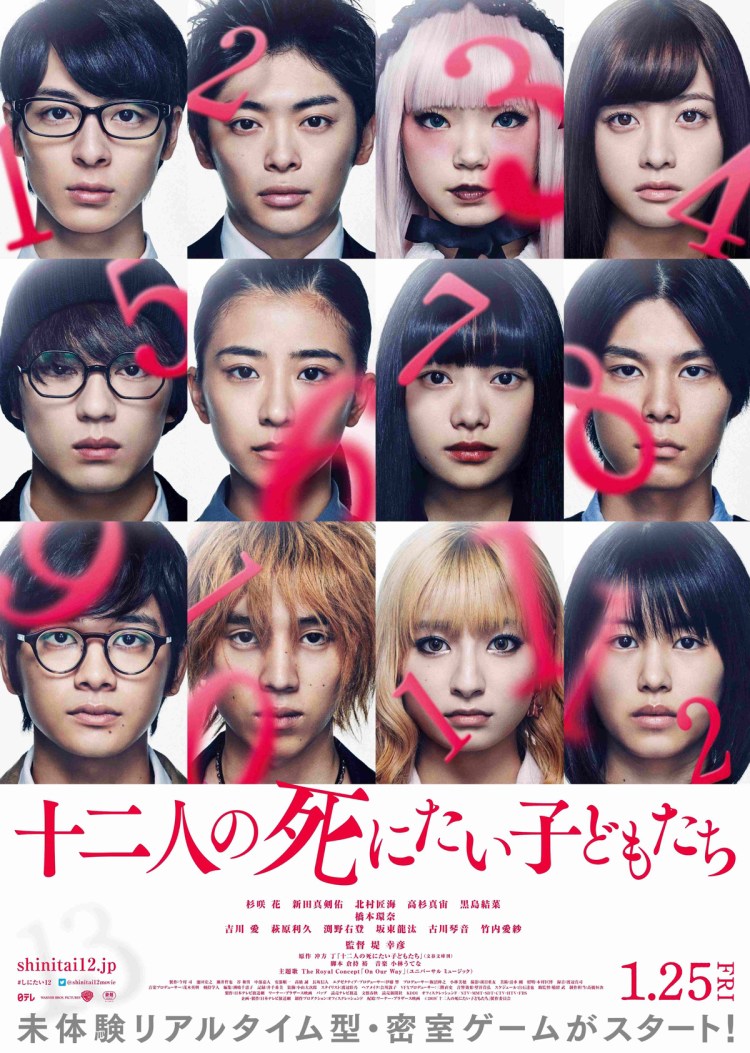
12 Suicidal Teens posterJapan has a relatively high suicide rate, but even so the number of people taking their own lives had been steadily decreasing, hitting a 22-year low in 2016. Conversely, youth suicide rates peaked, hitting a 30-year high. Inspired by Tow Ubukata’s novel, 12 Suicidal Teens (十二人の死にたい子どもたち, Juni-nin no Shinitai Kodomo-tachi), as the title implies, sees a dozen high school students forming a kind of club in which they will take the decision to live or die as a group, ironically undercutting the sense of powerlessness which has led them to the conclusion that they have no other choice other than death.

Ringleader Satoshi (Mahiro Takasugi) has recruited 11 likeminded souls and furnished them with complicated instructions involving a series of secret codes granting them access to a basement meeting room in an abandoned hospital. The 12 dutifully make their way into the building, but a surprise is waiting for them. When the first guest arrives, a young man is already lying in one of the 12 beds arranged around the edges of the room, apparently having jumped the gun, dead or dying after taking a large amount of sleeping pills. Everyone concludes he must be the event’s organiser, only for Satoshi to suddenly arrive and attempt to “open” the meeting at which they’re supposed to discuss the issues thoroughly so they can be sure they’re making the right decision. Because of the unexpected 13th guest, a decision is taken to postpone the discussion until after they figure out what’s going on.

Part of the reason for that is less curiosity than a kind of resentment. The teens are worried that their own deaths maybe misunderstood or misused if they’re discovered with this randomer in their midst. What if he’s the victim of a serial killer and everyone thinks they are too, never getting the message that each of them was desperate to send with their deaths? One young man who is dying to get back at a neglectful mother by denying her a life insurance pay out is worried it might backfire and she’d end up quids in if the police decide he’s a murder victim and not a suicide. He decides to live (for the moment at least) almost all out of spite.

Spite is, it seems, a powerful motivator in one sense or another. What most of our teens want isn’t really death but freedom, an end to pain or suffering. Suicide rates spike in September because bullied students can’t bear the thought of returning to school. Bullying is indeed the reason one of our teens wants to die, only the instigator was a teacher who led his class to victimise an innocent student solely for the crime of being an “annoying” person. Another teen, meanwhile, was bullied until he finally snapped, pushing his aggressor down a flight of stairs. Unable to live with the guilt, he too feels he can’t go on.

For the girls, the lack of control is all the more obvious. One young woman walks around with a surgical mask covering her face, not because she’s hideously burned but because she’s fantastically beautiful. One of Japan’s many celebrity idols, she’s on the cover of a thousand teen magazines but doesn’t recognise herself in the images that she sees and resents the way in which her existence is micromanaged by others. She wants to die as a means of seizing her own agency, to prove that her life and her individuality were valid and mattered as distinct from the fake persona created by her managers. Her fame endangers the mission of the group’s most emo member who declares that the mass suicide should be bomb detonated under an indifferent society, that she’s dying to reject her existence and rebelling against having been born.

Like some of the others, she’s a survivor of abusive parenting and resents having been given a “meaningless” life. A few of the other teens feel the same but for different reasons, they are suffering longterm or terminal health conditions and resent both their fates and being forced to live on without hope. They choose death now to prove they have a choice and are leaving on their own terms, not those of the universe.

Eventually the conclusion that they come to is that to live is also a choice. Working together to solve the mystery of the unexpected guest, they begin to understand a little of each other’s lives and their own, bonding in a shared sense of futility that slowly drifts into a rejection of the nihilism that had convinced them that their only choice was death. A strangely uplifting experience, 12 Suicidal Teens is a dark celebration of life that makes a virtue of endurance and finally finds meaning in commonality and the simple joy of empathic connection.


Original trailer (no subtitles)

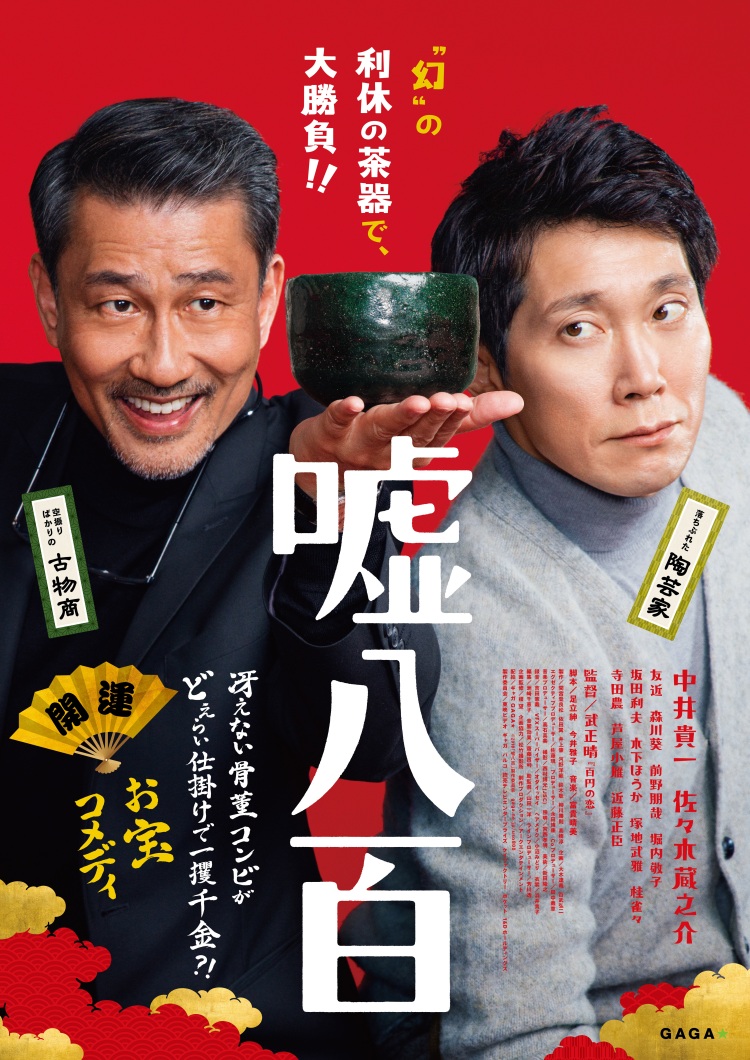
We Make Antiques (嘘八百, Masaharu Take, 2018)

We make antiques posterWho will scam the scammers? The antiques trade is a high stakes business, and at least as far as Masaharu Take’s We Make Antiques (嘘八百, Uso Happyaku) goes, one which makes use of its aura of respectability to cheat unsuspecting amateurs out of their hard earned cash for the false promise of exclusivity. Then again, does it really matter when something was made so long as it was made well and with artistic integrity? Perhaps collectors are just as happy with a nice piece as an authentic one, if only no one ever tells them the difference.

Jaded antiques dealer Norio Koike (Kiichi Nakai) prides himself on having a good eye, forced to learn to spot the inauthentic in record time after having his reputation trashed when he accidentally sold a “fake”, making the rookie mistake of taking provenance at face value without assessing all the facts. These days he’s not as precious as he used to be, mostly making his living out of buying up genuine antiques from clueless owners, convincing them their pieces are fakes and therefore worthless before selling them on at tremendous profit. It’s a trick he pulls on a wealthy man with a warehouse full of teacups that belonged to his father he’d rather get rid of so he can open a cafe, spotting an obvious fake and buying it cheap to take it straight back to where he knows it came from. Koike gets his comeuppance however when the man calls him back and says he’s found something interesting – an Edo-era letter in a box. Koike lies and says the letter is a random missive about a peasant revolt, when really it’s from grandmaster Rikyu and mentions coming with a tea bowl which Koike manages to find after searching the warehouse again.

After buying the entire stock to mask his desire for the tea bowl and letter, Koike realises he’s been had. The man he was talking to isn’t the owner of the warehouse but a caretaker, and the warehouse only exists to store fakes produced by a team of master forgers operating out of a nearby ramen joint. Noda (Kuranosuke Sasaki), who managed to scam Koike, was like him professionally embarrassed and by the same two corrupt elitists, Tadayasu Hiwatashi (Kogan Ashiya) and his celebrity authenticator Seiichiro Tanahashi (Masaomi Kondo), who picked him up as an aspiring ceramicist, giving him a fancy award but secretly using him to produce “replicas” to sell in their store. 20 years later, Noda is a cynical and jaded figure, unable to connect with his “nerdy” son (Tomoya Maeno) who spends his time building fantastically realistic military dioramas, and increasingly distanced from his patient wife who deeply resents the loss of his artistic integrity.

After a brief locking of horns, the two men decide to team up to scam the scammers, teach them a lesson, get a little ironic revenge, and become filthy rich in the process. Creating expert fakes, however, is a taxing business which requires an extreme depth of knowledge and in this case of a well known and hugely respected historical figure. Sen no Rikyu, the father of the tea ceremony, was, ironically enough, ordered to commit seppuku after speaking truth to power and, because he was an honourable man, he did it.

The reason most fakes fail is because they’re soulless replicas, often expertly crafted but essentially superficial. Creating a convincing fake allows Noda to regain the creative mojo that he’s been suppressing all these years in resentment towards Hiwatashi and Tanahashi, determined to craft something that reflects the spirit of Rikyu by virtue of the fact that it contains a piece of his own soul. Of course, the guys fully intend to exploit their own “artistic integrity”, Koike turning on the salesman’s patter to sell the dream of Rikyu to two soulless elitists too wrapped up in their sense of self-importance and blinded by greed to see things properly. Yet, there is a perverse love not only for the grift but for the craft and for Japan’s disappearing traditional culture, if only in the ironic rebuke of those who misuse it for their own gain. Bonded in revenge not only against the the venal Hiwatashi and Tanahashi but middle-age and and life itself, the guys generate an unlikely friendship, rediscovering their authentic selves through forgery as they scam the scammers and retake their sense of integrity in the form of a briefcase stuffed with cash.


International trailer (English subtitles)

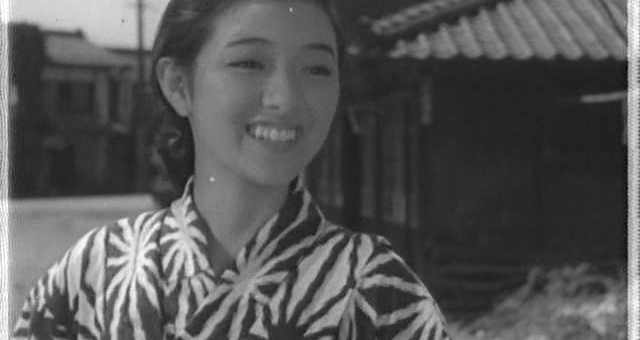
Hideko, the Bus Conductor (秀子の車掌さん, Mikio Naruse, 1941)

vlcsnap-2019-12-28-21h47m57s539It’s true enough that we might not have enough extant material from the pre-war and wartime eras to be as selective as some might accuse of us of being on realising that the directors we tend to remember are the ones we see as resisting. Though there were a fair few who managed simply to steer clear of the prevailing ideology, most skirted their way around the demands of the censors board by embracing the kinds of themes they could would work with. In Hideko, the Bus Conductor (秀子の車掌さん, Hideko no Shasho-san) Naruse pushes in a slightly different direction, retreating almost entirely from the troubles of the contemporary era into an idyllic vision of pastoral Japan.

Echoing Mr. Thank You, he opens with a POV shot of bus travelling a rural road accompanied by jaunty music. Neatly undercutting the cheerful atmosphere with ironic absurdity, we then cut to bus conductress Okoma (Hideko Takamine) announcing the next stop to an entirely empty bus. The problem is, the bus Okoma and the driver, Sonoda (Kamatari Fujiwara), operate is old, slow, and dirty. A new company, Kaihatsu, recently launched with shiny new buses that are cleaner and faster, if a little more expensive. Unsurprisingly, most people prefer to travel with Kaihatsu, meaning the only passengers waiting for Okoma’s bus are the kind that don’t have much money or are looking for different kinds of service – e.g. transporting live chickens or unusually large amounts of bags.

A radio programme recommended by her landlady gives Okoma an idea to boost business – performing as a kind of tour guide reading out interesting facts about the local area to entertain the passengers. Unfortunately, no one can quite think of any interesting facts or local landmarks in this tiny rural backwater. Nevertheless, Okoma and Sonoda are determined to give it a go, eventually obtaining permission from the decidedly laissez-faire boss who spends most of his days guzzling ramune and eating kakegori. To make sure the service is professional, they enlist the services of a local writer, Ikawa (Daijiro Natsukawa), whose notebook Okoma once returned when he left it on the bus. Weirdly, he doesn’t even want paying because he enjoys writing this kind of thing, and even coaches Okoma on how to get the cutest accent to really attract those customers with adorable local charm (even though Okoma is very proud to be thought of as nicely spoken young lady with nary an accent at all).

Of course, in true Naruse style, it’s not quite as idyllic as it seems. Most of the people we meet are poor and struggling, that’s why they’re taking this bus and not Kaihatsu’s. Even so, they’re all pleasant and polite, not even minding when Okoma asks the driver to stop by her house so she can chat with her mother, giving her a kimono she’s bought as a present (that her mum tells her off for spending her money on) and swapping her worn out cloth shoes for a classic pair of geta in which she seems to be more comfortable. At one stage, a chicken escapes from the bus and they stop to catch it, timetable be damned. Mind you, there don’t even really seem to be specific stops on this strangely occasional service. In need of passengers, Okoma and Sonoda seem content to stop and pick up random passersby who might be in search of a lift, taking them to wherever they might want to to go.

That might be one reason explaining why Okoma’s landlady is keen to warn her that she’s heard the bus company is no good, it’s just a front for some kind of unspecified shadiness. The truth, however, is more that the boss seems to be the feckless sort who enjoys being bossy but has no idea how to run a business. Distracted by Okoma’s monologue, Sonoda starts forgetting to stop and pick people up and eventually has to slam on the brakes when a child runs out into the street. While they’re checking on the kid, the bus rolls back over the verge, injuring Okoma and landing in farmland. Reassured that no-one has been “seriously” hurt (he’s not getting sued), the boss is then more worried about the insurance, seeing as it doesn’t cover him if the engine was running while they were stopped. Even though Sonoda explains that there’s no damage except maybe a scratch on the side, the boss suggests he scupper the engine and smash the windows so they can claim. They need a better bus, otherwise the company will have to close.

Earlier on, Sonoda and Okoma had joked about a popular slogan “When a country gets confused, loyal subjects appear”. Sonoda rolls his eyes a little and calls it “bombast”. They might not object to adding a bit about birds singing for the emperor’s long reign to their monologue, but it’s plain they aren’t going to go along with something they think is wrong because the boss says it’s a good idea. Sonoda is a little conflicted to begin with, talking it over with Ikawa who acts as the slightly patronising voice of city sophistication, he realises that if he follows the boss’ orders and lies he’ll not only be cheating the rest of society but himself too in doing something he knows to be immoral. Both he and Okoma vow they’ll quit rather than be forced into dishonesty, after all, says Okoma, there are plenty of other jobs (or perhaps not, in real terms, but still there is a choice). Suddenly, they feel quite cheerful, buoyed by their sense of moral righteousness.

An intervention from Ikawa saves their jobs, but this is still a Naruse film in which the world will always betray us, and so Okoma and Sonoda cheerfully continue their tour guiding business little knowing that the boss has gone bust and sold the bus. It might be going too far to say that Naruse envisages a fiery crash, a rude awakening for Okoma and Sonoda who will be left with only the cold comfort that they stood up against authoritarianism when it all goes to hell, but the subtle allegory is all but unmissable. Absurdly cheerful, and just a little bit depressing if you stop to think about it, Hideko the Bus Conductor is a charming jaunt through rural ‘40s Japan filled with salt of the earth types just trying to muddle through while the big bosses put their feet up and pop ramune marbles all day long without a care in the world.


Saint Young Men (聖☆おにいさん, Yuichi Fukuda, 2018)

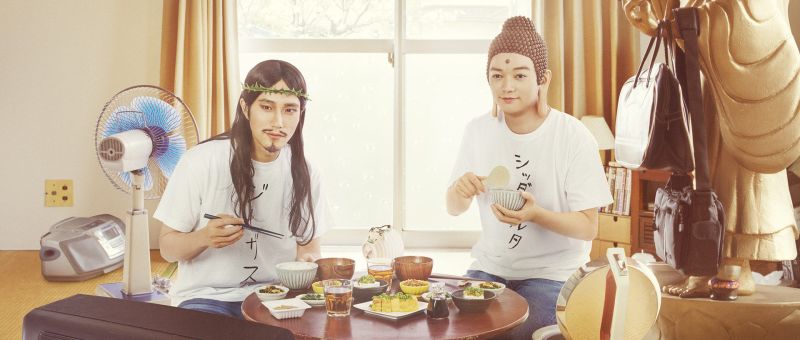
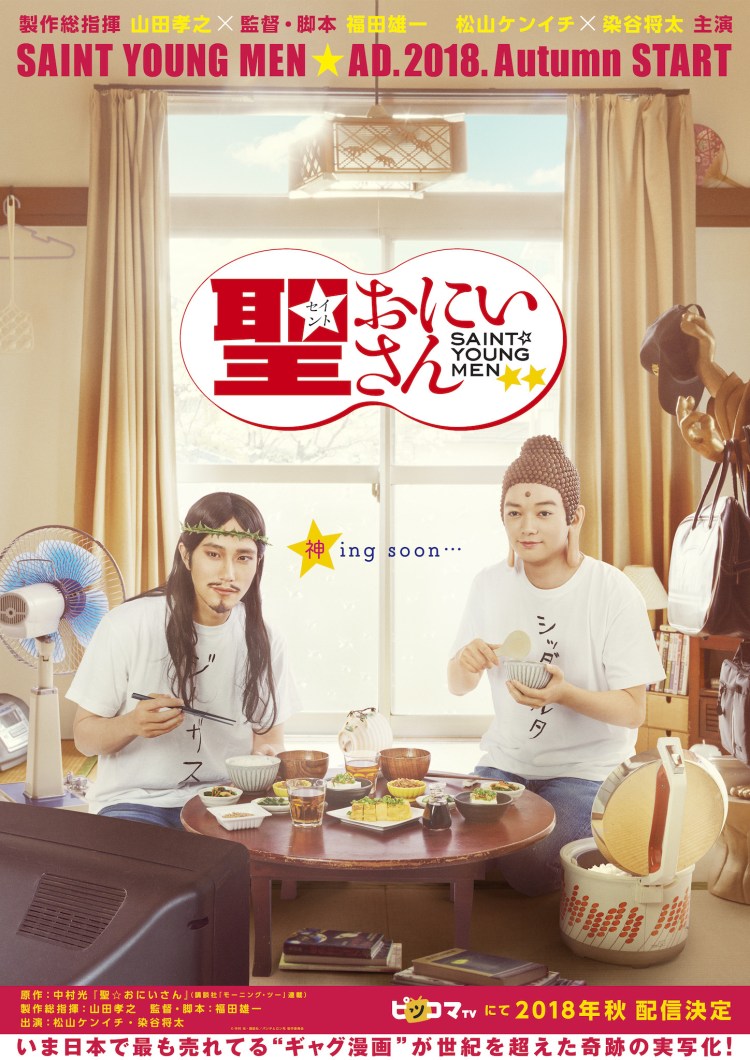
Saint young men posterWhat if Buddha and Jesus were flatmates in modern day Tokyo? Hikaru Nakamura’s much loved manga Saint Young Men (聖☆おにいさん, Saint Oniisan) attempted to find out, casting the two holy beings as conventional manga slackers on “vacation” in the mortal realm, supposedly researching modern Japanese society. A firm favourite with fans, the franchise has already been adapted into a popular anime and now receives the live action treatment from none other than Gintama’s Yuichi Fukuda.

Split into a series of short vignettes mostly featuring only Jesus (Kenichi Matsuyama) and Buddha (Shota Sometani) in their apartment, Saint Young Men first aired as a 10-part web series before being compiled into a 70-minute movie. The central conceit is that Jesus is a cheerful if slightly feckless hippy, while Buddha is the calm and the responsible one making sure he’s well looked after. Perhaps surprisingly, Saint Young Men presents its vision of contemporary Japan from the point of view of the two guys as they explore everyday life, occasionally including explanatory narration from a distant authorial voice which, presumably, contains information widely known to the target audience, such as an explanations of “White Day” – Japan’s secondary Valentines in which men given chocolates are expected to return the favour with gifts three times the cost, and spring festival “Setsubun” in which beans are thrown at people wearing ogre masks to frighten off bad luck.

For the two guys these are fascinating little anthropological details they can get quite excited about despite their thousands of years of existence. On a trip to the convenience store, Jesus is thrilled to think he’s finally “made it” after 2000 years because some high school girls said he looked like Johnny Depp. Buddha goes to see if he looks like someone too, but the girls immediately recognise him as looking “like Buddha” which is both a disappointment and somehow validating. Meanwhile, he laments that the majority of his artistic renderings have only captured him in his “fat period” rather than the handsome figure he currently cuts. 

Bickering like an old married couple, the guys fight about the usual things – money, and the irresponsible use of it. Jesus has a bad habit of buying random stuff he doesn’t need off the internet, causing Buddha to get so annoyed he starts physically glowing and only calms down when Jesus gives him a present, a manga artist’s starter kit. Sadly, Buddha is proved right when Jesus gets bored with his random electric pottery wheel after only a few minutes, but is witness to an unexpected miracle when the clay is magically transformed into bread, turning the wheel into a “bread oven” with which Jesus seems very pleased only to tire of it just as quickly.

Trying to keep their “real” identities secret, the guys are keen to keep their abilities behind closed doors – something Buddha forgets when he hatches on the great idea of levitating to save floor space. Jesus comes home and quickly closes the curtains in case someone thinks they’re some kind of weird cult. The guys consider moving somewhere with a little more room, but discover that even for holy beings it’s almost impossible to find a decent apartment in modern day Tokyo that doesn’t cost the Earth. The primary reason Jesus wanted to move, however, is not so much that the apartment’s a little poky for two full-grown guys, but that the other place was gated which means he won’t be getting bothered by cold calling newspaper sales representatives.

Jesus may be too nice to keep saying no to pushy salesmen, but Buddha has a few unexpected trust issues. Faint from hunger, the guys think about ordering a take away, but Buddha is a strict vegetarian and worries about the chain of communication involved in food preparation. He can only trust that the restaurant follows the instructions he gives them honestly and that the delivery guy won’t do anything weird with the food on his way over. In the end, you just have to have faith, but Buddha is struggling while Jesus is content to let it all hang out. Something similar occurs when earnest Buddha unwisely meditates for hours in the beautiful snow in only his ironic T-shirt and catches a cold with only Jesus to nurse him. Jesus wants to take him to the hospital, but they don’t have insurance and don’t want to risk extortionate medical bills. Jesus’ healing powers apparently don’t work on other holy beings, and so he finds himself healing a bunch of people at the hospital to earn a free visit from a doctor with whom Buddha can only communicate through possession and telepathy.

Obviously very low budget and mostly starring just the two guys with additional appearances from their middle-aged landlady and the confused doctor, Saint Young Men is very much a Fukuda production bearing his familiar hallmark of waiting slightly too long for a joke land, which it often does not. Though seeing all 10 episodes in one go necessarily flags up their essential sameness, they do provide an amusing exploration of slacker life in contemporary Japan with occasional forays into warmhearted cross-cultural exchanges between the serious Buddha and scatterbrained Jesus.


Original trailer (no subtitles)