Father (父, Keisuke Kinoshita, 1988)

Keisuke Kinoshita’s long career spanned 45 years producing 49 films between 1943 and 1988. After joining Shochiku in 1933, he directed his first film, Port of Flowers, 10 years later and subsequently went on to direct some of the best loved classics in Japanese cinema such as the iconic Twenty-Four Eyes. Though sometimes dismissed by international critics as overly sentimental, Kinoshita’s comedies were often mercilessly cynical and his later work became progressively darker. His final film, however, Father (父, Chichi), skews the other way, chronicling a son’s gradual acceptance of his feckless dad as he prepares to come of age himself. 

As the film opens, the titular “father”, Kikutaro Higure (Eiji Bando), is launching a failed bid for political office in his beloved Kagoshima (his major policy is putting a giant umbrella on a local volcano to deal with the ash problem) while his son, the narrator Daijiro (Makoto Nonomura), is only four. Disappointed by his failure, Kikutaro moves the family to Kumamoto where he becomes a househusband while his long-suffering wife, Yae (Kiwako Taichi), runs a small bar. Daijiro is now six and is facing the first of many family crises because his mum has had enough and has asked for a divorce. The last straw was Kikutaro raiding her savings without permission to pour into another harebrained scheme to put on an all female pro-wrestling show. A late in the game plea from Daijiro’s sensible grandma (Kin Sugai) encourages the couple to try again, moving to Osaka and then to Tokyo but apparently taking all their problems with them. 

If she had to choose, Daijiro’s grandma would pick her daughter-in-law Yae over her son any day. “What a mistake I made giving birth to a son like that” she laments, “I’m beyond regret, I’m angry”. Kikutaro certainly is an exasperating sort of man, careering from one get rich quick scheme to another but never really taking anything seriously enough to see it through. Grandma assumes he’ll want her to help him repair his marriage (not least because he can’t support himself and is dependent on Yae to look after him) but he appears not to care at all, simply stating that he can always “find a replacement” for a wife but Daijiro is irreplaceable. If it were not for that comment, you could perhaps make a case for Kikutaro as an early example of the new man prepared take on child care duties in a strongly patriarchal society where he is the only dad attending parent and teacher meetings, but predictably Kikutaro is mostly doing it because he’s lazy. Taken out on a walk so grandma and Kikutaro can talk, Daijuro goes “missing” leaving Yae convinced he’s been abuducted but it turns out he got distracted by some pachinko balls and stopped to pick them up because that’s obviously what his dad has him doing while he’s supposed to be looking after him. 

Nevertheless, Kikutaro ends up sending Daijiro back to Kagoshima to live with grandma until the couple eventually reunite and take him back to live with them in Tokyo. That doesn’t last long either, and while his mother lands on her feet and works hard to make a life for them running a Spanish restaurant, Kikutaro bounces around trying out a host of other harebrained schemes until fetching up asking for money to launch a singing career for his new friend from Brazil, a Japanese-speaking black American man whom he treats in an entirely questionable way (the film is very of its time in terms of its racial politics), essentially selling the incongruity of a foreigner singing the Japanese songbook but later beating him when he somehow “insults” Kikutaro’s favourite ode to Kagoshima simply by performing it. 

The teenage Daijiro describes his dad as a “problem parent”, but like the rest of his family finds it extremely difficult to abandon him despite the fact that being a relative of Kikutaro seems to be completely exhausting. We even see him kick off at his sister-in-law’s funeral about wanting more money and not being respected as the eldest son. Yae constantly asks for a divorce and gets countless other offers from better men but never officially separates from Kikutaro who, despite his earlier protestations, always comes back to her (but only when he wants something). Daijiro begins to feel sorry for his father who seems to be moving further and further away from his beloved Kagoshima after vowing to return only once he’d become a success. He thinks he sees him at the iconic Ohara festival where grandma is cheerfully participating in the traditional song and dance parade, calling out but as usual receiving no reply. Kikutaro is a failure of a father, but perhaps in the new context of the bubble economy it no longer matters quite as much as might have done before. Daijiro at least seems to have rejected his example, but like everyone else chooses to forgive him as a loveable rogue rather than a deadbeat dad while secretly longing for his return. 


Original Trailer (no subtitles)

Bull’s Eye of Love (おしどり駕篭, Masahiro Makino, 1958)

Masahiro Makino was best known for jidaigeki and ninkyo eiga but also had an interesting sideline in cheerful period musicals including many collaborations with post-war singing sensation Hibari Misora. Bull’s Eye of Love (おしどり駕篭, Oshidori Kago) is, like Singing Lovebirds, a musical comedy in which a samurai (in disguise) and a feisty young woman fall in love while battling the corruption of their times. Though in this case Hibari takes a back seat in fighting samurai hypocrisy, she still gives as good as she gets as she fights for love across the class divide even while accepting that she can only have her love if he consents to renounce his nobility and live as a humble plasterer. 

The trouble starts when the old lord dies and a prominent retainer, Hyobu, leaps into action, taking control of the situation in fast tracking the accession of second son Sannojo (Sentaro Fushimi) who many feel to be too immature, weak willed, and naive to lead effectively. Top servant Zenbei complains, pointing out that Sannojo has an older brother, Genjiro (Yorozuya Kinnosuke), who should be first in line. But Genjiro has long been absent from the court, apparently intent on escaping the “stuffy” samurai lifestyle. Hyobu claims not that Genjiro has forfeited his position, but that he has actively renounced it in favour of Sannojo. Zenbei is not convinced, at the very least he feels they should find Genjiro and explain the situation to find out for sure what it is he intends to do with the rest of his life. 

It happens that Genjiro is living humbly as Genta the plasterer and has fallen in love with Kocho (Hibari Misora), the proprietress of an archery parlour who also likes to put on a show every now and then. The major problem in his life is that both he and Kocho are too stubborn and proud to say “I love you” which is making them bicker endlessly as a kind of substitute. The arrival of Zenbei and another retainer blows his cover and sends his new life into disarray. He has no desire to return to the samurai world, but also knows his brother is too susceptible to manipulation to be allowed to succeed unadvised, especially as Hyobu seems to be manoeuvring to get him married to his troubled daughter Chidori (Hiroko Sakuramachi) who seems to have some kind of ongoing mental disturbance which renders her distant and childlike. His romantic hopes will have to go on the back burner for a while as he becomes “Genjiro” once again to sort out Hyobu before hopefully returning to the simple life of an Edo plasterer. 

From Kocho’s point of view, the news that Genta has hidden his true status from her is alarming on two fronts, not only that he’s “lied” about who he is, but that if he is a noble lord then they can never be together because samurai don’t marry outside of their order. Genta, however, seems to be a fairly atypical sort of samurai who is entirely uninterested in wealth, status, and the restrictive codes which bind the noble. He looks for freedom in living as an ordinary man, which may be a bit disingenuous because there’s little freedom in starving and being constantly oppressed by the cruel order he was born into, but there is truth in it. It’s also unlikely that his clan would allow him to just up and leave, disappearing into Edo era society and abnegating his responsibility, but Bull’s Eye of Love is intent on a more cheerful depiction of the samurai world than that found in many contemporary period dramas in which its heroes are allowed to choose love and freedom without being forced to sacrifice their feelings in the name of duty. 

Kocho finally confesses her love but makes clear it is for Genta, not for Genjiro, only to end up falling for Genjiro too because of his manly samurai charms coupled with an unusual sense of compassion. Despite being told to stay at home, she takes her bow and arrow and follows him, relieved to discover she didn’t need to join the fight because he’d already handled it. In a fairly strange turn of events, however, Genjiro wipes out most of the treacherous retainers but then more or less enables Hyobu’s plan by putting Sannojo in charge and agreeing that he should marry Chidori who was only playing mad to undermine her father’s nefarious schemes. Having sorted everything out, the pair leave on a more equal footing after confirming their feelings towards each other and their intentions for the future. Genjiro renounces his samurai status to live “free” in Edo, cheerfully proceeding out of the palace and into the streets singing as he goes rejecting elitist authoritarianism in favour of the earthy pleasures of warmth and friendship to live as an ordinary man unburdened by the cruel hypocrisies of samurai soceity. 


Yasha (夜叉, Yasuo Furuhata, 1985)

In melancholy gangster movies, the hero often dreams of leaving the city for an idealised rural paradise to start again as a righteous man redeeming himself through hard work with a good woman by his side. Usually, they don’t make it, their goodness is nothing but a weakness in the harsh post-war environment, but even if they did could they really lay their violent souls to rest and live as the rest of us do? Once again played by a manfully stoic Ken Takakura, the hero of Yasuo Furuhata’s Yasha (夜叉, AKA Demon) tries to find out, but discovers that sooner or later the past will always catch up with you. 

15 years ago, fisherman Shuji (Ken Takakura) was the notorious Osaka yakuza known as “Yasha”. A war orphan given refuge by a gangster brotherhood, two things happened to change his way of life, the first being innocent country girl Fuyuko (Ayumi Ishida) whom he met by chance and rescued on the dangerous streets of the city. The second is the death of his younger sister who had become addicted to heroin. Fiercely resistant to the traffic of drugs, Shuji quit the clan, married Fuyuko, and retreated to her fishing village home to take over her late father’s fishing business. Well respected in the community as a steady hand, he now has three children and a settled happy life though one tinged with anxiety in the need to keep his back covered lest anyone find out about his violent past. 

The violent past is brought home to him when a young woman, Keiko (Yuko Tanaka), arrives in kimono with her young son in tow to take over the local bar. Keiko is a bar hostess from Osaka hoping to make a new start far away from the city, not so much for herself it seems as her no-good boyfriend Yajima (Takeshi Kitano) who is a drug-addled thug and openly hostile to her little boy. It’s Yajima who threatens to disrupt the gentle rhythms of the town, firstly getting the fishermen hooked on all night games of mahjong which damage their daytime productivity, and then selling them heroin to keep them propped up. Unused to such urban vices as hard drugs and serious gambling, the fishermen are lambs to the slaughter, handing over their hard earned savings to the thuggish Yajima to keep their heads above the water. 

Shuji wants to keep the town clean, but he can’t exactly admit just how familiar he is with things like drink and drugs which are, as his friend Keita (Kunie Tanaka) points out, not things “normal” people should know about. After realising an old friend is the middle-man, Shuji has a quiet word with Yajima as one thug to another but it only makes the situation worse. He tries talking to Keiko instead, but her decision to get rid of the drugs has disastrous consequences for all when Yajima goes on a crazed, knife-wielding rampage through the town which only Shuji can end. During the fight Yajima slashes Shuji’s fisherman’s jumper right through to the expose the demon beneath, leaving his colourful tattoos on show for all to see. 

You’d think that Yajima’s rampage would have taught the town a lesson, shown them that they were in over their heads and Yajima was not the sort of person it was good to be associated with, but their animosity overwhelmingly turns to the demon Shuji whom they unfairly begin to blame for their many misfortunes. The fishwives begin to avoid Fuyuko, telling their kids not to hang out with her kids and suggesting that it must have been Shuji who got the guys playing mahjong. Shuji meanwhile doubts himself, drawn to Keiko as to Osaka and the sleeping demon within. Yasha reawakens and he wonders if he has the right to live here after all. 

Fuyuko’s mother tells her that it’s a good wife’s job to quell the demon, but she struggles to maintain hold on Shuji while Yasha is pulled towards the city. He makes a manly choice, attempting to redeem Yajima in redeeming himself by returning to his point of origin. The widow of his old boss warns him off, reminds him that he’s a fisherman now, and that should he move against her she will have to act in accordance with the rules of the underworld, but privately mutters to herself that he hasn’t changed at all, “stupid man”. In the end, Yasha’s manly gesture ends in futility. He cannot escape himself but neither can he solve his problems through violence as he might have before, not least because the code is no longer secure motivating those he thought he could trust towards betrayal. He still has a choice, leave with Keiko to be Yasha once again accepting the futilities of a violent life (and its inevitable end), or stay to be a peaceful fisherman with the “good wife” Fuyuko. One man cannot possess two souls, but the given the chance the demon can be subdued if there is the will to subdue it and the belief that the man himself is good enough for the world in which he wants to live.


Original trailer (no subtitles)
The Big Bee (天空の蜂, Yukihiko Tsutsumi, 2015)

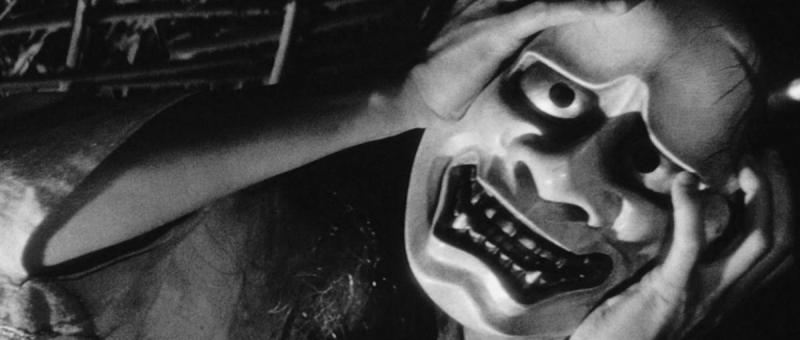
Blockbuster cinema wades into the anti-nuclear debate in a characteristically ambivalent take from prolific author Keigo Higashino adapted from his 1995 novel. Brought to the screen by blockbuster master Yukihiko Tsutsumi, The Big Bee (天空の蜂, Tenku no Hachi) is less wedded to its anti-nuclear message than it might at first seem, eventually sliding into a more comfortable tale of failed fathers redeemed with a potentially ambiguous coda that perhaps undercuts much of what has gone before . 

The main action takes place on 8th August, 1995 which falls between the 50th anniversaries of the atomic bomb attacks on Hiroshima and Nagasaki and is also a few months after the devastating earthquake in Kobe. Engineer Yuhara (Yosuke Eguchi) is about to unveil the “Big Bee”, Japan’s largest ever helicopter built with state of the art technology. He’s brought along his wife and son, but it’s clear there is discord in the family and neither of them are very impressed that the security guard didn’t even seem to know who he was so perhaps he’s not such a big shot after all. While his wife Atsuko (Kei Ishibashi) takes their son Takahiko (Shota Taguchi) and another boy to get a drink from the vending machine, Yuhara talks things over with a colleague and reveals that his workaholic lifestyle has destroyed his family life. He’s about to be divorced and doesn’t seem particularly cut up about it. Asked what’s going to happen to Takahiko, Yuhara cooly explains that it’s best he stays with his mum because he isn’t capable of being a good father to him. Unfortunately, Takahiko overhears him say that he’s essentially planning to abandon him and runs off to explore on his own, eventually sneaking aboard the helicopter which is then hijacked by a mysterious villain via remote control who flies it over a nuclear power plant and gives the Japanese government the eight hours before the fuel runs out to agree to shut down all the nuclear power plants in Japan. 

Yuhara’s failure as a father is immediately brought home to him when his son manages to throw the other boy, who climbed in with him but got injured, to safety, but doesn’t trust his dad enough to jump himself after hearing him say he was going to abandon him to his mother. Yuhara, meanwhile, was able to jump and grab the ramp of the helicopter but not to climb up and reach his son. He has to accept that his failure as a father and in consequence as a man is complete and total. His quest to save Takahiko is also a quest to redeem himself in the eyes of his society and avoid being branded as a man who sacrificed his family for a career and was finally unable to protect them.

Yet, at the present time, he’s also trying to save a nation while in the place of a father. To his mind, he built the Big Bee as a rescue craft, but its usage is most obviously military. He and his former colleague Mishima (Masahiro Motoki) see themselves as neutral engineers interested in technology but not particularly in its application. The government is reluctant to shut the plants down not only because cutting the power is extremely inconvenient and damaging to the economy, but because they do not wish to reopen the nuclear debate and risk the general populace realising that nuclear power is not entirely “safe”. Of course, this has extreme resonance in light of the Fukushima disaster, the government wilfully putting lives at risk in order to safeguard its own ends in refusing to issue an evacuation order for a potential disaster area covering all of the nation’s major cities right across the centre of the Japanese mainland.

This cavalier approach to human life extends to those working in the plants. We’re quickly introduced to a middle-aged woman whose son died of leukaemia she believes caused by lax safety procedures while the prime suspect is a friend of his (Go Ayano) who may also be suffering from a terminal illness caused by exposure to radiation after working as a cleaner at the power station. He vows revenge on a society which has rendered him “disposable”, thrown away like used tissue and left to fend for himself only because he was born into socio-economic circumstances which left him with no other choice than to take a “dangerous” job for employers that failed to protect him in much the same way Yuhara has failed to protect his son. 

The farmers in the town where the plant has become the major source of employment complain that no one wanted it but everyone needed the money. One leans into the mild message that perhaps we take our electric lives for granted, plugging in our toothbrushes without really thinking of the costs incurred in how we generate our power. Hotels dim their lights and switch off elevators while guests complain of the heat in the absence of aircon, but didn’t we manage OK before the power grid? Perhaps so, but our lives have changed. It might be as well to think again if those changes are really as good for us as we think they are, but you can’t turn back the clock. 

Not even the villain really wants the clock turning back, just better accountability and proper governance that puts the lives of citizens ahead of economic gain. Then again, a lot of this is personal, an act of self harm rebranded as revenge taken in atonement for the failures of a father. In this respect Yuhara may redeem himself, but there’s a note of discomfort in the jump to 2011 and the Fukushima disaster which doesn’t so much shout “I told you so” as over rely on the heroic efforts of the Self Defence Force as they battle a disaster which the powers that be from the government to the power company have failed to prevent. Yuhara wonders if the country is worth dying for and is comforted only in a trick he taught his son to calm his anxiety in the wake of the Kobe earthquake, tapping out “I am here” in morse code as an affirmation of survival which might also serve to say the work goes on even while “fathers” continue to fail in their responsibilities. 


Hong Kong release trailer (English subtitles)

Phoenix (不死鳥, Keisuke Kinoshita, 1947)

“Life is about facing your loneliness” according to the heroine of Keisuke Kinoshita’s Phoenix (不死鳥, Fushicho), a woman who’s known her share of suffering but has learned to endure. She knows not only war widows are lonely, and she’s not the only war widow, so she’s doing her best to be as happy as one can be under the circumstances. As much about its nation’s rebirth from the ashes, Phoenix is also quietly subversive in its critique of outdated social conventions and enthusiasm for a woman’s right to seek her independence rather than rely on the support of the traditional family. 

In 1947, Sayoko (Kinuyo Tanaka) is a much loved daughter-in-law and mother to Ken, who is about to celebrate his fourth birthday. She takes care of the household and looks after the numerous Yasaka siblings while putting up with her sometimes grumpy father-in-law (Isamu Kosugi) who harshly scolds little Ken when he throws a stone through the side window but feels guilty about it afterwards and vows to come home with sweets to make it up to him. Life with the Yasakas is peaceful and happy, though the present crisis, which isn’t really a crisis so much as a matter for consideration, is the potential marriage of younger son Yuji (Akira Yamanouchi) who has been wanting to marry his girlfriend Yoko but had been worried both that his parents would object to him trying to choose his own bride without their input, and that bringing another young woman into the house as a new wife might be insensitive, leaving Sayoko feeling sad and unwelcome. 

Yuji’s mother tells him that he doesn’t need to worry on either point, she and his father have long been in favour of the marriage which hints at something of a sea change in contemporary social attitudes. In Sayoko’s flashbacks to her early courtship, we see Shinichi (Keiji Sada), her later husband, bring her to his family home with the intention of introducing her to his parents as his future bride, but his father won’t even see her, loudly shouting that Shinichi should immediately ask her to leave. His objections are largely feudal in nature, Shinichi is the oldest son and his marriage is therefore of great importance to the family name. Not only does he not know anything about Sayoko, whom he basically calls a loose woman for daring to date while in high school, but he deeply resents that Shinichi has gone behind his back, defied his authority, and tried to arrange his own marriage without his father’s input. 

Despite the clear intention of the pair to continue their association with or without his consent, Mr. Yasaka continues to object. Shinichi insists that “nothing can separate us” despite knowing that he has already enlisted for the army and will shortly be leaving for the war. Sayoko holds the line, resisting even when her father dies and pushy relatives try to railroad her into an arranged marriage which will benefit them financially, and supporting her younger brother who is spared the war but only because he is already in the later stages of incurable TB.

Mr. Yasaka’s objections gain more weight with the war’s intensity. With her brother on his deathbed, he turns up to ask Sayoko not to see Shinichi on his brief leave before he’s shipped abroad during which they plan to get married because he thinks it’s irresponsible for his son to marry a woman knowing there is a good chance he will leave her a widow. Overwhelmed by the scale of her tragedies, Sayoko has had enough, rounding on Mr. Yasaka and letting him know that his concerns are moot because every healthy young man is in the same position and if he’d only given up his stubborn insistence that Shinichi has wronged him by undercutting his authority and given his consent to their marriage at any point during the last six years he wouldn’t have had to come here on this day with her brother dying in the next room to tell her that she shouldn’t marry the man she loves because her marriage is somehow his decision to make. 

Mr. Yasaka is clearly moved by Sayoko’s distress, moving to comfort her but then withdrawing and getting up to leave without saying anything. Petitioned again by Sayoko’s faithful housekeeper, he catches sight of the blooming flowers Sayoko has grown in adversity and is minded to reconsider. Several years later we can see that Mr. Yasaka has grown fond of Sayoko and his grandson even if he has a bit of temper, while she is very happy as a member of their family and not at all minded to remarry despite their desire for her to lead a fulfilling life. That is, as she tells Yuji encouraging him not to feel bashful about his bride, not because of a romantic notion of faithfulness or being hung up on old memories, but for the practical reason that she has nowhere else to go, or at least she is certain there is nowhere where she would be so happy. Later, however, she hopes to open a shop of her own and strive for her independence together with her son rather than remaining dependent on her husband’s family or marrying again for practical rather than emotional reasons.

Shinichi had been fond of talking about the life they’d lead once the war was over, that they’d only be apart for a few years and then never again, but the war stole their future from them as it did for so many other young people whom the film was doubtless intended to comfort. Nevertheless, Sayoko is forever telling people how happy she is. Mr. Yasaka seems to have relented, is going to let his younger son marry a woman of his choosing, and the younger siblings are all bright and cheerful. The future looks rosy, and Sayoko is going to do her best to enjoy it, striving for independence in a now less restrictive society. 


Titles and opening (no subtitles)

The Rickshaw Man (無法松の一生, Hiroshi Inagaki, 1958)

Japanese cinema has a special affinity with loveable rogues. We forgive their mischief and inconvenient troublemaking because deep down we know they’re kindhearted and even when they act impulsively it’s only out of an abundance of misplaced emotion. The wild Matsu is a case in point, brought to life by the great Toshiro Mifune in Hiroshi Inagaki’s remake of a story he first adapted 15 years previously but was apparently unhappy with because of the censorship demands of the time. What is surprising, therefore, is that despite his otherwise liberal outlook Inagaki largely echoes those problematic pre-war views, opting to focus on the tragic comic figure of Matsugoro rather than engage with the destructive visions of toxic masculinity that his well-meaning paternalism represents or with the latent feudalism which continues to inform the later course of his life. 

Beginning in 1897, Inakagaki introduces us to “The Wild Matsu” (Toshiro Mifune) on his “illegal” return to Kokura from which he had apparently been “banished” because of an “incident” the previous year. This time, Matsugoro has crawled back home apparently ill in bed and nursing his head after getting into an argument with a man who turned out to be the kendo instructor for the local police. Unafraid to embarrass himself, Matsugoro later relates the tale as a funny anecdote, admitting that the kendo master put an end to their fight in record time by striking him on the head and knocking him out. Typical Matsugoro, seems to be the reaction from all around him. Later he takes offence with a ticket seller who refuses him a comp to the show when free tickets are usually available to rickshaw drivers (publicity tools haven’t changed as much as you’d think), returning later in the evening and buying a ticket with a friend but setting up a mini stove to bake garlic and stink the place out as his revenge. A calm and rational mediator later explains to him that though he can understand why he was upset because it causes confusion when people refuse to abide by longstanding traditions, his stunt has ruined the evening of a lot of people who weren’t really involved in his vendetta. Immediately seeing the error of his ways, Matsugoro determines to make a full and complete apology to the spectators whom he’d so thoughtlessly inconvenienced. 

This incident demonstrates Matsugoro’s essential goodness. He may be impulsive and easily offended, but he means no harm and even his “revenge” is an amusing, petty affair rather than something dark or violent. The main thrust of the narrative, however, kicks in when he spots a lonely little boy being made fun of by his friends because he’s too scared to climb a tree. Matsugoro pauses to tell him that he needs to man up, but on his way back finds the other kids running away and the boy on the floor crying after having fallen and broken a leg. Finding out where he lives, Matsugoro picks the boy up and takes him home to his mother (Hideko Takamine) who further enlists him to take the child to a doctor. 

The boy, Toshio, lives in the old “samurai district” and is the son of army officer Kotaro Yoshioka (Hiroshi Akutagawa), a cheerful man who though holding similar views on manliness to Matsugoro, finds the incident faintly amusing. In fact, Kotaro had heard of “The Wild Matsu” because he was once very rude to an army general he was charged with conveying from place to place during a series of official events. He decides to invite Matsugoro to dinner and the two men hit it off, but Kotaro suddenly dies of a fever leaving his wife Yoshiko alone with their son, worrying that she won’t be able to cure his sensitivity and turn him into a “strong” young man now that he lacks a male role model. 

Matsugoro is perfectly happy to fill that role, bonding with the little boy but always encouraging him to be “manly” which, in this age, largely means strong and athletic, rational and obedient while manfully repressing his feelings, and finally a willingness and ability to fight. While all of this is going on, we see the tides of militarism rising even in the early years of the century. The Russo-Japanese war giving way to the taking of Qingdao while flags go up everywhere and patriotic celebrations of martial glory become ever more frequent, but the problematic quality of this age of hypermasculinty is never questioned even as it leads the nation towards a decidedly dark destiny. 

Meanwhile, Matsugoro seems to have fallen in deep yet impossible love with Yoshiko but is prevented from voicing his feelings because of a deep seated sense of social inferiority. Matsugoro’s life has been limited not only because he was born poor, but because of a traumatic childhood with a cruel step-mother. Denied a proper education, he is largely illiterate and rickshaw driving, which depends only on his physical strength and stamina (the most highly praised qualities of the age), is all that he can expect out of life. We never have any inkling of how Yoshiko views Matsugoro, if there are any romantic feelings on her part or she simply admires him as a robust and good hearted friend, but the futility of Matsugoro’s unresolvable longing eventually drives him to drink which he had previously given up, along with his “wild” nature, in the need to provide a more respectable example to the young Toshio. 

Similarly, we aren’t privy to the parallel tragedy which will inevitably leave Yoshiko lonely as comparatively young widow whose only son will naturally become distant from his mother, grow-up, and find a wife to start a family of his own. Her anxiety over her son’s participation in a group fight is dismissed as hysterical womanliness, destructive maternity that may prevent Toshio from becoming a “proper” man. Something which is perhaps borne out when Matsugoro, who’d gone to watch over him just in case, has to wade in to defend Toshio who is too frightened to participate.

Nevertheless, Matsugoro is a big hearted man despite his intense masculinity, always acting with selfless kindness but also meekly accepting the fate his cards have dealt him rather than railing against the systems which have caged him all his life from his poverty to the perceived class differences which demand he keep his distance from the beautiful Yoshiko. The wheels of his rickshaw turn on ceaselessly as if relentlessly pulling him on towards his inescapable destiny, but shouldn’t we be asking more for men like Matsugoro whose hearts are good than being resigned to loneliness because of a few outdated social codes?


Original trailer (no subtitles)
Love’s Twisting Path (多十郎殉愛記, Sadao Nakajima, 2019)

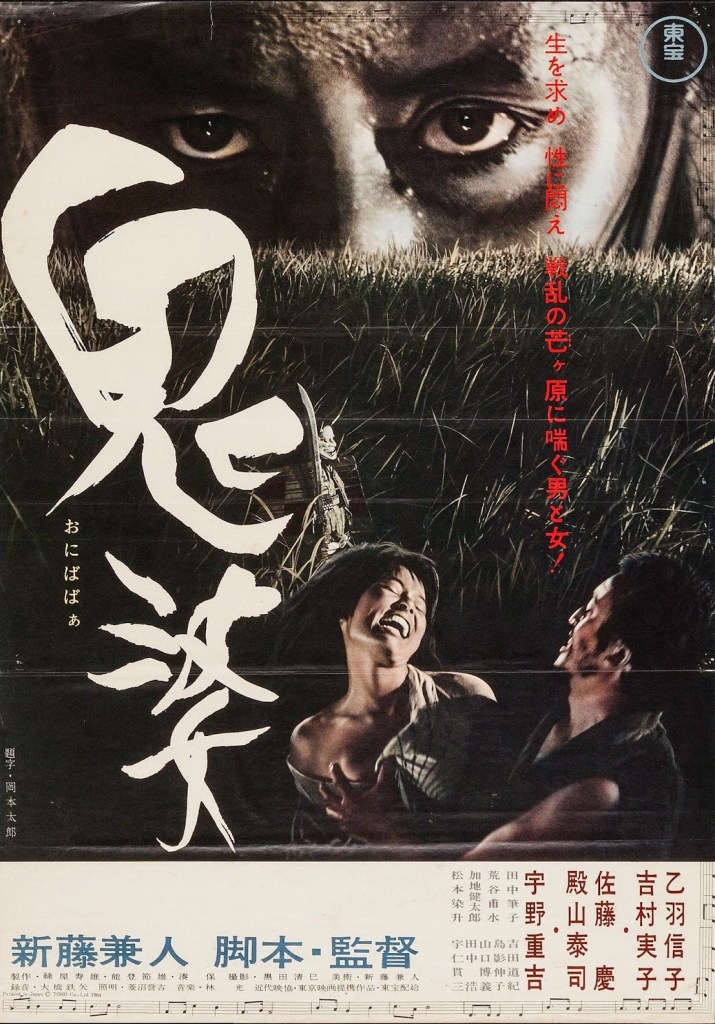
Sadao Nakajima joined Toei in 1959 and worked for the studio throughout its golden age, mostly associated with jidaigeki and gangster movies which were Toei’s stock in trade well into the 1970s and perhaps beyond. Now in his 80s, Nakajima’s last narrative feature was released over 20 years ago. A kind of last hurrah, Love’s Twisting Path (多十郎殉愛記, Tajuro Junai-ki) is a willing throwback to the glory days of chanbara, even bearing a dedication title card to genre giant Daisuke Ito, and doing its best to resurrect the classic Toei programmer magic. 

Appropriately enough, the action takes place at a moment of intense change. As the film opens, the men of Choshu who have left their clan to foster their own brand of revolution in opposing the shogunate in favour of the emperor and a desire to reject Western influence, are hiding out in a shack while bad mouthing soon-to-be-allies Satsuma and the man who seeks to unite them, Sakamoto Ryoma. They are soon discovered by Kyoto’s elite Shogunate police, the Mimawarigumi, and ambushed. Their leader, the famed Katsura Kogoro (Masatoshi Nagase), signals that times have indeed changed by pulling out a pistol and defending himself at distance. 

Meanwhile, Choshu fugitive in hiding Tajuro (Kengo Kora) is trying to make ends meet with his painting, designing patterns for ladies kimonos but seemingly with little success. He has the sunken cheeks, vacant eyes, and slight slowness of someone who drinks too much and hasn’t had a decent meal in a very long time. We learn that he left Choshu with the others on the pretext of revolution, but his real purpose was escape from a restrictive samurai existence and most pertinently from his miserable poverty. Having long since given up the idea of a being a samurai, he’s already sold his sword and is attempting to live under the radar, unaware that similarly troubled bar hostess Otoyo (Mikako Tabe) has fallen in love with him. Otoyo was adopted by the bar’s owner, Omitsu (Yuriko Mishima), a former geisha, who intended to sell her to a geisha house. She eloped with a man she loved instead, but it turned out that he was minded to sell her too so she came back and now runs the bar while taking care of the ageing Omitsu. 

The crisis occurs when men of Choshu arrive in search of Tajuro in the hope that he will rejoin their cause. He doesn’t want to, showing off his samurai skills (and neatly disguising the fact that he has no blade through advanced technique) but pointedly asking for a hefty payment from his former mentor Sanzaemon (Asahi Kurizuka) in belief that it would not be paid. Sanzaemon, however, comes through and leaves a message for Tajuro to meet him behind a nearby shrine. He however spends the entirety of his money getting blind drunk in Otoyo’s bar, during which time Sanzaemon is caught by the Mimawarigumi, breathing his last words to Tajuro’s younger half-brother Kazuma (Ryo Kimura) to the effect that he must reunite with Tajuro and fight for the good of the country. 

On the run and holed up with a patient priest and his beloved wife, Tajuro is asked why it is he’s decided to pick up his sword once again despite his reluctance. Asked if was for country or for money Tajuro shakes his head, leaving the priest to correctly guess that it was for love. Tajuro has fallen in love with Otoyo, the only person who either doesn’t believe he is a failed samurai and drunken fool, or doesn’t care. The world however is still too chaotic for romance, and so their pure love will have to wait. 

Tajuro’s fate is in many ways the direct result of his attempt reject his responsibility as a samurai, daring to live as a common man with all of the freedoms and burdens that entails. The force which constrains him in both worlds is poverty. Whatever else he is, he is too poor for love, unable to feed himself let alone a wife either as a low wage samurai or a ronin. The price he pays is in his desire to cross borders. The samurai world is not done with him yet and while the denizens of this small backwater worry about paying their rent paying little mind to what’s going on in the capital, political intrigue is not something that he can go on ignoring. After all, not picking a side is in a sense also picking a side. The Mimawarigumi pride themselves on not being as savage as the Shinsengumi (which largely consists of ronin, lower ranked samurai, and commoners whereas the Mimawarigumi are elite samurai and direct retainers to the Shogunate), but their job is still to bring in fugitive rebels like Tajuro and his bid for “freedom” may be doomed to failure in a world still constrained by the law of the samurai. 


Original trailer (no subtitles)

Inn of the Floating Weeds (浮草の宿, Seijun Suzuki, 1957)

Another of Nikkatsu’s crime inflected pop song movies, Inn of the Floating Weeds (浮草の宿, Ukigusa no Yado) makes space for the singer of the song which gives the film its name, Hachiro Kasuga, but only in a minor role as a supportive friend. Directed by Seijun Suzuki under his birth name Seitaro (he’d change it to Seijun for Underworld Beauty the following year), the film is in some ways typical of his early work as a B-movie director at the studio but nevertheless displays flashes of his later brilliance in its unconventional composition and wistful sense of irony. 

Company man Shunji (Hideaki Nitani) gets into a fight during which Shida, a high ranking executive at Marubishi construction, is stabbed to death. Shunji is kicked into the water and left for dead, while his fiancée, Kozue (Hisano Yamaoka), pines for him at a nearby bar. Five years later Shunji resurfaces hoping to reunite with Kozue after having fled to Hong Kong and taken a job at a shipping company. At the bar, however, he discovers a woman that looks exactly like his lost love but turns out to be her younger sister, Mio (also played by Hisano Yamaoka), the bar’s madam and apparently the mistress of Murayama (Toru Abe), the current head of Marubishi. 

Shunji’s survival and subsequent reappearance is inconvenient for everyone so it’s no surprise that Murayama wants to have him bumped off, but Shunji is determined to stay and find out what’s happened to Kozue who, according to her sister, went missing in suspicious circumstances three years earlier while desperately searching for Shunji. 

Haunted by memories of lost love, Shunji finds himself drawn to the mysterious Mio who closely resembles her sister, while pulled towards a nexus of criminal activity unwittingly positioned between Murayama’s Marubishi and the avaricious interests of his American colleagues operating out of Hong Kong. Indeed, Shunji has himself it seems taken on an alternate identity as Hong Konger Kang Ho-chun, interpreter to the mysterious Mr. Green (Harold Conway). Perhaps still naive, Shunji appears to be unaware of his boss’ shadiness, warned off by good Samaritan Haruo (Hachiro Kasuga) who rescues him after he’s beaten up by Marubishi goons and allows him to rest in his apartment where he’s nursed back to health by his cheerful kid sister Yuri (Ikuko Kimuro). 

The strange goings on on the Saganmaru perhaps testify to an ambivalence with Japan’s new globalising presence which echoes through Nikkatsu’s “borderless” action dramas. Mr. Green is certainly not on the level, later revealed to be involved with drug smuggling through Marubishi and employing a large number of Chinese stewards (he operates out of Hong Kong after all) which plays into a sense of Sinophobia common across the series. The major problem, however, is Murayama whom Shunji later learns tried to assault Kozue after he left and may be connected with her disappearance. Perhaps trying to warn him off, Mio fires back at Shunji that this all his own fault, that Kozue couldn’t live with the knowledge he was a murderer and in the end he broke her heart, while he meekly protests his innocence and vows revenge on Murayama.

Meanwhile, he’s pulled back towards innocence by Haruo and his relentlessly cheerful sister who has obviously taken a liking to him. Mio, echoing the femme fatale, remains enigmatic, concealing key information about her sister, later confessing that she too has been desperate for vengeance but fears that Murayama has grown too powerful. Haruo, singing the mournful song about past regrets and lost love, observes from the sidelines trying to decide if Shunji is rotten inside or merely in danger of being swallowed by a vortex of crime and violence. 

Yet, as it so often is, the gangster world is in danger of collapse, destroying itself through internecine power struggles and petty betrayals. Murayama thinks he’s the top dog but there’s always someone agitating from below. Shunji, didn’t kill Shida, and maybe he’s close enough to finding out who did, clearing his name while figuring out what happened to Kozue, but in someways it hardly matters because the true battle is for the future, not the past. Like the singer of the song, he reflects on what a fool he’s been, resolving to put the past aside as he walks towards a less complicated future and an eventual return to a compassionate and forgiving society.


Title song by Hachiro Kasuga

The Sound of Waves (潮騒, Kenjiro Morinaga, 1964)

Still a major marquee name well into her 70s, Sayuri Yoshinaga began her career as one of Nikkatsu’s young starlets in the early 1960s. Based on the well known novel by Yukio Mishima, The Sound of Waves (潮騒, Shiosai) finds her starring alongside regular co-star Mitsuo Hamada in another tale of love across the class divide. Usually, such forbidden love would be fodder for romantic tragedy, but Sound of the Waves is a cheerful exploration of tranquil island life where the people are simple and honest and the good will always triumph. 

Shinji (Mitsuo Hamada) is indeed good. Though still only a teenager, he’s become the man of the house following his father’s death, working hard as a fisherman to support his family and saving most of his salary to pay for his little brother’s education. The trouble starts when the beautiful Hatsue (Sayuri Yoshinaga) who had been living as a pearl diver on another island is called back to live with her father, island big man Terukichi (Kenjiro Ishiyama), after her brother dies. There have long been rumours that, as what Terukichi wants is a son to take over his business, he will soon be marrying Hatsue off and probably to the slick and handsome Yasuo (Daizaburo Hirata) who seems to be his favoured choice of son-in-law. 

When Shinji lays eyes on Hatsue helping out with the boats it’s love at first sight, and even more so when he foolishly drops his pay packet while delivering a fish to an elderly couple and Hatsue takes the trouble of finding out where he lives and delivering it to his mother safely. Though everyone in Shinji’s household is quite taken with the beautiful, kind, and responsible newcomer, they are also aware that she is far out of Shinji’s reach. Terukichi is mean and arrogant, there’s no way he’d let his daughter marry a regular fisherman, and Shinji knows he can’t compete with an eligible young man like Yasuo. Hatsue, however, seems to like him too, especially after she gets bitten by a snake and his quick thinking, immediately sucking out the poison, probably saves her life. 

This being an innocent story of pure love, the couple have the opportunity to consummate their relationship after stripping off during a rainstorm but collectively decide to wait for marriage. That doesn’t stop the rumours starting, however, when they are spotted in the forest by Chiyoko (Kayo Matsuo), a young woman sweet on Shinji who’d gone away to study at university in Tokyo. She tells Yasuo who is immediately threatened, not only feeling unjustly betrayed, but acutely aware that the bright future he’d been so proudly boosting of as Terukichi’s future son-in-law might be in jeopardy. 

Where Shinji is kind and responsible, working hard to look after his family and always supporting the other villagers, Yasuo is, like Terukichi, arrogant and self-centred. He’s perfectly aware that he’s the island’s most eligible bachelor and makes a point of swaggering around like a little prince in waiting. Perhaps for that reason he’s also a snivelling coward and intensely insecure, angrily confronting Hatsue and even attempting to rape her while she collects water at the local spring. She manages to fend him off when he’s stung by hornets coming to her defence, and all he can do is plead with her not to tell her father so he won’t mess up his bright future any further. 

Hatsue seems not to have very much say in her future, romantic or otherwise. Having heard the rumours, Terukichi keeps her prisoner in her own home, insisting that she will marry his choice of son-in-law. The islanders, however, who seem to have grown used to ignoring Terukichi as much as it is possible to do so, are fully behind the youngsters’ romance. After all, what could be more natural than two young people falling in love? Eventually the island women launch a small petition to Terukichi to convince him to end his pettiness, but the contest, it seems, comes down to a test of manliness, Terukichi embarking on a young people today speech in complaining that his boat’s come loose in a storm but no one is man enough to retrieve it. Yasuo is found wanting once again, shrinking back from real risk while Shinji puts himself in harm’s way not only to prove himself a man and win Terukichi’s approval, but simply to serve the community. Manliness is redefined not only as strength and bravery, but kindness and patience too. Shinji’s goodness is indeed rewarded allowing him to dream of a brighter future, building a life for himself alongside a woman who loves him on their idyllic island home. 


Original trailer (no subtitles)

The Tattered Wings (遠い雲, Keisuke Kinoshita, 1955)

“Why can’t a woman have the freedom to pursue her own happiness?” wails an extremely conflicted woman in Keisuke Kinoshita’s The Tattered Wings (遠い雲, Tooi Kumo), though it appears she may have completely misinterpreted the desires of the woman she is speaking to. By 1955, provincial Japan had perhaps returned to a kind of peaceful normality but times were changing here too, just in ways that seem slightly unexpected. In this case, the problem is not curtain twitching grannies keen to enforce the social order, but a pair of young punks hoping to stir up trouble through malicious gossip for motives which are entirely unclear save resentment and desire to rebel against their own lack of prospects in an otherwise rigid society. 

All the trouble starts when brooding intellectual Keizo (Takahiro Tamura) returns from Tokyo for a 10 day visit with his family before taking up a job transfer to Hokkaido after which he claims he will not be able to see them for several years. Before he left, Keizo had been sweet on Fuyuko (Hideko Takamine), but she eventually consented to an arranged marriage to support her parents’ failing business and is now a widow with a small daughter. Though the marriage was abusive, since her husband’s death Fuyuko has been happy in her married home, spending time with her husband’s sensitive younger brother Shunsuke (Keiji Sada) and there is some talk that they may later marry. 

Though this kind of quasi-incestuous union of a widow and her brother-in-law may have fuelled countless other melodramas, it is not the problem here so much as its potential solution. After running into him by chance at her husband’s grave, a strange place to reencounter an old lover, Fuyuko is seen in several places around the town walking and talking with Keizo. There is nothing more to their relationship than that, a man and a woman talking at a respectful distance in public, but the young toughs at the station who always carried a torch for the beautiful Fuyuko decide to start a nasty rumour that there is something improper going on. 

In real terms, of course, there isn’t, but there is a kind of silent pull between Keizo and the lonely Fuyuko that is much more difficult and ambiguous than one might expect it to be. Keizo clearly wants to pick up where they left off, but is intense and awkward, motivated to urgency by the briefness of his stay. He forgets that he’s been gone a long time and Fuyuko is no longer the carefree 19-year-old she was when he left, but the mother of a young girl who claims that she has long since lost the ability to dream. Brutalised by her abusive husband, she is unwilling to stake her hopes on new romance and is wary of becoming a middle-aged woman chasing a return to the past in embracing an idealised first love in flight from its complicated reality. She accuses Keizo of trying to project his own dream of the past onto her, wanting to return to the possibilities of his youth rather than really in love with a woman he now barely knows. 

Meanwhile, Fuyuko is pulled in two directions by her respective families. Her older sister is embittered, resentful of their mother who refused her permission to marry a man she loved because he wasn’t wealthy and they wanted a son to marry in, while her younger sister has herself long carried a torch for Keizo and is acting more out of jealousy than genuine concern. Faced with crisis, the families of both Fuyuko and Keizo affirm that they don’t care what anyone might say about it so long as their children are happy, but the problem is that Fuyuko no longer knows what she wants. Keizo accuses her of tearing off her wings rather than using them to fly, but perhaps what she wanted all along wasn’t an excuse to leave but one to stay. Maybe what she wants isn’t actually what everyone expects it to be, and the permission she’s trying to give herself is the right to be comfortable with a slow and steady kind of love at the side of a patient and compassionate sort of man who’d be content to let her choose and know he’d been her choice. Fuyuko’s wings may be tattered, but she is in a sense pursuing her own happiness in choosing the present over an unrealistic dream of adolescent romance.


Opening and titles (no subtitles)