The Villagers (동네사람들, Im Jin-soon, 2018)

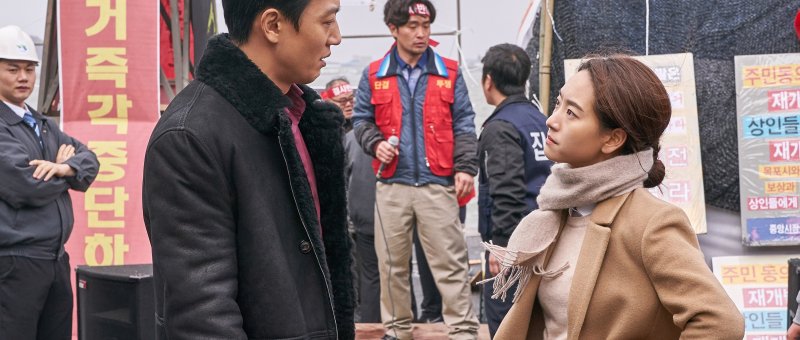
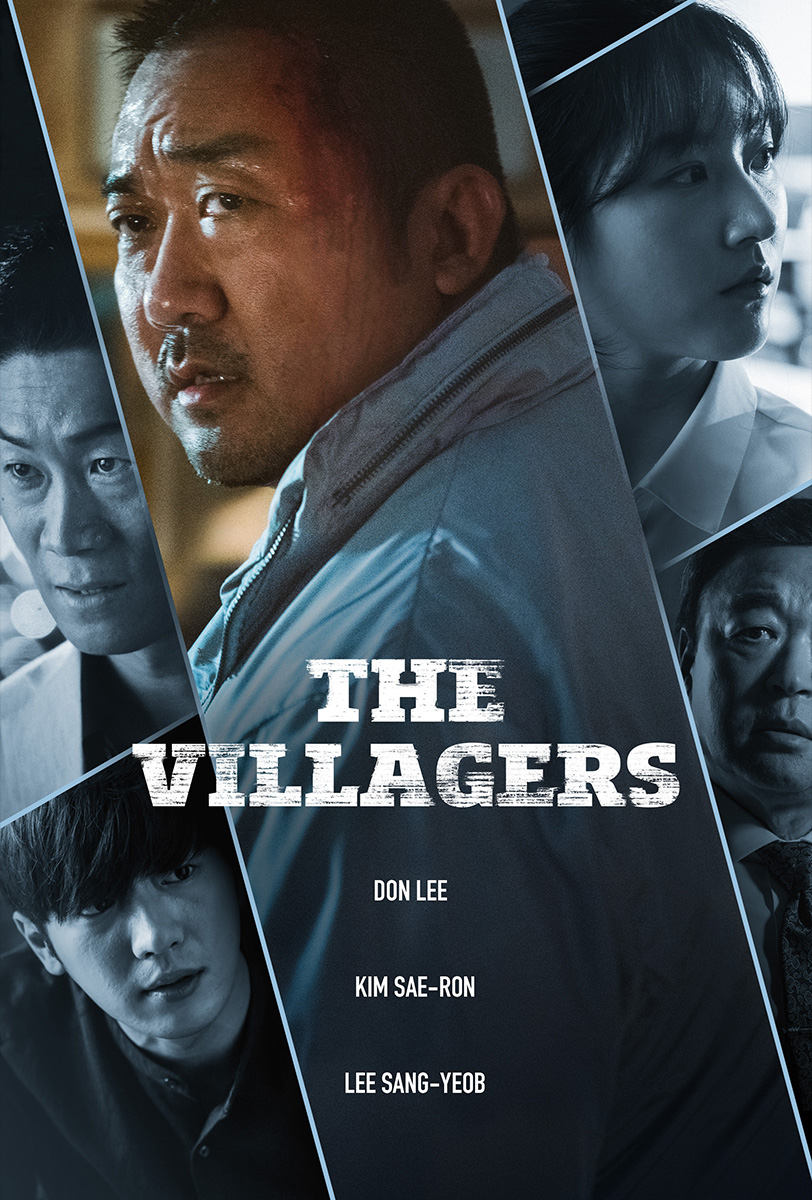
Trying to make a fresh start after being fired as a boxing coach in Seoul for challenging match fixing practices, a rookie teacher finds himself embroiled in small-town conspiracy in Im Jin-soon’s Ma Dong-seok vehicle, The Villagers (동네사람들, Dongnesaramdeul, AKA Ordinary People). Unlike the big bad city, this rural backwater is mired in feudalism and corruption as if it were stuck in the authoritarian past in which everyone keeps their head down and minds their own business rather than challenging injustice or trying to improve the lives of those around them.

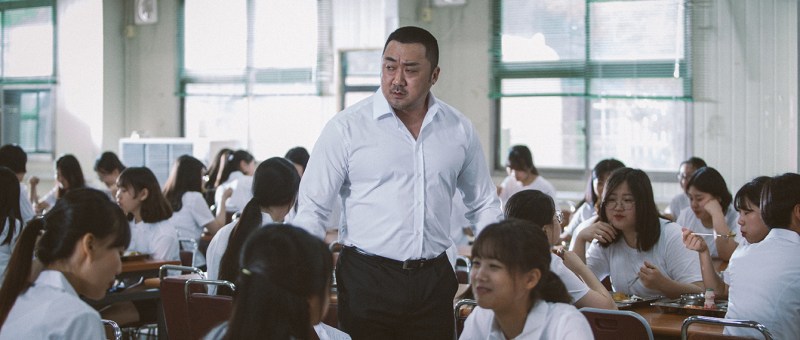
What Ki-chul (Ma Dong-seok) and high schooler Yu-jin (Kim Sae-ron) have in common is that they’re both outsiders. Yu-jin transferred to the high school from Seoul and has been branded a troublemaker by the judgmental teachers. But despite the school’s seeming authoritarianism, the pupils have little respect for the school system and openly flout the rules by smoking on school premises and being rude to the staff. It transpires that Ki-chul has basically been hired as a kind of muscle, charged with getting students who haven’t paid their fees or dinner money to cough up ahead of an upcoming audit of the school’s finances. Many of the students he approaches brush him off as if they simply don’t intent to pay, but the school doesn’t seem to be interested in finding out why they might not be able to or if there are problems at home. Yu-jin too rolls her eyes he asks her, but in her case she’s unwilling to finance an institution that’s not doing anything for her even if as Ki-chul advises her they won’t let her graduate if she doesn’t.

Ki-chul seems uncomfortable with his new role and tries to do what he can to help, but encounters resistance from the teachers who tell him there’s no point worrying about kids like these. If they skip school, they’re branded runaways and no attempt is made to look for them. The teaching staff lowkey threaten Ki-chul by reminding him his job’s to get the money and he doesn’t want to make trouble for himself when he was lucky to be employed here in the first place. And so he finds himself conflicted when he spots Yu-jin in town getting herself into dangerous situations trying to find out what’s happened to her friend Su-yeon (Shin Se-hwi) who’s been missing for days but the police won’t seem to do anything. Yu-jin tells him that adults can’t be trusted, especially not the police, but he thinks it’s teenage alienation before trying to report the case again himself through a friend on the force and having it rejected.

The fierce resistance to even mentioning Su-yeon ought to tip them off that’s something bigger’s going on, but everyone is focussed on the upcoming election in which the headmaster of the school is standing for governor that nothing’s getting done at all. Ki-chul tries to report another teacher for harmful behaviour towards students, but is yelled at for exposing the school’s business by going to the police “over some runaway”. He’s reminded to keep his head down and mind his own business, even while Yu-jin continues to be in danger and Su-yeon is still missing. An orphan whose parents had massive debts to loansharks, Su-yeon was forced to work in a bar to support herself and her grandmother. She dreamed of being beautiful and free as an adult, but was badly let down by many of those around her including the school who decided that girls like her weren’t worth helping.

Of course, Ki-chul can’t help standing up for justice through the medium of his fists and smashing his way to the truth while trying to keep Yu-jin safe. If someone disappeared Su-yeon, they won’t think twice about doing the same to Yu-jin, though she of course thinks she’s invincible and is too young to think sensibly about her own safety while desperate to find out what’s happened to her friend. They are both, however, trapped by the legacy of an authoritarian era in which the police works only for the powerful and dirty local politics taints everything around it as everyone desperately tries to ingratiate themselves with the new regime while avoiding stepping out of line and endangering themselves. Ki-chul, however, has not much interest in that and is determined to smack some sense into gangsters and law enforcement alike in an effort to show that the world doesn’t necessarily need to be this way if only more people were willing to stand up to cronyism and exploitation.


The Villagers is released Digitally in the US Oct. 7 courtesy of Well Go USA.

Trailer (English subtitles)

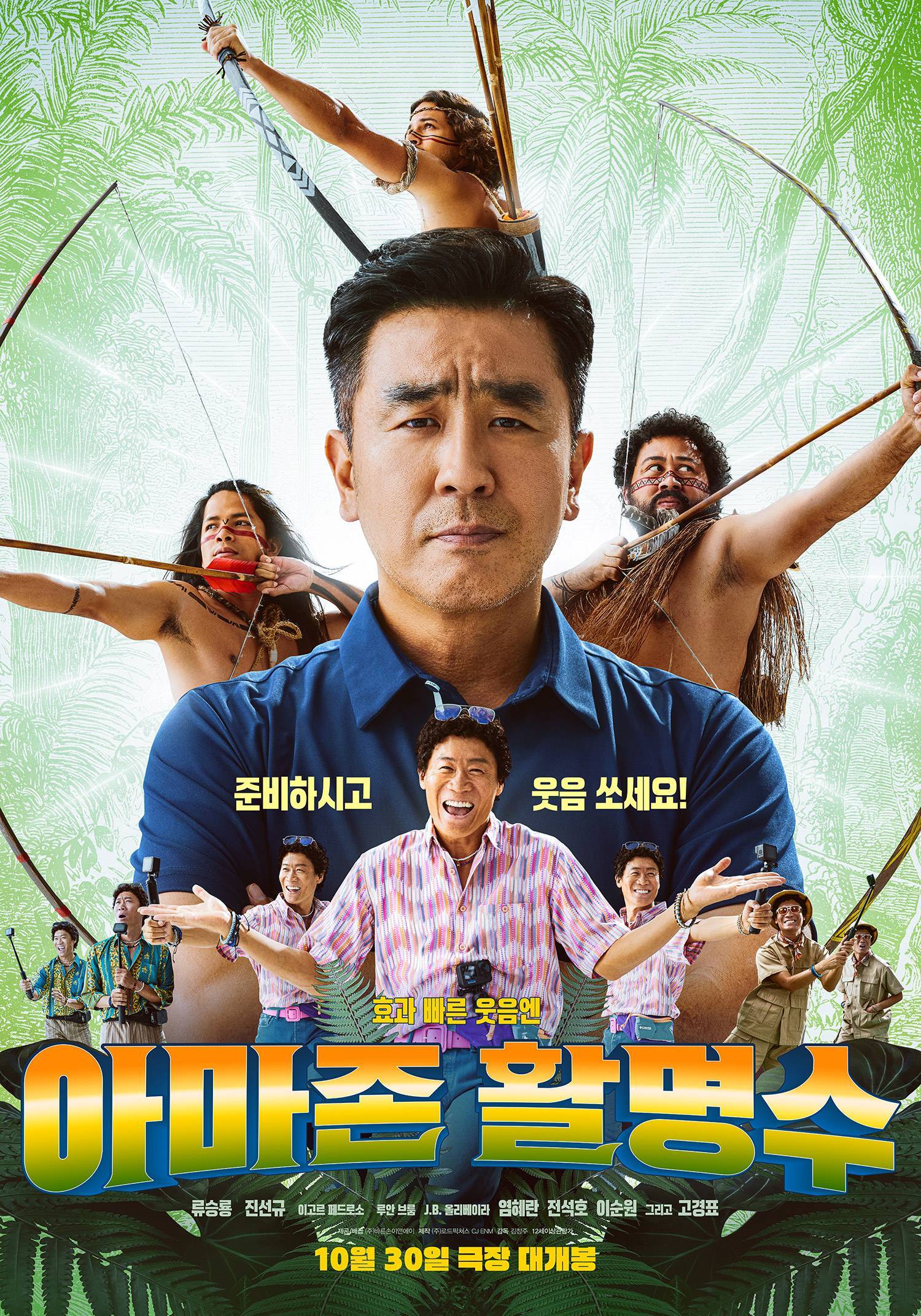
Amazon Bullseye (아마존 활명수, Kim Chang-ju, 2024)

A harried Korean executive finds common ground with a trio of men from an Amazonian indigenous community while training them to win a medal in an international archery competition in Kim Chang-ju’s genial comedy, Amazon Bullseye (아마존 활명수, Amazon Hwalmyeongsu). Though mostly avoiding the obvious pitfalls of its subject matter and taking extreme care to be respectful to the indigenous people of the Amazon, it has to be said that the film otherwise has some rather outdated humour. Nevertheless, it does have some secondary points to make about exploitative businesses practices in Korea and abroad along with the destruction of natural world that goes hand in hand with capitalist expansion.

Jin-bong (Ryu Seung-ryong) once won a gold medal for archery, but is now a middle-aged office worker whose career is on the skids. After chewing him out for failing to make any significant deals, his boss, Park (Jeon Seok-ho), has a new proposition for him. He wants Jin-bong to go to the Amazonian nation of Boledor and close a deal to allow them to open a gold mine or else face compulsory redundancy. He’s supposed to do this by coaching their national archery team to win a medal in the upcoming championships. Unfortunately, the helicopter he’s travelling on is struck by lightning and he’s marooned in the jungle only to be rescued by an indigenous community who then conclude he’s an emissary from the Boledor authorities and has come to destroy the village in which case he must die. 

But Jin-bong finds unexpected connection with Walbu (J.B. Oliveira) who is also a father of three children and is later welcomed after saving his daughter from a wolf attack. As the young men communicate with the animal and try to convince it to return to the forest, it becomes obvious that they have a respect for the land that an urban man like Jin-bong does not. Unbeknownst to him, they have already refused permission to open the goldmine and are fiercely opposed to any encroachment on their land or traditional way of life. After seeing just how bad the national team is, Jin-bong has the idea of asking the men from the indigenous community to compete instead but is only able to persuade them by convincing the president to legally sign the land over so it can’t ever be redeveloped and they’ll never be moved on. 

Of course, that wasn’t quite what his boss had in mind so even though Jin-bong is protective of the Tagauri, it’s clear his company always meant to exploit them and doesn’t care about the environment or the preservation of traditional culture. Jin-bong too is oppressed by this system and only participates in the first place because he fears losing his job not least because it’s so unlikely he’d be able to find another at his age. Jin-bong has three children and a feisty wife (Yeom Hye-ran ) who complains that she’s already had to sell some of their possessions because they can’t afford all the bills on their poky flat. He may then envy the apparent simplicity of life in the forest. On returning home the three men remark on how silly everyone is in Korea suffering all month long for something called “money” they use to buy tasteless “dead meat” rather than going into the forest and getting some like a normal person. But they also point out that they aren’t really all that different seeing as people still love their children and fathers work hard to support and protect them. 

Nevertheless, there are perhaps a few too many jokes about Jin-bong’s “scary” nagging wife and his position as a henpecked husband. It may also go too far in exploring cultural difference as the trio is arrested for doing things like carrying their bows and arrows around and using them to shoot fish in the river that runs through the middle of Seoul. They also start a campfire in Jin-bong’s apartment to make a traditional smoked chicken dish and are confused by Jin-bong’s reaction to this well-meaning attempt to share their culture with him. While they’re in Korea, they start to become a little more Korean with chieftain’s son Eba (Luan Brum) even developing an appreciation for super spicy kimchi. But they also observe the high rise buildings and constant construction as echoes of the fate that may soon befall the village if the Bolderan government and Jin-bong’s company get their way. Through their sporting pursuit, the men discover a way to take back control, tell the world about the Tagauri, and mobilise public opinion against the faceless corporation to ensure that they can protect their land and way of life from the ravages of chaebol culture.


Trailer (Korean subtitles only)

Alienoid: Return to the Future (외계+인 2부, Choi Dong-hoon, 2024)

Choi Dong-hoon’s hugely entertaining sci-fi-inflected fantasy adventure Alienoid ended with a classic cliffhanger promising resolution only in an as then unscheduled sequel. Part two arrives almost two years later and thankfully opens with a brief recap before delving straight into the ongoing drama as the older Ean pursues the Divine Blade that will allow her to stop humanity from being wiped out in a toxic gas attack by fugitive aliens.

Thus the majority of the first half takes place in the 14th century past as various parties vie over the blade in the manner of a wuxia serial. Ean is also on a quest to recover Thunder and get back to the crashed spaceship in order to get back to the future and stop the world being destroyed. But in some ways, she’s also now an orphan of time. She’s spent half her life back in the feudal era and will return to 2022 ten years older than she should be. Reuniting with Muruk (Ryu Jun-yeol), she finally figures out his identity and is more well disposed towards him, but also decides it would be better for them to head in different directions given the possibility that Muruk is a possible host for the missing Controller, the leader of a resistance movement among the alien criminals who have been imprisoned in the minds of humanity. 

Once again, the key to salvation lies in the past as we discover that Gae-lin (Lee Hanee) is a descendent of a blind swordsman who left very specific instructions for what to do during the alien attack. Ultimately, the aliens can only be defeated by a perfect integration of past and present as the Joseon team end up in 2002 complete with their magical weapons to fight a decidedly scientific threat. Though it’s true enough that the lines between science and magic are often thin and defined by a perspective on knowledge, it’s clear that Joseon magic continues to work in our world as the two bumbling shamans fight back with minor and pipe and Muruk pulls an incredibly heavy sword out his fan. 

Ean tells him that no matter if he may have a monster inside, Muruk is still Muruk guiding him on his journey towards an acceptance of himself as someone useful with genuine talent rather than just a hack. Choi throws in a series of twists and turns over who may be hosting the Controller at any given moment along with the true identities of several others as Ean attempts to handle her own baggage while tracking down Thunder and attempting to restore his energy levels so they can get back to the future and save the world. In order to defeat the aliens, they must all be united, past and future, coming together to defeat an alien threat.

Yet like the first film, we can see that this moment is both ending and beginning. Following a surprisingly poignant closing sequence the possibility of a new opportunity to set the past to rights is raised if on a more personal level that would allow orphans Ean and Muruk to unite in new time thereby closing a circle which otherwise remains open. In any case, the looping, elliptical quality of the cycling narrative eventually becomes clear and we understand where each of these disparate heroes belongs in the grand plan apparently orchestrated by Thunder and the now absent Guard. That’s not to say the rich lore underpinning the intricate world building is completely exposed and there is a sense that there are many other stories to be told in this madcap universe of scientists and magicians in the high tech present and feudal past.

In any case, Choi ups the ante with large scale sequences including a train chase that culminates in a derailment, while in the Joseon era the heroes leap from rooftop to rooftop and run through idyllic forests while pursued by mystical forces. Every bit as charming as the first instalment, the film builds on the existing relationships between its vast list of characters and generates a sense of warmth and familiarity that also has its melancholy as er really these two worlds cannot remain bridged forever but must eventually separate whether the alien threat prevails or not.


Alienoid: Return to the Future is out now on DVD & blu-ray courtesy of Well Go USA.

International trailer (English subtitles)
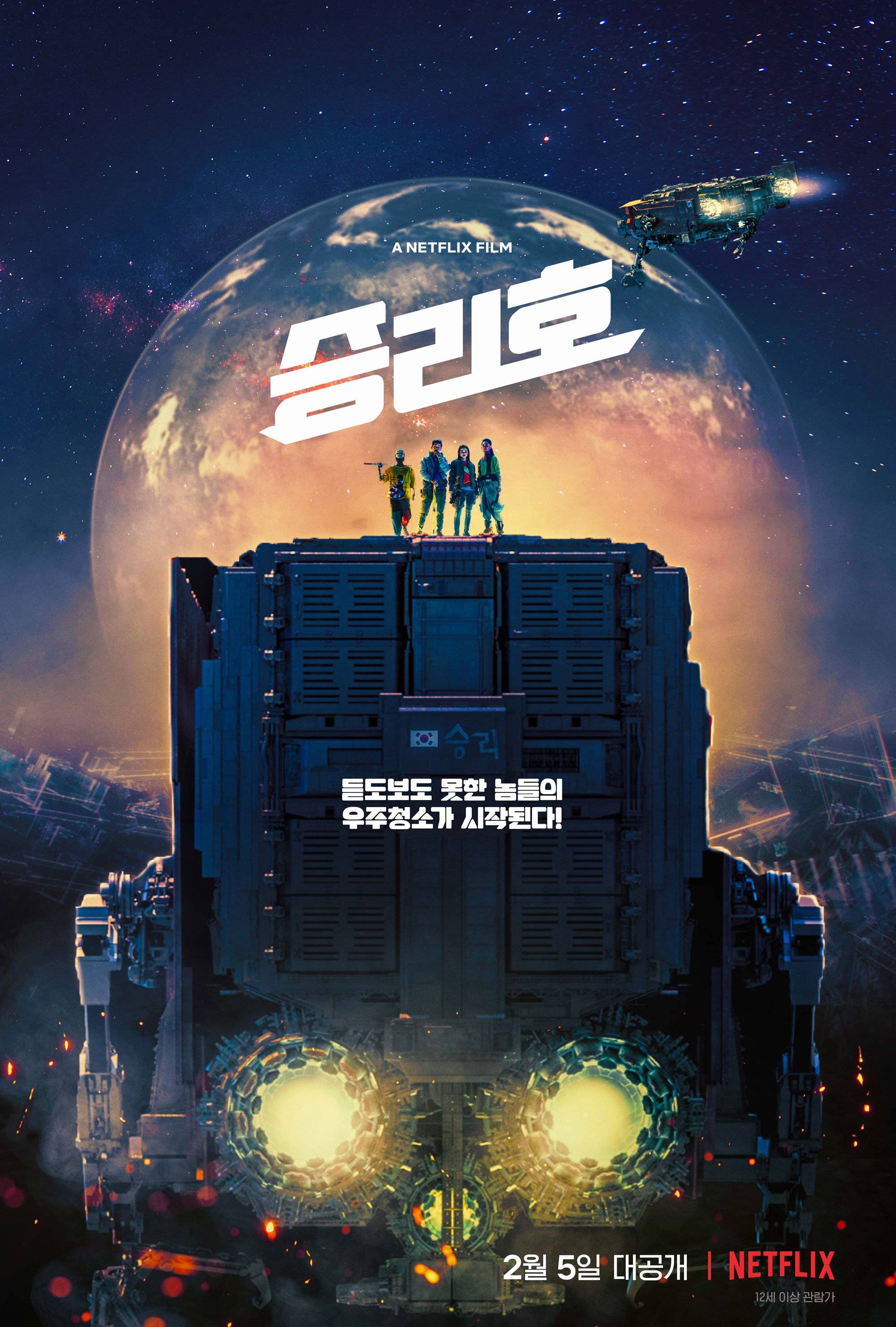
Space Sweepers (승리호, Jo Sung-hee, 2021)

If we’re content to ruin one world, why do we assume our salvation lies on another? Billed as Korea’s first blockbuster science-fiction extravaganza, Space Sweepers (승리호, Seungriho) finds a ragtag gang of junkers quite literally cleaning up humanity’s mess while ironically marginalised into outer space by internecine capitalist consumerism which in insult to injury offers to sell you a cure for the disease it has caused but only to those whom it deems worthy of its dubious promises. 

By 2092, the Earth has become all but uninhabitable. Led by 1952-year-old messianic scientist Sullivan, UTS Corporation has prepared a new artificial orbiting home but only the elite are invited while the remaining 95% linger on the poisoned ground below or else, like the crew of the Victory, wander in space attempting to make a living from clearing the debris left behind after countless sattelltes and space station launches. Yet as jaded space sweeper Tae-ho (Song Joong-ki) remarks, the more you work the more debt you earn. The Victory is a well equipped ship and you’d think that would mean greater earning potential but all it means is that it costs more to maintain while the initial outlay has landed them with unsustainable debt not to mention constant random fines and official interference. All of which is why when they find a little girl hidden in a storage compartment of an abandoned vessel and realise she’s the missing android that’s all over the news, they decide to play off the Black Foxes “terrorist” organisation who kidnapped her and UTC who want her back for all they can get. 

As might be expected for all his claims that “humanity is dirty” in its failure to protect the planet, Sullivan is no pure hearted saviour but an amoral elitist intent on terraforming Mars as some kind of authoritarian “utopia” populated only the “best” of humanity. He claims not to care about money, but cites the false equivalency that those with the deepest pockets must necessarily be those with the greatest capability while privately describing those left below as expendable and not really worth saving. Dressed like a cult leader, even at one point appearing as a giant hologram, Sullivan’s appearance owes a significant visual debt to Neon Genesis Evangelion’s Gendo Ikari, leaving little doubt as to his megalomaniacal intensions as he wilfully sells a solution to a problem he himself helped to cause while continuing to exploit the Earth and the people still on it to hasten its demise and his own enrichment. 

While the central message reinforces the idea that large corporations are not to be trusted while the capitalistic system they uphold is inherently destructive, it also perhaps undercuts that of the impending environmental crisis with which we are faced if we can’t mend our ways fast enough. Even so, it falls to the space sweepers to mount a unified global resistance against the wilful destruction of their homeland in protecting the android, Dorothy / Kot-nim (Park Ye-rin), who of course holds the key to saving the world. Despite having taken in her in with a view to ransoming her, the crew soon bond with the adorable little girl as unofficial daughter while Tae-ho alone remains reluctant in grief over child for whom he continually searches while internalising a sense of resentful failure in the knowledge that he lost her because of his own self-absorbed sense of hopelessness. 

Even so, there may be something a little uncomfortable in the final resolution in which the crew coalesces into a recognisable family unit each of them somehow “improved” as they accept their responsibility for Kot-nim whether in giving up drinking or erasing tattoos. Nevertheless, the film is refreshingly progressive in its depiction of a transgender character who gains the confidence to be their authentic self thanks to the unconditional solidarity among the crew members, though the sudden reversal of UTS from cult-like evil corporate entity to remorseful force for good seems rather optimistic as if the only problem was Sullivan and not the system that gave rise to him.  While the overall aesthetic may be somewhat televisual, Space Sweepers does feature some interesting production design and impressive CGI though its greatest strength lies in the jaded idealism of its space bandit protagonists as they band together to resist their marginalisation with mutual solidarity and compassion.


Original trailer (English subtitles)

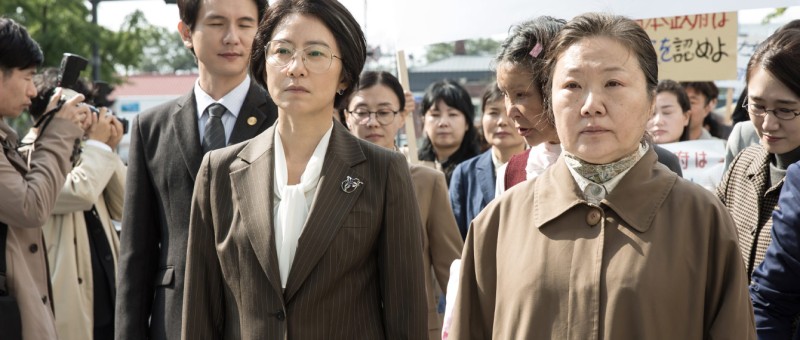
Herstory (허스토리, Min Kyu-dong, 2018)

When Kim Hak-sun held a press conference and offered her testimony as a former comfort woman following a statement in the Japanese Diet in which the government rejected any responsibility for wartime sexual slavery, it brought an issue into the public consciousness that many had been unwilling to reckon with. One of many films focussing on the same subject released in the last few years, Min Kyu-dong’s Herstory (허스토리) dramatises the events of the Shimonoseki Trials which took place between 1992 and 1998 and resulted in the first admission from the Japanese authorities that the basic human rights of women had been breached but nevertheless found it not incumbent on the government to offer a direct apology. 

That the trial takes place in Shimonoseki is itself somewhat symbolic, given that this was the harbour from which boats to Korea and China departed and at which the women who were trafficked to Japan would have arrived. The film begins, however, in Busan where successful travel agent Moon Jung-sook (Kim Hee-ae) has ironically been accused of breaking the prevention of prostitution laws when a Japanese man is found dead after visiting a sex worker and it is revealed one of her employees had been running tours specifically geared towards sex tourism. Struck by Kim Hak-sun’s testimony, the association she leads of female business owners wants to do something to help and seeing as her company has been suspended, Jung-sook sets up a call centre on her premises for other victims of wartime sexual slavery and forced labour to come forward. 

Unlike some of the recent dramas dealing with the same issue, Min focusses on the resistance towards the former comfort women coming from within Korea itself. A taxi driver Jun-sook gets a lift from goes off on a rant describing the women as former sex workers out for a paycheque who should be ashamed of their sordid pasts while in any case all of this happened decades ago so why bring it up now? He is far from alone, even the Mayor describes them as “filthy women” when Jung-sook approaches him for help, and it’s obvious that many find the subject so embarrassing that they simply do not want to discuss it and blame the women for breaking the peace by speaking out. 

It’s also true that in the peculiarities of the political landscape of Korea, conservative elements tend to hold a more favourable view of Japan and the colonial era than might be expected. Economically, there are strong ties and Jung-sook, a fluent Japanese speaker, has close business relationships with Japanese clients which are endangered by her involvement with the comfort women cause. Her friend in the women’s association who runs a traditional-style hotel can be seen warmly greeting Japanese guests, at one point as she expresses her admiration for Kim Hak-sun in Korean to the television as they pass behind her. It’s clear that some would rather not rock the boat because this kind of politicking is often incompatible with running a successful business. 

Jung-sook is minded to buck the trend because she sympathises with the women’s suffering and with their rejection by mainstream society. She has the confidence to do this in part because the wealth she has accrued through business success gives her an unusual amount of power in a male-dominated, capitalistic society. Still she too struggles with contemporary notions of proper womanhood in being accused of neglecting her daughter through her workaholic lifestyle especially as she is considering leaving education claiming that studying isn’t for her. Even so, the women’s association seems to have female solidarity at its heart, collecting money to support single mothers even before taking up the cause and trying to help elderly women who have no remaining family members or means to support themselves. 

As she later comes to realise, the trial has meaning outside of winning and losing in allowing the women to express their trauma and regain some of their dignity. Even so, they are subject to further rejection in Japan, not least from a hotel which asks them to leave because other guests are unwilling to share the space with former sex workers. The Korean-Japanese lawyer also relates having faced racism in his life in Japan because of his Korean ethnicity while his mother’s restaurant is later graffitied because of their support of the case. Right-wing nationalists also hold protests outside the court and in Seoul accusing the women of lying, insisting that they are just “sex workers” as if sex workers weren’t worthy of human consideration anyway. In interpreting the testimony, Jung-sook becomes a kind of everywoman speaking for all women in her emotionally charged translation while inwardly conflicted in realising the toll the process is taking on some of the witnesses who are all in advanced age and often poor health. Min depicts their struggle with as much empathy as possible, avoiding the temptation to demonise while instead presenting a more nuanced perspective focussing on the women themselves and the rejection they continue face even within their own society.


Herstory is available digitally in the USA courtesy of Well Go USA.

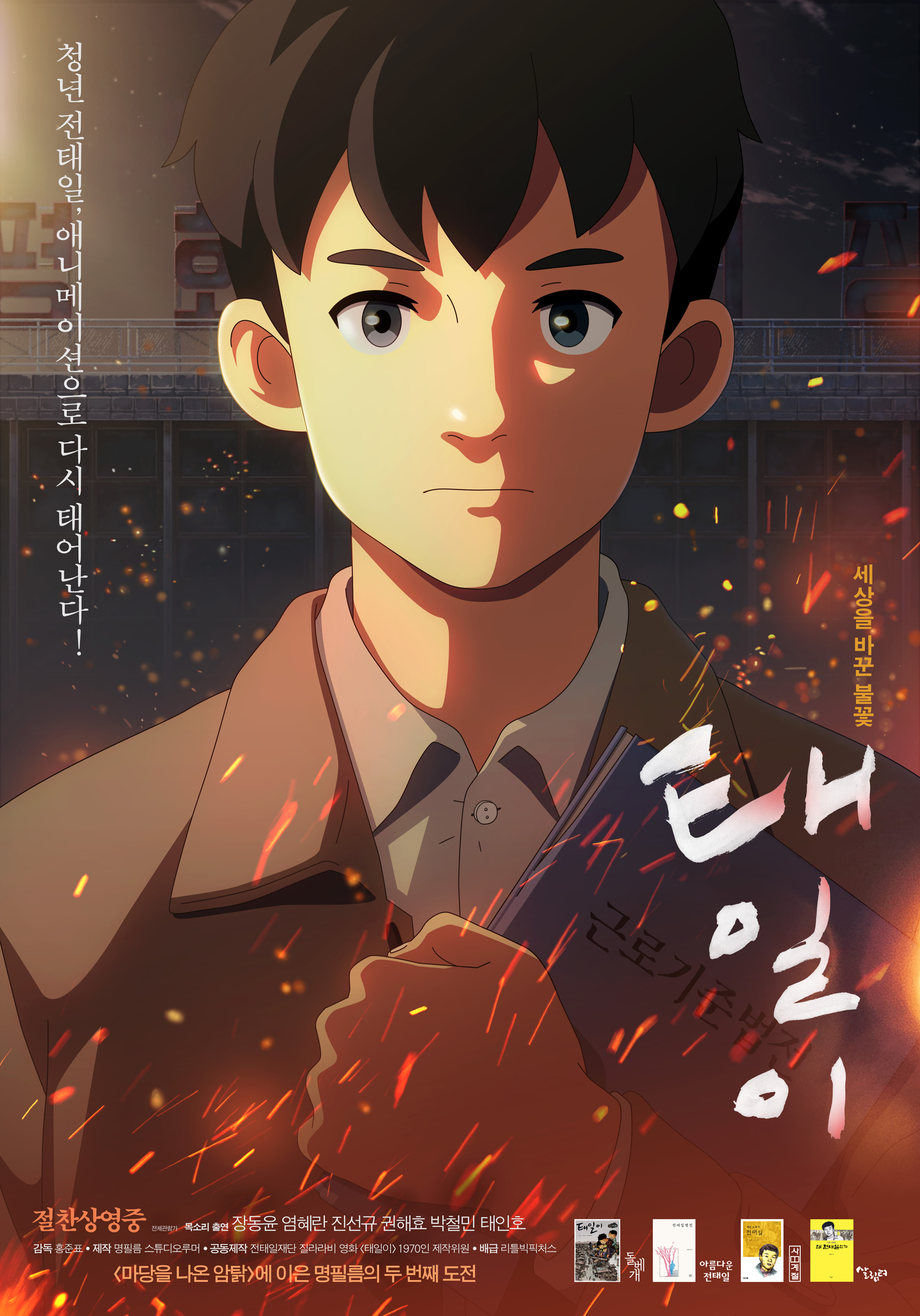
Chun Tae-il: A Flame That Lives On (태일이, Hong Jun-pyo, 2021) [Fantasia 2022]

“We are not machines” became the rallying cry of a nascent workers movement in late 1960s Korea which gained momentum following the suicide by self-immolation of 22-year-old labour activist Chun Tae-il. 25 years on from his death, Park Kwang-su’s A Single Spark examined Chun’s legacy at the intersection of the labour and democracy movements, while Hong Jun-pyo’s animated treatment Chun Tae-il: A Flame That Lives On (태일이, Taeil-i) sees him as an ordinary man radicalised by his own compassion in his desperation to liberate those around him from the hell of poverty and exploitation. 

As such the film opens with a happy family scene of Tae-il (Jang Dong-yoon) playing with his siblings near the river and then joining his mother as they walk home only for the atmosphere to darken when bailiffs arrive to confiscate their sewing machine, the only means they had of supporting themselves. Tae-il’s mother is forced to leave the family to find work in the city, while his father becomes an embittered drunkard who is little help to his children. Forced to give up on education, Tae-il too later travels to the city where he reconnects with his mother and begins seamstressing, eventually agreeing to a small pay cut in order to train as a tailor in the hope of earning more money for his family further down the line. 

A kind and earnest young man, Tae-il first barely notices his exploitation while working hard trying to get a foothold on the employment ladder. He comes in early to sweep the floors and is caught out after curfew having spent his bus fare buying cakes for the children who help out on the shop floor. It’s only when a seamstress, Young-mi, collapses and is found to be suffering from TB caused by the poor conditions at the shop that he begins to question the wisdom of being loyal to his employer especially when he fires Young-mi for being ill and then refuses to pay her medical bills. When a floor manager quits after being accused of embezzlement, Tae-il is technically promoted but actually charged with doing two jobs for only a little more money which he doesn’t actually get because his boss uses the embezzlement as an excuse to cut everyone’s pay packet. 

Tae-il starts to think there should be a law against this sort of thing and is shocked to discover, from his father no less, that there is but its existence has been deliberately kept from him. Whenever he raises the idea of standing up to his exploitation his father urges him not to, to remain complicit and hang on to the job no matter what, but eventually changes his mind and instructs his wife not to stop Tae-il from what he’s trying to do in challenging the existing social order. Even once Tae-il has managed to get through the statute on labour law which is written in difficult legal language and in Chinese characters he would not have learned to read as someone with only a primary school education, Tae-il tries to go to the authorities with evidence that the law is not being followed but they don’t care. They even accuse him of being selfish and unpatriotic in standing in the way of the nation’s drive for economic prosperity while meeting any attempt at worker solidarity with a charge of communism. 

Earlier in the film, Young-mi had placed a plaster over a scratch on her sewing machine treating her means of production with a care and tenderness absent in her relationship with her employer who ironically sees her only as an expendable tool. What Tae-il and his friends are asking for isn’t anything radical, they just want the existing law to be respected along with basic improvements in their working conditions such as better ventilation and lighting to prevent workers falling ill. It’s small wonder that he starts to despair when his goals are so small and yet so impossible. 

In truth Hong’s pains to present Tae-il as an ordinary man sometimes undercut the film’s premise, presenting his working situation as so normalised as to not seem that bad save for when a colleague ominously drops off caffeine pills and energy drinks ahead of a big order, while Tae-il’s mission also appears quite sexist in his frequent assertions of protecting the “poor sisters” who work on the shop floor as if they were incapable of participating in the movement themselves. The association he starts which is admittedly for local tailors is entirely staffed by men with Young-mi invited only to come and watch. Only later does he pass it on to his mother (Yeom Hye-ran) as the guardian of the flame which he has ignited in the hope of a better world. Perhaps in keeping with the film’s family friendly intentions, Tae-il’s martyrdom is presented in quasi-religious terms as he walks in flames carrying a new testament which on another level deprives the action of its essential violence and weakens the message Tae-il was trying to send in the horror of his death. Nevertheless, Hong’s gentle designs lend a degree of pathos in the pure-hearted intensity of Tae-il’s otherwise kindly eyes.  


Chun Tae-il: A Flame That Lives On screened as part of this year’s Fantasia International Film Festival. Readers in Chicago will also have the opportunity to see the film as part of the 15th Season of Asian Pop-Up Cinema on Oct. 2.

Original trailer (English subtitles)

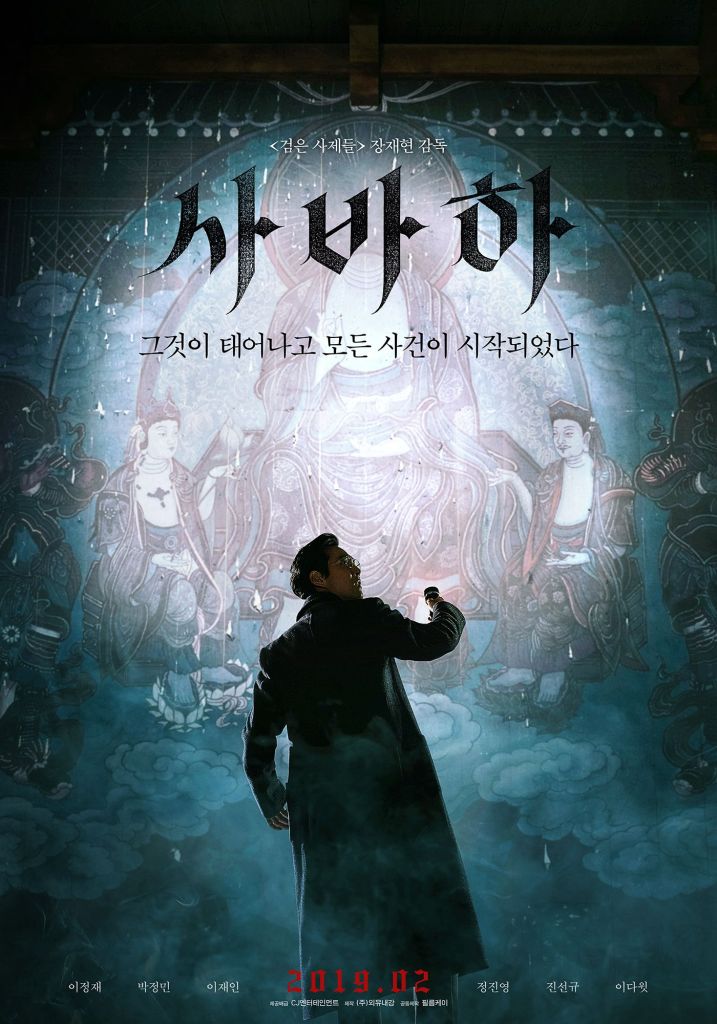
Svaha: The Sixth Finger (사바하, Jang Jae-hyun, 2019)

The thing about prophesies and the prophets who proclaim them, is that they only have power if people choose to believe in them. “Faith” can become a convenient cover for those who’d rather not explain themselves, a mechanism for manipulating sometimes vulnerable people looking for a greater truth or a purpose in their lives. Svaha: The Sixth Finger’s (사바하) dogged pastor is intent on investigating religious crimes and exploiting spiritual charlatans but he of course has his own agenda, that mostly being that he’s keen to get money off his clients who are in turn hoping to bolster their authority by rooting out “heresies”.

Leader of the Far Eastern Religious Research Institute, a kind of religious detective agency employing only himself, an undercover assistant, and a “deaconess” secretary, Pastor Park (Lee Jung-jae) makes his money flagging up dodgy and/or exploitative practices connected with organised religion. According to him, freedom of religion is “overly” protected, and he is alone on the frontlines of a spiritual war against unscrupulous cultists. Though some kind of protestant, he often works for/against the Catholic Church and is good friends with a Buddhist monk who gives him a tip off about a weird sect he can’t get a handle on, Deer Hill. 

Meanwhile, a young girl, Geum-hwa (Lee Jae-in), explains to us that she was born with an “evil” twin clamped to her leg. The twin wasn’t expected to survive, but is still living with Geum-hwa and her family who keep her locked up in a shed like a beast. Rightly or wrongly, Geum-hwa connects her sister with the deaths of her parents which occurred fairly soon after the children were born. Her grandfather, with whom Geum-hwa now lives, never even registered the birth of a second child out of fear and shame, never expecting her to survive this long. When a truck hits a bridge and exposes the hidden body of a murdered teenager, the police start investigating too, eventually leading them to two young men loosely connected with the shady Buddhist cult. 

“This world is one big muddy mess”, according to the cultists at Deer Hill. It’s not difficult to see why people might be looking for spiritual reassurance in such a chaotic world, but it’s exactly that need that places like Deer Hill may be seeking to exploit. Nevertheless, the only thing that Park’s undercover agent turns up is that there doesn’t appear to be anything untoward. Deer Hill doesn’t accept offerings from its members and even gives money away to the needy. Tellingly, the real nitty gritty to Park’s clients is in doctrinal deviation, they only really want to know what kind of Buddhism it is that they do and if it’s in line with broader teachings of the faith. 

A further tip off leads them to the mysterious Je-seok (Jung Dong-hwan), a legendary Buddhist priest who studied in Japan but apparently devoted himself to the Independence movement and is said to have achieved enlightenment. Je-seok’s teachings are dark in the extreme, “Pain is the fruit of faith” goes his mantra, “pain purifies your blood”. He believes that he is the “light” that will conquer the “darkness” by snuffing out “snakes”. One of his disciples, brainwashed as a vulnerable young man and encouraged to do terrible things in the name of good, begins to doubt his teachings when confronted with a possible hole in his logic and the very real human cost of his strategy. 

Not quite as cynical as he seems, Park retains his faith. It’s ironic that all this is taking place at Christmas and centres on the prophesied birth of a child that threatens someone’s sense of personal power. Unlike most, Park has always regarded Christmas as a “sad” holiday, unable to forget that Jesus’ birth was accompanied by the mass murder of innocent baby boys. He wonders where God is now and why he permits these things to happen. Park has faith that God sent Jesus into the world for the greater good, but Je-seok has convinced his followers that the same is true of him, that he has come to banish the darkness and that all their pain and suffering is fuel in a holy war. Their faith has been redirected and misused for the benefit of a false prophet, while his opposite number has been made to live a life of bestial misery solely because of superstitious prejudice. The police is a fairly irrelevant presence in this series of spiritual transgressions, but there is much less clarity to be had in “truth” than one might hope with “faith” the only solution in an increasingly uncertain world.


Svaha: The Sixth Finger is currently available to stream on Netflix in the UK (and possibly other territories).

International trailer (English subtitles)

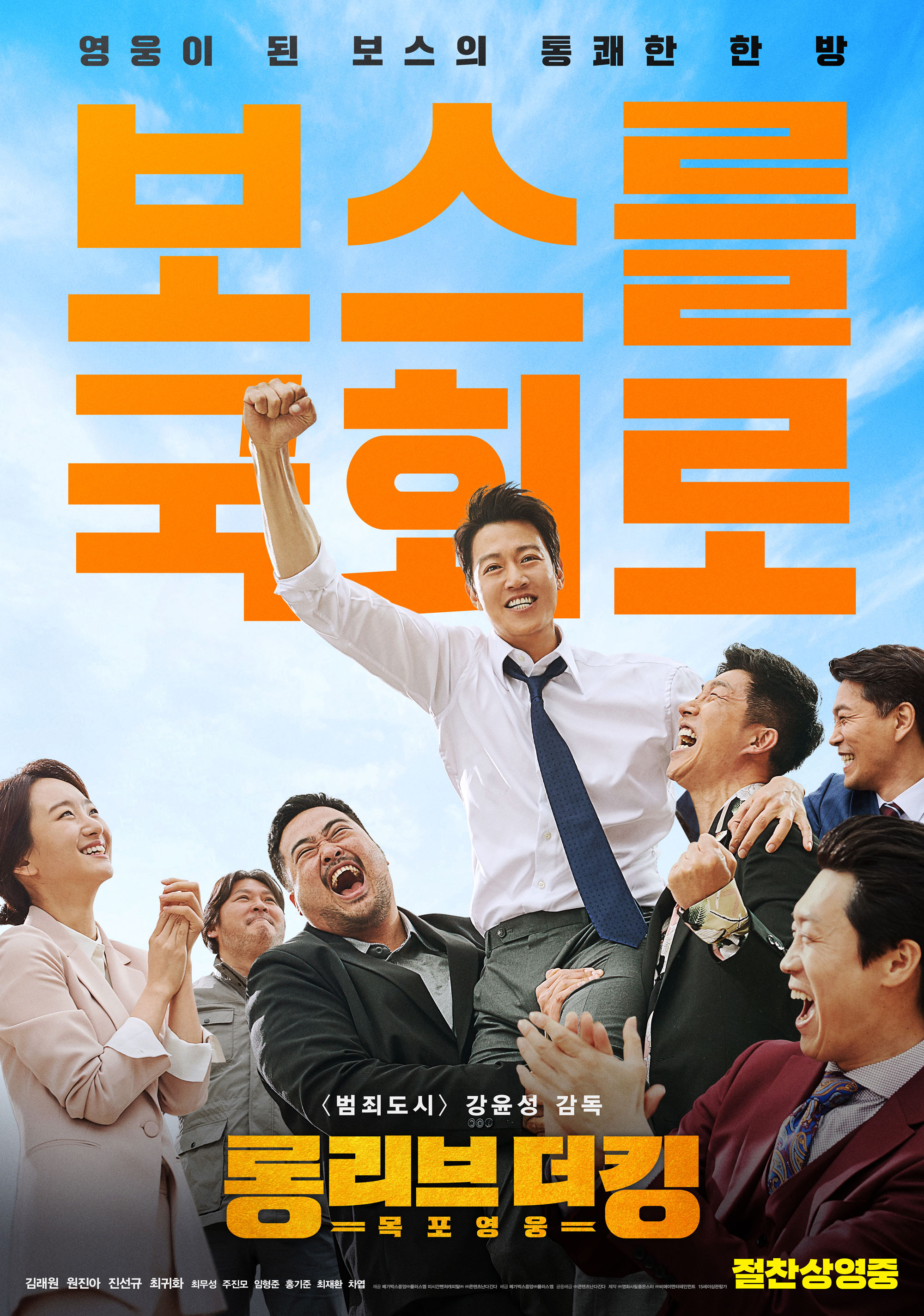
Long Live the King (롱 리브 더 킹: 목포 영웅, Kang Yoon-sung, 2019)

long live the king poster 1Back in the good old days, gangsters used to make a case for themselves that they were standing up for the little guy and protecting those who couldn’t protect themselves. Of course that wasn’t quite the truth, but one can’t deny how closely small town thuggery and political office can resemble one another. Following his breakout hit The Outlaws, Kang Yoon-sung returns with web comic adaptation Long Live the King (롱 리브 더 킹: 목포 영웅, Long Live the King: Mokpo Yeongwoong), another unconventional comedy in which a surprisingly loveable rogue rediscovers his national pride and finds a more positive direction in which to channel his desire to be helpful.

Se-chool (Kim Rae-won) is a notorious thug with a traumatic past currently working with a local gang hired to clear a small protest of stall owners trying to cling on to a traditional market space in working class Mokpo where a developer wants to build a theme park and upscale skyscraper. A feisty young lawyer, So-hyun (Won Jin-a), is working with the protesters on their case and has no problem telling the gangsters where to get off. Impressed, Se-chool is smitten and starts to wonder if he’s on the wrong side but his attempts to get So-hyun’s attention – being strangely nice to the protestors, buying everyone lunch etc, spectacularly backfire. Only when he hears about another man, Hwang-bo (Choi Moo-sung), who used to be a gangster but has now reformed and become a social justice campaigner running a small not-for-profit cafe serving meals to the vulnerable, does he begin to see an opening, vowing to give up the gangster life and commit himself to serving the people of Mokpo.

The irony is that everyone seems to think that Se-chool has a hidden agenda, but his only agenda is the obvious one in that he wants to win So-hyun’s heart even if that means he has to shape up and learn to become a decent person rather than a heartless gangster thug. Known as the king of the nightlife, Se-chool is regarded as a slightly eccentric, good time guy, so his sudden desire to go “legit” is met with bemusement rather than surprise, but old habits are hard to shake and it takes a while for him to realise that trying to help people with his fists is not the best way to go about it. Punching out some punks making trouble in a cafe gets him an earful from the proprietress who explains that she owes a lot of money to the guys’ gang so Se-chool’s chivalry has probably caused her a series of potentially serious problems she assumes he won’t be on hand to help her out with. Nevertheless, he retains his desire to wade in and do his bit, becoming a surprise local hero when he puts himself in danger to ensure the unconscious driver of a crashed bus gets out safely while the other passengers make their escape.

Meanwhile, local politics is starting to heat up. Venal politician Choi Man-su (Choi Gwi-hwa) is up for re-election and running on a platform of making Mokpo great again. It comes as no surprise that Man-su is deep into the corrupt theme park project and outsourcing general thuggery to Se-chool’s arch-enemy which eventually includes taking out potential rivals like Hwang-bo whose approval ratings are soaring while voters are becoming tired of Man-su’s big money tactics and insincere messaging. Soon enough, Se-chool is persuaded to enter the race seeing as his “local hero” persona puts him in good stead to oppose Man-su’s establishment credentials. But, in order to get elected and convince So-hyun he’s really changed, he’ll have to finally face his traumatic gangster past while learning to be open and honest with his feelings.

Kang goes in hard for the business of politics, taking pot-shots not only at corrupt establishment figures in so tight with organised crime that they’re little more than jumped up gangsters, but also at ambitious party hoppers, and misguided mobsters who think they’re onto the big ticket by hooking up with “legitimate” power. Poor Se-chool, meanwhile, actually thought he was doing “proper business” in his persona as a besuited gangster of the new, corporatised school little thinking about the little guy as he unwittingly went about his ultra-capitalist agenda. Heading for broad comedy, Long Live the King misses an opportunity for serious satire but has undeniable heart as the misused hero learns to accept himself in being accepted by others, falling in love not only with a feisty activist lawyer but with community spirit and progressive politics as he vows to fight for a better future for the people of Mokpo while opposing the inherent corruption in the system embodied by men like Man-su who feel themselves entitled to exploit solely by virtue of their own superiority.


Long Live the King was screened as part of the 2019 London East Asia Film Festival.

International trailer (English subtitles)
https://www.youtube.com/watch?v=34P-kidRXkU

Money (돈, Park Noo-ri, 2019) [Fantasia 2019]

money poster 1“Could you ask him something for me,” the beleaguered yet victorious protagonist of Park Noo-ri’s Money (돈, Don) eventually asks, “what was he going to use the money for?”. Wealth is, quite literally it seems, a numbers game for the villainous Ticket (Yoo Ji-tae) whose favourite hobby is destabilising the global stock market just for kicks. As for Cho Il-hyun (Ryu Jun-yeol), well, he just wanted to get rich, but where does getting rich get you in the end? There’s only so much money you can spend and being rich can make you lonely in ways you might not expect.

Unlike most of his fellow brokers, Cho Il-hyun is an ordinary lad from the country. His parents own a small raspberry farm and he didn’t graduate from an elite university or benefit from good connections, yet somehow he’s here and determined to make a success of himself. In fact, his only selling point is that he’s committed the registration numbers of all the firms on the company books to memory, and his ongoing nervousness and inferiority complex is making it hard for him to pick up the job. A semi-serious rookie mistake lands the team in a hole and costs everyone their bonuses, which is when veteran broker Yoon (Kim Min-Jae) steps in to offer Il-hyun a way out through connecting him with a shady middle-man named “The Ticket” who can set him up with some killer deals to get him back on the board.

Il-hyun isn’t stupid and he knows this isn’t quite on the level, but he’s desperate to get into the elite financial world and willing to cheat to make it happen. As might be expected his new found “success” quickly goes to his head as he “invests” in swanky apartments and luxury accessories, while his sweet and humble teacher girlfriend eventually dumps him after he starts showering her with expensive gifts and acting like an entitled elitist. It’s not until some of his fellow brokers who also seem to have ties to Ticket start dying in mysterious circumstances that Il-hyun begins to wonder if he might be in over his head.

Unlike other similarly themed financial thrillers, it’s not the effects of stock market manipulation on ordinary people which eventually wake Il-hyun up from his ultra capitalist dream (those are are never even referenced save a brief reflective shot at the end), but cold hard self-interest as he finally realises he is just a patsy Ticket can easily stub out when he’s done with him. Yoon only hooked him up in the first place because he knew he’d be desperate to take the bait in order to avoid repeated workplace humiliation and probably being let go at the end of his probationary period. What he’s chasing isn’t just “money” but esteem and access to the elite high life that a poor boy from a raspberry farm might have assumed entirely out of his reach.

It’s difficult to escape the note of class-based resentment in Il-hyun’s sneering instruction to his mother that she should “stop living in poverty” when she has the audacity to try and offer him some homemade chicken soup from ancient Tupperware, and it’s largely a sense of inferiority which drives him when he eventually decides to take his revenge on the omnipotent Ticket. Yet there’s a strangely co-dependent bond between the two men which becomes increasingly difficult pin down as they wilfully dance around each other.

The world of high finance is, unfortunately, a very male and homosocial one in which business is often conducted in night-clubs and massage parlours surrounded by pretty women. There is only one female broker on Il-hyun’s team. The guys refer to her as “Barbie” and gossip about how exactly she might have got to her position while she also becomes a kind of trophy conquest for Il-hyun as he climbs the corporate ladder. Meanwhile, there is also an inescapably homoerotic component to Il-hyun’s business dealings which sees him flirt and then enjoy a holiday (b)romance with a Korean-American hedge fund manager (Daniel Henney) he meets at a bar in the Bahamas, and wilfully strip off in front of Ticket ostensibly to prove he isn’t wearing a wire while dogged financial crimes investigator Ji-cheol (Jo Woo-jin) stalks him with the fury of a jilted lover.

Obsessed with “winning” in one sense or another, Il-hyun does not so much redeem himself as simply emerge victorious (though possibly at great cost). Even his late in the game make up with Chaebol best friend Woo-sung (Kim Jae-young), who actually turns out to be thoroughly decent and principled (perhaps because unlike Il-hyun he was born with wealth, status, and a good name and so does not need to care about acquiring them), is mostly self-interest rather than born of genuine feeling. In answer to some of Il-hyun’s early qualms, Ticket tells him that in finance the border between legal and illegal is murky at best and it may in fact be “immoral” not to exploit it. What Il-hyun wanted wasn’t so much “money” but what it represents – freedom, the freedom from “labour” and from from the anxiety of poverty. Life is long and there are plenty of things to enjoy, he exclaims at the height of his superficial success, but the party can only last so long. What was the money for? Who knows. Really, it’s beside the point.


Money was screened as part of the 2019 Fantasia International Film Festival.

International trailer (English subtitles)

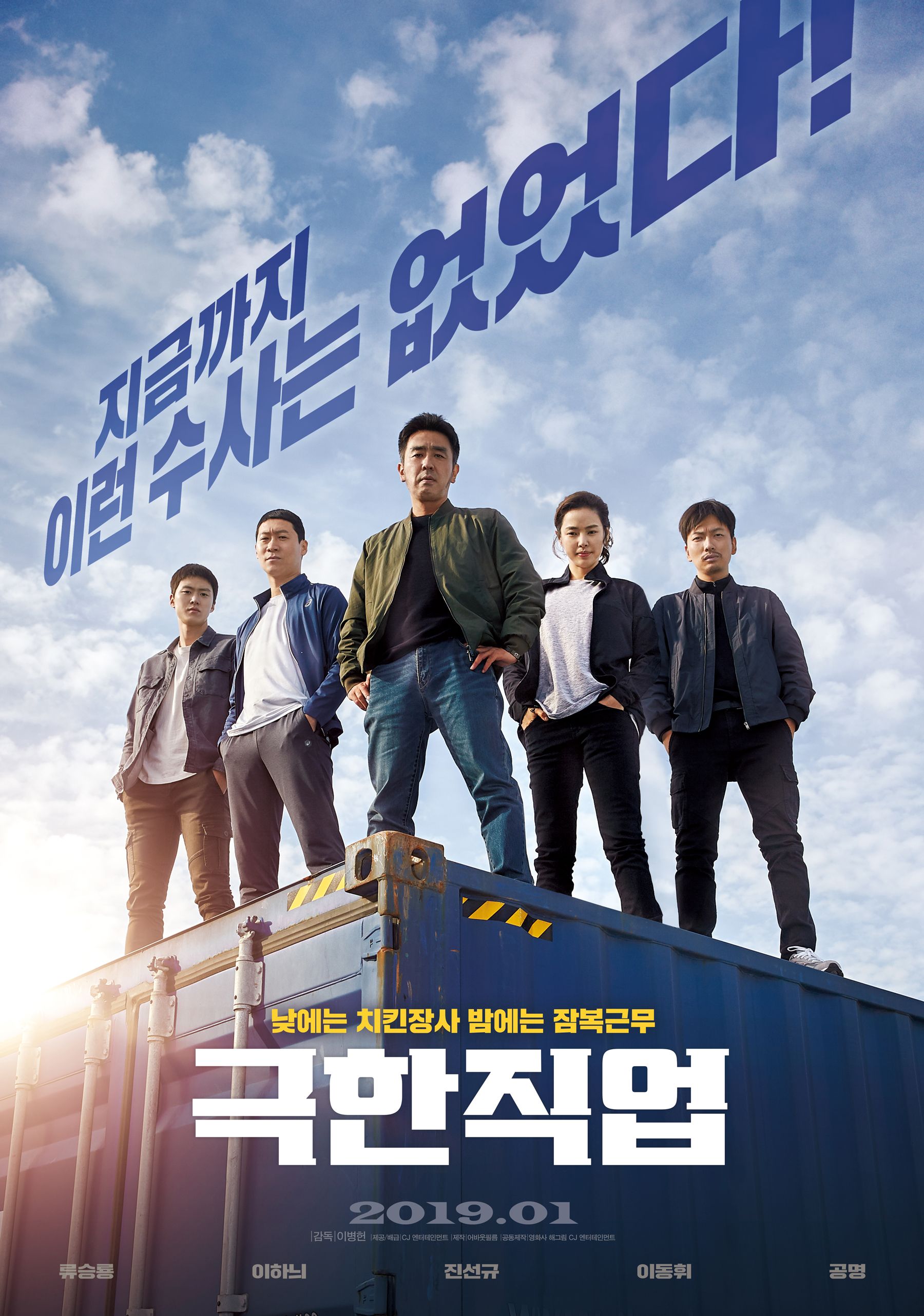
Extreme Job (극한직업, Lee Byeong-heon, 2019)

Extreme Job poster 2Another in the increasingly popular trend of multi-territory simultaneous productions, Twenty director Lee Byeong-heon’s Extreme Job (극한직업, Geukan Jigeop) shares its premise with recent Chinese hit Lobster Cop but swaps low budget zaniness for the kind of high concept comedy that dominated Korean cinema in the 2000s. Where the Chinese version was perhaps bold in making its law enforcers look like idiots, the Korean version is very much in the long tradition of idiotic but sincere policemen eventually making good, if perhaps more by accident than design.

The film opens with Chief Go (Ryu Seung-ryong) dangling on a window washing wire and making small talk with his quarry who then manages to get away leaving Go quite literally spinning in the wind. The rest of the team give chase, but the guy eventually ends up in a bad way with the gang’s exploits causing a multi-car pileup and a significant amount of public damage for which Go and his team are now responsible. Facing the threat of disbandment, the team senses opportunity when they get a lead on the Korean HQ of a notorious international drug gang and vow to break the case before a rival squad to prove their worth as police officers.

Bedding in for a 24-hr stakeout, Go & co hole up in a small fried chicken restaurant which happens to be right next to the bad guys’ hide-out only to discover the moribund eatery will soon be closing. The good news is the property is up for sale and Chief Go, borrowing the life savings of rookie Jae-hoon (Gong Myung), decides it’s worth the investment to crack the case. The only problem is, despite having been the only visitors for days, the guys keep getting interrupted by potential customers and are forced to open the chicken shop for real as a cover with the secretly excited officer Ma (Jin Seon-kyu) as chief fryer. Ma’s family recipe rib sauce proves an unexpected hit with chicken lovers and so a new food sensation is born, which is an inconvenience when you’re trying to balance running a restaurant with taking down a drug den.

Like Lobster Cop, Extreme Job satirises modish internet success as something as down to earth and ordinary as fried chicken becomes the latest foodie sensation. So taken with their success are they, that the guys begin to forget about the drug dealers in order to facilitate their chicken business all the while conveniently forgetting that they’re technically moonlighting even if it’s in service of an active investigation (albeit one they weren’t actually assigned to). Deciding that they’ve gone too far the guys raise the price to extreme levels, but that only makes the problem worse as does an attempt to rebuff the attentions of a foodie TV programme who then take against them and attempt to ruin their reputation at the worst possible moment.

Meanwhile, Go’s loyal wife is pleased with the extra money coming in but also suspicious. She doesn’t really like him being a policeman – mostly because his nickname is “zombie” on account of all the times he’s nearly died, but she probably wouldn’t want to be married to a chicken shop manager either. For some reason, owning a chicken shop seems to be a shameful occupation that everyone is embarrassed about, though through his unexpected business success Go eventually learns to embrace his inner chicken man and become a better police officer because of it.

The one officer intent on watching the bad guys finds himself excluded from the group as the others regard him as a shirker for not helping out with the chicken business. Nevertheless, in true cop comedy fashion, it’s team work that counts as the guys come to understand their complimentary strengths and start working together as a unit so they can take down the drug dealers if in bumblingly idiosyncratic fashion. As if to ram the point home, Lee closes with Leslie Cheung’s iconic theme from A Better Tomorrow running in the background to remind us that this has all been about brotherhood, togetherness, and holding the line as much as it’s been about fried chicken success. Slapstick laughs collide with ironic familial comedy and a dose of mild social commentary as the bumbling cops eventually make good by embracing their inner chicken men and reclaiming their dignity in the process.


Extreme Job was screened as part of the 2019 Udine Far East Film Festival.

International trailer (English subtitles)