
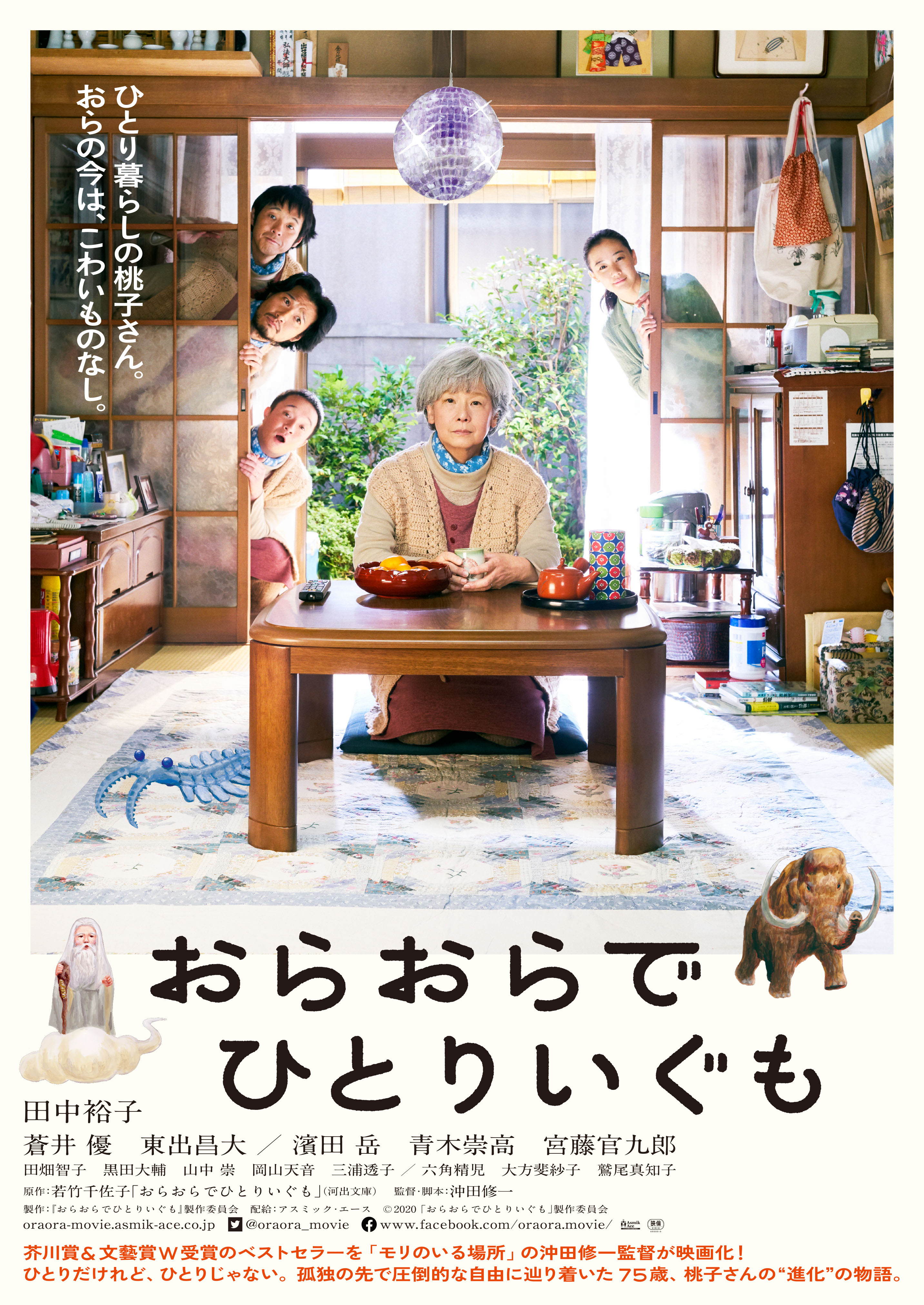
“I never thought my life would come to such a lonely autumn” an old woman laments in Shuichi Okita’s touching adaptation of the novel by Chisako Wakatake Ora, Ora, Be Goin’ Alone (おらおらでひとりいぐも, Ora Ora de Hitori Igumo), her husband now gone, a son so estranged he may as well be too, and a daughter (Tomoko Tabata) who only stops by to ask for money. What’s it all for? In an increasingly ageing Japan, later life loneliness has become a pressing issue, but for Momoko (at 75: Yuko Tanaka, at 20 – 34: Yu Aoi) the problem may be that she’s beginning to find her own company oppressive mainly because she’s become plagued by a trio of mental sprites dressed in regular old lady clothes who speak to her in her native Tohoko dialect and force her to think about the realities of her life.
And then there’s the other guy who looks really like the guy she was briefly engaged to before running out on an arranged marriage only dressed in her pyjamas and telling her there’s no point getting out of bed because every day is the same and she doesn’t have anything to do anyway. Meanwhile, she finds herself pulled back towards memories of happier times when her children were small. All of this has Momoko wondering if she’s sliding into dementia, or if perhaps she’s merely beginning to go out of her mind with grief, loneliness, and existential futility.
It’s also clear that like everyone else her age despite having led a happy life, Momoko has doubts and regrets. When she ran out on her arranged marriage inspired by the Olympic buzz of Tokyo in 1964, she thought she was striking out for freedom and independence, that she was a “new woman” of the post-war era and she was going to live her own life the way she wanted it. Yet in Tokyo the first friend she makes is someone from the same area who’s managed to completely shed their regional accent, and then she met a man who refused to lose his (Masahiro Higashide) and fell in love with him. She doesn’t regret her life, but feels in a sense disappointed that she ended up falling into the same patriarchal patterns she tried so hard to escape as a conventional housewife and mother dedicating herself to supporting the man she loved. Her friend, Toko (Toko Miura), points out that she always hesitates when she refers to herself as “watashi” rather than the familiar “ora” in the Tohoku dialect as if shamed by the inauthenticity and resentful that her accent, her essential identity, is something she has to lose in order to blend in to Tokyo society.
Heartbreakingly, we witness her bamboozled into leasing a new car, a symbol of freedom and independence, from a young man who seems nice but is obviously intent on leveraging her loneliness, addressing her as “mother” (not an unusual way to refer to the woman of a house but definitely a deliberate avoidance of “granny”) and encouraging her to think of him as a son. Ironically, while he’s there the phone rings but it’s an “ore ore” scam claiming that her son’s in trouble and needs money. She laughs it off and tells the salesman she’s not silly enough to fall for something like that just as she signs on the dotted line, but later we discover that she did indeed fall prey to it sometime earlier in desperation for the son who, as she had, left home young and never looked back. Her daughter meanwhile, stops by after hearing about the car but mostly so she can ask for money to pay for art lessons for her son.
Thinking back on their days as a family, Momoko can’t reconcile herself to this sense of parental rejection but meditates on her relationship with her own grandmother realising she too must have been desperately lonely but she was “young and stupid” and didn’t understand. Her interior monologue with her trio of sprites is recited entirely in the voice of her younger self, and at one point she even tries throwing beans at them like demons during Setsubun, but eventually accepts them enough to talk out loud which is either a sign that she’s really losing it or a kind of liberation. “How will I carry on by myself?” she asks, meditating on this new kind of “independence” which might itself soon be taken from her whether she wants it or not. Nevertheless, what she discovers is that she might not be as alone as she thought she was and more has been passed on than she assumed but if you have to go alone then that’s alright too.
Ora, Ora Be Goin’ Alone streams in the US Dec. 3 to 23 series alongside Shuichi Okita’s debut Chef of South Polar as part of Japan Society New York’s Flash Forward series.
Original trailer (no subtitles)



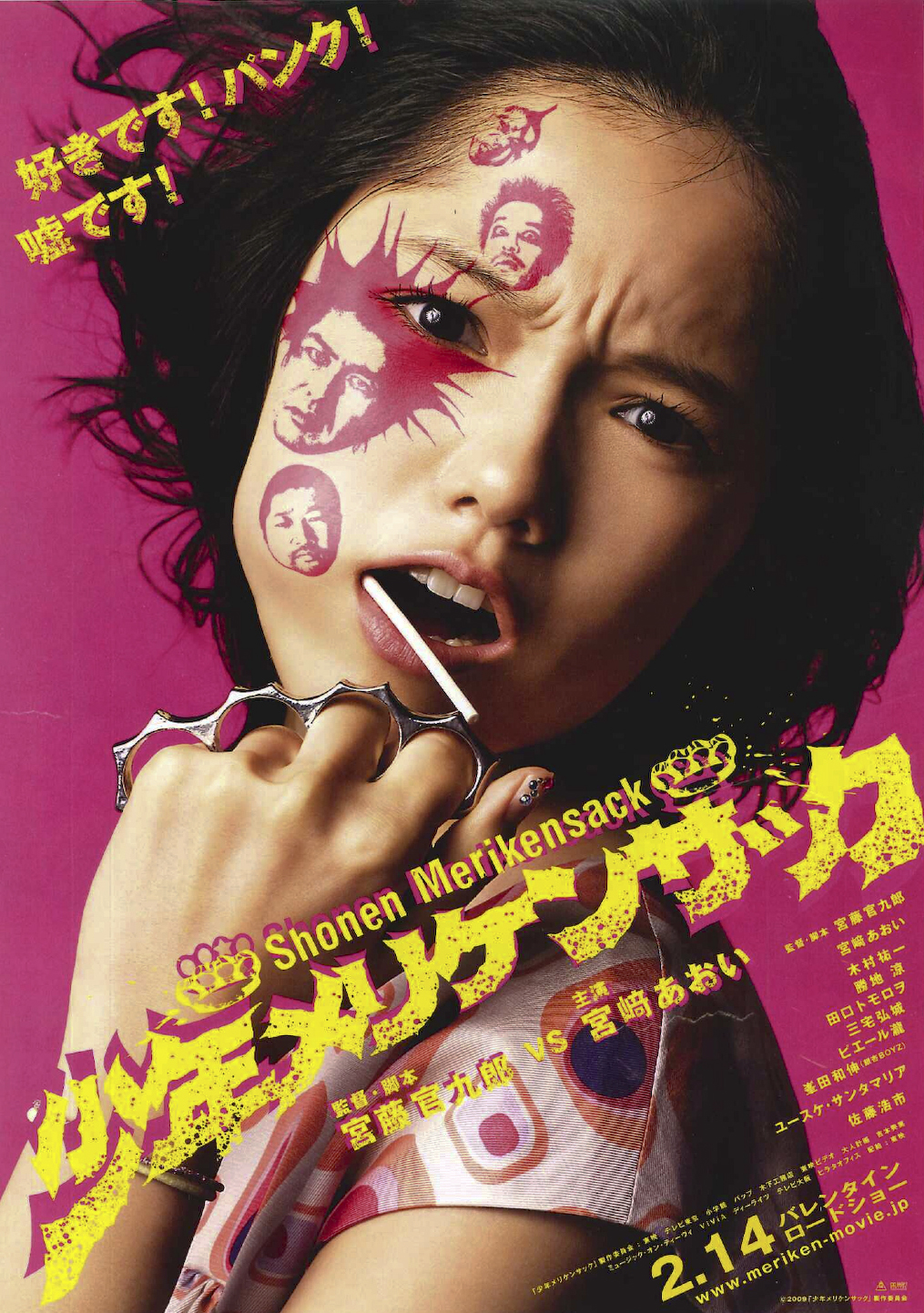 When you spent your youth screaming phrases like “no future” and “fumigate the human race”, how are you supposed to go about being 50-something? A&R girl Kanna is about to find out in Kankuro Kudo’s generation gap comedy The Shonen Merikensack (少年メリケンサック) as she accidentally finds herself needing to sign a gang of ageing never were rockers. A nostalgia trip in more ways than one, Kudo is on a journey to find the true spirit of punk in a still conservative world.
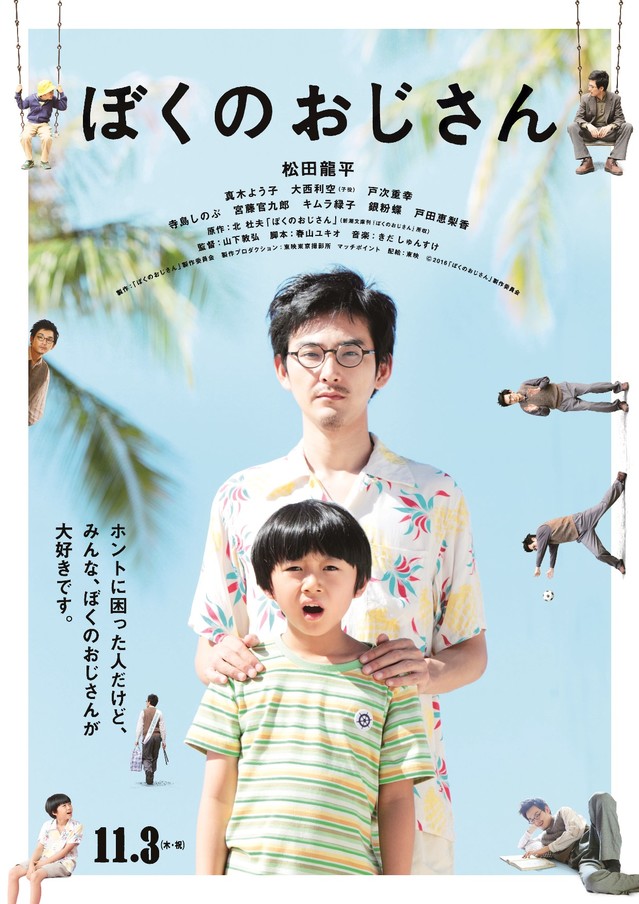 Crazy uncles – the gift that keeps on giving. Following the darker edged Over the Fence as the second of two films released in 2016, Nobuhiro Yamashita’s My Uncle (ぼくのおじさん, Boku no Ojisan) pushes his subtle humour in a much more overt direction with a comic tale of a self obsessed (not quite) professor as seen seen through the eyes of his exasperated nephew. “Travels with my uncle” of a kind, Yamashita’s latest is a pleasantly old fashioned comedy spiced with oddly poignant moments as a wiser than his years nephew attempts to help his continually befuddled uncle navigate the difficulties of unexpected romance.
 There are few things in life which cannot at least be improved by a full and frank apology. Sometimes that apology will need to go beyond a simple, if heart felt, “I’m Sorry” to truly make amends but as long as there’s a genuine desire to make things right, it can be done. Some people do, however, need help in navigating this complex series of culturally defined rituals which is where the enterprising hero of Nobuo Mizuta’s The Apology King (謝罪の王様, Shazai no Ousama), Ryoro Kurojima (Sadao Abe), comes in. As head of the Tokyo Apology Centre, Kurojima is on hand to save the needy who find themselves requiring extrication from all kinds of sticky situations such as accidentally getting sold into prostitution by the yakuza or causing small diplomatic incidents with a tiny yet very angry foreign country.
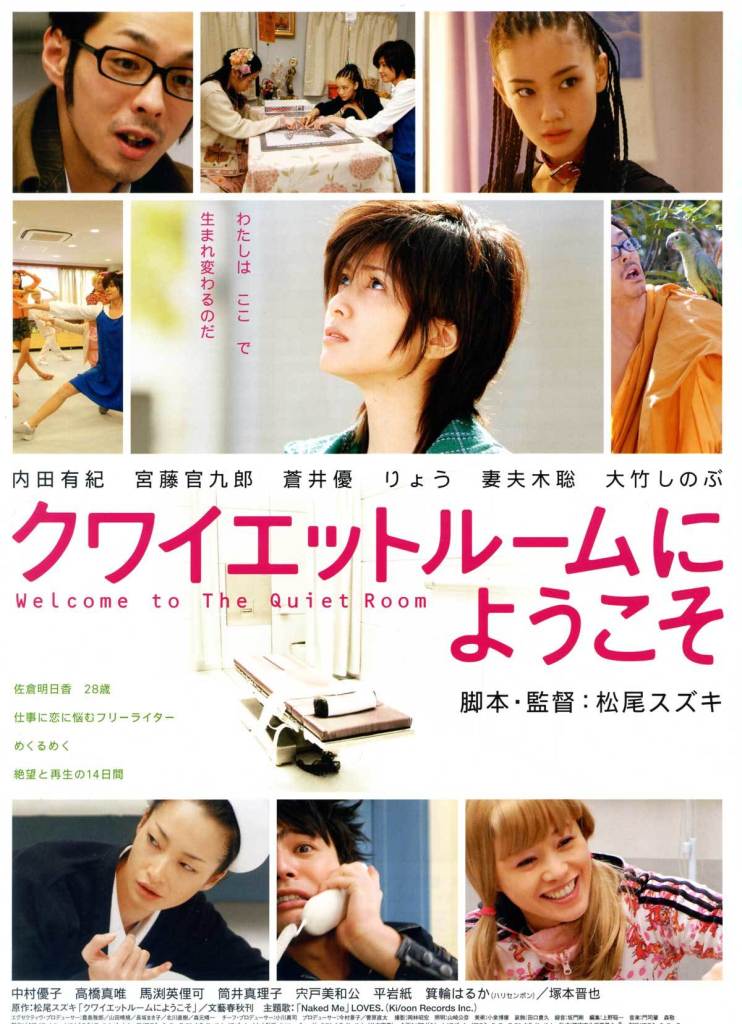 Everyone has those little moments in life where you think “how did I get here?”, but thankfully most of them do not occur strapped to a table in an entirely white, windowless room. This is, indeed, where the heroine of Suzuki Matsuo’s adaptation of his own novel Welcome to the Quiet Room (クワイエットルームにようこそ, Quiet Room ni Yokoso) finds herself after a series of events she can’t remember but which seem to have involved pills and booze. A much needed wake up call, Asuka’s spell in the Quiet Room provides a long overdue opportunity to slow down and take a long hard look at herself but self knowledge can be a heavy burden.
 You know how it is, you’ve left college and got yourself a pretty good job (that you don’t like very much but it pays the bills) and even a steady girlfriend too (not sure if you like her that much either) but somehow everything starts to feel vaguely dissatisfying. This is where we find Kenji (Ryo Kase) at the beginning of Isao Yukisada’s sewing bee of a movie, Rock ’n’ Roll Mishin (ロックンロールミシン). However, this is not exactly the story of a salaryman risking all and becoming a great artist so much as a man taking a brief bohemian holiday from a humdrum everyday existence.
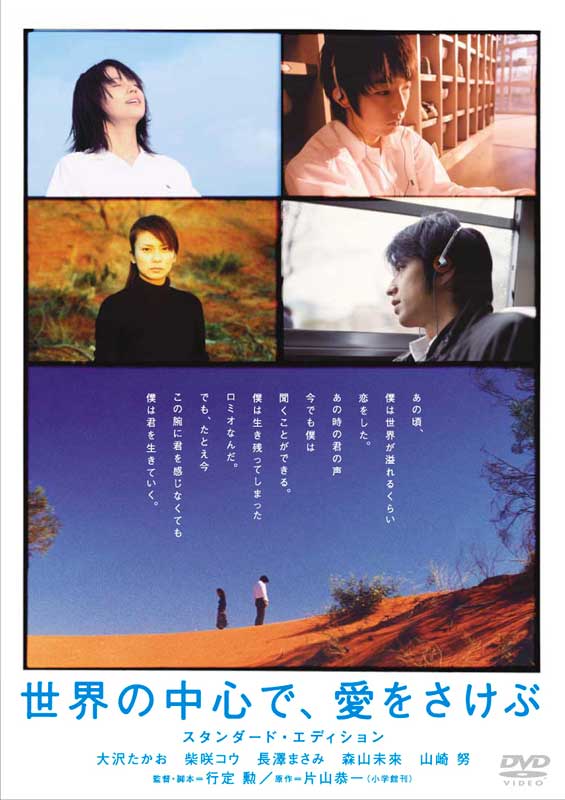 Just look at at that title for a second, would you? Crying Out Love, in the Center of the World, you’d be hard pressed to find a more poetically titled film even given Japan’s fairly abstract titling system. All the pain and rage and sorrow of youth seem to be penned up inside it waiting to burst forth. As you might expect, the film is part of the “Jun ai” or pure love genre and focusses on the doomed love story between an ordinary teenage boy and a dying girl. Their tragic romance may actually only occupy a few weeks, from early summer to late autumn, but its intensity casts a shadow across the rest of the boy’s life.
 Windows on Worlds