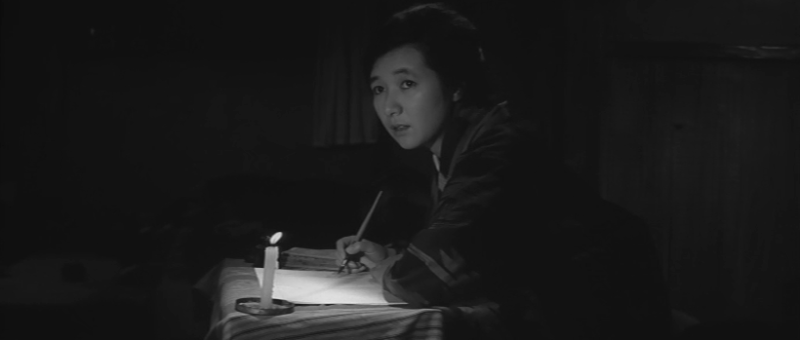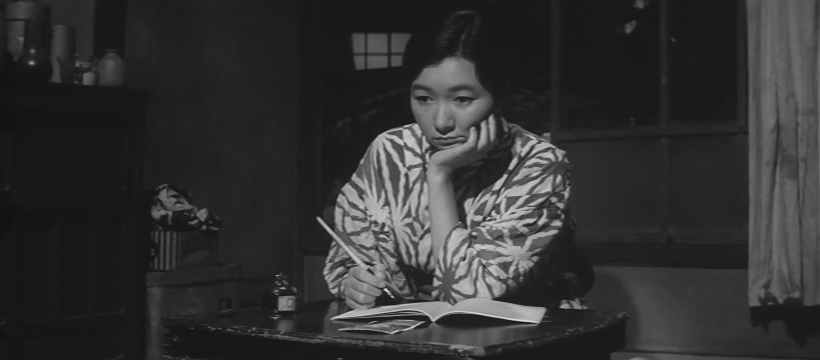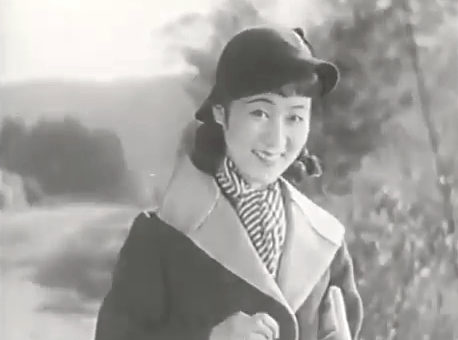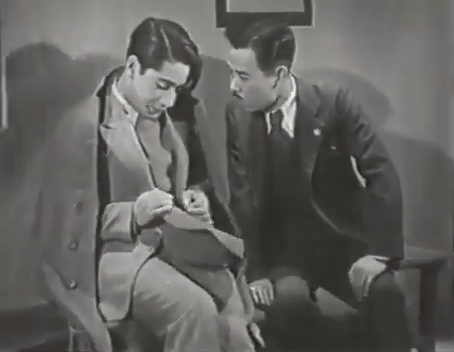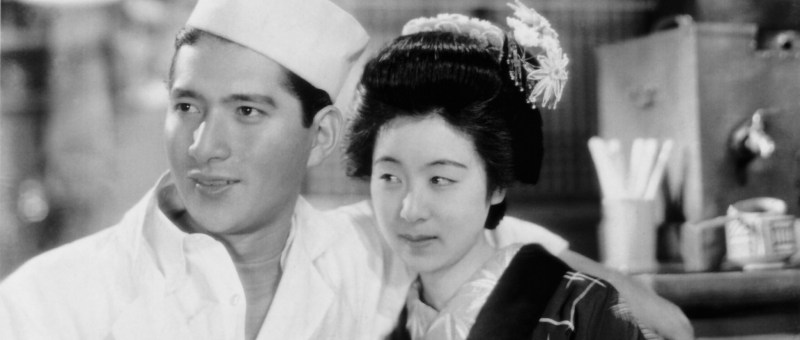
I Flunked, But… (落第はしたけれど, Yasujiro Ozu, 1930)

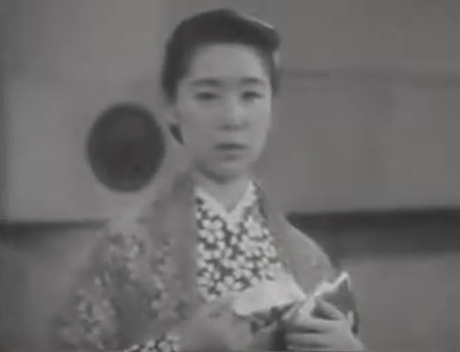
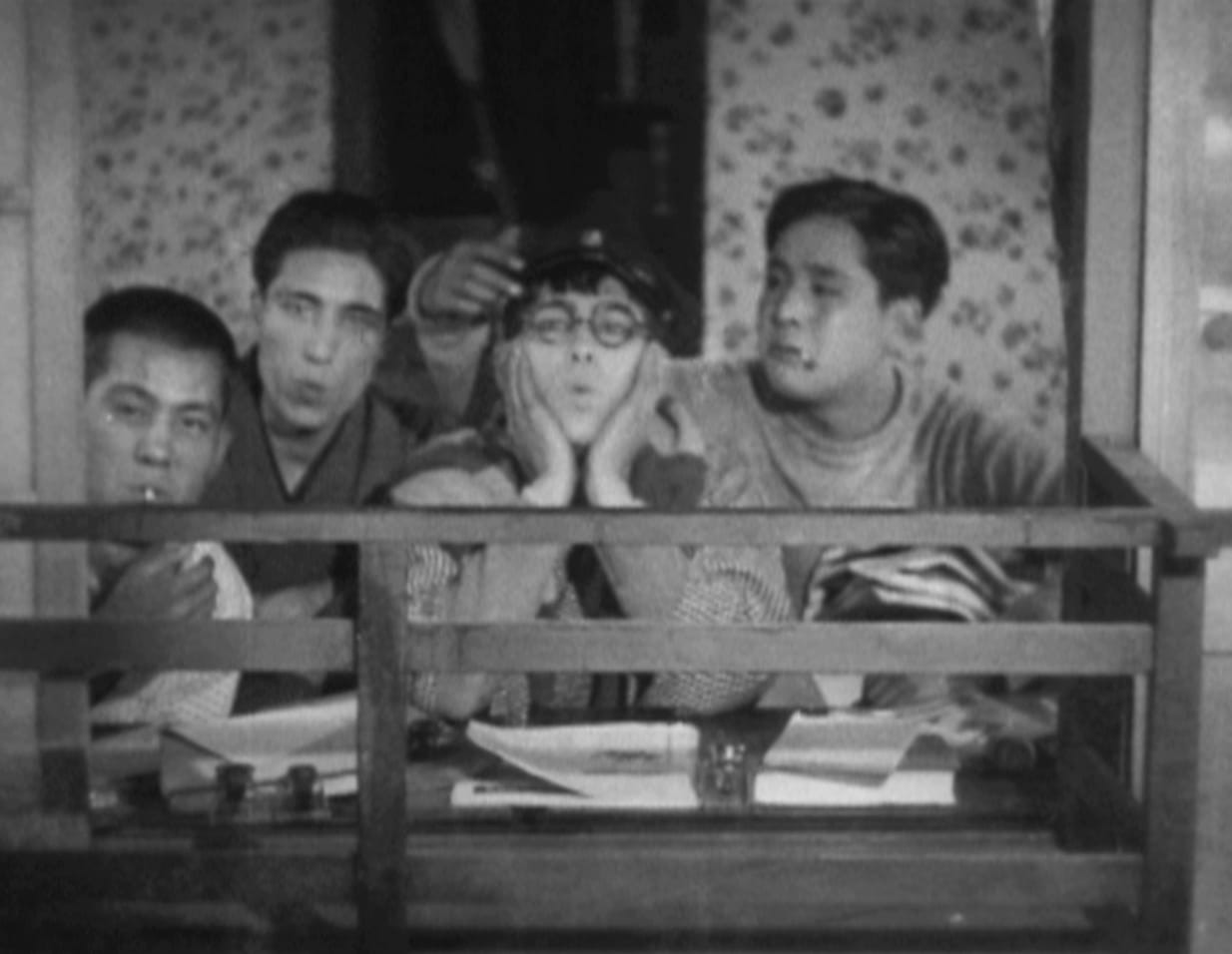
Yasujiro Ozu never went to college. By all accounts a poor student and rebellious young man, he took an early teaching position in a remote rural area precisely because it required no degree. Unsurprisingly, he didn’t last long in the job and eventually returned to Tokyo,  joining Shochiku as an assistant cameraman. Nevertheless, in his early career at the studio he found himself contributing to their popular brand of college comedies of which I Flunked But… (落第はしたけれど, Rakudai wa shitakeredo) is his third, directed when he was 26 years of age. 

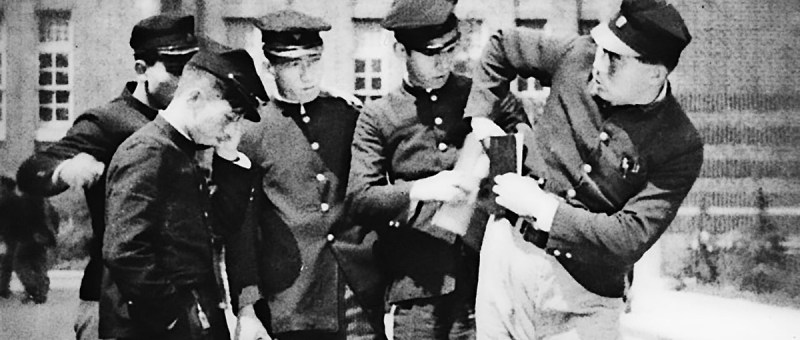
Drawing inspiration from Hollywood campus movies and in particular Harold Lloyd’s The Freshman as we can see from the various US state college pennants seen hanging throughout the film, I Flunked But… follows a group of young men preparing for their final exams. They are all excited about the idea of graduating into the adult world as symbolised by the neat business suits they have each bought in preparation for their new lives and few seem burdened by anxiety about a potentially precarious future as members of a generation stepping into a world of reduced economic potential and growing political instability. 

In fact they live the last days of their student lives to the full, greeting each other with silly dances, playing turntable roulette to decide who pays for dinner, and spending more time figuring out how to cheat on the exam than studying to pass it. There may be truth in the idea that passing exams is all about the knack, but our boys are overly invested in kicking back against the system rather than playing by its rules to get ahead. As the film opens, two students are arguing because one supposedly betrayed the other in promising to help him cheat and then not following through. Takahashi (Tatsuo Saito) is supposed to help his friends by wearing a shirt which has a cheat sheet scrawled on the back, but he oversleeps and the landlady swipes it for the laundryman. The others manage to scrape through on their own while Takahashi alone fails. 

The remainder of the film becomes a more melancholy mediation on the changing fortunes of Takahashi and his friends. Overcome with shame and disappointment, Takahashi is left out of the others’ cheerful graduation celebrations, left with the choice to drop out or repeat the year (amusingly, one of his perpetual failure friends appears to be much older, even middle-aged, and one wonders if he is a serial repeater). The suit he had bought is now a grim reminder of his defeated hopes, as is the tie his girlfriend (Kinuyo Tanaka) who works in the bakery next-door was making for him as a graduation present. He now feels unworthy of wearing it, a fraudulent human trapped in adolescence by embarrassing failure. The girlfriend, however, already knows all about it and reassures him that even if he has not graduated, he still has the right to wear his graduation suit. 

As time moves on, however, Takahashi realises that he might actually be the more fortunate. Still wearing his student uniform, he lives a carefree student life and is still receiving money for his upkeep which makes him the rich man among his dorm mates who are still living in the same rooms with him and have all had to pawn their graduation suits because there are no jobs for them to go to. “I heard it’s hard to get a job these days”, the girlfriend laments, and it’s clear the depression continues to bite. The college world was safe and easy. Takahashi carries on goofing off, silly dances and cheerleading the order of the day. In this sense at least, a perpetual childhood might not be so bad a thing. The graduates wistfully play with a student’s cap, wishing they could return to their carefree college days rather than stuck in their old dorm receiving nothing but rejection letters and hand outs from a slightly smug Takahashi. “If I’d known it would be like this I wouldn’t have graduated so hastefully” they lament. Maybe flunking is actually the smart choice, riding out economic instability until something better comes along. You might as well enjoy yourself while you can, Ozu seems to say, you’ll never have it so good again.

Flowing (流れる, Mikio Naruse, 1956)

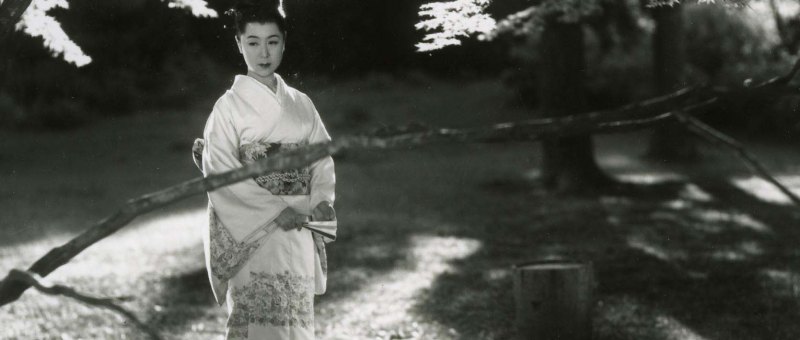
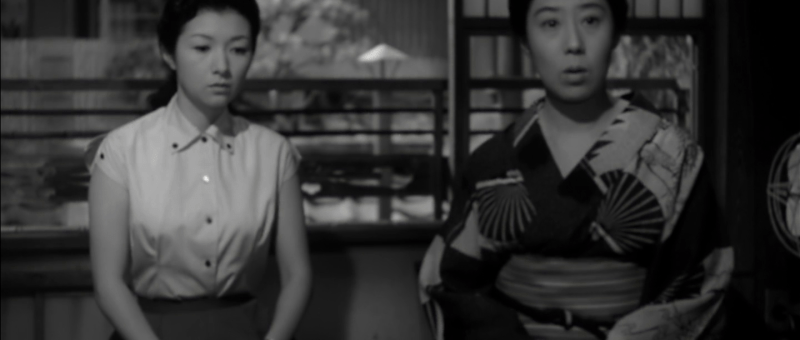
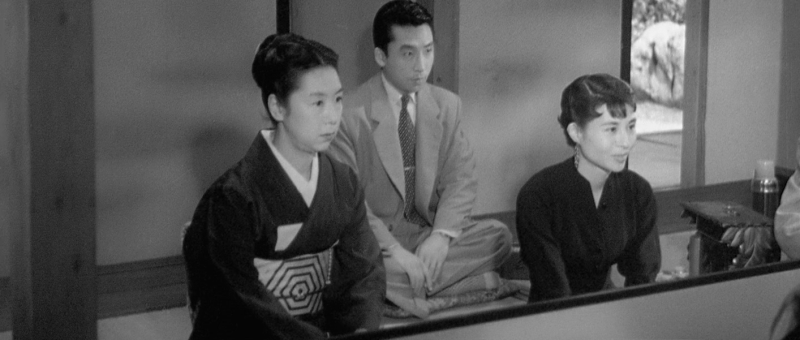
The denizens of a moribund geisha house contemplate visions of independence in post-war Japan Mikio Naruse’s thriving ensemble drama, Flowing (流れる, Nagareru). There is indeed a flowing through the geisha house, a tumble of comings and goings though mostly connected to money which is itself constantly flowing though the for geisha mainly in the wrong direction. Released in the year of Prostitution Prevention Law, the film casts a shadow over the lives of these women who are unwittingly living in their industry’s twilight but asks if it’s really possible for a woman to survive without a man while each of them is in one way or another badly let down by an inconstant lover. 

We’re constantly told that Tsutanoya is the most respectable geisha house in town yet despite its well appointed interiors, it’s clear that business is not good. As the film opens, a young geisha, Namie, is accusing the owner’s daughter Katsuyo (Hideko Takamine) of diddling her on her pay. Katsuyo acts indignant and tries to shift the blame back onto Namie but later admits that the house has indeed been skimming a little more off their wages than was agreed claiming all the geisha houses do it which is probably true but doesn’t make it right. In any case Namie will eventually quit and end up working at “some third rate place” while her uncle (Seiji Miyaguchi) causes problems for proprietress Tsuta (Isuzu Yamada) complaining that Namie was exploited and wanting both the backpay he feels she’s owed and compensation though it seems unlikely any of that money is finding its way back to Namie. Meanwhile the house is a geisha down with only former office worker Nanako (Mariko Okada) and 50-year-old veteran Someka (Haruko Sugimura) on the books.

Despite their financial situation, Tsuta hires a new maid, Rika (Kinuyo Tanaka) who is immediately renamed “Oharu” on her arrival. Oharu is a salt of the Earth type, infinitely capable, maternal, kind and loyal bringing a much needed sense of stability to the ever flowing geisha house while also fascinated by this exotic and arcane world. But then as Tsuta cautions her geisha houses may look glamorous from the outside but the life inside them isn’t always fun. Oharu runs into trouble on her first trip to the grocers when they inform her Tsuta hasn’t paid her tab and they can’t let her add to it until she does. A 45-year-old widow whose only child died a year previously, Oharu is also trying to live an independent life, a conflicted Tsuta struck with wonder at her ability to survive without a man, but may also have struggled, grateful to have been offered the job which others might have declined because of the stigma towards the sex trade as finding employment as a middle-aged woman is near impossible. 

At the film’s conclusion even she may imply it isn’t really possible to live as a woman without some kind of support or losing one’s humanity suggesting that she may return to her husband’s hometown and the family she claims not have gotten along with after learning of Tsuta’s betrayal at the hands of an old friend and former geisha, Ohama (Sumiko Kurishima), who at any rate seems to be living quite well as the proprietress of a restaurant. Traditionally, the profession of geisha was seen as a kind of independence in itself but it’s also one that by its nature is reliant on men. Tsuta is often described as someone who is not able to do anything else yet is highly skilled at music and dance having spent a lifetime in training. Without a patron she is stuck and as we learn she threw hers over to pursue a man she loved but he left her in the lurch having mortgaged the geisha house to invest in his business by taking a loan from her older sister who seems to have a nice sideline as a polite loan shark also having loaned money to Someka. 

The most outwardly cheerful, Someka is in other ways a dark vision of a geisha’s future surviving on nothing but nihilistic hedonism while apparently living with a much younger man who eventually leaves her to marry into another woman’s family. Katsuyo has rejected the geisha life explaining that she is unable to, as Nanaka puts it, say silly things to men in order to earn her keep and is essentially incapable of ingratiating herself with men she doesn’t like. She claims she has no desire to marry, unconvinced that any man would be interested in a geisha’s daughter while certain that for a man marrying into a woman’s family is humiliating while suggesting the same would be true for her. Putting her faith in industry, she buys a sewing machine and sets about figuring out how to use it less because she envisages being able to support herself and her mother through taking in needlework than she just wants to feel as if she’s doing something. 

Meanwhile, Tsuta’s niece Fujiko observes all the comings and goings of the geisha house learning the traditional arts in preparation for a future which will soon be obsolete. In a typically Narusean touch, Tsuta comes to a resolution about her future and envisages a new beginning for herself but is unaware the rug is soon to be pulled from under her by the underhanded capitalist Ohama who plans to turf her out to turn the geisha house into another restaurant. “My days of seeking favours from men are over,” Tsuta admits, not of her own volition but simply understanding that she no longer has access to that kind of independence though in essence surrendering her autonomy in leaving herself to the mercy of Ohama in order to escape her older sister’s control. Someka had laughed raucously at Katsuyo’s insistence that she need not be dependent on a man (and after everything she’s seen why would she want to be?) but the younger woman is undeterred even as we see her struggling, doubting that her efforts will in the end be enough to win her her freedom. Ever the optimist, Tsuta is perhaps doing something similar but even Oharu is considering giving up and going home, too good to survive in the dog eat dog world of the contemporary capital where the flow of currency is the lifeblood of the city implying that perhaps the answer to her question is no, a woman can’t survive alone, nor can she rely on female solidarity, but she’ll have to try anyway because there is no other choice. 


The Woman in the Rumour (噂の女, Kenji Mizoguchi, 1954)

A mother and daughter find themselves deceived by the same man, each hemmed in by realities which cannot be altered but eventually coming to a place of mutual understanding that allows them to restore their relationship not only as parent and child but as women in Kenji Mizoguchi’s 1954 melodrama, The Woman in the Rumour (噂の女, Uwasa no Onna). The first question we might ask ourselves is to which of the women the title refers, or indeed to which rumour, though in a sense rumours matter little for either of them when the problem is the constraints which each of them feel as women in the contemporary society. 

Even so, the sense of shame is evident when Yukiko (Yoshiko Kuga) is brought back to the geisha house run by her mother Hatsuko (Kinuyo Tanaka) after having attempted to take her own life in Tokyo. As we learn, the reason for her despair is in part heartbreak. She had been engaged but her fiancé’s family convinced him to end their relationship when they discovered that her mother ran a geisha house. Thus the suicide attempt is also a reflection of her sense of futility. She will always be the daughter of a woman who earned her living in the sex trade. This is a fact that cannot be changed and may lead her to think that her situation is hopeless because the same thing is likely to happen again leaving her unable to marry in a society in which there are few options for a single woman to make a life for herself not to mention the loneliness of living without romantic love. 

Hatsuko, meanwhile, is uncertain how seriously she should take the situation in part believing that it’s a product of youthful naivety in her daughter’s first romantic heartbreak. When a young doctor with whom she is close, Matoba (Tomoemon Otani), explains to her that Yukiko is depressed because she feels deep shame, self-loathing, and hopelessness due to her mother’s occupation, Hatsuko struggles to understand it and does not fully believe him. Nevertheless, she took care to bring her daughter up largely outside of the geisha world, sending Yukiko to Tokyo to study music implying that she herself to some degree sees her work as improper. The other girls view Yukiko with a degree of disdain, realising that her refinement was bought with their exploitation and noticing her animosity towards them. 

Hatsuko is mother both to Yukiko and the young women under her care who are always quick to point out that this is one of the better geisha houses because they are well looked after. When one of the women, Usugumo (Kimiko Tachibana), is taken ill, Hatusko calls in the doctor and allows her time off to rest which likely would not be granted at another house. She is reluctant to send her to hospital, but would if the situation called for it. In a sense it’s this solicitation that eventually allows Yukiko to find accommodation with her mother’s profession as she grows closer to the other women while nursing Usugumo herself and comes to understand their particular circumstances that have left them no choice but to live as geisha. Usugumo is reluctant to go to hospital because she is worried about the money she’d usually send to her sister Chiyoko (Sachiko Mine) who works the family farm and cares for their sickly father, but when she dies Chiyoko herself is left with little option other than to petition the geisha house to take her sister’s place. 

On seeing Chiyoko sitting on the step and pleading to be taken on, another of the women laments as she’s leaving that she wonders when there will be no more need for women like them. The geisha world is perhaps an unchangeable reality, just like Yukiko’s birth and her mother’s age. The rumours that surround Hatsuko are to do with her closeness with Matoba with whom she has clearly been in an intimate relationship, dreaming of becoming his wife and even considering selling the geisha house to buy a large property where they could live together as a couple while he runs a private clinic. Matoba predictably decides he prefers the younger Yukiko, Hatsuko increasingly desperate after overhearing their conversation about leaving her behind to move to Tokyo together where Matoba ponders finishing his education. The play they’ve gone to see almost feels like a personal attack as an actor intones that feelings of love at 20 are fine but at 60 it’s merely shameful. “Even carp know better than to fall in love at this age”, he adds, the old woman a figure of ridicule in her romantic delusion leaving Hatsuko feeling both humiliated and resentful.

When Hatsuko finally confronts Matoba, she does it as a scorned woman rather than as a mother, while Yukiko in turn first turns on her rather than Matoba even as she begins to realise the reality of the situation that the man who seduced her had been using her mother for his own gain in total disregard of her feelings. In short, even if Hatsuko were not her mother which certainly makes this a very complicated situation, he is not the sort of man she’d want to make a life with. Acutely aware of her own experiences of heartbreak, she fears for her mother’s wellbeing and comes to an understanding of her as a woman while accepting that “men are all alike” and in that at least perhaps her mother’s profession is the most honest of all. Mutually betrayed, mother and daughter are able to repair their familial bonds while Yukiko finds herself taking refuge in the geisha house as a space of female solidarity and bulwark against a cruel and patriarchal society. 


A Wanderer’s Notebook (放浪記, Mikio Naruse, 1962)

Many of Mikio Naruse’s most famous films are adapted from the work of Fumiko Hayashi, a pioneering female author who chronicled the life of a working class woman with startling frankness. Yet his dramatisation of her life, A Wanderer’s Notebook (放浪記, Horo-ki), is both a little more reactionary than one might have expected and surprisingly unflattering even in the heroine’s eventual triumph in escaping her poverty through artistry. Even so if perhaps sentimentalising the economically difficult society of the 1920s in emphasising the suffering which gave rise to Hayashi’s art, the film does lay bare the divisions of class and gender that she did to some extent transgress in pursuit of her literary destiny. 

Naruse and his screenwriters Toshiro Ide and Sumie Tanaka bookend the the film with a literal “lonely lane” which the young Fumiko walks with her itinerant salespeople parents. As a small child, she sees her father arrested for a snake oil scam peddling some kind of wondrous lotion, setting up both her disdain for men in general and her determination not to be deceived by them at least unwittingly. She has no formal education but is a voracious reader well versed in the literary culture of the time and intensely resentful of if resigned to her poverty. In the frequent sections of text which litter the screen taken directly from her novels, she details her purchases, wages, and longing for the small luxuries she can in no way afford. 

As an uneducated woman in the 1920s her working opportunities are few. She exasperatedly relates standing in a queue with hundreds of other women waiting for an interview for a company job only to be told they’ll let her know, while her other opportunity involves meeting a theatre director at a station who later takes her to his hotel/office and makes it plain he’s not really interested in her CV. She gets a job at the office of a stockbroker, but lies about being able to do accounts and is flummoxed by double entry bookkeeping getting herself fired on day one. After a brief stint in factory painting toys, she leaves with a friend to become a hostess but is also fired on her first day for getting drunk and being unwilling to ingratiate herself with the boorish men who frequent such establishments. 

Despite her animosity, she is drawn towards men who are callous and self-involved, firstly taking up with a poet and actor who praises her work but turns out to have several “wives” on the go, and then begins living with a broody writer, Fukuchi, who is insecure and violent, resentful at her success in wake of his failure. Perhaps because of her experiences, she seems to resent any hint of kindness though sometimes kind herself, lending money to her friend whose mother is in need and often ready to stand up for others whom she feels are being mistreated. A kindly widower in the boarding house where she lives with her mother, Yasuoka, falls in love with her but she repeatedly rejects him partly as someone suggests because he is not handsome, but mainly because of his goodness and kindness towards her. Nevertheless, he continues to support always ready in her time of need though having accepted that she will never return his feelings or accept his proposal. 

Perhaps her might have liked to have been kinder, but was too wounded by her experiences to permit herself. In any case at the film’s conclusion in which she has achieved success and in fact become wealthy it appears to have made her cold and judgemental. She instructs her maid to send a man away believing he is from a charity set up to help the poor, insisting that the poor must work for industry is the only path out of poverty implying that as she managed it herself those who cannot are simply not applying themselves when she of all people should know how fallacious the sentiment is. As if to bear out the chip on her shoulder, she forces her mother to wear a ridiculous kimono from a bygone era that is heavy for an old woman and makes her feel foolish because of her own mental image of the finery she dreamed of providing her on escaping the persistent hardship of their lives. 

As she says, she’s no interest in the socialist politics espoused by the literary circles in which she later comes to move, pointing out that the poor have no time for waving flags. One of her greatest supporters is himself from a noble family despite his progressive politics and in truth can never really understand the lives of women like Fumiko. He describes her work as like upending a rubbish bin and poking through it with a stick, at once fascinated and repulsed by a frankness he may see as vulgar. At one point he accuses her of writing poverty porn, playing on her humble origins for copy and becoming something of a one note writer. 

In truth, the film is not really based on the novel from which it takes its title but on the play that was adapted from it, while the novel itself was apparently reworked and republished several times in response to reader taste giving rise to a series of questions both about its essential authenticity and what it was that it was attempting to convey. In the film at least, moments after her literary success, Fumiko is challenged by a fellow female writer, Kyoko, who was once her love rival, that she cheated in a contest by failing to submit Kyoko’s entry until after the deadline had passed, though as it seems she would have won anyway. She is occasionally underhanded, perhaps because she feels she has no other choice, but then as we can see there is no particular solidarity between women save the kindly landladies who often let her delay her rent payments. Fumiko feels herself to be alone and her quest is not really for literary success but simply for her next meal, though she feels the slights of the bitchy women and arrogant men who mock her commonness while simultaneously exploiting it as entertainment. 

On the one hand, her success seems to signal a triumph of independence having freed herself from the need to depend on terrible men though she also she seems to have met and married a warmhearted painter who cares for her and supports her work while she has also been able to give her mother the level of comfort they both once dreamed of. Even so, the unavoidable fact that she dies at such a young age implies she’s worked herself into an early grave in a sense punishing her for her rejection of contemporary social norms undercutting her achievements with some regressive moralising while the one thing she still desires, rest, is given to her only in death. In Takamine’s highly stylised performance, as some have implied perhaps intended to mimic the silent screen, Fumiko is at once a carefree young woman who dances and sings and a melancholy fatalist with a self-destructive talent for choosing insecure and self-involved men, but above all else a woman walking a lonely road towards her own fulfilment while searching for a way out of poverty that need not transgress her particular sense of righteousness. 


Original trailer (no subtitles)

My Elder Brother (私の兄さん, Yasujiro Shimazu, 1934)

A wastrel son and runaway daughter get a few lessons in filiality in Yasujiro Shimazu’s genial ‘30s comedy, My Elder Brother (私の兄さん, Watashi no Niisan). Reflecting the changing the times, the film is in many ways about navigating the sometimes fraught relationships among a blended family though like many hahamono, it’s the stepson who is most devoted to his mother while the birth son is consumed by a sense of guilt and inadequacy in his accidentally awkward positioning within the family hierarchy.

The filial piety of eldest son Shige (Reikichi Kawamura) is established early on by the fact he’s not at work because his mother is ill and he’s off visiting her. He does in fact return late at night, though there’s a question mark over his qualities as a boss as the drivers at the taxi firm he runs remark that he’s been ignoring their attempts to negotiate with him for better conditions not least the provision of assistants which has been given additional weight by one driver’s experience with a disturbed fare who attempted to strange him with his belt.

The strange and violent opening sequence in which a cabbie is attacked by a crazed passenger is never referenced again and out of keeping with the otherwise lighthearted tone of the film though does add to a sense of danger later echoed in the appearance of two guys who first seem like yakuza but are actually just two grumpy old men trying to retrieve a young woman who’s run away in defiance of an arranged marriage. In any case, tearaway brother Fumio (Kazuo Hasegawa), who arrives drunk in the back of a cab, has indeed fallen into bad company with yakuza whom he describes as his friends though Shige warns him they’re probably just after his money.

Fumio has returned because he’s learned his mother is ill, though he’s reluctant to see her given his present condition. When he does actually meet her, she says that she hates him and calls him a good-for-nothing, worthless man. It seems her animosity is partly motivated by a sense of guilt and embarrassment that her biological son has brought shame to the family she married into and especially to Shige. For his part, Shige acknowledges that he also felt resentful when Fumio and his mother moved in but explains that he was still a child clinging to the memory of his late birth mother. Fumio explains to the young woman he picks up, Sumako (Kinuyo Tanaka), who is on the run from her uncle and the man her stepmother wants her to marry, that he left home because of his precarious status and sense of inadequacy but liked the sense of freedom his independence gave him even if he is ashamed of the kind of life he’s lived on the fringes of the underworld. 

Sumako is experiencing a similar dilemma as she feels herself unable to bond with her stepmother to the extent that she has not been able to articulate that she objects to the arranged marriage her relatives have set up for her. She laments that if it were her birthmother she should be able to tell her everything, but Fumio counters that Shige had been jealous of him because he could exchange harsh words with his mother because of their closeness in a way he never could because he is not her biological son. Reinforcing a sense of obligation between parents and children might have been an important message in the mid-1930s, but the film is perhaps unexpectedly progressive in its openness and desire to embrace these then considered less usual family arrangements born of second marriages in emphasising the brotherly bond between the two men and Sumako’s successful escape from an unwanted marriage simply by speaking her true feelings to her mother not to mention the suggestion of a cross class romance between rich girl Sumako and the middle-class Fumio.

Meanwhile, the film also has an international bent in the prominent signs for Chevrolet and Hollywood-esque aesthetics, drawing inspiration from American and European crime films for the violent opening sequence and underworld setting. Shimazu hints at the shadiness of Fumio’s backstreets life, but equally of Sumako’s uncle and his moustachioed friend lending an undertone of darkness to the mid-30s society but otherwise keeps things light in the innocent courtship between Fumio and Sumako who can mediate their attraction only by remarking on the beauty of a sunset. 


Kinuyo’s First Love (絹代の初恋, Hiromasa Nomura, 1940)

The changing social mores of the 1930s are played out in the fortunes of two sisters unwittingly falling for the same man in Hiromasa Nomura’s melancholy romance Kinuyo’s First Love. One of Shochiku’s most bankable directors, Nomura had one of his greatest hits with the romantic melodrama Aizen Katsura starring Kinuyo Tanaka and Ken Uehara. Tanaka was herself so popular in this period that her name was sometimes inserted into the titles of films in which she starred as it had been in earlier Nomura collaboration Kinuyo the Lady Doctor though this time she plays another stoic and self-sacrificing woman who gives up her own chance of happiness for that of her sister. 

Kinuyo (Kinuyo Tanaka) is the oldest daughter of the Miyoshi senbei shop and has been acting as a mother to her sister Michiyo (Kuniko Igawa) since their own passed away some years previously. Their father, Mr Miyoshi (Reikichi Kawamura), has a job as a doorman at a Western-style hotel, but as the opening sequence proves he’s no longer as young as he was. When Kinuyo reminds him to be careful on his way, he snaps back that he’s “not that old”, though proceeds to forgot almost everything he needs including his hat and walks off with Michiyo’s significantly smaller bento rather than his own. The bento mixup, however, enables a meet cute between Michiyo, who has a job on the trading floor of a stockbroker’s, and the boss’ ennui-ridden son Shoichiro (Shin Saburi). Meanwhile, Kinuyo ends up falling head over heels for him when he gives she and her friend his tickets for a kabuki play after his geisha girlfriend stands him up. 

The arrangements of the Miyoshi family are perhaps odd for the time in that Kinuyo seems to be supporting the family well enough with the senbei store alone even though she keeps giving half the stock away to a little girl who comes every morning. She desperately wants her father to retire and evidently feels their finances wouldn’t suffer without his wages. When he’s eventually fired for being old by the young boss who apparently “just likes everything new” and doesn’t appreciate the hotel’s history or Mr. Miyoshi’s place within it, she’s pleased rather than worried and sets about finding things for him to do at home where she can keep an eye on him and he can still feel useful. Michiyo meanwhile though she has received a good education and has managed to get a stable modern office job feels much the same secure in the knowledge that it doesn’t really matter if she gets fired because Kinuyo can go on supporting them all without her help. It’s perhaps this freedom that all own her to talk to the boss’ son like he was a regular human, something that immediately impresses him because he’s fed up of people sucking up to him or only telling him what they think he wants to hear. 

To that extent, Shoichiro maybe an example of the wastrel modern boy who is ruined by his privilege as evidenced in his lack of interest in the family business and relationships with geisha though the film is also usually sympathetic of his go-playing girlfriend Fusa (Yoshiko Tsubouchi) whom he callously throws over after falling in love with Michiyo ironically because of her seeming modernity in her willingness to be straight with him. But then, lingering feudalism continues to overshadow their romance in the obvious class difference which exists between them. Mr Miyoshi wonders if the marriage is a good thing or if they will simply be incompatible but Kinuyo, even on realising that her sister’s suitor is the man with whom she has also fallen in love, assures him social class needn’t be an issue unless they make it one while simultaneously explaining that Michiyo will need to sever ties with them to fully join Shoichiro’s social rank because they are no longer good enough to be accounted members of her family. To make her point, she begins teaching Michiyo matters of upper-class ettiequte such as the importance of kneeling down to open a shoji with the wooden kick board rather than risk damaging the paper by opening it while standing up. 

Michiyo’s forthrightness might be seen as modern, but her values are otherwise old-fashioned bringing Shoichiro back to the “right” path of honest handwork through refusing to indulge him. Meanwhile a very clear message is being sent that the older generation need to step out of the way, as Kinuyo puts it make their children capable and then let them work as Shoichiro’s father has perhaps failed to do while Mr. Miyoshi has done all too well. For a film of 1940, Kinuyo’s First Love has surprisingly little political content but is perhaps intended to send this message of industry among the young while the family’s senbei store may otherwise satisfy the censors in its presentation of a traditionally Japanese culinary craft. Having adopted the role of the mother, Kinuyo selflessly sacrifices her own happiness for that of her sister even though it will mean their separation but remains undefeated even in her heartbreak sniffling through her tears that she will go on looking for a good husband for herself refusing to “burden” her father with a responsibility which would traditionally belong to him declaring herself perhaps the most modern of them all. 


Yellow Crow (黄色いからす, Heinosuke Gosho, 1957)

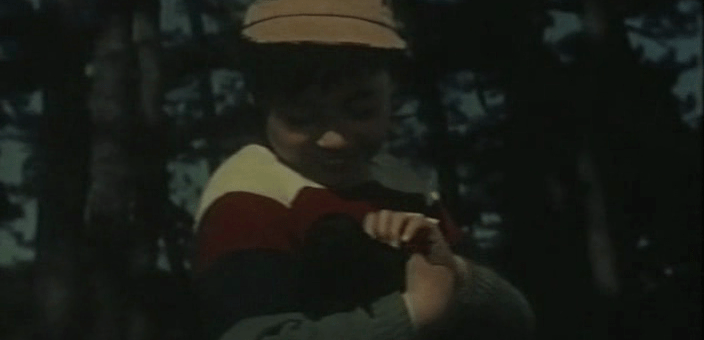
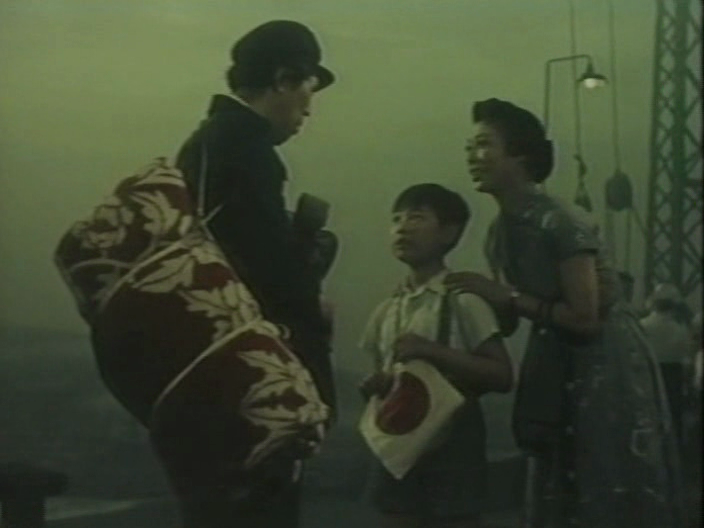
A small family struggles to repair itself after eight years of wartime separation in Heinosuke Gosho’s post-war melodrama, The Yellow Crow (黄色いからす, Kiiroi Karasu). Rather than focus directly on the legacy of the traumatic past, Gosho takes aim at war itself in making plain that the family’s problem is the time that was stolen from them each in a way forced to address the gulf between the idealised family life they may otherwise have had and the post-war reality. 

As the film opens, nine-year-old Kiyoshi (Koji Shitara) is sketching with his class at a temple. His teacher Miss Ashiwara (Yoshiko Kuga) is a little worried about the strange picture he’s drawing, noting that where once he had been a happy child painting cheerful pictures in vibrant colours now he only uses black and yellow and there’s unsettling quality in his composition. Still, trying to comfort him she tells Kiyoshi not to worry and that he’s free to draw whatever he likes, only later showing the paintings to a child psychologist who advises that these colours are often used by children who are anxious and lonely usually because they’ve lost a parent in the war. Only, Kiyoshi is lucky because he has both a mother and a father, his dad having been recently repatriated from China after being interned as a prisoner of war. 

In a sense it’s Miss Ashiwara’s misconception that the family must be happy because they’ve been so fortunate that lies at the centre of the conflict. Mother Machiko (Chikage Awashima) and father Ichiro (Yunosuke Ito) are so keen to get back to “normal” that no one really tries to address the obvious problems of their situation merely to reassume the lives they led before the war. For little Kiyoshi who wasn’t even born when his father left that sense of normality is very different and necessarily disrupted by his father’s return in what can only seem like an intrusion into closeness he had previously shared with his mother. 

Where another director or screenwriter may have told the entirety of the story from Kiyoshi’s point of view, Gosho pulls back to show us the way the adults struggle and suffer in their confusion and disappointment. On the surface, it does not seem that Ichiro has been particularly affected by his wartime service, rather the problem is in his frustrated attempts to reintegrate into a society which is entirely different from the one he left. He himself is older, and is perhaps acutely aware that he is a stranger to his son at first hurt by his shyness and reluctance to acknowledge him but then consumed by a sense of failure in a working life that leaves him little time to bond with his son leaving Kiyoshi with yet another sense of rejection. Meanwhile though his job was kept open for him, the nature of the business has changed. His boss is much younger than he is and has no interest in training an old timer he thinks is only really there as a goodwill gesture. As his friend points out, had it not been for the war he’d be a manager by now but as the boss puts it he’s returned to Japan “too late”. 

All of this adds to his sense of displacement and contributes to his increasingly harsh treatment of Kiyoshi, constantly discouraging all of his interests such as his fascination with animals and talent for drawing telling him only that he should be studying useful things like maths and science. His parenting style is evidently much more authoritarian than Machiko’s had been, often taking the view that Kiyoshi has been spoiled and needs some discipline instilling in him. But Kiyoshi reads his father’s treatment of him only as rejection, that must think he’s a bad boy and not want him. The resentment he feels only grows when the parents have another child, Mitsuko. It’s obviously much easier for Ichiro to bond with her than the already grown Kiyoshi while Machiko is both weak from the birth and mindful of a new responsibility all of which leaves Kiyoshi feeling pushed out and unwanted. He often takes refuge at the home of the kindly woman next-door, Yukiko (Kinuyo Tanaka), and her adopted daughter Haruko with whom he rescues animals, including a wounded crow, much to his father’s consternation. 

Always the wise observer, it’s Yukiko who finally tries to coax Machiko towards a resolution to challenge her husband’s authoritarianism. After his father accuses him of being a threat to Mitsuko and tries to shut him in the shed overnight, finally releasing his pet crow, Kiyoshi tries to run away and later returns to Yukiko’s house where he asks her to adopt him. Listening in secret, Machiko is heartbroken realising that they’ve been going about this all wrong, too busy trying blindly reassume the lives they had before when they should have met each other with more compassion and understanding trying to listen to Kiyoshi, who can admittedly at times be difficult and unreasonable unwilling to recognise when he is in the wrong, rather than instantly scolding him. Machiko’s story perhaps fades into the background, but she too is struggling having realised that her hopes that everything would finally be alright now that Ichiro has returned were misplaced while caught between her husband and her son with a baby daughter to care for trying to keep the peace if nothing else.   

Gosho apparently chose yellow after consulting with child psychologists* and filmed in full colour to make the most of Kiyoshi’s attempts at artistic expression while capturing his youthful sense of loneliness and displacement, but equally treats his parents with a degree of sympathy for their own confusion and disappointment. Ichiro is not a bad man and often trying his best but frustrated, admitting that he would have liked to simply forgive Kiyoshi and get closer to him as his father but for whatever reason found himself lashing out in misplaced anger. The message for the post-war society is then one of generalised compassion, that there’s no point blindly trying to reassume one’s life as if nothing had happened and patience and mutual understanding will be necessary to repair the bonds that war has corrupted. Thus it is Ichiro who has to change, dropping his authoritarian distance in deciding to be kinder to his son finally going out to look for him when he tries to run away in the middle of a storm returning the colours to Kiyoshi’s world as he begins to feel more secure in his familial connections in the knowledge that he is loved and wanted as a child of the new post-war generation. 


*Arthur Nolletti Jr., The Cinema of Heinosuke Gosho: Laughter Through Tears, pg. 185

Miss Oyu (お遊さま, Kenji Mizoguchi, 1951)

“I never realised how heavy this kimono was” a young woman exclaims towards the conclusion of Kenji Mizoguchi’s Miss Oyu (お遊さま, Oyu-sama), adapted from the Junichiro Tanizaki short story The Reed Cutter, finally collapsing under its weight having committed what amounts to an act of spiritual suicide in an internalised betrayal. Mizoguchi’s highly selective adaptation excises much of Tanizaki’s trademark perversity and targets instead the repressive social codes of the era which proceed to ruin three lives in frustrated affection, shame, and self-harming guilt. 

The trouble begins when Shinnosuke (Yuji Hori), a young man in search of a wife, mistakes his prospective bride for her sister and is forever smitten. Oyu (Kinuyo Tanaka), a widow with a young son, is only accompanying her younger sister, Oshizu (Nobuko Otowa), but is perhaps herself taken with the handsome suitor whom she repeatedly brands a “fine gentleman”. Having objected to all of Oshizu’s previous matches, she encourages her sister to marry this one not least because of his physical proximity that would allow the pair to visit each other regularly. The pain on Oshizu’s face is however readily apparent as Oyu relates the amusing incident to their brother, the younger sister clearly consumed with an inferiority complex in the shadow of the beautiful and elegant Oyu. 

It’s never quite clear to what extent Oyu is aware of her sister’s feelings, if she says these things thoughtlessly or with an intent to wound though she obviously cares deeply for Oshizu. Similarly the extent of her feelings for Shinnosuke remains oblique. As a woman well aware of her beauty and its power, perhaps she simply enjoys being desired or is so accustomed to male attention as to barely notice that Shinnosuke has fallen in love with her. Then again perhaps she knows all too well and for the sake of politeness pretends not to though in that case the decision to encourage her sister to marry him would seem perverse or suggest that she is attempting to deny her own feelings which she may not even understand by rendering Shinnosuke a “brother” in an attempt to remove him from the pool of potential romantic suitors. 

Even so there is an underlying quality of incestuous desire of Oshizu for her sister to whom she remains devotedly besotted, willing to sacrifice her own happiness in the hope of ensuring Oyu’s. After agreeing to marry Shinnosuke, she explains to him that she intends their marriage to be purely symbolic. She refuses to consummate their union on the grounds that it would be a betrayal of Oyu whom she knows to be in love with Shinnosuke while realising that he has married her only to be connected with her sister. When the trio take a trip together the strangeness of the ménage à trois is brought home by the confusion of the hotel maid who assumes that Oyu and Shinnosuke are the married couple, commiserating with Oshizu for being a third wheel. While Oyu childishly makes light of it, Oshizu is hurt and confused, jealous in two directions but pleading with Shinnosuke to be only his sister rather than a wife. 

Yet the wrongness of the arrangement is signalled on Oyu’s return home when she discovers not only that her son, Hajime, has fallen mortally ill in her absence but that rumours have begun to circulate about her unusual relationship with her brother-in-law. It is impossible to avoid the implication that Oyu is being punished firstly for betraying her maternity in having gone on holiday without her son to experience freedom as a woman, secondly for feeling sexual desire, and thirdly for feeling it for a married man who is now technically a brother in being her sister’s husband though as we know no one’s sexual desires are currently being fulfilled in this incredibly complicated and destructive arrangement. 

Though Tanizaki might have been more interested in exploring the darker aspects of human sexuality, Mizoguchi pulls back from the author’s trademark perversity to take aim at the repressive social codes of a patriarchal society which brought such a fraught situation into being. Oyu is unable to marry Shinnosuke because she is bound to her late husband’s family and by the responsibility to her son whom she would have to leave behind even if she were given permission to take another husband. Once her son dies, her ties to marital family are severed and they, disapproving of the rumours surrounding her unconventional relationship with her sister and brother-in-law, send her back to her brother who is also reluctant to accept her. On learning of the reality of her sister’s marriage, she decides to accept a proposal from a sake merchant in another town but the separation breeds only more destruction. Oshizu and and Shinnosuke move to Tokyo and three years later are living in poverty, Shinnosuke now dishevelled and dressing in Western suits with a modern haircut and a scraggly, half-hearted moustache. Oshizu’s eventual pregnancy which confirms that theirs is now a “full” union while Oyu’s is “symbolic” only the slows implosion of the trio’s repressed desires. 

Mizoguchi stops short of arguing for a transgressively new arrangement that would have allowed the trio to live together as a family but nevertheless attacks the repressive social codes that prevent them from speaking honestly about their feelings and force them into self-sacrificing acts of subterfuge which create only more suffering. He dramatises the claustrophobia of their lives through the obvious artificially of the stage sets which stand in such stark contrast to the expansive beauty of nature albeit sometimes unruly but always free, while lending their tragic tale a hint of the parabolic in its mists and rugged gardens as Shinnosuke finds himself alone under the cold light of the moon on a distant shore, a romantic exile from a repressive society. 


Song of the Flower Basket (花籠の歌, Heinosuke Gosho, 1937)

The daughter of a tonkatsu shop finds herself with an overabundance of suitors in Heinosuke Gosho’s generally cheerful yet occasionally dark melodrama Song of the Flower Basket (花籠の歌, Hanakago no Uta). Adapted from a novel by Fumitaka Iwasaki and scripted by Kogo Noda, the film finds its heroine caught at a moment of social change as she battles her snooty aunt for the right to decide her romantic future while her impoverished student boyfriend does something much the same in defying his family’s attempts to micromanage his life dreaming of the bright lights of Ginza. 

Yoko (Kinuyo Tanaka) is the “kanban musume” of her father Keizo’s (Reikichi Kawamura) pork cutlet restaurant, attracting customers with her charm and beauty while the Chinese chef her father brought back with him from Shanghai, Lee (Shin Tokudaiji), is the culinary star. Lee is secretly in love with Yoko whom he continues to refer to largely as “the young lady” and has long been writing an ode in her honour. Yoko meanwhile is in love with a penniless student, Ono (Shuji Sano), who at the beginning of the film has just returned home after visiting his family whom he has alienated by declaring that he doesn’t want to work in an office in the country while refusing an offer to marry into another family as an adopted son-in-law. The reason for this is less his pride than his desire to stay in Tokyo amid the bright lights of Ginza, sighing as he looks out into the neon-lit night gazing at adverts for Club Hamigaki toothpaste and Meiji Chocolate. The second reason may also be that he’s fallen for Yoko but given his precarious financial situation and lack of prospects does not quite dare to imagine a future with her. 

He must however be serious as we later learn he’s given up going to hostess bars with his friends, a bar girl greeting him in the restaurant evidently not having seen him in ages asking where he’s been much to Yoko’s embarrassment. The encounter places a seed of doubt in her mind in a minor role reversal as she begins to resent Ono’s past irrationally annoyed by the idea he has dated other women. Meanwhile, at the memorial event marking 11 years since her mother passed away while working as a steward on a boat in Singapore, Yoko’s snooty aunt tries to set her up with an arranged marriage to an Osakan doctor who may or may not marry depending on the “negotiations” but has also been promised his own clinic by his wealthy parents if the marriage is confirmed. Okamoto (Toshiaki Konoe) has visited the restaurant to get a better look at Yoko making him the third suitor to encircle her even though the chief concern of the family is that Yoko is almost 24 and therefore ageing out of top tier matches.  

To his credit, Yoko’s father is fully in her corner trying to stand up to the domineering aunt who is definitely overreaching in trying to micromanage the romantic lives of her nieces in the absence of her sister. He determines to find out if Yoko has her eye on someone already to get the aunt off their backs, but the situation develops in an unexpected direction when Lee mistakenly assumes that she likes him back. Too shy to say himself, he advises Keizo to ask frequent customer and best friend of Ono, Hotta (Chishu Ryu), who is on track to become a Buddhist priest and take over the family temple, only Hotta obviously tells him, correctly, that Yoko is in love with Ono having completely forgotten that Lee had once confessed his feelings to him. 

The film does its best to present a more positive vision an internationalist Japan even in 1937 despite the Aunt’s obvious disapproval of the family’s wandering past and is largely sympathetic of the lovelorn Lee yet implies that a romance between he and Yoko is so unthinkable that no one really considered the possibility that he may be in love with her himself even though it is incredibly obvious given his ongoing attempts to write a love song while he’s even torn out a picture of Yoko which appeared in a magazine and hung it on his wall. Yoko is oblivious to his feelings, believing that he is in love with their waitress, Oteru (Yaeko Izumo), who is indeed in love with him, and perhaps doesn’t appreciate the effect moving Ono in as a trainee chef will have on him both professionally and emotionally. The message that is emerges accidentally or otherwise is that Lee’s place at the cafe is insecure despite his skill being a large part of its success as he falls into a deep depression and eventually decides it’s too painful for him to stay. 

The revelations surrounding Lee further destabilise Yoko’s confidence in her choice of Ono whom she constantly doubts even suspecting he may have committed a violent crime when carted off by the police after newspaper reports stating the bar hostess he introduced her to earlier has been murdered in her apartment. Perhaps it’s normal enough to be uncertain if you’ve made the right choice in the early days of a marriage, but believing your spouse capable of murder is a significant stumbling block as is her final admission that she doesn’t really trust him and isn’t ready to accept his past with other women in a further reversal of their roles given he has now married into her family and taken her name. Nevertheless, the crisis seems to be repaired by her father’s simple act of ordering a round of beers making clear that he plans to celebrate and obviously still has confidence in Ono while preparing to adapt their restaurant to their new circumstances by branching out into sukiyaki. Expressing some of the anxieties of the 1930s from the precarious economy and uncertainty of the future to changing social mores as young people reject the traditional to craft their own romantic futures, Song of the Flower Basket nevertheless ends on a note of melancholy in the wandering Lee’s ode to loneliness and heartbreak under the neon lights of Ginza.


Record of a Woman Doctor (女医の記録, Hiroshi Shimizu, 1941)

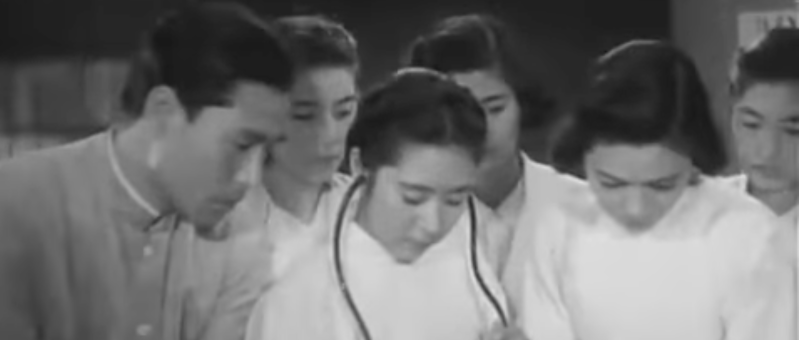
By 1941 it was becoming harder to make films which were strictly apolitical, though many directors were able to circumvent the constraints of a tightening censorship regime in focusing on the kinds of messages they could get behind. Hiroshi Shimizu’s 1941 drama Record of a Woman Doctor (女医の記録, Joi no Kiroku) is in essence a public information film hoping to foster better hygiene practices in rural areas while encouraging those who might have felt mistrust towards modern medical professionals that they need have no fear of doctors, but in its own way presents a challenge to the militarist line in implying that the humanist teacher and female doctor of the title are in a sense “re-educated” though their exposure to the rural poor. 

As the film opens, a collection of medical students from Tokyo Women’s Medical University is sent to a small rural village as part of a pop-up free clinic in an area which otherwise has little access to professional healthcare. As the school teacher, Kamiya (Shin Saburi), who is their liaison explains, the the major health problems faced by the villagers are largely those of poverty, i.e. malnutrition, while infant mortality remains high. Each of these is compounded by the contemporary economic and social realities in that the young often leave to work in cities and then bring back with them urban diseases such as tuberculosis to which the locals are especially vulnerable while in the absence of a professional doctor medical emergencies such as appendicitis or complications with childbirth which might be easily treated are often fatal. 

Even so, the villagers are not initially grateful for the doctors’ arrival for various interconnecting reasons. The first is obviously their poverty, not realising that the clinic is free and assuming they cannot afford to take advantage of it. Secondly, they have experience of being ripped off by duplicitous conmen calling themselves doctors and fear that they will simply incur a large debt to be paid at a later date, wary that though the consultation may be free the treatment may not be, the doctor suddenly discovering they are actually incredibly ill and must part with a lot of money in order to redeem their health. The third reason, meanwhile, is older still in the intense stigma surrounding sickness and particularly any respiratory condition. 

These are all the attitudes the doctors and the film intend to challenge in insisting that modern medicine is both safe and responsible, interested only in helping prevent the onset of sickness rather needlessly meddling in their way of life. All from the city, the conditions in this small mountain village necessarily shock the doctors noting that the villagers have no culture of regular bathing, often wear the same clothes day and night for indefinite amounts of time with no washing, never air their futons, and live in dark and poorly ventilated homes. The authorities have often recommended felling a thick circle of trees which surrounds the village to let more light in and allow the breeze to travel through though the villagers have always refused. 

The felling of the trees takes on a symbolic association of freeing the village from primitive superstition, literally enlightening it, as they shift closer towards modernity in learning the importance of proper sanitation. In a sense these ordinary rural people are being patronised, even sympathetic teacher Kamiya describing them as “culturally deprived” while later implying that he himself has been reformed by their simple way of life. Kamiya’s life is certainly not easy, effectively acting as something like a village headman called in to deal with any sort of local problem while often providing childcare to the infants brought in by his pupils who are supposed to be minding their siblings while the parents work in the fields but are not always completely responsible. Earnest doctor Natsuki (Kinuyo Tanaka) is later much the same, touched by the plight of a local girl suffering with TB kept like a secret in the back room by her mother after being sent back from her factory job. The mother is intent on sending the younger sister in her place even though she too is in poor health because the family is without a male earner and unable to support itself. 

The fact that the doctors are all female may in itself be somewhat progressive but also speaks of the times, the male medical students presumably diverted to the military ironically reinforcing the idea that “domestic” concerns are women’s concerns, something echoed in the film’s concluding scenes which see Natsuki, a qualified doctor, operating a daycare centre taking care of local infants while Kamiya runs a callisthenics session behind her. Conversely, it’s also implied that Natsuki must give up her womanhood or any sense of personal desire in order to dedicate herself to the village making it quite clear that there is no possibility of a romantic connection with Kamiya. Even so, the secondary message seems to be that the key to inspiring confidence lies in a process of mutual understanding, Natsuki belatedly realising she’s accidentally alienated some of the local children by usurping their position as caregivers to Kamiya, less relieving them of a burden than firing them from a job they were proud to do while the only real way to gain the villagers’ trust is to listen to their concerns and show them they really do care about their welfare. The subtext may be that their health is important because healthy bodies are needed to fuel the war effort, but even so you can’t argue with the humanist message even as Shimizu’s subversive implication that one can learn alot from the simple way of life cuts against the militarist grain.