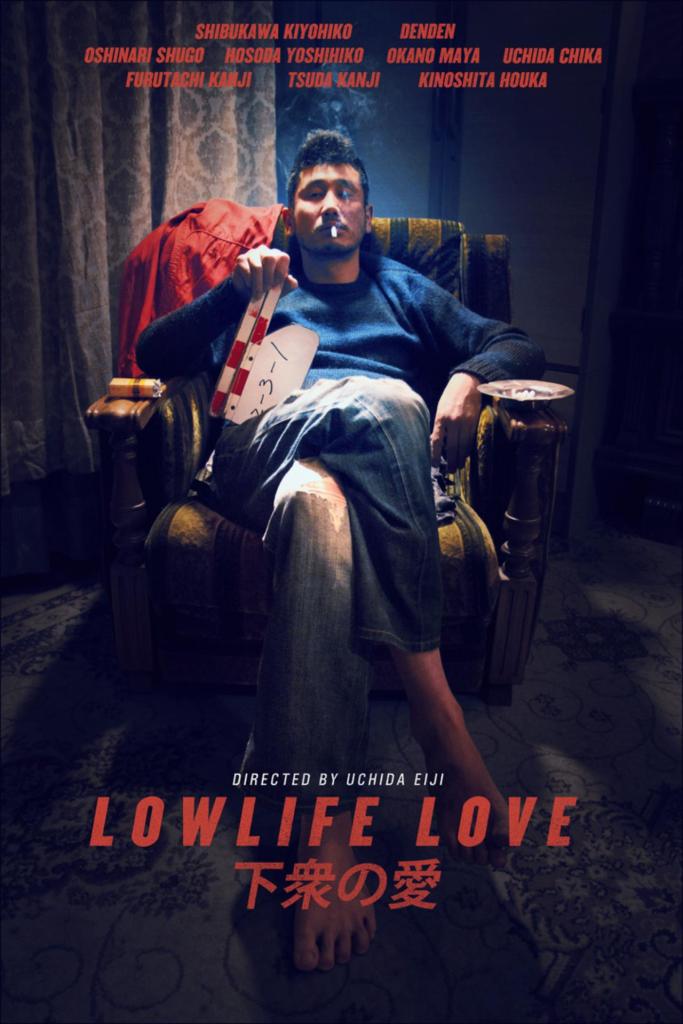
 “What would John do?” is a question Cassavetes loving indie filmmaker Tetsuo (Kiyohiko Shibukawa) often asks himself, lovingly taking the framed late career photo of the godfather of independent filmmaking in America down from the wall. Unfortunately, if Cassavetes has any advice to offer Tetsuo, Tetsuo is not really paying attention. An example of the lowlife scum who appear to have taken over the Japanese indie movie scene, Tetsuo hasn’t made anything approaching art since an early short success some years ago and mainly earns his living through teaching “acting classes” for young, desperate, and this is the key – gullible, people hoping to break into the industry.
Despite ripping off the next generation, Tetsuo’s financial situation is not exactly rock solid as he still lives at home with his parents and younger sister and even resorts to stealing his elderly mother’s pension money all in the name of art. A low level sociopath, he bangs on about movies and artistic integrity whilst using his directorial authority to pull young and naive would be actresses onto the casting couch with promises to make them a star through the massively successful movie he’s supposedly about to make (but probably never will).
His world is about to change when he encounters two still hopeful entrants into the movie industry in the form of aspiring actress Minami (Maya Okano) and shy screenwriter Ken (Shugo Oshinari ). Ken’s script is good, and Minami shows promise as an actress but also a backbone as she’s unwilling to give in to Tetsuo’s clumsy pass at her through what actually amounts to an attempted rape in the (unisex) toilet of a seedy bar. And they say romance is dead!
Soon enough a rival appears on the scene in the form of a more successful director who abandoned the indie world long ago in favour of the golden cage of the studio system. Tetsuo calls him a sell out, but as his own world crumbles Tetsuo finally gets a much needed reality check that leaves him wondering how much “integrity” there is in his current life which is based entirely on exploitation yet produces nothing but cheap, instant gratification.
This is a film about a sociopathic, pretentious, and above all lazy “film director” who is being cast as a representation of a certain type of guy found the lowest edges of the indie film scene. Lowlife Love seeks to illuminate the inherent misogyny in the cinema industry and more particularly at the bottom of the ladder where the desperate masses congregate, each waiting for someone to extend a hand down to those below that will help them onto the higher rungs, but this is less about the subjugation of women and the way their lack of status is consistently used against them than it is about Tetsuo’s own fecklessness. Tetsuo probably could make a movie, but he doesn’t. He just talks about making movies. The system isn’t the problem here, Tetsuo is just a useless person with almost no redeeming features.
The successful director, Kano, and the ones that follow him are barely any better. Minami says at one point that directors are all crafty, filthy, bitter, and annoying – on the basis of these examples she is not wrong. Kano replies that filmmaking is like a drug, once you’re in there’s no out and you’ll do anything just to be allowed to stay. These guys are all hollow, desperate creatures, craving validation through “artistic success” but finding it through easy, loveless sex with “obliging” actresses equally eager to play this unpleasant game solely to avoid being thrown out of it or worse onto a lower stratum altogether.
Minami’s path is either one of growth or corruption depending on your point of view but the extremely shy, naive and innocent girl dreaming of becoming, not a star, but a successful actress, is gradually replaced by a manipulative dominatrix well versed in the rules of the game and unafraid to play it to the max. Whether her success is a fall or a victory is likewise a matter for debate but it contrasts strongly with the similar struggles of the veteran actress Kyoko (Chika Uchida) who even has a friend doing research on her targets so she can assess their usefulness before going all the way.
Unfortunately for her, even when she hits on a useful contact promises are easily broken, especially when you’ve already played your only bargaining chip and another, prettier player steps onto the field. A deleted scene features an embittered actress attempting to take her own life and uttering the final words that she never cared about stardom, she just wanted to keep on acting. This is an all too real response to an age old problem but one that Tetsuo and his like are much more willing to perpetuate than ease, even whilst mourning the loss of a friend to the unreasonable demands of their own industry.
Famously funded by a Kickstarter campaign and personal sacrifices of its producer, Lowlife Love features unusually high production values for an indie film and a fairly high profile cast including its leading actor, Kiyohiko Shibukawa, who has become something close to modern Japanese indie cinema’s most recognisable star. Performances are excellent across the board though the picture the film paints of the no budget indie world is extremely bleak and mean spirited. Porn, gangsters, exploitation, prostitution, and a lot of rubbish about creating art makes one wonder why anyone bothers in the first place but then we’re back to Kano’s conundrum and taking down our pictures of Cassavetes to ask what John would do. Sleazy, unpleasant and cynical, Lowlife Love’s cast of dreadful people in difficult situations yet, apparently, dreaming of the stars, is all too plausible if a little hard to watch.
Lowlife Love (下衆の愛, Gesu no Ai) was financed through a Kickstarter campaign run by Third Window Films and is currently shipping to backers with a regular retail release scheduled for a later date.
Lowlife Love will also be shown as part of the Edinburgh International Film Festival on 22nd and 23rd June 2016.
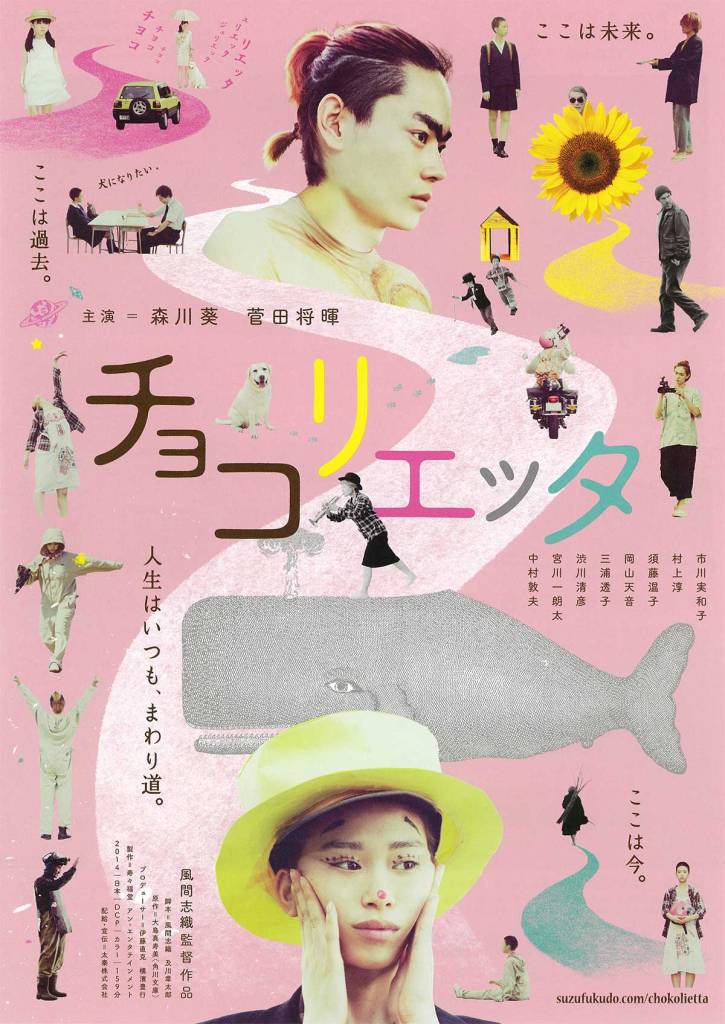 When examining the influences of classic European cinema on Japanese filmmaking, you rarely end up with Fellini. Nevertheless, Fellini looms large over the indie comedy Choklietta (チョコリエッタ) and the director, Shiori Kazama, even leaves a post-credits dedication to Italy’s master of the surreal as a thank you for inspiring the fifteen year old her to make movies. Full of knowing nods to the world of classic cinema, Chokolietta is a charming, if over long, coming of age drama which becomes a meditation on both personal and national notions of loss.
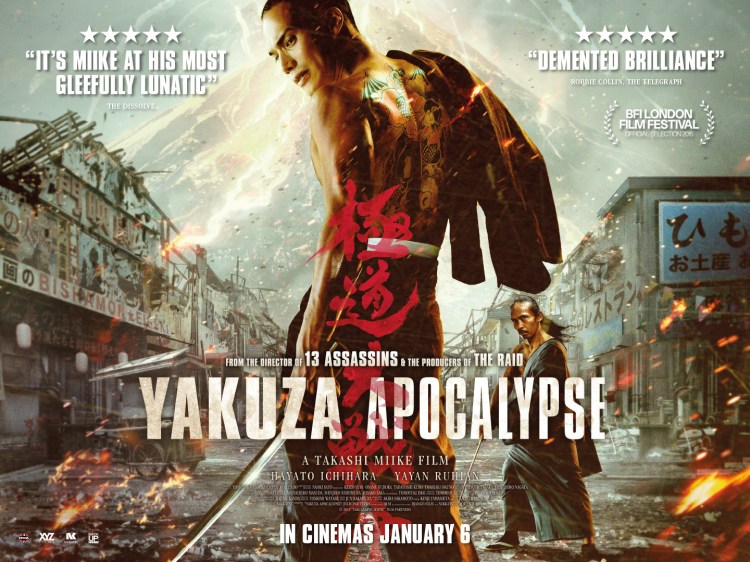 Belated review from the 2015 London Film Festival – Yakuza Apocalypse is released in UK cinemas for one day only on 6th January 2016 courtesy of Manga who will also be releasing on home video at a later date.
 Yaro Abe’s manga Midnight Diner (深夜食堂, Shinya Shokudo) was first adapted as 10 episode TV drama back in 2009 with a second series in 2011 and a third in 2014. With a Korean adaptation in between, the series now finds itself back for second helpings in the form of a big screen adaptation.

 Windows on Worlds