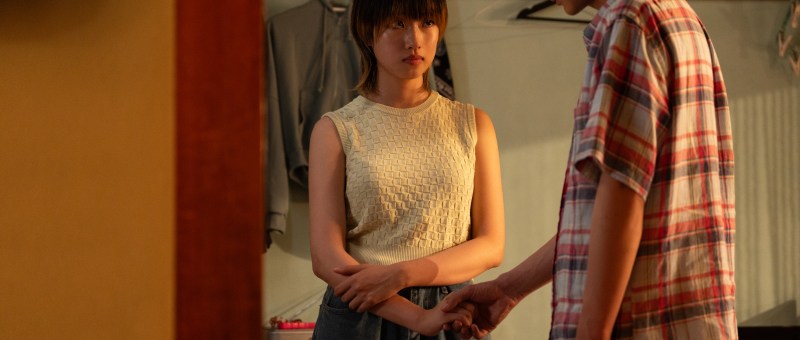

A well-meaning social worker finds himself dragged into an exploitative yakuza scam after trying to expose a colleague’s misconduct in Hideo Jojo’s adaptation of the novel by Somei Tamehito, A Bad Summer (悪い夏, Warui Natsu). Sasaki’s (Takumi Kitamura) colleagues are beginning to doubt he has what it takes for the job primarily because he is “too nice” and has trouble dealing with those who, to his superiors at least, are obviously misusing the system to claim benefits they aren’t entitled to. According to his hard-nosed colleague Miyata (Marika Ito), social welfare exists for those who find themselves “unavoidably” thrown into dire living conditions, which necessarily implies a degree of moral judgement on her part, while Sasaki is it seems keener to give people the benefit of the doubt and wants to try to help them even if it turns out they have been defrauding him.
“We must survive as bulwarks against moral decay,” Miyata intones, somewhat ironically, while pointing out that people who misuse the system make everything more difficult for “honest” clients. Sasaki later asks what exactly her morality is, but all she says is that the rules are the rules and any breach of them should be punished. The real world, however, is rarely so black and white. The truth is that it’s become too difficult to survive in this capitalistic society and a regular job alone no longer pays enough to support a single person let alone a family.
While Sasaki falls deeper into an abyss of exploitation, a widowed single mother struggles to find a job while caring for her son that will keep them fed and a roof over their head. A woman at the factory where she eventually finds employment tells her about the welfare system, but she says she feels bad about taking other people’s money. That she later succumbs to shoplifting out of desperation suggests it was more the shame, humiliation, and stigma that kept her from applying. When she does eventually ask for help, she finds Sasaki in a downward spiral shouting at her for being an irresponsible mother and emphasising that benefits are only for those who’ve exhausted all other options, which she of course has, but is still made to feel like criminal just for reaching out. Though she is a prime example of the people they exist to help, Sasaki turns his back on her with potentially tragic consequences.
Other people had suggested to the widow that she simply remarry, laying bare to the extent to which women are still expected to remain economically dependent on men even in the 21st century. Another single mother, 22-year-old Aimi (Yumi Kawai), was convinced to apply for benefits by her friend Rika (Yumena Yanai), a bar hostess in a similar situation, but is sexually exploited by her case worker Takano (Katsuya Maiguma) who threatens to expose that she’s been working more ours than permitted meaning her benefits would stop. It’s also Rika who convinces her to get her yakuza boyfriend Ryu (Masataka Kubota) involved to sort out Takano, but he has another clever plan to use Takano as part of a popular yakuza scam in which they round up homeless people who may not know the benefits system exists and get them to apply so they can take most of their money while housing them in shelters they own. The plan is foiled when Miyata claims to have received a tip-off about Tanako exploiting his clients and enlists Sasaki to help investigate.
Sasaki seems genuinely interested in Aimi’s welfare along with that of her five-year-old daughter Misora which makes him the target of a side scam being run by Yamada (Pistol Takehara), one of his own clients who’s been fraudulently claiming on the grounds of an old back injury. The tragic thing is that Aimi, who seems to have had a disordered childhood herself, positively responds to the compassionate care offered by Sasaki who drifts into a relationship with her that is romantic and borderline inappropriate, though he is not her social worker and hasn’t done anything wrong. Aimi begins to see a more settled, ordinary life for herself which is eventually disrupted by destructive force of yakuza violence as Ryu forces Sasaki to process claims for the homeless people he’s exploiting.
The wretchedness of his situation begins to destroy Sasaki’s integrity, which was according to Miyata their only real weapon against those who cheat the system. Unable to tell whether Aimi’s feelings for him were ever genuine, something she isn’t entirely sure of either, he sinks into a moral abyss having become all too aware of the chain of exploitation which exists in the contemporary society. The farcical, expressionist conclusion may signify that even when you fight back, nothing really changes and the only people who lose out are the most vulnerable, but there does at least seem to be a better life in sight for Aimi and Misora having escaped at least of the forces which were constraining them.
A Bad Summer screens as part of this year’s Japan Foundation Touring Film Programme.


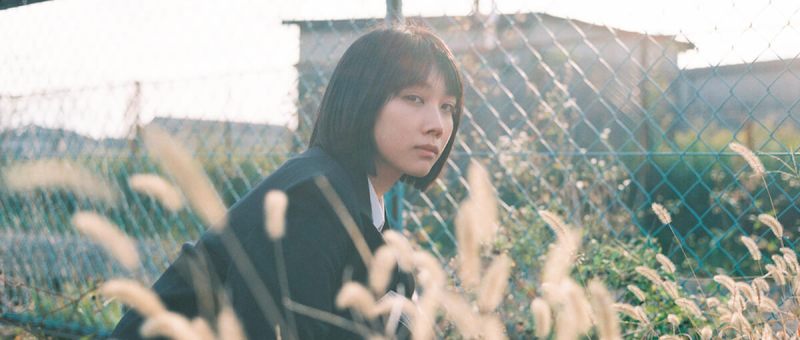
 The “jun-ai” boom might have been well and truly over by the time Takahiro Miki’s Girl in the Sunny Place (陽だまりの彼女, Hidamari no Kanojo) hit the screen, but tales of true love doomed are unlikely to go out of fashion any time soon. Based on a novel by Osamu Koshigaya, Girl in the Sunny Place is another genial romance in which teenage friends are separated, find each other again, become happy and then have that happiness threatened, but it’s also one that hinges on a strange magical realism born of the affinity between humans and cats.
 Generally speaking, murder mysteries progress along a clearly defined path at the end of which stands the killer. The path to reach him is his motive, a rational explanation for an irrational act. Yet, looking deeper there’s usually something else going on. It’s easy to blame society, or politics, or the economy but all of these things can be mitigating factors when it comes to considering the motives for a crime. Gukoroku – Traces of Sin (愚行録), the debut feature from Kei Ishikawa and an adaptation of a novel by Tokuro Nukui, shows us a world defined by unfairness and injustice, in which there are no good people, only the embittered, the jealous, and the hopelessly broken. Less about the murder of a family than the murder of the family, Gukoroku’s social prognosis is a bleak one which leaves little room for hope in an increasingly unfair society.
 There’s a slight irony in the English title of Yoshitaka Mori’s tragic shogi star biopic, Satoshi: A Move For Tomorrow (聖の青春, Satoshi no Seishun). The Japanese title does something similar with the simple “Satoshi’s Youth” but both undercut the fact that Satoshi (Kenichi Matsuyama) was a man who only ever had his youth and knew there was no future for him to consider. The fact that he devoted his short life to a game that’s all about thinking ahead is another wry irony but one it seems the man himself may have enjoyed. Satoshi Murayama, a household name in Japan, died at only 29 years old after denying chemotherapy treatment for bladder cancer in fear that it would interfere with his thought process and set him back on his quest to conquer the world of shogi. Less a story of triumph over adversity than of noble perseverance, Satoshi lacks the classic underdog beats the odds narrative so central to the sports drama but never quite manages to replace it with something deeper.
 Toshiaki Toyoda made an auteurst name for himself at the tail end of the ‘90s with a series of artfully composed youth dramas centring on male alienation and cultural displacement. Attempting to move beyond the world of adolescent rage by embracing Japan’s most representative genre, the family drama, in the literary adaptation
  The work of director Yuki Tanada has had a predominant focus on the stories of independent young women but The Cowards Who Looked to the Sky sees her shift focus slightly as the troubled relationship between a middle aged housewife who escapes her humdrum life through cosplay and an ordinary high school boy takes centre stage. Based on the novel of the same name by Misumi Kubo, The Cowards Who Looked to the Sky (ふがいない僕は空を見た, Fugainai Boku wa Sora wo Mita) also tackles the difficult themes of social stigma, the power of rumour, teenage poverty, elder care, childbirth and even pedophilia which is, to be frank, a little too much to be going on with.
 Windows on Worlds