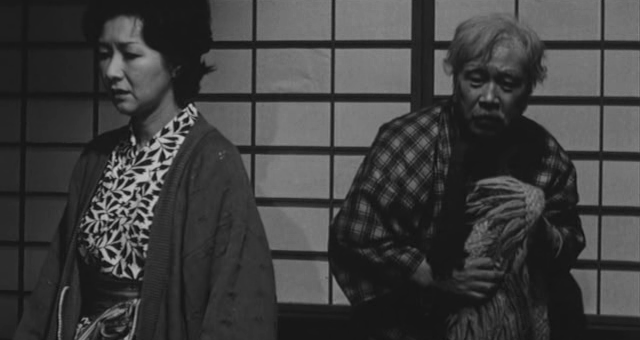
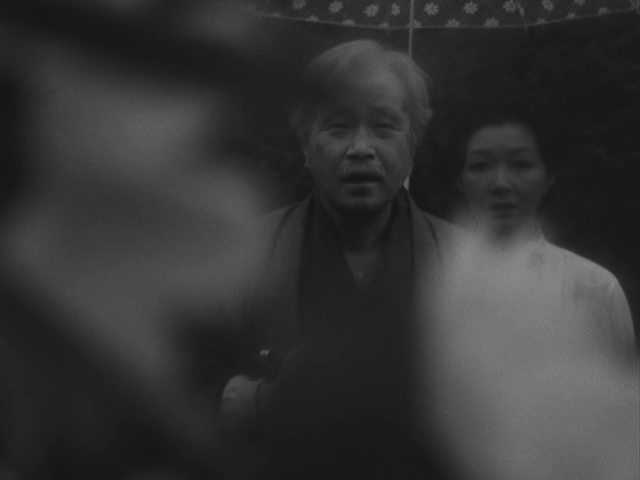
In the early 1970s Japanese society was not as concerned with population slowdown as it would come to be, but Shiro Toyoda’s sympathetic ageing drama The Twilight Years (恍惚の人, Kokotsu no Hito) is evidence of a growing consciousness that traditional ideas about how one cares for the elderly may now be becoming incompatible with the functioning of modern society. Based on a best-selling novel by Sawako Ariyoshi, the film has profound empathy both for the ageing patriarch once apparently a tyrant but now a meek and frightened child, and the daughter-in-law to whom his care largely falls.
In fact, it’s caring for Shigezo (Hisaya Morishige) that some believed shortened the lifespan of his late wife who passes away in the film’s opening scenes. Already somewhat detached from reality, Shigezo simply reports that his wife won’t wake up no matter how much he tries to wake her, much like a child who’s discovered someone no longer living. While his daughter-in-law Akiko (Hideko Takamine) rushes to her room with a sense of foreboding, Shigezo merely stays in the kitchen eating boiled potatoes straight out of the pan. It’s the odd behaviour that seems to irk his son Nobuyoshi (Takahiro Tamura) but it’s only now that the couple seem to be realising that there’s something wrong especially as Shigezo does not appear to understand that his wife has died. Pitiably, he chides her for lounging around so late in the day when she’s already been laid out for her funeral.
When his daughter, Kyoko (Nobuko Otowa), arrives having actually missed the funeral itself due to transport issues and a conflicting responsibility to act as a matchmaker at a wedding, Shigezo doesn’t recognise her. He continues to ask for Akiko and gradually forgets most of the other people in his life, screaming when encountering Nobuyoshi and instructing Akiko to call the police to report a burglar in their home. According to both women, Shigeyoshi had treated Akiko poorly ever since she joined their family, which makes caring for him so much harder. The reason he becomes so attached to Akiko is likely simply that she is the person who is always around him so he has less time to forget her. He may realise on some level that she may not wish to care for him given his previous behaviour which may be why he becomes preoccupied with the idea she may “disappear” and cries out in the night when he can no longer see her.
But Akiko also has other responsibilities including a job outside the home and a teenage son studying for his exams. Nobuyoshi expresses regret that he hasn’t been more help and voluntarily tries to pitch in, but lets himself off the hook given that his father doesn’t recognise him and becomes anxious in his presence. Satoshi (Izumi Ichikawa) meanwhile does try to do his bit but is young and a little resentful of the responsibility. As his dementia becomes more severe, Shigezo begins calling Satoshi “Dad” as if he were a child again. Which is all to say, Shigezo becomes Akiko’s responsibility and the strain of caring for him begins to affect her own mental and physical health leading her to fear that she too may die younger than she otherwise might have.
Yet in exploring her options, Akiko finds little by way of support. Most nursing homes won’t accept patients with complex needs like Shigezo and conditions such dementia are often regarded as mental illnesses meaning her only option might be to put him in an asylum. Shigezo was attending an old person’s daycare centre, but later says he doesn’t want to go anymore because it’s full of old people and therefore no fun. While the film is sympathetic towards Akiko and the difficulties she is facing in caring for her father-in-law it also has profound empathy for Shigezo for though he has so many people who are doing their best to look after him, his increasing mental confusion quite obviously leaves him isolated and he must be incredibly lonely while trapped within his own reality. He develops a habit of saying “hello, hello,” as if he were answering the telephone which may be his attempt to communicate while he is also fascinated with a caged bird which may reflect his own sense of being constrained by his condition.
Later, the bird seems to symbolise Akiko too, trapped as she is within the domestic environment where all responsibility seemingly falls to her. Even so a young student couple she rents the annex to for a lower price in exchange for keeping an eye on Shigezo during the day remark that he may be in the ideal state for a human being having returned to early childhood in which there are no concerns or responsibilities and he is therefore unburdened by the weight of what is to live. Toyoda often uses handheld camera to symbolise the desperation and destabilisation of Shigezo’s existence in which Akiko has become his only fixed point. One of Nobuyoshi’s friends remarks that perhaps it was better when the average life expectancy was 50 and Nobuyoshi’s mother might have been lucky passing away peacefully while otherwise in good health. Still, as Nobuyoshi says, it comes for us all in the end and we should all try to be kinder to each other while we’re here.


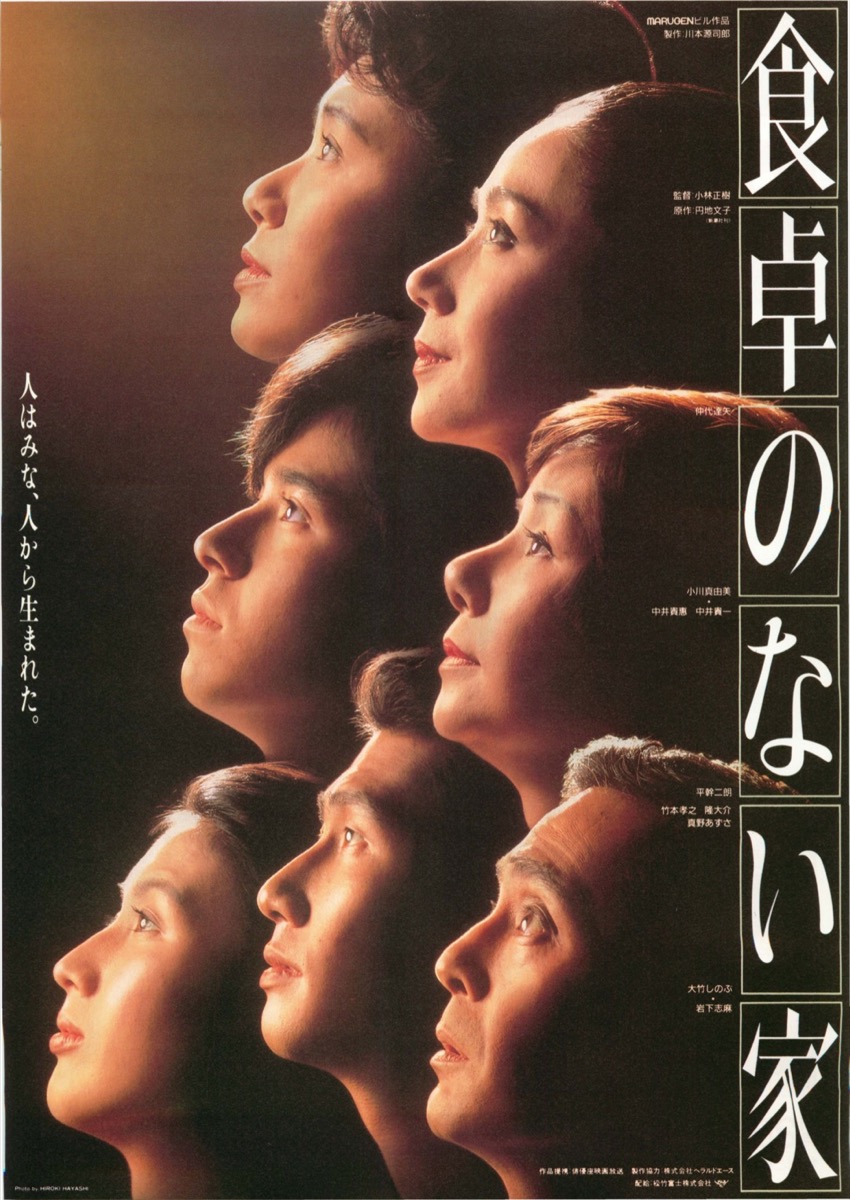
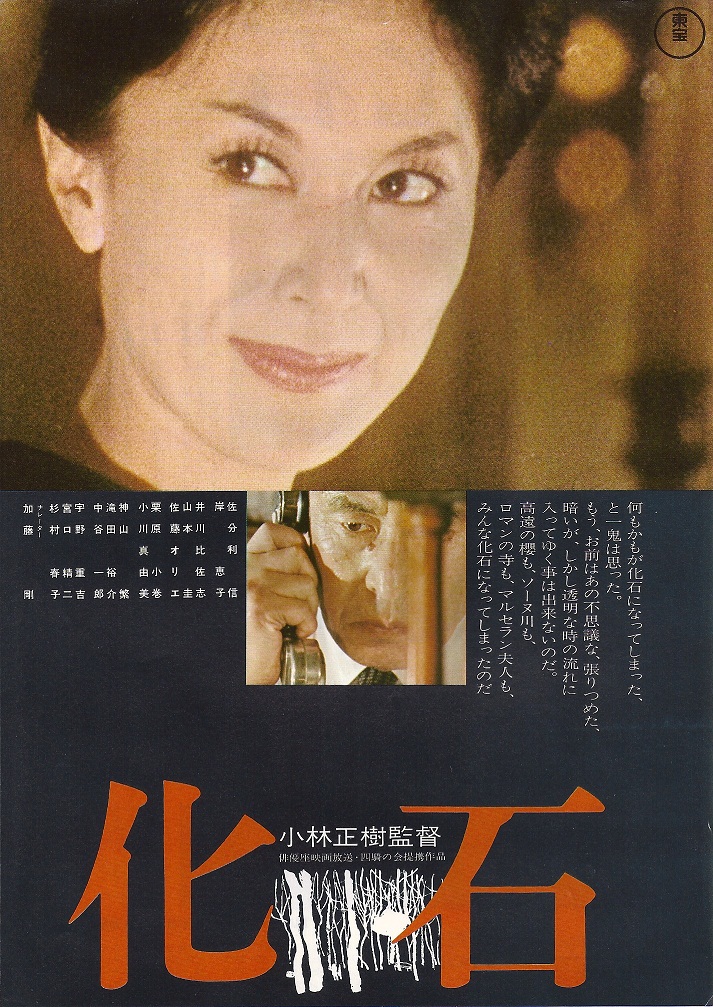 Throughout Masaki Kobayashi’s relatively short career, his overriding concern was the place of the conscientious individual within a corrupt society. Perhaps most clearly seen in his magnum opus,
  “Sometimes it feels good to risk your life for something other people think is stupid”, says one of the leading players of Masaki Kobayashi’s strangely retitled Inn of Evil (いのちぼうにふろう, Inochi Bonifuro), neatly summing up the director’s key philosophy in a few simple words. The original Japanese title “Inochi Bonifuro” means something more like “To Throw One’s Life Away”, which more directly signals the tragic character drama that’s about to unfold. Though it most obviously relates to the decision that this gang of hardened criminals is about to make, the criticism is a wider one as the film stops to ask why it is this group of unusual characters have found themselves living under the roof of the Easy Tavern engaged in benign acts of smuggling during Japan’s isolationist period.
 Windows on Worlds