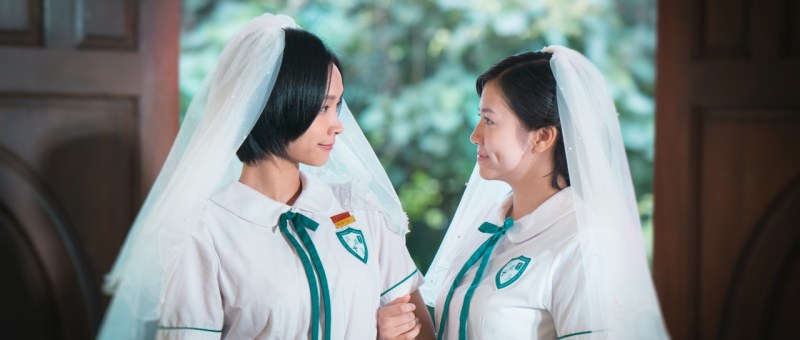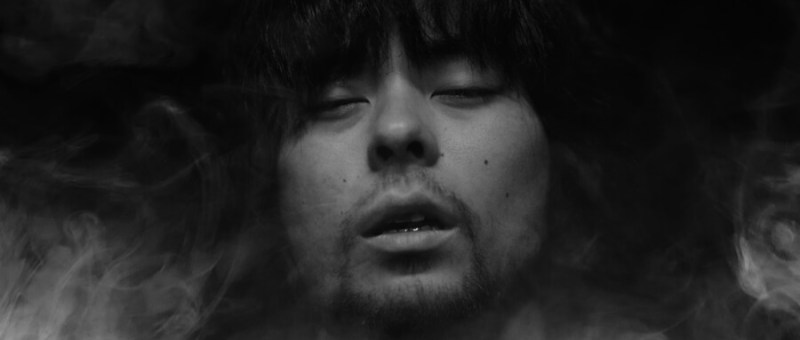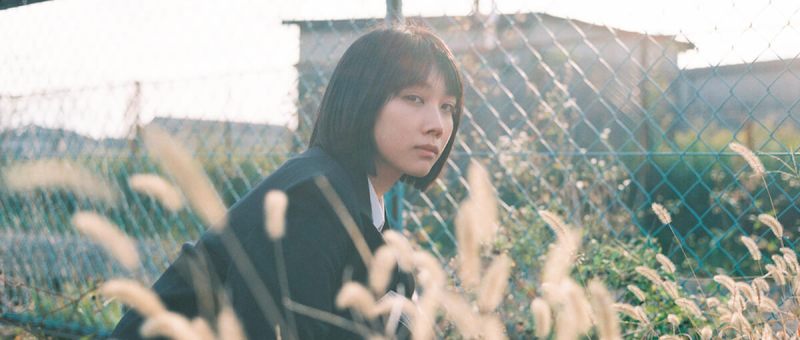
Girls’ School (女子學校, Mimi Lee, 1982)

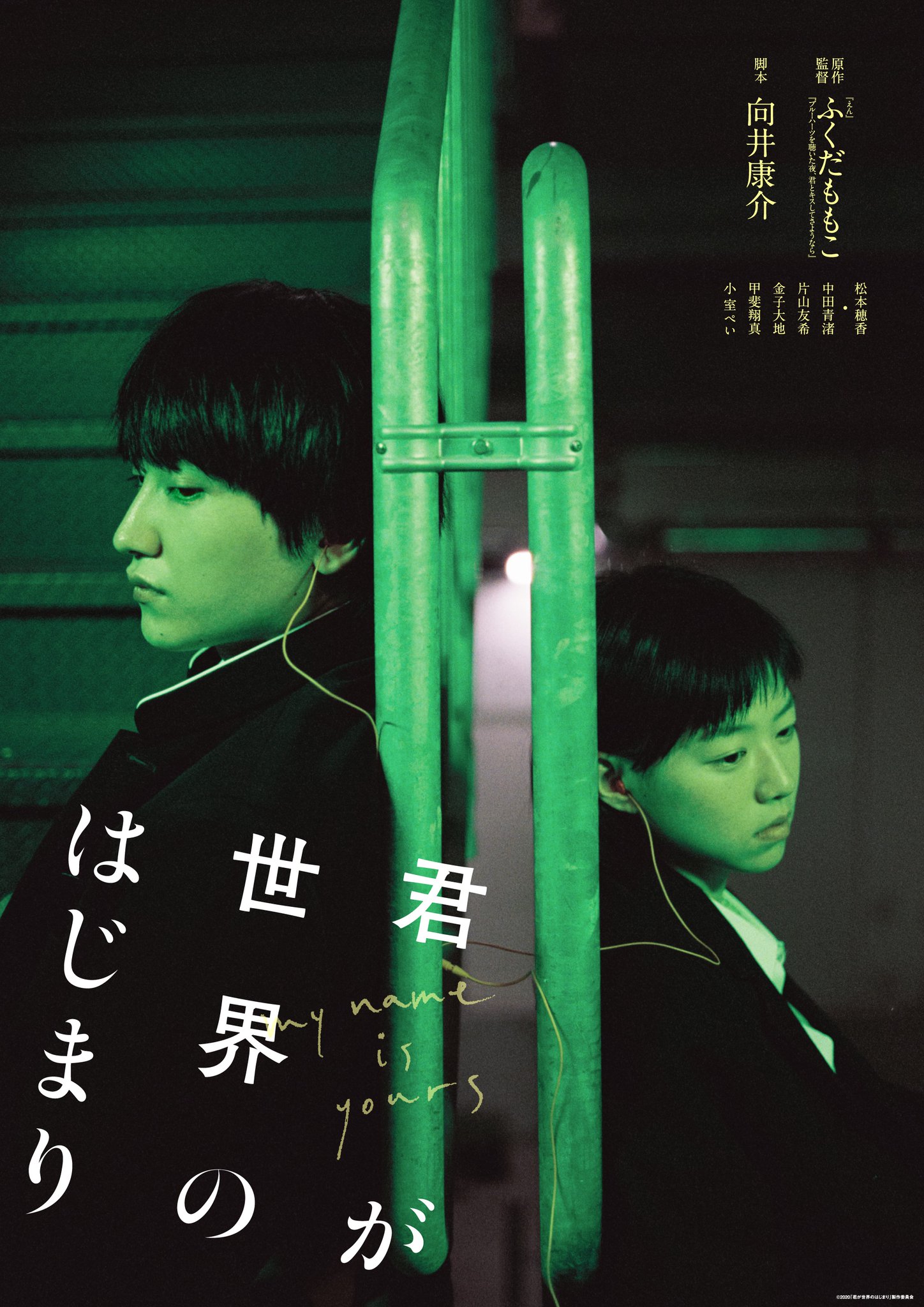
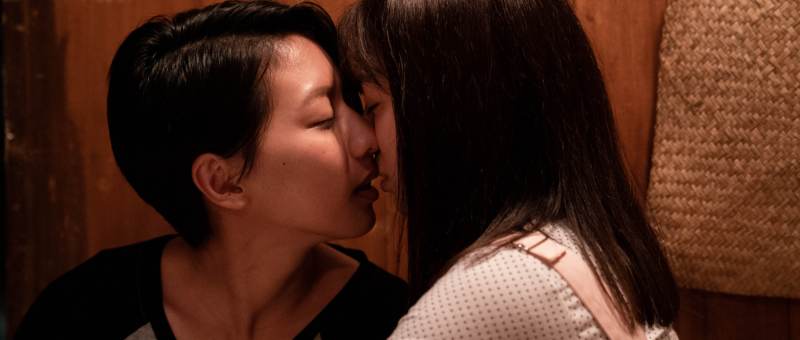
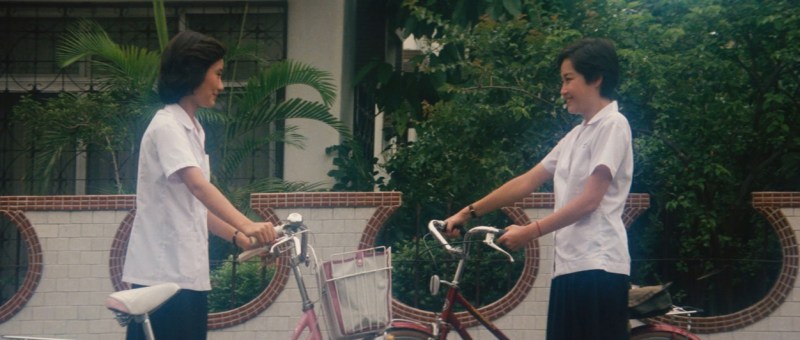
The intense friendship between two young women is placed in jeopardy when a rumour begins to circulate that they are more than friends in Mimi Lee’s subversive 1982 drama Girls’ School (女子學校, nǚzǐ xuéxiào). The film’s educational framing may ensure that it can only reinforce the contemporary social codes of the repressive martial law era in insisting the two women must be guided back towards he “correct” path, but otherwise affords them a genuine sympathy that undercuts the sense of moral censure while simultaneously rooting the source conflict in the rejection and frustrated longing that provoke only pettiness and jealousy. 

Chia-Lin and Chih-Ting have been best friends all the way through school and are more or less inseparable but the transgressive intensity of their relationship has also isolated them from their classmates some of whom, such as Chun-Hsueh, feel rejected and excluded. Possibly with a high degree of projection, it’s Chun-Hsueh who first starts the rumour that the two young women are “lesbians” only later admitting to the teacher Mr. Mei, informed via a note from class monitor Yu-Liang who has a crush on him, that she doesn’t quite understand what the word means or what saying it might mean not only for Chia-Lin and Chih-Ting but for the other girls and indeed for the school’s reputation. In reprimanding her, Mr. Mei accuses Chun-Hsueh of casting a dark shadow over the hearts of her previously innocent classmates now corrupted with the ugliness not only of her lie but the topic of homosexuality which he and the rest of the educational body view as something shameful and taboo. 

Reminiscent of William Wyler’s The Children’s Hour, the reason the rumour takes hold may be that there is a grain of truth in it in the burgeoning feelings between the two women yet in keeping with the social attitudes of the time the main interest is in proving that it isn’t true with each keen to clear their name of such vicious slander while the other girls frequently describe them as “disgusting”. Even so, the unfairness of their separation and the obviously strong feelings between the two women cannot help but evoke sympathy while Chih-Ting, the bolder of the pair, continues to insist that they’ve done nothing wrong even as Chia-Lin is overwhelmed by the pressure all around them suggesting that they might be better to simply “keep our friendship in our hearts” shamed into repressing their true feelings by an oppressively judgmental society. 

Then again, the film also succumbs to a series of uncomfortable stereotypical tropes in rooting Chih-Ting’s potential lesbianism in her tomoboyishness having been raised by a single father and longing for maternal affection. Having been abandoned by her mother she also feels emotionally rejected by her father who has a gambling problem and rarely returns home while further rejection by Chia-Lin at the instigation of her sister who is also a teacher at their school herself nursing a broken heart after her longterm boyfriend married someone else leaves her feeling like a “monster”, constantly asking herself “what’s wrong with me?” while wondering why others treat her like a “poisonous sore”. This sense of rejection and frustrated longing is the primary motivator for the actions of all, Chun-Hsueh starting the rumour because she wanted to be included in the girls’ friendship and Yu-Liang reporting it because she wanted to curry favour with Mr. Mei after seeing him scrunch up and bin a love letter while quite obviously smitten with Chia-Lin’s sister Miss Yang. 

Mr. Mei is clearly in a difficult position and often trying to do the right thing, admitting to Chih-Ting that the teacher’s don’t know how to help them, but also somewhat insensitive while like others overly mindful of the school’s reputation rather than girls’ fragile emotions never quite considering that the intensity of their feelings and the pressure placed upon them could lead them to harm themselves or else endanger their mental health. It is then a little uncomfortable that the resolution lies in Chih-Ting who had previously professed to hate everyone except Chia-Lin undergoing a softening in which she becomes “more cheerful and mature”, eventually re-embraced by the same classmates who shunned her now satisfied the rumour isn’t true while Chih-Ting has quite literally sacrificed a part of herself to be accepted by a society whose acceptance she had been insistent was unnecessary. The starkness of her conversion along with the subversive quality of the melancholy love song which recurs throughout may attack the underlying homophobia in supporting the truth of the feelings between the two women but leaves them with little possibility for emotional authenticity in an overly conservative society. 


Girls’ School screened as part of Osaka Asian Film Festival 2022

Restoration trailer (Traditional Chinese / English subtitles)
Arc (Arc アーク, Kei Ishikawa, 2021)

Does something have to have an ending to be meaningful or could eternity be the point? Inspired by Ken Liu’s short story, Kei Ishikawa’s near future tale Arc (Arc アーク) envisages a world without death if perhaps not for all in which bodily immortality has been achieved, but what would that mean for humanity no longer faced with mortal anxiety, how should it reorient itself in the absence of sickness or old age while the possibility of endlessness for the self has removed the urge for immortality through childbirth? These are all of course questions which have no one answer, though what the heroine finally discovers is that in the end it may be the choice itself of when to live or when to die that may lend her life at least its meaning. 

Even so, hers is a particular anxiety bound up with frustrated maternity having abandoned a baby she gave birth to at 17, too afraid of the responsibility to accept it. At 19, Rina (Kyoko Yoshine) is spotted at a club by a mysterious middle-aged woman, Ema (Shinobu Terajima), who runs a revolutionary cosmetics company which has pioneered a new way of preserving the bodies of the dead turning them into uncannily lifelike mannequins with a new process known as plasticisation. To Ema’s mind, true liberation comes from accepting transience, that once life has left it the body is just an object which might be repurposed for her art but then at the same time perhaps she is attempting to hold on to something that should be released, interfering in a natural process and while intending to offer comfort to those bereaved preventing them from letting go or moving on with their lives. Her much younger brother Amane, meanwhile, actively wants to stop time while alive utilising a similar technology to halt the ageing process and overcome the tyranny of death. 

In a strange way, Ema’s desire to restore a body which is no longer alive to ideal condition is also an acknowledgement of death which she believes is not the opposite of life but a necessary part of it. In overcoming the fear of death, she claims, a transcendental beauty will reveal itself. Amane meanwhile seeks to overcome death physically, but as Rina is warned his health revolution may not bring happiness to mankind not least because it exposes a persistent inequality in which eternal youth is available only to those with the means to acquire it, creating a new underclass not only of the poor but those whose bodies are not able to accept the treatment. Amane sees his creation as a dividing line in human history which will necessarily divide humanity into two groups, those who choose to join his revolution and those who do not (though interestingly he does not consider a third group who actively opposite it). Even so he sees it as a choice and accepts the right to reject immortality even going so far as to build a dedicated centre where those who choose to live a “natural” lifespan can do so in dignity and comfort. 

The concept of personal choice appears to be key, Ema too replying that her decision to stick with plasticisation rather than Amane’s treatment is her right though she too eventually hits a wall in the imperfection of her craft and the depths of her grief. She tells Rina to live her life freely encouraging her to live fully in the moment, while she too is quick to remind others that the decisions are theirs to make as regards their life and death. It’s not death nor the fear of it that are the problem, but the inability to choose as Rina finally acknowledges in remarking that the ability to decide its end point gives her the means to carve the arc of her life overcoming death through full existential control having in a sense closed a circle in facing her own sense of maternal failure. Shifting from the warmth and natural beauty of a beach in summer to the dark and brutalist environments of the BodyWerks lab, and from the muted colour of Rina’s youth to the black and white of her youthful old age, Ishikawa’s near future sci-fi-inflected tale suggests it’s not so much death that frightens you but helplessness and as in all things the answer lies in autonomous choice. 


Arc screens in Chicago on April 3 as part of the 14th season of Asian Pop-Up Cinema.

Original trailer (no subtitles)

The First Girl I Loved (喜歡妳是妳, Yeung Chiu-Hoi & Candy Ng Wing-Shan, 2021)

“I wonder how many people are like us, dare to like yet too frightened to love?” the heroine of Yeung Chiu-Hoi & Candy Ng Wing-Shan’s youth nostalgia romance The First Girl I Loved (喜歡妳是妳) reflects having made peace with youthful romantic disappointment. As the title implies, Yeung & Ng’s melancholy love story finds a young woman looking back on her first love while beginning to wonder if she may have misunderstood or overly mythologised her high school romance. 

Now in her late 20s, Wing (Hedwig Tam Sin-Yin) is called back to the past by a phone call from her high school best friend Sylvia (Renci Yeung) who unexpectedly asks her to be the Maid of Honour at her wedding. Wing explains that she doesn’t like wearing dresses and would usually turn the invitation down but on this occasion she can’t because Sylvia was the first girl she ever loved. Long years of friendship eventually blossomed into teenage romance but while same sex relationships might have been more acceptable than they once were, they are not condoned by the private catholic girl’s high school the pair attend which calls their parents in after they’re spotted kissing on a bus by a passing teacher. 

Though Wing’s mother is a little taken aback, neither of the girls’ fathers thinks it’s a particularly big deal if for less than progressive reasons in that as Sylvia’s father puts it nothing “bad” can happen between two girls and he’d be much less relaxed if she’d been hanging around with a boy while Wing’s agrees that it’s probably just a phase and they “won’t look back” once they’ve met the right guy. The girls meanwhile seem to flit between despair and youthful romantic idealism, Sylvia who’d earlier been the more proactive in pursuing a relationship later conceding that perhaps it is a phase after all when her otherwise sympathetic father advises her to keep a low profile in order to avoid losing her scholarship because their family is poor. More secure in her middle-class comfort, Wing is minded to fight for love, saving up to buy a ring Sylvia had admired on a shopping trip and insisting that if growing up means denying their feelings for each other she’d rather remain a child. But then for unclear reasons Wing is the one who later betrays their love in agreeing to perform a public apology admitting that her relationship with Sylvia is “shameful and unacceptable” while Sylvia tears hers up and simply leaves having planned to take full responsibility while refusing to apologise for her feelings. 

The relationship between the two women continues to ebb and flow, leaving the older Wing wondering if they were ever really in the same story or if they simply remember their high school relationship differently. Perhaps to Sylvia they really were just admittedly intense “good friends” as she was fond of saying rather than the doomed lovers Wing has branded them as in her mind. Then again could it just be that Sylvia has chosen conventionality out of a lack of courage to fight for love, Wing wondering if Sylvia has decided to marry now in order to escape a pact they’d made to reunite if neither of them had married by 30 implying that Sylvia had never been able to let of the idea that anything other than a heteronormative marriage is necessarily a failure. 

Time does indeed seem to be a factor, the girls recreating the one minute scene from Days of Being Wild with a clock which has no second hand symbolising the timelessness of their youthful love while forever afterwards they seem to be haunted by ticking clocks implying that their romance has a shelf life. Even so, Yeung & Ng try to have their cake and eat it too, the climactic wedding taking place on a symbolic level between Sylvia and Wing echoing their mock high school wedding as they walk down the aisle together with Sylvia pained and conflicted in her choice while Wing reflects that they will always be “best friends” no matter what happens in the future having reclaimed her happy memories of her high school love reassured by Sylvia’s coded reactions that love is really what it was that existed between them. Replete with early 2000s nostalgia, Yeung & Ng’s tragic romance nevertheless ends on a hopeful note in managing to salvage the friendship from a faded love even if lacking the courage to fight for authenticity in an often conservative society.


The First Girl I Loved screens 13th/16th March as part of Osaka Asian Film Festival 2022

Original trailer (Traditional Chinese / English subtitles)

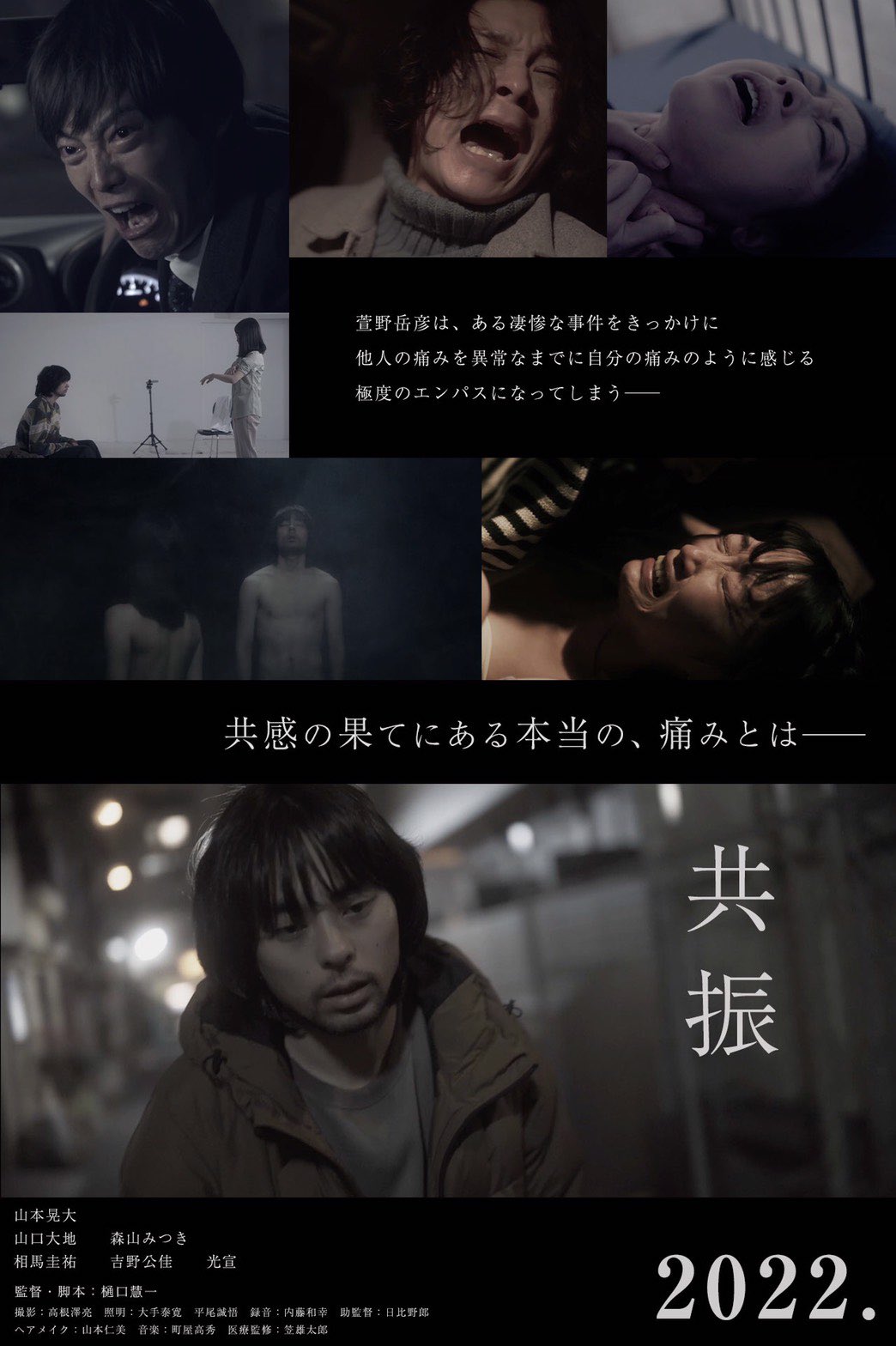
Kyoshin (共振, Keiichi Higuchi, 2021)

In modern society we often criticise others, but not always ourselves, for a perceived lack of empathy but what would it be like to truly empathise with everyone, all of the time, with no control over our own feelings? The hero of Keiichi Higuchi’s psychological drama Kyoshin (共振) finds himself with just this problem after a traumatic incident leaves him with both intense PTSD and the unwelcome side effect of being forced to feel the pain of others as his own. 

26-year-old Takehiko (Akihiro Yamamoto) thought of himself as perhaps a little over sensitive, feeling obvious discomfort sat opposite two salarymen arguing loudly in a crowded restaurant while also somewhat disconnected from his partner in a moment of supposed intimacy. It’s one evening on the beach, however, when everything goes into overdrive. Spotting two guys manhandling a screaming woman into a van he and his friend Gin (Keisuke Sohma) intervene but aren’t much of a match for two the young thugs and find themselves tied up and stunned in the back while the woman is forced to provide oral sex to the driver. Taking advantage of a momentary lapse from the other man who was busy interrogating Gin and Takehiko, the woman takes drastic action of her own in a bid to escape. Gin tries to help her, but seeing what’s befallen the driver Takehiko is plunged into fugue state able to do nothing other than scream in pain as if it were he that had suffered the catastrophic injury. 

A year on, Takehiko is a broken shell of a man unable to venture outside owing to the intense assault of other people’s pain. Ignoring calls from Gin, he’s cared for by his older brother Yuya (Daichi Yamaguchi) who ferries him to various doctor’s appointments, jeopardising his own employment in the process. Sick of medical professionals unwilling to admit they don’t know how to help him and obsessed with the curse of 27, Takehiko decides he’ll take his own life if there’s no improvement in his condition by his next birthday but then discovers potential salvation in an experimental programme run by a lesbian couple in which he will receive treatment from a woman who once experienced something very similar to himself but claims to have learned to live with it. 

The irony is that Takehiko’s condition is caused by extreme empathy in that he cannot avoid feeling other people’s physical pain as his own, yet he continues to treat those around him badly blind to the emotional toll caring for him is taking on them. His brother, feeling a parental responsibility as their parents passed away young, drops everything to help him but his boorish boss, ironically, has a fundamental lack of empathy. Annoyed that Yuya takes so much time off, he openly mocks him making the rather irrelevant point that Takehiko is 26 not six and therefore shouldn’t need so much care virtually accusing him of mollycoddling as if the problem were Yuya’s anxiety rather than his brother’s precarious mental health. 

Yet the experimental programme Takehiko finds himself involved with raises its own collection of ethical questions as the psychiatrist pushes him into a series of erotic situations arguing that if he learns to empathise across the emotional spectrum to experience other people’s pleasure as well as their pain he’ll be able to turn it off much more easily or at least flatten it out. She implies that similar therapies are what has enabled her to live a relatively normal life, but fails to disclose that she is also carrying a similar trauma which the treatment ironically recalls while largely failing to deal with the obvious possibility of transference in the potentially inappropriate lack of boundaries between patient and doctor. 

It might not be appropriate to ask how much empathy is too much empathy, but Takehiko’s path to recovery ironically enough lies only in secondary shock and a brush with death that allows him to reconnect with his friend Gin, suffering alone in their shared trauma, while empathising emotionally with his brother’s obvious care for him. It isn’t so much that Takehiko needs to disengage with those around him, but learn how to process effectively so that he can better help and understand rather solipsistically internalising external suffering. Shot with a sense of uneasy eeriness and a sci-fi twist in the manifestation of Takehiko’s descent into an oppressive empathy bubble, Higuchi’s provocative drama advocates for caring a little more about the pain of others but not so much that it stops you seeing where it hurts. 


Kyoshin streamed as part of Yubari International Fantastic Film Festival 2021.

Original trailer (no subtitles)

My Name is Yours (君が世界のはじまり, Momoko Fukuda, 2020)

A collection of Osaka teens process adolescent angst and generational anxiety but in the end find a gentle solidarity in their shared suffering while resolving to be kind in Momoko Fukuda’s adaptation of her own novel, My Name is Yours (君が世界のはじまり, Kimi ga Sekai no Hajimari). “People are unknowable” they solemnly resolve, admitting that you never really know anyone but later making an effort to share their secrets, if only gently, bonding in a new sense of openness as they begin to move forward into a brighter future. 

Fukuda opens however with a scene of crime as a high school student is arrested for the murder of their father. As we discover, several of the teens could be potential suspects, each in someway resentful of their dads though for very different reasons. Recently transferred Tokyo boy Io (Daichi Kaneko), mocked for his accent, is involved in some kind of hugely inappropriate sexual relationship with his middle-aged step mother as accidentally witnessed by moody classmate Jun (Yuki Katayama) hanging round the shopping mall in order to avoid going home to her overly domesticated dad (Kanji Furutachi ) whom she blames for her mother’s decision to leave the family. Narihira (Pei Omuro), meanwhile, was abandoned by his mother soon after birth and is sole carer to his father who seems to be suffering with early onset dementia. 

Childhood best friends En/Yukari (Honoka Matsumoto) and Kotoko (Seina Nakata) first encounter Narihira in their secret hideout, a disused school library, having a private cry leading Kotoko to fall madly in love publicly dumping her current boyfriend with extreme prejudice seconds later. Meanwhile, En becomes an accidental confidant to nice guy Okada (Shouma Kai) who has received a mysterious love letter he doesn’t quite understand because it’s come in the form of a classical poem only for Okada too to fall for Kotoko while Narihira seems to prefer En. 

Love triangles aside, each of the teens has their private sorrows some more secret than others but nevertheless producing chain reactions of their own in their inability to express themselves fully. But as angry and frustrated as they are, they still want to be kind if more to others than themselves. “If I only think about my own freedom how can I be kind to others?” Narihira sadly reflects confessing his occasional resentment in trying to care for his father. Even Io, seemingly realising how inappropriate his relationship with his step mother is, resolves that he wants to be kind to her despite the harm she may be doing him. “Wanting to hurt other people is absurd” he claims, unable to understand the impulse to exorcise his frustration through violence. 

Narihira attributes his salvation to having met En, explaining that in a sense she opened up a new world in giving him the courage to talk about his father sharing the secret with Okada who told the coach on their sports team who told him about a facility that might be able to help. Yet Narihira also begins to disrupt the previously close relationship between En and Kotoko, leaving Kotoko feeling jealous and En confused it seems on more than on level as the unexpectedly perspicacious Okada seems to have figured out forcing her in turn to reckon with and accept her own unspoken feelings. 

Taking refuge in a darkened shopping mall overnight, the teens unexpectedly bond through a musical performance of the classic Blue Hearts track Hito ni Yasashiku with its melancholy yet cheerful chorus encouraging each other to hang in there, remaining kind in a world which often isn’t. “Well, I can’t say for sure. Nobody can.” an amused secretary guard honestly answers asked by one of the teens if the mall will be torn down, his refreshingly direct answer perhaps adding to their new sense of confidence even in the face of the world’s uncertainty. A gentle, quietly nostalgic coming-of-age tale, Fukuda’s Osaka-set lowkey yet stylishly moody drama begins with violent darkness but ends in bright sunlight, the teens each finding a sense of equilibrium having come to new understandings about themselves and those around them bolstered by a youthful solidarity. Some secrets it seems still cannot quite be shared, but friendships resolve themselves all the same if in unexpected ways allowing a melancholy intensity to dissipate into a sad if fervent hope for the future. 


My Name is Yours screened as part of this year’s Camera Japan

Original trailer (English subtitles)

Hito ni Yasashiku music video

The Blue Hearts – Hito ni Yasashiku

Secrets of 1979 (弓蕉園的秘密, Zero Chou, 2021)

Love is a political act in the latest film from Zero Chou, Secrets of 1979 (弓蕉園的秘密, Gōng Jiāo Yuán de Mìmì). As history repeats itself, a now ageing woman is called back to the past on witnessing the Hong Kong democracy protests triggering memories of the Kaohsiung Incident and her youth fighting for political freedom in martial law Taiwan. Chou’s betrayed heroine dreams of a future in which all voices can be heard and all loves embraced, a future that in some senses may have come to pass, yet tragically too late for some forced to believe that their love must forever remain a secret. 

Malaysian student Shu-lan (Daphne Low) falls for Kuan (Chen Yu), the daughter of a banana plantation owner majoring in art as part of a teacher training programme. The pair draw closer while sharing a room, and a bed though partly because those two things are mainly the same, over the summer while Shu-lan takes a job at the farm but their innocent romance is soon overshadowed by the revelation that Kuan’s brother Siu (Hsu Yu-ting) has become involved with the movement against martial law producing a magazine critical of the government. Though they could never know it, their love will lie at the centre of a political divide, cruelly used against them even while they commit themselves to the battle for freedom and human rights. 

Soon after the film opens, a young man walks into Shu-lan’s classroom with application forms to join the nationalist governing party of the martial law one party state, the KMT. The idea does not seem popular among the students, but some are interested if treating it with a degree of irony explaining that they’d only be joining to take advantage of the generous perks which include free travel back to your hometown to vote and access to scholarships, or else because it may be advantageous in their future careers. Shu-lan is fiercely disinterested and attempts to politely decline, but the recruiter, Chih-hsiang (Sean Sun), has an obvious crush on her and won’t take no for an answer thrusting a form into her hand to think about later while lowkey resentful as she distances herself from him to leave with Kuan. 

Kuan, meanwhile, has just been subjected to an unpleasant grilling in her art class when she tried to stand up for a painter rumoured to be gay provoking a homophobic rant from several of her classmates who then openly mock her for being a lesbian. Perhaps surprisingly the rumour of homosexuality does not cause either of the girls particular problems with the authorities or their fellow students save for further irritating the extremely creepy, generally evil, and cruelly manipulative fascist Chih-hsiang who views it as merely another bargaining chip in his pointless quest to convince Shu-lan who has no interest in men (or members of the KMT) to go out with him. The problems that Shu-lan faces which are partly set up by Chih-hsiang so he can save her from them, are largely to do with her status as a foreign national and involvement with politics accused of collaborating with communists for listening to Chinese folk songs sent by her teacher in Malaysia. 

These are all reasons, along with her treatment at the hands of the authorities, that eventually convince her she must renounce her love for Kuan in order to keep her safe in fear that she too will be implicated as a politically suspicious person. Prior to that, she’d been learning Taiwanese and hoped to stay living on the banana farm with Kuan whose family seem relatively relaxed about the relationship, only for their love to be stamped out by oppressive authoritarianism and the machinations of a petty and jealous man. The bookending sequences set in the present day and featuring a Kuan who seems much older than a woman who’d only be in her mid-60s remind us that though Taiwan may have become a relatively progressive place in which same-sex marriage has been legalised, the battle is never really won as the young people of Hong Kong too campaign for freedom and democracy. But Kuan is left only with her secrets and her sadness stuck in the summer of 1979 and a love never to be told. 


Secrets of 1979 screens at Lexi Cinema on 21st September as part of this year’s Queer East. It is also available to stream in many territories via GagaOOLala.

Original trailer (English subtitles)

Snowball (최선의 삶, Lee Woo-jung, 2020)

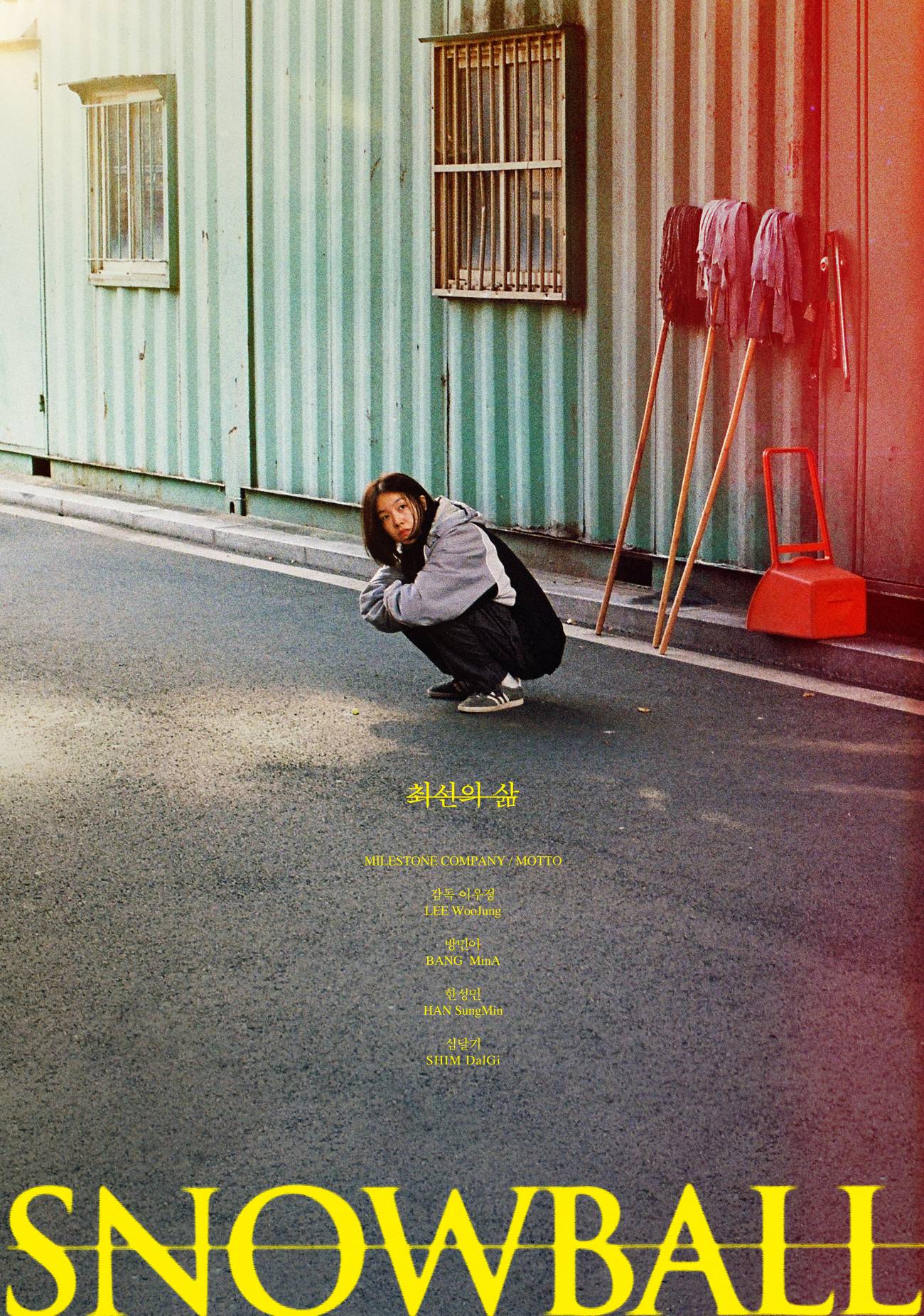
Three teenage girls seeking escape from an unsatisfying adolescence find only betrayal and disappointment in Lee Woo-jung’s sensitive adaptation of the novel by Lim Solah, Snowball (최선의 삶, Choisunui Sarm). Each oppressed by a resolutely patriarchal society, the three women nevertheless differ in the their respective traumas and resentments finding solidarity in the strength of their friendship only to witness it crumble when its barriers must necessarily be confronted. “Why did you do this to me?” Kang-yi (Bang Min-ah) eventually asks, only to receive no answer and realise that in the end they did to and for themselves. 

Though perhaps feeling a sense of familial rejection in the otherwise peaceful home she shares with her overly religious Buddhist mother, emotionally reserved father, and a little dog also yearning for love, Kang-yi is ostensibly the least burdened of her friends if facing a similar sense of detachment. Aloof golden child So-young (Han Sung-min) is clever and pretty, everything seems to go right for her as Kang-yi enviously explains, except for her dream to become a model and actress which her family apparently don’t support. Ah-ram (Shim Dal-gi), by contrast, is quirky and rebellious with a tendency to collect stray animals and other items from the street little caring who they may or may not belong to but is also trapped in abusive home with an authoritarian father. When So-young one day suggests running away together the other girls agree, but after the novelty wears off and they begin to run out of money the realities of a forced adulthood are suddenly brought home to them. 

The depths of their naivety are perhaps signalled in an early and misguided attempt to misuse a potentially predatory middle-aged man who offers them money for food, allows them to stay in his apartment, and suggests an improbably low stress job they might be able to do for him. As she’s want to do, Ah-ram runs off with his wallet only to begin feeling sorry him seeing as there’s so little in it and he is so clearly lonely even if So-young proclaims him a creep. Picking up a mattress in the street the girls end up sleeping in a stairwell, only for Kang-yi and So-young to return and find Ah-ram apparently beaten and raped by a man she later willingly returns to, talking as if such brutal treatment is a normal part of any relationship. “Children, when you’re in love you sometimes get into fights” she depressingly explains, later implying that her violent boyfriend has become her pimp as she slides into sex work in an effort to provide economic support to all three of them. 

So brutalised is she, that Ah-ram thinks nothing of the abuse she continues to suffer while So-young solipsistically wallows in a sense of defeat and despair. It’s at this point she whips out a credit card she’s apparently been carrying all along, her choice not to use it seemingly less about the possibility of its being traced than a stubborn desire to insist she is as underprivileged as her two friends. As we later discover, Kang-yi lied about her address to get into the school and in fact lives in a run-down semi-rural area some distance away, secretly regarded as even more of a hick provincial by the upwardly mobile So-young. Nevertheless, it’s not class differences which eventually shatter their friendship but repressed sexuality. One extremely hot evening, So-young and Kang-yi share a moment of physical intimacy but while it only seems to bind Kang-yi more closely to her friend, So-young is unable to cope with the taboo realisation of her desires and becomes increasingly irritable, distancing herself from both of the other girls before abruptly deciding to call the experiment in independence short and return to her parental home. 

All Kang-yi wants is a return to their former friendship, but So-young’s repression eventually turns violent. Rejecting Kang-yi and Ah-ram she becomes a part of the popular set and embarks on a campaign of bullying that leaves Kang-yi both physically bruised and emotionally wounded. Yet she is also in her own way repressed, unable to accept her parents’ love for her and often ignoring the plaintive cries of the family dog longing to be picked up and held. Neither she nor Ah-ram are able to conceive of a future for themselves, Kang-yi’s sense of rejection eventually pushing her towards a self-destructive act of violence that will further rob her of possibility and the potential for happiness. Captured with a restless, roving energy imbued with with the colours of twilight, Lee’s melancholy indie drama suggests that not even friendship can provide a refuge from the pressures of the modern society and its relentlessly oppressive social codes in which internalised shame can quickly snowball into an avalanche of violence.


Snowball screened as part of this year’s New York Asian Film Festival.

Festival trailer (no subtitles)

Spider Lilies (刺青, Zero Chou, 2007)

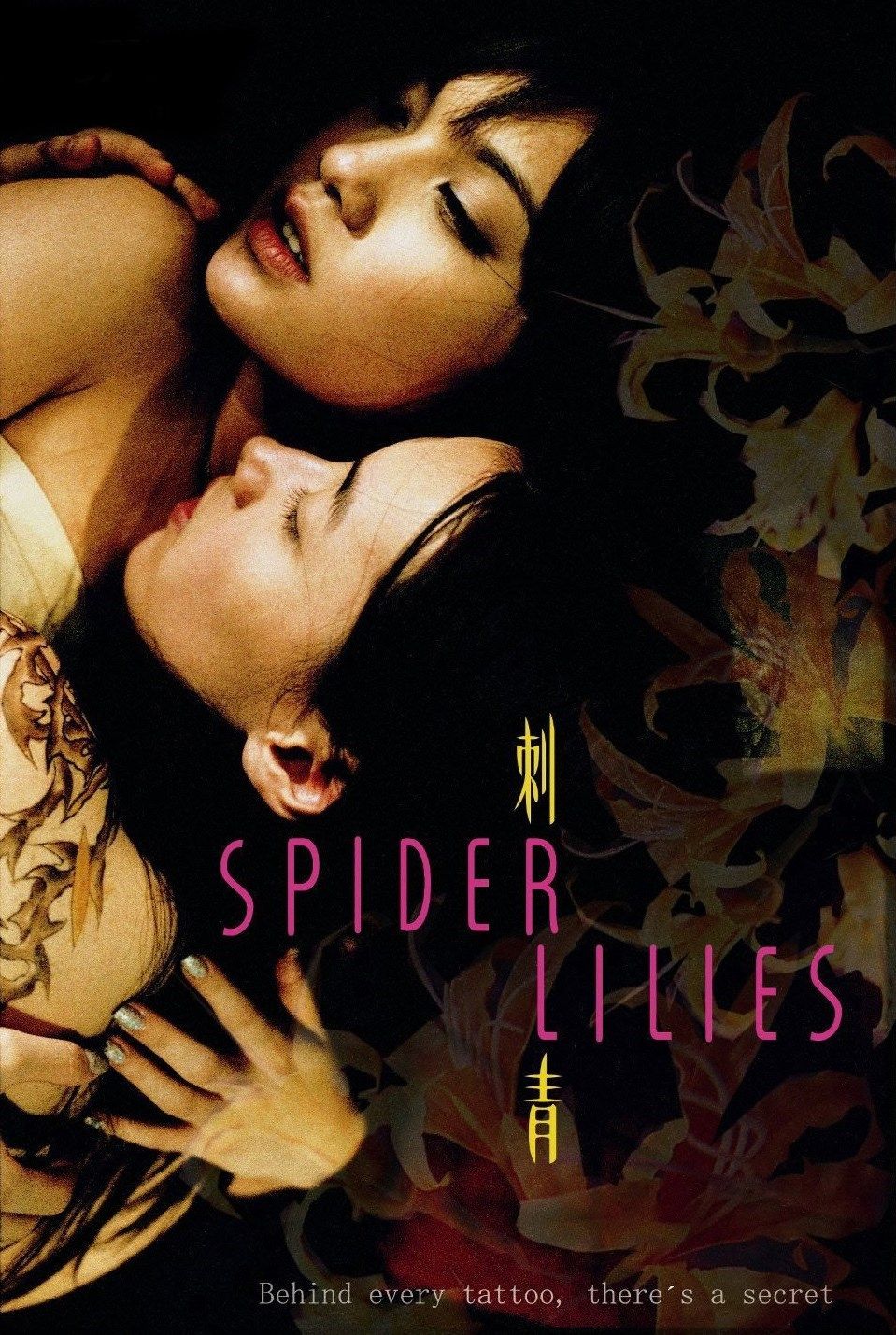
“I have no choice but to live in a virtual world” according to the lovelorn heroine of Zero Chou’s ethereal reflection on love and the legacy of trauma, Spider Lilies (刺青, Cìqīng). Two women connected by childhood tragedy struggle to overcome their respective anxieties in order to progress towards romantic fulfilment, eventually freeing themselves only by destroying the image of that which traps them. 

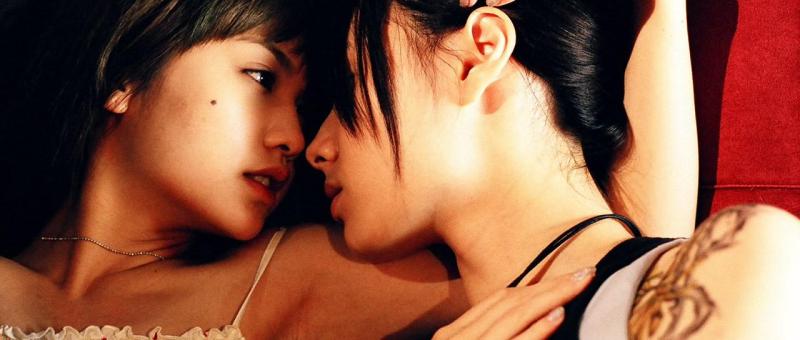
In the present day, Jade (Rainie Yang) is an unsuccessful camgirl with a habit of shutting down her clients on a whim which doesn’t play well with her boss. In an effort to spice up her live show, she decides to get a raunchy tattoo only to realise that the tattooist, Takeko (Isabella Leong), is in fact her long lost first love, a neighbour she took a fancy to at the tender age of nine. For her part, Takeko appears not to remember Jade but cannot deny the presence of her unusual spider lily tattoo, a version of which hangs prominently on her wall. Hoping to maintain contact, Jade decides to get the spider lily tattoo herself but Takeko is reluctant, explaining that the spider lily is a flower that leads only to hell. 

According to Takeko’s master, there is a secret behind every tattoo and the responsibility of the tattooist is to figure out what it is but never reveal it. Thus Takeko crafts bespoke tattoo designs for each of her clients designed to heal whatever wound the tattoo is intended to cover up, such as the ghost head and flaming blades she tattoos on a would-be gangster who secretly desires them in order to feel a strength he does not really have. Her tattoo, however, is intended as a bridge to the past, a literal way of assuming her late father’s legacy in order to maintain connection with her younger brother (Kris Shen) who has learning difficulties and memory loss unable to remember anything past the traumatic death of their father in an earthquake which occurred while she was busy with her own first love, a girl from school. Feeding into her internalised shame, the tattoo is also is a means of masking the guilt that has seen her forswear romance in a mistaken sense of atonement as if her sole transgression really did cause the earth to shake and destroy the foundations of her home. 

Then again, every time Takeko seems to get close to another woman something awful seems to happen. Jade, meanwhile, affected and not by the same earthquake is burdened by the legacy of abandonment and the fear of being forgotten. Living with her grandmother who now has dementia the anxiety of being unremembered has become acute even aside from the absence of the mother who left her behind and the father last seen in jail. “Childhood memories are unreliable” she’s repeatedly told, firstly by Takeko trying to refuse their connection, and secondly by a mysterious online presence she misidentifies as her lost love but is actually a melancholy policeman with a stammer charged with bringing down her illicit camgirl ring. The policeman judgementally instructs her to stop degrading herself, having taken a liking to her because he says he can tell that she seems lonely. 

A kind of illusionary world of its own, Jade’s camgirl existence is an attempt at frustrated connection, necessarily one sided given that her fans are not visible to her and communicate mainly in text. It’s easy for her to project the image of Takeko onto the figure of the mystery messenger because they are both in a sense illusionary, figments of her own creation arising from her “unreliable” memories. Jade wants the tattoo to preserve the memory of love as a bulwark against its corruption, at once a connection to Takeko and a link to the past, but the tattoo she eventually gets is of another flower echoing the melancholy folksong she is often heard singing in which the lovelorn protagonist begs not to be forgotten. 

“I am a phantom in your dream and you too live in mine” Jade’s mystery messenger types, hinting at the ethereality of romance and fantasy of love. Caught somewhere between dream and memory the women struggle to free themselves from the legacy of past trauma and internalised shame, but eventually begin to find their way towards the centre in making peace with the past in a sprit of self-acceptance and mutual forward motion.


Spider Lilies streams in the UK 26th April to 2nd May courtesy of Queer East

Original trailer (English subtitles)

Wrath of Desire (愛・殺, Zero Chou, 2021)

“Desire is the only truth. The body never lies” according to the prison missives penned by the heroine of Zero Chou’s latest meditation on sex, death, guilt, and repression, Wrath of Desire (愛・殺, Ài・Shā). As the title perhaps implies, Chou frames her epic tale in the extremes of Greek tragedy, opening with an ethereal desert scene and cryptic Butoh dance that equates desire with death as the victim later laments “it was I myself who pointed the knife at my heart”. 

The dreamlike opening gives way to a prophetic scene of violence as an androgynous young woman fends off an attack from a “burglar” who is later discovered to be part of a conspiracy sent to steal evidence that could be used against her father, a political candidate anxious that her existence as his love child not affect his chances of election. Visibly shaking from her traumatic encounter, Phoenix Du (Peace Yang) is comforted by the sympathetic female prosecutor in charge of her case, Jade Liu (Weng Chia-Wei), who finds herself somehow captivated by the intense tattoo artist. Witnessing her capacity for violence after they are attacked by more of the mayor’s thugs when she perhaps inappropriately offers her a ride home from the courthouse, Jade takes Phoenix back to her flat to tend to her wounds only to find herself overcome by desire when Phoenix playfully kisses her as if to test her naive hypocrisy. The two women share a single night of intense passion, but Jade is a pastor’s daughter and failure to resist her “blasphemous” desires leaves her only with shame and fear. In retaliation she has Phoenix sentenced to three years in prison hoping to forget her, while Phoenix spends her time inside writing 372 extremely intense love letters insistent that the body doesn’t lie and convinced that Jade has in fact imprisoned herself in her wilful repression. 

God is always between them, a cross hanging from the rear mirror in Jade’s car as they make their high speed getaway while it’s the Lord’s name that Jade cries out during their night of passion but out of guilt more than ecstasy as Phoenix urges her to let herself go, aware it seems that she continues to struggle against herself. While Phoenix is inside, Jade finds herself drawn to an androgynous young man, Meng Ye (Hsu Yu-Ting), who is accused of stabbing a cousin (Huang Shang-Ho) who had become his legal guardian and thereafter molested him. Referring to her as “sister’ Meng Ye reminds Jade of the younger brother who took his own life after being rejected by their religious family because of his homosexuality, something which undoubtedly contributes to her ongoing inability to accept her same sex desires describing her feelings for Phoenix as lust rather than love, something dirty and sinful to be rejected. After becoming aware of her inner conflict, Meng Ye suggests a platonic marriage to create a “family free from desire”, offering Jade the “stable family” she’s been looking for while he gains “social acceptance”. Yet on Phoenix’s release it’s Meng Ye who determines on bringing her into their life as a “friend” only to find himself consumed by jealousy while questioning the nature of desire. 

Chou intercuts the non-linear action with a series of black and white intertitles featuring Phoenix’s charred letters along with noirish, Rashomon-esque testimony from a handcuffed Jade and Meng Ye along with a third woman, Chrys (Chen Yu-Chun), who had apparently fallen for Phoenix in prison only to remain frustrated by her lack of interest in anyone outside of Jade. “Sex without love is as empty as violence without hate” Phoenix writes in one of her letters, repeating that the body does not lie and Jade is only harming herself in her continued denial. Phoenix is indeed correct, though 372 letters is rather excessive as is her stalkerish insistence in the face of Jade’s refusal. Nevertheless the ménage à trois eventually turns dark as Meng Ye determines to exorcise his resentment by making Phoenix betray herself in unmasking the hypocritical repression of her own desires. Meng Ye claims he’s a “pet” to his cousin and brother to Jade, what he wants from Phoenix is a love she might not choose to give him, but is also bound for a dark and nihilistic destination.

Though the mayoral conspiracy angle is an outlandish detail strangely forgotten in the ongoing narrative, all three are in a sense wounded orphans betrayed by parental failure and left adrift without firm anchor in a hostile society each looking for safe harbour whether in the certainty of bodily desire, its rejection, or subversion. Apparently the “first” in a six film series each set in different Asian cities (though the “second” The Substitute set in Beijing and filmed in 2017 is currently streaming via Gagaoolala, as is the reported third We Are Gamily set in Chengdu now streaming as a five-part webseries while the feature edit is also streaming via Amazon Prime US), Chou’s latest more than lives up to its name as the trio find themselves consumed by the fire of desire while unable to extricate themselves from a complex spiral of shame and repression.


Wrath of Desire screened as part of the 2021 Osaka Asian Film Festival

Original trailer (English subtitles)

Love and Death in Montmartre (蒙馬特之愛與死, Evans Chan, 2019)

It’s difficult to believe, in some ways, that the world could have changed so much in just a couple of decades. Qiu Miaojin gained a cult following and widespread acclaim as an openly gay defiantly lesbian writer in the early ‘90s, but sadly took her own life in Paris at the age of 26 in 1995. Hong Kong director Evans Chan’s Love and Death in Montmartre (蒙馬特之愛與死) expands his 2017 documentary which aired as part of TV series celebrating Sinophone writers and though he claimed not to have been much interested in Qiu as a personality, explores her life, love, and legacy from the perspective of a Taiwan which has now become the first Asian nation to legalise same sex marriage. 

The film’s title is inspired by Qiu’s final novel completed shortly before her death in exile in Paris. Though she became well known as an out lesbian writer publishing under her own name as a woman who loved women, Qiu, the documentary implies, never actually came out to her family and eventually fled a Taiwan which had recently entered into democratic freedom but was nevertheless still conservative and socially oppressive. In Paris she looked for freedom artistic and personal, but continued to struggle with herself in her internal contradictions which were also in a sense provoked by a hostile society. 

Interviewed 25 years later, many of Qiu’s friends and contemporaries point out that she preceded rather than participated in the burgeoning LGBTQ+ movement which only began to gain ground after her death, but that her work nevertheless helped to raise visibility and acceptance of lesbianism in Taiwan and beyond. Lacking a language to describe herself, her slightly ironic adoption of the term “Lazi” for lesbian was adopted by women who love women in Taiwan, in turn inspiring the Mainland’s “Lala”. As another interviewee suggests, Qiu’s work was also ahead of its time in giving voice to the author’s anxiety in the impossibility of defining gender, at times longing to be made entirely male or entirely female while evidently feeling neither term entirely fitted only later claiming to have discovered an integrated self in the depths of her heartbreak. 

An actor Qiu met university who subsequently starred in one of her short films excerpts of which are included in the documentary recalls her anxiety that repressed emotions once unleashed have the capacity to consume, and in her case at least this may have been the truth. Close friends recall the self harm scars on her arms where she burned herself with cigarettes following the end of a relationship, consumed by her own need for all encompassing passion yet also filled with self-loathing. Perhaps tellingly and presumably for reasons of privacy, her lover at the time of her death does not appear in the documentary which goes out of its way to avoid naming her beyond the “Xu” which appears in her letters, Qiu attributing their breakup to her “intensity” which had unfortunately turned violent further contributing to her sense of shame and instability. 

Yet the translator of Last Words from Montmartre advances that Qiu’s suicide was also in a sense a literary act, the culmination of an artistic life in the tradition of tragic authors she had admired such as Osamu Dazai or Yukio Mishima. Another friend wonders if she might have been suffering from bipolar disorder, while her former professor reflects on her decision to adopt the name “Zoe” while in Paris, a name which itself means “life”. In Taiwan Qiu had worked for a suicide hotline, yet eventually took the decision to die. Qiu’s work cannot indeed be divorced from the manner of her death, but nor can its legacy be denied in contributing to the birth of a movement that she sadly did not live to see.

Including clips from Qiu’s short films and excepts from a short inspired by Qiu’s life directed by bisexual Shanghainese filmmaker Lotte Yue, as well as reenactments featuring Qiu dressed alternately as a crocodile as in her famous novel or as a veiled ghost, Chan charts her artistic legacy through Asia and beyond with recent translations of her novels into French and English, but also juxtaposes the oppressive society she struggled to escape with the comparatively more liberal world of today which she perhaps even in the tragedy of her life and death helped to bring about. 


Love and Death in Montmartre streamed as part of this year’s San Diego Asian Film Festival.

Original trailer (English subtitles)