Fagara (花椒之味, Heiward Mak, 2019)

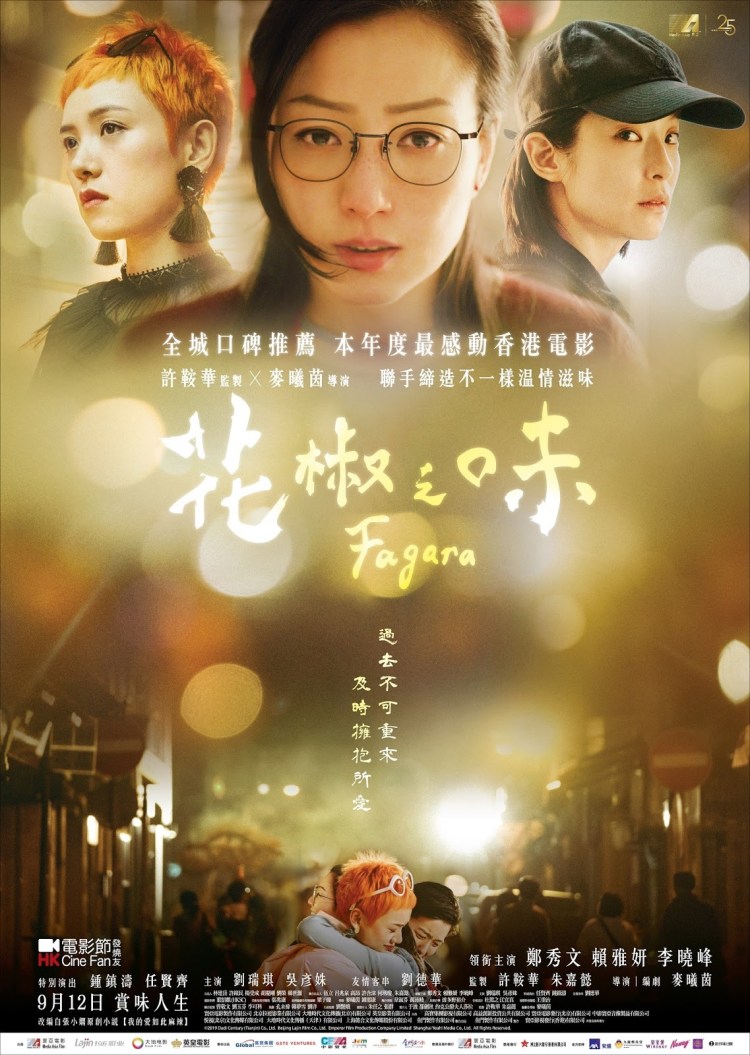
Fagara poster 2“We remember the bad and forget the good” a regretful mother laments, trying to find the right words to connect with her emotionally distant daughter. Heiward Mak’s adaptation of the Amy Cheung novel Fagara (花椒之味, Hjiāo zhī Wèi) melts a subtle One China narrative into a heartwarming meditation on unexpected connections and the modern family as three women from three cultures discover an instant and easy bond, meeting as sisters in adulthood united in a shared sense of hurt and disappointment but learning to find the good among the bad as they process the legacy of their late father and the pain he left behind.

Harried middle-aged travel agent Acacia (Sammi Cheng Sau-man) spends her days fending off junk calls and booking discreet getaways for executives going on “business trips” with their secretaries. So, when she gets a panicked message that her estranged father Ha Leung (Kenny Bee) is in hospital she naturally assumes it’s a scam, only it’s not – she needs to get across the Harbour to Victoria Hospital, but in a motif that will be repeated finds it difficult to get a cab willing to take her. By the time she arrives, it’s too late. Her dad has passed away. So little does she know about him that she has to double check what year he was born on his driving licence, passed to her by a young man working at her father’s “family” hotpot restaurant.

On charging his phone, Acacia is shocked to discover that he’s been exchanging text messages with two other young women, apparently his daughters from other relationships in Taiwan and on the Mainland. Thinking they ought to at least know, Acacia invites them to the funeral, which, embarrassingly enough, she has arranged as a Taoist ceremony because she was unaware her father was actually a Buddhist (something apparently known to some of the other guests only they were too polite to say). Meeting for the first time and setting aside their mutual resentments, the three women find an easy connection, uniting to save the restaurant by figuring out Ha Leung’s secret recipe for his famed Fagara soup.

Though Mak largely minimises the obvious political allegory in favour of the human story, it’s impossible to miss the message that these three women are all daughters of the One China, let down by a well meaning but flawed “father” who nevertheless loved them all if imperfectly. Given the current tensions, some might find the implications of that message trite at best, but you can’t argue with the positivities of finding common ground as children failed by distant paternity, or as Acacia puts us, “regardless of the choice he made, he hurt us all”.

Cherry (Li Xiaofeng), the daughter from the Mainland, counters that she was never “hurt” because she was never anyone’s “choice”. Abandoned twice over, Cherry has lived with her grandmother (Wu Yanshu) since her mother remarried in Canada, leaving her behind. A young woman of her times, she’s staked everything on Instagram fame, rejecting the idea of marriage in favour of perpetual independence but unselfishly. The most family oriented of the sisters, she is determined to take care of her grandmother even while she tries to push her away partly in vanity, afraid to let her see the vulnerability of ageing, and partly not wanting to feel as if she’s trapped her granddaughter in a life of servitude to an old woman that will leave her lonely in her own old age.

Acacia meanwhile also remains lukewarm on the idea of “family”, resentful towards her father and insecure in her relationships, breaking up with a meek but supportive fiancée (Andy Lau Tak-wah) because he was only ever bold enough to say he was “OK” with getting married. Striking up a friendship with a cheerful doctor (Richie Jen Hsien-chi) who knew her father, she meditates on her future while trying to sort out her complicated feelings about her father’s “family” hotpot shop.  What she discovers is that her father, while useless at the business of family, had a gift for the family business, turning the hotpot shop into a makeshift community offering second chances to those who couldn’t find them elsewhere.

Uncle Leung, as they called him, was also the only one to encourage Taiwanese daughter Branch (Megan Lai) to follow her dreams when everyone else told her to give up and settle down. Unlike Acacia and Cherry, Branch has a relationship, albeit a strained one, with her mother (Liu Juei-chi) who, as she reveals to Acacia, struggles to connect with her daughter, never quite knowing the right words to say, always striking on the ones sure to work the wound. Heavily coded as gay, Branch is aloof and closed off, literally shutting a devoted young woman out of her life, but begins to brighten on connecting with her sisters, shifting from silent but deeply felt sadness at the funeral to a cheerful solidarity helping to make the restaurant a success. Of course, it turns out that the secret ingredient in the soup was memories of everyone Ha Leung had loved, literally a “family hotpot”. Finally learning to remember the good as well as the bad, Acacia finds the strength to forgive her father, seizing her independence and driving off into a freer future full of possibility but with her sisters, in spirit at least, right alongside her.


Fagara was screened as part of the 2019 Five Flavours Film Festival.

Original trailer (English subtitles)
The Enchantment (誘惑者, Shunichi Nagasaki, 1989)

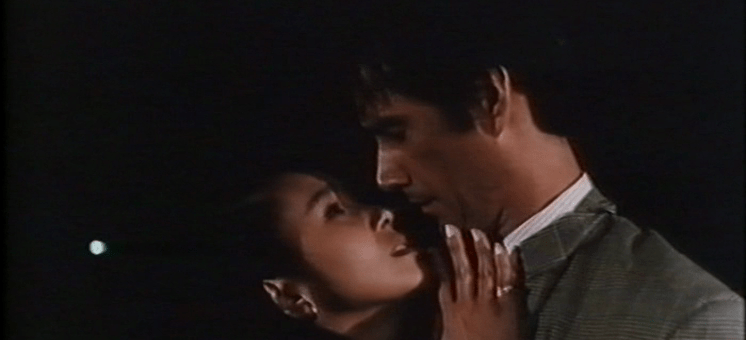
“A broken romance affects everybody” a sympathetic psychiatrist tries to reassure a patient suffering a dangerous romantic obsession with a possibly imaginary woman. Like so much of his work, they’re soft words offered casually as a path towards something deeper but in this case it’s not the patient we need to worry about but the doctor. The aptly named The Enchantment (誘惑者, Yuwakusha), somewhat less subtly titled “Temptress” in Japanese, takes its “hero” on a dark journey into fascination, the male need for domination, and the self delusions of irresolvable disappointment.   

The film opens with genial psychiatrist talking to a patient, Hirayama (Tsutomu Isobe), who proclaims himself more or less cured from a nervous breakdown born of a broken heart. Hirayama’s love affair may be largely imaginary, and he seems far from “cured”, but Doctor Sotomura’s (Masao Kusakari) failure to challenge him on his new affirmation that he’s over her because he’s realised she was “just a bitch” who treated him “like trash” might be a worrying oversight. Hirayama was supposed to be his last patient of the day, but a last minute walk-in, Miyako (Kumiko Akiyoshi), piques his interest enough to keep him in the office rather than on a planned date with his receptionist fiancée and surgeon best friend.

Miyako, nervous and reticent, tells him the appointment is “about a friend” and takes some coaxing before beginning to explain that she has been physically assaulted by her female roommate apparently jealous over the unwanted attentions of a man who developed an attraction for her at her job as a tour guide. Miyako does not spell it out, but somewhat implies that her relationship with her roommate Kimie is romantic while Sotomura has the good sense not to push the issue, only to urge her that perhaps she should think about staying with a friend a while if she doesn’t feel safe at home. Miyako, however, doesn’t want to do that and is only worried about what might have provoked this sudden and unexpected change, fearing most of all that she herself will fall out of love with Kimie if her moodiness continues to intensify.

Overstepping the mark, Sotomura is fascinated with his mysterious new patient, particularly after he becomes a kind of white night rescuing Miyako from a dangerous encounter with Hirayama who is under the delusion that she is the embodiment of his romantic obsession “Junko”. The fascination only intensifies after he makes a surprising discovery – Kimie is not “real” but a secondary personality inside Miyako. Infuriated by Sotomura’s romantic overtures, Kimie takes control and stabs him in the leg while Miyako continues to visit him in the hospital, unable to remember what exactly happened between them.

Sotomura’s obsession is both sexual and professional, after all how many sufferers of MPD is he going to meet in the course of his career? He is indeed ambitious, casually dating his receptionist Harumi (Kiwako Harada) mostly because she’s the daughter of his former professor. Though the couple live together, Harumi is constantly frustrated by his indifference to their relationship and foot dragging over making it official. Sotomura’s best friend, Shinbori (Takashi Naito), is facing much the same dilemma but has resigned himself to an arranged marriage to further his career and keep his family happy. Sotomura instinctively thinks he ought to do the same and tells Harumi that he’ll sort things out with her father, but remains fixated on the mysterious Miyako and her unconventional love life. 

A more cynical friend warns him that sex is the only thing that matters and it’s essential to avoid emotional entanglements. Nevertheless, Sotomura finds himself desperate to unlock the mystery of Miyako, but it remains open to debate which part of her he wants to “fix” – her MPD, or her sexual orientation. As we find out, Sotomura might assume that Miyako’s love for another woman has driven her “mad”, but in reality it’s more that a sense of impossibility led her to believe that there was no solution to her suffering other than death. Faced with unreconcilable loss, she internalised the figure of her fixation, literally becoming one with her lost lover in order to avoid facing that she was alone once again. Uninterested in Sotomura, Miyako/Kimie becomes fascinated with Harumi who eventually becomes so intensely obsessed with Miyako that she is willing to erase her own identity and become “Kimie” for her in order to support her sense of reality and protect the integrity of the Miyako personality.

Again, Sotomura has a few issues. The first is multi-layered sexual jealousy. Now that Harumi has moved on, found someone who “needs” her, and seems to be happier he is instantly irritated that she left him (for a woman) and desperate to win her back (along with the career boost he romanced her for in the first place). He resents Harumi’s differing vision of medical care, that she is willing to embrace Miyako’s delusion in order to keep her stable while wilfully abnegating her sense of self in a profound act of love. Sotomura the clinician wants to “cure” Miyako of her delusion, but his intervention is brutal, intruding on the mental space of her traumatic memory with physical violence designed to rip her from her safety of her artificial reality. He tries to insert himself between the two women, asserting his masculine “right” to dominate, but is eventually ejected by another knife blow to the thigh as the women assert their right to their own reality in the absence of men.

A strange psychosexual odyssey, The Enchantment spins a dark tale of obsession, delusion, and jealousy but ends on a broadly positive, if perhaps uncomfortable, note, in which the dominant psychiatrist is forced to recognise his irrelevance and the legitimacy of realities outside of his own. Broken romance affects everyone, as Sotomura said, but perhaps he doesn’t have the right to intrude on the broken hearts of others or judge the various ways in which they attempt to patch them back together again. A chronicle of bubble era Tokyo bathed in garish neon and a sense of infinite possibility, Shunichi Nagasaki’s heady feature is a surprisingly subversive affair in which trauma cannot be overcome but can perhaps become integrated in a mutually beneficial whole.


No Regret (후회하지 않아, Leesong Hee-il, 2006)

No Regret poster“Why do we have to be so miserable?” a frustrated cabaret bar owner exclaims part-way through a harebrained scheme to get both money and revenge against a lover’s betrayal and a relentlessly unfair society. The debut feature from Leesong Hee-il, No Regret (후회하지 않아, Huhoehaji Anha) is regarded as Korea’s first explicitly gay film from an out gay director but is as interested in social disparity and multiple oppressions as it is in contemporary gay life in a sometimes unforgiving Seoul.

Our hero, Su-min (Lee Yeong-hoon), is an orphan recently ejected from the orphanage after turning 18 and leaving high school. Like many young men in his position, Su-min has been effectively hung out to dry and has very little chance of making much of a life for himself. Quietly angry, he works hard in a factory by day, and studies at a cram school at night, hoping to make enough money to apply for college and ensure a better life for himself. He also has another part-time job as a “designated driver”, getting drunk people and their cars back home in one piece. One particular job, however, changes his life forever when he arrives to meet Jae-min (Kim Nam-gil) who, apparently, seems to fall in love with him at first sight. Despite perhaps being flattered, Su-min hesitates but turns down Jae-min’s overtures, either simply afraid and still uncomfortable with his sexuality or resentful of the awkward power dynamic between them.

The problematic power differential raises its head again when Su-min realises that Jae-min is the factory boss’ spoilt chaebol son seconds after learning he and his friend, both of whom are “casual” rather than “regular” employees, have been let go in a mass layoff. Jae-min, still smitten, pulls strings and makes sure Su-min keeps his job, but Su-min isn’t comfortable with being indebted in that way or of taking another man’s place just because the boss has taken a fancy to him so he quits in anger and does his best to shake Jae-min off his trail. Jobs are hard to come by for uneducated poor boys, and after a spell washing dishes proves unsuccessful he finds himself giving in and taking a job in a host bar karaoke box offering illicit sexual services to select clientele.

Su-min, as he later suggests to Jae-min, is perhaps freer than most to embrace his sexuality given that he has no family to disapprove of him. He is, in a sense, dependent on the feeling of solidarity he has with the other orphans, like his ladies’ man roommate who despite offering to take Su-min to a brothel so he’ll realise what he’s missing out on is actually broadly supportive of Su-min’s sexuality, but is afraid more of them discovering his “fall” into sex work than of them realising he is gay which most of them seem to have done already. In any case, it’s perhaps unsurprising that he personally continues to struggle with his sexuality given his extreme youth even after becoming used to life at the club and the financial benefits it can bring.

As the “madame” tells him, though he’s gay himself he doesn’t hire “gay” guys and it remains true that most of the other sex workers are straight men who are only in the business because they have no other way of making money. Jae-min, meanwhile, feels himself at least a prisoner of his privilege as he repeatedly fails to standup to his domineering mother who has arranged a marriage with a suitable young woman despite knowing that her son is gay. Well educated and wealthy, Jae-min has accepted his sexuality but is unable to embrace it or to break free of the patriarchal social codes which insist that, especially considering he is an only child, he has a responsibility to obey his parents’ wishes by living up to their conservative values, marrying a woman, providing an heir, and taking over the company. Jae-min’s mother even later tells him that she doesn’t care if he continues to sleep with men, but that he must marry the woman she’s chosen for appearance’s sake, little caring for the emotional wellbeing of the oblivious fiancée she is about to condemn to a loveless marriage.

Jae-min continues to chase Su-min who continues to rebuff him until finally seduced, but a note of darkness remains at the centre of their relationship in Jae-min’s self loathing and Su-min’s resentful sense of inferiority. An accidental betrayal born of momentary weakness and followed by an eventual breakthrough leads to a very dark place indeed as the wounded parties decide to take misplaced revenge, against an oppressive society as much as against those who have wronged them. Nevertheless, a kind of “equality” is perhaps achieved through wounds given and received giving way to a more openhearted connection albeit one with a dark genesis. An important step forward in representation, Leesong Hee-il’s indie drama is an oddly hopeful romance in which the heroes eventually succeed in becoming themselves in defiance of the societal oppression all around them.


US trailer (English subtitles)

Jeux de plage (浜辺のゲーム, Aimi Natsuto, 2019)

105104a28dul1sw021sqjl“Listen, men are nice to all women, because sex is the only thing they think of” a young woman warns her friend as she recounts a casual encounter on the beach with a man they seem to have collectively decided to declare a bad idea. It’s not all fun and games by the sea for the romantically confused heroes of Jeux a plage (浜辺のゲーム, Hamabe no Game) which owes a fair bit to the French New Wave in its easy, breezy exploration of young love and an intensely sexist society. Produced by Kiki Sugino’s Wa Entertainment, Aimi Natsuto’s Rohmer-esque debut continues the internationalist vibe the studio is fast becoming known for in bringing together a disparate group of travellers each “invited” to a small seaside guest house by the mysterious Miwako.

The central psychodrama plays out between three young women, not quite friends, who are apparently engaged in some sort of revolving love triangle. Yui (Juri Fukushima) has brought her uni friend Sayaka (Haruna Hori) on a trip to her hometown where they’ve hooked up with her high school friend Momoko (Nanaho Otsuka), but the atmosphere is beginning to sour. Sayaka increasingly feels like a third wheel while secretly pining for Yui who seems to have regressed into a more vacuous version of her teenage self while obsessing over Momoko who only talks about guys despite later claiming to be pansexual.

Meanwhile, the three women find themselves constantly bombarded by (largely) unwanted male attention – firstly from another guest at the hotel, Akihiro (Shinsuke Kato), who seems to have completely messed up his personal and professional lives with an ill-advised love affair. Akihiro’s eyes are out on stalks when he spots the three pretty women though they, while admitting that he’s “cool”, declare him a little sleazy, maybe even creepy seeing as he’s probably “as old as 35” and giving the eye to a bunch of college girls. Even so, Akihiro is not the only lothario on the prowl. Korean student Min-jun (Koo Hyunmin) has brought a Korean girl, Yona (Li Taun), who’s come to visit him, to stay in the hotel after getting a recommendation from Miwako. It seems Yona is just a friend who came to find out about studying film, but Min-jun keeps making awkward passes and intermittently reminding her about an introduction to his professor which occasionally seems like a creepy sort of pleading.

All that’s aside from the randy professor (Kentaro Kanbara) who might as well be a escapee from a Hong Sang-soo film, having started the picture without his trousers in the empty hotel swimming pool after apparently being seduced by the ever absent Miwako the night before. Despite being profoundly sorry, he turns up the next day to return the clothes he had to borrow and makes a worryingly aggressive play for the previously sympathetic manageress all while his suspicious wife (Kiki Sugino) watches from behind a nearby hedge, presumably following him after doubting whatever story he told her to explain not having arrived home the previous evening. Meanwhile, Sayaka, sick of feeling like a spare part, takes off for the beach where she’s quickly hit on by two different creepy guys, one of whom turns out to be a film director (A cameo from Edmund Yeo) who wanted to hire her for a movie though she wasn’t particularly interested.

Matters come to a head right there on the beach where the women collectively take out their frustrations with the male sex on the cocksure Akihiro, who is not really at fault in this instance save insensitively mocking other people’s romantic distress. Unfortunately, however, the incident does not seem to have relieved the pressure on the central trio who continue to dance around their romantic confusion without talking about anything “real”. While Sayaka looks for advice in asking random strangers if they’ve ever had a same sex crush, Yui becomes increasingly stressed and as irritated by Momoko’s gravitating towards the guys as Sayaka is by her intimacy with Momoko. Meanwhile, the only “nice guy” – a sympathetic Thai filmmaker (Donsaron Kovitvanitcha) observing from the sidelines, fails to add to the drama when attempting to make his own romantic confession (a sweet and innocent one with flowers and poetry) at an extremely inopportune moment. Bookended by time cards with chapter headings taken from classics of the French New Wave, Natsuto’s approach is one of detached playfulness tinged with farce as she observes this collection of flawed but very human protagonists fail to plainly express their desires, becoming ever more frustrated and confused as they struggle to orientate themselves around each other in a repressive and infinitely sexist environment. 


Jeux de plage was screened as part of Japan Cuts 2019.

Original trailer (English subtitles)
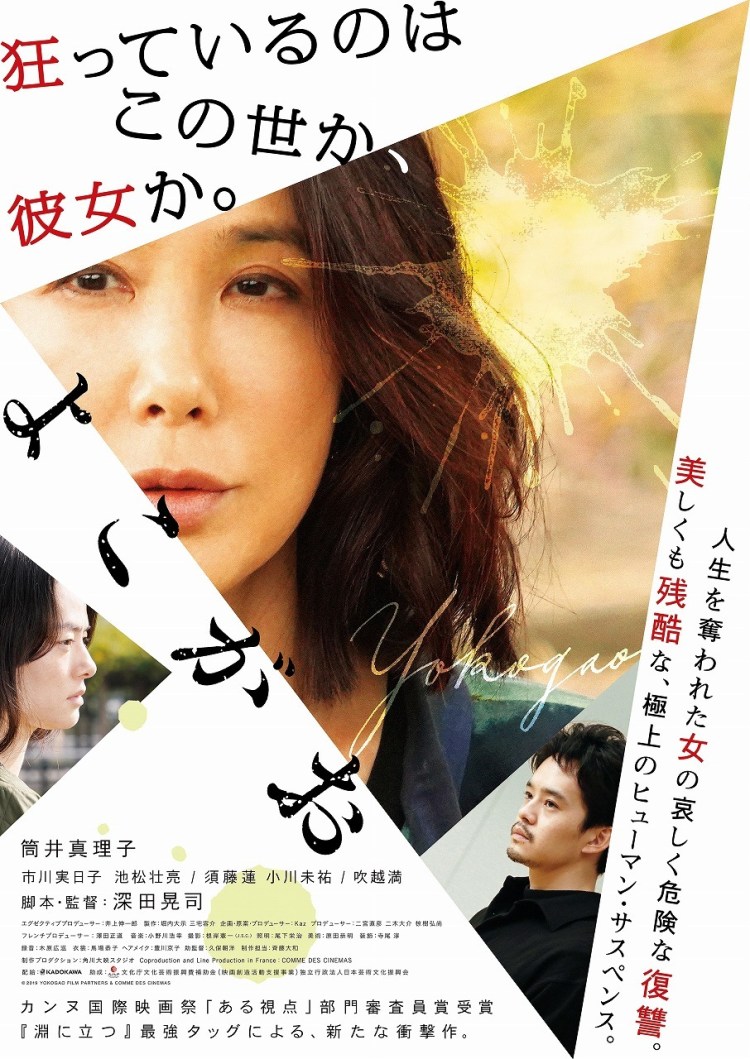
House of Hummingbird (벌새, Kim Bora, 2019) [Fantasia 2019]

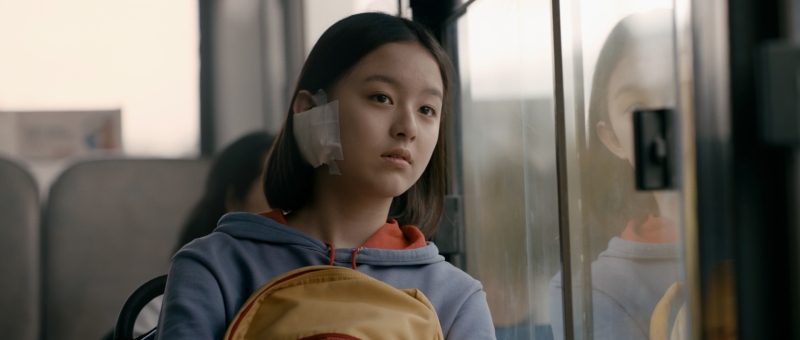
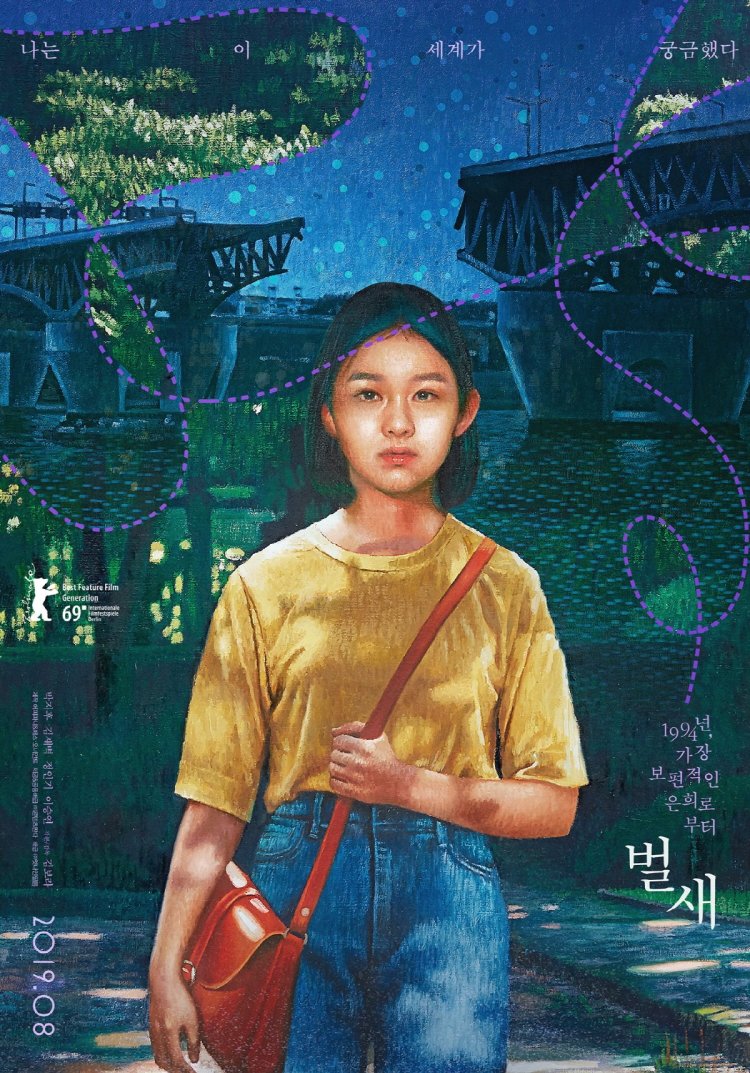
House of hummingbird poster 1“The world is fascinating and beautiful” the teenage protagonist of Kim Bora’s House of Hummingbird (벌새, Beolsae) is told in an especially poignant letter recited in the film’s closing moments. It’s a lesson that she’s longing to learn, but finds few willing to teach her in a society whipping itself up into a frenzy of aspiration perhaps at the cost of true human connection. A chronicle of one surprisingly traumatic summer in the newly democratised Korea of 1994, Kim’s film charts its heroine’s gradual progress towards a kind of self acceptance with a melancholy ease as she begins to find her own way despite the toxicity of the world all around her.

14-year-old Eun-hee (Park Ji-hu) is one of three siblings living in a cramped apartment with her harried, emotionally distant parents who run a small rice cake shop. A mediocre, disinterested student she falls asleep at school where the other kids cruelly exclaim that dozy girls like her never make it to college and are destined only to become housemaids to the “successful” adults they assume they’ll be. Meanwhile, Eun-hee’s hardline dad (Jung In-gi) makes her go to Chinese cram school where she “studies” along with her best friend, Ji-suk (Park Seo-yun), spending most of their lesson time making fun of the teacher in hastily written notes.

Previously purposeless, her world begins to widen when the Chinese teacher abruptly quits and is replaced by the infinitely cool, enigmatic university student Young-ji (Kim Sae-byuk) whom she first glimpsed smoking a melancholy cigarette by an open window on the stairs. Strangely captivated by this “odd” young woman, Eun-hee suddenly has the urge to study, especially as Young-ji turns out to be unique among the adults that she knows in that she seems to genuinely care about her and is interested in hearing all about her troubles, which, as we will find out are many.

In the mid-90s, Korea was a newly democratised and rapidly modernising society keen to claim its place on the economic world stage. Where Eun-hee’s parents are defeated, disappointed figures, they want better for their children in the new society but struggle as to how to get it for them. Eun-hee’s mother (Lee Seung-yeon), as we find out from her dejected brother, was bright but had to leave school to pay for his tuition (a promise he seems to think he has not fulfilled). Consequently, the parents are convinced “education” is the way out but fail to realise that their obsession with academic grades is slowly destroying their family home. While Eun-hee is sullen and withdrawn, pushed out by her rowdy family, her older brother’s exam stress often turns violent and her sister skips school to go clubbing in an attempt to escape adolescent anxiety.

Even when Eun-hee discovers a lump on the side of her neck, her mother sends her off to the doctor’s alone though he can’t actually treat her without parental consent which Eun-hee fears they won’t get round to giving. Though they visit her once, they don’t bother to pick her up from an extended stay in hospital and are not home when she returns. Not even an accusation of shoplifting rouses them from their busyness. Eun-hee’s father rudely tells the shopkeeper to stop bothering him and call the police, causing the shopkeeper to feel so sorry for her that he lets her go.

Meanwhile, Eun-hee looks for intimacy in other places. She tries innocent teenage romance with a feckless but good-looking boy, Ji-wan (Jeong Yun-seo), whom truth be told she perhaps likes more as an abstract idea than in himself. The unexpected gift of a bright red rose from a bashful girl (Seol Hye-in) sends her thoughts in another direction but leaves her more confused than ever when that too betrays. Through it all she idolises the mysterious figure of Young-ji with whom she seems to share some kind of affinity and the sense of connection so painfully absent in her frenetic family home.

Eun-hee’s difficult path towards an acceptance of adulthood mirrors that of her nation, finding itself in one particularly traumatic summer marked by a dangerous sense of anxiety in the end of eras as the North’s Kim Il-sung passes away, provoking fears of a disturbance in carefully won political equilibrium. Meanwhile, a literal bridge collapse threatens to destroy Eun-hee’s new path towards maturity once and for all, taking her only source of solace with it. Yet what she learns is that though bad things happen, good things happen too and there are always new people to share them with. She may feel herself to be alone, lost in a confusing landscape and uniquely indifferent to her nation’s relentless pursuit of consumerist success, but she does finally perhaps have herself and new hope for the future found in the security of her own hands.


House of Hummingbird was screened as part of the 2019 Fantasia International Film Festival.

Festival trailer (English subtitles)

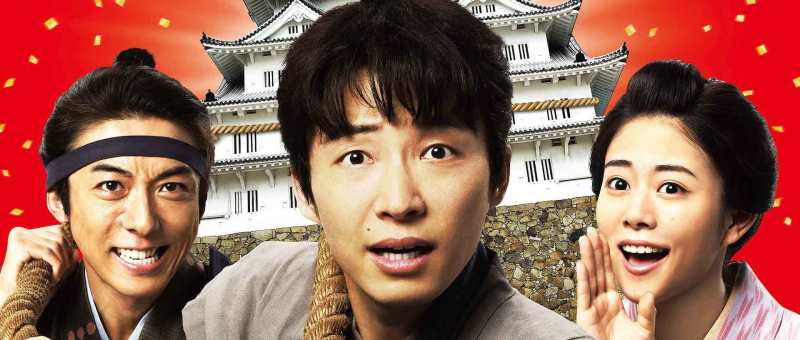
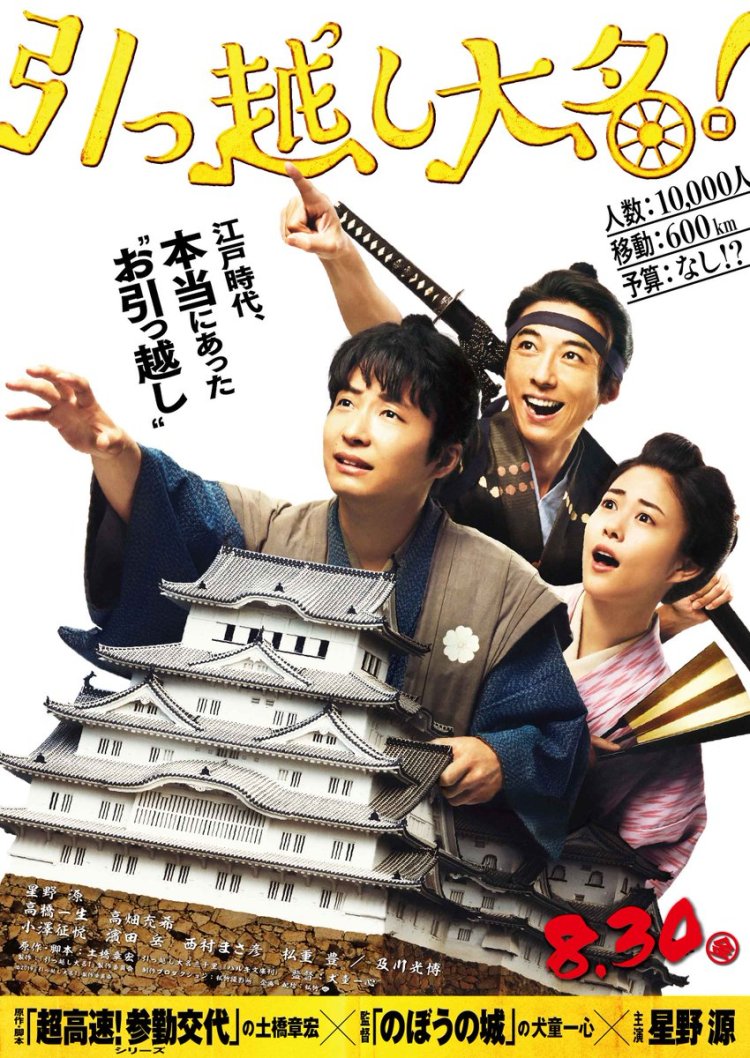
Samurai Shifters (引っ越し大名!, Isshin Inudo, 2019)

Samurai Shifters poster 1Forced transfers have been in the news of late. Japanese companies, keen to attract and keep younger workers in the midst of a growing labour shortage, have been offering more modern working rights such as paid parental leave but also using them as increased leverage to force employees to take jobs in far flung places after returning to work – after all, you aren’t going to up and quit with a new baby to support.

As Isshin Inudo’s Samurai Shifters (引っ越し大名!, Hikkoshi Daimyo!) proves, contemporary corporate culture is not so different from the samurai ways of old. Back in the 17th century, the Shogun kept a tight grip on his power by shifting his lords round every so often in order to keep them on their toes. Seeing as they had to pay all the expenses and handle logistics themselves, relocating left a clan weakened and dangerously exposed which of course means they were unlikely to challenge the Shogun’s power and would be keen to keep his favour in order to avoid being asked to make regular moves to unprofitable places.

When the Echizen Matsudaira clan is ordered to move a considerable distance, crossing the sea to a new residence in Kyushu which isn’t even really a “castle”, they have a big problem because their previous relocation officer has passed away since their last move. Predictably, no one wants this totally thankless job which warrants seppuku if you mess it up so it falls to introverted librarian Harunosuke (Gen Hoshino) who is too shy refuse (even if he had much of a choice, which he doesn’t). Unfortunately for some, however, Harunosuke is both smart and kind which means he’s good at figuring out solutions to complicated problems and reluctant to exercise his samurai privilege to do so.

In fact Harunosuke is something of an odd samurai. As others later put it, he doesn’t care about status or seniority and has a natural tendency to treat everybody equally. When the head of accounts advises him to take loans from merchants with no intention to pay them back, he objects not only to the dishonesty but to the unfairness of stealing hard-earned money from ordinary people solely under the rationale that they are entitled to do so because they are samurai and therefore superior. Likewise, when he finds out that his predecessor was of a lower rank and that all his achievements were credited to his superiors he makes a point of going to his grave to apologise which earns him some brownie points with the man’s pretty daughter, Oran (Mitsuki Takahata), who was not previously minded to help him because of the way her father had been treated.

Harunosuke’s natural goodness begins to endear him to the jaded samurai now in his care. Though they might be suspicious of some of his methods including his “decluttering” program, they quickly come on board when they realise he is not intending to exclude himself from his ordinances and even consents to burn his own books in order to make it plain that everyone is in the same boat. He hesitates in his growing attraction to Oran (who in turn is also taken with him because of his atypical tendency to compassion) not only because of his natural diffidence but because he feels it might be selfish to pursue a romance while urging everyone else towards austerity.

Meanwhile, “romance” is why all this started in the first place. The lord, Naonori Matsudaira (Mitsuhiro Oikawa), is in a relationship with his steward (something which seems to be known to most and not particularly an issue). While he was in Edo, he rudely rebuffed the attentions of another lord, Yoshiyasu Yanagisawa (Osamu Mukai), who seems to have taken rejection badly and has it in for the clan as a whole. In an interesting role reversal, his advisor laments that perhaps it would have been better for everyone if he’d just submitted himself, but nevertheless a few thousand people are now affected by the petty romantic squabbles of elite samurai in far off Edo.

Bookish and reticent as he is, Harunosuke sees his chance to “go to war against the unjust Shogunate” by engineering a plan which allows them to reduce the burden of moving, reluctantly having to demote some samurai and leave them behind as ordinary farmers with the promise that they will be reinstated as soon as the clan resumes its former status. Asking the samurai to drop their superiority and carry their own bags for a change has profound implications for their society, but Harunosuke’s practical goodness eventually wins out as the clan comes together as one rather than obsessing over their petty internal divisions. A cheerful tale of homecoming, friendship, and warmhearted egalitarianism, Samurai Shifters is an oddly topical period comedy which satirises the vagaries of modern corporate culture through the prism of samurai-era mores but does so with a wry smile as Harunosuke finds a way to live within the system without compromising his principles and eventually wins all with little more than a compassionate heart and a finely tuned mind.


Samurai Shifters screens in New York on July 21 as part of Japan Cuts 2019.

Teaser trailer (English subtitles)

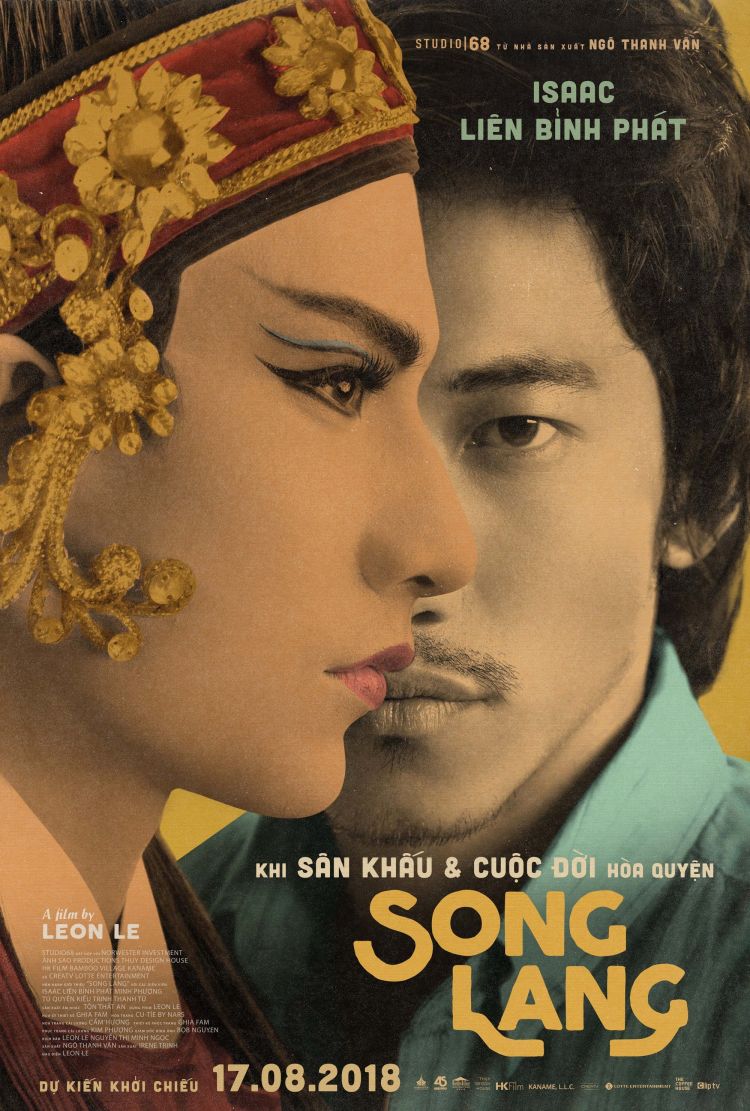
Song Lang (Leon Le, 2018)

Song Lang poster 1“How could the gods be so cruel” a ci lương performer intones, “Allowing us to be together yet worlds apart”. An achingly nostalgic return to the Saigon of the 1980s, Leon Le’s melancholy debut Song Lang is a lament for frustrated connections and the inevitability of heartbreak, taking its lonely heroes on a slow path towards self realisation only to have fate intervene at the worst possible moment.

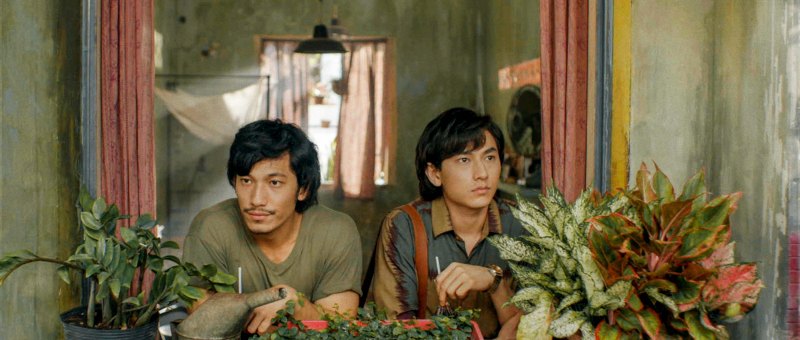
An enforcer for the steely “Auntie Nga” (Phuong Minh), Dung Thunderbolt (Lien Binh Phat) has long been trying to take revenge on his unhappy life through the intense act of self-harm which is his way of living. A routine job, however, jolts him out of his inertia when he wanders into a theatre where a ci lương opera company is preparing for a performance. There he finds himself catching sight of the famous performer Linh Phung (Isaac), only to run away, in flight from the intensity of being woken from his reverie. Later he returns to claim the debt, threatening to burn the company’s precious costumes until Linh Phung arrives and interrupts him, proudly insisting he will pay the balance after the first performance. Dung leaves confused, refusing to accept the watch and necklace that Linh Phung offered in partial payment.

A second chance meeting confirms that the two men might have more in common than they’d first assumed. The lonely Linh Phung, eating alone in a nearby cafe, gets into a fight with some drunken louts who wanted him to sing a few tunes, but as surprisingly handy as he turns out to be quickly gets himself knocked out at which point Dung steps in to rescue him, eventually taking him home to sleep it off where they later bond through a shared love of violent video games. An opportune power cut allows the two men to enter a greater level of intimacy during which Dung begins to re-embrace his ci lương childhood through the instrument his father left behind.

The Song Lang, as the opening informs us, is an embodiment of the god of music delivering the rhythm of life and guiding musicians towards the moral path. That’s a path that Dung knows all too well that he has strayed from and is perhaps looking to return to. The central theme of ci lương is “nostalgia for the past” – something echoed in Linh Phung’s peculiar philosophy of time travel through people, objects, and places which seems to be borne out in Dung’s constant flashbacks to a more innocent age before his happy childhood ended in parental betrayal and sudden abandonment.

Linh Phung, meanwhile, is nursing his own wounds. His mentor tells him that though he is popular his performance lacks depth because he lacks life experience while his co-star mocks him for never having been in love. Rooting through Dung’s belongings, he discovers a book he’d loved in childhood about a lonely elephant taken away from his jungle and sold to a circus. Both men are, in a sense, exiles from their pack walking a lonely path of confusion and despair but finding an unexpected kindred spirit one in the other as they search for new, more fulfilling ways of being. Bonding with Dung opens new emotional vistas for Linh Phung which allow him to perfect his art, while reconnecting with his childhood self through Linh Phung’s music gives Dung the courage leave his nihilistic life of shady moral justifications behind.

Fate, however, may have other plans and karma is always lurking. Linh Phung’s claim that an artist must know great grief proves truer than he realised, but it’s another passage from the book with which he eventually leaves us, affirming that it’s best to learn to enjoy these present moments rather than lingering in an unchangeable past. Yet the art of ci lương is itself steeped in nostalgia, perfect for a “time traveller” like Linh Phung returning to his sadness through his art, proving in a sense that the past is always present and wilfully inescapable. A melancholy, romantic evocation of Saigon in the 1980s, Song Lang is also a beautifully pitched paen to a fading art form and an  “unfinished love song” to lost lovers in which two lonely souls find an echo in each other but discover only tragedy in the implacability of fate.


Song Lang screened as part of the 2019 New York Asian Film Festival.

Original trailer (Vietnamese subtitles only)

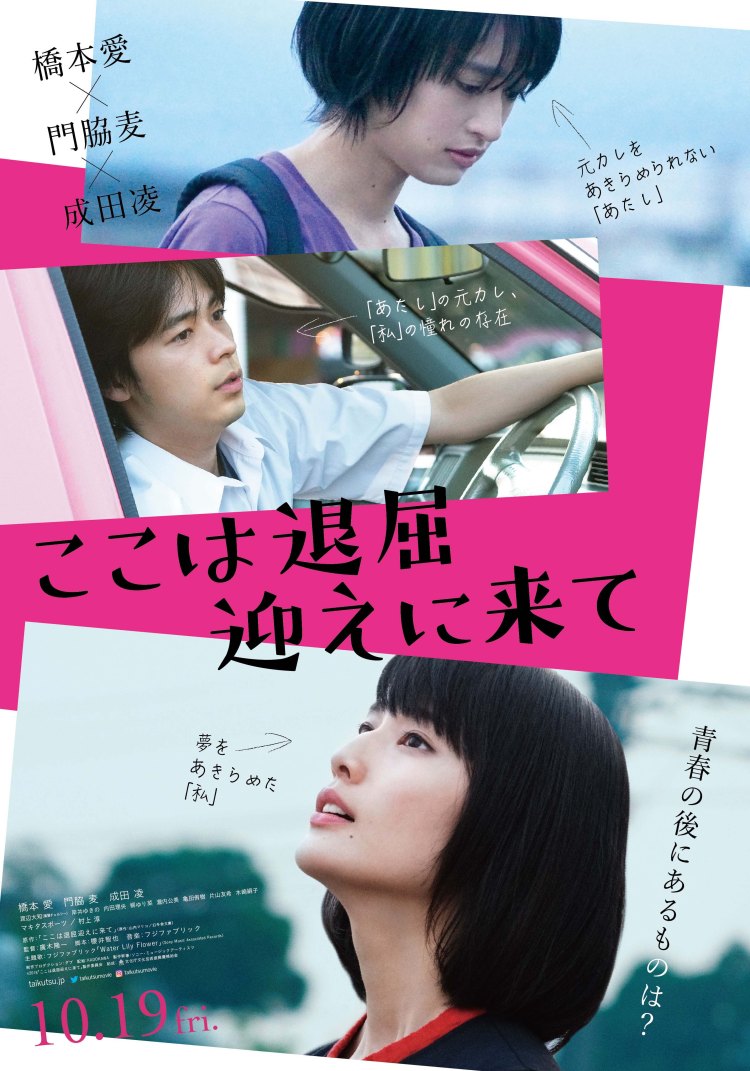
It’s Boring Here, Pick Me Up (ここは退屈迎えに来て, Ryuichi Hiroki, 2018)

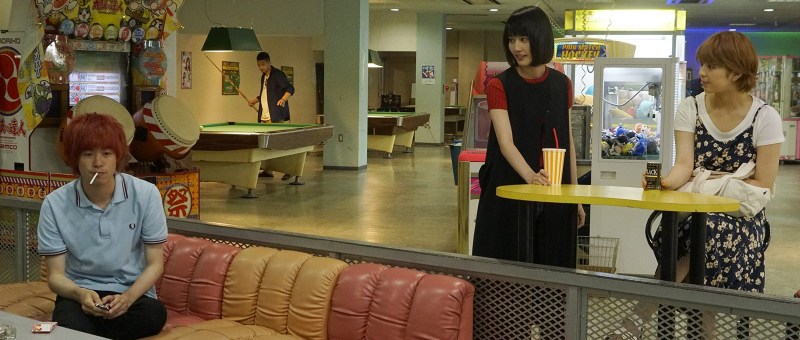
SR2_teaserWhere now the dreams of youth? Japanese cinema seems to have been asking that very question since its inception but the answer remains as elusive as ever. The heroine(s) of Ryuichi Hiroki’s adaptation of a series of short stories by Mariko Yamauchi, It’s Boring Here, Pick Me Up (ここは退屈迎えに来て, Koko wa Taikutsu Mukae ni Kite), idolise Audrey Hepburn and long for urban sophistication only to find themselves hung up on unfulfilled high school promise and unable escape the wholesome romanticisation of their small-town youth to embrace the demands and possibilities of adulthood.

Hiroki follows his small-town high schoolers from 2004 to 2013, jumping freely between time periods as memories spark one another in emotional rather than chronological order. We begin with the unnamed protagonist, “I” (Ai Hashimoto), who has returned to her hometown after 10 (seemingly disappointing) years in Tokyo and now works as a freelance journalist for the provincial paper writing local culture articles on ramen shops and patisseries. She has contacted only one friend since her return, Satsuki (Yurina Yanagi), who has suggested, rather tongue in cheek, that they reconnect with former high school crush Shiina (Ryo Narita).

Back in high school, Shiina was like some kind of untouchable god. Everyone just wanted to be around him as if he alone made the sun shine. All the girls were in love with him, and the all boys wanted his approval. Asked about his hopes and dreams, Shiina just wants high school to go on forever, perhaps realising that he’ll never have it so good again. “I” meanwhile, claims that she wants to “become someone”. A small town girl who didn’t fit in, she hoped to find herself amid the hustle and bustle of the big the city but has returned with an even deeper sense of alienation than when she left with only the bright memory of her brief time as a chosen member of Shiina’s after school posse to cling to.

Satsuki, meanwhile, stayed behind but seems equally hung up on unfinished high school business. Having never been to Tokyo she is envious of her friend’s experiences and longs for the anonymity of the city. If you mess up in Tokyo, she claims, people will eventually forget whereas if you make a mistake in the country it’s all anyone will talk about for the rest of your life. That certainly seems to be true for another of the girls’ contemporaries (Rio Uchida) who left to become an idol only for it all to go wrong and come home branded as a loose woman. Cynical and calculating, she decides on an arranged marriage only to find herself shackled to an old man she doesn’t like very much while her shy friend (Yukino Kishii) seems to have found love by stealth and apparently won the jackpot without even knowing it.

Continuously travelling, the now almost-middle-aged high schoolers meander without direction as if circling around the locus of their departing youth and the sense of possibility disappearing with it. Running into another classmate, Shinpo (Daichi Watanabe), also connected with Shiina, I and Satsuki get a few more clues about their high school crush who apparently now lives a fairly ordinary life as a driving instructor thanks to Shinpo’s recommendation without which he was set to hit rock bottom after some kind of breakdown while failing to make it in Osaka. Nicknamed “Chinpo” (which means “willy”) in school, Shinpo’s dream for the future was to exist alongside someone that he loved but he seems to have given up even on this depressingly compromised desire and resigned himself to loneliness and lovelorn misery as someone who will never be able to find his place in a conservative and conformist society.

I meanwhile, like a similarly unnamed counterpart (Mugi Kadowaki) who really did date Shiina until he cruelly cast her aside, is finally able to burst her high school bubble by confronting it directly and seeing the reality rather than her romanticised impression of it. Those shining days of fun and friendship with everything still ahead will never come again, and so the memory of them remains bittersweet at best. Adult life is dull and disappointing, but there is perhaps melancholy happiness to be found in learning to embrace the present moment rather than harping on a largely imagined past or idealised future. 


It’s Boring Here, Pick Me Up was screened as part of the 2019 Nippon Connection Film Festival.

International trailer (English subtitles)

Meili (美麗, Zhou Zhou, 2018)

Meili poser 2Though Mainland cinema has a famous aversion to the representation of LGBT lives on-screen, there does seem to have been a notable shift towards the positive in recent years with even big budget blockbuster comedies and family films offering subversive, if subtle, messages of tacit support. Nevertheless, lesbian life continues to be underserved with Fish and Elephant, often regarded as the “first” explicitly lesbian film from Mainland China, released only in 2001. Zhou Zhou’s Meili (美麗) is not an issue film nor does it make much of its protagonist’s sexuality but it does attempt to address the many difficulties she experiences in her life as a gay woman from a humble background.

Meili (Chi Yun) has a casual job in a laundry and lives with her high flying career woman girlfriend Li Wen (Zhou Meiyan) who is often forced to stay out late drinking to excess with colleagues in an attempt to climb the ladder. Li Wen receives the opportunity of an extended business trip to Shanghai and asks Meili to go with her only to change her mind abruptly at the last minute, fearing her colleagues will find out that she’s in a relationship with another woman and it will damage her prospects or perhaps even cost her her job. Though Meili was ambivalent about going anyway, the sudden reversal proves a huge shock, especially as she’s also been let go from her laundry job for having the temerity to ask about the annual leave policy.

Meanwhile, Meili is constantly pestered for money by her hard-pressed older sister (Li Shuangyu) who is married to a man (Wang Limin) so vile Meili can hardly bear to look at him. The reasons for her disdain will become apparent, but adding to the confusing family situation is a little girl being brought up by the couple which is apparently Meili’s. Meili is a lesbian with no interest in men which may hint at the reasons she intensely hates the child and resents the entire situation. Despite all that, however, Meili does not seem to be able to cut her sister off and finds herself going out of her way to help her even though she is herself in extreme difficulty.

Toughness and tenderness do seem to go together as we witness Meili set up an IV for her hung-over girlfriend, berating her for drinking too much yet again but caring for her anyway. Meili blows up at her brother-in-law’s, overturning their dinner table when he insults her in front of his friends, but shuts down when wounded by Li Wen, seemingly unwilling to engage in a probably destructive argument but dragged into one anyway. The relationship between the two women appears settled and positive despite the disparity of their socioeconomic statuses, but there are cracks and when Meili begins to suspect that Li Wen may be seeing a male colleague behind her back, perhaps as a cover or to improve her career prospects, she begins to wonder what they really are to each other.

For Meili who could not rely on her family, and had no future plans or real place to belong, Li Wen had become everything. “Shanghai” is a dream to the youngsters of Changchun who assume the gleaming city must be full of opportunity and excitement but it may well be one beyond their reach even if they manage to escape industrial town casual labour hell. Meili bears her difficult circumstances with fortitude. Obliged to live quietly and under the radar, she works hard and saves her money but is betrayed at every turn – by unscrupulous employers, by her toxic family, by her ambitious girlfriend, and even by her supportive and well meaning friends who reluctantly decide that they will have to leave her behind alone in order to chase their own dreams in the city. Having lost everything and all hope for the future, violent revenge seems an unavoidable consequence of her almost total oppression.

A popular name for baby girls, “Meili” means beautiful but there’s precious little beauty in Meili’s increasingly grey and hopeless world. Human selfishness, capitalistic avarice, and conservative patriarchal values conspire to rob her of all possibility for life or forward motion. There is no path out of poverty and little possibility of happiness in being able to live openly and equally with a woman by whom she is fully loved. Painting a bleak picture of life in post-reform provincial China, Zhou’s debut presents a refreshingly normalised depiction of a same sex relationship while making plain each of the various ways its heroine is backed into a corner by the oppressive and increasingly unequal society in which she lives.


Meili was screened as part of the 2019 Chinese Visual Festival.

International trailer (English subtitles)
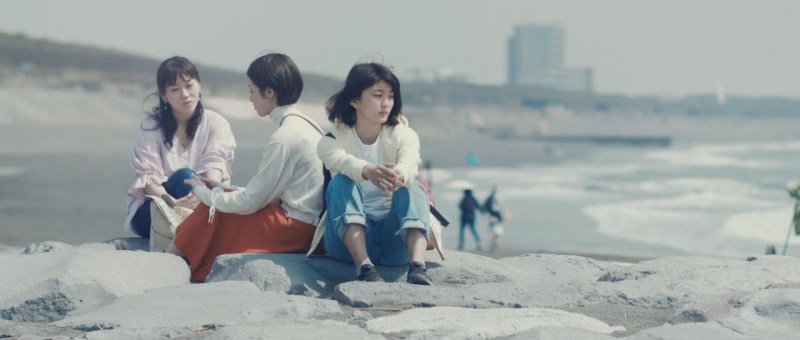
First Night Nerves (8個女人1台戲, Stanley Kwan, 2018)

First night nerves posterStanley Kwan returns to the director’s chair after a lengthy hiatus with a cheeky piece of self-referential meta comedy revolving around two “stage sisters” and their parallel quests to seize the spotlight in the increasingly competitive and celeb obsessed Hong Kong entertainment industry. As implied by its Chinese title “Eight Women, One Stage”, First Night Nerves (8個女人1台戲) is an almost exclusively female affair in which straight men barely feature, but for as much as it heartily embraces the cattiness of backstage life it is also keen to affirm the many ways in which women support and nurture each other even if it is clear that the arts are not always as liberal as one might expect them to be.

Kwan begins in high camp as the diva actresses square off during a tense press conference for an upcoming play which marks the long awaited comeback of veteran actress Xiuling (Sammi Cheng Sau-man) who abruptly retired some years previously, notably playing opposite the slightly younger starlet, Yuwen (Gigi Leung Wing-kei), many accuse of stealing her spotlight (and thereby forcing her off the stage). The behind the scenes gossip makes Two Sisters the hottest ticket in Hong Kong, which is all very good news for Xiuling’s sister-in-law Cong (Angie Chiu) – a wealthy Shanghainese heiress and theatrical impresario producing the play, some say, as a personal favour following the death of her brother in a recent plane crash which has become a minor scandal seeing as he died alongside his American mistress.

A canny business woman, Cong is not above pitting her two stars against each other as a means of getting bums on seats but she also needs to make sure the show goes on which is difficult when Yuwen, still insecure in her star billing, is intent on proving she’s not playing the second lead by constantly upstaging her co-star. Yuwen, it has to be said, is the less sympathetic of the pair – cast early as a divaish upstart who finagled her way into showbiz with sex appeal, while Xiuling remains the dignified, wounded star laid low by life. The truth is, of course, more complex as the two women circle around each other before reaching a kind of equilibrium born of mutual understanding and a healthier professional rivalry.

Before that, however, the two stars occupy two very different camps each with their own retinues. The assistants – Mainlander Nini (Qi Xi), a relative of Cong, and former pool hall girl Yilian (Catherine Chau), support their respective mistresses in different ways but are each responsible for and reflective of their emotional difficulties. Yilian, in a heartfelt conversation with the otherwise perspicacious Nini, explains that she puts up with Yuwen’s sometimes divaish antics and is happy to act as an all purpose maid because Yuwen has also been loyal to her – supporting both herself and her son even after she became famous, making plain that Yuwen is, deep down, a sincere and caring person. Xiuling, meanwhile, is cast as somewhat cold and distant, keeping Nini at arms length and the relationship professional despite Nini’s, as it turns out, entirely accurate characterisation of her strangely intense friendship with adoring lesbian heiress “Master” Fu Sha (Bai Baihe).

Despite the supposed liberality of the arts, Xiuling is not the only one to experience mild discomfort with homosexuality even if her coming around to a surprise announcement from her son eventually gives hope to the lovelorn Sha whose confused grandmother has offered a vast bounty in the hope of hooking a prime son-in-law in a ripped straight from the headlines subplot. Transgender playwright An (Kam Kwok-Leung) encounters frequent transphobic slurs passed off as an extension of divaish lovey banter and is never fully accepted as a woman by her colleagues, subtly hinting at the extent to which LGBTQ issues still struggle for mainstream acceptance.

Underneath the high camp and beautifully pitched melodrama, Kwan makes space for subtle barbs towards the creeping influence of the Mainland in Hong Kong cinema as Yuwen irritatedly admits she’s considering learning Mandarin while outraged that producers on a previous film had the audacity to dub her dialogue and insisting everyone stay in Hong Kong to watch the Cantonese version. Behind all the bitchiness and backstabbing, there is real affection for the Hong Kong entertainment industry if tempered by a mild anxiety for its future as exemplified by the strangely warm closing scene in which the two divas sit shoulder to shoulder appreciating the beauty of Victoria Harbour while acknowledging their own small role in ensuring it survives.


First Night Nerves screens as the opening gala of the 2019 Chinese Visual Festival at BFI Southbank on 2nd May where director Stanley Kwan will be present for a Q&A.

Original trailer (English subtitles)