
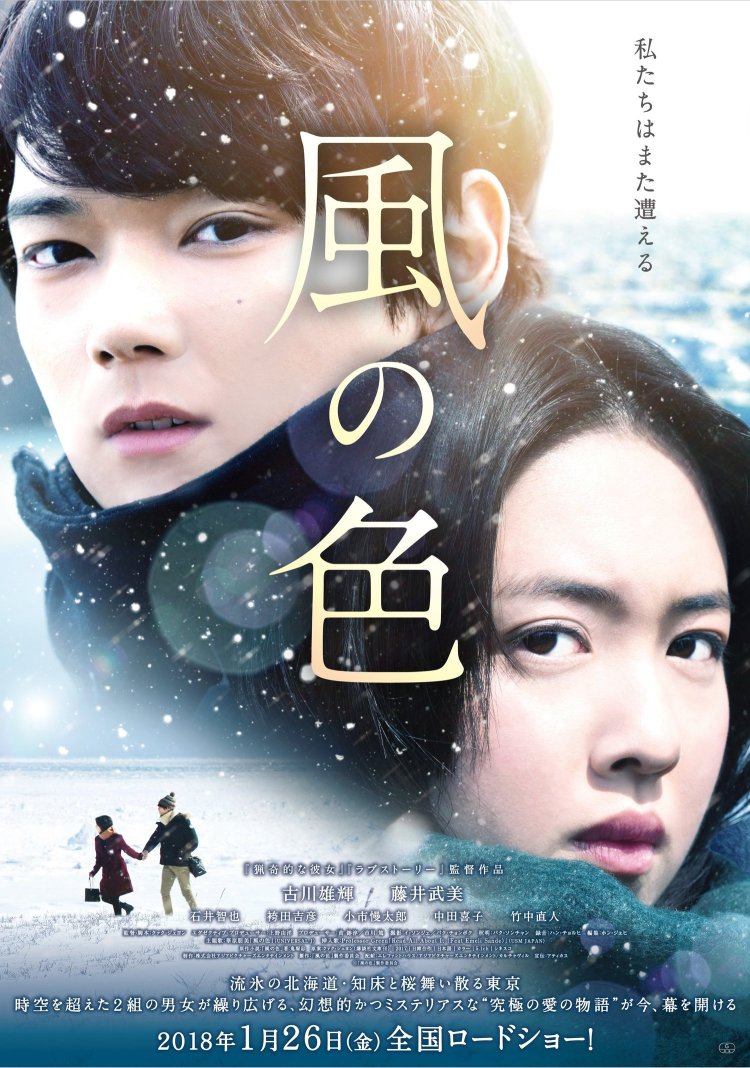
 Can there be two people in the world who so exactly resemble each other but have entirely indifferent, interwoven fates? They say that if you meet your doppelgänger one of you will die, that the world cannot permit two such persons to live. Colors of Wind (風の色, Kaze no Iro), the second Japanese language film directed by The Classic’s Kwak Jae-yong is not sure about doppelgänger theory but is certifiably obsessed with dualities and most particularly in the way that they relate to romantic fulfilment and the necessary shifts in identity that it often entails.
In the present, the melancholy Ryo (Yuki Furukawa) has locked himself away for the past 100 days in mourning for his girlfriend who ghosted him and then apparently took her own life in snowy Hokkaido. Yuri (Takemi Fujii) had always had a kind of fragility about her, insisting that she’d soon “disappear” but that there was another girl who looked like her living in Hokkaido who was far happier and far cleverer than she would ever be. After she died and Ryo “cocooned” himself away, he wakes up and walks into his favourite restaurant only to find the old couple that ran it have retired and the place is reopening as a magic club. Not only that, the previous owners were keeping a suitcase for him which they instructed the new barman to pass on with the caveat that Ryo would probably not even remember that he left it there. The case turns out to be full of clues to a life a he never knew – pictures of a girl of who looks like Yuri, a diary, and a handful of other trinkets. Newly taken with the world of magic, Ryo trains himself to become a top magician before setting off for Hokkaido and encountering another Yuri, only calling herself Aya, who thinks that he is returned spirit of her former boyfriend Ryu – a magician who went missing during a complicated magic trick three years previously.
Colors of Wind hinges on the notion of love as the greatest act of magic, by which it presumably means something inexplicable and wondrous rather than an insincere act of ostentation. Love, it seems to say, fundamentally rewrites the identity of the lover but then again, if one is really “in love” perhaps “identity” in any real sense ceases to matter aside from a need for integration that allows the formation of a new self which can accommodate the extreme selflessness which true love requires.
Love as an act of transformation is a motif which recurs throughout. Grief-stricken, Ryo “cocoons” himself away for 100 days as if waiting to emerge as something else, a new man with a clean slate waiting for a new identity. Meanwhile, Aya continues to pine for her missing magician, half convincing herself that Ryo is Ryu while her mind fractures itself in wondering if her new love is a betrayal of her old. Unable to accommodate the romantic impurity of falling in love with two different men, albeit ones who look identical and have much more than that in common, Aya’s loves create two mutually exclusive souls doing battle for headspace while all Ryo can do is watch as he too battles ghosts on all sides, pining for Yuri while falling for Aya as she yearns only for Ryu.
As the magician behind the bar affirms, meeting one’s doppelgänger does not necessarily spell death – there are many ways for two of the same to survive if only you want to find them, but then love often requires a sacrifice and one thing must fall if another is to rise. These “dopplegängers” are of a more spiritual kind, souls which wander and must be brought home, but in order to love the self must be whole. To escape their cycles of melancholy rumination, the pair decide on new identities for their new love, pinching the roles of Leon and Mathilda from the classic hitman movie in an attempt to bid Aya/Yuri and Ryo/Ryu goodbye but a deeper integration of a more authentic self will be necessary for a concrete resolution, requiring a series of choices and selfless, altruistic love.
Shot entirely in Japan and with an entirely Japanese cast, Colors of Wind nevertheless has a recognisably Korean sensibility in its melancholy, philosophy-tinged melodrama which hinges on the ineffabilities of love and identity. Trapped and drowning, Ryo has to literally unchain his heart and open the door to his soul to let the love flood in but does so perhaps at a price, permitting another identity to merge with his own as he prepares to integrate past loves and new into one romantic whole. Beautiful, if occasionally obscure, Colors of Wind fully succeeds in Kwak’s goal of paying tribute to classic melodrama in its tale of love and sacrifice, self and selflessness, and the transformative qualities of romance, but does so with a playful heart as it takes in the picturesque snows of Hokkaido and the contrived charms of man made magic.
Original trailer (no subtitles)
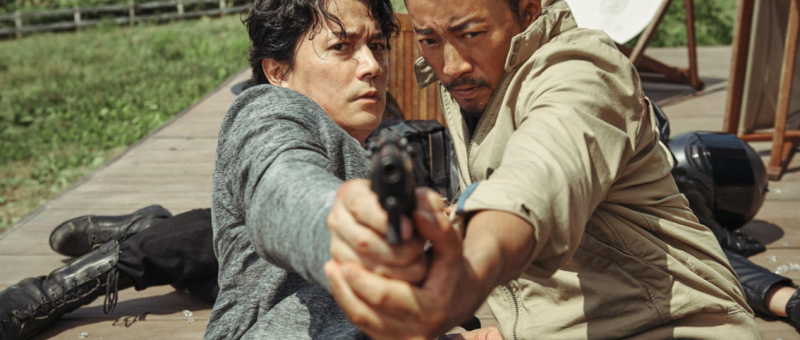
 There are two kinds of people in the world, those who swing and those who…don’t – a metaphor which works just as well for baseball and, by implication, facing life’s challenges as it does for music. Shinobu Yaguchi returns after 2001’s
 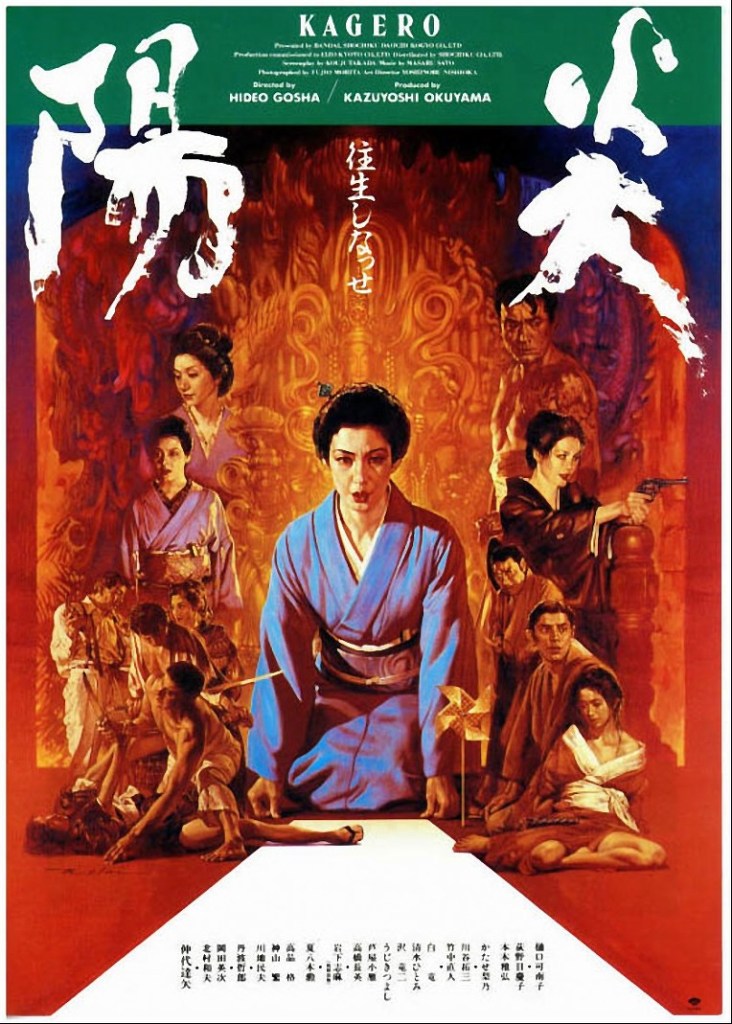 Hideo Gosha had something of a turbulent career, beginning with a series of films about male chivalry and the way that men work out all their personal issues through violence, but owing to the changing nature of cinematic tastes, he found himself at a loose end towards the end of the ‘70s. Things picked up for him in the ‘80s but the altered times brought with them a slightly different approach as Gosha’s films took on an increasingly female focus in which he reflected on how the themes he explored so fully with his male characters might also affect women. In part prompted by his divorce which apparently gave him the view that women were just as capable of deviousness as men are, and by a renewed relationship with his daughter, Gosha overcame the problem of his chanbara stars ageing beyond his demands of them by allowing his actresses to lead.
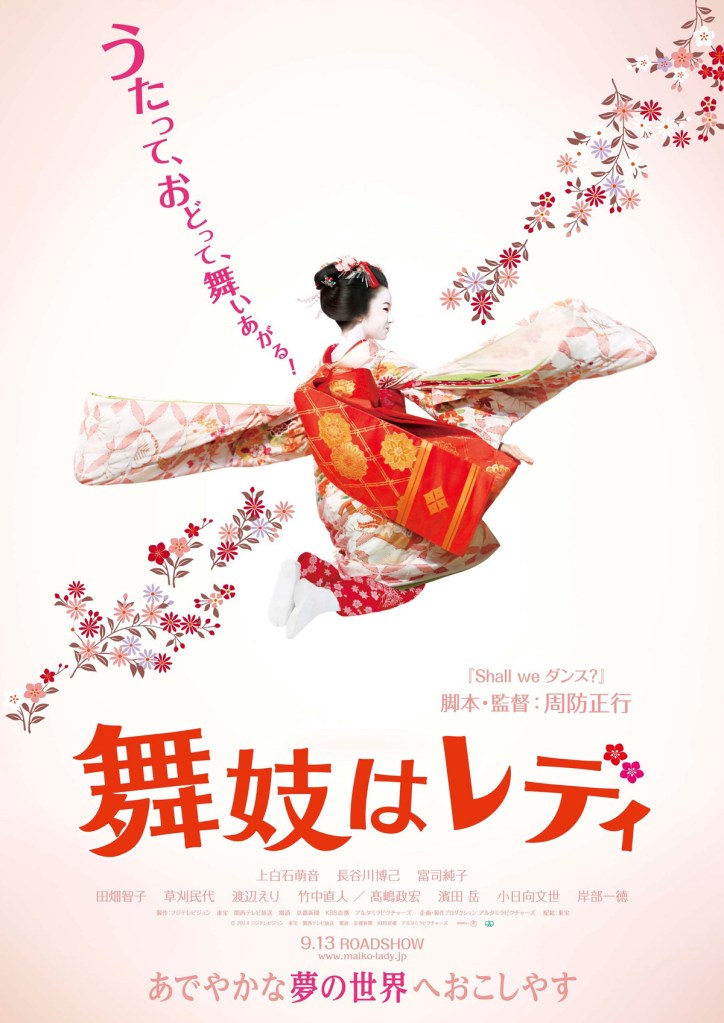 When Japan does musicals, even Hollywood style musicals, it tends to go for the backstage variety or a kind of hybrid form in which the idol/singing star protagonist gets a few snazzy numbers which somehow blur into the real world. Masayuki Suo’s previous big hit, Shall We Dance, took its title from the classic Rodgers and Hammerstein song featured in the King and I but it’s Lerner and Loewe he turns to for an American style song and dance fiesta relocating My Fair Lady to the world of Kyoto geisha, Lady Maiko (舞妓はレディ, Maiko wa Lady) . My Fair Lady was itself inspired by Shaw’s Pygmalion though replaces much of its class conscious, feminist questioning with genial romance. Suo’s take leans the same way but suffers somewhat in the inefficacy of its half hearted love story seeing as its heroine is only 15 years old.
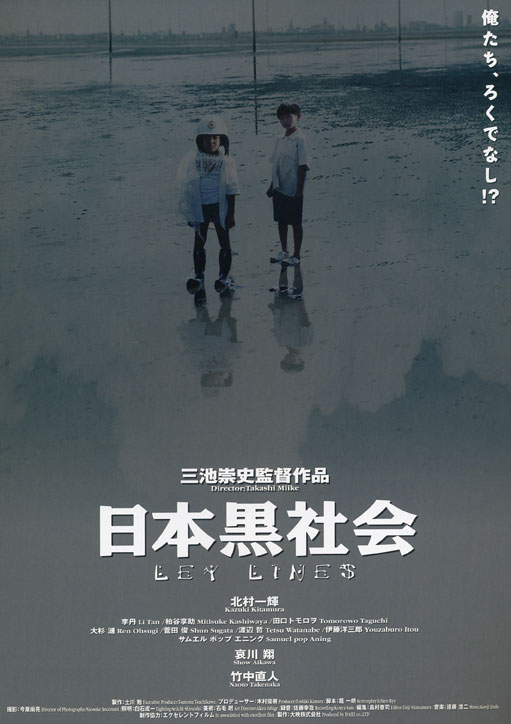 The three films loosely banded together under the retrospectively applied title of the Black Society Trilogy are not connected in terms of narrative, characters, tone, or location but they do all reflect on attitudes to foreignness, both of a national and of a spiritual kind. Like Tatsuhito in the first film,
 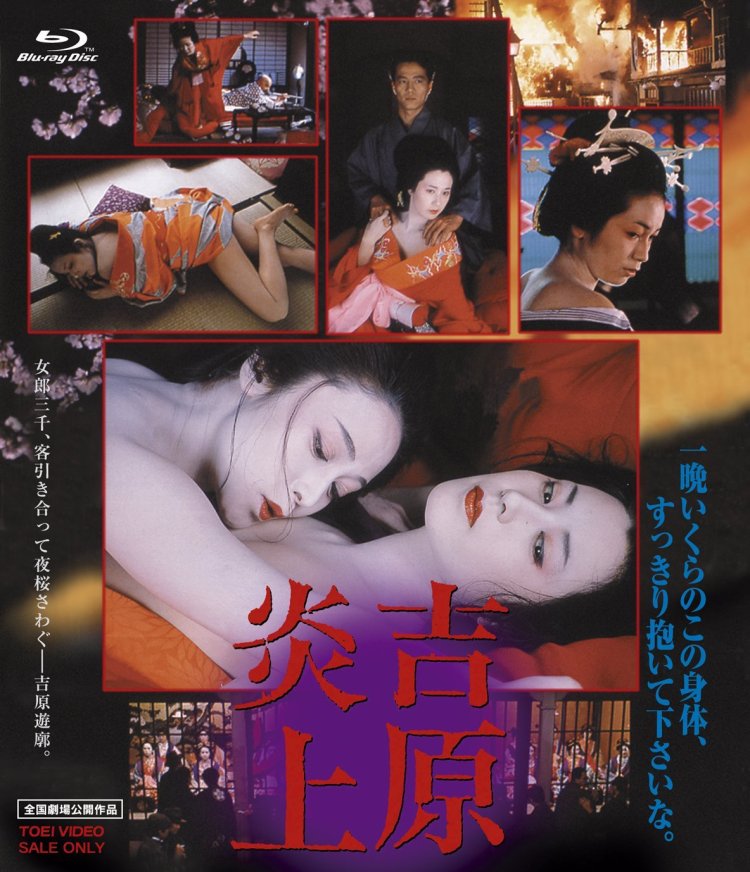 Hideo Gosha maybe best known for the “manly way” movies of his early career in which angry young men fought for honour and justice, but mostly just to to survive. Late into his career, Gosha decided to change tack for a while with a series of female orientated films either remaining within the familiar gangster genre as in Yakuza Wives, or shifting into world of the red light district as in Tokyo Bordello (吉原炎上, Yoshiwara Enjo). Presumably an attempt to get past the unfamiliarity of the Yoshiwara name, the film’s English title is perhaps a little more obviously salacious than the original Japanese which translates as Yoshiwara Conflagration and directly relates to the real life fire of 1911 in which 300 people were killed and much of the area razed to the ground. Gosha himself grew up not far from the location of the Yoshiwara as it existed in the mid-20th century where it was still a largely lower class area filled with cardsharps, yakuza, and, yes, prostitution (legal in Japan until 1958, outlawed in during the US occupation). The Yoshiwara of the late Meiji era was not so different as the women imprisoned there suffered at the hands of men, exploited by a cruelly misogynistic social system and often driven mad by internalised rage at their continued lack of agency.
 Those golden last few summers of high school have provided ample material for countless nostalgia filled Japanese comedies and 700 Days of Battle: Us vs. the Police (ぼくたちと駐在さんの700日戦争, Bokutachi to Chuzai-san no 700 Nichi Senso) is no exception. Set in a small rural town in 1979, this is an innocent story of bored teenagers letting off steam in an age before mass communications ruined everyone’s fun.
 Windows on Worlds